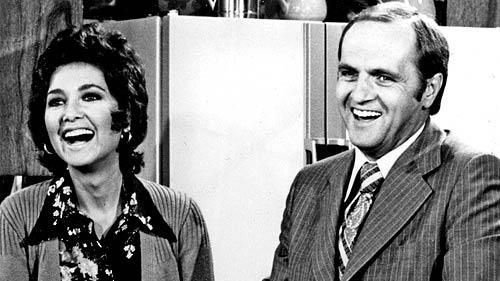
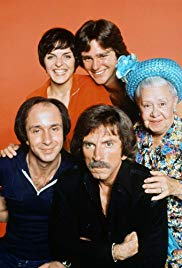
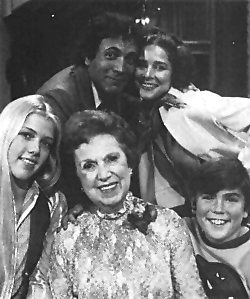
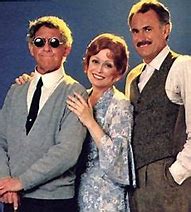
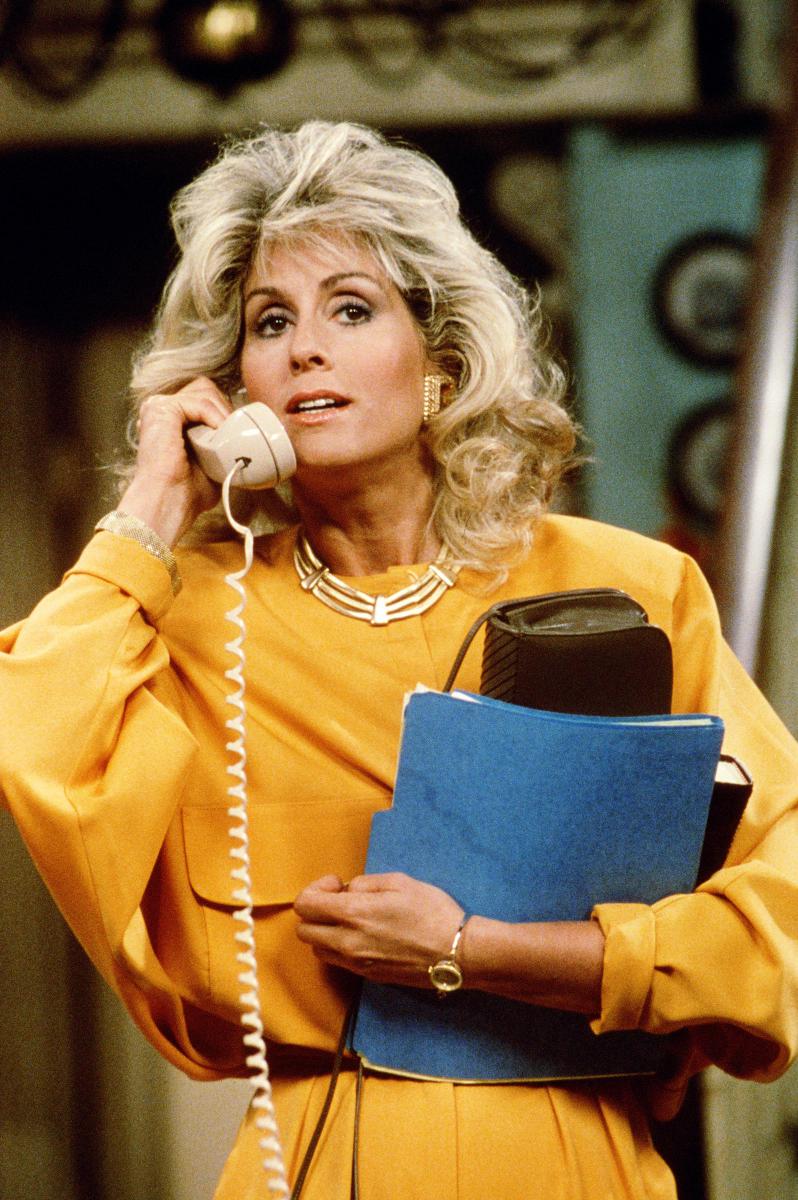
This week we are finishing up our “Supportive Women” blog series. If you watched a lot of television in the sixties and seventies, you will remember today’s blog star very well: Morgan Fairchild.
Photo: dallasfandom.com
Morgan Fairchild was born Patsy Ann McClenny in 1950 in Dallas, Texas. In grade school, she was too shy to read her book report in class, so her mother, an English teacher, signed her up for drama lessons. At age ten, she began performing in dinner theater and stock productions in Dallas which led to several local commercials.
In 1967 she married Jack Calmes; they would divorce in 1973.
In 1967, a young Morgan was hired as a double for Faye Dunaway in Bonnie and Clyde. At age 20 she was cast in her first movie where we could see her face, A Bullet for a Pretty Boy. She would receive roles for another 35 big-screen features during her career.
However, most of her work was on the small screen. Her first role was Jennifer Pace on Search for Tomorrow. She stayed with that show for four years but she would come back to soap operas on and off throughout her acting time and could be seen on The Bold and The Beautiful, Days of Our Lives, General Hospital, and most recently as Sydney Chase in The City in 1996. Most of her roles were the stereotype of an elegant and wealthy woman who will do whatever it takes to get what she wants.
In between work on soap operas, Morgan showed up on many of the most popular shows as a guest star or regular cast member. In 1976 she was on Kojak. After her time on Search for Tomorrow, during the 1970s she appeared on other dramas including Police Woman, Barnaby Jones, and Dallas and on sitcoms like The Bob Newhart Show, Happy Days, and Morkand Mindy.
Flamingo Road Photo: nbcwikifandom.com
During the 1980s she did make a few guest appearances on The Love Boat, Simon and Simon, Magnum PI, and Hotel. Morgan received an Emmy nomination for her appearance on Murphy Brown in 1989. However, it was during this decade that Fairchild was a regular cast member on three different shows: Flamingo Road, Paper Dolls, and Falcon Crest (attorney Jordan Roberts), all night-time soap operas.
Flamingo Road was based on a novel written in 1949. It features the small town of Truro, Florida. The wealthy citizens live on Flamingo Road in their mansions, while the lower classes do what they have to do to make that street their address. Morgan played a woman with one of the longest names on television: Constance Weldon Semple Carlyle. After two years, the show was done.
Photo: IthinkthereforeIreview.com
Paper Dolls was about the modeling world. Fairchild played Racine, an agent, and the show is about the jobs that her models take on including a perfume company that uses her models exclusively. The series only lasted for thirteen episodes.
Morgan played Jordan Roberts, an attorney, on Falcon Crest. This long-running drama from 1981-90 featured the Gioberti family who operates the Falcon Crest Winery in California.
In the nineties, she appeared on a variety of shows including Roseanne, Empty Nest, Murder She Wrote, Diagnosis Murder, Cybill, and Home Improvement.
Her career continued during the 2000s where you could see her on Dharmaand Greg and Hot in Cleveland, as well as five appearances on Friends as Chandler Bing’s mother Nora. She also had another series, Fashion House, in 2006 as Sophia Blakely. The concept of the show was another fashion-themed one where a ruthless executive played by Bo Derek defends her company against a hostile takeover.
Friends Photo:netflixlife.com
With so many movie channels, we forget today that for a few decades we could not watch movies on television. The networks came up with a solution: made-for-tv movies, and Morgan was a queen of the genre with thirty movies and six miniseries.
Morgan has continued to stay busy. She has two finished productions listed on imdb that have not been released yet.
Fairchild has used her platform as a celebrity to advocate for AIDS research, the pro-choice movement, and many environmental issues. She collects movie memorabilia, especially Marilyn Monroe items, and antique clothing. She seems to have had a long-lasting career. It would have been fun to see her star in a sitcom instead of just playing ruthless women who just care about fame and money.
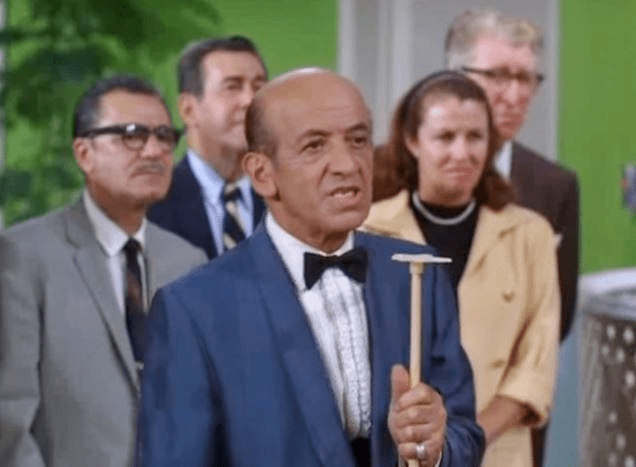
September is What a Character month, and today we end our series with a look at the career of Herbie Faye. Faye was born in 1899 in New York City. He began working with Mildred Harris in vaudeville in 1928. Phil Silvers was one of the supporting cast members, and their friendship would prove fruitful for his future television career.
Photo: imdb.com
In the forties and fifties, Faye tried his luck on Broadway, appearing in a variety of shows including “Wine, Women, and Song” in 1942 and “Top Banana” in 1951.
He also began a career on the big screen in the fifties. His first film was the movie version of Top Banana in 1954. He would appear in 17 movies; in fact, his last acting credit was the movie Melvin and Howard in 1980. In between, he appeared in a variety of genres including Requiem for a Heavyweight starring Anthony Quinn, The Thrill of It All with Doris Day, and The Ghost and Mr. Chicken with Don Knotts.
In 1950, at the age of 51, Faye made his first television appearance. He appeared in two episodes of Cavalcade of Stars. You would have also seen him in Our Miss Brooks, The Goldbergs, and Hennessey in the fifties.
Photo: papermoonloveslucy.com
When Phil Silvers got his own show in 1955, he hired Faye to play Corporal Sam Fender which he did for 139 episodes between 1955 and 1959. This was a hilarious show and hasn’t lost its charm with time. In addition to the primary characters, there was a group of about a dozen secondary characters who appeared along with Faye. Eventually, the costs became too high, and the show was canceled.
Phil Silvers Show Photo: alchetron.com
Faye was extremely busy in the sixties. He must have been good at his job because he was cast in more than one show on several of the series he worked for. He was four different characters on The Danny Thomas Show, six on The Dick Van Dyke Show, five on The Joey Bishop Show, two on My Favorite Martian, two on Bewitched, three on The Andy Griffith Show, four on The Gomer Pyle Show, two on I Dream of Jeanne, two on That Girl, four on Petticoat Junction, two on Mayberry RFD, two on Jack Benny as well as 27 other shows all in the sixties. On top of all those appearances, he was part of the cast for two additional television shows: The New Phil Silvers Show from 1963 to 1964 as Waluska and as Irv on Accidental Family in 1967.
In November of 2018, KJ Ricardo spotlighted Faye in her You Tube channel show about The Dick Van Dyke Show. Herbie was Willie, the deli owner who delivered lunch to the comic writers on the show. He appeared in six of the shows. In his first appearance, Rob is trying to leave the office because he thinks Mary is in labor but every time he tries to leave, the Danish cart is in the way. On the third and fourth episode, he starts critiquing the ideas the writers have and making
Willie Photo: televisonsnewfrontier.blogspot.com
comments on what works and what doesn’t. They are pretty funny.
He continued his busy career throughout the seventies when he made one-time appearances in eleven different shows including The Mary Tyler Moore Show, The Bob Newhart Show, Love American Style, Happy Days, and Barney Miller. He made multiple appearances on several other shows including Mod Squad (3), Here’s Lucy (4), The New Dick Van Dyke Show (4), The Odd Couple (6). He also had a recurring role on Doc where he played Ben Goldman from 1975-76.
Faye passed away in Las Vegas in 1980.
Herbie Faye was a very funny guy. He was just an average guy, but he had a way of focusing the viewers’ attention just on him for the brief time he appeared; he made the episodes he was in even better. I guess that is the ultimate definition of a great character actor.
When I decided to do research for a blog series about some of my favorite sitcom actors, I knew Tom Poston had to be on the list. Poston seems to be someone who’s always a bit under the radar, and I’m not sure he ever received the accolades he deserved.
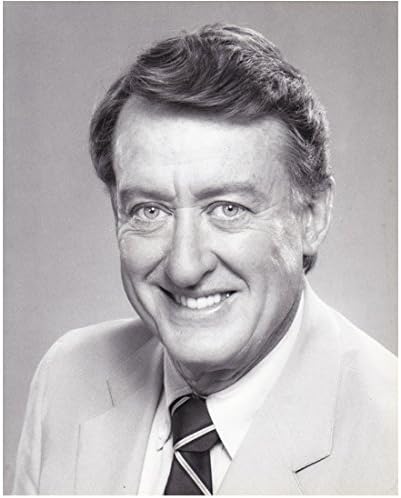
Photo: wikifandom.com
Poston was born in 1921 in Columbus, Ohio. His father was a liquor salesman and dairy chemist, an interesting combination. Poston started at Bethany College in West Virginia but joined the Air Force in 1941. He went to flight school and served as a pilot in the European Theater for WWII and was part of the Normandy invasion.
After returning home, he decided to move to New York City to study acting and graduated from the American Academy of Dramatic Arts.
Photo: pinterest.com
He was cast in his first television show, Tom Corbett, Space Cadet, in 1950. In 1955 Poston married actress Jean Sullivan. They would divorce in 1968, having one daughter.
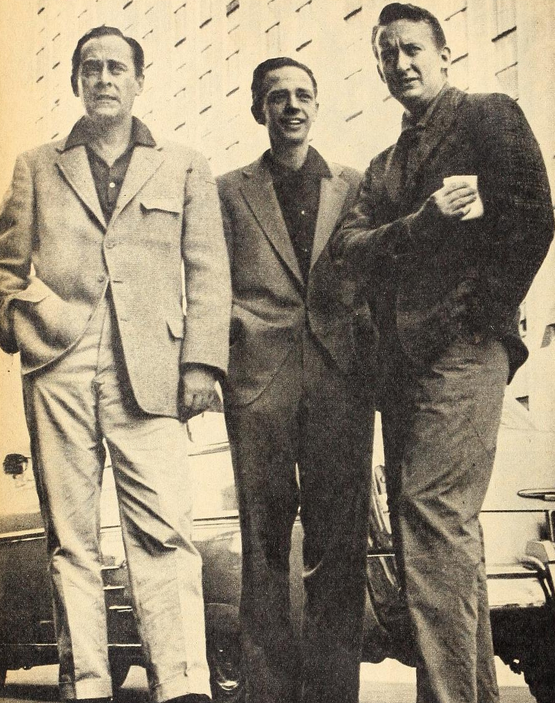
He continued receiving dramatic roles throughout the early fifties. In 1956 he joined the Steve Allen Show, along with his cast mates Don Knotts and Louie Nye. In 1959 he won the Best Supporting Actor Emmy for his work on the show. In 1960 The Steve Allen Show moved to Los Angeles and Poston decided to remain in New York, but Tom and Don Knotts stayed life-long friends. He appeared on Broadway often and began making the game show circuit and continued accepting drama roles on the small screen.
With Steve Allen cohorts Don Knotts and Louis Nye–Photo: tumbral.com
When Mel Brooks was putting together the pilot for Get Smart, ABC was planning on airing the show and they wanted Tom for the star. However, when ABC declined the show and when NBC picked it up, Don Adams got the lead; Poston did appear on the show as a KAOS bad guy.
Poston married for the second time in 1968 to Kay Hudson with whom he had two children. They divorced in 1975 but remarried in 1980 and remained husband and wife until her death from ALS in 1998.
The Peeper–Photo: pinterest.com
In 1975, he began recurring roles on two different sitcoms: On the Rocks and The Bob Newhart Show. On the Rocks was a show about the friendly rivalry between prisoners and their guards. On the Bob Newhart Show, Poston played “The Peeper,” Bob’s college buddy and big .prankster.
In 1977, Tom took on the role of Damon Jerome, photographer on We’ve Got Each Other. Beverly Archer played his assistant while her husband Stuart Hibbard (Oliver Clark) did the cooking and house cleaning. The show was cancelled after 13 episodes.
Photo: thetodayshow.com
He appeared on a variety of shows during the late seventies and from 1979-1981, he portrayed grouchy neighbor Franklin Delano Bickley on Mork and Mindy. Poston said the role he played on the show was written for him. He said Robin was hysterically funny all the time. He said Pam Dawber was a comic genius because she was able to keep the focus on both Mork and Mindy, because anyone else would have been lost in Robin’s antics.
Photo: dailyamerican.com
He moved from Colorado on that show to Vermont the next year when he became George Utley, handyman on Newhart. For eight seasons he worked at the Stratford Inn, becoming friends with Dick and Joanna. He was nominated for an Emmy in 1984, 1986, and 1987. (Pat Harrington won in 1984 for One Day at a Time and John Laroquette won for Night Court in 1986 and 1987.)
In an interview with the Television Academy, Poston discussed the last episode of Newhart. He said the cast members were kept in the dark about the ending. He said he was in the stands with the audience when that last scene with Suzanne Pleshette and Bob as Bob Hartley waking up from his “dream” was filmed. He said Bob’s wife Ginny had the idea, and Tom thought it was fabulous.
From 1990-1991, you could find him in Good Grief, playing Ringo Prowley, in a show set in a mortuary; when that show was cancelled, he was back with Bob Newhart on Bob as Jerry Fleisher.
That Seventies Show–Photo: tvmaze.com
During the 1990s, he would accept five recurring roles: Mr. Looney on Family Matters, Phineas Swenson on Murphy Brown, Dr. Art Hibke on Coach, Floyd Norton on Grace Under Fire, and Burt Sigardson on That Seventies Show. In between, he also managed to find time to guest star on more than thirty other shows including Home Improvement, Cosby, ER, The Drew Carey Show, and Will and Grace. He also accepted roles on the big screen in twelve movies during his career, the last two being The Princess Diaries 2: Royal Engagement and Christmas with the Kranks, both in 2004, as well as 15 Broadway productions.
Working together in 1959–Photo: pinterest.com
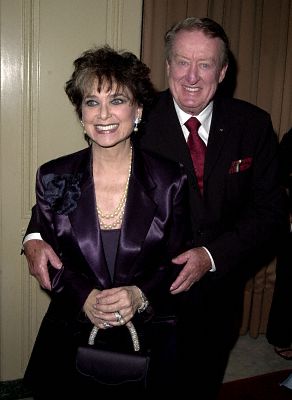
Tom tried married life once again in 2001 when he married actress Suzanne Pleshette. They were married until his death in 2007 from respiratory failure.
As husband and wife 2001–Photo: imdb.com
I was just amazed by Tom Poston’s career: a ton of television appearances–he probably had more recurring roles than almost any other actor during that time; a well-respected big screen career, a variety of Broadway roles and many gameshow stints. He was nominated for five Emmys, winning one. He always made the rest of the cast look better. I truly enjoyed getting to know a bit more about Tom Poston, one of our greatest sitcom stars.
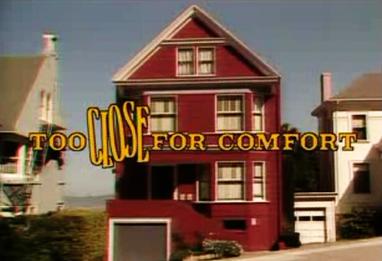
When I looked up the definition for “too close for comfort” it said “close enough to make a person feel nervous, worried or upset.” That is exactly how this show made me feel.
Photo: sitcomsonline.com
I realize that I was hard to please in the 1980s. Coming out of the 1970s with M*A*S*H,The Mary Tyler Moore Show, and The Bob Newhart Show, I did not enjoy All in the Family, The Jeffersons, Alice, Maude, or Diff’rentStrokes. I did watch Cheers, Family Ties, The Cosby Show, Who’s the Boss, and Moonlighting during that decade. Too Close for Comfort, along with Three’s Company, just didn’t strike me as funny.
When you invest in a show, you feel like these characters are part of your life. Ted Knight’s role of Ted Baxter on The Mary Tyler Moore Show was a flawed human being for sure, but I felt like we had spent a lot of time together, and I was able to see beyond the brash, obnoxious exterior to the vulnerable and kind being inside. It was if we had spent lots of hours over the kitchen table having coffee. Characters like Baxter teach us about the world and about ourselves. Ted Knight as Henry Rush was more like the neighbor whom I caught glimpses of out the kitchen window but there was no way to learn more about the character other than the surface appearances. The show was based more on plots than characters.
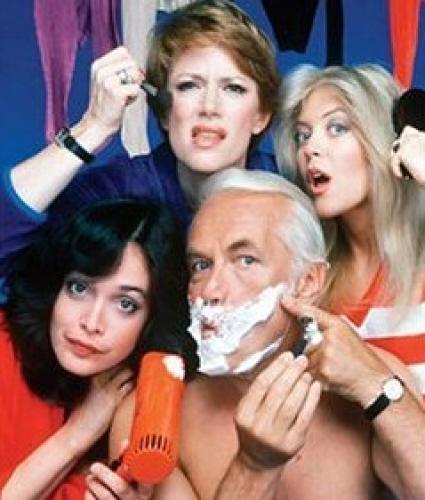
Too Close for Comfort was based on the British sitcom Keep It in the Family. It debuted in 1980. Henry Rush is a cartoonist who writes about the Cosmic Cow (a space crime fighter) and lives in San Francisco with his wife Muriel, a photographer (Nancy Dussault) and his two adult daughters Jackie (Deborah Van Valkenburgh) who works at a bank and Sara (Lydia Cornell) who is a college student.
Photo: wikipedia
The house was a two-family residence and the girls decide to rent from their parents. Henry is not sure it’s a good idea, but it’s the only apartment they can afford because he charges $300 rent for the bottom of the Victorian house. Monroe (Jim Bullock) is a friend of Sara’s who was cast only in one episode but ended up joining not only the cast but living with Henry and Muriel.
The show was on Tuesday nights. The show followed Three’s Company and its main competition was BJ and the Bear.
In season two, Muriel becomes pregnant and Henry’s niece April also comes to live with the Rushes.
Photo: pinterest.com
One of the signatures of Henry Rush was the variety of college sweatshirts he wore. Fans from around the country would send them to the network hoping to see them on the series. The first sweatshirt to make an appearance was the University of Michigan.
The third season found the show on Thursday nights and ratings declined significantly. The show was up against Cheers on NBC and Simon and Simon on CBS. April moves out and Muriel’s mother Iris (Audrey Meadows) moves in to help with the baby. The show was cancelled by the network. The fourth season went into syndication with new episodes.
Photo: sitcomsonline.com
A fifth season began, but the show changed so much it really was a new series. The title was changed to The Ted Knight Show, the family now lived in Marin County where Henry bought a newspaper, a new theme song was created, a new opening was shot, and both daughters left the show. However, Monroe moved with Henry and Muriel. The new episodes began airing in April of 1986; 22 episodes were taped and after the first 12 aired, Knight passed away from colon cancer. The final ten episodes were run, and then the series ended.
Photo: sitcomsonline.com
During the various seasons, the girls changed careers a lot. Jackie moved from the bank to a department store to a fashion designer. Sara held a bunch of part-time jobs while she was in college. She then became a bank teller, a weather woman at the local station KTSF, and an entrepreneur who sells Cosmic Cow Cookies.
In a Fox News interview, Cornell discusses how she received the role of Sara. She said she had to take a bus for the audition and showed up an hour late after being in the rain. The secretary told her auditions had closed but Arne Sultan said to let her audition as long as she came in. They gave her a script to read and a line said “She gives her dad a raspberry.” Sara picks up an imaginary raspberry and hands it to her dad. Sultan asked her what she was doing, and then explained a raspberry was a Bronx cheer. She felt very stupid and they were all laughing. The casting director and executives decided at that time she was perfect for the part and asked her to report to work the next day.
Photo: episodate.com
I know that there have been far worse shows than Too Close for Comfort, but I’m not content having the bar set there because there have also been far better shows. Rather than my usual recommendation of buying the DVDs for a weekend of binge watching, I’m going to tell you to buy a good book instead.
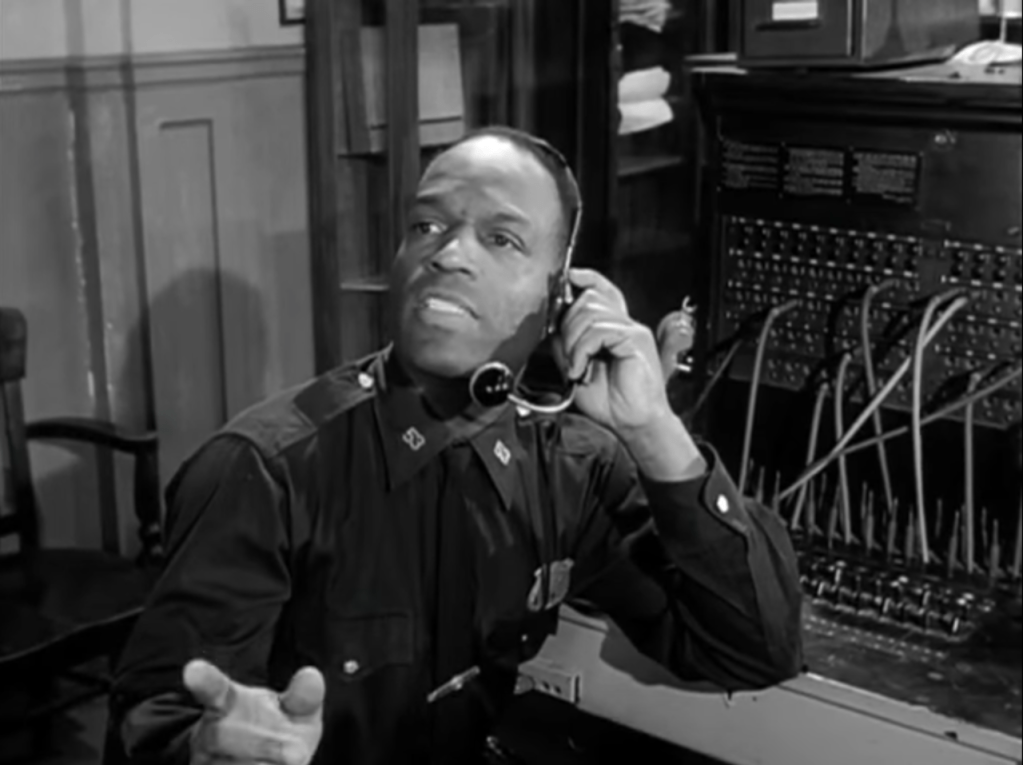
Car 54, Where Are You? aired on NBC beginning September of 1961. I was surprised to learn that there are only 60 episodes in this series. The show revolves around officers Gunther Toody, Badge 1432 (Joe E. Ross) and Francis Muldoon, Badge 723 (Fred Gwynne). Their patrol car is Car 54, and they are with the 53rd precinct in New York. Toody and Muldoon are complete opposites which is why they get along so well. Toody is short, extremely talkative and not overly bright. He’s married to Lucille (Beatrice Pons), a bit of a loud, overbearing woman. Muldoon is tall, quiet and very smart. He’s a bachelor who lives with his mother (Ruth Masters) and two younger sisters.
Photo: imdb.com
Rounding out the large cast are officers Dave Anderson (Nipsey Russell), Omar Anderson (Ossie Davis), Kissel (Bruce Kirby), Nelson (Jim Gormley), Nicholson (Hank Garrett, O’Hara (Albert Henderson), Schnauser (Al Lewis), Steinmetz (Joe Warren), and Wallace (Frederick O’Neal), as well as Captain Block (Paul Reed), Sergeant Abrams ( Nathaniel Frey), Sylvia Schnauser (Charlotte Rae), and Claire Block (Patricia Bright).
A young Nipsey Russell Photo: yahoo.com
Nat Hiken (the creative force behind The Phil Silvers Show) created the series. He wrote many of the scripts and also directed several episodes, one of which he won an Emmy for. The show was nominated for three other Emmys. It was up for Outstanding Program Achievement in the Field of Humor in 1961 which went to The Bob Newhart Show (not that Bob Newhart show, this was a variety show hosted by Newhart) and for Outstanding Writing Achievement in Comedy in both 1961 and 1962 but got beat out both years by Carl Reiner for The Dick Van Dyke Show.
As recounted in Martin Grams, Jr.’s book Car 54, Where Are You?, after visiting a New York police precinct house and noticing what a communal feel it had, unlike any of the depictions of police on television, Hiken came up with the idea for a police-themed situation comedy. He continued to do research by spending weeks in a precinct squad room during late 1960, getting a feel for how the officers talked and interacted amongst each other, members of the community, and even repeat offenders, who were often treated more like family than threats. Hiken enlisted the support of Eupolis Productions and then pitched the idea to Proctor & Gamble, who agreed to finance a pilot.
Fred Gwynne and Al Lewis were coworkers before they were relatives Photo: shoutfactorytv.com
According to Kliph Nesteroff in the definitive account of Joe E. Ross’ tawdry life off-screen, “King of Slobs: The Life of Joe E. Ross,” Hiken originally wanted to cast Jack Weston in the role of Gunther Toody (televisionheaven.co.uk says it was Jack Warden) and Mickey Shaughnessy as Francis Muldoon, but contract negotiations broke down with both, so he turned to Ross and Fred Gwynne as suitable replacements, though in Ross’ case he later regretted it.
John Strauss who had collaborated with Hiken on the theme song for The Phil Silvers Show, teamed up with Hiken once again for this theme. Strauss was married to Charlotte Rae, who appeared on the show. Strass was the composer, and Hiken wrote the lyrics. The familiar theme song is:
There’s a hold-up in the Bronx,
Brooklyn’s broken out in fights;
There’s a traffic jam in Harlem
That’s backed up to Jackson Heights.
There’s a scout troop short a child,
Khrushchev’s due at Idlewild,
Car 54, where are you?
The show was originally titled “The Snow Whites.” (Maybe because the sponsor made Chlorox bleach.) The show was given a great time slot on Sunday nights between Walt Disney’s Wonderful World of Color and Bonanza. The producers thought the working title would confuse viewers since the show followed Disney. Since the theme song was already written, the last line of the song became the show’s title.
Critics were split on the show. While many people praised the series, some reviewers considered it disrespectful. The Chicago Sun Times deemed it “a preposterous (and sometimes cruel) depiction of the policeman.” The Dallas Times Herald stated, “The humor might be there, all right, but not much of it was showing.” The Alabama Journal complained, “It is insulting to the law enforcement and to the general public.” However, many policemen liked the show and found it funny.
The show was filmed at Biograph Studios in the Bronx and on location. The cars were painted bright red and white which photographed perfectly. There is some controversy about the patrol cars. Some articles listed them as Savoys, some as Dodges. According to Martin Grams’ blog from May 4, 2012, “On June 29, 1961, Arthur Hershkowitz signed the contract and during the first week of July, the following four automobiles were delivered to Eupolis Productions”: two 1961 Plymouth Belvederes, one Dodge Dart, and one Plymouth, all four-door sedans. Grams said “the cars were returned to the dealership and when the show was renewed for season two, the following cars were delivered”: two 1962 Plymouth Belvederes, three 1962 Plymouth Furys, one 1962 Dart 330, and a 1962 Chrysler New Yorker. One article I read said that the large circular object on the dashboard between the officers was an auxiliary fan used before air conditioning was available.
Despite the success of Car 54, which placed 20th in the ratings for 1961-62, Hiken soon began to feel overwhelmed with his responsibilities. Apparently, NBC wanted part ownership in the show in exchange for renewing it for season three, and Hiken would not agree to the deal. The show’s sponsor Proctor and Gamble tried to talk CBS into taking the show over, but there was no room on their schedule. Hiken was a bit burnt out with writing, directing, and overseeing the show and was exasperated with Ross who caused a lot of issues not remembering his lines, so Hiken ended the show and never worked on another series again.
Considering the short time that the show was on the air, there was a full slate of guest stars including Carl Ballantine, Tom Bosley, Wally Cox, Hugh Downs, Margaret Hamilton, Katherine Helmond, Hal Linden, Mitch Miller, Charles Nelson Reilly, Sugar Ray Robinson and Jean Stapleton.
The episodes are well written and similar to other sitcoms at the time.
Photo: shoutfactory.com
In one, Toody is feeling henpecked by Lucille, but musters the courage to become king of his castle after seeing a stirring performance of Shakespeare’s “The Taming of the Shrew.”
In another, Muldoon shares a childhood experience when the kids at school called him “Horse Face.” Toody, trying to console him, says “Don’t worry Francis, kids just repeat what other people say” and later added “After all, Francis, everybody liked Black Beauty.”
One script has Toody working an undercover detail in Brooklyn with a female cop posing as his wife and a small boy as his child. When his wife’s sister spots him, the rumors begin.
Even though there were only 60 episodes, the show went into syndication in 1964. It was one of the staples on Nick at Nite in the 1980s, aired on Comedy Central in the 1990s, and a few years ago it could be seen on both MeTV and Decades. The show came out on DVD in 2011 and 2012.
Like any show that was even somewhat successful, the show had a film made based on the series in 1994. The big screen version starred John C. McGinley as Muldoon, David Johansen as Toody, Rosie O’Donnell as Toody’s wife Lucille and Fran Drescher as Velma Velor. Not surprisingly, it was a dud. One reviewer said it “was one of the worst movies to ever come out of Hollywood.”
One fun fact I learned doing research for this blog was that this show was William Faulkner’s favorite tv show. He hated television but visited a friend’s house weekly to watch the show.
Photo: amazon.com
This show debuted during the decade when merchandising was a big part of every show. There were at least six comic books based on the show. There was a board game, puppets of Toody and Muldoon, and a car model.
The show was funny in its prime, but I’m not sure it holds up as well today as other shows from the sixties. However, two seasons of DVDs is not a large investment, so check out an episode on youtube and see what you think.
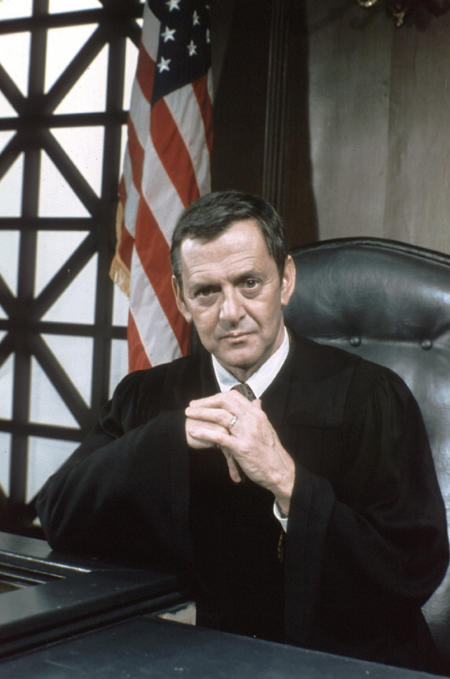
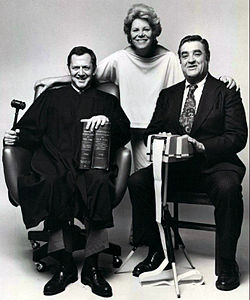
As we wind up our “Don’t Judge Me” blog series, today we’ve been sent to the bench to sit along side Judge Walter Franklin (Tony Randall) on The Tony Randall Show. Judge Franklin is a middle-aged, single-parent, widower living in Philadelphia. His extremely bright kids–teenage daughter Roberta (Devon Scott) and preteen son Oliver (Brad Savage) live with the judge, along with daffy housekeeper Bonnie (Rachel Roberts). At work we get to know his severe secretary “Miss” Janet Reubner (Allyn Ann McLerie), court reporter Jack Terwilliger (Barney Martin), and Mario Lanza (Zane Lasky), no not THAT Mario Lanza, but an overbearing assistant the judge does not care for. Judge Eleanor Cooper (Diana Muldaur) plays his co-worker and “lady friend.”
Photo: wikipedia.com
In the second season, Penny Peyser took over the role of Roberta, and Hans Conried joined the cast as Walter’s father. A lot of famous guest stars found themselves in front of the judge during the two years it was on the air. A handful of stars who appeared around Judge Franklin included Victor Buono, Beverly Garland, Michael Keaton, Hal Smith, David Ogden Stiers, and Dick Van Patten.
If this sounds a little bit like the concept of The Mary Tyler Moore Show where we see a professional at work and at home, that’s because The Tony Randall Show was produced by MTM Enterprises and created by Tom Patchett and Jay Tarses. This was the duo that produced The Bob Newhart Show a few years earlier.
Photo: tvdads.com
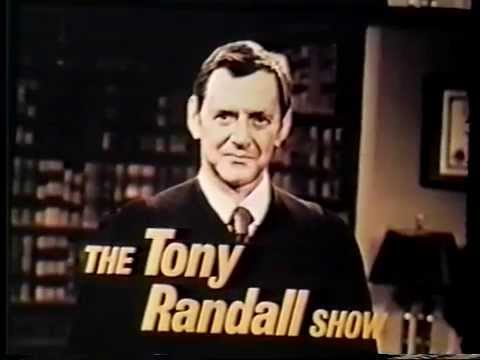
The Tony RandallShow debuted on ABC in 1976. When ABC cancelled the show, it was picked up by CBS for a second season. Surprisingly, the show was not cancelled by ABC for low ratings. The show was holding its own going up against Hawaii Five-0 and Best Sellers on Thursday nights. Apparently, Patchett and Tarses did not get along with Tony Randall. Unfortunately, they did not get along with each other either, and on top of that, they refused to take calls from ABC president Fred Silverman. Tiring of the drama, Silverman ended the show. On CBS, the show moved to Saturday nights and was on at the same time as OperationPetticoat and The Bionic Woman. When CBS cancelled the show, it was done for good.
Photo: jacksonupperco.com
Reflecting on the show, Grant Tinker remembered “Tony was born to work in front of a live audience, and the writing was largely first rate. Ultimately, however, three strong egos could not live together. Since Tony was obviously essential, Tom and Jay retreated to their office and oversaw from a distance, giving two of MTM’s younger writers, Hugh Wilson and Gary David Goldberg their first chance to produce.” (Wilson would go on to create WKRP in Cincinnati and Goldberg would create Family Ties and Brooklyn Bridge.)
Photo: wikipedia.com
At least this turmoil produced some good results. Goldberg said from his time on The Tony Randall Show, he learned you need to hire good people and let them do their job, and that if you have to remind people you are the producer, you’re probably not a very good one.
Ken Levine discussed working with Randall in his blog from June of 2007 (kenlevine.blogspot.com/2007/06/working-with-tony-randall.html). According to Levine, Randall “was the consummate professional. Not only did he know all of his lines, he knew everyone else’s too. . . . I loved working with Tony Randall. Of course, it helped that he thought I was funny and that I didn’t smoke.”
Photo: imdb.com
Everyone seemed to enjoy working with Randall. In a Television Academy interview, Asaad Kelada, one of the directors for the show, described Randall as a “fascinating, erudite, funny man.” He talked about the way he warmed up an audience before the show with his stories. It must have been a fun set sometimes because Kelada said he used to wear a sweater over his shoulders, and it became his trademark. One day he said there was a bit of extra energy on the set, and he suddenly realized absolutely everyone on set from the cameramen to gophers to stars were wearing sweaters, blankets, or towels around their shoulders. The Television Academy also did interviews with Abby Singer, production manager for the show, and Hugh Wilson about his writing and producing. Singer said Randall was “a good guy.” When asked if the rumors that Randall was particular were true, he said “Yes, he was so particular it was unbelievable. You couldn’t even whisper when he was on the set, but he was a sweet guy.” Wilson backed their comments up, saying “It was super to work with Tony Randall. He was a vast library of show business information and very nice.”
Despite all the problems on the set, Randall was nominated for a Golden Globe for his role of Judge Franklin. He lost to Henry Winkler for Happy Days.
Photo: youtube.com
I could not find any official DVDs for The Tony Randall Show, but some of the episodes can be found online. It sounds like the show had all the right ingredients but either did not have enough time to find its true voice or appeared a bit too late in the 1970s at a time when things were changing in television programming. Anytime you can watch Tony Randall on the small screen (or the big screen for that matter) is a special opportunity.
From 1972-1978 we were able to benefit from the sage advice of Dr. Robert Hartley from the comfort of our own living rooms. Created by David Davis and Lorenzo Music, and produced by MTM Enterprises, The Bob Newhart Show gifted us with 142 episodes for us treat ourselves to after the show left the air.
Photo: tvtropes.com
In an online article by Marc Freeman in April of 2018, Dave Davis discussed the evolution of the sitcom. “Lorenzo and I wrote a segment for Bob on Love American Style. Bob wasn’t available. So, we got Sid Caesar. A few years later, we did a script for Bob for the Mary Tyler Moore Show. Again, Bob wasn’t available. After we became story editors on Mary’s show, MTM Enterprises decided to branch out and asked Lorenzo and me to do a pilot. We knew exactly what we wanted to do. We wanted a show with Bob.”
Photo: wikipedia.com
When Bob Newhart was approached about starring in the show, he required two changes from the original concept. First, he wanted his character to be a psychiatrist instead of a psychologist. This seems like a minor request, but he was very wise because he did not want anyone to think the show was making fun of mental illness. He also insisted that his character not have children. The “father doesn’t know best but thinks he does” underlying concept was not one he wanted the show to focus on. Bob was careful when creating the character of Bob Hartley. Newhart once said “the key to building a show around a stand-up is maintaining the integrity of the persona you create.” This was definitely true for the Bob Newhart Show.
Photo: connectcollectorz.com
The show has a very simple premise in that we see Bob dealing with the same everyday problems the rest of us did. It was grounded in reality. Bob was the straight man. He was surrounded by all these quirky characters, but they were believable and likeable.
Photo: sitcomsonline.com
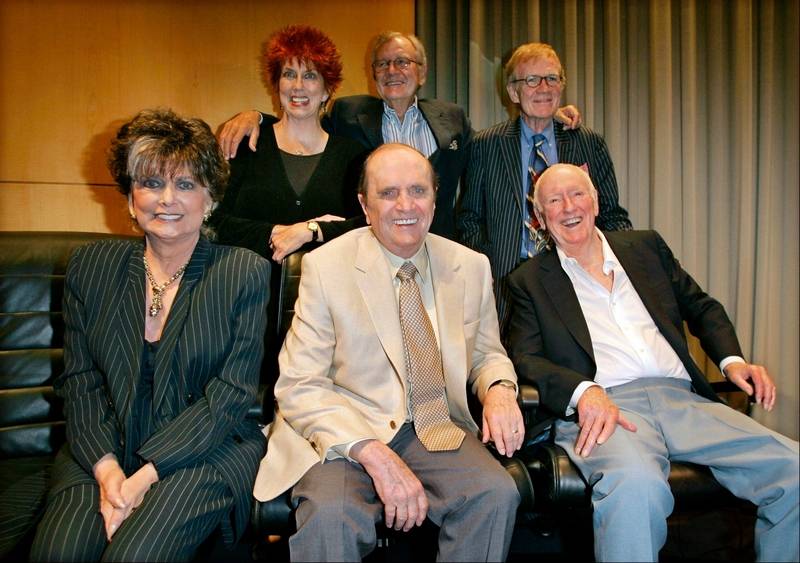
The show moves back and forth between Bob’s practice and his home; we get to know his co-workers and his friends and family. At work, he shares his floor and receptionist Carol Kester (Marcia Wallace) with orthodontist Jerry Robinson (Peter Bonerz) and urologist Bernie Tupperman (Larry Gelman). Carol and Jerry become two of his best friends. We also get to know some of his regular patients including Elliot Carlin (Jack Riley), Emile Peterson (John Fiedler), and Mrs. Bakerman (Florida Friebus).
Photo: imdb.com
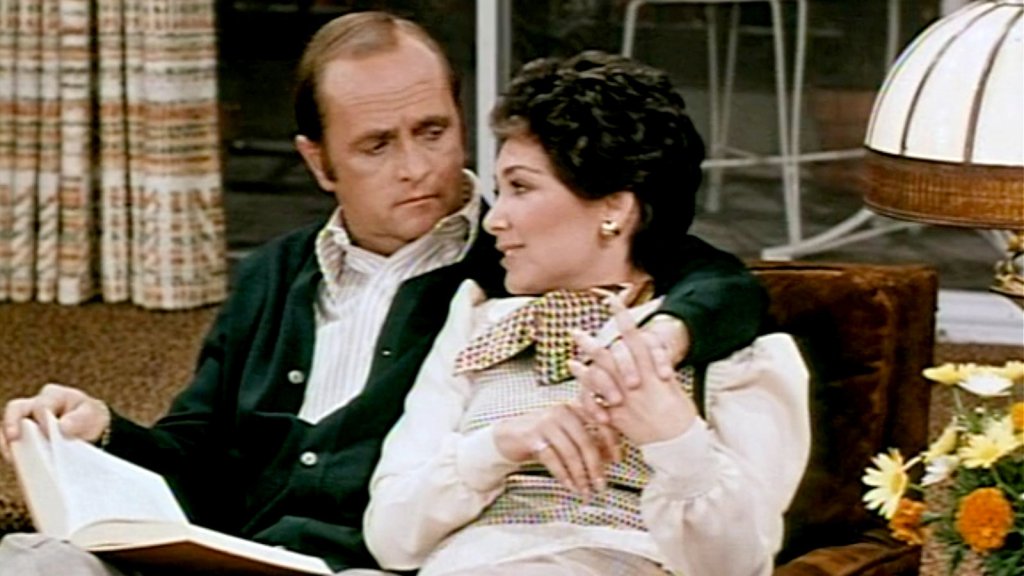
Bob is married to Emily (Suzanne Pleshette) who is a school teacher. Across the hall is the apartment of their friend and neighbor Howard Borden (Bill Daily), an airline navigator. Although Bob insisted on no children, in many ways, Howard was Bob and Emily’s child.
Photo: sitcomsonline.com
In season four of the show, Howard meets and begins dating Bob’s sister Ellen (Pat Finley) and they eventually marry, making Howard a legal family member.
Photo: thefrog’seyebrows blogspot.com
Bob and Emily were the only characters to appear in all 142 episodes. Suzanne Pleshette was asked to play Emily after she appeared on The Tonight Show Starring Johnny Carson one night. She was seated next to Bob, and the producers thought the two of them had great chemistry. In real life Bob and Suzy, as he called her, were best friends. He spoke at her funeral. When he recalled their time together, he said “Her laugh. Her laugh. We just laughed. We just had a great time. We all loved each other and respected each other and we got paid for it.” Bob also remains close friends with Marcia Wallace.
Photo: nytimes.com
They worked so well as a couple because Emily is very bright and funny. She and Bob argued because they were both a bit stubborn, but they always found a way to compromise at the end of the day. Bob often shared his wisdom through stories. He would do a bit of a monologue that related to what was happening on the show. It was referred to as the “Emily, sit down” moment.
Photo:kennethinthe212.com
The phone is also important on the show. If you are familiar with Newhart’s career, you realize some of the first skits that escalated his stand-up career were phone conversations. On this show, we often hear a one-sided conversation when he chats with friends or patients. One example of this is:
Bob: “Yes, this is Dr. Hartley. What can I do for you?
Well, Mr. Johnson, smiling and whistling while you work doesn’t seem to be a problem you should – you should see a psychologist about.
You drive a hearse?”
Although all the major characters on the show were like family to the Hartleys, the mailman on the show was truly family. Bill Quinn who played the postman was Bob Newhart’s father-in-law.
Photo: imdb.com
Bonerz who played Jerry became interested in directing. He ended up directing 29 episodes of this show and then went on to a successful career as a director. He directed episodes on a variety of shows including E/R, Alf, Wings, Murphy Brown, Friends, and Home Improvement. His view of the importance of the show was that “the most interesting thing about the show and why its successful is that it brings up things that come up in your life. That’s what art’s supposed to do. That’s what TV should be doing. When it does, people remember it and reflect how much they like it.”
Photo: allmovie.com
The show was on Saturday nights. For the first five seasons, it followed The Mary Tyler Moore Show airing at 9:30 EDT and its competition on NBC was Saturday Night at the Movies. For season five, the show was changed to earlier in the evening against Starsky and Hutch on ABC. For its final year, The Mary Tyler Moore Show was off the air and Bob’s show aired at 8 pm Saturday opposite Fish and The Bionic Woman. The sitcom placed in the top 20 for the first three seasons and the top 30 for season four.
Photo: blogspot.com, holiday film reviews
Bob had requested the network move the show to a different night. That didn’t happen, and the television executives wanted Emily to have a baby, even though Bob had specified that not be part of the plot. So, he ended the show after six years. When asked about ending the show, he said, “I could see what was coming in situation comedy, and I didn’t want to be a part of it. If we’d gone another year, they’d have had the guy and two girls living in the apartment above us, a Martian living on the same floor next door to three girl detectives. The floor below us would have been occupied by a fraternity and a sorority.”
If you read my blog on Bob Newhart recently, you know how incensed I was that this show never won an Emmy, and was only nominated once, and Newhart never received an Emmy for any of his sitcoms in the seventies and eighties. It would take his recurring role on The Big Bang Theory as Professor Proton for him to win the Emmy.
However, the show was ranked ninth and fiftieth on “TV Guide’s 100 Greatest Episodes of All Times in 1997.”
Photo: flickr.com
In 2004, TV Land picked this show as one of the series it commemorated with a sculpture. A statue of Newhart seated in a chair facing an empty couch is located in the Navy Pier entertainment complex.
I have to admit I was not a big fan of the finale of The Bob Newhart Show. Bob closes his practice in Chicago and accepts a teaching position at a small college in Oregon. I just don’t picture Bob and Emily being happy in a small Oregon town. However, the finale for Bob Newhart’s sitcom, Newhart, more than makes up for this ending.
Photo: pinterest.com
Bob Newhart credits his wife Ginnie with coming up with the idea for the finale of Newhart. Newhart is set in Vermont where Bob and his wife Joanna run a historic inn. They have to deal with some wacky locals and their maid and handy man. This show ran eight years. In the finale, Bob wakes up in bed. We hear him restless and wanting to talk about his dream. Suddenly we realize he and Emily Hartley are in bed together. Part of their conversation is:
Emily: All right, Bob? What is it?
Bob: I was an innkeeper in this crazy little town in Vermont.
Emily: No more Japanese food before you go to bed.
Another great television moment occurred on Murphy Brown in 1994. Bonerz was the director of the sitcom. Of course, we remember how fast Murphy went through secretaries. She found fault with all of them. In this episode, Marcia Wallace appears as Carol Kester. She is Murphy’s 66th secretary. Murphy thinks Carol is a wonderful secretary, and she is finally satisfied. However, Bob Newhart shows up as Bob Hartley, begging Carol to come back to work for him.
Photo: pinterest.com
One of the iconic lines from the show was “Hi Bob.” Howard Borden said it 118 times, Jerry said it 43, Carol came in at 36, and Emily at 17. Even minor characters would utter the line from time to time, and Bob said it once himself. College students turned this into a drinking game watching the reruns, taking a shot whenever the line occurred.
Photo: dailyherald.com
The best evidence that this was one of the best sitcoms ever produced is that people still love it today, more than four decades after it went off the air. The comedy is timeless. Let’s give Bob Newhart the final word about what the show meant to him. As he reflected the show’s legacy, he said, “I’m very proud of the show, the cast and the writing. Look at how long it’s lasted and how long people have enjoyed it. I run into people more and more who come up to me and say, ‘We used to sit as a family and watch your show.’ They look upon it as a wonderful time in their life. It’s very real to them and an important part of their life. It’s nice to be remembered that you made people laugh.”
One thing I have learned doing blogs the past four years is how many shows don’t make it. Although every year has its share of flops, some years are just notorious for having weak programming. The late 1970s was a period of just truly awful shows. Bob Newhart who starred in The Bob Newhart Show decided to quit in 1978. When asked about ending the show, he said, “I could see what was coming in situation comedy, and I didn’t want to be a part of it. If we’d gone another year, they’d have had the guy and two girls living in the apartment above us, a Martian living on the same floor next door to three girl detectives. The floor below us would have been occupied by a fraternity and a sorority.” As bad as that sounds, the shows that the networks put on the air during this time were even worse. Let’s take a look at some of the programming that didn’t make it through a season in the late 1970s.
A Year at the Top
Photo: imdb.com Note the young Paul Shaffer
Believe it or not, in 1976 Norman Lear teamed up with Don Kirshner of Rock Concert fame for a sitcom about the music business. This show was supposed to begin in January of that year but was delayed until summer with an entirely different cast. Two young pop stars Greg and Paul (Greg Evigan and Paul Shaffer—yes the Paul Shaffer from David Letterman) move to LA for their big break. They meet a potential agent named Hanover (Gabriel Dell) who agrees to sign them if . . . and if you think the concept is weird so far, get this: Hanover is the devil’s son, and they need to sign over their souls to become famous. The pair never actually sign the contract. It might have taken a year to get on the air but it only lasted five weeks.
Quark
Photo: newyorktimes.com
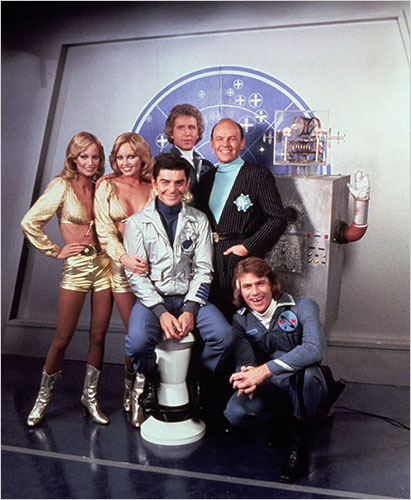
This show’s concept was also a bit of a reach. It took place on Perma 1, a space station in 2222. Adam Quark (Richard Benjamin) had a mission to clean up all the trash in outer space. Quark took orders from a giant disembodied head called, what else, The Head, along with Perma 1’s architect Otto Palindrome (Conrad Janis). If you think this sounds crazy, wait till you learn about Quark’s crew: a part fish/part fowl first officer, a humanoid vegetable named Ficus, clones Betty 1 and Betty 2, and Andy the Robot, a walking junk pile. I was surprised not that it was cancelled after two months, but that it lasted two months. I was also surprised to learn that Buck Henry was the creative force behind this series.
Sanford Arms
Photo: humormillmag.com
A year later in 1977 we have another interesting set-up. When Redd Foxx and Demond Wilson, the two stars, the only stars, left the show Sanford and Son, Norman Lear was left with a show title only. Aunt Esther (LaWanda Page) had been one of the cast members on Sanford and Son and suddenly she was at the hub of this new show. Phil Wheeler (Theodore Wilson) a widower with teenagers buys the house, the junkyard and Esther’s rooming house and tries to start a residential hotel. A month or so later, before he could even make his first payment, the show was done.
Another Day
Photo: wikipedia.com
David Groh (who had played Rhoda’s husband) is Don Gardner, a struggling businessman who can’t make ends meet. His wife Ginny (Joan Hackett) has to get a job, and they both had to deal with their introverted son Mark (Al Eisenmann) and their extroverted daughter Kelly (Lisa Lindgren), as well as Don’s mom Olive (Hope Summers who had played Clara on The Andy Griffith Show) who is critical of all of them. Don struggled through a few episodes and was finished.
Apple Pie
Photo: wikipedia.com
A lonely hairdresser played by Rue McClanahan named Ginger-Nell Hollyhock placed ads in the newspaper for a family. The family that she “found” included a daughter (Caitlin O’Heaney) who tap-danced, a son (Derrel Maury) who wanted to fly like a bird, an elderly grandfather (Jack Gilford), and con-artist Fast Eddie (Dabney Coleman). The show was set in Kansas City in 1933. It took place during the Depression and depression is what anyone watching felt, although the pain was fleeting. After one episode the network decided no one wanted this family.
Hanging In
This one was so bad they didn’t want any evidence so there are no photos.
Another flop came along with a star who had been another star’s spouse. Bill Macy who played Maude’s long-suffering husband starred in this show as Louis Harper, a former football hero who did not have the right credentials to be a university president. He has a desire to help the underprivileged, but the rest of the faculty is more concerned about raising money. Other cast members included high-pressure dean Maggie Gallager (Barbara Rhoades), PR man Sam Dickey (Dennis Burkley), and housekeeper Pinky Nolan (Nedra Volz). No finals for this series; it was cancelled after a few weeks.
Hizzoner
Photo: imdb.com
David Huddleston plays Mayor Cooper who runs a small Midwestern town. The cast included the mayor’s secretary Ginny (Diana Muldaur), the mayor’s daughter (Kathy Cronkite, yes Walter’s daughter) and several other quirky characters. While the mayor is quite conservative, his children are left-wing liberals. Apparently, the mayor broke out into song at least once an episode. I guess, he was singing the blues because the show was cancelled after 7 episodes.
In the Beginning
Photo: collectors.com
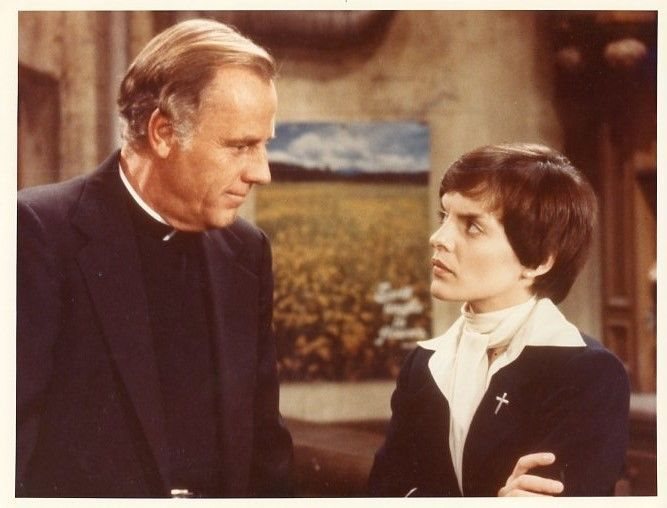
The year 1978 just keeps getting worse for television series. Father Daniel Cleary, played by McLean Stevenson, works in a community center in the heart of Baltimore. Sister Agnes (Priscilla Lopez) works with him. She loves her neighborhood; Father Cleary does not. She is fairly liberal and he is not. It ended almost before it began after seven episodes.
Miss Winslow & Son
Photo: sitcomsonline.com
In this one, an unmarried woman (Darleen Carr) who is an art designer, decides rather than marry a man whom she doesn’t love, she will become a single mother after getting pregnant. Her next-door neighbor Mr. Neistadter (Roscoe Lee Browne) hates kids. Her wealthy and snobby parents are divided about her situation; her father (Elliot Reed) is much more sympathetic than her mother (Sarah Marshall). Before the baby had its first check-up, the show was off the air.
13 Queen’s Boulevard
Photo: sitcomsonline.com
This show was about “a hilarious group of tenants in a garden complex in Queens, New York.” In the first episode, one of the tenants, Felicia Winters (Eileen Brennan) decides to host a class reunion and invites her best friend and spouse, her ex-husband, the class “sexpot,” Fat Hughie, and the class photographer. I don’t know what could possibly go wrong; however, not much went right since it was gone within two months.
Turnabout
Photo: bionicdisco.com
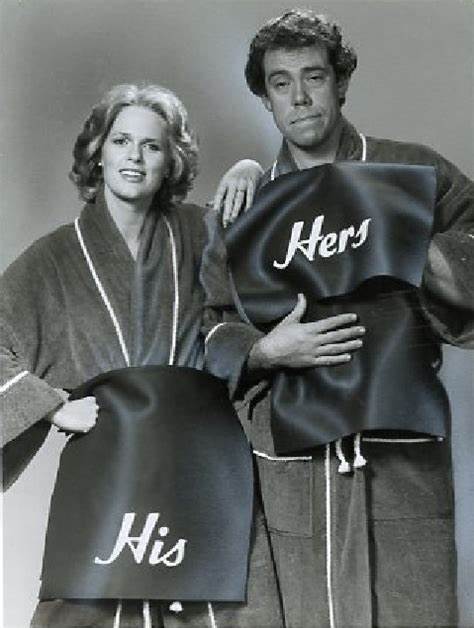
I get Freaky Friday, but in this series the husband and wife switch places. A magic statue allows them to inhabit each other’s bodies. Sam Alston (John Schuck) is a sportswriter and his wife Penny (Sharon Gless) is a cosmetics executive. The couple tries to live both their own life and their spouse’s life whenever they switch back and forth. They also must focus on keeping the switch a secret. We never know who is who, and all the audience knew is they didn’t like either one of them, and the show was cancelled after a few weeks.
Waverly Wonders
Photo: sitcomsonline.com
NBC decided Joe Namath would be a good person to build a sitcom around. However, he’s not a football player in this show; he’s a former pro basketball player, Joe Casey, who now teaches history at Waverly High in Wisconsin. Linda Harris (Gwynne Gilford) is the principal and Mr. Benton, who they call “Old Prune Face” (Ben Piazza) was the former coach. The only problem is Joe Casey is a bad history teacher and a bad coach. That apparently makes for a bad show because it was cancelled after three episodes aired, although nine were made.
Struck by Lightning
Photo: metershow.com
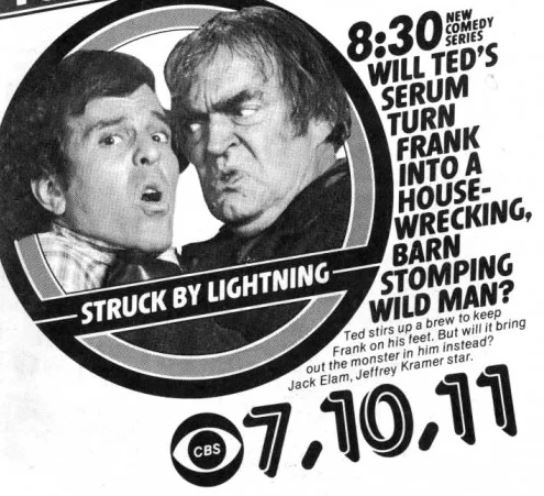
If you think the concept of some of these shows was weird, wait to you hear about this one. Frank (Jack Elam) is the caretaker of an old inn in Massachusetts. A science teacher, Ted Stein (Jeffrey Kramer) inherits the inn and decides to sell it. Then he realizes that Frank was really a 231-year-old Frankenstein monster. Ted just happens to be the great-great-grandson of the original Dr. Frankenstein. So, they decide to run the inn together. Rounding out the cast was Glenn (Bill Erwin) who had been living there forever, Nora (Millie Slavin) who managed the inn before Ted came, Nora’s son Brian (Jeff Cotler), and real estate agent Walt (Richard Stahl). Apparently, the only thing “great” about the show was Ted’s relationship to Frankenstein because the network canceled it after five episodes.
So, you might be wondering with all these awful shows, what made it on the air more than a couple of months during the late 1970s. In 1977 the only shows that made it to the next season were Three’s Company and Soap. In 1978 Mork and Mindy and Taxi were the “classics” followed by Diff’rent Strokes and WKRP in Cincinnati. Without Robin Williams, Mork and Mindy would probably have been another concept that would have lasted a couple of weeks. In 1979, out of 21 shows that debuted that fall, Facts of Life was the only one that returned for a second season. With the exception of Taxi and WKRP, I would not rate any of these shows true classics, although you could make a good case for Soap. Anyway, the bar was set pretty low for success during the late 1970s.
At least television viewers could go to the movies for a bit of entertainment. This was the era of Animal House, Annie Hall, Close Encounters of the Third Kind, Grease, Kramer vs Kramer, Rocky, Saturday Night Fever, and Smokey and the Bandit. Things stayed pretty glum on the small screen until 1982 when Cheers, Newhart, and FamilyTies saved us.
Continuing our series about “Valerie,” today we look at a slice of American life from the 1970s. It’s hard to emphasize how much the movie Saturday Night Fever changed American culture. In the movie, a high school graduate played by John Travolta, escapes his hard life by dancing at the local disco. The hippie culture of the late 1960s and early ‘70s was shoved aside by the bold and brash disco era. It was hard to go anywhere without the background soundtrack of the movie being heard. Extravagant clothing and three-piece suits were back in style, along with platform shoes and blingy jewelry.
Photo: ebay.com Saturday Night Fever, the movie that started it all
A year after the movie debuted, a new show called Joe and Valerie appeared in April of 1978. Joe (Paul Regina) works at his father’s plumbing store. He meets Valerie (Char Fontane) at the disco and they get romantically involved. However, Joe’s roommates, Paulie (David Elliott), a hearse driver, and Frankie (Bill Beyers/Lloyd Alan), a spa worker and chauvinist, have their opinions on the romance as does Valerie’s divorced mother Stella (Arlene Golonka). Rounding out the cast were Robert Costanzo as Joe’s father Vincent and Rita/Thelma (Donna Ponterotto), Valerie’s best friend.
Photo: moviepictures.org
The series was produced by Bob Hope’s production company, Hope Enterprises, and his daughter Linda served as executive producer. Bill Persky, who had been one of the forces behind That Girl, directed the first episode.
The writers for the show included Howard Albrecht, Hal Dresner, Bernie Kahn, and Sol Weinstein. Kahn and Dresner also served as producer for an episode each. Art direction was credited to Bruce Ryan and shop coordinator to Edwin McCormick.
Photo:ebay.com The chic couple: Makes a person wonder doesn’t it
The series was divided into two parts; in 1978 the episodes show Joe and Valerie meeting, falling in love and planning their future. Jumping to January 1979, the episodes center around the couple beginning their married life. Four half-hour episodes aired in April and May of 1978. Four half-hour episodes were set to air in January, but only three did; the final episode never was played on the air.
Episode 1, “The Meeting” aired April 24, 1978. Joe and Valerie meet at the disco and fall in love when Joe bets his roommates that he can take Valerie away from her dancing partner.
Episode 2, “The Perfect Night” aired May 1, 1978. Valerie arranges dates for Frank and Paulie. She sets up Frank with her best friend Thelma and the date is a disaster. The woman she set Paulie up with ended up getting married the night before, so Valerie is frantically looking for a substitute. Albrecht and Weinstein were credited as writers.
Episode 3, “Valerie’s Wild Oat” aired May 3, 1978. Joe and Valerie’s romance hits a potential roadblock when Valerie finds out that her new boss at the store is her ex-boyfriend Ernie (Marcus Smythe).
Photo: backdrops.com.au The Village People, a big part in the disco fad
Episode 4, “The Commitment” aired May 10, 1978. When Valerie’s mother is unexpectedly called away for the weekend, Joe and Valerie face the prospect of spending their first night together. Joe loves Valerie too much to stay but worries how his roommates will react if he doesn’t.
Episode 5, “The Engagement” aired January 5, 1979. Joe and Valerie break the news to their parents that they are going to live together and looking for a place to live through a rental service which adds to the confusion.
Photo: blogspot.com Disco fashion
Episode 6, “The Wedding Guest” aired January 12, 1979. Joe and Valerie learn that a gangster’s funeral has been scheduled at the same time as their wedding at the church.
Episode 7, “The Wedding” aired January 19, 1979. The newly married couple look back at the events that occurred around their wedding. Some of the problems included Vince wanting Valerie to wear his wife’s old-fashioned wedding dress, Frank and Paulie fighting over who is best man, and Valerie’s mother threatening to stay away from the wedding if her ex-husband comes.
The final episode, “Paulie’s First Love,” was never aired.
This was a bad year for series’ debuts. A number of shows flopped during this year including Hizzoner, Sweepstakes, and Supertrain, none of them making it to more than nine episodes.
Photo: celebritybio.com Char Fontane
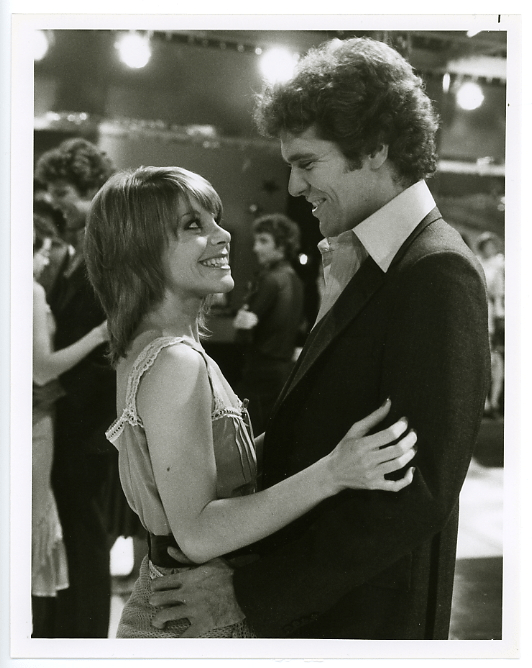
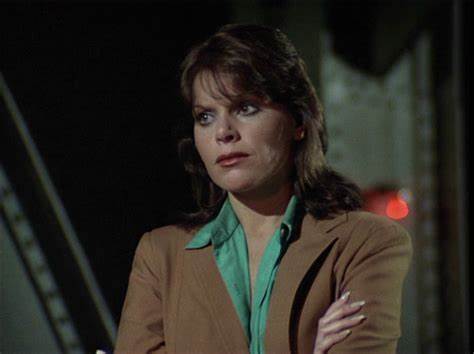
Char Fontane (also listed as Fontaine occasionally) was born in California in 1952. She passed away from breast cancer in 2007. Before being cast in Joe and Valerie, she appeared on a variety of tv series in the 1970s and a couple after: LoveAmerican Style (1972), The FBI (1973), Barnaby Jones (1979), Supertrain (1979), Sweepstakes (1979), The Love Boat (1979), and Nero Wolfe (1981). In the mid-1980s she took a role in a made-for-tv movie, The Night the Bridge Fell Down and two movie roles: Too Much (1987) and The Punisher (1989). She was not credited with any roles after the 1989 movie.
Photo: weebly.com Char Fontane in The Night the Bridge Fell Down
Paul Regina was born in Brooklyn in 1956 and passed away from liver cancer in 2006.
Photo: snipview.com
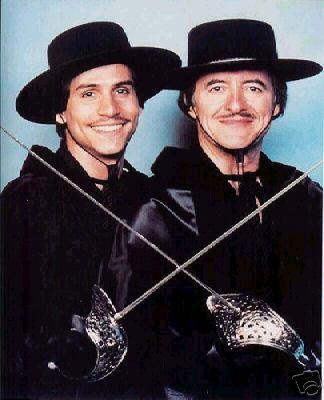
Before his role on Joe and Valerie, he had parts in The Hardy Boys/Nancy Drew Hour and Police Woman both in 1978. After the show ended, his career stayed fairly busy. Throughout the 1980s and 1990s, he could be seen on many popular television shows including Benson, Gimme a Break, TJ Hooker, Hunter, and EmptyNest. He would be cast in three series: Zorro and Son in 1983, Brothers from 1984-89, and The Untouchables in 1993-94. He also had a recurring role as a lawyer on LA Law between 1988-1992.
Photo: waytoofamous.com
Post 2000 before his death he was in Law and Order several times as well as two movies, The Blue Lizard and Eddie Monroe.
David Elliott had a successful career going when he received the role of Paulie. He began with several roles on tv including a mini-series, Pearl, that Char Fontane was also in. From 1972-1977, he had a role in The Doctors in 272 episodes. Before beginning Joe and Valerie, he had a role on Angie in 1979.
OLYMPUS DIGITAL CAMERA Photo: imdb.com
After the show ended, he continued showing up in television series including TJHooker, St. Elsewhere, Simon and Simon, and Murder She Wrote. He ended his credited acting career with seven movies in the 1990s.
He is an interesting guy. After dropping out of high school, he drove a cab in New York. He was a professional boxer, ran a PI business in Hollywood, received his pilot’s license, sat on the board of a major labor union, and traveled extensively through every continent except Africa and Antarctica. Recently he earned a certificate in both long and short fiction from the UCLA Writer’s program and has written a novel, The Star Shield, about a body guard trying to rescue a kidnapped movie star. Currently he is working on a collection of short stories.
The role of Frankie was played by two different actors, Bill Beyers in 1978 and Lloyd Alan in 1979.
Photo: headhuntersholo.com Bill Beyers
Bill Beyers was born in New York in 1955 and died in 1992 in Los Angeles. His first role was that of Frankie on Joe and Valerie. Following the end of that show he was cast in several series including Barnaby Jones, Quincy ME, The Incredible Hulk, CHiPs, Too Close for Comfort, and Murder She Wrote. He had a recurring role on Capitol, appearing in 24 episodes from 1982-1987.
Photo: ztams.com
Lloyd Alan was in 1952. He might have had the shortest career of the cast. Before being cast in Joe and Valerie, he was in an episode of Eight is Enough. After he appeared in The Love Boat, Knight Rider, and Baywatch. His last credited acting job was 1998. I was unable to locate a photo of Lloyd Alan.
The actors with the longest careers were Robert Costanzo who played Joe’s father Vince; Arlene Golonka who was Stella, Valerie’s mother; and Donna Ponterotto who played Rita/Thelma, Valerie’s best friend.
Donna Ponterotto had a successful career following the cancellation of Joe and Valerie. She came to the show having appeared on The Police Story, Happy Days, and Rhoda.
Photo: imdb.com
Following the show, she appeared on Trapper John MD, Laverne and Shirley, TheLove Boat, Who’s the Boss, Murder She Wrote, Night Court, Murphy Brown, ER, Mad About You, Third Rock from the Sun, and NYPD Blue among others. Her last film was Sharkskin in 2015.
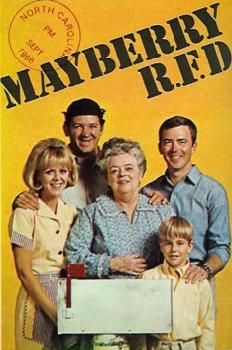
Arlene Golonka grew up in Chicago where she was born in 1936. She began taking acting classes when she was quite young. At age 19, she headed for New York and began a career on Broadway. In the 1960s she relocated to Los Angeles. She continued to appear in movies and appeared in dozens of television programs during the next three decades. While she is probably best known as Millie on Mayberry R.F.D., she has appeared in many respected series.
Photo: blogspot.com
Golonka came into Joe and Valerie with a strong resume. She had made appearances in shows such as The Naked City, Car 54 Where Are You, The Flying Nun, Big Valley, Get Smart, I Spy, That Girl, M*A*S*H, All in the Family, Barnaby Jones, Alice, The Rockford Files, and Love American Style. She made five appearances on The Doctors with David Elliott.
Photo: pinterest.com
After Joe and Valerie, she continued to receive many roles including on FantasyIsland, The Love Boat, Simon and Simon, Benson, and Murder She Wrote. Her last appearance was on The King of Queens in 2005, and she is now retired.
Robert Costanzo was born in New York in 1942. He also came into the show with a very strong string of shows, having been in Rhoda, The Bob Newhart Show, and Lou Grant. He also was in several profitable movies including Dog Day Afternoon, The Goodbye Girl, and Saturday Night Fever.
Photo: pinterest.com
Following the end of Joe and Valerie, he would continue his successful career. Costanzo has been cast in recurring roles in ten shows: Last Resort, Checking In, The White Shadow, Hill Street Blues, LA Law, 1st Ten, Glory Days, NYPD Blue, Charlie and Grace, and Champions. He has continued to take roles on other series including Barney Miller, Alice, Who’s the Boss, Family Ties, St. Elsewhere, The Golden Girls, Friends, and Murder She Wrote.
His movie career has also been very successful, and he is remembered for his roles in Used Cars, Total Recall, Die Hard 2, and Air Bud.
Currently Costanzo is still acting and has several movies debuting in the next couple of years.
Photo: sitcomsonline.com
I have to admit I do not remember Joe and Valerie, and obviously I did not watch it, but I don’t think I missed much. It’s fun to learn about some of the more obscure shows that had a brief flicker in television history. There are many more shows that lasted for less than 20 episodes than there are the classics we remember today. If nothing else, the show captures a unique time in American history.
As I finish 1980s Rewind today, I chose a heart-warming show that followed the typical formula by standing it on its head, Who’s the Boss. The show was created by Martin Cohan and Blake Hunter. Cohan was a producer and writer for The Bob Newhart Show and wrote for many other shows including The Mary Tyler Moore Show. Hunter wrote and produced episodes of WKRP in Cincinnati.
Photo: cbsnews.com
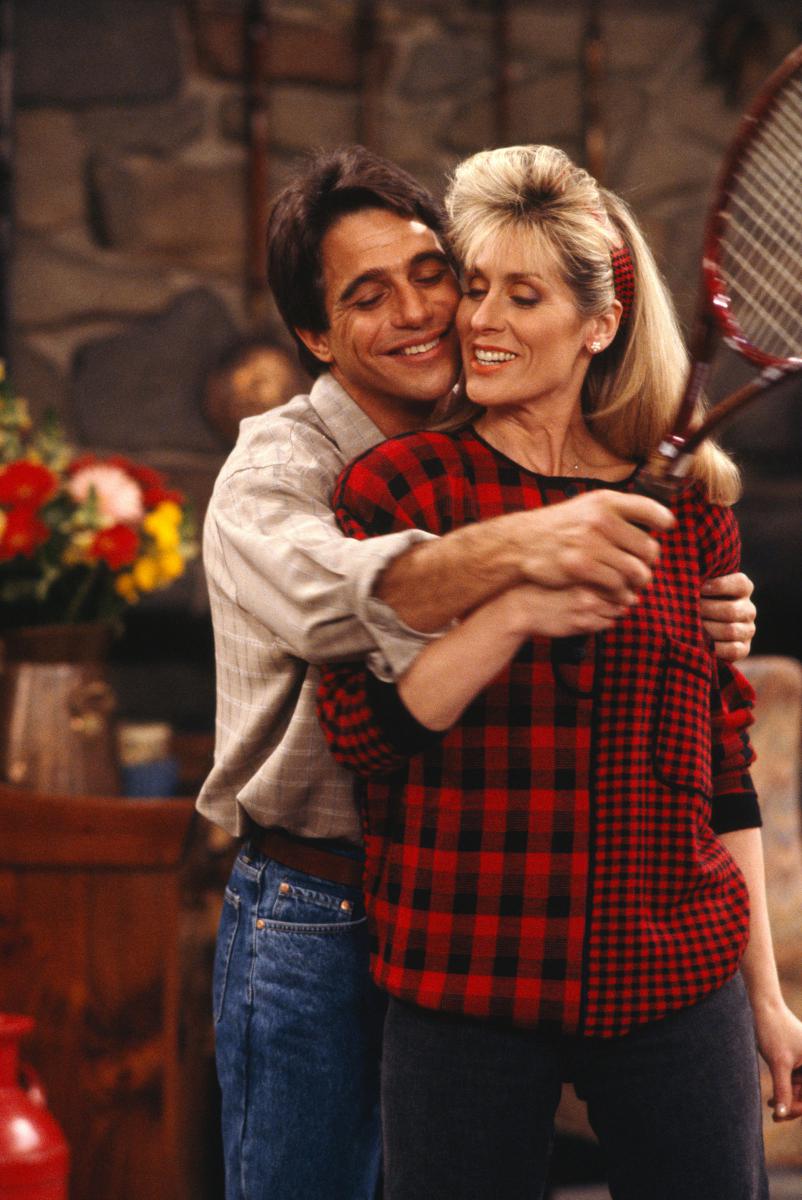
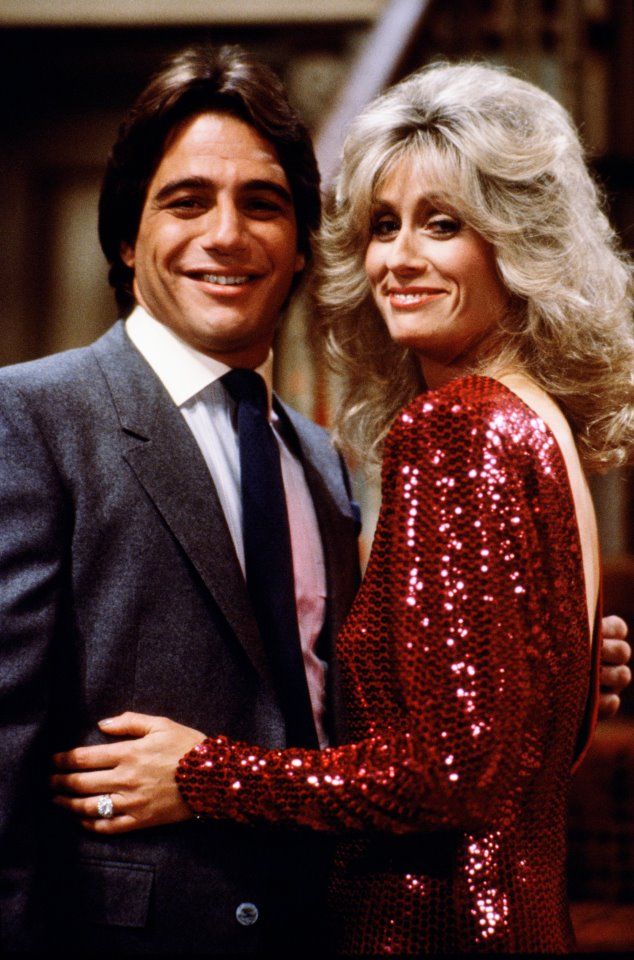
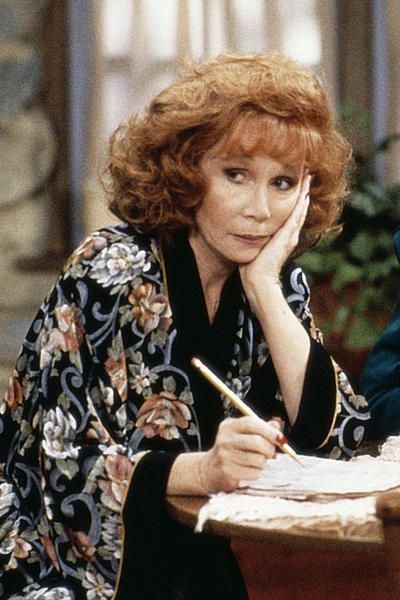
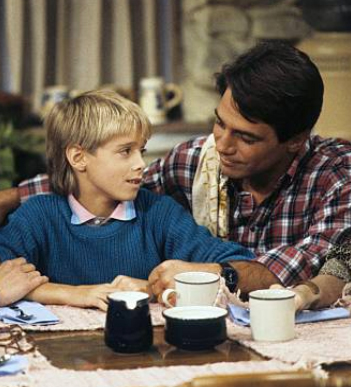
Instead of the successful senator who hires a housekeeper like The Farmer’s Daughter, on this show Angela Bower (Judith Light), an advertising executive, hires Tony Micelli (Tony Danza), a former baseball player (St. Louis Cardinals) to be her housekeeper. Instead of Uncle Charlie like My Three Sons, the show has Mona (Katherine Helmond), Angela’s mother giving wise advice and sarcastic comments. Tony has a daughter Samantha (Alyssa Milano) and Angela has a son Jonathan (Danny Pintauro). All together they form one typical family unit. The show was on ABC for eight years from 1984-1992, so viewers literally watched the kids grow up. Tony is laid back and flexible, while Angela is a bit more uptight and organized. Angela and Tony functioned as parents on the show, but they also had the possibility of a romance between them.
Photo: imdb.com
After a shoulder injury, Tony is forced to change careers. He wants his daughter to experience a better life. The Bowers live in Connecticut in an upscale neighborhood. Originally, the show was titled “You’re the Boss,” but it was changed to plant a question of who really ran the house. However, viewers all realized that the kids were really the bosses.
WHO’S THE BOSS? – “Angela Gets Fired: Part II” – Airdate: September 30, 1986. (Photo by ABC Photo Archives/ABC via Getty Images)ALYSSA MILANO;DANNY PINTAURO;KATHERINE HELMOND
The cast jelled very well together. They had their differences of opinion, but they grew close and experienced the normal family ups and downs when five very different people spend so much time together. Mona’s wit and targeted observations kept things light and funny.
Photo: sonypicturesmuseum.com
Photo: pinterest.com
During most of the series, Tony and Angela try to avoid the romance developing between them. They both date other people. They also become best friends, relying on each other as a husband and wife would. They often discuss issues the kids are having. They both “parent” each of the kids. They both grow and change during the course of the series. Angela becomes less tense and risks opening her own firm. Tony enrolls in college. Producers always seem to waiver “between should they get together or not.” Shows like Castle, That Girl, and Friends struggled with keeping the magic alive and keeping the show realistic. Somehow the producers and writers for Who’s the Boss kept the tension and potential romance alive for seven years. During the last season, they realize they are in love with each other.
Photo: mentalfloss.com
There were many stars who appeared on the show during the years including Frank Sinatra, Ray Charles, Mike Tyson, and Leslie Nielsen. One of the episodes was when Robert Mandan appeared on a few episodes as Mona’s love interest. Mandan had played her husband on the show Soap.
Photo: eonline.com
The theme song lyrics were written by creators Cohan and Hunter. Titled “Brand New Life,” the music was composed by Larry Carlton and Robert Kraft. Three different versions were used over the years: Larry Weiss sang it from 1984-1986; Steve Wariner from 1986-1989; and Jonathan Wolff from 1989-1992.
WHO’S THE BOSS? – “Samantha’s Growing Up” – Season One – Airdate: January 8, 1985. (American Broadcasting Companies, Inc.)
ALYSSA MILANO, JUDITH LIGHT, KATHERINE HELMOND, TONY DANZA
Early reviews were lukewarm. Critics liked it but they were a bit dismissive of it being a real hit. Viewers didn’t agree. They loved the show. During its tenure, the show was nominated for more than forty awards, including ten Primetime Emmys and five Golden Globes. From 1985-1989, it ranked in the top ten.
Photo: fatsaloon.com
Photo: eonline.com
The show aired on Tuesday nights for the first seven years. In the fall of 1991, the network moved the show to Saturday nights against The Golden Girls. The ratings went down after the move and the network decided to cancel the show. There was a great debate about whether Tony and Angela should marry in the finale. Sam had married earlier in the season and Tony and Angela admitted they were in love. However, Danza was opposed to the marriage and there was a concern that if a wedding took place, it might affect the syndication options. Instead of a wedding, Tony and Angela break up. But in the last scene, Tony is at Angela’s house applying for the job of housekeeper, very similar to the very first episode of the show.
The show created a spinoff but in a far-reaching definition of spinoff. In one episode, Leah Remini was a friend of Sam’s, a homeless model. Beginning and ending in 1989, the show Living Dolls starred Remini, Michael Learned, and Halle Berry.
Photo: cbsnews.com
While Tony went back to school during the series, Danza emulated him in real life. He graduated with an education degree. He wrote a book, I’d Like to Apologize to Every Teacher I Ever Had: My Year as a Rookie Teacher at Northeast High. He taught English at a school in Philadelphia.
Photo: celebritynooz.com
Photo: etcanada.com
The cast of Who’s the Boss was a close-knit one, and they still keep in touch almost twenty years later. Light commented that they are all still close and she said she probably kept in touch with Tony the most. “He checks in all the time just to see how the kids are doing, he’s very sweet.” Danza once discussed how emotional it was for him to give Milano away as a bride on the show. “She was like my little girl, you know. She started on this show when she was 10. Now she’s 19, we married her off. I mean, it’s easy to get emotional, it really is.”
Photo: people.com
Photo: imdb.com
Milano was also very close to Light. A couple of years ago, the two stars ran into each other for an event, and Milano tweeted, “Nothing makes me happier than seeing Judith Light. Nothing.”
Photo: pinterest.com
They were all saddened by the death of Katherine Helmond in March of 2019. Danza also discussed Helmond in an interview. “Katherine Helmond was a remarkable human being and an extraordinary artist; generous, gracious, charming and profoundly funny.” After her death, he commented that “She was such an influence on me. No matter what problem I had, I could go to her. Very few people could match her. She was a consummate professional. She never made a mistake and she always got the laugh. She was the sexy older lady who could keep up with the young people. She just had a way about her.”
Editorial use only. No book cover usage.
Mandatory Credit: Photo by Moviestore/REX/Shutterstock (1646629a)
Who’s The Boss , Katherine Helmond, Tony Danza
Film and Television
Light also discussed Helmond. “She taught me so much about life and inspired me indelibly by watching her work. Katherine was a gift to our business and to the world and will be deeply missed.”
Photo: spm.com
Her television grandchildren also remembered her fondly. Milano paid the following tribute to her: “My beautiful, kind, funny, gracious, compassionate rock. You were an instrumental part of my life. You taught me to hold my head above the marsh! You taught me to do anything for a laugh! What an example you were!” Pintauro said she was “the best TV grandmother a boy could ask for. Even still, I’m just as devastated as I was when I lost my real grandma. A beautiful soul has left us for the next chapter, may you make them laugh Katherine!”
Photo: youtube.com
This is another one of those undervalued shows. Although there were some really great shows on television during the mid and late 1980s, some of the top-rated shows on in this decade included Knot’s Landing, Charles in Charge, Diff’rent Strokes, Silver Spoons, and Facts of Life. Who’s the Boss was a much better written and acted show than any of these. The show combined the best elements of sitcoms and created a fresh approach to a family comedy.