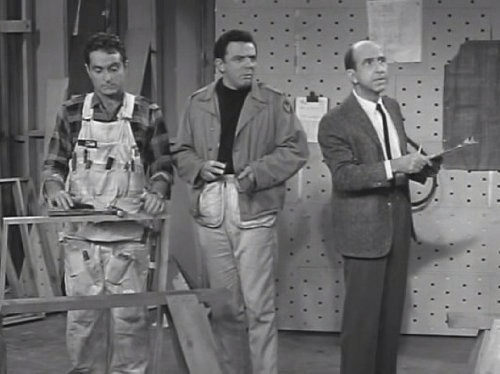
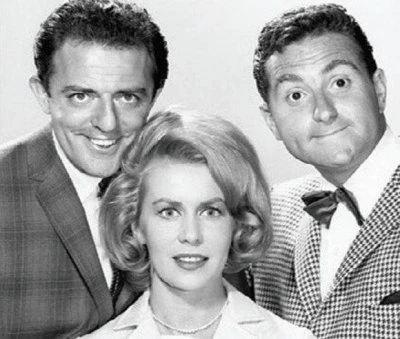
Today we wind up our Funny Duos theme with Ichabod and Me. The show was on for one season from 1961-1962. Joe Connelly and Bob Mosher served as executive producers for the show. They were also the creatives behind Leave it to Beaver.
📷imdb.com
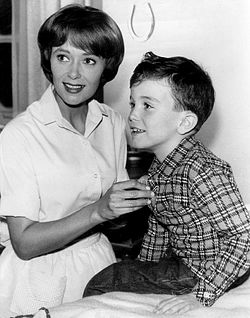
Widower Bob Major (Robert Sterling) and his six-year-old son Benje (Jimmy Mathers) relocate from New York City where he worked for the New York Times to Phippsboro in New Hampshire. Bob purchased the newspaper there from its longtime owner Ichabod Adams (George Chandler). Ichabod and Bob don’t see eye to eye very often as Bob tries to move the town to a new progressive direction. However, Ichabod not only owns much of the town, but he is the mayor, the school superintendent, and traffic commissioner. Ichabod tries to advise Bob with fatherly wisdom about navigating local conflicts.
Had the show been more successful, Jimmy Mathers might have become as well known as his brother Jerry Mathers who was the Beaver.
📷wikipedia.com
Eventually Bob dates Ichabod’s daughter Abby (Christine White). Rounding out the cast is housekeeper Aunt Livvy (Reta Shaw), high school employee Jonathan (Jimmy Hawkins), townsmen Olaf (Burt Mustin) and Colby (Forrest Lewis), hardware store owner Martin (Guy Raymond). Many of Bob’s conflicts are with Olaf and Colby who are on the City Council and listen in on the town’s party line to many of the phone calls in the town.
The characters of Bob and Ichabod were originally created for a dramatic episode that aired on Robert Montgomery Presents titled “Goodbye, Grey Flannel.”
The opening and closing numbers were performed by Pete Rugolo and His Orchestra.
Unfortunately, the critics were not kind to the show. Associated Press critic Cynthia Lowry wrote that “Ichabod and Me amounted to a pretty tired, clumsy effort” and that it was more likely to offend New Englanders than attract them as viewers. Harriet Van Horne said that “a network that would by Ichabod for prime evening time would buy the Brooklyn Bridge from a tavern drunk—and pay cash.” And Variety said it was “just another run-of-the-mill situation comedy, typically innocuous in its content and wholly bland in its approach . . . there were no surprises and few laughs on its first outing.”
📷wikipedia.com
The show aired on Tuesday nights. The series competed against The New Breed on ABC and The Dick Powell Show on NBC. After the miserable reviews, it wasn’t surprising that the show failed to attract viewers and it was cancelled after 36 episodes.
Sometimes critics get it wrong, but it sounds like this show was not a great one. That’s too bad because they had a great cast. There were not a lot of successful shows debuting this year. The only ones that are remembered today include The Dick Van Dyke Show, BenCasey, Mister Ed, and Hazel.
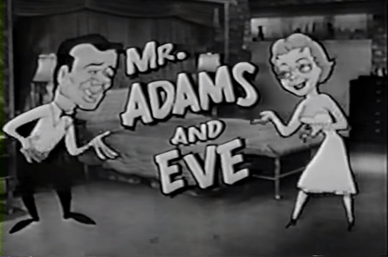
Funny Duos is our blog theme for June. Today we look at a partnership that’s a little different than the other shows we checked out so far. Mr. Adams and Eve, starred Howard Duff and Ida Lupino, a couple that was married in real life. Another difference with this series is that it made it two seasons before being canceled.
📷tvparty.com
In an interview with the Television Academy, Sol Saks said he was very proud of this show. He said it was the first time Lupino had done comedy and she was great to work with. He said he met with the couple and just hanging out at their home, he heard several plots for shows. For example, he heard their maid making horse bets on the phone and at one time, Lupino answered the door and a vacuum salesman was there and wanted to sell her an appliance, but she said she would have to ask their financial people and get back to him. Saks then learned that Lupino didn’t know how to purchase an appliance by herself. So many of the stories from their real life ended up in scripts.
Saks left this show because he was tired of always writing for one show over and over and decided to write movie scripts and pilots.
📷everettondemand.com
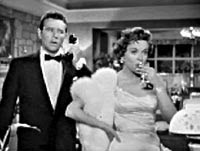
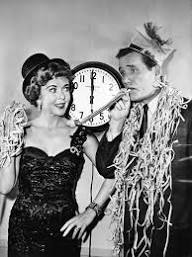
The show debuted on CBS in January 1957. The series follows two Hollywood stars who live in Beverly Hills. Eve (Lupino) grew up in a family in the entertainment business and is more dramatic and over the top while her husband Howard (Duff) is a humble and quiet man.
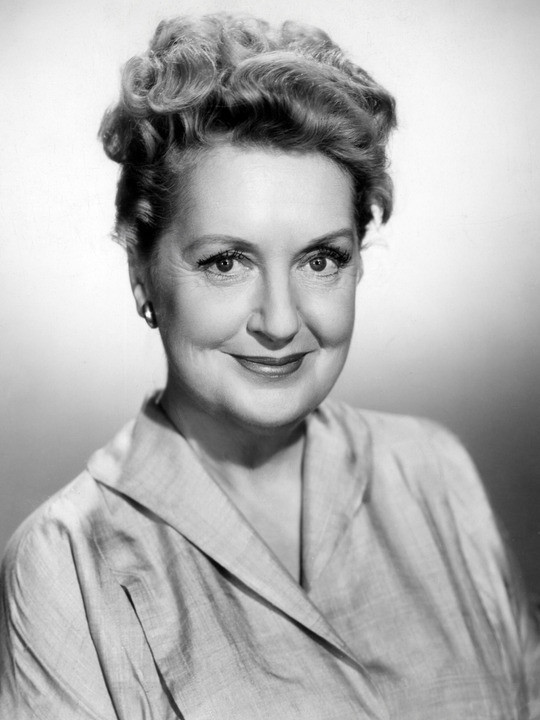
There was a large supporting cast in this show. It includes their studio boss Joe J.B. Hafter (Alan Reed), director Max Cassolini (Lawrence Dobkin/Christopher Dark), agent Steve (Hayden Rorke), housekeeper Elsie (Olive Carey), Eve’s mother Connie (Lee Patrick), and the Stewarts (Frances Robinson and Dan Tobin), their good friends. Their daughter Bridget also pops up on one episode portraying Mary Pickford.
While some of the plots are about their domestic life, most of the action involves their professional challenges.
David Rose was brought on as composer. I’m not sure how awkward it was or was not, but Lupino’s ex-husband Collier Young was the creator and executive producer.
The show originally aired on Friday nights. Its competition was Treasure Hunt and The Joseph Cotton Show. I would think with two stars of their magnitude, they would win the ratings for this time slot, but the show was moved to Tuesdays during the second season. The competition that night was a bit tougher with established shows Cheyenne and The Eddie Fisher Show.
📷findagrave.com Lee Patrick
Lupino and Duff made the decision to end the show when they didn’t get the viewership they were hoping for to pursue individual projects for the following year. Duff starred in Dante about a nightclub owner which only lasted one season. While both stars appeared in many different television series over the decades, neither of them starred in another show. The couple’s marriage lasted much longer than their show but it did end in divorce in 1984.
Lupino was nominated for an Emmy both years and Richard Kinon was nominated for director. Lupino had some tough competition. In 1958 she competed against Spring Byington (December Bride), Eve Arden (The Eve Arden Show), Jane Wyatt (Father Knows Best), and Jan Clayton (Lassie). In 1959 other nominees were Byington, Wyatt, Ann Sothern (The Ann Sothern Show), Gracie Allen (Burns and Allen), and Donna Reed (The Donna Reed Show.) Wyatt won both years, and the directing Emmy went to Peter Tewksbury also for Father Knows Best.
📷wikipedia.com
Perhaps one of the best things about this show was its opening. It had cartoonish figures similar to the Bewitched opening, but they were in a real setting, another show Sol Saks worked on. One of my favorite characters was Eve’s mother Connie who Eve called Connie. She brought a lot of fun to every scene she was in.
The episodes I watched were pretty good, especially for the late fifties. At least the Duffs made a successful transition from the movies to television and ended the show on their own terms. There is a DVD of shows out there as well as episodes on YouTube.
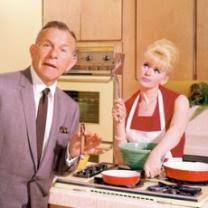
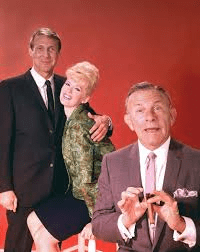
As we continue our theme of Funny Duos, today we delve into Wendy and Me, starring George Burns. This one debuted on ABC in fall of 1964 and was canceled by the next season.
📷tvtango.com
Gracie Allen passed away from a heart attack in 1964. She had quit the Burns and Allen show to get away from the fast pace of show business. Burns wasn’t ready to retire, so he agreed to star in this sitcom with Connie Stevens.
Burns, a former entertainment performer, owns an apartment building where Wendy Conway (Stevens) lives with her husband Jeff (Ron Harper). Burns practices singing for five or six hours a day just in case he is able to make a comeback. There were a lot of complaints, so he had to buy the building to keep practicing. Also in the cast was Danny Adams (James T. Callahan), a friend of Jeff‘s who’s a playboy, and Mr. Bundy (J. Pat O’Malley), the superintendent.
Like his previous show, Burns can watch a television playing Wendy and Me and talk to the audience about the events. This show was also similar to Burn and Allen in that George is the straight man while Stevens is the naïve, bit ditzy, scatterbrained blonde who is an airline stewardess and Jeff is a pilot. As George says, “having Wendy help you is like being lost in a desert for four days and then having someone give you a glass of sand.”
A running gag on the show is that Wendy celebrates everything from when she and Jeff had their first date to when she first put sugar in his coffee.
📷facebook.com
The show aired Monday nights. It was sandwiched between No Time for Sergeants, a military comedy, and The Jack Benny Show. However, its competition was The Lucy Show and The Andy Williams Show. The Andy Griffith Show was on before The Lucy Show, and both were top-ten hits so the struggle for viewers was challenging.
Actually the show was well written and I thought the dialogue was great. If this had been the original version of this show, it probably would have been a big hit. I’m guessing that it was hard to compete with Gracie and with her having just passed away, it felt wrong to cheer for me to root for someone else in her place. While those feelings might have come into some of the audience draw, I’m guessing the tough competition was this show’s biggest hurdle. It probably could have drawn viewers from younger generations who never saw the original Burns and Allen, but when it was up against The Lucy Show that followed The Andy Griffith Show, the viewers chose NBC. The Andy Williams Show also struggled in this time slot. If you want to check out a fun show from the sixties, this would definitely be a fun one to watch.
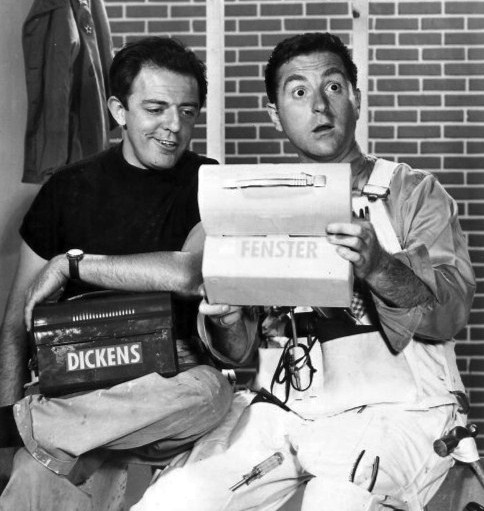
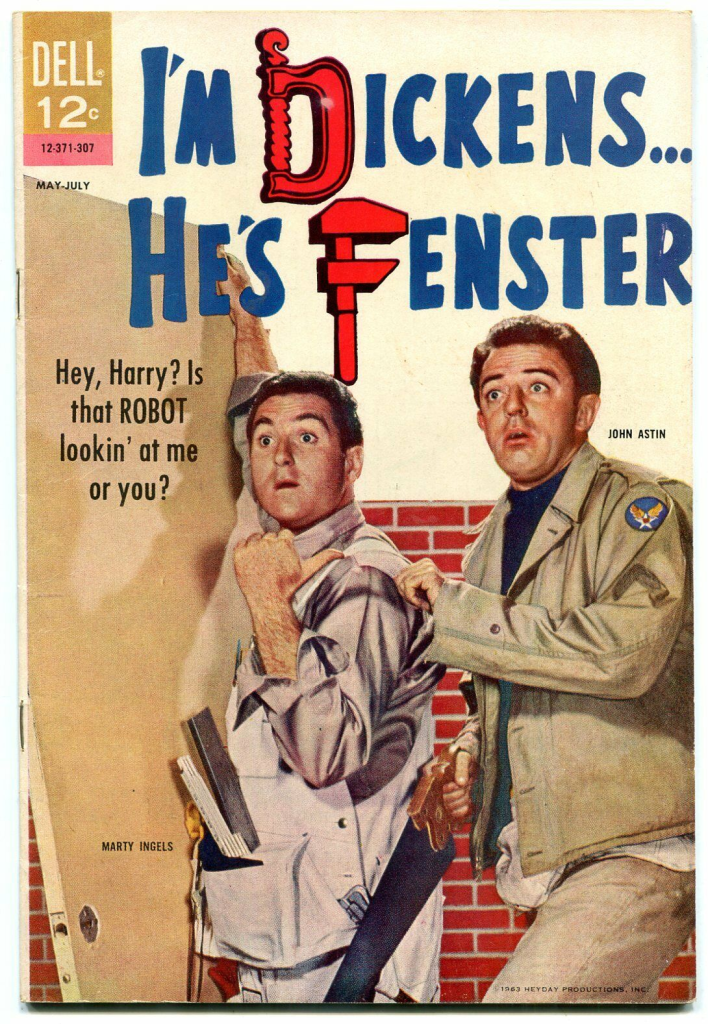
June’s blog theme is Funny Duos. Last week we learned about the Governor and J.J., a show created by Leonard Stern. Today it’s another show created and produced by Stern, I’m Dickens, He’s Fenster.
📷wikipedia.com
This show debuted on ABC in September 1962 and was canceled after one season. It starred John Astin and Marty Ingels.
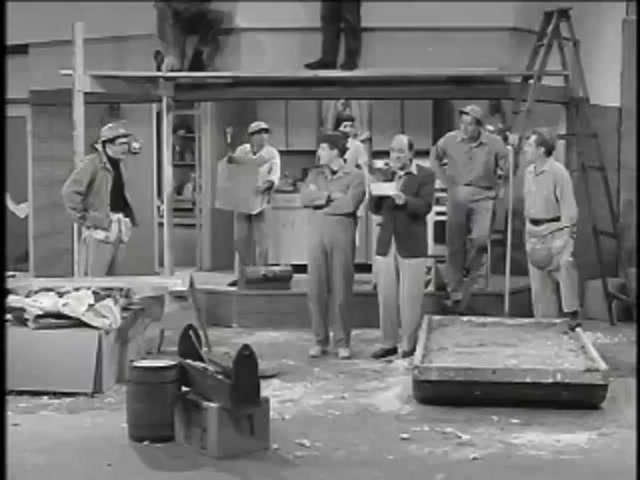
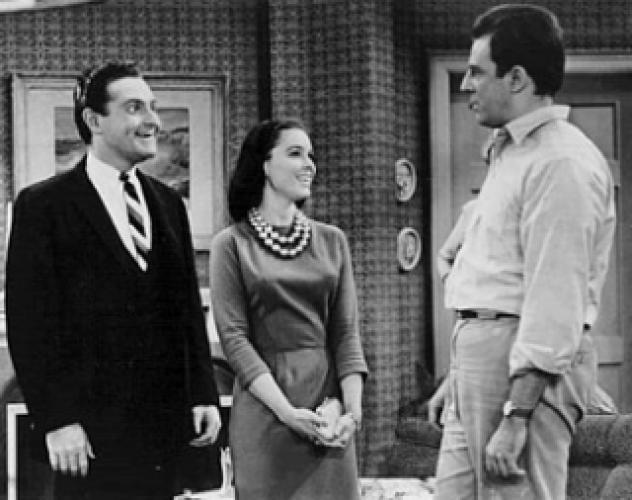
The plot is that two carpenters are best friends. Harry Dickens (Astin) is married to Kate (Emmaline Henry) while Arch Fenster (Ingels) is a swinging bachelor whose lifestyle is not okay with Kate. The two often clash with their boss, Mr. Bannister (one of my favorites, Frank DeVol). Rounding out the cast are coworkers Mel (Dave Ketchum), Bob (Henry Beckman), and Bentley (Noam Pitlik). We also meet a few of Fenster’s girls including Yvonne Craig, Ellen Burstyn, and Lee Meriwether.
Stern talked about casting for the show in his interview with the Television Academy. He had Ingels hired and then Stern and his wife saw Astin in a play at UCLA, and he was added to the cast. Stern said he needed a director who liked comedy and could bond with the actors well and was innovative because Stern didn’t like the three-camera shot. He hired Arthur Hiller who fit all three qualifications.
The show, unusual for the time, was filmed in front of a live audience. The comedy combined witty comments with slapstick comedy.
📷imdb.com
ABC placed it on Friday nights between The Flintstones, which was created for adult viewing, and 77 Sunset Strip. This should have provided a built-in audience, even though it was competing against Sing Along with Mitch and Route 66. At the end of the first season, it beat the competition in the ratings but was still canceled. One of the problems measuring viewership at this time was that a person watching was a person watching whether they were 6, 26, 56, or 106, so it was hard to tell which shows appealed to adults.
Astin discussed the reviews for this show during one of his interviews and said that “some of the critics said it’s the kind of humor that makes you laugh out loud in the living room, and that’s an accomplishment. How often do we really laugh out loud in the living room when we’re watching a television show? We’re lucky if we smile.”
📷televisionheaven.com
The idea for this show occurred when Stern had some work done at his home. On Christmas Eve 1961, the builders were in a hurry to finish work and get home to celebrate with their families. They were finishing a new fireplace with a built-in brick chimney. Unfortunately, one of the crew forgot to remove the ladder when they were finished in the chimney and they bricked up the hearth before realizing they had now lost their ladder. Stern thought the misadventures of a couple of construction workers might make a great sitcom.
In an interview with the Television Academy, Stern said he asked musician Irving Szathmary for a theme that evoked a Laurel and Hardy feeling. (Szathmary was also the composer behind the unforgettable Get Smart theme.) It must have worked because Stan Laurel said he thought this series was “one of the funniest and most highly imaginative comedies to have its thirty minutes of fame on television.”
One of the running gags on the show was just like the cobbler’s children have no shoes, Dickens’ house was always in a state of upheaval with paint samples on the wall and cabinet doors not working properly; it was in constant renovation. We see this immediately in the pilot as Fenster stops by to pick up Dickens and sees Kate trying to work with the various kitchen issues under construction.
📷tvguide.com
The pilot was a typical plot line for not only this show but most early sixties sitcoms. Dickens is up for a promotion to foreman and is afraid he won’t get the job. In the past, whenever Dickens is waiting for something special, he gets nervous and always ruins the opportunity. When the boss shows up at the project, he doesn’t seem to know Harry Dickens’ name, so the two friends decide to put it into his subconscious by whispering it here and there when they walk by him. That evening Fenster brings his girlfriend over. Harry doesn’t want to spend the evening with them, but once he meets the girlfriend, he falls all over himself being nice to her. Lorna mentions to Fenster that he should try for the foreman job himself.
The next morning, Fenster comes to get Dickens, and Harry is rude to him because he thinks he wants the foreman job. At the end of the day, Bannister calls Dickens into the office to give him the promotion and tells him that Fenster must be fired because he overheard a lot of bad things about him when the crew was talking. When Dickens talks to the other guys, they said that they never complained about Fenster, although they did repeat some of the funny things Dickens said about Fenster. Fenster tells Bannister that he just got fired by Dickens and then Dickens comes in to say it’s been a misunderstanding and Fenster should not be fired and would make a better foreman than Dickens. Bannister said he’ll let them know what decision has been made the next morning.
📷episodate.com
That night Fenster shows up with a different girlfriend who just happens to be Bannister’s daughter. There was a great mixture of slapstick and witty banter during the episode. Something did feel a bit off with the characters. I think the characters should have reversed roles; Aston seems more the playboy type, and Ingels seems more the married man for typical sixties sitcoms.
Astin would go on to star in The Addams Family while Henry would marry Dr. Bellows on I Dream of Jeannie. Unfortunately, with only 32 episodes, the show didn’t qualify for syndication. The first sixteen episodes are included on a DVD set released in 2012 if you want to check out the show. You can also find some of them online in different sites.
Like The Governor and J.J., this series also made it to Dell Comics; if you’re a collector of comic books about old television series, you can take a look.
I had heard a lot about this show but never watched it till now. It was different and funnier than I thought it would be.
In June, our theme is “Funny Duos,” and we are taking a look at a few shows that are not so well-known.
📷jacksonupperco!.com
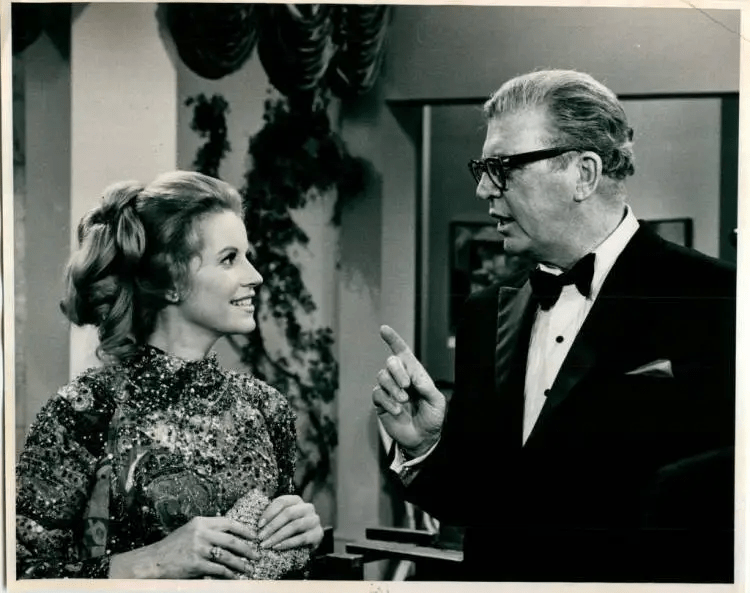
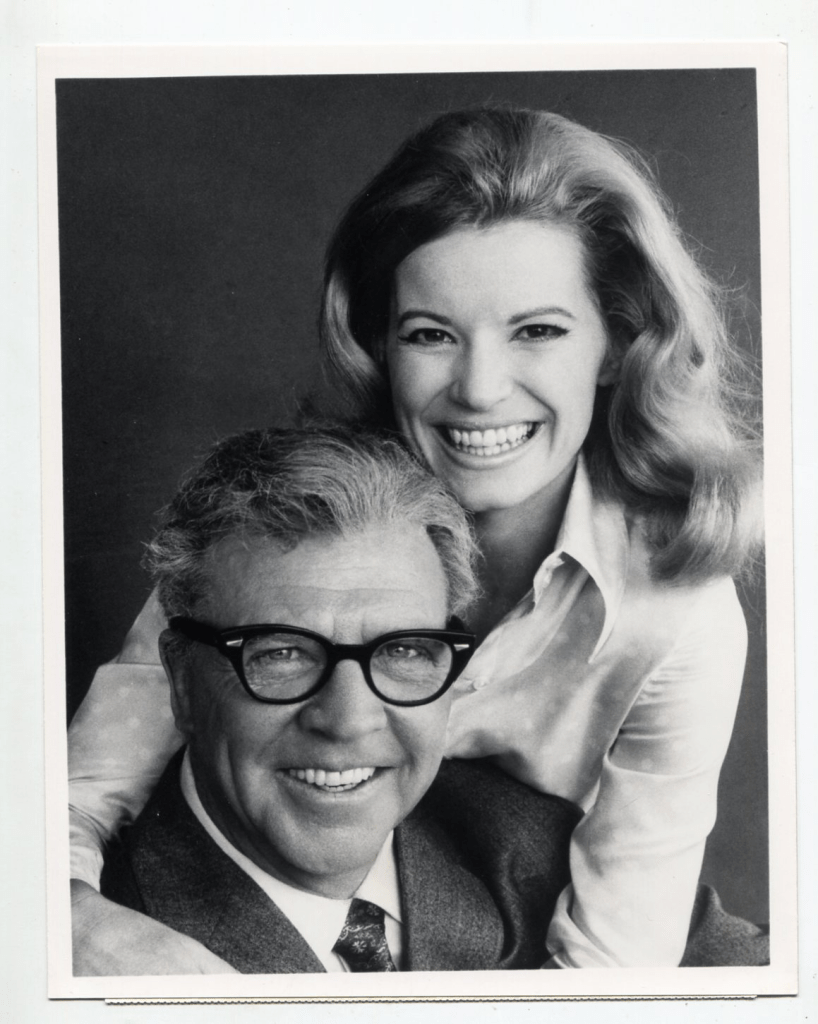
Up first is The Governor & J.J. This show debuted in September of 1969 and ran for one season on CBS. Starring Dan Dailey and Julie Sommars, it was about a Midwestern governor and his daughter Jennifer Jo, or JJ, who acted as first lady for him. Her day job was an assistant curator at a local zoo. Of course, she and her dad had very different opinions as he was more conservative and she was more liberal. Although in real life, Sommars was a dedicated Republican. Rounding out the cast were secretary Maggie (Neva Patterson), press secretary George (James T. Callahan), and housekeeper Sara (Nora Marlowe). Eventually the Drinkwaters’ basset hound Guv also became a character.
The casting of Sommars and Dailey was true chemistry. Dailey became a surrogate father for Sommars and was reportedly the first one at the hospital pacing the floors when she had her baby.
📷oldabebooks.com
Leonard Stern created the show. He was the producer and writer behind many successful shows including McMillan and Wife, Holmes and Yo-Yo, The Honeymooners, The Phil Silvers Show, and the amazing Get Smart.
Although it didn’t get nominated for any Emmys, it did win the Golden Globe for best comedy, best actress in a comedy and best actor in a comedy. Dailey was a well-known and respected actor when this show began and would have been a big draw for the show, although it was created to showcase Sommars.
The show was on Tuesday nights for the first few months and then was switched to Wednesday nights an hour earlier. Tuesdays it was up against the movie of the week on both ABC and NBC. When it moved to Wednesdays, if faced Room 222 and The Men from Shiloh.
Leonard Stern discussed the casting of the show during his interview with the Television Academy. He said one night his kids were watching The Man from UNCLE and he heard a voice and called his wife in and said he wanted to write a script for the character. He watched the rest of the show, trying to find the actress’s name and later asked Casting to send her over for a meeting. When the woman showed up, it was the wrong actress. He said it was a Bronx accent he heard on the show and this was a very Midwestern actress wearing gloves. However, he subsequently learned that she was the same actress when she went into her Bronx accent. So, he wrote the show for her. Then Sommars and Stern went to see Dan Dailey in “The Odd Couple” and he was hired. Carroll O’Connor was brought in as an Archie Bunker type of character, Orrin Hacker. He had starred in the pilot for All in the Family, but it had not sold. However, during this show, another network bought it and O’Connor left. Stern replaced him with one of his favorite actors from Get Smart, Edward Platt.
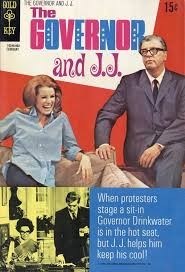
Fun fact is that in 1970 three comic books were issued by Gold Key.
Many viewers seemed to enjoy the show. However, one of the faults might have been that father and daughter, while on separate sides of political issues, they really weren’t in much conflict. I would say their differences of opinion weren’t so much left vs right as doing things the way they have always been done vs trying something new. That might have been fine for the show had All in the Family not debuted the same season. The differences between Archie Bunker and his son-in-law Mike were truly conflicting. When the Governor and J.J. was canceled after 39 episodes, it was replaced with To Rome with Love which got displaced for All in the Family. To Rome with Love made it 48 episodes before its removal while All in the Family not only lasted for 207 episodes but then morphed into Archie Bunker’s Place about Archie’s life after Edith passed away; it ran for another 97 episodes.
This seemed to be a well-written and well-casted show. In the episodes I watched for this blog, I admit that I had a hard time with the shows. I liked the interactions between the Governor and JJ, but I found the laugh track annoying and some of the characters like Jack Cassidy’s role as a speech consultant were a bit grating. If it had debuted five years earlier, it would probably have been a hit for a few seasons, but things were changing so much in television at this time, it never caught on.