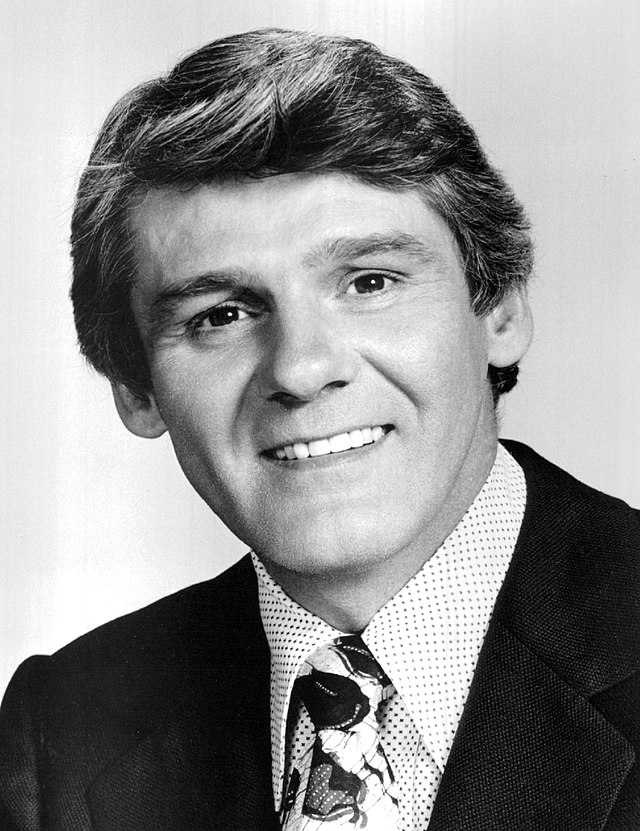
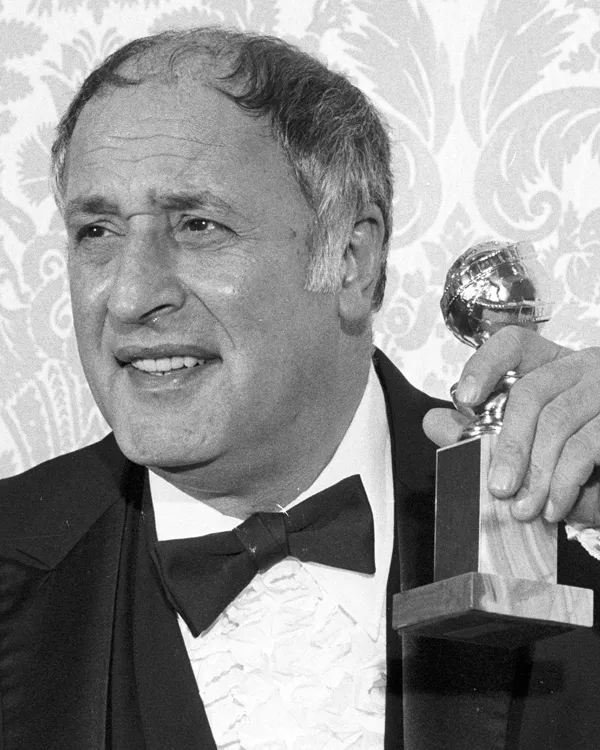
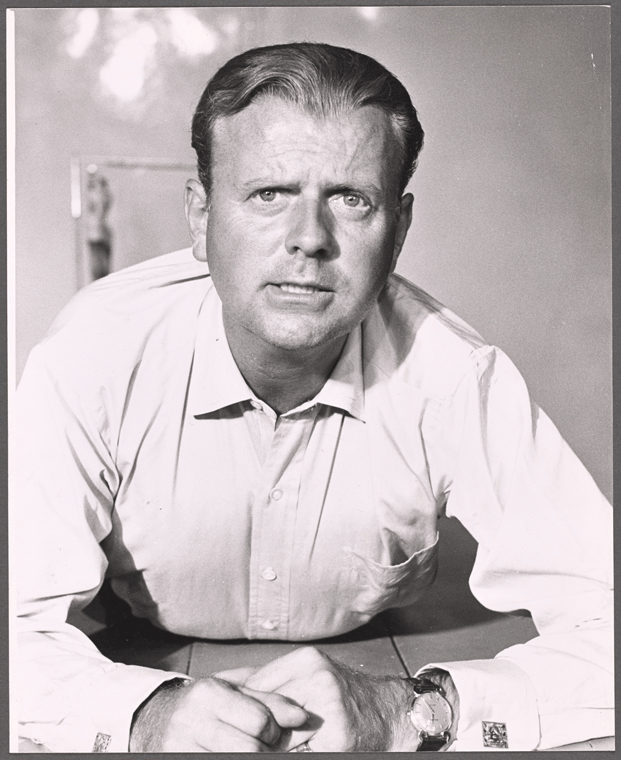
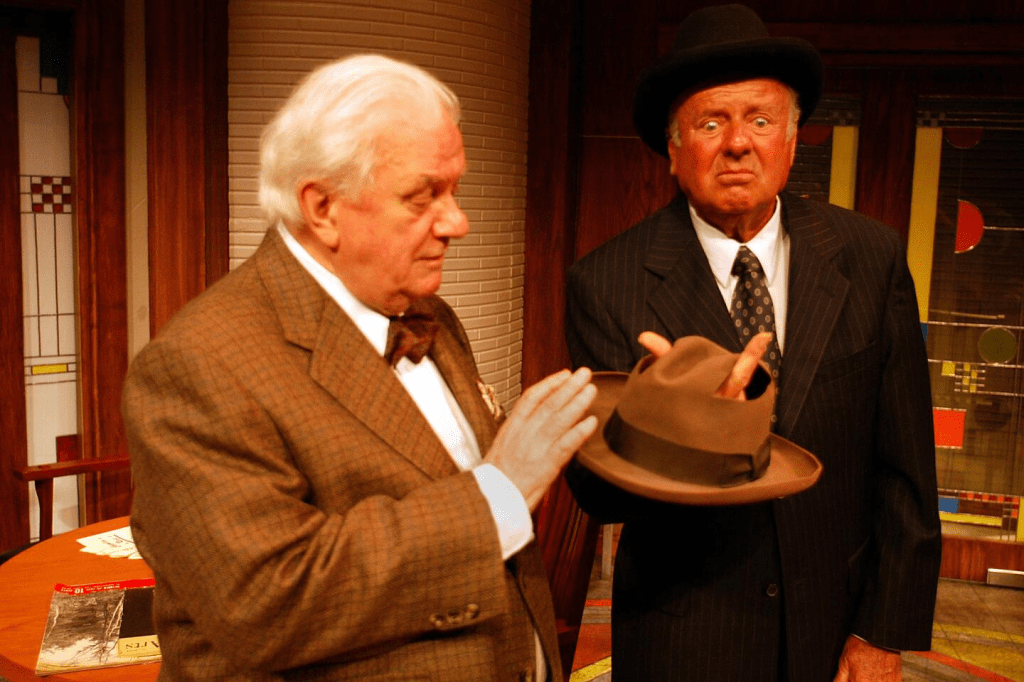
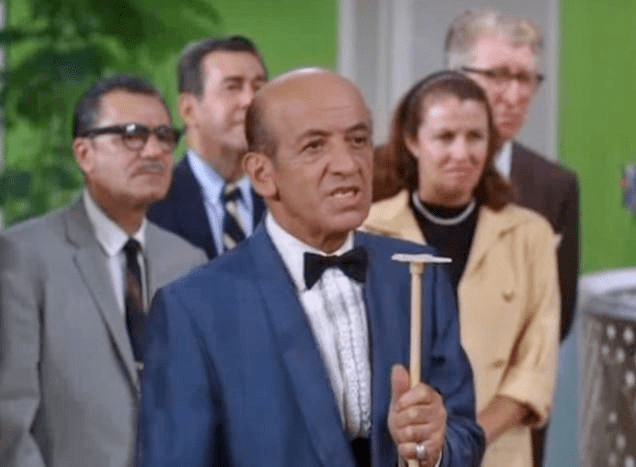
Today we began our “What a Character” blog series. Typically, when we discuss character actors, we are looking at actors who were busy in the forties, fifties, and sixties, but in the past sixty years, there have been a lot of great character actors as well. Today we are looking at the career of Richard Schaal.
Schaal was born in Chicago in 1928. His dad was a machinist, and his mom was a telephone operator. After he graduated, he ran a construction company before joining the Second City comedy troupe in 1959, not long after it began.
In 1950 he married Lois Treacy. I could not find a divorce date, but it was some time before 1964. They had a daughter Wendy who is also an actress.
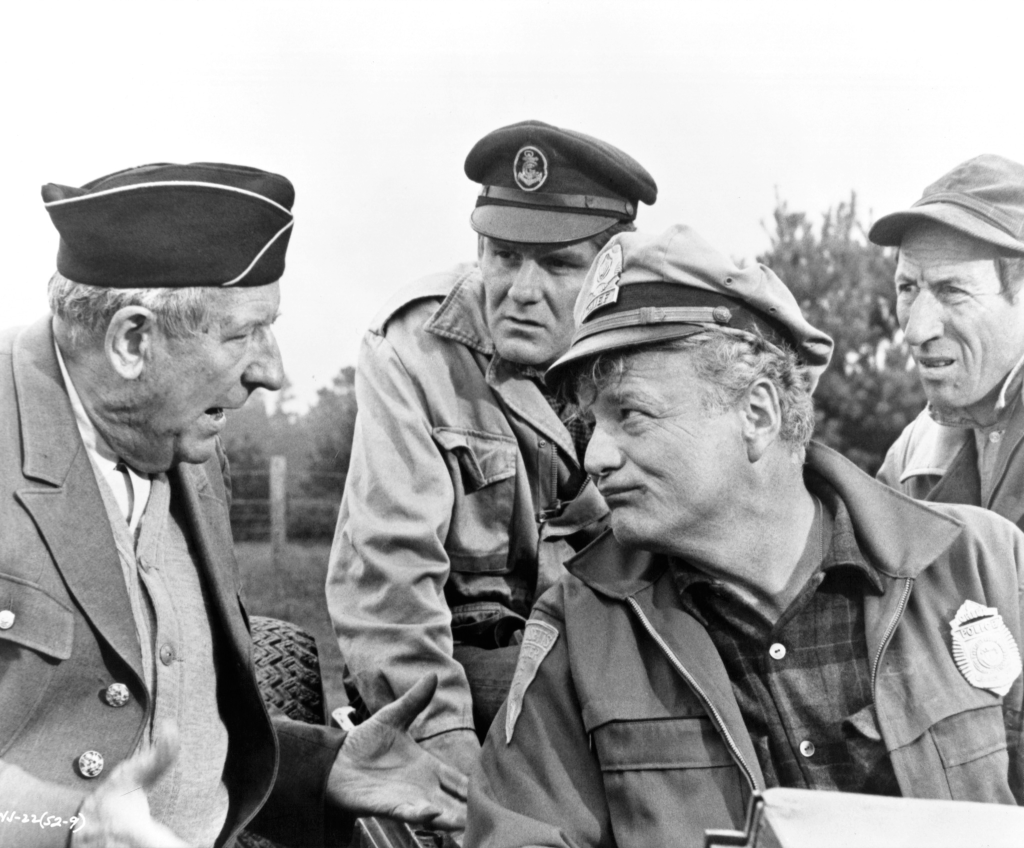
Eventually he made his way to California. He had seventeen film credits on his resume; most of them were not too memorable, but he was in The Russians Are Coming, The Russians Are Coming and Slaughterhouse Five.
📷imdb.com
Television is where he made most of his acting appearances. He began his TV career in 1964 in East Side/West Side. This was a show I had not heard of before. Apparently, it was on for one year and starred George C. Scott as a social worker trying to help his clients in the mix of cultures that makes up New York City.
Schaal would find a few more roles in the sixties on several shows including The Dick Van Dyke Show, That Girl, and I Dream of Jeannie.
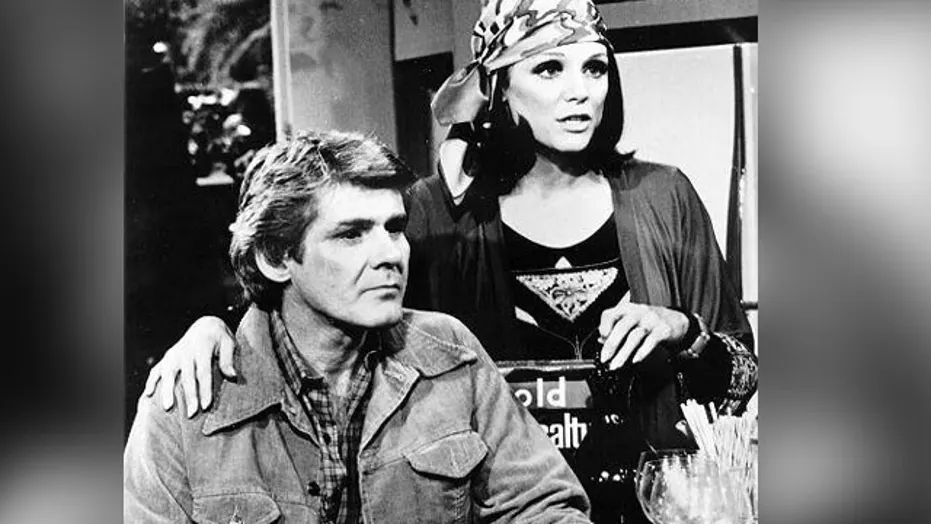
In the sixties, Schaal met Valerie Harper and they married in 1964.
During the seventies, he collected roles on many sitcoms including The Doris Day Show, The Partridge Family, Love American Style, The Bob Newhart Show, and The Mary Tyler Moore Show.
📷foxnews.com
On The Mary Tyler Moore Show, he played Howard Arnell, Paul Arnell, Chuckles the Clown, and Dino. Not surprisingly, he made appearances on Rhoda and Phyllis.
In 1970, Schaal and Harper wrote a script for Love American Style for “Love and the Visitor” which aired on season two, episode 5 where a bridegroom ends up in the wrong girl’s bedroom. Harper said they were part of the Writers Guild, but their hearts were in acting and once she got the part of Rhoda, the writing stopped.
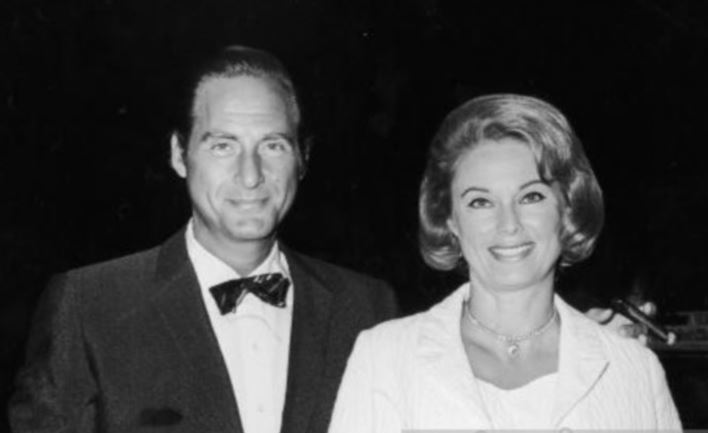
Harper discussed Schaal during an interview with the Television Academy. She describes him as her former husband and good friend. She said she and Schaal hosted a talk show with Skitch Henderson for about a year in the mid-sixties. They did interviews and sketches. She said after that they decided to move to Los Angeles.
📷imdb.com The Russians Are Coming The Russians Are Coming
The seventies were also a busy time for Schaal who continued to find roles on television. You can see him on dramas such as Nero Wolfe and Hardcastle and McCormick. He also was on sitcoms including Harper Valley PTA and JustOur Luck. He had a recurring role during this decade on Trapper John MD from 1981-85. The show was a sequel of M*A*S*H and portrayed Trapper later in life. Schaal played Dr. David Sandler. He also accepted a role on It’s a Living in 1980. His daughter Wendy was part of the cast. She has a very successful career and has appeared in many popular series. From 2005-2023, she was one of the voices in American Dad.
In 1980 he tried marriage a third time with Tasha Brittain. They would divorce in 1989.
📷pinterst.com
Schaal retired in 1990 and passed away in 2014 in Los Angeles. No cause of death was provided. He did have spinal surgery in the late 90s and was in a wheelchair after that.
Sadly, I could not find a lot of information about Schaal or his personal life. He had a successful career, but it’s too bad there wasn’t more improvisational work at the time. It sounds like he was very gifted in that area. He didn’t have as much luck in love, but at least, according to Valerie Harper, he was a great guy and they remained good friends. He was one of those character actors who added so much to the television industry, especially in the sixties and seventies.
This month we are starting a new blog series, Casting Celebrities. We’re going to take a look at four shows that featured a group of celebrities every week. We’ll learn more about Love, American Style; Fantasy Island; The Love Boat, and Supertrain. When we discuss Supertrain, we’ll also look at the small number of stars who appeared on all four shows.
Today we begin with Love, American Style. This show was an iconic 1970s show. Like Laugh In, the clothing, furnishings, and vocabulary do not make it timeless. But it was a lot of fun. This fast-paced anthology series featured two to four mini episodes each week, and between them were quick skits, often featuring a brass bed. Each smaller episode is titled “Love and the _______.”
📷gms.com The regular cast
A troupe of players was featured on each show for the in-between skits. These regulars included William Callaway, Buzz Cooper, Phyllis Davis, Mary Grover, James Hampton, Stuart Margolin, Lynn Marta, Barbara Minkus, and Tracy Reed. Margolin went on to a regular role in TheRockford Files; Tracy Reed was featured in McCloud and Knot’s Landing; Phyllis Davis was part of the cast of Vega$ and Magnum PI, and James Hampton will be familiar if you watched The Doris Day Show or F-Troop.
The show had a memorable and catchy theme song. Written by Arnold Margolin, the first year it was performed by The Cowsills. The snappy melody was set to the following words:
Love, Love, Love
Love, American Style, Truer than the Red, White and Blue. Love, American Style, That’s me and you.
And on a star-spangled night my love,
My love come to me. You can rest you head on my shoulder. Out by the dawn’s early light, my love I will defend your right to try.
Love, American Style, That’s me and you.
📷imdb.com
During the second and subsequent years that Love, American Style was on the air, the theme song was performed by the Ron Hicklin Group. The Ron Hicklin Group could be heard in a variety of motion pictures and commercials, and they also appeared on recordings with stars such as Paul Revere and the Raiders and Cher. John and Tom Bahler, brothers who sang under The Charles Fox Singers were also part of this group. The band provided television theme song recordings including Batman, That Girl, Happy Days, and Laverne and Shirley. They also did the singing for The Partridge Family theme and songs performed on the show as well as the Brady Bunch Kids. Ron retired in the early 2000s, and Tom does a variety of things. He is also known for writing Bobby Sherman’s hit, “Julie Do You Love Me?”. John married Janet Lennon, one of the Lennon sisters who performed on The Lawrence Welk Show. He currently lives in Branson and conducts the “new” Lawrence Welk orchestra.
Paramount Television developed the show. The executive producer of the show was Arnold Margolin, Stuart’s brother. There were 53 different directors during the four-year run. The series received Emmy nominations for Outstanding Comedy Series in 1970 and 1971; Best Music Composition in 1971, 1972, and 1973, winning in 1973; and winning the Emmy in 1970 for Outstanding Original Music and Lyrics.
📷rewatchclassictv.com
Many people wrote for the show, but Garry Marshall and Jerry Belson received the most credits. One of the writers, Peggy Elliott, was interviewed by the Huffington Post in May of 2013, and she talked about her time writing for the show.
“But the show I loved writing the most, was Love, American Style. For every other show, I was writing for characters created out of someone else’s head. Sure, we could create the occasional guest-star role, and we had been told to make every role, no matter how small, a real person. ‘Think of the actor who’s playing that delivery boy,’ I can hear Billy Persky, the co-creator or That Girl, say: ‘This is a big break for him — it’s the biggest role he’s had so far. Give him something to work with.’
But with Love, American Style, every character was our very own; every situation came out of our heads. Each segment of the hour the show ran each week was a one-act play created entirely by us. Added to the attraction was the fact that we could say and do things that were taboo on every other TV show in the early ‘70s. Arnold Margolin, co-creator of the show with Jim Parker, told me recently that the creative side of the network wanted the show to be more daring, while the censors kept their red pencils ready. There was a full-time position on the show just to run interference.
We must have put both sides through the hoops with one episode we wrote: ‘Love and The Hand-Maiden.’ A young guy was dating a centerfold model. As their relationship developed, he discovered that she had no problem with shedding her clothes, but she always kept her hands covered — with artful poses in magazines, and with gloves in real life. He became obsessed with seeing her hands and came up with one ruse after another to get her to take off her gloves. We had a ball writing it, with one double-entendre after another.”
📷imdb.com
If you were a star of any kind in the early 1970s, you most likely were on Love, American Style. The show produced 108 episodes, and those shows featured 1112 different actors. Some of the famous names showing up in the credits include Milton Berle, Sid Caesar, Phyllis Diller, Arte Johnson, Ozzie and Harriet Nelson, Regis Philbin, Burt Reynolds, Sonny and Cher, Flip Wilson, and Jo Anne Worley.
Brad Duke wrote a biography about Harrison Ford, and he said Ford had fond memories of appearing on Love, American Style. “He recalled that he had been given little time to prepare his wardrobe for the role of a philosophical hippie in the November 1969 episode, “Love and the Former Marriage.” He appeared on set with long hair and a beard thinking they were appropriate for the role. He was surprised when he was told he needed a haircut and trim and then was given a navy blue dress shirt and vinyl burgundy jeans with a large belt. They even had a scarf with a little ring to put around my neck. And I thought, someone has made a mistake here. So, rather than argue with the wardrobe people, I put on the clothes and went to find the producer. I walked on the set and he was pointed out. I tapped his shoulder and when he turned around he had on the same clothes I did. He was a hippie producer I guess. At least the check went through, and I got paid.”
The best way to get a good understanding of what the show was like is to look at a couple of the episodes.
January 23, 1970: Love and the Big Night
📷facebook.com
Starring Ann Elder, Buddy Lester, Frank Maxwell, Julie Newmar, and Tony Randall, this episode is often listed as a favorite of viewers. Randall is a married businessman who escorts his voluptuous secretary (Newmar) to her apartment after a late night at the office. Eager to get home to his wife, Randall hurriedly tries to open a stubborn jar of mayonnaise and winds up covered with mayo. Newmar cleans his suit, but while it’s drying, it’s stolen. After a series of amusing mishaps, Randall finally gets back to his own apartment and creeps into bed with his wife–only to find out she’s not there.
February 25, 1972: Love and the Television Set
📷that’s entertainment.com
It starred Harold Gould, Marion Ross, Ron Howard, and Anson Williams. Reading this list of names might give you a hint about what happened to this episode after it aired. Garry Marshall had written a pilot about a 1950s family that did not sell. He turned it into an episode for Love, American Style. George Lucas caught the episode and was impressed with Ron Howard and offered him a role in his new movie American Graffiti about 1950s teens. The movie was so popular that the network decided to put Marshall’s pilot in the fall line-up as Happy Days. Harold Gould’s role was given to Tom Bosley for the series. When Love, American Style went into syndication, this episode was retitled “Love and the Happy Days.”
October 22, 1970: Love and the Bashful Groom
📷listral.com
This is the episode I recall when I think of the series. When I watched it originally, I was staying overnight at my grandparents’ house and my grandmother was shocked at the “vulgarity.” It really seems quite tame today, but back then it probably was unexpected. She would approve of Tom Bahler marrying Janet Lennon though because I watched Lawrence Welk with her and my grandfather whenever I was at their house.
In this episode, Paul Petersen, Christopher Stone, Meredith MacRae, Jeff Donnell, and Dick Wilson are featured. Harold (Petersen) and Linda (MacRae) are getting married. He learns that she grew up in a nudist colony and is not comfortable being naked for his wedding. After a soul-searching talk with his best friend, and realizing he loves Linda enough to be uncomfortable, he decides to go through with the ceremony. He gets to the church a bit late and walks in, only to see that everyone else is dressed in their Sunday best. His bride informs him that they always dress up for weddings. One of the congregation members says something like “Let’s not make him uncomfortable,” and they all begin to undress. Of course, you see nothing improper, no naked bodies, only clothes flying. This was probably not the best episode to “expose” my grandmother to as a first glimpse of the show.
The show lasted for four years and was cancelled in 1973. In 1985, a reboot was created, but it was on in the mornings and only lasted a few months. The show was on at the same time as everyone’s favorite game show, The Price is Right. For the 1998 fall season, a pilot was created for prime time, but it was never ordered. While doing my research for this blog, I noticed that there was a Love, American Style project in production, so we may see it resurface again. I’m not sure I would want to watch a contemporary version of the show though. It was such a product of its time, and I fear what a current version would be like after seeing the reboot of Match Game which has been airing the past few years.
This month we are celebrating some of our favorite Supportive Men, actors who usually are not the star of a show but add the special flavor only they can to some of our favorite shows.
Before we move on to our topic today, can I just say a huge THANK YOU to all of you who have joined me on this journey through classic television. Today is my 400th blog and it has been so much fun. Next week will be 401, but for today we are looking at the career of Vic Tayback.
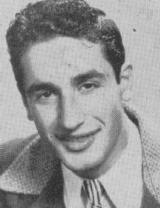
📷graduation photo
Most of us probably know him best as Mel on Alice; he played Mel Sharples in both the original movie, Alice Doesn’t Live Here Anymore, as well as the television show that was on for nine years.
Tayback was born in Brooklyn in 1930. His parents settled there after leaving Aleppo, Syria. During his teenage years, the family moved to California where he attended Burbank High School. He loved sports and played on a variety of teams, his favorite being football.
After high school, he enrolled at Glendale Community College. He also spent some time with the US Navy.
With his love of sports, he decided to attend the Frederick A. Speare School of Radio and TV Broadcasting to be a sports broadcaster. While there he was required to perform in a production of “Stalag 17” for one of his classes. He wasn’t thrilled about doing so, but he realized that he loved making people laugh and decided to switch his career to acting. While trying to break into the industry, he paid his dues driving a cab and working as a bank teller.
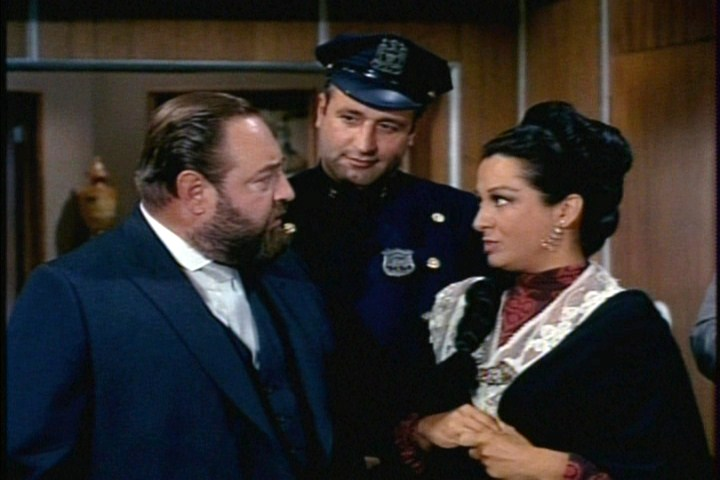
📷embarrassingtreasures.com Family Affair
The first of Tayback’s astounding 151 acting credits occurred in 1958 in a little-remembered series, Buckskin. This western was set in Annie O’Connell’s boarding house in Buckskin, Montana in 1880 and the stories were told by ten-year-old Jody. Vic continued to receive a few other appearances on television in the late fifties, as well as two films.
In the sixties, Tayback’s career took off. He would show up on 32 television episodes and 9 big-screen films, including With Six You Get Eggroll with Doris Day and Brian Keith. His tv roles were in comedies such as F-Troop, I Dream of Jeannie, Family Affair, Get Smart, The Monkees, and That Girl. He also could be seen in a variety of dramas that included 77 Sunset Strip, Dr. Kildare, Rawhide, Cimarron Strip, Star Trek, and Mission Impossible.
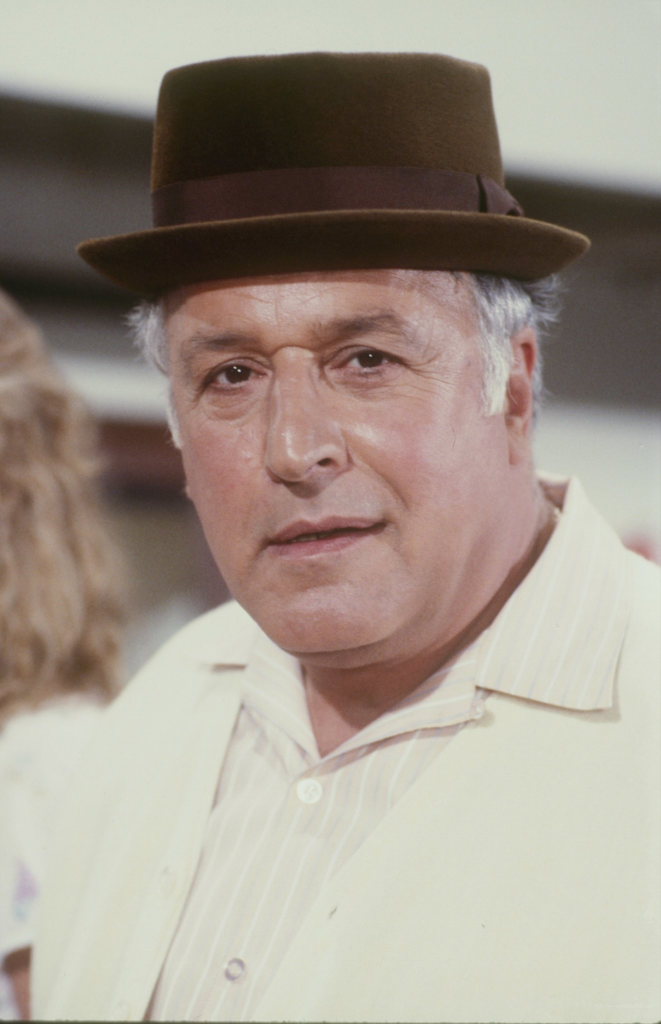
📷newyorkdailynews.com The Cheap Detective
The sixties also found Vic in the role of groom. In 1963, Tayback married Sheila Barnard, and they remained married until his death.
During the seventies, his appearances escalated to more than forty television series and ten movies. Some of his television shows included Bonanza, TheMary Tyler Moore Show, Bewitched, Columbo, Mannix, Ironside, Mod Squad, The Partridge Family, All in the Family, Barney Miller, Cannon, Medical Center, Family, and Hawaii Five-0. His movies included a few genres running from Disney’s The Shaggy DA to Papillon (Papillon was the story of a French convict who befriends a fellow criminal in South America in the 1930s, and he plans an escape).
It was during the mid-seventies that he was offered the role of Mel Sharples. In 1974 the movie was released, and the television show aired in 1976. The show was very popular with viewers. Vic said he and Mel were somewhat similar characters. While people still quote Flo on the show with her “Kiss my grits,” Tayback had his own tagline on the show, “Stow it.”
📷imdb.com Alice
If you didn’t see the show, it featured a greasy-spoon diner in Phoenix, Arizona. Alice moves there after the death of her husband with her son Tommy. She becomes a waitress at Mel’s along with sassy Flo and shy, gullible Vera. Despite the bad food, they have a lot of regulars who come in for a meal. If you want to visit the restaurant, the building it was based on is at 1747 NW Grand Ave in Phoenix and was called Pat’s Family Restaurant. (It was also featured in American Graffiti.) It is now called Mel’s Diner. According to Trip Advisor, it is ranked #448 out of 1795 restaurants in Phoenix.
📷imdb.com
The role of Mel won Tayback Golden Globe awards in both 1979 and 1980. In 1978 he was nominated for an Emmy as Supporting Actor in a Comedy. While he did not win, he was in some amazing company. That year, fellow nominees included Harry Morgan and Gary Burghoff for M*A*S*H, Tom Bosley in Happy Days, and Rob Reiner from All in the Family, who took home the win that year.
The series aired on Saturday nights and the first year was in the top thirty. In 1977, its second season, it was moved to Sunday nights, following All in the Family where it rose into the top ten. In 1979, All in the Family left the airwaves, and Alice then followed One Day at a Time. Seasons three-five, it continued to be in the top thirty. In 1981, the show was moved to Monday nights up against M*A*S*H where it fell out of the top 30. However, season seven found it back on Sundays following The Jeffersons where it rose back into the top thirty. However, it took another dive in ratings the next year and then was cancelled. I think it probably stayed on the air a year or two beyond when it should have. However, interestingly enough, the year it was cancelled, CBS introduced 15 new shows. I’m not sure most people have ever heard of any of them; they were all gone by 1986 with the exception of The Twilight Zone (reboot) and West 57th, which was a news show aimed at younger audiences.
Vic was also an avid horse-racing fan and owned quite a few thoroughbreds. On Alice, Mel was also a track fan, and sometimes the writers asked Mel for names of horses they could use, and he often gave them names of his horses.
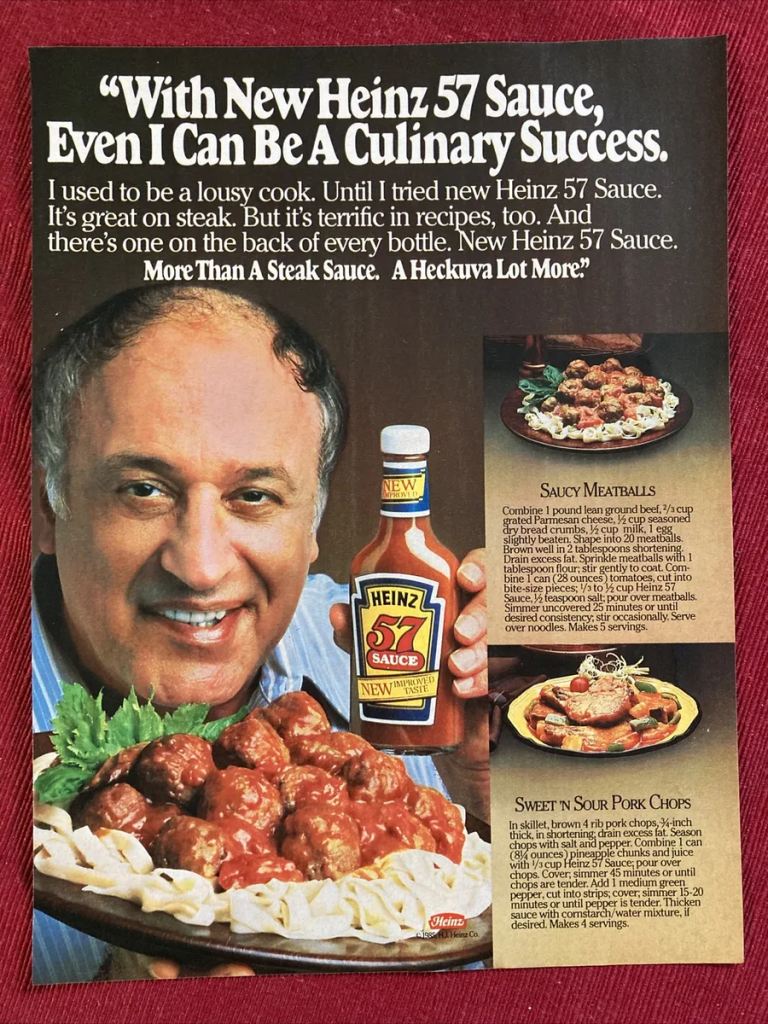
On the show, Vic was often made fun of for his bad cooking. In a 1985 interview he said, “If I walked into a restaurant, the other diners would look around and say, ‘I hope you’re not cooking.’” Heinz then offered him the role of spokesperson for their Heniz 57 sauce and his line in the commercials, was “I used to be a lousy cook.” He was also remembered for an Aqua Velva commercial he did with Pete Rose.
Unfortunately, Tayback was a heavy smoker which caused heart trouble for him. While doing Alice, he had a triple-bypass surgery. While he did try to quit numerous times, he just could never kick the habit. In 1990, he died from a heart attack at age 60.
📷goldenglobes.com
While we were cheated of several decades of performances from Vic with his early death, he did leave an amazing legacy in the Company of Angels theater in Los Angeles. According to its website, “In 1959, a group of actors, including Tayback, Leonard Nimoy, Richard Chamberlin, and Vic Morrow founded the theater to provide a space for actors and other theater artists to work on their craft free of commercial constraints.”
Thank you, Vic Tayback, for deciding to make people laugh in your career and investing in the future of acting so those memories continue in the future.
We are discussing some of our favorite actors who were typically supporting actors. In the case of today’s subject, he did star in a television show, but he was so great in other assisting roles, we are including him here as well. Today we get to know Dick Van Patten.
📷nypldigitalcollections.com Off Broadway
Van Patten was born in 1928 in Queens, New York. His father was an interior decorator, and his mother worked in advertising. Joyce Van Patten is his sister. Van Patten began working as a model and actor while he was still a child. He was only four when he joined John Robert Powers, a modeling agency, where made $5 an hour.
His first Broadway appearance was in “Tapestry in Gray” when he was seven, and he appeared in many plays by the time he graduated from the Professional Children’s School in New York City.
At that time, he moved to Hollywood. In 1949 he accepted the role of Nels Hansen on the early sitcom, Mama, about a Norwegian family living in San Francisco. The show was on the air until 1957, for a total of 327 episodes.
In 1954 Van Patten married Patricia Poole. She was a professional dancer, part of the June Taylor Dancers on The Jackie Gleason Show. Their son Vincent was on Apple’s Way in the mid-seventies, with 65 credits to his name. He is married to Eileen Davidson, who is Ashley Abbot in The Young and the Restless.
📷wikipedia.com On the set with friend Dick Van Dyke
Van Patten’s sister Joyce also began her career as a child. With 160 acting credits, she also has been very busy for decades, starring in The Good Guys. She was married to Martin Balsam from 1957-1962, another prolific actor. Van Patten’s niece Talia, who has also amassed more than 100 acting credits, was married to George Clooney and then John Slattery, star of several shows including Mad Men. So, this is a well-known family in entertainment.
In the fifties and sixties, most of Van Patten’s roles on television were in dramas and a few westerns. In the seventies, he took on his first comedy roles, appearing on I Dream of Jeannie, The Governor and JJ, Arnie, That Girl, Sanford and Son, The Doris Day Show, The Paul Lynde Show, Love American Style, The New Dick Van Dyke Show, Maude, Phyllis, Happy Days, and One Day at a Time, among others. He also accepted a few drama roles on shows such as Cannon, Adam-12, The Streets of San Francisco, Medical Center, and Barnaby Jones. After appearing on The New Dick Van Dyke Show in 1971, Van Patten and Van Dyke became life-long friends.
He appeared in 36 movies, his first being Violent Midnight in 1963. Spaceballs, RobinHood: Men in Tights, and High Anxiety, all with Mel Brooks, were probably his best-known films. In 2014, Van Patten said working with Brooks was “great. It’s like a game. It’s not like work. He keeps you laughing the full day on the set. He’s just a funny man.” Van Patten also accepted 28 made-for-tv movie roles.
In 1977, he took on the role that would make him a household name: that of Tom Bradford on Eight is Enough. He played a newspaper publisher with eight kids. His wife dies early in the series, and Tom remarries.
Van Patten auditioned for the role of Tom Bradford but was not given the part. When the producers watched the first day of shooting, they scrapped the entire production. Fred Silverman then hired Van Patten.
📷showbizcheatsheet.com Cast of Eight is Enough
It’s interesting to wonder what his career would have been like if he had declined Eight is Enough and accepted the role he was offered of Dr. Adam Brinker on The Love Boat. Since he had already agreed to appear on Eight is Enough, the role went to Bernie Kopell.
In an interview with the St. Petersburg Times in 1989, Van Patten discussed his character on Eight is Enough: “Tom Bradford is a lot like the real me. He’s a man who always put his career second to his family. As long as everything was OK at home, he was OK too.”
Sadly, the cast did not learn of the cancellation of Eight is Enough from the network. Van Patten said “nobody called me to tell me it was canceled. I read it in the paper.”
Van Patten never received a starring role again, but he did keep very busy in the eighties and nineties appearing in many popular shows, including Love Boat, Murder SheWrote, The Facts of Life, Growing Pains, and Diagnosis: Murder.
He was in a handful of shows in the 2000s with Hot in Cleveland in 2011 being his last appearance on television.
He published a book in 2009 titled Eighty is Not Enough!, his memoir. He had also written Launching Your Child in Show Biz: A Compete Step-By-Step Guide and Totally Terrific TV Trivia. In 2001, he was honorary mayor of Sherman Oaks, California.
Van Patten was an animal advocate, and he created Natural Balance Pet Foods and the National Guide Dog Month to raise awareness and money for nonprofit guide dog schools.
Van Patten also participated in a variety of hobbies. Like Tom Bradford, he loved spending time with this family. He also owned thoroughbreds and attended horse racing events. He enjoyed playing poker, golf, swimming and reading. Most Sundays he headed to the tennis courts to meet Alan Alda, Mel Brooks, and Gene Wilder.
📷latimes.com
In 2006, Van Patten suffered a diabetic stroke. He made a full recovery and lived another nine years, passing away in 2015 from diabetes complications. He was still married to Patricia.
His son Tommy on Eight is Enough, Willie Aames, said Van Patten “was truly a gem who will be missed.” His second wife, Abby, on the show played by Betty Buckley, recalled that “every day on the set he was a happy, jovial person, always generous and ready to play, tease, and always keep us laughing. He was the consummate professional, a wonderful actor, master of comedy, and a kind and generous human being.”
📷imdb.com
Van Patten had an extremely successful career. For more than seven decades he was part of the entertainment community. In addition to his stage productions, films, and television work, he appeared in more than 600 radio show episodes and was in Weird Al Yankovic’s music video “Smells Like Nirvana.” He said that he had “fun doing this and going through my life. I’ve had a great life. It was exciting. I worked with the most interesting people, and I traveled all over the country.”
His reflection on his work is great advice for all of us. Van Patten said that he wanted to express the “single idea that has governed my entire life, that every moment of life is precious, that every step we take is an adventure, that every day on earth is a gift from God.” Thanks, Dick Van Patten, for leaving us with this inspiration and for taking your gifts and presenting them to us in the form of many wonderful memories.
September is What a Character month, and today we end our series with a look at the career of Herbie Faye. Faye was born in 1899 in New York City. He began working with Mildred Harris in vaudeville in 1928. Phil Silvers was one of the supporting cast members, and their friendship would prove fruitful for his future television career.
Photo: imdb.com
In the forties and fifties, Faye tried his luck on Broadway, appearing in a variety of shows including “Wine, Women, and Song” in 1942 and “Top Banana” in 1951.
He also began a career on the big screen in the fifties. His first film was the movie version of Top Banana in 1954. He would appear in 17 movies; in fact, his last acting credit was the movie Melvin and Howard in 1980. In between, he appeared in a variety of genres including Requiem for a Heavyweight starring Anthony Quinn, The Thrill of It All with Doris Day, and The Ghost and Mr. Chicken with Don Knotts.
In 1950, at the age of 51, Faye made his first television appearance. He appeared in two episodes of Cavalcade of Stars. You would have also seen him in Our Miss Brooks, The Goldbergs, and Hennessey in the fifties.
Photo: papermoonloveslucy.com
When Phil Silvers got his own show in 1955, he hired Faye to play Corporal Sam Fender which he did for 139 episodes between 1955 and 1959. This was a hilarious show and hasn’t lost its charm with time. In addition to the primary characters, there was a group of about a dozen secondary characters who appeared along with Faye. Eventually, the costs became too high, and the show was canceled.
Phil Silvers Show Photo: alchetron.com
Faye was extremely busy in the sixties. He must have been good at his job because he was cast in more than one show on several of the series he worked for. He was four different characters on The Danny Thomas Show, six on The Dick Van Dyke Show, five on The Joey Bishop Show, two on My Favorite Martian, two on Bewitched, three on The Andy Griffith Show, four on The Gomer Pyle Show, two on I Dream of Jeanne, two on That Girl, four on Petticoat Junction, two on Mayberry RFD, two on Jack Benny as well as 27 other shows all in the sixties. On top of all those appearances, he was part of the cast for two additional television shows: The New Phil Silvers Show from 1963 to 1964 as Waluska and as Irv on Accidental Family in 1967.
In November of 2018, KJ Ricardo spotlighted Faye in her You Tube channel show about The Dick Van Dyke Show. Herbie was Willie, the deli owner who delivered lunch to the comic writers on the show. He appeared in six of the shows. In his first appearance, Rob is trying to leave the office because he thinks Mary is in labor but every time he tries to leave, the Danish cart is in the way. On the third and fourth episode, he starts critiquing the ideas the writers have and making
Willie Photo: televisonsnewfrontier.blogspot.com
comments on what works and what doesn’t. They are pretty funny.
He continued his busy career throughout the seventies when he made one-time appearances in eleven different shows including The Mary Tyler Moore Show, The Bob Newhart Show, Love American Style, Happy Days, and Barney Miller. He made multiple appearances on several other shows including Mod Squad (3), Here’s Lucy (4), The New Dick Van Dyke Show (4), The Odd Couple (6). He also had a recurring role on Doc where he played Ben Goldman from 1975-76.
Faye passed away in Las Vegas in 1980.
Herbie Faye was a very funny guy. He was just an average guy, but he had a way of focusing the viewers’ attention just on him for the brief time he appeared; he made the episodes he was in even better. I guess that is the ultimate definition of a great character actor.
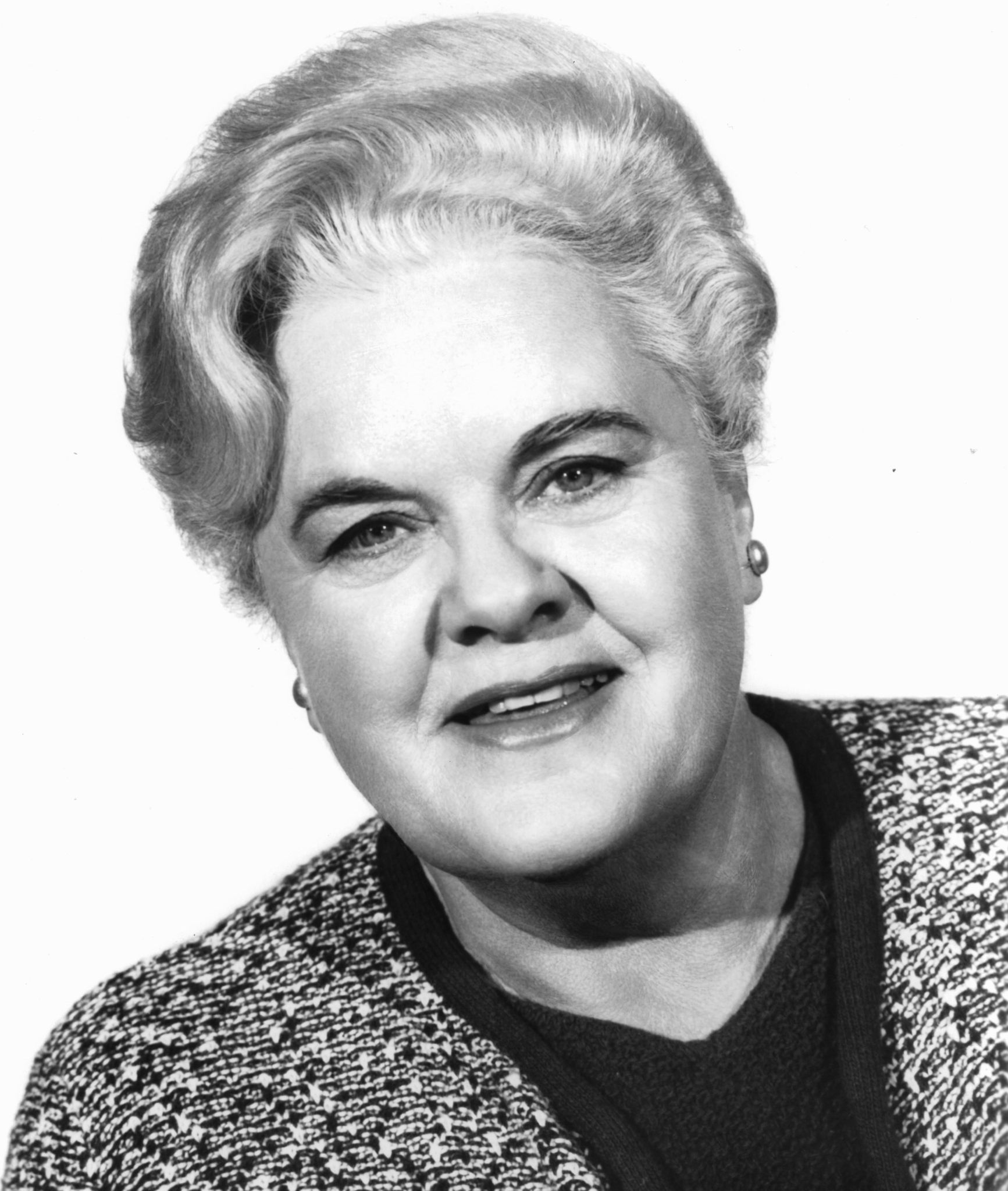
One of my favorite blog series is beginning again today: “What a Character !” Our first character actor is Ruth McDevitt. You might not recognize her name, but the minute you see a photo of her you will definitely recognize this busy television star. Her on-screen personality is perfectly captured in her imdb biography where she is described as “delightfully daffy and quite an apple dumpling of a darling, a cheerfully wizened character.”
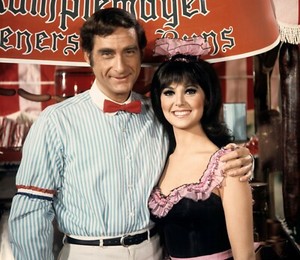
On Love American Style with Meredith McCrae Photo: pinterest
Ruth was born in Michigan but she spent most of her early life in Ohio. Her father was the county sheriff and both of her parents were musicians. After graduation, she attended college (some sites give her college as Bowling Green and others Wooster) and after her graduation, she studied at the Toledo Dramatic Academy. She then moved to New York to attend the American Academy of Dramatic Art.
When she married Patrick McDevitt in 1928, she decided to devote her time to her husband, giving up her career. Her husband was a widowed contractor who lived in Florida, so she made the move south and participated in a variety of women’s clubs and community groups. Unfortunately, her husband passed away in 1934, and she then returned to her acting profession in her forties. She made her debut on Broadway in 1940 in several shows and later appeared in “Arsenic and Old Lace” in 1942 and “The Solid Gold Cadillac” in 1954.
In the thirties, Ruth also began her radio career, taking on the roles of Rosemary’s mother in “Keeping up with Rosemary” and Jane in “This Life is Mine.”
The Birds with Tippi Hedren Photo:
Ruth also found success on the big screen. Her first movie role was in The Guy Who Came Back in 1951. She would appear in a variety of movies during her career including The Birds, The Parent Trap, The Shakiest Gun in the West, Mame, and Angel in My Pocket.
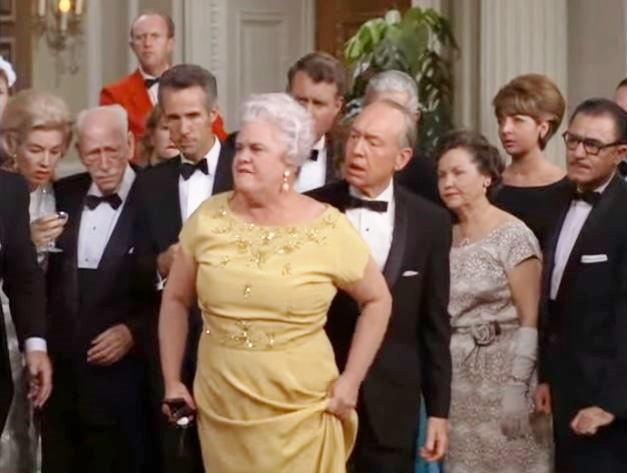
With Frank DeVol in The Parent Trap Photo: imdb.com
It was in television that she found most of her fame. Her first appearances were in 1949 when she was cast in A Woman to Remember, The Ford Theater Hour, and Suspense. She continued to receive dramatic roles throughout the fifties. From 1953-54, she appeared in seven episodes of Mister Peepers as his mother.
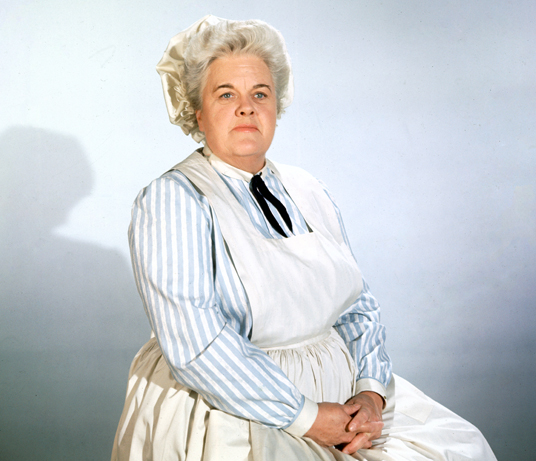
Pistols and Petticoats Photo: pinterest
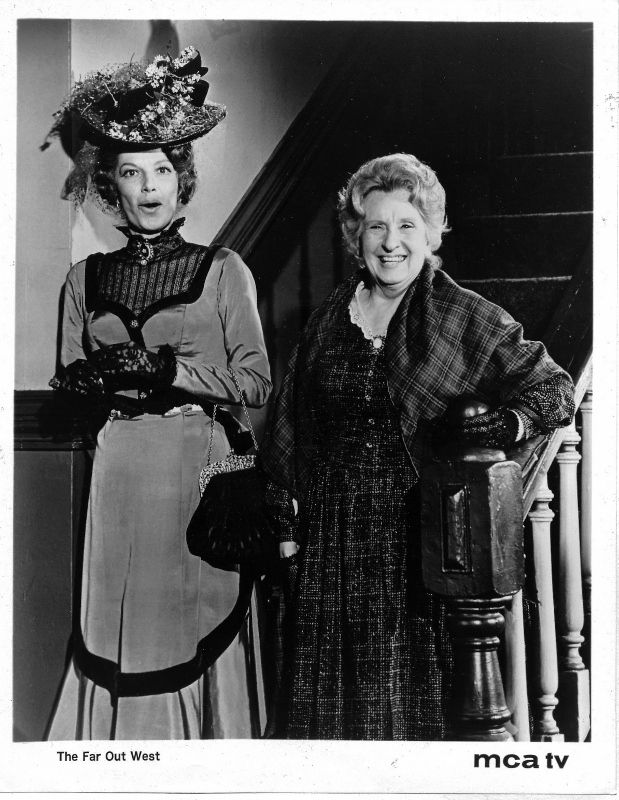
Ruth began the 1960s in several medical shows and then transitioned to comedies appearing in The Andy Griffith Show, The Ghost and Mrs. Muir, The Debbie Reynolds Show, I Dream of Jeanne, and Mayberry RFD. She received a recurring role in The Doctors in 1963 as Mrs. McMurtrie. She also became a cast member of Pistols and Petticoats in 1966. She was described as pistol-toting grannie, Effie Hanks. The show was set in Colorado in 1871 where the Hanks family are beloved residents and run things better than the sheriff does. It was canceled after its first season. Ann Sheridan starred in the tv series and she passed away a couple of months before the show was canceled.
The 1970s was Ruth’s busiest decade. She showed up in various dramas including Ironside, McCloud, Mannix, and The Rookies. She popped up in Gunsmoke and Little House on the Prairie and took part in the medical shows Marcus Welby and MedicalCenter.
With Bert Mustin on All in the Family Photo:
However, comedies kept her employed. She accepted roles on My World and Welcome to It, The Courtship of Eddie’s Father, That Girl, Here’s Lucy, Love American Style, Nanny and the Professor, Bewitched, Room 222, and Phyllis. among others.
She accepted a recurring role on All in the Family as Jo Nelson from 1973-1975. Her last starring role was in Kolchak: The Night Stalker from 1974-1975. Darren McGavin plays a newspaper reporter who specializes in solving supernatural mysteries. His only friend was a coworker who also had a column in the paper played by McDevitt. The show supposedly inspired the X Files in part.
Photo: wiki-fandom.com
Ruth’s last two roles were in 1976 in made-for-tv movies. She passed away the same year from natural causes at age 80.
Whenever I write about these character actors, it makes me happy and sad. I respect them so much and appreciate the depth they add to make our television series better, but I am always disappointed that there is so little information available about their lives and careers. I very much enjoyed getting to know Ruth McDevitt a little better—she certainly was a character and we all benefit from that.
This month’s blogs are dedicated to Your Show of Shows and the stars who made the show such a success. Last week we learned about the career of Imogene Coca, and today it’s Sid Caesar’s turn.
Photo: wikipedia.com
Sid Caesar was born in Yonkers, New York, the youngest of three boys. His parents ran a 24-hour luncheonette. Sid grew up waiting on tables which allowed him to study the accents and mannerisms of a wide range of people and ethnicities. His brother David loved comedy sketches, and the brothers worked on comedy routines together.
At the young age of 14, Caesar traveled to the Catskill Mountains, playing saxophone with the Swingtime Six. Occasionally he performed sketches with his collected accents.
After graduating from high school in 1939, Caesar struck out on his own, pursuing a career in music. He landed in Manhattan where he worked as an usher and a doorman at the Capitol Theater. He played sax at the Vacationland Hotel, a resort also in the Catskills. He was able to audit clarinet and saxophone classes at Julliard.
After a few months, he decided to enlist in the US Coast Guard. He was stationed in Brooklyn, and he played in military revues and shows.
In 1942 Caesar met Florence Levy at the Avon Lodge in the Catskills. They were married the following year and had three children. In November of 2009, Greg Crosby wrote about an interview with the Caesars in the Tolucan Times. He quoted Florence, “I thought he would be just a nice boyfriend for the summer. He was cute looking and tall, over six feet . . . I was in my last year at Hunter College; we were still dating when Sid went into the service, the Coast Guard. Luckily, he was stationed in New York, so we were able to continue seeing each other, even though my parents weren’t too happy about it. They never thought he would amount to anything, that he’d never have a real career or make any money. But we were married one year after we met, in July of 1943.” They would remain married until her death in 2010.
After joining the musicians’ union, Sid played with several well-known bands, including Benny Goodman.
With wife Florence Levy Photo: hollywoodmagazine.com
While in the Coast Guard, he was able to collaborate with Vernon Duke, the composer of “Autumn in New York,” “April in Paris,” and “Taking a Chance on Love.” He and Duke put together a show called “Tars and Spars.” Max Liebman, future director of Your Show of Shows, was also part of the show, although not part of the military. Liebman asked Sid to do a few stand-up bits between songs and when the show toured nationally, Sid continued these routines.
Caesar left the service in 1945. He and his wife moved to Hollywood. In 1946, Sid was able to reprise his role in the film version Tars and Spars with Columbia Pictures.
Eventually, he returned to New York and accepted the offer of opening act for Joe E. Lewis at the Copacabana. He also received a contract with the William Morris Agency. He was able to perform in a Broadway show, “Make Mine Manhattan.”
In the fall of 1948, Sid made an appearance on Milton Berle’s popular show, Texaco Star Theater. The following year, he and Liebman met with Pat Weaver, VP of television at NBC. The meeting resulted in the Admiral Broadway Revue with Imogene Coca. It was very successful but Admiral could not keep up with the demand for new television sets so it pulled the sponsorship and the show was canceled after 26 weeks.
Photo: onceuponascreen.com
In 1950, Weaver, Liebman, and Company created Your Show of Shows. It started life as a second half of the Saturday Night Review but became its own 90-minute program in 1951. In 1954, a 160 episodes later, it ended so Coca and Caesar could both have their own shows.
Sid’s show was called Caesar’s Hour, a one-hour show with Howard Morris and Carl Reiner from Your Show of Shows as well as Bea Arthur and Nanette Fabray. The show was not a success. In 1958, Sid tried again with Sid Caesar Invites You.
In the sixties, Caesar took stage roles, as well as big and small-screen parts. He had several specials on television, starred on Broadway in “Little Me,” which got him a Tony award nomination. He also was part of the ensemble of It’s a Mad, Mad, Mad, Mad World, a huge success that earned six Academy award nominations.
Sid appeared in a few television shows during his career but only a handful. A couple of those include That Girl, Love American Style, Laugh In, Vega$, and The Love Boat.
That Girl Photo: ebay.com
Caesar didn’t write his own material. He often performed long sketches, 10-15 minutes. He relied on body language, accents, and facial expressions. Larry Gelbart called him a “pure TV comedian.” Fabray said he always stayed in character, “he was so totally in the scene he never lost it.” He was able to pantomime many different types of characters: a tire, a gumball machine, a lion, a punching bag, a telephone, an infant, a piano, even a bottle of seltzer. Neil Simon said that “Sid would make it [a sketch] ten times funnier than what we wrote.”
Many of his favorite comic sketches were parodies of films including gangster, western, and spy movies. Gerald Nachman wrote Seriously Funny: The Rebel Comedians of the 1950s and 1960s. He said, “the Caesar shows were the crème de la crème of fifties television, studded with satire and their sketches sharper, edgier, more sophisticated than the other variety shows.” Historian Susan Murphy agreed, describing Sid as “best known as one of the most intelligent and provocative innovators of television comedy.”
Unfortunately, like many comedians, Caesar had some demons of his own. His stardom ended quickly. He had no interest in the movies. He was using pills and alcohol to help relieve the pressures of headlining and producing a weekly show. In 1977, Caesar blacked out during a stage performance of “The Last of the Red-Hot Lovers” in Canada and gave up alcohol immediately. He discussed his substance abuse to alcohol and sleeping pills in his two autobiographies, Where Have I Been? And Caesar’s Hours. He said at his worst, he “had been downing eight Tuinals and a quart of Scotch a day.”
Later in his career, Sid came back to the movies. He was in Silent Movie and History of the World, Part I with Mel Brooks; Airport 1975, and Grease and Grease 2, playing Coach Calhoun.
From Grease with John Travolta Photo: pinterest.com
In 1983, Caesar hosted Saturday Night Live and received a standing ovation. In 1996, The Writers Guild of America, West gathered Sid and his writers from Your Show of Shows and Caesar’s Hour for a two-hour panel discussion which was broadcast on PBS.
Sid passed away in 2014 after an illness. He left behind an amazing career and a legacy of actors and comedians he inspired. I’ll let his friends have the last word since they knew him so well. Carl Reiner commented at the time that “he was the ultimate, he was the very best sketch artist and comedian that ever existed.” Mel Brooks agreed and said “Sid Caesar was a giant, maybe the best comedian who ever practiced the trade. And I was privileged to be one of his writers and one of his friends.”
We were all privileged to watch a master at work. Thank you for the many memorable moments and teaching us what funny honestly looks like.
I devoted this month to some of our favorite actresses from the golden age of television. This list would not be complete without Reta Shaw who popped up in almost every popular program during the fifties and sixties.
Photo: imdb.com
Shaw was born in Maine in 1912. She was born into the entertainment business; her father was an orchestra leader and her younger sister Marguerite also became an actress (I could only find one credit for her; it was a 1959 movie titled The Ballad of Louie the Louse.) After graduation, Reta attended the Leland Powers School of the Theater in Boston.
She then headed for the bright lights of Broadway and in 1947 was cast in “It Takes Two.” In 1954 she was Mabel in “The Pajama Game” and later appeared in “Gentlemen Prefer Blondes”, “Picnic”, and “Annie Get Your Gun.”
Photo: jacksonupperco.com
Her motion picture career overlapped with her television career. She had feature roles in several big-screen successes including Picnic; The Pajama Game; Pollyanna; The Ghost and Mr. Chicken; Escape to Witch Mountain; one of my favorites as a kid, Bachelor in Paradise with Bob Hope; and most famously, the cook in Mary Poppins, as well as a maid in Meet Me in St. Louis.
In 1952 she married William Forester, another actor. William appeared in Mister Peepers and The Pajama Game movie with his wife. He was very busy with television appearances during the early sixties. They were married a decade but divorced in 1962; the couple had a daughter.
She appeared in many of the same shows as the other actresses we learned about this month. Her first television role was on Armstrong Circle Theater. Her second role was as a regular cast member of a little-remembered show, Johnny Jupiter in 1953. It was a quirky show about a store clerk named Ernest P. Duckweather who invented an interplanetary television set and developed a friendship with a puppet named Johnny Jupiter.
Photo: papermoon loves lucy
From 1953-1955 she would appear with Marion Lorne on Mister Peepers as Aunt Lil. She continued receiving both movie and television roles throughout the fifties. In 1958 she received another recurring role on The Ann Sothern Show as Flora Macauley.
She began the sixties with another permanent job on The Tab Hunter Show. This show as about comic strip author Paul Morgan. His comic strip was “Bachelor at Large” and he wrote about his own amorous adventures. Shaw, as Thelma his housekeeper, had a very different view of that life than Paul’s best friend Peter did. When that show went off the air, she was given another spot on Oh! Those Bells. The Wiere brothers, well-known comedians, portrayed the Bell Brothers who worked for Henry Slocum in a Hollywood prop shop. The brothers managed to create a disaster out of the most minor matters. The show only lasted two months.
Throughout the sixties she could be seen on a variety of series; although she certainly excelled at comedy she was just as accomplished in dramas such as Wagon Train, I Spy, The Man From UNCLE, and FBI. Reta also made more than a dozen movies during this time.
Photo: pinterest.com
However, her sitcom career flourished, and she was kept very busy during the sixties with roles on The Many Loves of Dobie Gillis, Father of the Bride, Lost in Space, The Dick Van Dyke Show, The Cara Williams Show, My Three Sons, The Farmer’s Daughter, The Lucy Show, The Patty Duke Show, The Adventures of Ozzie and Harriet, The Monkees, That Girl, Please Don’t Eat the Daisies, and I Dream of Jeannie. She had a recurring role on Bewitched as Aunt Hagatha/Bertha. She was featured in The Andy Griffith Show twice, but one of them is one of my all-time favorite episodes, “Convicts at Large” when she plays Big Maud Tyler who enjoys dancing with Barney.
Photo: jacksonupperco.com
The end of the decade brought her another recurring role as housekeeper on The Ghost and Mrs. Muir. On May 1, 2014, Madman Entertainment interviewed Kellie Flanagan who played one of the kids on the show. It must have been a fun show to work on. When she recalled her time with the cast, she said “The set was a very happy set, with parties every Friday night, and I remember that all the ladies were swooning over Mulhare and always disappointed to find out the beard had to be applied every day. His real beard was red, was the reason I remember, and they needed that salt-and-pepper thing. Hope was extremely sweet and kind to us, though I do remember there was a period where we were not supposed to bother her – I think she may have been going through a divorce – I believe she had a daughter about my age. Hope was lovely and her voice is fabulous. Reta Shaw was a delight and Charles Nelson Reilly was hilarious. The dog annoyed me!”
Photo: scottrollinsfilmandtvtriviablog.com
Shaw continued to take on roles during the early seventies and could be seen on The New Dick Van Dyke Show, Here’s Lucy, The Odd Couple, Cannon, Happy Days, and The Brian Keith Show. Her career culminated with her role on Escape to Witch Mountain in 1975.
Shaw lived another seven years and died in 1982 from emphysema.
An interesting note is that Shaw grew up in a family who practiced spiritualism and said she had been “brought up on a Ouija board.” However, I’m not sure if she believed in it as well.
Shaw certainly had a very interesting and successful career as an actress. Although she often took on the housekeeper role, she was not stereotyped into just that slot. She appeared in both television and movies and she took on dramas as well as comedy. It would have been fun to see what she would have been able to do if she had been given a series of her own.
Whenever I see Reta Shaw in an old show, I know I am in for a treat.
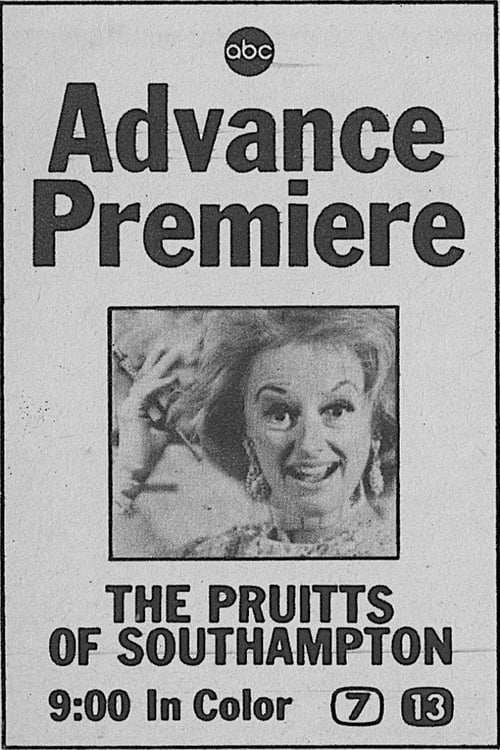
This month’s blog series is “It’s My Show.” Today we are beginning with a show I’ve discussed a few times over the years that had the perfect cast and concept, but it was cancelled after only one season: The Phyllis Diller Show which also went by The Pruitts of Southampton.
Photo: pinterest.com
The show was created by David Levy in 1967 and was loosely based on the book House Party by Patrick Dennis. Levy was also the creator/producer for The Addams Family which aired from 1964-1966. The shows also shared composer Vic Mizzy who wrote the themes for both series. Mizzy also wrote the catchy tune from Green Acres. The opening theme song had Phyllis Diller dancing, skipping, and singing through the mansion, and the lyrics were:
PD: Howcha do howcha do, howcha do my dear What a LOVELY surprise, nice to see you here.
RG: All the bills have been long overdue my dear.
PD: File them under I.O.U… Howcha do, howcha do, Well HELLO, it’s you! Like my beads, like my dress? Aren’t they marvy-poo? They belong to the internal revenue. And they got us eating stew.
CHORUS: The Pruitts of Southampton,
Live like the richest folk, But what the folk don’t know is that The Pruitts are flat broke!
PD: Howcha do, howcha do, howcha do, my dear
RG: We are out of champagne, and I’m stuck, my dear.
PD: Ask the butler to lend you a buck, my dear. Howcha do, howcha do, howcha do…
The Pruitts, an incredibly wealthy family, live in the Hamptons. After going through an IRS audit, the family realizes they owe so much in back taxes, $10,000,000 in fact, that they were now broke. The IRS agrees to let them continue living in their mansion because they think exposing such a wealthy family’s poverty would cause a lot of repercussions.
Photo: pinterest.com
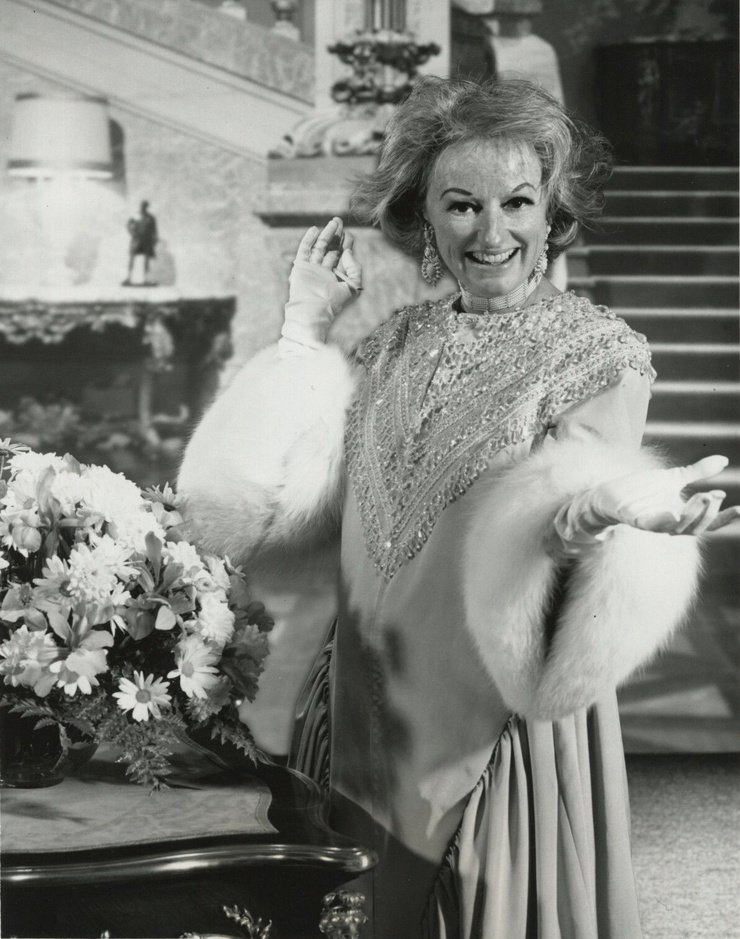
Phyllis Diller starred as Phyllis Pruitt. Phyllis lives with her uncle Ned (Reginald Gardiner), her brother Harvey (Paul Lynde), her daughter Stephanie (Pam Freeman), brother-in-law (John Astin), and their butler (Grady Sutton). Midseason, the show was revamped and the family brings in boarders to raise money, including Norman Krump (Marty Ingels) and Vernon Bradley (Billy De Wolfe). They should have been able to raise a bit of money with 68 bedrooms in the house. Other characters included Regina Wentworth (Gypsy Rose Lee), their nosy neighbor and Baldwin (Richard Deacon), the IRS agent. The incredible Charles Lane plays Max.
In addition, there were a lot of guest stars during that single season including Ann B Davis, Bob Hope, Arte Johnson, John McGiver, Louie Nye, Hope Summers, and Mary Wickes.
The shots of the family home were filmed at the Vanderbilt mansion, Biltmore.
The show began on Tuesday nights. At the time, The Red Skelton Hour was one of the most popular shows on television and was tough competition. When the show was revamped, it moved to Friday nights where it was up against Friday Night at the Movies and T.H.E. Cat. If you don’t remember that show, don’t feel bad, you probably remembered very few of the new series that debuted that year.
Photo: nostalgiacentral.com
1967 was not a very profitable year for sitcoms specifically. Besides Phyllis Diller’s show, the season aired Run Buddy Run, Mr. Terrific, The Jean Arthur Show, Occasional Wife, and Pistols and Petticoats. That Girl was one of the few shows to return the following season.
Even though it was named as one of the worst sitcoms ever in several TV Guide listings, critics at the time praised the show. Phyllis Diller was nominated for a Golden Globe for Best Actress in 1967. Marlo Thomas won, but there was some great competition including Elizabeth Montgomery, Barbara Eden, and Barbara Stanwyck.
Photo: listal.com
One reviewer on imdb.com titled their review “The worst thing I have ever seen in my life” and followed up with a review that said, “Just kidding, this show is amazing and hilarious and that is why I gave it a 10/10.”
When Vic Mizzy discussed the show in a Televison Academy interview, he said the director was not any good, the scripts weren’t as funny as they could have been and sometimes Phyllis didn’t know her part. He thought those were the reasons the show failed. He thought it could have been unbelievabley funny.
One day Vic got a large check from England and it turns out the show was a hit there decades after it was aired in the United States.
I watched a couple of the episodes on youtube for this blog. Phyllis Diller was in rare form. Her hair is crazy like always and slapstick was part of her performance. The laugh track was annoying, but the show was funny at times. Pam Freeman was a breath of fresh air. In one of the episodes, Phyllis and her brother-in-law were trying to finance a pizza-making machine. They had to work around the fact that Baldwin from the IRS put a pay phone in the home to keep them from making so many long-distance calls. One of the funniest scenes was when Phyllis and her brother-in-law climb up one of the phone poles to tap into the line to talk to Baldwin pretending to be other people in order to get Baldwin to approve their financing. Phyllis had to come up with a variety of different voices during the calls. You could definitely hear a bit of Green Acres influence in the background music for this show. This was a show that only could have been produced in the sixties.
One of the best parts of watching the show was seeing the old commercials. I had forgotten the one about Joy dish soap when the dinner guests could see themselves in the plates. It just reminded me it was joyful to see these old shows in their entirety.
It was a fun show to learn about with an outstanding cast and should have been much more successful than it was. Whether the failure came from the director, the scripts, or some other behind-the-scenes issue, I’m not sure. It’s worth watching an episode or two just to see the wackiness that was associated with some sixties shows, but if I have to watch ten episodes of a show, I’ll take That Girl every time.
As we finish up our “Men of August” series, I think I’ve saved the best for last. Today we look at the career of a man who had more than 400 acting credits during six decades: William Schallert.
Photo: comforttvblogspot.com
Schallert was born in Los Angeles, California. His father, Edwin, was a drama critic for the Los Angeles Times and his mother, Elza, was a magazine writer and radio host. She interviewed some of the most famous people in the entertainment industry. Being in LA, he went to high school with Alan Hale Jr., Nanette Fabray, and Micky Rooney.
Schallert was also a composer, pianist, and singer. His first love had been music, and he studied composition with Arnold Schoenberg. Unfortunately, he realized that some of the other students were more adept at hearing the music in their heads than he could and that would inhibit his making a living from composing.
William decided to be an actor and registered at the University of Southern California. He left school temporarily to join the Army Air Corps as a fighter pilot during WWII. Following the war, he returned to school, graduating in 1946. That same year he was one of the cofounders of the Circle Theater. Sydney Chaplin was one of his friends at the theater, and in 1948, his brother Charlie directed Schallert in a production of W. Somerset’s Maugham’s “Rain.”
From 1947-1951, William appeared in 14 big-screen films, including Mighty Joe Young in 1949. He would go on to accept roles in seventy more films during this career, but for this blog, I’m going to concentrate on his television career, or we could be writing and reading for days.
Schallert married Leah Waggner in 1949. They were together for their entire lives, dying a year apart from each other. Waggner was also an actress and appeared with him in several episodes including The Patty Duke Show and The Dick Van Dyke Show.
With wife Leah Waggner on The Dick Van Dyke Show–Photo: facebook.com
During his career, he appeared in a lot of crime shows and westerns, but he could also do comedy as seen by his appearances on Burns and Allen, Father Knows Best, The Jack Benny Show, The Andy Griffith Show, The Dick Van Dyke Show, Bewitched, That Girl, The Partridge Family, and Love American Style. Some of these were his favorite appearances.
Photo: pinterest.com
On the Partridge Family, he was able to use some of his music skills as Red Woodloe, a folk singer. The episode of The Dick Van Dyke Show, “A Word a Day,” got a huge laugh for Schallert. It was similar to the episode when Rob is convinced that he and Laura got the wrong baby and Ritchie belongs to another family who he invites over and opens the door only to find Greg Morris, an African American. In this one, Ritchie begins using profanity and they assume it’s one of his new friends and invite the parents over to see what type of uncouth people they are and Rob opens the door to find William Schallert, a reverend.
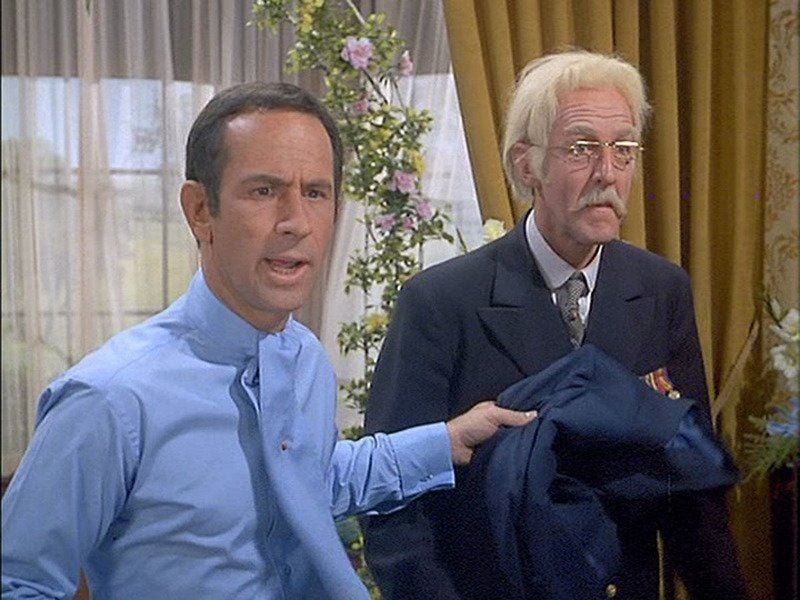
The admiral he played on Get Smart was one of his favorite all-time characters. William said, “The admiral was a charming character.”
Photo: greensburgdailynews.com
From 1979-1981, Schallert was the president of the Screen Actors Guild and was active in SAG issues and committees afterward.
During his six decades of acting, Schallert had recurring roles on eleven different series. The first was The Adventures of Jim Bowie in 1957. This show was set in the Louisiana Territory in 1830 and featured the people that Jim Bowie met there.
In 1958, William became part of the cast of Hey, Jeannie about Jeannie MacLennan, a Scottish woman, who has immigrated to New York and her adjustment to city life.
Photo: ebay.com
1959 found him on Phillip Marlowe as Lt Manny Harris. The same year he also began portraying Leander Pomfrit, a teacher on The Many Lives of Dobie Gillis. That role lasted three years.
It was in 1963 that he received the role that made him a household name. As Martin Lane, Patty’s father and Kathy’s uncle, on The Patty Duke Show. The show was on the air for three seasons, producing 104 episodes. Martin was the patient, wise father who knew when to give advice and when to step back and watch a small failure for a learning experience.
Photo: washingtonpost.com
He and Patty became very close in real life. In an interview with the Closer Weekly, Schallert discussed their relationship. “When I think of her, she’s family as far as I’m concerned. We had a very close relationship. Whenever I saw her it was always like greeting one of my kids. She just had a wonderful quality and I got to know her over the years and she was admirable in a lot of ways. She really did her best to raise her own kids and she certainly had very little help in her own life to do that, but she was very mature and she did a lot of growing up very fast. People take that kind of thing for granted far too easily, and she doesn’t get the credit she deserves for that.”
When the Patty Duke Show ended, Schallert began doing voiceover work in commercials and with his warm and friendly manner, it was a lucrative career for him for two decades, including the voice of Milton the Toaster for Pop Tart commercials. He said it was wonderful, “All you had to do was go in there and do it, you didn’t’ have to put makeup on, you didn’t have to learn anything. I also had a knack for timing.”
Although he had a successful voiceover career, his acting career was far from over. He would show up as a regular cast member on five more series before his career ended: The Nancy Walker Show, The Hardy Boys/Nancy Drew Hour, The Waltons, The New Gidget Show, and The Torkelsons. I especially loved his casting in Nancy Drew. When I read those books as a grade-school kid, he was exactly as I pictured Nancy’s dad Carson Drew in my mind.
Nancy Drew Hour–Photo: williamschallert.com
His last role was on Two Broke Girls in 2014. In that year, he announced he was suffering from peripheral neuropathy and had to wear leg braces some but also had to rely on a wheelchair most of the time. He passed away two years later from an undisclosed condition.
It sounds like Schallert had an amazing life. Growing up in Los Angeles and learning from his parents about theater and radio must have been a lot of fun. He said those connections led to a lot of opportunities like going to Shirley Temple’s birthday parties. Then he started a theater at a young age, worked in television from 1951-2014, appeared in more than eighty movies, had a successful voiceover career, raised four great kids and enjoyed a long-lasting marriage. What a legacy to leave behind.