The Life of a Makeup Artist: All Made Up and Somewhere To Go

Welcome to our blog theme for the month, “Behind the Scenes.” We are going behind the camera to check out careers of those people working behind the camera to bring our favorite characters to life. Last week we learned a bit about costumer designers, and today we are heading to the makeup counter.

So, what do makeup artists do?  Obviously, they apply cosmetic products to enhance the appearance of the stars, but they do so much more. Artists also fit prosthetics and create the effects of blood, wounds, burns, and general aging; adjust colors and textures to work with high-definition cameras and bright lights; assure consistency for multiple-day filming; manage sweating; and sometimes choose and fit wigs for characters. Let’s look at a few of the best in the field to learn more about their life and careers.
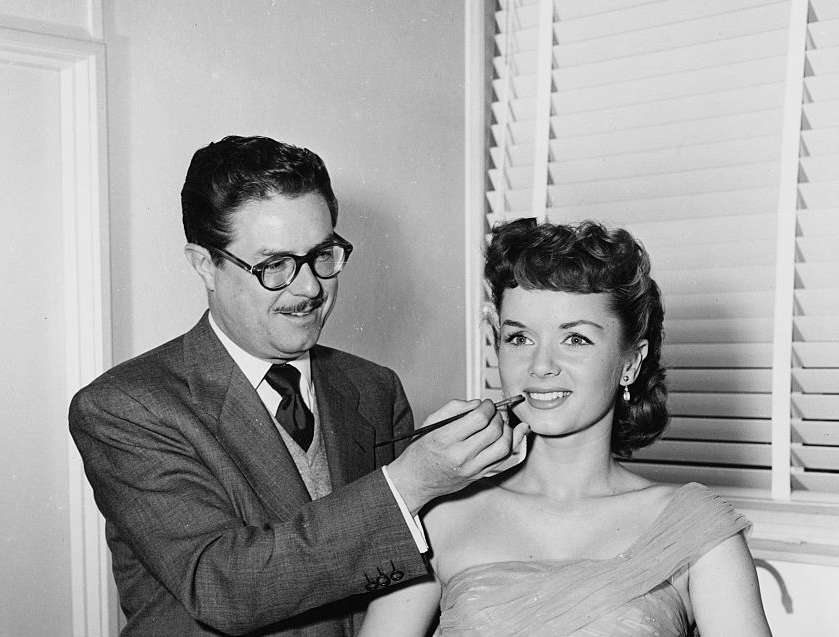
📷vintagestardust.wordpress.com

William Tuttle

William Tuttle was the first makeup artist to win an Academy Award. He created many innovative techniques and trained generations of makeup artists.

He was born in Florida in 1912. After dropping out of school early to support his mother and younger brother, he held a variety of jobs including forming his own band. In 1930, he moved to Los Angeles, enrolling in an art school and working as a page at Fox Studios. That younger brother, Thomas Tuttle, would also become a makeup artist working on The Dick Van Dyke Show, The Joey Bishop Show, Gomer Pyle USMC, and That Girl among others.

Tuttle was hired at Twentieth Century Pictures to work under Jack Dawn. In 1934, Dawn took a job at Metro-Goldwyn-Mayer and Tuttle moved with him. Tuttle was still working under Dawn but began taking on more responsibilities. He supervised the makeup in many popular movies including The Wizard of Oz and Father of the Bride. Eventually, he became the head of the makeup department.
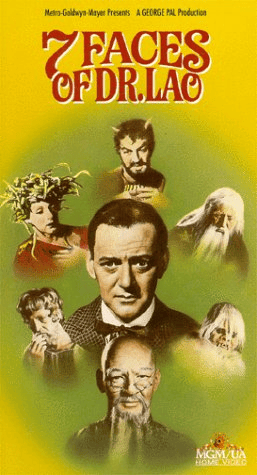
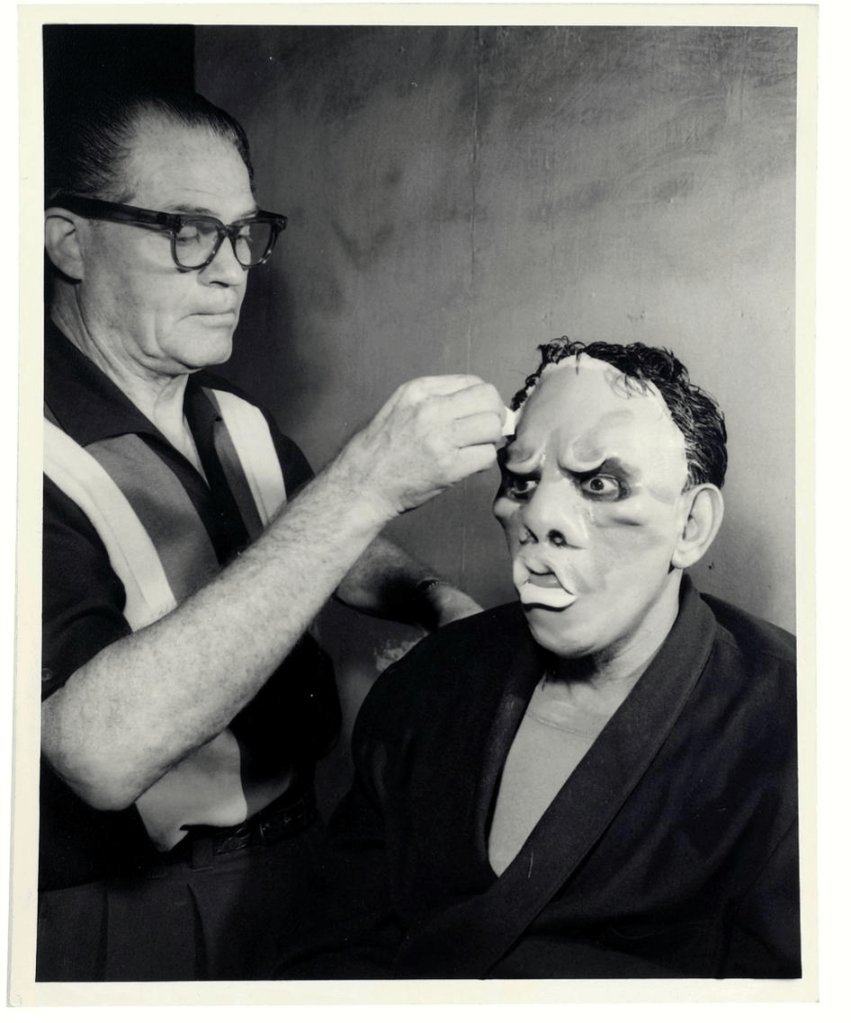
He received a special Oscar for his work on 7 Faces of Dr. Lao in 1965. In this film, Tuttle transformed Tony Randall into seven different characters including Dr. Lao; an aged, bearded Merlin the Magician; and a Medusa with a feminine appearance. Randall said “he shaved my head and eyebrows . . . gave me an unborn look. But professionally it was a masterstroke.” He went on to say that “all my preconceived notions on how I would play the characters vanished. As soon as Tuttle applied his makeup magic, I felt myself actually become these strange people.”

The Oscar category of makeup artist would not become an official category until 1982. That year Rick Baker won the first Oscar for makeup. He would go on to win another five and he credited Tuttle: “His work greatly influenced me.” He said as a young boy, he often tried to re-create the makeup techniques Tuttle used in The Twilight Zone.
📷reddit.com

Tuttle was the artist behind one of my favorite Twilight Zone episodes, “Eye of the Beholder.” When the episode begins, doctors and nurses are working with a bandaged patient who just wants to look like everyone else. After some time, the bandages are slowly peeled away. We see the beautiful face of Donna Douglas. As she picks up the mirror to look at her new face, she screams, cries and covers her face. Then the camera pulls away and we see all the people Tuttle did makeup on – doctors and nurses with deformed faces and pig snouts.

With 393 credits, most of Tuttle’s work was in the movies, but he contributed to television as well. From 1960-62 he provided all the makeup for National Velvet. He also spent time on Mr. Novak, My Favorite Martian, The Man from U.N.C.L.E. as well as The Girl from U.N.C.L.E., The Phyllis Diller Show, and The Courtship of Eddie’s Father, among others.

Later in his career, Tuttle created his own line of makeup, Custom Color Cosmetics. Naimie Ojeil, owner of a beauty supply store in Hollywood said his brand was “the most popular makeup among Hollywood professionals for at least two decades.”

Tuttle would create molds of actors he worked on which allowed him to create their looks beforehand. He donated them to the University of Southern California where he taught from 1970-1995. Herbert Farmer, a USC archivist said Tuttle “was interested in passing on all he could to the students. He had a real following.”

Gene Hibbs

Gene Hibbs was born in Normal, Illinois in 1912.
📷imdb.com

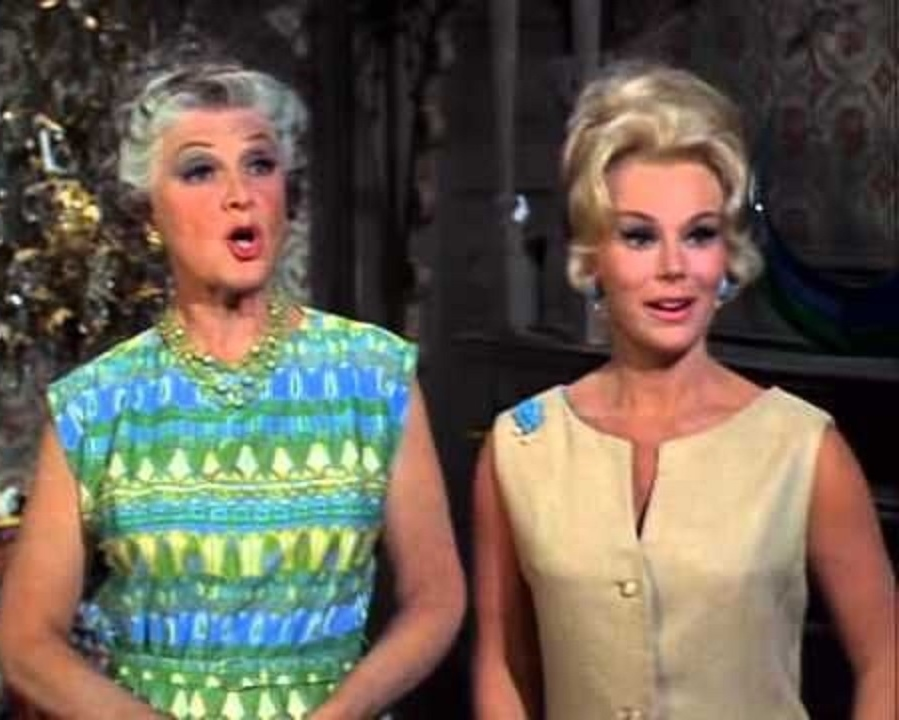
I couldn’t find a lot of information about him. I did read several times that he was often hired because he had a unique talent for making older actresses look younger than they were with a technique he called “painting.”

His first television series was The Lone Ranger from 1954-1955. He worked on many television shows following that including with Ann Sothern on Private Secretary and The Ann Sothern Show, The Judy Garland Show, Here’s Lucy, and Green Acres.

He was working on Green Acres when Judy Garland passed away. She had stipulated in her will that Hibbs was supposed to do her makeup one last time. Her daughter Liza Minelli phoned Hibbs and he agreed to do that. When the network said no, Eva Gabor said she would not work unless he was allowed to leave for a few days. The producer pleaded with the network, but they held firm and said they would lose $30,000 of time and he could not leave the set.

Ben Lane
📷ebay.com Ben Lane on the set

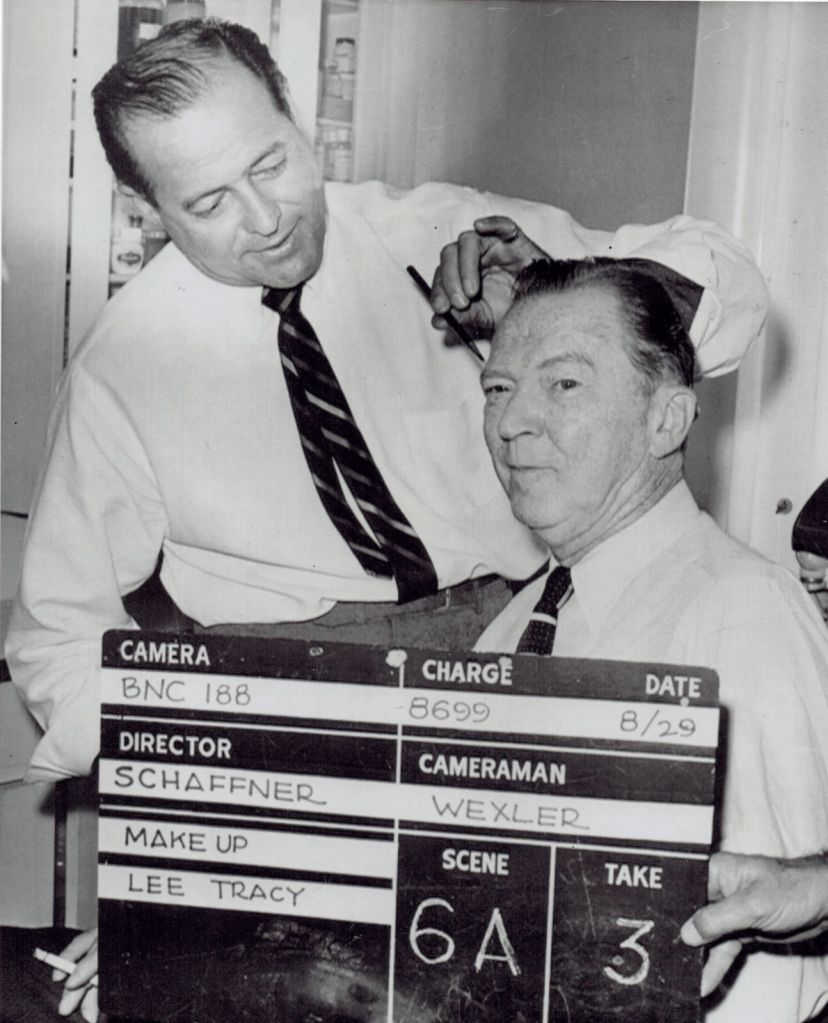
Ben Lane was born in 1912 in Chicago, Illinois, the same year as both Gene Hibbs and William Tuttle. Lane was one of the founding members of the Motion Picture Guild, but many of his 236 credits were spent in television.

Lane’s first television series was in 1957 for Sergeant Preston of the Yukon. His career would continue with many popular shows. Get ready to take a long breath because this sample is far from a comprehensive listing of his work. Ready? He was part of the cast for The Lone Ranger, Dennis the Menace, The Farmer’s Daughter, Hazel, Gidget, The Monkees, Bewitched, The Flying Nun, I Dream of Jeannie, Bridget Loves Bernie, The Partridge Family, Police Woman, and Fantasy Island.

In addition to keeping busy with his career, he was involved in several charities: City of Hope and Shriner’s circus. He became a nationwide clown advisor. He also was a consultant for the Los Angeles Police Department, the US Department of Justice, and the FBI for disguises.

Bud Westmore
📷abebooks.com Westmore working on the film The Lost Moment

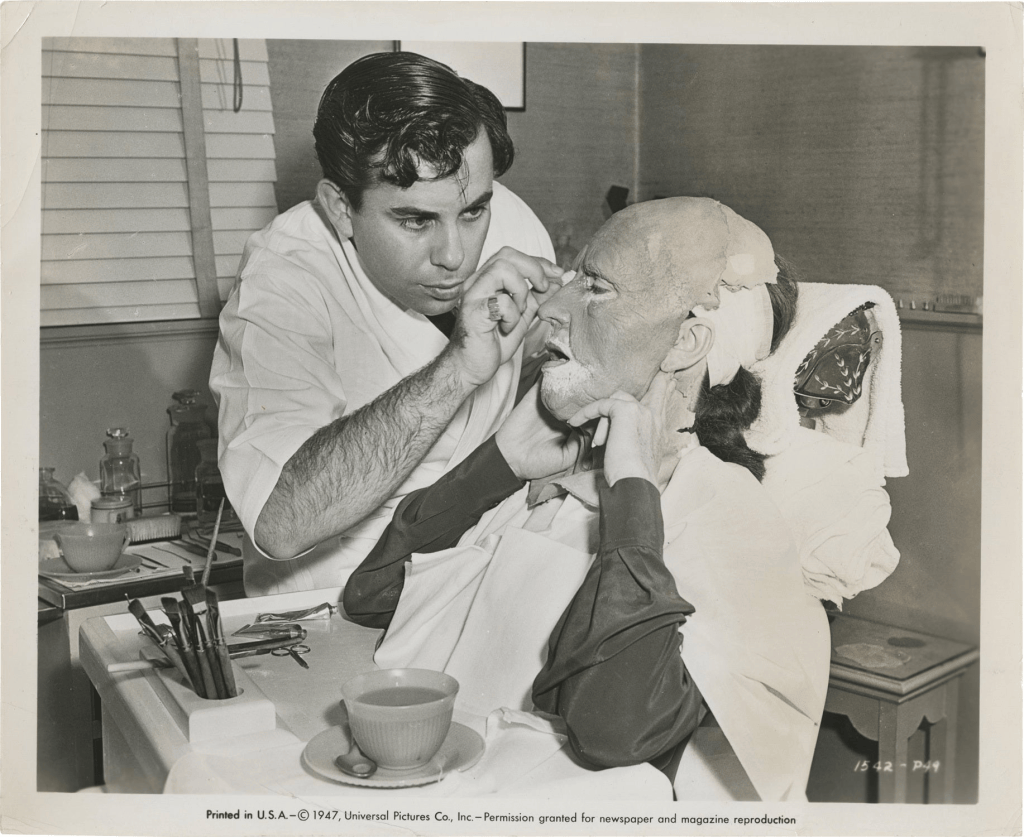
Born in 1918 in New Orleans, Westmore and his brothers—Ern, Frank, Monte, Perc, and Wally–were all makeup artists in the entertainment business. At one time, there was a Westmore heading up almost every studio makeup department.

After school, Bud was an apprentice under Perc at Warner Brothers to learn hair design and makeup before taking a job at Twentieth Century Fox. He left to serve three years with the Coast Guard. When he returned to Hollywood, he worked for the Eagle Lion before he was hired as the head of the Universal Studios makeup department in 1947. The largest building on the Universal studio back lot is named for Bud.

His marriages and divorces also kept him busy. He was married to actress Martha Raye for four months in 1937. A few years later he married Rosemary Lane, another actress, and they were together for fourteen years. His divorce to Lane was on March 31, 1955, and on April 1, 1955, he married Jeanne Shores, a former Miss California in 1952. They would remain together until his death from a heart attack in 1973.
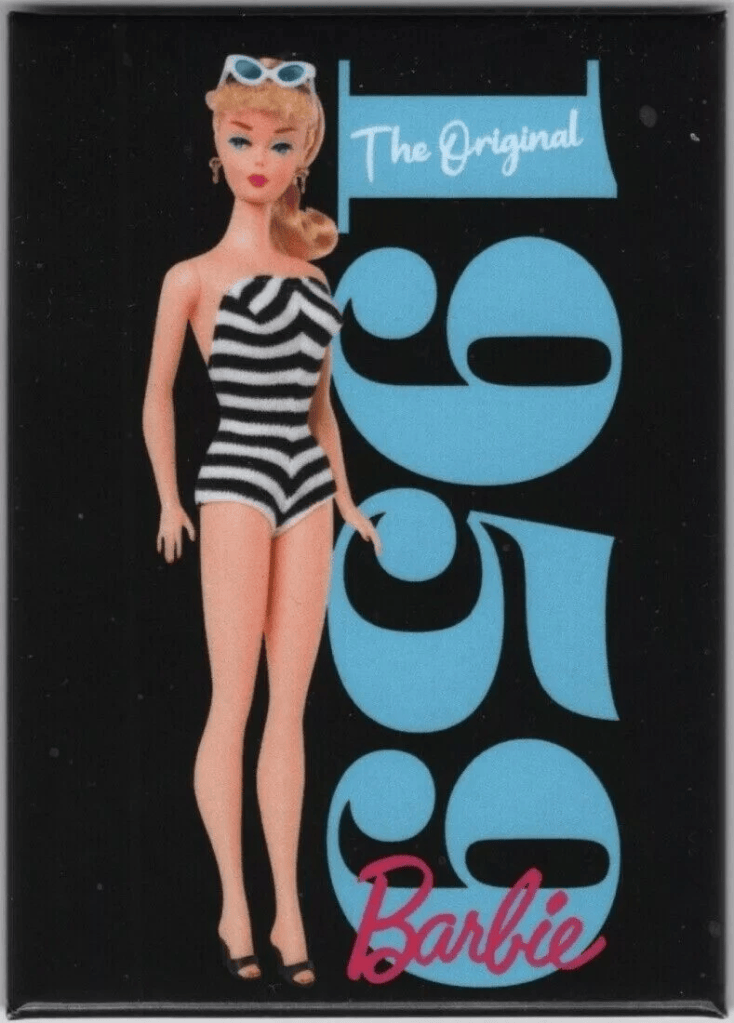
In 1957 Bud was asked to create makeup for a new doll that was coming on the market. In 1959 Barbie debuted. Bud had based her on a German doll Mattel found named Lili. He modified “the bee-stung lips, heavy eyelashes, and widow’s peak to give her an All-American Girl look” and he rooted her hair.

With more than 600 credits on both the big screen and the small screen, Bud’s first television project was Playhouse 90 in 1957. During the sixties he was involved in quite a few shows including The Jack Benny Program, McHale’s Navy, The Munsters, It Takes a Thief, Ironside, Marcus Welby MD, and The Virginian.

It was fun to learn a little bit about these make-up professionals and the shows they worked on to help create some of our favorite television land characters.
Costumers: Bringing Characters to Life

This month we are going “Behind the Scenes” to learn more about the people who work to make television shows great off the screen. Today we get to learn about costume designers.

Costume designers visually define characters. They break down scripts, research time periods, manage budgets, and collaborate with directors and producers to ensure visual consistency. They also oversee fittings, tailor garments, and supervise the wardrobe department on the set.
📷faintlyfamiliar.com That Girl

Characters’ wardrobes have changed during the years. If you watch shows from the fifties to the early seventies, you will notice that the characters have a clothes inventory for the season. You will see characters wearing these clothes over and over during the year. Gracie Allen used to do her own shopping for the dresses she wore on the set.

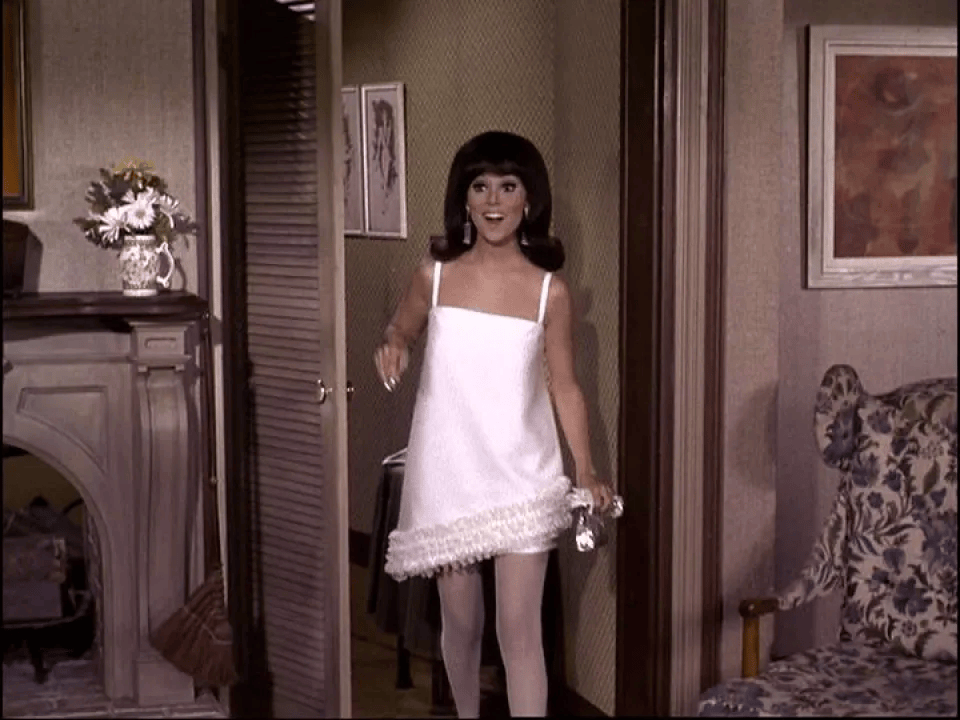
Costumer designers can design and create clothing for a character, or they can purchase the wardrobes. Sometimes costumers work with big-name designers like Nolan Miller who design clothes for a television character. On That Girl, Ann Marie wore a lot of clothing designed by Marilyn Lewis. On Green Acres, Lisa Douglas’s negligees were purchased from Lucie Ann.

Starting in the late seventies and eighties, it became more common for characters to have new clothing for each episode. If you watch Dynasty or Charlie’s Angels, you probably never see an outfit a second time.

📷lapresse.ca

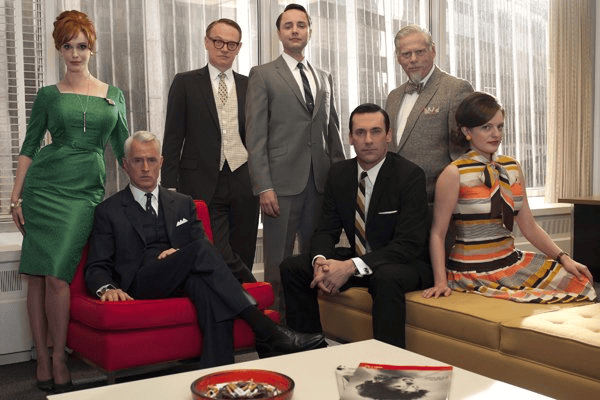
Costumer designers ensure historical accuracy by doing research into time periods and geographical locations. This is reflected in shows like Mad Men or That Seventies Show.

Designing for specific characters includes knowing their personality, creating color schemes that convey emotions, patterns that reflect a personal style, choosing shapes and forms that express a character’s message or social class. Think about a show like Golden Girls where each character has a very different look.

Additionally, designers must consider the set and background colors to make sure the characters are wearing complementary shades or sometimes wearing a clashing color to stand out.

Let’s meet a few television costume designers.

Harald Johnson

Harald Johnson’s work can be seen on The Dick Van Dyke Show, I Spy, and The Mod Squad. He was a member of the motion picture costumers for more than forty years.

📷facebook.com

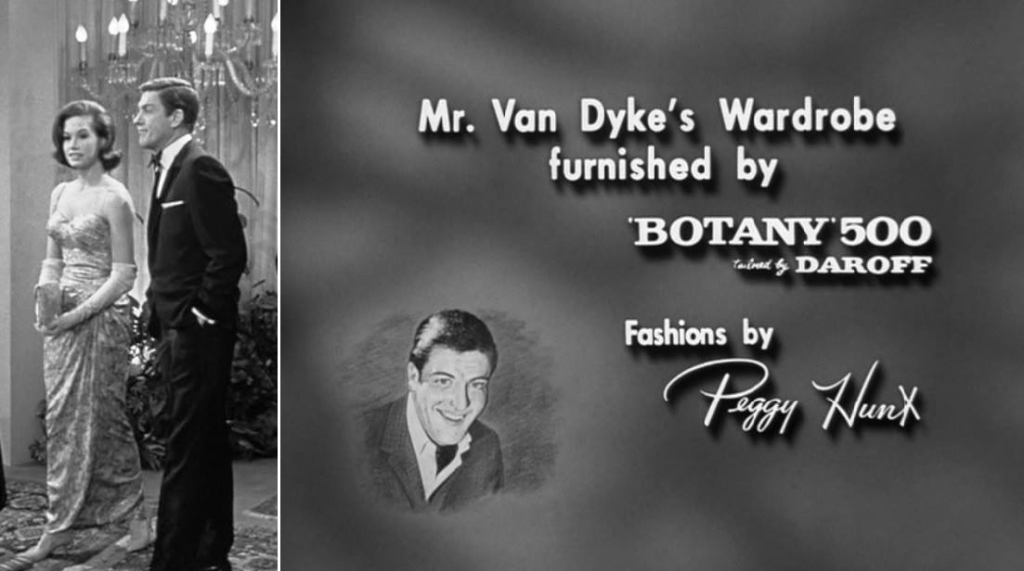
In a 2023 online article by Matt Spaiser (https://www.bondsuits.com/the-stylish-beverly-hills-suits-of-the-dick-van-dyke-show/), he shares the following:

“As Rob Petrie, Van Dyke dressed in bespoke suits, which were known simply as ‘custom’ in America. Though the credits read, ‘Mr. Van Dyke’s Wardrobe furnished by “Botany” 500, Tailored by Daroff’, this was not the case literally. Van Dyke used a Beverly Hills tailor named Harry Cherry for his suits. Harry Cherry was the designer of the clothes and the shop proprietor with his name on the door, but he had cutters and tailors working for him.

The famous wardrobe credit was not entirely truthful. This is from the The Dick Van Dyke Show episode ‘My Neighbor’s Husband’s Other Life’.

Botany 500, an average-quality American clothier, paid for their name in the credits and, according to Vince Waldon’s book The Official Dick Van Dyke Show Book, also paid for Van Dyke’s wardrobe. The credit is cleverly and deceptively worded to mean that Daroff tailored clothes for Botany 500, not for Van Dyke. Botany 500 ‘furnished’ Van Dyke’s suits, in the form of paying his tailor. Van Dyke also appeared in advertisements for Botany 500.

📷ivystyle.com

In Waldron’s book, the show’s head of costuming Harald Johnson is quoted, ‘Dick was very, very particular about his clothes … He never wore off-the-rack suits. The only things he ever wore that were not custom-made were sportswear items.’ Johnson also said that the deal with Botany 500 provided the show’s producers Sheldon Leonard and Carl Reiner with suits from the same tailor who dressed Van Dyke.

Botany 500 paid a large sum for the Harry Cherry suits, jackets, and trousers. In a series of advertisements in the Los Angeles Times in 1958 promoting a clearance sale of his ready-to-wear clothes—he was shifting to selling only custom clothes—his ready-to-wear suits originally cost from $125 to $225 and were made of ‘Italian and English imported fabrics in 100% cashmere, cashmere-silk and wool, Italian silks, mohairs, lightweight worsted, silk and mohair, etc.’ “

The clothes worn by Mary Tyler Moore and Rose Marie were provided by various suppliers, most of them based in Los Angeles. In Vince Waldron’s book, The Official Dick Van Dyke Show Book, Harald Johnson “negotiated deals with a variety of California-based women’s clothing designers, most of whom were only too happy to loan samples of their latest fashion lines to the show’s female stars in exchange for the exposure and – of course – a prominent plug in the show’s closing credits.” 

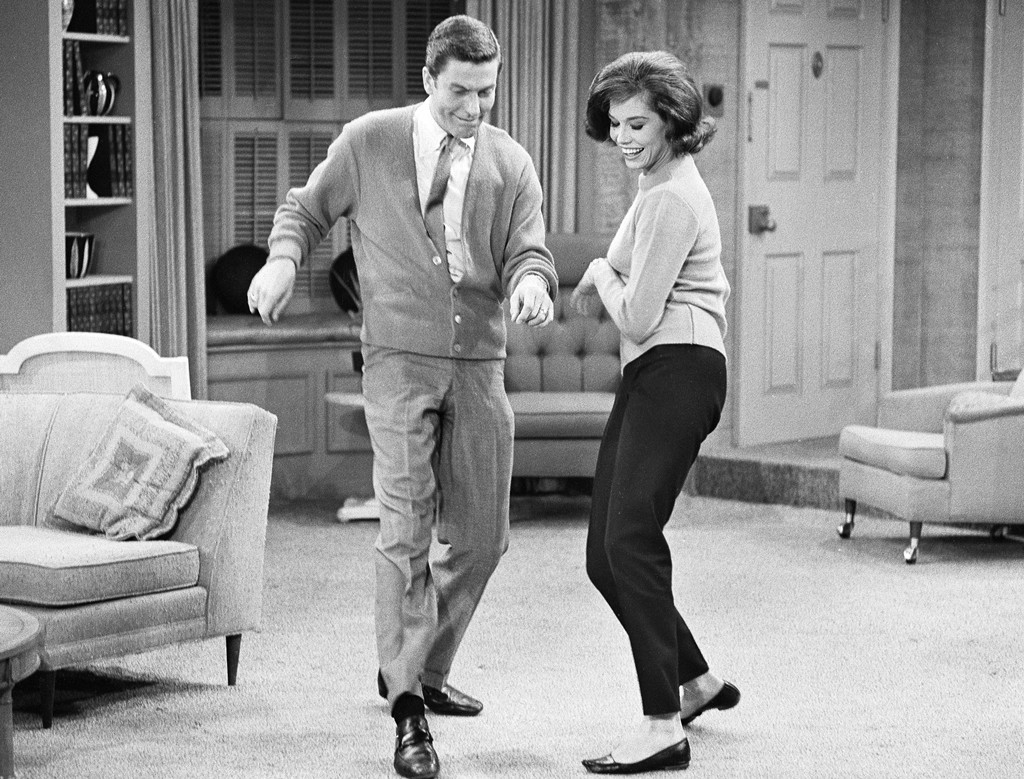
Mary refused to wear the typical and unrealistic clothing other housewives were wearing on television. In a 2021 online article https://www.cnn.com/style/article/mary-tyler-moore-capri-pants), she was quoted, “I said, I’ve seen all the other actresses, and they’re always running the vacuum in these little flowered frocks with high heels on, and I don’t do that,” she recalled to NPR. “And I don’t know any of my friends who do that. So why don’t we try to make this real? And I’ll dress on the show the way I do in real life. … Within a few weeks, we were sneaking (pants) into a few other scenes in every episode.

Vincent Dee

Born in Pennsylvania in 1915, Vincent Dee passed away in 2006. With almost 100 credits, he was a prolific designer. According to BackstageAudition.com, his “contributions as a costume supervisor are nothing short of extraordinary. His passion for storytelling, coupled with his unparalleled skill in costume design, has brought characters to life in a way that captivates audiences worldwide. Dee’s legacy as a master of his craft will undoubtedly continue to inspire future generations of costumer designers and enthusiasts alike.”

📷facebook.com

Dee began as a costumer designer on television from 1954 to 1978. He was part of the cast for many popular series including Tales of West Fargo, Bachelor Father, Alfred Hitchcock Presents, Leave It to Beaver, Wagon Train, McHale’s Navy, The Munsters, and The Virginian.

Bachelor Father is one of my favorites and the characters’ wardrobes are spot on. Bentley Gregg is clad in the tailored suits a wealthy attorney would wear. His teen niece Kelly wears typical high school fashion with a polished, upscale vibe. And Peter switches his clothing from white shirt when working at the house to more casual, informal clothing when he’s out and about.

Then you have Leave It to Beaver. June is often made fun of for her flowing dresses and pearls. Barbara Billingsley often told the story about why she wore pearls. She had a large hollow in her neck which became more obvious on screen, so the pearls covered up that stark look. Ward, the businessman is usually in suits or casual attire for golfing. Beaver and Wally wear the typical clothing for boys their age: jeans, flannel shirts, sweaters. The Cleavers are the poster family for a wholesome, clean-cut, conservative family of that time.

📷that’sentertainment.com

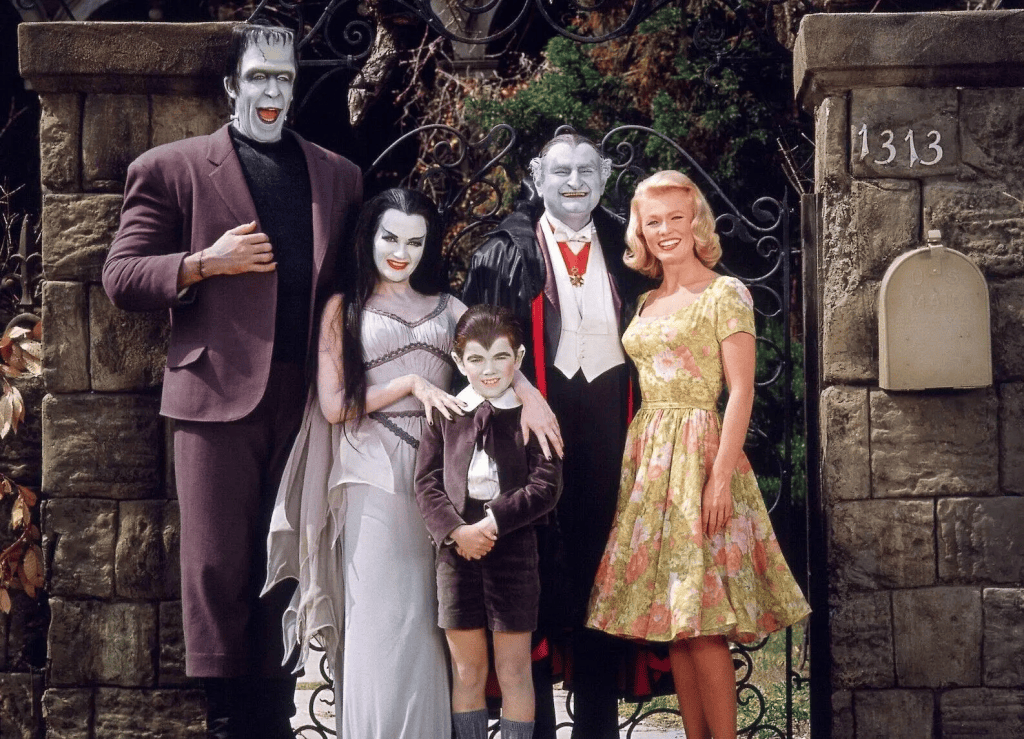
The Munsters were a satire of the typical sixties’ family. However, Eddie Munster dressed nothing like Beaver. He wore the same outfit in every show: a velvet suit with short pants and a shite collar with a jacket and gray knee socks. Poor Fred wore heavy looking clothing as a mortician. He was given build-up shoes to expand his 5”6” frame to 7’. His clothing weighed about 50 pounds so there were fans and lemonade and water for him between takes. Lily gives a nod to The Bride of Frankenstein from 1935 with her black and white hair and long, flowing gown.

An interesting story about Dee concerned Edith Head, an amazing designer who often found herself involved in scandals and unethical behavior toward other designers. In a 7-29-2024 online article (https://www.okcmoa.com/edith-heads-controversies) by Kristen Pignuolo, we learn that Head was responsible for promoting The Sting and making sure the actors were happy with their costumes. However, she did no design work for the film. That fell to Peter Saldutti and Vincent Dee who worked with Paul Newman and Robert Redford and Andrea Weaver who was the women’s costumer. The Sting won Best Costume Design. Head received the Oscar and during her acceptance speech failed to even mention Saldutti, Dee, or Weaver.

I think the world of costuming is fascinating. You have all the creative license, scandal, and intrigue of any television plot. I wish we knew more about these hard-working, creative individuals who made our characters so real for us.

The Wackiest Ship in the Army: Couldn’t Find Its Viewers

We are half-way through our blog theme for July, which is Military Upended as we look at military sitcoms that all debuted in the mid-sixties.

Like our show from last week, Mister Roberts, this one debuted in 1965 and ran for one season. This hour-long NBC series was produced by Harry Ackerman and Herbert Hirschman. It was loosely based on a film from 1960. Our show last week, Mister Roberts, was also based on a movie that starred Jack Lemmon. Lemmon was in this movie as well with Ricky Nelson.

📷imdb.com

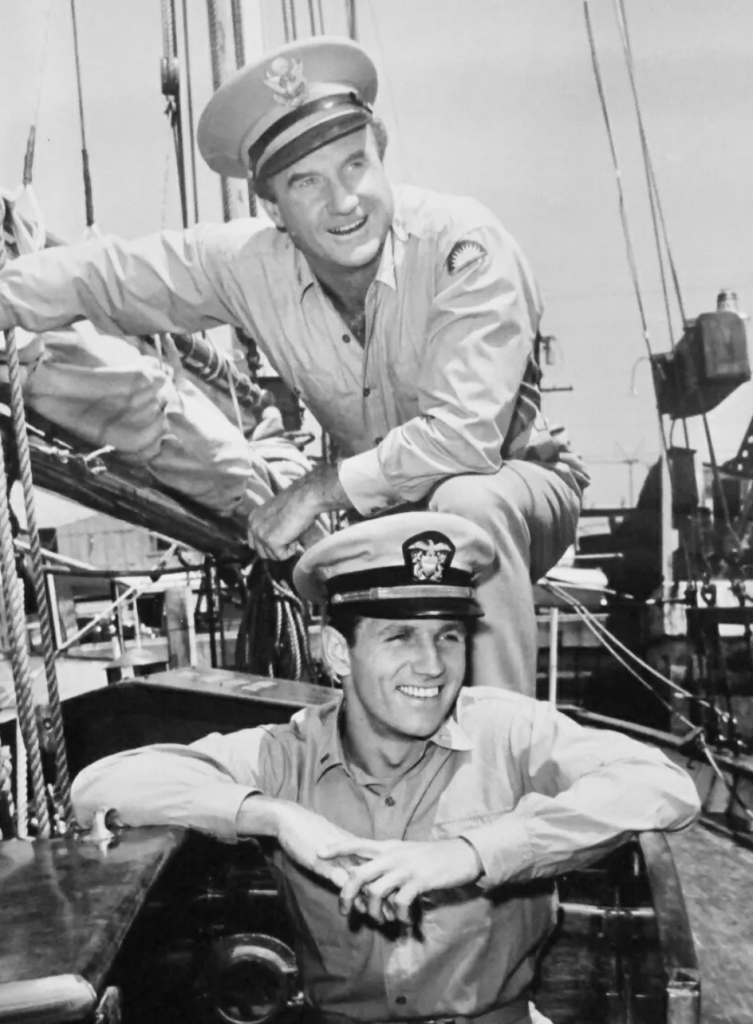
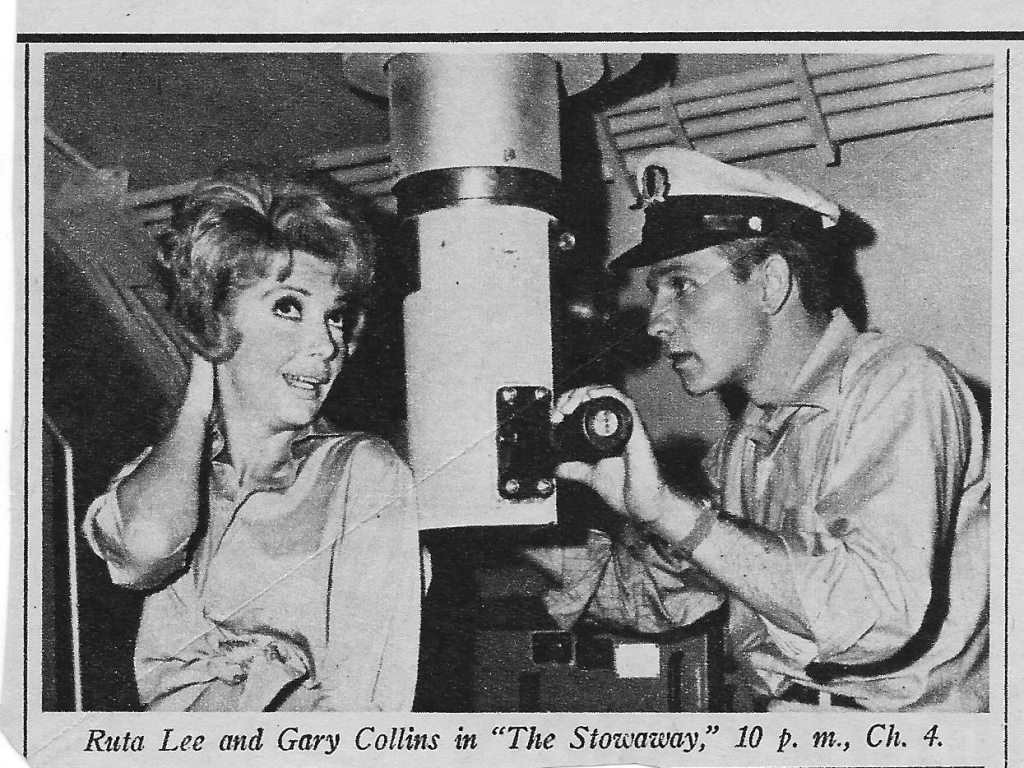
The show is set in World War II and focuses on the crew of the USS Kiwi in the Pacific theater. This old schooner, flying a Swiss flag, carries out covert missions behind Japanese lines. The commander is Major Simon Butcher (Jack Warden) and Lieutenant Richard Riddle (Gary Collins). Butcher controls land operations while Riddle commands at sea. The Kiwi was previously owned by New Zealand.

Also in the cast were Chief Petty Officer Willie Miler (Mike Kellin), Radioman Patrick Hollis (Mark Slade), Machinist Seymour Trivers (Fred Smoot), Gunner’s Mate Sherman Nagurski (Rudy Solari), and Pharmacist Charles Tyler, the cook, (Don Penny).

The Kiwi was based on the USS Echo, a 40-year-old schooner given to the US Navy by New Zealand to use during the War. The ship was returned in 1944. Its poor condition made it useful for spying. The wooden hull did not show up on radar, its sailing power didn’t register on sonar, and the shallow draft allowed it to travel in shallow waters.

The show was scheduled for Sunday nights. The tough part of the schedule was that it was up against Candid Camera and What’s My Line, very popular programs at the time. However, it was helped by following Bonanza, the number one show that year.

The composer of the theme song was the celebrated Nelson Riddle. With more than 100 credits he worked on films including High Society and Guys and Dolls; did variety shows for Dinah Shore, Frank Sinatra, Nat King Cole, Julie Andrews, and Rosemary Clooney; and lots of television series including The Untouchables, Route 66, Emergency, and Newhart.

📷imdb.com

Eddie Foy III talked about casting this show during his Television Academy interview. He said it was one of the best casts of any show he worked on. He said their producer brought the dramatic style the show needed to uphold the comedy. He said Danny Arnold was the talent behind this series and that Danny used to always say that writers aren’t funny and actors aren’t funny, but writers and actors who are successful think funny. Foy worked with him on That Girl and then continued as his casting director for years. Arnold gave everyone on the show freedom to do what they did best, so Foy did not have to run every casting decision by him.

The show was canceled after one season due to low ratings. I’m not sure if it was the quality of the show or if it was a victim of too many shows like this one. During the year this one debuted, we also had McHale’s Navy, F-Troop, Hogan’s Heroes, Gomer Pyle USMC, as well as tons of westerns, and extremely popular sitcoms like I Dream of Jeannie, Green Acres, Bewitched, That Girl, The Dick Van Dyke Show, The Andy Griffith Show, Get Smart, Batman, Petticoat Junction, and My Three Sons.

When you take into account that you had to watch shows live and there were only three choices at a time, it’s easy to understand how some good shows that might be recorded now received low ratings then. That said, this show never seemed to be sure what it was either. It was listed as a sitcom, but it was an hour-long show which was unusual. It wasn’t filmed before an audience, nor did it include a laugh track. And, it sometimes had episodes where people died, not so funny. If you wanted to see a funny military show, there were a lot of other options. There were also lots of good sitcoms and good dramas that all knew what their genre was. If you want to give it a try, it’s available on Philo.

Jane Connell: What a Character!

This month is one of my favorite themes: What a Character! Today we are learning about the career of Jane Connell.

📷imdb.com

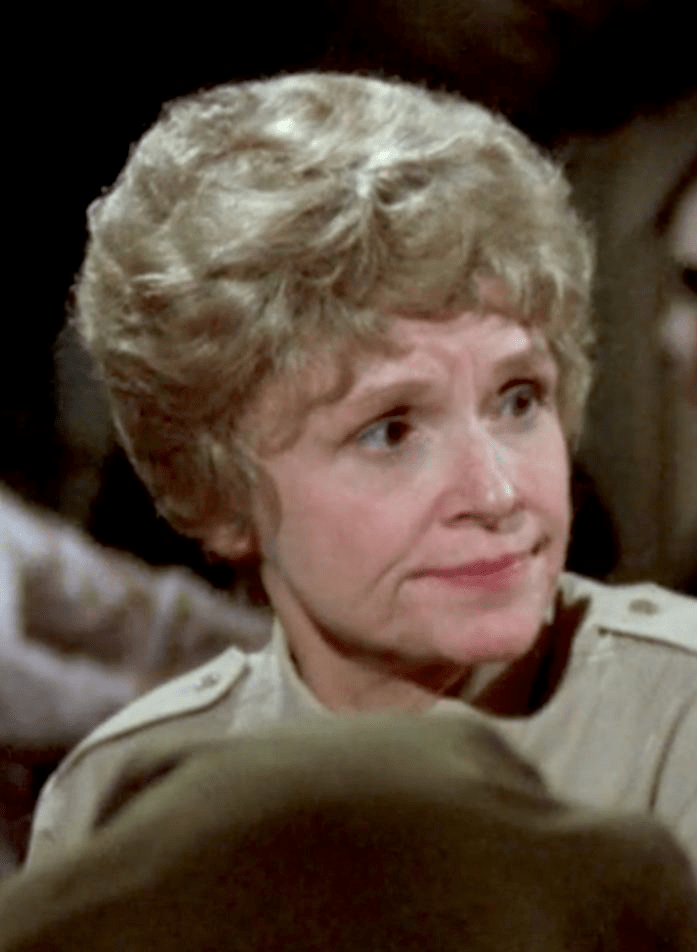
Connell was born in California in 1925. After high school she attended the University of California, majoring in drama. She married her college boyfriend Gordon Connell, and they were together until her death in 2013. The couple performed together; one of their first plays was at San Francisco’s Purple Onion with May Angelou who was a calypso singer at the time.

Connell spent almost five decades in New York Theater including Broadway, summer stock, national tours, and cabaret. Jane talked about how things changed in the theater, saying “there’s no question that theater has changed through the years. The one thing that bothers me is that so many of today’s young actors come from television and have not been taught theater technique. They don’t realize when they’re upstaging you. It’s not done out of meanness or trickery. They just think there’s a camera over their shoulder that is filming the other actor. But I don’t complain about it. I just look out front and deliver the lines. I was born a character person. I was always eccentric, never a conventional beauty. I grew up in the Depression, the youngest of four kids. I wanted to make people laugh, because making my family laugh helped us forget our concerns. And I found that I could do it.”

📷instagram.com

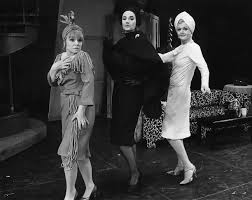
Connell’s claim to fame happened in 1966 when she was cast as Agnes Gooch in the Broadway version of Mame. She would also appear as Agnes in the 1974 film that Lucille Ball starred in.

She appeared in ten big screen films throughout her career as well as several made-for-tv movies.

Her first television appearance was on nine episodes of Stanley in 1956. This was an early sitcom starring Buddy Hackett as a newsstand vendor in a luxury hotel where he gets involved with many of the residents and guests.

Connell showed up in many of the most popular sitcoms in the sixties and seventies including The Patty Duke Show, Rowan and Martin’s Laugh In, The Mary Tyler Moore Show, That Girl, Green Acres, Love American Style, and Maude. She was cast in six Bewitched episodes as different characters, often playing regal figures including Martha Washington, Queen Hapzibah, Queen Victoria, and Mother Goose.

📷TimeNote.com

She continued her movie and tv work throughout the eighties and nineties including MASH and Law and Order. Her last appearance was in 1999. At age 87 she passed away while living at the Lillian Booth Actors Home of the Actors Fun in New Jersey, leaving behind Gordon who died in 2016 and two daughters Melissa and Maggie.

I thought it was ironic that she was typically described as a tiny dynamo with a squeaky voice, being under five feet tall. However, one of her most memorable lines was on Bewitched as Queen Victoria when she said, “We are not amused”– the opposite of a tiny, squeaky-voiced character like Agnes Gooch. Thanks for being such a versatile character actor Jane Connell and treating us to so many years of entertainment.

Angie: Always on the Move

This month we are learning about sitcoms with one name, and today is Angie. Angie had a short run from February 1979 until September of 1980, producing 36 episodes. It was one of the few Garry Marshall shows not to be a long-running hit. He created it with Dale McRaven. We all know Marshall’s amazing career with Happy Days, Laverne and Shirley, The Odd Couple, not to mention all of his great movies. McRaven also had a prolific career as a producer and writer. He’s listed as producer for The Partridge Family, The Betty White Show, Mork and Mindy, and Perfect Strangers. His writing credits includes all of these shows, as well as The Dick Van Dyke Show, That Girl, Get Smart, The Odd Couple, and Room 222 among others.

📷ihearthollywood.com

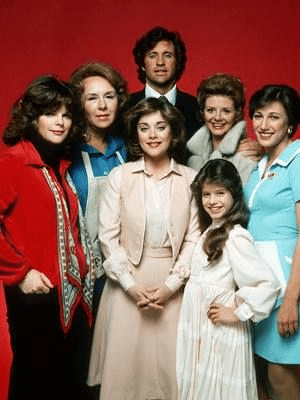
The cast was quite talented: Donna Pescow played Angie, Robert Hays was her boyfriend-later-husband, the amazing Doris Roberts was her mother Theresa before Raymond came along, and Debralee Scott played her sister Marie.

Bradley Benson is a young pediatrician who comes from a wealthy family comprised of his stuffy father Randall (John Randolph), his overbearing sister Joyce (Sharon Spelman), and her daughter Hillary (Tammy Lauren). The show is set in Philadelphia.

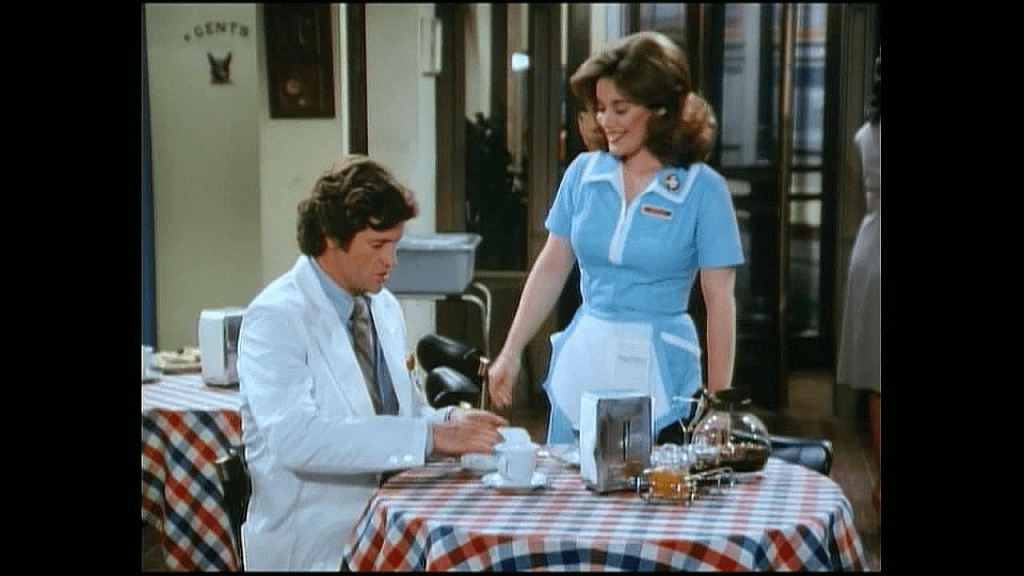
Angie is a coffee-shop waitress who falls in love with Brad. Many scenes are set in the diner with Angie’s friend and co-waitress Didi (Diane Robin). When their families argue about wedding plans, Brad and Angie elope. Later Angie’s mother plans a small family wedding for the two families to get to know each other, and Brad buys the coffee shop for Angie.

At the beginning of the second season, Angie sells the coffee shop to buy a salon with her mother.

📷imdb.com

The theme song was “Different Worlds,” written by Norman Gimbel and Charles Fox. Gimbel is still hard at work and has amassed 494 credits so far while Fox has 131 credits for many impressive television series and big-screen films. Maureen McGovern sang it; she’s best known for her top-forty hit “The Morning After.”

The show was sandwiched between Happy Days and Three’s Company on Tuesday nights, which ensured great ratings. This one was fifth its first week. The show just could not find its fan base. By the end of the season, the Nielsen ratings had fallen drastically, and the show had moved to Monday nights following Monday Night Football. Angie wasn’t the only show to struggle in this time slot. Once it was moved, three other shows—One in a Million, Goodtime Girls, and Laverne and Shirley—all tried this scheduling spot. I’m not sure if the shows were just not very good in 1979, if people were too busy to watch television, or the network heads were inexperienced, but when you look at the schedule from 1979 most prime times had a different show in the slot every season of the year. When it’s not only one show on a network moving, but many shows on a network moving and then all networks having a bunch of shows moving, how are viewers supposed to figure out where anything was? Out of the 54 new shows debuting in 1979, by the next season every network basically had one hit show out of the bunch: ABC-Hart to Hart, CBS-Trapper John MD, and NBC-The Facts of Life. While these are all decent shows, none of them were classics in my opinion. In 1980 another 30 shows were brand new.

📷rewatchclassictv.com

The show was put on hiatus. It did return in April on Saturday nights, but it was officially canceled in May.

When you look at this show on paper, it had all the right elements. First of all, we have Garry Marshall and Dale McRaven, very successful creators and writers. The cast was amazing. Even the theme song was composed and sung by extremely talented people. Then you have the fact that there were not a lot of great shows debuting this year; a decent show should have crushed it. So, what happened here?

I think I’m putting the blame for this one on the network. I watched the pilot and while pilots are meant to pull you back for the next one, most pilots aren’t the best of the series. Some of the pilots for shows I love are almost dreadful. This pilot was not dreadful. The characters were likable, the writing was funny, and the theme was not overdone over the years. It was similar to The Mothers-In-Law from a decade earlier but more of a Dharma and Greg (which came two decades later) where they fall in love despite their economic differences.

📷youtube.com

This series was better than a lot of shows that are currently on the air. I did watch another later episode where the couple elopes. Once again, the writing was good and the characters were a bit eccentric, but the writers knew how far to go to keep them likable and charming rather than odd. If ABC had kept it in a time slot for more than a month or two and given it a bit of time, it might have been a big hit.

If you want to check it out, let me know what you think. For a late seventies/early eighties show, it’s aged very well.

Hey Mulligan! The Mickey Rooney Show


This month our blog series is “It’s Their Show.” Today we are taking a look at The Mickey Rooney Show. This show debuted on NBC in 1954. It was on for one season, producing 39 episodes.

📷singingnewstv.com

Rooney plays Mickey Mulligan, a Guest Relations Staff member who works at a television network, hoping to land an acting career by taking acting lessons at night. It’s interesting that they set the show at a television network, because only 56% of families had televisions in 1954. It’s also interesting that Rooney was playing a young adult, although he was in his mid-thirties.

Mulligan is not content with his salary of $47.62 a week. Lucky for him, his girlfriend Pat (Carla Balenda) is a secretary to the studio program manager, Charles Brown (John Hubbard). Rounding out the cast is the head of the network (John Hoyt) and Mickey’s best friend Freddie (Joey Forman). Freddie also works at the network, and the two friends often grab lunch at the Hamburger Hut.

📷internetarchive.com

To make ends meet, Mickey lives with his parents, Joe (Regis Toomey) and Nell (Claire Carleton). Joe is a retired police officer who met his wife when he arrested her because she was a burlesque dancer.

There were a lot of talented people behind the camera on this show. Blake Edwards was one of the creators,  an executive producer, and one of the writers on the show. He would write and produce several shows including Richard Diamond Private Detective and Peter Gunn before moving into movies in the sixties. Later in life he would be known for the Pink Panther movies and marrying Julie Andrews.

Van Alexander was an arranger for Capitol Records, and he produced the soundtrack for the show. He was a collaborator with Ella Fitzgerald and worked on Bewitched and I Dream of Jeanne as well as big-screen productions.

📷BBC.com Van Alexander

Leslie H. Martinson was one of the primary directors for the show, working on 33 of the episodes. In a Television Academy interview, he discussed working on the series. He said he often had to shoot around Mickey’s role because Mickey was off at the racecourse and then they’d film him when he showed up. He said Rooney was a genius with the way he reacted to things and often his expressions made the entire scene worthwhile.

NBC scheduled the show on Saturday night against The Jackie Gleason Show, which was one of the most popular shows on television at the time. There were some derogatory comments made about Gleason by Rooney that got leaked to the public, and it caused a lot of turmoil for the show before it even aired.

📷amazon.com

The show started with a tagline, sort of like the beginning of That Girl had. While Rooney is boxing, someone yells “Hey Mulligan.” I watched episode 8 of the first year, “Tiger Mulligan.” In this episode, Mulligan’s parents are watching television when Mickey comes home from the gym where he’s working out to be an amateur boxer. His dad is ecstatic, but his mom is not too happy. His girlfriend agrees with her, and she doesn’t like having to sit around by herself at night. His mom, who is a fun character, convinces him that he’s trained too hard and is overly weak. She sets him up by gluing some items to the shelf and making a jar impossible to open. He thinks his mom is stronger than he is and that he needs to pull out of the fight. However, his dad realizes what she’s up to and when he calls her on it, Mickey gets excited for the match. However, at the ring he realizes that his opponent looks like a weakling but has a strong right arm. The fight ends with both of them passing out when they see blood. I really enjoyed the writing, the characters, and the music; I will say that the laugh track was a bit hard to get used to though.

I know something has to go up against the big hits on the television schedule, but it seems like this would have been a fun show if it had competed against a show that wasn’t in the top ten. The entire series is available on DVD if you want to check it out.

Cimarron Strip: Steak, Anyone?

As we wind up our “Go West Young Man” blog series, we turn our attention to Cimarron Strip for the last blog of the series. This show was only on the air for one season, from 1967-68. It was produced by the creators of Gunsmoke, America’s most beloved western. Like The Virginian, it was a 90-minute show.

📷mubi.com

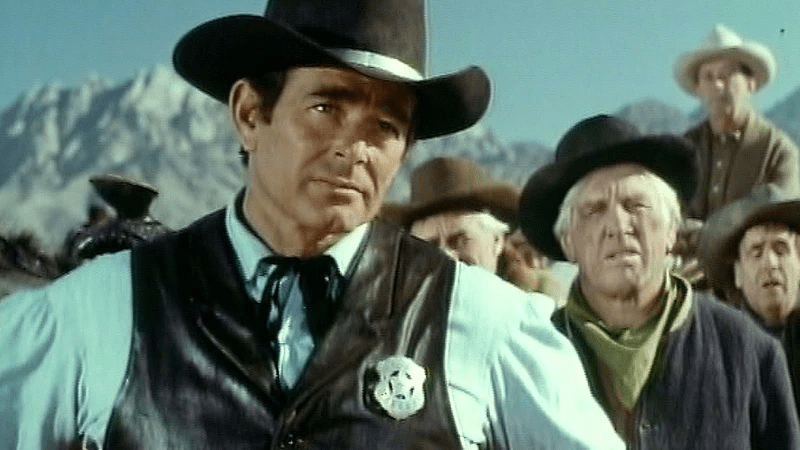
Set in the Oklahoma in 1890, the series occurred in a geographical region called No Man’s Land, an ungoverned area for several decades. Marshal Jim Crown (Stuart Whitman) tries to bring law and order there. Crown arrives only to learn that the sheriff has resigned, and it’s up to him to bring peace to the area with no Army support. We get to know Dulcey Coopersmith (Jill Townsend) who comes to live with her father, but upon her arrival, she discovers he is dead. Her father’s partner MacGregor (Percy Herbert) has let their Wayfarer’s Inn become a bit dilapidated, but Dulcey is determined to bring it back. Marshal Crown stayed there when he was in Cimarron City. Francis Wilde (Randy Boone) often served as Crown’s deputy.

📷pinterest.com

Rounding out the cast is the bartender at the Inn, Fabrizio (Jack Braddock); Major Covington at a nearby Army fort (Andrew Duggan); a Dr. Kihlgren (Karl Swenson); and Hardy Miller (Robert J. Wilke).

The show was on Thursday nights, up against Batman, The Flying Nun, and Bewitched on ABC. It faced Daniel Boone and Ironside on NBC. Definitely some tough competition.

The theme song was composed by Maurice Jarre, who was the scorer for the films Lawrence of Arabia and Doctor Zhivago for which he won two Oscars.

The show never attained the ratings numbers it needed to keep its place on the schedule. From what I have been able to find out, it was well written and well cast. Guest stars kept it interesting, and the scenery was beautifully filmed.

📷tvmaze.com

I’m guessing the main reason the show didn’t make it was just viewer fatigue with the western genre. There were already shows like Bonanza and Gunsmoke which were hugely popular. One more western might just have been one too many, no matter how good it was. In addition to the western series, some of the shows that were on the air when Cimarron Strip debuted included That Girl, Hogan’s Heroes, Mannix, Batman, Lost in Space, Get Smart, and Rowan and Martin’s Laugh In—very different choices than westerns. I do remember Arnold the pig on Green Acres always wanting to watch westerns on television. We still fall prey to this on the major three networks. After ER became popular, the next season featured ten new medical shows. And then most of them get cancelled, not necessarily because they’re bad but because it’s just an overload of medical shows.

Most people don’t want the same supper every night even if it’s steak or lasagna. That said, this seemed to be a steak kind of show, so just because it couldn’t survive the mass onslaught of westerns in the sixties doesn’t mean it’s not worth watching. If you check it out, let me know what you think.

The Bill Dana Show: Really It Was The Jose Jimenez Show

This month our blog is devoted to The Bill Dana Show which was on the air for two seasons in the early sixties.

📷dvdplanetstore.com

Bill Dana is not a name remembered much anymore but, in the sixties, he was a huge celebrity. There is some tough talk about why he was so famous. During the late fifties and early sixties, especially as so many radio shows transitioned to television, there were some politically incorrect shows. This one teetered on the edge of it, in the same ways the show Life with Luigi did.

Bill Dana’s alter ego, Jose Jimenez, debuted on The Steve Allen Show in the late fifties. Jimenez was a Mexican immigrant. He saw the United States through a different lens than people who grew up here. He often was amused by what he saw going on around him. However, he was not the lazy stereotype Mexican. Jimenez was hard working and wise in many ways. He was not offensive in the way Amos and Andy were. Dana was a Hungarian Jewish man playing a Hispanic man so that was not well received either.

While I still love so many programs from the fifties and sixties that hold up well today and have delightful characters, many programs from this time make us cringe and we are embarrassed for the television industry at that time.

There are also many performers that may have bordered on sexual and ethnic political incorrectness, many of their characterizations may not be offensive, but I sure don’t find any humor in them.

📷 Jose Jimenez televisoinacademyawards.com

Remember this was during the Civil Rights Movement era, so things were beginning to get examined more closely in pop culture. Even if Jose was a good guy, his exaggerated accent set him up more of a caricature than a character.

While there was some blowback from the Latino community, many fans adored Jimenez. Danny Thomas and Sheldon Leonard decided to give Jose his own show after he made a few appearances on The Danny Thomas Show. NBC put the show on its schedule without even seeing a pilot because he was so popular.

While the quick sketches with Jose were in your face humor, putting the character in his own television series gave the writers time to develop him more and make him more dimensional. Leonard made this a workplace sitcom which was different for him since so many of their shows—The Dick Van Dyke Show, The Danny Thomas Show, That Girl, Good Morning World—were all balancing personal and work life. Earl Hagen, who wrote so many great tunes for the Leonard group, wrote this one as well.

The show aired September 22, 1963, and ran for a season and a half, ending January of 1965.

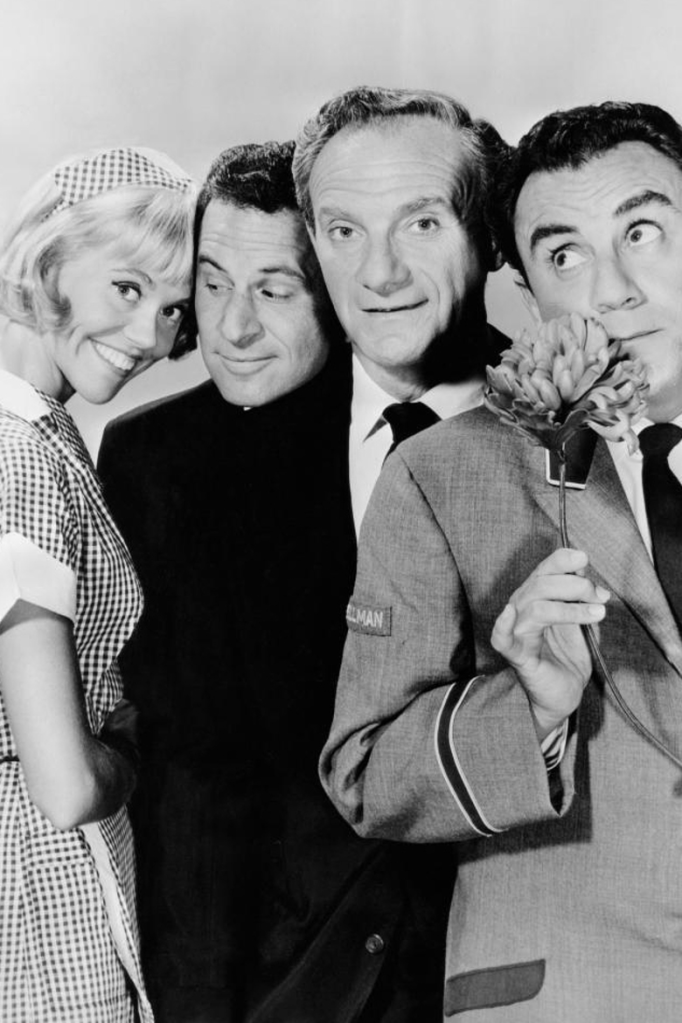
Jimenez is a bellhop at a luxury New York hotel. He lives in a special staff apartment, eats in the hotel kitchen, and interacts with most of the guests. He is surrounded by a great cast which we’ll get to know in more detail this month. Don Adams was Byron Glick, house detective. Jonathan Harris took on the role of Mr. Phillips, the hotel manager. Fellow bellhop Eddie (Gary Crosby) is always trying to get Jose to lose his rose-colored view of life. For season 2. Maggie Peterson plays waitress Susie.

The ratings were not great. Perhaps viewers had a harder time connecting this Jose to the caricature Jose. Certainly, more criticism came from the Latino community as the show went on. In addition to Jose, there was feedback on other shows that used stereotypical Mexican characters and in commercials like the Frito Bandito.

📷washingtonpost.com

Jose had one cameo role in Batman when he meets the duo and introduces himself as “My name—Jose Jimenez” in 1966. That was the final appearance of the character and a few years afterward, Dana read an obituary that he wrote for Jose at a Latino civil rights meeting in Los Angeles, and he became an activist for the Latino community, so there was some good coming out of the situation.

The show was canceled partway through season two. Another factor in the show’s ratings was the fact that it was on Sunday nights up against Lassie, a family favorite. However, the show did somehow receive an Emmy nomination for outstanding sitcom. No surprise it didn’t win. Despite being a mediocre show with some nugget of greatness here and there, it was up against McHale’s Navy, The Farmer’s Daughter, and the show that won, The Dick Van Dyke Show.

If The Bill Dana Show had just been a show about “a guy” who arrives from Mexico to work in a posh hotel, and we saw life through his eyes, good and bad in America, the concept could have been fun and more accepted. It appears that the writing was pretty good and it had a great cast. Jose was just not the character to build the show around.

Good Morning World: Tune In

As we are in the middle of our What in the World? blog series, today it’s a forgotten sitcom from the sixties: Good Morning World.

📷wikipedia.com

This series was created by Sam Denoff and Bill Persky, the team behind That Girl. The concept was based on Persky and Denoff’s time as writers for a New York radio station in the fifties.

In fact, William B. Williams, a WNEW DJ was given screen credit because the title was based on his daily greeting, “Hello, World.” William B. Williams was quite a character and an icon in the world of music. He was born in 1923 and after attending the University of Syracuse, he got a job with WAAT in New Jersey. He filled in for a DJ who failed to come to work but then was fired for, believe it or not, wearing red socks to work. He was hired by WNEW in New York City. He became a beloved radio icon. The radio station said at his funeral there was a huge crowd outside which included taxi drivers, sanitation workers, bookies, waitresses, singers, songwriters, politicians, housewives, first responders, and even the Rockettes.

📷radiohalloffame.com William B. Williams

According to the radio station’s website, “William B. Williams respected singers and songwriters, music and musicians, and it showed. He had a permanent, perhaps profound, effect on the lexicon of pop music.

He bestowed the ‘Count’ on Basie and the ‘Duke’ on Ellington. Billie Holiday was ‘Lady Day.’ Ella Fitzgerald was the ‘First Lady of Song.’ Louis Armstrong was ‘Pops.’ Sinatra was ‘Francis Albert,’ the ‘Chairman of the Board.’ Nat ‘King’ Cole was simply ‘Nathaniel.’”

The show was produced by Sheldon Leonard and Carl Reiner. Looking at that alone and you would expect it to be a hit.

The premise was two radio disc jockeys who have a morning show, “Lewis and Clarke,” in Los Angeles. Dave Lewis is happily married, and Larry is a lady’s man and party boy.

They had some problems casting this show. Roddy McDowell and Sharon Farrell were cast as the married couple. Then Ron Rifkin replaced McDowell. Then they were both let go and David Lewis was played by Joby Baker, his wife Linda was played by Julie Parrish, and Ronnie Schell was cast as Larry Clarke.

📷pinterest

Billy de Wolfe and Goldie Hawn were fun additions to the cast. De Wolfe played Roland Hutton, the stuffy station manager. Hawn was Linda’s best friend Sandy Kramer.

The series debuted on CBS in 1967. It was on Tuesday nights, sponsored by Procter and Gamble. It was competing with N.Y.P.D., a police crime show and Tuesday Night at the Movies which began half an hour before Good Morning World.

Given that the talent behind The Dick Van Dyke Show was contributing to this show as well, it’s not surprising that it seems to be a mixture of The Dick Van Dyke Show and the later Mary Tyler Moore Show. Like Dick Van Dyke, the show features the DJs’ home and work life; like Mary Tyler Moore, you have a Lou Grant-type manager, and we learn about life at a radio station.

The theme music was by David Grusin. The opening was a different look for a sitcom. It’s a bouncy theme that begins with an alarm clock ticking, the guys quickly getting ready, morning traffic, life in LA, and the two DJs barely getting into their chairs before the show started.

The show was not awful in ratings, but the network had two concerns. They still were not sure Baker and Parrish were the right actors to play the married couple, and Parrish had some health concerns that affected the show. They were also concerned that the show did not pull in more of the viewers who were watching The Red Skelton Show which was on before Good Morning World. I don’t think that is surprising. I’m guessing people who enjoyed watching Red Skelton would not love this show as much and vice versa. Full disclosure, I am not a Red Skelton fan. I didn’t find his humor funny, and I have read too many stories shared by actors and writers who experienced his ego and lack of respect dealing with coworkers.

📷imdb.com

The network made the decision not to renew the show for a second season. Schell, who had been playing a private on Gomer Pyle: USMC, another Leonard/Reiner show, returned to military life with a promotion to corporal.

Goldie Hawn was free to accept an offer to appear on Martin and Rowan’s Laugh In which was a turning point for her career. De Wolfe became part of the cast of his close friend Doris Day’s show.

Baker never starred in another show, but he was a busy character actor. Parrish was later cast in Return to Peyton Place and also stayed busy in television; she later had a recurring role on Beverly Hills 90210.

This would be an easy series to binge watch with 26 episodes available. S’more Entertainment released the series on DVD in 2006 and its’ on Roku, so viewers can check it out for free.

Noam Pitlik: What a Character

📷imdb.com

This month we are right in the middle of one of my favorite blog series, What a Character. This week we are delving into the career of Noam Pitlik; in addition to his acting, he won an Emmy for his work as a director. Which show? Let’s find out.

Pitlik was born in Philadelphia in 1932. After graduating from high school, he enrolled at Gratz College and later was a theater major at Temple University in 1954. Pitlik had a two-year stunt in the Army and earned a master’s degree in theater at New York University.

He began his acting career on WCAU in a western. In 1951, he was hired for the set design and construction crew for the Philadelphia Experimental Theater. He carried a bit of his hometown with him when he was part of the Summer Theater Guild in Indiana, Pennsylvania in the “Philadelphia Story.” He was hired for his Broadway debut in an off-Broadway production of The Threepenny Opera.”

📷imdb.com

In 1961 he moved to Los Angeles and received his first television roles, appearing on Cain’s Hundred and Dr. Kildare. Cain’s Hundred was not a show I remembered hearing much about. It was about a former underworld lawyer who works with the federal government to bring the top 100 criminals to justice. The show lasted one season. Pitlik had a variety of offers for shows throughout the sixties. Most of them were dramas and westerns, but we also see him on My Favorite Martian, The Munsters, Gidget, The Flying Nun, The Monkees, The Andy Griffith Show, The Doris Day Show, Get Smart, That Girl, and I Dream of Jeannie.

During the sixties, he married for the first time. His marriage with Jesse Blostein in 1967 would only last three years.

Pitlik also appeared in fourteen films and eight made-for-tv movies. The most memorable films are The Graduate, Fitzwilly, and The Fortune Cookie.

📷famousfix.com

The seventies were his most prolific decade of acting. He appeared in 26 different series, often in 2-5 different episodes. You’ll see Pitlik in reruns in a variety of genres including Hogan’s Heroes, Room 222, Bewitched, Love American Style, All in the Family, The FBI, Cannon, Mannix, The Partridge Family, The Bob Newhart Show, The Odd Couple, and Barney Miller. His last acting appearance was in Becker in 1998.

The seventies were also when he tried the role of husband again, marrying Linda Hirsch in 1974; this marriage also lasted three years.

He began directing in the seventies and obtained 39 directing credits throughout the next two decades.

📷imdb.com

In an interview with Temple University for the Alumni Review in 1979, Pitlik said that the switch in his career was not “a case of my needing to change functions for economic reasons.  I used to figure out what I made a day as an actor, and it was obscene. I changed for emotional reasons. I had become very frustrated by the kinds of things I was doing in acting, and I was looking for a change in my life that would be more challenging. I enjoyed acting, but I never seemed to get enough to do.” His first episode as director was on The New Dick Van Dyke Show. He directed 12 episodes for The Practice and 11 for Taxi.

However, Barney Miller was where he perfected his skill as director for 102 of its 171 episodes. In 1979, he won an Emmy as Director for the show. He beat out Paul Bogart for All in the Family, Alan Alda and Charles Dubin for M*A*S*H, and Jay Sandrich for Soap. He also received a Peabody Award and a Directors Guild of America Award for his work on Barney Miller. He lost the Emmy in 1981 to James Burrows for Taxi. His co-nominees included Jerry Paris for Happy Days, Linda Day for Archie Bunker’s Place, Burt Metcalfe and Alan Alda for M*A*S*H, and Rod Daniel for WKRP in Cincinnati.

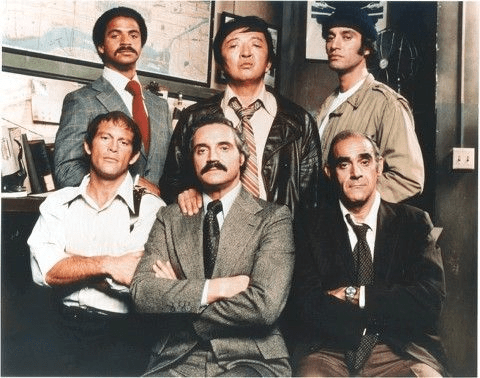
📷tumblr.com Cast of Barney Miller

In the Temple interview, Pitlik said that his “main responsibility is to create an atmosphere in which each of the people involved in the production can conform to their best work. Although a director oversees all aspects of the production, there are many people involved, and he’s dependent on all of them. There’s no more collaborative business than the television business. Each person contributes to the success or failure of a show whether he or she is a writer, actor, cameraman, or whatever.”

In 1995 he began directing episodes of The Home Court and did so for 14 of the 20 episodes. I must admit I do not remember this show at all. The synopsis was Sydney Solomon was a family court judge who had to deal with the toughest prosecuting attorneys and repeat offenders. However, her biggest challenges came when dealing with her kids, four boys aged 11-19.

📷pinterest.com

Pitlik had better luck with his third marriage to Susan Whittaker which lasted from 1986 until his death in 1999. Whittaker was a television producer. Noam passed away from lung cancer at age 66.

Like Jerry Paris, Pitlik had a very successful acting career before finding his passion behind the camera. If you are responsible for directing a series, Barney Miller is a great accomplishment. It was fun to learn more about his career both in front of and behind the camera.