Why I Love My Three Sons and My 3 Sons


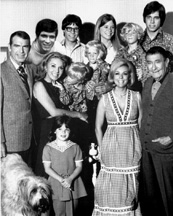
Happy Birthday to me! Since it is my birthday today, I decided my gift to myself was to write about my favorite television show, My Three Sons.  The show was on the air from 1960-1972, for a total of 382 episodes. It debuted on ABC, and in 1965 it moved to CBS. The show was based on a widower, Steve Douglas, who is an aeronautical engineer trying to raise three boys after his wife’s death.  Her father, Bub, moves in to take over the housekeeping duties.

mts1

Although Don Fedderson often gets credit for developing My Three Sons, the show was created by George Tibbles and produced by Don Fedderson Productions. When the series moved to CBS in 1965, the latter network assumed full production responsibilities (in association with Fedderson Productions) until the end of the series in 1972. CBS now holds the series’ copyright.

George Tibbles wrote for a variety of shows and penned the Woody Woodpecker Song, recorded by Kay Kyser. Some of the episodes he wrote for My Three Sons include “Chip Off the Old Block” (1960), “Bob in the Ointment” (1960), “Countdown” (1960), “Birds and Bees” (1961), “Tramp the Hero” (1961), “Mike in Charge” (1961), “Bud Gets a Job” (1962), “Stage Door Bub” (1964), “Charley and the Kid” (1965), “Brother Ernie” (1965), “Moving Day” (1967), “Robbie Loves Katie” (1967), “Inspection of the Groom” (1967), “The Great Pregnancy” (1968), and “Instant Co-Worker” (1969).

mts4

Peter Tewksbury directed the first season. These early episodes held to no specific generic type, so that any episode from one week to the next might be either comedic or dramatic. Tewksbury’s episodes are also unusual for their use of cross-talk (a way of having the voices of off-screen characters heard in the background of the soundtrack, just under the voices of the main characters). Using this clever directorial twist, Tewksbury realistically portrayed the chaotic, fast-paced, and ever-changing sequence of events that was the daily routine of living in the Douglas household.

An example of Tewksbury’s use of cross-talk is the fourth episode, “Countdown,” which chronicles the Douglas family’s attempts to wake up, prepare for the day, have breakfast, and get out of the house by a common, agreed-upon time, all carefully synchronized to a televised rocket launch countdown – to comical and often ironic effect. Once the entire family was ready, they realized it was not a week-day and they had been running around like crazy for nothing. Tewksbury returned to directing feature films after concluding the season because the producers could not handle his perfectionist attitude, which was costing thousands of dollars in lost time and reshoots.
mts8

The succeeding director, Richard Whorf, took over the reins for one season and was in turn followed by former actor-turned-director Gene Reynolds from 1962 to 1964. James V. Kern, an experienced Hollywood television director who had previously helmed the “Hollywood” and “Europe” episodes of I Love Lucy, continued in this role for two years until his untimely death in late 1966. Director James Sheldon was also contracted to finish episodes that had been partly completed by Kern to complete that season. Fred De Cordova was the show’s longest and most consistent director of the series (108 episodes) until he left in 1971 to produce The Tonight Show Starring Johnny Carson. Earl Bellamy rounded out the series as director of the show’s final year.

When the show was first created, potential writers were told to emphasize the following elements: originality, simplicity, honesty, legitimacy, natural comedy, seriousness of premise, scope and character development.

I love the first episode – it not only established the family relationships, but set the direction the comedy would take. This was a family who might tease each other unmercifully but also knew they could always count on each other no matter what the situation was. The family members were far from perfect but they were realistic.

mts13

One of the most memorable parts of the show was the theme song. Lawrence Welk’s version of the instrumental theme song, written by Frank De Vol, peaked at No. 55 on the Billboard Hot 100 in 1961.

In 1960, Fred MacMurray was one of the most respected and highest-paid actors in Hollywood.  It was almost inconceivable that he would star in a television show. The role was originally offered to Eddie Albert who turned down not only this role, but Wilbur Post on Mr. Ed as well. MacMurray took on the role when he was guaranteed that he would only have to spend 65 days a year filming the show. What was referred to as the MacMurray Method was 65 days of consecutive taping with the rest of the cast having to film around these scenes later. He was also given a 50% ownership in Don Fedderson Productions.

mts14

MacMurray was a very down-to-earth guy.  His grandfather immigrated from Scotland.  He was born in Illinois in 1908 and grew up in Beaver Dam, Wisconsin. He worked in a canning factory and for an American Legion band, went to Carroll College, and earned money playing in a band there. After his first wife, Lillian Lamont died, he married June Haver, a former actress who left a convent to marry him.  They adopted twin daughters. They had a 200-acre ranch on the Russian River and his interests included his workshop, building picture frames, painting water colors, golfing, watching some television, and cooking. Hedda Hopper’s description of him was, “He’s as down to earth as applesauce or the boy next door.”

When Barry Livingston was asked about him, he said, “He was basically a guy from the Midwest, Midwest sensibilities, and even though he was super, super wealthy, just really had modest taste and just really wanted to be accepted as your average Joe.  I mean, he drove a Pontiac station wagon that happened to be our sponsor. . . his wife would pack a brown-paper-bag lunch.”

Steve Douglas was known for his cardigan sweaters. Steve was always ready with guidance, gentle words, and loving wisdom.
bub

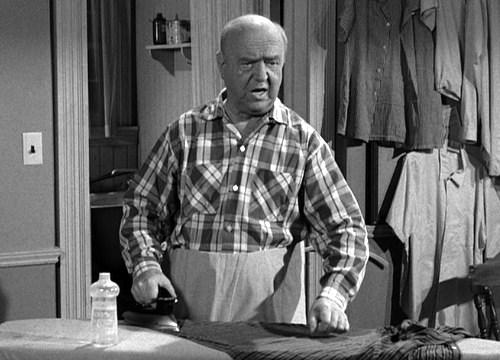
William Frawley, best known as Fred Mertz on I Love Lucy, accepted the role of Bub. He was an expert on barbershop quartets. In 1958, he made an album, “Bill Frawley Sings the Old Ones.” He was 68 in 1961 and had spent 28 years in Hollywood, 46 as a performer.  He grew up in Burlington, IA where his father sold real estate.  At 21 he landed a job in a musical chorus in Chicago. He married in 1916, divorcing Louise in 1927 and never married again. In 1933, he moved to Hollywood with a long-term Paramount contract. His old friends include Joe DiMaggio and Johnny Gallaudet.
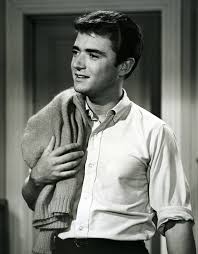
mike

Timothy Considine played Mike, the oldest son on the show. He was a former child actor and young adult actor of the late 1950s and early 1960s. He later became a writer, photographer, and automotive historian. Considine’s most noted acting roles were in the 1955–1957 Disney TV serials Spin and Marty (he played Spin) and The Hardy Boys (he played older brother Frank opposite Tommy Kirk as Joe), both of which appeared in 15-minute segments on the Mickey Mouse Club; and in the Disney motion picture The Shaggy Dog. Considine is an automobile historian, photographer, and writer who specializes in motor sports. He is the author of The Photographic Dictionary of Soccer, The Language of Sport, and American Grand Prix Racing: A Century of Drivers and Cars. He has also filled in for the late William Safire as writer of the “On Language” column in The New York Times Magazine.

Tim Considine quit the show after arguing with Don Fedderson.

rob

Don Grady, who played middle son Robbie and was the brother of actress Lani O’Grady, got 8 times the fan-mail the other boys did, mostly from young girls. Grady was born Don Louis Agrati in San Diego, California, the son of Mary B. (née Castellino), a talent agent, and Lou Anthony Agrati, a sausage maker. He grew up in Lafayette, California before being signed by Walt Disney and leaving the area. He graduated from Burbank High School in 1962.

Grady appeared on 20 different tv series before 1972, including two episodes of Love American Style. During production of My Three Sons, Grady appeared with his own band The Greefs on the series, writing two original songs for the show.

After My Three Sons ended in 1972, Grady pursued a musical career. His works included music for the Blake Edwards comedy film Switch, the theme song for The Phil Donahue Show and for EFX, a Las Vegas multimedia stage show which starred Michael Crawford, David Cassidy, Tommy Tune, and Rick Springfield. As a stage performer, he starred in the national tour of Pippin and had roles in Godspell and Damn Yankees.

He passed away in 2012 from cancer.
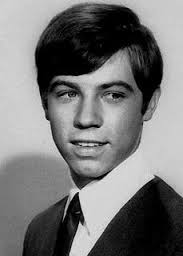
chip

Stanley Livingston took on the role of Chip (Richard), originally the youngest son. He was named for the scientist Stanley Livingston. His parents moved from Baltimore to LA to open a furniture store. He was one of the kids riding trikes and fire engines on “You Asked for It.” In 1957, he was recommended as a double for Jon Provost on Lassie by Mrs. Loven, who taught him to swim. Tina Hill was his first agent, and Lois Auer was his first drama coach. He and Barry were neighbor kids on Ozzie and Harriet.

By age 11, he earned $20,000 a year. He shared that, “The food on My Three Sons is lousy. The prop man cooks it. The eggs are sticky and the potatoes are lumpy.  It’s so bad we try to get eating scenes on the first take.”

John Stevens was a production/coordinator in 1961. In TV Guide in 1962, he was quoted, “Because of the way we shoot around MacMurray, filming My Three Sons is a jigsaw puzzle for an adult. We once shot all the scenes in the upstairs hall and bedroom from 21 scripts, one after the other. In one, Stanley would have to be happy over something in a comedy, and five minutes later, said in a melodrama. I never once saw him rattled, confused or upset.”

In 1965, the fourth season, Frawley retired due to poor health, dying a year later. Wm Demarest, Bub’s brother, the boys’ uncle and a former sailor took his place. To explain Considine’s absence, Mike married his long-time girlfriend and accepted a job as a college professor. Ernie entered the family and was officially adopted.

charley

William Demarest started in show business at age 9. He was involved with vaudeville, Broadway, movies (150) and television. In 1899, he and his brothers were musicians. He played the cello, wearing velvet suits, Rubinstein played the piano, and George the violin. He was born in St. Paul in February 1892 and then moved to New Jersey where his parents separated. Later in life he went to LA and entered the army during WWI, eventually becoming a sergeant. In 1927, he was a Warner’s New Comedy Find. In his first picture, Finger Prints, a silent, he was a gangster. He appeared in 24 movies in two years. He appeared in The Jazz Singer and was nominated for an Academy Award for his role in The Jolson Story. In 1930, he headlined a bill with an orchestra, the CA Collegians who had a sax player named Fred MacMurray. In 1933, he went back to Hollywood and stayed. He was a talent agent before appearing in Preston Sturges’ The Great McGinty and The Miracle of Morgan’s Creek. He can’t remember how many movies he did, but his 100th was Pardon My Past with MacMurray. They were also in Hands Across the Table. His retirement plans were to move to a home he and his wife Lucille had on the 12th fairway at Canyon Country Club in Palm Springs.

mts19

Barry Livingston debuted on the show as Chip’s friend Ernie, an orphan. Barry began his career as a child actor in the late 1950s. He considers his film debut a role he won as one of the sons of Paul Newman in the film Rally ‘Round the Flag, Boys! (1958) with his older brother Stanley who by this time was already working as a child actor. He was let go from the film when he was told that he needed to get glasses to successfully correct his astigmatism. His first professional onscreen appearance was in a small, uncredited role in the 1961 film The Errand Boy, followed by roles in The Adventures of Ozzie & Harriet, on The Dick Van Dyke Show and (as “Arnold Mooney,” son of banker Theodore J. Mooney portrayed by Gale Gordon) on The Lucy Show. In 1965, he joined the cast of the ABC sitcom My Three Sons as next door neighbor Ernie Thompson.

His older brother, Stanley Livingston, was already a series regular as Chip Douglas. Livingston joined the cast permanently (his character was adopted into the family, keeping the show’s title intact) and remained with the series until its end in 1972.

After the series run of My Three Sons ended in 1972, Livingston continued his acting career with 142 acting credits.  Most recently he appeared as a jury member in Trial and Error.

In October 2011, Barry Livingston released his anecdote-filled autobiography, The Importance of Being Ernie (Citadel Press) — detailing his career from My Three Sons to Mad Men and beyond.
mts23

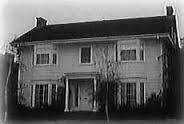
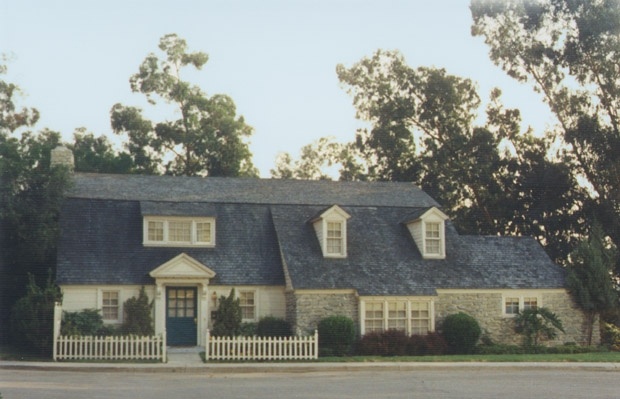
To boost ratings, the family moved to Hollywood, CA in 1967. The family’s home in California was previously featured as the farm in Gene Autry’s 1940 musical Melody Ranch. Located on the Republic Pictures backlot, the barn was given a suburban facade in the 1950s. It wasn’t that far from Gilligan’s lagoon, which was also on the lot.

mts5

Robbie meets his future wife in California, and they eventually marry and have triplets. The triplets posed some issues.  They had to find two sets of twins so three could be on camera and one on reserve.  They had to be born between June 17 and 24, have light hair, blue eyes, and be California residents.  They could only be on the set for 2 hours a day, in front of the camera only 20 min and each exposure could not last more than 30 seconds due to the bright lights.

mts18

Tina Cole played Katie but she was not a rookie on the show. She previously appeared on three other episodes as three different characters before taking the role of Katie Miller Douglas. She was also a member of the Four King Cousins, a subgroup of the King Family Singers. In 1963 she played the minor (uncredited) role of Ruth Stewart in Palm Springs Weekend, a spring break party film set in Palm Springs, California. After leaving television, Cole was the director of the Sacramento Children’s Theatre. She was an acting coach at the John Robert Powers acting schools in Roseville and Elk Grove, California and in 2013 returned to on screen acting. She has several movies coming out in 2017.

mts22

In 1970, another change occurred in the family. Steve goes to school to talk with the substitute teacher about Ernie.  After being gone hours, with Ernie extremely worried, Steve comes home only to realize they never even brought up Ernie’s behavior and they had another date scheduled. They ended up marrying, and Barbara’s daughter Dodie moves into the house.

mts20

Beverly Garland had a long acting resume when she accepted the part of Barbara. Her hobbies were flower beading and crewel work. She starred in her first show Decoy in 1958 in New York where she played a tough police woman. Born Beverly Fessenden in Santa Cruz, CA in 1930, she was an only child. She took violin lessons. At 18 she married Bob Campbell, 20 in Vegas. They divorced 4 months later. She worked odd jobs, summer stock, and commercials. She married Richard Garland but they divorced in 1953. In that same year, she won an Emmy for Medic. She appeared in a variety of shows – Gunsmoke, Rawhide, Dr. Kildare, and The Farmer’s Daughter. She married Fillmore Pajeau Crank, a widower with two kids in 1960, and the couple had two more children.

mts21

Dodie was played by Dawn Lyn, the real-life sister of 80s pop idol Leif Garrett. Dawn Lyn made her acting debut at the age of four. She was the original Prudence in the pilot for Nanny and the Professor. By the time the pilot sold, Dawn had been released from her contract and cast as Dodie in My Three Sons. The Nanny producers sued unsuccessfully to get her back. She worked steadily to financially support her family until her mid-teens. She says at that time her petite stature began to work against her.

Dawn decided to branch out of acting and has done many things over the years, including owning a boutique on Pier 39 in San Francisco. Though she has not actively pursued acting, she has not totally closed the door on the idea either.

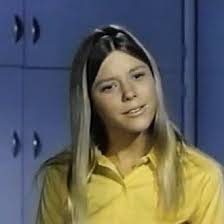
Later in the season, Chip elopes with his girlfriend Polly Williams.
mts17

In 1964, Ronne Troup, who played Polly, was working as a television background extra appearing (uncredited) in some fourth season black-and-white episodes of My Three Sons in classroom scenes featuring co-star Don Grady. She also worked as an uncredited extra in classroom scenes on Gidget. She appeared, uncredited, as a teen party guest in the Bob Hope film I’ll Take Sweden in 1965. In 1966, she made her film debut as part of the all-girl ensemble in Columbia Films’ The Trouble with Angels, where she is prominent in the graduation scene. In December 1966 (at age 21), she was cast as Sister Bertrille and had begun filming the pilot for Columbia/Screen Gems’ The Flying Nun when she was dropped after the studio’s first choice Sally Field finally agreed to accept the role.

In 1968, she played the role of Leslie Hayden in Danger Island, the cliffhanger serial that was featured on the Banana Splits Adventure Hour children’s program on Saturday mornings.

She appeared on Family Affair in 1970 in the episode “Desert Isle: Manhattan Style.” She was subsequently offered the role of Polly Williams Douglas, wife of Chip Douglas on My Three Sons, a role she played for two years (1970–72). In the Season 4 episode of The Partridge Family entitled “Hate Thy Neighbor” (1973), she appeared as Donna Stevens, the daughter of the new family who move in next door to the Partridges.

She continued acting through the 1990s.
mts7

I have always felt that My Three Sons doesn’t get the respect it deserves. It consistently focused on character development. Problems do occur in the Douglas household – the boys fight and call each other names.  Real problems come up. The show ran for 12 seasons. The issues were the ones we all faced growing up – not often major but important to young people.

The show survived cast and location changes without sacrificing quality. Bub left and Charley came on board. Mike got married and moved away so Ernie took his place. The family moved from New York to California.  Robbie met Katie, went to college, and had a family of his own. Chip married and moved out of the house. Steve eventually remarried also, gaining a daughter.

mts16

I grew up with the Douglas family and appreciated what I learned from the show.  Many critics of the show complain about it, along with many of the 1960s sitcoms, being too warm and fuzzy. I do understand that some kids in the 1960s and 1970s were exposed to awful home situations with abuse or addiction, but that was not reality for most kids.  I too experienced living with alcoholism and the strain it caused on my parents’ marriage, but most of the issues I had to deal with were the same ones as the kids on the show:  why the boy I liked didn’t know I existed, that I told a white lie to get out of doing something I didn’t want to do, or that a friend had said something to hurt my feelings.  That was reality for me and my siblings.

The characters were fully developed and became friends and people we chose to spend time with every week. This show was on when I was born and continued on the air until I was in 7th grade – that covers a lot of nurturing lessons during those needy years. The writers did a lot of fun quirks I don’t see on other shows.  On one show I remember, Charley playing Solitaire and almost every time someone walked in the room, they pointed out a move.  It was not addressed, but continued to happen just like in real life.  In one episode, Ernie was trying to do something in the background; I forget what the actual detail was, but he was struggling to accomplish it as the other characters interacted.  His issue was never referred to; it was just there. I also appreciate in this era of shows where it isn’t unusual to spend thousands and thousands of dollars each episode on costumes, My Three Sons was more realistic.  The cast got a wardrobe for the season.  You would see them wearing the same clothing over and over just like we did.

mts2

After I grew up, the show continued to resonate with me, although I later identified more with Katie and Robbie and later with Steve. Steve Douglas was always a father figure in my life. On our first date, Dan and I went back to my place and watched My Three Sons which TV Land aired later at night. When I became pregnant with our first child, I gave him a Steve Douglas cardigan to announce the event. I began to collect My Three Sons memorabilia, including a radio that sat in the Douglas kitchen, even though we only had two boys.  Nine years after our first son was born, we found out we were unexpectedly pregnant, and I did end up with three sons.  Our youngest was named Seth, for a variety of reasons:  Seth was the third son of Adam and Eve, but also because Seth Bryant was the founder of Bryant Park where the Douglas boys grew up. My Three Sons will always have a special place in my heart, and it’s one of the shows I can watch episodes over and over and find something new each time.

mts3


Elinor Donahue Through the Decades

donahue23

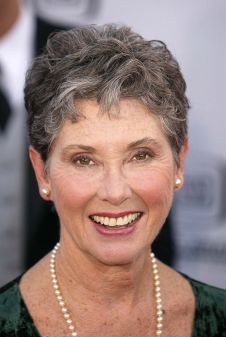
Elinor Donahue always displays a warmth and comes across as a genuinely nice person. Her first sitcom became her most famous role.  She played Betty in the iconic Father Knows Best. Although none of her later sitcoms reached the same popularity, she has had a long and full career.
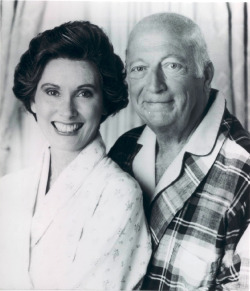
She was born in April of 1937 in Tacoma, Washington. She began tap dancing at 16 months old. As a toddler, she did some acting and received a contract with Universal at the ripe old age of 5. From 1955-1961 she was married to Robert Smith. She was married her second husband, Harry Ackerman, from 1962-1991. Ackerman was a producer for shows including Leave It to Beaver, Gidget, and Bewitched.  She married her third husband Louis Genevrino in 1992.

Donahue appeared in 18 movies between 1942 and 1952 including Tea for Two with Doris Day and My Blue Heaven. She made the transition to television in 1952 appearing in 8 shows in the 1950s. One of the shows I remember her in although I only saw it in reruns was one of my favorite shows, The George Burns and Gracie Allen Show. She was typically cast as the girl-next-door type. Her most famous role came in 1954 when she was cast in a new sitcom, Father Knows Best.

Father Knows Best – 1954-1960

This was one of the typical family shows of the 1950s. The Andersons lived in Springfield with three children: Betty, called Princess (Elinor Donahue), James Jr., or Bud (Billy Gray) and Kathy, usually called  Kitten (Lauren Chapin). The show debuted in the fall of 1954 on CBS. The show was cancelled in 1955 and the public was furious. Letters came pouring in, so it was reinstated. NBC took over the next year until 1958 when it went back to CBS.  In 1960, Robert Young decided he was done. These were warm and inviting parents, providing guidance and object lessons galore. Critics panned it later because it was not reality.  We have reality shows today, and please, give me fiction. We did learn life lessons on the show – following through on promises, working for what you want, being yourself, and taking responsibility for your mistakes.

Shortly after Father Knows Best left the airwaves, Donahue accepted the role of Elly Walker in The Andy Griffith Show.

The Andy Griffith Show – 1960-1961

Most of us are very familiar with The Andy Griffith Show and many of the characters who inhabit Mayberry:  Widower Andy Taylor (Andy Griffith) and his son Opie (Ron Howard) live with Andy’s Aunt Bee (Frances Bavier) who takes care of them;  Barney (Don Knotts) is the inept deputy but also Andy’s best friend;  Helen Crump (Anita Corsaut), the school teacher and Andy’s girlfriend later in the series; Thelma Lou (Betty Lynn), Barney’s girl; Otis Campbell (Hal Smith), town drunk but nice guy; Gomer Pyle (Jim Nabors), who runs the gas station; and his cousin Goober Pyle (George Lindsey). Andy had several romances early in the show.  He dated the county nurse Mary Simpson (played by several actresses), spent a limited amount of time with Daphne (Jean Carson) who had a crush on him; and in the first two seasons, he was sweet on Ellie Walker (Donahue), who ran the local drug store. Ellie cared about Andy, but she always stood up for herself and women’s rights.  Andy and Ellie never had the chemistry they were hoping for but they respected each other and like each other. Elinor raved about the cast and her opportunity to be on the show. She said Andy was in charge and expected quality but was fair and a nice man. She described Ron Howard as the best child actor she ever worked with.  She liked Frances Bavier and got along well with her.  She had a huge respect for Don Knott’s comedic ability. She is still friends with Betty Lynn.

She appeared on a variety of shows in the mid-1960s including 77 Sunset Strip, Dr. Kildare, The Virginian, Dennis the MenaceStar Trek, and The Flying Nun. She tried her luck with one other sitcom in the 1960s.

Many Happy Returns – 1964-1965

This sitcom was also about a widower.  Walter Burnley (John McGiver) ran the Complaint Department at a LA department store. The show also featured his daughter (Donahue) and a coworker Lynn Hall (Elena Verdugo). His boss (Jerome Cowan) did not want him to take in any returns, so he had to resolve complaints without making his boss mad. Apparently Burnley couldn’t solve the complaints that came in from viewers because the show was cancelled after 24 episodes.

donahue18

Father Knows Best came out with two television movies in 1977: The Father Knows Best Reunion and Father Knows Best – Home for Christmas, and Elinor was in both. While still showing up in random shows during the 1970s such as The Rookies, Police Woman, and Diff’rent Strokes, Donahue found time to appear in two 70s shows on a regular basis.

donahue12

The Odd Couple – 1972-1975

Neil Simon’s The Odd Couple came to Friday nights in 1970. Felix Unger (Tony Randall) and Oscar Madison (Jack Klugman), two divorced men who are complete opposites but best friends, try to live together without killing each other. The show had a great supporting cast including Donohue as Miriam Welby from 1972-1974, Felix’s girlfriend.

donahue7mulligan

Mulligan’s Stew – 1977

This show from 1977 starred Elinor Donahue as Jane Mulligan.   She and her husband Michael (Lawrence Pressman) are trying to raise three kids on his teacher’s salary when they suddenly add four orphaned nieces and nephews to their family. One of the kids was played by Suzanne Crough, Tracy from The Partridge Family, one of the few shows she was in. The series only lasted for seven episodes.

donahue13

The 1980s found Donahue still working regularly.  She was in Barnaby Jones, Mork & Mindy, One Day at a Time, Fantasy Island, The Love Boat, Newhart, and Golden Girls. One sitcom in the 1980s captured her attention about Beans Baxter.

donahue17beans

The New Adventures of Beans Baxter – 1987

Here is the plot for this one: Beans Baxter’s (Jonathan Ward) father who he thought was a mailman disappears one day.  Teenage Bean discovers that his dad worked for a secret government agency.  He is then drawn into becoming a spy for the government. The show features his adventures as he tries to find the enemy agents who are holding his father hostage while his mother played by Donahue is completely oblivious that anything strange is happening. Viewers also didn’t realize anything was happening because the show was cancelled after 17 episodes.

Entering her 60s, Elinor joined the cast of three sitcoms in the 1990s. She also made several movies including Pretty Woman in 1990 and The Princess Diaries 2 in 2004.

donahue8getlife

Get a Life – 1990-1992

Shows don’t get much weirder than this one. Comedian Chris Elliot plays a 30-year-old paperboy Chris Peterson who lives with wacky parents (Donahue and Bob Elliott, Chris’s real father).  Some of the strange things that happen during the 36 episodes include eating a space alien, beheadings, and a robot paperboy. In this bizarre series, Chris actually dies in a third of the episodes. During the run of the show, he died from old age, tonsillitis, a stab wound, a gunshot wound, was strangled, got run over by a car, choked on his cereal, was crushed by a giant boulder, and actually exploded.


donahue26

Eek!stravaganza – 1992-1993

Donahue plays “The Mom” in this animated show about Eek, a purple cat who always finds himself in dangerous situations. The series was on the air for five seasons.

Dr. Quinn, Medicine Woman – 1993-1997

During the six years the show was on the air, Donahue reprised her role as Rebecca Quinn ten times. The show followed the ups and downs experienced by a female doctor practicing in a wild western town.

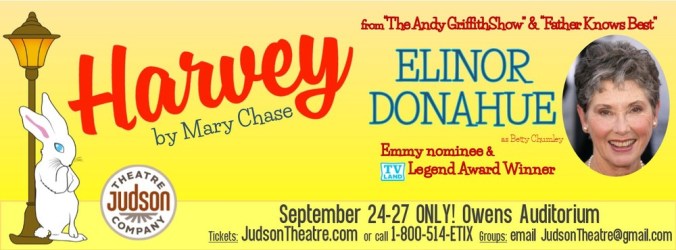
Interestingly, Donahue appeared in three different soap operas toward the end of her career: Santa Barbara, Days of Our Lives, and The Young and the Restless.  Elinor also appeared on a variety of documentaries and award shows. She was in the Match Game/Hollywood Squares Hour. In 1998, she wrote her memoirs titled, In the Kitchen with Elinor Donahue. The book included about 150 of her favorite recipes. Elinor’s career has been long and she appeared in many shows and movies over the years. She hasn’t appeared in a movie or television show since 2010, although she did do some theater.  In September of 2015, she appeared in one of my favorite plays, “Harvey” in North Carolina.

donahue25

Donahue’s career reminds me of many of the actors we have gotten to know in this blog including William Christopher, Betty White, Ken Berry, and Shelly Fabares.  These actors and actresses all appear to be very nice, talented people who have careers they should be proud of.  In a day when bad decisions and selfish actions are splattered across our television screens and newspapers, perhaps one of the best compliments we can give someone is that they had a long and fulfilling career and didn’t step all over other people to achieve it.

donahue9

When a rainy day shows up this summer, take a moment to watch some of Elinor’s sitcom episodes. Thank you Elinor Donahue for the entertainment and memories you gave us.

donahue4harvey


I’ll Take Paul Lynde for the Win

pl1

Today we are talking about the career of Paul Lynde.  Paul Lynde was an icon when I was growing up; he was probably best known at that time as the center Hollywood Square, the voice of Templeton the Rat in Charlotte’s Web, and Uncle Arthur on Bewitched.  His life encompasses both a unique and successful career as a comedian loved by many fans and the all-too-common saga of a star’s life ruined by drugs and alcohol. Many of the things you read about Paul Lynde concerning his behavior and cruel things he said to others are disheartening to a fan, but I learned that the characters I loved growing up (and continue to as an adult) are the characters, not the actors and actresses behind them.  With a few exceptions such as Fred MacMurray, Jimmy Stewart, or Cary Grant, most stars don’t live up to our illusions of them. Although truth be told, if someone studied our entire lives and wrote about them, there are probably parts of them we would not want the world to learn about either. I wanted to talk about Paul Lynde’s career, because although he was extremely well known during my youth, most young adults today probably have no idea who he is.

Paul was born in Mount Vernon, Ohio, one of six children.  His father was a local police officer and for a time, the family lived above the jail when his father was the sheriff of the jail.  Like many youngsters growing up in the 20s and 30s, he became interested in acting when he went to the movies  with his mother. The first movie he remembered was Ben Hur.  That interest propelled him to Northwestern University where he studied drama.  After school, he relocated to New York City where he worked as a stand-up comedian and then received a part in a Broadway show, “New Faces of 1952.” Alice Ghostley, who would be featured on Bewitched was also in the show. In 1963 he recorded a comedy album. From then on he was a popular guest, television star, and movie celebrity. His unique delivery of his sarcastic one-liners made him a popular entertainer.  There is not a lot of difference between the role of Uncle Arthur and his humor and delivery on Hollywood Squares.

He starred in several television series including Stanley with Buddy Hackett and Carol Burnett where he played a hotel owner in 1956-57 and The Pruitts of Southhampton with Phyllis Diller in 1967. From 1965-71, he was on Bewitched where he played Harold Harold a driving instructor the first season and then became a regular in the role of Uncle Arthur, Endora’s brother.  Surprisingly, the character of Arthur only appeared in ten episodes of the series. After Bewitched, he starred in The Paul Lynde Show where he played an attorney with two daughters and a liberal-minded son-in-law. Stiller and Meara were also on the show which was done to satisfy his contract with ABC in place of the ninth season of Bewitched. The show was up against The Carol Burnett Show and Adam-12 so it was cancelled, but he was nominated for a Best Actor Golden Globe award. His last starring role in television was in New Temperatures Rising where he played a penny-pinching doctor running a hospital owned by his mother.

Paul appeared on Hollywood Squares for 15 years (801 episodes).  In addition to that game show, he accumulated 80 credits playing himself on a variety of shows including Donny and Marie, Password, The 10,000 Dollar Pyramid, Dean Martin Roasts, The Carol Burnett Show, The Mike Douglas Show, and on several Paul Lynde Comedy Hour specials.

He appeared on a variety of television shows – 33 in all.  In addition to those he starred in, he was also in The Phil Silvers Show, The Patty Duke Show, The Jack Benny Show, The Munsters, Gidget, F-Troop, That Girl, I Dream of Jeannie, The Mothers-in-Law, The Flying Nun, and three episodes of Love American Style.  Had he lived a few years longer, I’m sure we would have seen him cruising the ocean on The Love Boat.

In addition to his television work, he also appeared in 18 movies between 1956 and 1975. He and Dick Van Dyke were the only Broadway performers from Bye Bye Birdie to be cast in the movie version.  He was also in Beach Blanket Bingo, and two of my favorites, Send Me No Flowers and The Glass Bottom Boat, both Doris Day movies.

Although he was gay, he did not discuss his sexual orientation, and the media respectfully did not report on it either.  In 1965, his partner and companion Bing Davidson died. They had been out drinking and Bing thought it would be funny to pretend to dangle from a hotel balcony but fell to his death.  Whether this exacerbated his alcohol and drug problems isn’t known, but Lynde’s health suffered from his addictions and he was arrested for public intoxication frequently. In 1980 he went through a successful rehabilitation, becoming sober and drug free.  Unfortunately, the damage that was done to his body was extensive, and he died from a heart attack in January of 1982 at age 55.

Some other interesting facts are that he was friends with Elizabeth Montgomery and her husband William Asher, he purchased Errol Flynn’s Hollywood Mansion, he was a dog lover, and he was one person who was able to appear on The Ed Sullivan Show while singing a song from Bye Bye Birdie about being on The Ed Sullivan Show. He was also a chef and considered opening a restaurant. To see some of his recipes, visit www.paullynde.info.

pl9

To truly appreciate Lynde’s comedic personality, here are a few lines from Bewitched and Hollywood Squares.

To Endora, his sister, on  Bewitched:  “Endora when I think of you as a blood relation, I long for a transfusion.”

On Bewitched, telling a story, “Then I spent the summer hunting lions with the British expedition. One morning I shot a lion in my pajamas. Now, what he was doing in my pajamas, I’ll never know.”

Answers on Hollywood Squares:

Peter Marshall: According to Ann Landers, what are two things you should never do in bed?

Paul Lynde: Point and laugh.


Peter Marshall: According to the IRS, out of every 10 Americans audited, how many end up paying more taxes?

Paul Lynde: 11.


Before a cow will give you any milk, she has to have something very important. What?

Paul Lynde: An engagement ring


Peter Marshall: Fred Astaire says, his mother has been trying to get him to do this since he was 35. But he hasn’t done it and says he won’t do it until he’s ready. Do what?

Paul Lynde: Move out of the house!

pl14

Perhaps the award that best sums up Lynde’s career was bestowed upon him in 1976 when he received the Entertainer of the Year Emmy for the funniest man of the year. If you don’t know much about Paul Lynde, check out some of the youtube videos from Hollywood Squares or watch a few of his episodes from Bewitched. Although not as well known today, his influence on present-day performers is wide spread and his career deserves to be remembered and celebrated.

“The Ultimate Definition of Success is to Repeat It” says Jeffrey Benjamin

After reading about That Girl and what a tough time Marlo Thomas and Ted Bessell had finding new roles that did not stereotype them as Don and Ann, I thought about actors who were able to transcend that hurdle.  I could think of numerous actors and actresses who were able to have two important television roles.  Mary Tyler Moore began as Laura Petrie but Mary Richards was also a strong character.  Ron Howard grew up from Opie Taylor to Richie Cunningham.  Kristy McNichol lived out her adolescence in Family and then moved to Florida as Barbara in Empty Nest.

I started to do some research and found the following actors who had numerous television series.

Alan Alda – Of course, his iconic role was Hawkeye Pierce in M*A*S*H.  From 1972-83 he kept us laughing or crying in Korea.  Since M*A*S*H he has taken on roles in several television series including ER (1999), West Wing (2004-06), 30 Rock (2009-10), The Big C (2011-13), and The Blacklist (2013-14).

Fun Fact:  He got his start on the Phil Silvers Show in 1957.


Meredith Baxter – Most people remember her as Elyse Keaton in Family Ties (1982-89), but for me it was Nancy in Family (1976-80).  Other shows include Bridget Loves Bernie (1972-73), The Faculty (1996), Cold Case (2006-07), The Young and the Restless (2014), and Finding Carter (2014-15).

Fun Fact:  Her mother was Whitney Blake, Missy on Hazel.


Sally Field – I think most people will always think of Sally Field as the Flying Nun (1967-70).  Her first show was Gidget (1965-66). As we discussed a couple of weeks ago, she had a role in the forgettable Hey Landlord (1967) and she was The Girl with Something Extra (1973-74).  Like Alan Alda, she also had a recurring role in ER (2000-06), and her most recent show is Brothers and Sisters (2006-11).

Fun  Fact:  She won an Emmy for her appearance on ER.


John Forsythe – While younger people only know him as the voice of Charlie on Charlie’s Angels (1976-81) or Blake Carrington from The Colbys (1980-86) which led to Dynasty (1981-89), one of my favorite sitcoms of all is Bachelor Father which John starred as Bentley Greg from 1957-62.  Before Bachelor Father, he starred in Lights Out (1951-2), Suspense (1951-52) and Studio One (1949-55). Before Charlie’s Angels, he was in the John Forsythe Show (1965-66) and To Rome with Love (1969-71). His last show was The Powers That Be (1992-93).

Fun Fact: Along with Harry Morgan and Meredith Baxter, he was on episodes of The Love Boat.


Harry Morgan – Harry Morgan is the king of shows, with 12 series to his credit.  He is probably best remembered for three of them–Pete and Gladys (1960-62), Dragnet (1967), and M*A*S*H (1974-83). His first sitcom was December Bride (1954-59) which spun off Pete and Gladys.  In the 60s before Dragnet he was in Kentucky Jones (1964-65) and Dr. Kildare (1965).  The seventies saw him in Hec Ramsey (1972-74) and Gunsmoke (1970-75).  After M*A*S*H, he literally was in After M*A*S*H (1983-85), Blacke’s Magic (1986), You Can’t Take It With You (1987-88), and Third Rock From the Sun (1996-97).

Fun Fact:  He was in an episode of the Partridge Family in the first season.


Bob Newhart – Bob Newhart gets the award for having the most shows with his name it in.  Fans fondly remember The Bob Newhart Show set in Chicago when he played Dr. Hartley (1972-78) or Newhart where he was the inn owner Dick Loudon (1982-90).  His first show was The Bob Newhart Show (1961).  After Newhart, he tried out Bob (1992-93) and George and Leo (1997-98).  Like Alan Alda and Sally Field, he also had a recurring role on ER (2003) and most recently has had a recurring role on The Big Bang Theory (2013-15).

Fun Fact:  The 1982-90 show had the best finale ever when the show ended with Bob in bed with his wife from the 1972-78 series thinking Newhart had been a dream.


Ed O’Neill – If any actor should have been stereotyped after a role, Ed O’Neill seemed doomed after Al Bundy in Married. . . With Children (1987-97), yet he now has an even bigger hit in Modern Family as Jay Pritchett (2009-16).  In between he was on the Big Apple (2001), Dragnet (2003-4), a remake of Harry Morgan’s show, and John From Cincinnati (2007).  Like Alan Alda, he took on a role on The West Wing (2004-05).

Fun Fact:  He signed as an undrafted free agent with the Pittsburgh Steelers in 1969 but was cut in training camp.


Dick Van Dyke – Finally, we have Dick Van Dyke.  Before I researched this blog, I thought he and Bob Newhart might have the most sitcoms to their credit.  He comes in with only four starring shows overall.  Like Bob, he never wanted to stray far from his name:  We had the iconic Dick Van Dyke Show as Rob Petrie (1961-66), The New Dick Van Dyke Show (1971-74), The Dick Van Dyke Show (1988), and then Diagnosis: Murder (1993-2001). Like so many of these actors who have something in common with Alan Alda, Dick Van Dyke’s first appearance in a sitcom was also The Phil Silvers Show (1957-8).

Fun Fact:  He can trace his family line back to the Mayflower.


Why do some stars get locked into a role that they are never able to separate themselves from?  Think Henry Winkler as the Fonz, Lucille Ball as Lucy, or Don Knotts as Barney.  I think part of it is that we get so attached to these characters we almost want to believe they are real and the actor moving on destroys that image.

The above actors all had different situations that allowed them to move on more easily.  Alan Alda never had that hit show again.  After M*A*S*H, he took on dramatic recurring roles.  Meredith Baxter was in a  mixed genre of shows. Of her two hit shows, one was a drama, Family, and one a sitcom, Family Ties.  Dick Van Dyke had the same formula:  The first Dick Van Dyke Show, a sitcom, and Diagnosis: Murder, an action/mystery series.  John Forsythe and Harry Morgan came into show business during the golden days of television.  They were able to have extremely successful shows and characters and then start over.  Forsythe had 10 series to his credit, Morgan had 12. Sally Field, although starting out in television, was certainly better known as a movie actress.  Audiences were seeing her on the big screen as other characters so they perhaps don’t pigeon hole her into one role so much.  Ed O’Neill actually had success on two sitcoms about families.  Maybe Jay Pritchett is so successful because he shows what Al Bundy may have been like growing up in a more enlightened era where the fathers help parent and run the house.  And Bob Newhart, I think, was successful because he actually plays the same character in most of his shows, and we love that character so we keep looking for him, no matter what the show is actually titled.

Gee, Mom There’s Nothin’ To Watch on TV

After complaining about the number of lack-luster shows on the 2016-17 schedule, I decided to look back 50 years to see how the line-up looked in 1966.  I was surprised to learn that things haven’t really changed too much.

One of my all-time favorite shows aired in the fall of 1966–That Girl.  I’ll write about the show next week.  Two other shows that debuted in 1966 were Family Affair and The Monkees, shows I would not consider classic comedies but shows we remember nonetheless.

Let’s take a look at the other shows from fall of 1966.  Let me know how many of these, if any, you remember.

The Hero – Richard Mulligan (later to star in Soap and Empty Nest) plays Sam Garret, a TV actor on a western who was scared of horses, allergic to sagebrush, and extremely clumsy.  If you don’t’ remember this show, don’t feel bad; it only lasted four months.

19661

Hey Landlord – A writer (Will Hutchins) and a comedian (Sandy Baron) become landlords for a Manhattan brownstone.  Apparently they only had a one-year lease, because they were gone by 1967.  Cast members included Ann Morgan Guilbert (Milly from the Dick Van Dyke Show) and Sally Field (Gidget, the Flying Nun, and Nora on Brothers and Sisters).

19662

It’s About Time – Two astronauts break the time barrier and end up in the Prehistoric Era. After saving a boy, they get to know his family.  When they return home in 1966, they realize the family hid themselves aboard the rocket.  The astronauts have to keep them secret from NASA officials, and the family has to learn to live in a modern society.  Someone might have dreamed about Jeannie, but no one dreamed about this show.

19663

The Jean Arthur Show – Movie star Jean Arthur is part of a mother-son law firm, Marshall & Marshall.  Arthur gets involved in their clients’ wacky situations.  After three months, they were legally cancelled.

1966

Love On a Rooftop – Judy Carne and Peter Duel are a young couple living in San Francisco.  He’s an apprentice architect and she’s an art student who gave up her rich father’s money for marrying him.  Rich Little played their neighbor Stan who composed menus for a living.  The network said “Sock it to Them” by cancelling the show.

19665

Mr. Terrific – Two friends Stanley and Hal are roommates.  Stan works for the government. When they give him a pill, he becomes Mr. Terrific, crime solver.  They send him on missions, but the pill only lasts an hour so it wears off at the worst of times.  I don’t think the network thought it too terrific, because it was gone in seven months.

19666

My Name’s McGooley, What’s Yours? – The show centered around a scheming father, his daughter and her husband, a beer-guzzling loser.  I think it took longer to read the title than to watch the episodes because it was not renewed for the next year.

19667

Occasional Wife – A baby food company only hires married men as executives, so Peter convinces his friend Greta to pose as his wife when necessary.  They live on different floors of the same apartment building and get into a lot of complicated situations.  Apparently viewers only watched occasionally because it was cut from the schedule.

19668

Pistols ‘n Petticoats – Ann Sheridan came to the TV screen to play Hank, short for Henrietta, a member of a family in Wretched, Colorado in 1871.  The family has to keep law and order in the town because the local sheriff is incompetent.  People did believe they were wretched, and it was gone before 1967.

19669

The Pruitts of Southhampton – The premise of this show was that a formerly wealthy family realizes they owe $10,000,000 in taxes and has to downsize their lifestyle while keeping it from all their friends.  The network agreed they were poor and cut it for 1967.  What was amazing about this show not being a hit was the cast:  John Astin, Richard Deacon, Billy De Wolfe, Phyllis Diller, Reginald Gardiner, Marty Ingels, Gypsy Rose Lee, Paul Lynde, John McGiver, and Louis Nye.  Talk about a dream cast.

196610

Rango – Tim Conway starred in this western sitcom.  His Rango character was totally inept and was assigned to a town with a 20-year peaceful record where he couldn’t get into trouble.  Of course, after he arrives, a crime spree begins.  ABC decided the show inept as well, and it was cancelled after a few months.

196611

The Rounders – Westerns were definitely a theme in 1966.  In this version, two not-very-bright cowboys are hired as hands at a ranch.  After four months, the network rounded up the cast and ran them out of Dodge.

196612

Run Buddy Run – Buddy Overstreet, a shy accountant, is in a steam room when he overhears gangsters plotting a murder.  When they realize Buddy knows their plan, they try to capture him.  After only four months, the network cancelled Buddy before the gangsters could.

196613

The Tammy Grimes Show – Tammy Grimes, a Broadway star, plays a young heiress who’s on a small allowance until she turns 30.  She tries to fulfill her elaborate lifestyle with wacky schemes.  Dick Sargent (Darrin on Bewitched) plays her boring twin brother.  Perhaps the show had a small allowance too because it only lasted three weeks!

196614

Whoo!  This line-up of shows makes Family Affair, which lasted five years, and The Monkees, which lasted two years, look like successful, classic shows.  It doesn’t make this fall’s shows any better, but at least we’re in good company.  We’ll talk about That Girl next week.