Did You Know Shirley Partridge, Samantha Stephens, Jeannie, Donna Reed, and Hazel Lived in the Same Neighborhood?

As we proceed with our Behind the Scenes series this month, today we are thinking about set designers. Before the interior designs are done, the production team needs to find the perfect home for our television friends.

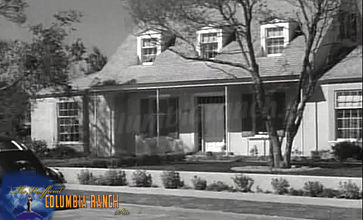
Did you ever daydream about places you might want to live in, even if you never would actually consider leaving your home?  Perhaps it’s a small rose-covered cottage in the English countryside, maybe a ski chalet in the Swiss alps, or a house on the Maine coast with green shutters and a widow’s walk. I’ve thought about all of these places, but now I have another one to consider. It’s an historic neighborhood where some of my favorite television friends lived. Today we learn a bit about the Columbia Ranch.

Photo: columbiaranch.net

Now called Warner Brothers Ranch, the former Columbia Ranch was in Burbank, CA. In addition to dozens of television shows, it was the setting for many movies as well such as Mr. Deeds Goes to Town, High Noon, and Lost Horizon. The neighborhood interiors were typically shot at other studio locations.

In 1934, Harry Cohn, head of Columbia Pictures, purchased 40 acres in Burbank. In 1948, Columbia got into the television business under Screen Gems.

Photo: pinterest.com

During the 1950s, Captain Midnight, Father Knows Best, The Donna Reed Show, and Dennis the Menace were filmed here. By the 1960s, the ranch was used continuously for television and movies. The set was about six blocks but looked much larger on camera shots. Shows during the 1960s included My Sister Eileen, Hazel, Our Man Higgins, The Farmer’s Daughter, Bewitched, Gidget, I Dream of Jeannie, The Monkees, and The Flying Nun.

In 1970, a fire destroyed a quarter of the neighborhood, including many buildings on Blondie Street. After rebuilding, taping continued on the set. During the next three decades, shows included The Partridge Family, Bridget Loves Bernie, Apples Way, The Scarecrow and Mrs. King, and Life Goes On.

In 1971, Columbia and Warner Brothers combined their companies and merged into The Burbank Studios. The Ranch then was relegated to a back backlot.

Photo: columbiaranch.net

When Columbia Pictures moved its production facilities to Culver City in 1990, Warner Brothers gained ownership of the Ranch.

Photo: pinterest

Photo: pinterest

It’s continued to be a busy spot for filming. The fountain in the park was the one shown in the opening credits in Friends.

Nearby is also a swimming pool used on a variety of shows, including The Partridge Family.

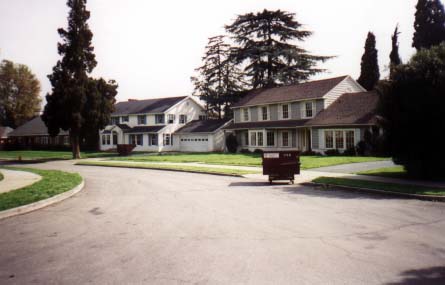
The most famous street in the Ranch was Blondie Street. Blondie Street was named for Blondie Bumstead because the Blondie movies of the 1940s were filmed here. Walking down Blondie Street reveals homes that we were all familiar with growing up in the sixties and seventies.

Photo: columbiaranch.net

It’s a curved residential street with twelve different houses, surrounding a large, central park. There is also a brick church and paved sidewalks. Three of the buildings—the Lindsay House, the Little Egbert House, and the Oliver House—were original to the 1935 set production.

The Blondie House

Photo: columbiaranch.net

This set, constructed in 1941, was the home for Major Nelson on I Dream of Jeannie, Mr. Wilson on Dennis the Menace, and the Andersons on Father Knows Best, in addition to the Blondie movies. Later it housed the operations office for the Warner Ranch. Of course, Jeannie’s house was not here, it was a Jim Beam decanter that was sold during Christmas of 1964.

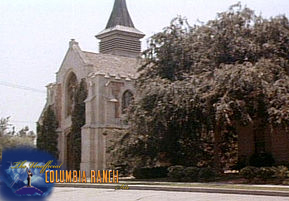
The Corner Church

Photo: columbiaranch.net

When thePartridge Family drives off for a show in their bus, you can often spot the church which is just down the road from their home, across from The Stephens’ home on Bewitched. It was moved here in 1953. When any of the series needed a church, this was the one. It can be seen on an episode of Hazel when the family attends church.

The Deeds Home

Photo: columbiaranch.net

Originally built for Frank Capra’s movie, Mr. Deeds Goes to Town in 1936, the house is only seen briefly in the movie. The Three Stooges filmed there in the thirties and forties. In the sixties it was seen in Batman. Both Gidget and The Partridge Family used the house as the high school and Bewitched used it as a civic building. In 1989, the original house was demolished. In its place, The Chester House and the Griswold House were built. The Griswold House was built for National Lampoon’s Christmas Vacation.

The Lindsay House

Photo: columbiaranch.net

Constructed in 1936, this house was best known as the Baxter home on Hazel. It also served as the Lawrence home on Gidget.

The Higgins House

Photo: columbiaranch.net

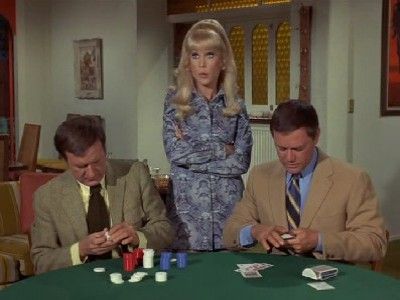
This structure was constructed for the show Our Man Higgins in 1962. It was later the home of Darrin and Samantha Stephens on Bewitched from 1964-1972. On I Dream of Jeannie, it was the home of Alfred and Amanda Bellows.

Photo: pinterest.com

For Bewitched, the interior and backyard scenes were filmed on a sound stage. The stairs ended in a hallway, but the doors only led to small closets, not the master bedroom.  A modular first floor served as a setting for all the rooms. The den doubled as the nursery. A fake wall was put up to hide the view to the kitchen. When the den was needed, brown paneling was put over the nursery walls and the window was covered with a wall near the fireplace.

Photo: darkershadows.com

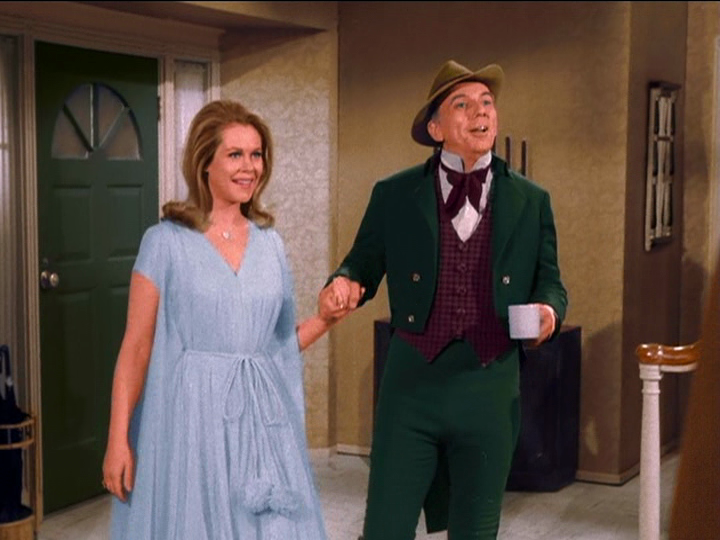
If you look closely, you’ll notice the avocado and gold flowered sofa in the Stephens’ living room was the same one used by Alfred and Amanda Bellows in their living room. But the shows shared well.  On one episode of Bewitched, Louise and Larry Tate are seen at their kitchen table, but the kitchen looks identical to Major Nelsons’s. Roger Healey’s bedroom eerily resembled Darrin and Samantha’s.

Photo: youtube.com
Photo: pinterest.com

I guess I was too busy crying to notice that this house was also Brian Piccolo’s home in Brian’s Song.

The Partridge Family House

Photo: pinterest.com

The house across the street from the Stephens’ house was home to Abner and Gladys Kravitz. During the filming of Dennis the Menace, it was Mrs. Elkins’ house. It was also the home of The Partridge Family. In 1989 it became the Thatcher home on Life Goes On.

The home was built in 1953, modeled after a Sears, Roebuck & Co. plan. The modest two-story home was a perfect fit for the Partridges with its white, picket fence. The interiors were filmed at the Ranch as well. Located next door to the Blondie House, there were shrubs between the homes that were featured several times on the Partridge Family. In an episode where Keith shoots a movie, Shirley is clipping the hedges and begins dancing for the film, not realizing her neighbor is watching her. We see the hedges again when Keith moves into the room above the garage next door and gets free rent in return for yard work.

Photo: flickr.com
Photo: flickr.com

Because they were filming the show when the infamous fire broke out, some of the structure had to be rebuilt for the remainder of the series. From season 1 to 2, Danny and Keith’s bedrooms switch back and forth a couple times, and I wonder if this is the reason.

The Oliver House

Photo: columbiaranch.net

Constructed in 1935 for a movie, the Oliver house was moved to Blondie Street for the home of the Stone family in The Donna Reed Show. It was also the Mitchell home where Dennis resided with his parents.

The Little Egbert House

Photo: columbiaranch.net

Technically, Little Egbert is not on Blondie Street but on its own, Little Egbert Street, basically an alley. Fortunately, the 1970 fire did not damage any of the original structure. The house was also used in Minding the Mint and as The Shaggy Dog, the hangout for Gidget and her friends.

Photo: retrospace.org

For sentimental reasons, I would choose the Partridge Family home to live in. However, I would have to remodel the kitchen. I could live with the red breakfast table set. The avocado and gold flowered wall paper may have been very chic in its day, but even I am not that sentimental!

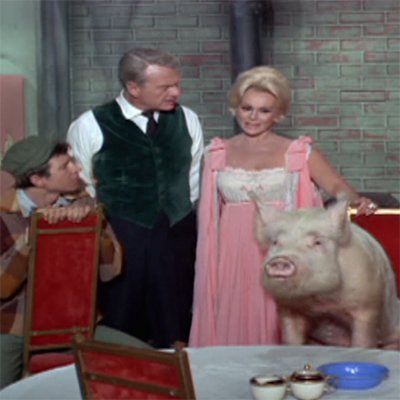
What do You Wear to Eat Beans and Franks with Arnold Ziffel?

There is a lot that happens behind the scenes to help make a show a hit. In previous blogs (see the December 2018 blogs about Earl Hagen and Jay Livingston), we learned about composers. This month we’ll take a look at the costumers and the set designers. The wardrobe department has the responsibility to make sure the characters are wearing the appropriate clothing for their character.

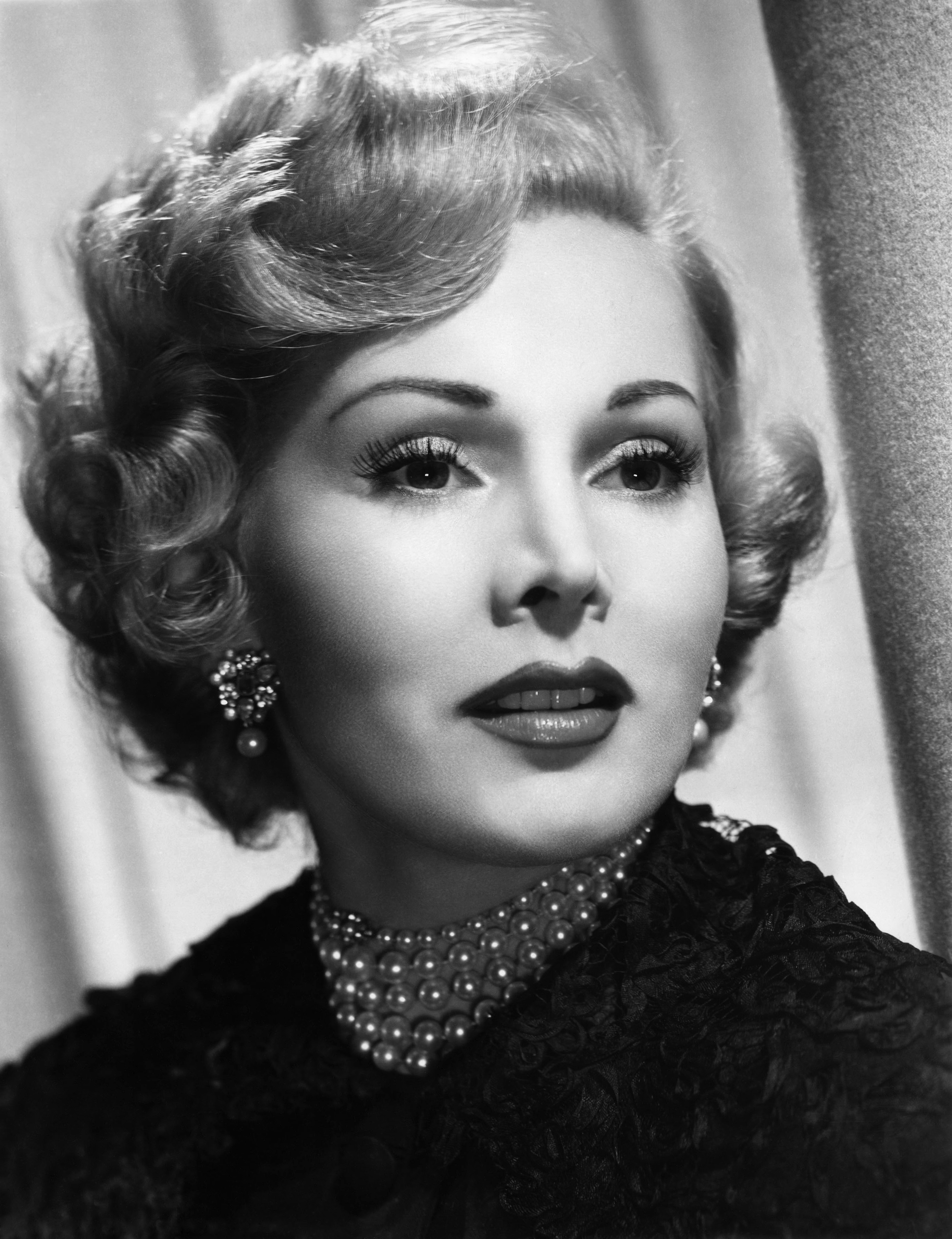
Zsa Zsa Gabor, ca. 1952
Photo: quotesgram.com

Green Acres presented a challenge for the wardrobe department. Most of the citizens were farmers, so overalls and house dresses fit the bill. Sam Drucker was the grocer, postman, and newspaperman for Hooterville, among other jobs. He always wore a blue shirt with a tie and had his postman vest or grocery apron on. Lisa and Oliver Douglas played an attorney and his wife who relocated from New York City and the social scene to rural Hooterville to run a farm. Oliver often wore suits on his tractor, looking somewhat silly and questioned by the locals. Lisa also continued to wear her glamorous outfits, but somehow, she was accepted by everyone and fit in wherever she went.

Photo: metv.com

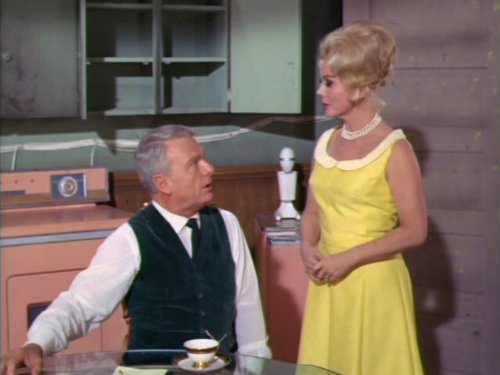
Lisa Douglas could wear anything and look good. She often wore her negligees around the house without being thought a hussy. She could show up in a sequined gown for a local band performance and was just one of the crowd. She wore gowns of boldly colored prints, but she was just as likely to show up in a single-colored sheath dress with a simple strand of pearls.

Photo: imdb.com

With her lavish updo hairstyle and her extensive collection of jewelry, Lisa was fun to outfit. Three designers were responsible for the majority of Lisa’s wardrobe: Jean Louis, Lucie Ann Claire Sandra, and Nolan Miller.

Jean Louis

Born Jean Louis Berthault in 1907 in Paris, France, he was an Academy Award winner for The Solid Gold Cadillac in 1956 starring Judy Holliday. (Jean was nominated for 13 Academy awards.)

Photo: pinterest.com

He attended the School of Decorative Arts and then went to work for Agnes Drecoll, courtier. In 1935, he moved to New York city where he worked for Hattie Carnegie before going to Hollywood. While working there he began gathering a large clientele, including Wallis Simpson and Irene Dunne.

Photo:
Black gown -1960s Jean Louis Silk Tiered Gown

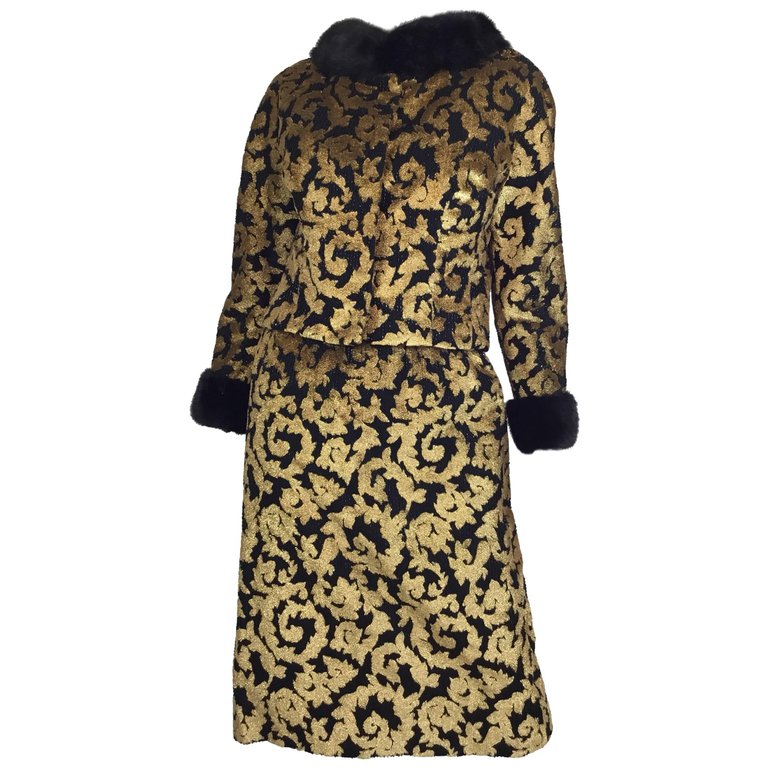
From 1944-1958, he was head designer for Columbia Pictures. Some of his most creative designs included Rita Hayworth’s black satin dress from Gilda, the beaded gowns worn by Marlene Dietrich, and the sheer, sparkling dress Marilyn Monroe displayed when she sang “Happy Birthday” to John F. Kennedy. He also was the primary designer for Kim Novack.

Photo:
Gold and black lame dress

In 1958 he moved over to Universal. There he began a working relationship with Doris Day, with Pillow Talk, their first collaboration. Journalist Tom Vallance described his work:- “He created a sophisticated allure for Doris that launched a new phase of her career.” James Garner, who also starred with Doris in several films said she “exuded sex appeal while still maintaining her All-American Girl next door image.” Jean Louis also worked with Lana Turner during this era, putting together her colorful wardrobe in Imitation of Life. Jean’s daughter said her father “had the most amazing discerning eye for color. It was a sixth sense for him.”

Jean Louis had designed the clothing for The Loretta Young Show from 1953-1961. She was a close friend of Jean and his wife Maggie. After Maggie passed away, he and Young married in 1993. She was considered one of, if not the best, well-dressed stars. He also designed clothing for Ginger Rogers, Vivian Leigh, Julie Andrews, Katherine Hepburn, and Judy Garland.

Jean began to freelance in 1960. He opened a boutique in Beverly Hills and sold his label, “Jean Louis, Inc.” at better department stores all over the country. During this time, he also updated the United Airlines stewardess uniforms.

Photo: metv.com

From 1965-1967 he designed Lisa Douglas’s dresses on Green Acres. He was the perfect designer for her. Gifted with a great sense of humor, he could undoubtedly relate to the humor on the show.

Photo: thewritelife61.com

As he said during a Vogue interview, “You can use marvelous fabrics, have wonderful, impossible embroidery—in fact, be superluxe and superluxe is what the couture is all about.”

Photo: tumblr.com

In the 1970s, he opened a boutique in France and launched his first fragrance. His career was still flourishing with clients like Jacqueline Kennedy, Sophia Loren, and Bianca Jagger.

Jean Louis passed away in 1997. His influence continues to be felt among designers today. Some of the fashion icons who admit being influenced by him include Michael Kors, Vera Wang, Giorgio Armani, and Zac Posen.

Photo: imdb.com

Lucie Ann-Claire Sandra

Lucie Ann vintage nightgowns are among the most glamorous and desirable negligees ever made. Lucie Onderwyzer founded the fashion company in 1947 in Beverly Hills. Known for bold color and exuberant details like pompoms, bows, rosettes, and rhinestones, she designed for many stars including Elizabeth Taylor.

Photo: pinterest.com
A few of Lisa’s gowns in the background

She designed all the peignoir sets worn by Eva Gabor in Green Acres. Her designs were also featured in other television shows and movies. In one episode of Bewitched, Darrin goes to the store to purchase a Lucie Ann for Samantha.

Photo: pinterest.com
Darrin shopping for Samantha

Lucie passed away in 1988 and her company was bought by Deena Lingerie Co and later Lady Ester Lingerie Company which is still making them today.

Norman Miller

Norman Miller was a wardrobe consultant for Eva on Green Acres.

At www.emmytvlegends.org/interviews/people/nolan-miller, Miller described his relationship with Eva.

 “I adored Eva. We worked together for many years. Later on, our working relationship became a friendship that I really valued. She wasn’t silly. She was a very smart lady. Not so smart with the men of her life. Her home was incredibly elegant. Anything that she needed I would do.” Miller shares about the time when Eva discovered a store called Loehmann’s; the store would buy designer samples and pack them up in huge boxes for stars to pick from. “Eva was a size 8 and the sample sizes were 2, and she’d simply ask me to do my magic and tailor them to her size. I smile at that as Eva could get anyone to change things around for her. I sometimes wonder whether she did understand fully well what was entailed in changing a size 2 into an 8 just like what was entailed in coming up with an animation idea tailor-made for her. She’d bat her eyelashes and sprinkle in a few ‘darlings’ and you find yourself doing what she wanted.”

Photo: pinterest.com
A pink chiffon sleeveless floor-length Nolan Miller dress with accompanying chiffon and ostrich feather wrap worn by Eva Gabor on the television series Green Acres.

Miscellaneous

These three designers were the major forces behind Lisa Douglas’s beautiful fashion style on Green Acres. Gabor had an amazing fashion sense and was well known for her private wardrobe. She also was a successful business woman, owning a multi-million-dollar wig company.

Photo: newyorksocialdiary.com

Eddie Albert tells a great story about Gabor and her fashion. At her funeral, he said he probably saw more of Gabor than any of her five real-life husbands did. And, like any couple, married or not, they had their differences. She, for example, never quite understood his passion for wildlife conservation. “Every time you hear about a sick fish, you make a speech. Vy?,” Albert recalled his co-star saying. “And I would tell her, ‘I think we ought to preserve nature, save wild animals,’ and so on. Well, one day she showed up in a gown made of feathers, and I asked her not to wear it. ‘But so chic!’ she said. And I said, ‘Yes, and ladies will see it and want one, and thousands of birds will die.’ And she said, ‘But, Eddie, feathers don’t come from birds.’ ‘Well,’ I asked, ‘where do they come from?’ And she said, ‘Dahlink. Pillows! Feathers come from pee-lowz!’ ”

Perhaps there was more of Eva Gabor in Lisa Douglas than we realized.

Photo: sitcomsonline.com

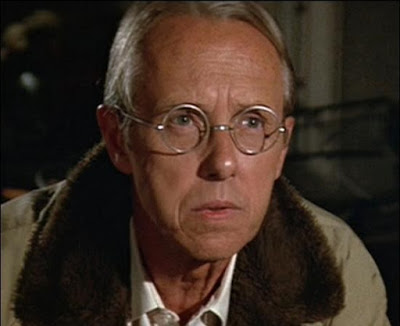
Just a Couple of Characters, Part 3: Henry Jones and Olan Soule

My series, “Just a Couple of Characters” continues with Part 3 today. This month, we learn more about actors we recognize but may not know much about. This week Henry Jones and Olan Soule are on the hot seat.

Henry Jones

Photo: en.wikipedia.org

Born in New Jersey in 1912 and raised in Pennsylvania, his grandfather was a first-generation Prussian immigrant who became a Representative. Henry went to St. Joseph’s College, a Jesuit school. He landed his first Broadway show in 1938, playing Reynaldo and a grave digger in “ Hamlet. ” Like many of the actors in the late 30s and early 40s, Henry joined the Army for World War II. He was a private. During his service, he was cast as a singing soldier, Mr.  Brown, in Irving Berlin’s “This is the Army.”

When he came back to the US, he married Yvonne Sarah Bernhardt Buerger in 1942. Sadly she passed away at age 22. This information was supplied by a blog reader, and I appreciate receiving the updated information because several sources refer to his divorce which is not the case. Yvonne’s father was a renowned surgeon. One of his patients had been Sarah Bernhardt which is where Yvonne go her middle name from.

Jones continued his stage roles and began a movie career. He had bit parts in 35 films, including The Bad Seed, Will Success Spoil Rock Hunter?, Vertigo, and Butch Cassidy and the Sundance Kid. He won a Supporting Actor Tony in 1958 for his performance of Louis Howe in “Sunrise at Campobello.”

Photo: fanpix.famousfix.com

In 1948 he married Judith Johnson. They had two children (one is actress Jocelyn Jones) but divorced in 1961.

Bridging the gap of television and film, he starred in seventeen tv movies as well.

Although his movie career kept him somewhat busy, it was nothing compared to his television work. Jones was credited with 205 acting appearances, meaning he had roles in 153 different television series. Jones was able to tackle a wide range of roles, being believable as a judge, a janitor, a murderer, or a minister. Jones had no illusions about becoming a romantic lead. He once said that “casting directors didn’t know what to do with me. I was never tall enough or good looking enough to play juvenile leads.”

Photo: findagrave.com

His first television appearance was in drama series, Hands of Mystery, in 1949. His work in the 1950s was primarily in theater shows about dramas. He also appeared in the George Burns and Gracie Allen Show and Father Knows Best.

Photo: michaelstvtray.com

He continued his drama roles into the 1960s. He also appeared in 3 episodes of The Real McCoys and westerns including Wagon Train, The Big Valley, and Daniel Boone. He showed up on mysteries such as the Man from U.N.C.L.E. and The Name of the Game. He also found work on unique shows including Lost in Space, Route 66, and the Alfred Hitchcock Show. Hitchcock liked his work and used him five times. He also appeared in several comedies, Bewitched and That Girl. He starred in Channing in 1963-64.  Jones played Fred Baker, a dean who mentors Professor Joe Howe who teaches English at Channing College while he writes his memoir about the Korean War.

During the 1970s, he continued to work on a variety of genre shows. We see him on westerns, The Virginian, Gunsmoke, and Bonanza. We see him in thrillers like The Mod Squad; McMillan and Wife; Owen Marshall, Counselor at Law; and The Six Million Dollar Man, on which he had a recurring role as Dr. Jeffrey, a scientist who built robots. However, comedies continued to be his mainstay, and he appeared in many of them including Nanny and the Professor, the Mary Tyler Moore Show, The Paul Lynde Show, The Doris Day Show, the Partridge Family, and Barney Miller.

commons.wikimedia.org

In addition to all his guest spots, he was cast in three shows during this decade. In The Girl with Something Extra, he played Owen Metcalf in 1973. The role he was best remembered for was Judge Johnathan Dexter on Phyllis. He was Phyllis’s father-in-law from 1975-1977. As Josh Alden, he appeared on Mrs. Columbo for thirteen episodes.

Photo: totallykate.com

Recurring roles comprised most of his television appearances in the 1980s. He continued to accept guest roles on such shows as Quincy ME, Cagney and Lacey, Magnum PI, Murder She Wrote, The Love Boat, and Mr. Belvedere. He would make regular appearances on Gun Shy, Code Name: Foxfire, Falcon Crest, and I Married Dora.

Jones continued to appear in shows in the 1990s, including Coach and Empty Nest. In 1999, he passed away after suffering from complications from an injury from a fall.

Olan Soule

Photo: pinterest.com

Olan Soule’s timeline was similar to Jones. He was born in Illinois in 1909, growing up in Iowa, and he passed away in 1994. While Jones’ grandfather arrived in America, Soule’s ancestors included three Mayflower passengers. He began his acting career on the radio.

In 1929 he married Norma Miller. They would be married until her death in 1992 and they had two children.

For eleven years, he was part of the cast of the soap, “Bachelor’s Children.” His roles changed when he transitioned to television. On radio, he could play any role, but his 135-pound frame prohibited him from getting many roles he played on radio. He told the Los Angeles Times during an interview that “People can’t get over my skinny build when they meet me in person after hearing me play heroes and lovers on radio.”

Photo: tralfaz.blogspot.com

However, he certainly was not lacking in roles. Soule is credited with more than 7000 radio episodes and commercials, 60 films, and 200 television series.

The 1950s found him appearing in many sitcoms, including George Burns and Gracie Allen, I Married Joan, I Love Lucy, December Bride, the Ann Sothern Show, and Dennis the Menace.

Photo: complete-hitchcock.com

He would appear regularly in Dragnet from 1952-59 and in Captain Midnight from 1954-56.

Photo: riflemanconnors.com

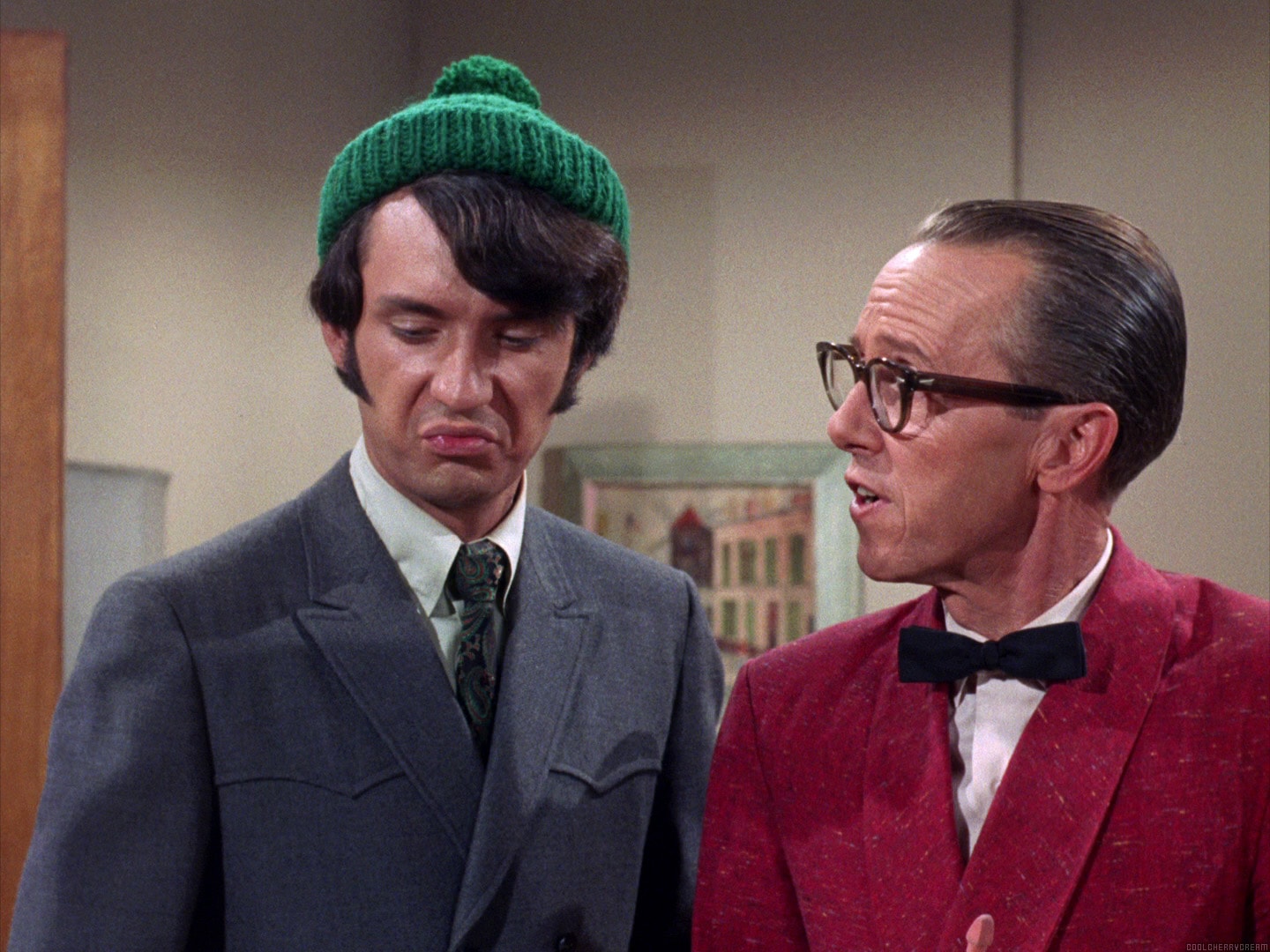
He got even busier in the 1960s, working nonstop. The only show he had a recurring role on was The Andy Griffith Show where he played choir director and hotel clerk John Masters. Other comedies he appeared on included The Jack Benny Show, Pete and Gladys, Bachelor Father, Make Room for Daddy, Mister Ed, My Favorite Martian, The Addams Family, The Monkees, Petticoat Junction, and That Girl. He also took on roles in suspense shows including One Step Beyond, the Alfred Hitchcock Show, and the Twilight Zone. He also specialized in westerns, including Maverick, Stage Coach West, Have Gun Will Travel, The Rifleman, Bonanza, Gunsmoke, and The Big Valley.

Photo: pinterest.com

He started the 1970s continuing to show up on series such as Family Affair, My Three Sons, McMillan and Wife, Cannon, Police Woman, and a recurring role on the comedy Arnie.

Photo: monkees.coolcherrycream.com

In the mid-1970s he began appearing on Battlestar Galactica and Project UFO. Most of his career in the decade was spent providing voiceovers for animated shows, primarily Batman.

The Towering Inferno Director: John Guillermin US Premiere: 10 December 1974 Copyright 1974 Twentieth Century Fox Film Corporation and Warner Bros. Inc.

In 1994, Soule died from lung cancer at age 84.

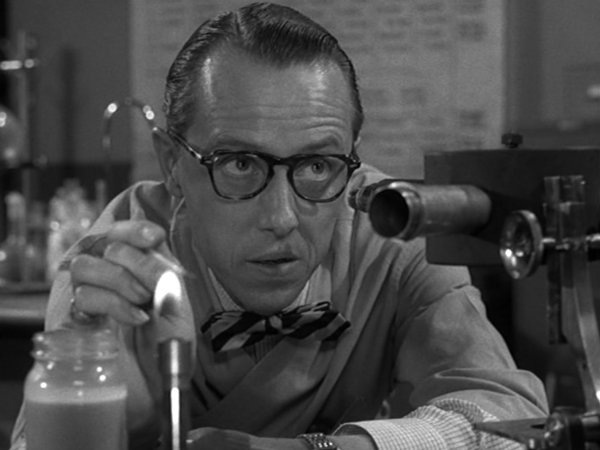
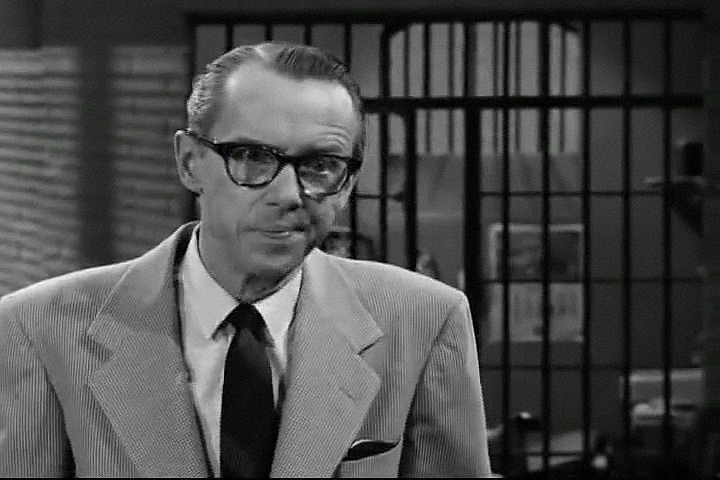
Both Soule and Jones were prolific actors who had long and successful careers. Neither one of them were the leading men type of actors, but they could tackle a wide range of roles. Soule once said, “Because of my build and glasses, I’ve mostly played lab technicians, newscasters, and railroad clerks.” Not a bad life for someone who loves acting. If you watch Antenna or Me Tv, chances are you will see these two characters pop up quite often.

Just a Couple of Characters, Part 2: Hope Summers and Madge Blake

Today we continue our series, Just A Couple of Characters, about character actors we recognize but might not know much about. Hope Summers and Madge Blake are two actresses you will recognize if you watched sitcoms in the 1960s or 1970s.

Hope Summers

Photo: en.wikipedia.org

Born Sarah Hope Summers in 1902 in Mattoon, Illinois, Hope Summers often played the friendly, but nosy, neighbor. She’s best recognized as Clara from The Andy Griffith Show.

Summers became interested in theater early in her life. She attended Northwestern, majoring in speech. After graduation she stayed at the University and taught speech and diction. She then moved to Peoria and headed the Speech Department at Bradley University. She joined a few community theaters, putting on one-woman shows. She also acted in a few dramatic radio shows.

She married Claude Witherell in 1927, and they were married until his death in 1967. The couple had two children.

In 1950, she transitioned to television. She appeared in an early comedy series, Hawkins Falls: A Television Novel. Like Edward Andrews, she was often cast in roles older than her actual age. She became a popular actress quickly. She continued to appear in a variety of shows throughout the 1950s including Bachelor Father, Private Secretary, Wagon Train, Dennis the Menace, and the Loretta Young Show.

Photo: cscottrollins.blogspot.com
On The Rifleman

From 1958-1960, she would appear in The Rifleman as Hattie Denton.

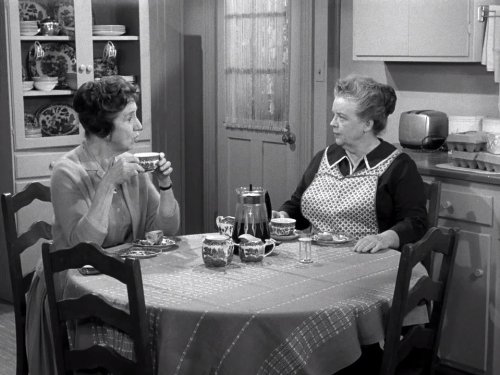
In 1961, she received the role she would become most famous for, Clara, Bee’s best friend on The Andy Griffith Show. When Andy Griffith left the show in 1968, Hope continued with Mayberry RFD in her role of Clara for five episodes. Clara was a lonely spinster who lived next door to Andy and his family. She and Bee had fun sharing bits of gossip and talking about current events. Clara had a good heart and though she and Bee could get upset with each other, they truly cared about each other.

Photo: sitcomsonline.com

While playing the role of Clara, she continued to guest in series throughout the 1960s. She appeared on many of the hit shows of that time such as Dr. Kildare, Gunsmoke, Make Room for Daddy, Hazel, My Three Sons, The Dick Van Dyke Show, Petticoat Junction, The Phyllis Diller Show, Marcus Welby, That Girl, and Bewitched.

Photo: mash.fandom.com

During the 1970s, Summers kept her career going strong, appearing in Hawaii Five-0, M*A*S*H, Little House on the Prairie, and Welcome Back Kotter.

Photo: peorian.com
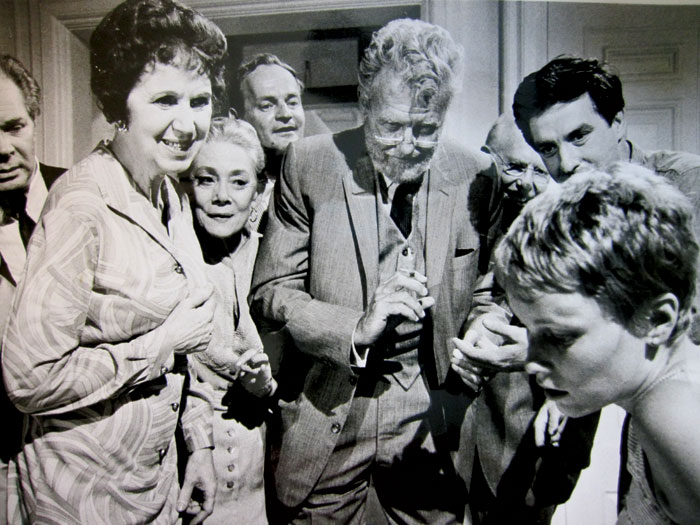
Playing a nice witch in Rosemary’s Baby

Although, Summers began her acting career during the second half of her life, she was also featured in several well-known movies. In 1960, she was in Inherit the Wind, The Shakiest Gun in the West, and Rosemary’s Baby in 1968, among others.

Photo: famousfix.com

Summers also was famous as the voice of Mrs. Butterworth in commercials.

In 1978 she was diagnosed with congestive heart failure and quit acting. She passed away from the disease in 1979.

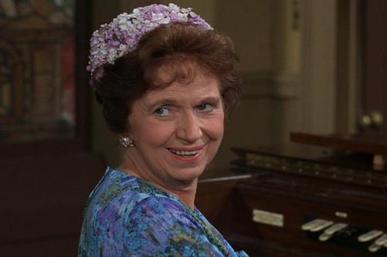
Madge Blake

Photo: listal.com

While Hope Summers was part of the cast of The Andy Griffith Show, Madge Blake was busy portraying Aunt Harriet on Batman.

Born Madge Cummings in 1899 in Kansas, she, like Hope Summers, became interested in acting at a young age. Her father was a Methodist minister and he refused to allow her to give it a try. Oddly enough, Madge’s maternal uncle was Milburn Stone, Doc on Gunsmoke.

Photo: imdb.com

Although they later divorced, Madge married James Blake and they had one child. She had a fascinating career. Both she and James worked for the government during the war. They had top secret clearance for their project working on the construction of the detonator for the atomic bomb in Utah. They also performed tests on equipment used in the Manhattan Project.

Photo: actorz.ru

Also, like Summers, Blake turned to acting at a later age. When she was 50, she enrolled at the Pasadena Playhouse to study acting. She only had twenty years in the business, yet she managed to achieve an impressive 124 acting credits.

Photo: icollectors.com
Singin’ in the Rain

Blake would appear in 47 films in smaller, but impressive, roles. Some of her movies included An American in Paris, Singin’ in the Rain, Brigadoon, The Tender Trap, Bells Are Ringing, Ain’t Misbehaving, and The Solid Gold Cadillac.

Photo: pinterest.com
Margaret Mondello

Beginning her television career in 1954, she racked up an impressive amount of guest star roles and several recurring roles. She played Tillie, the president of the Jack Benny fan club on The Jack Benny Show. She played Larry Mondello’s mother on Leave It to Beaver. An interesting aside is that she was asked to play Aunt Bee on The Andy Griffith Show where she would have worked with Hope Summers. Because she was locked into the role of Mrs. Mondello, she declined. She took the role of Mrs. Barnes, Joey’s mother, on The Joey Bishop Show. On the Real McCoys, she played Flora MacMichael, Grandpa McCoy’s love interest; Nurse Phipps on Dr. Kildare; and the role she became best known for, Aunt Harriet on Batman.  

Photo: channel.superhero.com

The network was worried about Batman and Robin living alone together on Batman, so the role of Aunt Harriet was added. The story line was that she raised Bruce Wayne in the family mansion. Their interaction with Aunt Harriet was also a reason for the dynamic duo to appear in their non-hero roles more often.

It would seem that coming into acting later in life and then appearing in so many movies and recurring television appearances would have kept her quite busy. But in addition to these appearances, she was cast in many of the most popular shows during her twenty years on television. During that time, you can find her on dramas like Public Defender, Lassie, The Restless Gun, and the Man from U.N.C.L.E.

Photo: tumblr.com
On I Love Lucy

Of course, she was meant to play comedy and she appeared on an incredible number of sitcoms. Just to name a few, there of them: George Burns and Gracie Allen Show, I Love Lucy, Private Secretary, Father Knows Best, Bachelor Father, The Adventures of Ozzie and Harriet, The Donna Reed Show, Make Room for Daddy, Bewitched, The Addams Family, My Favorite Martian, The Dick Van Dyke Show, Gomer Pyle, and The Doris Day Show. Pretty amazing.

Photo: vitabrevis.americanancestors.org
On Bewitched

I read over and over that one of her best performances was in the pilot for Dennis the Menace where she plays Dennis’s babysitter. I have not been able to watch that show, but I will definitely check that out.

Photo: allstarpics.famousfix.com
On Dennis the Menace

In 1969, Blake passed away from a heart attack after she broke her leg. She was only 70, or we might have had a much longer list of television series for her.

Hope Summers and Madge Blake had a lot in common. They both became interested in acting at an early age, they both had major careers before acting, they both began acting in the second half of their life, they both played neighborly types–Summers, nosier, and Blake, more ditzy. They also both had respectable film careers paralleling their television ones. Their television roles may have been smaller, but they were memorable, they are definitely two characters worth watching.

Just a Couple of Characters, Part 1: Edward Andrews and Herb Edelman

We’ve all experienced that moment we’re at the grocery store and see someone we know, but we can’t remember their name or how we know them. Maybe it was work or school, or their kids were friends with ours.  Sometimes we even remember we spent a lot of time with them and like them, but the name and relationship is just not there.

This month we are meeting some of our television friends that we’ve gotten to know, even if we can’t remember their names or what we watched them on. We’ll learn more about eight different character actors. We start off the month learning about Edward Andrews and Herb Edelman.

Edward Andrews

Photo: findagrave.com

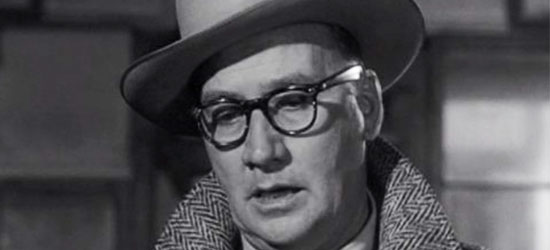
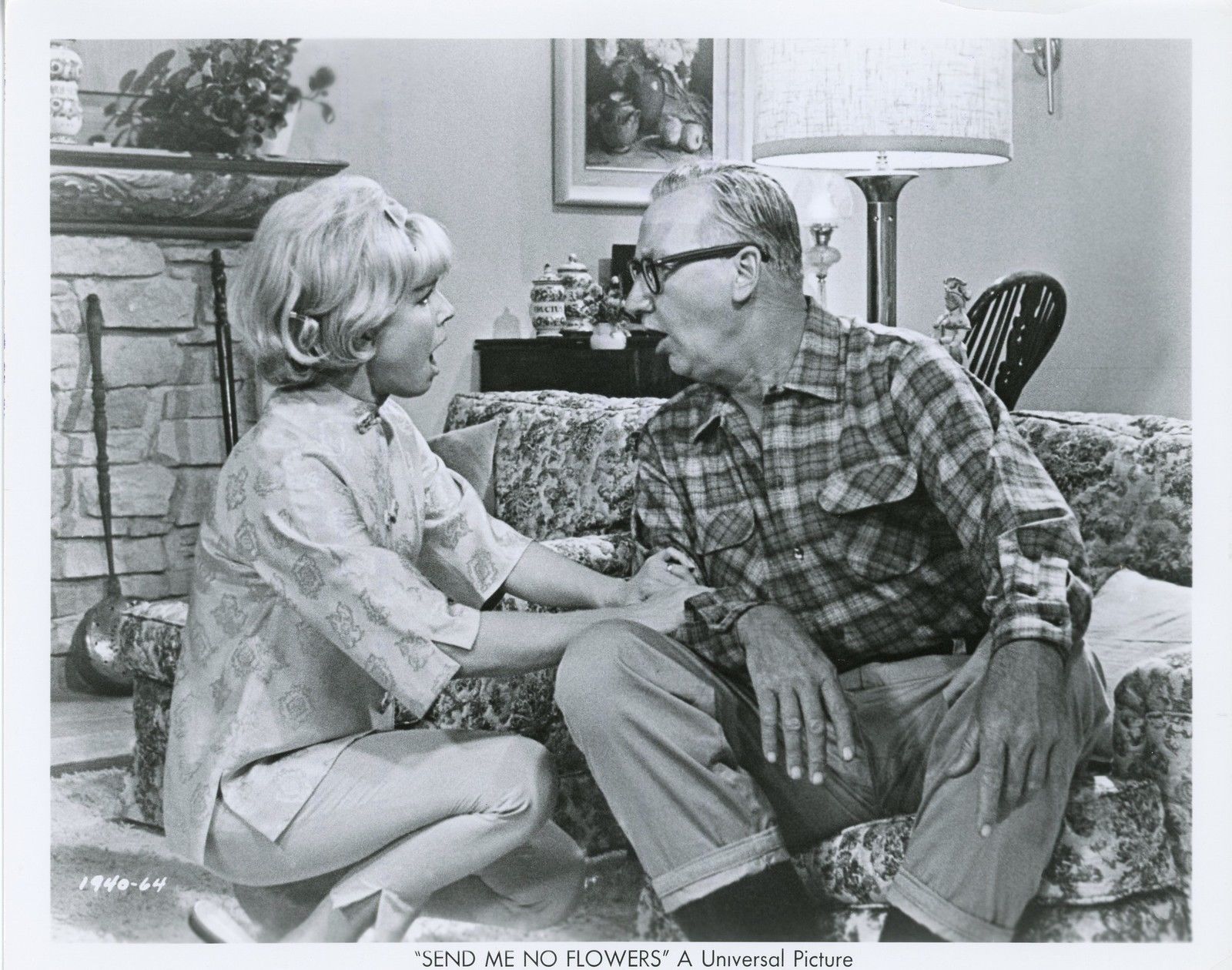
I remember Edward Andrews from Doris Day and Disney comedies. Anyone who grew up in the 1960s or 1970s will remember this military man with a grandfatherly softness to him.

Andrews was born in Georgia in 1914. His father was a minister and their family moved a lot; he lived in Pittsburgh; Cleveland; and Wheeling, West Virginia. He had a very small part in a James Gleason production at age 12. He attended college at the University of Virginia. In 1935, he got his first part in a Broadway production, “So Proudly We Hail.” He continued in Broadway for the next twenty years, including a touring production of “I Know My Love” with Lunt and Fontaine. During that time, he took a leave from his career to serve in WWII. He was a Captain and commanding officer of Battery C with the 751st Artillery Battalion of the Army.

Photo: movieactors.com

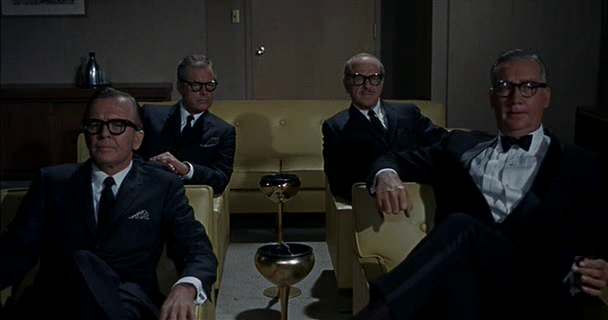
In 1955 he married Emily Barnes and they would have three children, remaining together until his death. About the same time, his movie career took off. Andrews looked older than his age which helped him get parts for older roles. He could play a grandfather, then turn around and handle a sleazy businessman or legalistic bureaucrat. He portrayed George Babbitt in Elmer Gantry in 1960. He worked for Disney playing the Defense Secretary in both The Absent-Minded Professor (1961) and Son of Flubber (1963). I remember him fondly in Doris Day’s movies, The Thrill of It All (1963), Send Me No Flowers (1964), and The Glass Bottom Boat (1966). One of his last roles was Grandpa Howard in Sixteen Candles in 1984. His movie credits totaled 46.

Photo: dorisday.com

Edward also kept busy with television appearances. One of the first actors to guest star on television, in 1950, Andrews was on Mama. As early as 1952, he began acting in the variety of drama shows on television. During the 1950s he would appear in eighteen of these shows including The US Steel Hour, Robert Montgomery Presents, Studio One in Hollywood, and Omnibus.

Photo: scsottrolling. blogspot.com
On The Wild Wild West

He showed up in westerns including The Real McCoys, Bonanza, Gunsmoke, and Rawhide. We saw him on medical and legal dramas such as Ben Casey, The Defenders, The Bold Ones, Ironside, and Owen Marshall, Counselor at Law. Mysteries and crime thrillers also found a place for him. You might remember him from Naked City, The Wild Wild West, The Mod Squad, Hawaii Five-0, McMillan and Wife, and Quincy, ME.

Photo: pinterest.com

Like his films, he seemed to excel in comedy. Andrews played George Baxter in the pilot for Hazel, but unfortunately when the show went into production, the part was recast with Don DeFore. He would guest star in some of the most popular sitcoms, including The Phil Silvers Show, The Andy Griffith Show, I Dream of Jeannie, Bewitched, The Paul Lynde Show, Love American Style, The Bob Newhart Show, and Three’s Company.

Photo: pinterest.com

In 1964 he starred in Broadside. Commander Adrian (Edwards) is not happy when a group of Waves are posted to his station on the South Seas island Ranakai. His men no longer have focus, so he spends the series trying to get the women relocated.

In 1970 he had a recurring role on The Doris Day Show as Colonel Fairburn. He also starred as Harry Flood in the show Supertrain in 1979. Playing on the Love Boat and Hotel themes, the show was about a bullet train that had new passengers each episode.

Photo: imdb.com
On Bewitched

Perhaps Andrews will be best remembered for his guest starring role on two Twilight Zone episodes, “Third From the Sun” (Andrews plays a company man who thinks a coworker William, a nuclear engineer, and his friend Jerry are going to steal a spaceship to leave Earth) and “You Drive” (Andrews hits a newspaper boy and then flees the scene, trying to hide the crime).

In all, he appeared on 118 different television series as well as made-for-television movies.

Photo: pinterest.com

Andrews enjoyed playing a character actor. He said it ensured more work and longevity in his career. He was quoted as saying, “What you get are people who speak to you. They know you from somewhere, but they don’t think of you as an actor. They stop and say, ‘Harry, how’s everything in Miami?’ I’ve learned by experience not to argue with them.”

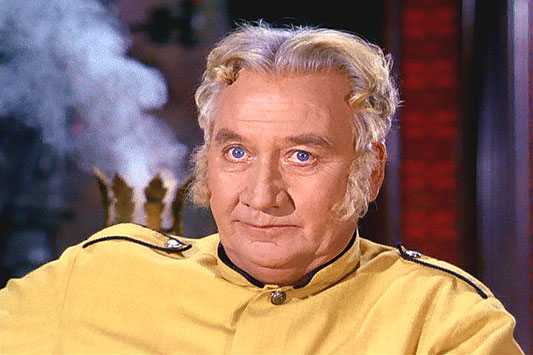
In March of 1985, Andrews had a heart attack and passed away at age 70. With his white hair, and horn-rimmed glasses, Andrews was an adaptable character actor. Whether he was playing a lovable doctor, a nosy coworker, a fun-loving grandfather, or a despicable murderer, he was believable. He truly was a great character.

Herb Edelman

Herb Edelman, circa 1981
Photo: travsd.wordpress.com

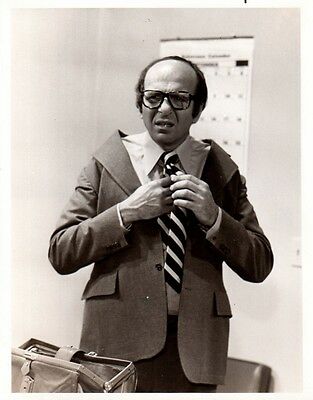
Another fun actor everyone will recognize is Herb Edelman. Herb was born in Brooklyn, New York in 1933 in the midst of the Depression. Tall, lanky, and prematurely bald, he would go on to have a long career in movies and television.

Originally, Edelman wanted to be a veterinarian, and he went to school at Cornell but left after his first year. He served in the Army as an announcer for Armed Forces Radio. After he left the service, he started college again, this time studying acting at Brooklyn College. Once again, he dropped out. He made a living as a hotel manager and a cab driver.

Photo: cscottrollins.blogspot.com
In Barefoot in the Park

In the mid-1960s he began both his film and television careers. Some of his best-known roles were in the movies. He played Harry Pepper, a wise-cracking telephone operator, in Barefoot in the Park and Murray the Cop in The Odd Couple, as well as Harry Michaels in California Suite.

Photo: movie-mine.com
In The Odd Couple as Murray the cop

However, it was television where he received most of his work. In the 1960s, he began his career, appearing on a variety of shows, including That Girl, The Girl from U.N.C.L.E., and The Flying Nun. During these years he also dated and married Louise Sorel who he was wed to for six years.

Photo: en.wikipedia.com

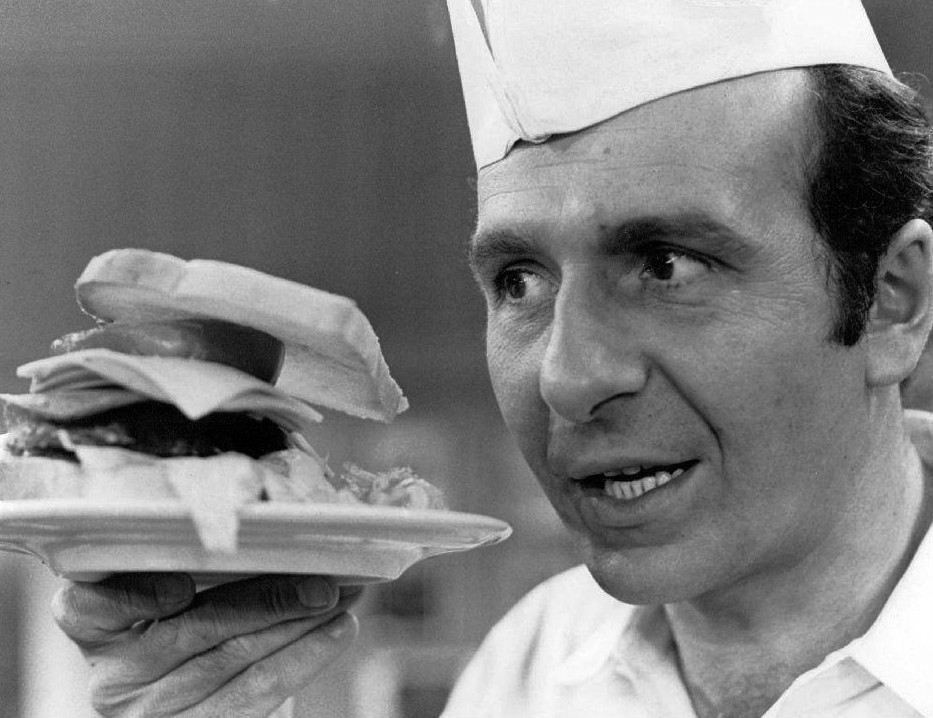
In 1968, he accepted the role of Bert Gamus in The Good Guys. Bert and his friend Rufus (Bob Denver) open a diner, their dream. Bert’s wife Claudia (Joyce Van Patten) helped him serve customers.

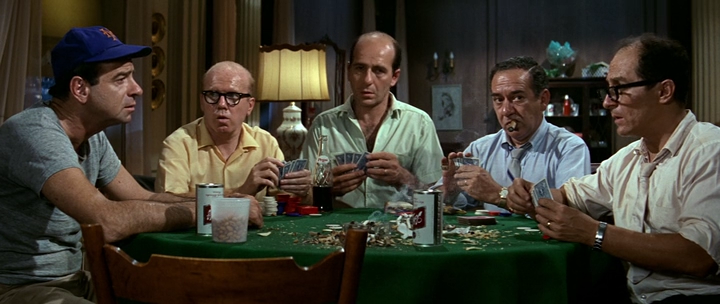
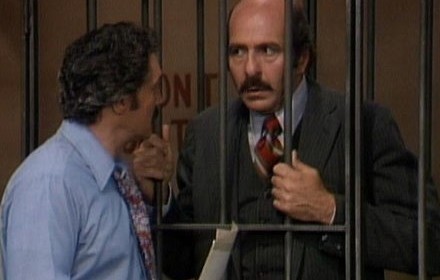
In the 1970s, his career continued as he appeared in many shows every year. Some of the hit series we saw him on during this decade include Room 222, Bewitched, McMillan and Wife, The Partridge Family, Love American Style, Maude, Happy Days, Barney Miller, Kojak, and Charlie’s Angels.

Photo: sitcomsonline.com
On Barney Miller

In 1976, he was again cast in a show, Big John Little John. Edelman was a middle school teacher who drank out of the fountain of youth on vacation. Afterward, he would randomly turn into a thirteen-year-old and worked to keep the secret from his friends and coworkers. The show was short-lived.

Photo: picclick.com

Edelman’s work schedule did not slow down in the 1980s. He would have roles in the cast of five television shows and spent time in between guest starring on other shows such as Trapper John, Highway to Heaven, The Love Boat, and thirtysomething.

From 1980-81, he was cast as Reggie on Ladies’ Man, about a woman’s magazine with one male journalist. From 1981-82, he appeared as Commissioner Herb Klein on Strike Force. This show followed a strike force team that handles cases too difficult for the mainstream officers. The following year, he was Harry Nussbaum on Nine to Five, the show based on the movie about a group of office workers. From 1984-88, he was cast as Richard Clarendon on St. Elsewhere, a teaching hospital.

Photo: aveleyman.com
On Murder She Wrote

Although his roles decreased in the 1990s, he had one of his most memorable roles during those years as Stanley Zbornak, Dorothy’s ex-husband, on Golden Girls; he was nominated twice for his role on the show.

In 1990, he played Sergeant Levine on Knot’s Landing. Knot’s Landing was a night-time soap about the lives of the wealthy who live in a coastal suburb of LA. His last recurring role was Lieutenant Artie Gelber on Murder She Wrote, about a mystery writer who helps solve crimes.

Photo: imdb.com
On Golden Girls

Edelman died much too early in 1996 from emphysema at age 62.

Another character who was unforgettable in his movie and television roles. Whether playing a repairman, a cop, a teacher, or a ex-husband, he always came through as an authentic actor.

My Secret, Guilty Pleasure: The Feminist and The Fuzz

For those of you who have been with me on this blog journey, I have shared quite a bit with you during the two and a half years I’ve been writing. You have learned I can’t stand All in the Family or Good Times. You have learned I think that perhaps the best sitcoms ever written were The Dick Van Dyke Show and M*A*S*H. You know that I love the Doris Day comedies from the 1960s. I became vulnerable enough to share with you that Bachelor Father, My Three Sons, That Girl, and The Partridge Family are some of my favorite classic sitcoms. Today I’m catching a long breath and taking my confessions a step further.

Television movies have been a staple since the 1960s. Different networks came up with a show that was an incentive for viewers to stay home and watch movies. In 1961, NBC Saturday Night at the Movies debuted. A movie previously released in the theaters was shown. Since each network had their own version of the show, eventually there was a shortage of previous movies to air. At that time, networks decided to fill the gap by producing their own “made-for-tv” movies. The first was See How They Run which aired October 7, 1964 on NBC.

I’m sure I watched more than my share of these movies growing up, but most of them left no impression on me. However, there is one that I do remember. I’m not sure if it was the incredible cast or just the topic of women’s lib which I was just beginning to understand at age ten, but I loved this movie. I watched it live on television and never saw it again. It was The Feminist and The Fuzz. Although I’m sure it’s full of politically incorrect dialogue and actions, I decided to learn a bit more about this treasure that I have not seen in more than 40 years.

Photo: pinterest.com

Screen Gems made the movie for ABC. It aired on The ABC Movie of the Week on January 26, 1971. Barbara Eden and David Hartman were the stars of the show. The movie was written by James Henerson. He wrote eighteen television movies, as well as scripts for several sitcoms including I Dream of Jeannie and Bewitched. Jerry Paris, who was Jerry Helper, the Petries’ neighbor on The Dick Van Dyke Show, was the director. Claudio Guzman produced the movie, and Emil Oster was the cinematographer.

Photo: youtube.com

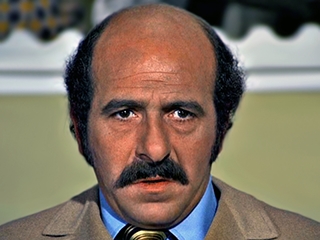
Jane Bowers (Eden) is a pediatrician. She is engaged to Wyatt Foley (Herb Edelman). Wyatt is a lawyer and a bit of a mother’s boy. Jane has recently been drawn into the women’s liberation movement. Apartments in San Francisco are few and far between. We learn she has been trying to find one for a while. As she arrives at the latest apartment in her hunt, she meets Jerry Frazer (Hartman), a cop who is also looking for an apartment. The landlord assumes they are a married couple as he shows them around.

When he leaves, they argue about who gets the apartment. Neither one of them is willing to give in, so they finally come to an understanding that they will share the apartment. They work opposite shifts, so they decide they will rarely be there together. Jerry is dating Kitty Murdock (Farrah Fawcett), a bunny at the Playboy Club.

Photo: pinterest.com

Jane explains what is going on to Wyatt, but Jerry does not want Kitty to find out he is living with Jane. Jerry is a bit of a ladies’ man but treats women respectfully. Jane refers to Jerry as a “cop-lawyer-sexual bigot-Boy Scout,” and she insists he treat her like he would another man.

Although the plan is that Jane and Jerry don’t spend any time together, of course they end up being thrown together. Despite their first impressions of each other and their intention to dislike each other, the viewers realize that they are falling in love.

Photo: modcinema.com

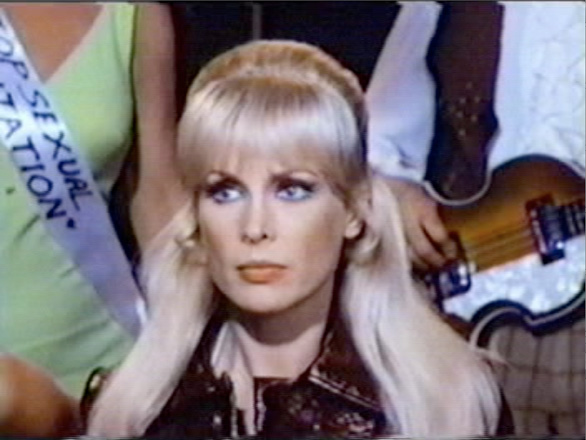
While Jane has been exploring the entire feminist movement, she has not bought into it as much as her friends. Her best friend is another doctor, Debby Inglefinger (Jo Anne Worley). Debbie is a hardcore protester and women’s libber. She decides her club, Women Against Men, or WAM is going to stage a protest at the Playboy Bunny Club.

Photo: modcinema.com

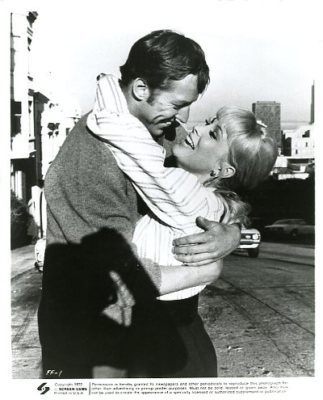
Jane joins her friends at the Club. The women are all wearing swimsuits and carrying signs; Jane’s says, “Men are Playboys, Women are Playthings.” WAM refuses to leave the premises, so the manager calls the police. Of course, Jerry is one of the officers who come to get things under control. While the other women are being arrested, Jerry picks up Jane, who is in a bikini, and carries her to a taxi, telling the driver to take her home. She is incensed that she is not going to jail with the other women. While this is going on, Kitty spots him and realizes he is protecting Jane. Some of the women who are arrested at the Club include Sheila James, Jill Choder, Merri Robinson, Penny Marshall, and Amanda Pepper.
Photo: aveleyman.com

Jane calls her father, Horace (Harry Morgan) who is also a doctor. She has not admitted to him that she has a male roommate. He decides to drive into town to talk to her in person. In the meantime, Lilah (Julie Newmar), a kind-hearted prostitute asks Jerry to arrest her, so she has a place to sleep that night. He feels sorry for her and lets her stay in his room at the house that night because he will be at work. When Jane’s father arrives, he runs into Lilah who he assumes is Jane’s roommate. Jane is not there because she was still angry and got even madder when she thought Jerry is sleeping with Lilah. She leaves him a note that she is moving out.
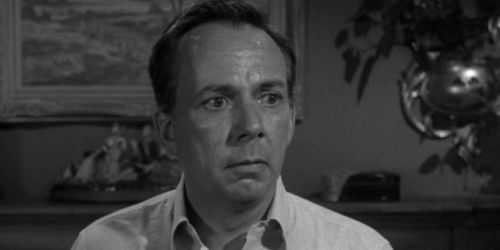
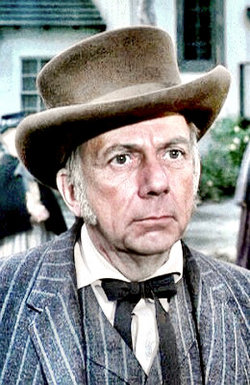
Jerry tries to call Jane at work and when he finds out she left early, he rushes home. Of course, by this time Horace and Lilah have gotten to know each other well. Kitty also shows up at the apartment and sees Jane and recognizes her from the Club. Wyatt and Debbie also stop by.

Jerry finally admits he loves Jane. Jane is in a fluster and runs out of the apartment. Kitty gets mad and asks Debbie if she can join WAM. Wyatt finds Debby’s controlling nature attractive and they begin a relationship.

Jerry catches up with Jane in the middle of an intersection where he kisses her, stopping traffic. Horace is happy because never liked Wyatt but likes Jerry a lot.

Photo: worthpoint.com

Like Laugh-In, With Six You Get Eggroll, or The Brady Bunch, this movie could only have come out of this era. Everything about the movie screams the seventies—the clothing, the interiors, the cars, the language—which is probably why I was drawn to it. Everyone in the cast is a well-known star, which also made it fun to watch.

There were a lot of impactful and important television movies made in the 1960s and 1970s, so I’m not sure why this movie, primarily fluff, is so memorable for me. I guess I was not alone because it was the second-highest ranked television movie when it aired. It is on my bucket-list of shows to watch again. What is the movie that you love but hate to admit how much you love it?

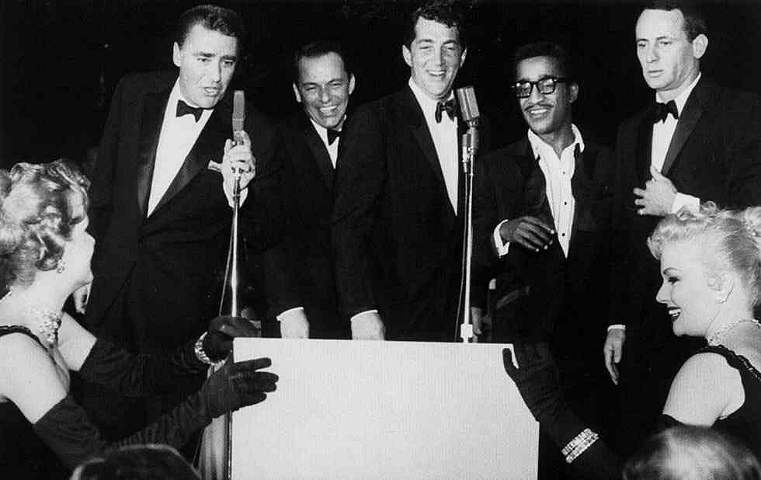
At The Summit of Coolness: The Rat Pack on Television

Photo: mentalfloss.com

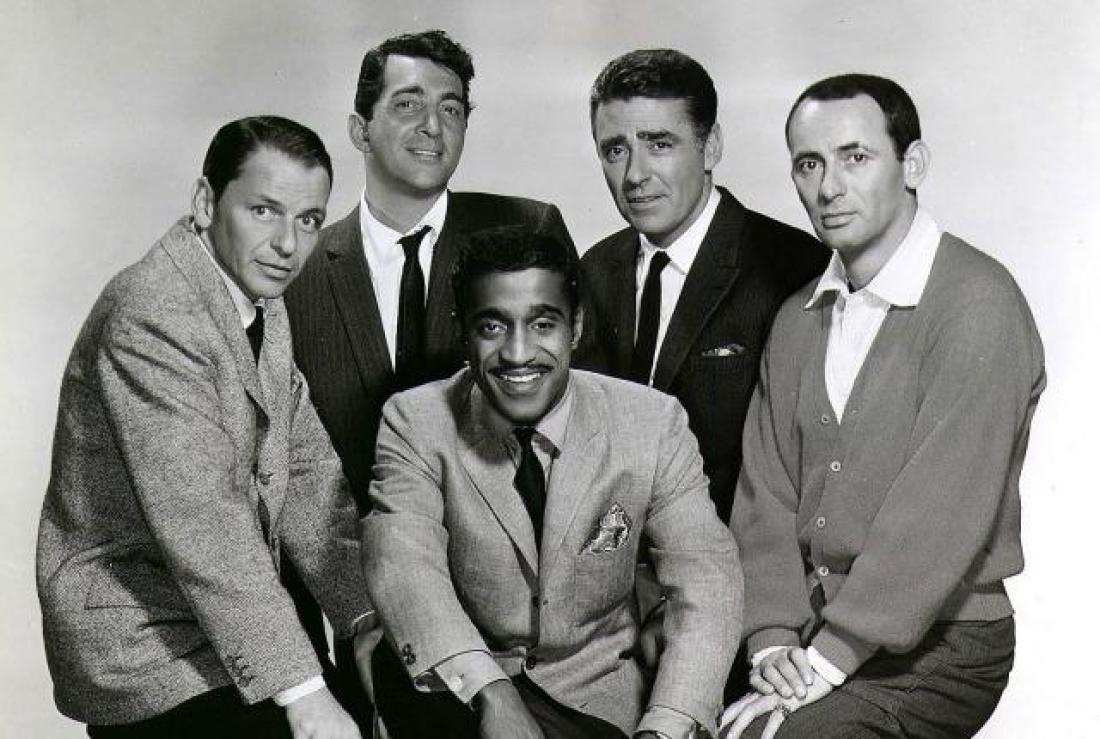
For some reason, the group including Frank Sinatra, Dean Martin, Joey Bishop, Peter Lawford, and Sammy Davis Jr. have been referred to the Rat Pack since the 1960s. The original rat pack was coined by Lauren Bacall about a group who gathered at her home whom she referred to as a pack of rats. The group we know as the Rat Pack preferred to call themselves the Clan or the Summit. Whatever they chose to call themselves, they had a hip, cool aura.

When one of the members of the group was scheduled to perform at Las Vegas, another one or two of the Clan would often show up as well. Because concert goers knew this, their shows tended to sell out. The Sands marquee promoted the possibility during one of Dean Martin’s shows when they put up “DEAN MARTIN – MAYBE FRANK – MAYBE SAMMY.”

I thought it would be fun to look at the Rat Pack on television and see how much influence this group had. Let’s start with Old Blue Eyes.

FRANK SINATRA

Frank began his film career in the 1940s. In 1953 he had one of his most famous roles in From Here to Eternity. I was surprised to learn that he began appearing on television in the mid-1950s as well. He showed up in The Colgate Comedy Hour in 1954, The Producer’s Showcase in 1955, and The Thin Man in 1958.

In the 1970s we find Frank showing up on Laugh-In for several appearances.

He also sang a few lullabies on Make Room for Granddaddy, Danny Thomas’ revival of his hit show Make Room for Daddy from the 1950s. I was amazed at the talent of actors who guest starred on the reboot considering the short time it was on the air, but that is a topic for a future blog. On this episode, he bumps into Danny. His wife Kathy is not happy Danny is bringing home a guest for dinner on “hamburger night” but then she learns it’s Frank. He sings “All the Way” and “Baa Baa Black Sheep” for Danny’s grandson, Michael.

Photo: imdb.com

Jumping ahead a decade, we find Frank’s last two television roles, one as himself and one as a New York cop.

Frank had met Tom Selleck in Hawaii on one of his trips. In 1987 Frank appeared as Michael Doheny, a retired police sergeant on Selleck’s show, Magnum PI. Frank and his entourage traveled to Hawaii (although he worked for scale) and took over a floor at The Colony Surf in Diamond Head. In this episode he returns to help find the men who kidnapped his granddaughter. There were plans for Sinatra to return in season eight as well but Selleck cut back on the number of episodes he was filming, and the show was never written.

Photo: kiwireport.com

In 1989 Sinatra showed up on Who’s the Boss as himself. Angela is invited to an exclusive party, but she gets waylaid by a work issue. Mona and Tony decide to take the tickets, but they can’t get in when they get there and then Angela shows up, which results in all three of them being thrown out of the gala. As Frank is showing up to sing, Tony gets to meet him and tell him he is his idol.

DEAN MARTIN

Not surprisingly Dean’s first appearance on television was on Make Room for Daddy in 1958. He portrayed himself. Danny calls on Dean to help him out with his daughter Terry who has been not very nice to a boy at school who likes her. Danny learns she is ignoring the boy because she has a crush on Dean. The plan works, and she and Donald get together.
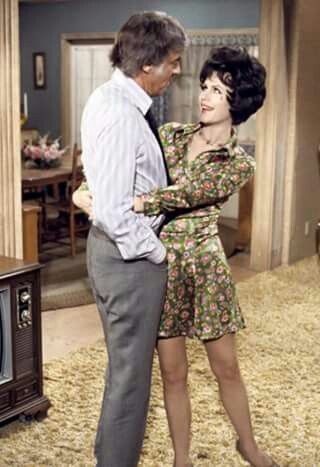
Photo: youtube.com

During the same year, Dean shows up on The Phil Silvers Show. Bilko (Silvers) is sent to Yucca Flats to work on a nuclear test program. Ritzik is amazed by one of the scientist’s machines. They skip the base and head for Las Vegas, so Rupert can demonstrate his gambling skills. Dean Martin is an unnamed gambler they run into.

In 1964 Martin got on the western bandwagon, appearing in Rawhide. Martin is stalking Hispanic cattlemen. His wife wants him to drop the assignment and retire to her family’s plantation with her, but he refuses, and she seeks help from Gil Favor, the boss of a never-ending cattle drive.

We see Martin pop up on a Bob Hope special in 1968 and a Red Skelton show in 1970.

Photo: vegasmagazine.com

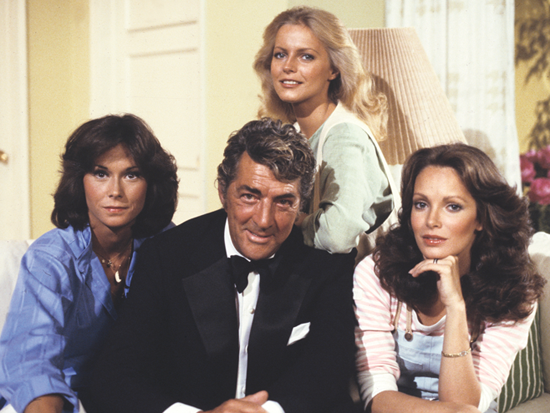
In 1978 Martin made an appearance on a show that surprised me: Charlie’s Angels. Martin plays the owner of the Tropicana Casino who hires the Angels to investigate several suspicious deaths that he thinks are part of a plot to make him think he’s going crazy. This was a two-part season opener and instead of singing, Martin got to display his magic skills. Naturally, he becomes romantically involved with one of the Angels, Sabrina played by Kate Jackson.

Fittingly, Dean’s last appearance was in the show Vega$ in 1979 as himself.

JOEY BISHOP

Bishop’s first role was not much of a stretch. He played a comedian on Richard Diamond in 1959. Bishop’s plays Joey Kirk and hires Diamond to determine who is following him and why, leading to a complicated murder plot.

He appeared in the DuPont Show of the Month in 1960 and The Dick Powell Theater in 1963.

Like most of the Rat Pack, Bishop made an appearance on Make Room for Daddy in 1961. As Joey Mason, he helps out Danny. Danny has flown from the east coast to the west coast and took two sleeping pills. However, there are four conventions in town and his assistant forgot to make him a reservation.

In 1965 he is Fred Jackson on an episode of Valentine’s Day starring Tony Franciosa and Jack Soo about a young eligible bachelor who lives with his valet, a poker-playing con artist who saved his life while they were in the Army.

Photo: tvtropes.com

From 1961-1965, Joey stars in The Joey Bishop Show as Joey Barnes. Barnes is the host of a talk show. He has to deal with his personal and professional life as a celebrity. A lot of guest stars show up playing themselves as guests on his show or friends of his. The show produced 125 episodes. I have recently been watching it on Antenna TV where it now is shown every morning.

In 1967, Joey had a cameo on Get Smart. Max and 99 are sent on an assignment to rescue Don Carlos, the dictator of San Saludos. A general has imprisoned him and wants to marry his daughter. Max and 99 try to disguise themselves as flamenco dancers. When they are also thrown in jail, a guard, played by Bishop, attempts to bribe the firing squad.

In the 1970s we find Joey on Chico and the Man in 1976. He plays an inept burglar and when Ed doesn’t press charges, every lowlife crook appears at the business.

In 1981 Bishop appears as Dr. Burton on Trapper John MD.

Photo: basementrejects.com

In 1985 Bishop again takes on the role of a comedian on Hardcastle and McCormick. That same year he also played another comedian on Murder She Wrote.

PETER LAWFORD

Drama shows were very popular in the early days of television. Lawford appeared in quite a few of these shows from 1953-1965.

Photo: en.wikipedia.org

In 1954 he took on the role of Bill Hastings on Dear Phoebe. The show was on the air for two years, resulting in 32 episodes. Hastings works for a daily newspaper in a large city. He becomes the author of a lonely hearts column and advises his readers as “Phoebe” while trying to deal with his own issues in his personal life.

Photo: sitcomsonline.com

From 1957-1959, he was Nick Charles on the television version of The Thin Man. The show was very popular with 723 episodes filmed. Similar to the films, Nick marries Nora and lives in a luxurious Park Avenue apartment in New York. He was previously a private detective and many of his underworld friends get him involved in mysteries he has to solve.

Lawford appeared as himself on an episode of Jack Benny’s show in 1961.

He also played himself on The Patty Duke Show in 1965. Patty is selected to find a star to perform at the high school prom. Sammy Davis Jr. also guest stars on the episode.

Photo: imdb.com

Apparently, Sammy and Peter enjoyed working together because they guest starred on an episode of The Wild Wild West in 1966. Lawford is a wealthy ranch owner and Davis is a hired hand Jeremiah.

While Bishop showed up on Get Smart, Lawford chose the more realistic I Spy in 1967.

Like Sinatra, he also appeared on Laugh-In but must have enjoyed it more because he was on ten different episodes.

During the 1970s, Lawford shows up on a variety of television show genres. He would be on the western The Virginian in 1971, Born Free about Elsa the lion in 1974, The Love Boat and Fantasy Island, the bizarre comedy High Cliffe Manor, the crime drama Hawaii Five-0, the dramady Supertrain, and The Jeffersons.

Photo: pinterest.com

In addition, he was featured on Bewitched in 1972. Lawford played Harrison Woolcott, a client of Darrin and Larry’s. Sam’s cousin Serena decides she wants to date him and try the mortal life for a while.

Photo: pinterest.com

He made several appearances during seasons four and five of The Doris Day Show. As Dr. Peter Lawrence, he begins a romance with Doris in 1972-1973.

SAMMY DAVIS JR

Sammy probably appeared in the most television shows. Like Peter, he began in drama shows and guest starred in several episodes of General Electric Theater.

He then appeared in The Lawman in 1961, Frontier Circus, Cain’s Hundred, 77 Sunset Strip, The Rifleman, and Hennessey in 1962.

In 1963 he was on Ben Casey.

Like the other Rat Pack actors, he was on Make Room for Daddy in 1963 and the revival Make Room for Granddaddy in 1970.

As mentioned before, he guest starred in The Patty Duke Show in 1965 and The Wild Wild West in 1966, both with Peter Lawford.

Photo: pinterest.com

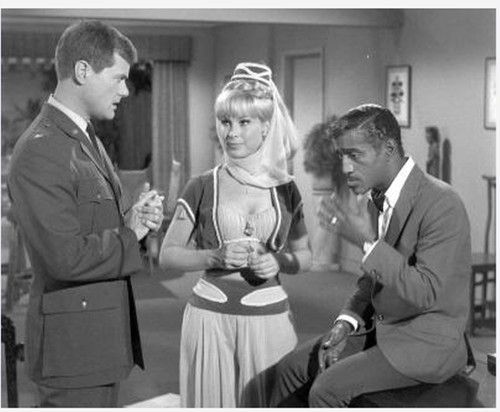
In 1967, he showed up on I Dream of Jeannie as himself. Tony tries to get Sammy Davis Jr to sing for General Peterson’s party. When he is already booked, Jeannie tries to help by duplicating himself, so he can be in two places at one time.

Davis also took a role in The Beverly Hillbillies in 1969.

Photo: tvinsider.com

The same year he took on his first of three roles on Mod Squad. His first role was a black priest who becomes the target of a bad guy after the church suspends him. The hood is afraid he will reveal his confession now that he no longer is part of the church. The next episode he appeared on was in the role of Billy Lee Watson, a recovered drug addict. He runs a half-say house and is accused of rape of a man’s daughter who he has been trying to help. Her father accused Billy of the rape and after investigating, it turned out Billy was her actual father.  The last episode of Mod Squad he appeared on in 1970 had Davis portraying Willie Rush and actor and friend of Linc’s. He says someone is trying to kill him.

Photo: tumblr.com

The 1970s continued to be a productive time for Davis on television. He would go on to appear in The Name of the Game in 1970, The Courtship of Eddie’s Father in 1972, nine episodes of Laugh-In, and like his friend Dean Martin, an episode of Charlie’s Angels in 1977. He plays himself on Charlie’s Angels. When he hosts a charity event that includes a celebrity look alike contest, an attempt is made to kidnap him. The Angels take on the job of his bodyguards and Bosley becomes his chauffeur.

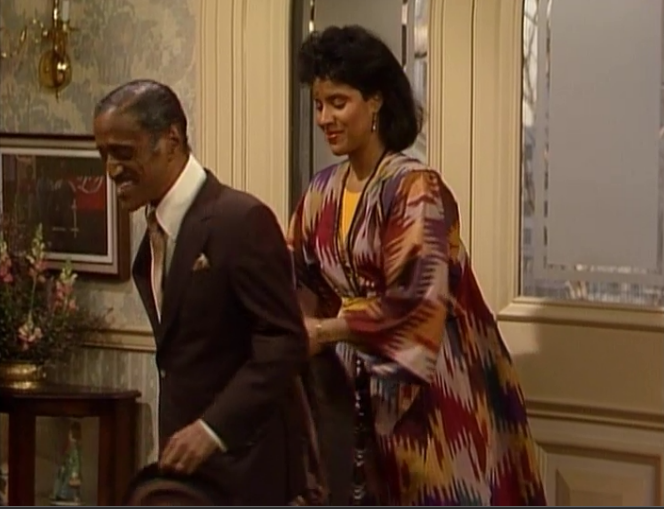
The 1980s were also busy times for him. He appeared as himself on several Norman Lear shows including Archie Bunker’s Place and The Jeffersons. He also could be seen on Fantasy Island, Pryor’s Place, Gimme a Break, The Cosby Show and Hunter in the 1980s.

Photo: atlantablackstar.com

One thing that surprised me was his roles on One Life to Live and General Hospital. I have seen a few stars like Carol Burnett who chose to appear on a soap opera. Davis had a recurring role on General Hospital; he didn’t seem to me to be the type of actor who would be interested in a soap opera, but he did receive an Emmy nomination for his role on General Hospital. Sammy was also nominated for an Emmy for his work on The Cosby Show.

While Joey Bishop hosted some of the Emmy Award shows, I did not find any nominations for the other members of the Rat Pack.

Photo: peoplequiz.com

Overall, I was surprised how extensive the television careers were for the Summit members. I think of them more in their performing or movie careers and did not expect them to see that they guest starred in so many shows and starred in some of their own television series. Check out some of these shows or make a batch of popcorn and watch the ensemble in the original Ocean’s Eleven.

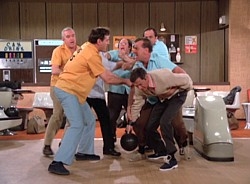
Get Ready to Be Bowled Over: The Greatest Bowling Episodes

Along with Labor Day this year, September 3 is Bowling League Day. It’s also a good reason for me to put together a list of my favorite bowling episodes. Bowling has been a staple on television since shows first started airing. Let’s look at a few of the best ones.

bowl22


Tom and Jerry

One of the first programs to be set in a bowling alley was Tom and Jerry in “The Bowling Alley Cat” from 1942. It was originally seen in theaters and later debuted on television. A play on the phrase “alley cat,” the animated show is directed by William Hanna and Joseph Barbera.

bowl2

This is a fun setting to watch the duo’s antics. Jerry hides in a bowling ball and then skates down the alley. Tom slips trying to catch him. Eventually Jerry makes it to the end of the lane and waves from behind a pin. Tom tries to throw a ball to hit him as Jerry has to jump behind different pins to keep from getting hit. Jerry bats one of the balls back to Tom using the pin as a bat. Tom’s thumb gets stuck in a ball as he tries to release it and he is propelled all the way down the lane. Quickly acting, Jerry pulls the pin setter down and Tom looks like one of the pins. Tom drops a ball on his foot at one point trying to get Jerry out of one of the holes. These escapades continue until Tom is sent down the alley again knocking over all the pins. Jerry hops onto the desk and records a strike on his scorecard.

bowl1


Ozzie and Harriet

In 1953, in an episode titled “Bowling Alley,” the Nelsons are sitting around the living room. David and Ricky decide to go play basketball. Ozzie and Harriet are discussing how many people have colds. Harriet thinks Ozzie is coming down with one. He feels fine, but then her friend Mary stops by. The girls decide to go to the Emporium shopping. When Harriet asks Ozzie to drive them, honest Ozzie feigns a cold to get out of taking them. His neighbor Thorny stops by and convinces him to go bowling because the high scorer for the day gets a case of Ginger Ale. It’s not Thorny’s night, and Ozzie beats him four games in a row,  winning a whopping $.20. Just as the guys are changing their shoes, Thorny spies Harriet, and they make a quick get-away. Relieved, they get home before her and no one is the wiser. Of course, Ozzie is the high scorer and the next day when the pop is delivered to the Nelson home, Ozzie confesses. He calls everyone he knows to brag about his achievement.  Harriet doesn’t have the heart to tell him that the high score was her game.


The Flintstones

One of the most famous bowling scenes is from The Flintstones’ third season, “Bowling Ballet.”  Wilma has her work cut out for her getting Fred off to his job. When the lunch whistle blows, Fred meets Barney to practice bowling. Fred feels he is out of rhythm and his timing is off. After driving into a fence, dropping a rock on a truck at work, and having a bowling ball hit his toe, he decides he needs help. Mr. Slate tells him the employees are betting double that his team will win the bowling championship. That night Fred sees a commercial for the Bedrock Dance Studio airing the promise to help someone get their rhythm back. Fred signs up for classes. A few days later, Fred calls in sick.  The girls spy him ballet dancing in the basement. Wilma assumes he’s been seeing another woman since he’s been gone every night. Betty promises that Barney will follow him that night to make sure it’s not another woman. When Barney calls Wilma and Betty to say Fred is dancing, they assume he’s with another woman and go to check it out. Fred’s secret is out. The night of the big championship, the team faces the Rockland Rockets. Fred’s first ball is a gutter ball.  Barney puts on some music so Fred can bowl while dancing ballet, and he gets a strike. The Water Buffaloes take home the first prize.


That Girl

That Girl’s “This Little Piggy Had a Ball” episode aired in 1967. The show begins with a group throwing their friend Sharon a surprise party for an award she won.  However, Sharon has been called to Hollywood for an audition, so she chooses Ann to accept the award for her. Don and Ann are supposed to go bowling, so Don agrees to write an acceptance speech for her while they’re there. While Don is writing, Ann reads a bowling magazine and reads an article about a man who bowls with his feet. While demonstrating, she gets her big toe stuck in the ball. No matter what they try, the bowl stays stuck. The owner throws away the magazine because Ann is the fourth person to get a ball stuck on their foot that week. He puts axle grease on her toe but nothing he does helps her. Ann is sure the fire department can help her. The crew was at a fire, and the underwater diver who was at the station cannot find a way to help her either. Ann makes Don take her to the hospital emergency room. The doctor she sees is convinced that his doctor friend set him up and this is a prank.  When he is convinced that she is a real patient, he diagnoses her with an excited toe and gives her muscle relaxers to help her toe come loose. She is supposed to take one every half hour but her neighbor Leon, an obstrician,  realizes she took three in the first hour and he decides to cut off the bottom half of the ball so there is a flat surface and put a cast over the the rest of it, so she can walk, and they sober her up. Rob Reiner and Terri Garr show up at the banquet as acting friends and give Ann a hard time about her cast. Sharon wins the prize, and when Ann goes up to accept the award, the ball and cast fall off.


The Odd Couple

In 1974 the question was “To Bowl or Not to Bowl.” Felix and Oscar’s bowling team, the Bon Vivants, are battling the Kingpins for the championship game. This is the first time in five years the Bon Vivants have had an opportunity to be in the final game. The episode begins with Oscar telling everyone they need to practice every night and complaining to Murray and Vinnie about how bad they were. Felix hates the pressure and quits the team. Oscar makes it clear he’s mad at Felix, and Felix tries to get him to talk it over. When Felix still says he won’t bowl, Oscar refuses to discuss it. The other team sticks to the rule that a bowler cannot be replaced. The next night, the boys play poker. Oscar decides to play without competition to teach Felix a lesson. Felix wins the round but since there is no competition, the next round goes back to even and no one wins any money. The guys discuss the fact that Felix always has an ailment when a competition is on the line. They decide his real problem is psychological. Murray brings a healer to talk to Felix whose back is hurting. After the guys leave for the bowling alley, Felix decides to go and bowl with the team. The other team is also short a man because on of their players is getting married, so they decide each of them can substitute someone but they can’t agree on two people they can use. Part way into the game both Felix and the groom show up to finish bowling with their teams. They are down to the final frame. Felix can win with his final ball, but as he gets ready to let it go, his back goes out and the teams start arguing. Felix lectures everyone. He rolls the ball down the aisle while laying down. He wins and the team is so excited they all run off so the losing team can buy them a drink, but they forget about Felix who can’t move and has to crawl off the lane.

bowl11


Laverne and Shirley

In another season 1 episode, “Bowling for Razzberries,” the girls are in the championship game in 1976. Laverne dislikes Karen, who gives tours at the brewery and torments her. Shirley convinces her to get even with Karen by beating her team at the company bowling night. Laverne coaches the girls about their abilities during practice. Laverne doesn’t criticize Shirley because she always over reacts and takes it personally. Shirley convinces Laverne to give her some tips and when she does, Shirley quits. Shirley realizes Laverne is coming down with a cold and tries to convince her not to practice with her fever. Leonard shows up with a pink ball and his fingers were stuck in there.  He made a comment about Karen’s body, and she slammed the ball on his hand. On the day of the championship, Carmine stops by to tell them he, Lennie and Squiggy bet on their team to win. Shirley calls the doctor to stop by and see Laverne. The doctor is young and good-looking. Laverne puts on lipstick while he scrubs up. He gives her some cold medicine and tells her she needs bed rest till Monday.  To keep Laverne inside, Shirley hides all her clothes while Laverne is sleeping and joins the team again. A sergeant comes collecting clothes for the needy. Laverne tells her she has no clothes, and the sergeant gives her her clothing, keeping her cape and hat. The Hot Shotz are playing the Big Shotz. Shirley finds and old lady from the brewery to fill in for Laverne. In order to participate in the game, Laverne decides to take the medication which leaves her muscles jerky. She shows up at the bowling alley in the sergeant’s clothing. Laverne gets worse as the night goes on. In the last frame, she needs six pins to win. Squiggy, Carmine, and Lenny carry her in her chair to the lane. She wins the game for her team but is too tired to tell Karen what she thinks of her. She asks Shirley to do it and Shirley congratulates her, using good sportsmanship. The next day, Laverne tries to convince Shirley to go to Karen’s house and give her the “razzberry” Laverne wanted to the night before. Shirley calls her on the phone and does so, making Laverne proud. There are a lot of similarities between this episode and The Odd Couple episode discussed above. That’s not too surprising since Garry Marshall produced both shows.


Ellen

In “Bowl, Baby, Bowl” in 1996, the cast ends up at the bowling lane. Paige and Spencer decide to meet at the bookstore since it’s located half way between the hospital and her studio. Before Paige gets there, Spencer gets called back to the hospital. To reward the employees for their good work at the store, Ed decides to take everyone bowling. Ed is very competitive and names his bowling ball “Rolling Thunder.” The rest of them are just there to have fun, and they goof around more than bowl seriously. They attract a crowd and in the last frame, despite her lack of skills, Ellen wins. After Ellen beats him, Ed gets mad. He cancels Ellen’s day off. When she tries to talk to him, he challenges her to a game of pool at his house the next day. That morning, Paige shows up at Ellen’s to surprise Spencer with breakfast. Before they can eat, Paige has to go to the studio and Spencer gets a page from the hospital. At Ed’s house, Ellen trash talks while playing pool.  Ed wins, but Ellen is a bad loser. The next morning at the bookstore, Ellen challenges Ed to who can drink the hot coffee the quickest.  After burning their mouths, they decide on a final game of bowling to break the tie. Ed’s young daughter Emily asks to bowl for Ellen in the final frame. After saying no, Ellen gives in and hands her the ball, talking about the fact that winning is not the important thing, how you play is. Emily granny rolls the ball and wins for Ellen. Ed and Ellen call a truce but when Ed’s wife takes the girls to the arcade, the game is back on as those two run to the arcade to beat each other. The show ends with Spencer and Paige finally getting some time together.


Modern Family

In “Knock ‘Em Down” in 2015, Jay agrees to sub for Cam’s bowling team. Cam conveniently forgets to mention that it’s an all-gay league. Cam wants to beat his nemesis Martin Sherman. Gloria and Mitchell are bragging about how late they will stay out since they are going out on a night on the town with Haley. Cam and Jay bet them $10 that they’ll be home before they are. As Mitchell and Gloria begin dancing, Cam tells them they’re dancing to the Antique Roadshow theme. When Cam tells Jay everyone has to be gay on the team, Jay says no one will ever believe he is gay. Martin approaches Cam and tells him he’ll beat him again and hopes to see Cam try to throw a chair that is bolted down like last year which hurt his back. Jay dislikes Martin and agrees to bowl. Martin questions Jay’s being gay, so Cam tells him to “up his gay game.” Cam tells Martin Jay is acting a bit weird because he has a crush on Martin. Jay really plays up to Martin to throw him off his game. Near the last frame, Martin tries to ask Jay out and he turns him down which keeps Martin from bowling well. After they win the game, Jay talks to Martin and tells him he turned him down because he’s not gay.  Martin thanks him for revealing it and then has Cam’s team disqualified.

Meanwhile, Phil can’t sell a house in the neighborhood because the house across the street has an obscene statue in the front yard. All the neighbors hate it, including the new neighbors whom Phil and Claire dislike. That couple ask Phil and Claire to go out to dinner, and they can’t find a nice way to say no. Phil and Claire consider the couple a bit “low class.” Phil and Claire are embarrassed that the neighbors they don’t like brought their own wine. But when they wave the waiter over for glasses and he takes it out of the bag, it’s a very expensive bottle that the restaurant doesn’t have. Then they mention their son is going to Julliard for piano playing and composing.  The neighbors say they can tie rope around the statue and haul it away. Phil gets in the car and tries to stop them. As he pulls off, he doesn’t realize he’s in reverse and he backs over the statue. A policeman stops by to talk about the statue; luckily Phil knows him and they aren’t questioned.

Meanwhile, Haley tells Gloria and Mitch that they can’t go out for a few hours because no one goes out till 10 and the band sometimes doesn’t go on till midnight. As Mitchell and Gloria wait to go out they are already falling asleep. They start dancing to stay awake. When Haley comes back with wristbands they are sound asleep. They get up and go to the club with her but realize they can’t stay up any longer and leave.


These episodes are a handful of the shows that aired during the 75 years between 1942 and 2015, but they are my favorites. Other shows that featured fun bowling episodes are Happy Days, Looney Tunes, Mike and Molly, Roseanne, The Big Bang Theory, and The Brady Bunch.

If you can’t find any of these great shows to watch today, gather a few of your friends together and get a game of bowling in. Have a ball! Just keep your toes out of it.

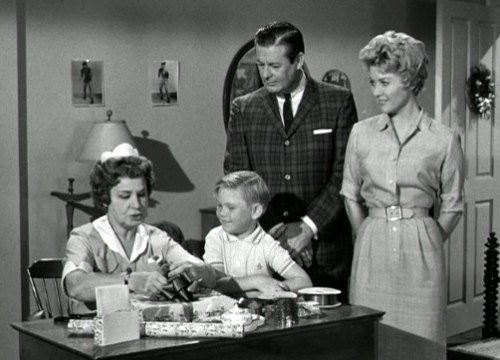
She Was Maid For TV: Hazel

June 4 is Old Maid Day, and what better way to celebrate than with Hazel, the show that Shirley Booth played an unmarried maid on.

hazel15

The show debuted in the fall of 1961. The sitcom was based on Ted Key’s cartoons which appeared in the Saturday Evening Post.

hazel1

Hazel Burke is a live-in maid for the Baxter family who consists of Dorothy (Whitney Blake), who Hazel calls Missy; George (Don Defore), who Hazel calls Mr. B; and their son Harold (Bobby Buntrock), who Hazel refers to as “Sport.” Hazel worked for Missy’s family and helped raise her, so they are very close. As an aside, Whitney Blake had previously been married to a Baxter and her real daughter was Meredith Baxter.

hazel9

Hazel was on the air for five seasons, producing 154 episodes. Hazel was 4th in the Nielsen ratings for its first year. By the end of Season 4, the show had fallen out of the top 30. Season 1 was black and white except for one episode. Hazel purchases a color television set. RCA owned NBC, which aired the show for the first four years, and this show seemed to be a blatant commercial for colored televisions. Beginning in Season 2, all the shows were filmed in color. The show moved to CBS for its final year. Shirley Booth won an Emmy Award for Best Actress in both 1962 and 1963 and was nominated again in 1964 when she lost to Mary Tyler Moore for The Dick Van Dyke Show.

In 1963, the NAACP threatened to boycott the show’s sponsor if a black member was not added to the cast and, two months later, the network announced a black production executive had joined the show.

hazeld

Hazel is more than a maid for the Baxters; she is family. We also get to know several of Hazel’s friends: the postman Barney Hatfield (Robert Williams), taxi driver Mitch Brady (Dub Taylor), and her best friend, Rosie Hammaker (Maude Prickett) who is also a maid. Apparently, there were a lot of maids in the city because Hazel was president of The Sunshine Girls, a club for maids.

hazel16

Hazel often stuck her nose into issues where it didn’t belong, but she “fixed” the situation in the end. She constantly frustrated George, who would try to put down his foot about an issue. She often would restrict his desserts to get her way or his wife would defend her cause, and he usually gave in.

George had more control at work where he was a successful lawyer at Butterworth, Noll, Hatch, and Baxter. However, Hazel often got involved in issues regarding his clients as well. She pre-empted his authority at work like she did at home, especially when the case involved Harvey Griffin (Howard Smith), one of George’s clients who spent a lot of time at the Baxter house.

hazel3

When the house and George’s work life were running smoothly, Hazel found issues to battle around the community.

The series was filmed at Columbia Studios in Hollywood. The house façade for the Baxter home was used in several Three Stooges films and was the Lawrence home on Gidget. The house next door was Darrin and Samantha Stephens home on Morning Glory Dr featured on Bewitched.

house1

Sammy Cahn and James Van Huesen wrote the instrumental theme song that played during opening of the show; and The Modernaires sang it at the closing for the first eight episodes in Season 1. Beginning with episode 9, the instrumental was the only version played in both the opening and closing credits. The lyrics were:

People love you everywhere you go Hazel.

Children cross the street to say hello, Hazel.

You charm every Romeo and Casanova,

It’s your personality that wins them over.

You may never be a millionaire Hazel.

Count your friends and you don’t have a care, Hazel.

You’ve got more than wealth untold,

You’ve got a heart of solid gold.

We love you, Hazel,

Just because you’re you.

When NBC ended the show after Season 4, CBS picked it up.  They changed most of the cast, keeping only Hazel and Harold.  The premise is that Dorothy and George are sent to Saudi Arabia for George’s career, so Hazel and Harold move in with George’s younger brother Steve (Ray Fulmer), his wife Barbara (Lynn Borden), and their daughter Susie (Julia Benjamin). A minor character was also added with Ann Jillian as Steve’s receptionist. The ratings were not high but were acceptable.  However, Shirley was ill and required a nurse on set. She decided she could not continue with the show, so Season 5 was its last.

cast

During its first four seasons, Hazel was sponsored by Ford Motor Company. Ford cars were often featured in the shows. The episode was the first show to display the Ford Mustang on television. Bristol-Myers came in as a cosponsor for Season 4, and when the show moved to CBS, Procter & Gamble and Philip Morris were the co-sponsors.

Unfortunately, most of the cast has passed away.

Bobby Buntrock, the youngest member, was the first to die. Only 21, he was in a tragic automobile accident involving a bridge in South Dakota in 1974. That same year, Booth retired to her Massachusetts home.  She passed away at age 94 in 1992 after suffering several health problems including blindness and a broken hip. The next year, Don DeFore died from a cardiac arrest at age 80. Whitney Blake died from esophageal cancer in 2002 at age 76, also living in Massachusetts. Lynn Borden passed away in 2015 after an extended illness. Julia Benjamin and Ray Fulmer are still alive.


Hazel gained a younger audience fan base in the 1970s and 1980s when it was seen in syndication. It currently can be seen on Antenna TV. The first season was released on DVD in 2006 and the last season was released in 2014.

hazel4

Hazel seems to be one of those shows that people love or hate.  I enjoyed watching Hazel in reruns, although I didn’t really care for the final year—it seemed to be working too hard to be fun. TV. Although, this show is not one of those that I watch with fond nostalgia, it is not as syrupy as some shows and better than many shows still on the air. I occasionally catch an episode on Antenna TV. If you want to check it out, Hazel is on daily at 11 EST. It also airs Saturday evening at 6:30 EST and at 8 am both Saturday and Sunday mornings.


Hi Bob!

There are several actors I find delightful; no other word quite fits. So, for the rest of this month, I thought it would be fun to get to know more about a few of them. Today we start with Bill Daily.

bill1

Bill was born in Des Moines, Iowa in 1928. His childhood was not innocent and carefree.  His father was in prison, and Bill only saw him once. He died when Bill was very young. Life with his mother and step-father was not a walk in the park either. He rarely spent time with his mother, and he described his stepfather as a “terrible person.” He spent a lot of time in Kansas City with his aunt and uncle who were great role models for him.

When Bill was 12, his family moved to Chicago and he attended Lane Technical High School.  Daily struggled in school because he had dyslexia, but he learned to use humor to make it easier. It started a pattern of using humor to overcome obstacles.

After school he decided to earn his living as a musician. He had learned to play the bass at a young age. He played with jazz bands all over the Midwest. He was drafted into the army and was sent to Korea with an artillery unit, but he later was transferred to an entertainment division. During the war, he met actor/musician Dick Contino, and the two would travel to various units giving shows. Contino would sing and play the accordion and Daily, who was an accomplished musician, would play the stand-up bass. He also developed a stand-up comedy bit.

Returning to the entertainment industry after his military stint, Daily began performing stand-up comedy. In 1949 Daily married his first wife Patricia Anderson. They adopted two children and divorced in 1976.

He enrolled at the Goodman Theatre School and worked for a Chicago NBC station, WMAQ as an announcer and a floor manager. When he was preparing for a Chicago-area Emmy Award broadcast, he asked an acquaintance Bob Newhart to develop a routine about press agents. That routine turned into “Abe Lincoln vs. Madison Avenue.”  He described Bob as a shy man and a comic genius. He referred to him as “the nicest man that ever lived. The nicest man I ever met. Great father . . . great kids . . . great wife.”

Daily became a regular guest as a comedian on The Mike Douglas Show which was produced in Chicago. Steve Allen saw him and brought him on his show as a comedian and sidekick.

daily14bewitched

In the 1960s, Daily began his television career. He appeared on Bewitched, My Mother the Car, and The Farmer’s Daughter. Sidney Sheldon liked his work and offered him a role of Major Roger Healey in the pilot of I Dream of Jeannie.

daily5

The role of Major Healey turned into a regular costarring role. The show was on the air for five years from 1965-1970.  Daily even got to write one of the episodes: “Jeannie the Matchmaker.”

daily17

In 1972 he appeared in Getting Together, a spin-off from The Partridge Family. He also was in The Mary Tyler Moore Show, and two episodes of Love American Style. That same year, he got the role of Howard Borden on The Bob Newhart Show. Borden was a pilot, naïve and a bit excitable but a true friend. The show was on the air from 1972-1978. When it ended, he went back to guest starring on television series including The Love Boat, Trapper John MD, and CHiPs.

daily3

In the mid-1970s, he became a semi-regular on Match Game, filling in when Richard Dawson left, appearing on 85 episodes. Daily described Charles Nelson Reilly as “brilliant.” He spent summers at Gene Rayburn’s home in Hyannis Port.

daily6

In 1977 Daily married for a second time. He met Vivian when they were both traveling and performing in Lover’s Leap. They had a daughter and divorced in 1980.

In 1985, Bill was offered his own show called Small & Frye. Daily played a neurotic doctor; unfortunately, the show only lasted three months before it was canceled. He tried another show of his own in 1988 called Starting from Scratch which lasted one season before getting the axe.

daily13

That would be his last regular series although he made four appearances on ALF as Larry the psychiatrist. ALF claimed to have learned about psychiatry from watching the Bob Newhart Show. Jack Riley, Elliot Carlin on Bob’s show, appeared as a patient on the show. Riley and Daily were friends from Chicago days.

I Dream of Jeannie continued to keep Daily busy as well. Two made-for-tv movies were made as sequels: I Dream of Jeannie . . . Fifteen Years Later in 1985 and I Still Dream of Jeannie in 1990.

daily16

Daily tried marriage for a third time in 1993. He and Becky were married until her death in 2010. I found it funny that the couple had a dog named Hi Bob, named for the line that he said over and over on the Newhart show.

daily2

Daily retired to Albuquerque. He was a weekly guest host on a radio station there from 2006-2009. He has also appeared in plays at Albuquerque Little Theater where several other celebrities have performed over the years.

In 2016 Gary Levine, a writer for the Naples Herald interviewed Daily by phone. Here is part of that interview:

“Daily explained that while he was capable and proficient at reading music, he was hurried to inform me of his inability to read.  Bill indicated that he struggled with Dyslexia and was unable to read without assistance.

At this moment, you are likely wondering how an actor, unable to read, can adhere to a script.

“I memorized them, with my daughter.”  As he and his wife found themselves unable to have children, the couple adopted two children, Patrick and Kimberley.  Kimberley has since passed away, however, Daily credits her with assisting him to read and learn his lines.  Patrick and Bill appear to be extremely close and reside near one another.  Patrick works in the film industry doing camera work on various films and productions.

“The scripts were brilliant,” he remarked, “but I couldn’t read.”  Daily continued, “I was so grateful that I was working.”

 Expectedly, the dialogue quickly transitioned to Barbara Eden.  Daily’s first adjective: ‘brilliant.’  He indicated that massive lines would form, desperate to see her, wherever they travelled.  “It’s her!  No one else could have played Jeannie.  Don’t bother trying.  I’ve tried many times.  There’s no one.  She had the look, the charm…she was sophisticated.  There was no one like her…ever.”

bill2

Bill Daily just seems like a great guy who would get along with everybody. He has played two endearing characters in Roger Healey and Howard Borden. He seems to be enjoying retirement and working with a local theater in Albuquerque. His sense of humor is quite apparent in all of his interviews. Most impressive is how kind he seems to be, especially dealing with such an unhappy childhood.

daily1