Dave Madden: A Magical Career

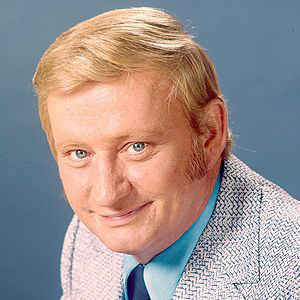
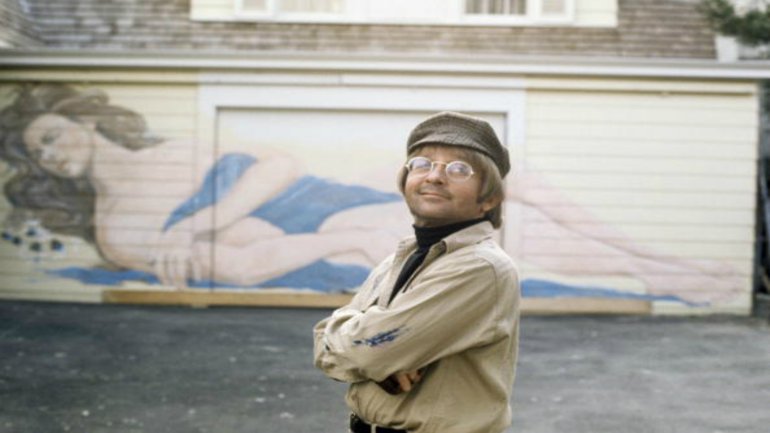
We are right in the middle of “The Men of November” series where we learn about some of our favorite actors from the classic age of television. Today we focus on a comedian who is best known for his role of a family band manager—Dave Madden.

Photo: discogs.com

Madden was an American born in Ontario, Canada in 1931. He spent his early childhood in Port Huron, Michigan and then was sent to live with his aunt and uncle in Terre Haute. His father had died and his mother had a job where she had to travel. When he was 13, he had a very bad bike accident which left him immobilized. He had a head-on collision with a car going about 45 mph. He broke his leg and fractured his skull. They pumped him with penicillin which saved his life. He was in the hospital for about three months because they had to keep breaking his leg. During the months he spent recuperating, he learned about magic from a book his aunt brought him called 101 Tricks You Can Do, and he later developed a comedy act that featured magic.

Appropriately enough, he served as the joke editor for his high school paper, writing his own material. He attended Indiana State Teachers College for a semester and then dropped out to enlist in the Air Force. He was assigned to Special Forces and sent to Libya where he entertained the troops. He even performed a magic show for the King of Libya.

When his time in the Air Force was over, he attended the University of Miami, majoring in communications and graduating in 1959.

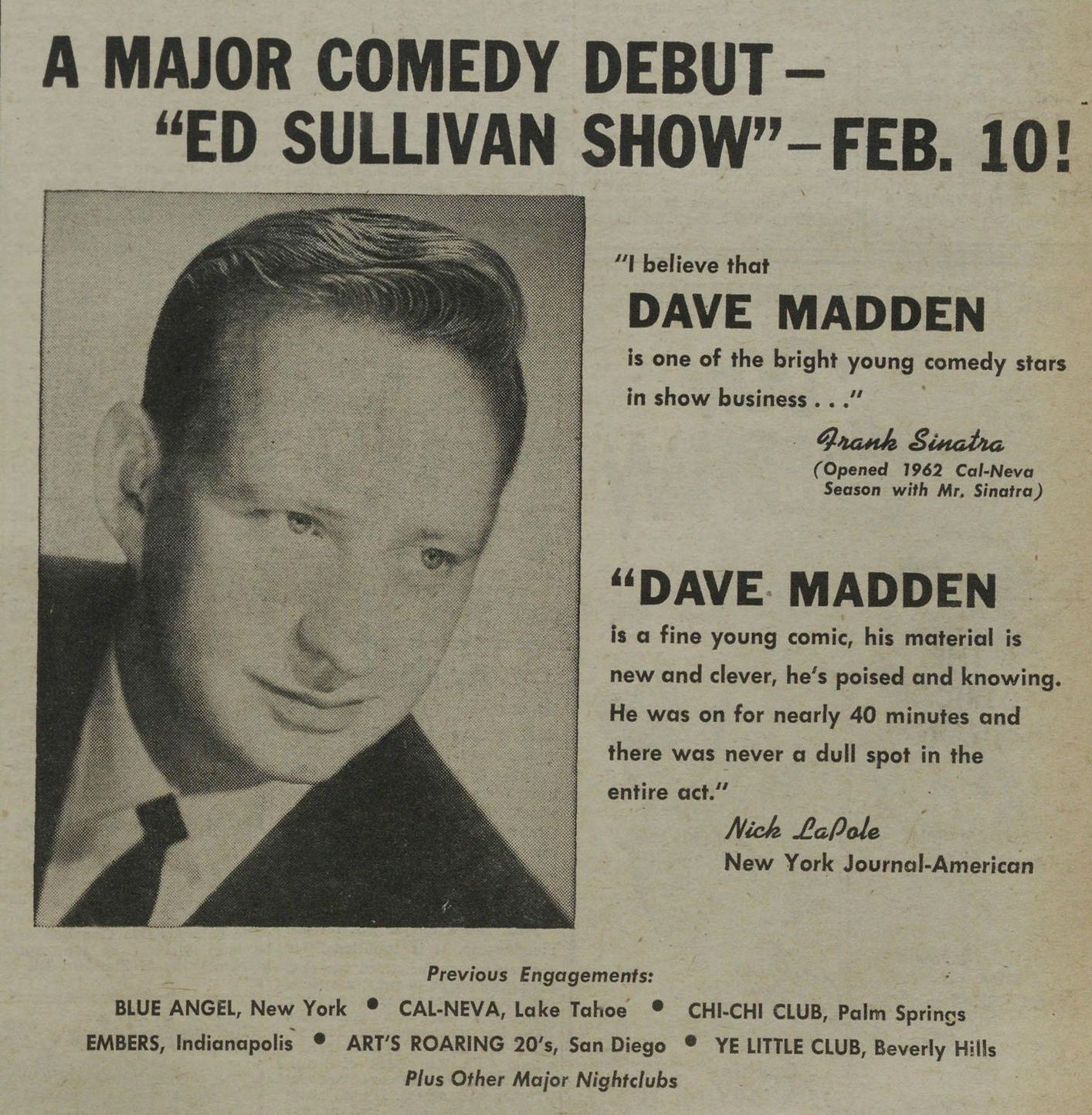
Madden took his comedy act on the road. His manager booked him in Palm Springs during the Palm Springs Golf Classic, and the Rat Pack came in one night. After the show, Frank Sinatra went backstage and asked if Madden would be his opening act in Lake Tahoe in July.

Tralfaz: The Unhappy Man With the Confetti
Photo: trafaz.com

He and Sinatra hung out and one night in his bungalow he said Madden should be on The Ed Sullivan Show and picked up the phone and called Ed in New York. That call resulted in Sullivan booking him for three episodes.

His manager had a club in Beverly Hills, The Ye Little Club, and he called Madden who was in town because his regular singer was sick. Madden helped him out, and a Screen Gems writer, Jerry Davis, was in the audience with Nat King Cole’s manager. Nat was Madden’s favorite singer and his manager asked if he would do an eight-week tour with him. Unfortunately, Cole died soon after and Madden never even got to meet him.

Photo: ebay.com

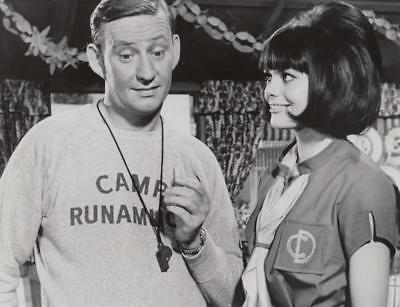
Jerry Davis called Madden and asked him if he was interested in filming a pilot which led to an offer for a regular role on Camp Runamuck which debuted in 1965. The show lasted a season with 26 episodes. Madden had never acted before, and he said it was a great experience. The show was primarily about the camp counselors. Madden met Dave Ketchum on the show and they became friends. Later, the role of Reuben Kincaid was narrowed down to Dave Ketchum and Madden.

Photo: dailymail.com

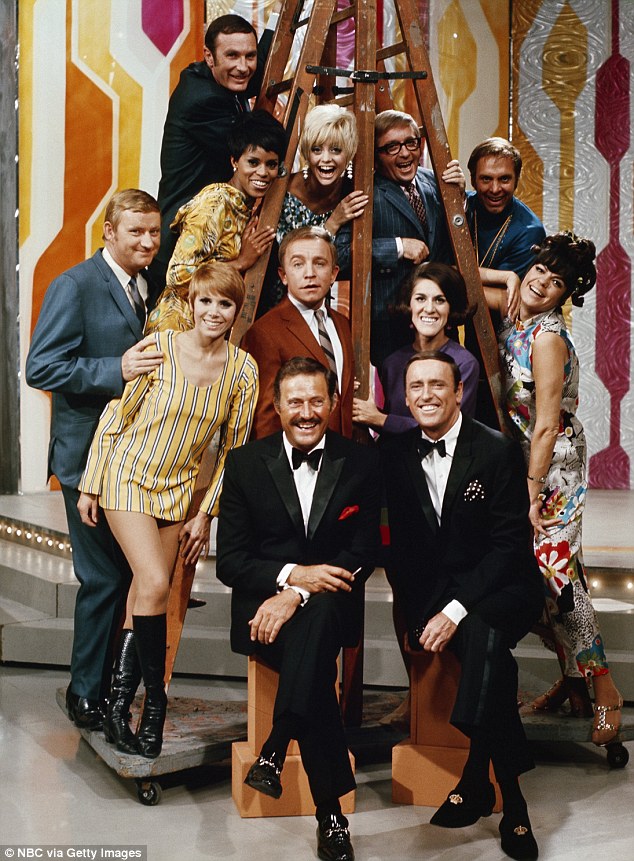
A year later, Madden was offered a spot on Laugh-In. Rowan and Martin had seen his act in Reno and invited him on the show. Madden said that filming the show was not much fun. He said apart from the opening and closing jokes and cocktail party, most of the segments were individual ones. He described a day where he might go in at 10 am, and there would be 2 cameramen, a director and a light man. He would film a dozen skits which would be shown over the course of the season. None of the rest of the cast would be there.  So, it was long and boring work.

Photo: washingtonpost.com

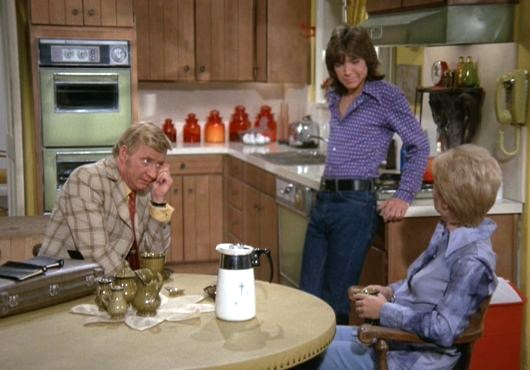
After two years with the wacky cast, he accepted the role that would make him a household name. As Reuben Kincaid, he managed the Partridge family on a new series based on the life of The Cowsills. The show aired Friday nights following The Brady Bunch and was on the air from 1970 till 1974.

Some of the scenes I loved the most on the show was when Reuben would lay on the couch to watch tv with the family or hold Shirley’s yarn while she knitted—just everyday family activities. Unfortunately, he and Shirley were not as close as they could have been because Madden and Shirley’s husband Marty Ingels did not hit it off.

Photo: jafosnews.com

Filming The Partridge Family was not always fun either. He said it could be very boring.  The cast might have three to four pages of scripts that take place in the dining room.  The whole family would sit around the table and they would have to change the lighting every time someone else spoke. He said you could arrive at 7 am and leave at 3 pm and never leave the dining room.

Photo:

While one of the running gags on the show was that Reuben and Danny had a battle of wits ongoing, in their personal lives, Reuben took Bonaduce into his home when his house was not a safe place. He said Danny’s mother was worried about Danny being home on the weekends when his father was home, so she asked Madden if Danny could stay with him at his bachelor pad on weekends. Madden said he didn’t drink and had small groups of people over, so it was not a problem to have Danny staying there.

Photo: starcasm.com

Madden said that he learned that The Partridge Family was cancelled because someone in his apartment building read it in the newspaper—a crummy way to learn you no longer had a job.

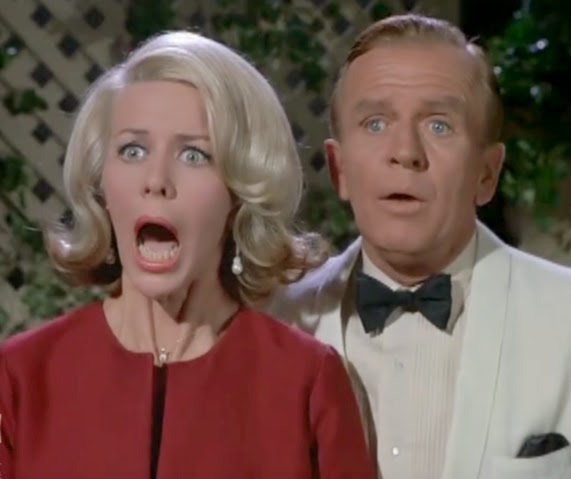
During this time period, Madden was on two episodes of Love American Style which was also part of the Friday night schedule and two episodes of Bewitched. When Madden recalled his time on Bewitched, he said he was with the same secondary actor for both episodes, Herb Ellis. He said that Elizabeth Montgomery was very gracious.

After the end of The Partridge Family, Madden appeared on an episode of Happy Days. In 1976, he would have a part in Eat My Dust!, a movie developed by Ron Howard who played Richie Cunningham on Happy Days. It was one of only two big screen features Madden was in. The other movie Madden had a role in was the family favorite, Charlotte’s Web in 1973. Madden was the voice of the ram.

In the late seventies, Madden could be seen on a variety of shows including Starsky and Hutch, Barney Miller, The Love Boat, and Fantasy Island.

In 1975, Madden took a break from his acting schedule to marry Nena Arnold. They had two children and divorced ten years later.

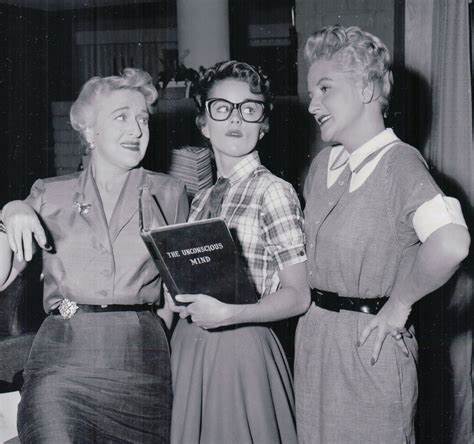
Playing Carrie Sharples on CBS-TV's... - Martha Raye Scrapbook ...
Photo: facebook.com

In the late seventies, he would be offered another recurring role. He began eating at Mel’s Diner on Alice from 1978-1985, as Earl Hicks. He was also Alice’s son’s basketball coach. The Hicks character was meant to be a guest shot, but the producers liked his interaction so much that he ended up doing 35 episodes. He really enjoyed working on the show because it was done before a live audience. He said it was like doing a one-act play every week. The cast rehearsed for a few days and then shot the show at one time.

In the late eighties, Madden also joined the cast of Focus on the Family’s Adventures in Odyssey. In 1990 he created his own character, curmudgeonly window washer Bernard Walton, which he would voice until 2008.

From 1970 or so on, Madden did a lot of voice-over work. When he had more time for it, it was very profitable. He said he made more money between 1985-1990 doing that then all four television series combined; he was making more than $250,000 a year just in voice work.

He stayed busy throughout the 1990s, showing up on The New Leave it to Beaver, Life with Lucy, Ben Stiller, Married . . . with Children, and Boy Meets World. His last credited role was on Sabrina the Teen-age Witch in 1998, where he appeared with other Laugh-In cast members.

He had another memorable event in 1998 when he married his former college girlfriend Sandy Martin.

🎼THE PARTRIDGE FAMILY - gallery - Season Two - 5/22/72, Susan Dey ...
Photo: pinterest.com

If you watched The Partridge Family, you might remember the episode where Danny and Reuben have a bet to see if Danny can lose weight and if Reuben can quit smoking. Madden was a long-time smoker in real life and that episode inspired him to quit, although he had been thinking about quitting for a while.

Madden had always been interested in cameras, buying his first one in the service.  He began to experiment with photography on the set of The Partridge Family. He said it was illegal to bring a camera to the set, so he began taking photos of the crew when they were filming away from the regular set. He then made gifts for the crew and then began filming the director. By that time, people were so used to him having a camera around, no one called him out on photographing the cast. He would bring his camera to work with him, taking photos of the cast and crew. It turned into a life-long hobby.

The Partridge Family 4x05 Reuben Kincaid Lives - ShareTV
Margaret Hamilton
Photo: sharetv.com

One of the benefits of working in the industry was meeting so many beloved actors like Lucille Ball. On The Partridge Family, Madden enjoyed working with Ray Bolger who played Shirley’s dad and Margaret Hamilton who played Reuben’s mother. He said he would chat with Ray between takes and hear stories from Hamilton about The Wizard of Oz. He said Hamilton was a real pro and they were both very nice people.

Tumblr
With Gale Gordon on Life with Lucy
Photo: tumblr.com

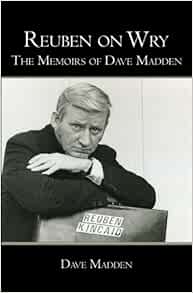
During retirement in 2007, he wrote his memoirs, Reuben on Wry: The Memoirs of Dave Madden.

Reuben on Wry: The Memoirs of Dave Madden: Madden, Dave ...

In January of 2014, he passed away in hospice care, suffering from complications of myelodysplastic syndrome, a disorder that results from poorly formed or dysfunctional blood cells.

For someone who began his first magic performance because of a serious injury and was hired for a sitcom without ever having acted, Dave Madden had a very fun and successful career. I must admit, I have many great memories of him as Reuben Kincaid. He seemed to be a very nice and easy-going individual who worked hard and enjoyed his life. You can’t ask for more than that. Thanks for the memories Dave Madden.

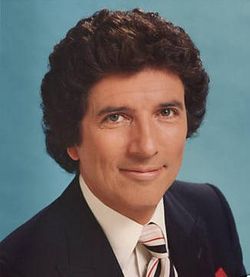
Bert Convy: A Multi-Talented Star

I’m calling this series “The Men of November.”  We are taking a look at five actors who contributed to television during the classic decades of the 1940s-1980s. I’ve decided to take them in alphabetical order so we are starting with Bert Convy.

Photo: findagrave.com

Born in St. Louis in 1933, Convy’s family moved to Los Angeles when he was seven.  His focus was athletics, not acting, in school. When he was 17, the Philadelphia Phillies gave him a contract to play in their minor league system which he did from 1951-1952. In 1951 he played for the Klamath Falls Gems (Oregon), and in 1952 he split his time with the Salina Blue Jays (Kansas) and the Miami Eagles (Oklahoma).

Once he realized baseball was not going to be his career, he joined The Cheers, who released a top ten hit called “Black Denim Trousers and Motorcycle Boots” in 1955. Convy opted to enroll at the UCLA School of Theater, Film and Television, earning a BA.

Photo: amazon.com

Like Ken Berry, he was a performer in the Billy Barnes Revues which was popular in the fifties and sixties. In 1956, he was an usher on Art Linkletter’s popular show House Party. He appeared in several early television series throughout the late fifties, including Those Whiting Girls.

In 1959 he married Anne Anderson. They had three children and were divorced in 1991.

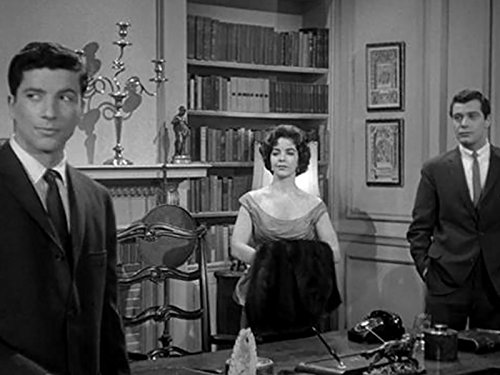
Perry Mason
Photo: imdb.com

He showed up on the small screen a lot during the sixties, primarily in detective shows including Perry Mason in 1960. His first feature role was in the big screen drama Susan Slade starring Troy Donahue and Connie Stevens in 1961. He also spent a part of this decade on Broadway in ten different productions.

Photo: imdb.com

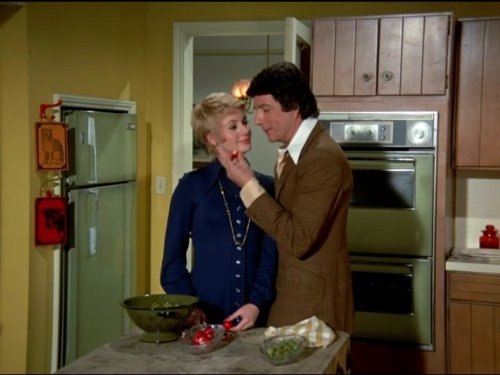
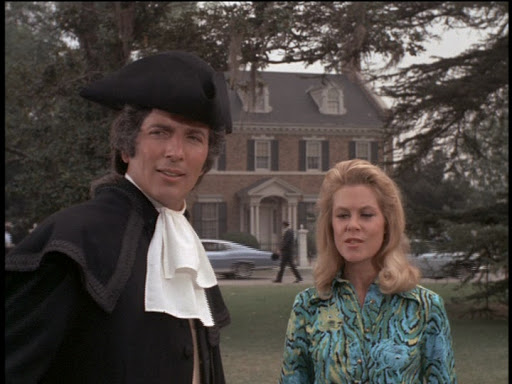
The decade of the seventies found him balancing roles in both detective (Mission Impossible, McMillan and Wife, Police Story and Charlie’s Angels among many others) and comedy shows (including Bewitched, Love American Style, and Karen). He appeared on The Partridge Family as a politician who dates Shirley. You get the distinct impression that they ended up together once the kids were out on their own. He also portrayed one of Mary’s boyfriends on The Mary Tyler Moore Show.

As Paul Revere on Bewitched
Photo: fanpop.com

He received his first recurring role in 1974, playing Lt. Steve Ostrowski on The Snoop Sisters. The show starred Helen Hayes and Mildred Natwick as two sisters, one widowed and one never married, who are mystery writers that also get involved in real murders.

Silver Scenes - A Blog for Classic Film Lovers: The Snoop Sisters ...
Photo: silverscenes.com

Two years later he starred in a short-lived variety show with the convoluted title of The Late Summer Early Fall Bert Convy Show. The title alone probably doubled the advertising budget. When I say short-lived, I mean I could only find one episode of the show which featured Don Knots.

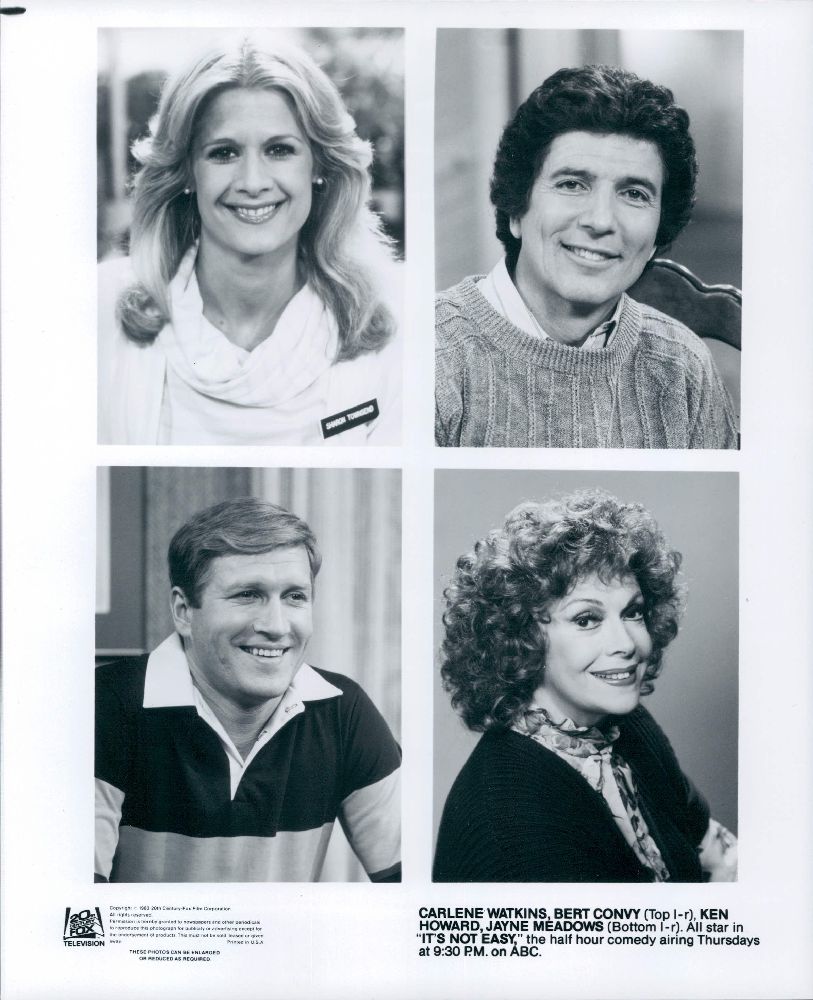
He was offered another permanent role in 1983 on It’s Not Easy. Originally Larry Breeding was given the role and made the pilot, but he passed away after a car accident. This show only lasted for 11 episodes. The plot is that Jack and Sharon have divorced. Sharon has remarried and she and her husband Neal (Convy) have decided to live across the street from Jack so it’s easier for the kids. Jack and Neal do not like each other.

Photo: sitcomsonline.com

He appeared in a few series during the eighties including Aloha Paradise, Fantasy Island, Murder She Wrote, Hotel, The Love Boat and The People Next Door.  

Cannonball Run Poster
Photo: moviemarket.com

While he would make ten big screen and fifteen made-for-television movies, two of them involved his buddy Burt Reynolds. Convy appeared in Semi-Tough in 1977 and Cannonball Run in 1981. The two friends developed a production company, Burt and Bert Productions.

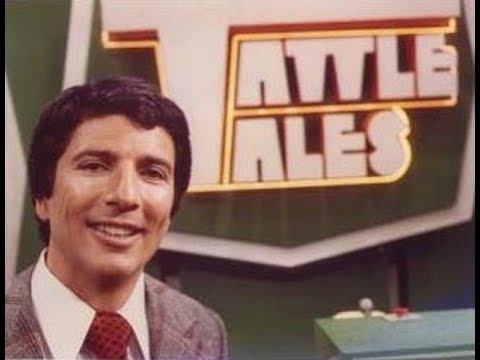
Convy was probably best known for his game show work. He was a panelist during the sixties and seventies on a variety of shows including What’s My Line, To Tell the Truth, Match Game, and Password. He hosted Tattletales, Super Password and Win, Lose or Draw. His emceeing of Tattletales resulted in an Emmy for Best Game Show Host in 1977.

Photo: youtube.com

In April of 1990, Convy collapsed and was diagnosed with cancer. The brain tumor was inoperable, forcing his retirement. His last credit was as himself on It’s Garry Shandling’s Show in 1990. He married his second wife Catherine Hills during the winter of 1991, and he passed away in July of 1991.

Sadly, Convy was never offered that perfect role that made him an icon, but he certainly had a full career. He had a lot of talents: acting, singing, and the personality to host game shows. I think it was his smile that always made him a favorite with me.

Bewitched vs I Dream of Jeannie: The Great Debate

Do you get a bit nervous when you see someone twitch or blink in public? If so, you probably have a bit of MSD, magic stress disorder. It comes from watching Bewitched and I Dream of Jeannie reruns. Today, I am attempting to settle the long-debated Jeannie vs Samantha question. Let me state first that I am not considering the “who is hotter” question. That argument has been going on for five decades and is a personal preference, so I’ll continue to let those people who care and have an opinion debate that issue. Also, both women could provide any wish, so it’s not about what they could do for someone else by blinking or twitching for say a million dollars.

Photo: pinterest.com

My goal was to decide, from a mortal perspective, who would be the better woman to have a relationship with, be it a spouse, best friend, neighbor, or PTA co-chair.

Photo: kiwireport.com

There were a lot of similarities in the two shows. Bewitched began in 1964 and ran till 1972. I Dream of Jeannie debuted in 1965 and was cancelled in 1970, but had its beginnings in the movie, The Brass Bottle, a 1964 comedy about a modern man who accidentally acquires the friendship of a long-out-of-circulation genie. It starred Burl Ives, Tony Randall, and Barbara Eden. In this version, Ives is the genie, and Eden is Randall’s girlfriend, but it gave Sidney Sheldon the idea for the television series.

Both shows had an animated opening and a great theme song.

Also, both shows center around a relationship where the woman has magic powers, and the man has to live with the consequences.

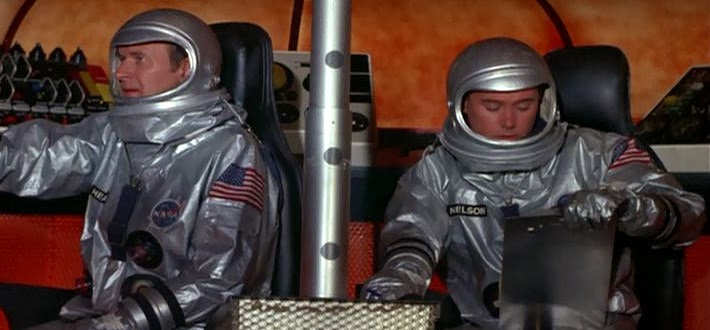
In the case of Bewitched, Darrin falls in love with Samantha and proposes before he learns she is a witch; with I Dream of Jeannie, Major Nelson finds Jeannie’s bottle on a beach after a space landing and then feels like he is “stuck” with her.

That said, let’s look at Life Issues, Friends and Family Issues, and Magic Issues to try to determine who would be the better person to have as part of your life.

Life Issues. In the area of life issues, I think most people would agree that Samantha understands life in the 20th century United States. Jeannie has to do some observing and reading to learn what that type of life means and different concepts confuse her, resulting in some uncomfortable situations for Tony.

Photo: youtube.com

Samantha lives a fairly normal life. She has taught herself to be a “regular” housewife. She cooks, cleans, and shops like her friends. Jeannie spends her days holed up at Anthony’s house, and no one can know she is there. Related to that is the fact that the majority of the time, Samantha wears the same type of clothing as everyone else in her community.

Photo: icollector.com

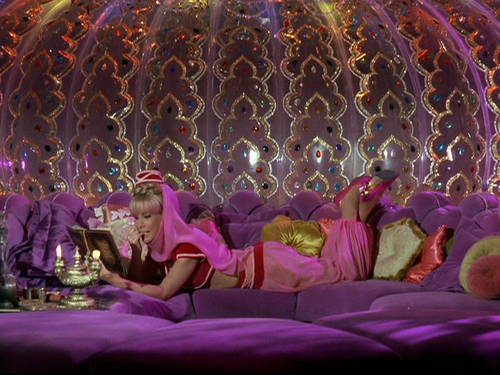
Jeannie does get to wear more fashionable clothing from time to time, but most of the time is spent in her pink harem outfit.

Another factor is how much damage could be done to their spouse’s career of to a friend or family member. Darrin is an advertising executive; really, there is not a lot of damage Sam can do. She can cause a client to leave the firm, but that’s not too significant. With Major Nelson being an astronaut, there are a lot of problems Jeannie can create when she pulls him into and out of outer space or causes NASA staff to question Tony’s reliability as an astronaut.

Photo: sayhellospaceman.blogspot.com

One of the biggest problems for Tony was Jeannie’s quick temper. While Samantha often was unhappy about certain things, Jeannie was a bit more vindictive. Samantha might cause someone who was being treated unfairly to acquire a skill they didn’t really have, usually a positive action. Jeannie was typically mad at Tony, and often the problem involved another woman, so Tony is the one who typically was put into a dangerous or complicated situation. She might send him to another century or put him in a torture chamber.

Photo: fanpop.com

A final life factor, which would have more repercussions in today’s social media age than in the sixties, is that Jeannie did not show up in photos. That meant she would have to blink a clone or add another complication like destroying the film to keep her invisibility a secret.

Photo: zcollector.com

There were a lot of family and friend matters that also come into play on this question. Samantha was not hidden from Darrin’s friends and family members, only her witchcraft was kept secret. That also became true for Jeannie after she and Tony Nelson married in the final season, but in the first four years there were often plots where Jeannie had to be explained or hidden, causing much confusion. Roger Healy did know of Jeannie’s existence which could be a positive or negative. Roger could help Tony keep her hidden or get Jeannie’s help when necessary, but occasionally he also caused problems by trying to get Jeannie to do things for him Anthony might not approve of.

Photo: sitcomsonline.com

Both women had to deal with another character who was suspicious and always on the lookout to get an “a-ha” moment. In the case of Bewitched, Gladys Kravitz knew there were some strange things happening at the Stephens’ household.

Photo: enterstageright.com

She was constantly trying to peek in the window or capture some evidence when things seemed not quite right. However, her husband Abner thought she was crazy and didn’t give any credence to her hare-brained schemes so she remained a harmless busybody.

Photo: fanpop.com

In Jeannie’s case, Dr. Bellows was a psychiatrist and was also alarmed at things he saw or learned about Major Nelson. His wife Amanda was a co-conspirator, often trying to help him learn the truth behind what was going on.

Family Issues. Both Tony and Darrin had to deal with some wacky and quirky relatives.

Photo: en.wikipedia.org

Tony was forced to obey some more powerful relatives who were fierce and could cause great harm; they often showed up to threaten Tony. Darrin was really only threatened by his mother-in-law Endora.

Photo: pinterest.com

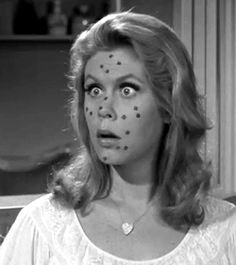
She often put a spell on him that affected his looks and made it hard for him to explain what was happening, but Samantha was always able to convince her to make things right. He was perhaps inconvenienced by some of her other relatives. Although he could be annoyed by them, we found them delightful and enjoyed hanging out with most of them, especially Uncle Arthur and Aunt Clara.

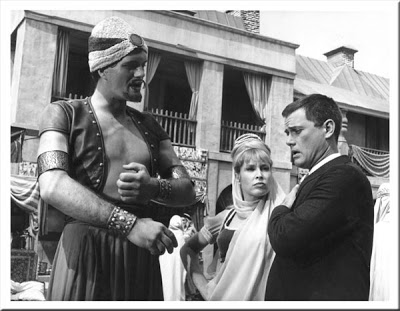
Two relatives that could cause some serious problems were Jeannie and Samantha’s “twins.” Jeannie had a sister that looked just like her except she traded blonde hair for black and a pink harem outfit for a blue one.

Photo: jerusalem.com

However, she could pretend to be Jeannie, and it was almost impossible to tell them apart. Sam’s cousin Serena looked a lot like her and also sported a black hairdo.

Photo: de.fanpop.com

However, Serena had a very different kooky personality and it didn’t take long to figure out who she really was. In Tony’s case, he could have been stuck with the other Jeannie for a long time without realizing it.

One other family concern was whether the children would follow in their mother’s footsteps. On Bewitched we did learn that both Darrin and Samantha’s children were a witch and a warlock which tripled the problems Darrin was living with. Since Jeannie and Tony never had children, we don’t know if they would have magical powers or not.

Photo: pinterest.com

Magic Issues. Both Jeannie and Samantha could come down with some strange illnesses related to their powers.

Photo: pinterest.com

While Jeannie often had to wait out the situation, Samantha had a personal physician available at all times, Dr. Bombay, who could usually cure her quickly.

The last question involves twitching versus blinking. Samantha’s magic was accomplished by sometimes raising her arm, but typically she twitched her nose. Jeannie would fold her arms over each other and lower her head while blinking. The two issues with their methods are that Sam’s magic was more subtle and if she turned just right, no one noticed what she was up to.

Photo: tumblr.com

Not only was Jeannie more obvious but if her arms were broken, she would have been helpless, as she mentions in one episode. It would be less likely for a nose to be broken, but not impossible, at least according to Marcia Brady.

One last magical issue was that Tony could in fact ban Jeannie to her bottle. Since he was her master, she had to obey him and even if she refused, once she was in her bottle, a cap could keep her there. Samantha was an equal partner with Darrin and there were no consequences for her that were any different from any other marriage. She was free to come and go and send him to the couch for the night when they had a disagreement.

Photo: blazenfluff.com

So, after reflecting on these issues, what is the determination? Jeannie definitely caused more problems, but she could be banned to the bottle. Samantha was more helpful, but her family caused Darrin a lot of stress.

Photo: pinterest.com

I guess I would have to say from my perspective at least, Samantha would be the person I would rather be friends with. Jeannie often misinterpreted situations or caused more problems while trying to make things better. She also had a temper that caused her to be blinking before thinking.

Photo: pinterest.com

With Samantha you could have a normal friendship without being subjected to any weird circumstances, and if you did get involved in something outlandish, she had the ability to freeze time till it got back to normal or put a spell on you to forget that you saw or heard anything abnormal. Whether you agree or disagree, I’d love to hear your thoughts.

The Smothers Brothers Comedy Hour: Fifty Years After Getting the Pink Slip

The late 1960s and early 1970s might have contained the most diverse television shows than any other era. In 1968, there were the rural comedies like Green Acres and The Beverly Hillbillies; there were the standard sitcoms, My Three Sons, Get Smart, That Girl, Bewitched; there were the remains of a few westerns including The High Chaparral, The Virginian, and Gunsmoke; there were crime and thrillers such as Hawaii Five-0 and Mission Impossible; there was the crime/western in The Wild, Wild West, there were gameshows on at night including Let’s Make a Deal, The Dating Game, and The Newlywed Game; there were sci-fi shows like Star Trek and The Land of the Giants; family shows like Lassie; and even Lawrence Welk.

In addition, there were a couple of shows that were a bit edgier and introduced more  provocative concepts and themes. The Mod Squad featured three teens who were helping solve crimes in lieu of jail time, and then there was the almost-impossible-to-describe Laugh In.

Photo: neatorama.com

Similar to Laugh In was The Smothers Brothers Comedy Hour which also debuted in 1967 featuring Tom and Dick Smothers. It had more of a variety format to it but it had the same topical and satirical humor.

Photo: retrokimmer.com
The Who

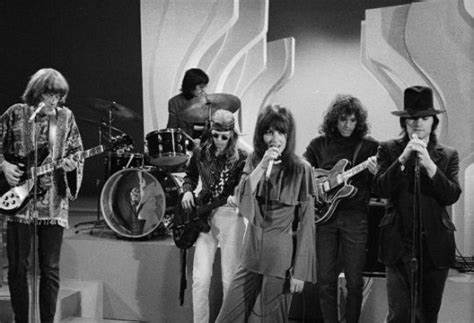
In addition to poking fun at politics, the war, religion, and current issues, you could tune in to the Smothers Brothers for some of the best and sometimes controversial music in the industry. Performers such as Jefferson Airplane, Steppenwolf, Simon and Garfunkel, The Who, Cream, Pete Seeger, and The Doors appeared on the show.

Photo: metro.com
Jefferson Airplane

The show aired Sunday nights against Bonanza on NBC; ABC aired The Sunday Night Movie in its first season and Hee Haw in its second season.

The series had some of the best writers on television: Alan Blye, Hal Goldman, Al Gordon, Steve Martin, Lorenzo Music, Don Novello, Rob Reiner, David Steinberg, and Mason Williams. Reiner and Martin both commented on the show in an interview by Marc Freeman in the Hollywood Reporter 11-25-2017 (“The Smothers Brothers Comedy Hour at 50: The Rise and Fall of a Ground-Breaking Variety Show”).  

Reiner relayed that “you had two cute boy-next-doors wearing red suits, one with the stand-up bass and the other with his guitar. They looked like the sweetest, most innocent kids. You got drawn to them, and then they hit you with the uppercut you didn’t see coming.”

Photo: tvbanter.net

Martin elaborated “When you have the power wrapped up in innocence, it’s more palatable. They were like little boys, but you also had Dickie there to reprimand Tommy when he would make an outrageous statement. It’s like the naughty ventriloquist dummy who can get away with murder as long as the ventriloquist is there to say ‘You can’t say that.’ It’s the perfect setup for getting a message across.”

Photo: pinterest.com
Jack Benny

In addition to the musical acts, hundreds of celebrities appeared on the show between 1967 and 1969, including Jack Benny, Carol Burnett, George Burns, Bette Davis, Jimmy Durante, Barbara Eden, Nanette Fabray, Eva Gabor, Shirley Jones, Don Knotts, Bob Newhart, Tony Randall, Ed Sullivan, Danny Thomas and Jonathan Winters, along with so many others.

Part of the show was the brothers’ ongoing sibling rivalry about whom their parents liked best. They also began to add political satire and ribald humor. Pat Paulsen delivered mock editorials about current topics such as the draft and gun control, and in 1968 he had a mock presidential campaign.

Photo: rollingstone.com
Pat Paulsen for president

Church sermon sketches poked fun at religion. The show lampooned many of the values older Americans valued, often delivering anti-establishment and pro-drug humor. No one was given an exception, and the show lambasted the military, the police, the religious right, and the government.

Battles over content were ongoing with the network. The network pulled Pete Seeger’s performance of his anti-Vietnam War song, “Waist Deep in the Big Muddy.” They nixed Harry Belafonte’s song, “Don’t Stop the Carnival” because it had a video collage behind him of the 1968 Democratic National Convention riots.

Younger viewers were tuning in, and despite the conflicts, the show was picked up for a second season. The network insisted they receive a copy of the show at least ten days in advance for editing. In April of 1969, William Paley canceled the show without notice. Some sources contend it was canceled by CBS president Robert Wood. Some sources cite the issue with unacceptable deadlines and others mention Tom Smothers lobbying the FCC and members of Congress over corporate censorship that brought about the firing. The brothers filed a breach of contract suit against the network and after four years of litigation, a federal court ruled in their favor, awarding them $776,300.

Photo: blogspot.com

Here’s a typical joke from the show that was not as controversial.

Tom: You can tell who’s running the country by how much clothes people wear, see?

Dick: Do you mean that some people can afford more clothes on, and some people have . . . less on? Is that what you mean?

Tom: That’s right.

Dick: I don’t understand.

Tom: See, the ordinary people, you’d say that the ordinary people are the less-ons.

Dick: So, who’s running the country?

Tom: The morons.

The Smothers Brothers elicited humor that was as topical, influential, and critical as anyone had ever heard before on television. Fifty years later, both the network and the brothers realized everyone over-reacted. If the Smothers Brothers had tried to play by the rules a bit, they would not have lost their platform to continue to help change what they saw as a messed-up culture.

Photo: Wikipedia.com

The CBS executives felt the program created too much controversy. In their defense, politicians, especially Lyndon Johnson and Richard Nixon, exerted a lot of pressure on the network. Remember this was a time of three networks and ads are what produced the profits to fund shows. The network received a boatload of hate mail daily about the program and, when viewers begin talking boycotting advertisers, executives sit up a bit straighter and listen.

The Smothers Brothers Show, a less controversial series, debuted in 1975. They had two specials on NBC later and another CBS series in 1988 but never regained the influence they had in the sixties. However, the show did help pave the way for a future that permitted, and later embraced, shows with controversy beginning with All in the Family, continuing with Saturday Night Live, and recently seen on shows such hosted by Jon Stewart and Stephen Colbert. Although the comedy spouted on the show would seem quite tame by today’s standards, the show had an important part in the history of television and the rights of free speech.

Photo: wvxu.com

I have seen some DVDs out there from this show, but they are pricey. Recently I saw season two going for $190. I do see Laugh In on Decades quite often, so perhaps The Smothers Brothers might show up somewhere too, although I’m not sure this show would hold up as well as Laugh In, but the musical performances would be fun to see.

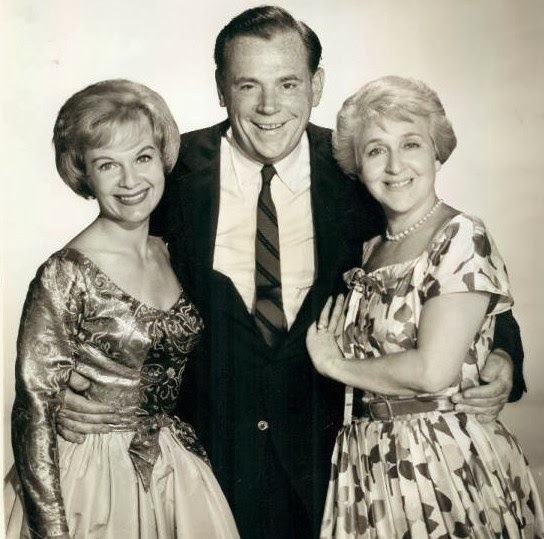
Mabel Albertson: What a Character!

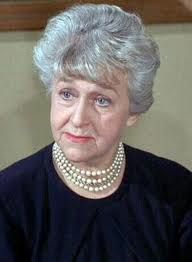
As we wind up our What a Character series, it seemed fitting to end with Mabel Albertson, perhaps the most recognizable of our character actors. She is often remembered for playing the mother of well-known characters. Mabel was born in Massachusetts in 1901. Her mother, who was a stock actress, helped support the family by working in a shoe factory. Mabel’s brother Jack would also become a famous actor.

Photo: pinterest.com

Mabel knew she wanted to get involved in the entertainment business at a young age. When she was 13, she played the piano for $5 a performance. She graduated from the New England School of Speech and Expression.

Albertson began working in stock, vaudeville, and night clubs and appeared with Jimmy Durante. Eventually she moved to California where she became involved with the Pasadena Playhouse where Charles Lane got his start.

Photo: youtube.com

Mabel married Austin Ripley, and they had a son in 1926, but their marriage soon dissolved. Mabel decided to pursue a career in film. Although she would have credits for 27 movies during her career, her film career was not what she hoped for. So, she switched gears and tried out radio. During the 1930s, she co-starred with Phil Baker on The Armour Hour and from 1936-37, she was in Dress Rehearsal with Pinky Lee. She also did some writing for the show.

photo: imdb.com
All The Fine Young Cannibals

In 1937 Mabel married writer Ken Englund who adopted her son George. He began writing for Paramount Pictures and later would be hired by RKO, Columbia Studios, 20th Century Fox, and The Samuel Goldwyn Company.

Photo: pinterest.com
Burns and Allen

Although her husband’s career was made on the big screen, her career really took off when television made its appearance. Her first role on the small screen was on the Chevron Theater in 1952. During the 1950s, she appeared in 21 different shows. Although many of her roles were on the playhouse and theater shows, she also showed up on Burns and Allen, Topper, December Bride, Bachelor Father, Jack Benny, and Have Gun Will Travel. In 1955, she was offered a role in Those Whiting Girls. She played the girls’ mother. The show was on the air until 1957.

Photo: sitcomsonline.com
Those Whiting Girls

Mabel became the “face” of television sitcom mothers. She played Phyllis Stephens, Darrin’s mother on Bewitched and often said “Frank, take me home, I’m getting a sick headache.” Her husband wrote several Bewitched episodes (season 1, episodes 25 and 30).

Photo: pinterest.com
Bewitched

She played Mabel, Paul Lynde’s mother-in-law on The Paul Lynde Show; she was the mother of Marilyn’s boyfriend on The Munsters, as well as Alice’s mother on Bob & Carol & Ted & Alice. Fans of That Girl will remember her as Don Hollister’s mother, and she was seen on The Andy Griffith Show as Howard Sprague’s mother. Her last mother role was on the New Dick Van Dyke Show as his mom.

Photo: jacksonupperco.com
That Girl

Her most successful years were the 1960s when she appeared in 39 television shows, including Perry Mason; Ben Casey; My Three Sons; Hazel; Ozzie and Harriet; The Wild, Wild West; Daniel Boone; Gomer Pyle USMC; Love American Style; and Gunsmoke. A review for her performance on Gunsmoke is posted by jlthornb5110 on imdb.

The review states that her role of Kate Heller is one “of the standout episodes of the series with Miss Mabel Albertson giving what is nothing less than the performance of a lifetime. Beautifully written by Kate Hite, this is a powerful presentation and one in which Albertson truly shines. The climax is absolutely soul shattering and among the most dramatically emotional ever filmed for television. Miss Albertson plays it with a sensitivity and an incredible insight you will never forget. The character of Kate Heller is heartbreaking but quietly strong, a survivor of the psychological brutality of loneliness in the old west and the violence that was part of existence. Mabel Albertson gives the character everything she has within her, brings her to life, and makes her one of the most unforgettable personalities to ever appear on Gunsmoke or any other television series in history.”

Photo: cscottrollins.blogspot.com
The Tom Ewell Show

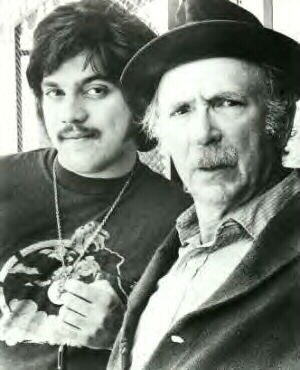
She was offered a role as a permanent cast member in The Tom Ewell Show in 1960. The premise of the show is that real estate agent Tom Potter played by Ewell must learn to live in a household of females including his wife, his three girls and his mother-in-law Irene played by Albertson. Even their dog, Mitzi, was a girl. Although Mabel’s brother Jack would be best remembered for his role on Chico and the Man, he appeared on this series with his sister in 1960. The series aired 32 episodes before it was canceled.

Photo: findagrave.com
Jack Albertson

I’m not sure where she found time for Broadway during this decade, but she was in The Egg in 1962 and Xmas in Las Vegas in 1965.

While her career began to slow down in the seventies, she was still quite busy, appearing in The Doris Day Show, Ironside, Marcus Welby, and The Mary Tyler Moore Show, among others. She appeared in an episode of Arnie with her brother in 1970. She also worked with her daughter-in-law, Cloris Leachman, in the movie Pete and Tillie in 1974.

Photo: pinterest.com
Frank, I feel a headache coming on

Her family continued to attract talented actors. Her granddaughter-in-law was actress Sharon Stone.

In 1975, Mabel was forced to retire. Her memory was beginning to fail, and she was later diagnosed with Alzheimer’s Disease. She passed away from the illness in 1982.

Photo: pinterest.com

Like Milton Frome, I was both sad and disappointed to learn how little information there was about Mabel Albertson. I thought I would learn more about her working relationships considering she had a fifty-year career and played iconic mother roles on so many well-loved shows.

As we wrap of this edition of What a Character! series, my hope is that you recognize and acknowledge these actors when you see them when tuning in to your favorite classic shows and remember how much they contributed to our television history. Personally, to keep Mabel’s memory alive, I think any time we are having a family situation, I will turn to my husband and whisper, “Frank, take me home, I’m getting a sick headache.”

Milton Frome: What a Character!

As we continue looking at some of our well-known character actors, today we consider the career of Milton Frome. Frome was born in Philadelphia in 1909. He began acting in his mid-20s.

Photo: watchviooz.com

His first major movie role was in Ride ‘em Cowgirl in 1939. Frome would go on to appear in 55 movies (including The Nutty Professor, Bye Bye Birdie, and With Six You Get Eggroll), as well as five made-for-TV movies. He also had a thriving television career beginning with Chevrolet Tele-Theatre in 1950.

Photo: amazon.com

Appearing in 34 different shows during the fifties, he performed in a variety of genres including dramas, comedies and westerns.

Photo: jimnolt.com
The Adventures of Superman

During that decade you would have seen him on I Love Lucy, Lassie, The Adventures of Superman, Playhouse Theater, The Thin Man, and The Gale Storm Show. He also worked with many comic legends on television, including Milton Berle, Red Skelton, and Dean Martin and Jerry Lewis.

Photo: tumblr.com
I Love Lucy

His career escalated in the sixties when he would accept roles in 48 programs. He showed up in dramas, including The Twilight Zone, 77 Sunset Strip, and Dr. Kildare. He also found his way into many westerns such as Bat Masterson, Death Valley Days, Gunslinger, Big Valley, Rawhide, and Wagon Train. However, he seemed to excel at comedies and during the 1950s you could have spied him in many sitcoms. He accepted parts in Bachelor Father, Pete and Gladys, The Jim Backus Show, The Dick Van Dyke Show, Mister Ed, The Joey Bishop Show, I Dream of Jeannie, My Favorite Martian, The Donna Reed Show, Gomer Pyle USMC, Bewitched, The Monkees, The Patty Duke Show, Petticoat Junction, and The Andy Griffith Show.

Photo: coolcherrycream.com
The Monkees

Frome was never offered a permanent role in a series, but he did have a recurring role in The Beverly Hillbillies, appearing eight times as Lawrence Chapman, who managed Jed Clampet’s Mammoth Studios.

Photo: imdb.com
St. Valentine’s Day Massacre

His television career slowed down a bit in the 1970s and became nonexistent by 1983, but he did make appearances in shows like Ironside, Columbo, Here’s Lucy, The Streets of San Francisco, Sanford and Son, and Trapper John MD. He also appeared in two Love American Style episodes in 1971 and 1973. In the 1973 episode, “Love and the Anniversary,” he played “The Man” and his son Michael played a bellhop.

Photo: sitcomsonline.coom
The Jerry Lewis Show

At some point, Frome married Marjorie Ann Widman, but I could not verify when they married. I also could not verify if Michael was their son, or his son from another relationship.*

Photo: batman.wikia.com
Batman

Frome passed away in 1989 from congestive heart failure.

While it is now easy to analyze and detail an actor’s professional career, it was very tough to find any information about Frome’s personal life or his working relationships with other actors. It makes me sad that these hard-working actors who provided so much to our classic television-watching experiences are just not well known. Hopefully blogs like mine keep them in television viewers’ memories, and some day maybe I will have time to write a book about these unsung heroes of our pop culture history. Thanks for all you contributed to the golden age of television Milton Frome!

*In June of 2021, I heard from Jane Wallace Casey who provided some additional information for us: “I am Milton Frome’s niece. His first wife was Barbara Wallace with whom he had his son Michael.”

Charles Lane: What a Character!

My blog theme for this month is “What a Character!” I am looking at the careers of four successful and hard-working actors. With 372 acting credits, perhaps there was no more prolific character actor than the beloved Charles Lane. He perfected the grumpy sourpuss always ready and gleeful to make life more complicated for others. His bio on imdb.com captures his type perfectly as the “scrawny, scowling, beady-eyed, beak-nosed killjoy who usually could be found peering disdainfully over a pair of specs, brought out many a comic moment simply by dampening the spirit of his nemesis.”

Photo: pinterest.com

However, despite that, we always knew there was more to him, and that his real persona was being covered up by his crotchety outward characteristics. His character Herman Bedloe on Petticoat Junction portrayed this dual-personality perfectly. Bedloe was always trying to shut down the train, but we knew he actually liked the Bradley family, and occasionally you would get a glimpse of the lonely and soft-hearted side of him.

He was born Charles Gerstle Levison in San Francisco in 1905. His family survived the 1906 earthquake. His father was an insurance executive, and Charles would follow in his footsteps for his first career.

Photo: newsfromme.com
The Music Man

A friend, actor Irving Pichel, convinced Lane to try his hand at acting, and Lane joined the Pasadena Playhouse in the late 1920s. His first movie was City Girl in 1930, and his last was Acting on Impulse in 1993. During those six decades he had a successful career in both television and Hollywood. In 1933, Lane became one of the founding members of the Screen Actors Guild (SAG). In that year alone he made 23 films. There was an anecdote told about Lane that it was not uncommon for him to go to a movie, see himself on screen, and be surprised because he completely forgot he had been in the film. Starting out at $35 a day, by 1947 he was earning $750 a week.

His longest-running role was husband. In 1931 he married Ruth Covell; the couple had two children and were married until her death in 2002.

Photo: pinterest.com
It’s a Wonderful Life

Perhaps most people recognize Lane from his role of rent collector for Henry Potter in It’s a Wonderful Life. Capra signed Lane to roles in ten of his movies. Lane was a corrupt attorney in Mr. Deeds Goes to Town (1936), an IRS agent in You Can’t Take It with You (1938), a newsman in Mr. Smith Goes to Washington (1939), a reporter in Arsenic and Old Lace (1944), and Blink Moran in State of the Union (1948). Among his most-cherished possessions was a letter from Capra where he wrote “Well, Charlie, you’ve been my No. 1 crutch.” Other popular films he was in include The Ghost and Mr. Chicken; It’s a Mad, Mad, Mad, Mad World; and The Music Man.

Photo: blogspot.com
You Can’t Take It with You

During World War II, Lane joined the Coast Guard. When he returned to civilian life, his television career took off. His first role was on Burns and Allen in 1951. During the 1950s, he appeared in more than 30 shows including Topper, The Thin Man, Perry Mason, and The Ann Sothern Show. He was often seen on Lucille Ball shows. He and Lucy had become friends when they both worked for RKO, and he had a great respect for Desi Arnaz’s acting ability.

Photo: imdb2freeforums.net
I Love Lucy

During this decade he was cast on the show Dear Phoebe in 1954. Peter Lawford starred in the show as a former college professor who writes an advice column under the name Miss Phoebe Goodheart. Meanwhile, his romantic interest is Mickey Riley portrayed by Marcia Henderson, the paper’s sports writer. Lane took on the role of Mr. Fosdick, their boss.

Photo: blogspot.com
The Andy Griffith Show

The 1960s found him on almost every popular show of that decade. Tuning in to your favorite series, you would spy Lane on Bachelor Father, Pete and Gladys, Mister Ed, The Andy Griffith Show, The Joey Bishop Show, Get Smart, The Bing Crosby Show, The Man from UNCLE, The Donna Reed Show, Green Acres, Bewitched, and The Wild, Wild West, among many others.

Photo: sitcomsonline.com
Gomer Pyle USMC

Lane had recurring roles on five shows during the 1960s. On Dennis the Menace, he was the pharmacist Mr. Finch. He also could be seen on his friend’s series, The Lucy Show as Mr. Barnsdahl, a local banker. The Phyllis Diller Show had a cast that should have made it a hit and from 1966-67, Lane played Maxwell. Although many characters appeared on both The Beverly Hillbillies and Petticoat Junction, Lane had two different roles on the two series. He appeared in 24 episodes of Petticoat Junction between 1963-1968 as Homer Bedloe, a railroad executive who is always trying to find a reason to shut down the Cannonball. On the Beverly Hillbillies, he portrayed Foster Phinney.

Photo: filmstarfacts.com
Petticoat Junction

Lane continued with both his movie and television appearances throughout the 1970s, taking roles on The Doris Day Show, The Odd Couple, Family, Rhoda, Chico and the Man, and he continued his television appearances into the 1980s and 1990s with shows that included Mork and Mindy, St. Elsewhere, LA Law, and Dark Shadows.

Photo: pinterest.com
Bewitched

The decade of the seventies would find him cast in two additional series, Karen and Soap. Karen debuted in 1975, starring Karen Valentine as Karen Angelo. Karen works for an advocate group for the common American citizen, Open America, founded by Dale Busch, who was played by Lane. On Soap, Charles took on the role of Judge Petrillo who presided over Jessica Tate’s murder trial; however, because of Jessica’s husband, the judge lost $40,000 in a bad investment.

Photo: sitcomsonline.com
Soap

Charles Lane was honored in 2005 when he turned 100. SAG proclaimed January 30 “Charles Lane Day,” and TV Land honored him in March for his long career. After receiving his award, he let it be known “in case anyone’s interested, I’m still available!”

Photo: allmovie.com
TV Lands Award March 2005

Despite his being typecast in cranky roles, friends and family described him as funny, kind, and warm-hearted. Lane’s one vice was smoking. In 1990 he was rushed to the hospital when he was having problems breathing. When the doctor asked if he smoked, Lane informed him he had kicked the habit . . . 45 minutes earlier. He never smoked again and he lived another 12 years, dying peacefully in 2007.

Photo: blogspot.com
Homer Bedloe

Although it’s tough on actors to be typecast so early in their career, it’s a double-edged sword, because it also provides a lot of opportunities for roles. Lane was an enigma; while he always convinced us that he was just as mean as could be, we also knew if someone would give him a chance, he could be reformed like Scrooge; he just needed the opportunity. It always makes me smile to come across Charles Lane in a move or television episode. It’s like seeing an old friend, or perhaps the neighbor who yelled at you to get off his yard. However, if you looked closely, you would see him watching and wanting to be part of the action. As you watch your favorite older classic shows, keep an eye open for him.

Mr. Johnson Teaches Us About the “Art” of Television Acting

As we continue honoring revered television actors who passed away in 2019, Arte Johnson certainly is at the top of the list. Although he accepted roles in movies, most of his work was on the small screen.

Photo: blogspot.com

Arte was born in Benton Harbor, Michigan in 1929. Acting was not Arte’s first profession. He graduated with a radio journalism major from Illinois and decided to pursue a career in the advertising world. He left Chicago when he could find no ad agency jobs and moved to New York where he began at Viking Press. He loved books and collected them throughout his life.

Unlike the stories of people who hone their craft in hundreds of auditions in the Big Apple, Arte impulsively stepped into an audition line for Gentlemen Prefer Blondes and got the part. His real name was Arthur and he decided on Art E. Johnson for his stage name, but “Arte” was mistakenly printed on the playbill, and he decided he liked that better.

Although acting began easily for him, after he moved to LA, his career hit a rough spot and he did take a job as a men’s clothing salesman for a while at Carroll & Co. in Beverly Hills.

Photo: cvta.biz
It’s Always Jan

Arte began on television in the 1950s. In the mid-50s, he had a recurring role on It’s Always Jan starring Janis Paige and Merry Anders. A widowed nightclub singer, Janis Stewart, shares a small apartment with an aspiring actress, a secretary, and her daughter. Arte plays a deli employee, showing up in 4 of the 26 episodes.

He was cast as in his first ongoing role later that year. He played Bascomb Bleacher, Jr. on Sally. His father, a department store owner, was played by Gale Gordon. This show about a girl who worked in a department store who became a wealthy matron’s companion also lasted 26 episodes.

Photo: sharetv.com
Cousin Edgar on Bewitched

During the 1960s, Arte would appear in 32 different series, including The Twilight Zone, The Andy Griffith Show, McHale’s Navy, Bewitched, Lost in Space, The Donna Reed Show, and I Dream of Jeannie. Once again, he was cast as a regular on a show, Don’t Call Me Charlie. If you’re not familiar with the show, you are not alone. The show starred Josh Peine as a rural veterinarian who is drafted into the Army. He leaves Iowa and heads for Paris. Like Gomer Pyle he retains his simple view of life and his “Sargent Carter” is Colonel Barker. Johnson played the part of Col. Lefkowitz.

Photo: inquisitor.com
The Cast of Laugh In

In 1968, Arte was offered a job that would change his life. Along with a handful of other cast members, he appeared on the new edgy Laugh-In. This is a hard show to describe if you never watched it. (It does appear on the Decades channel quite often.) The show was comprised of fast-moving comedy bits featuring guest stars, skits, regulars performing specific characters, gags, and punchlines in rapid format. It was quite different from anything else that had ever appeared in television. Arte was on the show from 1967-1971.

Photo: pinterest.com
“Wolfgang”

He was a master of accents and is best known for the characters he created on this show. “Wolfgang” was a cigarette-smoking German soldier hiding out who refused to believe WWII had ended. One of Arte’s taglines was “Verrrrry Interrrrresting.” He would also be seen in a yellow raincoat riding a tricycle that he would fall off from.

Photo: blogspot.com
Tyrone and Gladys

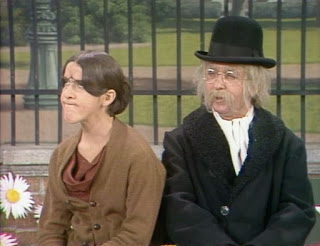
Another favorite was “Tyrone” who was an old man wearing a trench coat, always trying to seduce Ruth Buzzy’s “Gladys” on a park bench. She would hit him with her purse, and he often fell off the bench. Oddly, in a far-reaching concept, years later these two characters formed the nexus of a Saturday morning cartoon show, Baggy Pants and the Nitwits.

Photo: fox8.com
On The Partridge Family

During the 1970s, Johnson continued his television appearances with 17 different series, including two roles on The Partridge Family and several on Love American Style. He also could be seen on Match Game and Hollywood Squares.

Photo: sitcomsonline.com

His prolific career continued through the 1980s where he was seen on 25 different shows, including Murder She Wrote and The Love Boat. At the end of the ’80s, he began voicing characters for animation shows, but in the 1990s he accepted roles on 14 shows, including Night Court.

At the end of his career, his love of books provided him an opportunity to begin recording the narration for more than 80 audiobooks, including Dave Barry Is Not Making This Up in 2005.

Photo: vulture.com

Married to his wife Gisela since 1968, he survived a battle with non-Hodgkin lymphoma in 1997. In 2006 he retired from acting. He passed away mid-year in 2019 after suffering from bladder and prostate cancer. Ruth Buzzy, his comrade on Laugh-In, shared this message upon his death: “Thank you for a wonderful half-century of friendship. I could not have shared the spotlight with a nicer guy. Rest in peace. And yes, Arte Johnson, I believe in the hereafter.”

I like to think Arte is working on some skits, waiting for Ruth Buzzy, and some day when we get to heaven, we’ll be able to watch Gladys and Tyrone team up for us again.

The Flying Nun: Soaring to Success Followed By a Crash Landing

This month we are in the midst of the series, “Girls, Girls, Girls.” Today we take a look at another sitcom whose cast was primarily female.

From 1965-1966, Gidget starring Sally Field was on the air. When it was cancelled after only 32 episodes, producers were scrambling to find another vehicle for Field.  Harry Ackerman, with co-producers Bernard Slade (who would create The Partridge Family and just passed away last week) and Max Wylie came up with The Flying Nun. They based it on a book published in 1965, The Fifteenth Pelican by Tere Rios. Beginning on ABC in September of 1967, the show continued through the fall of 1970, resulting in 82 episodes.

I did read that Patty Duke was the first choice for the show, so I’m assuming when she turned it down, they asked Sally Field. Apparently, they were trying to find a show for Field, but this show was not created for her. Field also turned it down, thinking it was a silly concept, so the producers went to their third choice, Ronne Troup, who would play Polly on My Three Sons. Troup began filming the pilot. Sally’s stepdad, Jock Mahoney, told her she should reconsider because she might not get another chance in show business if she didn’t accept the role. When Sally informed the producers that she had changed her mind, Troup was let go.

Photo: sitcomsonline.com

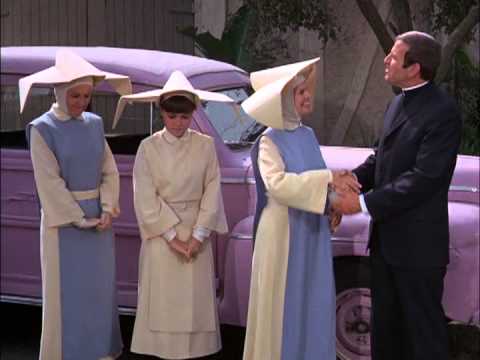
In the hour-long pilot, we meet Elsie Ethrington. Elsie, who grew up in Chicago, is arrested in New York during a protest. We learn that the rest of her family has chosen medicine for their vocation. (In a later episode, we meet one of her birth sisters who is a physican played by Elinor Donohue.) Elsie goes to Puerto Rico. She is impressed with the missionary work her aunt has been doing, so she ends her relationship with her boyfriend, a toy salesman, and becomes a nun at the Convento San Tanco, taking on the name Sister Bertrille. In one episode, Sister Bertrille watches home movies of her life and what we are actually seeing is footage from Gidget.

Photo: pinterest.com

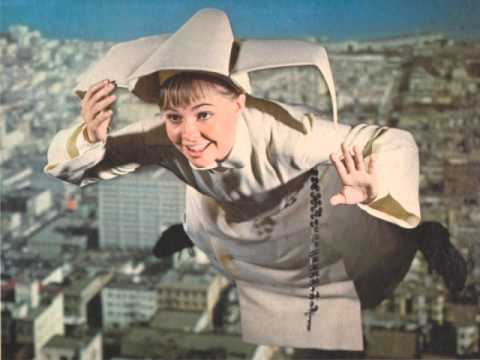
One day Sister Bertrille, who is only 90 pounds, realized that the heavily starched cornette on her head, allowed her to be able to “fly” as the high winds picked her up. As she tried to explain to several people, “when lift plus thrust is greater than load plus drag, anything can fly.” Of course, a nun flying around town caused quite a stir. Field said she was humiliated by her directors as she was hung from a crane and moved around the set like a prop.

Photo: pinterest.com

The Reverend Mother Placido (Madeleine Sherwood) runs the convent. She is kind, but strict. Sister Jacqueline (Marge Redmond), who sees the humor in most situations, becomes good friends with Sister Bertrille. Sister Ana (Linda Dangcil) and Sister Sixto (Shelley Morrison) are also friends of hers. The other major characters are Captain Gaspar Fomento (Vito Scotti) who is a police officer that the nuns keep from learning about Sister Bertrille’s flying ability and Carlos Ramirez (Alejandro Rey) who owns a casino and is a ladies’ man. Ramirez was raised by the nuns, and they constantly try to reform him. He will not be reformed, but out of appreciation, he always tries to help them, and Sister Bertrille is constantly involving him in zany schemes or asking him to finance some plan of hers.

Photo: flickr.com

This was the first (and perhaps only) sitcom to be set in Puerto Rico. Although the pilot and opening and closing credits were shot in Puerto Rico, the show was shot at Warner Brothers Ranch in Burbank, California.

The producers were worried about how Catholics would react to the show. They asked the National Catholic Office for Radio and Television to serve as an advisor. The show actually was popular with Catholic religious leaders who felt the show “humanized” the image of nuns.

The show was also popular with viewers of every other religion. The first two years, it aired Thursday nights, competing with Daniel Boone. The sitcom was sandwiched between Batman and Bewitched. Although it was declared a hit immediately, the ratings eroded during the two years.

Photo: epguides.com

The producers had a hard time deciding on a focus for the show. During the second season it contained more slapstick comedy. The third season it went back to the warm and fuzzy feelings it used in the first season. For the third season, the network moved the show to Wednesdays and put it up against The Glen Campbell Goodtime Hour which insured its cancellation. It didn’t help in the third year that Field was pregnant. She mentioned in an interview that “you can only imagine what a pregnant flying nun looked like,” and the crew had to hide her behind props and scenery.

Photo: thenewyorktimes.com

Critics never took to the show, but the public kept it on the air three times longer than Gidget. Many fans remember the series fondly. The plots were often heart-warming. In “With Love from Irving,” a pelican falls in love with Sister Bertrille. When Sister Bertrille is forced to go to the dentist for a toothache, Dr. Paredes puts her under hypnosis. The doctor gives them a suggestion that whenever they hear “red,” she and the Reverend Mother will switch personalities. In another show, Sister Bertrille wants Carlos to finance an expedition to find a bell that sunk long ago that was supposed to go to the convent because their old one is rusted and they can’t afford a new one. Carlos uses the opportunity to woo a young woman, but Sister Bertrille tags along. The girlfriend gets thrown overboard, but the bell is found in the end.

Relying on uplifting morals (pun intended) and Field’s delightful and talented performances, the show continued on the air. Marge Redmond was nominated for an Emmy as supporting actress. Unfortunately, she was up against Marion Lorne, who won it for her role of Aunt Clara on Bewitched.

TV Guide ranked the show number 42 on its worst tv shows of all times list in 2002. However, it continues to do well in syndication and has an international fan club.

Photo: ebay.com

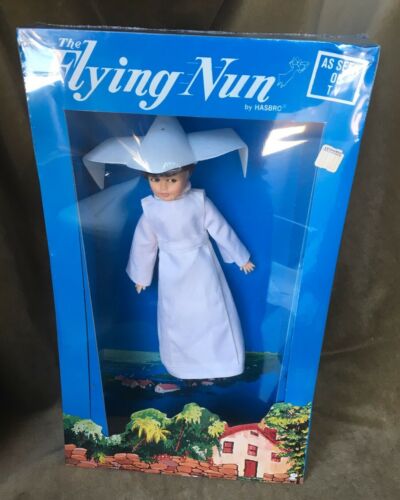
While the show was on the air, it sold a variety of merchandise, including paper dolls, lunch boxes, trading cards, view master reels, a board game, and a doll.

Photo: ebay.com

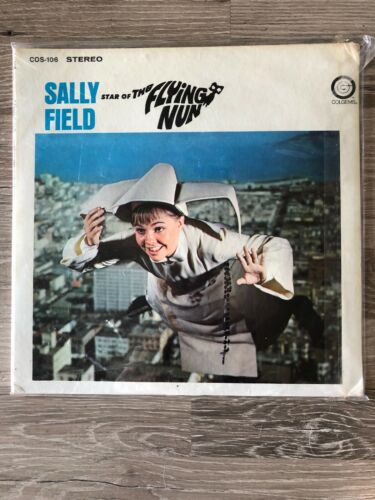
Sally Field released a soundtrack LP with songs from the series in 1967. Dell Comics came out with four comic books based on the series in 1968.

Photo: ebay.com
Photo: ebay.com

I must admit I was not a big fan of the show. However, I have gone back and watched quite a few episodes for this blog, and it is better than I remembered it. Although the concept does sound as silly as Field thought, the show is charming and can be quite funny at times. Although it might not be in your top 25, it probably deserves a second look if you have not seen it for a while.

Photo: listal.com

Family: The Perfect Blend of Intelligent Writing, Superb Acting, and Warm Fuzzy Feelings

This month we are doing a 1980s Rewind, looking at some memorable shows from that decade. We start with one of my all-time favorite series, Family. I think this is one of the most disrespected and underrated shows from the past fifty years. It had an amazing cast, and the scripts were intelligent and well written.

Photo: pinterest.com

The show ran on ABC from 1976-1980, producing 86 episodes. The critically acclaimed show had three well-known producers: Leonard Goldberg, Aaron Spelling, and Mike Nichols. Jay Presson Allen created the series, and she wrote every episode.

Photo: metv.com

Kate (Sada Thompson) and Doug (James Broderick) Lawrence are an upper middle-class couple living in Pasadena, CA. They have three children: Nancy (Meredith Baxter Birney), Willie (Gary Frank), and Letitia (Kristy McNichol), known as Buddy. Doug is a lawyer, hoping to become a judge. He is a warm-hearted person who often finds humor in their family situations. Kate is a practical woman but can come across as a cold woman. She can be quite passionate and loves her family very much but has trouble showing a lot of affection. She always does what she feels is morally right. She has sacrificed her dreams to stay home and raise her family. Later in the show she does go back to school to major in music.

Photo: reelrundown.com
The original cast with Elayne Heilveil as Nancy

In the pilot, Nancy was played by Elayne Heilveil, but Meredith Baxter Birney took over the role once the series began. Cheryl Ladd also auditioned for the part of Nancy. Spelling remembered her and later cast her in Charlie’s Angels. Nancy finds her husband Jeff (John Rubinstein) in the act of cheating on her and moves back to her parents’ home, living in their guest house with her son Timmy. Even though Nancy and Jeff are divorced, they are friends, and he appears on the show often and is involved in Timmy’s life. The Lawrences also had a son named Timmy who died when he was little. Nancy and her mother often butt heads. In the second season, Nancy decides to go to law school and is very successful.

Photo: nostalgiacentral.com

Willie is always trying to find himself and can’t quite decide who he is. He has a high IQ but drops out of school. He dreams of being a writer and later works for a photography studio for a while.

Photo: cscottrollins.blogspot.com

Buddy was a tweenager. Buddy is a tomboy and well liked by her friends and family. She had two famous boyfriends during the show: TJ played by Willie Aames and Leif Garrett. Buddy is much closer to her mother than Nancy is. Nancy and Buddy have a trying relationship too, although they both want to be closer. Willie and Buddy are very close.

Everyone in our actual families could find someone in the show to relate to. I notice myself looking at the show from a different perspective now than I did in my teen years.

Photo: listal.com

There were 24 different directors during the series’ run. Richard Kinon directed almost 25 percent of the shows. Kinon had directed episodes of many classic shows including Bewitched, Hogan’s Heroes, The Patty Duke Show, The Partridge Family, Room 222, and That Girl. After Family, he would direct a quarter of The Love Boat episodes. James Broderick directed four of the episodes. Not surprising for me was learning that Marshall Herskovitz and Edward Zwick also tried their hand at directing. Both of them were also listed as producers and writers of the show. They would later go on to help create thirtysomething, a show we’ll learn about next week. Both men were also involved with Once and Again and Nashville, among other shows.

Photo: pinterest.com

The storylines were very realistic and handled with delicacy and intelligence. Some of the topics the show tackled included breast cancer, infidelity, senility, divorce, adoption, terminal illness as well as the typical teenage issues faced by most youth.

In the last season, the Lawrences adopt Annie Cooper (Quinn Cummings) after her parents are killed in a car accident. They were her parents’ friends and their choice for guardians if anything happened to them.

Photo: aveleyman.com

Rubinstein who played Jeff composed the theme music. Apparently, he inherited some musical genes from his father, Arthur Rubinstein, the famous classical musician. He has continued his dual career in both acting and composing since the show ended.

A couple other cast members also had famous relatives. Broderick’s son is Matthew Broderick, actor, and Baxter Birney’s mother was Whitney Blake who played Missy on Hazel, among other roles.

Photos: tucson.com

The show was nominated for an Emmy for Outstanding Drama Series in 1977, 1978, and 1980. Thompson, Frank and McNichol all won Emmys, and Broderick and Baxter Birney were nominated as well.

I could not find a reason for it, but only the first two seasons have been released on DVD and that was in 2006. I have not seen the show in syndication for many years.

Photo: seeing-stars.com
One of my favorite television homes: the Lawrence house

Plans were made for a 1988 reunion movie. James Broderick had passed away, but he rest of the cast was on board. When the writers went on strike, the project was placed on hold and later dropped from production.

I watched a few of the episodes from season one. The show still holds up today.  Although it closely mirrored the social issues from its era, those topics are still relevant today. It may have included some melodrama, but it never was about melodrama.  It contained enough humor to offset the tragedy just like real life. Doug and Kate had strong moral values and they passed them on to their children but understood life was changing and they could not be close minded.

Photo: imdb.com
Jay Presson Allen

Jay Presson Allen brought insightful writing to every script, but the incredible acting brought the characters to life.

UNITED STATES – SEPTEMBER 13: FAMILY – cast gallery – Season Three – 9/13/77, Sada Thompson (Kate), (Photo by ABC Photo Archives/ABC via Getty Images)

Sada Thompson was not overly affectionate but calmed her children down and could discuss anything with them. They relied on her guidance and wisdom. She embodied class and elegance. I was surprised to learn that Lear had hired her to play Archie Bunker’s blue-collar neighbor, a plumber named Irene Lorenzo for All in the Family. I was not surprised to learn that Betty Garrett replaced her in the role because Sada had too much genuine class and didn’t yell loud enough for Lear. James Broderick discussed working with Thompson. He said he “was only one of her many fans. Sada is about as close as we get in this country to the British super actresses like Dame Edith Evans and Dame May Whitty. I’m sure if Sada lived in England, the Queen would have dubbed her Dame Sada a long time ago.”

UNITED STATES – SEPTEMBER 21: FAMILY – cast gallery – Season Four – 9/21/78, James Broderick (Doug), (Photo by ABC Photo Archives/ABC via Getty Images)

Broderick flawlessly captured the fun nature of Doug Lawrence. Doug left the disciplining up to his wife most of the time and was not as serious as his wife. Doug and Kate were also very affectionate with each other.

FAMILY, Meredith Baxter Birney (aka Meredith Baxter), 1976-80
Photo: metv.com

Baxter Birney was the perfect combination of brains and beauty who wanted to be the wife and mother she saw in her mom as well as the respected lawyer she saw in her father.

Photo: elinitsky.com

Frank portrayed the young adult who couldn’t figure out what he wanted from life. He was not a “sit behind the desk kind of guy,” but needed to make a living. Willie was more interested in the humanities and finding meaning in life. He always seemed to be in difficult relationships.  Early in his adult years, he fell head over heels in love only to find out she was pregnant before they met and she left him eventually but weaved in and out of his life for years. He later met his soul mate, but she had terminal cancer, so even though they married, they only had a short time together.

Photo: sowhateverhappenedto.com

McNichol was believable as a young girl moving into her teens and dealing with all the stress and changes teens go through.  She was funny, silly and loveable and could be irritating occasionally and whiny, just like teens are. McNichol appeared very mature for her age and seemed to have everything under control, but it was a façade. She said she “was like a miniature adult.” She’d go off to the set “every day with a little briefcase. I really think I grew up backwards.” Dinah Manoff, who guest starred on Family before acting on Empty Nest with McNichol said “Kris was the most adult kid I’d ever met. She didn’t even have to study her lines. They’d hand them to her right before she walked out on the set.”  Thompson once remembered that the adults “used to talk about how amazing it was that Kristy didn’t appear to feel any of the pressures of growing up as a successful child actress. The cost is enormous, you know, but Kristy didn’t seem to be paying it.” Unfortunately, she paid it with interest a few years after the show ended. When she was a young adult, she began to rebel and made some very poor choices, trying to recapture the childhood that she never got to experience.

Photo: pinterest.com

I don’t remember a lot about the role of Annie Cooper. Once Buddy began growing up, she was brought in to continue storylines kids could relate to. She had just been nominated for an Academy award for The Good-bye Girl and seemed to transition into the show easily.

Photo: ew.com

Hopefully the rest of the seasons are released on DVD so we can continue to appreciate the remarkable blend of writing, acting, and directing that was featured on this show.

Family–that says it all: joyful, heart-breaking, boring, exciting. loving, conflict and everything in between.