Before launching into this week’s topic, I wanted to say thank you to everyone who has been following and reading my blog. This week begins my fourth year writing this blog. I was worried I would find enough topics to fill the first year but next year is already outlined, so another year of classic television is on the way. It has been a lot of fun, and I’ve learned a lot.
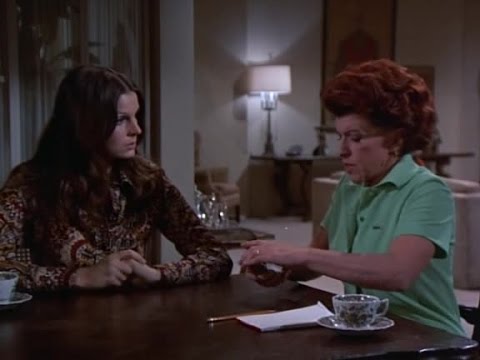
This month we are looking at crime-solving duos. We start our series learning a bit more about McMillan and Wife. McMillan and Wife began as part of The Sunday NBC Mystery Movie which included Columbo and McCloud. The shows rotated each week, so fewer episodes were produced of each than a typical weekly show.
Photo: memorabletv.com
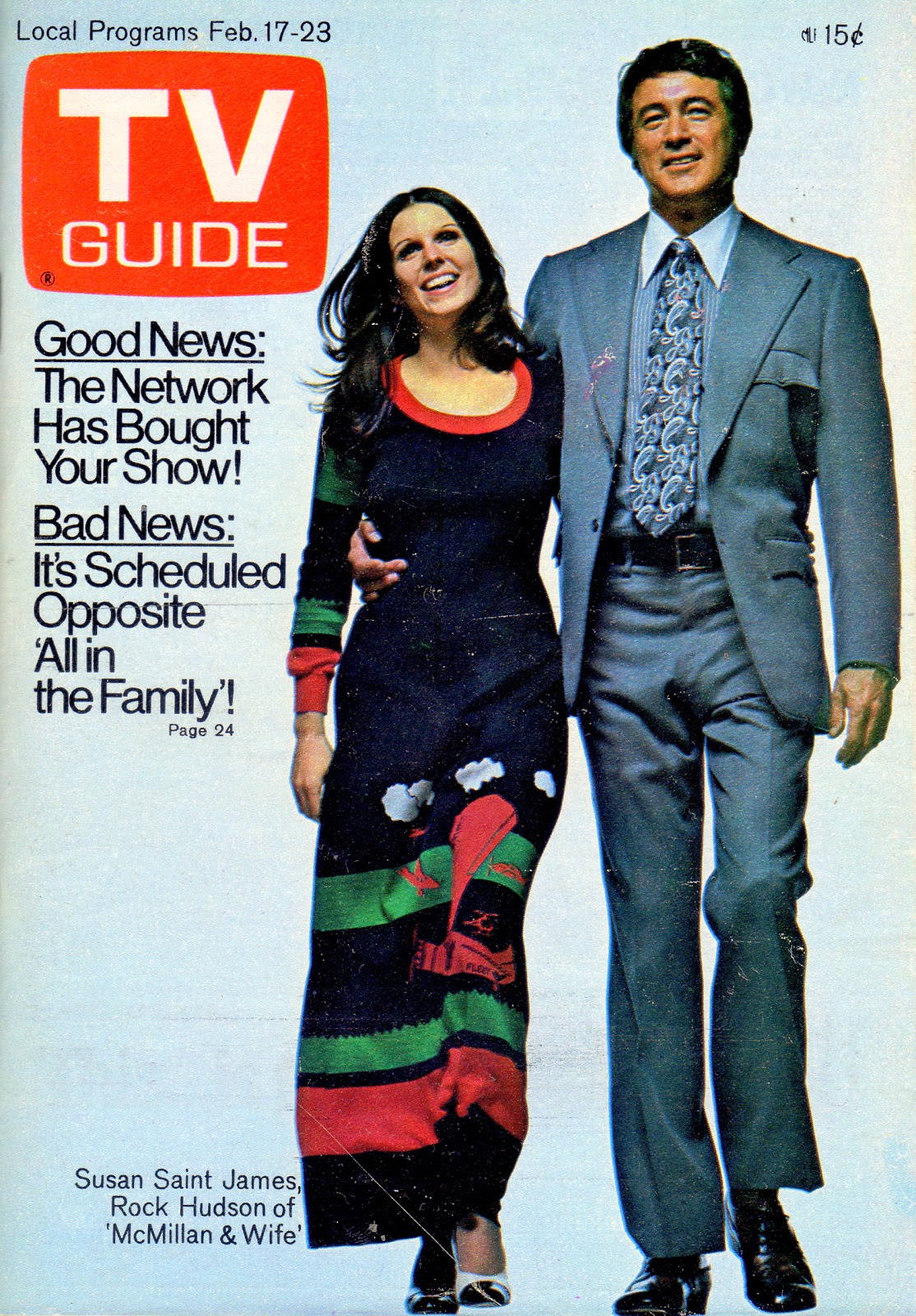
McMillan and Wife debuted in 1971 and was on the air until 1977, yet only forty episodes were produced. Leonard Stern was the creator, writer, and executive producer of the show; he previously produced Get Smart.
Photo: imdb.com
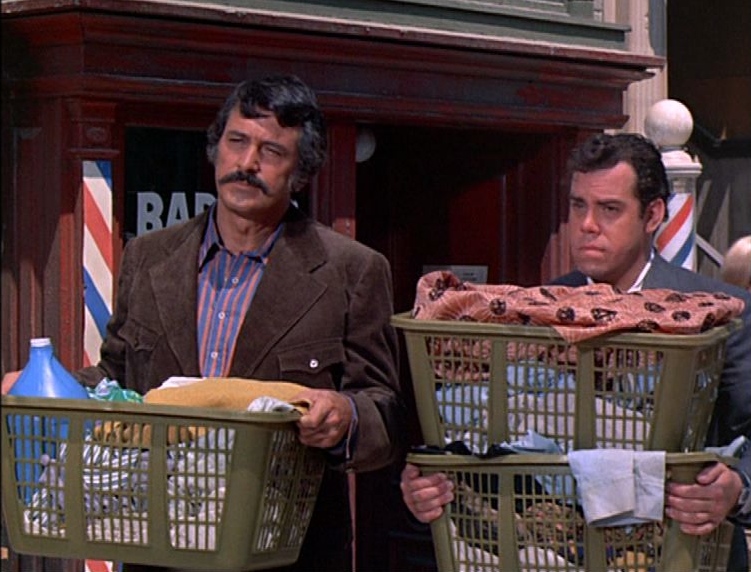
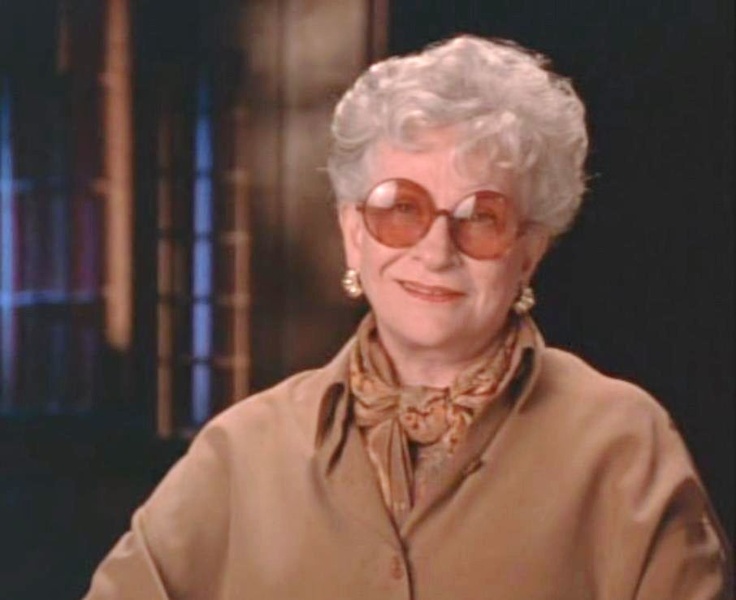
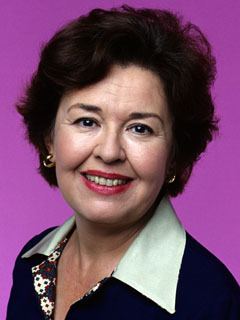
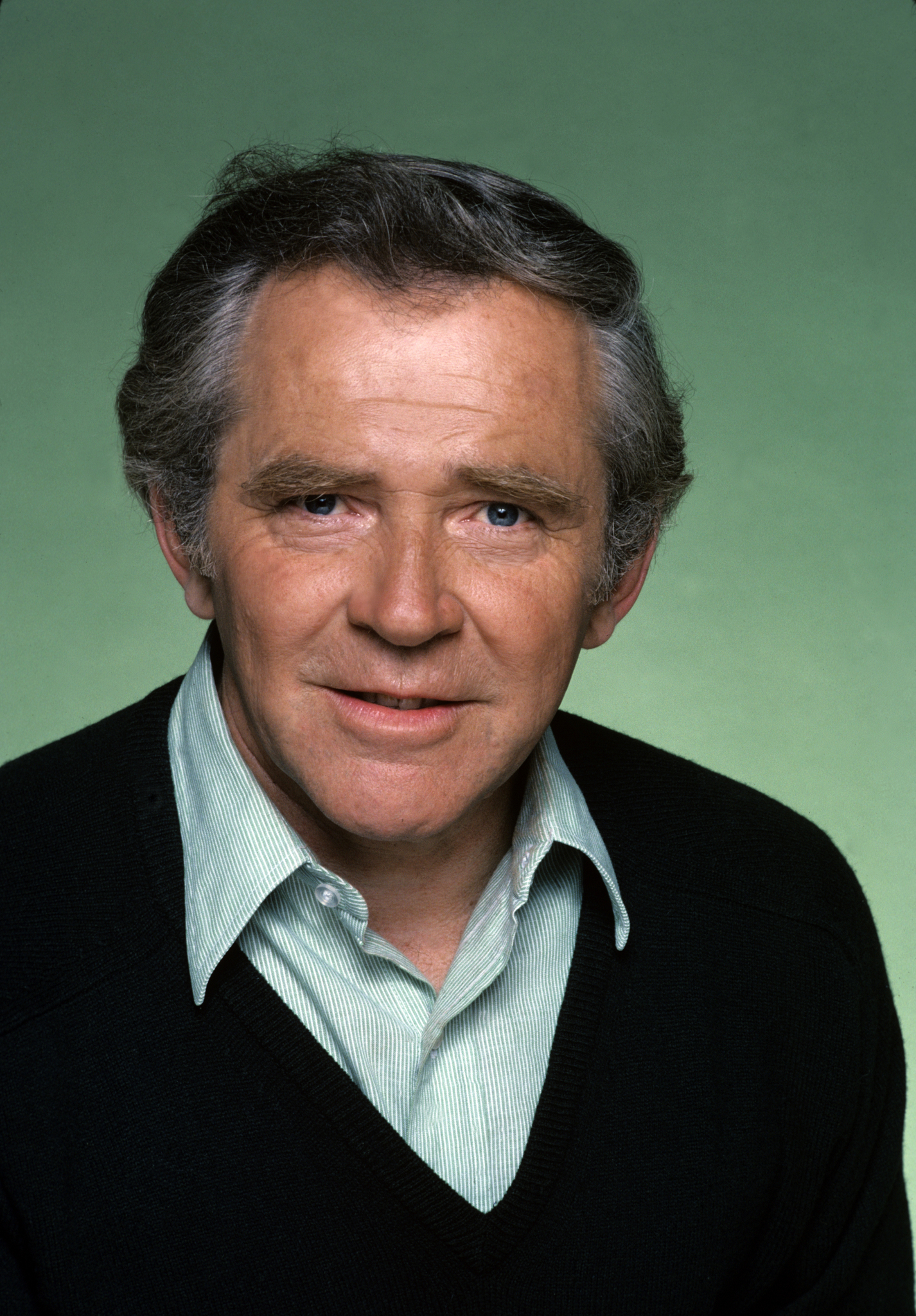
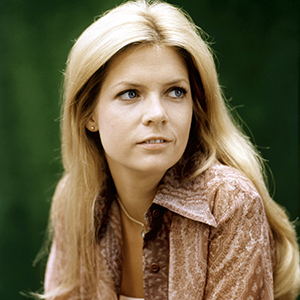
Stewart “Mac” McMillan (Rock Hudson) was an attorney and US Navy veteran who apparently had been involved in some CIA activities. He is now Commissioner of Police in San Francisco. He gets involved in high-profile cases. His wife is Sally (Susan St. James), and her father was a detective for the San Francisco Police Department; she learned a lot from him and helps her husband solve crimes. Sargent Charlie Enright (John Schuck) helps Mac with his cases. Sally and Mac have no children (it’s confusing because Sally was pregnant twice on the show, but the children are never mentioned in the show later). Their housekeeper Mildred (Nancy Walker) also lives with the couple. Mildred’s character resembles the role Thelma Ritter played in Pillow Talk, where Hudson starred with Doris Day. She is a sarcastic, hard-drinking woman and is always ready to offer her opinion, but she is devoted to Mac and Sally.
Photo: afinalcurtaincall.blogspot.com
Once Hudson was cast as Mac, the show got priority in development. Several actresses were considered for the role of Sally, including Diane Keaton and Jill Clayburgh, but Hudson was most comfortable with St. James.
Photo: pinterest.com
Hudson was 21 years older than St. James, but their relationship worked. Mac is supposed to be in his 40s and Sally in her 20s (he was 46 at the time and she was 25). Sally is self-confident and is not afraid to speak her mind. However, she is also a wife who loves her husband, and one of the running gags on the show is that Mac had dated a lot of women in his past, and when Mac and Sally are out and about, they typically run into some gorgeous woman who says, “Hi Mac.” Sally usually responds with a jealous comment or a withering look. The difference in their ages actually worked well for demographics. Hudson appealed to older viewers while St. James attracted younger viewers.
Photo: popflock.com
Often the cases Mac solves happen during events the couple attends. One episode featured a burglary at a charity event they were attending; once they found a skeleton in their house after an earthquake. Another show had Mac abducted by mobsters and replaced with a surgically-made twin replacing him.
Photo: youtube.com
An interesting fact is that the interior of their house in the pilot episode was in fact Hudson’s home. In the first regular episode, the MacMillans bought a new house. In the final season, the setting changed to an apartment.
Photo: madman.com.au
Sally and Mac led a glamorous life. The scripts were well written, and the dialogue was witty and clever. The couple was often compared to Nick and Nora Charles in the Thin Man movies. Mac and Sally have a lot of their best conversations after they go to bed at night.
Photo: sitcomsonline.com
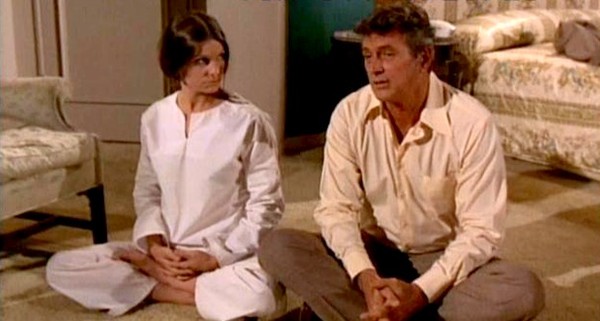
Sally was known for wearing a football jersey for her nightgown. The jersey was an authentic 49ers Jersey, number 18, George Washington, a wide receiver. Washington was a four-time Pro Bowler. He made a guest appearance on the show in season four, “Guilt by Association.”
Considering that there were only forty episodes produced, this show had an incredible number of guest stars. I apologize for the long list, but it’s the only way to capture how impressive it is. The stars included sport celebrities Dick Butkus, Rosie Grier, Alex Karras, and Bobbie Riggs.
Photo: amazon.com
It also featured a Who’s Who of television sitcom royalty: John Astin, Meredith Baxter, Tom Bosley, Michael Constantine, Bert Convy, Wally Cox, Richard Deacon, William Demarest, Donna Douglas, Barbara Feldon, Norman Fell, Buddy Hackett, Larry Hagman, Alan Hale, Shirley Jones, Stacy Keach, Bernie Kopell, Julie Newmar, Charlotte Rae, Charles Nelson Reilly, Dick Sargent, Natalie Schafer, Susan Sullivan, Karen Valentine, and Dick Van Patten.
The show, like McCloud and Columbo, was quite popular with viewers. The ratings were impressive until the sixth season.
Unfortunately, the last season had too many changes to overcome. St. James decided to leave to concentrate on her movie career. Schuck left to star in the sitcom, Holmes and Yo-Yo, and Walker left for her own sitcom, The Nancy Walker Show. Sadly, Walker and Schuck would have been better off staying because both their shows lasted only 13 episodes. St. James starred in a couple of movies, but they weren’t anything memorable. She would go on to star in Kate and Allie in 1984.
Photo: cult-tv-lounge.blogspot.com
On the show, Sally was killed in an airplane crash. Mildred was said to leave to open a diner, so her sister Agatha (Martha Raye) took over her job. Schuck made a few appearances but was said to have been given a promotion to lieutenant which kept him too busy to assist Mac much. The show may have been able to overcome one of these changes but not all of them. Much of the strength of the show was the relationship between Mac and Sally. Walker’s funny bantering and actions provided a comedic relief for the show. When Raye took over, she was just scatterbrained and loud; the appeal of Walker was not part of her character.
Photo: imdb.com
It’s wonderful the show lasted five good seasons, but it might have lasted many more if the original cast had been retained. At the other end of the spectrum, Columbo aired off and on until 2003 and is remembered by more viewers.
DVDs were released for all six seasons between 2005 and 2014. With only forty shows in the series, this would be a fun binge-watching week-end show to tackle.
As I finish 1980s Rewind today, I chose a heart-warming show that followed the typical formula by standing it on its head, Who’s the Boss. The show was created by Martin Cohan and Blake Hunter. Cohan was a producer and writer for The Bob Newhart Show and wrote for many other shows including The Mary Tyler Moore Show. Hunter wrote and produced episodes of WKRP in Cincinnati.
Photo: cbsnews.com
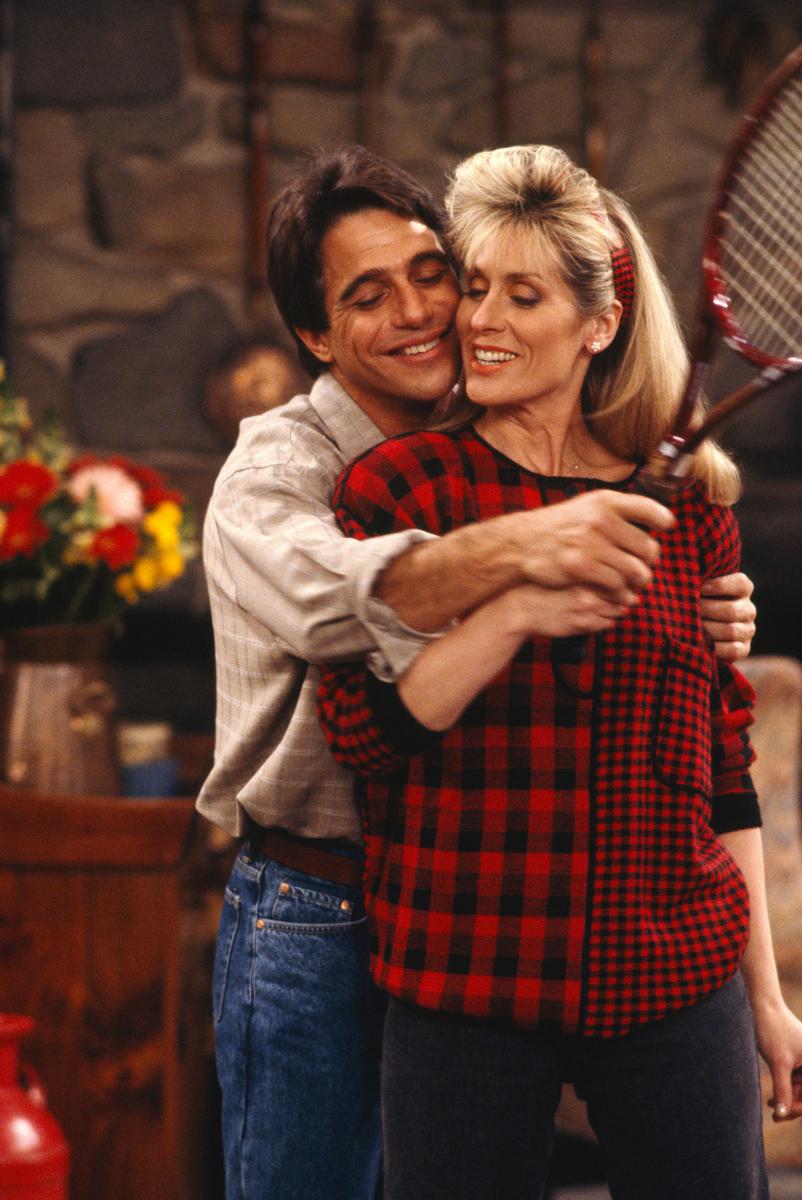
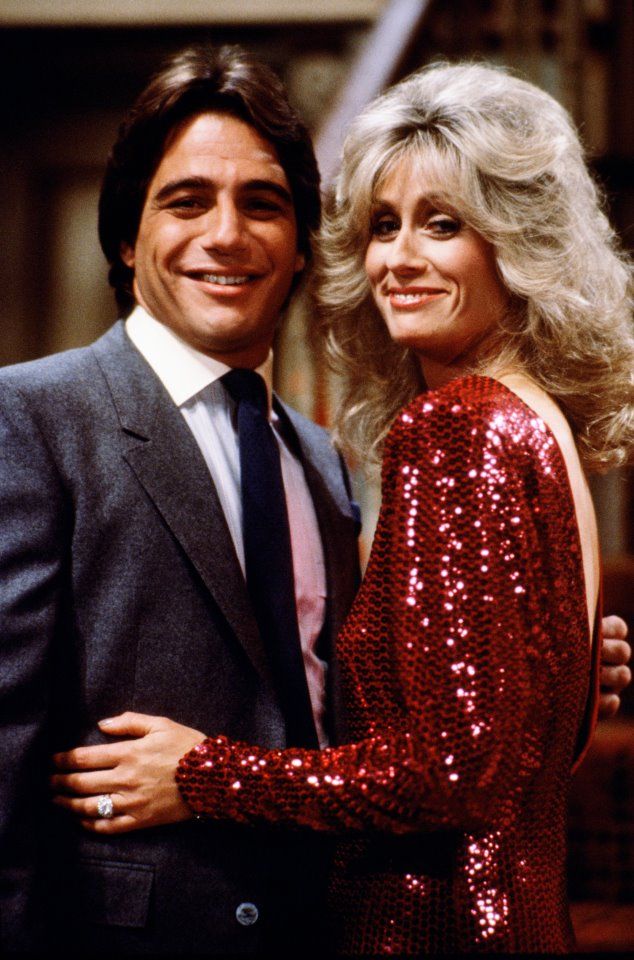
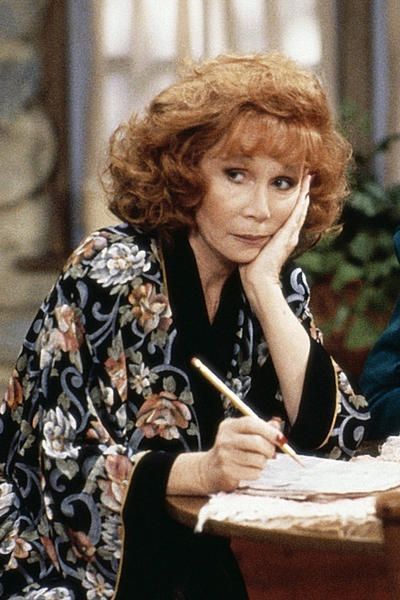
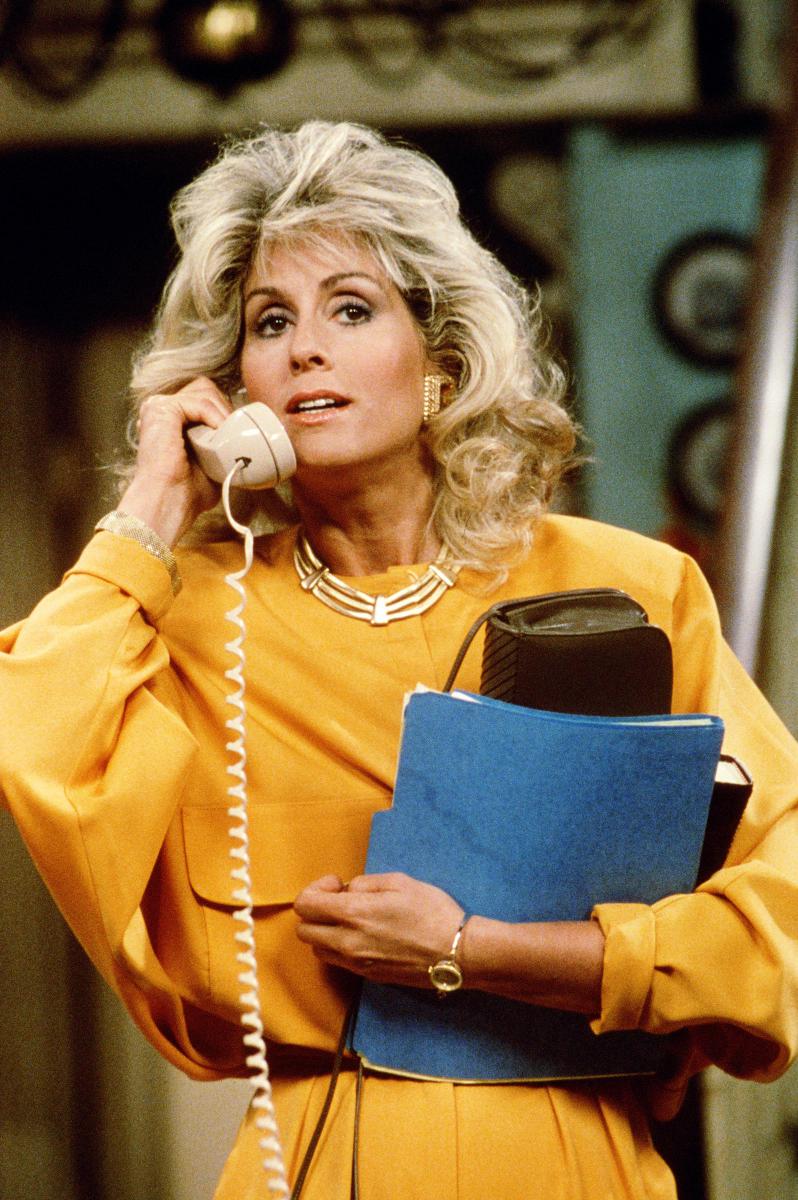
Instead of the successful senator who hires a housekeeper like The Farmer’s Daughter, on this show Angela Bower (Judith Light), an advertising executive, hires Tony Micelli (Tony Danza), a former baseball player (St. Louis Cardinals) to be her housekeeper. Instead of Uncle Charlie like My Three Sons, the show has Mona (Katherine Helmond), Angela’s mother giving wise advice and sarcastic comments. Tony has a daughter Samantha (Alyssa Milano) and Angela has a son Jonathan (Danny Pintauro). All together they form one typical family unit. The show was on ABC for eight years from 1984-1992, so viewers literally watched the kids grow up. Tony is laid back and flexible, while Angela is a bit more uptight and organized. Angela and Tony functioned as parents on the show, but they also had the possibility of a romance between them.
Photo: imdb.com
After a shoulder injury, Tony is forced to change careers. He wants his daughter to experience a better life. The Bowers live in Connecticut in an upscale neighborhood. Originally, the show was titled “You’re the Boss,” but it was changed to plant a question of who really ran the house. However, viewers all realized that the kids were really the bosses.
WHO’S THE BOSS? – “Angela Gets Fired: Part II” – Airdate: September 30, 1986. (Photo by ABC Photo Archives/ABC via Getty Images)ALYSSA MILANO;DANNY PINTAURO;KATHERINE HELMOND
The cast jelled very well together. They had their differences of opinion, but they grew close and experienced the normal family ups and downs when five very different people spend so much time together. Mona’s wit and targeted observations kept things light and funny.
Photo: sonypicturesmuseum.com
Photo: pinterest.com
During most of the series, Tony and Angela try to avoid the romance developing between them. They both date other people. They also become best friends, relying on each other as a husband and wife would. They often discuss issues the kids are having. They both “parent” each of the kids. They both grow and change during the course of the series. Angela becomes less tense and risks opening her own firm. Tony enrolls in college. Producers always seem to waiver “between should they get together or not.” Shows like Castle, That Girl, and Friends struggled with keeping the magic alive and keeping the show realistic. Somehow the producers and writers for Who’s the Boss kept the tension and potential romance alive for seven years. During the last season, they realize they are in love with each other.
Photo: mentalfloss.com
There were many stars who appeared on the show during the years including Frank Sinatra, Ray Charles, Mike Tyson, and Leslie Nielsen. One of the episodes was when Robert Mandan appeared on a few episodes as Mona’s love interest. Mandan had played her husband on the show Soap.
Photo: eonline.com
The theme song lyrics were written by creators Cohan and Hunter. Titled “Brand New Life,” the music was composed by Larry Carlton and Robert Kraft. Three different versions were used over the years: Larry Weiss sang it from 1984-1986; Steve Wariner from 1986-1989; and Jonathan Wolff from 1989-1992.
WHO’S THE BOSS? – “Samantha’s Growing Up” – Season One – Airdate: January 8, 1985. (American Broadcasting Companies, Inc.)
ALYSSA MILANO, JUDITH LIGHT, KATHERINE HELMOND, TONY DANZA
Early reviews were lukewarm. Critics liked it but they were a bit dismissive of it being a real hit. Viewers didn’t agree. They loved the show. During its tenure, the show was nominated for more than forty awards, including ten Primetime Emmys and five Golden Globes. From 1985-1989, it ranked in the top ten.
Photo: fatsaloon.com
Photo: eonline.com
The show aired on Tuesday nights for the first seven years. In the fall of 1991, the network moved the show to Saturday nights against The Golden Girls. The ratings went down after the move and the network decided to cancel the show. There was a great debate about whether Tony and Angela should marry in the finale. Sam had married earlier in the season and Tony and Angela admitted they were in love. However, Danza was opposed to the marriage and there was a concern that if a wedding took place, it might affect the syndication options. Instead of a wedding, Tony and Angela break up. But in the last scene, Tony is at Angela’s house applying for the job of housekeeper, very similar to the very first episode of the show.
The show created a spinoff but in a far-reaching definition of spinoff. In one episode, Leah Remini was a friend of Sam’s, a homeless model. Beginning and ending in 1989, the show Living Dolls starred Remini, Michael Learned, and Halle Berry.
Photo: cbsnews.com
While Tony went back to school during the series, Danza emulated him in real life. He graduated with an education degree. He wrote a book, I’d Like to Apologize to Every Teacher I Ever Had: My Year as a Rookie Teacher at Northeast High. He taught English at a school in Philadelphia.
Photo: celebritynooz.com
Photo: etcanada.com
The cast of Who’s the Boss was a close-knit one, and they still keep in touch almost twenty years later. Light commented that they are all still close and she said she probably kept in touch with Tony the most. “He checks in all the time just to see how the kids are doing, he’s very sweet.” Danza once discussed how emotional it was for him to give Milano away as a bride on the show. “She was like my little girl, you know. She started on this show when she was 10. Now she’s 19, we married her off. I mean, it’s easy to get emotional, it really is.”
Photo: people.com
Photo: imdb.com
Milano was also very close to Light. A couple of years ago, the two stars ran into each other for an event, and Milano tweeted, “Nothing makes me happier than seeing Judith Light. Nothing.”
Photo: pinterest.com
They were all saddened by the death of Katherine Helmond in March of 2019. Danza also discussed Helmond in an interview. “Katherine Helmond was a remarkable human being and an extraordinary artist; generous, gracious, charming and profoundly funny.” After her death, he commented that “She was such an influence on me. No matter what problem I had, I could go to her. Very few people could match her. She was a consummate professional. She never made a mistake and she always got the laugh. She was the sexy older lady who could keep up with the young people. She just had a way about her.”
Editorial use only. No book cover usage.
Mandatory Credit: Photo by Moviestore/REX/Shutterstock (1646629a)
Who’s The Boss , Katherine Helmond, Tony Danza
Film and Television
Light also discussed Helmond. “She taught me so much about life and inspired me indelibly by watching her work. Katherine was a gift to our business and to the world and will be deeply missed.”
Photo: spm.com
Her television grandchildren also remembered her fondly. Milano paid the following tribute to her: “My beautiful, kind, funny, gracious, compassionate rock. You were an instrumental part of my life. You taught me to hold my head above the marsh! You taught me to do anything for a laugh! What an example you were!” Pintauro said she was “the best TV grandmother a boy could ask for. Even still, I’m just as devastated as I was when I lost my real grandma. A beautiful soul has left us for the next chapter, may you make them laugh Katherine!”
Photo: youtube.com
This is another one of those undervalued shows. Although there were some really great shows on television during the mid and late 1980s, some of the top-rated shows on in this decade included Knot’s Landing, Charles in Charge, Diff’rent Strokes, Silver Spoons, and Facts of Life. Who’s the Boss was a much better written and acted show than any of these. The show combined the best elements of sitcoms and created a fresh approach to a family comedy.
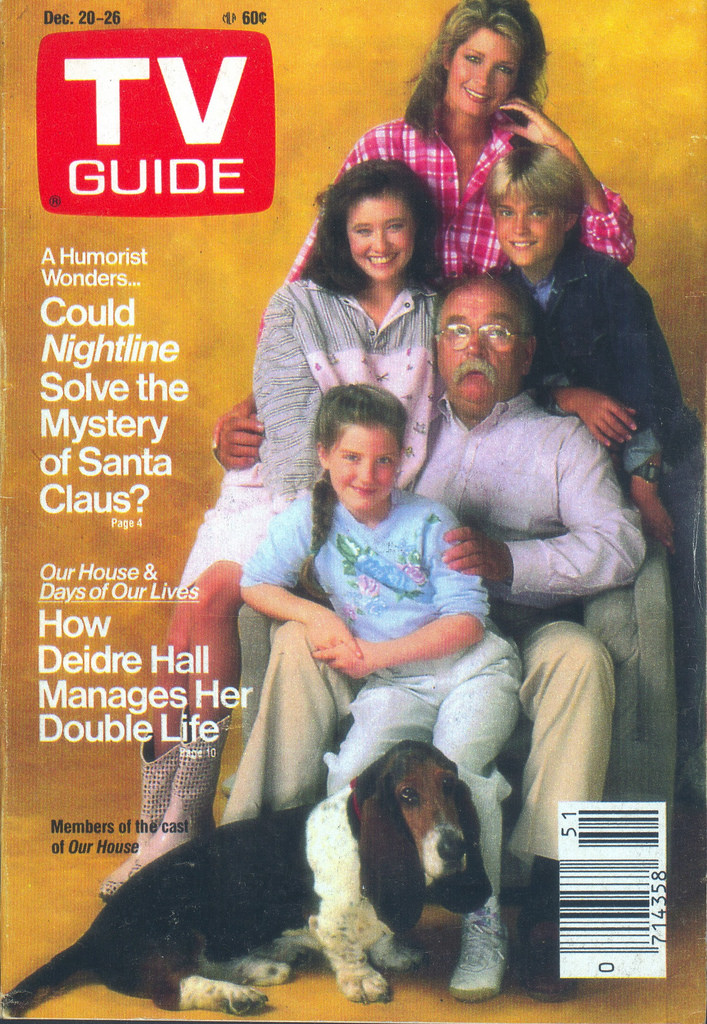
As continue our Rewind 1980s month, today we take a look at Our House, another family dramedy. Our House debuted in 1986 on NBC and ran for two seasons, producing 46 episodes.
Photo: en.wikipedia.org
James Lee
Barrett created the series. He would receive credit for writing all 46
episodes. He passed away a year after it was cancelled. He also developed and
wrote the scripts for In the Heat of the
Night.
The premise
of the show is that three generations of family members live together and cope
with the ups and downs of daily life. When John Witherspoon (Patrick Duffy)
passes away, his widow Jessie (Deidre Hall) moves her three children from Fort
Wayne, Indiana to California to live with her father-in-law, Gus (Wilford
Brimley), a widower.
Photo: iamnotastalker.com
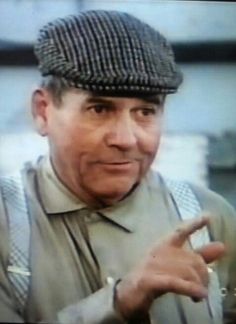
Gus thinks his grandkids should be raised the same way his kids were, but Jessie doesn’t always agree with his rules and methods. Gus’s neighbor and best friend Joe is a bit easier to get along with. When Gus invites the family to move in with him, Joe (Gerald O’Laughlin) says, “You’re set in your ways. It could be fatal.” The kids had to learn that beneath Gus’s gruff exterior, he was a gentle and loving man, and he had to learn how to impart life lessons to them without sounding like an old grouch. During the run of the show, Gus learns he must change his view on some things, and his grandkids realize he has a lot of wisdom to share. The show manages to uphold traditional values while exploring contemporary social issues and being open minded about them.
Photo: youtube.com
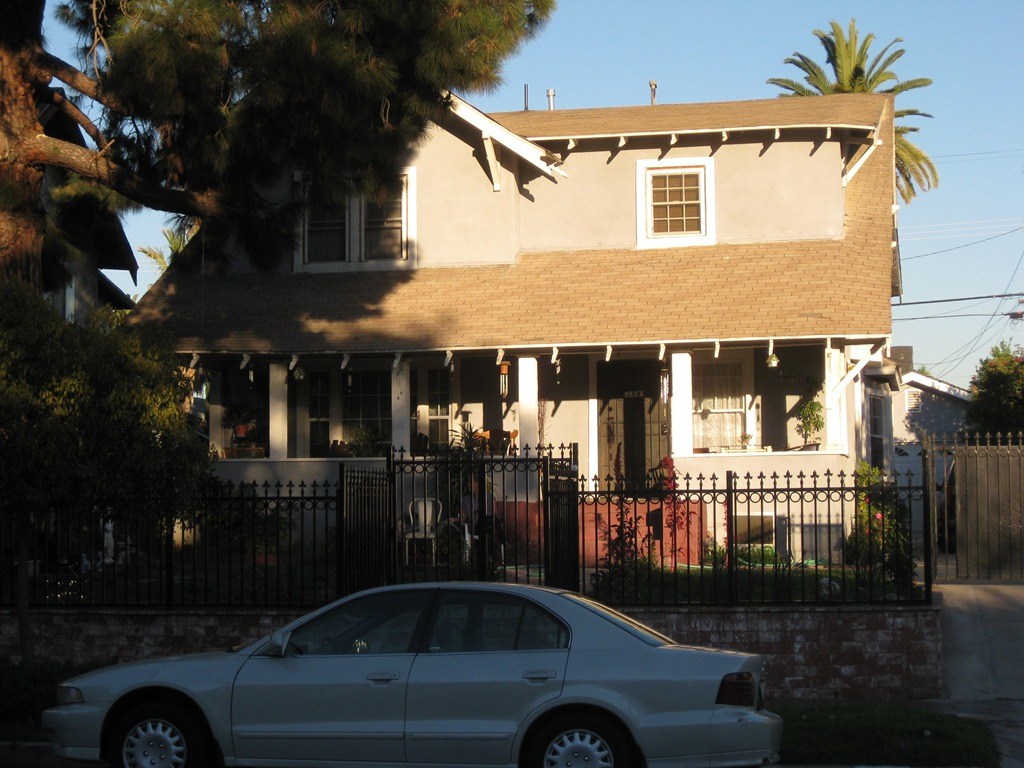
Gus likes living alone, being retired, and enjoying quiet time, but he knows Jessie needs help to and does the right thing. One of the things viewers remember most about this show was the beautiful old Victorian house they lived in.
Photo: reelgood.com
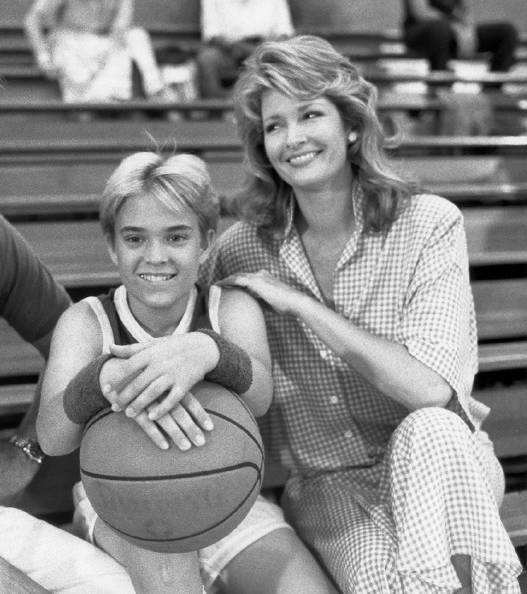
Deidre Hall plays the part of Jessie. She is best known for her role of Marlena on Days of Our Lives, and it’s interesting to note that she continued playing the role of Marlena while she starred in this show. Dee Wallace Stone, the mom on ET, was originally offered the part, but she declined. When Jessie gets to California, one of her priorities is to become financially stable. She gets a job as an administrative assistant. Eventually Jessie begins dating again which is hard for both her and Gus.
Photo: ebay.com
Kris, 15 and the oldest, is played by Shannen Doherty. She wants to get into the Air Force like her father. Doherty would go on to find fame as Brenda on Beverly Hills 90210.
Photo: pinterest.com
David (Chad Allen), 12, is the middle child and only son. Allen would later appear on Doctor Quinn, Medicine Woman for five years.
Photo: ebay.com
The youngest is Molly, 8, played by Keri Houlihan. She is a sweet and mild-tempered girl who wants to make everyone happy and for everyone to get along. Molly also brought her dog, Arthur, a basset hound.
Photo: pinterest.com
Joe Kaplan is the same age as Gus. While they don’t always agree, Joe is sometimes the voice of reason for Gus. Gus always listens to him and respects his viewpoint even if he thinks it’s the wrong perspective.
Michael Baum of the Los Angeles Times wrote of this show: “Our house is such a nice, sweet, good-natured show, and Wilford Brimley is so wonderfully endearing in the lead role . . . Please, NBC, preserve this warm and entertaining show for all us softies at heart.”
Photo: oocities.org
Unfortunately, the show was up against Sixty Minutes, and the ratings never achieved anything significant. If Sixty Minutes wasn’t bad enough, in season two it also had to face The Disney Sunday Movie. It ranked 59th in season one and 71st in season two.
I’m not sure why the network was not willing to move the show in season two and see if more viewers turned in without the pressure of Sixty Minutes.
Photo: ebay.com
I understand
this show was not of Shakespearian quality, but it was a wholesome show and
never really got a chance to get off the ground. Having a diverse group of
people and different ages learn to live together peacefully under the same roof
was interesting to watch. Everyone learned about compromise and family values.
The cast was made up of good actors and the plot was different from most other
family shows at the time. Brimley had just the right amount of crotchetiness.
His character sets the tone for the entire show. He could have been too grouchy,
turning off viewers but he made the show charming instead.
Continuing our Rewind 1980s, today we delve into the show that was thirtysomething. If you want to start a heated debate, just ask a group of people what they thought about the show. Everyone has a definite opinion, and the answers vary greatly. This is Us and A Million Little Things remind me a lot of thirtysomething. They are shows I look forward to every week. Not surprisingly, Ken Olin who played Michael on thirtysomething is the executive producer of This is Us; he also has directed many of the episodes, and Timothy Busfield who played Elliot Weston on the show has also been a director on This is Us.
Photo: npr.com Gary, Melissa, Ellyn, Michael with Janie, Hope, Nancy with Ethan, Elliot with Brittany
I loved the
show when it was first on the air. The first couple episodes I watched on DVD
had a few moments that seemed a bit too introspective and overthought, but as
the series progressed, I remembered why I loved the show so much. Choosing
between a show where characters might overthink occasionally versus some of the
mindless shows currently on television, I’ll take the first option every time.
Photo: hollywoodreporter.com A typical thirtysomething scene
Edward Zwick and Marshall Herskovitz, who both worked on Family, created this show for United Artists Television. It was on ABC for four seasons from 1987-1991. A group of baby boomers, made up of single friends and married couples living in Philadelphia, experience life after college. Originally the show was called “Thirty Something,” but it was changed to thirtysomething before it aired. The word “thirtysomething” was added to the Oxford English Dictionary after this series became so popular.
I would be remiss if I did not mention the memorable music from the show. W.G. Snuffy Walden and Stewart Levin were the composers for the theme song and much of the music that was heard in the background. A CD was released in 1991, titled “The Soundtrack From thirtysomething”. I have that CD and still listen to it from time to time. Walden would go on to compose music for many series including The Wonder Years, The West Wing, and Nashville.
Photo: zimbio.com
The series was extremely popular with young adults. It won 13 Emmy Awards and was nominated for 41. It also won two Golden Globes.
Photo: variety.com The Steadmans
Although this was an ensemble cast similar to Friends, the main characters were Hope (Mel Harris) and Michael (Olin) Steadman. Michael runs an advertising company with Elliot (Busfield).
Photo: amazon.com The Westons
He and his wife Nancy (Patricia Wettig) are good friends of Hope and Michael. (In real life Wettig and Olin are married.) Michael’s best friend is professor, Gary Shepherd (Peter Horton), and Hope’s best friend is Ellyn Warren, (Polly Draper) who works for the city. Michael’s cousin Melissa (Melanie Mayron) is also part of the inner circle.
Photo: cinemur.fr Ellyn and Gary pretend to be dating as a prank on Hope and Michael
She dated Gary in the past and there is always a “will they or won’t they get back together” vibe between them.
Photo: decider.com Michael and cousin and friend Melissa
Michael and Hope have a baby when the show begins, and the Westons have two young children, Ethan and Brittany. The children are all central characters in the show.
Intelligent scripts and realistic plots make the show a classic. As the show evolves, Michael and Elliot have to give up their company and go to work for someone else, Gary and his girlfriend Susannah (Patricia Kalember) get pregnant which leads to their marriage, Ellyn and Melissa have various serious relationships before they find their soulmates, Nancy pursues her dream of being a children’s author and illustrator, the Westons separate, and Hope is constantly weighing the advantages of being a stay-at-home mom versus returning to her writing career. Melissa’s career as a photographer skyrockets including work for Vanity Fair and a Carly Simon album cover. In addition, there is the unexpected storyline when Nancy battles ovarian cancer. She is told she is in remission and her friends throw a party at her hospital room, when Michael gets the call that Gary has been killed in a car accident on the way to see them.
Photo: whosdatedwho.comS Susannah and Gary get married
Photo: denverpost.com Michael and Elliot
In an article on hollywoodreporter.com in 2017, Craig Tomashoff interviewed Herskovitz about the creation of the show and the casting.
Photo:scottryanproductions.com Nancy helping Gary with teaching children’s literature
Herskovitz explained after quickly putting the script together, based in part on the concept of the movie The Big Chill, they had to find their ensemble cast. He said each character was a totally different experience. When Busfield walked in the room, they said he was cast before he even read a line. Marshall and Olin were already friends, so they cast Ken as Michael and then hired his wife but explained she was going to be married to another character. She only had one line in the pilot so she was a bit worried about the character, but they promised her that her character would be developed more fully. Horton was also a friend of Herskovitz’s. They lived in the same neighborhood and their wives were also friends. He wanted to be a director, not an actor. But when he read the script, he thought it was the best pilot he had ever seen, so he came on board. Mayron and Draper were both brought in for auditions. Mel Harris auditioned for Zwick and Herskovitz but then heard nothing. She had only been acting for about a year or so at that time. She finally got the call that she was hired.
Photo: pinterest.com Michael and Gary
The group worked very well together. The show focused on friendship and feelings. As Mayron once described it, rather than the big things in life, the show was “about the minutiae of life, not the disease or crime of the week.”
Photo: coreyparkeractor.com Melissa and her soulmate
This was seen in the marital relationships as well. Although there were a few big things that came between Hope and Michael, most of their arguments were smaller, petty things that most couples argue about from time to time. Hope wanted help with cleaning the house; Michael felt the laundry wasn’t done often enough. We didn’t see anything romanticized–the house needed repairs and trying to get a babysitter was a frustration. However, we did see things that were romantic. In the middle of a conversation about their daughter, when it was quiet, Michael and Hope would have a loving moment.
Busfield said the actors chose to focus on each other and insulate themselves a bit. Horton said “Ken, Tim and I became almost like brothers. We meshed in each other’s lives, never feeling competitive with each other. Tim was the most practical of all of us.” Because the cast was so close and they shared their lives with one another, Zwick admitted, that “we mercilessly robbed the cast of their life experiences.” Occasionally, someone in one of the actor’s past would not be happy seeing a story from their life on the screen.
Photo: variety.com
Busfield said the cast realized how important their characters were to the viewers and how much they related to them, sometimes in negative ways. Once in a grocery store, a woman came up and slapped him across the face because of the way he treated Nancy. She apologized when he reminded her that was not him but his character. Wettig said a woman asked her where she did her chemotherapy and then shared with her that she had just been diagnosed with cancer and had to find a treatment facility. Mayron started wearing her suspenders backward for Melissa just as a unique fashion. One day when she was out and about, she saw a lot of girls doing the same and they told her they were copying her. Horton’s story was that he had been a dedicated fan of Crosby, Stills, Nash and Young. One day at an event he had a tap on his shoulder and when he turned around, he saw David Crosby who shared that he was a huge fan of Horton and thirtysomething.
Photo: ew.com Susannah coping with Gary’s death
The show
mirrored real life for viewers. Many people were dealing with internal
struggles and thought that they were the only ones who experienced such
thoughts. There was a comfort in the realization that other people had the same
feelings. Viewers had an intimate relationship with the cast.
Most of the characters wanted to do something big with their lives and careers. They are now at the turning point where that may come true or they might have to re-adjust their perspective of what’s important. The married friends are jealous of their single friends at times and the single friends return the favor. Nothing is black or white.
If you think of life as a mosaic masterpiece, you realize each episode of the show looked at one tile piece in-depth. It can be exhausting and feel overwhelming to do that, but once you do, you develop an appreciation and understanding of the artwork as a whole that you would not achieve just looking at it as one thing.
THIRTYSOMETHING, (L-R), Peter Horton, Rachel Nagler, Patricia Wettig, Mel Harris, Timothy Busfield, Jason Nagler, Polly Draper, Ken Olin, Melanie Mayron, Season 1, 1987. (c) MGM Television/ Courtesy: Everett Collection.
When the show
came out, critics were divided. Some
loved it; some hated it. Gene Seymour from the Daily News, wrote that is would “bring you down” and “make you
uncomfortable.” However, he also said the show “deserves your attention.”
When the series was cancelled four years later, things hadn’t changed that much. An ABC spokesman said the show was cancelled partly for ratings decline and partly because Zwick and Herskovitz wanted to make feature films. At that time, Francesca Chapman, also of the Daily News, wrote that the series “has told us stories we already know and made it fascinating” and that “they were all the more gripping because a good story, told realistically and in detail, a story that doesn’t necessarily have a punch line or a happy ending, is an unusual thing on TV. After tonight, it will be all the rarer.”
The cast was featured on a reunion episode in 2009 on Good Morning America. When the show turned 30 in 2017, it propelled a lot of articles about the cast and the significance of the show. The show had not been forgotten.
keywordbasket.com GMA Reunion 2009
When thirtysomething started in 1987, it provoked a lot of disagreement about the show. When it went off the air four years later, the debate had still not been settled. Now thirty-two years later, there is still not a definitive answer. You love it or you hate it. While I admit, when I began re-watching the episodes from the first year, I was surprised that I saw too much whining which was a big criticism of the show originally. But once the season got underway, the whining was replaced with in-depth discussions about life and friendship. I loved it, and I’m grateful to the show for creating a place on television today that can feature a show like This Is Us. Just when you think you’re going to give up on television and just read, a show like that comes along and brings you hope that it’s not all a wasteland and that there is treasure to be found if you take time to look for it.
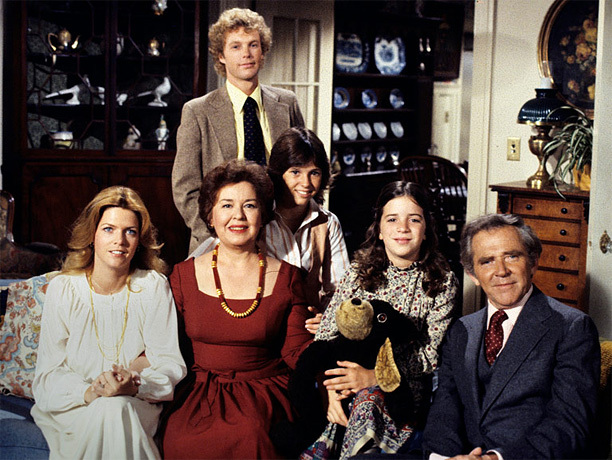
This month we are doing a 1980s Rewind, looking at some memorable shows from that decade. We start with one of my all-time favorite series, Family. I think this is one of the most disrespected and underrated shows from the past fifty years. It had an amazing cast, and the scripts were intelligent and well written.
Photo: pinterest.com
The show ran on ABC from 1976-1980, producing 86 episodes. The critically acclaimed show had three well-known producers: Leonard Goldberg, Aaron Spelling, and Mike Nichols. Jay Presson Allen created the series, and she wrote every episode.
Photo: metv.com
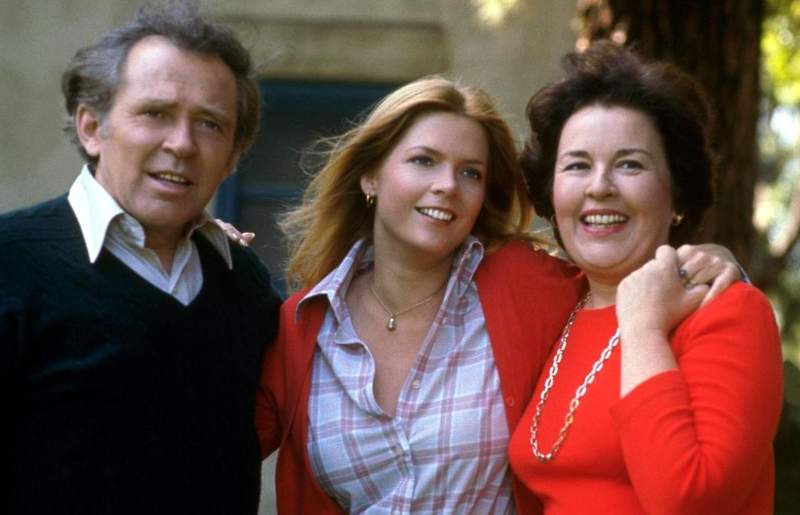
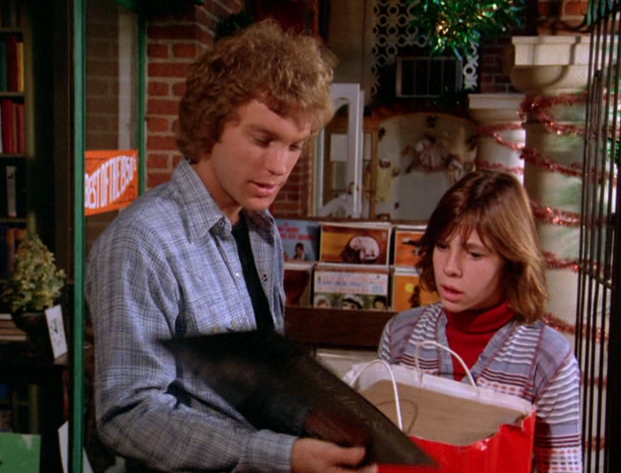
Kate (Sada Thompson) and Doug (James Broderick) Lawrence are an upper middle-class couple living in Pasadena, CA. They have three children: Nancy (Meredith Baxter Birney), Willie (Gary Frank), and Letitia (Kristy McNichol), known as Buddy. Doug is a lawyer, hoping to become a judge. He is a warm-hearted person who often finds humor in their family situations. Kate is a practical woman but can come across as a cold woman. She can be quite passionate and loves her family very much but has trouble showing a lot of affection. She always does what she feels is morally right. She has sacrificed her dreams to stay home and raise her family. Later in the show she does go back to school to major in music.
Photo: reelrundown.com The original cast with Elayne Heilveil as Nancy
In the pilot, Nancy was played by Elayne Heilveil, but Meredith Baxter Birney took over the role once the series began. Cheryl Ladd also auditioned for the part of Nancy. Spelling remembered her and later cast her in Charlie’s Angels. Nancy finds her husband Jeff (John Rubinstein) in the act of cheating on her and moves back to her parents’ home, living in their guest house with her son Timmy. Even though Nancy and Jeff are divorced, they are friends, and he appears on the show often and is involved in Timmy’s life. The Lawrences also had a son named Timmy who died when he was little. Nancy and her mother often butt heads. In the second season, Nancy decides to go to law school and is very successful.
Photo: nostalgiacentral.com
Willie is always trying to find himself and can’t quite decide who he is. He has a high IQ but drops out of school. He dreams of being a writer and later works for a photography studio for a while.
Photo: cscottrollins.blogspot.com
Buddy was a tweenager. Buddy is a tomboy and well liked by her friends and family. She had two famous boyfriends during the show: TJ played by Willie Aames and Leif Garrett. Buddy is much closer to her mother than Nancy is. Nancy and Buddy have a trying relationship too, although they both want to be closer. Willie and Buddy are very close.
Everyone in
our actual families could find someone in the show to relate to. I notice
myself looking at the show from a different perspective now than I did in my
teen years.
Photo: listal.com
There were 24 different directors during the series’ run. Richard Kinon directed almost 25 percent of the shows. Kinon had directed episodes of many classic shows including Bewitched, Hogan’s Heroes, The Patty Duke Show, The Partridge Family, Room 222, and That Girl. After Family, he would direct a quarter of The Love Boat episodes. James Broderick directed four of the episodes. Not surprising for me was learning that Marshall Herskovitz and Edward Zwick also tried their hand at directing. Both of them were also listed as producers and writers of the show. They would later go on to help create thirtysomething, a show we’ll learn about next week. Both men were also involved with Once and Again and Nashville, among other shows.
Photo: pinterest.com
The storylines were very realistic and handled with delicacy and intelligence. Some of the topics the show tackled included breast cancer, infidelity, senility, divorce, adoption, terminal illness as well as the typical teenage issues faced by most youth.
In the last season, the Lawrences adopt Annie Cooper (Quinn Cummings) after her parents are killed in a car accident. They were her parents’ friends and their choice for guardians if anything happened to them.
Photo: aveleyman.com
Rubinstein who played Jeff composed the theme music. Apparently, he inherited some musical genes from his father, Arthur Rubinstein, the famous classical musician. He has continued his dual career in both acting and composing since the show ended.
A couple other cast members also had famous relatives. Broderick’s son is Matthew Broderick, actor, and Baxter Birney’s mother was Whitney Blake who played Missy on Hazel, among other roles.
Photos: tucson.com
The show was
nominated for an Emmy for Outstanding Drama Series in 1977, 1978, and 1980.
Thompson, Frank and McNichol all won Emmys, and Broderick and Baxter Birney
were nominated as well.
I could not find a reason for it, but only the first two seasons have been released on DVD and that was in 2006. I have not seen the show in syndication for many years.
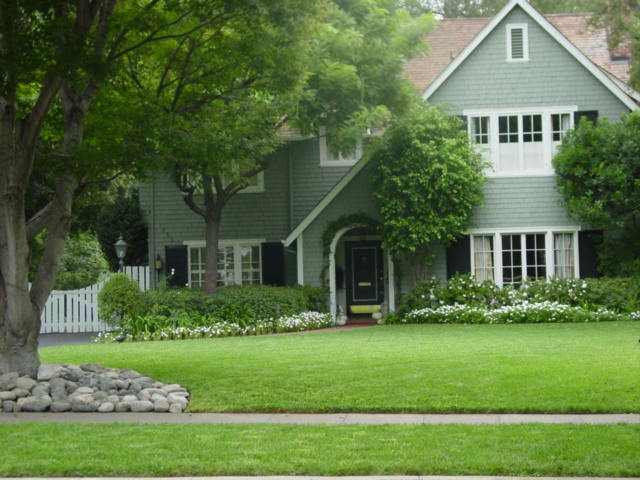
Photo: seeing-stars.com One of my favorite television homes: the Lawrence house
Plans were
made for a 1988 reunion movie. James Broderick had passed away, but he rest of
the cast was on board. When the writers went on strike, the project was placed
on hold and later dropped from production.
I watched a few of the episodes from season one. The show still holds up today. Although it closely mirrored the social issues from its era, those topics are still relevant today. It may have included some melodrama, but it never was about melodrama. It contained enough humor to offset the tragedy just like real life. Doug and Kate had strong moral values and they passed them on to their children but understood life was changing and they could not be close minded.
Photo: imdb.com Jay Presson Allen
Jay Presson Allen brought insightful writing to every script, but the incredible acting brought the characters to life.
UNITED STATES – SEPTEMBER 13: FAMILY – cast gallery – Season Three – 9/13/77, Sada Thompson (Kate), (Photo by ABC Photo Archives/ABC via Getty Images)
Sada Thompson was not overly affectionate but calmed her children down and could discuss anything with them. They relied on her guidance and wisdom. She embodied class and elegance. I was surprised to learn that Lear had hired her to play Archie Bunker’s blue-collar neighbor, a plumber named Irene Lorenzo for All in the Family. I was not surprised to learn that Betty Garrett replaced her in the role because Sada had too much genuine class and didn’t yell loud enough for Lear. James Broderick discussed working with Thompson. He said he “was only one of her many fans. Sada is about as close as we get in this country to the British super actresses like Dame Edith Evans and Dame May Whitty. I’m sure if Sada lived in England, the Queen would have dubbed her Dame Sada a long time ago.”
UNITED STATES – SEPTEMBER 21: FAMILY – cast gallery – Season Four – 9/21/78, James Broderick (Doug), (Photo by ABC Photo Archives/ABC via Getty Images)
Broderick flawlessly captured the fun nature of Doug Lawrence. Doug left the disciplining up to his wife most of the time and was not as serious as his wife. Doug and Kate were also very affectionate with each other.
Baxter Birney was the perfect combination of brains and beauty who wanted to be the wife and mother she saw in her mom as well as the respected lawyer she saw in her father.
Photo: elinitsky.com
Frank portrayed the young adult who couldn’t figure out what he wanted from life. He was not a “sit behind the desk kind of guy,” but needed to make a living. Willie was more interested in the humanities and finding meaning in life. He always seemed to be in difficult relationships. Early in his adult years, he fell head over heels in love only to find out she was pregnant before they met and she left him eventually but weaved in and out of his life for years. He later met his soul mate, but she had terminal cancer, so even though they married, they only had a short time together.
Photo: sowhateverhappenedto.com
McNichol was believable as a young girl moving into her teens and dealing with all the stress and changes teens go through. She was funny, silly and loveable and could be irritating occasionally and whiny, just like teens are. McNichol appeared very mature for her age and seemed to have everything under control, but it was a façade. She said she “was like a miniature adult.” She’d go off to the set “every day with a little briefcase. I really think I grew up backwards.” Dinah Manoff, who guest starred on Family before acting on Empty Nest with McNichol said “Kris was the most adult kid I’d ever met. She didn’t even have to study her lines. They’d hand them to her right before she walked out on the set.” Thompson once remembered that the adults “used to talk about how amazing it was that Kristy didn’t appear to feel any of the pressures of growing up as a successful child actress. The cost is enormous, you know, but Kristy didn’t seem to be paying it.” Unfortunately, she paid it with interest a few years after the show ended. When she was a young adult, she began to rebel and made some very poor choices, trying to recapture the childhood that she never got to experience.
Photo: pinterest.com
I don’t remember a lot about the role of Annie Cooper. Once Buddy began growing up, she was brought in to continue storylines kids could relate to. She had just been nominated for an Academy award for The Good-bye Girl and seemed to transition into the show easily.
Photo: ew.com
Hopefully the rest of the seasons are released on DVD so we can continue to appreciate the remarkable blend of writing, acting, and directing that was featured on this show.
Family–that says it all: joyful, heart-breaking, boring, exciting. loving, conflict and everything in between.
In this monthly “Behind the Scenes” series, we are learning about the people who work behind the camera and help make the show more realistic. It was very hard to find information about wardrobe designers. What these jobs look like vary by show. Some shows have actual designers like Marilyn Lewis on That Girl or Jean Louis on Green Acres, who we learned about in previous blogs. Some shows have a dresser who helps take care of costumes and keeps them in good condition. I could not find anyone listed in the wardrobe or costume departments for The Partridge Family. Perhaps they only had shoppers who purchased the items for the cast each season.
One thing I noticed and liked about The Partridge Family that was similar to My Three Sons was that each cast member got a wardrobe for the season, and they wore the same items on various episodes. You can definitely get a feel for their favorites by how many times they appeared throughout the year. I think this makes the characters more realistic. Like us, they only have so many clothes in their closet, and they wear them over and over, unlike current shows where the wardrobes are new for each episode.*
I chose to look at the clothing for The Partridge Family for a few reasons. Obviously, I can relate to them since I had those same items in my closet during that time. I can remember wearing bell bottoms, flowered or checked shirts with pointy collars, and carrying macramé purses. My favorite outfit during this time was a pair of bell bottoms with maroon and navy flowers that I wore with a navy blouse with a pointed collar and cuffs with buttons on them. I also remember a pink and white gingham skirt and blazer that I wore with a black bodysuit. My favorite skirt had a black background with jewel-toned flowers all over it. It had a slit up the side of the skirt, and I wore it with a black top. Another reason, I picked the Partridges to analyze style was because there were a variety of characters to dress—teens, older adults, kids, as well as a singing group.
The clothes The Partridge Family members wore fit with the times. They were a great representation of the clothing of the 1970s. In That Girl, Ann Marie’s wardrobe was almost like another character. Many people paid special attention to what she wore. In shows like The Brady Bunch or The Partridge Family, clothes were appropriate to the time and trendy, but they didn’t take center stage. They just reflected what everyone was wearing and made the characters more realistic.
Photo: retrospace.com
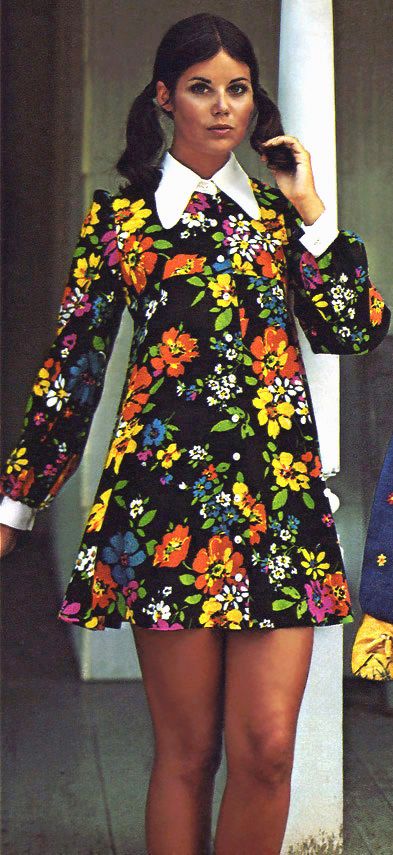
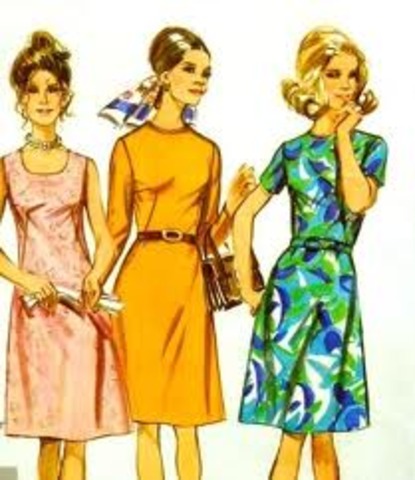
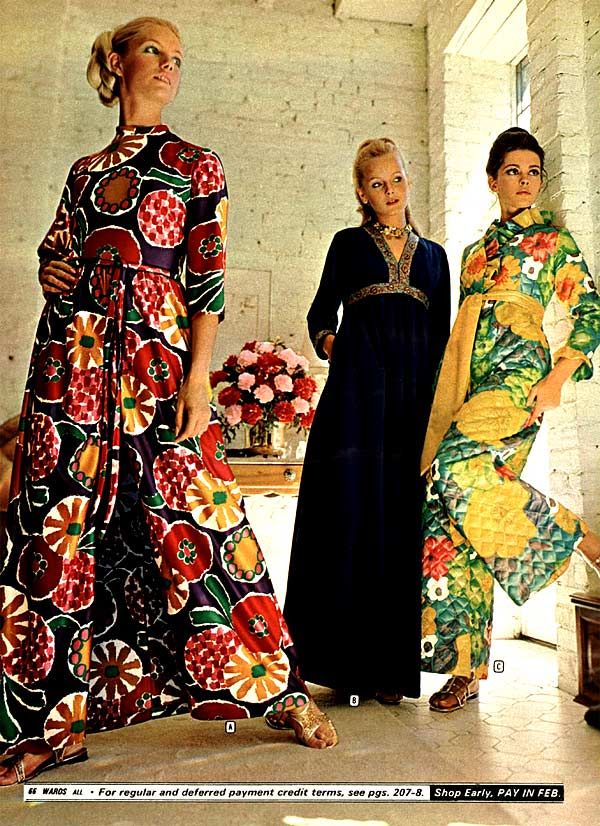
So, what were the fashions during this time? There was not “a” predominant style in the 1970s. Walking down a city street, you could observe Indian block print dresses, tie-dye shirts, hip-huggers, mini skirts in bold patterns, and peasant type dresses in muted colors.
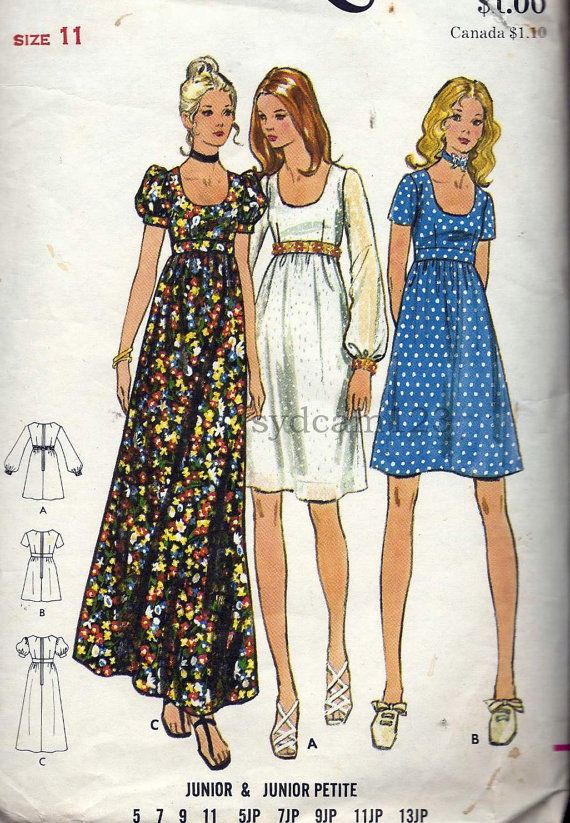
There were tons of options for dresses: long or short, single pastel or bold multi colors, solid or patterned, sleeveless or long-sleeve, jumpers or long, flowing skirts.
Men’s pants might be worn low or higher waisted. They might be cuffs or bell bottoms. They might be corduroy or denim.
Teen Girls and Young Adults
The Hippie themes carried over from the 1960s into the early 1970s. Many people were wearing bell bottoms, maxi dresses, granny dresses often trimmed with leather or lace, peasant blouses, and ponchos. There was not a hemline for the era; both maxi and mini-skirts were popular.
Culottes debuted in the mid-1970s. Colors tended to be earthy in nature: apple green, mauve, tangerine, mustard, and copper. Neutral solid colored pants were always appropriate, but jeans began to gain popularity in the mid part of the decade. Denim also showed up in jumpers. Accessories included chokers, dog collars, headbands, floppy hats, and jewelry made of feathers, shells, and leather.
Peace signs showed up in a lot of jewelry. Make up tended to look natural with just a hint of blush or lip gloss. Later in the decade, the disco look would bring in shimmery and bolder colors. Along with leather or macramé purses, younger women carried blue suede or tapestry printed bags. Sunglasses were often worn.
Laurie’s clothing was never too revealing or wild. She typically wore dresses to school and on dates but could also be seen wearing solid colored pants with blouses or tunics. She wore a lot of orange. For most of the series, she had long hair parted in the middle.
Photo: zaiusnation.com
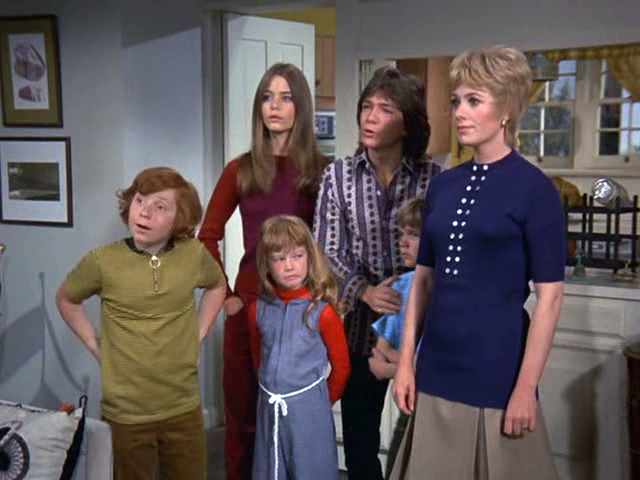
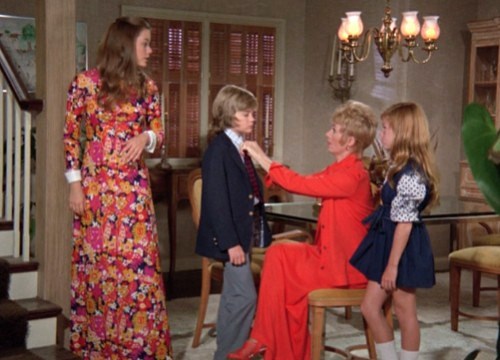
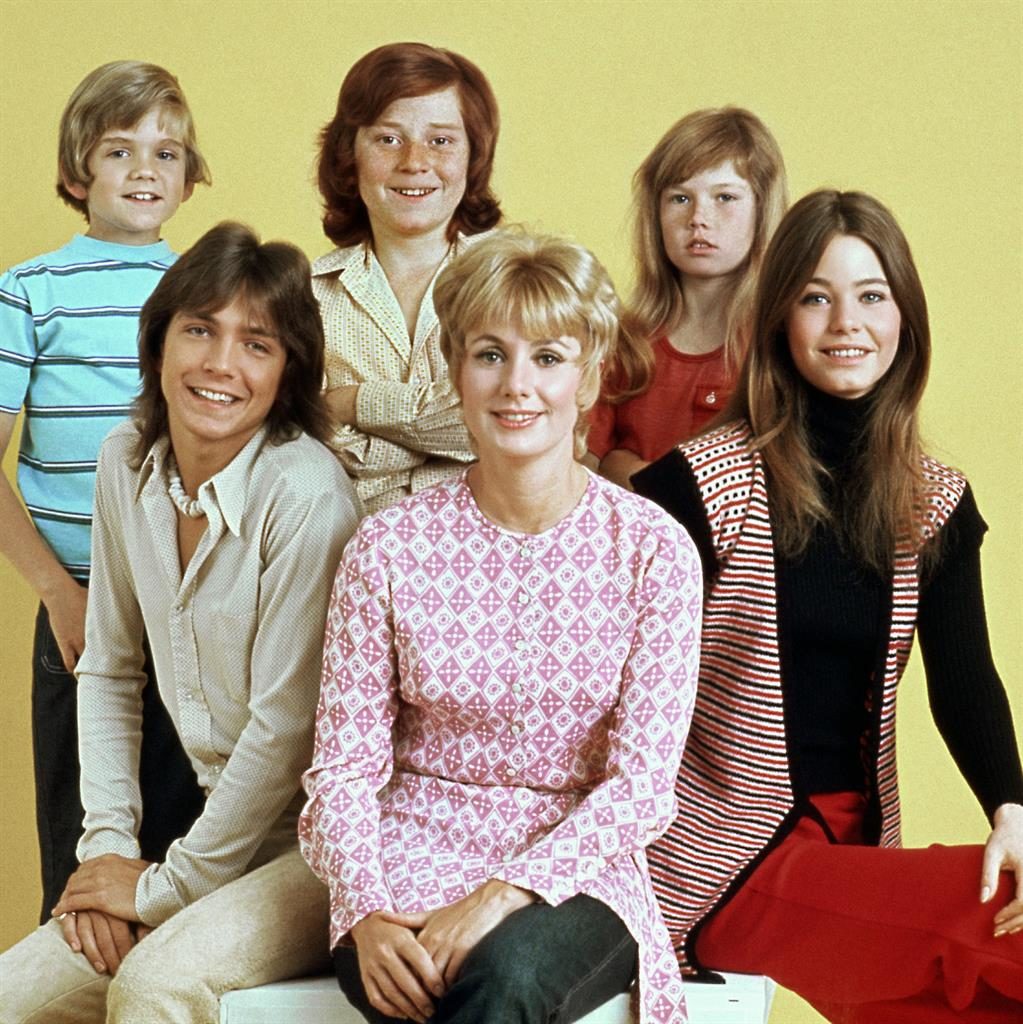
The photo above shows Laurie’s polka dotted skirt and top. We can also see Danny’s blue and yellow striped top. He had a variety of striped tops he wore as did Chris. The patterned bold-colored shirt Shirley has on was one of her favorites. She wore it on 6 or 7 shows during Season 2.
Older Women
Older women tended to wear pleated skirts with blazers or pantsuits. Dresses tended to hit the knee or a bit longer. Long skirts were also in vogue—some with loud patterns and colors. Sweaters and sweater vests were commonly worn with pants and skirts. American pride colors of navy, white, and red were popular as were pastels like baby blue, mint green, or bubblegum pink as well as neutrals in the camel or gray family. Polka dots were often added to blouses or dresses.
Everyone had at least one robe and some nightclothes were more casual for wearing around the house. Scarves were often worn with tops or dresses. Make up often included a pinky or peachy blush, green or blue eye shadow, and orange lipsticks.
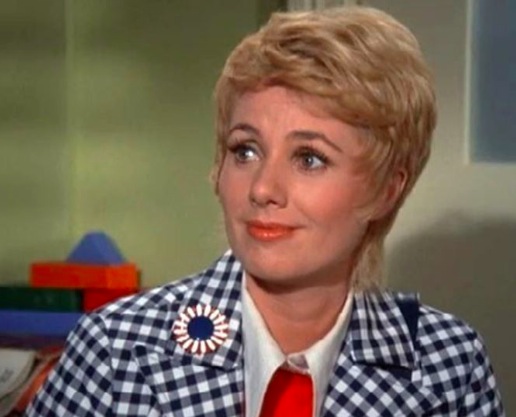
Most women tended to wear more gold than silver. Bangles, button earrings and hoops were go-to pieces. Flower brooches could often be seen on blazer lapels. Quilted handbags with large wooden rings worked for purses.
Shirley wore a lot of skirt and blazer outfits in pastel shades in Season 1. This made sense because she had been working as a bank teller until they became singing stars. She also wore knit short-sleeved tops with scarves often.
Photo: pensandpatron.com
During the other three seasons she wore a lot more pantsuits, often with blazers.
Photo: memorabletv.com
Many times she wore a pin on her lapel, and, in one episode, the plot concerns a pin Danny found and gave her. Her favorite colors seemed to be red, white and blue or pink.
Teen Men and Young Adults
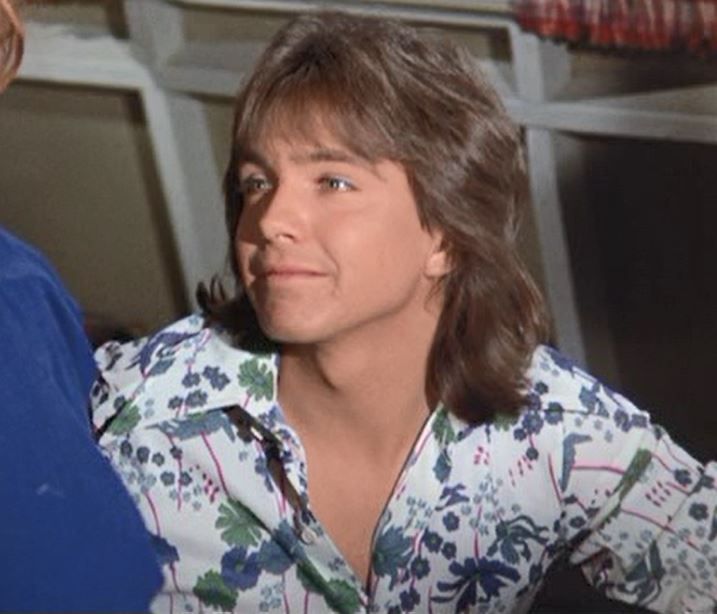
Polyester was the primary material for pants and tops. Bright colors were quite popular early, but by 1975, more neutral colors had taken over, especially browns. Shirts had pointy collars and often were flowered or had geometric patterns or paisleys. Blue jeans were popular with everyone but especially teen males.
Denim would be made into jackets and suits also. Approaching the mid-1970s, bottle green, peacock blue, black, and purple would be seen in shirts. Often, they were Henley type shirts or long sleeves with round necks. Leather belts were quite common. Small round sunglasses with mirrored lens were popular with younger men. Guys often wore necklaces.
During the first season, Keith tended to wear long-sleeved shirts. They were often flowered or patterned. His favorite was a purple, acqua, yellow, and green shirt with a pointed collar that he wore in at least 8 episodes during Season 1.
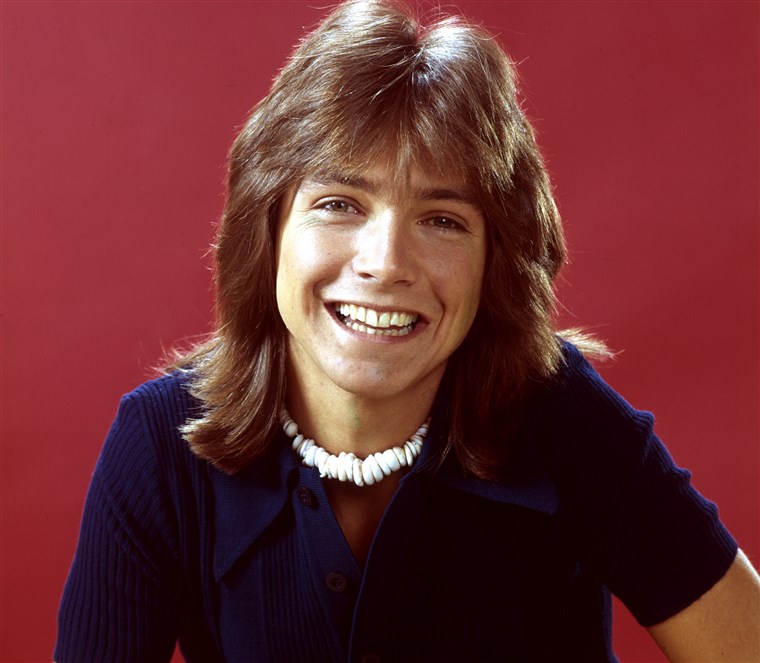
Later he switched to solid colored tops with round necks and long sleeves, usually in shades of brown, blue or marroon. When Keith Partridge began wearing puka shells, their sales skyrocketed.
Photo:nbcnews.com
Older Men
Solid pastel suits and sports coats were often worn. Many sports coats had checks or stripes.
Cardigan sweaters in brown, blue, or yellow were often worn over long-sleeved dress shirts.
Dress shirts were available in solid colors in every shade of the rainbow, as well as wild prints.
Rueben often wore sports coats with stripes. His favorite cardigan was a tan one with a bright blue dress shirt underneath.
Photo:starcasm.net
Footwear
Birkenstocks were introduced during this era. Boots were very popular. Go-go boots were still often worn with mini dresses, but lace-up granny style boots of leather were worn with longer skirts and dresses. Sandals were very popular with pants as were clogs. Earth shoes also made their debut in the 1970s in colors like navy, gray, burgundy, and cocoa. I have to confess I still have my navy blue earth shoes from seventh grade, and they are still comfortable.
Hairstyles
Longer hair was the norm for teen boys and girls, but short hair was not out of place. Young girls parted their hair in the middle. Bangs were also part of many hairstyles.
Older women and men tended to wear their hair shorter as well; women in their 50s and 60s would often put their hair in a bun. Pony tails and braids were ways to corral hair during hot weather. Afros were popular styles too. Shag haircuts were coming into vogue during the middle of the decade.
Kids’ Fashions
Kids’ fashions tended to be more mini versions of their parents and older brothers and sisters.
Girls wore matching pants and tops or dresses to school and jeans or other pants for play and after school wear. Often a scarf was worn on the head and tied under the chin that matched the dress. Boys wore solid short-sleeved shirts or striped shirts. Quarter zippers were often featured. They also had long-sleeved shirts like the older boys but in more solid colors or stripes.
When I was in fourth grade, we were allowed to start wearing pants to school but only if they had a matching tunic top, so that’s what my sister and I got for Christmas gifts that year. For weekends we wore jeans but not to school. It wasn’t until I moved to Wisconsin in 8th grade that I saw kids wearing Levis to school.
Olive green, gold, and brown were popular for boys. Girls also wore those colors but had more options with blues, pinks, purples, yellows, and bright colors to choose from. Girls wore colored knee socks with their dresses and skirts to school. Mood rings were a big hit in this decade.
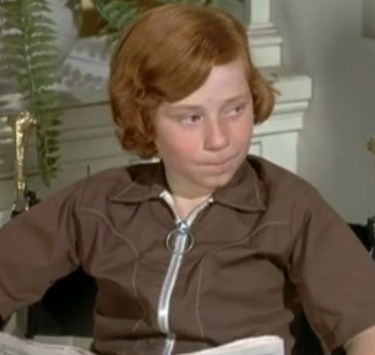
Most of Danny’s shirts were short-sleeved tops in solid colors. His favorite was a solid brown top. Many of his shirts had a zipper in them.
Photo: sitcomsonline.coom
Photo: pensandpatron.com
One of Danny’s favorite outfits was a gold top with pants of brown, orange, and gold stripes.
Chris dressed much like Danny.The shirt Tracy is wearing below is very similar to shirts Laurie often wears. Tracy often wore pants with pastel tops. We didn’t see her or Chris or Danny at school, but I’m guessing she wore a lot of tops and skirts.
Photo:sitcomsonline.com
Conclusion
The clothes of the 1970s were identifiable but were not locked into one style. They were comfortable and natural for the most part.
Photo: itsrosy.com
Women still wore a lot of dresses and skirts, although pants were becoming very popular even for school and parties. There were many options for someone purchasing outfits in this decade for lengths, colors, designs, and prints.
Photo: fanfest.com
Shoes and hairstyles also could be based on what the individual liked; there was not a “wrong” look. The Partridge Family gives us a great example of what the fashion was like during this time.
Photo: sitcomsonline.com
Their wardrobes were accurate and trendy but did not overshadow the characters. By concentrating on what each of the characters wore, we were able to learn a little more about them.
Photo: hollywoodreporter.com
*All photos from pinterest.com unless otherwise noted.
As we proceed
with our Behind the Scenes series this month, today we are thinking about set
designers. Before the interior designs are done, the production team needs to
find the perfect home for our television friends.
Did you ever daydream about places you might want to live in, even if you never would actually consider leaving your home? Perhaps it’s a small rose-covered cottage in the English countryside, maybe a ski chalet in the Swiss alps, or a house on the Maine coast with green shutters and a widow’s walk. I’ve thought about all of these places, but now I have another one to consider. It’s an historic neighborhood where some of my favorite television friends lived. Today we learn a bit about the Columbia Ranch.
Photo: columbiaranch.net
Now called
Warner Brothers Ranch, the former Columbia Ranch was in Burbank, CA. In
addition to dozens of television shows, it was the setting for many movies as
well such as Mr. Deeds Goes to Town,High Noon, and Lost Horizon. The neighborhood interiors were typically shot at other
studio locations.
In 1934, Harry Cohn, head of Columbia Pictures, purchased 40 acres in Burbank. In 1948, Columbia got into the television business under Screen Gems.
Photo: pinterest.com
During the
1950s, Captain Midnight, Father Knows Best, The Donna Reed Show, and Dennis
the Menace were filmed here. By the 1960s, the ranch was used continuously
for television and movies. The set was about six blocks but looked much larger
on camera shots. Shows during the 1960s included My Sister Eileen, Hazel, Our Man Higgins, The Farmer’s Daughter, Bewitched,
Gidget, I Dream of Jeannie, The
Monkees, and The Flying Nun.
In 1970, a
fire destroyed a quarter of the neighborhood, including many buildings on
Blondie Street. After rebuilding, taping continued on the set. During the next
three decades, shows included The
Partridge Family, Bridget Loves
Bernie, Apples Way, The Scarecrow and Mrs. King, and Life Goes On.
In 1971, Columbia and Warner Brothers combined their companies and merged into The Burbank Studios. The Ranch then was relegated to a back backlot.
Photo: columbiaranch.net
When Columbia Pictures moved its production facilities to Culver City in 1990, Warner Brothers gained ownership of the Ranch.
Photo: pinterest
Photo: pinterest
It’s continued to be a busy spot for filming. The fountain in the park was the one shown in the opening credits in Friends.
Nearby is also a swimming pool used on a variety of shows, including The Partridge Family.
The most famous street in the Ranch was Blondie Street. Blondie Street was named for Blondie Bumstead because the Blondie movies of the 1940s were filmed here. Walking down Blondie Street reveals homes that we were all familiar with growing up in the sixties and seventies.
Photo: columbiaranch.net
It’s a curved
residential street with twelve different houses, surrounding a large, central
park. There is also a brick church and paved sidewalks. Three of the buildings—the
Lindsay House, the Little Egbert House, and the Oliver House—were original to
the 1935 set production.
The Blondie House
Photo: columbiaranch.net
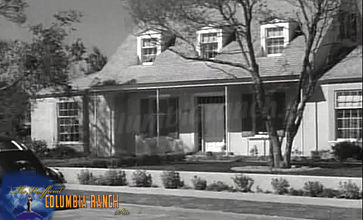
This set, constructed in 1941, was the home for Major Nelson on I Dream of Jeannie, Mr. Wilson on Dennis the Menace, and the Andersons on Father Knows Best, in addition to the Blondie movies. Later it housed the operations office for the Warner Ranch. Of course, Jeannie’s house was not here, it was a Jim Beam decanter that was sold during Christmas of 1964.
The Corner Church
Photo: columbiaranch.net
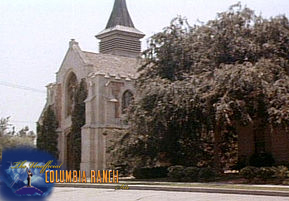
When thePartridge Family drives off for a show in their bus, you can often spot the
church which is just down the road from their home, across from The Stephens’
home on Bewitched. It was moved here
in 1953. When any of the series needed a church, this was the one. It can be
seen on an episode of Hazel when the
family attends church.
The Deeds Home
Photo: columbiaranch.net
Originally built for Frank Capra’s movie, Mr. Deeds Goes to Town in 1936, the house is only seen briefly in the movie. The Three Stooges filmed there in the thirties and forties. In the sixties it was seen in Batman. Both Gidget and The Partridge Family used the house as the high school and Bewitched used it as a civic building. In 1989, the original house was demolished. In its place, The Chester House and the Griswold House were built. The Griswold House was built for National Lampoon’s Christmas Vacation.
The Lindsay House
Photo: columbiaranch.net
Constructed in 1936, this house was best
known as the Baxter home on Hazel. It
also served as the Lawrence home on Gidget.
The Higgins House
Photo: columbiaranch.net
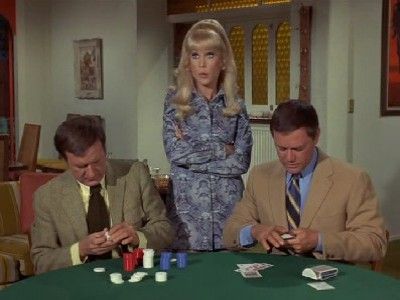
This structure was constructed for the show Our Man Higgins in 1962. It was later the home of Darrin and Samantha Stephens on Bewitched from 1964-1972. On I Dream of Jeannie, it was the home of Alfred and Amanda Bellows.
Photo: pinterest.com
For Bewitched, the interior and backyard scenes were filmed on a sound stage. The stairs ended in a hallway, but the doors only led to small closets, not the master bedroom. A modular first floor served as a setting for all the rooms. The den doubled as the nursery. A fake wall was put up to hide the view to the kitchen. When the den was needed, brown paneling was put over the nursery walls and the window was covered with a wall near the fireplace.
Photo: darkershadows.com
If you look closely, you’ll notice the avocado and gold flowered sofa in the Stephens’ living room was the same one used by Alfred and Amanda Bellows in their living room. But the shows shared well. On one episode of Bewitched, Louise and Larry Tate are seen at their kitchen table, but the kitchen looks identical to Major Nelsons’s. Roger Healey’s bedroom eerily resembled Darrin and Samantha’s.
Photo: youtube.com
Photo: pinterest.com
I guess I was too busy crying to notice that this house was also Brian Piccolo’s home in Brian’s Song.
The Partridge Family House
Photo: pinterest.com
The house across the street from the
Stephens’ house was home to Abner and Gladys Kravitz. During the filming of Dennis the Menace, it was Mrs. Elkins’
house. It was also the home of The Partridge
Family. In 1989 it became the Thatcher home on Life Goes On.
The home was built in 1953, modeled after a Sears, Roebuck & Co. plan. The modest two-story home was a perfect fit for the Partridges with its white, picket fence. The interiors were filmed at the Ranch as well. Located next door to the Blondie House, there were shrubs between the homes that were featured several times on the Partridge Family. In an episode where Keith shoots a movie, Shirley is clipping the hedges and begins dancing for the film, not realizing her neighbor is watching her. We see the hedges again when Keith moves into the room above the garage next door and gets free rent in return for yard work.
Photo: flickr.com
Photo: flickr.com
Because they were filming the show when the infamous fire broke out, some of the structure had to be rebuilt for the remainder of the series. From season 1 to 2, Danny and Keith’s bedrooms switch back and forth a couple times, and I wonder if this is the reason.
The Oliver House
Photo: columbiaranch.net
Constructed in 1935 for a movie, the Oliver house was moved to Blondie Street for the home of the Stone family in The Donna Reed Show. It was also the Mitchell home where Dennis resided with his parents.
The Little Egbert House
Photo: columbiaranch.net
Technically, Little Egbert is not on Blondie Street but on its own, Little Egbert Street, basically an alley. Fortunately, the 1970 fire did not damage any of the original structure. The house was also used in Minding the Mint and as The Shaggy Dog, the hangout for Gidget and her friends.
Photo: retrospace.org
For sentimental reasons, I would choose the Partridge Family home to live in. However, I would have to remodel the kitchen. I could live with the red breakfast table set. The avocado and gold flowered wall paper may have been very chic in its day, but even I am not that sentimental!
In our quest to go behind the scenes during this month of blog posts, today we learn a bit about set decoration. There are several job positions available on the set of a television show. The set decorator is responsible for buying or renting the set items, the storage of items, placement and monitoring the budgets. The assistant set decorator reports to the set decorator. They often do research before planning for the various sets. The set buyer also reports to the set decorator. They take care of purchasing or renting the individual items needed for the set. Buyers create relationships with stores and antique vendors. The lead dresser carries out tasks assigned by the set decorator. The onset dresser takes care of props, cleans items, places items in relationship to the camera lens.
Beth
Kushnick, the set decorator for The Good
Wife shares some advice for set design: do your research, create a
decorating workbook, choose an item that sets the tone of the room, carry a
tape measure with you at all times, try out different furniture placement, and consider
using unusual paint colors.
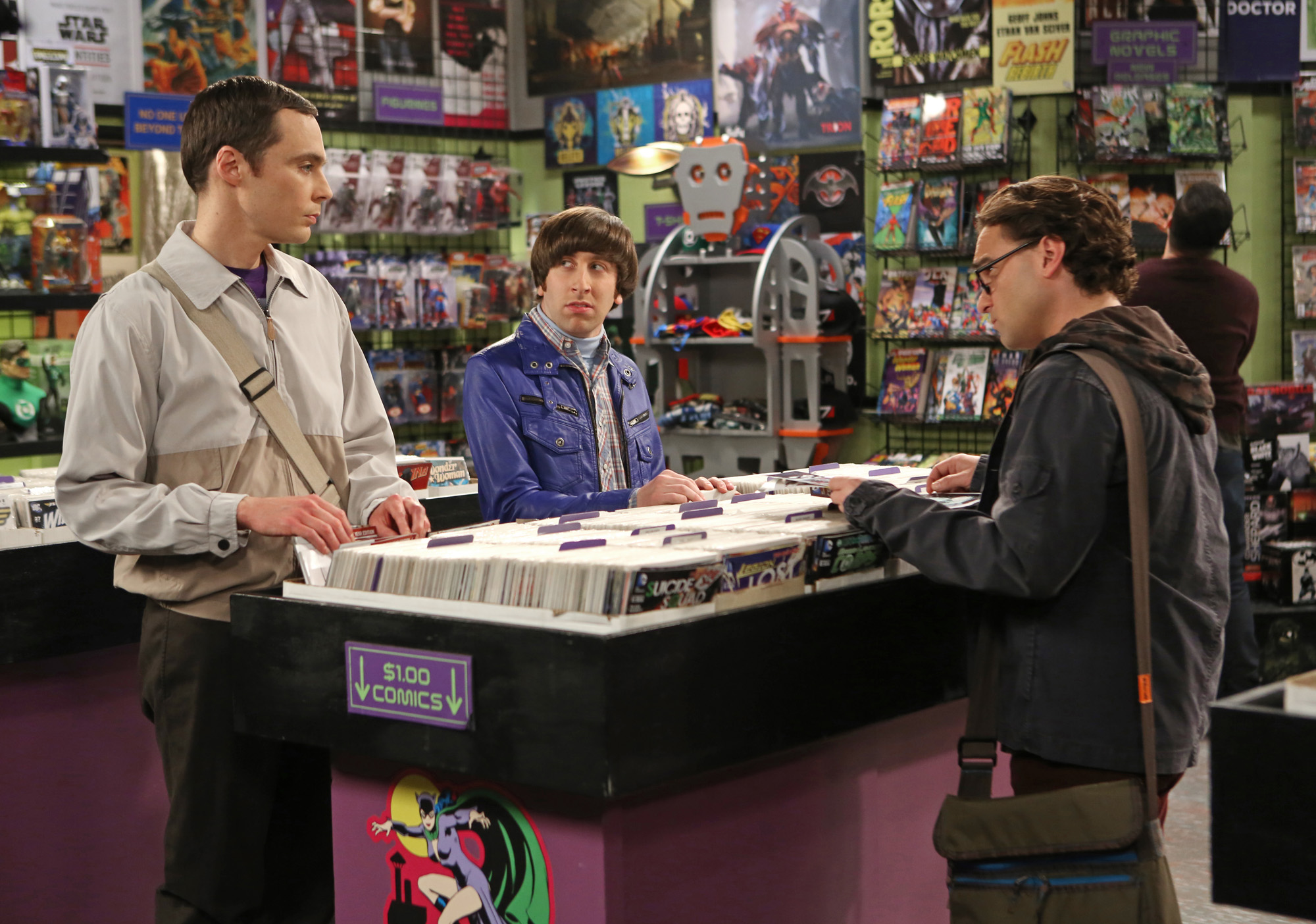
Maggie Masetti wrote an article in 2012 about chatting with Ann Shea, set decorator for The Big Bang Theory. Ann says “she is the set decorator, and so usually once I get the plans and the walls are built is when I start my work of providing the furniture and the plants and the artwork and all the cool objects, the floor coverings and the practical lights.” She has a variety of sources she uses to shop including prop houses, online shops, and retail stores. She said once the sets are developed, she continues to be busy. Sets are put up and taken down over and over and they have to be just right. Also, if a show is on for an extended time period, subtle changes are necessary just like our homes.
Ann said once she determined the set for the comic book store, she was happy, but then a producer said that it had to change every episode like a real store with inventory in and out—as viewers we don’t think about all the work that goes into sometimes more minor settings. I’m thinking about how much a set designer would have to learn to create an astrophysicist’s office/lab. A couple of her favorite items that show up on the show include the DNA sculpture, the WMAP beach ball, and the periodic table shower curtain.
Photo: spotern.com
One of the
things I hadn’t considered was that designers have to fill closets and drawers
in the main sets, so everything is realistic.
I thought it would be fun to consider some of the sets from shows that are a bit more unique and then look at shows that had to be more realistic. Let’s take a look at a few shows that had unusual sets: The Munsters, Gilligan’s Island, and Green Acres. Then we’ll compare some apartments of some of our favorite television characters including Mary Richards, Bob and Emily Hartley, and Frasier Crane.
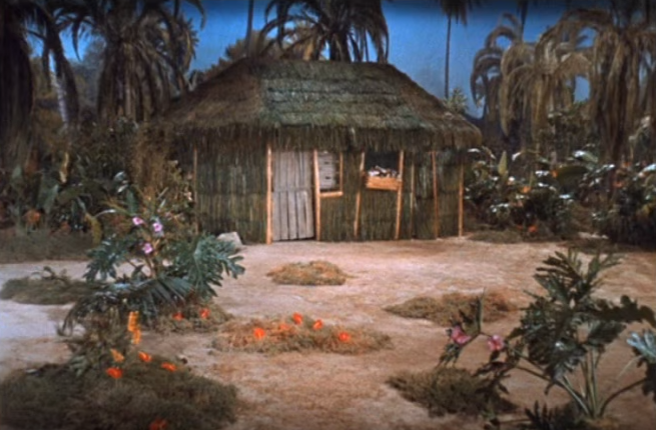
Photo: gilliganfandom.com The girls’ hut which you can tell by the flower box in the window.
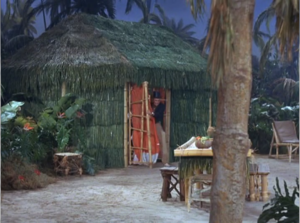
Photo: gilliganfandom.com The Howells’ hut with its orange door
Gilligan’s Island sounds like an easy set to create. Just throw a few huts up on amid trees and jungle greenery, right? However, you have to personalize each hut with basic items to give each one its own personality. There is also that fine line that is often crossed on the show about how much stuff the castaways actually have with them. I am not surprised they had an accident and were wrecked; I don’t think the storm had anything to do with it, I think it was the thousands of pounds of luggage they apparently took on board.
Photo: gilligan’sisland.org
First, we have the Howell’s hut. Flowered red curtains frame the window. There are a number of knick-knacks setting about including Mr. Howell’s polo stick. There are twin beds with elaborate headboards, several wicker chairs, a writing desk, several tables, and a bamboo hutch. Of course, Mr. Howell installed a hidden safe for his valuables and money. A second room was built to store their luggage and clothing.
Photo: youtube.com
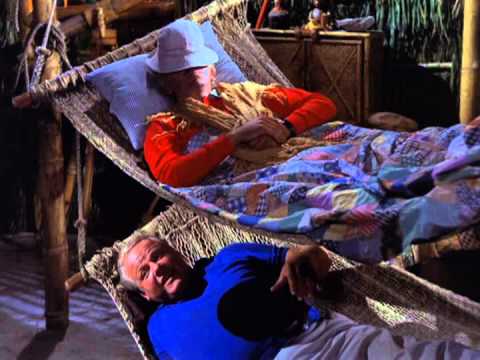
Gilligan and the Skipper share a hut with hammocks. There is a window for each of them at the front entrance. A bamboo telescope resides under one of the windows. Decorations are minimal but include a photo of the Skipper, several shells, a couple of candles, a small table and chair and a crate for Gilligan’s personal items. Gilligan and the Skipper don’t appear to have any other clothes than their uniforms.
Photo: youtube.com
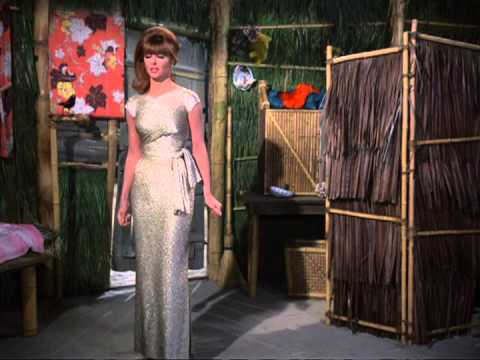
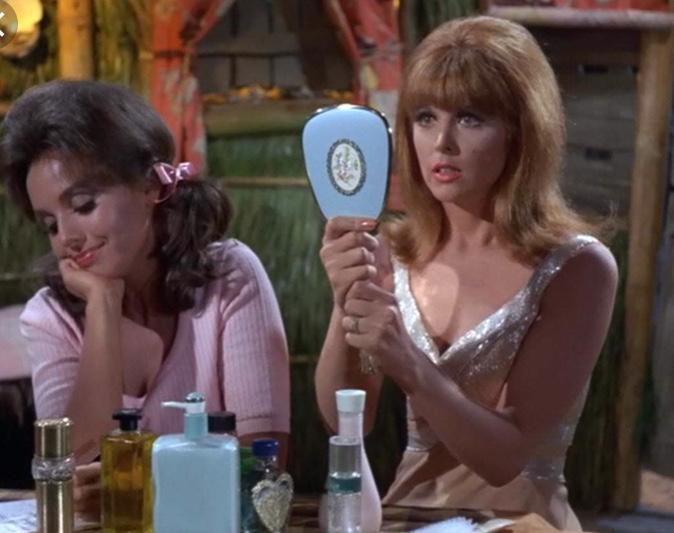
Mary Ann and Ginger also share a hut. A heavy wooden door and one window face the front. A flower box hangs on that. Flowery curtains make it look more “girly.” Each girl has her own cot and here are two tables, one for writing and one for make-up.
I’m assuming the Professor stays in the supply hut. This hut stores supplies, food, water, items salvaged from the SS Minnow and the Professor’s crudely designed laboratory. Like the girls’ hut, it has a heavy door and window out front and includes a smaller window as well. Boxes and crates are placed here and there as is the Professor’s equipment.
Photo: mentalfloss.com
The huts help define the characters who live there. In addition, we learn a lot about them by their clothing with the Howells appearing in designer clothing, Ginger in gowns, Mary Ann in informal rural outfits, the Professor in plain shirts and slacks, and Gilligan and the Skipper in their nautical attire.
Photo: pinterest.com
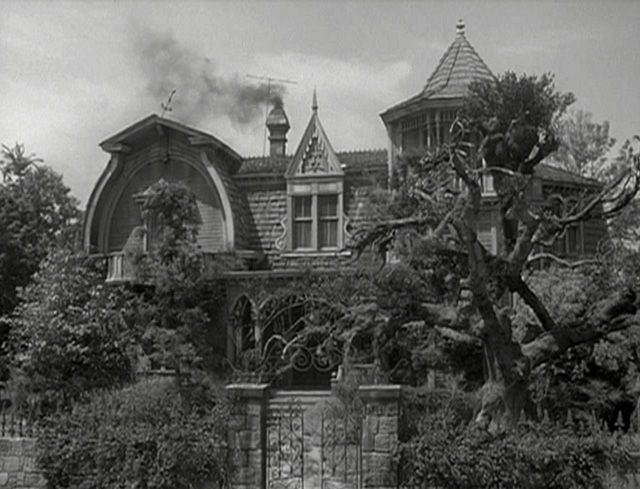
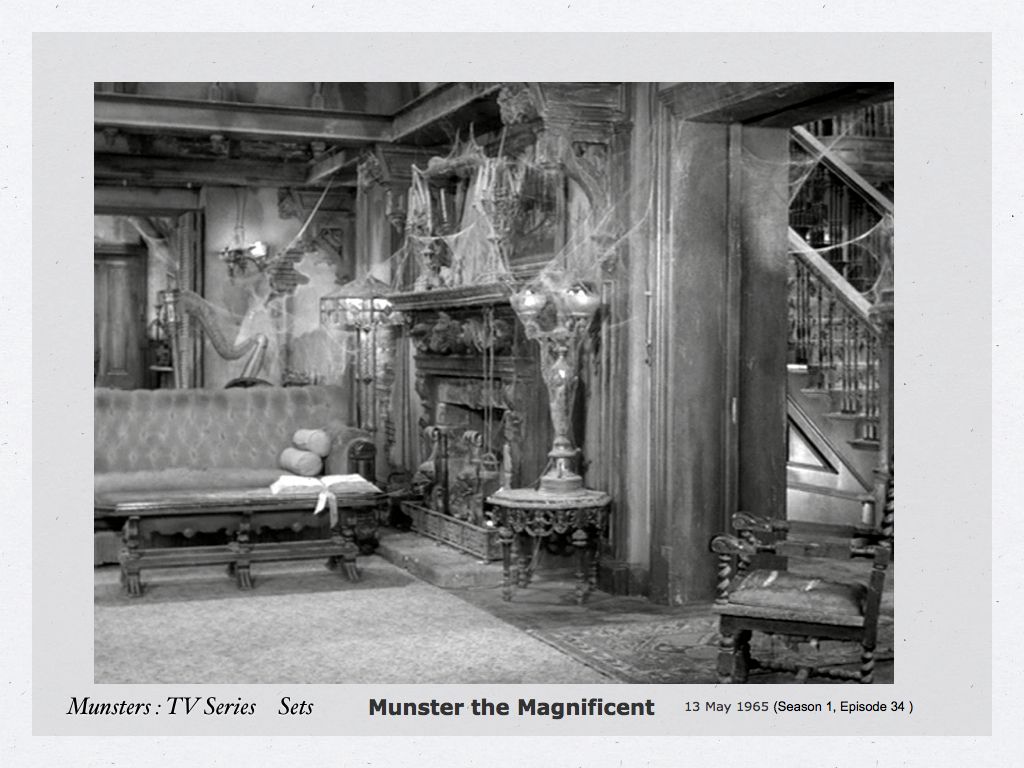
From the airy, tropical setting, let’s flip to the dark and dingy interior of The Munsters. The Munsters are said to live in an average neighborhood, but their home is anything but average. Located in Universal City, the house was rumored to cost a million dollars to outfit in 1963.
Although Herman works at the local undertakers and Eddie goes to school with the other kids, when friends come over, it is definitely not one of the cookie cutter homes in the neighborhood. There are cobwebs all over the house, and the windows are covered in curtains that let very little light in.
Photo: pinterest.com
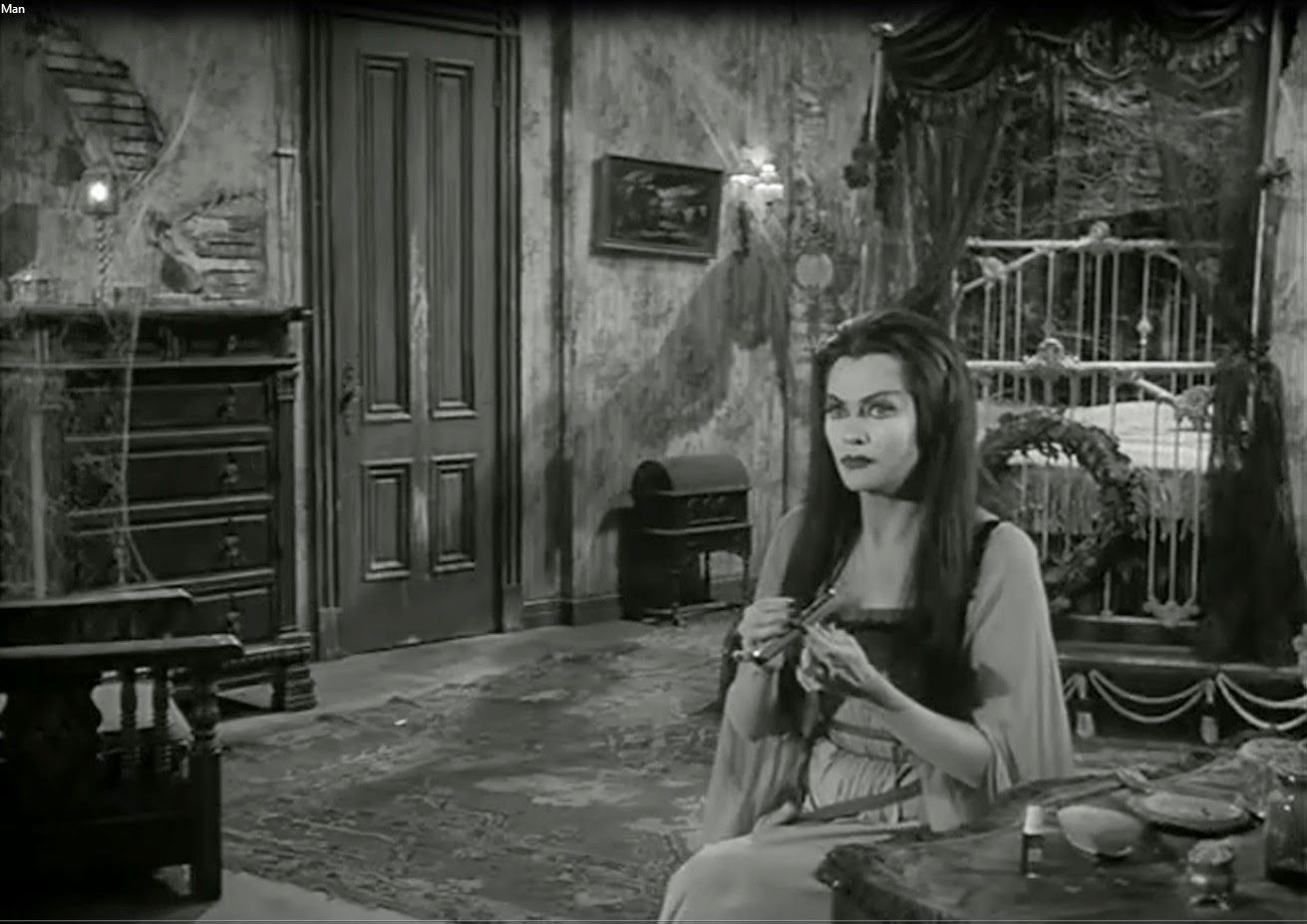
Lily’s bedroom looks more like a setting for a horror movie than a family sitcom, but she and Herman are quite comfortable in their master bedroom.
Photo: pinterest.com
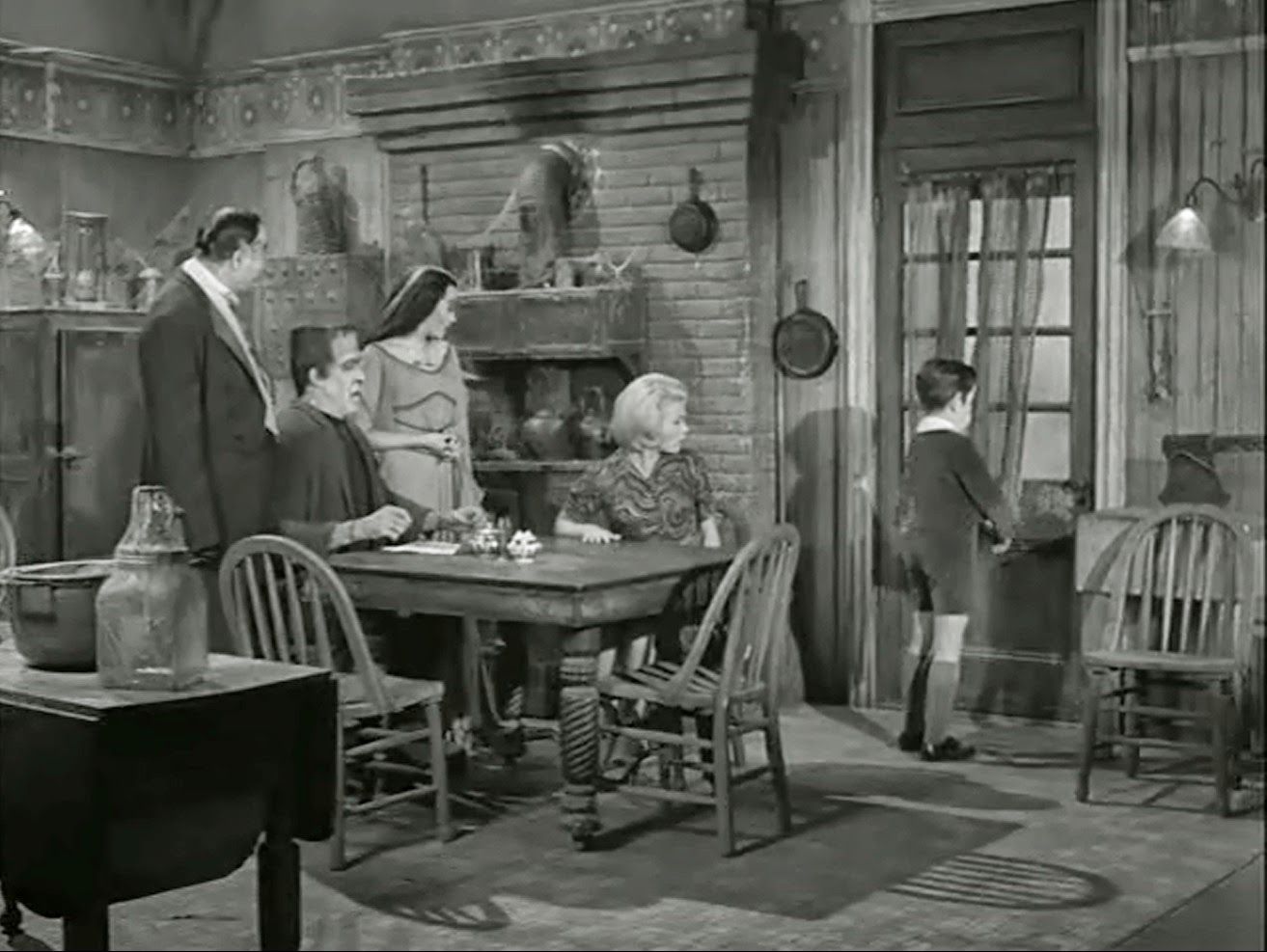
Although it appears to have been abandoned for quite some time, this is where the family gathers nightly. The furniture is heavy, dark and very Victorian. There is little in the way of knick-knacks.
Photo: pinterest.com
After open and sunny and then closed and dreary, let’s combine the two and look at the Douglas home on Green Acres. In New York City, Lisa and Oliver were wealthy and lived in a penthouse apartment with expensive furnishings. Their house in Hooterville is anything but exclusive.
Photo: hobbydo.com
The walls are falling down, the wallpaper is peeling off the walls, and one of their bedroom walls is open to the outside elements which makes it easy for them to climb the telephone pole when they need to make a phone call.
Photo: pinterest.com
Although they are in a rural setting, Lisa continues to wear her designer gowns and negligees and brought all her expensive items from her apartment.
Lisa and Oliver brought all their expensive artwork and furniture with them from their New York penthouse. Somehow it does not seem out of place for the Douglases. Lisa even uses her fine china and crystal daily.
While it’s fun to see some unique designs that set the stage for some of our favorite characters, now we switch gears to analyze three apartments that had more realistic designs. Often, we watch sitcoms and somehow in the middle of a city like New York, someone has a large apartment that we all realize they could not afford. In order to be more believable, set designers must rely on what a character could afford for their home and interior items on their salary.
Let’s take a look at three apartments and see how they change as we increase the salaries the characters have. The one thing all three have in common is a great terrace with a view.
Photo: chicagotribune.com
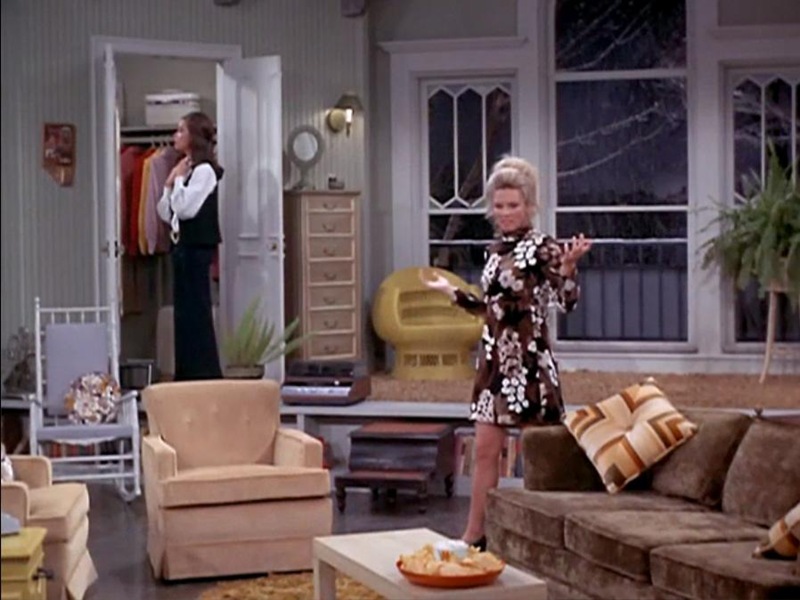
Mary Richards’ apartment on The Mary Tyler Moore Show is an iconic one. Growing up, most girls dream of having an apartment just like this one. Located in a classic Victorian home in Minneapolis, her home was affordable but cute and practical.
Photo: pinterest.com
Mary paid
$130 a month for her home. Mary often complains about having enough but not any
extra money, so she needs to be a bit frugal with her funds. This is a studio
apartment so her living room and bedroom share the same space. Usually this is
not an issue, but it’s tough to have company stay with her. One night after Mary
has settled down for the night, Rhoda and her date stop by and we see Mary
quickly trying to fold her bed back into the couch, so they don’t have to sit
on her bed and realize they woke her up.
Her rooms are outfitted with great storage options. In her sunken living room, there are shelves running around part of the room where she stores books and knick-knacks. A cozy little area with a chair and table is in front of her terrace window—a fun space where she can read or have coffee with a great view.
Photo: pinterest.com
A little
wood-burning fireplace sets off the kitchen, making the room cozy.
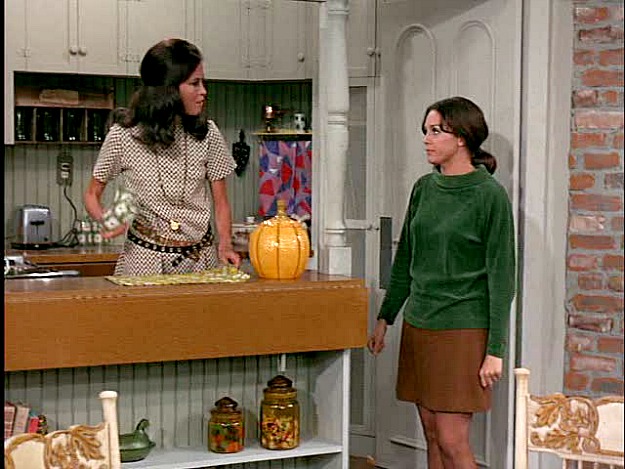
She has a functional but little kitchen. A decorative shade allows Mary to open up the area between the kitchen and living room or close it off if she doesn’t want people to see a mess in the sink.
Photo: imdb.com
To the left of the living room is a door. When it’s open, we see Mary’s closet and we know that if you keep going, you’ll find her bathroom. I don’t recall ever seeing the bathroom during the series, however.
Photo: hookedonhouses.com
While the
furniture is nice, it probably is not new, and Mary may have picked the items
up at used furniture stores or antique shops. Her larger pieces include her sofa
bed, a wicker coffee table, an armoire, and a table and chairs. Her personal
items strewn around the apartment tell us a bit about Mary. Most people
remember the large “M” that hangs on her wall. She has a Ben Shahn poster on
her wall in the first season and a Toulouse-Lautrec poster, Jane Avril, in
other years. A Laurel lamp is near the reading chair, a pop of sixties
modernism that Mary might have had in school in her room. We see her Samsonite
luggage that is good quality and probably was a present from her parents. The
pumpkin cookie jar adds a bit of color to the kitchen. These items tell us Mary
was sentimental, educated about art but could not afford the real thing, and was
an individual, learning her style now that she was living alone for the first
time.
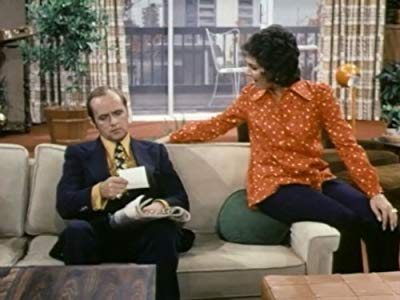
From Minneapolis, we travel down the interstate to Chicago where we find Bob and Emily Hartley’s apartment on The Bob Newhart Show. Bob and Emily are doing well, but we learn from their furnishings that they don’t care about things much. Bob is a psychologist but seems content to keep a small practice. Emily is a teacher and she and Bob debate about whether she should work or if she should work, so her salary is not necessary to their lifestyle.
Photo: xiguamovies.cf
They have a
beautiful apartment with a terrace and a view of Lake Michigan. It’s close to
the Thorndale station.
Like Mary, they have a sunken living room with the kitchen located off of it. The kitchen is bigger than Mary’s but still small. Much of the time they eat out or have something easy. Neither Bob nor Emily are gourmet cooks, but Bob grills on the terrace often.
Photo: dailymotion.com
A table between the two rooms is where they take their meals unless they are eating in front of the television. The television is on wheels and Bob can move it back and forth between the living room and the bedroom.
Photo: Ithinkthereforeireview.com
To the left of the living room is their large bedroom and bathroom. To the right is Bob’s den and another bathroom that does not have a tub or shower.
Photo: sitcomsonline.com
Like Mary, Bob and Emily enjoy art and have several pieces on their living room walls. They switch out their furniture a lot and we see three different sofas in their home: brown, white and royal blue.
Photo: dailymotion.com
My guess is
that they save a lot of their money and what they spend, they spend on travel,
books, and eating out.
Heading 32
hours west of Chicago, we arrive in Seattle, the home of Frasier Crane. Frasier
is also a psychologist like Bob. He is a well-known doctor and has his own
radio show, garnering him more money than Bob.
Frasier lives in Elliott Bay Towers and doesn’t have a view; he has “the” view. The backdrop for the terrace shows the Space Needle which cannot be seen in reality from these apartments. The cost for the backdrop was about $55,000 to construct. It seems very expensive for a prop, but it goes back to making sure everything about the apartment was the best Frasier could obtain.
Photo: thrillist.com
This was a very expensive set to design. According to the book, Frasier: A Cultural History, by siblings Kate and Joseph Darowki, the architecture and set building cost $250,000 and the total overall for the furnishings and other items came in at about a million dollars. A security guard was on site during shooting.
Photo: pinterest.com
According to Thrillist.com,
Frasier’s apartment today would cost about three million dollars. We realize
pretty quickly that Frasier is all about the good life and the image he wants
people to have of him as a successful, wealthy person.
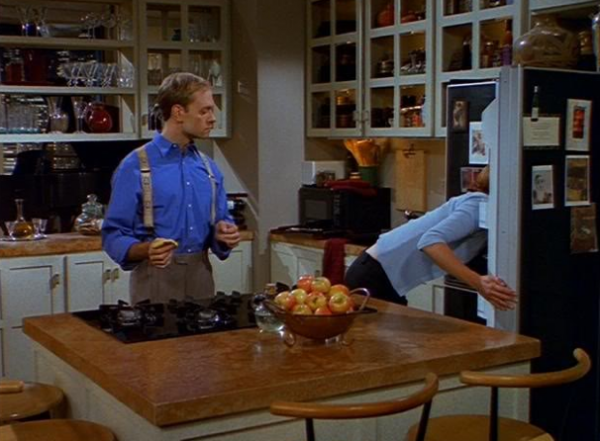
Like the other two apartments, he has a small kitchen, but it is well equipped and stylish. Set designer Roy Christopher outdid himself by capturing Frasier’s personality in his home.
Photo: pinterest.com
There are quite a few bedrooms in the apartment. Frasier has a large one with an expansive master bath, that features a sauna and a whirlpool. His father and Daphne both have their own bedrooms and bathrooms as well.
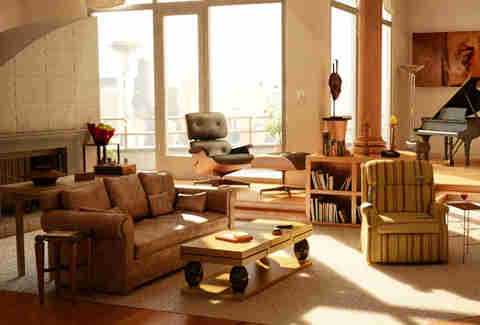
Frasier’s apartment is ultra-modern and is filled with expensive, high-end furniture and collectibles. His furniture is a replica, although shorter version, of Coco Chanel’s sofa. He has Eames and Wassily chairs and often throws around the designer labels he enjoys. The rooms are filled with decorative architectural details and expensive finishes. Much was made of the artwork scattered around the apartment.
Photo: pinterest.com
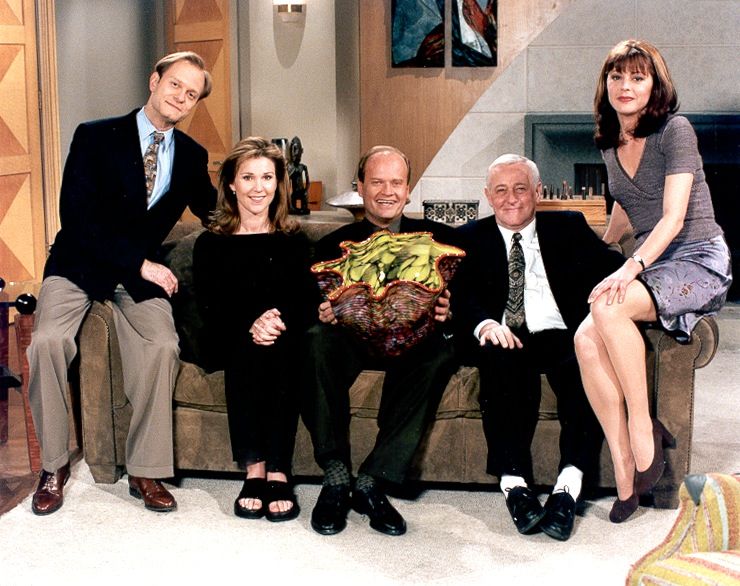
The Dale Chihuly glass bowl on a table near the fireplace was made specifically for the show and reproduced for an exhibit. A Mark Rothko painting was in Frasier’s master bath. Some of the other art included a Nick Berman floating ball, a Pastoe curved sideboard, Le Corbusier lamp, a Steinway grand piano, a Rauschenberg painting in the hall, and a variety of Pre-Columbian and African art.
Photo: pinterest.com
While Bob and
Emily didn’t care much about their furniture as long as it was comfortable; Frasier
cares dearly about every item in his apartment, except for his father’s Barcalounger
which is a reminder of the design element he does not want in his apartment. It
becomes the centerpiece of the apartment. The prop department did not think it
was “hideous” enough when they located it, so they added some dirt smudges and
duct tape to it. It’s a brilliant juxtaposition. We understand that despite the
expensive items surrounding him, Martin is quite comfortable in Frasier’s
house. His easy-going, but gruff, personality is not off-put by the sophisticated
design nor is he impressed by the expensive art. During the course of the show,
Frasier must learn to be as comfortable in his home as his father is.
It’s been fun
to view some of the spaces our television friends inhabited and take a closer
look at what helped reflect more about the characters as we take an in-depth analysis
of the items they chose to surround themselves with. Take a look around your own
space and see what it says about you to others and how it would help define you
as a sitcom character.
There is a lot that happens behind the scenes to help make a show a hit. In previous blogs (see the December 2018 blogs about Earl Hagen and Jay Livingston), we learned about composers. This month we’ll take a look at the costumers and the set designers. The wardrobe department has the responsibility to make sure the characters are wearing the appropriate clothing for their character.
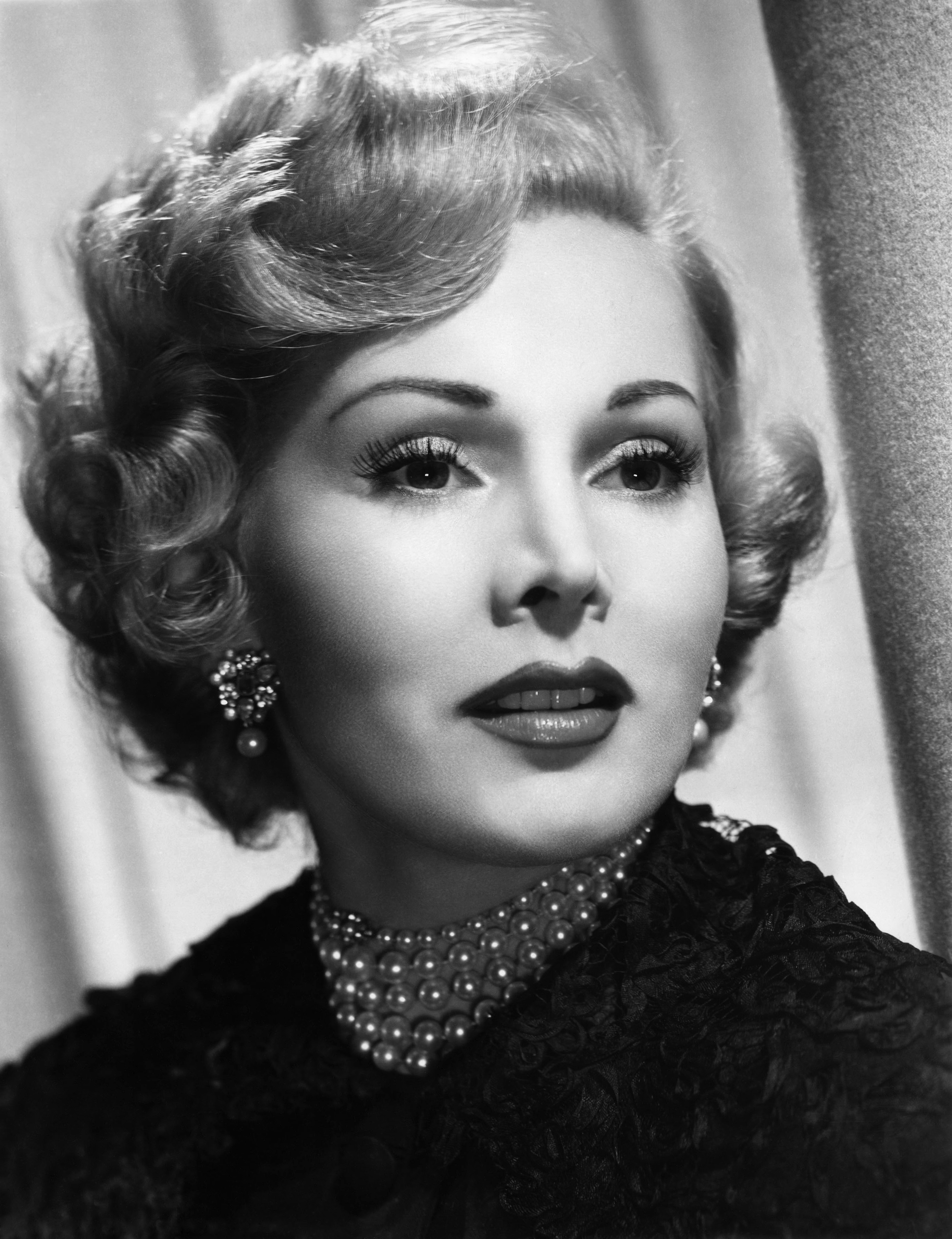
Zsa Zsa Gabor, ca. 1952 Photo: quotesgram.com
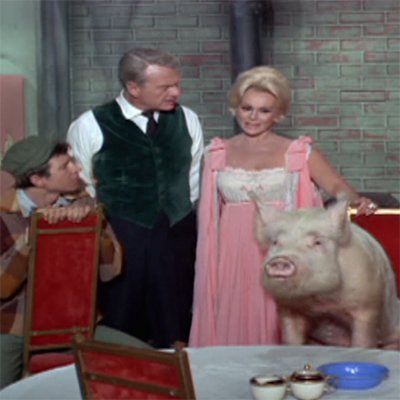
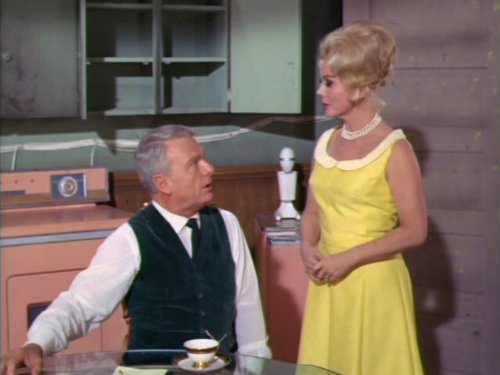
Green Acres presented a challenge for the wardrobe department. Most of the citizens were farmers, so overalls and house dresses fit the bill. Sam Drucker was the grocer, postman, and newspaperman for Hooterville, among other jobs. He always wore a blue shirt with a tie and had his postman vest or grocery apron on. Lisa and Oliver Douglas played an attorney and his wife who relocated from New York City and the social scene to rural Hooterville to run a farm. Oliver often wore suits on his tractor, looking somewhat silly and questioned by the locals. Lisa also continued to wear her glamorous outfits, but somehow, she was accepted by everyone and fit in wherever she went.
Photo: metv.com
Lisa Douglas could wear anything and look good. She often wore her negligees around the house without being thought a hussy. She could show up in a sequined gown for a local band performance and was just one of the crowd. She wore gowns of boldly colored prints, but she was just as likely to show up in a single-colored sheath dress with a simple strand of pearls.
Photo: imdb.com
With
her lavish updo hairstyle and her extensive collection of jewelry, Lisa was fun
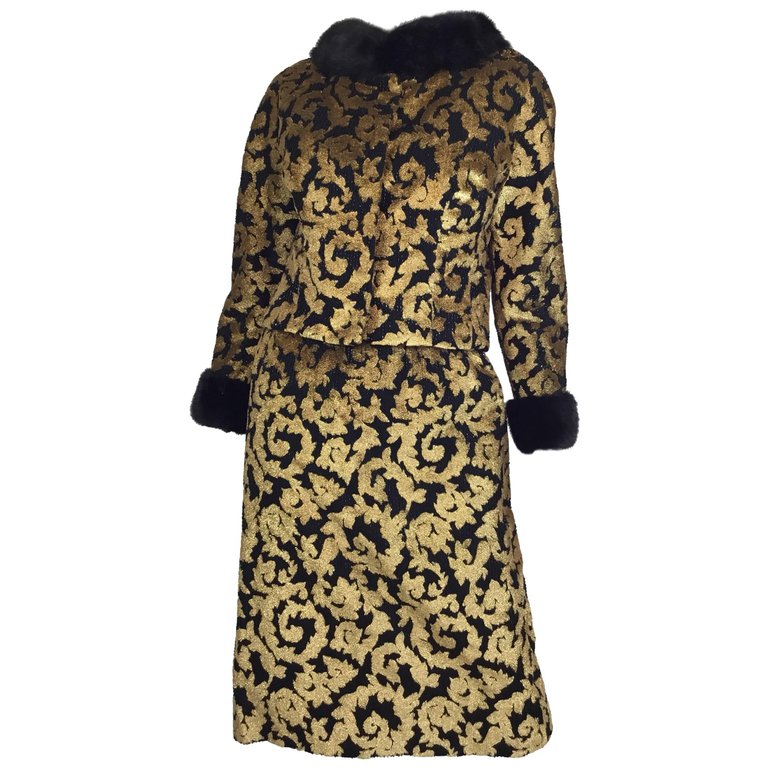
to outfit. Three designers were responsible for the majority of Lisa’s
wardrobe: Jean Louis, Lucie Ann Claire Sandra, and Nolan Miller.
Jean Louis
Born Jean Louis Berthault in 1907 in Paris, France, he was an Academy Award winner for The Solid Gold Cadillac in 1956 starring Judy Holliday. (Jean was nominated for 13 Academy awards.)
Photo: pinterest.com
He attended the School of Decorative Arts and then went to work for Agnes Drecoll, courtier. In 1935, he moved to New York city where he worked for Hattie Carnegie before going to Hollywood. While working there he began gathering a large clientele, including Wallis Simpson and Irene Dunne.
Photo: Black gown -1960s Jean Louis Silk Tiered Gown
From 1944-1958,
he was head designer for Columbia Pictures. Some of his most creative designs
included Rita Hayworth’s black satin dress from Gilda, the beaded gowns worn by
Marlene Dietrich, and the sheer, sparkling dress Marilyn Monroe displayed when
she sang “Happy Birthday” to John F. Kennedy. He also was the primary designer
for Kim Novack.
Photo: Gold and black lame dress
In 1958 he moved over to Universal. There he began a working relationship with Doris Day, with Pillow Talk, their first collaboration. Journalist Tom Vallance described his work:- “He created a sophisticated allure for Doris that launched a new phase of her career.” James Garner, who also starred with Doris in several films said she “exuded sex appeal while still maintaining her All-American Girl next door image.” Jean Louis also worked with Lana Turner during this era, putting together her colorful wardrobe in Imitation of Life. Jean’s daughter said her father “had the most amazing discerning eye for color. It was a sixth sense for him.”
Jean Louis had designed the clothing for The Loretta Young Show from 1953-1961. She was a close friend of Jean and his wife Maggie. After Maggie passed away, he and Young married in 1993. She was considered one of, if not the best, well-dressed stars. He also designed clothing for Ginger Rogers, Vivian Leigh, Julie Andrews, Katherine Hepburn, and Judy Garland.
Jean began to freelance in 1960. He opened a boutique in Beverly Hills and sold his label, “Jean Louis, Inc.” at better department stores all over the country. During this time, he also updated the United Airlines stewardess uniforms.
Photo: metv.com
From 1965-1967 he designed Lisa Douglas’s dresses on Green Acres. He was the perfect designer for her. Gifted with a great sense of humor, he could undoubtedly relate to the humor on the show.
Photo: thewritelife61.com
As he said during a Vogue interview, “You can use marvelous fabrics, have wonderful, impossible embroidery—in fact, be superluxe and superluxe is what the couture is all about.”
Photo: tumblr.com
In the 1970s,
he opened a boutique in France and launched his first fragrance. His career was
still flourishing with clients like Jacqueline Kennedy, Sophia Loren, and
Bianca Jagger.
Jean Louis
passed away in 1997. His influence continues to be felt among designers today.
Some of the fashion icons who admit being influenced by him include Michael
Kors, Vera Wang, Giorgio Armani, and Zac Posen.
Photo: imdb.com
Lucie Ann-Claire Sandra
Lucie Ann vintage nightgowns are among the most glamorous and desirable negligees ever made. Lucie Onderwyzer founded the fashion company in 1947 in Beverly Hills. Known for bold color and exuberant details like pompoms, bows, rosettes, and rhinestones, she designed for many stars including Elizabeth Taylor.
Photo: pinterest.com A few of Lisa’s gowns in the background
She designed all the peignoir sets worn by Eva Gabor in Green Acres. Her designs were also featured in other television shows and movies. In one episode of Bewitched, Darrin goes to the store to purchase a Lucie Ann for Samantha.
Photo: pinterest.com Darrin shopping for Samantha
Lucie passed away in 1988 and her company was bought by Deena Lingerie Co and later Lady Ester Lingerie Company which is still making them today.
Norman Miller
Norman Miller
was a wardrobe consultant for Eva on Green
Acres.
“I adored Eva. We worked together for many years. Later on, our working relationship became a friendship that I really valued. She wasn’t silly. She was a very smart lady. Not so smart with the men of her life. Her home was incredibly elegant. Anything that she needed I would do.” Miller shares about the time when Eva discovered a store called Loehmann’s; the store would buy designer samples and pack them up in huge boxes for stars to pick from. “Eva was a size 8 and the sample sizes were 2, and she’d simply ask me to do my magic and tailor them to her size. I smile at that as Eva could get anyone to change things around for her. I sometimes wonder whether she did understand fully well what was entailed in changing a size 2 into an 8 just like what was entailed in coming up with an animation idea tailor-made for her. She’d bat her eyelashes and sprinkle in a few ‘darlings’ and you find yourself doing what she wanted.”
Photo: pinterest.com A pink chiffon sleeveless floor-length Nolan Miller dress with accompanying chiffon and ostrich feather wrap worn by Eva Gabor on the television series Green Acres.
Miscellaneous
These three designers were the major forces behind Lisa Douglas’s beautiful fashion style on Green Acres. Gabor had an amazing fashion sense and was well known for her private wardrobe. She also was a successful business woman, owning a multi-million-dollar wig company.
Photo: newyorksocialdiary.com
Eddie Albert tells a great story about Gabor and her fashion. At her funeral, he said he probably saw more of Gabor than any of her five real-life husbands did. And, like any couple, married or not, they had their differences. She, for example, never quite understood his passion for wildlife conservation. “Every time you hear about a sick fish, you make a speech. Vy?,” Albert recalled his co-star saying. “And I would tell her, ‘I think we ought to preserve nature, save wild animals,’ and so on. Well, one day she showed up in a gown made of feathers, and I asked her not to wear it. ‘But so chic!’ she said. And I said, ‘Yes, and ladies will see it and want one, and thousands of birds will die.’ And she said, ‘But, Eddie, feathers don’t come from birds.’ ‘Well,’ I asked, ‘where do they come from?’ And she said, ‘Dahlink. Pillows! Feathers come from pee-lowz!’ ”
Perhaps there was more of Eva Gabor in Lisa Douglas than we realized.
With this blog, we begin a new series about the people who work behind the scenes to make the characters come to life for us. We are starting with the costume department. The costume or wardrobe designer is one of those people who help make the character real for us. While the job description varies from show to show, the costumer designer typically is in charge of the clothing and accessories. They read the script and determine what type of clothing is needed for each episode. Some shows bring in designers to create the clothing like Norman Miller on Dynasty, some shows send out shoppers to purchase ready-made clothing like My Three Sons, and some combine the activities. On Burns and Allen, Gracie Allen had a shopping day each week, and she picked out her own clothing.
Costume designers typically use clothing to develop a character as they evolve throughout the series.
Photo: sitcomsonline.com
One of the television shows that is known for its incredible wardrobe is That Girl. Costume designers for the show include Florence Albert, Suzanne Smith, Fern Vollner, and Phyllis Garr, the mother of actress Teri Garr.
Ann Marie moves from small-town Brewster to New York City to pursue her acting career. Her clothes reflect her youth and her fascination with fashion and life in the big city. Marlo Thomas was the force behind every decision of her show. For clothing, she secured the design services of Marilyn Lewis.
Photo: pinterest.com
Marilyn was raised in Cleveland by her grandmother. Marilyn was interested in fashion, and she sketched designs and did a bit of modeling in Ohio. After her grandmother passed away, she moved to California where she hoped to become an apprentice to an established fashion designer.
Photo: pinterest.com
In Hollywood she met Harry Lewis and fell in love. Harry was an actor who appeared in a variety of television shows and movies, including Key Largo throughout the ‘50s, ‘60s, ‘70s, and ‘80s.
Photo: ebth.com Marilyn Lewis
Harry had dreamed of starting a chain of restaurants where actors could feel comfortable hanging out. As an actor, he also had a goal to play Hamlet. Combine the two aspirations and you have the birth of Hamburger Hamlet.
Photo: hamburgerhamlet.com
They opened the first restaurant in 1950 with $3500 and sold the chain of a dozen eateries in 1997 for $33 million.
Photo: hamburgerhamlet.com
They also created a separate restaurant called Kate Mantilini’s Dinner House which they sold, bought back, and then opened a second one, so each of their kids had their own. Kate Mantilini was Marilyn’s uncle’s mistress in the 1940s.
Harry realized that his wife put her dreams of working in fashion design on hold for him, and in 1966 he bought her a dress factory. About this time, That Girl was in the planning stages. The choice of Marilyn as designer for the show was both surprising and expected. She was far from an established designer when Thomas hired her to design for Ann Marie. At the same time, Marlo was trying to step out from her famous father’s shadow and earn respect for creating her own show. A show about a girl leaving her teaching career and forgoing marriage to move to a large city and live alone and pursue a career is not out of the ordinary today, but it was in the mid-1960s.
Photo: pinterest.com
Lewis was the
perfect choice for designer. Lewis described her clothing as having a “whispering
signature.” She went on to say that “California gives me great light, so I use
color.” Lewis named her line Cardinali. Her first batch of designs included 35
suits, gowns, and dresses. Saks Fifth Avenue was her first customer, selling
her clothing for $300-$2400 per piece. Today those items would cost
$2000-$16,000.
Color was definitely an important element in 1960s clothing. Women weren’t afraid of color. You could find deep jewel tones, bright neons, and bold patterns galore.
Photo: imdb.com
Photo: nytimes.com
Marilyn used the best fabrics she could import from Italy. Her early pieces included a wool boucle coat with matching purse and hat and a flowing summer dress with a scarf. Similar items can be seen on That Girl. She said she designed her clothing for a career girl who got dressed up at night. Similarly, Ann Marie dressed practically, but pretty, during the day and chose more glamorous looks for evening.
Photo: pinterest.com
Photo: pinterest.com
While looking at one of her ruffled chiffon party dresses, Lewis described it as “sexy and discreet at the same time. Always the contrast. And that’s me. I always have a little reserve in me. But never so much that I won’t wink at you and get the job done.” Ann Marie definitely picked up on that design vibe.
Photo: pinterest.com
Her clothing on That Girl is also a contrast. While Ann’s wardrobe evokes the classic style of the 1960s, it is also timeless, and many of her outfits could be worn today.
Photo: pinterest.com
Lewis became
very successful in her Cardinali line. She was worn by many celebrities, as
well as California first-lady Nancy Reagan and socialite Betsy Bloomingdale. Her
clothes had a European flair not found in other American designers.
Ann Marie’s wardrobe was anything but boring, and Lewis strove hard for that look. She once commented that “There would be no true boredom if a woman would realize she could paint herself like an artist painting a canvas. It would be a tremendous lift to her spirits.”
Photo:fusionmovies.to
During the height of her popularity in 1977, Lewis walked away from the fashion industry. But her design features are still influencing women. Marlo Thomas also continued to be regarded as a fashionista.
After the demise of That Girl, she went on to become McCall’s Director of Women’s Interests, a role that allowed her to become a model for sewing patterns that sold for $1.50 under the name “Marlo’s Corner.” She also wrote a monthly column for their counter book.
Though Lewis was hired to help create the character of Ann Marie, she ended up creating so much more. It’s hard to estimate how many girls growing up in the era of That Girl changed their entire fashion sense watching the show. Every girl dreamed of moving to the big city, getting their own apartment, and having an incredible wardrobe.
Great design is timeless, and Cardinali design was definitely great. The fashions from this era will always have a place in a well-dressed woman’s wardrobe. The pieces combined comfort with beauty and color. Ann Marie’s fashion sense evolved with her character as she gained more confidence. We evolved along with her.