F-Troop: Braving Fort Courage

As we start our July blogs, the theme is Military Upended. We’re taking a look at military sitcoms and up first is F Troop. This was a western sitcom set in the 1860s. It debuted on CBS in September of 1965 and ran for two seasons.
đź“·imdb.com

If you and your siblings argue about whether this show was in color or black and white, you’re both right. The first season was in black and white, and the second season was produced in color.

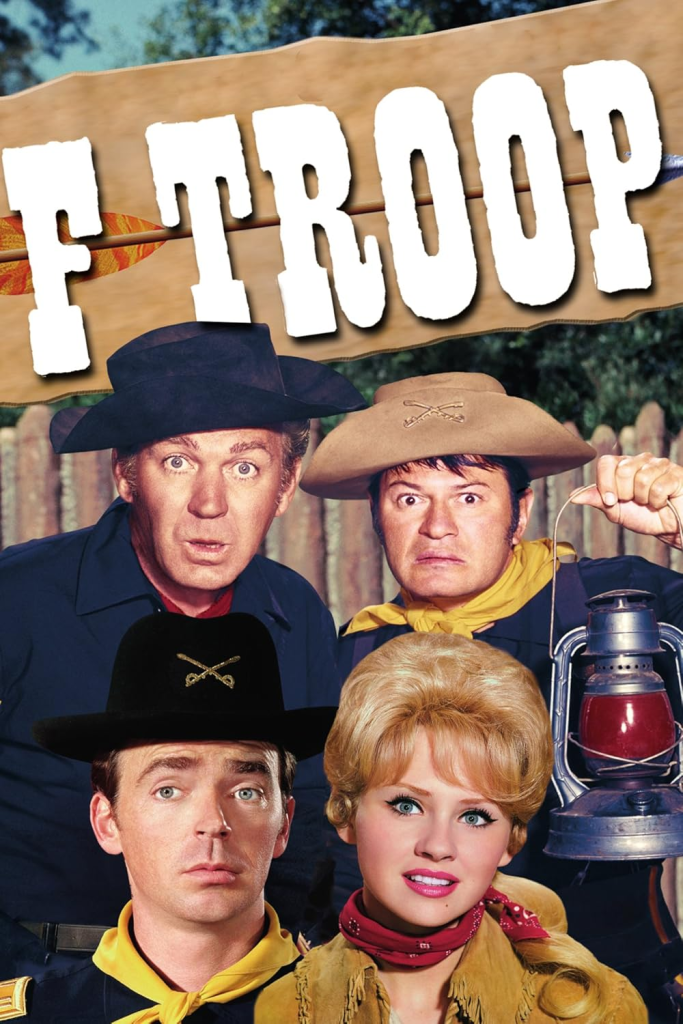
The characters lived at Fort Courage, an army outpost. Captain Wilton Parmenter (Ken Berry) runs, or tries to run, the fort. One of the running gags is that Parmenter comes from a long line of military heroes that stopped with him. However, he served during the Civil War. After being told to pick up the general’s laundry near Appomattox, he begins sneezing. Union soldiers think it’s a command to charge which turns the tide of the battle. Then while Parmenter’s father is pinning the Medal of Honor on him for this feat, he pricks his chest, drawing blood for which they gave him a Purple Heart.

Parmenter is sent to Fort Courage where all the captains have failed. Two of the three commanders before him deserted, and one had a nervous breakdown there.

Parmenter is “aided” by Sergeant O’Rourke (Forrest Tucker) and Corporal Agarn (Larry Storch). However, these two are there just to make a quick buck however they can; they often work with Chief Wild Eagle (Frank de Kova) to find the next shady business deal. For example, the government thinks 30 men are at the fort; in reality, it’s 17 and the pay for the other 13 is put into a fund by the two men to fund their plans. However, the two men, while willing to take advantage of his gullibility, do like Parmenter and protect him. Parmenter is kind and well meaning.
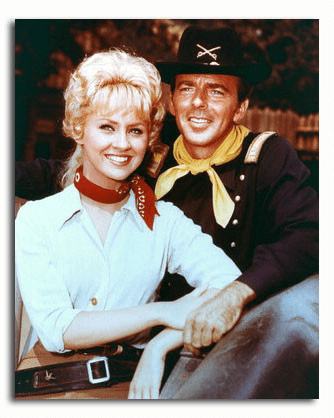
đź“·starstills.com

What Wil really needs protection from is marriage. The local store owner-postmistress Jane (Melody Patterson) has set her cap for him. She’s a beautiful tomboy who knows what she wants and usually gets it. She is also a telegrapher and is the best sharpshooter in the territory. She often rescues Wil with her good aim.

Patterson auditioned for this role at age 15, lying about her age. The show didn’t find about that till half-way through the first season. When the series started, she was 16 and Berry was 32. During the second season, when she turned 17, the producers allowed a more serious relationship between the two.

Rounding out the cast was Private Dobbs (James Hampton), a bugler who only knows two songs; Trooper Vanderbilt (Joe Brooks), the lookout who is almost blind; and Trooper Duffy (Bob Steele) the lone survivor of the Alamo who is too old to help much.

We also get to know several members of the Hekawis tribe headed by Chief Wild Eagle. They are 50/50 partners with O’Rourke and Agarn. They make souvenirs for sale and produce whiskey. They claim to be a peaceful nation because most of them are cowards like the men at the fort. The Chief has many wise sayings and often gives advice although when asked to explain some of them, he says he has no idea. His second in charge is Crazy Cat (Don Diamond).

đź“·imdb.com

Not surprisingly for the time, none of the tribal members are played by Native Americans. There is a lot of politically incorrect dialogue on the show. The Hekawe (pronounced “heck-ow-ee”) tell the story of how they got their name: Two indigenous people fell off a cliff and one asked “Where the heck are we?” which they chose for their name.

A lot of stereotypes exist not only about Native Americans but military heroes and the west in general. History is presented tongue in cheek with characters showing up who never would have been there and sly references to things that were happening in the sixties.

A number of guest stars somehow end up at Fort Courage. These include Jamie Farr, Bernard Fox, Zsa Zsa Gabor, Harvey Korman, Paul Lynde, Lee Meriwether, Julie Newmar, Vincent Price, and Don Rickles.

The popular theme music was composed by William Lava with lyrics by Irving Taylor. Lava had more than 500 television credits for composing. While he worked in animation a lot, he composed for Dr. Kildare, The Twilight Zone, Wagon Train, and 77 Sunset Strip. His collaborators included Henry Mancini and Sammy Kahn.

The series featured a lot of great writers including Stan Dreben who wrote for Green Acres, Seaman Jacobs and Howard Merrill from The Dick Van Dyke Show, and James B. Allardice who wrote for a lot of shows including My Three Sons and Hogan’s Heroes.
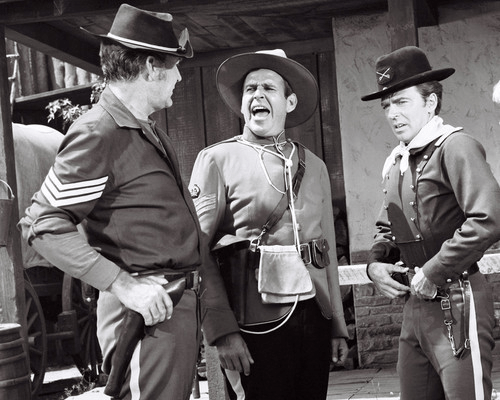
đź“·themoviestore.com

Storch was nominated for an Emmy Award for his role. His competition included Brian Keith for Family Affair, Bob Crane from Hogan’s Heroes, and Don Adams from Get Smart who won. I admit I was surprised to see his nomination given the classic television sitcoms that were on the air at the time.

ABC placed the show on Tuesday nights for season one which helped its ratings because there wasn’t a lot of competition. It was up against Red Skelton which was waning in its popularity, and it followed McHale’s Navy, and the same type of audience who enjoyed that show probably liked F-Troop as well.

After the second season, the show was ranked 40th out of 113 shows. According to Forrest Tucker, Warners Brothers was sold to Seven Arts, and they made the decision to cancel the show because they felt it used too much of the Warner Ranch for its setting and they weren’t thrilled about the added costs of producing this one in color.
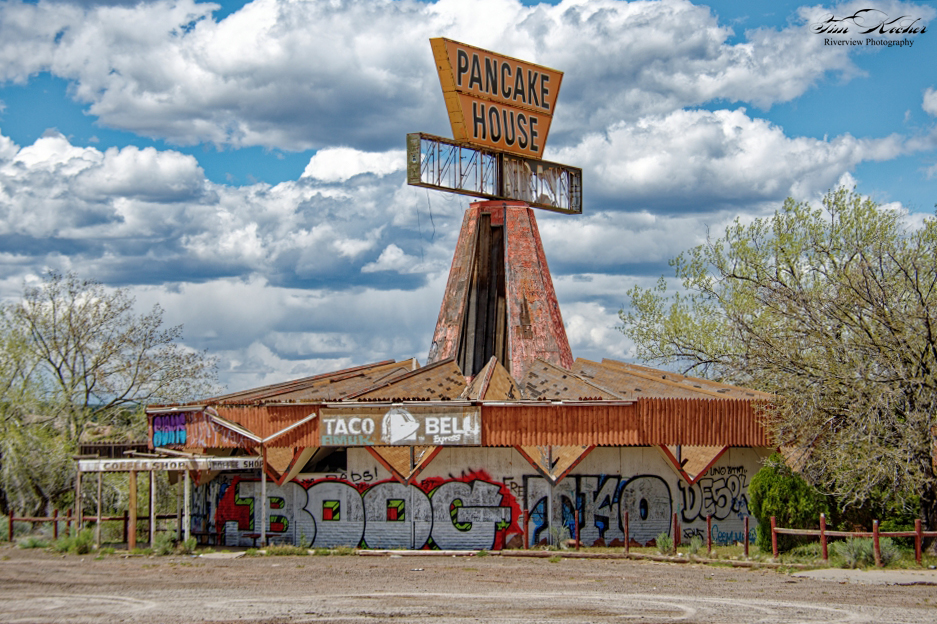
đź“·facebook.com

Fun fact, a replica of the fort was built in Houck, Arizona on Route 66. The Fort displayed F-Troop props, and they sold F-Troop merchandise. Among the amenities were a coffee shop, gas station, grocery store, pancake house, trading post, motel units, trailer park, and campground.

This show is a tougher one to evaluate now. Like so many shows from this era, Native Americans were not portrayed respectfully. However, truth be told, Natives were often portrayed as smarter than white men on this show. Like The Simpsons, everyone on this show was made fun of. It could be compared to The Phil Silvers Show or Hogan’s Heroes. It does have the military money-making schemes that Sergeant Bilko attempted but that was seen as a small part of a respectable military.

For me there was too much emphasis on slapstick humor apart from some of the uncomfortable dialogue. If you want to check it out and see what you think, which is what I always recommend, the series is available on DVD. It’s also on Prime and Roku.
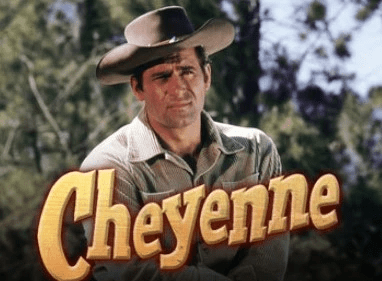
Cheyenne: Introducing Jim Baumgartner

In June, we are advising “Go West Young Man” as we peek back at a few of our favorite westerns. First up is Cheyenne. Cheyenne debuted in 1955; it was the first hour-long Western. It would remain on the air for eight years, producing 108 episodes.

đź“·rewatchclassictv.com

Clint Walker starred as Cheyenne Bodie, a cowboy who explores the wild west after the Civil War. Early in the show, we learn that Bodie’s parents were killed by an unknown Native American tribe. A Cheyenne tribe found him and raised him till he was 12 when they sent him to live with a White family.

Because Cheyenne is traveling, guest stars change from week to week. The series was part of Warner Brothers Presents which alternated a weekly show with Cheyenne, Casablanca, and Kings Row.

For the first four seasons, the show was on Tuesday nights; then it moved to Mondays for the final four years. It was in the top thirty, and often the top twenty, for most of its television life, despite being up against The Phil Silvers Show; Richard Diamond, Private Detective; Dragnet; and the game shows To Tell the Truth and I’ve Got a Secret. Because Warner Brothers was used to making movies, the television show was produced with a movie feel to it.

In 1958, Walker went on strike. His contract stipulated that he had to give Warner Brothers 50% of his personal appearance fees, and he could only record music with the Warner Brothers label. He wanted 100% of his fees and to be able to record wherever he chose. I never learned what they settled on, but Walker returned to the show.

đź“·wikipedia.com

During his travels, Cheyenne often advocates for justice in the places he visits, sometimes working as a sheriff or deputy. Another theme of the show is the distrust of Native Americans. Cheyenne is sympathetic to their plight and is loyal to the Cheyenne tribe that raised him. Many of the plots were taken directly from Warner Brothers movies of the past and reworked a bit.

The theme song was composed by William Lava and Stanley Davis Jones. They both worked on The Mickey Mouse Club with Jones composing for the Spin and Marty shorts. Lava also provided music for Zorro, The Twilight Zone, and 77 Sunset Strip.

During Clint Walker’s interview with the Television Academy, he talked about his time on the show. He said he became aware of how many people liked the show when they sent him out to functions, and he started to realize how many fans he had in each town and then thinking of all the towns in the United States. He received a lot of fan mail from people who liked the values of the show. Some young men told him they no longer had fathers or uncles, and he was their role model.

đź“·imdb.com James Garner

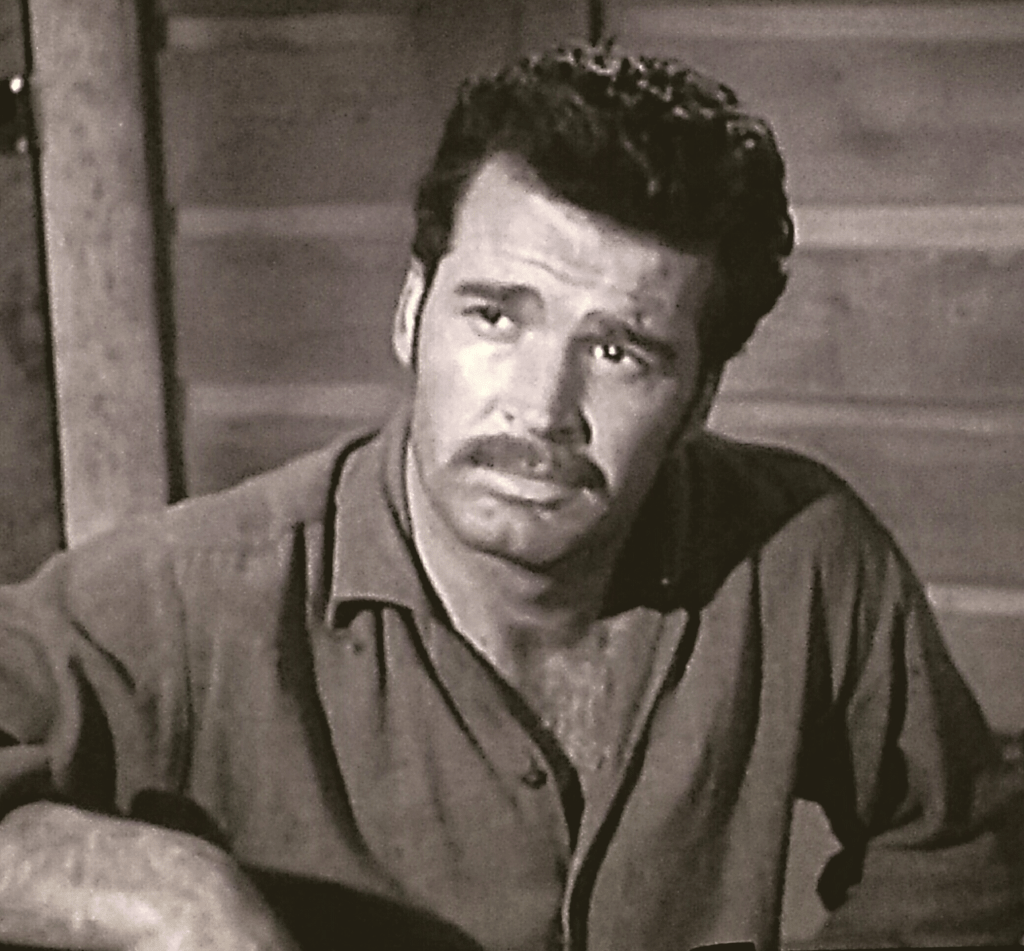
I also heard a fun story about casting during this show. Richard Bare explained during his interview that he was in a bar one night and a friend introduced him to an actor. The next day a meeting was called where Jack Warner informed them that he wanted some new faces introduced during the show. Bare remembered the young actor he met at the bar the night before but couldn’t remember his name. He called the bar and was told that the actor’s name was Jim Baumgartner, so he asked them to tell him to come to the studio when he showed up again. Finally, Baumgartner called Bare the day before they began shooting. He came in and did an audition. The crew was going on location the next day, so they had to decide immediately if he was part of the show. When Jack Warner saw the clips, he said to give that kid a seven-year contract, and that’s how James Garner started working in westerns.

There is no doubt Cheyenne was a popular show. It was interesting enough to keep viewers’ attention for an hour. The episodes seem to be well written. In an era when there were tons of westerns to watch, this one was in the top section of that list. The show still can be streamed on several places. If you want to live in the Old West for a bit, why not join Cheyenne and see what it was like.

Lassie: This Series Had Five Lives

We are finishing our series Life with Pets. Although the shows we have looked at so far this month have featured some unusual pets, I knew that we had to include man’s best friend at some point, and really, how could you have a blog series about pets without Lassie who was a very unusual dog?

Except for The Hathaways, the other shows we learned about this month were based on a movie, which was often based on a book. Lassie is no exception. English author Eric Knight wrote a book in 1940 called Lassie Come Home. Several films were produced between 1943 and 1951 about Lassie. Once the seventh and final film was completed, Lassie’s (or Pal as he is known in his real life), owner Rudd Weatherwax was given all rights to the Lassie trademark and name. Weatherwax began taking Pal to local fairs and rodeos.

File:Lassie cast 1955.jpg - Wikimedia Commons
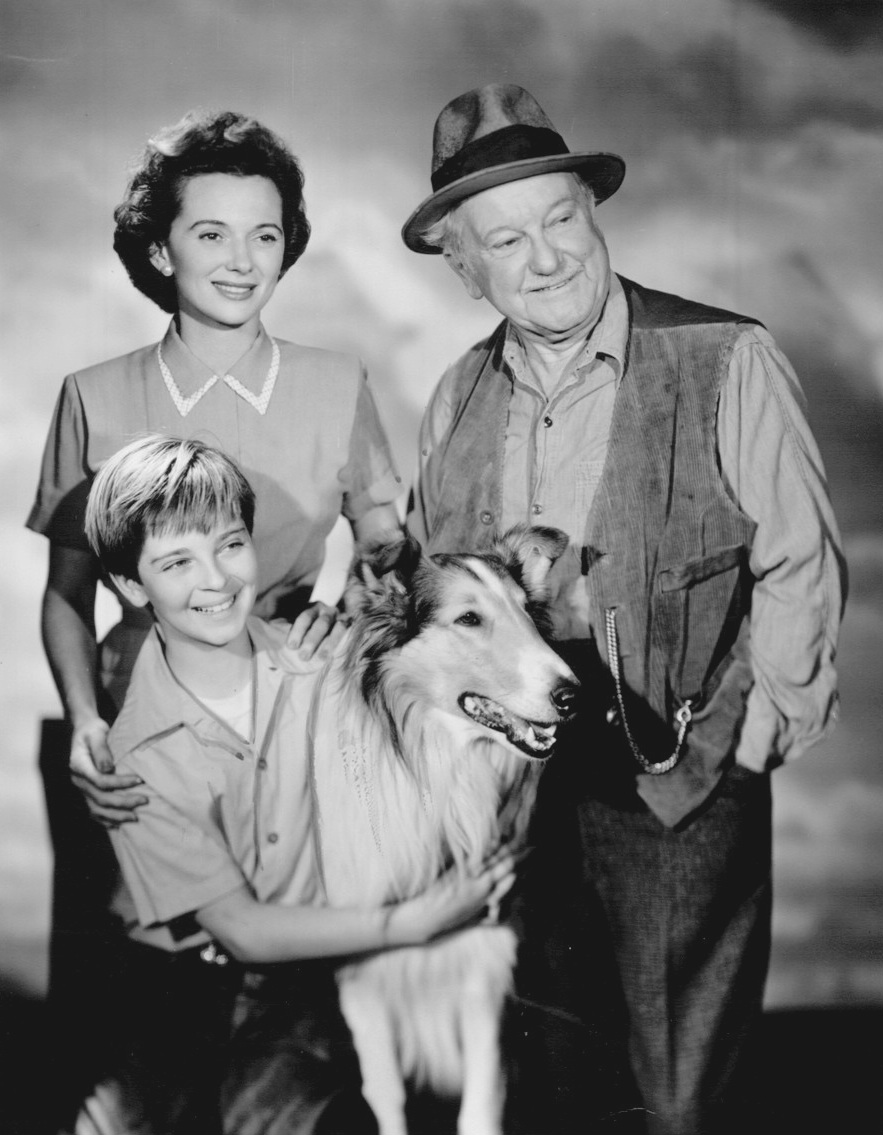
Clayton, Rettig, Cleveland Photo: wikimedia.com

Robert Maxwell convinced him to feature Pal in a weekly television show. The men developed the story of Lassie who lived with a young boy named Jeff Miller (Tommy Rettig), age 11; his widowed mother Ellen (Jan Clayton); and her father-in-law (George Cleveland) who all lived on a farm. The show was approved, Campbell’s Soup agreed to sponsor the first year of shows, and the series debuted in 1954 on Sunday nights at 7 pm EST.

Campbell’s would continue its role as sponsor for 19 more years, which totaled 591 episodes. The company asked to have their products featured on the set, so you will see them in background shots. The soup company held a contest in 1956 to name Lassie’s puppies. Grand prizes included $2,000 and ownership of the pups which were hand-delivered by executives. In 1958, viewers could send in 25 cents and a label from a Swanson’s TV dinner to get a friendship ring; the company mailed 77,715 of them to fans. In 1959, fans could send in five labels from Campbell’s products and receive a wallet with a photo of Lassie. More than 1.3 million were mailed and Campbell’s profits rose 70% after its sponsorship began.

In 1957, Jack Wrather who owned The Lone Ranger and Sergeant Preston of the Yukon purchased the show for $3.25 million. In 1958 Lassie received new owners. Both Clayton and Rettig expressed an interest in wanting to leave the show. Cleveland had passed away the year before. Adoptee Timmy Martin (Jon Provost) becomes his master and they live with his parents, Ruth Martin (Cloris Leachman) and Paul Martin (Jon Shepodd).

Lassie (TV Series 1954–1974) - Photo Gallery - IMDb
Photo: imdb.com

In 1958 Wrather dropped Leachman and Shepodd, replacing them with June Lockhart and Hugh Reilly. A neighbor Cully Wilson (Andy Clyde) was also added.

Lassie received good ratings from 1954-1958. In 1959 it fell out of the top 30. By 1960 with the change in characters, the show shot back and made it to #13 in 1964.

However, just as things were looking up, Provost declined to renew his contract. So, ten years after its debut, the show changed its focus to conservation and environmentalism, teaming Lassie with a group of US Forest Service members. In 1965 the show transitioned to color, but the ratings decline had already begun.

Season 17 transitioned again and this time it was an anthology season with Lassie traveling on her own, finding adventures along the way. CBS cancelled the show after season 17, but it became a syndicated show for networks to pick up.

The final two seasons were spent with Garth Holden (Ron Hayes) on the Holden Ranch, a home for orphaned boys. After season 19, the show went off the air for good.

Five of Pal’s descendants also played the role of Lassie. They included Lassie Jr. (1954-59), Spook (1960), Baby (1960-1966), Mire (1966-1971), and Hey Hey (1971-73). Like the show, Pal lived to be 19.

The show was filmed at Stage One of KTTV in Los Angeles from 1954-57 and then moved to Desilu for a year. The Timmy seasons were filmed at the Grand Canyon and High Sierra and the Forest Service seasons were filmed in Alaska and Puerto Rico, among other sites.

Photo: ashroudofthoughts.com

Most of the plots involved the boys or other characters needing help and Lassie coming to the rescue. However, ironically the biggest spoof of the show is Timmy falling down a well and Lassie saving him, but no one ever fell down a well on the show except Lassie in season 17. It is such an iconic plot, that Provost wrote his autobiography in 2007 and called it Timmy’s in the Well: The Jon Provost Story. On his website, Provost says he kept in touch with Rettig. He says that he always ended their conversations with “Thanks for the dog, Jeff” which was his line in the series when he took over the show.

During the nineteen years that the show was on the air, several theme songs were used. For the first season, the theme was “Secret of the Silent Hills” composed by William Lava. The song was originally created for a 1940 radio show, “The Courageous Dr. Christian.” The song was tweaked a bit for the second and third seasons. An orchestral version of an aria from Faust, “Dio Possente” came in for the next year. Beginning with year five, the most famous version was aired: “Lassie Main & End Title” was created by Les Baxter and whistled by Muzzy Marcellino. After the Martin years, an orchestral version of “The Whistler” was used for a few years, and then Nathan Scott’s arrangement of “Greensleeves’ finished the run.

The series received two Emmy Awards for Best Children’s Program in 1955 and 1956 and a nomination in 1960. In addition, June Lockhart was nominated for Leading Actress in a Dramatic Series in 1959, Jan Clayton was nominated for the same award in 1957 and 1958, and the show was nominated for Best Dramatic Series in 1957.

The series was released on DVD during the years 2001-2007.

I do remember watching Lassie during the Provost years, but I actually was not aware of the other seasons. Like Flipper and Gentle Ben, it was a family show where everyone could sit around the television and watch together on a Sunday evening. With the show being on the air for 19 years, it is fondly remembered by several generations and made a ton of money marketing merchandise.

One of the things I love most about the show is that people are sure they remember Timmy falling into the well. It would be fun to do a blog about things that people are positive they remember but never happened. It’s similar to the Robot on Lost in Space saying “Danger Will Robinson” which he never actually did. It just proves that some shows live on in our imaginations for a long time.