Barbara Billingsley: She Knows Jive

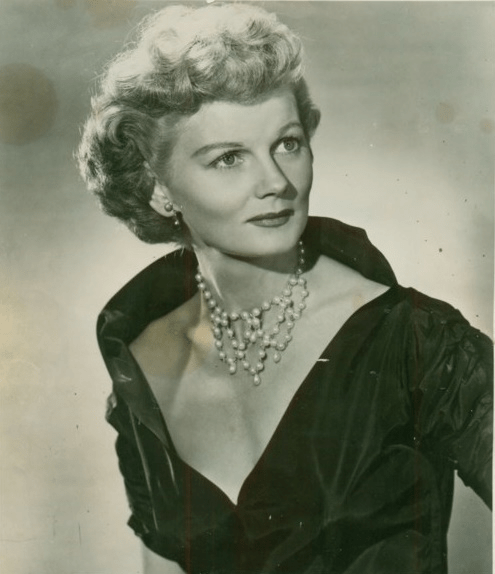
We are in the midst of our blog theme, Model Parents, and today we get to know June Cleaver, also known as Barbara Billingsley.
📷vintagevenus wordpress.com

Billingsley was born in Los Angeles in 1915. Barbara’s parents divorced when she was under five; her dad was a policeman, who was eventually appointed the assistant Chief of Police, and her mom worked at a knitting mill.

Her mother used to take her and her sister to the movies quite often, so she was exposed to all the top actors growing up. She also loved tennis and she said you could play at night. You put a quarter in this machine and it lit up the court so you got an hour to play.

Billingsley left college after a year to appear in a Broadway review. When the show closed after only five days, Barbara decided to stay and began working as a fashion model for Stephen Sondheim’s mother and later Hattie Carnegie. She didn’t have an easy time there; she said she was so innocent and no one had talked to her about life, so she grew up quickly.

She married her husband Glenn in 1941 and four years later she was offered a contract with MGM Studios. The couple moved to Los Angeles where Glenn opened a steakhouse. Unfortunately, their marriage didn’t last and they divorced in 1947, with two young sons.

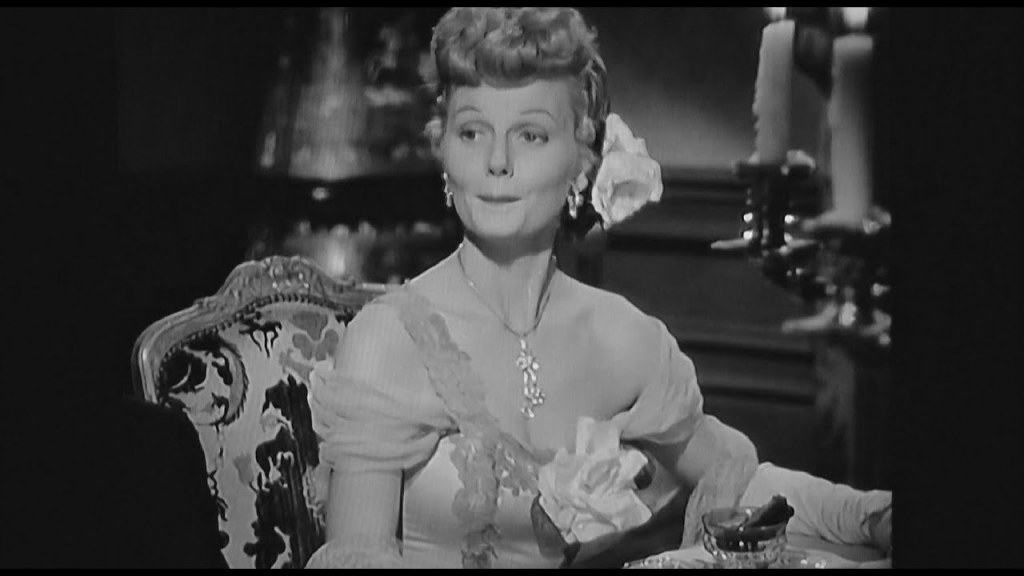
She would appear in 46 films, most of them in the forties. One of her last movie roles was probably her most famous when she appeared in Airplane!
📷youtube.com

After 1950 most of her roles were on television. Her first exposure to television was in 1939 in a friend’s New York apartment. Unlike Jane Wyatt and her friends, Billingsley thought it was fascinating.

During the fifties she appeared in a lot of the dramatic playhouse series that were so popular that decade. Her first recurring role was as Barbara on The Box Brothers. In this show, imdb.com states “the two Box brothers were polar opposites who ran a photography studio in San Francisco. Gilly (Bob Sweeney) is the shy retiring sibling, while excitable Harvey (Gale Gordon) is domineering. Harvey dates self-assured Margaret while Gilly’s girl is quiet Marilee.”

In 1953 she married director Roy Kellino, and the marriage lasted for three years when he passed away. Her last marriage to Dr. William S. Mortenson began in 1959 and ended in 1981 when he passed away.
📷thebluegrassspecial.com

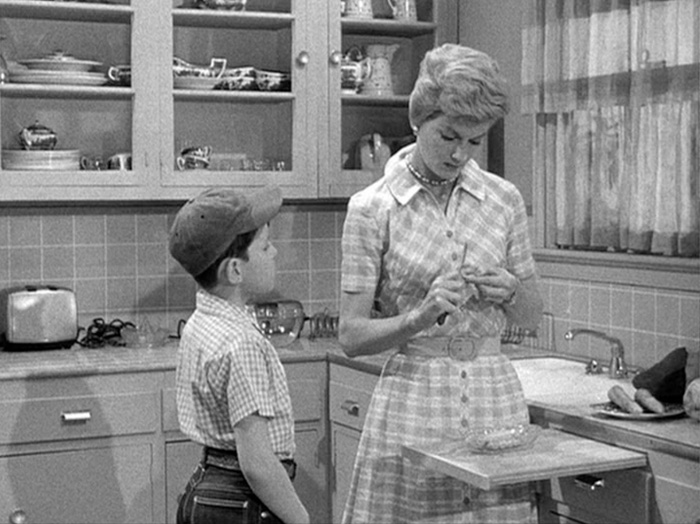
Her next recurring role would make her a household name. In 1957 she accepted the offer to star in Leave It to Beaver. The series was created for Buddy Ebsen and that’s who Billingsley tested with. She went for the audition even though she and her husband at the time were getting ready to leave for Spain where he was directing a movie. Her husband passed away before they left, so when she was asked about taking the part for the new sitcom, she said yes. In the pilot Ebsen was replaced by Max Showalter. It was an episode of Playhouse 57 called “It’s a Small World.” She said she was happy that Hugh Beaumont ended up with the part once the show was ready to begin taping, and she said that he was the best father on television.

The show became a big hit, airing for five seasons. She starred with Beaumont, who we’ll talk about next week; Jerry Mathers; and Tony Dow.

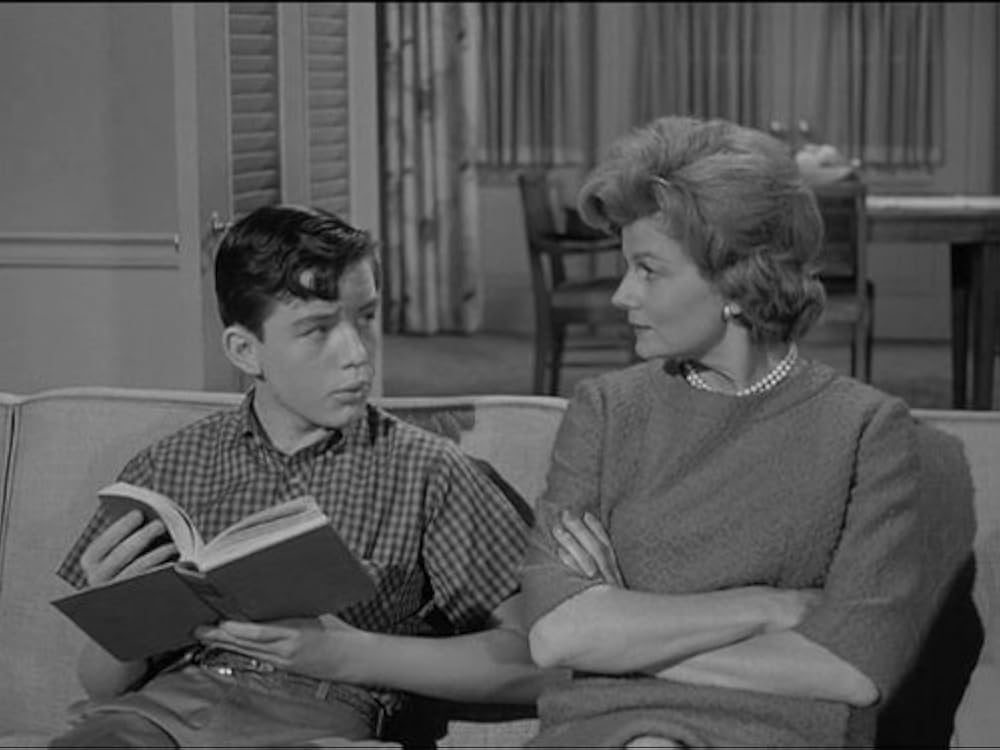
Billingsley was often stereotyped as the typical suburban mother cleaning her house while wearing pearls. However, the real story behind the pearls is a much simpler one. Barbara had a hollow in her neck that she was self-conscious about, so she thought wearing a string of pearls would help hide it. She was also made fun of vacuuming in high heels. She said she wore flats the first year or two, but when the boys began getting taller, the producers wanted her to wear heels, so they didn’t surpass her in height.
📷imdb.com

Barbara defended June Cleaver when others complained about sitcom life not being realistic. Billingsley said June “was the love in that family. She set a good example for what a wife could be. I had two boys at home when I did the show. I think the character became kind of like me and vice versa. I’ve never known where one started and where one stopped.” She said she thought most people would appreciate a mother like June. “Wouldn’t it be nice if you came home from school and there was Mom standing there with her little apron and cookies waiting?” Her “sons” on the show considered her a mentor and a second mother.

The one thing Billingsley regretted about the show was signing the typical contract that paid actors residuals for up to six reruns. Who knew Leave it To Beaver would still be on the air almost seventy years after it debuted.

She stayed close to the cast of Leave It to Beaver. She said, “No father on television was better than Hugh.” After his death, she said she missed “him very much because we were so close.” She was also close to Richard Deacon who she, like almost everyone else who knew him, described as incredibly funny.

Jerry Mathers talked about his friendship with Barbara after her death. “For me she was like the favorite teacher that we all had in school. I was lucky enough to work with her for six years and have a life-long relationship with her. She was a very kind woman and a generous philanthropist who supported many charities, always ready to give anyone in need a helping hand.
📷reddit.com

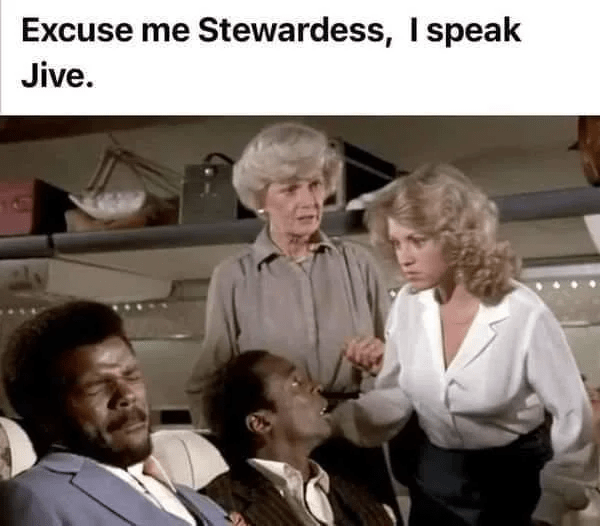
After the show ended, Barbara was typecast and couldn’t find a role she wanted. She traveled abroad off and on for about seventeen years. With the exception of an appearance on The FBI, she would not be seen on tv again until the 1980s after her role on the satire Airplane! While she is only on camera a couple of minutes, her role in the movie is memorable. As a jab at her very white suburban mom role of June Cleaver, Barbara comes to the aid of a stewardess who can’t understand two passengers having an argument. The passengers were Al White and Norman Alexander Gibbs, and the sweet, grandmotherly Barbara tells the stewardess that she knows jive and she proceeds to talk to and berate the two for arguing. The script initially just said “speak jive,” so Billingsley went to lunch with Al White and Norman Alexander Gibbs (the “Jive Dudes”) and they improvised the dialogue together.While she doesn’t even have a name in the movie, this cameo sparked her career and she continued to get fan mail for years.

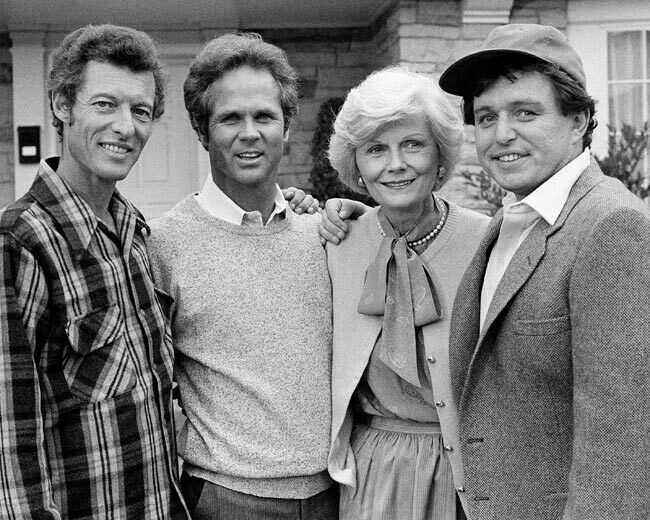
During the 1980s she appeared on several shows including Mork & Mindy, Silver Spoons, and The Love Boat. From 1985-1989 she reprised her role of June Cleaver on The New Leave It to Beaver show.
📷moviemarket The New Leave It to Beaver

She showed up in several shows in the nineties including Empty Nest and Murphy Brown. Her final credit was in a made-for-tv movie, Secret Santa, in 2003.

Billingsley passed away in her home in 2010.

When she wasn’t acting, her interests included gardening, watching movies, playing tennis, sewing, traveling, and spending time with her family.

One thing Barbara said she regretted was not getting an education in drama before becoming an actress. She said she was able to take some classes later, but the people who came to Hollywood with education degrees had much more confidence. And later she learned that the two key skills for actors are relaxation and concentration. Without both, the job is too hard.
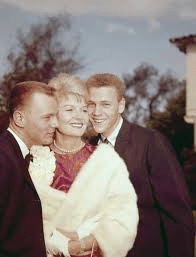
📷facebook Barbara and her real sons

When asked how she wanted to be remembered, she echoed Jane Wyatt, saying that she wanted to be known as a good mother and wife. She said she’d like people to remember Leave it to Beaver, but if they think she raised a good family, that’s important and she wants to be a good example.

I think it’s fascinating that our two moms in our “Model Parents” theme both focused on their family life rather than their professional life. They came from very different backgrounds with Wyatt growing up in a wealthy family where both parents chose to work and Billingsley growing up in a middle-class family where her mother had to work to help support her family. They proved by their actions that the mothers on Father Knows Best and Leave It to Beaver did live realistic lives, and these two moms chose to live this same life off the set as well.
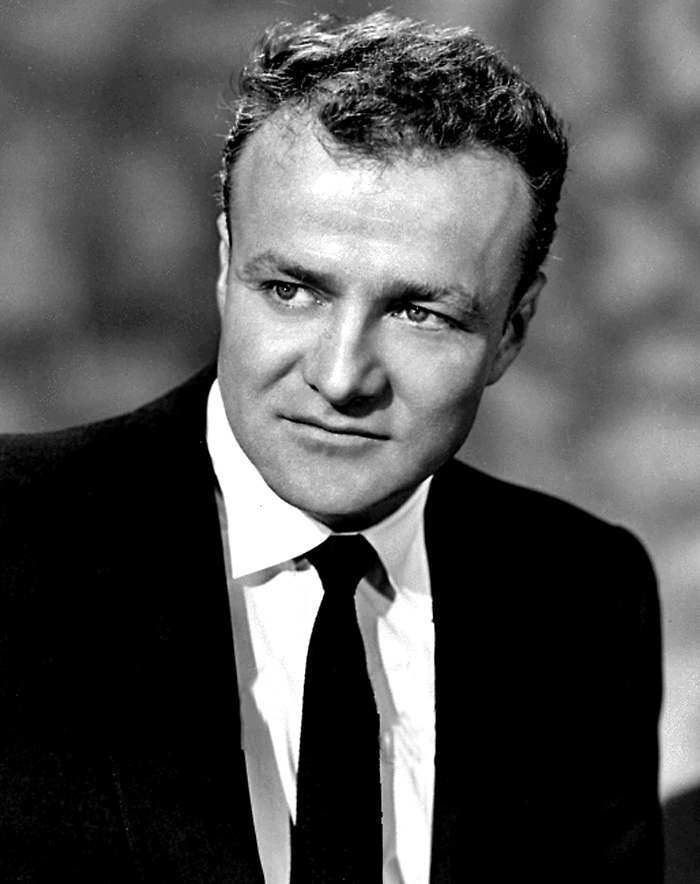
The Many Roles of Brian Keith

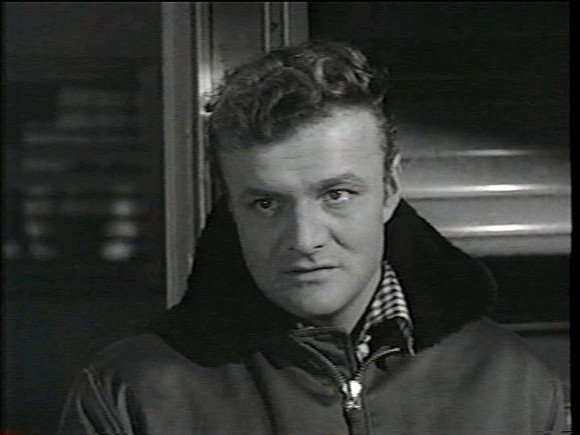
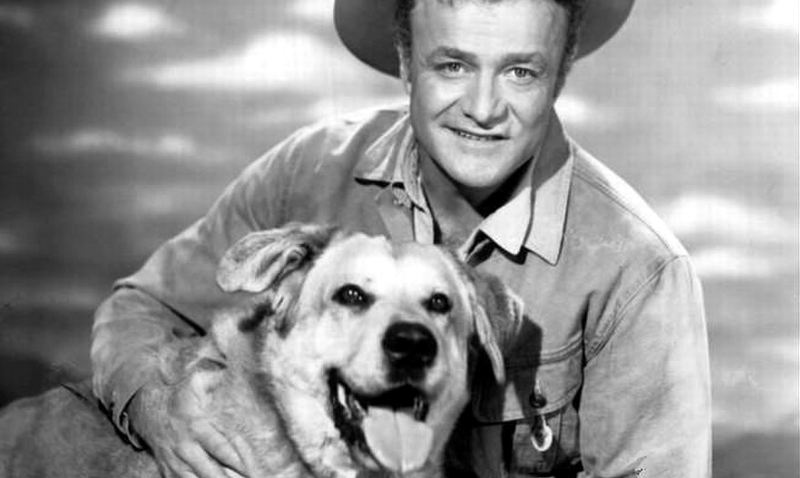
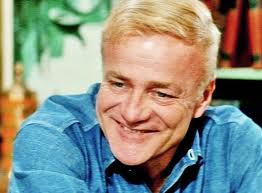
We are right in the middle of our “Men of November” blog series, and today we spend some time getting to know a prolific television and film star, Brian Keith.

Photo: wikipedia.com

Brian Keith (Robert Alba Keith) was born in 1921 in New Jersey. His parents were both actors. They divorced shortly after his birth and at age 2, he moved to Hollywood and made his acting debut in a silent film, Pied Piper Malone, at the age of three.

While his mother was relocating for stage and radio work, his grandmother raised him on Long Island, New York.

His father remarried in 1927, but his second wife, Peg Entwistle, was involved in a tragic incident which is one of the Hollywood legends. She committed suicide by jumping of the H of the iconic Hollywood sign.

See the source image
Photo: pinterest.com

After high school graduation, Keith joined the US Marine Corps from 1942-5. He served as a machine gunner and received an Air Medal.

In an interview with the Press and Sun-Bulletin in 1966, Keith related that he had no intention of becoming an actor. He had a passion for a career at sea and wanted to go to school at the Merchant Marine Academy. He said unfortunately, “You can’t be a ship’s officer without passing a few math courses and I came up with a big fat zero in algebra. In fact, no matter how many times I repeated the course, it still came up zero. So, it was goodbye Navy career.”

After the war, Brian decided to follow in his parents’ footsteps and made his Broadway debut in 1948 in Mister Roberts. His father played Doc in the same production.

While working on television, Keith also began appearing on the big screen. During his career, he would he would make 65 movies. In the fifties he was in Storm Center with Bette Davis and The Young Philadelphians with Paul Newman.

Crusader Photo: sitcomsonline.com

While continuing to appear on the stage, television was starting to pull him in that direction. He was given his first television role in 1951 in Hands of Mystery. He did a variety of television work in the 1950s, starting off in more dramas and ending the decade in westerns. Last week we learned a bit about Gale Gordon. If you remember, Gale starred in a short-lived series called The Box Brothers, and Brian happened to be in one of those episodes in 1957. From 1955-56, he received a regular role on Crusader, making 52 episodes. He starred as Matt Anders, a journalist who, in the aftermath of his mother’s death in a Nazi concentration camp during World War II, travels the world to battle injustice.

The Westerner Photo: nostalgiacentral.com

Moving into the sixties, Keith continued his western appearances and was given the lead in Sam Peckinpah’s television series, The Westerner. Unfortunately, it only lasted for 13 episodes. Keith said that “only four or five of those were any good, but those four or five were as good as anything anybody has ever done.” He played Dave Blassingame, a cowboy drifter who sometimes does questionable things trying to earn enough money to buy a ranch, but in the end, always does the right thing.

The Parent Trap Photo: pinterest.com

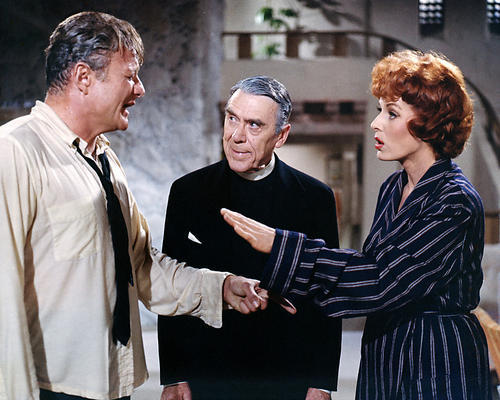
It was also in the sixties that he began his connection with Disney, starring in The Parent Trap in 1961.

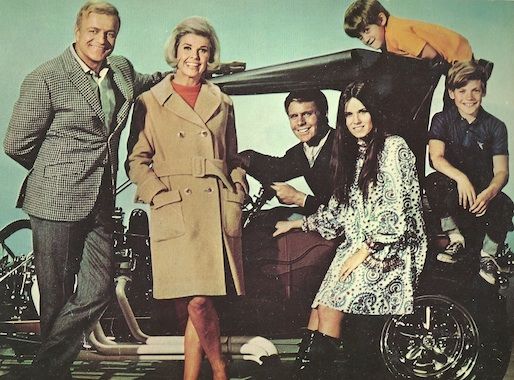
During this decade, he was offered a show of his own that he is probably best known for—Family Affair. From 1966-1971, he appeared as Bill Davis, an engineer, who takes in his two nieces and nephew when their parents are killed. Kathy Garver, Anissa Jones, and Johnny Whitaker played the kids and Sebastian Cabot was Mr. French, who helped raise the children. Keith received three Emmy nominations for Best Actor in a Comedy Series, but lost to Don Adams for Get Smart from all three years, 1967-1969, (In 1968 Sebastian Cabot was also nominated for Best Actor and the show was nominated for Best Comedy in 1968 and 1969, losing to Get Smart.)

Photo: dailytimes.com

Brian received the same type of contract as Fred MacMurray did in My Three Sons. It allowed him to tape his work in two-three months, leaving three-quarters of the year for traveling, relaxation, and film work.

With Six You Get Eggroll Photo: pinterest.com

During the series’ run, he continued to make films including With Six You Get Eggroll with Doris Day.

The Brian Keith Show Photo: pinterest.com

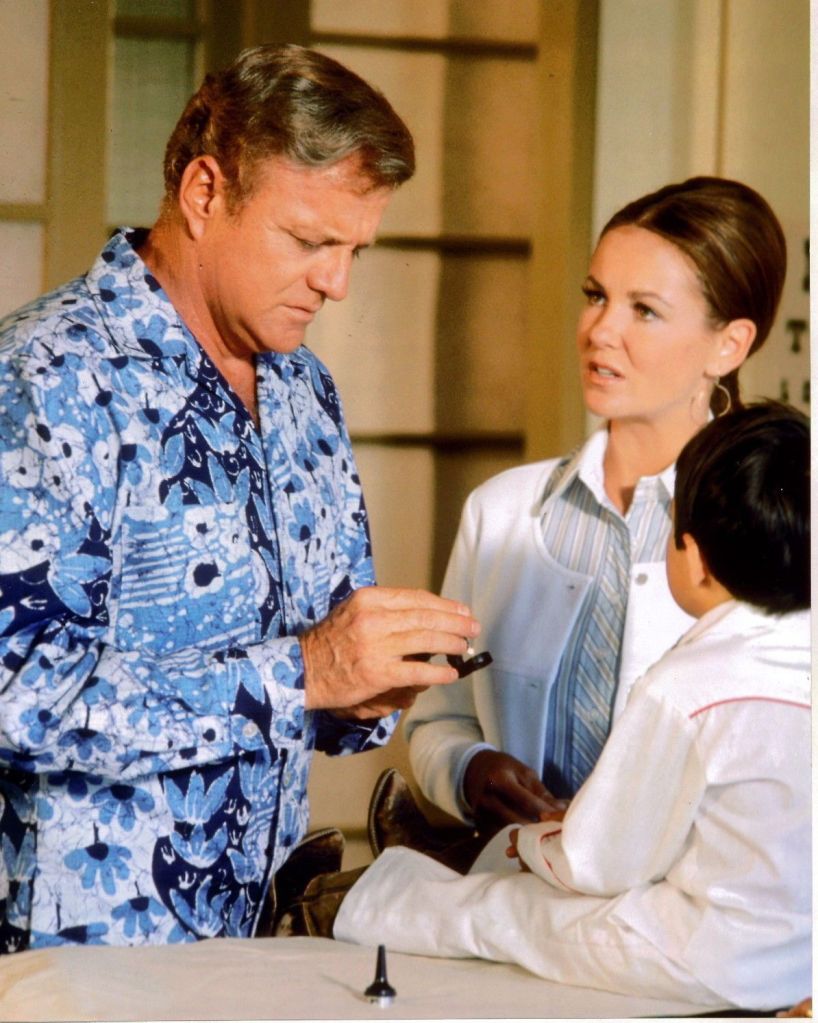
When Family Affair ended, it set off a rapid production of shows starring Keith, most of them with short runs. The Brian Keith Show was on air from 1972-74; Keith was pediatrician Dr. Sean Jamison and worked with his daughter played by Shelly Fabares. Keith said he accepted the role because the show was produced by Garry Marshall and it was shot in Hawaii.

Photo: amazon.com

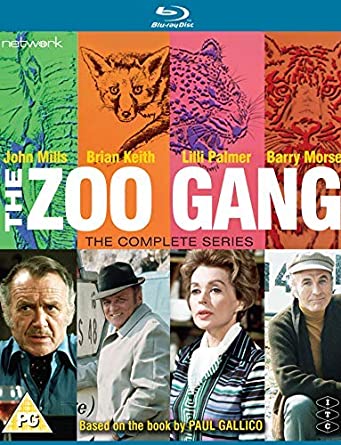
In 1974 he accepted the lead in a six-part miniseries, The Zoo Gang about a group of underground French resistance fighters. In 1975 we saw him in Archer, a television series about a detective which also ran only six episodes. Keith described Archer as “an underdog. He gets beaten. He’s no superhuman. He drives a broken-down Mustang. He’s not particularly fond of the finer things in life. Music is noise to him, painting is decoration, sculpture is ‘that stuff’ and he doesn’t read books.”

Hardcastle and McCormick
Photo: pinterest.com

In 1983, Keith co-starred with Daniel Hugh Kelly in Hardcastle and McCormick. Keith portrayed a retired judge Milton Hardcastle while Kelly was ex-con Mark McCormick. The duo team up because the ex-judge was tired of people getting off on technicalities. The show was on the air for three years.

Photo: sitcomsonline.com

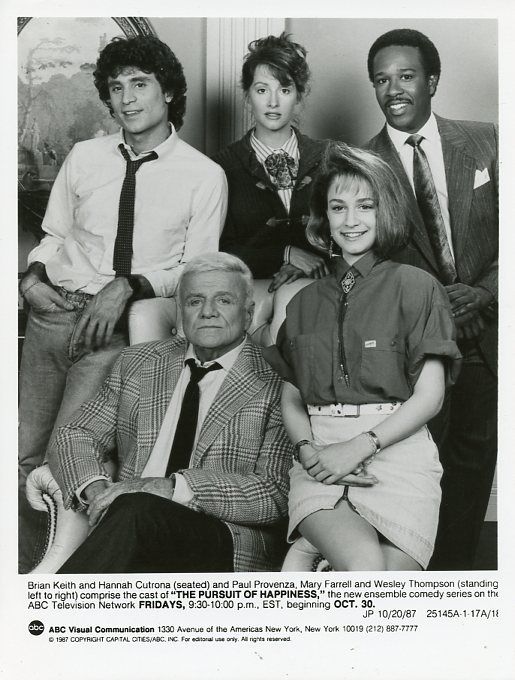
The following year, he began a stint on The Pursuit of Happiness which only lasted for ten episodes. In a different role for him, he played Professor Roland Duncan who taught at a small college in Philadelphia.

Photo: sitcomsonline.com

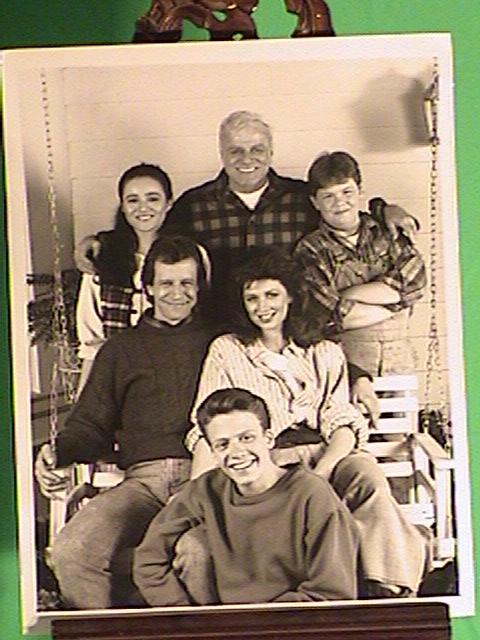
1989 found him on Heartland which was also cancelled after ten episodes. On this show, Keith played BL McCutcheon, an older farmer who loses his farm and moves in with this daughter and her family, a bit of a rural Archie Bunker.

During the 1990s, Keith showed up on a variety of shows including Young Riders, Evening Shade, Major Dad, Cybill, Pacific Blue, and Walker Texas Ranger. He tried his hand at one more sitcom, starring in Walter and Emily. After 13 episodes, the show was finished. Keith is Walter Collins. He and his wife Emily (Cloris Leachman) help raise their grandson while their son Matt travels for his sports writing career.

Keith lived on a 200-acre ranch in Redlands, California. Brian had a lot of hobbies including golfing, swimming, cooking, sailing, horseback riding, spending time with his family, painting, and reading. When asked about whether he wanted to live a long life, he said, “If I live to be a hundred—and I hope I do—I won’t have time to read all the books I want to read or talk to the people I want to know. Not party talk. That’s a waste of time. Real talk.”

While Keith had a successful career, his personal life was not as sunny. He was married three times to Frances Helm from 1948 to 1954, to Judy Landon, an actress who made an appearance on Family Affair from 1954 till 1969, and to Victoria Young, another actress who showed up on The Brian Keith Show as a nurse, from 1970 till his death.

See the source image
Photo: pinterest.com

He also suffered from several physical problems. He had been a long-time smoker, and suffered from both emphysema and lung cancer. He had been a spokesperson for Camel Cigarettes in the 1950s but quit smoking in the late 80s.

Brian’s son, Michael died from pneumonia when he was eight. In 1997, his daughter Daisy committed suicide when she was 27. Daisy had also entered the acting profession and worked with her dad on Heartland. Daisy’s death and financial problems pulled Keith into a depression and he committed suicide in June of 1997.

Early in his career, Keith established a stereotype as the handsome, burly guy with the gruff voice, but he transitioned into that character who also had moments of warmth and humor.

See the source image
Photo: amazon.com

I love his performance in The Parent Trap, and I like to picture Keith as being Mitch in real life, a guy who loves his kids and his ranch and takes pleasure in a variety of outdoor activities but also savors reading on the porch.

Keith remained close to Maureen O’Hara, his costar in the Parent Trap as well as with Kathy Garver and Johnny Whitaker. (Anissa Jones died from a fatal overdose in 1976 at age 18.)

See the source image
Photo: pinterest.com

With more than 166 acting credits, Keith had a full and successful career and brought a lot of enjoyment to generations of fans during his six decades as an actor. He had to endure a lot of heartache off the camera. Both Family Affair and Hardcastle and McCormick are worth watching if you have a free weekend. You can also see a lot of amazing performances of his on the large screen.

Here’s Lucy . . . and Gale Gordon

We are in the third blog of our series “The Men of November.” Born Charles Thomas Aldrich Jr. in 1906, Gale Gordon is remembered fondly for being Lucille Ball’s nemesis on several of her television sitcoms.

See the source image
Photo: oldtimeradio.com

Both his parents were entertainers, and they traveled to England to perform when he was only one. For eight years, he lived in England. After returning to the United States for a few years, Gordon returned to London to complete his education at the Woodbridge School in Suffolk.

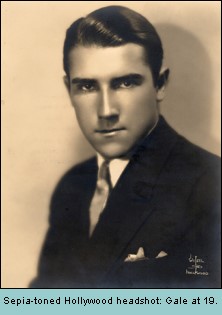
Gale at 19 Photo: lucyfan.com

Gale followed in his parents’ footsteps, and his first theatrical job was as an extra in “The Dancers” in 1923. Richard Bennett (father of Constance and Joan Bennett) starred in the stage production. Gordon worked as Bennett’s dresser, and Bennett taught him all about make-up, mentored him as an actor, and helped him to develop his voice.

By 1925, Gordon traveled to Hollywood, tackling roles in stage, film, and radio. Gordon talked about his first radio performance: “They asked me to come to a Hollywood studio in 1926 and try this new thing called ‘radio.’ They didn’t pay me, of course. They just wanted to fill up some time. So, I sang, ‘It Ain’t Gonna Rain No More, No More’ and accompanied myself on the ukulele. You might say I almost killed radio before it was born. I haven’t played an instrument on the air since.”

Photo: radiospirits.com

In seven short years, Gordon became the highest-paid actor in radio in Hollywood. He was the male lead for Mary Pickford in her serial. He was on almost every popular show on the air. It wasn’t unusual for him to appear on three or more programs in a week. Gordon was the first actor to play Flash Gordon in 1935.

His radio work also provided some other benefits. While appearing on an episode of Death Valley Days in New York, he met Virginia Curley. They married in 1937.

Gale and Virginia
Photo: lucyfan.com

In 1941, after playing primarily dramatic roles, Gordon became a regular on Fibber McGee and Molly. Playing Mayor LaTrivia, Gale was on the show for a dozen years. There was a brief interruption in 1942 when he left the show and enlisted in the US Coast Guard for three years. He rose to the rank of Petty Officer First Class, and his service took him around the world to many dangerous places.

One of the roles he is best known for was Principal Osgood Conklin on Our Miss Brooks. Gordon described Conklin in a TV Guide interview: “There was nothing subtle about Osgood. No nuances. Just a lot of very satisfying acid, bluster, and bellowing, with an occasional weak moment of cordiality thrown in for leavening.  It was practically impossible to overplay him. Even when he was being cordial, he was like an elephant trying to waltz.”

In 1950, he could be heard as John Granby on Granby’s Green Acres which later became the sitcom Green Acres.

With Bea Benederet
Photo: wikipedia.com

While trying to reign in the chaos at Madison High School as Osgood Conklin, Gale was also the refined banker, Rudolph Atterbury, on My Favorite Husband, Lucille Ball’s radio comedy. Atterbury’s wife was played by Bea Benederet.

As television gained popularity, it was inevitable that some of radio’s favorite shows would make the transition to the small screen. While it was entirely possible to play several different characters on the radio, television production didn’t offer the same flexibility. When My Favorite Husband was retooled for television as I Love Lucy, Ball planned on bringing Gordon and Benederet along with her. However, Gale was committed to Our Miss Brooks, and Bea was playing a major role on Burns and Allen on television.

Asked about those days, Gale described himself as “a quiet, reserved, pipe-smoking homebody.” He said he always had a good balance of professional and personal interests. In addition to acting, he wrote books (Nursery Rhymes for Hollywood Babies and Leaves from the Story Trees), painted, and maintained a ranch. He and Virginia bought a 150-acre property about three hours away from Hollywood. They grew carob trees. Gordon was not a rancher in name only; he raised the trees, built the house, installed the plumbing, completed carpentry and handiwork, put in a swimming pool, and built a two-story building that served as garage and studio.

Our Miss Brooks Photo: amazon.com

In 1952, Eve Arden decided to take Our Miss Brooks to television. While Gale continued his role as Conklin on the show, he also guest starred on a couple of I Love Lucy episodes. Our Miss Brooks had a successful run for four years.

When the show ended in 1956, CBS was quick to sign Gordon on for another show. They paired him with Bob Sweeney in The Box Brothers (sometimes called The Brothers). Unfortunately, the series only lasted for 26 weeks.

The Box Brothers Photo: imdb.com

In 1958, Gordon was a regular on Sally where he played department store owner Bascomb Bleacher. He also appeared with Walter Brennan on The Real McCoys.

In 1959, December Bride which aired from 1954-1959, went off the air, spinning off a new show Pete and Gladys starring Harry Morgan and Cara Williams. Morgan appeared as Pete Porter on December Bride. On the new show, Gale played Pete’s Uncle Paul.

Dennis the Menace Photo: pinterest.com

In 1962 he was cast as Mr. Wilson on Dennis the Menace. At the same time, Lucille Ball was creating a new show, The Lucy Show. She wanted Gordon to appear as Mr. Barnsdahl, a banker. When he was not available, Lucille turned to Charles Lane. She said she loved working with Lane, but always wanted to work with Gale again, so when Dennis the Menace was cancelled, she quickly signed Gordon; Lane moved over to Bea Benederet’s new sitcom, Petticoat Junction, as the despicable Homer Bedloe. And thus Theodore J. Mooney was born.

Photo: welovelucy.com

For the next eleven years, through several different series titles, Lucy and Gale worked together. They would both retire in 1974. When describing his time on Lucy’s shows, Gale related in a Good Morning America interview in 1982 that “I always had a wonderful feeling of anticipation going to work every week, which is very, very rare. I don’t care what business you are in. But to really look forward to getting into the nitty gritty and working hard for four days—which is all the time we had to do the show—is really unique. To look forward to it for eleven years, that’s doubly unique.” He went on to praise Lucy for her work ethic: “Her attitude has never changed. Every show she ever did was always the most important show of her life. And I think that is the secret of her success.”

See the source image
Photo: oldtimeradio.com

One surprising thing I learned was that Gordon was known for his ability to do cartwheels. He can be seen doing them on several episodes of Here’s Lucy. At the time, he was earning $25,000 an episode. Compare that to today when the stars of The Big Bang Theory received a million dollars an episode.

Gale and Virginia enjoyed twenty years of retirement. Virginia would pass away in 1995 at Red Terrace Health Center in Escondido, California. One month later, Gordon died from lung cancer at the same facility.

In 1999, Gale was inducted into the Radio Hall of Fame. Known for playing a variety of gruff, formal professionals, everyone knew that the bellow and bluster his characters spewed was great acting. In real life, Gale was one of the sweetest, kindest men around. He once said, “I am never nasty—unless I get paid for it.”

See the source image
Photo: wikipedia.com

It’s hard to describe the influence Gale Gordon has had on generations of actors and the number of hours of entertainment he has provided to generations of television and radio fans. It’s always fun to listen or watch Connie Brooks trying to pull a fast one over on Osgood Conklin or Lucy Carmichael trying Mr. Mooney’s patience with her latest scatter-brained plan. Thank you Gale Gordon!