Starsky and Hutch: One of the Actors Not Named Hutch Made The Show More Difficult

Created by William Blinn with Spelling-Goldberg Productions, this show debuted as a pilot movie in 1975 on ABC. It became a popular series for four seasons starring Paul Michael Glaser (Starsky) and David Soul (Hutch). Starsky is a Army vet from Brooklyn who can be a bit naĂŻve at times. Hutch was from Minnesota, divorced, and more introverted. After ending up in California, they worked together as detectives. Of course, as we have learned this month, the car is important and they drove a red Ford Gran Torino. Apparently Blinn wanted a green Camaro, but Ford was willing to sponsor a car.
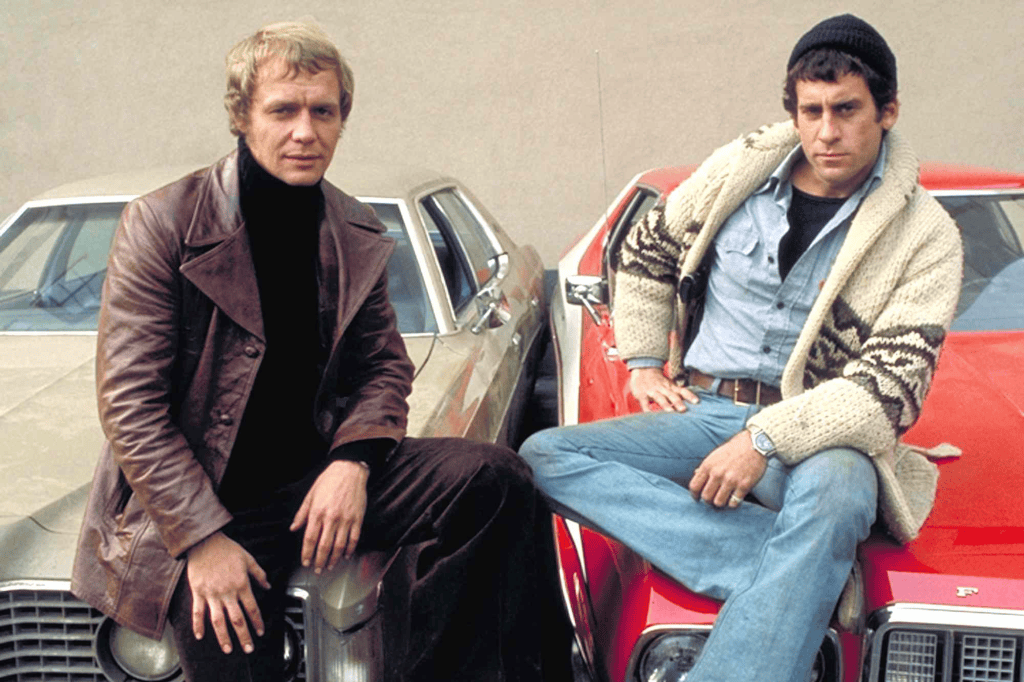
đź“·entertainmentweekly.com

Supporting Starsky, Hutch, and the Torino were informant Huggy Bear (Antonio Fargas) and their boss Captain Dobey (Bernie Hamilton). Fargas was so popular that he almost got his own spinoff. Episode two of the series was used as a pilot, but viewers didn’t love it, and it never went any further.

Like Cagney and Lacey, these cops were affectionate with each other, and we knew they cared deeply about each other, not trusting many other people.

The show aired Friday nights in season one, beating both Kate McShane and Petrocelli to be a top-twenty hit. Season two found the show moving to Saturday competing against The Mary Tyler Moore Show and The Bob Newhart Show, tough competition. It held its own, staying in the top thirty. Season three found the show moving again from Saturday to Wednesdays but still keeping a top-thirty spot. The show stayed on Wednesdays for its final and fourth season, still coming in about 33.

In 1977, violence was becoming a concern in society and Glaser agreed that the show was too violent and more personal plots were created. Glaser wasn’t happy on the show and tried to get out of his contract. A new character, Officer Baylor (Roz Kelly) was created. However, Glaser agreed to return after being given some creative control over scripts, a pay raise, and an opportunity to do some directing. Glaser threatened to leave again during the fourth season. Originally the writers had him dying; however, they recanted because they thought it might affect the syndication of the show. The show was still a hit, and a fifth season had been approved but Glaser’s continual criticism and threats to leave brought an end to the series and it was cancelled.
đź“·pinterest.com

The theme music for the show was darker than most television themes. It was written by Lalo Schifrin, and it was replaced in season two by Tom Scott’s “Gotcha.” A more dramatic song was used yet again on season three written by Mark Snow called “Blow It Out,” but the final season returned to “Gotcha” in a little different version. Scott later did the music for Family Ties and Baretta. Snow worked on many shows including Crazy Like a Fox, Falcon Crest, The X Files, and Blue Bloods with more than 250 credits. Schifrin was a prolific composer in many entertainment genres.

The fact that the show never dipped below mid-thirties is a testament to how popular it was with its viewers. The network certainly tried to make it difficult by moving it around in the schedule and changing the theme song every year. If that wasn’t enough, you have Glaser complaining about the show and his role for most of the seasons. But viewers stuck with it and probably the fifth year would have been just as popular as the first four.

In the first episode, the two detectives investigate a double homicide, and discover that the man and woman who died in a car identical to Starsky’s were mistakenly murdered – it was the detectives themselves who were the intended targets. The fourth episode was about the stars escorting the daughter of a crime boss from San Francisco to Los Angeles. A security leak unleashed hordes of hit men that they must evade en route.They don’t sound like terrible plots and not too different from most of the shows of that decade, although some did have a lot more violence than many other television shows in prime time.
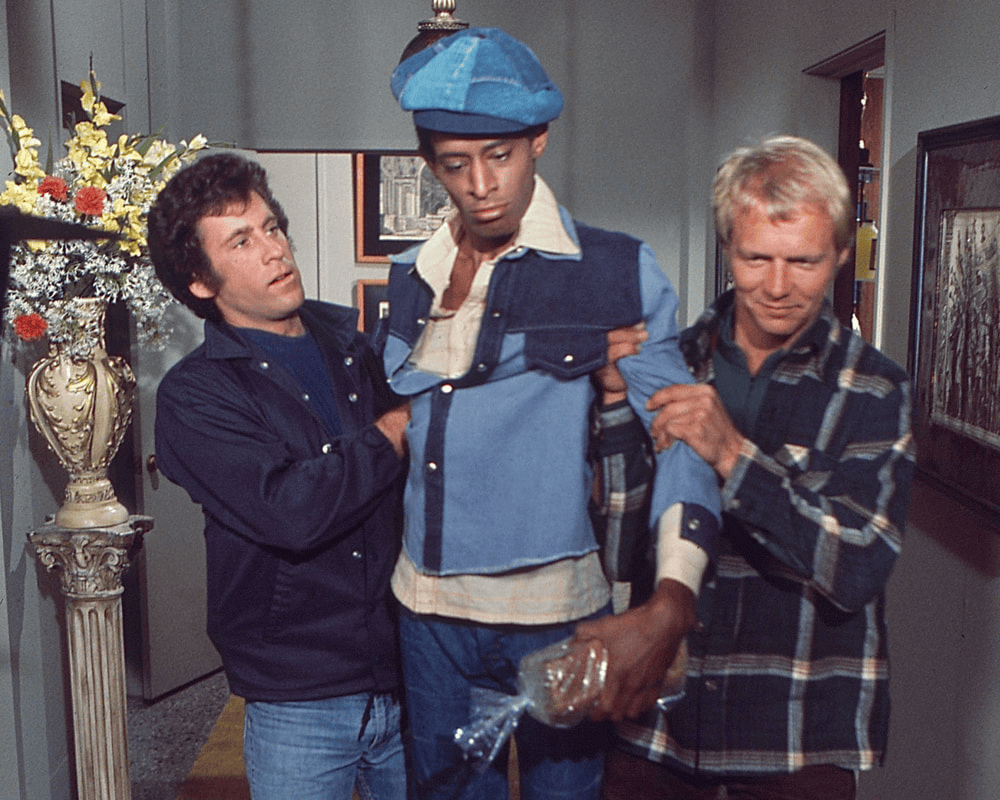
đź“·antoniofargas.com

Glaser discussed the show during his Television Academy interview. He said he read the pilot and didn’t think it would turn into a series. He said when he went for his audition, the room was overflowing and he sat down on the floor and fell asleep. He did his audition and was called back the next day to meet David Soul. During the screening he didn’t think he was very good in the part, and the show was a bit cliché, and he told Soul, “Thank God we’ll never be doing this series.” They scheduled six episodes, and he said his thought was thankfully they only had to film six episodes because he thought they were all bad. Apparently in his mind, they never got any better even though they filmed another 86 episodes.

I’m not saying these were highly artistic episodes, but if Glaser hated them so much that it made his life miserable, he should never have agreed to do the series. Actors have to eat like everyone else and often have to accept assignments they don’t love but once you agree to one of those types of assignments, it seems like you should make the best of it and not be so vocal to the press.

Glaser never had another starring role and very few recurring roles. He did go on to amass another 20 directing credits. Soul was part of the cast of Yellow Rose and obtained several recurring roles, with almost 100 credits for his career.

I’d love to know if this was one of your favorites and if it’s still on your must-see list. Maybe I should give it another try.

Not Anyone Can Pull a Stunt Like This

Since this month is a Potpourri Month, I thought it might be fun to look at the career of stuntmen on television. I’m calling this one “Propourri” because you have to be well trained to do these types of stunts.

Left to right: stuntmen Bob Miles, Bob Herron, Whitey Hughes, actor Michael Dunn, stuntman John Hudkins, Bill Shannon, and actor Quintin Sondergaard. Photo: famousfix.com

A stuntman or stuntwoman is a person who performs dangerous action sequences in a movie or television show. They have usually had extensive training to do these perilous moves safely. Sometimes they are hired as a team with a stunt crew, rigging coordinator, and special effects coordinator.

Stuntmen like Evel Knievel are daredevils who perform for a live audience. If someone fills in for a specific actor all the time, they are stunt doubles. So, what type of stunts do these professionals perform? Sometimes it’s car crashes, explosions, fights, or falls.

The first stuntmen to entertain audiences were performers who traveled around, often in circuses. Later these types of performers worked with Buffalo Bill and in shows that celebrated the Old West.

Today we are going to concentrate on television performers. Currently, stunt professionals must be certified to obtain the insurance producers need to obtain.

The Academy of Television Arts and Sciences now awards Emmys for stunt coordinators but there is no Oscar for this work.

Life-threatening injuries are not uncommon in this work and sadly, deaths do still occur. While most of my research found stuntmen killed in movies, I only found one relating to television. In 1985, Reid Rondell was killed in a helicopter explosion filming Airwolf.

I thought it would be fun to look at the careers of a few stuntmen from the golden age of television. Most of these men made their money in films, but all three of them had  successful careers working on television shows as well.

Whitey Hughes

Photo: findagrave.com

Whitey Hughes was born in 1920 in Arkoma, Oklahoma. He grew up on a farm, so in addition to working with plows and horse teams, he learned to break horses with his father. When he was sixteen, the family moved to Los Angeles. After graduating from high school, Whitey became a Screen Actors Guild member in 1947.

Whitey began his movie career in 1946. During the fifties, he worked on a lot of western films. Hughes said that in the early part of his career, he often had to be a double for the leading lady. (We’ll come back to this subject later in the blog.) He did stunt work for a variety of actresses including Anne Baxter, Rita Hayworth, Barbara Hershey, Virginia Mayo, Stephanie Powers, and Lana Turner.

Photo: westernclippings.com

Speaking of women, one of the roles, Whitey loved best was being the husband of Dotti; they were married for seventy years.

During the fifties, Whitey worked on a lot of westerns including Cheyenne. In the sixties, you would see him on Rawhide or as Kurt Russell’s double on The Magical World of Disney. If you want to see him in action, the best show to watch would be The Wild Wild West; his crew did some amazing things on that show and Whitey coordinated the stunt work for 1965-1968.

The eighties found him in Fantasy Island, Wonder Woman, and BJ and the Bear while in the nineties he was part of Little House on the Prairie and The Fall Guy. His last work was in a movie in 1998. In 2009, Whitey died in his sleep. It is good he died peacefully; I can’t imagine the toll that this type of work took on his body for fifty years.

Hal Needham

Photo: themoviedatabase.com

Hal Needham was born in 1931 in Memphis, Tennessee. He served as a paratrooper in the US Army during the Korean War. After the war, he worked as an arborist doing tree-topping services. He was also the billboard model for Viceroy Cigarettes while he was trying to establish his career in Hollywood.

Hal’s first big job was the stunt double for Richard Boone on Have Gun, Will Travel. From 1957-63 he was in 225 episodes. During the sixties, he would show up in many television series including Laramie, Wagon Train, Laredo, The Wild, Wild West, Star Trek, Gunsmoke, Big Valley, and Mannix.

Hal was the highest-paid stuntman in the world. That seems fitting because during his career he broke 56 bones, broke his back twice, punctured a lung, and lost a few teeth.

Needham was responsible for wrecking hundreds of cars, fell from many buildings, was dragged by horses, perfected boat stunts and was the first human to test the car airbag.

He revolutionized the work of stuntmen and worked to get his craft recognized and appreciated. He mentored up-and-coming professionals.

With Burt Reynolds Photo: youtube.com

His career transitioned from a stuntman to a stunt coordinator to a second unit director to a director. In all, he would work on 4500 television episodes and in 310 films, according to imdb.com. He made his directing debut on a movie he wrote called Smokey and the Bandit with Burt Reynolds and would go on to direct Hooper and The Cannonball Run for Reynolds among other series and films.

In 1977 Gabriel Toys debuted the Hal Needham Western Movie Stunt Set with a cardboard saloon movie set, lights, props, a movie camera, and an action figure that could break through a balcony railing, break a table and crash through the window. They have become highly collectible.

Photo: pinterest.com

Needham owned a NASCAR race team. He also set a Guinness World Record as the financier and owner of the Budweiser Rocket Car which is now on display at the Smithsonian’s National Air and Space Museum.

He also managed to win both an Emmy and an Oscar. Reynolds and Needham were close friends; Needham lived in Reynold’s guest house for 12 years and their relationship was used as the basis for the plot in Once Upon a Time in Hollywood.

Bob Herron

Bob Herron was born in 1924 in California. When his parents divorced, he moved to Hawaii with his father. The swimming and high diving he did there was a boost to his stunt career. His mother married Ace Hudkins who was a supplier of horses to the movie industry. Herron helped his stepfather in this business before enlisting in the Navy.

Photo: imdb.com

In 1950 he began doing stunt work. His first job was on Rocky Mountain with Errol Flynn and he was shot off horses. This would be a piece of cake compared to his role in Oklahoma Crude where he fell 55 feet from the top of an oil derrick into a stack of boxes.

In the sixties, he began his stunt work on television. He was in Gunsmoke, I Spy, I Dream of Jeannie, The Man from UNCLE, The Girl from UNCLE, Star Trek, Mission Impossible, Get Smart, and Bonanza. He doubled for Ross Martin in The Wild, Wild West. During the seventies, he appeared on Petrocelli, Little House on the Prairie, Marcus Welby, The Mary Tyler Moore Show, The Rockford Files, Kojak, and Charlie’s Angels among other shows. He was still going in the eighties doing his stunts on Hart to Hart, Magnum PI, Remington Steele, the Dukes of Hazzard, Matt Houston, Airwolf, The A-Team, and MacGyver. Despite being almost seventy, he continued in the nineties on shows like Father Dowling’s Murder Mysteries, The Wonder Years, and Murder She Wrote.

I did smile a bit to see shows like I Dream of Jeannie and The Mary Tyler Moore Show on this list. The Jeannie episode is one where she brings her great-grandfather to Cocoa Beach to show Tony how to desalinate water and the Mary episode is one where Sue Anne falls in love with someone who doesn’t return the feelings. I guess it proves you never know where a stunt person will show up.

I don’t know how he managed to survive sixty years performing dangerous stunts but he must have been in amazing physical shape.

I did promise to come back to men having to double for women in the forties and fifties. Thankfully, that is no longer the case, and women’s numbers are increasing among the 3400 stunt performers in SAG.

Former gymnast Shauna Duggins did the hard fighting work in Jennifer Garner’s show Alias. Because pay is determined by union contracts, stuntwomen do not suffer from the pay discrimination that sometimes shows up in the industry. Stunt performers are paid a minimum of $1005 for one day of work and they can negotiate higher pay based on their experience.

Shauna Duggins and Jennifer Garner
Photo: broadwayworld.com

Duggins was at the University of California Davis when she first thought about being a stuntwoman. She learned more about martial arts and spent hours working out in gyms after graduation. In 2000 she auditioned for stunt work in The X Files as Krista Allen’s double and got the job. Then she was in Charlie’s Angels for Kelly Lynch and Cameron Diaz.

It was after that movie that she got the role on Alias where she worked for five years. To protect these women, SAG has a 24/7 hotline for performers to phone if they feel they have been the victim of sexual abuse.

In 2018 Duggins won an Emmy after twenty years in the business. Her advice to young women who decide to make this their career: “train as much as you can in various skills. Go to different gyms with stunt performers, train with all of them and just learn from each other.”

I’m glad we took some time to learn about the tough and dangerous job these performers do. It was so interesting to learn a little bit about some of these industry stars.