The Life of a Makeup Artist: All Made Up and Somewhere To Go

Welcome to our blog theme for the month, “Behind the Scenes.” We are going behind the camera to check out careers of those people working behind the camera to bring our favorite characters to life. Last week we learned a bit about costumer designers, and today we are heading to the makeup counter.

So, what do makeup artists do?  Obviously, they apply cosmetic products to enhance the appearance of the stars, but they do so much more. Artists also fit prosthetics and create the effects of blood, wounds, burns, and general aging; adjust colors and textures to work with high-definition cameras and bright lights; assure consistency for multiple-day filming; manage sweating; and sometimes choose and fit wigs for characters. Let’s look at a few of the best in the field to learn more about their life and careers.
📷vintagestardust.wordpress.com

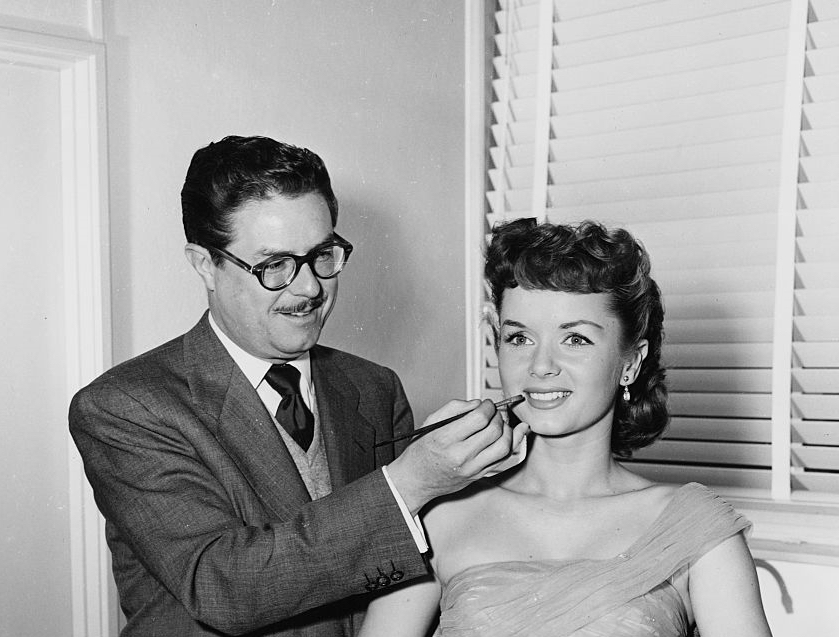
William Tuttle

William Tuttle was the first makeup artist to win an Academy Award. He created many innovative techniques and trained generations of makeup artists.

He was born in Florida in 1912. After dropping out of school early to support his mother and younger brother, he held a variety of jobs including forming his own band. In 1930, he moved to Los Angeles, enrolling in an art school and working as a page at Fox Studios. That younger brother, Thomas Tuttle, would also become a makeup artist working on The Dick Van Dyke Show, The Joey Bishop Show, Gomer Pyle USMC, and That Girl among others.

Tuttle was hired at Twentieth Century Pictures to work under Jack Dawn. In 1934, Dawn took a job at Metro-Goldwyn-Mayer and Tuttle moved with him. Tuttle was still working under Dawn but began taking on more responsibilities. He supervised the makeup in many popular movies including The Wizard of Oz and Father of the Bride. Eventually, he became the head of the makeup department.
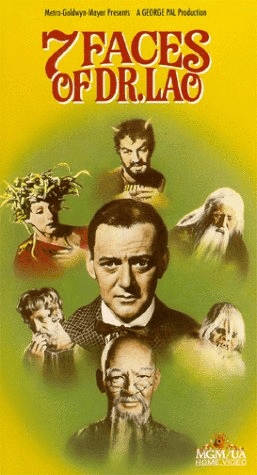
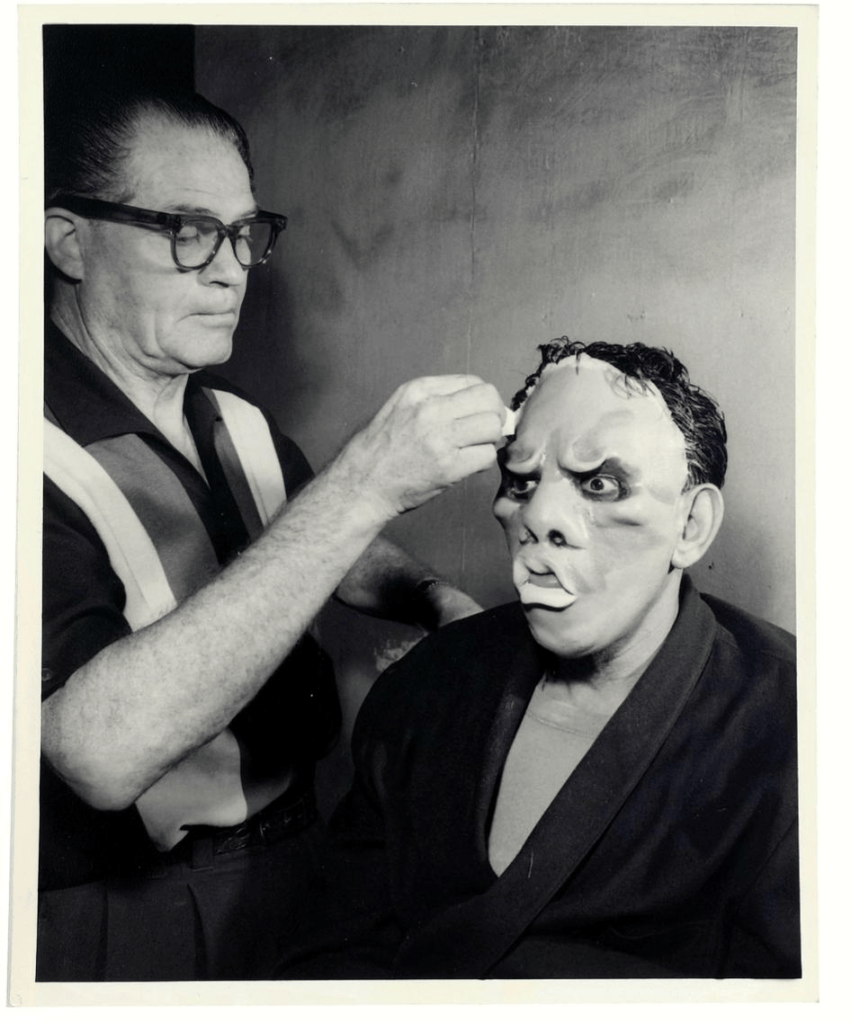
He received a special Oscar for his work on 7 Faces of Dr. Lao in 1965. In this film, Tuttle transformed Tony Randall into seven different characters including Dr. Lao; an aged, bearded Merlin the Magician; and a Medusa with a feminine appearance. Randall said “he shaved my head and eyebrows . . . gave me an unborn look. But professionally it was a masterstroke.” He went on to say that “all my preconceived notions on how I would play the characters vanished. As soon as Tuttle applied his makeup magic, I felt myself actually become these strange people.”

The Oscar category of makeup artist would not become an official category until 1982. That year Rick Baker won the first Oscar for makeup. He would go on to win another five and he credited Tuttle: “His work greatly influenced me.” He said as a young boy, he often tried to re-create the makeup techniques Tuttle used in The Twilight Zone.
📷reddit.com

Tuttle was the artist behind one of my favorite Twilight Zone episodes, “Eye of the Beholder.” When the episode begins, doctors and nurses are working with a bandaged patient who just wants to look like everyone else. After some time, the bandages are slowly peeled away. We see the beautiful face of Donna Douglas. As she picks up the mirror to look at her new face, she screams, cries and covers her face. Then the camera pulls away and we see all the people Tuttle did makeup on – doctors and nurses with deformed faces and pig snouts.

With 393 credits, most of Tuttle’s work was in the movies, but he contributed to television as well. From 1960-62 he provided all the makeup for National Velvet. He also spent time on Mr. Novak, My Favorite Martian, The Man from U.N.C.L.E. as well as The Girl from U.N.C.L.E., The Phyllis Diller Show, and The Courtship of Eddie’s Father, among others.

Later in his career, Tuttle created his own line of makeup, Custom Color Cosmetics. Naimie Ojeil, owner of a beauty supply store in Hollywood said his brand was “the most popular makeup among Hollywood professionals for at least two decades.”

Tuttle would create molds of actors he worked on which allowed him to create their looks beforehand. He donated them to the University of Southern California where he taught from 1970-1995. Herbert Farmer, a USC archivist said Tuttle “was interested in passing on all he could to the students. He had a real following.”

Gene Hibbs

Gene Hibbs was born in Normal, Illinois in 1912.
📷imdb.com

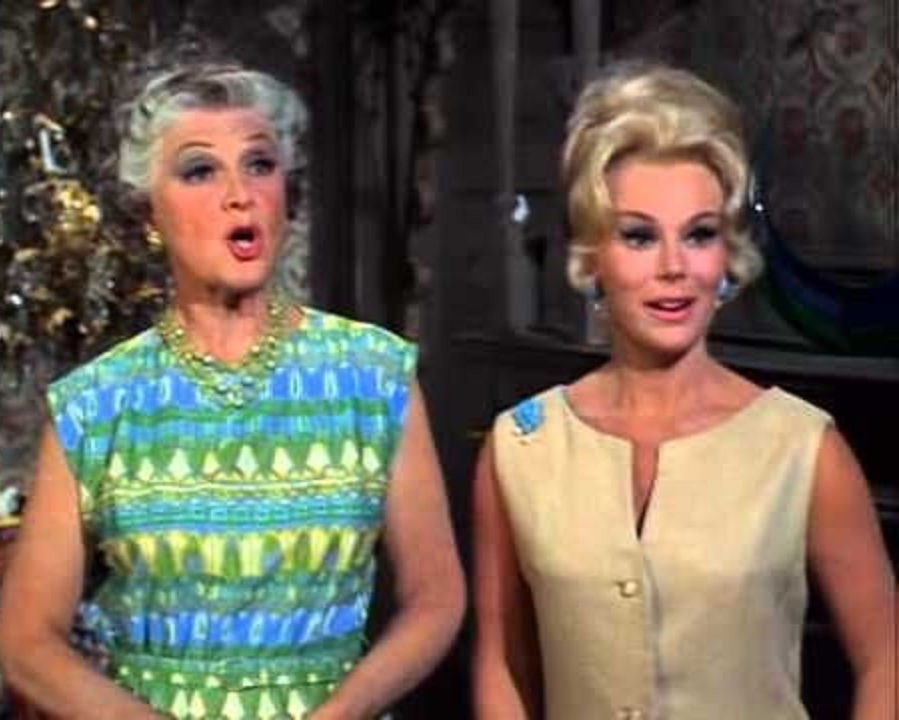
I couldn’t find a lot of information about him. I did read several times that he was often hired because he had a unique talent for making older actresses look younger than they were with a technique he called “painting.”

His first television series was The Lone Ranger from 1954-1955. He worked on many television shows following that including with Ann Sothern on Private Secretary and The Ann Sothern Show, The Judy Garland Show, Here’s Lucy, and Green Acres.

He was working on Green Acres when Judy Garland passed away. She had stipulated in her will that Hibbs was supposed to do her makeup one last time. Her daughter Liza Minelli phoned Hibbs and he agreed to do that. When the network said no, Eva Gabor said she would not work unless he was allowed to leave for a few days. The producer pleaded with the network, but they held firm and said they would lose $30,000 of time and he could not leave the set.

Ben Lane
📷ebay.com Ben Lane on the set

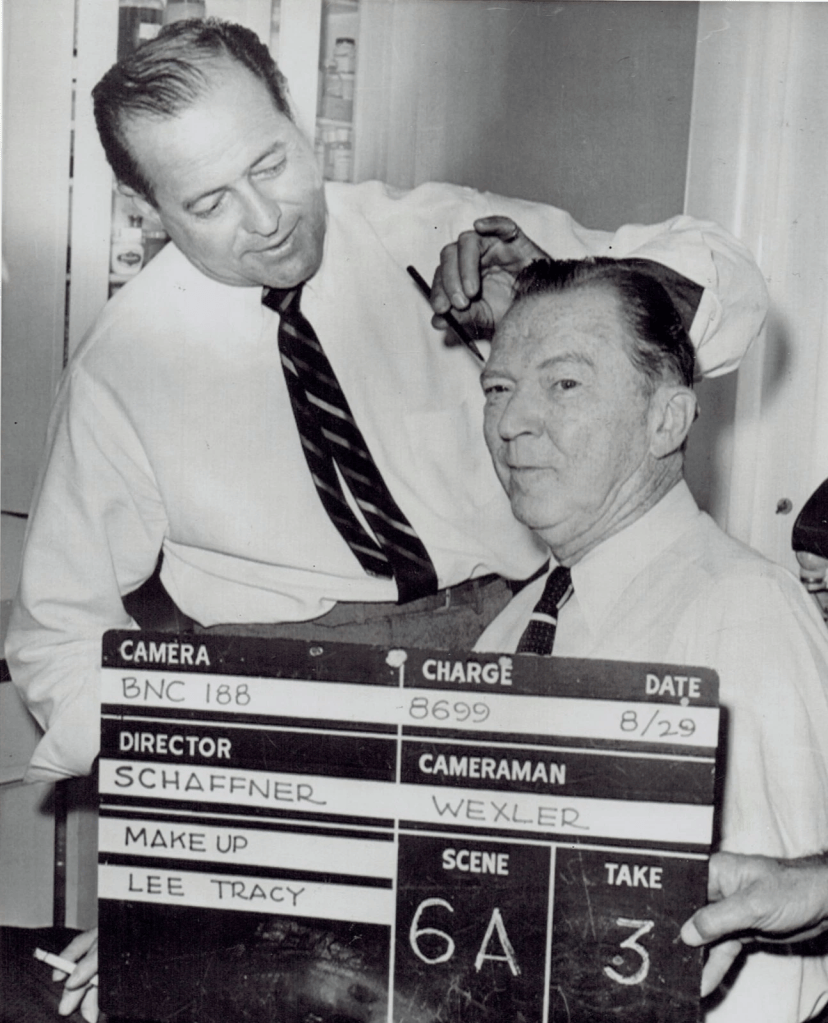
Ben Lane was born in 1912 in Chicago, Illinois, the same year as both Gene Hibbs and William Tuttle. Lane was one of the founding members of the Motion Picture Guild, but many of his 236 credits were spent in television.

Lane’s first television series was in 1957 for Sergeant Preston of the Yukon. His career would continue with many popular shows. Get ready to take a long breath because this sample is far from a comprehensive listing of his work. Ready? He was part of the cast for The Lone Ranger, Dennis the Menace, The Farmer’s Daughter, Hazel, Gidget, The Monkees, Bewitched, The Flying Nun, I Dream of Jeannie, Bridget Loves Bernie, The Partridge Family, Police Woman, and Fantasy Island.

In addition to keeping busy with his career, he was involved in several charities: City of Hope and Shriner’s circus. He became a nationwide clown advisor. He also was a consultant for the Los Angeles Police Department, the US Department of Justice, and the FBI for disguises.

Bud Westmore
📷abebooks.com Westmore working on the film The Lost Moment

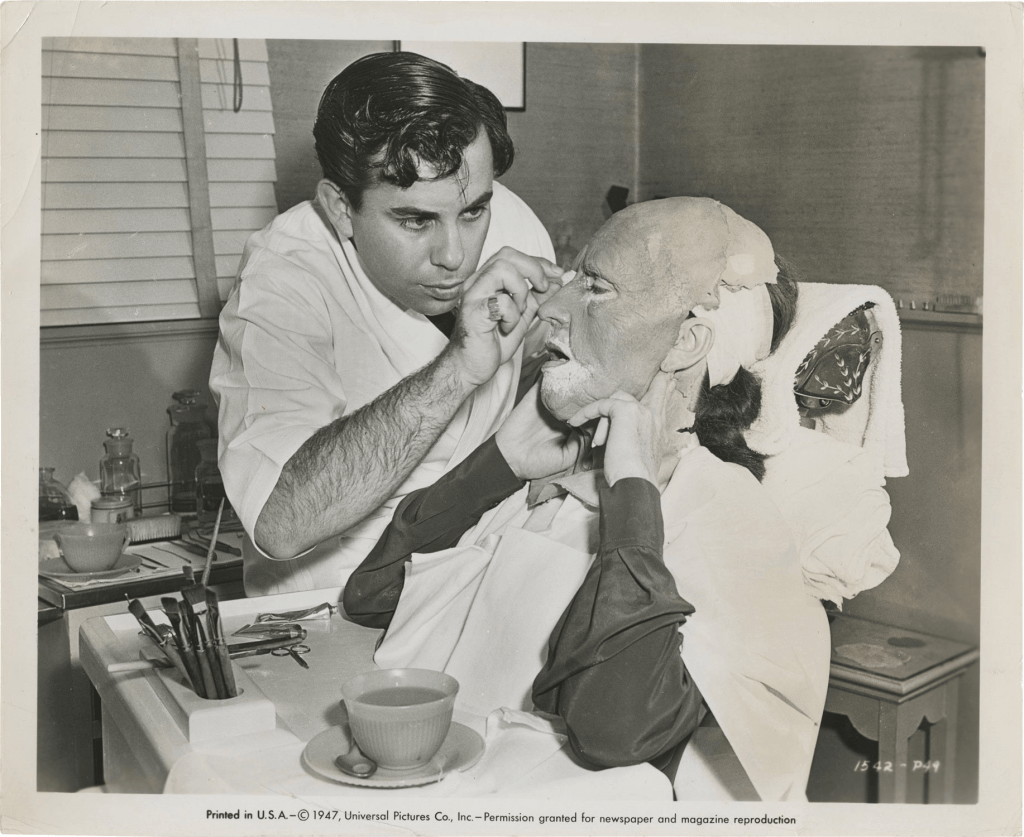
Born in 1918 in New Orleans, Westmore and his brothers—Ern, Frank, Monte, Perc, and Wally–were all makeup artists in the entertainment business. At one time, there was a Westmore heading up almost every studio makeup department.

After school, Bud was an apprentice under Perc at Warner Brothers to learn hair design and makeup before taking a job at Twentieth Century Fox. He left to serve three years with the Coast Guard. When he returned to Hollywood, he worked for the Eagle Lion before he was hired as the head of the Universal Studios makeup department in 1947. The largest building on the Universal studio back lot is named for Bud.

His marriages and divorces also kept him busy. He was married to actress Martha Raye for four months in 1937. A few years later he married Rosemary Lane, another actress, and they were together for fourteen years. His divorce to Lane was on March 31, 1955, and on April 1, 1955, he married Jeanne Shores, a former Miss California in 1952. They would remain together until his death from a heart attack in 1973.
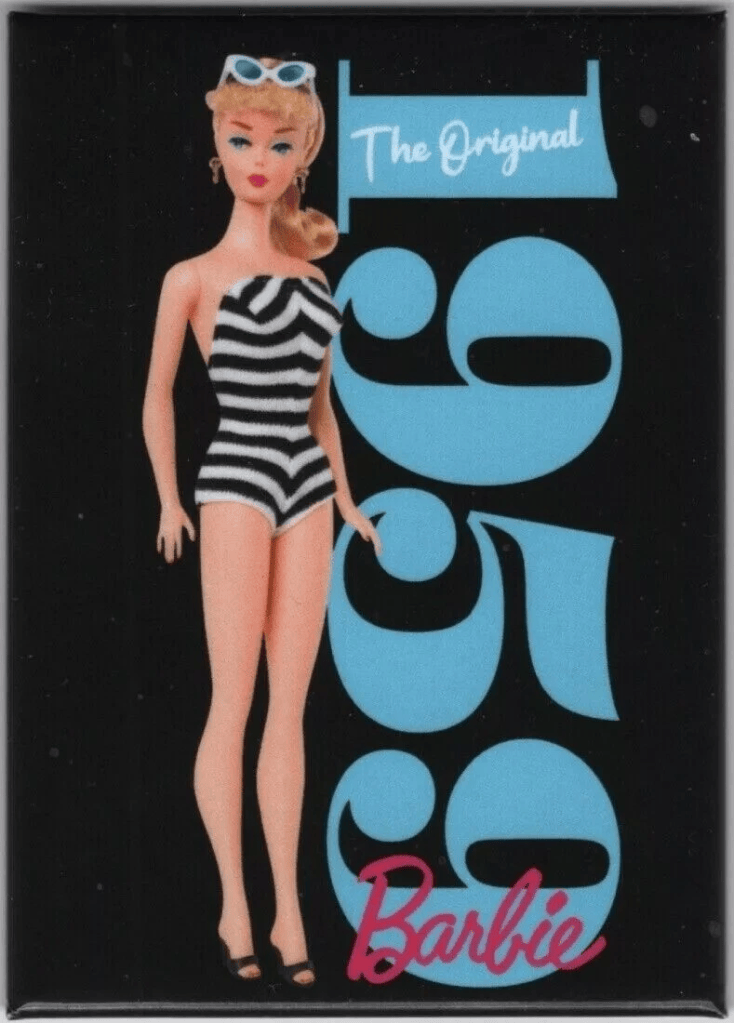
In 1957 Bud was asked to create makeup for a new doll that was coming on the market. In 1959 Barbie debuted. Bud had based her on a German doll Mattel found named Lili. He modified “the bee-stung lips, heavy eyelashes, and widow’s peak to give her an All-American Girl look” and he rooted her hair.

With more than 600 credits on both the big screen and the small screen, Bud’s first television project was Playhouse 90 in 1957. During the sixties he was involved in quite a few shows including The Jack Benny Program, McHale’s Navy, The Munsters, It Takes a Thief, Ironside, Marcus Welby MD, and The Virginian.

It was fun to learn a little bit about these make-up professionals and the shows they worked on to help create some of our favorite television land characters.
Parley Baer: His Life Was a Three-Ring Circus

Like so many great character actors, Baer had a very interesting life. One of the things I love most about these actors is their story off screen.

📷filmweb.com

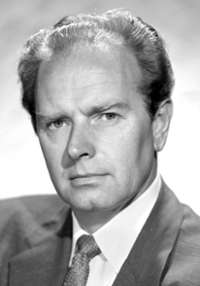
Parley Baer was born in Salt Lake City, Utah in 1914. At ten years of age, he began working at an amusement park where he realized that enjoyed entertaining people. After graduation, he studied drama at the University of Utah. In 1935 the Utah paper reviewed “Box and Cox,” a play directed by Baer that was put on for the Speech Arts Fun Frolic.

In 1936 he ran away to join the circus. Okay, maybe he didn’t literally run away. but he was a ringmaster for Circus Vargas and Barnam & Bailey. Later he did publicity for the AI G. Barnes Circus during the winter. In 1987 he told the Monrovia News that running a circus is “a giant living jigsaw puzzle that has to be put together for every performance.”

Baer began working as director of special events on radio station KSL, participating in a few radio programs.

During World War II, he enlisted in the US Army Air Force, serving in the Pacific Theater from 1942-46. After his discharge, he made his way to Jungleland in California where he trained tigers before serving as a docent at the Los Angeles Zoo.

📷m.circusesandsideshows.com

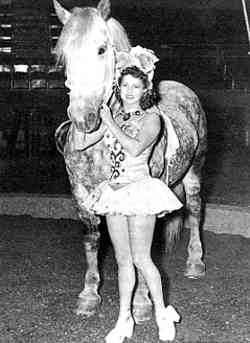
In 1946, Baer met and married circus aerialist and bareback rider Ernestine Clarke. They were together for 54 years until her death in 2000. The Clarke family performed in the circus for generations. Ernestine worked with the family’s trapeze act. She also was part of the famous riding acts of the Hannefords and the Cristanis. As a solo performer she was featured in Ringling Bros. and Barnum & Bailey Circus. Parley admired the performers and told the Flint Journal in 1974 that they “accomplish things everyone would like to try but are too scared. I guess it’s the vicarious thrill we all experience in a circus that gives a circus its tremendous popularity.” His daughter Dale also became a trapeze star.

In the 1974 Flint Journal article, he also relayed “that trying to explain why you love the circus is like trying to explain why you love someone. I guess we all harbor the secret desire to be the man on the flying trapeze.”

While Baer loved being an actor, he continued to act as a publicity agent for six to eight weeks every year for the circus for most of his career. In the Sun News in 1961 he said, “I can’t get the circus out of my system.” Throughout his life he worked with several circuses including Al G. Barnes, Cole Brothers, Ringling Brothers, and Polack Brothers.

📷radiospirits.com

Parley and Ernie eventually moved to Hollywood so he could work on his film career. He had one toe in movies, one in television, and one on the radio. In 1952, Baer took on the radio role of Chester on “Gunsmoke.” One of his castmates was Howard McNear who played Doc. The two would later move to Mayberry and spend time together again.

Baer’s first film was The Kid from Texas in 1950. Throughout his career he would be chosen for Disney movies. Baer said that at the Disney studio “everything is done for the comfort of the actor and the perfection of the production.” He believed that is why their movies were so successful for so long.

While he was in another 64 movies, television is where he kept the busiest. He popped up on television for the first time in 1951 when he was on Gruen Guild Theater. In the fifties he appeared in 43 shows.

The 1960s found him in 83 different series. He had recurring roles on four different shows this decade. He was Mr. Winters on National Velvet for two episodes in 1960 and two episodes of The Gertrude Berg Show as Professor Nimitz.

📷imdb.com

From 1953-65, he appeared as Darby the pharmacist in 69 episodes of The Adventures of Ozzie and Harriet. It would be fun to live in a town where Baer made your malts and filled your prescriptions, and Frank Cady, Sam on Green Acres, was your doctor.

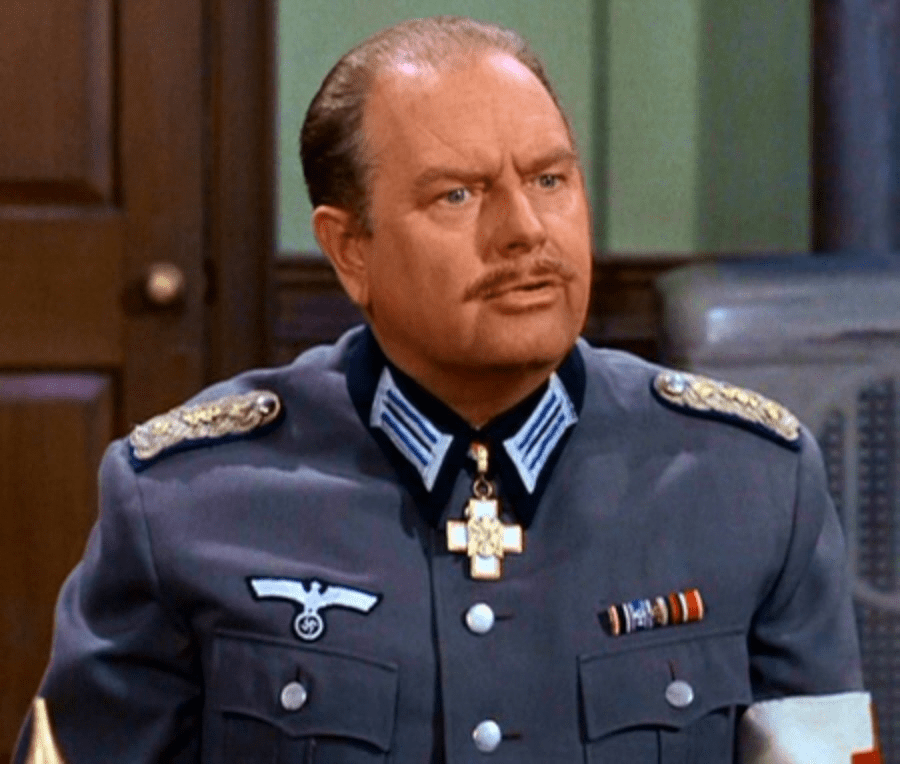
From 1962-63, he was Mayor Roy Stoner on seven episodes of The Andy Griffith Show. During his time on the show, he became very close to Hal Smith who played Otis the drunk, and he continued his friendship with Howard McNear who was Floyd the barber.

According to a MeTV article from December 8, 2020, he said that these men were ”two of my dearest, dearest friends.” He said he and Smith had a routine, a tradition they developed going to many of the same auditions for voiceovers: “Smith would always ask him, ‘You busy?’ to which Baer replied, ‘No.’ Smith would then ask, ‘Whatcha doing after?’ Baer would say ‘Nothing,’ to which Smith replied, ‘Let’s go get a cup of coffee and sit and lie to each other for a while.’”

📷thewritelife61.com The radio cast of Gunsmoke

After the deaths of his two friends, Baer said, “There isn’t a day that I don’t think about these guys, that I don’t mourn their passing. They were great friends and two of the finest actors who ever came down the path.”

The seventies found Baer on another 27 shows with his recurring role of the seventies was as Dr. Cunningham on Here’s Lucy in 1971.

During the 1980s, Baer maintained a steady presence on television, appearing in more than 30 shows and securing 5 regular cast roles throughout the decade. In 1982, he took on dual roles as Huntington Phelps on Madame’s Place and Minister Brown on Dallas. From 1981-84, he portrayed Doc Appleby on The Dukes of Hazzard, followed by a three-year run as Buck on Newhart from 1984-87. He closed out the decade with a role as Mr. Hube on Life Goes On.

Baer ended his acting career in the nineties, but before he died, he made appearances on 13 additional shows, along with two recurring roles. In 1990 he battled against racism as Mr. Lukins on three episodes of True Colors. This show was about a middle-class interracial blended family taking on life’s hardest issues with love and humor.

Part of Baer’s legacy was dealing with racism. He was very proud to be part of the film White Dog. Baer plays Wilbur Hull, someone you think of as a kindly grandfather, until you realize that he is a bigot who trained his dog to attack Black people. Baer said that  “Often racism, like true evil, presents itself with a smile and a handshake.”

📷imdb.com Hogan’s Heroes

Baer did his share of commercials, animation, and voiceover work. He had a thirty-year role as Ernie, one of the Keebler cookie elves.

His last recurring role was Miles on The Young and the Restless from 1993-96. Baer was 80, and he said the soap operas realized they had a lot of older viewers, so they decided to find some classic television actors to feature on the series.

Baer died at the Motion Picture and Television Hospital from complications after having a stroke.

I often listen to Old Time Radio while driving and often hear McNear and Baer on “Gunsmoke.” One of my favorite quotes about radio comes from Baer. He said “radio is the most nearly perfect medium for an actor. If you have an audience of 5 million people listening to you, you’re giving 5 million performances.”

📷facebook.com

Baer certainly had a variety of careers from working in the circus to being an elf. He made 64 movies, appeared in more than 1500 individual television episodes, and was in 15,000 radio episodes.

Baer was often stereotyped as a fussy, bossy, obstinate official very much like Mayor Stoner on The Andy Griffith Show. However, you just knew he was a lot of fun when you got him away from work.

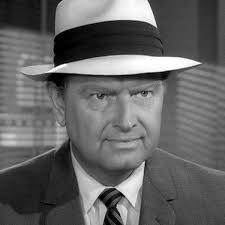
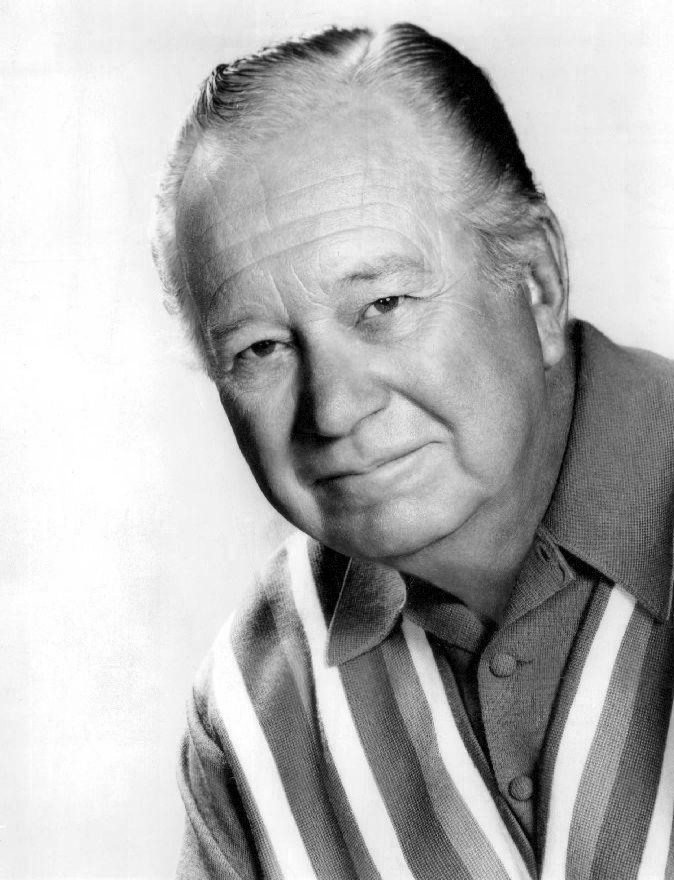
Edgar Buchanan: Avoiding The Dentist’s Office

Maybe one of the reasons everyone liked Edgar Buchanan was because he was a real Human, growing up in Humansville, Missouri where he was born in 1903. When he was seven, his family moved to Oregon.

📷wikipedia.com

In 1928, Buchanan earned a DDS degree from North Pacific College School of Dentistry. That same year he married one of his classmates from dental school, Mildred Spence. Mildred was the first woman dentist in Eugene, Oregon. In 1939 the couple relocated their dental practice from Oregon to Altadena, California. While they were living there, Edgar joined the Pasadena Playhouse and began acting. His first role was in “My Son is Guilty” in 1939. Buchanan said “Being an actor is all I ever really wanted” in a 1964 interview with the Deseret News.

After that, he turned the dentist’s office over to his wife and never looked back. However, he did manage to fit some dental work into his acting career. He pulled a tooth out for his stand-in Jack Henderson. Edgar was in thirteen films with Glenn Ford. Ford told a story about one day when he needed some dental work done, and Edgar agreed to do it. They did not have anesthesia on the set, so Ford took a few swallows of whiskey to help ease the pain. Ford said for every third drink he took, Buchanan also took one.

He may have been a dentist by trade, but in film, he was most often a judge or doctor, and 25 of his acting credits cast him in those roles.

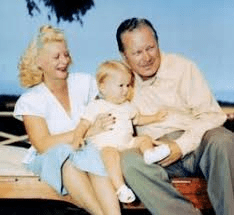
📷facebook.com Edgar and Mildred

Even starting his career a bit later in life, he managed to collect 96 big-screen acting credits and another 80 on television. Some of the movies Buchanan was a part of include Move Over Darling, Cheaper by the Dozen, Shane, and Benji.

His first television role was in Hollywood Theater Time in 1950. During that decade, he accepted roles in many sitcoms.

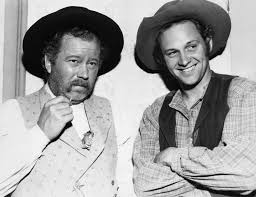
He was a familiar face across four television series during the golden age of westerns. From 1952-54, he portrayed Red Connors on Hopalong Cassidy. He then stepped into the title role as Judge Roy Bean from 1955-56. Between 1957 and 1960, he appeared in six episodes of Tales of Wells Fargo as Doc Dawson. Rounding out the decade, he took on the role of Doc Burrage in five episodes of The Rifleman between 1959 and 1961.

Buchanan made a pilot to star in Luke and the Tenderfoot. Two episodes were made about a fast-talking con man who befriends a naïve young man as they travel west. The network chose not to buy the pilot; however, it did show the episode on television later. The other episode has never been aired on television, but they both are available to watch on YouTube.

The sixties was his busiest decade. He showed up on many westerns and sitcoms. He also played Grandpa on National Velvet; this show was about a young girl who lives on a dairy farm with her family and a former jockey.

Of course, this was also the decade he had his most famous role, Joe Carson on Petticoat Junction (222 episodes), Green Acres (16 episodes), and The Beverly Hillbillies (3 episodes). Joe Carson was a role far removed from a judge or a doctor. He was a lazy guy who spent a lot of time trying to think up get-rich-quick schemes. Despite that, he’s such a likeable guy, we are always rooting for him.

A fun fact is that Edgar’s son Buck appeared in two of the Petticoat episodes with his dad.

📷joplinglobe.com

In 1963, Buchanan talked with The Daily Herald about his role on Petticoat Junction. He said that “the small community is the heritage of every American. We all evolved from small towns. Humansville had a population of about 600—give or take a couple hundred.” He went on to say, “For me, especially, Petticoat Junction is home. On the show, I work with four pretty gals. And in real life, I had four sisters always peckin’ at me.”

Before passing away at the end of the seventies, Buchanan appeared in four additional series. He also took on one more regular cast role as JJ Jackson in 24 episodes of Cade’s County in 1971-72.

Buchanan died from a stroke complicated by pneumonia in 1979.

📷facebook.com Move Over Darling

In a February 20, 1972, interview, Buchanan told the Boston Globe that the key to his acting success was that “I’ve always played myself, whether doing a dramatic part or a comedy role.” Many of his co-stars said Edgar always stole the scenes they were in; his costars in Move Over Darling mentioned that in several interviews.

In that 1964 interview with the Deseret News, he was asked how his career lasted so long, and he said that he knew he was not a leading man type but a character actor. However, he said with a twinkle in his eye, “I’ll just have to confess that my wife says I’m the handsomest man to ever walk on a stage and anyone who calls my wife a liar has got to fight me.”

I’m glad Buchanan found the perfect job. He was seen by many more people on television than he would have been in his dentist’s office. And he was always a character I’m happy to say.