The Life of a Makeup Artist: All Made Up and Somewhere To Go

Welcome to our blog theme for the month, “Behind the Scenes.” We are going behind the camera to check out careers of those people working behind the camera to bring our favorite characters to life. Last week we learned a bit about costumer designers, and today we are heading to the makeup counter.

So, what do makeup artists do?  Obviously, they apply cosmetic products to enhance the appearance of the stars, but they do so much more. Artists also fit prosthetics and create the effects of blood, wounds, burns, and general aging; adjust colors and textures to work with high-definition cameras and bright lights; assure consistency for multiple-day filming; manage sweating; and sometimes choose and fit wigs for characters. Let’s look at a few of the best in the field to learn more about their life and careers.
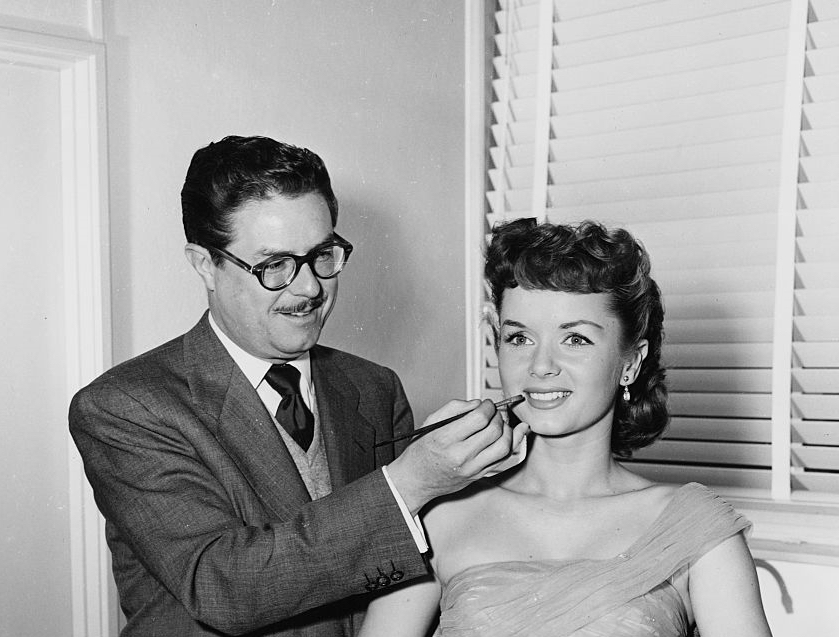
📷vintagestardust.wordpress.com

William Tuttle

William Tuttle was the first makeup artist to win an Academy Award. He created many innovative techniques and trained generations of makeup artists.

He was born in Florida in 1912. After dropping out of school early to support his mother and younger brother, he held a variety of jobs including forming his own band. In 1930, he moved to Los Angeles, enrolling in an art school and working as a page at Fox Studios. That younger brother, Thomas Tuttle, would also become a makeup artist working on The Dick Van Dyke Show, The Joey Bishop Show, Gomer Pyle USMC, and That Girl among others.

Tuttle was hired at Twentieth Century Pictures to work under Jack Dawn. In 1934, Dawn took a job at Metro-Goldwyn-Mayer and Tuttle moved with him. Tuttle was still working under Dawn but began taking on more responsibilities. He supervised the makeup in many popular movies including The Wizard of Oz and Father of the Bride. Eventually, he became the head of the makeup department.
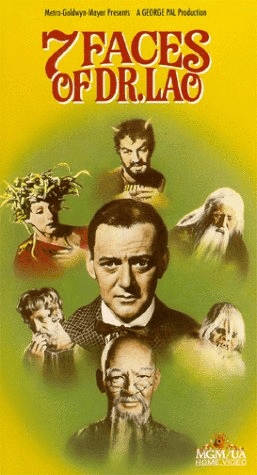
He received a special Oscar for his work on 7 Faces of Dr. Lao in 1965. In this film, Tuttle transformed Tony Randall into seven different characters including Dr. Lao; an aged, bearded Merlin the Magician; and a Medusa with a feminine appearance. Randall said “he shaved my head and eyebrows . . . gave me an unborn look. But professionally it was a masterstroke.” He went on to say that “all my preconceived notions on how I would play the characters vanished. As soon as Tuttle applied his makeup magic, I felt myself actually become these strange people.”

The Oscar category of makeup artist would not become an official category until 1982. That year Rick Baker won the first Oscar for makeup. He would go on to win another five and he credited Tuttle: “His work greatly influenced me.” He said as a young boy, he often tried to re-create the makeup techniques Tuttle used in The Twilight Zone.
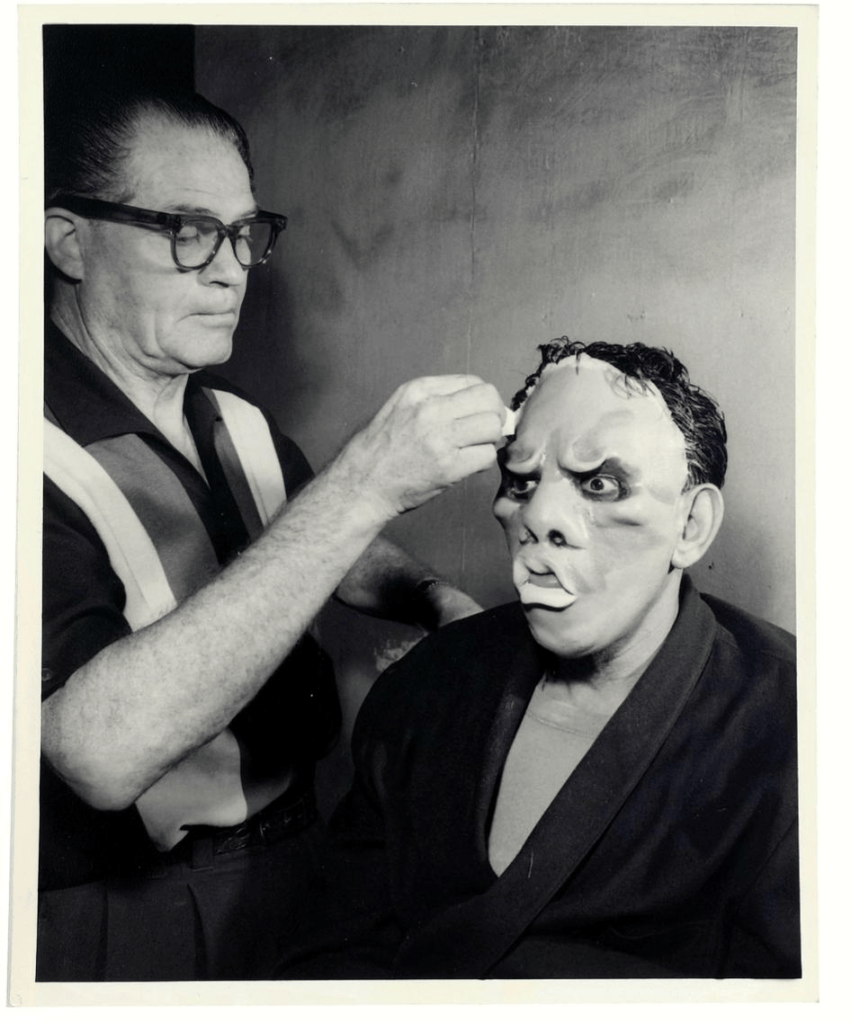
📷reddit.com

Tuttle was the artist behind one of my favorite Twilight Zone episodes, “Eye of the Beholder.” When the episode begins, doctors and nurses are working with a bandaged patient who just wants to look like everyone else. After some time, the bandages are slowly peeled away. We see the beautiful face of Donna Douglas. As she picks up the mirror to look at her new face, she screams, cries and covers her face. Then the camera pulls away and we see all the people Tuttle did makeup on – doctors and nurses with deformed faces and pig snouts.

With 393 credits, most of Tuttle’s work was in the movies, but he contributed to television as well. From 1960-62 he provided all the makeup for National Velvet. He also spent time on Mr. Novak, My Favorite Martian, The Man from U.N.C.L.E. as well as The Girl from U.N.C.L.E., The Phyllis Diller Show, and The Courtship of Eddie’s Father, among others.

Later in his career, Tuttle created his own line of makeup, Custom Color Cosmetics. Naimie Ojeil, owner of a beauty supply store in Hollywood said his brand was “the most popular makeup among Hollywood professionals for at least two decades.”

Tuttle would create molds of actors he worked on which allowed him to create their looks beforehand. He donated them to the University of Southern California where he taught from 1970-1995. Herbert Farmer, a USC archivist said Tuttle “was interested in passing on all he could to the students. He had a real following.”

Gene Hibbs

Gene Hibbs was born in Normal, Illinois in 1912.
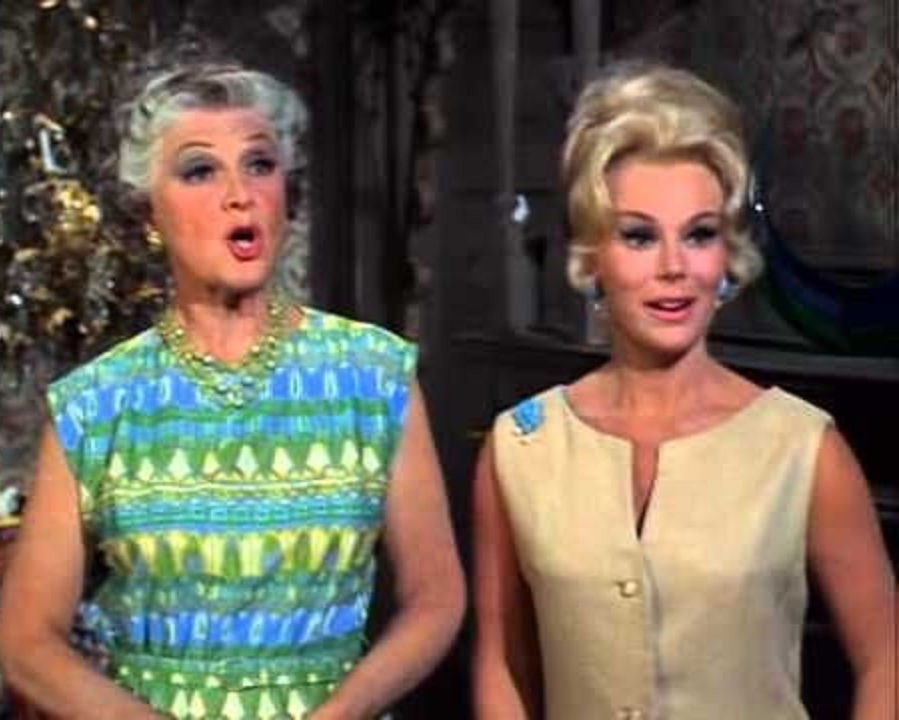
📷imdb.com

I couldn’t find a lot of information about him. I did read several times that he was often hired because he had a unique talent for making older actresses look younger than they were with a technique he called “painting.”

His first television series was The Lone Ranger from 1954-1955. He worked on many television shows following that including with Ann Sothern on Private Secretary and The Ann Sothern Show, The Judy Garland Show, Here’s Lucy, and Green Acres.

He was working on Green Acres when Judy Garland passed away. She had stipulated in her will that Hibbs was supposed to do her makeup one last time. Her daughter Liza Minelli phoned Hibbs and he agreed to do that. When the network said no, Eva Gabor said she would not work unless he was allowed to leave for a few days. The producer pleaded with the network, but they held firm and said they would lose $30,000 of time and he could not leave the set.

Ben Lane
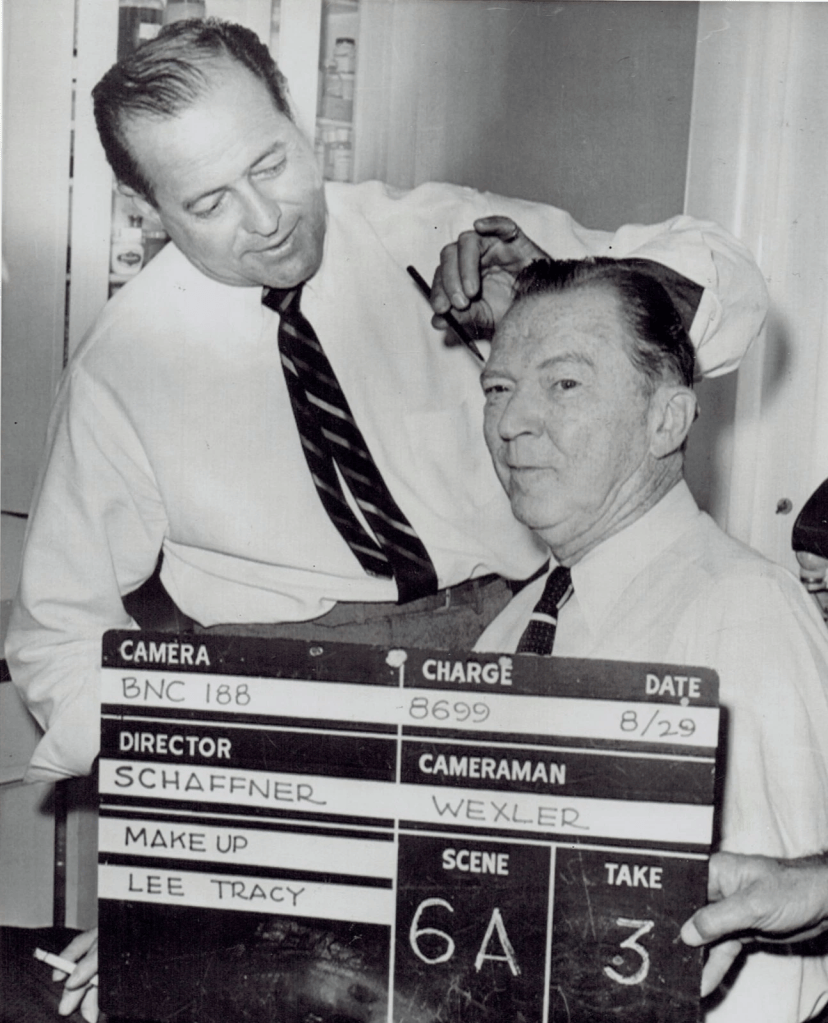
📷ebay.com Ben Lane on the set

Ben Lane was born in 1912 in Chicago, Illinois, the same year as both Gene Hibbs and William Tuttle. Lane was one of the founding members of the Motion Picture Guild, but many of his 236 credits were spent in television.

Lane’s first television series was in 1957 for Sergeant Preston of the Yukon. His career would continue with many popular shows. Get ready to take a long breath because this sample is far from a comprehensive listing of his work. Ready? He was part of the cast for The Lone Ranger, Dennis the Menace, The Farmer’s Daughter, Hazel, Gidget, The Monkees, Bewitched, The Flying Nun, I Dream of Jeannie, Bridget Loves Bernie, The Partridge Family, Police Woman, and Fantasy Island.

In addition to keeping busy with his career, he was involved in several charities: City of Hope and Shriner’s circus. He became a nationwide clown advisor. He also was a consultant for the Los Angeles Police Department, the US Department of Justice, and the FBI for disguises.

Bud Westmore
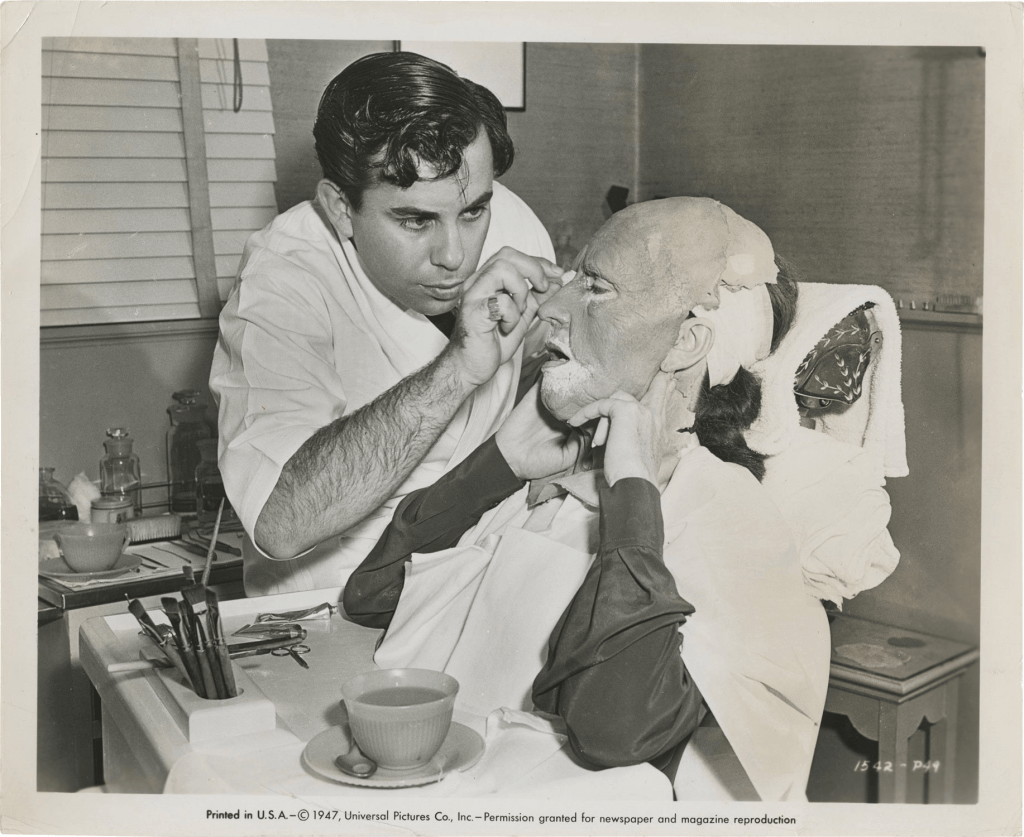
📷abebooks.com Westmore working on the film The Lost Moment

Born in 1918 in New Orleans, Westmore and his brothers—Ern, Frank, Monte, Perc, and Wally–were all makeup artists in the entertainment business. At one time, there was a Westmore heading up almost every studio makeup department.

After school, Bud was an apprentice under Perc at Warner Brothers to learn hair design and makeup before taking a job at Twentieth Century Fox. He left to serve three years with the Coast Guard. When he returned to Hollywood, he worked for the Eagle Lion before he was hired as the head of the Universal Studios makeup department in 1947. The largest building on the Universal studio back lot is named for Bud.

His marriages and divorces also kept him busy. He was married to actress Martha Raye for four months in 1937. A few years later he married Rosemary Lane, another actress, and they were together for fourteen years. His divorce to Lane was on March 31, 1955, and on April 1, 1955, he married Jeanne Shores, a former Miss California in 1952. They would remain together until his death from a heart attack in 1973.
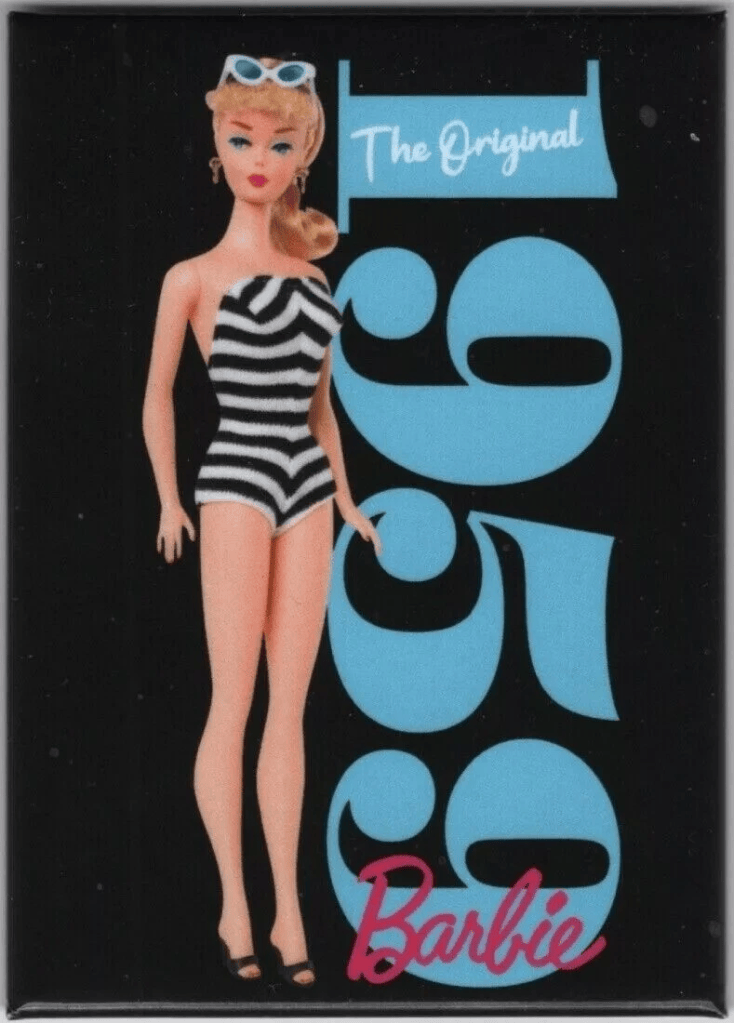
In 1957 Bud was asked to create makeup for a new doll that was coming on the market. In 1959 Barbie debuted. Bud had based her on a German doll Mattel found named Lili. He modified “the bee-stung lips, heavy eyelashes, and widow’s peak to give her an All-American Girl look” and he rooted her hair.

With more than 600 credits on both the big screen and the small screen, Bud’s first television project was Playhouse 90 in 1957. During the sixties he was involved in quite a few shows including The Jack Benny Program, McHale’s Navy, The Munsters, It Takes a Thief, Ironside, Marcus Welby MD, and The Virginian.

It was fun to learn a little bit about these make-up professionals and the shows they worked on to help create some of our favorite television land characters.

Herbert Anderson: A Menacing Situation

This month we are learning about the careers of the cast of Dennis the Menace in our theme “They Are a Menace.” Today it’s Herbert Anderson’s turn; he played Dennis’s father Henry on the show.

📷famousfix.com

Anderson was born in California in 1917. His parents immigrated to Oakland from Norway, and his father was the city treasurer while he was growing up. After high school, Anderson attended the University of California, Berkeley.

Anderson was focused on being an actor and began working for Warner Brothers; his first role was in 1939 as a reporter. In 1941 he was cast in Navy Blues with Martha Raye and Ann Sheriden followed by The Male Animal with Henry Fonda and Olivia de Havilland. In Navy Blues, he replaced Eddie Albert who was no longer available. Anderson had done some national defense shots in uniform and seeing those photos is what got him the job. According to the Oakland Tribune, he sent for his grandmother who traveled by train to see her grandson in action in Hollywood.

He continued acting throughout the forties and after he established himself in television, he would occasionally take on a big-screen offer including My Man Godfrey, The Caine Mutiny, and The Benny Goodman Story.

During these years he met and married Mary Palmer and they were together until his death.

📷imdb.com

In 1949, he jumped to the small screen to appear on Your Show Time. By the mid-fifties, he was working primarily on television, appearing in many popular shows in the fifties and sixties, including Father Knows Best and Perry Mason.

In 1959 he was offered the role of Henry Mitchell on Dennis the Menace. For the next four years, he was busy trying to stay a step ahead of Dennis and the situations he got the entire neighborhood into. During the third season, Joseph Kearns, George Wilson on the show, passed away and the show declined in ratings and was cancelled the next year.

Anderson kept busy in television and didn’t seem to be pigeonholed into father roles the way his onscreen wife, Gloria Henry, was. He would appear on another 34 shows during the decade after Dennis ended. You can catch him on episodes of Gunsmoke, Petticoat Junction, I Dream of Jeannie, Batman, My Three Sons, Bewitched, Green Acres, The Brady Bunch, and his last appearance in 1975 was on The Waltons.

📷imdb.com with Marion Ross

I always enjoyed his Brady Bunch role. When the kids get sick, their parents decide they should call the doctor, back when doctors still made house calls. They are both surprised when two doctors show up. Of course, Carol called the girls pediatrician played by Marion Ross and Mike called the boys’ doctor played by Anderson. Both doctors assure them that whichever one they choose to be the family doctor is fine with them, but when all is said and done, they retain both doctors.

In 1982, Anderson underwent heart surgery and decided to retire. He passed away in 1994 from complications after a stroke.

Like so many of these actors it was hard to find much information on the private life of Anderson. I couldn’t find out if he was happy with his career or if he had wanted to stay in films longer. I appreciate getting to know him as Henry Mitchell in the Dennis the Menace episodes.

MacMillan and Wife: The Show That Bridged the Generation Gap

Before launching into this week’s topic, I wanted to say thank you to everyone who has been following and reading my blog. This week begins my fourth year writing this blog. I was worried I would find enough topics to fill the first year but next year is already outlined, so another year of classic television is on the way. It has been a lot of fun, and I’ve learned a lot.

This month we are looking at crime-solving duos.  We start our series learning a bit more about McMillan and Wife. McMillan and Wife began as part of The Sunday NBC Mystery Movie which included Columbo and McCloud. The shows rotated each week, so fewer episodes were produced of each than a typical weekly show.

Photo: memorabletv.com

McMillan and Wife debuted in 1971 and was on the air until 1977, yet only forty episodes were produced. Leonard Stern was the creator, writer, and executive producer of the show; he previously produced Get Smart.

Photo: imdb.com

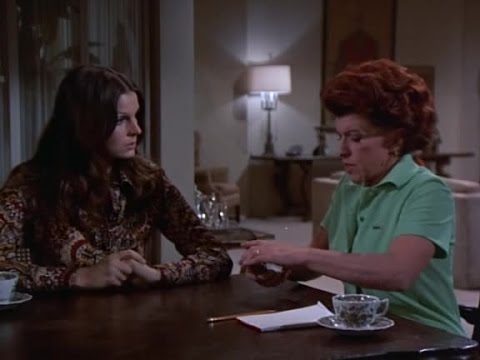
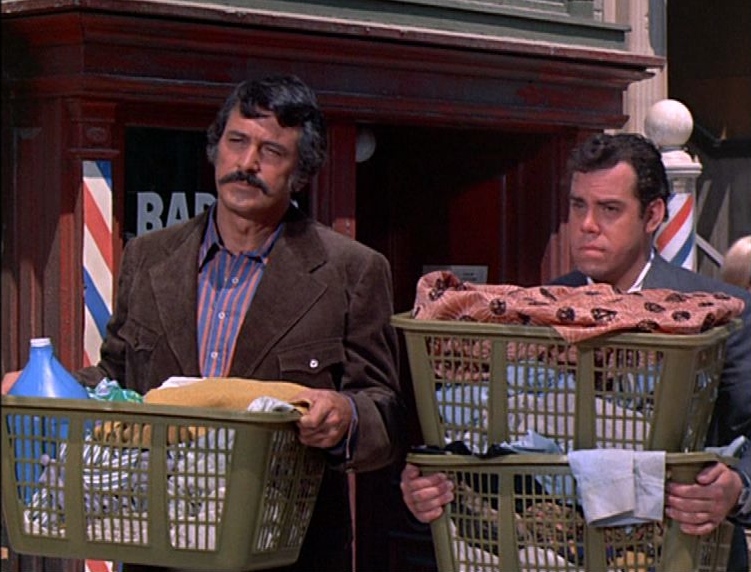
Stewart “Mac” McMillan (Rock Hudson) was an attorney and US Navy veteran who apparently had been involved in some CIA activities. He is now Commissioner of Police in San Francisco. He gets involved in high-profile cases. His wife is Sally (Susan St. James), and her father was a detective for the San Francisco Police Department; she learned a lot from him and helps her husband solve crimes. Sargent Charlie Enright (John Schuck) helps Mac with his cases. Sally and Mac have no children (it’s confusing because Sally was pregnant twice on the show, but the children are never mentioned in the show later). Their housekeeper Mildred (Nancy Walker) also lives with the couple. Mildred’s character resembles the role Thelma Ritter played in Pillow Talk, where Hudson starred with Doris Day. She is a sarcastic, hard-drinking woman and is always ready to offer her opinion, but she is devoted to Mac and Sally.

Photo: afinalcurtaincall.blogspot.com

Once Hudson was cast as Mac, the show got priority in development. Several actresses were considered for the role of Sally, including Diane Keaton and Jill Clayburgh, but Hudson was most comfortable with St. James.

Photo: pinterest.com

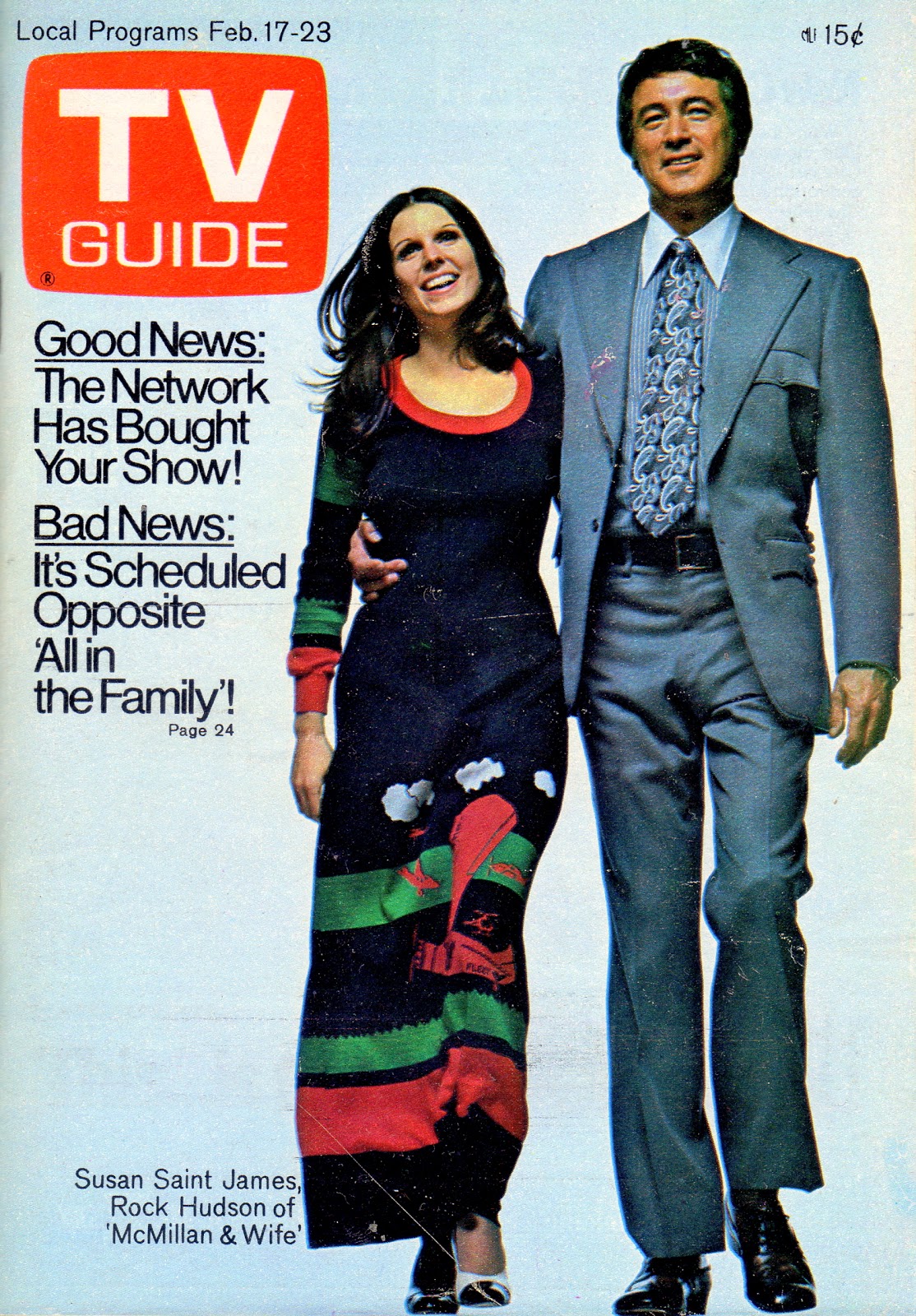
Hudson was 21 years older than St. James, but their relationship worked. Mac is supposed to be in his 40s and Sally in her 20s (he was 46 at the time and she was 25). Sally is self-confident and is not afraid to speak her mind. However, she is also a wife who loves her husband, and one of the running gags on the show is that Mac had dated a lot of women in his past, and when Mac and Sally are out and about, they typically run into some gorgeous woman who says, “Hi Mac.” Sally usually responds with a jealous comment or a withering look. The difference in their ages actually worked well for demographics. Hudson appealed to older viewers while St. James attracted younger viewers.

Photo: popflock.com

Often the cases Mac solves happen during events the couple attends. One episode featured a burglary at a charity event they were attending; once they found a skeleton in their house after an earthquake. Another show had Mac abducted by mobsters and replaced with a surgically-made twin replacing him.

Photo: youtube.com

An interesting fact is that the interior of their house in the pilot episode was in fact Hudson’s home. In the first regular episode, the MacMillans bought a new house. In the final season, the setting changed to an apartment.

Photo: madman.com.au

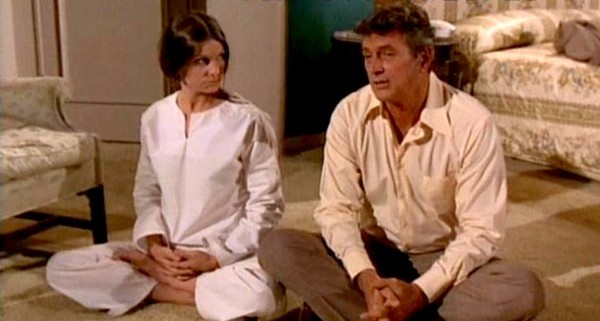
Sally and Mac led a glamorous life. The scripts were well written, and the dialogue was witty and clever. The couple was often compared to Nick and Nora Charles in the Thin Man movies. Mac and Sally have a lot of their best conversations after they go to bed at night.

Photo: sitcomsonline.com

Sally was known for wearing a football jersey for her nightgown. The jersey was an authentic 49ers Jersey, number 18, George Washington, a wide receiver. Washington was a four-time Pro Bowler. He made a guest appearance on the show in season four, “Guilt by Association.”

Considering that there were only forty episodes produced, this show had an incredible number of guest stars. I apologize for the long list, but it’s the only way to capture how impressive it is. The stars included sport celebrities Dick Butkus, Rosie Grier, Alex Karras, and Bobbie Riggs.

Photo: amazon.com

It also featured a Who’s Who of television sitcom royalty: John Astin, Meredith Baxter, Tom Bosley, Michael Constantine, Bert Convy, Wally Cox, Richard Deacon, William Demarest, Donna Douglas, Barbara Feldon, Norman Fell, Buddy Hackett, Larry Hagman, Alan Hale, Shirley Jones, Stacy Keach, Bernie Kopell, Julie Newmar, Charlotte Rae, Charles Nelson Reilly, Dick Sargent, Natalie Schafer, Susan Sullivan, Karen Valentine, and Dick Van Patten.

The show, like McCloud and Columbo, was quite popular with viewers. The ratings were impressive until the sixth season.

Unfortunately, the last season had too many changes to overcome. St. James decided to leave to concentrate on her movie career. Schuck left to star in the sitcom, Holmes and Yo-Yo, and Walker left for her own sitcom, The Nancy Walker Show. Sadly, Walker and Schuck would have been better off staying because both their shows lasted only 13 episodes. St. James starred in a couple of movies, but they weren’t anything memorable. She would go on to star in Kate and Allie in 1984.

Photo: cult-tv-lounge.blogspot.com

On the show, Sally was killed in an airplane crash. Mildred was said to leave to open a diner, so her sister Agatha (Martha Raye) took over her job. Schuck made a few appearances but was said to have been given a promotion to lieutenant which kept him too busy to assist Mac much. The show may have been able to overcome one of these changes but not all of them. Much of the strength of the show was the relationship between Mac and Sally. Walker’s funny bantering and actions provided a comedic relief for the show. When Raye took over, she was just scatterbrained and loud; the appeal of Walker was not part of her character.

Photo: imdb.com

It’s wonderful the show lasted five good seasons, but it might have lasted many more if the original cast had been retained. At the other end of the spectrum, Columbo aired off and on until 2003 and is remembered by more viewers.

DVDs were released for all six seasons between 2005 and 2014. With only forty shows in the series, this would be a fun binge-watching week-end show to tackle.