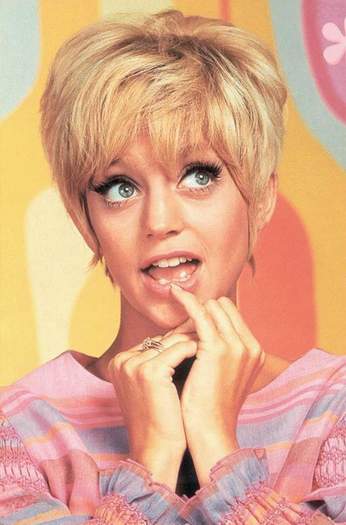
Welcome to our blog theme for the month, “Behind the Scenes.” We are going behind the camera to check out careers of those people working behind the camera to bring our favorite characters to life. Last week we learned a bit about costumer designers, and today we are heading to the makeup counter.
So, what do makeup artists do? Obviously, they apply cosmetic products to enhance the appearance of the stars, but they do so much more. Artists also fit prosthetics and create the effects of blood, wounds, burns, and general aging; adjust colors and textures to work with high-definition cameras and bright lights; assure consistency for multiple-day filming; manage sweating; and sometimes choose and fit wigs for characters. Let’s look at a few of the best in the field to learn more about their life and careers.
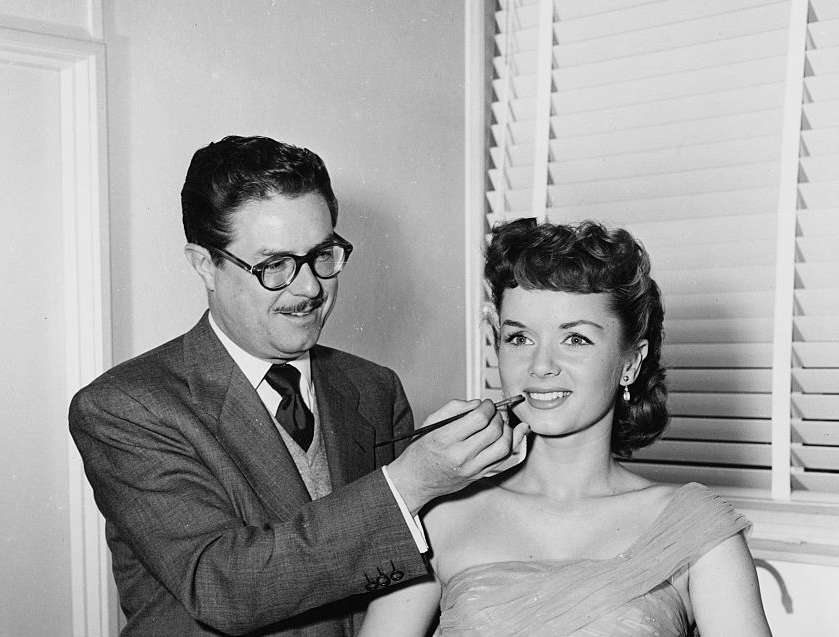
William Tuttle
William Tuttle was the first makeup artist to win an Academy Award. He created many innovative techniques and trained generations of makeup artists.
He was born in Florida in 1912. After dropping out of school early to support his mother and younger brother, he held a variety of jobs including forming his own band. In 1930, he moved to Los Angeles, enrolling in an art school and working as a page at Fox Studios. That younger brother, Thomas Tuttle, would also become a makeup artist working on The Dick Van Dyke Show, The Joey Bishop Show, Gomer Pyle USMC, and That Girl among others.
Tuttle was hired at Twentieth Century Pictures to work under Jack Dawn. In 1934, Dawn took a job at Metro-Goldwyn-Mayer and Tuttle moved with him. Tuttle was still working under Dawn but began taking on more responsibilities. He supervised the makeup in many popular movies including The Wizard of Oz and Father of the Bride. Eventually, he became the head of the makeup department.
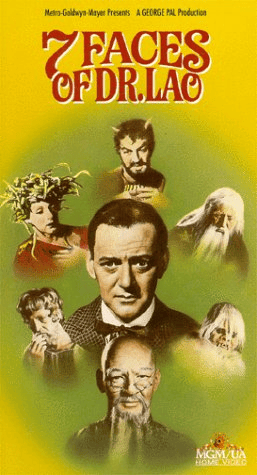
He received a special Oscar for his work on 7 Faces of Dr. Lao in 1965. In this film, Tuttle transformed Tony Randall into seven different characters including Dr. Lao; an aged, bearded Merlin the Magician; and a Medusa with a feminine appearance. Randall said “he shaved my head and eyebrows . . . gave me an unborn look. But professionally it was a masterstroke.” He went on to say that “all my preconceived notions on how I would play the characters vanished. As soon as Tuttle applied his makeup magic, I felt myself actually become these strange people.”
The Oscar category of makeup artist would not become an official category until 1982. That year Rick Baker won the first Oscar for makeup. He would go on to win another five and he credited Tuttle: “His work greatly influenced me.” He said as a young boy, he often tried to re-create the makeup techniques Tuttle used in The Twilight Zone.
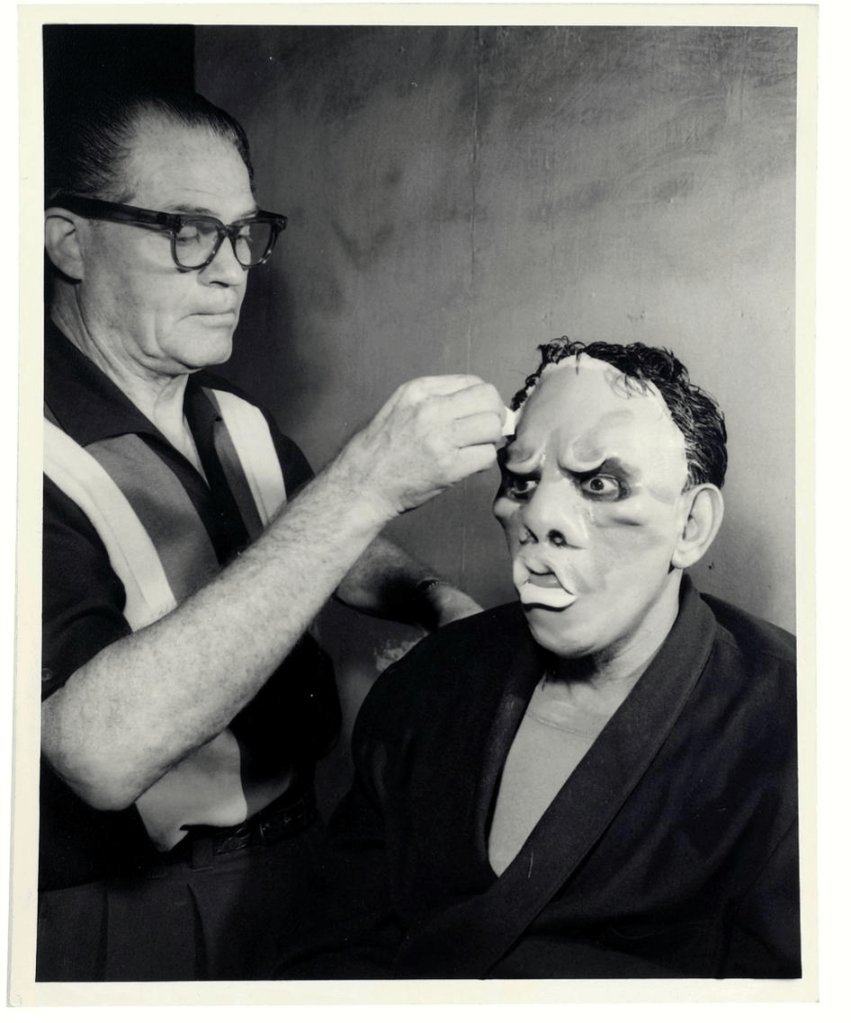
Tuttle was the artist behind one of my favorite Twilight Zone episodes, “Eye of the Beholder.” When the episode begins, doctors and nurses are working with a bandaged patient who just wants to look like everyone else. After some time, the bandages are slowly peeled away. We see the beautiful face of Donna Douglas. As she picks up the mirror to look at her new face, she screams, cries and covers her face. Then the camera pulls away and we see all the people Tuttle did makeup on – doctors and nurses with deformed faces and pig snouts.
With 393 credits, most of Tuttle’s work was in the movies, but he contributed to television as well. From 1960-62 he provided all the makeup for National Velvet. He also spent time on Mr. Novak, My Favorite Martian, The Man from U.N.C.L.E. as well as The Girl from U.N.C.L.E., The Phyllis Diller Show, and The Courtship of Eddie’s Father, among others.
Later in his career, Tuttle created his own line of makeup, Custom Color Cosmetics. Naimie Ojeil, owner of a beauty supply store in Hollywood said his brand was “the most popular makeup among Hollywood professionals for at least two decades.”
Tuttle would create molds of actors he worked on which allowed him to create their looks beforehand. He donated them to the University of Southern California where he taught from 1970-1995. Herbert Farmer, a USC archivist said Tuttle “was interested in passing on all he could to the students. He had a real following.”
Gene Hibbs
Gene Hibbs was born in Normal, Illinois in 1912.
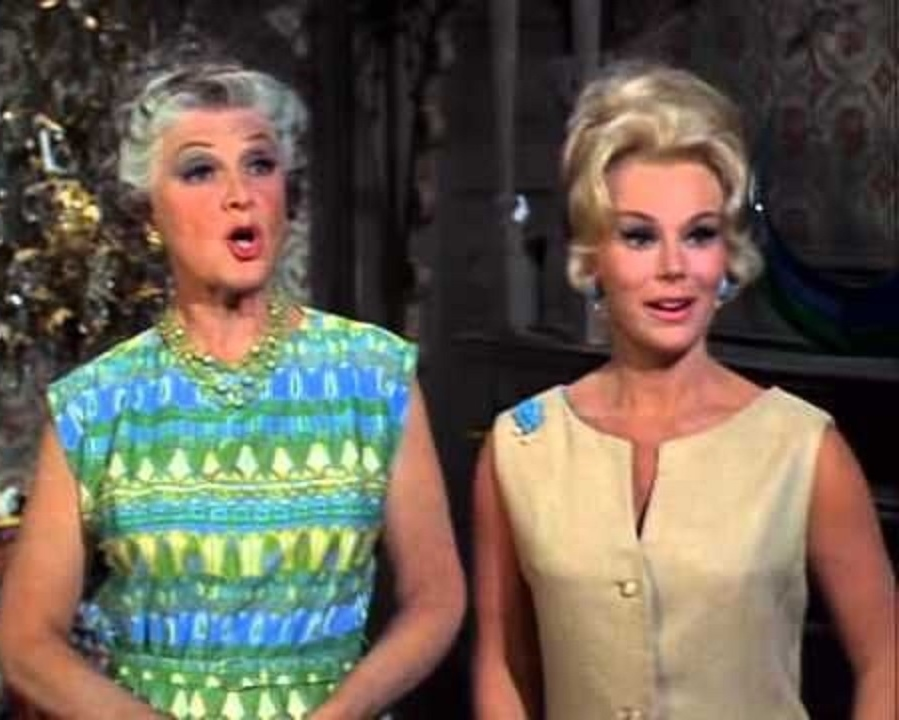
I couldn’t find a lot of information about him. I did read several times that he was often hired because he had a unique talent for making older actresses look younger than they were with a technique he called “painting.”
His first television series was The Lone Ranger from 1954-1955. He worked on many television shows following that including with Ann Sothern on Private Secretary and The Ann Sothern Show, The Judy Garland Show, Here’s Lucy, and Green Acres.
He was working on Green Acres when Judy Garland passed away. She had stipulated in her will that Hibbs was supposed to do her makeup one last time. Her daughter Liza Minelli phoned Hibbs and he agreed to do that. When the network said no, Eva Gabor said she would not work unless he was allowed to leave for a few days. The producer pleaded with the network, but they held firm and said they would lose $30,000 of time and he could not leave the set.
Ben Lane
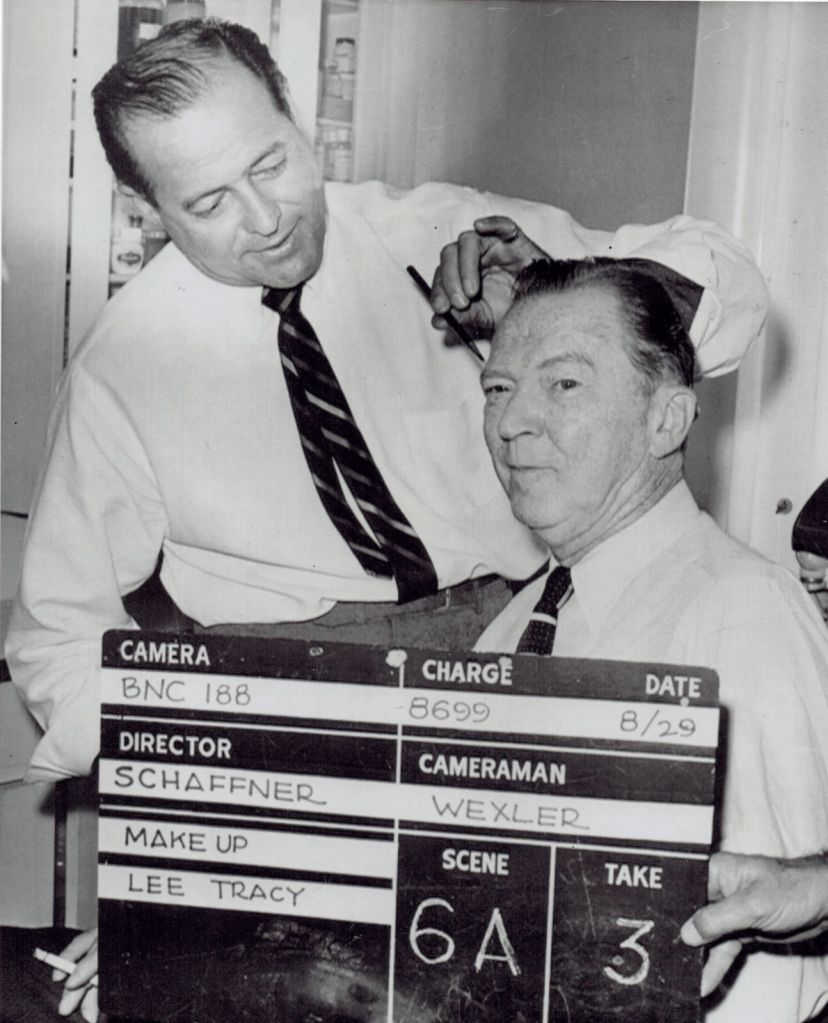
Ben Lane was born in 1912 in Chicago, Illinois, the same year as both Gene Hibbs and William Tuttle. Lane was one of the founding members of the Motion Picture Guild, but many of his 236 credits were spent in television.
Lane’s first television series was in 1957 for Sergeant Preston of the Yukon. His career would continue with many popular shows. Get ready to take a long breath because this sample is far from a comprehensive listing of his work. Ready? He was part of the cast for The Lone Ranger, Dennis the Menace, The Farmer’s Daughter, Hazel, Gidget, The Monkees, Bewitched, The Flying Nun, I Dream of Jeannie, Bridget Loves Bernie, The Partridge Family, Police Woman, and Fantasy Island.
In addition to keeping busy with his career, he was involved in several charities: City of Hope and Shriner’s circus. He became a nationwide clown advisor. He also was a consultant for the Los Angeles Police Department, the US Department of Justice, and the FBI for disguises.
Bud Westmore
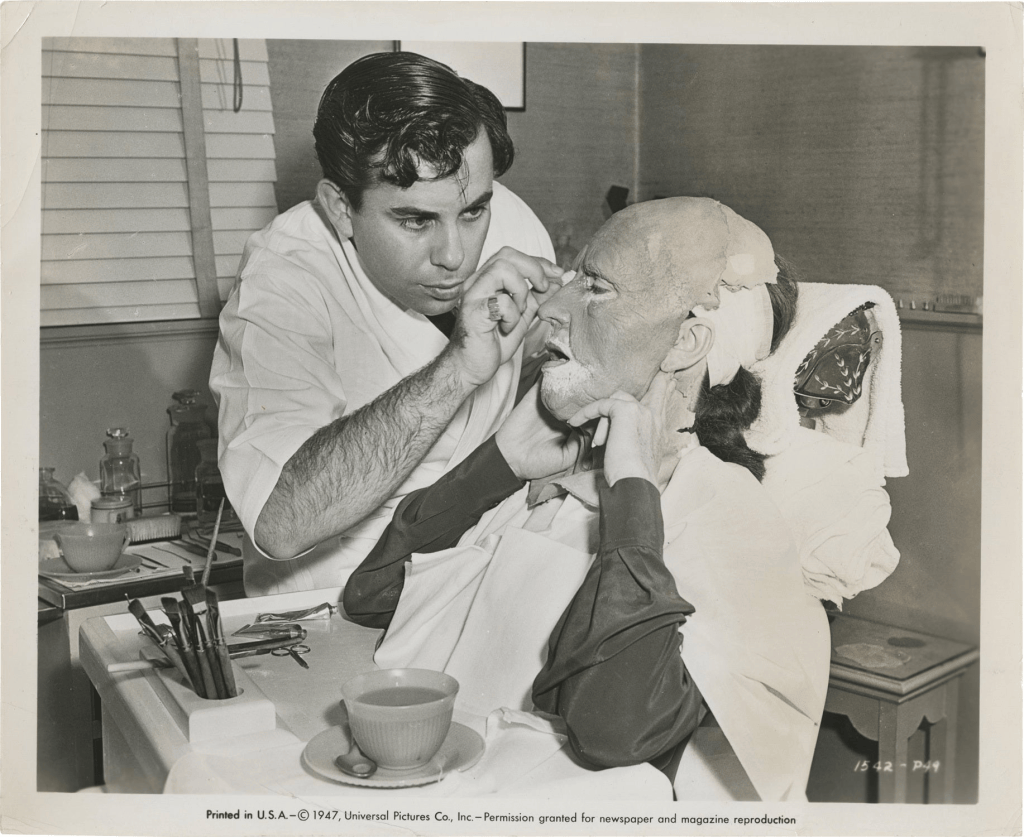
Born in 1918 in New Orleans, Westmore and his brothers—Ern, Frank, Monte, Perc, and Wally–were all makeup artists in the entertainment business. At one time, there was a Westmore heading up almost every studio makeup department.
After school, Bud was an apprentice under Perc at Warner Brothers to learn hair design and makeup before taking a job at Twentieth Century Fox. He left to serve three years with the Coast Guard. When he returned to Hollywood, he worked for the Eagle Lion before he was hired as the head of the Universal Studios makeup department in 1947. The largest building on the Universal studio back lot is named for Bud.
His marriages and divorces also kept him busy. He was married to actress Martha Raye for four months in 1937. A few years later he married Rosemary Lane, another actress, and they were together for fourteen years. His divorce to Lane was on March 31, 1955, and on April 1, 1955, he married Jeanne Shores, a former Miss California in 1952. They would remain together until his death from a heart attack in 1973.
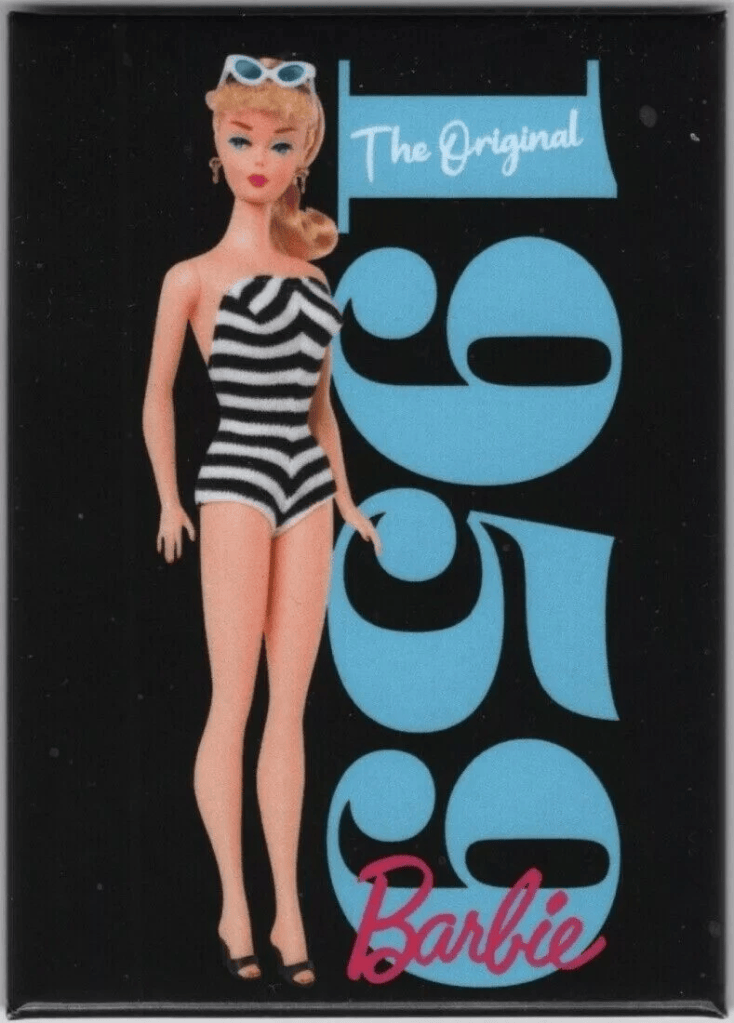
In 1957 Bud was asked to create makeup for a new doll that was coming on the market. In 1959 Barbie debuted. Bud had based her on a German doll Mattel found named Lili. He modified “the bee-stung lips, heavy eyelashes, and widow’s peak to give her an All-American Girl look” and he rooted her hair.
With more than 600 credits on both the big screen and the small screen, Bud’s first television project was Playhouse 90 in 1957. During the sixties he was involved in quite a few shows including The Jack Benny Program, McHale’s Navy, The Munsters, It Takes a Thief, Ironside, Marcus Welby MD, and The Virginian.
It was fun to learn a little bit about these make-up professionals and the shows they worked on to help create some of our favorite television land characters.