I’m Dickens, He’s Fenster: Building Comedy Into Every Episode

June’s blog theme is Funny Duos. Last week we learned about the Governor and J.J., a show created by Leonard Stern. Today it’s another show created and produced by Stern, I’m Dickens, He’s Fenster.
📷wikipedia.com

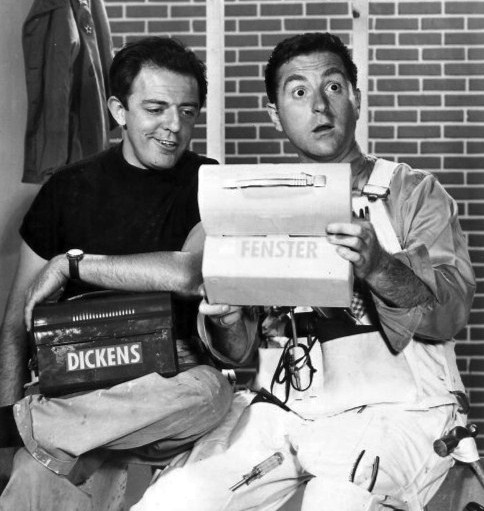
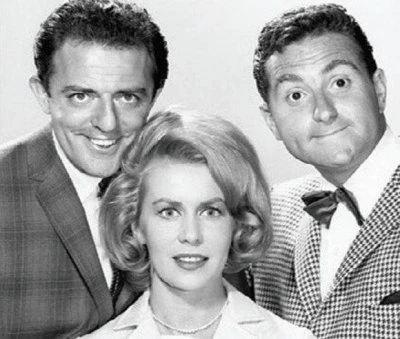
This show debuted on ABC in September 1962 and was canceled after one season. It starred John Astin and Marty Ingels.

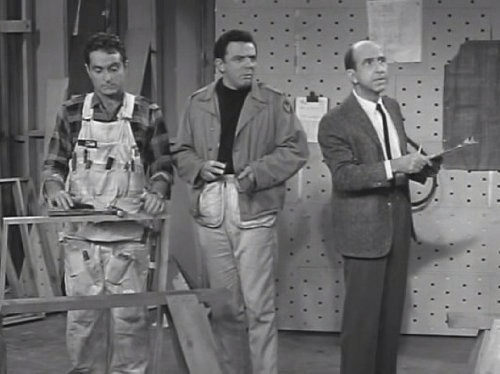
The plot is that two carpenters are best friends. Harry Dickens (Astin) is married to Kate (Emmaline Henry) while Arch Fenster (Ingels) is a swinging bachelor whose lifestyle is not okay with Kate. The two often clash with their boss, Mr. Bannister (one of my favorites, Frank DeVol). Rounding out the cast are coworkers Mel (Dave Ketchum), Bob (Henry Beckman), and Bentley (Noam Pitlik). We also meet a few of Fenster’s girls including Yvonne Craig, Ellen Burstyn, and Lee Meriwether.

Stern talked about casting for the show in his interview with the Television Academy. He had Ingels hired and then Stern and his wife saw Astin in a play at UCLA, and he was added to the cast. Stern said he needed a director who liked comedy and could bond with the actors well and was innovative because Stern didn’t like the three-camera shot. He hired Arthur Hiller who fit all three qualifications.

The show, unusual for the time, was filmed in front of a live audience. The comedy combined witty comments with slapstick comedy.
📷imdb.com

ABC placed it on Friday nights between The Flintstones, which was created for adult viewing, and 77 Sunset Strip. This should have provided a built-in audience, even though it was competing against Sing Along with Mitch and Route 66. At the end of the first season, it beat the competition in the ratings but was still canceled. One of the problems measuring viewership at this time was that a person watching was a person watching whether they were 6, 26, 56, or 106, so it was hard to tell which shows appealed to adults.

Astin discussed the reviews for this show during one of his interviews and said that “some of the critics said it’s the kind of humor that makes you laugh out loud in the living room, and that’s an accomplishment. How often do we really laugh out loud in the living room when we’re watching a television show? We’re lucky if we smile.”
📷televisionheaven.com

The idea for this show occurred when Stern had some work done at his home. On Christmas Eve 1961, the builders were in a hurry to finish work and get home to celebrate with their families. They were finishing a new fireplace with a built-in brick chimney. Unfortunately, one of the crew forgot to remove the ladder when they were finished in the chimney and they bricked up the hearth before realizing they had now lost their ladder. Stern thought the misadventures of a couple of construction workers might make a great sitcom.

In an interview with the Television Academy, Stern said he asked musician Irving Szathmary for a theme that evoked a Laurel and Hardy feeling. (Szathmary was also the composer behind the unforgettable Get Smart theme.) It must have worked because Stan Laurel said he thought this series was “one of the funniest and most highly imaginative comedies to have its thirty minutes of fame on television.”

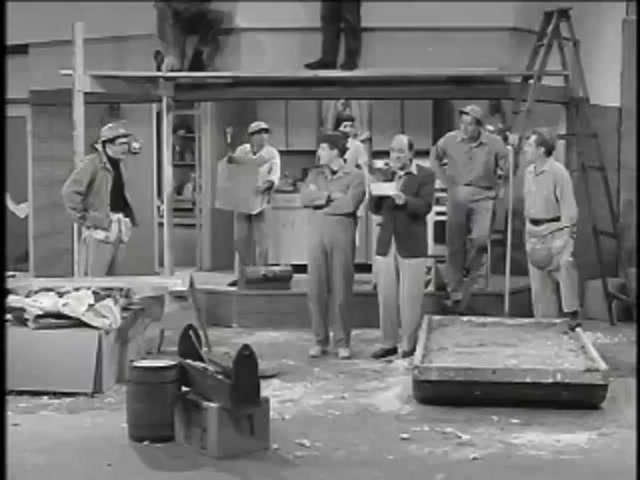
One of the running gags on the show was just like the cobbler’s children have no shoes, Dickens’ house was always in a state of upheaval with paint samples on the wall and cabinet doors not working properly; it was in constant renovation. We see this immediately in the pilot as Fenster stops by to pick up Dickens and sees Kate trying to work with the various kitchen issues under construction.
📷tvguide.com

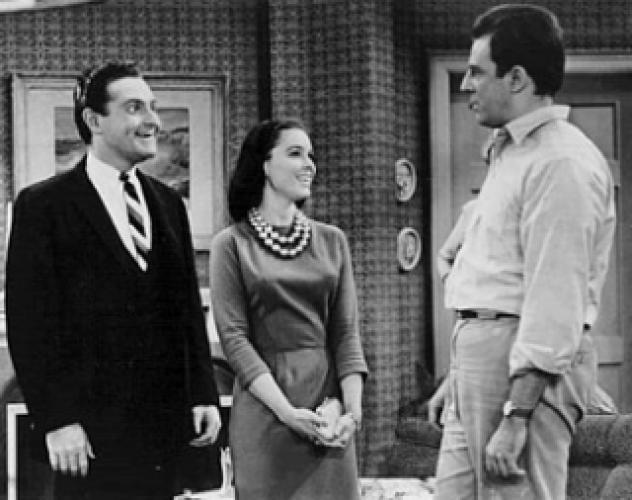
The pilot was a typical plot line for not only this show but most early sixties sitcoms. Dickens is up for a promotion to foreman and is afraid he won’t get the job. In the past, whenever Dickens is waiting for something special, he gets nervous and always ruins the opportunity. When the boss shows up at the project, he doesn’t seem to know Harry Dickens’ name, so the two friends decide to put it into his subconscious by whispering it here and there when they walk by him. That evening Fenster brings his girlfriend over. Harry doesn’t want to spend the evening with them, but once he meets the girlfriend, he falls all over himself being nice to her. Lorna mentions to Fenster that he should try for the foreman job himself.

The next morning, Fenster comes to get Dickens, and Harry is rude to him because he thinks he wants the foreman job. At the end of the day, Bannister calls Dickens into the office to give him the promotion and tells him that Fenster must be fired because he overheard a lot of bad things about him when the crew was talking. When Dickens talks to the other guys, they said that they never complained about Fenster, although they did repeat some of the funny things Dickens said about Fenster. Fenster tells Bannister that he just got fired by Dickens and then Dickens comes in to say it’s been a misunderstanding and Fenster should not be fired and would make a better foreman than Dickens. Bannister said he’ll let them know what decision has been made the next morning.
📷episodate.com

That night Fenster shows up with a different girlfriend who just happens to be Bannister’s daughter. There was a great mixture of slapstick and witty banter during the episode. Something did feel a bit off with the characters. I think the characters should have reversed roles; Aston seems more the playboy type, and Ingels seems more the married man for typical sixties sitcoms.

Astin would go on to star in The Addams Family while Henry would marry Dr. Bellows on I Dream of Jeannie. Unfortunately, with only 32 episodes, the show didn’t qualify for syndication. The first sixteen episodes are included on a DVD set released in 2012 if you want to check out the show. You can also find some of them online in different sites.
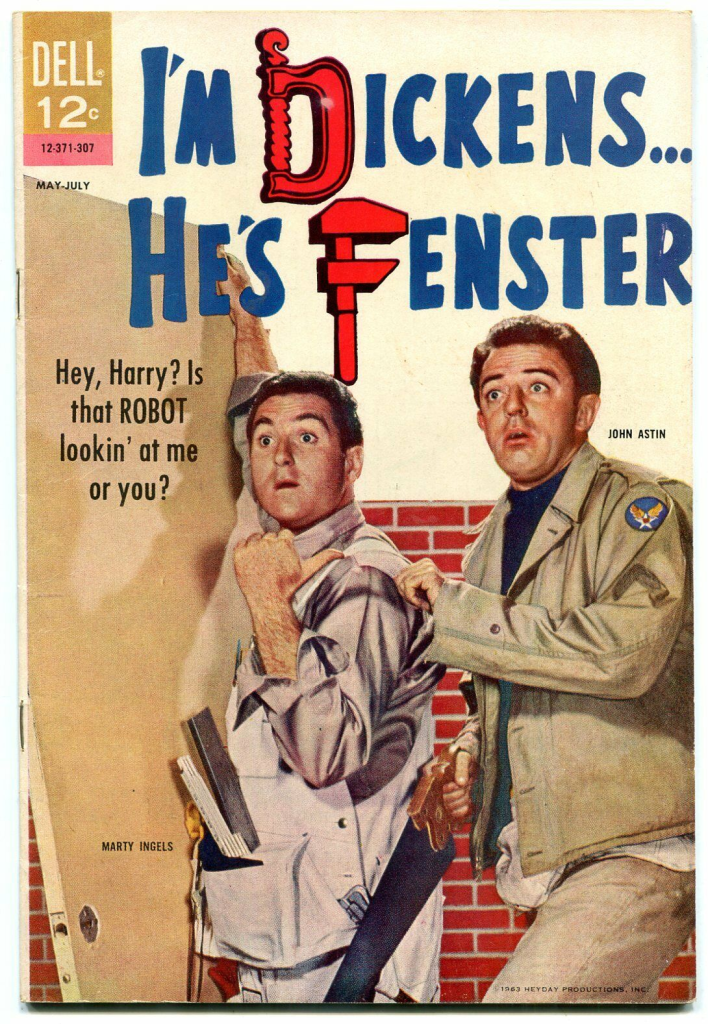
Like The Governor and J.J., this series also made it to Dell Comics; if you’re a collector of comic books about old television series, you can take a look.

I had heard a lot about this show but never watched it till now. It was different and funnier than I thought it would be.
The Governor and J.J.: You Didn’t Often Hear “Yes, Guv’nor”

In June, our theme is “Funny Duos,” and we are taking a look at a few shows that are not so well-known.

📷jacksonupperco!.com

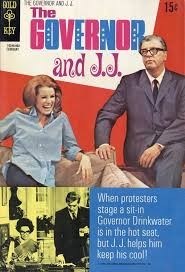
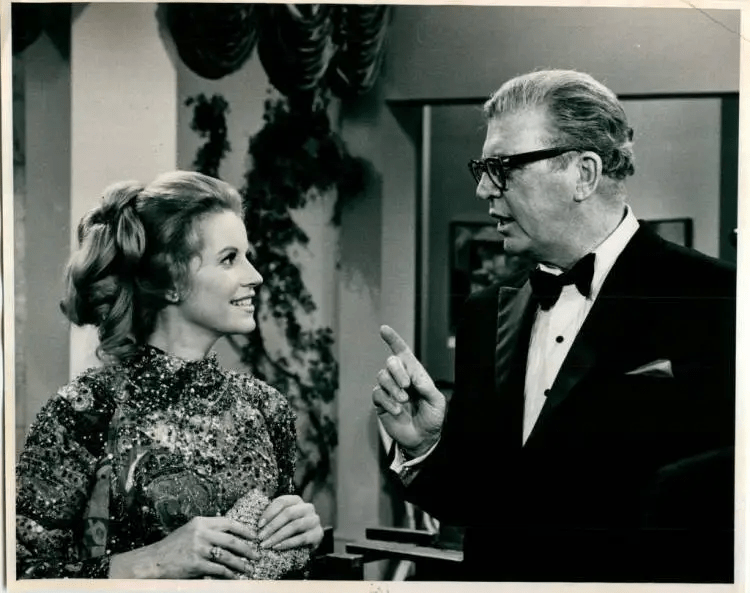
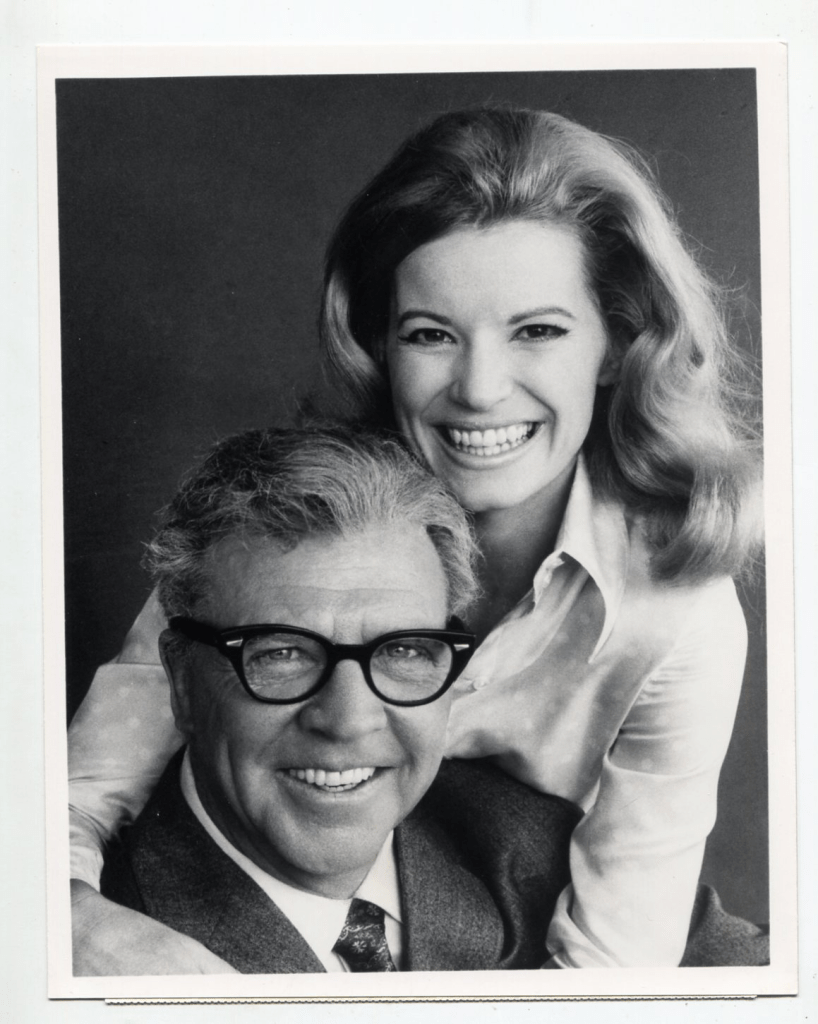
Up first is The Governor & J.J. This show debuted in September of 1969 and ran for one season on CBS. Starring Dan Dailey and Julie Sommars, it was about a Midwestern governor and his daughter Jennifer Jo, or JJ, who acted as first lady for him. Her day job was an assistant curator at a local zoo. Of course, she and her dad had very different opinions as he was more conservative and she was more liberal. Although in real life, Sommars was a dedicated Republican. Rounding out the cast were secretary Maggie (Neva Patterson), press secretary George (James T. Callahan), and housekeeper Sara (Nora Marlowe). Eventually the Drinkwaters’ basset hound Guv also became a character.

The casting of Sommars and Dailey was true chemistry. Dailey became a surrogate father for Sommars and was reportedly the first one at the hospital pacing the floors when she had her baby.

📷oldabebooks.com

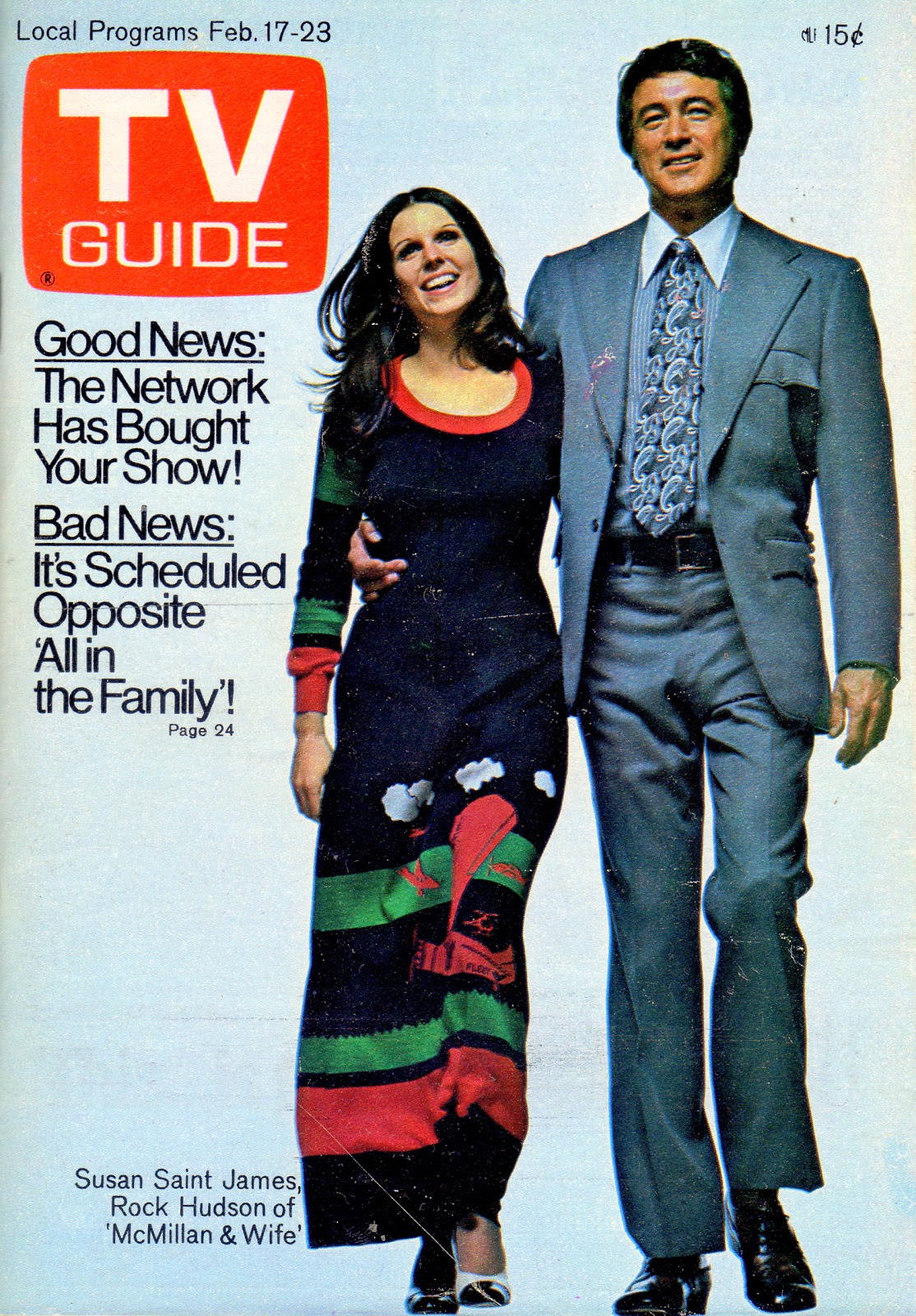
Leonard Stern created the show. He was the producer and writer behind many successful shows including McMillan and Wife, Holmes and Yo-Yo, The Honeymooners, The Phil Silvers Show, and the amazing Get Smart.

Although it didn’t get nominated for any Emmys, it did win the Golden Globe for best comedy, best actress in a comedy and best actor in a comedy. Dailey was a well-known and respected actor when this show began and would have been a big draw for the show, although it was created to showcase Sommars.

The show was on Tuesday nights for the first few months and then was switched to Wednesday nights an hour earlier. Tuesdays it was up against the movie of the week on both ABC and NBC. When it moved to Wednesdays, if faced Room 222 and The Men from Shiloh.

Leonard Stern discussed the casting of the show during his interview with the Television Academy. He said one night his kids were watching The Man from UNCLE and he heard a voice and called his wife in and said he wanted to write a script for the character. He watched the rest of the show, trying to find the actress’s name and later asked Casting to send her over for a meeting. When the woman showed up, it was the wrong actress. He said it was a Bronx accent he heard on the show and this was a very Midwestern actress wearing gloves. However, he subsequently learned that she was the same actress when she went into her Bronx accent. So, he wrote the show for her. Then Sommars and Stern went to see Dan Dailey in “The Odd Couple” and he was hired. Carroll O’Connor was brought in as an Archie Bunker type of character, Orrin Hacker. He had starred in the pilot for All in the Family, but it had not sold. However, during this show, another network bought it and O’Connor left. Stern replaced him with one of his favorite actors from Get Smart, Edward Platt.

Fun fact is that in 1970 three comic books were issued by Gold Key.

Many viewers seemed to enjoy the show. However, one of the faults might have been that father and daughter, while on separate sides of political issues, they really weren’t in much conflict. I would say their differences of opinion weren’t so much left vs right as doing things the way they have always been done vs trying something new. That might have been fine for the show had All in the Family not debuted the same season. The differences between Archie Bunker and his son-in-law Mike were truly conflicting. When the Governor and J.J. was canceled after 39 episodes, it was replaced with To Rome with Love which got displaced for All in the Family. To Rome with Love made it 48 episodes before its removal while All in the Family not only lasted for 207 episodes but then morphed into Archie Bunker’s Place about Archie’s life after Edith passed away; it ran for another 97 episodes.

This seemed to be a well-written and well-casted show. In the episodes I watched for this blog, I admit that I had a hard time with the shows. I liked the interactions between the Governor and JJ, but I found the laugh track annoying and some of the characters like Jack Cassidy’s role as a speech consultant were a bit grating. If it had debuted five years earlier, it would probably have been a hit for a few seasons, but things were changing so much in television at this time, it never caught on.

Diana: Might Have Moved Too Quick

As we take a peek at some one-named sitcoms, today we travel back about fifty years to 1973 and visit Diana which debuted on NBC. Created by Leonard Stern, the show was filmed in front of a live audience. Stern was the creator behind several series including McMillan and Wife and He and She. In addition to this show, he wrote for several series including The Phil Silvers Show, Get Smart, and Holmes and Yo-Yo. He has a decent amount of producing credits including executive producer for Get Smart.

📷en.wikipedia.com

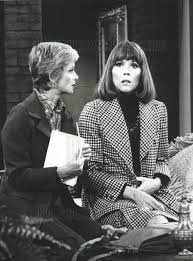
The premise is that divorced Diana Smythe (Diana Rigg) moves from London to New York City as a fashion coordinator for a department store. Her brother lets her live in his apartment while he’s out of town. Not only does Diana have to deal with learning about life in America, she has to take care of her brothers great dane Gulliver. Quickly, she realizes a lot of women have keys to her brother’s apartment and they show up regularly.

Rounding out the cast was neighbor Holly (Carole Androsky), copywriter Howard (Richard B. Shull), window decorator Marshall (Robert Moore), her bosses Norman and Norman Bronik (David Sheiner and Barbara Barrie), and friend Jeff (Richard Mulligan), a mystery novel writer.

Jerry Fielding composed the Diana theme. Fielding was a three-time Oscar nominee with 115 composing credits including McMillan and Wife, Mannix, Hogan’s Heroes, and Star Trek. He also was listed as part of the music department for lots of great series and movies.

📷wikimediacommons.com

Riggs took on the role due to the success of The Mary Tyler Moore Show and wanted to do something similar. I will say they tried a bit too hard to be similar. Their apartments are almost identical, and the work set was also set up with one coworker next to Diana and her boss’s office to the right. The show was placed on the Monday night schedule before Here’s Lucy. It was up against Gunsmoke and The Rookies. Gunsmoke had been on forever and was still in the top 20 while The Rookies was in the top 30. While a lot of shows debuted in 1973, the only real hit was Happy Days.

This show might have wanted to emulate The Mary Tyler Moore Show, but it lacked a few things including the amazing cast, the great writing, and the perfect timeslot. Fans never warmed up to this show and the ratings never took off, so the show was canceled before the end of the season.

📷facebook.com

It wasn’t a terrible show, but it wasn’t anything worth watching either. I thought the dialogue was not great and it tried way too hard. The jokes seem a bit tired. While the cast also wasn’t awful, they weren’t overly likable either. I think that there were valid reasons this one was canceled after only 15 episodes. At least she had The Avengers to remember which was a much better and beloved show. Diana summed up how this series fared when she related a story that when she arrived in American, the network had her picked up at the airport in a limousine and when she left America after a canceled show, they sent her to the airport in a shabby, yellow cab. I guess limousines and shabby cabs are part of all of our lives.

MacMillan and Wife: The Show That Bridged the Generation Gap

Before launching into this week’s topic, I wanted to say thank you to everyone who has been following and reading my blog. This week begins my fourth year writing this blog. I was worried I would find enough topics to fill the first year but next year is already outlined, so another year of classic television is on the way. It has been a lot of fun, and I’ve learned a lot.

This month we are looking at crime-solving duos.  We start our series learning a bit more about McMillan and Wife. McMillan and Wife began as part of The Sunday NBC Mystery Movie which included Columbo and McCloud. The shows rotated each week, so fewer episodes were produced of each than a typical weekly show.

Photo: memorabletv.com

McMillan and Wife debuted in 1971 and was on the air until 1977, yet only forty episodes were produced. Leonard Stern was the creator, writer, and executive producer of the show; he previously produced Get Smart.

Photo: imdb.com

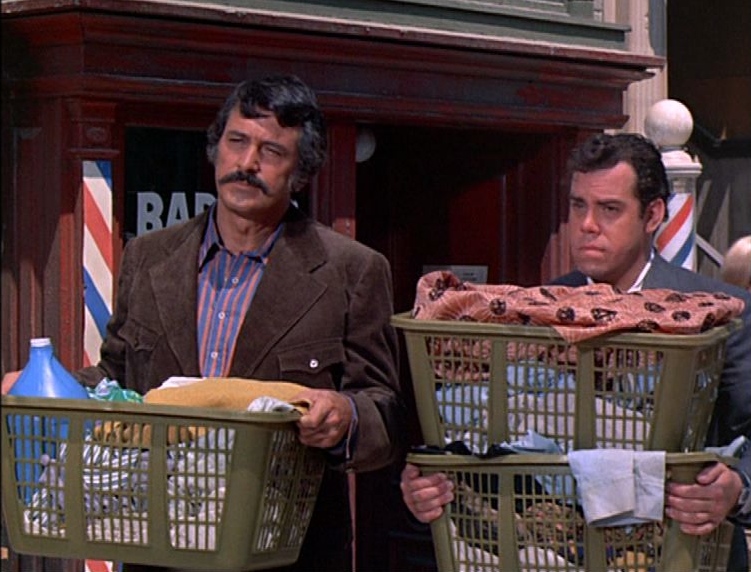
Stewart “Mac” McMillan (Rock Hudson) was an attorney and US Navy veteran who apparently had been involved in some CIA activities. He is now Commissioner of Police in San Francisco. He gets involved in high-profile cases. His wife is Sally (Susan St. James), and her father was a detective for the San Francisco Police Department; she learned a lot from him and helps her husband solve crimes. Sargent Charlie Enright (John Schuck) helps Mac with his cases. Sally and Mac have no children (it’s confusing because Sally was pregnant twice on the show, but the children are never mentioned in the show later). Their housekeeper Mildred (Nancy Walker) also lives with the couple. Mildred’s character resembles the role Thelma Ritter played in Pillow Talk, where Hudson starred with Doris Day. She is a sarcastic, hard-drinking woman and is always ready to offer her opinion, but she is devoted to Mac and Sally.

Photo: afinalcurtaincall.blogspot.com

Once Hudson was cast as Mac, the show got priority in development. Several actresses were considered for the role of Sally, including Diane Keaton and Jill Clayburgh, but Hudson was most comfortable with St. James.

Photo: pinterest.com

Hudson was 21 years older than St. James, but their relationship worked. Mac is supposed to be in his 40s and Sally in her 20s (he was 46 at the time and she was 25). Sally is self-confident and is not afraid to speak her mind. However, she is also a wife who loves her husband, and one of the running gags on the show is that Mac had dated a lot of women in his past, and when Mac and Sally are out and about, they typically run into some gorgeous woman who says, “Hi Mac.” Sally usually responds with a jealous comment or a withering look. The difference in their ages actually worked well for demographics. Hudson appealed to older viewers while St. James attracted younger viewers.

Photo: popflock.com

Often the cases Mac solves happen during events the couple attends. One episode featured a burglary at a charity event they were attending; once they found a skeleton in their house after an earthquake. Another show had Mac abducted by mobsters and replaced with a surgically-made twin replacing him.

Photo: youtube.com

An interesting fact is that the interior of their house in the pilot episode was in fact Hudson’s home. In the first regular episode, the MacMillans bought a new house. In the final season, the setting changed to an apartment.

Photo: madman.com.au

Sally and Mac led a glamorous life. The scripts were well written, and the dialogue was witty and clever. The couple was often compared to Nick and Nora Charles in the Thin Man movies. Mac and Sally have a lot of their best conversations after they go to bed at night.

Photo: sitcomsonline.com

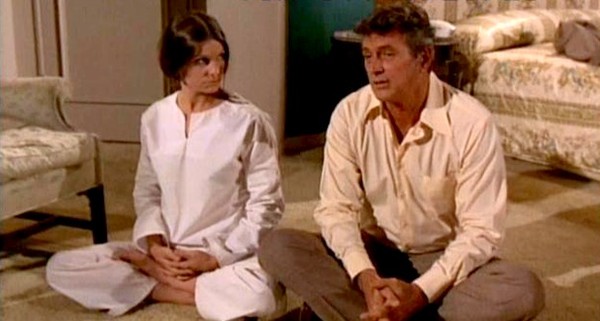
Sally was known for wearing a football jersey for her nightgown. The jersey was an authentic 49ers Jersey, number 18, George Washington, a wide receiver. Washington was a four-time Pro Bowler. He made a guest appearance on the show in season four, “Guilt by Association.”

Considering that there were only forty episodes produced, this show had an incredible number of guest stars. I apologize for the long list, but it’s the only way to capture how impressive it is. The stars included sport celebrities Dick Butkus, Rosie Grier, Alex Karras, and Bobbie Riggs.

Photo: amazon.com

It also featured a Who’s Who of television sitcom royalty: John Astin, Meredith Baxter, Tom Bosley, Michael Constantine, Bert Convy, Wally Cox, Richard Deacon, William Demarest, Donna Douglas, Barbara Feldon, Norman Fell, Buddy Hackett, Larry Hagman, Alan Hale, Shirley Jones, Stacy Keach, Bernie Kopell, Julie Newmar, Charlotte Rae, Charles Nelson Reilly, Dick Sargent, Natalie Schafer, Susan Sullivan, Karen Valentine, and Dick Van Patten.

The show, like McCloud and Columbo, was quite popular with viewers. The ratings were impressive until the sixth season.

Unfortunately, the last season had too many changes to overcome. St. James decided to leave to concentrate on her movie career. Schuck left to star in the sitcom, Holmes and Yo-Yo, and Walker left for her own sitcom, The Nancy Walker Show. Sadly, Walker and Schuck would have been better off staying because both their shows lasted only 13 episodes. St. James starred in a couple of movies, but they weren’t anything memorable. She would go on to star in Kate and Allie in 1984.

Photo: cult-tv-lounge.blogspot.com

On the show, Sally was killed in an airplane crash. Mildred was said to leave to open a diner, so her sister Agatha (Martha Raye) took over her job. Schuck made a few appearances but was said to have been given a promotion to lieutenant which kept him too busy to assist Mac much. The show may have been able to overcome one of these changes but not all of them. Much of the strength of the show was the relationship between Mac and Sally. Walker’s funny bantering and actions provided a comedic relief for the show. When Raye took over, she was just scatterbrained and loud; the appeal of Walker was not part of her character.

Photo: imdb.com

It’s wonderful the show lasted five good seasons, but it might have lasted many more if the original cast had been retained. At the other end of the spectrum, Columbo aired off and on until 2003 and is remembered by more viewers.

DVDs were released for all six seasons between 2005 and 2014. With only forty shows in the series, this would be a fun binge-watching week-end show to tackle.