This month we are going “Behind the Scenes” to learn more about the people who work to make television shows great off the screen. Today we get to learn about costume designers.
Costume designers visually define characters. They break down scripts, research time periods, manage budgets, and collaborate with directors and producers to ensure visual consistency. They also oversee fittings, tailor garments, and supervise the wardrobe department on the set.
Characters’ wardrobes have changed during the years. If you watch shows from the fifties to the early seventies, you will notice that the characters have a clothes inventory for the season. You will see characters wearing these clothes over and over during the year. Gracie Allen used to do her own shopping for the dresses she wore on the set.
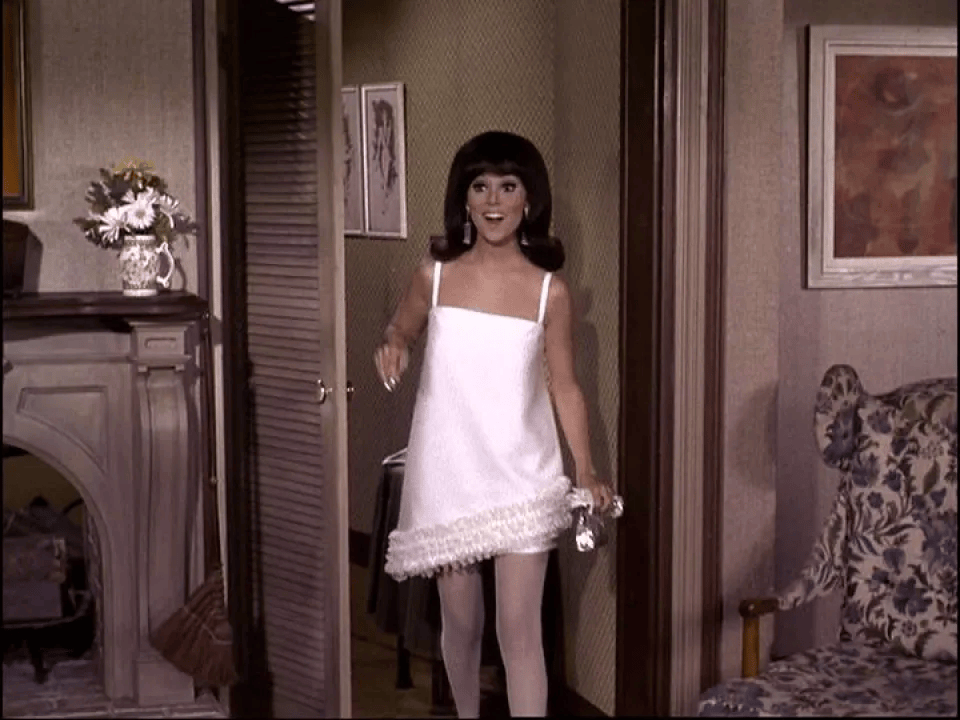
Costumer designers can design and create clothing for a character, or they can purchase the wardrobes. Sometimes costumers work with big-name designers like Nolan Miller who design clothes for a television character. On That Girl, Ann Marie wore a lot of clothing designed by Marilyn Lewis. On Green Acres, Lisa Douglas’s negligees were purchased from Lucie Ann.
Starting in the late seventies and eighties, it became more common for characters to have new clothing for each episode. If you watch Dynasty or Charlie’s Angels, you probably never see an outfit a second time.
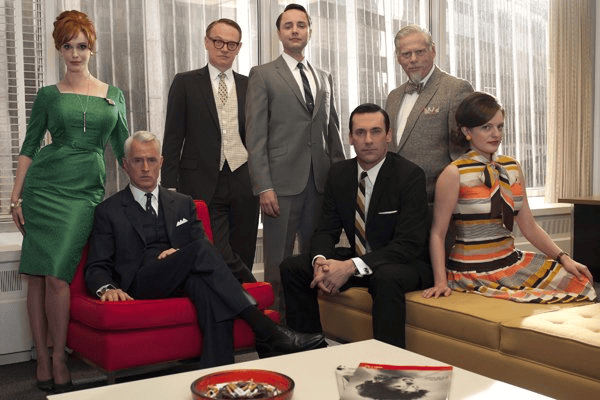
Costumer designers ensure historical accuracy by doing research into time periods and geographical locations. This is reflected in shows like Mad Men or That Seventies Show.
Designing for specific characters includes knowing their personality, creating color schemes that convey emotions, patterns that reflect a personal style, choosing shapes and forms that express a character’s message or social class. Think about a show like Golden Girls where each character has a very different look.
Additionally, designers must consider the set and background colors to make sure the characters are wearing complementary shades or sometimes wearing a clashing color to stand out.
Let’s meet a few television costume designers.
Harald Johnson
Harald Johnson’s work can be seen on The Dick Van Dyke Show, I Spy, and The Mod Squad. He was a member of the motion picture costumers for more than forty years.
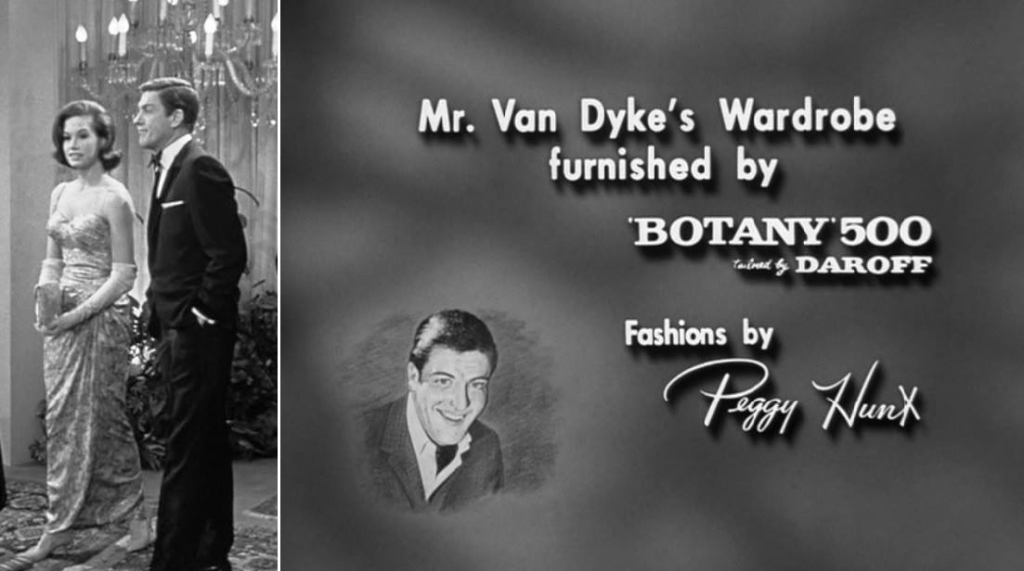
In a 2023 online article by Matt Spaiser (https://www.bondsuits.com/the-stylish-beverly-hills-suits-of-the-dick-van-dyke-show/), he shares the following:
“As Rob Petrie, Van Dyke dressed in bespoke suits, which were known simply as ‘custom’ in America. Though the credits read, ‘Mr. Van Dyke’s Wardrobe furnished by “Botany” 500, Tailored by Daroff’, this was not the case literally. Van Dyke used a Beverly Hills tailor named Harry Cherry for his suits. Harry Cherry was the designer of the clothes and the shop proprietor with his name on the door, but he had cutters and tailors working for him.
The famous wardrobe credit was not entirely truthful. This is from the The Dick Van Dyke Show episode ‘My Neighbor’s Husband’s Other Life’.
Botany 500, an average-quality American clothier, paid for their name in the credits and, according to Vince Waldon’s book The Official Dick Van Dyke Show Book, also paid for Van Dyke’s wardrobe. The credit is cleverly and deceptively worded to mean that Daroff tailored clothes for Botany 500, not for Van Dyke. Botany 500 ‘furnished’ Van Dyke’s suits, in the form of paying his tailor. Van Dyke also appeared in advertisements for Botany 500.
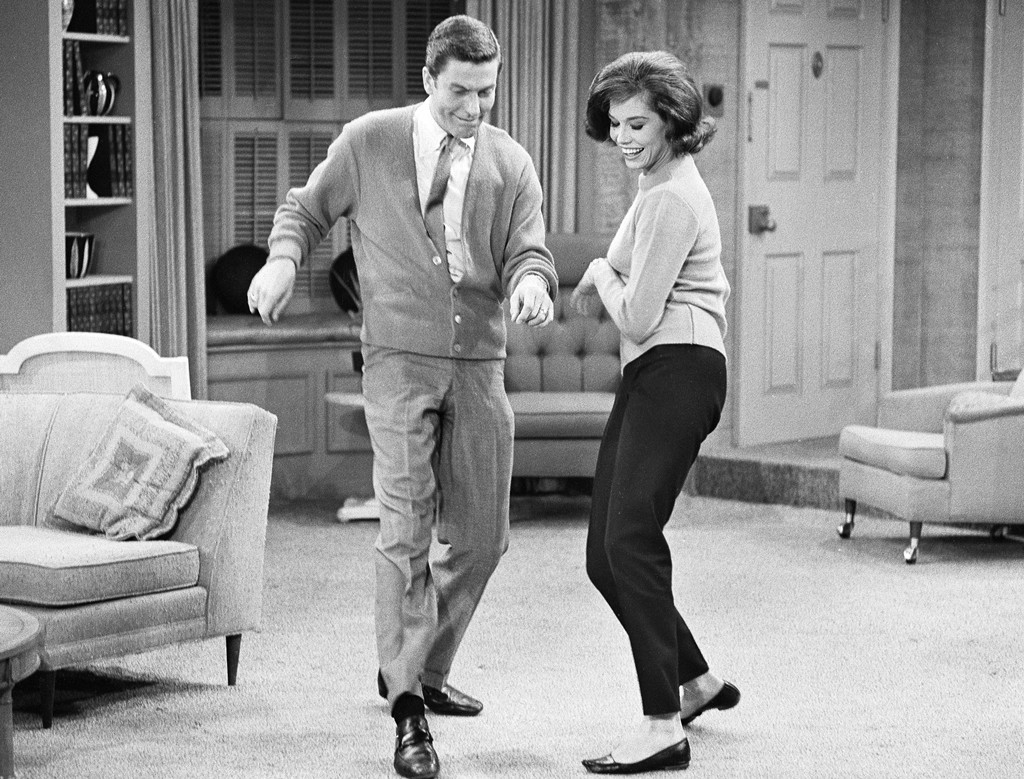
In Waldron’s book, the show’s head of costuming Harald Johnson is quoted, ‘Dick was very, very particular about his clothes … He never wore off-the-rack suits. The only things he ever wore that were not custom-made were sportswear items.’ Johnson also said that the deal with Botany 500 provided the show’s producers Sheldon Leonard and Carl Reiner with suits from the same tailor who dressed Van Dyke.
Botany 500 paid a large sum for the Harry Cherry suits, jackets, and trousers. In a series of advertisements in the Los Angeles Times in 1958 promoting a clearance sale of his ready-to-wear clothes—he was shifting to selling only custom clothes—his ready-to-wear suits originally cost from $125 to $225 and were made of ‘Italian and English imported fabrics in 100% cashmere, cashmere-silk and wool, Italian silks, mohairs, lightweight worsted, silk and mohair, etc.’ “
The clothes worn by Mary Tyler Moore and Rose Marie were provided by various suppliers, most of them based in Los Angeles. In Vince Waldron’s book, The Official Dick Van Dyke Show Book, Harald Johnson “negotiated deals with a variety of California-based women’s clothing designers, most of whom were only too happy to loan samples of their latest fashion lines to the show’s female stars in exchange for the exposure and – of course – a prominent plug in the show’s closing credits.”
Mary refused to wear the typical and unrealistic clothing other housewives were wearing on television. In a 2021 online article https://www.cnn.com/style/article/mary-tyler-moore-capri-pants), she was quoted, “I said, I’ve seen all the other actresses, and they’re always running the vacuum in these little flowered frocks with high heels on, and I don’t do that,” she recalled to NPR. “And I don’t know any of my friends who do that. So why don’t we try to make this real? And I’ll dress on the show the way I do in real life. … Within a few weeks, we were sneaking (pants) into a few other scenes in every episode.
Vincent Dee
Born in Pennsylvania in 1915, Vincent Dee passed away in 2006. With almost 100 credits, he was a prolific designer. According to BackstageAudition.com, his “contributions as a costume supervisor are nothing short of extraordinary. His passion for storytelling, coupled with his unparalleled skill in costume design, has brought characters to life in a way that captivates audiences worldwide. Dee’s legacy as a master of his craft will undoubtedly continue to inspire future generations of costumer designers and enthusiasts alike.”
Dee began as a costumer designer on television from 1954 to 1978. He was part of the cast for many popular series including Tales of West Fargo, Bachelor Father, Alfred Hitchcock Presents, Leave It to Beaver, Wagon Train, McHale’s Navy, The Munsters, and The Virginian.
Bachelor Father is one of my favorites and the characters’ wardrobes are spot on. Bentley Gregg is clad in the tailored suits a wealthy attorney would wear. His teen niece Kelly wears typical high school fashion with a polished, upscale vibe. And Peter switches his clothing from white shirt when working at the house to more casual, informal clothing when he’s out and about.
Then you have Leave It to Beaver. June is often made fun of for her flowing dresses and pearls. Barbara Billingsley often told the story about why she wore pearls. She had a large hollow in her neck which became more obvious on screen, so the pearls covered up that stark look. Ward, the businessman is usually in suits or casual attire for golfing. Beaver and Wally wear the typical clothing for boys their age: jeans, flannel shirts, sweaters. The Cleavers are the poster family for a wholesome, clean-cut, conservative family of that time.
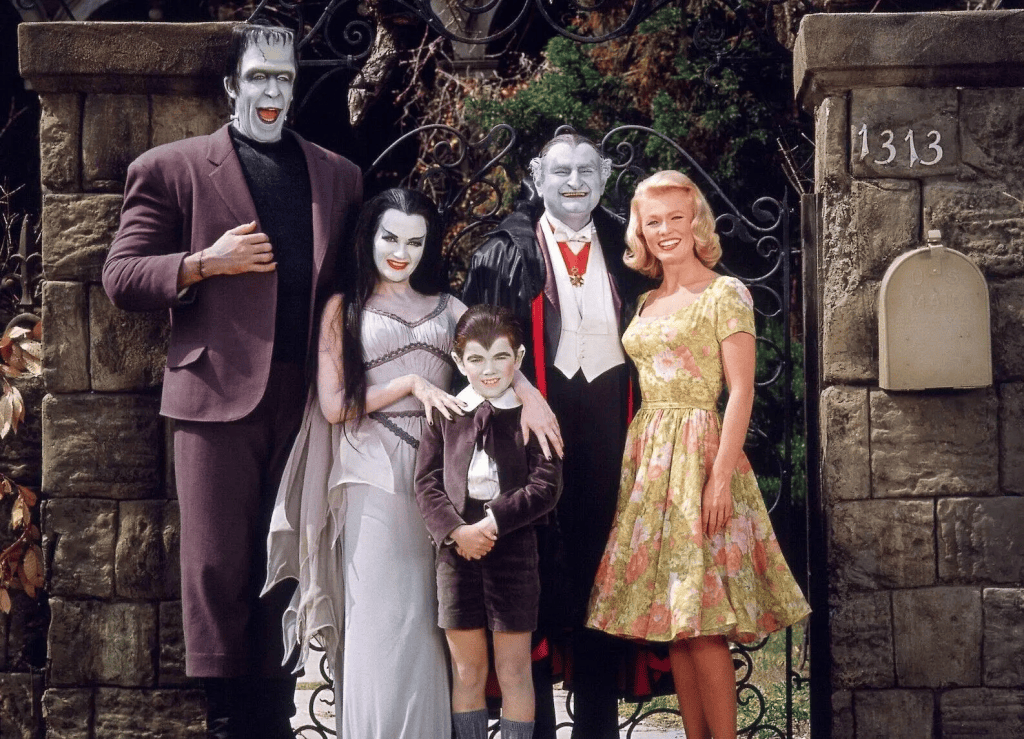
The Munsters were a satire of the typical sixties’ family. However, Eddie Munster dressed nothing like Beaver. He wore the same outfit in every show: a velvet suit with short pants and a shite collar with a jacket and gray knee socks. Poor Fred wore heavy looking clothing as a mortician. He was given build-up shoes to expand his 5”6” frame to 7’. His clothing weighed about 50 pounds so there were fans and lemonade and water for him between takes. Lily gives a nod to The Bride of Frankenstein from 1935 with her black and white hair and long, flowing gown.
An interesting story about Dee concerned Edith Head, an amazing designer who often found herself involved in scandals and unethical behavior toward other designers. In a 7-29-2024 online article (https://www.okcmoa.com/edith-heads-controversies) by Kristen Pignuolo, we learn that Head was responsible for promoting The Sting and making sure the actors were happy with their costumes. However, she did no design work for the film. That fell to Peter Saldutti and Vincent Dee who worked with Paul Newman and Robert Redford and Andrea Weaver who was the women’s costumer. The Sting won Best Costume Design. Head received the Oscar and during her acceptance speech failed to even mention Saldutti, Dee, or Weaver.
I think the world of costuming is fascinating. You have all the creative license, scandal, and intrigue of any television plot. I wish we knew more about these hard-working, creative individuals who made our characters so real for us.