Do You Mind If I Ask You a Question?

Hello. Are are you feeling?  Do you have a favorite food? What are your plans for today? What is your favorite vacation destination?  Are you wondering if I lost my mind?  Well, it’s National Ask a Question Day tomorrow.  In honor of that celebration, we have a tv quiz.  I decided to feature my 20 top favorite television shows with a question from each.  So, grab a piece of paper and a pen; answers are at the end of the quiz.  Hint: If you’ve been reading my blogs, you’ve seen the answers to many of these questions, but no peeking. Good luck.

213blog7

(1) The Adventures of Ozzie and Harriet – Don DeFore played their neighbor Thorny.  In 1961 he would star in his own show.  What was it?

213blog19

(2) The Andy Griffith Show – Who was Aunt Bee’s neighbor and best friend?

213blog2

(3) Bachelor Father – Bentley Gregg lived in Beverly Hills and worked with a lot of stars.  Was he:

(a) An attorney          (b) A family doctor          (c) A film writer

213blog21

(4) Big Bang Theory – Leslie Winkle, a physicist played by Sara Gilbert, dated two of the main characters.  Who were they?

213blog13

(5) The Bob Newhart Show – Bob’s sister Ellen ends up marrying another character on the show. Who was it?                                                                                                                                         (a) Dentist Jerry Robinson     (b) Neighbor Howard Borden      (c) Patient Elliott Carlin
213blog17

(6) The Brady Bunch – What was the name of the kids’ dog?
213blog20

(7) The Burns and Allen Show – Blanche and Harry Morton lived next door. During the show’s run, Harry was replaced more than once.  They found interesting ways of introducing the new person; e.g., they ended one year with Blanche holding a pan over his head.  The next year, they started the show telling her to get back into place with the pan, but it was a different Harry under it.  How many Harry Mortons were there from 1950-1958?

213blog12

(8) The Dick Van Dyke Show – Morey Amsterdam plays Buddy Sorrell, a writer on the show.  He always refers to his wife by a “food” name.  Was it:

(a) Sugar Plum                   (b) Cupcake                  (c) Pickles

213blog6

(9) The Donna Reed Show – Donna had two children Mary and Jeff, played by Shelley Fabares and Paul Petersen.  These two kids had something else in common in real life.  Was it:

(a) There were cousins  (b) They had famous mothers  (c)  They recorded hit songs

213blog9

(10) Family – Matthew Broderick, married to Sara Jessica Parker, had a famous relative on this show.  Who was it?

213blog16

(11) Green Acres – The Ziffels owned a pig that was smarter than almost everyone in Hooterville.  What was his name?

213blog14

(12) Love American Style – This show featured three to four skits each week with television and movie stars. A famous show from the 1970s first appeared as a skit on this show.  What was it?

213blog15

(13) M*A*S*H – Here’s a two-parter.  What was Radar O’Reilly’s favorite drink and for a bonus, what was his real first name?

213blog8

(14) Modern Family – Both Gloria and Lily were born in other countries. What countries were they?

213blog5

(15) My Three Sons – The oldest son, Mike, left the show after 1965.  At the end of that year, he marries his high school sweetheart, moves away to teach at a college, and is only mentioned 4 times during the next 6 years.  What was his girlfriend’s name?

(a Julie          (b) Maureen       (c) Sally

213blog10

(16) The Partridge Family – This show was loosely based on a real-life family band?  What was it?

2.0.1

(17) Petticoat Junction – Kate Bradley had three girls:  Billy __, Bobby ___, and Betty ___.  They had two-part names and they all had the same second name.  Was it:                                                     (a) Ann                                  (b) Jo                                      (c) Kay


(18) Rizzoli and Isles – Maura, the ME, is extremely intelligent and a fashion plate, but in high school, the kids called her “Maura-the-Bore-A.”  She has a pet named Bass.  Was it:

(a) a chimpanzee             (b) a tortoise                     (c) A skunk (de-fumed)

213blog3

(19) That Girl – Ann Marie moves to New York City from a smaller town in New York.  Was it:                                    (a) Brewster                         (b) Bedford                       (c) Brighton

213blog18

(20) thirtysomething – This show about a group of friends was set in a Pennsylvania city.  Was it:

(a) Erie                                  (b) Harrisburg                  (c) Philadelphia


***********************************************************************

Ok.  Are you ready to check your scores? If you score between 15-20, you are a well-rounded person, at least regarding classic sitcoms.  If you score 10-15, you just need to add some of these shows to your DVD library. If you scored 5-10, you need to go back and re-read all my old blogs.  If you scored less than 5, make up another score, because I don’t want to hear that.


  1. Hazel
  2. Clara
  3. attorney
  4. Leonard and Howard
  5. (b) Neighbor Howard Borden
  6. Tiger
  7. Four
  8. (c) Pickles
  9. (c) They recorded hit songs. Fabares recorded “Johnny Angel” which hit number 1 in 1962. The same year, Petersen’s “My Dad” hit number 6.
  10. James Broderick who played the father Doug Lawrence
  11. Arnold
  12. Happy Days
  13. Grape Nehi; Walter
  14. Colombia and Vietnam
  15. (c) Sally
  16. The Cowsills
  17. (b) Jo
  18. (b) A tortoise
  19. (a) Brewster
  20. (c) Philadelphia

I Don’t Have a Free Toothbrush For You, But . . .

Are you feeling comfortable?  You might want to lean back, put on a pair of plastic glasses, and say Ahhh.  Sorry, I guess I’m getting carried away by our topic today.  March 6 is National Dentists Day.  I thought it might be fun to delve into some shows that featured dentists.  Apparently, the average viewer finds nothing funny about dentists.  They are hard to spot on the small screen.  Perhaps it brings back too many pain-filled memories of the sound of drills and mouths so numb you bite your lip without realizing it. Finding dentists on television was like pulling teeth – sorry I’m getting carried away again. Let’s look at a few of them.

When we think of television dentists, most of us probably conjure up pictures of Jerry Helper (played by Jerry Paris) on The Dick Van Dyke Show or Jerry Robinson (played by Peter Bonerz) on The Bob Newhart Show. These two shows can make anything funny, even dentists.

Jerry and Millie Helper are the Petries’ next-door neighbors and best friends on The Dick Van Dyke Show.  Jerry is a dentist, and Millie is a stay-at-home mom with a son the same age as Richie, Rob and Laura’s son.  Jerry is a kidder and his comments often get him in trouble.

One episode, “Punch Thy Neighbor” from the first season, shows Jerry taking his teasing too far.  Jerry and Millie are watching the Alan Brady Show with Rob and Laura, and Jerry makes comments about how bad it is. Rob isn’t happy, but the next day he gets mad when several people, including the Helpers’ son Freddie and the milkman, tell Rob Jerry mentioned how bad the show was. Rob goes to talk to Jerry and ends up punching him accidentally. When he attempts to show Laura how it happened, he hit her as well. Richie tells Millie his dad hit his mom, and she sends Jerry over to get Rob under control.  Jerry walks in seeing Rob yelling, not knowing it’s because he tripped over a toy.  Trying to calm him down, Jerry wrestles him to the floor. Jerry realizes he was out of line with his joking.  You would think he learned his lesson, but at the end of the episode, Jerry starts again, and Rob hits him in the face with a pie. Like all the Dick Van Dyke episodes, this one is true to life, well written, and funny.

I’m sure it was also well directed, although not by Jerry Paris.  However, Paris kept nagging Reiner to let him direct.  Once he did a couple of shows, Reiner realized that “he understood our show more than any of the other directors.” In 1963-64, Paris won an Emmy for directing the show.  He directed 84 of the 158 episodes. After The Dick Van Dyke Show ended, he went on to direct many shows including 2 episodes of The Partridge Family, 3 episodes of Love American Style, 3 episodes of The Mary Tyler Moore Show, 7 episodes of The New Dick Van Dyke Show, 18 episodes of The Odd Couple, and 237 of the 255 episodes of Happy Days.

From 1972-1978, Jerry Robinson was Bob Hartley’s best friend on The Bob Newhart Show.  Bob realizes his friends and family are not any more emotionally stable than his patients; they just get his advice for free. Jerry is an orthodontist, and he shares a receptionist with Bob. When interviewed about his character, Bonerz said “Jerry Robinson was written by 25 guys. It was my job to make those 25 different versions of Jerry the dentist credible.” Robinson was a swinging single, slow to trust others, and easily angered. Yet, his character was likeable, and he credited that to a well-balanced cast who all made each other better.  They were like a close family; you don’t always approve of your family members, but you love them.  Bonerz’s theory was that Bob Newhart was the psychologist/listener of the family, and that role made everything else fall into place. If you needed a root canal, Dr. Helper might be more proficient, but you would enjoy the conversation during the procedure more with Dr. Robinson.

36blog

One dentist who was a critical component of a show, although most people don’t remember him, was Dr. Barry Farber.  Dr. Farber is the man Rachel Green was supposed to marry on Friends, but she left him at the altar, ending up living with Monica and meeting a new group of friends.

Several other shows, not as well-known as these three, also featured a dentist in their cast.

img0102A

Doc Corkle was on the air in 1952.  Doc, played by Eddie Mayehoff, was a neighborhood dentist.  He lived with his father (Chester Conklin) and his daughter (Connie Marshall). Poor Doc has some money problems.  The biggest financial setback was the fact that the network cancelled the show after only three episodes.

TSDIMAB EC001

I’m a Big Girl Now featured Diana Canova who played a divorced woman, Diana Cassidy, who goes home to live with her father Benjamin Douglass, a dentist (Danny Thomas).  His partner and his wife have run off to Spain.  Diana also has a daughter Rebecca and a neurotic brother named Walter. The show was cancelled mid-season.

36blog7

Charley Shanowski, played by Ted McGinley, is a dentist on Hope & Faith.  His wife Hope (Faith Ford) is a stay-at-home mom with three children.  Her sister Faith (Kelly Ripa) was a soap opera star whose character was killed off on the show.  She moves in with her sister but expects to be treated like the star she used to be.  Charlie does not like Faith and spends a lot of his time trying to get her to leave.  We can understand why.  It seems like every time a dentist has a show where a family member moves in, the network cancels the show.  At least this show made it three seasons instead of three episodes before it got pulled.

Probably my favorite show with a dentist was an episode of The Carol Burnett Show. Like so many of the funniest episodes, this one featured Tim Conway (the dentist) and Harvey Korman (the patient). When interviewed about the skit, Conway said that memorable sketches often create themselves.  “The novocaine portion of the dentist sketch wasn’t planned—it just happened. That’s the magic of comedy; you never know when it is going to sneak up on you and make you laugh.” The dentist skit was based on Conway’s real-life dentist who stuck the needle of novocaine into his own thumb while working on a patient. Korman didn’t know Conway was going to put that in the sketch.

Last, but not least, I wanted to mention Edgar Buchanan, Uncle Joe in Petticoat Junction.  Buchanan earned a DDS degree from North Pacific College of Dentistry in Oregon. His father was also a dentist. During the time he was a pre-med student, Edgar took acting classes at the University of Oregon and eventually left dental school to take a position in their drama department. His father convinced him to finish his dental degree first.  When he returned to North Pacific he met Mildred Spence, another dental student.  They graduated in 1928. After marrying, the couple moved back to Eugene, Oregon where they opened a private practice. From 1930-1937, Edgar was chief of oral surgery at the Eugene Hospital Clinic but also worked as an assistant director in the University of Oregon drama department. In 1939, the couple moved to Pasadena. When Edgar appeared in a production at the Pasadena Playhouse, he received his first film offer.  So, at the age of 36, he turned over the practice to his wife and became an actor.  He appeared in more than 100 films between 1941 and 1974. He was the only cast member of Petticoat Junction to appear in all 222 episodes.

Apparently dentists are not too popular.  There are a handful of shows about them while there are tons of shows about attorneys.  But dentists are our friends, so to celebrate their day today, take a moment and watch the following:

www.liftable.com/edwardtofil/tim-conway-made-harvey-korman-wet.

Tim Conway talks about The Dentist episode to Conan O’Brien and they play a clip from it. If you watch it enough times, you might not actually look forward to going to the dentist, but you might not dread it as much. And if you’re a hopeful television creator, write a show about dentists.  They’re due for a big hit.

Not Everything is Black or White

As Black History Month comes to an end, I wanted to look at the early years of television featuring African American characters.  I don’t know if young people today realize how much culture has changed in the past fifty years.  While there are a lot of negative changes that have occurred in the movie and television industry, there have been a lot of positive changes as well.

It’s hard for young adults to realize today how different things are.  When I was growing up in the sixties, married couples on television had twin beds; you could not say “pregnant” on the air; black people and white people were not friends, and certainly did not date or marry; the “jobs wanted” ads in the newspaper were divided into jobs for men and jobs for women; and if a married woman wanted to join the armed forces, her husband or father had to sign a letter giving his approval.

Sometimes we get so caught up in how far we are from the journey’s end, we forget to appreciate how far we have traveled.  Looking at the current television schedule we see a variety of shows about capable women.  While certainly racism and gender discrimination exist, most people don’t think twice about whether a lead character is a man or a woman; is black, white, or Asian; or single or married.

Just a quick review of shows on the air reveal complex, intelligent characters who are African American.  We see this in Black-ish, This Is Us, Empire, Scandal, House of Lies, Last Man Standing, and Gray’s Anatomy, just to name a few.  This was far from the reality of early television.

We often think of that era as the golden age of television, but honestly, it was the white age of television.

In 1950, two shows debuted with main characters who were black:  Amos ‘N Andy and Beulah.  A radio transplant, Amos ‘N Andy dealt mostly with Kingfish’s schemes to gain wealth, often at the expense of his friends. Beulah also got its start on radio where she was a character in Fibber McGee and Molly.    She worked for a well-to-do middle class white couple with one son.  Both of these shows were demeaning and stereotypical.  In 1953, they were both yanked from the air due to NAACP protests.

Unfortunately, it would take almost 20 years before another show would feature a black character as a star.  In 1968, Julia debuted.  Julia, played by Diahann Carroll, was a black woman with a young son Corey (Marc Copage).  Her husband is killed in Vietnam and she moves to LA to start a new life in her nursing career.  Like Tom Corbett on The Courtship of Eddie’s Father, she is raising a son; like Doris Day she is a working mother; and like Ann Marie on That Girl, she has a fabulous wardrobe.  She is hired at Astrospace Industries, an industrial-health office where she works with Dr. Chegley (Lloyd Nolan).  Her life is normal.  She goes to work, takes care of her son, and goes on a few dates, but the concept of an African American, or a woman, starring in a show as the sole breadwinner, intelligent and fashionable, was not normal for the times.  The show was on for three seasons until 1971.

Julia was a controversial show at the time, but it scored high in the ratings and became a popular series.  I think it gets a lot of unfair criticism today.  The show gets complaints because during the time of the Watts riots, sit-ins, and so much racial unrest, it portrayed Julia living a fairly normal life.  I think people forget how groundbreaking it was to have a working woman or a black character star in a show.  I think the fact that she was able to live a “normal” life gives even more credit to not bowing to stereotypes of the late sixties. It’s like criticizing someone who is just learning to walk for not running and doing handstands.  They might be small steps, but they are steps going forward. I am one of those people who actually prefer not to see too much “real life” in sitcoms.  Honestly, I watch them to escape real life.

I also wanted to mention a few other shows that were featuring black characters in their cast during the time Julia was on the air: Hogan’s Heroes, The Mary Tyler Moore Show, and Barney Miller.

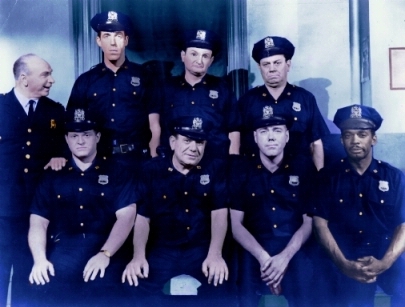
Hogan’s Heroes had a diverse cast, including Ivan Dixon as Sgt. James Kinchloe, striving to stay one step ahead of the Nazis.  The Mary Tyler Moore Show included a quirky news staff including weatherman Gordy Howard played by John Amos.  Barney Miller centered around a police department made up of personnel who each had their own dysfunctions.  One of those members was Lt. Ron Harris played by Ron Glass.  Each of these shows quietly featured black characters.  The races of any of the characters could easily have been switched during an episode and the character would not change.  It was just real people living real lives and some of them happened to be white and some black. After these creative and well-written shows, I prefer to ignore the Norman Lear era of shows.  They may have their merits, but I couldn’t stand All in the Family, Sanford and Son, Maude, or Good TimesThe Jeffersons was tolerable, but I would not choose to watch it either. In the mid-1980s, television began to get more diverse.

365

Don’t get me wrong.  Things are far from perfect in the world of television and movies, but we have made a lot of progress.  We have a lot of work to do, but just think how many choices Diahann Carroll would have today if she wanted to develop a television series. She could pick any career she wanted, including the military without anyone’s else’s approval; she could marry a white man and not sleep in twin beds; she could announce on the air she was pregnant—small steps but 5280 small steps turn into a mile. So, let’s devote one day to appreciate the hundreds of miles we have come before getting too caught up despairing about the hundred we still have to go.

All Hail to the Grief

Monday is Presidents Day, and as I mention that fact, I can hear the collective groans.  Whether you’re in the Hate Trump or Love Trump camp, you are probably thoroughly sick of politics.  Believe me, I hear you. However, today we are going to look at presidential moments in television. And before you exit out, be assured I am not talking about the Nixon-Kennedy debates.  We’re going to look at my top television episodes that featured a president.

Several series have included presidents with people dressed in costumes at Halloween parties.  George Washington showed up on Growing Pains in 1990 and on the first episode of The Munsters in 1964, while Thomas Jefferson appeared on Mike and Molly in 2011. I mention the roles, but we’re not going to concentrate on them.

Several candidates also made whistle stops campaigning on television.  Thomas Jefferson was on Simon and Simon in 1986 when they were trying to recover a family journal, Teddy Roosevelt was on The Virginian in 1962 fighting with the Rough Riders, and Franklin Roosevelt was a minor character on Wonder Woman in 1975, when she used her super powers to return a wounded WWII pilot to Washington. In 2002, Teddy Roosevelt, Abe Lincoln, and Thomas Jefferson all made an appearance on Sabrina the Teenage Witch to convince her aunt not to run for city council. Because these were minor appearances and the shows were not about the presidents, I did not include them in my top five.

Here are my top five television episodes featuring a president as a character.

No. 5 – Bewitched: “George Washington Zapped Here” – 1972. When I saw a Bewitched episode that starred George Washington, I was sure I had my number 1 show for this blog.  Then I watched the show.  I tend to look at Bewitched almost as two different shows.  I love the first five years and include them in some of my all-time favorite tv episodes.  It was one of the best fantasy shows ever created, but by the last season the fantasy had died. The last season, including this episode, is like trying to watch a wrinkled, saggy grandmother trying to pull off wearing a mini skirt and go-go boots.  It’s a bit frustrating, a bit humorous, fairly sad, and extremely uncomfortable. If George Washington had a premonition about appearing in this episode, I’m sure he would have found a way to ban television in the Constitution.

Trying to help Tabitha with her homework, Esmeralda zaps George Washington to the present time. George is played by Will Geer. I feel like this theme of zapping historical figures happened more often than it should have during this show’s run.  Also, Esmeralda is not as likeable a character as Aunt Clara or Uncle Arthur. Of course, Washington wanders off and is arrested for speaking without a permit.  The only thing more painful than watching this show was the realization that it was a two-parter; the second episode has George going before a local judge and finally being exonerated by the truth. Talking about truth reminds me when George said, “I cannot tell a lie”, and I have to admit this episode is dreadful. Apparently, politics was just as painful 45 years ago as it is today.

No. 4 – Dharma and Greg: “Dutch Treat” – 2001. Numbers 3 and 4 are really a toss-up.  Abraham Lincoln stars in both shows, and he appears in dreams in both episodes. This sitcom was on the air from 1997 to 2002 starring Jenna Elfman and Thomas Gibson as a young couple who eloped on their first date.  She was raised by hippy parents and he comes from a wealthy family. The show earned eight Golden Globe and six Emmy nominations, and Elfman won the Best Actress Golden Globe in 1999. This episode was a bit too formulaic for me, so Drew Carey beat it out for number 3 in my list.

In this show, Dharma and Greg argue about being a role model for their young college friend.  During the argument they both claim to be independent, so they decide to go dutch for a week to find out which one is truly independent. Of course, they end up realizing they are dependent on each other during the experiment.   Peter, Greg’s coworker, has some weird dreams during the show.  At the end of the episode, Peter leaves for lunch with a bunch of Victoria’s Secret models who think he’s hot (he’s not), and Abraham Lincoln arrives at the office for a consultation with Peter. Dharma and Greg inform him Peter is out and invite him to lunch with them.  He takes off his hat to reveal it is full of waffles. At this point, Dharma informs Greg that they are now in Peter’s dream and the show ends. Abe is played by Ryan Stiles and, by chance, our no. 3 show features Stiles as a cast member.

No. 3 – The Drew Carey Show: “Drew’s in a Coma” – 2001. From 1995-2004, Drew portrays the average guy. He works at a department store and has a group of friends he hangs out with, primarily at the Warsaw Tavern.  Ryan Stiles is one of these friends, who played Abe Lincoln in the Dharma and Greg episode. He also appeared on Drew’s improv show, Whose Line Is It Anyway?.

In this episode, Drew is in an auto accident and goes into a coma.  His friends and family try to bring him out of it, but he is enjoying his unconscious dreams.  We see him in an apartment with a bunch of sexy women. Mimi is his sister-in-law who wears flamboyant make-up.  They have a love/hate relationship, but in his dreams, she is very conservative looking and tells him she is his slave, being very respectful.  He has a pizza tree, a beer fountain, and a door that opens to the greatest moments in sports featuring himself.  After several attempts to bring him out of the coma, his family gets ready to pull the plug to see if it shocks his body into waking up.  When they unplug the respirator, Drew is in the middle of a Trivial Pursuit game with William Shakespeare and Abe Lincoln.  (Abe is played by Charles Brame, and he also was Abe Lincoln on the Growing Pains episode mentioned in the second paragraph of the blog.)  Abe is excelling at all the history questions, until Drew reads him a shocking question.  The card asks “Who shot Abraham Lincoln?” The shock Abe feels equals the one Drew feels when he is unplugged and it forces him to realize he has to choose between going on to heaven or back to his life on earth. In the words of his fellow gamer, he had to decide “to be or not to be” and he chooses to return to earth for a while.

cast-of-spin-city

No. 2 – Spin City: “A Tree Falls in Manhattan” – 2001. Spin City is about a group of city hall employees who work to help the mayor.  Mike, played by Michael J. Fox, is great at his job but he is leaving to get married and travel around the world.  The staff covers up for the mayor who is not very competent, but they struggle with their personal lives.  I did not watch Spin City a lot when it was on the air from 1996 to 2002. This was a funny episode, so it came in at number 2, even though Washington is only an on-air character for a minute or two.

Trying to impress his new girlfriend so they can watch the sun rise over the East River, the mayor orders a tree outside the mansion to be cut down, not realizing that it was a tree planted by George Washington and is protected. Charlie tells a girl he picks up that night about the tree story, not knowing she was the campaign manager for the opposition.  She tells her boss, and they go on the air to make an announcement.  When Charlie sees her, he realizes what has happened. Four George Washingtons appear in this episode played by David Hayman, Jack Wright, Gelbert Coloma, and Anthony Provenzano Jr. They are part of the Revolutionary War Society picketing city hall. After all this mayhem, Mike realizes he needs to be back in city hall and returns to his job. He arranges for the mayor to go on television saying “I cannot tell a lie, I chopped down George Washington’s tree, but I used the wood to build a shelter for the homeless.”  At this time, Fox was dealing with Parkinson’s Disease and announced he would be leaving at the end of this season.  When he did eventually leave the show, the explanation was that he accepted a job as an environmental lobbyist who moved to Washington, DC.  He met a senator there named Alex P. Keaton, the name of Fox’s character on Family Ties.

presidentsdayflicka1

No. 1 – My Friend Flicka: ”Rough and Ready” – 1956. I had heard of the book and movie My Friend Flicka, but I did not know that it was ever a television show. It was only on the air one year, and only 39 episodes were made, airing between February 1956- February 1957. It was a mid-season replacement for The Adventures of Champion, a show starring Gene Autry.  Unfortunately, neither show could compete with The Adventures of Rin Tin Tin which was on another channel during this time slot. The show was later aired Monday nights on the Disney Channel in the mid-1980s. Ken McLaughlin, played by Johnny Washbrook, is devoted to his horse Flicka.  He and his parents live at the Goose Bar Ranch in Coulee Springs. After this show was cancelled, Washbrook appeared on several shows, including three different characters on My Three Sons, but then went into the banking profession and moved to Martha’s Vineyard.

This episode was a delightful and charming show featuring Theodore Roosevelt played by Frank Albertson. Young Ken McLaughlin decides to write a letter to the president because there is too much overgrazing going on due to the government failing to put restrictions on the lands. A couple of weeks later, the newspaper has an article about Vice President Roosevelt coming to Coulee Springs for a vacation.  In the meantime, several families are forced to put their ranches up for sale and move because there is no place for their cattle to graze.  Ken meets a man fishing and shows him lures he makes himself.  The man is quite impressed, and they make plans to meet again in the morning to fish.  The next day, Ken explains what is happening with the land, saying he wrote the president but never heard back, and then tells the man that his family had now put their ranch up for sale also.  The man tells Ken to have his father come to town, and he will arrange for him to talk to the vice president.  He also has Ken take his picture with a large fish they caught.  When he and his father go to town for the meeting, he realizes that the man he has been fishing with is Vice President Theodore Roosevelt who takes care of the situation, putting regulations in place.  A few weeks later, Ken gets a letter.  Theodore Roosevelt is now President Roosevelt and he wanted to make sure Ken did get a letter back from the President. He also included the photo that Ken took of him and the fish. Albertson did a bully good job playing Teddy.

mt-rushmore

Hopefully watching some of these episodes will convince you that it is possible to have a Happy Presidents Day.  Watching the influence these men still have in our modern-day history reminds us that our Constitution and government were created and modified by great men such as George Washington, Thomas Jefferson, Abraham Lincoln, Theodore Roosevelt, and Franklin Roosevelt, creating  a strong foundation that is hard to destroy. All you have to do to enjoy politics today is to choose one of these five episodes to watch. And wearing red, white, and blue while you do so wouldn’t hurt.


Crazy Little Thing Called Love

Love is definitely in the air; whether you think it smells rancid or fragrant depends on your current relationship status.  Remember those days when everything hinged on what type of valentine your current crush gave you at the school party?  Love seemed to be the answer to all questions.  We’re going to look at some classic (and not so classic) television shows that promoted that kind of love.  Sorry, I can’t tell you if that pain you’re feeling is cupid’s arrow as it hit you or heartburn, but I can share some information with you as we learn about shows with “Love” in the title.

Love That Bob (1955). Bob Cummings played ladies’ man and photographer Bob Collins.  His widowed sister, Rosemary Decamp, and nephew (Dwayne Hickman) also lived with him. Before she moved in with the Bradys, Ann B. Davis was Schultzy, Charmaine Schultz, Bob’s assistant, who was in love with him.  Every show opened with Bob holding a camera and saying, “Hold it! I think you’re going to like this picture.” The beautiful Joi Lansing was another model who also was in love with Bob, but he was having too much fun playing the field.  When he never accepted Joi, we knew deep down in his heart, he realized that Schultzy was the one for him. While Bob couldn’t decide on only one woman, the networks couldn’t decide on only one channel for the show either.  It was on NBC Jan-May of 1955, moved to CBS for two seasons, moved back to NBC, and then finished up the last year and a half on ABC. I guess no one could remember where the show was supposed to end up after 1959, so it was cancelled. Bob was one of the first stars to play two characters in one show. Bob played himself and his grandfather Josh Collins. A decade later, Fred MacMurray would play Uncle Ferguson in addition to Steve Douglas in My Three Sons.

Love That Jill (1957). Rival managers of modeling agencies are played by real life couple Anne Jeffreys and Robert Sterling who had played the married ghosts on Topper.  I guess they spooked the network because they disappeared after three months.

loveandmarriagefeb13

Love and Marriage (1959). Now we know what Uncle Charlie really did before he moved in with My Three Sons.  He owned a music publishing company that was close to bankruptcy.  William Demerest plays a business owner who brings his daughter into the company as a partner.  She and her lawyer husband also move into his house.  She loves rock and roll; her father hates it, but it might save his company. The network shut down the agency after four months to promote family harmony.

The Many Loves of Dobie Gillis (1959). This show was based on a 1953 book and it was the first television series to feature teenagers as the main characters. I guess when Dwayne Hickman lived with Bob Collins, he picked up a lot of tips for the ladies, and as high schooler Dobie, he spent most of his time trying to find a girl to go out with and some money to pay for the date. Since his family owned a small grocery store, he was on his own for finances. Once he graduated, the show had to come up with new situations, so Dobie was in college for a couple of years as well as the army for a year. Dobie would go to the Rodin’s Thinker in the park and talk to us and himself about his love life. His best friend was beatnik and bongo player Maynard G. Krebs.  Bob Denver played this role before he went on to star in Gilligan’s Island.  He had never acted before this show; he had been a grade school teacher, and his sister, who worked for the casting department, included his name in the auditions. Super smart Zelda Gilroy was in love with Dobie.  We knew he would eventually end up with her, his own Schultzy.  She always wrinkled her nose at him and before he could stop himself he always did it back. In later years when they did two reunion movies, Dobie and Zelda were in fact married.  Sheila James, who played Zelda, became a California senator.

During the first season, Dobie thought he was in love with Thalia Meninger played by Tuesday Weld.  Thalia only liked Dobie when he had money which was not often. In real life they did not get along, and she left after the first season. Another character who disappeared after the first season was his brother Davey Gillis who was played by Hickman’s real brother, Darryl. Dobie also suffered through Milton Armitage played by Warren Beatty and then Chatsworth Osborne Jr. (Steve Franken) who were his arrogant, wealthy competition. Some of Dobie’s many girlfriends included Marlo Thomas (who became That Girl), Sally Kellerman (who was Hot Lips in the M*A*S*H movie), Ellen Burstyn (starred in many movies), Barbara Bain (who would be in Mission Impossible), and Yvonne Craig (before she was Bat Girl). Two interesting things I learned about this show was that DC Comics created a comic book series of 26 issues about the kids from 1960-1964. Also this show inspired the Scooby Doo Gang in 1969. Fred was based on Dobie, Velma on Zelda, Daphne on Thalia, and Shaggy on Maynard. Garry Marshall also reported that this was one of his main influences for his creation of the show Happy Days. After four years, I guess these kids were too innocent to handle all the crazy situations coming in the sixties and the show ended but has appeared in reruns often since it left the air.

Peter Loves Mary (1960). This couple, played by Peter Lind Hayes and Mary Healy, were married in real life. They play a show business couple who moved to Connecticut.  Luckily they have a housekeeper played by one of my all-time favorites Bea Benaderet who takes care of the house and children. Opposite the Green Acres viewpoint, Mary wants life in suburbia while Peter loves the city. The network didn’t want to weigh in on the argument so they took the show off the air after the first season.

Love On a Rooftop (1966). Judy Carne (pre Laugh-In days) and Peter Duel are a young married couple, living in San Francisco. He is an apprentice architect and she’s an art student, who gave up her dad’s money for love. Rich Little played their neighbor who designed restaurant menus, among other jobs. It was cancelled after one season.  Oddly, in the summer of 1971 it aired as a rerun show but never aired again.

To Rome with Love (1969). John Forsythe tries his hand in another sitcom.  In this one, he plays a widower who has accepted a job at an international school in Rome, and he heads for Europe with his three daughters.  His sister comes along the first season, mainly to try to talk them into going back home to Iowa.  For the second season, they gave her a one-way ticket home and brought Walter Brennan in as Forsythe’s father-in-law. The family lives in Mama Vitale’s boarding house.  After the second season, they all got air fare home and the show was done. Don Fedderson produced this show, and in the second season they had two cross-over episodes, one with the cast of Family Affair and one with Uncle Charlie, Robbie and Katie from My Three Sons.

Bridget Loves Bernie (1972). Bridget, played by Meredith Baxter, marries Bernie, played by David Birney.  The only problem is that she’s Catholic and he’s Jewish.  This would not even be noticed in today’s world, but in 1972 it caused quite a commotion. Her parents were wealthy and Irish.  His parents owned a deli and the couple lived above it. The ratings were very good–the fifth highest rated show, but they were cancelled after the first season anyway. It was the highest rated show to ever be cancelled, and the network finally caved into the pressure of public protests for having an inter-religious marriage. One fun fact is the Meredith Baxter and David Birney married in real life after this show was over.  However, that was before she came out of the closet, which created another mixed marriage . . .

loveneighborfeb13

Love Thy Neighbor (1973). This show was a summer replacement in the days of All in the Family.  Charlie Wilson, a shop steward at Turner Electronics, lives in LA. When new neighbors move in, not only are they black, but the new guy is hired as an efficiency expert at Turner.  The show explored how two couples of different races become friends.  The white couple was played by Ron Masak and Joyce Bulifant.  The black couple was played by Janet MacLachlan and Harrison Page.  The network didn’t love any of them because they sent them packing after 11 episodes.

Loves Me, Loves Me Not (1976). Jane, played by Susan Dey, fresh from the Partridge Family, is a teacher.  Dick (Kip Gilman) is a reporter.  They have a couple of dates with mixed results and aren’t sure if they like each other or not or should continue dating.  Dick’s boss and his wife are also characters on the show.  Apparently CBS decided it loved them not because they were cancelled after one month.

Love, Sidney (1981). If the network thought they had problems when Bridget loved Bernie, they really stirred up a hornet’s nest with this show.  Based on a movie, Sidney Shore, Tony Randall was the first person to play an openly gay character.  Sidney is an adman and lives with a young woman and her daughter, played by Swoosie Kurtz and Kalena Kiff. There were some heart-warming stories including two different episodes when both Sidney and Kurtz’s character had to make peace with less-than-perfect parents. Once again, the network gave into public dissatisfaction and cancelled the show midway through season 2.

Joanie Loves Chachi (1981). This show was a mid-season replacement.  Chachi (Scott Baio) left Milwaukee and Happy Days and moved with his parents (Ellen Travolta and Al Molinaro who had owned Arnolds’s malt shop) to Chicago.  He sang in a restaurant his family owned.  Because Joanie (Erin Moran) loved Chachi, she convinced her parents to let her go to Northwestern to be a nurse, but she spent more time singing with Chachi. Most of the shows involved one of them being jealous of the other and ending the fight with a song. In the first season this new show followed Happy Days and was a huge success. The second season it moved to Thursday and bombed in the ratings. The network sent both Joanie and Chachi back to Milwaukee after the second season where they continued on Happy Days until it went off the air in 1984.

Everybody Loves Raymond (1996). Ray Romano played sports columnist Ray Barrone.  He lived with his wife (Patricia Heaton) and kids, right across the street from his overbearing mother (Doris Roberts), cynical father (Peter Boyle), and jealous older brother (Brad Garrett). No one had any privacy on this street, but there were a lot of poignant episodes. We all knew everybody loved Raymond, but they also loved each other.  In 2004 after 9 seasons, the network decided not everybody loved Raymond, just most people, and they cancelled their sports subscription.

Image result for image of love

If you’re not crazy about love right now, apparently you’re in good company because the majority of these shows were cancelled within a year.  If you’re a hopeless romantic, you’re probably watching Everybody Loves Raymond on Nickelodeon. Happy Valentine’s Day, or not.

Do We Have Reservations? Yes We Do.

February has finally arrived.   Some of us are getting a bit tired of winter, so this is a popular month for travel to a warmer destination.  If you aren’t able to physically get away, stay home and watch the February Sweeps, the only time you’re guaranteed new episodes of your favorite show for a month straight.  This week I decided to look at sitcoms set in hotels or resorts.  I did not discuss Fantasy Island or The Love Boat because I thought we could talk about them another time.

resort

Based on the length of many of these shows, the hotel business is a tough one to be successful in. Let’s look at a bunch of shows that didn’t last too long.

buddyfeb6

Stanley was a show starring Buddy Hackett and his girlfriend played by Carol Burnett that aired in 1956. Stanley ran a newsstand in the lobby of a New York City hotel. The hotel owner was played by Paul Lynde.  The show was cancelled in March of 1957, supporting the philosophy that no news is good news.

happyfeb62

Happy starred George and Gracie’s son, Ronnie Burns. Ronnie was married to a woman played by Yvonne Lime and they were co-owners and managers of the Desert Palm, a ritzy resort. Included in the cast was their Uncle Charlie and the co-owner played by Doris Packer.  Happy was their son who commented on what was going on, sort of like Family Guy’s Stewie.  It was a summer entry in 1960, but 9 months later it gave birth to a cancellation which made the cast not Happy.  I don’t know why, but apparently viewers could accept a talking horse or a talking car, but not a talking baby.

Another show that began as a summer replacement was Holiday Lodge in 1961. Johnny Wayne and Frank Shuster, two comedians from Canada, played social directors at a New York state hotel. They tried to provide entertainment but always ran into trouble, including being taken off the air after a few episodes.

The Bill Dana Show was interestingly based on the character Jose Jiminez developed by Dana for the Steve Allen Show and later brought to the Danny Thomas Show.  In 1963 The Bill Dana Show portrayed Jiminez as a bellhop at the New York City Park Central Hotel and the show centered on him trying to get used to life outside Mexico. Often his dream sequences took him into bizarre situations.  The most interesting fact about this show might be that the house detective was played by Don Adams who went on to star in Get Smart. Jimeniz’s dream became a nightmare when the show was cancelled after 42 episodes.

hotlbaltimorefeb6

One of the most controversial shows to air on television in the 1970s was Hot L Baltimore debuting in the fall of 1975.  Many stations refused to air the show because it was lewd and racy.  Norman Lear, the producer behind All in the Family, Maude, and The Jeffersons developed the concept based on a play. The cast was made up of a desk clerk, his girlfriend, the manager, a hooker, an unemployed waitress, a dying man, a gay couple, and an eccentric woman. After four months, the waitress was not the only one unemployed because the show was done.

The Last Resort was developed by MTM in 1979, the company that created The Mary Tyler Moore Show, Rhoda, and Phyllis. The resort, set in the Catskills in upper New York, included a bunch of college students working their way through school. It featured a stereotyped crew including the brilliant premed student, a bookworm, a snob, an overweight clumsy guy, the pastry chef who left her wealthy husband to pursue her career, a Japanese chef, and a maitre’d who ran the place like a drill sergeant. It was cancelled after three episodes. Retooled, it came back in December only to be finished for good in March when the last resort of The Last Resort was no more.

Checking In must be in the running for the shortest show to appear on television. In 1980, Marla Gibbs, playing Florence the maid on The Jeffersons, got her own show, transferring to a hotel in New York City where she was the head housekeeper. She answered to a snobby manager played by Larry Linville who would later become Frank Burns on M*A*S*H. The rest of the cast included an assistant, a house detective, a maintenance supervisor, and a bellboy. After several weeks, the hotel was shut down and Florence went back to working for The Jeffersons.

goldenpalacefeb6

The Golden Girls was one of the most beloved shows in television, but I’m guessing few people remember The Golden Palace which debuted in 1992.  After Dorothy got married, the other three characters decide to invest in a hotel in Miami. Only two employees are left at the hotel:  a manager and a chef. After 24 shows, no one was left at the hotel.

In 1999 Payne, a remake of the British show Fawlty Towers hit the air.  Set in a California inn, Whispering Pines, the hotel was owned by Royal Payne and his wife Constance.  It went on the air in March.  At the end of April, the network ended its Payne by taking two aspirins and cancelling the show.

whoopifeb62

Compared to some of the shows, Whoopi! might have seemed successful, lasting an entire season.  Set in the Lamont Hotel in New York City, a one-hit wonder musician played by Whoopi Goldberg decides to put her money into a hotel and run it the way she sees fit.  She has an assistant from Iran, a brother who is a conservative Republican, and his girlfriend who is white but acts more African American than the black members of the hotel. Of course, these three characters give her much controversy to deal with.  The network, acting as referee, blew the whistle and cancelled the entire thing after one year.

In 2008 Do Not Disturb debuted.  If you missed it, don’t feel bad.  It debuted on Fox and featured The Inn, a hip Manhattan hotel.  The staff is not as competent as they appear to their guests. The manger is arrogant, the head of human resources is loud and tactless, the front desk clerk is an aging model who does not want to be a desk clerk or older, the reservations clerk is a famous musician wannbe, and the head of housekeeping has problems at home. The network, not wanting to disturb the viewing public, pulled the plug after three shows. Larry, played by Jesse Tyler Ferguson, would go on to star in Modern Family in 2009.

Before you begin to think shows about hotels are doomed, let’s check in with four successful shows that knew how to make a profit.

From 1996-2001 The Jamie Foxx Show on WB featured Jamie Foxx as a musician who moves to California to work at his aunt and uncle’s (played by Ellia English and Garett Morris) hotel, King’s Tower.  He has two co-workers played by Christopher B. Duncan and “Fancy” played by Garcelle Beauvais. He is interested in Fancy, but she doesn’t feel the same until the final two seasons when they become engaged. The show aired 100 episodes before the network finally got reservations.

Disney’s Suite Life of Zach and Cody set in the Tipton Hotel ran from 2005-2008. The twins lived in the hotel because their mother was the lounge singer.  Somewhat like Eloise at the Plaza, the boys got into mischief and interacted with other employees including the wealthy heiress London Tipton, the candy counter salesgirl Maddie Fitzpatrick, and the manger Marion Moseby.  In 2008 the show sailed off, literally, and became Suite Life on Deck running until 2011.

With 184 episodes, Newhart debuted in 1982. With its quirky cast of characters, it became a big hit. Set in Vermont, Dick Loudon (Bob Newhart) is a writer who buys the hotel and runs it with his wife Joanna (Mary Frann). Their handyman George Utley (Tom Poston) and their maid Stephanie Vanderkellen (Julia Duffy) make life both easier and more difficult at the inn. Later Dick becomes a local television celebrity working with Michael Harris (Peter Scolari) who marries Stephanie.  Larry, (William Sanderson) his brother Darryl (Tony Papenfuss) and his other brother Darryl (John Voldstad) are memorable characters.  Darryl and Darryl never speak until the final episode.  That finale has the best ending ever in a television series when Bob Newhart wakes up in bed, tells his wife he had a really weird dream, and we see the wife is Suzanne Pleshette, his wife Emily from The Bob Newhart Show in which he played a psychiatrist from 1972-78. This series delightfully captured the life in a small New England town until 1990.

While Newhart is hard to top, my favorite hotel sitcom is Petticoat Junction which featured the Bradley Girls from 1963-1970. Kate (Bea Benaderet) ran the hotel with her three daughters Billie Jo, (Jeannine Riley till 1965, Gunilla Hutton until 1966, and Meredith MacRae until 1970), Bobby Jo (Pat Woodell until 1965 and Lori Saunders through 1970, and Betty Jo (Linda Henning), along with her Uncle Joe (Edgar Buchanan). The Shady Rest is near Hooterville, so we get to know a variety of town folk including Sam Drucker who runs the general store; Floyd and Charley, who run the Cannonball train; and Steve Elliott, crop duster, who is Billie Jo’s boyfriend first but later marries Betty Jo; and we run into the Ziffels and the Douglases from the show Green Acres. It’s a charming and heart-warming show loaded with loveable but zany characters. It ran for 222 episodes, even surviving the death of Bea Benaderet, who was replaced by Janet Craig (June Lockhart), a woman doctor who moves into the hotel. The amazing Charles Lane shows up throughout the series as Homer Bedloe, a railroad employee whose sole mission is shutting down the Cannonball.

If you can’t physically travel this month, take some time and watch a season or two of Newhart or Petticoat Junction, and you can still get away and experience life in a small-town hotel.


An Actress With “Street” Smarts

Much of the entertainment news media has been focused on the death of Mary Tyler Moore this past week, and rightly so.  However, with the passing of two other television icons in Barbara Hale and Mike Connors, I decided to celebrate the life and career of Barbara Hale in this week’s blog.

bh14

Like William Christopher, whom we looked at a couple weeks ago, Barbara Hale seems to have had a successful and fulfilling career.  She comes across the decades as a very nice person and a hard-working actress. She was married for more than 46 years to the same man and they had three children.  A lot of her career was based on acting with her husband, her son, and her close friend Raymond Burr.

Born in April of 1922 in DeKalb, Illinois, she moved to nearby Rockford shortly after her birth.  She and her sister had a nice life, growing up in a middle class family.  Always interested in the arts, she attended The Chicago Academy of Fine Arts.  She continued to have an interest in art the rest of her life, often sketching while waiting for taping to resume. She worked as a model during part of her school years for a comic strip Ramblin’ Bill.  She was also featured as a Dr. Pepper girl in the Dr. Pepper calendars in the 1940s and 1950s.

bh5

Continuing her modeling career after graduation, it was through that avenue she was given a contract with RKO in 1943.  While at RKO she met her husband-to-be Bill Williams and they married in 1946.  Their wedding took place in the Old Stone Church in Rockton, Il and their reception was at the Wagon Wheel in Rockton, north of Rockford. During her RKO-tenure she also met Raymond Burr.

Her first movie was Gildersleeve’s Bad Day in 1943.  Her contract with RKO continued until 1949 at which point she signed a seven-year contract with Columbia.  During her career she appeared in 42 movies and 34 television movies, 31 of which were Perry Mason films. Some of her costars included Frank Sinatra, James Cagney, and Jimmy Stewart.

Between 1953 and 1956 she appeared in 14 drama/anthology series on television including Schlitz Playhouse, Studio 57, The Loretta Young Show, Damon Runyon Theater and Playhouse 90. She also appeared in many print ads during these years promoting products such as Lux Soap Flakes, Sunnybrook Margarine, and Chesterfield Cigarettes.

Debating whether or not she should retire and stay home to raise her three children (born in 1947, 1951, and 1953), she was offered the role of Della Street for the upcoming Perry Mason series.  She declined it at first, but when she realized her old friend Raymond Burr was starring in the show, she opted to take the part.  From 1957-1966, she appeared in 263 of the 271 shows. In the midst of the series’ run in 1960, she received a marker on the Hollywood Walk of Fame in 1960.  In 1959 she won the Emmy for best actress in a drama and was nominated again in 1961.

When the series ended, she appeared in only a handful of shows including Lassie, Adam-12, The Doris Day Show, Marcus Welby, and Walt Disney’s Wide World of Color. She was in her dear friend Raymond Burr’s show Ironside and acted with her son William Katt, the star of The Greatest American Hero, playing his mother on the show. She was also in the movie Big Wednesday in 1978 with her son, playing his mother. During this time, she also appeared in several commercials and was a spokesperson for Amana Radarange microwave ovens. In 1970 she was one of the celebrities appearing in the movie Airport.

In the mid-1980s, Raymond Burr was approached to make several Perry Mason television movies.  He agreed only if Barbara Hale was cast as Della Street again.  Hale’s son William Katt appeared in some of the movies as Paul Drake Jr. From 1986-1995 Hale and Burr made 31 Perry Mason movies. Sadly, her husband passed away from cancer in 1992 and Burr died in 1993. She was one of the friends to deliver a eulogy at Burr’s funeral.  He cultivated orchids and named one for Barbara Hale.

In her later years, Hale battled colon, ovarian, and bladder cancer.  With a remarkable attitude and her belief in God, she defeated the disease each time.  She died from natural causes this month at 94.

One of the most charming stories I read about Hale was one she told a few years ago when she had returned to Rockford, which she did often, to attend a theater renovation celebration.  She talked about after-football parties they had in high school.  The kids would drive to the Spring Creek Road subdivision.  Roads had been constructed for the housing development, but no homes had been built yet.   The kids would park their cars in a circle, turn their headlights on, tune their radios to the same channel, and get out and dance. It was a heart-warming story about a more innocent time.  After hearing so many sad stories about the issues actors often face in the industry, it was refreshing to hear about someone who was a nice person who appeared to have a normal and happy career with a great life balance of work and family.

A lot of her movies and the Perry Mason shows  are available on Amazon.  Take an upcoming week-end and watch a few seasons and keep track of how many cases Perry loses. Here is some dialogue to listen for while you watch.

Perry Mason: The Case of the Spurious Sister – 1959

Perry:  Della, how would you like to get a divorce?

Della: I thought you were supposed to be married first.

Perry Mason: The Case of the Surplus Suitor – 1963

Hamilton Burger: Well, Miss Street, having you here just as a witness for the prosecution is a rare experience for both of us.

Della: I’ll try not to be hostile, Mr. Burger

Hamilton Burger: Well, that’ll be a rare experience too.

Perry Mason: The Case of the Angry Mourner – 1957

Bell Adrian: Mr. Mason, were you surprised when you found I didn’t do it?

Perry:  Of course not, Mrs. Adrian. I knew all along. You just weren’t the type.

Paul Drake: And who is the type pray tell?

Della: Oh, that’s easy, Paul. Anyone who is not represented by Perry Mason.

Thank you Barbara Hale for providing us with so much drama over the years, but only on the television episodes!

I’ll Take Paul Lynde for the Win

pl1

Today we are talking about the career of Paul Lynde.  Paul Lynde was an icon when I was growing up; he was probably best known at that time as the center Hollywood Square, the voice of Templeton the Rat in Charlotte’s Web, and Uncle Arthur on Bewitched.  His life encompasses both a unique and successful career as a comedian loved by many fans and the all-too-common saga of a star’s life ruined by drugs and alcohol. Many of the things you read about Paul Lynde concerning his behavior and cruel things he said to others are disheartening to a fan, but I learned that the characters I loved growing up (and continue to as an adult) are the characters, not the actors and actresses behind them.  With a few exceptions such as Fred MacMurray, Jimmy Stewart, or Cary Grant, most stars don’t live up to our illusions of them. Although truth be told, if someone studied our entire lives and wrote about them, there are probably parts of them we would not want the world to learn about either. I wanted to talk about Paul Lynde’s career, because although he was extremely well known during my youth, most young adults today probably have no idea who he is.

Paul was born in Mount Vernon, Ohio, one of six children.  His father was a local police officer and for a time, the family lived above the jail when his father was the sheriff of the jail.  Like many youngsters growing up in the 20s and 30s, he became interested in acting when he went to the movies  with his mother. The first movie he remembered was Ben Hur.  That interest propelled him to Northwestern University where he studied drama.  After school, he relocated to New York City where he worked as a stand-up comedian and then received a part in a Broadway show, “New Faces of 1952.” Alice Ghostley, who would be featured on Bewitched was also in the show. In 1963 he recorded a comedy album. From then on he was a popular guest, television star, and movie celebrity. His unique delivery of his sarcastic one-liners made him a popular entertainer.  There is not a lot of difference between the role of Uncle Arthur and his humor and delivery on Hollywood Squares.
He starred in several television series including Stanley with Buddy Hackett and Carol Burnett where he played a hotel owner in 1956-57 and The Pruitts of Southhampton with Phyllis Diller in 1967. From 1965-71, he was on Bewitched where he played Harold Harold a driving instructor the first season and then became a regular in the role of Uncle Arthur, Endora’s brother.  Surprisingly, the character of Arthur only appeared in ten episodes of the series. After Bewitched, he starred in The Paul Lynde Show where he played an attorney with two daughters and a liberal-minded son-in-law. Stiller and Meara were also on the show which was done to satisfy his contract with ABC in place of the ninth season of Bewitched. The show was up against The Carol Burnett Show and Adam-12 so it was cancelled, but he was nominated for a Best Actor Golden Globe award. His last starring role in television was in New Temperatures Rising where he played a penny-pinching doctor running a hospital owned by his mother.

Paul appeared on Hollywood Squares for 15 years (801 episodes).  In addition to that game show, he accumulated 80 credits playing himself on a variety of shows including Donny and Marie, Password, The 10,000 Dollar Pyramid, Dean Martin Roasts, The Carol Burnett Show, The Mike Douglas Show, and on several Paul Lynde Comedy Hour specials.

He appeared on a variety of television shows – 33 in all.  In addition to those he starred in, he was also in The Phil Silvers Show, The Patty Duke Show, The Jack Benny Show, The Munsters, Gidget, F-Troop, That Girl, I Dream of Jeannie, The Mothers-in-Law, The Flying Nun, and three episodes of Love American Style.  Had he lived a few years longer, I’m sure we would have seen him cruising the ocean on The Love Boat.

In addition to his television work, he also appeared in 18 movies between 1956 and 1975. He and Dick Van Dyke were the only Broadway performers from Bye Bye Birdie to be cast in the movie version.  He was also in Beach Blanket Bingo, and two of my favorites, Send Me No Flowers and The Glass Bottom Boat, both Doris Day movies.

Although he was gay, he did not discuss his sexual orientation, and the media respectfully did not report on it either.  In 1965, his partner and companion Bing Davidson died. They had been out drinking and Bing thought it would be funny to pretend to dangle from a hotel balcony but fell to his death.  Whether this exacerbated his alcohol and drug problems isn’t known, but Lynde’s health suffered from his addictions and he was arrested for public intoxication frequently. In 1980 he went through a successful rehabilitation, becoming sober and drug free.  Unfortunately, the damage that was done to his body was extensive, and he died from a heart attack in January of 1982 at age 55.

Some other interesting facts are that he was friends with Elizabeth Montgomery and her husband William Asher, he purchased Errol Flynn’s Hollywood Mansion, he was a dog lover, and he was one person who was able to appear on The Ed Sullivan Show while singing a song from Bye Bye Birdie about being on The Ed Sullivan Show. He was also a chef and considered opening a restaurant. To see some of his recipes, visit www.paullynde.info.

pl9

To truly appreciate Lynde’s comedic personality, here are a few lines from Bewitched and Hollywood Squares.

To Endora, his sister, on  Bewitched:  “Endora when I think of you as a blood relation, I long for a transfusion.”

On Bewitched, telling a story, “Then I spent the summer hunting lions with the British expedition. One morning I shot a lion in my pajamas. Now, what he was doing in my pajamas, I’ll never know.”

Answers on Hollywood Squares:

Peter Marshall: According to Ann Landers, what are two things you should never do in bed?

Paul Lynde: Point and laugh.


Peter Marshall: According to the IRS, out of every 10 Americans audited, how many end up paying more taxes?

Paul Lynde: 11.


Before a cow will give you any milk, she has to have something very important. What?

Paul Lynde: An engagement ring


Peter Marshall: Fred Astaire says, his mother has been trying to get him to do this since he was 35. But he hasn’t done it and says he won’t do it until he’s ready. Do what?

Paul Lynde: Move out of the house!

pl14

Perhaps the award that best sums up Lynde’s career was bestowed upon him in 1976 when he received the Entertainer of the Year Emmy for the funniest man of the year. If you don’t know much about Paul Lynde, check out some of the youtube videos from Hollywood Squares or watch a few of his episodes from Bewitched. Although not as well known today, his influence on present-day performers is wide spread and his career deserves to be remembered and celebrated.

Remembering William Christopher

I wanted to pay a tribute to William Christopher, who passed away December 31, 2016, exactly one year after Wayne Rogers, one of his co-workers on the show M*A*S*H.

wc2

Christopher was born in Evanston, Illinois October 20, 1932. Growing up in that area, he attended New Trier High School in Winnetka, the same high school as Rock Hudson.  His family’s genealogy apparently included Paul Revere. Ironically, his grandmother hoped he would go into the ministry like his grandfather who was the founder of the First Methodist Church in Chicago, and in some ways, he did. Christopher went to college at Wesleyan University in Middletown, Connecticut, graduating with a BA in Drama, focusing on Greek Literature. (In the last episode of M*A*S*H, Father Mulcahy wears a Wesleyan sweatshirt.) He participated in fencing, soccer, and the glee club in college.  Connecticut was also where he met his wife Barbara on a blind date.  They married in 1957 and later adopted twin boys, John and Ned.

wc19

Building on his theater experience which began with him playing a groundhog in the third grade, he moved to New York.  Eventually he made his Broadway debut in Beyond the Fringe where he worked with Peter Cook and Dudley Moore. Not long after, he moved to California to continue acting.

He began his work in television in 1965 appearing in 12 O’Clock High. For the next seven years, he worked regularly appearing in Hank in 1965, The Patty Duke Show in 1966, 2 appearances in The Andy Griffith Show in 1965 and 1966, Death Valley Days in 1966, four separate episodes of Hogan’s Heroes from 1965-68, Gomer Pyle where he was in 16 episodes from 1965-8, That Girl in two episodes as Chippy Dolan, The Virginian in 1971, Alias Smith and Jones in 1971, Insight in 1972, and 4 shows of Nichols from 1971-2.

Along with his television roles, he appeared on the big screen during this period. His first movie was Fortune Cookie in 1966 where he played an intern, The Perils of Pauline in 1967 as a doctor, The Private Navy of Sargent O’ Farrell in 1968 as Private Jake Schultz, The Shakiest Gun in the West in 1968 as a hotel manager, and With Six You Get Egg Roll in 1968. With Six You Get Egg Roll was Doris Day’s last movie before she moved into television and then retired. After playing so many military and religious roles, this one was out of character as he played a hippie Zip Cloud along with future M*A*S*H member Jamie Farr.wc6

In 1972 he got his big break, being cast as Father Mulcahy in the television version of M*A*S*H. George Morgan, who was cast in the pilot, was replaced and Christopher received the role. Morgan appeared in four series and three movies before the pilot, but only two other series after. M*A*S*H was on the air from 1972-1983, and Christopher was in 213 of the 251 episodes. Fans loved the goodness Father Mulcahy displayed, along with his humanness when the inhumanity of war tried his patience and frustrated him. Some of his best lines from the show included:

“This isn’t one of my sermons; I expect you to listen.”

“Klinger, how’d you like the last rites…and a few lefts!”

“I think the world of Colonel Potter. He’s a good Christian – yet hardly dull at all.”

“Remember what the good book says: Love thy neighbor, or I’ll punch your lights out!”

While he was part of the M*A*S*H cast, he appeared on other series including Columbo and Movin’ On in 1974, Lucas Tanner, Karen, and Good Times in 1975. Like so many of the stars we meet in this blog, he was on The Love Boat in four episodes from 1981-4. He appeared again on the big screen in the movie Hearts of the West in 1975 as a bank teller. He also made a TV movie, For the Love of It in 1980.

wc15

In 1983, the series After MASH debuted, and Christopher reprised his role of Father Mulcahy along with Harry Morgan as Dr. Sherman Potter, Jamie Farr as Klinger and Gary Burghoff as Radar. The show was not a great success and ended after 30 episodes.

wc5

Christopher never had another recurring role in a television show, but he continued to work in the business appearing in Murder She Wrote in 1985, CBS Summer Playhouse in 1987, The Smurfs 6 times from 1984-88, The New WKRP in Cincinnati in 1993, Lois and Clark: Adventures of Superman in 1997, Diagnosis Murder, Team Knight Rider, and Mad About You in 1998. His last television role was in 11 episodes of Days of Our Lives where he played a priest. In 1987 he made his second TV movie, The Little Troll Prince.

During the years of 1975-2011 he also appeared on several game shows, talk shows, and M*A*S*H-related specials and reunions. In 1994 he made his last movie, Heaven Sent.

wc9

He continued his love of theater touring the country with Jamie Farr in The Odd Couple in the mid-1990s. He also toured with the Church Basement Ladies in 2008-9.

Christopher was generous with his time, helping to raise money for the National Autistic Society (NAS).  The organization was near and dear to his heart because his son Ned suffers from autism. He and his wife wrote a book in 1985, Mixed Blessings, about their experience with their son.


William Christopher is revealed to be a very nice man liked by everyone who worked with him.  He was married to Barbara for the rest of his life, was a good family man, generous in working with the NAS, and had a full career.

After Christopher died, Alan Alda tweeted “His pals from #MASH miss Bill powerfully. His kind strength, his grace and gentle humor weren’t acted. They were Bill.”

wc1

Jamie Farr summed it up best in his tribute to his friend and co-worker:

We are all devastated by our beloved Bill’s passing. I have known him for over 50 years. During the 1960s we lived in the same neighborhood in Studio City. My Joy and I would see him and his wife Barbara going for walks as we were going for walks. Bill and I did the very last Doris Day movie together, “With Six You Get Egg Roll.” We were both cast in the tv series “M*A*SH” at almost the same time. He was a gentle soul and in my opinion probably the most underrated actor of all of us on the show. He was wonderful. During between set ups for camera angles Bill would read his Homeric book in Homeric Greek. He was a real egg head. He and his Barbara traveled the world and he would try to learn the language of the countries they were going to visit. He went to Egypt one year and tried his Arabic on me. He was better than I was. We used to imitate Bill on the set using his high pitched voice. One time he came down with hepatitis and when he returned to the series we had his actor’s chair painted yellow. Bill and I did a National Tour of the play “The Odd Couple” with Bill portraying Felix and me doing Oscar, Bill was at one time on the Board of the Devereaux Foundation for Autistic Children. It was a real honor to have had him and Barbara as friends and a great honor to have shared the tv screen with this gracious, talented and charming soul. May his memory be eternal. Rest in Peace Father Mulcahy.

1917 Was A Very Good Year

This week I was inspired by the blog “Once upon a screen . . .” to take a look at television pioneers who were born in 1917. (For some great articles on pop culture, movies, and television, check out her blog at aurorasginjoint.com.) Let’s get to know 17 of the stars who helped shape the direction of television during the golden age.

Herbert Anderson. Best known for his role as Henry Mitchell on Dennis the Menace, Anderson began his career making movies.  He transitioned to television in 1953, appearing on 61 shows over the years.  He appeared in episodes on such shows as Gunsmoke, Petticoat Junction, Batman, I Dream of Jeannie, Man from U.N.C.L.E., My Three Sons, Bewitched, and The Waltons.  One of my favorites is the first season of The Brady Bunch.  The kids are sick and both parents call a doctor.  The girls were used to a woman played by Marion Ross while the boys always had a man, Anderson.  After weighing factors to pick one of them, the family decides to keep both doctors. He died from a heart attack in 1994.

Carl Ballantine. Ballantine began his career as a magician and inspired many famous magicians since.  He began working in Las Vegas and on television as a magician.  Eventually he transferred to movie roles and after appearing in McHale’s Navy on the big screen, took on the same role of Lester Gruber on the television series. He went on to appear on 33 additional tv shows including That Girl, Laverne and Shirley, Trapper John MD, and Night Court. He passed away at his home in 2009.

bellamy1

Earl Bellamy. Earl Bellamy directed episodes for 101 different television shows.  He is best known for The Lone Ranger and The Tales of Wells Fargo.  He directed 82 episodes for Bachelor Father, one of my all-time favorite sitcoms.  In the 1960s he specialized in sitcoms including That Girl, The Brady Bunch, The Partridge Family, and My Three Sons while the 1970s saw him transition to dramas including Marcus Welby MD, The FBI, Medical Center, and Eight is Enough. In 2003 he passed away from a heart attack.

Ernest Borgnine.  Best known of his Oscar-winning role of Marty in 1955, Ernest enlisted in the Navy in 1935 until 1941.  In 1942 he re-enlisted and served until 1945.  After doing some factory work, he decided to go to school to study acting and began his career on Broadway.  He was also in the movie McHale’s Navy and went on to tackle the role in the television series.  He loved working with Tim Conway and in later years they did the voices for Mermaid Man and Barnacle Boy in SpongeBob SquarePants. He appeared in 47 different shows over the years, including the series Airwolf which he starred in. Borgnine appeared in the final episode of ER which he won an Emmy for. He was married five times, including a 32-day marriage to Ethel Merman.  His last marriage to Tova lasted 39 years. He died of kidney failure in 2012.

Raymond Burr. Best known as Perry Mason, Burr started his career on Broadway in the 1940s and then appeared in 50 films from 1946-1957. In 1956 he auditioned for the role of Hamilton Burger, the DA in Perry Mason.  He was told he could have the starring role if he lost about 60 pounds which he accomplished. He later starred in Ironside, another crime drama and appeared on a variety of other shows.  Burr had many interests including raising and cross-breeding orchids; collecting wine, art, stamps and sea shells; reading; and breeding dogs.  He was extremely generous, giving away much of his money over the years.  He passed away from cancer in 1993.

Phyllis Diller. Known for her wild hair and clothing, Diller was one of the pioneering stand-up female comedians.  She appeared in films in the 1940s, worked in radio in the 1950s, and began her stand-up career in 1955. Her first television appearance was in You Bet Your Life.  She appeared in 40 shows including Batman, CHIPs, Full House, and The Drew Carey Show.  She had her own show titled The Pruitts of Southampton, and in reruns The Phyllis Diller Show that ran from 1966-67.  She recorded comedy albums in the 1960s, wrote several books during her career, was an accomplished pianist, performing with symphony orchestras across the US and taught herself painting which she continued throughout the 1960s and 70s. Her husband Fang was not real, but she used him in her comedy routines.  She died of natural causes in 2012. My first memory of Diller was in the movie Boy Did I Dial a Wrong Number with Bob Hope which my parents took me to at the drive in.

Ross Elliott. A prolific actor on stage, film, and television, Elliott appeared in 184 different shows from sitcoms to westerns to medial dramas, all between 1951 and 1983. He passed away from cancer in 1999.

June Foray.  One of the greatest voice actors ever, Foray has been active in the industry since she had her own radio show.  She did off-air voices for many sitcoms including I Love Lucy, Father Knows Best, Jack Benny, Rawhide, Get Smart, Lost In Space, and Bewitched.  She also appeared in more than 76 animated series.  She is perhaps best known as Rocky in Rocky and Bullwinkle and as Cindy Lou Who in How the Grinch Stole Christmas and Karen and other voices in Frosty the Snowman. Foray is still alive today.

Zsa Zsa Gabor.  Unlike her sister Eva who became known as Lisa Douglas on Green Acres, Zsa Zsa seemed to make a career out of playing herself.  Of the 80 appearances she made in film and television, 20 of them were as herself. She was a true celebrity.  Crowned Miss Hungary in 1936, she came to the US in 1941 and began her career.  She was known for her extravagant lifestyle and many marriages: 9 with 7 divorces (including one to Conrad Hilton) and 1 annulment.

Sid Melton.  Known to most viewers today as handyman Alf Monroe on Green Acres, Melton began as a film star and went on to appear in 71 shows including Topper, Bachelor Father, Make Room for Daddy, That Girl, Petticoat Junction, I Dream of Jeannie, and Empty Nest. He died from pneumonia in 2011.

Alice Pearce. Although her career was cut short due to illness, I included Alice Pearce because her role as Gladys Kravitz in so memorable.  After spending her childhood in Europe, Pearce started on Broadway and after appearing in On the Town, she was brought to Hollywood to reprise her role in the movie version. She began specializing in comedy in the 1940s. In 1964 she turned down the role of Grandmama in The Addams Family and shortly after was offered the role of Gladys in Bewitched. She was already diagnosed with ovarian cancer when she began her role but didn’t tell anyone and was able to act for two seasons before she passed away from the disease. She received an Emmy for her work on Bewitched.

Gene Rayburn. One of the kings of game shows, Rayburn began his career as an actor, taking over for Dick Van Dyke in Bye Bye Birdie when Van Dyke began his television show. While he was on numerous game shows as a panelist or host over the years, Rayburn is best known for Match Game which first ran from 1962-69. It was revived again in 1973 and took several formats in the following years.  He died from heart failure in 1999.

Isabel Sanford. Best known as Louise Jefferson, she grew up in Harlem and performed in amateur nights at the Apollo Theatre. Her Broadway debut was in 1965.  After appearing as a maid in Guess Who’s Coming to Dinner, she was cast by Norman Lear in All in the Family which led to the series The Jeffersons.  When the show ended in 1985, she appeared in a variety of other shows until 2002.  She passed away from natural causes in 2004.

Sidney Sheldon.  A writer and producer, Sheldon created The Patty Duke Show, I Dream of Jeannie, and Hart to Hart, writing many of the scripts for all three series. After he turned 50, he began a career writing romantic suspense novels.  He died from pneumonia in 2007.

Robert Sterling. A clothing salesman before getting into acting, Sterling was best known for his role as George Kerby in Topper from 1953-55.  His wife, Anne Jeffreys played his wife in the show. From 1943-49 he was married to Ann Sothern. He appeared in 36 shows between 1951 and 1986. He passed away from natural causes in 2006.

Jesse White.  While White was a hard-working character actor, he is best known for his commercials as the Maytag repairman from 1967-88. After appearing in films for many years, he transitioned to television in the 1950s.  His daughter Carole Ita White also became an actress best known for Laverne and Shirley. White appeared in 113 shows, never receiving a regular series.

Jane Wyman. Wyman began working at Warner Brothers at age 16, claiming to be 19. Although she was a successful film star and began in television in 1955 with her own show, Jane Wyman Presents Fireside Theater, she is probably best known for her role on Falcon’s Crest from 1981-90 and her marriage to Ronald Reagan. She died in her sleep from natural causes in 2007.

These are just a handful of television mavericks that influenced television as we know it today.  I was amazed at the variety of different talents each of these stars displayed.  In comparing their television appearances, it’s surprising how many of them overlap and worked on the same shows.  What I found most surprising was that Ballantine, Diller, Melton, Sanford, Sterling, White and White’s daughter all appeared on Love American Style while Bellamy, Borgnine, Burr, Diller, Gabor, Rayburn, Sanford, White, and Wyman all guest starred on The Love Boat.  During my research, I ran across many shows that will become future blog topics.

Another fun fact about celebrating stars born in 1917 is that this week we are traveling to Pennsylvania to celebrate my grandmother’s 100th birthday who was also born in 1917.  Happy Birthday Mamie.