Lucille Ball: A Force To Be Reckoned With

This month we are learning why We All Love Lucy. We’ll delve into her sitcoms and get to know Jess Oppenheimer and hear about his role in her television life. But today, we are starting with the woman herself, Lucille Ball.
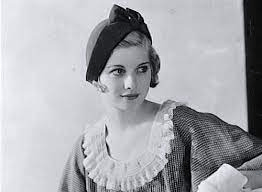
📷facebook. A young Lucille Ball

Lucille Desiree Ball was born August 6, 1911, in Jamestown, New York. She was the only daughter of Henry Durrell Ball, a lineman for Bell Telephone, and Desiree Evelyn Hunt Ball. They lived at 60 Stewart Avenue. The family belonged to the Baptist Church there, and many of her relatives were among some of the first European settlers in Massachusetts.

The family moved frequently for her father’s career, but Jamestown always had a claim on Lucy, and they celebrate her in many ways there. The family lived in Montana, New Jersey, and Michigan before her father passed away from typhoid fever at age 27 in 1914.

Her mother returned to New York, living in Celoron, a summer resort on Chautauqua Lake. The road she grew up on is now named Lucy Lane. Celoron had an amusement park with a boardwalk, the Pier Ballroom, a roller coaster, a bandstand, and a stage.

📷Good Housekeeping

Lucy’s mother remarried four years later. It was her stepfather who encouraged Lucy to audition for his Shriner’s chorus line, which gave her the first taste of what it would be like to be in show business. When she was 16 the family returned to Jamestown.

When Lucy was only 14, she was dating a 21-year-old hoodlum. Her mother was devastated by the situation and finally enrolled Lucy in the John Murra Anderson School for Dramatic Arts in New York City to encourage her in her theater career. Ball did not love the school, and her instructors told her she would not be successful in the entertainment business. Luckily, Lucy did not take their comments to heart. She later said that “one of the things I learned the hard way was that it doesn’t pay to get discouraged. Keeping busy and making optimism a way of life can restore faith in yourself.”

In an attempt to prove the school wrong, Lucy began working as an in-house model for Hattie Carnegie. This was where she first changed her hair. Being a brunette, Carnegie taught Ball to bleach her hair blonde. Her modeling was interrupted for two years when she dealt with the effects of rheumatic fever.

At the ripe old age of 21, Ball returned to New York City to pursue an acting career. She went back to the Carnegie agency and became the Chesterfield Cigarette Girl.

📷Brittanica

In 1933 she was in Roman Scandals as a Goldwyn Girl; while playing a slave girl, she had to have her eyebrows entirely shaved off, and they never grew back. Some of the things an actor goes through for roles is crazy. After that movie she moved to Hollywood to try a film career. After becoming a contract player for RKO Radio Pictures, she received a decent amount of work. At this time, she met the Marx Brothers, appearing in Room Service. She also worked with Fred Astaire and Ginger Rogers in several musicals.

When she registered to vote in 1936, both she, her brother, and her mother registered as Communists. During that year she signed a document as a Communist supporting Emil Freed for assembly and was appointed delegate to the State Central Committee of the Communist Party of California.

Ball later claimed she never had a strong political affiliation. In 1944, Lucy can be seen in a newsreel fund raising for Franklin Roosevelt. She also mentioned that she voted for Eisenhower in 1952 when he was on the Republican docket. In 1953 Ball met with HUAC and gave a sealed testimony. She said that she voted Communist at her grandfather’s insistence and did not know she had been appointed a delegate. Before filming episode 68 of their show, her husband and co-star Desi addressed the audience and said Lucy was not a Communist; she was just influenced by her grandfather. He joked that “the only thing red about Lucy is her hair, and even that is not legitimate.”

📷pinterest

In the late thirties, she dabbled in radio to earn some additional money. She was a regular on “The Phil Baker Show” and on “The Wonder Show” where she met announcer Gale Gordon.

In 1940 Lucy met Desi Arnaz when they both appeared in the movie Too Many Girls. They fell in love immediately, and before the year was out, they eloped. Arnaz was drafted in 1942, but a knee injury kept him from active service, and he was placed in Hollywood organizing and performing USO shows for wounded GIs.

Lucy finally got her big break in 1943. Arthur Freed was making a movie based on the play “DuBarry Was a Lady”; he bought it for Ann Sothern, but when she turned it down, she recommended her best friend, Lucille Ball.

In 1944, Ball filed for divorce, but the couple reconciled before it went through. Lucy and Desi had Lucie in 1951 when Lucy was almost 40, and son Desi was born during the series and written into the scripts in 1953. Mom and son appeared on the first cover of TV Guide which came out in 1953.

📷HollywoodHistoricPhotos.com

Ball continued to make movies throughout the forties and kept a foot in radio. In 1948 she was cast as Liz Cooper on the radio show, “My Favorite Husband” on CBS.

When CBS wanted to transition the show to television, Lucy wanted Desi to be her television husband. CBS said no, so the couple went on the road with an act to prove the popularity of the them working together and CBS backed down.

The show was incredibly successful. (If you want to learn more details about the series and all the history that it produced, keep an eye out for my blog which will post January 13, 2025.) The couple created their own production company and had many “firsts” with technology producing their show. During filming breaks of the show, Lucy and Desi made two movies: The Long, Long Trailer in 1954 and Forever, Darling in 1956.

After years of turmoil and ups and downs in their marriage, the couple divorced. However, they continued to remain in each other’s lives through their children and their relationship. Later in life, Lucy said “Desi was the great love of my life. I will miss him until the day I die.”

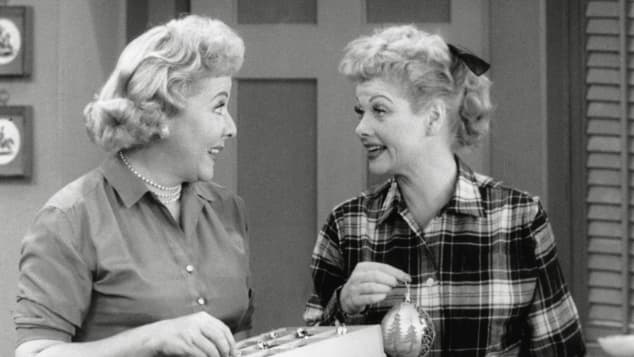
📷closerweekly.com Ball and Vance

Lucy bought Desi’s share in the production company which produced a variety of shows including Mission: Impossible, Star Trek, and The Untouchables. In 1967 Lucy sold her shares to Gulf+Western, owned by Paramount, for $17 million, which would translate into $138 million today.

Lucy married Gary Morton in 1961. At the time, Morton was a comedian 13 years younger than Lucy. He said he had never seen an episode of I Love Lucy. Ball hired Morton for her production company, teaching him the television business.

For the next decade, Lucy worked on a number of television specials. She also tried sitcom life again. She starred in The Lucy Show from 1962-68 and in Here’s Lucy from 1968-1974. We’ll discuss these shows the last week of January. Many of Lucy’s friends appeared on these shows. Her close friends included Mary Jane Croft, Judy Garland, Ethel Merman, Barbara Pepper, Ginger Rogers, Ann Sothern, Vivian Vance, and Mary Wickes.
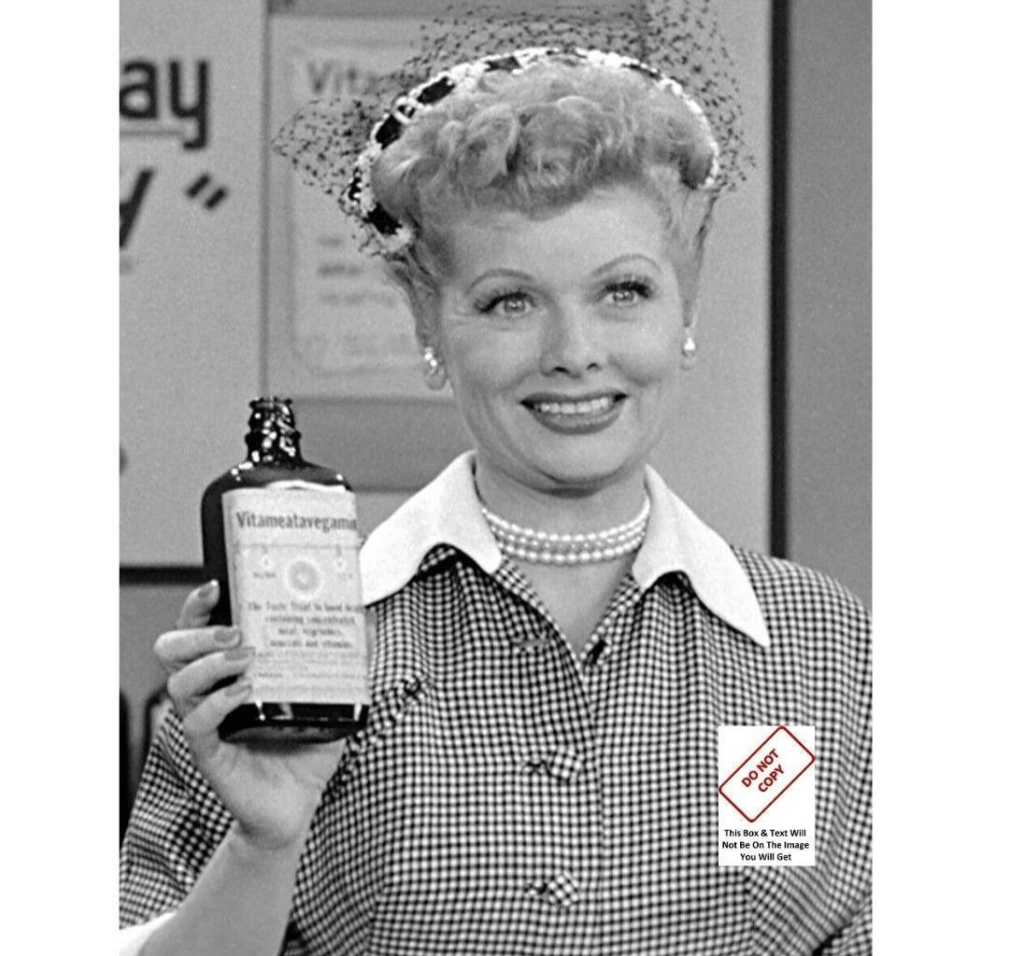
📷ebay.com

Ball kept busy acting during the early 1980s. Desi Arnaz passed away in 1986. In 1988 Lucy had a mild heart attack. She appeared at the 1989 Academy Awards show and she and co-presenter Bob Hope were given standing ovations. She died a month later. Lucy had been a heavy smoker, and her cause of death was abdominal aortic aneurysm which is seen more in smokers.

Lucy always sent flowers to Carol Burnett on her birthday. The day before she died, she ordered them, and they were delivered a few hours after Carol learned of her death.

Lucy was cremated and her ashes were interred in Forest Lawn Cemetery with her mother’s remains. In 2002, both women’s remains were moved to the Hunt family plot in Jamestown. In Jamestown you can find the Lucille Ball Desi Arnaz Museum & Center for Comedy and the Lucille Ball Little Theater.

In 2009 a statue of Lucy was erected in Celoron. Many people called it “scary,” and it became known as “Scary Lucy,” which I totally endorse. In 2016, a more lifelike statue was created to replace Scary, but the scary statue had become so popular, it was left on display with the new one as its neighbor.

📷youtube.com The different sides of Lucy

Those two statues symbolize my relationship with the show. I appreciate the show and everything it did to create the classic age of television. Whether it’s technical filming strategies, the writing, the way the business was run, everything was important in this show. However, I have to admit, it’s not a show I choose to watch. It changed the entire course of television in similar ways that All in the Family would do a few decades later, but I honestly don’t enjoy watching either of these series. That might be a fault in my genes, but I also have to be honest.

However, Lucy Ricardo, while we may think of her as naïve and sophisticated, traditional and unconventional, submissive and disobedient, was an important icon in the way that women thought about themselves in the fifties.

Women had been brought in to work and gain independence while so many men were overseas fighting, and then they were asked to give it all up and go back to a domestic and tranquil life. Leslie Feldman, a political scientist and author of The Political Theory of I Love Lucy, writes that Lucy was “a transitional figure—she’s on the cutting edge.  . . Are [women] going to stay home and be wives and mothers? Are they going to go to work? Or are they going to do both? And what if they really do better and earn more money than their husbands? What about that? That’s an element of Lucy too.”

📷biography.com

Lucy was a force in show business. While she was not alone in taking control of her own career—Donna Reed, Betty White, and Ann Sothern were also powerhouses in establishing their own companies and running them—Lucy did it with the nation watching her. Even the choices she made about whether to divorce Desi or not were all done in the public eye and were sending messages whether people chose to receive them or not.

Lucille Ball was an amazing actress and an amazing business person. Apart from whether I enjoy watching the show or not, it changed the history of television and the way sitcoms were written, cast, and remembered. Thank you, Lucille Ball, for not listening when your instructors told you that you would never make it in show business. You not only made it in television, you truly made television what it is today.

Burt Mustin: What a Character

This month we are looking at some of our favorite character actors. As we wrap up the series, we are ending on a high note with the amazing Burt Mustin. Like Charles Lane, Mustin had a prolific career in Hollywood and television. However, unlike Lane, Mustin was offered his first acting job at age 67 after he had retired.

📷Widener University Archives

Mustin was born in Pittsburgh in 1884. His father was a stockbroker. After high school, Mustin enrolled in the Pennsylvania Military College (now Widener University) with a degree in civil engineering. During his college career he played trombone in the band and played goalie for his hockey team.

After graduation, Mustin toured Europe, planning to work at his father’s brokerage firm. However, a financial panic destroyed the company.

One of Burt’s university classmates was Charles Spinney. According to Burt, Spinney displayed lots of photographs of young ladies from his hometown of Memphis, Tennessee. One day, he was showing them to Burt when he spotted the photo of what he referred to as “the prettiest girl in the room.” Mustin traveled to Memphis to meet her and in 1915 he married Frances Robina Woods. The couple had no children and remained together for their entire lives, with Frances passing away in 1969.

📷imdb.com

After working as an engineer for a few years, Mustin decided to try to sell automobiles. In an interview, Mustin admitted, “I was the worst engineer the school turned out.” He began selling Oakland Sensible Sixes and later Franklins, Lincolns, and Mercurys. WWII put an end to car sales for a few years, so Mustin began working for the Better Business Bureau and then the Chamber of Commerce. He stayed in Pittsburgh until he retired.

He did a bit of amateur acting and continued his passion for music. He was part of the oldest Gilbert and Sullivan troupe in the country, the Pittsburgh Savoyards; the Pittsburgh Opera; and an officer in the Society for the Preservation and Encouragement of Barbershop Quartet Singing in America. 

He was a founding member of the Pittsburgh Lions Club in 1921 and a life member in the Fellows Club of Pittsburgh. Mustin served as an announcer for the first weekly variety show on radio station KDKA.

📷that’sentertainment.com

After retiring, Mustin and his wife moved to Tucson, Arizona for her health where he continued acting. William Wyler saw him in a stage production of “Detective Story” and told Mustin to let him know if he ever wanted to pursue a film career. When Wyler was casting for Detective Story in 1951, Mustin reached out to him. The couple later moved to Los Angeles. Mustin would appear in 67 films overall.

In 1968 Mustin was cast in Speedway with Elvis and Nancy Sinatra. In one scene the stars have a lover’s quarrel in a coffee shop. When they make up, Elvis sings a song for his girl. Mustin is in the background cleaning the café and working at the counter. The producers felt the scene needed something else. That something else ended up being Mustin singing and dancing with a mop. No one on the set realized that Burt could sing before that adlibbed scene.

1951 was also the year that Mustin appeared on television in The Adventures of Kit Carson. He would find a new career in television for the next two decades, appearing in more than 130 series (which would equal more than 400 actual episodes).

📷imdb.com

During the fifties, he would be attracted to many westerns and dramas; however, he found his way onto a few comedies including The Great Gildersleeve, December Bride, and Our Miss Brooks.

If I listed half of the 1960s shows he appeared on, you would still be reading this blog next Monday when my new one is dropped. Take my word for it that he was on almost every popular sixties’ sitcom, including 14 episodes as Gus the fireman on Leave it to Beaver. Other sixties hits you can find him on include The Many Loves of Dobie Gillis, The Dick Van Dyke Show, The Joey Bishop Show, The Jack Benny Show, The Beverly Hillbillies, Get Smart, The Andy Griffith Show, The Lucy Show, Bewitched, Gomer Pyle USMC, Petticoat Junction, and My Three Sons, not to mention many dramas and westerns including Bonanza and Gunsmoke. He was no less busy in the seventies where we could catch him in Marcus Welby, The Mary Tyler Moore Show, The Brady Bunch, Love American Style, Adam-12, All in the Family, and Phyllis.

📷imdb.com

Johnny Carson loved having Mustin on The Tonight Show, where he was a fan favorite. He shared a lot of fun stories on the show. One of them was about him being at the first World Series for baseball in 1903 when the Pittsburgh Pirates played the Boston Red Sox. Unfortunately for Burt, Boston came back to win the series, but as a bonus he did get to see Honus Wagner play on the diamond.

Mustin passed away eight years after his wife at the age of 92. He left a gift to the college he was loyal to his entire life, enabling Widener University to renovate their theater. It is now named the Burton H. Mustin Theatre and Lecture Hall.

It’s hard to wrap your head around what a busy film and television career Mustin had. He was an actor for the last 25 years of his life, and with 67 movies and more than 400 episodes, that means that he accumulated about 20 credits per year which is almost two a month from age 67 to 92. Talk about an amazing career. Mustin proved that it’s never too late to find your next passion. Thanks for so many great memories Burt Mustin.

Barbara Feldon Did Not Have to Get Smart: She Was Born That Way

This month’s blog is taking a look at some Supportive Women. First up is Barbara Feldon, costar with Don Adams in Get Smart.

Photo: getsmartwikifandom.com

Feldon was born Barbara Anne Hall in 1933 in Pennsylvania, near Pittsburgh. During an interview with Emerson College, Barbara talked about the ecstasy of performing in a little band in first grade. When things stopped, she got to play her triangle, and the thought that everyone was watching her, and her mother’s pride in seeing her made her want to perform more. In sixth grade she went into the gym to watch her friend doing her ballet lessons. The teacher invited Barbara to join them and played Tchaikovsky’s Nutcracker music; that combination of music and movement took her away to another place. She was hooked at that point, and she knew that she wanted to dance.

She trained at the Pittsburgh Playhouse and then graduated from Carnegie Mellon University with a BA in drama in 1955. They didn’t have a dance program, and her mother thought Bennington, where she wanted to go for dance, was too expensive and too liberal. While she enjoyed acting, it never had the enchantment for her that dance did.

Feldon made her way to New York and studied at the HB Studio. She briefly had a career as a showgirl at the Copacabana. She said “that was my first professional job in New York and it was probably the highlight of my whole career. We got to dance with Jimmy Durante. Oh, my God, it was a thrill.” They replaced the girls every three months so, then she went on to appear in The Ziegfield Follies. She landed one job that never made it to Broadway. A friend of hers who was a model talked her into exploring a modeling career.

Photo: punkglobe.com

She worked as a model and was in a Revlon commercial about a hair pomade for men, Top Brass. Feldon said commercials were excellent training to get experience in acting. You do the same scene over and over, maybe more than forty times, but you have to keep that spontaneity. “You must remember to stress each word properly and come in on a split-second when that camera rolls.”

Like several actresses that we have discussed in this blog, before Feldon got her first big break, she appeared on a game show. In this instance, she was on The $64,000 Question in 1955, and she won the grand prize of $64,000 in the category of Shakespeare.

She didn’t use her winnings to buy a mansion or live the typical party life. She opened an art gallery with a man who was a photographer and ad man who was no longer interested in advertising named Lucien Verdoux Feldon. Barbara would be the subject of a Warhol pop art painting in 1965.

In 1958 Barbara married Lucien Feldon. They divorced nine years later. She had a longer relationship with one of the Get Smart producers, Burt Nodella and when that ended, she moved back to New York City.

After her commercial debut, she received offers for several television roles in the early sixties including The Man From U.N.C.L.E. and Flipper. She was also offered a chance to appear on East Side/West Side with George C. Scott. Colleen Dewhurst was her mentor and Scott’s wife. He asked her to play his girlfriend in the next episode. Talent Associates which produced the show was working with Mel Brooks and Buck Henry on a potential spy spoof called Get Smart. Her second television role was as a spy. So, when Talent Associates was casting for a spy on Get Smart, she was an obvious choice.

Photo: facebook.com

She turned down the role at first because she didn’t want to move from New York to California, but she did love the script. They agreed to offer her a two-year contract instead of a five-year contract, and she accepted. Her first review was in TV Guide which compared her to the dog and concluded that the dog came off better. She was devastated and humiliated. In later years, the reviewer rated her performance much better.

From 1965 till 1970, Feldon was known as Agent 99 working with Maxwell Smart for CONTROL. In both 1968 and 1969, she was nominated for an Emmy for Outstanding Lead Actress in a Comedy Series. Lucille Ball won for The Lucy Show in 1968 and Hope Lange won for The Ghost and Mrs. Muir in 1969.

Women at the time looked at Feldon as an example of a powerful woman; Feldon commented that young women said “she was a role model for them because she was smart and always got the right answer.” If you look closely in the early seasons, you will typically see Feldon sitting and Adams standing because she was taller than he was. Once she even had to bury her feet in the sand. While Adams was the blundering, awkward Smart, it was Agent 99 who was really the “smart” one, getting him out of trouble during their spy missions.

Feldon said that she is not a comedienne; she is an actress who can play comedy. She said that she is the worst person to tell a joke to because she doesn’t always get it. She never enjoyed drama much because the actual acting on camera was wonderful but the long, boring hours waiting were very tedious, and if you have a tearful scene, you have to be able to keep the momentum.

During the run of Get Smart, Feldon also appeared on Rowan & Martin’s Laugh In and The Dean Martin Show.

Photo: imdb.com

After the show ended, she would appear on 20 additional television series including Cheers and Mad About You. She made fifteen made-for-tv movies, one of which was a 1989 movie, Get Smart, Again. She also could be found in six big-screen films including The Last Request, her last acting role, in 2006.

During my research, I read an article where pop culture historian Geoffre Mark commented on one of her movies, Fitzwilly, which I admit I have never seen. He said that it was a gem of a movie and that “Dick Van Dyke is brilliant in it and Barbara plays his love interest and she’s brilliant in it. She was playing a version of herself: a beautiful, sensual, highly intelligent woman with a strong moral compass and a loving heart. That’s what the character is and that’s who Barbara is.” According to imdb.com, the plot of the 1967 movie is that a butler and the staff of an eccentric aged philanthropist whose family wealth is exhausted engage in larceny and crimes to maintain her lifestyle and provide funds for her charitable activities.

Feldon was offered a cameo in the Get Smart movie with Anne Hathaway and Steve Carrell in 2008, but she declined. She said that “times have changed too much. The psychology of the writers and the audience has changed radically. Get Smart belongs in the 1960s, or it’s not going to be Get Smart.”

Despite her comment of Get Smart staying in the sixties, in 1995 Feldon took on the role of Agent 99 again in a brief reboot of Get Smart. Feldon discussed that series with The (Westchester County NY) Journal News reporter Karen Croke in 2017. She said that she and Adams never became friends after the original Get Smart. She said he was a lovely man and very funny, but they had their jobs to do and did their acting and then parted ways for the day. After they worked together on this series, they became very close friends in a way they could not have in their original show. She said once Don Adams died, Max also died and she can’t do any work as 99 without Max now. That might be the real reason she turned down the cameo in the Carrell-Hathaway film.
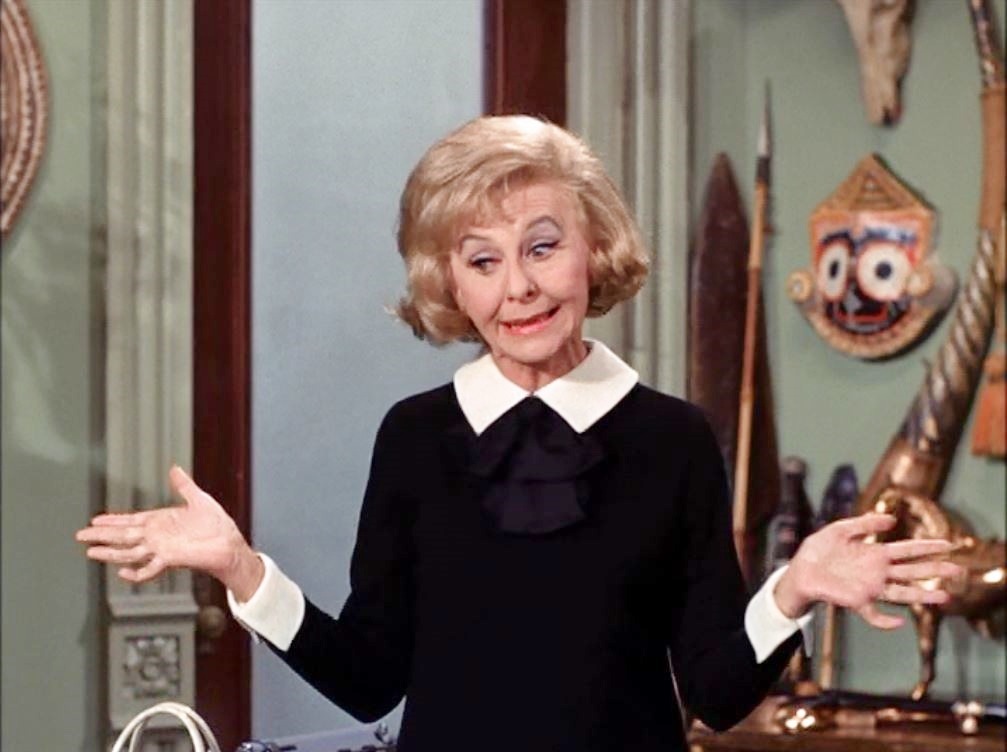
Photo: imdb.com

Barbara said it’s hard to make friendships on a set because it’s more like a factory and when you’re not acting, you might be resting or talking to your agent. The only person she said she was able to maintain a good relationship with after acting with him, was Alan Alda.

Apparently, she still enjoyed games shows and she appeared regularly in several of them including Hollywood Squares and The $20,000 Pyramid.

Feldon lost interest in acting, but she did numerous television and radio commercials and documentaries. In 1977, Barbara hosted a news show called Special Edition. In the 1990s she had a one-woman show she took around the country. She has also taken up writing and had two of her pieces published in Metropolitan Magazine. She wrote a book about living as a single person in 2003 called Living Alone and Loving It. She also enjoys writing poetry. In talking about her book, Barbara said, “I had been in relationships my whole life. I’d been married, then had lived with someone for several years. After those, I just assumed I would find another relationship. But it didn’t happen. As time went on with some good guidance, I learned how to live alone really happily. I’ve met a number of people—men and women—who feel living by themselves is a second-rate life. I thought that was sad, and since I had this technique of living alone, I decided to write a book. And I’m really glad I did.”

Photo: pixels.com

Feldon said that she has nothing but gratitude for Get Smart. She said acting is not a kind career and you only have a few years to be able to find your place, and she is grateful for being in the right place at the right time. I think after learning about Barbara Feldon, she manages to put herself in the right place at the right time often.

Now, her life sounds almost perfect. She lives where she wants to, is open to meeting a lot of people, attends concerts, advocates for the arts, and travels and writes whenever she wants to. During her life, she has managed to learn from so many experiences and during her life journey she definitely “got smart.”

Mel Tormé Jazzed Up a Few TV Scripts

76 Mel torme ideas | music, great american songbook, jazz
Photo: pinterest.com

We are in the midst of our blog series about unique television writers. If I mention the name Mel Tormé to you, you probably think exceptional musician, composer, and singer. You might specifically mention “The Christmas Song” which he composed the music and cowrote the lyrics for. (His cowriter was Bob Wells.)

If I say think writing, you might be able to recall that he wrote several musical biographies including Traps- The Drum Wonder: The Life of Buddy Rich, The Other Side of the Rainbow: Behind the Scenes on the Judy Garland Television Series, or My Singing Teachers. You might have even read his autobiography It Wasn’t All Velvet or Wynner, a novel he wrote in 1978.

However, I’m guessing most of you don’t realize that he also tried his hand at writing scripts for television.

Melvin Tormé was born in Chicago in 1925. He was a child prodigy and first performed professionally at age 4 with the Coon Sanders Orchestra, singing “You’re Driving Me Crazy,” at a local restaurant.

He played drums in the drum and bugle corps of his grade school, Shakespeare Elementary. From 1933-1941 he had roles in several radio programs including “The Romance of Helen Trent” and “Jack Armstrong, All American Boy.” He wrote his first song at age 13. At age 16, his song, “Lament to Love” was a hit for Harry James.

Mel Torme & The Mel-Tones at Singers.com - Vocal Harmony A Cappella Group
The Mel-Tones Photo: singers.com

Tormé graduated from Hyde Park High School. Shortly after, he was a singer and drummer with a band led by Chico Marx from 1942-1943. In 1944, he formed Mel Tormé and His Mel-Tones.

Tormé took his stint in the Army, and when he was discharged in 1946, he returned to the entertainment business. He was nicknamed “The Velvet Frog” by DJ Fred Robbins when he sang at the Copacabana. He always hated the nickname.

During the fifties, he had a radio program, “Mel Tormé Time,” and he recorded a variety of albums. He primarily performed jazz but he loved classical music as well, preferring Delius and Grainger. He wrote more than 250 songs. In the sixties, he strayed into pop music.

Mel had his first television appearance as an actor in 1960 on Dan Raven. He showed up on a few different series including The Lucy Show. In the 1980s, he made nine appearances on Night Court and found a new generation of fans.

Mel Torme & Harry Anderson, Night Court (1991) | Movie stars, Harry  anderson, Singer
On Night Court Photo: pinterest.com

During his career, he tried marriage four times, but the first three ended in divorce. In 1996 he suffered from a stroke that ended his musical career. Three years later, he passed away.
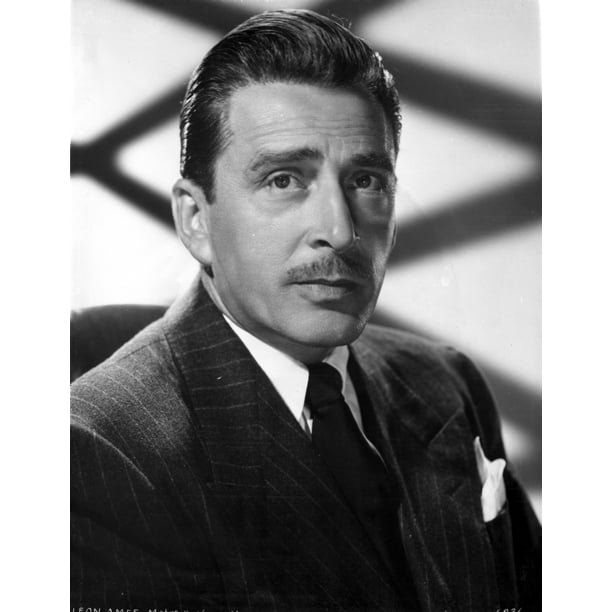
No doubt, he had a full and successful career. He had a multitude of skills he experimented with during his professional life. I would like to spend some time looking at part of his career that is not well known. He did help with the writing for a brief time when The Judy Garland Show was on the air. In the late sixties he continued writing for the small screen.

In 1967, Mel wrote his first television script. His first successful episode was for the 1967 show Run for Your Life. It’s not a well-remembered show, but it aired from 1965-1968. It was about a successful lawyer Paul Bryan (Ben Gazzara) who learns he is terminally ill with two years to live. He decides to accomplish everything on his bucket list, and each week he talks about the people he meets and the places he visits.

The Frozen Image
The Frozen Image Photo: run4.us

Mel not only wrote the script for “The Frozen Image,” but he starred in the episode as well. The premise is that a married Las Vegas singer (Diana Burke) who doesn’t want to get old, hires Paul as her manager.

He must have enjoyed it because the next year, he wrote a script for The Virginian called “The Handy Man.” The long-running show was on the air from 1962-1971 and was set in Wyoming in the late 1800s.

In this episode, a legal fight over a strip of land between the Shiloh and Bowden ranch turns nasty. The Bowdens think Shiloh has hired a gunfighter who turns out to be a handyman.

The Virginian" The Handy Man (TV Episode 1968) - IMDb
The Handyman Photo: imdb.com

In 1974, Tormé scripted another story, this time for Mannix. From 1967-1975, Mannix solved a variety of cases. Originally working for a company, he starts his own business with secretary/friend Peggy Fair, whose husband, a policeman, had been killed. They also work with a police department contact, Tobias. Mel’s story, “Portrait in Blues,” features a couple of musicians, one of whom is almost electrocuted while performing.

Mannix" Portrait in Blues (TV Episode 1974) - IMDb
Portrait in Blues Photo: imdb.com

The last television project Mel worked on as a writer was a made-for-television movie called The Christmas Songs in 1979. With cowriter Thomas V. Grasso, Mel penned the script and starred in the movie with Richard Basehart, Billy Davis, Jr., Jo Ann Greer, Les Brown and His Band of Renown, Rich Little, Marilyn McCoo, Maureen McGovern, Sons of the Pioneers, Roy Rogers, and George Shearing. I could not find much about this movie, so if anyone remembers watching it or knows anything more about it, please let me know.

With all the success that he had in the music industry, I was amazed to learn Mel wrote for television. I stumbled across it by accident when I was researching Mannix and decided to learn a little more about his writing career. I could not find any other information about his writing career. I did reach out to his son Steve March-Tormé . He said that he had not realized that his father wrote television scripts but said, “I’m not surprised. He tried his hand at a lot of areas of the business and was almost always very successful at them. Very bright guy.” Steve’s stepfather, Hal March, was another celebrated television writer and star. (For more about Steve March-Tormé , see his website, stevemarchtorme.com.)

It’s been a lot of fun to learn more about Mel Tormé’s television writing career. As someone who only knew him for his musical skills, it was fun to see another side of the performer. As someone who has always thought it would be fun to write for a sitcom, kudos to him for trying something new and succeeding. Hopefully, he is an inspiration to some of us who think we have to settle for the space we are in now to reach out and try something entirely different–and to remember that the success is in the trying.

Howard Morris: The Hamlet of Animation

After learning about Your Show of Shows and the stars of the show, I turned my attention to the cast members. Carl Reiner and Howard Morris were the two actors who were most involved with the skits. Reiner had a long and successful career, and we’ll look at his life in more detail later, but today I would like to concentrate on Howard Morris. 

Howard Morris Theatre Credits and Profile
Photo: abouttheartist.com

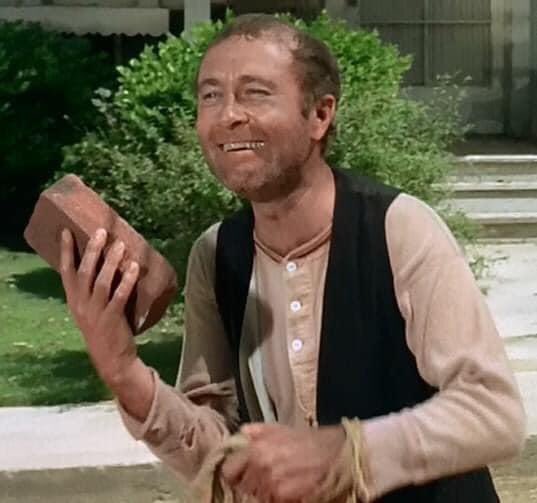
Most people recognize Morris as Ernest T Bass from The Andy Griffith Show. While I have a great appreciation for the series and the well-written scripts and delightful characters of Mayberry, I was never a big fan of Ernest T or the Darling family. They seemed to be a bit too over the top for me and diminished the reality of Mayberry.

J. Mark Powell on Twitter: "Howard Morris, better known as Mayberry's  rock-throwing Ernest T. Bass on @AndyGriffithShw, was born 101 years ago  today.… https://t.co/AwvE2WMBvR"
Ernest T Bass Photo: twitter.com

So, when I began to learn more about Morris who first became known to television fans for his work on Your Show of Shows, I was amazed at how versatile an actor he was and how much he accomplished during his career. 

Howard Morris was born in The Bronx in 1919. He later received a scholarship to attend New York University as a drama major, planning to work as a classically trained Shakespeare actor. During WWII he became first sergeant in the US Army Special Services unit. The group was based in Honolulu and entertained troops throughout the Pacific. Maurice Evans (who played Samantha’s father on Bewitched among other roles); Carl Reiner (whom we all know and love); and Werner Klemperer (Col Klink on Hogan’s Heroes) were all part of this unit.

In 1945 he married Mary Helen McGowan. While they were married until 1958; he had four other marriages during his life.

When Morris got the offer to appear in Sid Caesar’s new show, he was able to work with Reiner again. This was his first television or movie appearance, but it would not be his last.

Howard Morris - Net Worth, Bio, Wife, Children, Death, Biography - Famous  People Today
With Reiner and Caeser Photo: famouspeopletoday.com

One of the sketches from the show was a take on This is Your Life, the Ralph Edwards show. Morris said it was his favorite skit from the series. David Margolick wrote in the New Yorker in 2014 that “Though the competition is stiff, many feel that this sketch is the funniest that Your Show of Shows ever did . . . that night nearly sixty years ago, the show produced what is probably the longest and loudest burst of laughter—genuine laughter, neither piped in nor prompted—in the history of television.”

Morris moved to Hollywood in 1961. In the 1960s he began his multi-talented career of television actor, movie actor, director, and animation voice-over star. Unbelievably, he would rely on the quartet of skills the rest of his professional life, excelling in all of them.

Howard Morris (Ernest T. Bass) on The Lucy Show - Sitcoms Online Photo  Galleries
On The Lucy Show Photo: sitcomsonline.com

As a television actor, he appeared in a variety of series including The Dick Van Dyke Show, The Twilight Zone, The Lucy Show, The Andy Griffith Show, Love American Style, The Bob Newhart Show, Fantasy Island, Trapper John MD, The Love Boat, and Murder She Wrote.

Although he is known for his role of Ernest T Bass on The Andy Griffith Show, he was only made five appearances as that character on the show. Aaron Rubens sent him the script that introduced Ernest to Morris to look over and “fix.” Morris fell in love with the character. He said the show had a terrific cast, and they were wonderful people to work with. He said fans loved Ernest because he did whatever he felt like doing including spontaneously bad behavior choices that everyone wanted to make.

As a movie star, he appeared in several films throughout the sixties, seventies, and eighties. Some of the highlights were The Nutty Professor; With Six You Get Eggroll; High Anxiety; The History of the World, Part I; and Splash.

On The Many Faces (and Voices) of Howard Morris – (Travalanche)
Photo: travalanche.com

Not content with just acting in films, Morris became interested in directing early in his career. He began his directing career in the sixties and continued through the eighties. His first directing job was on The Bill Dana Show. He was very busy in the sixties and seventies, directing episodes of Gomer Pyle, USMC; The Dick Van Dyke Show; The Andy Griffith Show; The Patty Duke Show; the pilot of Get Smart; Bewitched; Love American Style; Hogan’s Heroes, and The Love Boat among others. He also directed for the big screen. You’ll see directing credits in his name for Who’s Minding the Mint?, With Six You Get Eggroll, and Don’t Drink the Water.

During an interview with the television academy, he said he loved directing Hogan’s Heroes. Robert Clary became one of his best friends for life. He also loved Klemperer. He said working on With Six You Get Eggroll was a wonderful experience. He said Doris Day just had a natural talent, and Brian Keith was a great guy. He felt being an actor allowed him to be a better director. He understood what the process was for the cast and was able to help them. He knew he could not teach them to act.

Perhaps the biggest surprise for a classically trained Shakespeare actor is that he had the most success in the animation world. I could not begin to list all his credits here, or you would still be reading next week when the new blog comes out. Beginning with Krazy Kat in 1962, he would go on to provide voices for more than fifty series. You will hear his voice in The Flintstones, The Jetsons, Mr. Magoo, The Magilla Gorilla Show, The Atom Ant Show, Duck Tales, a variety of Archie series, and Garfield and Friends.

Howard Morris voiced more than 100 characters on The Flintstones
Photo: metv.com

In a Television Academy interview, he admitted that he accepted voice-over work because he needed the money. It also appealed to him because you did not have to worry about wardrobe or make-up. He said the actors sat in the room together recording the show at the same time which allowed them to relate to each other better than today when everyone records by himself.

In 1962, he married Dolores Wylie and they were together until 1977. I read several sources that listed him being married five times but could not find confirmation of the other marriages, although one cite mentioned two other spouses, Judith and Kathleen and noted that he was married to one of his spouses twice. They all ended in divorce.

In 2005 Morris died from congestive heart failure. Carl Reiner was one of the people who gave a eulogy at his funeral.

The Andy Griffith Show" My Fair Ernest T. Bass (TV Episode 1964) - IMDb
Photo: imdb.com

Howard Morris had a very long and prolific career. About the only genre he did not act in was Shakespearean drama, which is what he trained for. I was curious about whether he enjoyed his comedic career, or if he was disappointed that he did not work more in drama.

During his Television Academy interview, when asked what advice he would give someone thinking about entering the acting or directing profession, he replied “to avoid it and shun every opportunity because it was too hard.” He certainly deserves to be remembered for more than being Ernest T Bass even though he is a much-loved character. Morris said he would like to be remembered as a guy that was able to reveal certain things of humor and reality to the public and for his great gratitude for the fans who have always been there.” Well said. And, well done.

Reta Shaw: Housekeeper Extraordinaire

I devoted this month to some of our favorite actresses from the golden age of television. This list would not be complete without Reta Shaw who popped up in almost every popular program during the fifties and sixties.

Reta Shaw - IMDb
Photo: imdb.com

Shaw was born in Maine in 1912. She was born into the entertainment business; her father was an orchestra leader and her younger sister Marguerite also became an actress (I could only find one credit for her; it was a 1959 movie titled The Ballad of Louie the Louse.) After graduation, Reta attended the Leland Powers School of the Theater in Boston.

She then headed for the bright lights of Broadway and in 1947 was cast in “It Takes Two.” In 1954 she was Mabel in “The Pajama Game” and later appeared in “Gentlemen Prefer Blondes”, “Picnic”, and “Annie Get Your Gun.”

QUITE A CHARACTER: In Celebration of RETA SHAW | THAT'S ENTERTAINMENT!
Photo: jacksonupperco.com

Her motion picture career overlapped with her television career. She had feature roles in several big-screen successes including Picnic; The Pajama Game; Pollyanna; The Ghost and Mr. Chicken; Escape to Witch Mountain; one of my favorites as a kid, Bachelor in Paradise with Bob Hope; and most famously, the cook in Mary Poppins, as well as a maid in Meet Me in St. Louis.

In 1952 she married William Forester, another actor. William appeared in Mister Peepers and The Pajama Game movie with his wife. He was very busy with television appearances during the early sixties. They were married a decade but divorced in 1962; the couple had a daughter.

She appeared in many of the same shows as the other actresses we learned about this month. Her first television role was on Armstrong Circle Theater. Her second role was as a regular cast member of a little-remembered show, Johnny Jupiter in 1953. It was a quirky show about a store clerk named Ernest P. Duckweather who invented an interplanetary television set and developed a friendship with a puppet named Johnny Jupiter.

Papermoon Loves Lucy — RETA SHAW
Photo: papermoon loves lucy

From 1953-1955 she would appear with Marion Lorne on Mister Peepers as Aunt Lil. She continued receiving both movie and television roles throughout the fifties. In 1958 she received another recurring role on The Ann Sothern Show as Flora Macauley.

She began the sixties with another permanent job on The Tab Hunter Show. This show as about comic strip author Paul Morgan. His comic strip was “Bachelor at Large” and he wrote about his own amorous adventures.  Shaw, as Thelma his housekeeper, had a very different view of that life than Paul’s best friend Peter did. When that show went off the air, she was given another spot on Oh! Those Bells. The Wiere brothers, well-known comedians, portrayed the Bell Brothers who worked for Henry Slocum in a Hollywood prop shop. The brothers managed to create a disaster out of the most minor matters. The show only lasted two months.

Throughout the sixties she could be seen on a variety of series; although she certainly excelled at comedy she was just as accomplished in dramas such as Wagon Train, I Spy, The Man From UNCLE, and FBI. Reta also made more than a dozen movies during this time.

133 Reta Shaw ideas | the andy griffith show, character actress, don knotts
Photo: pinterest.com

However, her sitcom career flourished, and she was kept very busy during the sixties with roles on The Many Loves of Dobie Gillis, Father of the Bride, Lost in Space, The Dick Van Dyke Show, The Cara Williams Show, My Three Sons, The Farmer’s Daughter, The Lucy Show, The Patty Duke Show, The Adventures of Ozzie and Harriet, The Monkees, That Girl, Please Don’t Eat the Daisies, and I Dream of Jeannie.  She had a recurring role on Bewitched as Aunt Hagatha/Bertha. She was featured in The Andy Griffith Show twice, but one of them is one of my all-time favorite episodes, “Convicts at Large” when she plays Big Maud Tyler who enjoys dancing with Barney.

The Ten Best THE ANDY GRIFFITH SHOW Episodes of Season Three | THAT'S  ENTERTAINMENT!
Photo: jacksonupperco.com

The end of the decade brought her another recurring role as housekeeper on The Ghost and Mrs. Muir. On May 1, 2014, Madman Entertainment interviewed Kellie Flanagan who played one of the kids on the show. It must have been a fun show to work on.  When she recalled her time with the cast, she said “The set was a very happy set, with parties every Friday night, and I remember that all the ladies were swooning over Mulhare and always disappointed to find out the beard had to be applied every day. His real beard was red, was the reason I remember, and they needed that salt-and-pepper thing. Hope was extremely sweet and kind to us, though I do remember there was a period where we were not supposed to bother her – I think she may have been going through a divorce – I believe she had a daughter about my age. Hope was lovely and her voice is fabulous. Reta Shaw was a delight and Charles Nelson Reilly was hilarious. The dog annoyed me!”

The Scott Rollins Film and TV Trivia Blog: Reta Shaw: Familiar Character  Face of TV's THE GHOST AND MRS. MUIR and Films Like MARY POPPINS, THE  PAJAMA GAME, POLLYANNA & PICNIC
Photo: scottrollinsfilmandtvtriviablog.com

Shaw continued to take on roles during the early seventies and could be seen on The New Dick Van Dyke Show, Here’s Lucy, The Odd Couple, Cannon, Happy Days, and The Brian Keith Show. Her career culminated with her role on Escape to Witch Mountain in 1975.

Shaw lived another seven years and died in 1982 from emphysema.

An interesting note is that Shaw grew up in a family who practiced spiritualism and said she had been “brought up on a Ouija board.” However, I’m not sure if she believed in it as well.

Shaw certainly had a very interesting and successful career as an actress. Although she often took on the housekeeper role, she was not stereotyped into just that slot. She appeared in both television and movies and she took on dramas as well as comedy.  It would have been fun to see what she would have been able to do if she had been given a series of her own. 

Whenever I see Reta Shaw in an old show, I know I am in for a treat.

Mary Jane Croft: What a Character!

In October we are having fun with the “What a Character” series. Although this actress spent less than two decades on television, she had a memorable career. Today let’s learn more about Mary Jane Croft.

Mary Jane Croft - Rotten Tomatoes
Photo: rottentomatoes.com

Mary Jane Croft was born in 1916 in Muncie, Indiana. She described herself as a “stage-struck 17-year-old just out of high school,” when she began working at the Muncie Civic Theatre. Moving on to the Guild Theatre Company in Cincinnati led her to radio station work at WLW.

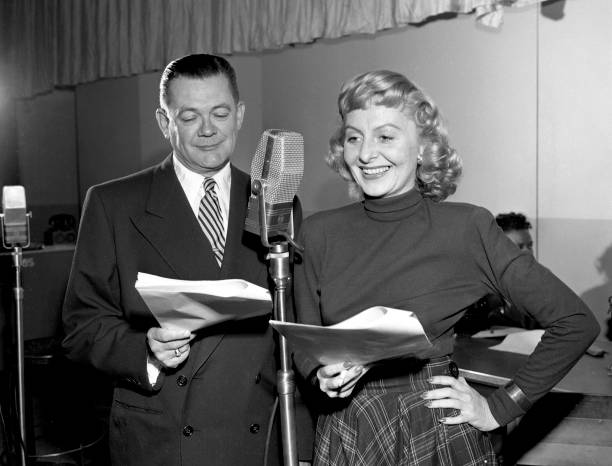
In the thirties, she received a lot of experience and she described her work there: “from 1935-1939, I played parts with every kind of voice and accent: children, babies, old women, society belles, main street floozies—everything.” She appeared in Life with Luigi, Blondie, The Adventures of Sam Spade, The Mel Blanc Show, and Our Miss Brooks, among other shows. She was a frequent guest star on My Favorite Husband, Lucille Ball’s radio show which would become very important to her television career.

Croft had married Jack Zoller, another actor earlier in her life. The marriage did not last long but produced a son, Eric. After her divorce, she moved to Hollywood in 1939.

I Love Lucy' Star Mary Jane Croft: Lucille Ball's Frequent TV Sidekick
On the radio Photo: closerweekly.com

While Croft appeared in three big-screen films, most of her professional career was spent on television. Her first role was in Eve Arden’s show, Our Miss Brooks from 1953-1955 once it moved from radio to television. She portrayed Daisy Enright whom she had also voiced on the radio show. Daisy and Connie Brooks competed for the head English teacher position and for the attention of Mr. Boynton. During that time, she also was cast in The Lineup, The Life of Riley, I Married Joan, and Dragnet.

From 1954-1957, she was on I Love Lucy seven times. She and Lucy continued both their professional and personal relationships. In the final season of Lucy’s show, she played Betty Ramsey, a neighbor of the Ricardos and Mertzs when they moved to Connecticut.

In the mid-fifties, she showed up on A Date with Angels, The Eve Arden Show, and The Court of Last Resort.

In 1959, she married Elliott Lewis and they were married until he died in 1990. She met Lewis while appearing on Lucy’s show; he was the producer. Sadly, her son Eric was killed in action in Vietnam.

1956 TV ARTICLE~CLEO WANDA BASSET HOUND PEOPLES CHOICE MARY JANE CROFT  HOUND DOG | eBay
Photo: ebay.com

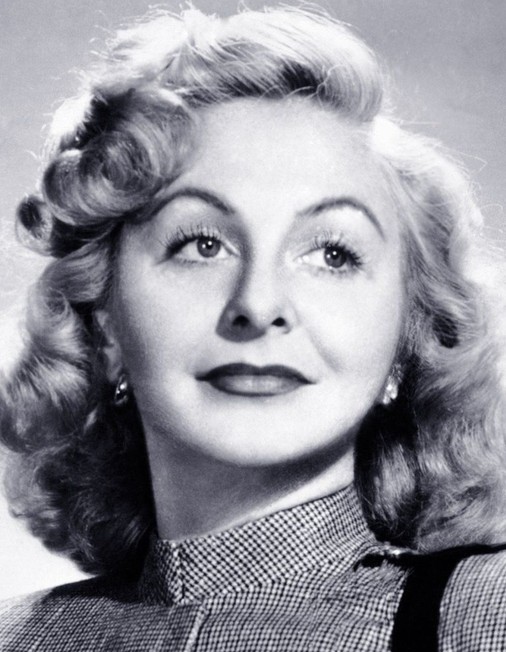
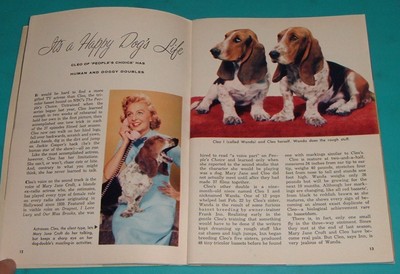
From 1955-1958 she was the voice of Cleo on The People’s Choice for 99 episodes. This is another one of those quirky shows from the fifties. The premise is that Socrates Miller, known as “Sock,” joins the city council and clashes with the mayor, John Peoples. Sock then dates and marries John’s daughter Mandy. Sock has a basset hound named Cleo, and Cleo shares her thoughts with the audience about what is going on.

Pin on Classic TV
Croft with Lyle Talbot and the Randolphs on Ozzie and Harriet–Photo: pinterest.com

From 1955-1966 she appeared as Clara Randolph on the Ozzie and Harriet Show for a total of 75 episodes. Joe and Clara Randolph were the Nelsons’ neighbors and good friends.

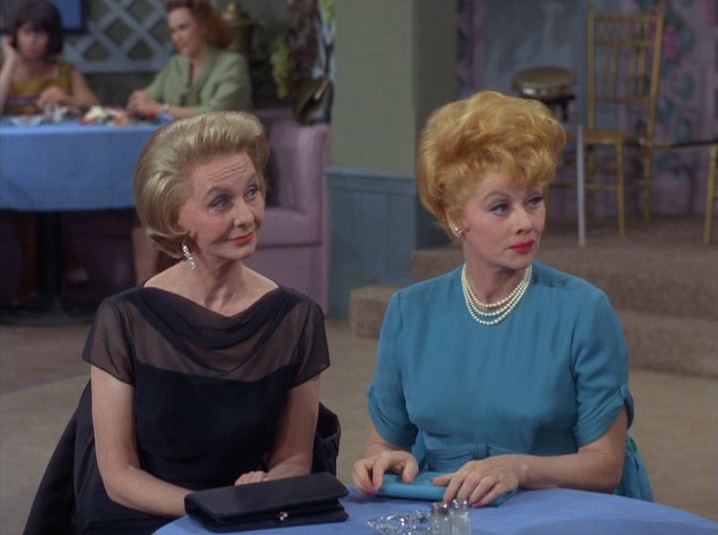
Although Croft did accept roles on Vacation Playhouse in 1966 and The Mothers-in-Law (another Arden show) in 1969, her career from 1962-1974 was with Lucille Ball. She was on The Lucy Show from 1962-1968 as Mary Jane Lewis when Lucy’s original sidekick Vivian Vance left the show. She continued that same role into Here’s Lucy from 1969-1974 for an additional 34 episodes.

Her last acting credit was a TV Movie with Lucille Ball titled Lucy Calls the President.

I Love Lucy' Star Mary Jane Croft: Lucille Ball's Frequent TV Sidekick
Croft with Lucille Ball–Photo: closerweekly.com

Croft died of natural causes in 1999.

I Love Lucy' Star Mary Jane Croft: Lucille Ball's Frequent TV Sidekick
Ball and Croft–Photo: closerweekly.com

Geoffrey Mark who wrote The Lucy Book: A Complete Guide to Her Five Decades on Television, got to spend time with Croft. He said she was “nothing like the characters she played,” in an exclusive interview with Closer Weekly. “She was intelligent, thoughtful in her speech and prettier than you would think. I found her to be very honest in that there was no nonsense about what she said. If she said it, she meant it. She was aware that she had become this icon mostly because of her association with Lucille Ball, but also because of other things that she did.”

When he asked her how she was able to assume so many character voices, she said that she thought about what the backstory of the character might be and invented a voice that would serve that character. It was something she learned when she worked in radio.

Papermoon Loves Lucy — MARY JANE CROFT
Photo: tumblr.com

Although Croft only appeared on 26 different shows, she had a busy and lucrative career. She is remembered for three major roles: Daisy Enright on Our Miss Brooks, Clara Randolph on Ozzie and Harriet, and Mary Jane Lewis on The Lucy Show and Here’s Lucy. And even if her television career was not long, she was in the entertainment business for her entire life after graduation. She created many memorable radio voices as well. With her numerous roles, she truly was quite a character.

Leon Ames: What a Character!

We are part way through our October blog series, “What a Character.” Today we look at someone we all remember from the golden days of television: Leon Ames. 

Leon Ames Photo Print (8 x 10) - Walmart.com - Walmart.com
Photo: walmart.com

Ames was born Harry Wycoff in Portland, Indiana and was raised on a farm. He said he changed his name because it was often misspelled which I can understand because some sources say “Wykoff,” and some say “Waycoff” in addition to “Wycoff.” Ames was his mother’s maiden name.

After graduation, he enrolled in Indiana University at Bloomington. He then served in the field artillery for WWI and later transferred to the flying corps.

After his discharge, at some point, he began working as the stage manager for the Charles K. Champlin Theatre Company. He had always wanted to be an actor and soon began acting with the group, eventually gettng the lead in a Los Angeles production of “Tomorrow and Tomorrow.” For three years he was with the Stuart Walker Stock Company in Cincinnati, Ohio. Broadway would be a big part of his early career as he debuted in 1933 in “It Pays to Sin” and went on to perform in another eleven shows.

In 1937, Ames decided to make the move to Hollywood. At that time, he met Christine Gossett, and the couple married in 1938. Leon and Christine appeared in several films together including Eighth Wife and Suez, but after having two children, Christine retired from acting to raise the children. The couple was together for the rest of Ames’ life.

Ames accumulated 158 acting credits; 125 of those were on the big screen. His debut came in 1931 in Quick Millions and his last role was as the grandfather in Peggy Sue Got Married in 1986.

Even though 5/6 of his career was spent in films, I am including him in our television character series because the 1/6 of his career in television made quite an impact. From 1951 until 1979, he would appear in 29 different shows, and five of those would be as a regular cast member.

Life With Father | Nostalgia Central
Life with Father cast–Photo: nostalgiacentral.com

Not surprisingly, given his depth of film work, he began his television career in a variety of drama shows such as Screen Directors Playhouse and Studio One. In 1953 he was cast as Clarence Day in Life with Father, adapted from the film. Unfortunately, the show only lasted for a limited number of episodes. I’m not sure how this show fit into the television schedule because it was on for three seasons; a few sources listed 8 episodes, imdb.com lists 10 episodes, and tvseriesfinale.com mentions 27 episodes; even then, it would mean 9/year which doesn’t seem to make a lot of sense. Fun fact, this was the first show in Hollywood to be filmed in color.

After the cancellation of Life with Father, he continued to guest in dramas, but was once again offered a recurring role in a comedy on Father of the Bride in 1950, another television show that was adapted from the big screen.

Pin on Mayberry
Ames with Aneta Corsaut on The Andy Griffith Show–Photo: pinterest.com

In the sixties, he gravitated toward sitcoms, showing up in The Lucy Show, Please Don’t Eat the Daisies, The Beverly Hillbillies, and The Andy Griffith Show.

DVD Talk
With Alan Young on Mister Ed–Photo: pinterest.com

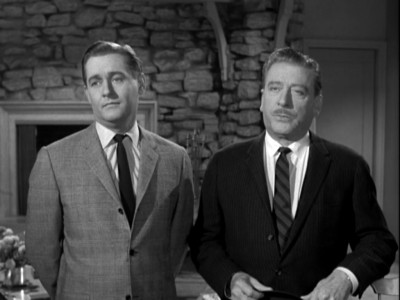
It was during this time, that Leon probably became best known to television fans.  From 1963-1965, he portrayed Gordon Kirkwood on Mister Ed. During the early seasons of the show Roger (Larry Keating) and Kay Addison (Edna Skinner) lived next to Wilbur Post (Alan Young) who owns Mister Ed. They become good friends with Wilber and his wife Carol (Connie Hines). Keating died in 1963 and Ames and his wife Winnie (Florence MacMichael) buy the Addison home. We also learn that Kirkwood was Wilbur’s former commanding officer when they were in the US Air Force.

In a frightening experience, in February of 1964, an intruder entered the Ames household and held Leon and Christine hostage, demanding $50,000. Ames phoned his business manager and asked him to go to the bank and then bring the money to the house. Once he got the money, the intruder left Ames tied up in the house and forced Christine to drive him in their car. Before leaving, he forced both the business manager and a guest at the home into the car trunk. Luckily, before Ames’ manager brought the money to the house, he had called police who eventually caught up with the car, surrounded it, and freed the hostages.

His next regular role was that of Dr. Roy Osborne on My Three Sons.  I enjoyed his performances on this show.  At first, Robbie thinks he is too old-fashioned to be Katie’s Ob/Gyn because he delivered her, but Robbie soon learns his caring ways and wealth of experience is invaluable.

Leon Ames — Life and Death of the Notable 'Mister Ed' Actor
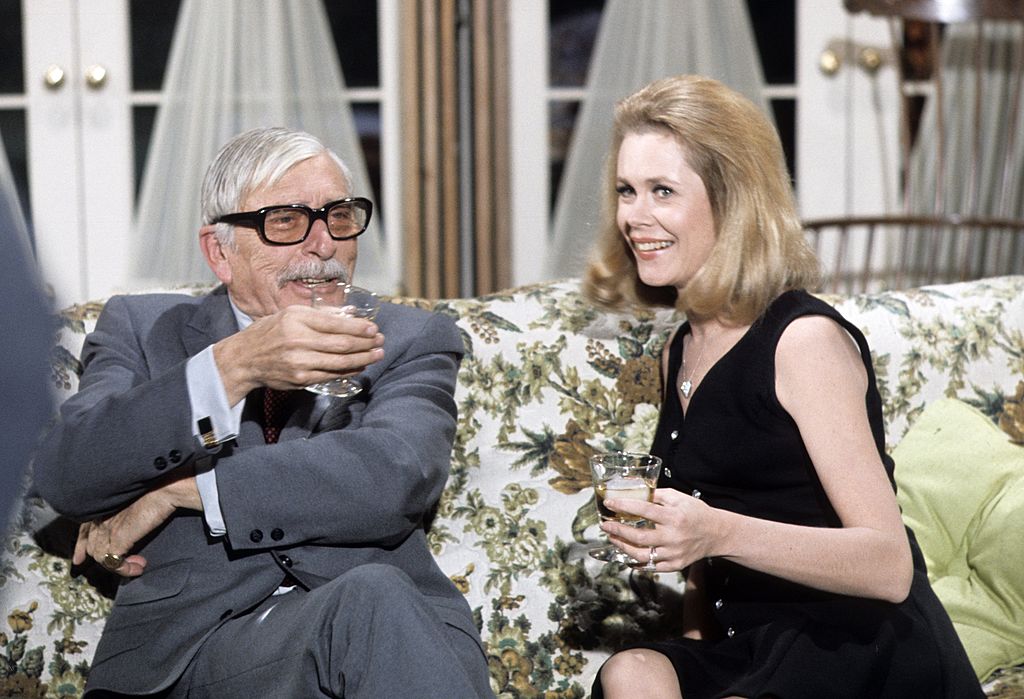
Ames and Elizabeth Montgomery on Bewitched–Photo: amomama.com

The remainder of his television career was spent in a variety of genres including Bewitched, The Virginian. Apple’s Way, and Emergency, among others.

Ames was one of the founders of the Screen Actors Guild in 1933 and became president of SAG in 1957. In 1980, Ames was the recipient of the Screen Actors Guild Life Achievement Award.

In addition to his acting duties, in the sixties, Ames opened several Ford dealerships in California.

Leon died in October of 1993 after having a stroke.

DREAMS ARE WHAT LE CINEMA IS FOR...: MEET ME IN ST. LOUIS 1944
Meet Me in St. Louis Photo: pinterest

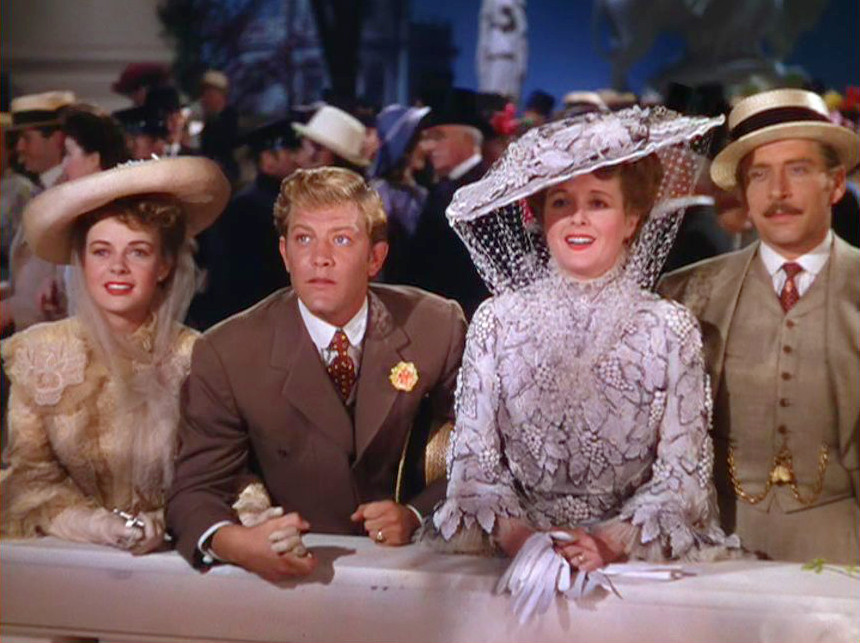
One of my favorite roles of Ames was as the father in Meet Me in St. Louis. He had that perfect gruffness for a paternalistic role but made it obvious that there was a giant teddy bear just below the surface. What a character he was.

Celebrating National Kansas Day with Vivian Vance

As we continue to celebrate National State Days, this week we are visiting Kansas. Our Sunflower star is Vivian Vance. Vivian was born in Cherryvale, Kansas in 1909. Her family moved to Independence when she was six. She knew she wanted to be an actress, but her mother’s strict religious beliefs prohibited her. She began sneaking out of her room at night to perform and eventually moved to Albuquerque, New Mexico where she changed her last name from Jones to Vance.Vivian married Joseph Shearer Danneck Jr. in 1928 at age 19 but they divorced in 1931.

Vivian Vance Hated One Thing About Being On 'I Love Lucy'
Photo: showbizcheatsheet.com

In 1930 she was hired for her first job at the Albuquerque Little Theatre. After appearing in many other plays for the group, the local theater community paid her way to New York so she could study with Eva Le Gallienne.

In 1932, Vance began working on Broadway and was often a chorus member. In 1937 she replaced Kay Thompson in “Hooray for What!” and then began receiving supporting roles. In 1941, she joined Danny Kaye and Eve Arden in Cole Porter’s musical “Let’s Face It” for 500 performances. She would appear in 25 plays with her last being “Harvey” in 1977.

See the source image
Photo: pinterest.com

In 1933 Vance tried marriage again, wedding George Koch, but that relationship also ended in divorce in 1940. Her third marriage to Philip Ober in 1941 would also last only 8 years.

Until 1950 she was offered some small roles in big screen in several films. In 1949, she appeared in her first television series, Philco TV Playhouse.

See the source image
Photo: famouspeople.com

In 1951, Lucille Ball and Desi Arnaz decided to launch their sitcom I Love Lucy. Ball was hoping to cast Barbara Pepper or Bea Benarderet in the role of Ethel Mertz. Bea had already taken the role of Blanche Morton on The George Burns and Gracie Allen Show. CBS declined to hire Pepper because they said she had an addiction to alcohol. After many roles as “The Dame” in the movies, Pepper later played Doris Ziffel on Green Acres. It’s interesting that CBS allowed William Frawley to be hired for the show because he had a well-known alcohol problem at that time, but Desi gave him strict rules.

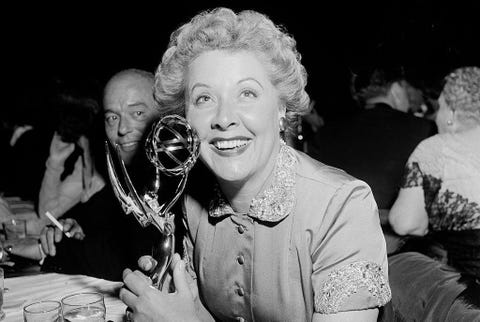
Director Marc Daniels had seen Vance perform in the “Voice of the Turtle” and suggested her for the role. She would play Ethel for 179 episodes. She was nominated for her work in 1954, 1956, and 1957, winning in 1954.

See the source image
Photo: countryliving.com

Apparently, she was a very good actress because although she and William Frawley who played her husband Fred had great comedic timing, they could not stand each other. Vivian wasn’t happy that she had to wear frumpy clothing and that Frawley was supposed to be her husband because he was 22 years older than her. He overheard a derogatory comment she made about their age difference, and they never developed any type of cordial friendship after that. However, their coworkers claimed they were professionals and treated each other with respect on the set.

See the source image
Vance with Frawley, Arnaz, and Ball–Photo: hollywoodmemorabilia.com

When the sitcom ended, Vance continued to play Ethel on The Lucille Ball-Desi Arnaz Show. She and Frawley were offered a spin-off series, but Vance passed because she didn’t want to continue working with Frawley. Vance was interested in another show however, and Desilu, Ball and Arnaz’s production company, put together a show called Guestward Ho! for her, but the network rejected the pilot. Desilu made some changes to the show and hired Joanne Dru for the lead. ABC picked it up but cancelled it after one season.

In 1961, Vance married John Dodds, an agent, editor and publisher. They moved to Stamford, Connecticut, and Vance always felt pulled between her marriage and career. In 1974 the couple moved to California. Vivian had no children from her four marriages but was godmother to Lovin’ Spoonful band member John Sebastian.

See the source image
Candy Moore, Ball, Jimmy Garrett, Ralph Hart and Vance–Photo: hitstv.com

When Ball put together a new show, The Lucy Show in 1962, she invited Vance to costar on the show. The concept featured Ball as Lucy Carmichael, a widow, raising two children in Danfield New York. Vance played her best friend Vivian Bagley, a divorced mother of one son. After a few years, Vance wanted a bit more control and a bit of controversy developed between Lucy and Vivian. Vivian left the show, but they resolved their differences and she guest starred on the show and joined Lucy on reunion shows and on her third sitcom, Here’s Lucy which ran from 1968-1974.

See the source image
Photo: pinterest.com

Vance had very few television roles after leaving Ball’s sitcom, although she did make appearances on Off to See the Wizard, Love American Style, Rhoda, and Sam.

She was best known during those years as the Maxine, the Maxwell Coffee lady starring in numerous commercials for the coffee company. She was paid $250,000 for her three-year contract.

See the source image
Photo: pinterest.com

The last time Vivian and Lucy appeared together was Ball’s special Lucy Calls the President in 1977. Not long afterward, Vance suffered a stroke which left her partly paralyzed. She died in 1979 from bone cancer.

Both Ball and Arnaz commented on her death. Desi shared that “it’s bad enough to lose one of the great artists we had the honor and the pleasure to work with, but it’s even harder to reconcile the loss of one of your best friends.”

Ball commented on Vivian’s performance as Ethel: “I find that now I usually spend my time looking at Viv. Viv was sensational. And back then, there were things I had to do—I was in the projection room for some reason—and I just couldn’t concentrate on it. But now I can. And I enjoy every move that Viv made. She was something.”  Both Vance and Frawley were inducted into the Television Academy Hall of Fame in March of 2012.

When Lucille Ball and Vivian Vance Said Goodbye For The Last Time
Photo: allvipp.com

Some actors have the ability to adapt to a variety of television roles and we’re grateful for them. Other stars create one that is so memorable it becomes completely entwined with part of our life. Thank you Vivian Vance for being Lucy’s best friend. While we love Lucy’s antics, you are the one the majority of us identified with and for seventy years you have been influencing comedy and making new fans.

Father of the Bride is Better on the Big Screen

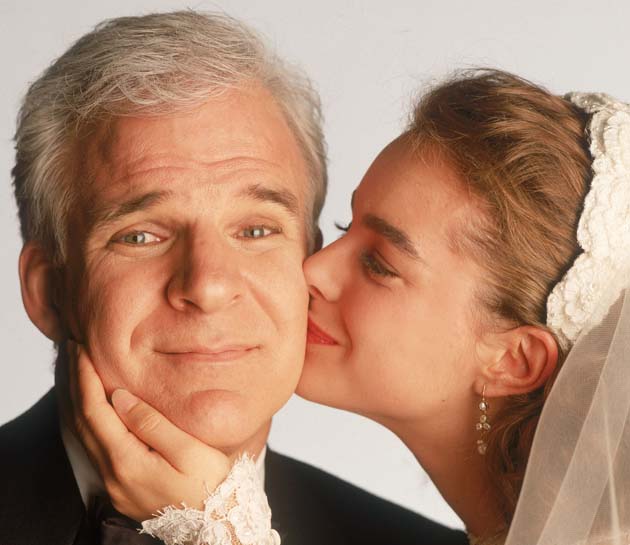
We’re continuing our blog series, “The Movie Came First.” Today we get to learn more about Father of the Bride. Whether you gravitate to Elizabeth Taylor and Spencer Tracy in the original movie or Kimberly Williams-Paisley and Steve Martin in the remake, you might have enjoyed the television show which aired in 1961. All three versions feature a father whose daughter is getting married, as he deals with the emotional pain of losing her, the financial reparations, and the disorganized turmoil that goes into planning the wedding.

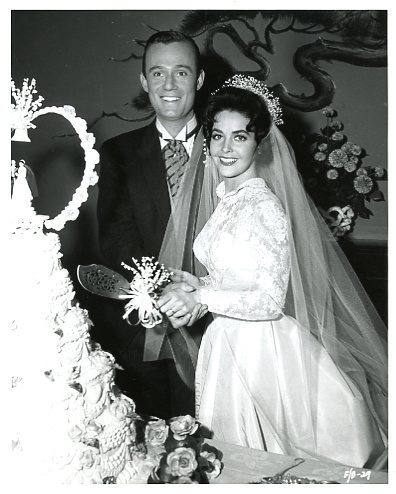
The movie starred Elizabeth Taylor as Kay Banks with Spencer Tracy and Joan Bennett as her parents, Ellie and Stanley. Her fiancé Buckley Dunstan is portrayed by Don Taylor and his parents are Billie Burke and Moroni Olsen as Doris and Herbert. The film was nominated for Academy Awards for Best Actor in a Leading Role (William Holden won for Sunset Boulevard), Best Picture (All About Eve was the winner), and Best Writing, Screenplay (also Sunset Boulevard as winner).

Stanley narrates his feelings and perspectives throughout the film. For example, he talks about losing his daughter: “Who giveth this woman? This woman. But she’s not a woman. She’s still a child. And she’s leaving us. What’s it going to be like to come home and not find her? Not to hear her voice calling “Hi Pops” as I come in? I suddenly realized what I was doing. I was giving up Kay. Something inside me began to hurt.”

Photo: hulu.com

He also shares his thoughts on weddings: “I would like to say a few words about weddings. I’ve just been through one. Not my own. My daughter’s. Someday in the far future I may be able to remember it with tender indulgence, but not now. I always used to think that marriages were a simple affair. Boy meets girl. Fall in love. They get married. Have babies. Eventually the babies grow up and meet other babies. They fall in love. Get married. Have babies. And so on and on and on. Looked at that way, it’s not only simple, it’s downright monotonous. But I was wrong.”

Photo: wikipedia.com

In 1961 the movie was reworked for the small screen, produced by MGM Television. The characters remained the same. In the tv version, Leon Ames was Stanley, Ruth Warrick was Ellie, Myrna Fahey was Kay, Burt Metcalfe was Buckley, Ransom Sherman was Herbert, and Lurene Tuttle was Doris. We also see Ruby Dandridge cast as their housekeeper Delilah and Rickie Sorenson as Tommy, Kay’s little brother.

The first shows in season one featured an animated cupid holding a magic wand to start the show, but the season transitioned into a photo of the entire cast gathered on the Banks’ staircase.

Photo: youtube.com

The sponsors of the show were Campbell’s Soups and General Mills.

I was surprised to see that there were 24 writers but then in looking through the episodes, the majority of the shows mirrored the movie so closely it was more of rewriting than writing.

Photo: blogspot.com

The show aired on Friday nights and its competition was The Dinah Shore Show and 77 Sunset Strip. I would have thought given the adult themes of 77 Sunset Strip, this show would be a popular family show to watch. However, the ratings must not have been very good, because it was cancelled after one season. Not many of the shows debuting this fall even lasted the season. In addition to Father of the Bride, the following shows were cancelled: The Bob Cummings Show, The Hathaways, Holiday Lodge, Ichabod and Me, Margie, Mrs. G Goes to College, Oh, Those Bells, One Happy Family, Room for One More, and Window on Main Street. The successful season debuts included Car 54 Where Are You?, The Dick Van Dyke Show, Mr. Ed, Hazel, The Lucy Show, and The Joey Bishop Show.

Photo: amazon.com

YouTube has the opening credits, but I could not find anywhere to watch episodes of this show. I guess my recommendation would be to forget about the show and watch the 1950 or 1991 movie version. I’m not often a fan of reboots of movies, but I love the Steve Martin-Diane Keaton version of this movie, so both films are great choices. Better yet, watch them both and then choose your favorite.

Photo: amazon.com