America’s Favorite Family

nelson34

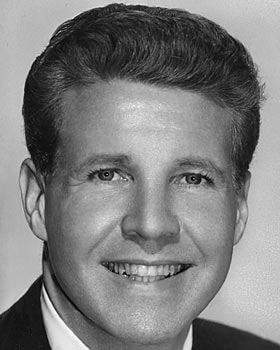
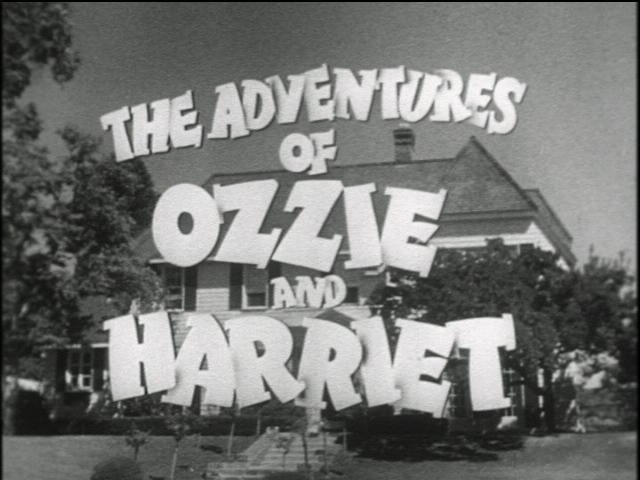
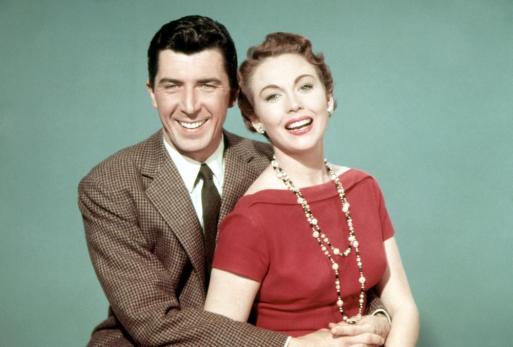
For the last two weeks of 2017 we are going to spend some time with the Nelson family. Ozzie, Harriet, David, and Ricky visited our home every week from 1952-1966. America watched the boys grow from young boys to adult men. Let’s see how the show developed.

nelson5

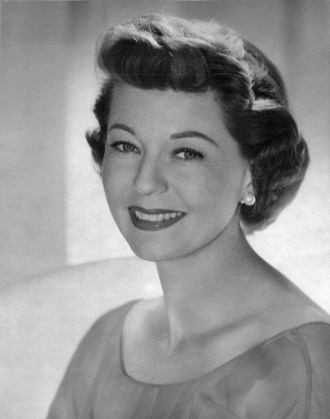
Oswald George Nelson was born in New Jersey in 1906. He attended Rutgers and graduated with a law degree, but in the 1920s he put a band together to see if he could make a living from music.  A new vocalist named Peggy Lou Snyder joined his band in 1932. Her parents were actors and she grew up on the stage. She had married a comedian Roy Sedley, but he was not funny at home; he was abusive, and she had their marriage annulled. When she joined Ozzie’s band, she changed her name to Harriet Hilliard, and she changed it again in 1935 when she married Ozzie.


nelson10

They did a few radio shows, eventually ending up on the Red Skelton Show. In 1944, they received their own radio show and they called it The Adventures of Ozzie and Harriet. Their boys were played by actors until 1949 when Ozzie and Harriet felt they were old enough to join the cast. Later Ozzie would be criticized for putting his boys on the show and destroying their childhood, but David said his parents tried hard to give the boys a normal upbringing.


nelson11

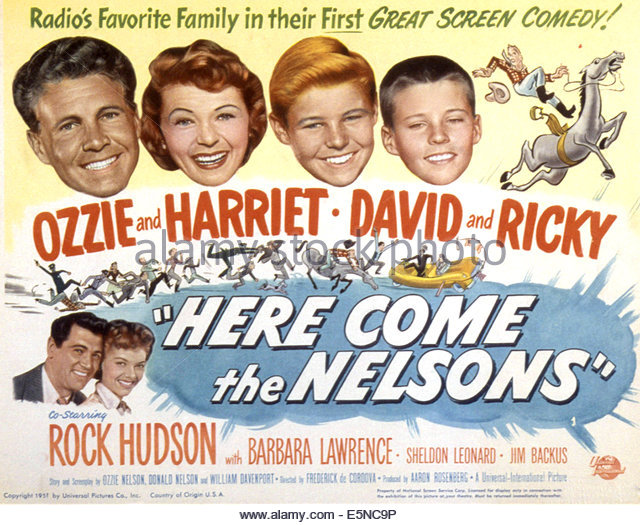
In 1952, Ozzie and his brother wrote a movie called Here Come the Nelsons which was shown on the big screen.  It functioned as a pilot for a television show they began that same year.  Decades before Seinfeld, these two put together a how about nothing — and everything.  It was about their life and what was happening at home.  Unfortunately, the downside of portraying yourself on television was the pressure of trying to appear the perfect family when everyone realizes there is no such thing.   Growing up before the cameras put a lot of stress on the boys especially to always be “acting.”  David once was quoted as saying, “It’s an awfully big load to carry, to be everyone’s fantasy family.”


nelson2

The Nelsons lived at 822 Sycamore Rd, but the exterior shots were that of their real home at 1822 Camino Palmero St., Hollywood, LA, California.  The interior shots, built to resemble their own home, were filmed at Selzick International Studios in Culver City.


Hotpoint was one of their first sponsors, and viewers would have watched a young Mary Tyler Moore as Happy Hotpoint, a dancing pixie. Actors often addressed the audience directly, drawing them into their life.


Other characters who showed up regularly were their next-door neighbor Thorny played by Don DeFore; Don’s son said in real life he was much like Thorny.


Ozzie and Harriet’s friends Clara and Joe Randolph (Mary Jane Croft and Lyle Talbot) and Doc Williams (Frank Cady) were on the show regularly. Ricky’s friend Wally (Skip Young), and Jack (Jack Wagner) who worked at the malt shop also appeared regularly.  On several episodes you can see a young Barry and Stan Livingston before they were Steve Douglas’s sons.


The show produced 436 episodes, all written in part by Ozzie, produced by Ozzie, directed by Ozzie, and even set buildings were supervised by Ozzie who was considered a workaholic and quite different from the stammering, hesitant, and slightly absent-minded father he played on the small screen.


When Ricky decided he wanted a rock and roll career, it was written into the show, and his popularity is what kept the show going for a good part of the 1960s.


When David married June Blair, she was written into the show, and when Ricky married Kris Harmon (sister of Mark Harmon and mom of actress Tracy Harmon and the Nelson twins who had the band Nelson), she was written in as well.

A lot of the shows centered around the boys. Many of the situations were taken from real life.  When they’re younger, we see them learning life lessons; as they became teenagers, we watched them go through dating issues; and when they became adults, we followed their marriages, parenting choices, and careers.

nelson

In 1966, the show began to be considered old-fashioned even though Ozzie tried to update the scripts. When the show was cancelled that year, it was replaced by a new show starring Adam West called Batman.


img0155A

Ozzie and Harriet tried television again in 1973 with Ozzie’s Girls where Ozzie and Harriet rent out the boys’ rooms to two college students, but the show failed after a year.


nelson23

Ozzie would go on to appear on the Mothers-In-Law, Adam-12, Night Gallery, Bridget Loves Bernie and three episodes of Love American Style. He passed away in 1975 from liver cancer.


nelson27

Harriet appeared in a variety of shows also including Bridget Loves Bernie, Love American Style, The Love Boat, Fantasy Island, Aloha Paradise,  and Happy Days but after Ozzie died, she became a bit of a recluse. The last show she appeared on was her granddaughter Tracy’s show, Father Dowling’s Mysteries. She died in 1994 from emphysema and congenital heart disease.


nelson19

Ricky had a variety of movie and television performances.  His music career continued successfully, although his drug abuse ruined his marriage and stalled his career.  He was killed in 1985 in a plane crash on his way to a performance.


img0517A

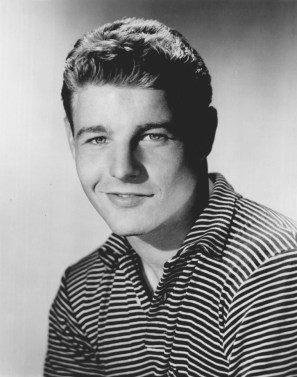
David appeared in quite a few movies when the show was over and got into directing and producing.  He and June divorced in 1975, and he married Yvonne O’Connor Huston. He passed away in 2011 from colon cancer.

I cannot imagine living your growing-up years under the microscope of the entire American public.  We have all experienced living near neighbors when they hear something we prefer they didn’t, or we hear something we prefer we didn’t.  This family had millions of people watching them, seeing if they lived up to their perfect image.

nelson4

It’s hard to discuss the show without discussing the repercussions it had on the Nelson clan, but the show itself was a chance to watch a family we admired and hoped to be more like when we became parents.  I have learned that you need to love characters for who they are — period.  Because, often the real humans behind them will let you down and make you sad.  It was hard for me to adjust to watching some of my favorite characters after learning disappointing things about the actors or actresses who portrayed them; often they were not such nice people.  So I made a determined effort to keep characters I love separate from any real life issues.

That said, I think Ozzie and Harriet did the best they could to raise their children under the spotlight with as much normalcy as possible.  They had to deal with real-life issues at home and then come together and play America’s favorite family.  I give them credit just for being able to do that for fourteen years.


This Man Was Busy, Busy, Busy

billya

Most television viewers today would not recognize the name Billy De Wolfe, but if you played his voice for them, they would immediately know it as Professor Hinkle from Frosty the Snowman.  I remember Billy primarily from That Girl as Ann Marie’s drama coach, Jules Benedict.  I was amazed to see he only appeared in three episodes because he was such a strong character, I would have thought he was in at least 20 shows. He became known as the prim, pompous, and sarcastic stock character.

Billy was born William Andrew Jones in Massachusetts in 1907. His father was a bookbinder, and they moved back to his parents’ home country of Wales shortly after his birth, returning to the United States when he was nine years old. His parents hoped he would become a Baptist minister, but his dreams were grounded in acting. He started his entertainment career as an usher.  He then became a dancer with the Jimmy O’Connor band.  This led to his appearing on the vaudeville circuit where a theater manger offered him the use of his name, Billy De Wolfe. He traveled to London to perform for five years and returned to America in 1939.

billy1

In 1942 he joined the US Navy where he became a Seaman 1st Class as a musician. Before he enlisted, he was offered a contract with Paramount, and he continued with them in 1944 when he left the Navy. His first movie Dixie was with Dorothy Lamour and Bing Crosby. He appeared in nine movies during the 1940s.


He loved old-fashioned musical comedies and had a chance to act with Doris Day and Gene Nelson in both Tea for Two and Lullaby of Broadway.  He and Doris would be friends for the rest of his life.  He gave her the nickname Clara Bixby because he said she looked more like a Clara than a Doris, and many of their friends referred to her as Clara.


He transitioned to theater and performed on the live stage in both Broadway and London.


billy16

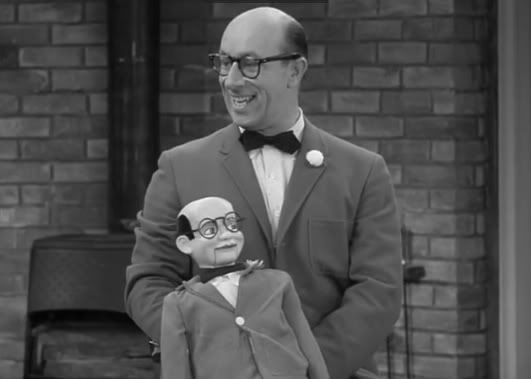
He then decided to try television where he became very successful. Above he appears on the Dick Van Dyke Show. He appeared on six shows before obtaining his first role as a regular on a sitcom.  During the late 1960s and early 1970s he would be cast in five different sitcoms.


billy18

In 1966, he was part of the amazing cast of The Pruitts of South Hampton.  I have mentioned this show before in my blogs, and it is hard to believe that this incredible cast could not pull off a more successful show:  Phyllis Diller, Louis Nye, John Astin, Reginald Gardner, Paul Lynde, Gypsy Rose Lee, John McGiver, Richard Deacon, Marty Ingels, and De Wolfe. The series was based on a novel, House Party, by Patrick Dennis.  A wealthy family realizes it owes the IRS $10,000,000 in back taxes.  They want to keep the appearance that they still have plenty of money while living in a smaller home with one car and a butler.  One of the first shows to debut in color, it was cancelled after 30 episodes.


In 1966, De Wolfe also began the role of Jules Benedict on That Girl.  He played a sarcastic acting teacher who made it clear it was painful to work with these young actors who simply had no idea of how to act. But we also realized that he had a big heart that he did not want anyone to see. His last episode was in 1969.


In 1967, he took a role as radio station manager Roland Hutton Jr. on Good Morning, World.  Dave Lewis (Joby Baker) and Larry Clarke (Ronnie Schell) are small-time radio hosts Lewis and Clarke on the air from 6-10 am. Lewis is married and an introvert while Clarke is a swinging single. Also appearing on this show was a new comer, Goldie Hawn, who played the Lewises’ neighbor. The show only lasted a year. Several critics pointed out that De Wolfe was the funniest person on the show.


billy6

In 1969, De Wolfe was able to stay employed for another 13 episodes on the series The Queen and I. He starred with Larry Storch.  They worked on an aging ocean liner, The Amsterdam Queen, which the owners were planning on selling for scrap. Duffy (Storch) wants to save the ship through any means possible, but Nelson (De Wolfe) doesn’t like or trust him, although he fails to ever catch him doing anything wrong.


Doris Day began her sitcom in 1968. For the 1970 season, she and her kids moved to San Francisco to live over an Italian restaurant, owned by the Palluccis (Kaye Ballard and Bernie Kopell). She hired her friend Billy to play Willard Jarvis, the bad-tempered neighbor who really was a peach when you got to know him.

During his years on the Doris Day Show, he also appeared on the Debbie Reynolds Show and Love American Style. He was also a regular on the talk show circuits, appearing many times on Johnny Carson’s Tonight Show and the Mike Douglas Show.


billy4

Phoebe Murgatroyd was a famous commercial character. De Wolfe donned a hat and shawl (but kept his iconic mustache) to portray the romance expert who gave love life advice for this series of Ban Roll-On deodorant ads.


billy13

Who realized in 1969 that an animation special, based on the song, “Frosty the Snowman,” would go on to become a beloved classic and would play a role in generations of kids celebrating Christmas. For almost 50 years, viewers have cried at Professor Hinkle’s nasty act of locking Frosty in a greenhouse to melt. While I look forward to Charlie Brown and Rudolph The Red-Nosed Reindeer every holiday, Frosty is my must-see every December.

In the early 1970s, Billy was diagnosed with lung cancer. He passed away in 1974, his friend Doris helping him through this tough time.

billy2

Billy De Wolfe is another example of one of these great performers who could do it all.  He was a dancer. He appeared in many lucrative movies. He was successful on Broadway. When he decided to give television a try, he stayed employed with the medium until his death. And he left the legacy of Frosty the Snowman that has been a Christmas staple for almost 50 years. If you are searching for things to do this winter, add watching several episodes of Billy De Wolfe shows to your list and get to know this multi-talented man a bit better.


Garry Marshall: A Tribute To The Man Who Created So Many Happy Days For All Of Us

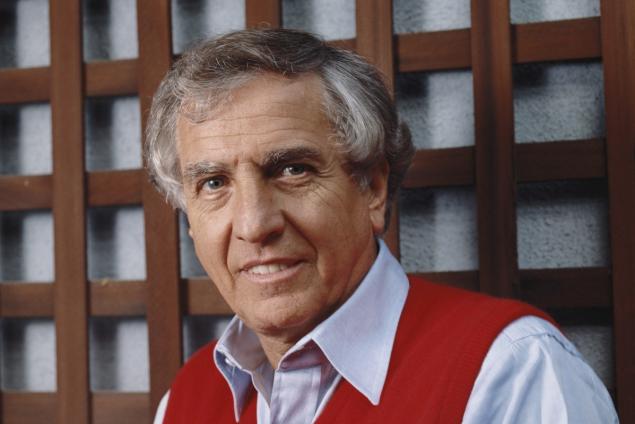
Today we get to honor one of my all-time favorites in the celebrity world – Garry Marshall.  By all accounts, whatever you read, he was hilarious, humble, and hard-working.  He was known as a family man, always putting them first. Let’s learn a little bit about his life.

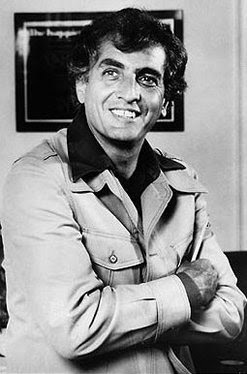
garry1

His Early Life

Garry Kent Marshall was born in The Bronx, New York on November 13, 1934, the son of Anthony Wallace Marshall, a director and producer of industrial films, and Marjorie Irene, a  teacher who ran a tap dance school. His father changed his last name from Masciarelli to Marshall before Garry was born.

Marshall had a typical childhood which included “the usual bruised knees, runny nose, dead frogs and stolen bases.” But he said his formative years were primarily devoted to discovering girls, making people laugh, and learning to play drums. “When I was growing up, there were three drummers I admired: Gene Krupa, Max Roach, and this little girl drummer in my school who used to blow in my ear after practice.”

His brother is Ronny Marshall Hallin, a television producer; his sister is Penny Marshall, actress and director; and his brother-in-law for ten years was Rob Reiner, actor and director.

garry14

Garry decided to attend Northwestern University to major in journalism.  After graduation, he was drafted into the Army and sent to Korea as part of the Special Services.  He was able to write and produce shows which set him on a new career path once he returned to the United States. Discussing his service, he said, “The lowest musical experience of my life came when I was in the Army. I was a solo marching snare drummer and kept cadence for my battalion. One day while my battalion was marching, I was playing so badly that the Captain shot a hole through my drum with a .45 revolver.”

Garry moved to New York after the Army and met Fred Freeman.  The two of them began writing together.  To support himself while his writing career got underway, Garry supplemented his income playing drums and writing for the Daily News sports department.

His TV Production Career

Marshall began his career as a joke writer for comedians and became a writer for The Tonight Show with Jack Paar. He eventually secured a staff writing position on The Joey Bishop Show. There he met Jerry Belson in 1961, with whom he would go on to write two feature films, a Broadway play, and episodes for a variety of TV series including The Dick Van Dyke Show, The Lucy Show, and I Spy.

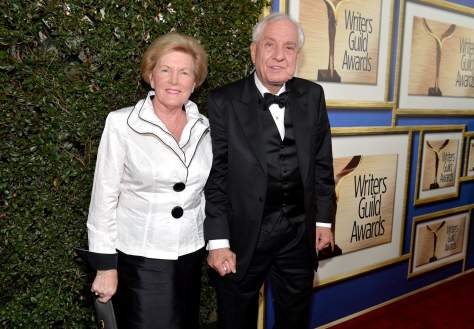
In 1963, he married Barbara; they would have three children.

garry16

Marshall and Belson’s first television series as creator-producers was Hey, Landlord, which lasted one season (1966–67).

Their next series was more successful. They adapted Neil Simon’s play The Odd Couple for television. Felix Unger and Oscar Madison are total opposites but best friends.  Garry’s sister Penny would play Myrna in the show.

T4DODCO EC002

Marshall continued to borrow from The Odd Couple throughout his career. Over and over again he employed the comic device of coupling two distinctly different characters: the hip and the square on Happy Days, the earthling and the Orkan on Mork and Mindy, the rich and the poor on Angie, and, later, the businessman and the prostitute in the movie Pretty Woman.

Most of his hit television series were created and executive produced by him. Rather than forming his own independent production company, which had become standard procedure for producers at the time, Marshall remained at Paramount to make a succession of hit situation comedies for ABC. By the end of the 1978-79 season, four of the five highest-rated shows of the year were Marshall’s.

garry13

In the Norman Lear era, when series like All in the Family tackled social issues, Marshall focused on younger viewers with lighter, more escapist fare, most of it set in the supposedly simpler past. In an interview reprinted in American Television Genres (1985), Marshall recalled that, after producing the adult-oriented Odd Couple, he had been anxious to make shows “that both kids and their parents could watch.”

His philosophy to get younger viewers: “You have to do something silly to get their attention. Then I like to knock them off their chairs with laughter. I go for the gut. I want them to laugh hard.  I don’t want them quietly staring at a bright, witty show.”

Happy Days debuted as a series in January of 1974, and by the 1976-77 season it was the most popular show on TV. Most people don’t realize this, but the show began as a skit on Love American Style, and I remember watching it when it aired the first time. The show was set in Milwaukee in the 1950s, focusing on a group of high school friends; the Cunningham family; and Fonzie, the cool guy in town.

garry5

Regarding Fonzie, Marshall said, “I knew that if I could get him over the garage, I could get him into the kitchen; he could become a member of the family.”

He worked with a variety of his family members throughout his career. His mother appeared in the Happy Days episode, Happy Days: Beauty Contest as “Mrs. Weiss,” the piano player.

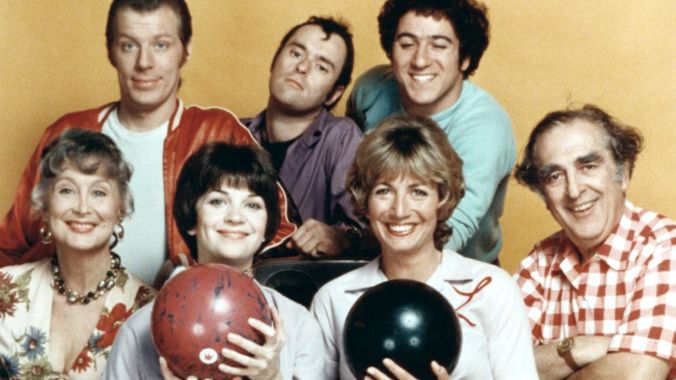
Laverne and Shirley was a spin-off of Happy Days.  Two friends, Brewery workers, get involved in various kinds of trouble.  Marshall explained his idea for the show: “No one else on TV is doing early Lucy.  The other ladies on sitcoms are classy – they’re well off, smart, and they dress well. Laverne and Shirley are definitely not classy. They’re blue collar workers who went to work right after high school.  They’re decent people.”

garry6

Happy Days would produce two more shows in Joanie Loves Chachi that explored the life of Joannie Cunningham and Fonz’s nephew Chachi after high school as they tried to figure out their relationship and Mork and Mindy, a show starring Robin Williams and Pam Dawber about an alien living in Colorado.

His Acting Career

A la Hitchcock, Marshall turns up as an uncredited actor in the background, occasionally appearing in cameos on his own hit TV shows.

garrya

On Dick Van Dyke, he appeared as referee in a 1965 episode and a bartender in a 1966 episode. If you look closely, you will see him as a random man in three Odd Couple episodes. He showed up as a drummer in two Laverne and Shirley shows and on a Happy Days episode.

He had a small re-occurring part on Murphy Brown and provided the voice for two Simpsons shows (“Eight Misbehavin’” and “Homer the Father”).

In 2014, Marshall appeared in a guest star role in a Two and a Half Men.

He continued to show up in comedies until his death, the last one being Brooklyn Nine-Nine.

When he made the switch to movies, he continued to find small roles for himself. He plays a first baseman in  Runaway Bride, an audition director in Beaches, and a bum in Pretty Woman. It seems there was no part too small. He also played his real-life sister’s husband in Hocus Pocus in 1993.

His Directing Career

His career as a film director was just as impressive, yielding several gems and cult classics, from Pretty Woman to Runaway Bride to The Princess Diaries.

In the early 1980s, he met Héctor Elizondo while playing basketball and they became great friends. Marshall was known for his obsession with basketball: his contract often obligated studios to provide a basketball court on his film locations.

garry3

Elizondo appeared in every film that Marshall directed, beginning with his first feature film Young Doctors in Love. Elizondo once noted that he is written into all of Marshall’s contracts whether he wanted to do the film or not.

In the opening credits of Exit to Eden (their eighth film together), Elizondo is credited “As Usual … Hector Elizondo.” In 1984, Marshall had a film hit as the writer and director of The Flamingo Kid. He later produced Nothing in Common with Tom Hanks and Jackie Gleason and Overboard with Goldie Hawn and Kurt Russell.

In 1988, he directed the legendary weepie Beaches, starring Barbara Hershey and Bette Midler.

Although he was original choice to direct Sleepless in Seattle, Nora Ephron ended up with the job. His most famous movie as director also won him an Oscar nomination for Pretty Woman in 1990.

garry10

Pretty Woman star Richard Gere said of Marshall in Variety: “He was a mentor and a cheerleader and one of the funniest men who ever lived. He had a heart of the purest gold and a soul full of mischief.”

Some people might be surprised to find out that Garry was the director for The Princess Diaries and The Princess Diaries 2 starring Anne Hathaway and Julie Andrews.  Garry considers Julie Andrews one of his favorite actresses because “she could act, she can sing, she’s a lady who can curse with perfect diction.”

garry17

He seemed to be surrounded by family whether at home or work.  In his last movie, Mother’s Day, he re-united with Julia Roberts, Kate Hudson, and, of course, Hector Elizondo. His sister Penny provided narration; his son Scott helped direct; and his wife, Barbara, a nurse, played a nurse in the film. (“She has her own costume,” Marshall joked.) There were also a few grandchildren  included in certain scenes.

garry11

Awards

When he gave a speech upon accepting the Lifetime Achievement Prize given at the American Comedy Awards in 1990, Marshall said, “If television is the education of the American people, then I am recess.”

In addition, he received the Valentine Davies Award (1995), the Women in Film Lucy Award in recognition of excellence and innovation in creative works that have enhanced the perception of women through the medium of television, the Television Hall of Fame for his contributions to the field of television in 1997, the National Association of Broadcasters’ Broadcasting Hall of Fame in 2012, the Laurel Award for TV Writing Achievement in 2014, as well as a star on the Hollywood Walk of Fame.

garry12

Conclusion

On the morning of July 19, 2016, Marshall died at a hospital in Burbank, California at the age of 81 due to complications of pneumonia after suffering a stroke.

Robin Williams’s daughter Zelda wrote, “RIP Garry. You forever changed my father’s life, and thus, mine. Thank you for capturing so much joy on film, over and over.”

Henry Winkler tweeted, “Larger than life, funnier than most, wise and the definition of a friend.”

“How could one individual work parts of seven decades in the entertainment industry and make zero enemies?” Ron Howard asked, “Garry achieved that, and it was the result of his absolute integrity as a man and as an artist.”

Garry Marshall was an amazing and talented man.  He was a family man above all else.  He was an actor with 84 credits, a writer with 40 credits, a producer with 31 credits, and a director with 30 credits.  He was a drummer and a journalist.  His career covered more than six decades and his star was shining bright when he left show business.

He will be remembered for creating television shows that touched viewers and drew them into the world their characters inhabited.  We rooted for all of them and looked forward to spending time with them each week.  He created some of the most memorable characters on television. He also provided many lovable movies for our DVD collections with Pretty Woman at the top of the list.

HAPPY DAYS, from left: Penny Marshall, Robin Williams, Henry Winkler, 1974-84.

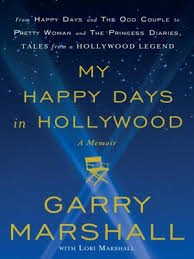
He wrote My Happy Days in Hollywood in 2012.  This is one of my all-time favorite classic television era autobiographies.  He not only discusses his successes but admits to all his screw ups and mistakes as well.  It’s a refreshingly honest account by a down-to-earth and humble man.  It’s one of the best ways to get to know this fascinating guy and is a wonderful tribute to a man who quietly influenced generations of actors and actresses. Let’s end by hearing how his book was perceived by some of those people who knew him best.

book
“Garry Marshall is walking entertainment. He is smart, insightful, funny…and so is his book.” ―Henry Winkler

“Even though he speaks slowly with a distinctive New Yorkese Bronx accent, he has managed to quickly create, write, and produce a raft of beloved television series that speak ‘American’. I am happy that he gifted us with a witty memoir (about his Happy Days in Hollywood).” ―Carl Reiner

“Thanks to my brother I have a life.  I’m sorry I almost ruined his during Laverne & Shirley.” ―Penny Marshall

“I never thought my fairy godmother would look―or sound―like Garry. He is a gift of a human being, and this book is wicked sweet.” ―Anne Hathaway
 
“Garry Marshall is one of the most beloved and talented people I know…and maybe the most normal guy in the business. This wonderful biography will allow readers to discover for themselves the decent and kind man who writes and directs with such a huge heart—all grounded from humble beginnings in The Bronx. This is a must-read book.” —Julie Andrews
 
“Garry Marshall is quite simply one of my favorite people. He is loving, loyal, and hilarious! Having made movies with Garry when I was 20, 30, and 40…I guess you could say Garry and Barbara have raised me! In a time where people have lost touch with things to laugh about, this book is sure to be a cure.” —Julia Roberts

The Amazing, But Much Too Short, Career of Richard Deacon

Richard Deacon, 1960s

Richard Deacon was born in Philadelphia, Pennsylvania in 1921, but most of his adolescence was spent in Binghamton, New York. When he was only 11, he contracted polio. He took up dancing to build up his leg muscles.

Deacon’s first career choice was to become a doctor.  He was working as an orderly at the Binghamton Hospital when World War II began. He tried to join the Navy; they suggested he try the Army.  He did and joined the medical corps.

After the war, he studied medicine at Ithaca College but soon switched to acting. He studied drama for a couple of years and was the actor in residence at Bennington College.  After spending some time in New York, he headed to California to look for work.  After paying his dues as a bartender, he finally got a break and was offered a role in a film, Invaders From Mars.

When he first began his career, Helen Hayes advised him to become a character actor as opposed to a leading man.  It was great advice, and he was one of the most beloved and prolific actors during the golden age of television. During his career, he appeared in 66 movies on the big screen, guest starred on 92 different television shows, and starred in six series.

In the 1950s, he appeared in 48 television shows including Burns and Allen, The Life of Riley, Bachelor Father, and the Gale Storm Show.  He had regular roles in two sitcoms.

The Charles Farrell Show debuted in 1956. Farrell played himself as the manager of the Palm Springs Racquet Club, a resort he actually owned and operated. It was a summer replacement for I Love Lucy and only lasted 12 episodes. Richard played Sherman Hall.

deacon8

In 1957, he got another chance at being a regular in a sitcom, Date with the Angels starring Betty White. Deacon played Roger Finley.  This show lasted one year.

Richard continued his productive acting career, appearing in 43 shows in the 1960s.  He could be seen in a wide range of shows including Bonanza, The Rifleman, My Three Sons, Make Room for Daddy, Perry Mason, The Donna Reed Show, The Twilight Zone, Mr. Ed, I Dream of Jeannie, Get Smart, The Munsters, and The Addams Family. He was also appearing in a number of films during this decade. He appeared in four sitcoms on a regular basis during the ’60s.

Leave It to Beaver aired from 1957-1963. Deacon played Fred Rutherford, father of Clarence, or Lumpy, Rutherford, Wally’s friend. During the 6 seasons it was on the air, Fred was in 63 episodes.

Part way through the series, he was offered another regular role, that of Mel Cooley on The Dick Van Dyke Show.  From 1961-1966, he brightened the screen in 82 shows, putting up with his brother-in-law’s bullying and Buddy Sorrel’s belittling. Deacon had high praise for everyone connected with The Dick Van Dyke Show.

One day Morey Amsterdam was goofing around with Richard and said he didn’t think his hair had fallen out, he thought it had imploded and fallen into his brain, clouding his thinking.  Carl Reiner came running on the set and said to add that dialogue to the show.  From then on, there was an insult fest between Buddy Sorrell and Mel Cooley. When the writers were trying to come up with a comeback from Mel to Buddy, Reiner asked Deacon how he would respond to someone who continued to torment him.  Deacon replied, “Yeecchh!” and his trademark phrase was invented.

deacon9

Bud Molin, Dick Van Dyke Show film editor described Deacon as “the funniest human being on the face of the earth.” Carl Reiner said it was a joy to have him around and everyone on the show loved him.

Deacon, Leonard, Reiner, Paris

The Dick Van Dyke Show was one of the best shows ever written. It won the Outstanding Comedy Emmy in 1963, 1964, and 1966. After the cast of the Dick Van Dyke Show decided to end the show on its own terms, leaving the air with its quality reputation intact, Deacon was offered another sixties role.

Phyllis Diller had a fantastic cast on her show, The Pruitts of South Hampton, or The Phyllis Diller Show as it became known in syndication. This was about a formerly wealthy family who found out they owed $10,000,000 in back taxes.  They try to appear that they still have their wealth, while living in very reduced circumstances.  The cast included Louis Nye, John Astin, Reginald Gardiner, Paul Lynde, Gypsy Rose Lee, Billy De Wolfe, John McGiver, and Marty Ingels in addition to Diller and Deacon.  I don’t know how this show did not succeed, but it was taken off the air after only one year. Diller and Deacon continued to work together both on an episode of Love, American Style and in the production of Hello Dolly in the 1969-1970 season.

deacon14

Once the Diller show was canceled, Deacon was offered a role on The Mothers-In-Law starring Kaye Ballard and Eve Arden. Deacon took over the role of Roger Buell mid-way through the series. The concept was two families who didn’t necessarily get along were neighbors whose children  married so they had to find ways to get along and keep the peace.

deacon4

After the show was cancelled, he continued to stay busy with his acting career.  He also appeared in 17 episodes of Match Game and several Family Feud episodes.

deacon7

Deacon was a life-long bachelor.  He was a closeted gay man who had to keep his sexual orientation secret to keep his options open to work for companies like Disney. He was also a gourmet chef.  In the 1980s, he hosted a Canadian cooking show about microwave cooking, writing a book that sold almost two million copies. He spent a lot of his spare time working with SYNANON, an agency that helped teenage drug addicts.

On the night of August 8, 1984, he was suffered a heart attack in his Beverly Hills home. He was rushed to Cedars Sinai Hospital, where he died later that night. He was 63 years old.

deacon15 - Copy

Everything I read about Richard Deacon painted him as a gracious, friendly, very funny man who was caring and kind.  He had an amazing career, with 180 acting credits within a 30-year period.  The legacy he left was a rich and full acting life. Pretty good for a guy who chose to be a character actor and was humble enough to turn down two offers to star in his own show.

Just When You Think It Can’t Get Any Weirder, It Does

Although I love The Big Bang Theory and Modern Family, there are a lot of shows on television today that make me shake my head.  It’s amazing what is airing when you scroll through the channels:  Vanilla Ice Goes Amish, I Cloned My Pet, Doomsday Preppers, and these are some of the best reality shows out there.  However, when I researched sitcoms from the classic era, I also found a lot of weird concepts there also.  Let’s take some time to look at a few of them.


unusual1

Boss Lady (1951)

Lynn Bari was Gwen Allen, owner and operator of Hillendale Homes Construction Co. which was owned by her father.  While this show would not seem unusual at all today, back in 1951 it was not common to see a woman the boss of a construction crew. This show began on the Dumont network and then switched to NBC for twelve episodes, running as a summer replacement from July to September 1952.


Where’s Raymond? (1953)

Believe it or not, this was a musical sitcom.  Ray Bolger (who had sang and danced as The Scarecrow in The Wizard of Oz) was a song and dance man named Ray Wallace living in Pelham, New York. He had a girlfriend named Susan (Marjie Millar) and a business partner Peter (Richard Erdman). Verna Felton from December Bride was his understudy’s mother-in-law. The show lasted 2 ½ years on ABC.


The People’s Choice (1955)

Ok, pay attention, because the basis of this show is confusing. Socrates (Sock) Miller played by Jackie Cooper is a Bureau of Fish and Wildlife Orinthologist studying to be a lawyer.  Honestly! He has car trouble one day and is picked up (and picked up) by the mayor’s daughter Mandy who thinks he should be on the city council. Sock decides to be a lawyer to support Mandy.   In the finale to year one, the two elope and conceal their marriage for the entire second season.  When the show came back for a third year, the mayor finds out about the marriage, Sock gets his law license, and Sock’s free-loading pal Rollo (Dick Wesson) moves in with the couple.  Now Sock is managing a real estate development. Just when you thought it could not get more confusing, Sock’s basset hound Cleo would do tricks and comment directly to the audience about situations occurring on the show. LSD had not even become a social problem yet, so it was not responsible for this show, so I’m not sure how this crazy mess stayed on the air for 104 episodes.


TSDDIAN EC004

Dick and the Duchess (1957)

Dick Starrett (Patrick O’Neal) is a claims adjuster in London.  There are some exciting scenarios to provide interest. He meets and marries Jane (Hazel Court) a duchess. She becomes his wife and assistant, although she still expects to live in the manner she has become accustomed to.  She humorously gets involved in his investigations. The network must not have thought she was that funny helping out because  CBS cancelled it after 25 episodes.


Mr. Ed (1961)

Let me say, I do not put Mr. Ed in the same category as Dick Van Dyke Show, That Girl, or Bachelor Father, but I don’t mind catching an episode or two now and then.  When looking at strange concepts for show, this one does have to go into the mix.

When the creator asked Young to appear in the show, he turned him down twice. A pilot was made without him. It did not sell, so producers Arthur Luben and Al Simon decided to enter it directly into syndication, and Young then agreed to take on the role. It was very successful, so CBS bought it.

Wilbur Post (Alan Young) is a married architect. Wilbur and his wife Winnie (Connie Hines) bought their house with a horse included. Their neighbors were played by Edna Skinner and Larry Keating. What no one else realized (including his wife), was that Wilbur was the only human who could understand Ed and talk with him.  Ed was quite the character; he was a hypochondriac; a voracious reader; a playboy, or play horse; loved Carl Bernstein and wanted to decorate his stable in Chinese modern.

The voice of Ed was a highly guarded secret until the show ended in 1967 when it was revealed to be Rocky Lane. Ed was played by Bamboo Harvester, a palomino. One interesting fact about this show is that it has been seen in 57 different countries.


My Mother the Car (1965)

This is another one of those shows you roll your eyes about.  Dave Crabtree (Jerry Van Dyke) lives in LA.  He wants to buy a new station wagon, and when he goes shopping, he realizes his mother’s voice is coming through the radio of a 1928 Porter.  Ann Sothern provides his mother’s voice. Of course, he buys the car which irritates his family, but they don’t know his secret. He also has to deal with a car connoisseur who wants to buy the car for his collection. Maybe it’s a Freudian slip, but I’m a bit offended that a mother is portrayed as an old jalopy as opposed to a new, sleek car, but I digress. This show was only on the air for a year and then the radio was turned off.


unusual11

The Second Hundred Years (1967)

Here is the premise of this one:  In 1900, 33-year-old Luke Carpenter (Monte Markham) is prospecting for gold in Alaska.  An avalanche occurs, and he is buried alive and frozen.

In 1967, Luke’s son Edwin, who is 67, is told that his father has been found alive.  Dad looks 33, but his identity and past has become a top-government secret.  He is released into the custody of Edwin (Arthur O’Connell) and grandson Ken (also Monte Markham). Luke has a hard time adjusting to life in the 1960s. I know you are surprised, but the show was cancelled after 30 episodes.


My World and Welcome to It (1969)

This show was based on James Thurber’s writings. The show was set in Connecticut where John Monroe (William Windom) was a cartoonist for Manhattanite Magazine. He was intimidated by his wife Ellen (Joan Hotchkiss). To escape his boring and nagging life, he escapes into a secret world where his cartoons come alive and he is a king. He drifted between real and fantasy lives. NBC cancelled the show after a year, but CBS picked it up and aired it from May-September of 1972. So, the presence of LSD does explain the writing on this one. What it doesn’t explain is that this show won two Emmys in 1970 : Outstanding Continued Performance by and Actor in a Leading Role in a Comedy Series and Outstanding Comedy Series. The competition for comedy included Love American Style, Room 222, The Bill Cosby Show, and The Courtship of Eddie’s Father.


The Roller Girls (1977)

Meet the Pittsburgh Pitts, an all-women roller derby team, owned and managed by Don Mitchell (Terry Kiser). The Pitts were pretty but useless when it came to roller derby. James Murtaugh played the team’s announcer Howie Devine. After four episodes, the network agreed this really was the pits and it was cancelled.


unusual14

Apple Pie (1978)

This show aired for one episode – I thought they used to call that a movie. (A couple sources say 2 episodes, perhaps a mini-series.) The show is set in Kansas City, Missouri. A hairdresser named Ginger Nell Hollyhock (Rue McLanahan) is lonely and decides to advertise in the local paper for a family. She ended up with a con artist, Fast Eddie (Dabney Coleman), a tap-dancer daughter, a son who wanted to fly just like birds do, and a grandfather figure (Jack  Guilford).


So, when you think you’ve seen it all before, you probably have. I would not be the least surprised to read that in the fall there will be a reality show that features a roller derby team, or a woman who advertised for a family in the personal ads, or an insurance adjustor married to royalty.

I do have to say that both Dick and the Duchess and My World and Welcome To It  seem to have some die-hard fans who appreciate the shows  I guess I should watch a few more episodes.

Listen up you sitcom developers; if you think you have a concept that’s a bit too far out there, it will probably be a big hit. After all, who would have guessed a show about an alien from Ork who traveled in an egg, and gave birth to a 79-year old man would score high ratings?

Why I Love My Three Sons and My 3 Sons


Happy Birthday to me! Since it is my birthday today, I decided my gift to myself was to write about my favorite television show, My Three Sons.  The show was on the air from 1960-1972, for a total of 382 episodes. It debuted on ABC, and in 1965 it moved to CBS. The show was based on a widower, Steve Douglas, who is an aeronautical engineer trying to raise three boys after his wife’s death.  Her father, Bub, moves in to take over the housekeeping duties.

mts1

Although Don Fedderson often gets credit for developing My Three Sons, the show was created by George Tibbles and produced by Don Fedderson Productions. When the series moved to CBS in 1965, the latter network assumed full production responsibilities (in association with Fedderson Productions) until the end of the series in 1972. CBS now holds the series’ copyright.

George Tibbles wrote for a variety of shows and penned the Woody Woodpecker Song, recorded by Kay Kyser. Some of the episodes he wrote for My Three Sons include “Chip Off the Old Block” (1960), “Bob in the Ointment” (1960), “Countdown” (1960), “Birds and Bees” (1961), “Tramp the Hero” (1961), “Mike in Charge” (1961), “Bud Gets a Job” (1962), “Stage Door Bub” (1964), “Charley and the Kid” (1965), “Brother Ernie” (1965), “Moving Day” (1967), “Robbie Loves Katie” (1967), “Inspection of the Groom” (1967), “The Great Pregnancy” (1968), and “Instant Co-Worker” (1969).

mts4

Peter Tewksbury directed the first season. These early episodes held to no specific generic type, so that any episode from one week to the next might be either comedic or dramatic. Tewksbury’s episodes are also unusual for their use of cross-talk (a way of having the voices of off-screen characters heard in the background of the soundtrack, just under the voices of the main characters). Using this clever directorial twist, Tewksbury realistically portrayed the chaotic, fast-paced, and ever-changing sequence of events that was the daily routine of living in the Douglas household.

An example of Tewksbury’s use of cross-talk is the fourth episode, “Countdown,” which chronicles the Douglas family’s attempts to wake up, prepare for the day, have breakfast, and get out of the house by a common, agreed-upon time, all carefully synchronized to a televised rocket launch countdown – to comical and often ironic effect. Once the entire family was ready, they realized it was not a week-day and they had been running around like crazy for nothing. Tewksbury returned to directing feature films after concluding the season because the producers could not handle his perfectionist attitude, which was costing thousands of dollars in lost time and reshoots.
mts8

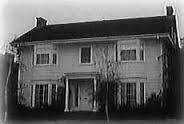
The succeeding director, Richard Whorf, took over the reins for one season and was in turn followed by former actor-turned-director Gene Reynolds from 1962 to 1964. James V. Kern, an experienced Hollywood television director who had previously helmed the “Hollywood” and “Europe” episodes of I Love Lucy, continued in this role for two years until his untimely death in late 1966. Director James Sheldon was also contracted to finish episodes that had been partly completed by Kern to complete that season. Fred De Cordova was the show’s longest and most consistent director of the series (108 episodes) until he left in 1971 to produce The Tonight Show Starring Johnny Carson. Earl Bellamy rounded out the series as director of the show’s final year.

When the show was first created, potential writers were told to emphasize the following elements: originality, simplicity, honesty, legitimacy, natural comedy, seriousness of premise, scope and character development.

I love the first episode – it not only established the family relationships, but set the direction the comedy would take. This was a family who might tease each other unmercifully but also knew they could always count on each other no matter what the situation was. The family members were far from perfect but they were realistic.

mts13

One of the most memorable parts of the show was the theme song. Lawrence Welk’s version of the instrumental theme song, written by Frank De Vol, peaked at No. 55 on the Billboard Hot 100 in 1961.

In 1960, Fred MacMurray was one of the most respected and highest-paid actors in Hollywood.  It was almost inconceivable that he would star in a television show. The role was originally offered to Eddie Albert who turned down not only this role, but Wilbur Post on Mr. Ed as well. MacMurray took on the role when he was guaranteed that he would only have to spend 65 days a year filming the show. What was referred to as the MacMurray Method was 65 days of consecutive taping with the rest of the cast having to film around these scenes later. He was also given a 50% ownership in Don Fedderson Productions.

mts14

MacMurray was a very down-to-earth guy.  His grandfather immigrated from Scotland.  He was born in Illinois in 1908 and grew up in Beaver Dam, Wisconsin. He worked in a canning factory and for an American Legion band, went to Carroll College, and earned money playing in a band there. After his first wife, Lillian Lamont died, he married June Haver, a former actress who left a convent to marry him.  They adopted twin daughters. They had a 200-acre ranch on the Russian River and his interests included his workshop, building picture frames, painting water colors, golfing, watching some television, and cooking. Hedda Hopper’s description of him was, “He’s as down to earth as applesauce or the boy next door.”

When Barry Livingston was asked about him, he said, “He was basically a guy from the Midwest, Midwest sensibilities, and even though he was super, super wealthy, just really had modest taste and just really wanted to be accepted as your average Joe.  I mean, he drove a Pontiac station wagon that happened to be our sponsor. . . his wife would pack a brown-paper-bag lunch.”

Steve Douglas was known for his cardigan sweaters. Steve was always ready with guidance, gentle words, and loving wisdom.
bub

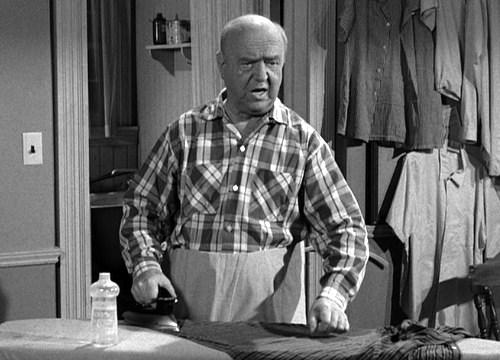
William Frawley, best known as Fred Mertz on I Love Lucy, accepted the role of Bub. He was an expert on barbershop quartets. In 1958, he made an album, “Bill Frawley Sings the Old Ones.” He was 68 in 1961 and had spent 28 years in Hollywood, 46 as a performer.  He grew up in Burlington, IA where his father sold real estate.  At 21 he landed a job in a musical chorus in Chicago. He married in 1916, divorcing Louise in 1927 and never married again. In 1933, he moved to Hollywood with a long-term Paramount contract. His old friends include Joe DiMaggio and Johnny Gallaudet.
mike

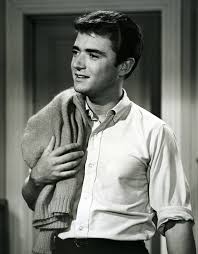
Timothy Considine played Mike, the oldest son on the show. He was a former child actor and young adult actor of the late 1950s and early 1960s. He later became a writer, photographer, and automotive historian. Considine’s most noted acting roles were in the 1955–1957 Disney TV serials Spin and Marty (he played Spin) and The Hardy Boys (he played older brother Frank opposite Tommy Kirk as Joe), both of which appeared in 15-minute segments on the Mickey Mouse Club; and in the Disney motion picture The Shaggy Dog. Considine is an automobile historian, photographer, and writer who specializes in motor sports. He is the author of The Photographic Dictionary of Soccer, The Language of Sport, and American Grand Prix Racing: A Century of Drivers and Cars. He has also filled in for the late William Safire as writer of the “On Language” column in The New York Times Magazine.

Tim Considine quit the show after arguing with Don Fedderson.

rob

Don Grady, who played middle son Robbie and was the brother of actress Lani O’Grady, got 8 times the fan-mail the other boys did, mostly from young girls. Grady was born Don Louis Agrati in San Diego, California, the son of Mary B. (née Castellino), a talent agent, and Lou Anthony Agrati, a sausage maker. He grew up in Lafayette, California before being signed by Walt Disney and leaving the area. He graduated from Burbank High School in 1962.

Grady appeared on 20 different tv series before 1972, including two episodes of Love American Style. During production of My Three Sons, Grady appeared with his own band The Greefs on the series, writing two original songs for the show.

After My Three Sons ended in 1972, Grady pursued a musical career. His works included music for the Blake Edwards comedy film Switch, the theme song for The Phil Donahue Show and for EFX, a Las Vegas multimedia stage show which starred Michael Crawford, David Cassidy, Tommy Tune, and Rick Springfield. As a stage performer, he starred in the national tour of Pippin and had roles in Godspell and Damn Yankees.

He passed away in 2012 from cancer.
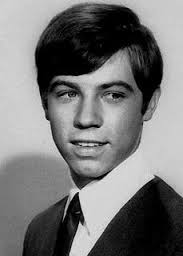
chip

Stanley Livingston took on the role of Chip (Richard), originally the youngest son. He was named for the scientist Stanley Livingston. His parents moved from Baltimore to LA to open a furniture store. He was one of the kids riding trikes and fire engines on “You Asked for It.” In 1957, he was recommended as a double for Jon Provost on Lassie by Mrs. Loven, who taught him to swim. Tina Hill was his first agent, and Lois Auer was his first drama coach. He and Barry were neighbor kids on Ozzie and Harriet.

By age 11, he earned $20,000 a year. He shared that, “The food on My Three Sons is lousy. The prop man cooks it. The eggs are sticky and the potatoes are lumpy.  It’s so bad we try to get eating scenes on the first take.”

John Stevens was a production/coordinator in 1961. In TV Guide in 1962, he was quoted, “Because of the way we shoot around MacMurray, filming My Three Sons is a jigsaw puzzle for an adult. We once shot all the scenes in the upstairs hall and bedroom from 21 scripts, one after the other. In one, Stanley would have to be happy over something in a comedy, and five minutes later, said in a melodrama. I never once saw him rattled, confused or upset.”

In 1965, the fourth season, Frawley retired due to poor health, dying a year later. Wm Demarest, Bub’s brother, the boys’ uncle and a former sailor took his place. To explain Considine’s absence, Mike married his long-time girlfriend and accepted a job as a college professor. Ernie entered the family and was officially adopted.

charley

William Demarest started in show business at age 9. He was involved with vaudeville, Broadway, movies (150) and television. In 1899, he and his brothers were musicians. He played the cello, wearing velvet suits, Rubinstein played the piano, and George the violin. He was born in St. Paul in February 1892 and then moved to New Jersey where his parents separated. Later in life he went to LA and entered the army during WWI, eventually becoming a sergeant. In 1927, he was a Warner’s New Comedy Find. In his first picture, Finger Prints, a silent, he was a gangster. He appeared in 24 movies in two years. He appeared in The Jazz Singer and was nominated for an Academy Award for his role in The Jolson Story. In 1930, he headlined a bill with an orchestra, the CA Collegians who had a sax player named Fred MacMurray. In 1933, he went back to Hollywood and stayed. He was a talent agent before appearing in Preston Sturges’ The Great McGinty and The Miracle of Morgan’s Creek. He can’t remember how many movies he did, but his 100th was Pardon My Past with MacMurray. They were also in Hands Across the Table. His retirement plans were to move to a home he and his wife Lucille had on the 12th fairway at Canyon Country Club in Palm Springs.

mts19

Barry Livingston debuted on the show as Chip’s friend Ernie, an orphan. Barry began his career as a child actor in the late 1950s. He considers his film debut a role he won as one of the sons of Paul Newman in the film Rally ‘Round the Flag, Boys! (1958) with his older brother Stanley who by this time was already working as a child actor. He was let go from the film when he was told that he needed to get glasses to successfully correct his astigmatism. His first professional onscreen appearance was in a small, uncredited role in the 1961 film The Errand Boy, followed by roles in The Adventures of Ozzie & Harriet, on The Dick Van Dyke Show and (as “Arnold Mooney,” son of banker Theodore J. Mooney portrayed by Gale Gordon) on The Lucy Show. In 1965, he joined the cast of the ABC sitcom My Three Sons as next door neighbor Ernie Thompson.

His older brother, Stanley Livingston, was already a series regular as Chip Douglas. Livingston joined the cast permanently (his character was adopted into the family, keeping the show’s title intact) and remained with the series until its end in 1972.

After the series run of My Three Sons ended in 1972, Livingston continued his acting career with 142 acting credits.  Most recently he appeared as a jury member in Trial and Error.

In October 2011, Barry Livingston released his anecdote-filled autobiography, The Importance of Being Ernie (Citadel Press) — detailing his career from My Three Sons to Mad Men and beyond.
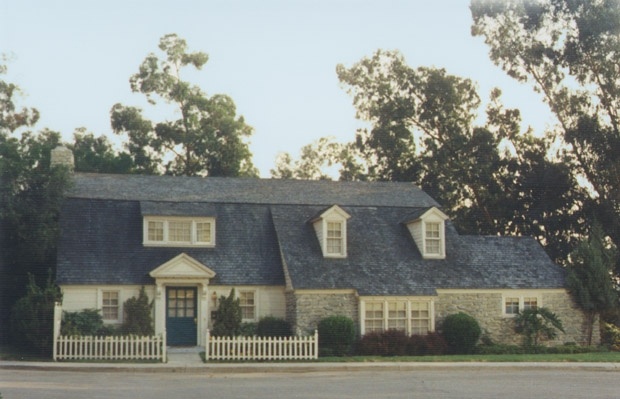
mts23

To boost ratings, the family moved to Hollywood, CA in 1967. The family’s home in California was previously featured as the farm in Gene Autry’s 1940 musical Melody Ranch. Located on the Republic Pictures backlot, the barn was given a suburban facade in the 1950s. It wasn’t that far from Gilligan’s lagoon, which was also on the lot.

mts5

Robbie meets his future wife in California, and they eventually marry and have triplets. The triplets posed some issues.  They had to find two sets of twins so three could be on camera and one on reserve.  They had to be born between June 17 and 24, have light hair, blue eyes, and be California residents.  They could only be on the set for 2 hours a day, in front of the camera only 20 min and each exposure could not last more than 30 seconds due to the bright lights.

mts18

Tina Cole played Katie but she was not a rookie on the show. She previously appeared on three other episodes as three different characters before taking the role of Katie Miller Douglas. She was also a member of the Four King Cousins, a subgroup of the King Family Singers. In 1963 she played the minor (uncredited) role of Ruth Stewart in Palm Springs Weekend, a spring break party film set in Palm Springs, California. After leaving television, Cole was the director of the Sacramento Children’s Theatre. She was an acting coach at the John Robert Powers acting schools in Roseville and Elk Grove, California and in 2013 returned to on screen acting. She has several movies coming out in 2017.

mts22

In 1970, another change occurred in the family. Steve goes to school to talk with the substitute teacher about Ernie.  After being gone hours, with Ernie extremely worried, Steve comes home only to realize they never even brought up Ernie’s behavior and they had another date scheduled. They ended up marrying, and Barbara’s daughter Dodie moves into the house.

mts20

Beverly Garland had a long acting resume when she accepted the part of Barbara. Her hobbies were flower beading and crewel work. She starred in her first show Decoy in 1958 in New York where she played a tough police woman. Born Beverly Fessenden in Santa Cruz, CA in 1930, she was an only child. She took violin lessons. At 18 she married Bob Campbell, 20 in Vegas. They divorced 4 months later. She worked odd jobs, summer stock, and commercials. She married Richard Garland but they divorced in 1953. In that same year, she won an Emmy for Medic. She appeared in a variety of shows – Gunsmoke, Rawhide, Dr. Kildare, and The Farmer’s Daughter. She married Fillmore Pajeau Crank, a widower with two kids in 1960, and the couple had two more children.

mts21

Dodie was played by Dawn Lyn, the real-life sister of 80s pop idol Leif Garrett. Dawn Lyn made her acting debut at the age of four. She was the original Prudence in the pilot for Nanny and the Professor. By the time the pilot sold, Dawn had been released from her contract and cast as Dodie in My Three Sons. The Nanny producers sued unsuccessfully to get her back. She worked steadily to financially support her family until her mid-teens. She says at that time her petite stature began to work against her.

Dawn decided to branch out of acting and has done many things over the years, including owning a boutique on Pier 39 in San Francisco. Though she has not actively pursued acting, she has not totally closed the door on the idea either.

Later in the season, Chip elopes with his girlfriend Polly Williams.
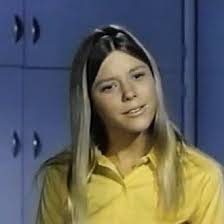
mts17

In 1964, Ronne Troup, who played Polly, was working as a television background extra appearing (uncredited) in some fourth season black-and-white episodes of My Three Sons in classroom scenes featuring co-star Don Grady. She also worked as an uncredited extra in classroom scenes on Gidget. She appeared, uncredited, as a teen party guest in the Bob Hope film I’ll Take Sweden in 1965. In 1966, she made her film debut as part of the all-girl ensemble in Columbia Films’ The Trouble with Angels, where she is prominent in the graduation scene. In December 1966 (at age 21), she was cast as Sister Bertrille and had begun filming the pilot for Columbia/Screen Gems’ The Flying Nun when she was dropped after the studio’s first choice Sally Field finally agreed to accept the role.

In 1968, she played the role of Leslie Hayden in Danger Island, the cliffhanger serial that was featured on the Banana Splits Adventure Hour children’s program on Saturday mornings.

She appeared on Family Affair in 1970 in the episode “Desert Isle: Manhattan Style.” She was subsequently offered the role of Polly Williams Douglas, wife of Chip Douglas on My Three Sons, a role she played for two years (1970–72). In the Season 4 episode of The Partridge Family entitled “Hate Thy Neighbor” (1973), she appeared as Donna Stevens, the daughter of the new family who move in next door to the Partridges.

She continued acting through the 1990s.
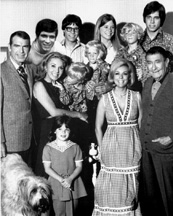
mts7

I have always felt that My Three Sons doesn’t get the respect it deserves. It consistently focused on character development. Problems do occur in the Douglas household – the boys fight and call each other names.  Real problems come up. The show ran for 12 seasons. The issues were the ones we all faced growing up – not often major but important to young people.

The show survived cast and location changes without sacrificing quality. Bub left and Charley came on board. Mike got married and moved away so Ernie took his place. The family moved from New York to California.  Robbie met Katie, went to college, and had a family of his own. Chip married and moved out of the house. Steve eventually remarried also, gaining a daughter.

mts16

I grew up with the Douglas family and appreciated what I learned from the show.  Many critics of the show complain about it, along with many of the 1960s sitcoms, being too warm and fuzzy. I do understand that some kids in the 1960s and 1970s were exposed to awful home situations with abuse or addiction, but that was not reality for most kids.  I too experienced living with alcoholism and the strain it caused on my parents’ marriage, but most of the issues I had to deal with were the same ones as the kids on the show:  why the boy I liked didn’t know I existed, that I told a white lie to get out of doing something I didn’t want to do, or that a friend had said something to hurt my feelings.  That was reality for me and my siblings.

The characters were fully developed and became friends and people we chose to spend time with every week. This show was on when I was born and continued on the air until I was in 7th grade – that covers a lot of nurturing lessons during those needy years. The writers did a lot of fun quirks I don’t see on other shows.  On one show I remember, Charley playing Solitaire and almost every time someone walked in the room, they pointed out a move.  It was not addressed, but continued to happen just like in real life.  In one episode, Ernie was trying to do something in the background; I forget what the actual detail was, but he was struggling to accomplish it as the other characters interacted.  His issue was never referred to; it was just there. I also appreciate in this era of shows where it isn’t unusual to spend thousands and thousands of dollars each episode on costumes, My Three Sons was more realistic.  The cast got a wardrobe for the season.  You would see them wearing the same clothing over and over just like we did.

mts2

After I grew up, the show continued to resonate with me, although I later identified more with Katie and Robbie and later with Steve. Steve Douglas was always a father figure in my life. On our first date, Dan and I went back to my place and watched My Three Sons which TV Land aired later at night. When I became pregnant with our first child, I gave him a Steve Douglas cardigan to announce the event. I began to collect My Three Sons memorabilia, including a radio that sat in the Douglas kitchen, even though we only had two boys.  Nine years after our first son was born, we found out we were unexpectedly pregnant, and I did end up with three sons.  Our youngest was named Seth, for a variety of reasons:  Seth was the third son of Adam and Eve, but also because Seth Bryant was the founder of Bryant Park where the Douglas boys grew up. My Three Sons will always have a special place in my heart, and it’s one of the shows I can watch episodes over and over and find something new each time.

mts3


July is the Perfect Time for Berry Picking

berry1

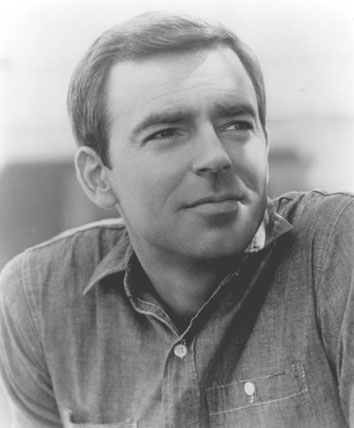
Ken Berry was born in Moline, IL in 1933. After watching a group perform when he was 13, he decided he wanted to be a dancer. He loved Fred Astaire and Gene Kelly movies, especially Easter Parade, Royal Wedding, and On the Town. At 16, he traveled with the Horace Heidt Youth Opportunity Program, performing in small towns for 15 months.

berry12

He went into the army at Fort Bragg and was in the artillery. He was then moved to an entertainment division under Leonard Nimoy. During his second year, he won the All-Army Talent competition which allowed him to appear on Ed Sullivan in 1948. Nimoy encouraged him to move to Los Angeles where he made some connections for Berry. Both 20th Century Fox and Universal offered him jobs and he accepted the Universal contract.  In 1956, he opened for Abbott and Costello for their stage act. In 1957, Berry enrolled in Falcon Studios to study acting. He worked at the Cabaret Theater, making $11 per week. The same year he won Arthur Godfrey’s Talent Show.

berry6

In 1958, he received an opportunity to join the Billy Barnes Revue. While in the Billy Barnes Revue, Berry met Jackie Joseph, and they married in 1960. His work in the BBR led to several lucrative connections. Lucille Ball saw him and offered him a job with Desilu Studios for $50 per week. Carol Burnett also watched a performance and had him on her variety show. (In 1972, she would offer him the co-starring role with her in Once Upon a Mattress, a television movie.)

berry7

The first Desilu show he had a regular role on was the Ann Sothern Show. On the air from 1958-1961, Ann played Katy O’Connor who worked at a New York hotel. Originally, Mr. Macauley (Ernest Truex) was her boss, but he was berated by his controlling wife (Reta Shaw). Katy’s best friend from her previous show Private Secretary, which aired from 1953-1957, was Ann Tyrrell as Vi.  In this show, her name is Olive. The format wasn’t working, so Mr. Macauley the hotel owner, was transferred to Calcutta and James Devrey (Don Porter also from Private Secretary) took over.  Ratings improved, and the show was renewed for another season. During this season, Louis Nye was introduced as a funny dentist in the hotel who dates and marries Olive, and Berry played bellboy Woody Hamilton, replacing Jack Mullaney.  Most of the episodes revolve around the staff and guests of the hotel. As in Private Secretary, there is a lingering romance between Mr. Devrey and Katy throughout the run of the show. The ratings fell drastically in 1961 after the show was moved to Thursdays, and the network cancelled it.

In 1961, Berry obtained a job with Dr. Kildare, appearing in 25 episodes as Dr. John Kapish. Richard Chamberlin starred in the series about a doctor working in an urban hospital under his mentor Dr. Leonard Gillespie (Raymond Massey). In the third season, Dr. Kildare was promoted to resident and the series centered on his patients. The show aired until 1966, but Berry left the show in 1964. This was one of the shows that paved the way for Marcus Welby, MD and the medical dramas today including ER and Gray’s Anatomy.

berry13

He also appeared on several shows in the early 1960s: The Jim Backus Show, Hennesey, Ensign O’Toole, The Dick Van Dyke Show, Hazel, and No Time for Sergeants, among others.

berry3

In 1965, he was offered the lead in F-Troop. The show was set during the Civil War.  Berry played Will Parmenter.  At a critical moment during the Battle of Appomattox, Will gets credit for the defeat.  He is a private and was sent to get his commanding officer’s laundry. He was sneezing continuously, but the men thought he was saying “Charge,” so they did.  They won a decisive battle, and Will was promoted for his quick decision-making skills and bravery. He was then promoted to Fort Courage.

berry5

The cast had a crazy bunch of characters. The NCOs at the fort, Sergeant O’Rourke (Forrest Tucker) and Corporal Agarn (Larry Storch) are always scheming to raise money. The Hekawis tribe, with Chief Wild Eagle (Frank de Kova) worked on shady business deals with them. Although the officers manipulate Will, they are also protective of him. Melody Patterson plays Jane Thrift, Will’s girlfriend, who is always pressuring him to propose. The show relied on a lot of puns, slapstick, and running gags.

When F-Troop was cancelled two years later, Berry headlined the cast of Mayberry RFD as widower Sam Jones because Andy Griffith was leaving the show. Since Andy and Helen had married and moved away, Aunt Bee became Sam’s housekeeper. Sam and his son were introduced in Griffith’s final season when Sam is elected to the town council. Arlene Golonka plays Millie, Sam’s love interest. The show was rated as high as 4th and only as low as 15th, so it continued to pull in good ratings, but in 1971, the show was cancelled in the general “rural house cleaning” that the network performed getting rid of any shows such as Green Acres, Beverly Hillbillies, Petticoat Junction, etc.

During the late 1960s and 1970s, he was on 14 shows including The Danny Thomas Show, The Lucy Show, Love American Style, The Brady Bunch, and The Love Boat.

berry18

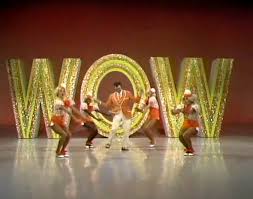
The network developed a show Ken Berry WOW, a variety show that lasted five episodes that Berry was not wowed with. In 1973, Sherwood Schwartz wrote a pilot for a Brady Bunch spinoff called Kelly’s Kids. The concept of the show was that Berry adopts three boys, one white, one African American, and one Asian. No network showed an interest in the show.

One of the most unusual jobs he had occurred in 1976.  An album called “Ken Berry RFD,” where he sang, backed by a full orchestra, was released. He and Joseph divorced that same year. Joseph later remarried and continued to have a long and full career.  She appeared on a variety of sitcoms including Designing Women, Full House, Newhart, Love American Style, Petticoat Junction, That Girl, Hogan’s Heroes, McHale’s Navy, F-Troop, and the Andy Griffith Show. She also had a productive movie career, including Gremlins, The Cheyenne Social Club, With Six You Get Eggroll, Who’s Minding the Mint, and Little Shop of Horrors.

Taking a break from television, Ken went on the road, performing in stock shows around the country.  He also played Caesar’s Palace between Andy Griffith and Jerry Van Dyke.

berry16

He returned to television to join the cast of Mama’s Family with Vickie Lawrence. The show derived from a skit on the Carol Burnett Show which led to a TV movie called Eunice. It featured the Harper family and their neighbors and friends. The matriarch is Thelma Harper (Lawrence) who speaks her mind freely. She is hot tempered and sarcastic, but she loves her family as she berates them. And they typically deserve a berating. They move back in with her and are happy to have her clean and cook for them as well.

For the first season and part of the second, the show was on NBC. Thelma lives with her spinster sister Fran (Rue McClanahan) who is a journalist. After Thelma’s daughter-in-law leaves her family, they move in with Thelma. Her son Vint began a relationship with Thelma’s next-door neighbor Naomi Oates (Dorothy Lyman). Her children from the Burnett sketch, Ellen (Betty White) and Eunice (Burnett), along with hubby Ed (Harvey Korman) are seen during this time.

berry17

The show was cancelled after two years and went into syndication.  The reruns were so popular, 100 new episodes were ordered. A new set had to be constructed and some cast adjustments were made as well. Lawrence, Berry and Lyman were the only original characters on this new version. Since White and McClanahan were now starring on The Golden Girls, and Burnette and Korman chose not to return, a new character was created. Mitchel (Allan Kayser) was Eunice’s son who was always getting into trouble. Another addition was Beverly Archer who played Iola Boylen, Thelma’s neighbor and best friend.

Once Mama’s Family was cancelled the second time, Berry traveled around the country, appearing in “The Music Man”, “Gene Kelly’s Salute to Broadway”, and “I Do I Do” with Loretta Swit. He also went back to television for brief appearances on several shows including CHiPs, Fantasy Island, Gimme a Break, Small Wonder, Golden Girls, The New Batman, and Maggie Winters.

berry20

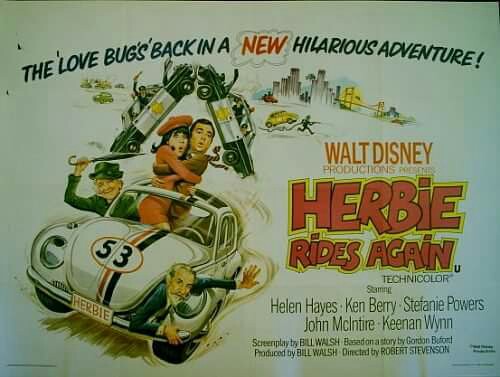
Berry also appeared in six movies including Two for Seesaw (1962), The Lively Set (1964), Hello Down There (1969), Herbie Rides Again (1974), Guardian of the Wilderness (1976), and The Cat from Outer Space (1978).

Guardian of the Wilderness was based on the life of Galen Clark who convinced Abraham Lincoln to make Yosemite Park the first public land grant. It covers a series of unusual adventures Clark had as he battled lumber companies to save wilderness land.  One of my favorite quintessential 1960s movies was Hello Down There.  Tony Randall and Janet Leigh star.  Randall is an architect who creates an underwater home.  To prove a family could live there, he cajoles his family to moving there for the summer.  His kids are in a band so they force him to take the entire band or no one.  Charlotte Rae is their housekeeper. Berry plays a rare role for him as the bad guy.

berry19

Early in his career, Ken appeared in a variety of commercials. From the mid-1970s to the mid-1980s, he was the spokesman for Kinney Shoes.

He appeared in two game shows, Hollywood Squares and Tattletales.  He also starred as himself on a variety of shows including Art Linkletter, Joey Bishop, Leslie Uggams, Jim Nabors, Julie Andrews, Sonny and Cher, Dean Martin, Laugh In, and Mike Douglas.

berry10

Berry retired in 1999. Berry loves cars and was an avid motorcyclist and camper.

Although Berry was never in a hugely successful series, he had a long and full career that any actor would be proud of.  Hopefully his well-deserved retirement has been fun and full of memories.

berry2

The Friendship and Careers of Fred Gwynne and Al Lewis

Fred Gwynne was born in New York in July of 1926 and died in Maryland in 1993.  Al Lewis was born in New York in April of 1923 and passed away in New York in February of 2006. At first glance, they don’t seem to have a lot in common, but a closer look reveals why they enjoyed a long friendship.

Fred Gwynne

Fred Gwynne grew up in New York and had a very wealthy and advantaged upbringing.  He was a radioman in the Navy during World War II.  When the war was over, Gwynne entered Harvard, studying drawing and dramatics. He became a member of their Hasty Pudding Club, being involved with many theatrical productions. Gwynne graduated in 1951 and went on to work for a Shakespeare repertory company. He was a talented man with a variety of interests and earned his living from several careers.  He was a copywriter, a musician, a book illustrator, and a commercial artist.

gwynne2

In 1952, he made his Broadway debut, acting with Helen Hayes in “Mrs. McThing.” The play ran for 320 performances.  In 1953, he performed in his second Broadway play, “The Frogs of Spring” which had a much shorter run.  In 1954, he had a small role in On the Waterfront with Marlon Brando.

He also began appearing on television in the 1950s, and most of his roles were on dramas such as Kraft Theater or DuPont Show of the Week.

The one exception was The Phil Silvers Show where he appeared in 1955 and 1956. The producer of this show, Nat Hiken, went on to create a similar show called Car 54 Where Are You? about New York policemen.  He cast Gwynne as one of the leads, Francis Muldoon. The show ran for two seasons and when it was cancelled, Gwynne went back to his theatrical dramas.

In 1964, the creators of Leave It to Beaver, decided on a different concept for a show called The Munsters.  Fred was cast as the lead role.  While this show also ran two years, the part of Herman Munster was much harder to overcome than Francis Muldoon had been.  Gwynne struggled to find new roles, and when he was unsuccessful, he went back to Broadway.  He did make one pilot during these years for a show called Guess What I Did Today, but no network picked it up. His favorite Broadway performance was Big Daddy in 1974 when he starred in “Cat On a Hot Tin Roof.”

gwynne7bigdaddy

During the 1980s, his cinema career picked up and he ended up with 15 movies to his credit from 1979-1992. Included in this list are The Cotton Club, The Secret of My Success, Fatal Attraction, Ironweed, Pet Sematary, and My Cousin Vinny.

His book writing and illustrating also continued.  His first book, The Best in Show, was published in 1958.  The King Who Rained came out in 1970, and Simon and Schuster published A Chocolate Moose for Dinner in 1976 and A Little Pigeon Toad in 1988.

Throughout most of his career, Gwynne lived a quiet life far from Hollywood. He was married to his first wife Roxy from 1952-1980 and his second wife from 1981 until his death from pancreatic cancer in 1993.

Al Lewis

Al Lewis claimed he was born in 1910 and was a circus performer in the 1920s.  He also said he went to Columbia and graduated with a PhD in child psychology.  After he passed away, his son confirmed that he was born in 1923, and Columbia had no record of him attending school with his given name or his stage name.  His son thought he made himself older to get the role of Grandpa in The Munsters because in real life Yvonne DeCarlo was a year older than he was.

Some of his other jobs included a salesman,  hot dog vendor for the Brooklyn Dodgers, waiter, pool room owner, and store detective.  He was a good basketball player in high school and apparently worked as a basketball scout at some time in his early life. A friend convinced him to join an actor’s workshop in 1949 and that led to a career in vaudeville. In the 1950s and 1960s, he appeared in a variety of TV shows including US Steel Hour, Route 66, Lost in Space, and Gomer Pyle.  He too was cast in the Phil Silvers Show which later resulted in his role of Patrolman Leo Schnauzer in Car 54 Where Are You?
lewis8

In 1964, he too was offered a role in The Munsters. In 1966 when the show went off the air, he continued making television appearances and starred in cinema movies.  During the 1970s and 1980s, he appeared on Night Gallery, Green Acres, Love American Style, Here’s Lucy, Taxi, and Best of the West.  His career featured 22 films including They Shoot Horses Don’t They, Boatniks, Used Cars, Married to the Mob, and a remake of Car 54 Where Are You?

lewis5shoothorses

Like Gwynne, he was married twice:  to Marge from 1956-1977 and to Karen from 1984 until his death from heart complications in 2006. Lewis also published several children’s books during his acting career.

Midway through his career he opened an Italian restaurant, Grandpa’s Bella Gente, which Gwynne designed the logo for. He also got into radio and was featured on Howard Stern’s Show often.

lewis6

It is surprising that both of these stars were in two sitcoms which both lasted only two years. Let’s take a look at the shows that made them household names.

Car 54 Where Are You?

gwynnelewis4

This sitcom, set in the 53rd precinct in Brooklyn was an early Barney Miller. Gwynne played Francis Muldoon.  His partner, Gunther Toody, was his exact opposite.  While Muldoon was a bachelor, an intellectual, calm and quiet, Toody was married, naïve, excitable, and talkative. In one show, when the precinct is debating splitting up the two men, Muldoon says “I guess most of the men are smarter than Gunther and less trouble than Gunther, but  . . . well, I’m so used to Gunther.  When he chatters away, the days just fly by.  I’d just be lost without Gunther.” Gunther concurs, “You mean ride around with someone next to me that’s not Muldoon? Francis is a quiet man. He doesn’t say a word. He just sits there all day thinking. It’s very comforting for a man like me to know there’s someone next to him doing the thinking for both of us.” Of course, they split them up only to partner them up again because no one else could take the silence or constant chatter.

Al Lewis played Officer Leo Schnauzer, appearing in every episode.

Policemen were split on their view of the show.  Some took offense and felt they were portrayed in a negative light, while others enjoyed it and identified with some of the comedic elements. It was filmed in The Bronx at Biograph Studio.  There was a large sign out front identifying it as the 53rd precinct till a woman came in pleading to save her from her abusive husband and the sign was quickly taken down.

Originally titled Snow Whites, the show aired at 8:30 eastern time Sunday nights between The Wide World of Disney and Bonanza.  The only clue I could find for the original name was that the show was sponsored by Proctor and Gamble who made several detergents for clothing. It was filmed in black and white, but the police cars were red and white so they would show up better on black and white film. The show also starred Beatrice Pons, Charlotte Rae, Nipsey Russell, Alice Ghostley, and Larry Storch.

Perhaps what the show is best remembered for was its catchy theme song.  Anyone who viewed an episode or two can probably remember the fun lyrics:

There’s a hold up in the Bronx, Brooklyn’s broken out in fights.

There’s a traffic jam in Harlem that’s backed up to Jackson Heights.

There’s a scout troop short a child; Kruschev’s due at Idlewild . . .

Car 54, where are you?


The Munsters

gwynnelewis1

In 1964, the creators of Leave It to Beaver decided to feature another “wholesome” family who just happens to live at 1313 Mockingbird Lane in Mockingbird Heights. The family consists of Grandpa who is always experimenting in his lab; Herman who is the funeral director at Gateman, Goodbury, and Graves; his wife Lilly, a vampire; their son Eddie who is a werewolf; and their beautiful black-sheep Marilyn.  Marilyn was beautiful but they viewed her as odd looking and she seemed to get a lot of dates but when she brings them home, they never ask her out again. The family also owns two pets – Spot, a prehistoric animal Grandpa rescued and Igor, a bat.  They lived a somewhat normal life but drank bat milk and cooked in a cauldron. On the hour, a cuckoo clock chimed and a raven, voiced by Mel Blanc, appeared and said “Nevermore.”

gwynne4

All the actors had to endure a two-hour make-up session, but Gwynne had the worst time because he had to wear 40-50 pounds of padding.  One day he lost 10 pounds filming under the lights.  They gave him gallons of lemonade between takes and later rigged a way to blow cool air on him underneath the material.

The entire family could have been played by different actors.  John Carradine was offered the role of Herman. The pilot featured Joan Marshall as the wife and instead of Lilly, her name was Phoebe. Marilyn was played by Beverly Owens for 13 episodes and then Pat Priest took over for the rest of the show’s run. Eddie was first offered to Bill Mumy, Will Robinson from Lost in Space, and Grandpa to Bert Lahr from The Wizard of Oz.

After the show was cancelled, the Munster mobile often traveled to memorabilia shows.  There was also a Dragula built with purple silk upholstery and chrome pipes for the exhaust. Although the show was only on the air for two years, there were a lot of collectibles such as board games, lunch boxes, paper dolls, and coloring books.

gwynnelewis6

In 2001, the McKee family of Waxahachie, Texas was such a huge fan of the show that the family built their 5000+ square foot house to exactly resemble the Munsters’ home including the crooked weather vane and grand staircase that lifted up to feed Spot.

Both Gwynne and Lewis were born in New York.  They both appeared on the show Brenner early in their careers. Both were tapped from their roles in The Phil Silvers Show to play roles on Car 54 Where Are You? They both went on to star in The Munsters.  Neither of them ever had another series.  They both chose to live on the east coast. They both wrote children’s books.  They were each married twice and married to their second spouse for the rest of their lives. They both had a lot of success in the movies as well as television. They were both men with fascinating careers before they ever entered acting.  I learned a lot about these interesting friends.  Happy Birthday to Fred Gwynne would have been 91.

I Don’t Have a Free Toothbrush For You, But . . .

Are you feeling comfortable?  You might want to lean back, put on a pair of plastic glasses, and say Ahhh.  Sorry, I guess I’m getting carried away by our topic today.  March 6 is National Dentists Day.  I thought it might be fun to delve into some shows that featured dentists.  Apparently, the average viewer finds nothing funny about dentists.  They are hard to spot on the small screen.  Perhaps it brings back too many pain-filled memories of the sound of drills and mouths so numb you bite your lip without realizing it. Finding dentists on television was like pulling teeth – sorry I’m getting carried away again. Let’s look at a few of them.

When we think of television dentists, most of us probably conjure up pictures of Jerry Helper (played by Jerry Paris) on The Dick Van Dyke Show or Jerry Robinson (played by Peter Bonerz) on The Bob Newhart Show. These two shows can make anything funny, even dentists.

Jerry and Millie Helper are the Petries’ next-door neighbors and best friends on The Dick Van Dyke Show.  Jerry is a dentist, and Millie is a stay-at-home mom with a son the same age as Richie, Rob and Laura’s son.  Jerry is a kidder and his comments often get him in trouble.

One episode, “Punch Thy Neighbor” from the first season, shows Jerry taking his teasing too far.  Jerry and Millie are watching the Alan Brady Show with Rob and Laura, and Jerry makes comments about how bad it is. Rob isn’t happy, but the next day he gets mad when several people, including the Helpers’ son Freddie and the milkman, tell Rob Jerry mentioned how bad the show was. Rob goes to talk to Jerry and ends up punching him accidentally. When he attempts to show Laura how it happened, he hit her as well. Richie tells Millie his dad hit his mom, and she sends Jerry over to get Rob under control.  Jerry walks in seeing Rob yelling, not knowing it’s because he tripped over a toy.  Trying to calm him down, Jerry wrestles him to the floor. Jerry realizes he was out of line with his joking.  You would think he learned his lesson, but at the end of the episode, Jerry starts again, and Rob hits him in the face with a pie. Like all the Dick Van Dyke episodes, this one is true to life, well written, and funny.

I’m sure it was also well directed, although not by Jerry Paris.  However, Paris kept nagging Reiner to let him direct.  Once he did a couple of shows, Reiner realized that “he understood our show more than any of the other directors.” In 1963-64, Paris won an Emmy for directing the show.  He directed 84 of the 158 episodes. After The Dick Van Dyke Show ended, he went on to direct many shows including 2 episodes of The Partridge Family, 3 episodes of Love American Style, 3 episodes of The Mary Tyler Moore Show, 7 episodes of The New Dick Van Dyke Show, 18 episodes of The Odd Couple, and 237 of the 255 episodes of Happy Days.

From 1972-1978, Jerry Robinson was Bob Hartley’s best friend on The Bob Newhart Show.  Bob realizes his friends and family are not any more emotionally stable than his patients; they just get his advice for free. Jerry is an orthodontist, and he shares a receptionist with Bob. When interviewed about his character, Bonerz said “Jerry Robinson was written by 25 guys. It was my job to make those 25 different versions of Jerry the dentist credible.” Robinson was a swinging single, slow to trust others, and easily angered. Yet, his character was likeable, and he credited that to a well-balanced cast who all made each other better.  They were like a close family; you don’t always approve of your family members, but you love them.  Bonerz’s theory was that Bob Newhart was the psychologist/listener of the family, and that role made everything else fall into place. If you needed a root canal, Dr. Helper might be more proficient, but you would enjoy the conversation during the procedure more with Dr. Robinson.

36blog

One dentist who was a critical component of a show, although most people don’t remember him, was Dr. Barry Farber.  Dr. Farber is the man Rachel Green was supposed to marry on Friends, but she left him at the altar, ending up living with Monica and meeting a new group of friends.

Several other shows, not as well-known as these three, also featured a dentist in their cast.

img0102A

Doc Corkle was on the air in 1952.  Doc, played by Eddie Mayehoff, was a neighborhood dentist.  He lived with his father (Chester Conklin) and his daughter (Connie Marshall). Poor Doc has some money problems.  The biggest financial setback was the fact that the network cancelled the show after only three episodes.

TSDIMAB EC001

I’m a Big Girl Now featured Diana Canova who played a divorced woman, Diana Cassidy, who goes home to live with her father Benjamin Douglass, a dentist (Danny Thomas).  His partner and his wife have run off to Spain.  Diana also has a daughter Rebecca and a neurotic brother named Walter. The show was cancelled mid-season.

36blog7

Charley Shanowski, played by Ted McGinley, is a dentist on Hope & Faith.  His wife Hope (Faith Ford) is a stay-at-home mom with three children.  Her sister Faith (Kelly Ripa) was a soap opera star whose character was killed off on the show.  She moves in with her sister but expects to be treated like the star she used to be.  Charlie does not like Faith and spends a lot of his time trying to get her to leave.  We can understand why.  It seems like every time a dentist has a show where a family member moves in, the network cancels the show.  At least this show made it three seasons instead of three episodes before it got pulled.

Probably my favorite show with a dentist was an episode of The Carol Burnett Show. Like so many of the funniest episodes, this one featured Tim Conway (the dentist) and Harvey Korman (the patient). When interviewed about the skit, Conway said that memorable sketches often create themselves.  “The novocaine portion of the dentist sketch wasn’t planned—it just happened. That’s the magic of comedy; you never know when it is going to sneak up on you and make you laugh.” The dentist skit was based on Conway’s real-life dentist who stuck the needle of novocaine into his own thumb while working on a patient. Korman didn’t know Conway was going to put that in the sketch.

Last, but not least, I wanted to mention Edgar Buchanan, Uncle Joe in Petticoat Junction.  Buchanan earned a DDS degree from North Pacific College of Dentistry in Oregon. His father was also a dentist. During the time he was a pre-med student, Edgar took acting classes at the University of Oregon and eventually left dental school to take a position in their drama department. His father convinced him to finish his dental degree first.  When he returned to North Pacific he met Mildred Spence, another dental student.  They graduated in 1928. After marrying, the couple moved back to Eugene, Oregon where they opened a private practice. From 1930-1937, Edgar was chief of oral surgery at the Eugene Hospital Clinic but also worked as an assistant director in the University of Oregon drama department. In 1939, the couple moved to Pasadena. When Edgar appeared in a production at the Pasadena Playhouse, he received his first film offer.  So, at the age of 36, he turned over the practice to his wife and became an actor.  He appeared in more than 100 films between 1941 and 1974. He was the only cast member of Petticoat Junction to appear in all 222 episodes.

Apparently dentists are not too popular.  There are a handful of shows about them while there are tons of shows about attorneys.  But dentists are our friends, so to celebrate their day today, take a moment and watch the following:

www.liftable.com/edwardtofil/tim-conway-made-harvey-korman-wet.

Tim Conway talks about The Dentist episode to Conan O’Brien and they play a clip from it. If you watch it enough times, you might not actually look forward to going to the dentist, but you might not dread it as much. And if you’re a hopeful television creator, write a show about dentists.  They’re due for a big hit.

I’ll Take Paul Lynde for the Win

pl1

Today we are talking about the career of Paul Lynde.  Paul Lynde was an icon when I was growing up; he was probably best known at that time as the center Hollywood Square, the voice of Templeton the Rat in Charlotte’s Web, and Uncle Arthur on Bewitched.  His life encompasses both a unique and successful career as a comedian loved by many fans and the all-too-common saga of a star’s life ruined by drugs and alcohol. Many of the things you read about Paul Lynde concerning his behavior and cruel things he said to others are disheartening to a fan, but I learned that the characters I loved growing up (and continue to as an adult) are the characters, not the actors and actresses behind them.  With a few exceptions such as Fred MacMurray, Jimmy Stewart, or Cary Grant, most stars don’t live up to our illusions of them. Although truth be told, if someone studied our entire lives and wrote about them, there are probably parts of them we would not want the world to learn about either. I wanted to talk about Paul Lynde’s career, because although he was extremely well known during my youth, most young adults today probably have no idea who he is.

Paul was born in Mount Vernon, Ohio, one of six children.  His father was a local police officer and for a time, the family lived above the jail when his father was the sheriff of the jail.  Like many youngsters growing up in the 20s and 30s, he became interested in acting when he went to the movies  with his mother. The first movie he remembered was Ben Hur.  That interest propelled him to Northwestern University where he studied drama.  After school, he relocated to New York City where he worked as a stand-up comedian and then received a part in a Broadway show, “New Faces of 1952.” Alice Ghostley, who would be featured on Bewitched was also in the show. In 1963 he recorded a comedy album. From then on he was a popular guest, television star, and movie celebrity. His unique delivery of his sarcastic one-liners made him a popular entertainer.  There is not a lot of difference between the role of Uncle Arthur and his humor and delivery on Hollywood Squares.

He starred in several television series including Stanley with Buddy Hackett and Carol Burnett where he played a hotel owner in 1956-57 and The Pruitts of Southhampton with Phyllis Diller in 1967. From 1965-71, he was on Bewitched where he played Harold Harold a driving instructor the first season and then became a regular in the role of Uncle Arthur, Endora’s brother.  Surprisingly, the character of Arthur only appeared in ten episodes of the series. After Bewitched, he starred in The Paul Lynde Show where he played an attorney with two daughters and a liberal-minded son-in-law. Stiller and Meara were also on the show which was done to satisfy his contract with ABC in place of the ninth season of Bewitched. The show was up against The Carol Burnett Show and Adam-12 so it was cancelled, but he was nominated for a Best Actor Golden Globe award. His last starring role in television was in New Temperatures Rising where he played a penny-pinching doctor running a hospital owned by his mother.

Paul appeared on Hollywood Squares for 15 years (801 episodes).  In addition to that game show, he accumulated 80 credits playing himself on a variety of shows including Donny and Marie, Password, The 10,000 Dollar Pyramid, Dean Martin Roasts, The Carol Burnett Show, The Mike Douglas Show, and on several Paul Lynde Comedy Hour specials.

He appeared on a variety of television shows – 33 in all.  In addition to those he starred in, he was also in The Phil Silvers Show, The Patty Duke Show, The Jack Benny Show, The Munsters, Gidget, F-Troop, That Girl, I Dream of Jeannie, The Mothers-in-Law, The Flying Nun, and three episodes of Love American Style.  Had he lived a few years longer, I’m sure we would have seen him cruising the ocean on The Love Boat.

In addition to his television work, he also appeared in 18 movies between 1956 and 1975. He and Dick Van Dyke were the only Broadway performers from Bye Bye Birdie to be cast in the movie version.  He was also in Beach Blanket Bingo, and two of my favorites, Send Me No Flowers and The Glass Bottom Boat, both Doris Day movies.

Although he was gay, he did not discuss his sexual orientation, and the media respectfully did not report on it either.  In 1965, his partner and companion Bing Davidson died. They had been out drinking and Bing thought it would be funny to pretend to dangle from a hotel balcony but fell to his death.  Whether this exacerbated his alcohol and drug problems isn’t known, but Lynde’s health suffered from his addictions and he was arrested for public intoxication frequently. In 1980 he went through a successful rehabilitation, becoming sober and drug free.  Unfortunately, the damage that was done to his body was extensive, and he died from a heart attack in January of 1982 at age 55.

Some other interesting facts are that he was friends with Elizabeth Montgomery and her husband William Asher, he purchased Errol Flynn’s Hollywood Mansion, he was a dog lover, and he was one person who was able to appear on The Ed Sullivan Show while singing a song from Bye Bye Birdie about being on The Ed Sullivan Show. He was also a chef and considered opening a restaurant. To see some of his recipes, visit www.paullynde.info.

pl9

To truly appreciate Lynde’s comedic personality, here are a few lines from Bewitched and Hollywood Squares.

To Endora, his sister, on  Bewitched:  “Endora when I think of you as a blood relation, I long for a transfusion.”

On Bewitched, telling a story, “Then I spent the summer hunting lions with the British expedition. One morning I shot a lion in my pajamas. Now, what he was doing in my pajamas, I’ll never know.”

Answers on Hollywood Squares:

Peter Marshall: According to Ann Landers, what are two things you should never do in bed?

Paul Lynde: Point and laugh.


Peter Marshall: According to the IRS, out of every 10 Americans audited, how many end up paying more taxes?

Paul Lynde: 11.


Before a cow will give you any milk, she has to have something very important. What?

Paul Lynde: An engagement ring


Peter Marshall: Fred Astaire says, his mother has been trying to get him to do this since he was 35. But he hasn’t done it and says he won’t do it until he’s ready. Do what?

Paul Lynde: Move out of the house!

pl14

Perhaps the award that best sums up Lynde’s career was bestowed upon him in 1976 when he received the Entertainer of the Year Emmy for the funniest man of the year. If you don’t know much about Paul Lynde, check out some of the youtube videos from Hollywood Squares or watch a few of his episodes from Bewitched. Although not as well known today, his influence on present-day performers is wide spread and his career deserves to be remembered and celebrated.