F-Troop: Braving Fort Courage

As we start our July blogs, the theme is Military Upended. We’re taking a look at military sitcoms and up first is F Troop. This was a western sitcom set in the 1860s. It debuted on CBS in September of 1965 and ran for two seasons.
📷imdb.com

If you and your siblings argue about whether this show was in color or black and white, you’re both right. The first season was in black and white, and the second season was produced in color.

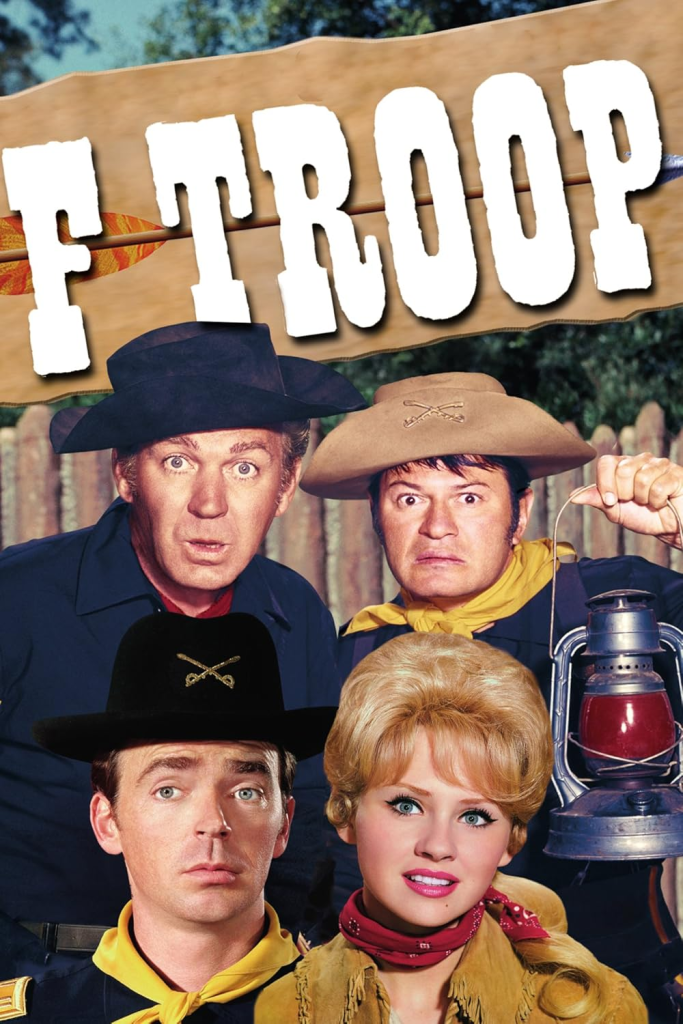
The characters lived at Fort Courage, an army outpost. Captain Wilton Parmenter (Ken Berry) runs, or tries to run, the fort. One of the running gags is that Parmenter comes from a long line of military heroes that stopped with him. However, he served during the Civil War. After being told to pick up the general’s laundry near Appomattox, he begins sneezing. Union soldiers think it’s a command to charge which turns the tide of the battle. Then while Parmenter’s father is pinning the Medal of Honor on him for this feat, he pricks his chest, drawing blood for which they gave him a Purple Heart.

Parmenter is sent to Fort Courage where all the captains have failed. Two of the three commanders before him deserted, and one had a nervous breakdown there.

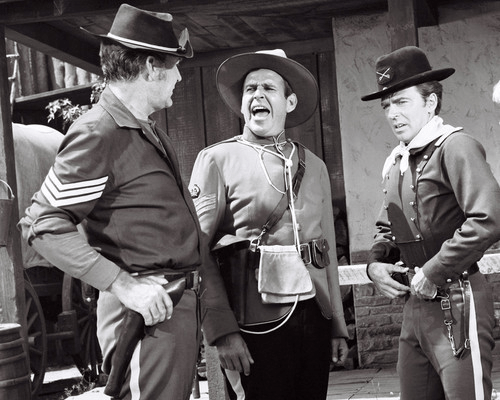
Parmenter is “aided” by Sergeant O’Rourke (Forrest Tucker) and Corporal Agarn (Larry Storch). However, these two are there just to make a quick buck however they can; they often work with Chief Wild Eagle (Frank de Kova) to find the next shady business deal. For example, the government thinks 30 men are at the fort; in reality, it’s 17 and the pay for the other 13 is put into a fund by the two men to fund their plans. However, the two men, while willing to take advantage of his gullibility, do like Parmenter and protect him. Parmenter is kind and well meaning.
📷starstills.com

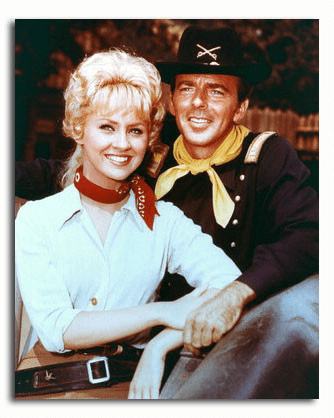
What Wil really needs protection from is marriage. The local store owner-postmistress Jane (Melody Patterson) has set her cap for him. She’s a beautiful tomboy who knows what she wants and usually gets it. She is also a telegrapher and is the best sharpshooter in the territory. She often rescues Wil with her good aim.

Patterson auditioned for this role at age 15, lying about her age. The show didn’t find about that till half-way through the first season. When the series started, she was 16 and Berry was 32. During the second season, when she turned 17, the producers allowed a more serious relationship between the two.

Rounding out the cast was Private Dobbs (James Hampton), a bugler who only knows two songs; Trooper Vanderbilt (Joe Brooks), the lookout who is almost blind; and Trooper Duffy (Bob Steele) the lone survivor of the Alamo who is too old to help much.

We also get to know several members of the Hekawis tribe headed by Chief Wild Eagle. They are 50/50 partners with O’Rourke and Agarn. They make souvenirs for sale and produce whiskey. They claim to be a peaceful nation because most of them are cowards like the men at the fort. The Chief has many wise sayings and often gives advice although when asked to explain some of them, he says he has no idea. His second in charge is Crazy Cat (Don Diamond).

📷imdb.com

Not surprisingly for the time, none of the tribal members are played by Native Americans. There is a lot of politically incorrect dialogue on the show. The Hekawe (pronounced “heck-ow-ee”) tell the story of how they got their name: Two indigenous people fell off a cliff and one asked “Where the heck are we?” which they chose for their name.

A lot of stereotypes exist not only about Native Americans but military heroes and the west in general. History is presented tongue in cheek with characters showing up who never would have been there and sly references to things that were happening in the sixties.

A number of guest stars somehow end up at Fort Courage. These include Jamie Farr, Bernard Fox, Zsa Zsa Gabor, Harvey Korman, Paul Lynde, Lee Meriwether, Julie Newmar, Vincent Price, and Don Rickles.

The popular theme music was composed by William Lava with lyrics by Irving Taylor. Lava had more than 500 television credits for composing. While he worked in animation a lot, he composed for Dr. Kildare, The Twilight Zone, Wagon Train, and 77 Sunset Strip. His collaborators included Henry Mancini and Sammy Kahn.

The series featured a lot of great writers including Stan Dreben who wrote for Green Acres, Seaman Jacobs and Howard Merrill from The Dick Van Dyke Show, and James B. Allardice who wrote for a lot of shows including My Three Sons and Hogan’s Heroes.
📷themoviestore.com

Storch was nominated for an Emmy Award for his role. His competition included Brian Keith for Family Affair, Bob Crane from Hogan’s Heroes, and Don Adams from Get Smart who won. I admit I was surprised to see his nomination given the classic television sitcoms that were on the air at the time.

ABC placed the show on Tuesday nights for season one which helped its ratings because there wasn’t a lot of competition. It was up against Red Skelton which was waning in its popularity, and it followed McHale’s Navy, and the same type of audience who enjoyed that show probably liked F-Troop as well.

After the second season, the show was ranked 40th out of 113 shows. According to Forrest Tucker, Warners Brothers was sold to Seven Arts, and they made the decision to cancel the show because they felt it used too much of the Warner Ranch for its setting and they weren’t thrilled about the added costs of producing this one in color.
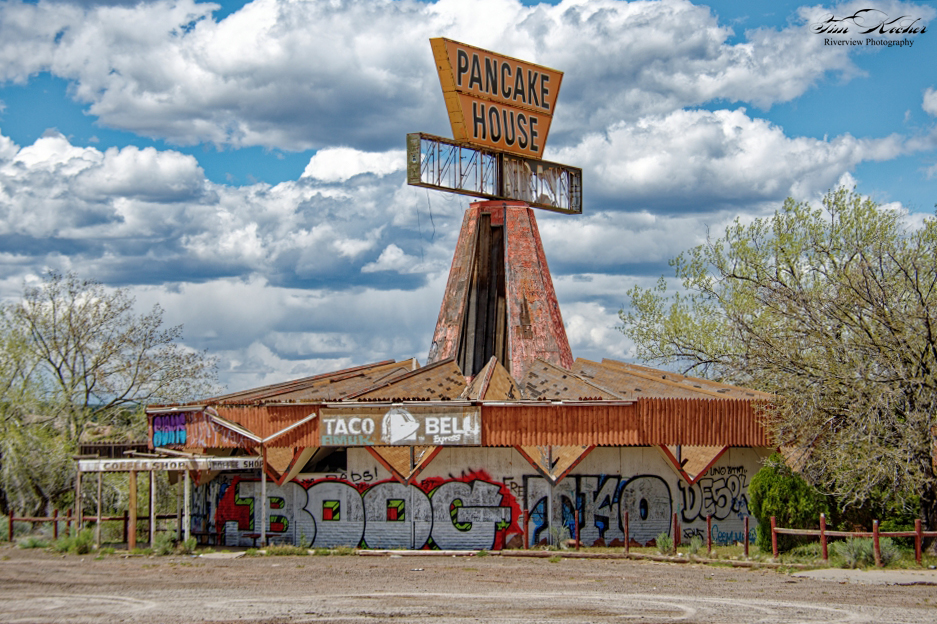
📷facebook.com

Fun fact, a replica of the fort was built in Houck, Arizona on Route 66. The Fort displayed F-Troop props, and they sold F-Troop merchandise. Among the amenities were a coffee shop, gas station, grocery store, pancake house, trading post, motel units, trailer park, and campground.

This show is a tougher one to evaluate now. Like so many shows from this era, Native Americans were not portrayed respectfully. However, truth be told, Natives were often portrayed as smarter than white men on this show. Like The Simpsons, everyone on this show was made fun of. It could be compared to The Phil Silvers Show or Hogan’s Heroes. It does have the military money-making schemes that Sergeant Bilko attempted but that was seen as a small part of a respectable military.

For me there was too much emphasis on slapstick humor apart from some of the uncomfortable dialogue. If you want to check it out and see what you think, which is what I always recommend, the series is available on DVD. It’s also on Prime and Roku.

Love American Style: Love and the Celebrities

📷groovyhistory.com

This month we are starting a new blog series, Casting Celebrities. We’re going to take a look at four shows that featured a group of celebrities every week. We’ll learn more about Love, American Style; Fantasy Island; The Love Boat, and Supertrain. When we discuss Supertrain, we’ll also look at the small number of stars who appeared on all four shows.

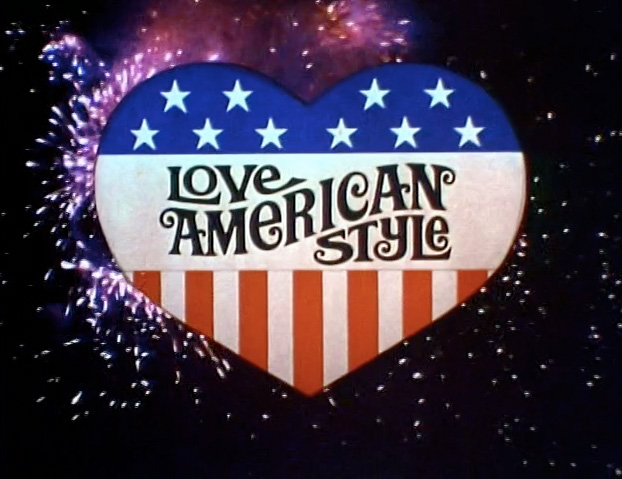
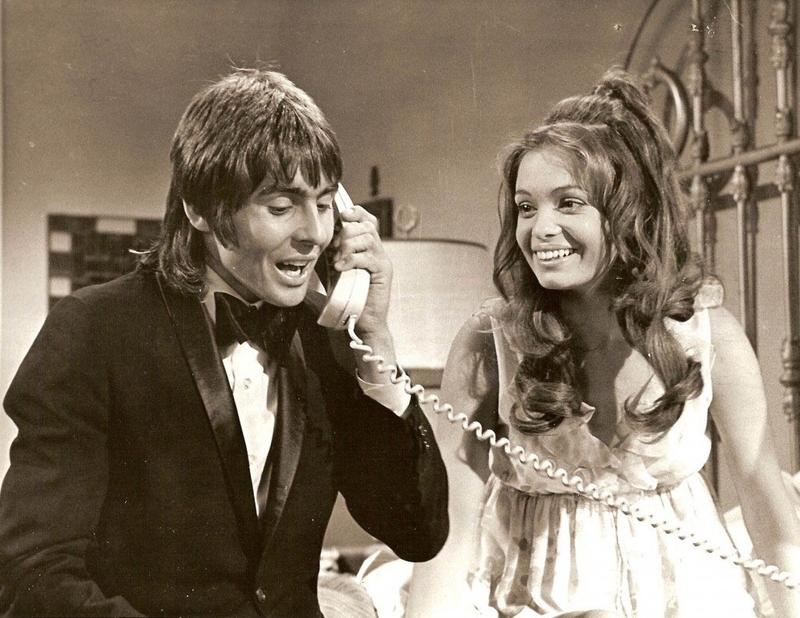
Today we begin with Love, American Style. This show was an iconic 1970s show. Like Laugh In, the clothing, furnishings, and vocabulary do not make it timeless. But it was a lot of fun. This fast-paced anthology series featured two to four mini episodes each week, and between them were quick skits, often featuring a brass bed. Each smaller episode is titled “Love and the _______.”

📷gms.com The regular cast

A troupe of players was featured on each show for the in-between skits. These regulars included William Callaway, Buzz Cooper, Phyllis Davis, Mary Grover, James Hampton, Stuart Margolin, Lynn Marta, Barbara Minkus, and Tracy Reed. Margolin went on to a regular role in The Rockford Files; Tracy Reed was featured in McCloud and Knot’s Landing; Phyllis Davis was part of the cast of Vega$ and Magnum PI, and James Hampton will be familiar if you watched The Doris Day Show or F-Troop.

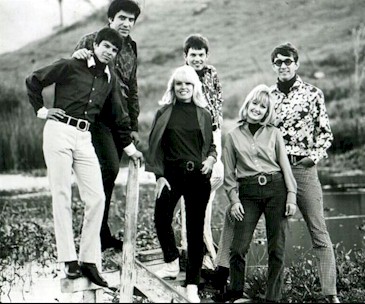
The show had a memorable and catchy theme song. Written by Arnold Margolin, the first year it was performed by The Cowsills. The snappy melody was set to the following words:

Love, Love, Love

Love, American Style,
Truer than the Red, White and Blue.
Love, American Style,
That’s me and you.

And on a star-spangled night my love,

My love come to me.
You can rest you head on my shoulder.
Out by the dawn’s early light, my love
I will defend your right to try.

Love, American Style,
That’s me and you.

📷imdb.com

During the second and subsequent years that Love, American Style was on the air, the theme song was performed by the Ron Hicklin Group. The Ron Hicklin Group could be heard in a variety of motion pictures and commercials, and they also appeared on recordings with stars such as Paul Revere and the Raiders and Cher. John and Tom Bahler, brothers who sang under The Charles Fox Singers were also part of this group. The band provided television theme song recordings including Batman, That Girl, Happy Days, and Laverne and Shirley. They also did the singing for The Partridge Family theme and songs performed on the show as well as the Brady Bunch Kids. Ron retired in the early 2000s, and Tom does a variety of things. He is also known for writing Bobby Sherman’s hit, “Julie Do You Love Me?”. John married Janet Lennon, one of the Lennon sisters who performed on The Lawrence Welk Show. He currently lives in Branson and conducts the “new” Lawrence Welk orchestra.

Paramount Television developed the show. The executive producer of the show was Arnold Margolin, Stuart’s brother. There were 53 different directors during the four-year run. The series received Emmy nominations for Outstanding Comedy Series in 1970 and 1971; Best Music Composition in 1971, 1972, and 1973, winning in 1973; and winning the Emmy in 1970 for Outstanding Original Music and Lyrics.

📷rewatchclassictv.com

Many people wrote for the show, but Garry Marshall and Jerry Belson received the most credits. One of the writers, Peggy Elliott, was interviewed by the Huffington Post in May of 2013, and she talked about her time writing for the show.

“But the show I loved writing the most, was Love, American Style. For every other show, I was writing for characters created out of someone else’s head. Sure, we could create the occasional guest-star role, and we had been told to make every role, no matter how small, a real person. ‘Think of the actor who’s playing that delivery boy,’ I can hear Billy Persky, the co-creator or That Girl, say: ‘This is a big break for him — it’s the biggest role he’s had so far. Give him something to work with.’

But with Love, American Style, every character was our very own; every situation came out of our heads. Each segment of the hour the show ran each week was a one-act play created entirely by us. Added to the attraction was the fact that we could say and do things that were taboo on every other TV show in the early ‘70s. Arnold Margolin, co-creator of the show with Jim Parker, told me recently that the creative side of the network wanted the show to be more daring, while the censors kept their red pencils ready. There was a full-time position on the show just to run interference.

We must have put both sides through the hoops with one episode we wrote: ‘Love and The Hand-Maiden.’ A young guy was dating a centerfold model. As their relationship developed, he discovered that she had no problem with shedding her clothes, but she always kept her hands covered — with artful poses in magazines, and with gloves in real life. He became obsessed with seeing her hands and came up with one ruse after another to get her to take off her gloves. We had a ball writing it, with one double-entendre after another.”

📷imdb.com

If you were a star of any kind in the early 1970s, you most likely were on Love, American Style.  The show produced 108 episodes, and those shows featured 1112 different actors. Some of the famous names showing up in the credits include Milton Berle, Sid Caesar, Phyllis Diller, Arte Johnson, Ozzie and Harriet Nelson, Regis Philbin, Burt Reynolds, Sonny and Cher, Flip Wilson, and Jo Anne Worley.

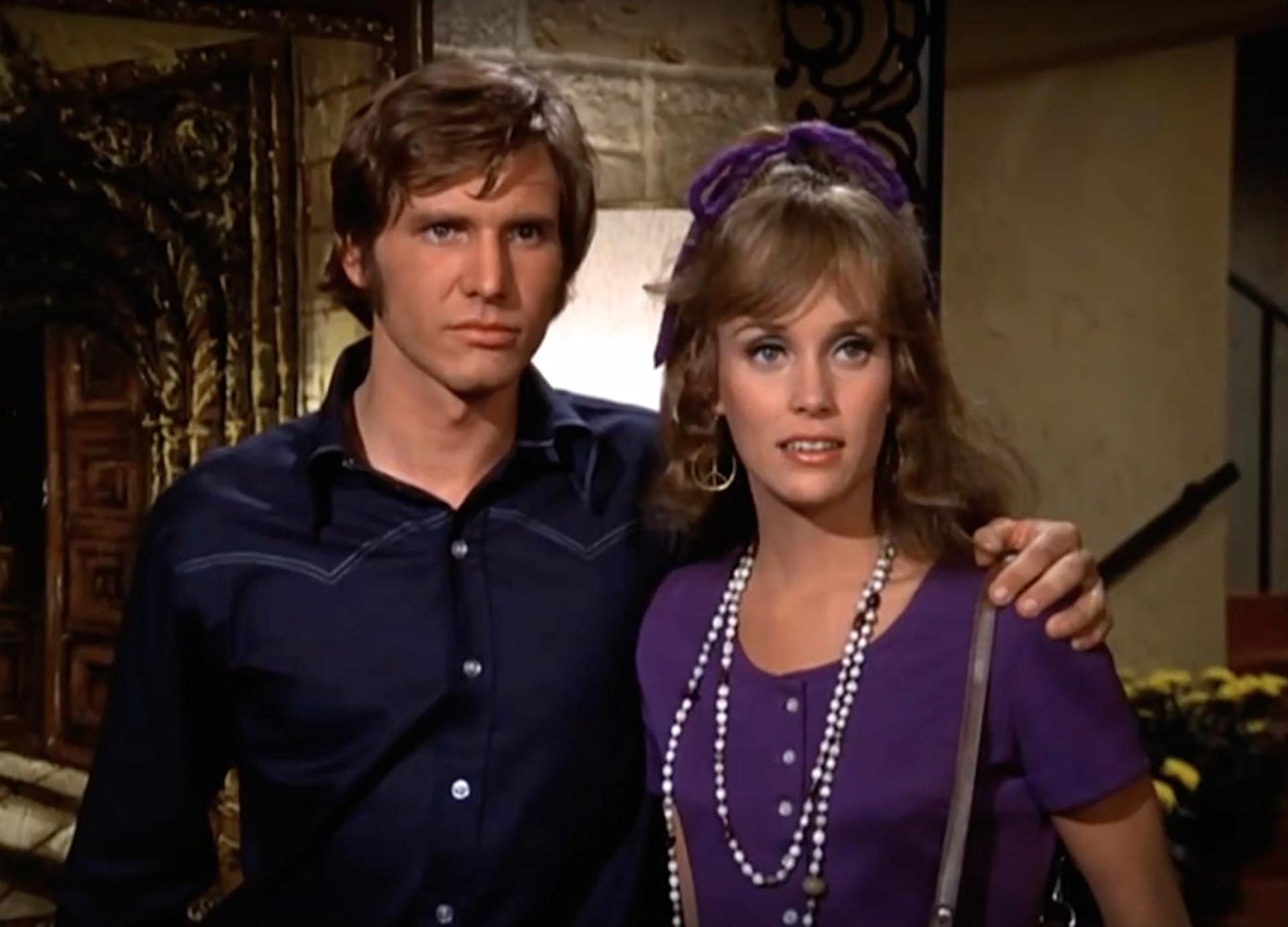
Brad Duke wrote a biography about Harrison Ford, and he said Ford had fond memories of appearing on Love, American Style. “He recalled that he had been given little time to prepare his wardrobe for the role of a philosophical hippie in the November 1969 episode, “Love and the Former Marriage.” He appeared on set with long hair and a beard thinking they were appropriate for the role. He was surprised when he was told he needed a haircut and trim and then was given a navy blue dress shirt and vinyl burgundy jeans with a large belt. They even had a scarf with a little ring to put around my neck. And I thought, someone has made a mistake here. So, rather than argue with the wardrobe people, I put on the clothes and went to find the producer. I walked on the set and he was pointed out.  I tapped his shoulder and when he turned around he had on the same clothes I did. He was a hippie producer I guess. At least the check went through, and I got paid.”

The best way to get a good understanding of what the show was like is to look at a couple of the episodes.

January 23, 1970: Love and the Big Night

📷facebook.com

Starring Ann Elder, Buddy Lester, Frank Maxwell, Julie Newmar, and Tony Randall, this episode is often listed as a favorite of viewers. Randall is a married businessman who escorts his voluptuous secretary (Newmar) to her apartment after a late night at the office. Eager to get home to his wife, Randall hurriedly tries to open a stubborn jar of mayonnaise and winds up covered with mayo. Newmar cleans his suit, but while it’s drying, it’s stolen. After a series of amusing mishaps, Randall finally gets back to his own apartment and creeps into bed with his wife–only to find out she’s not there.

February 25, 1972: Love and the Television Set

📷that’s entertainment.com

It starred Harold Gould, Marion Ross, Ron Howard, and Anson Williams. Reading this list of names might give you a hint about what happened to this episode after it aired. Garry Marshall had written a pilot about a 1950s family that did not sell.  He turned it into an episode for Love, American Style. George Lucas caught the episode and was impressed with Ron Howard and offered him a role in his new movie American Graffiti about 1950s teens. The movie was so popular that the network decided to put Marshall’s pilot in the fall line-up as Happy Days. Harold Gould’s role was given to Tom Bosley for the series. When Love, American Style went into syndication, this episode was retitled “Love and the Happy Days.”

October 22, 1970: Love and the Bashful Groom

📷listral.com

This is the episode I recall when I think of the series. When I watched it originally, I was staying overnight at my grandparents’ house and my grandmother was shocked at the “vulgarity.” It really seems quite tame today, but back then it probably was unexpected. She would approve of Tom Bahler marrying Janet Lennon though because I watched Lawrence Welk with her and my grandfather whenever I was at their house.

In this episode, Paul Petersen, Christopher Stone, Meredith MacRae, Jeff Donnell, and Dick Wilson are featured. Harold (Petersen) and Linda (MacRae) are getting married. He learns that she grew up in a nudist colony and is not comfortable being naked for his wedding.  After a soul-searching talk with his best friend, and realizing he loves Linda enough to be uncomfortable, he decides to go through with the ceremony.  He gets to the church a bit late and walks in, only to see that everyone else is dressed in their Sunday best. His bride informs him that they always dress up for weddings. One of the congregation members says something like “Let’s not make him uncomfortable,” and they all begin to undress.  Of course, you see nothing improper, no naked bodies, only clothes flying. This was probably not the best episode to “expose” my grandmother to as a first glimpse of the show.

The show lasted for four years and was cancelled in 1973. In 1985, a reboot was created, but it was on in the mornings and only lasted a few months.  The show was on at the same time as everyone’s favorite game show, The Price is Right. For the 1998 fall season, a pilot was created for prime time, but it was never ordered. While doing my research for this blog, I noticed that there was a Love, American Style project in production, so we may see it resurface again.  I’m not sure I would want to watch a contemporary version of the show though. It was such a product of its time, and I fear what a current version would be like after seeing the reboot of Match Game which has been airing the past few years.

Love and the Funny Show

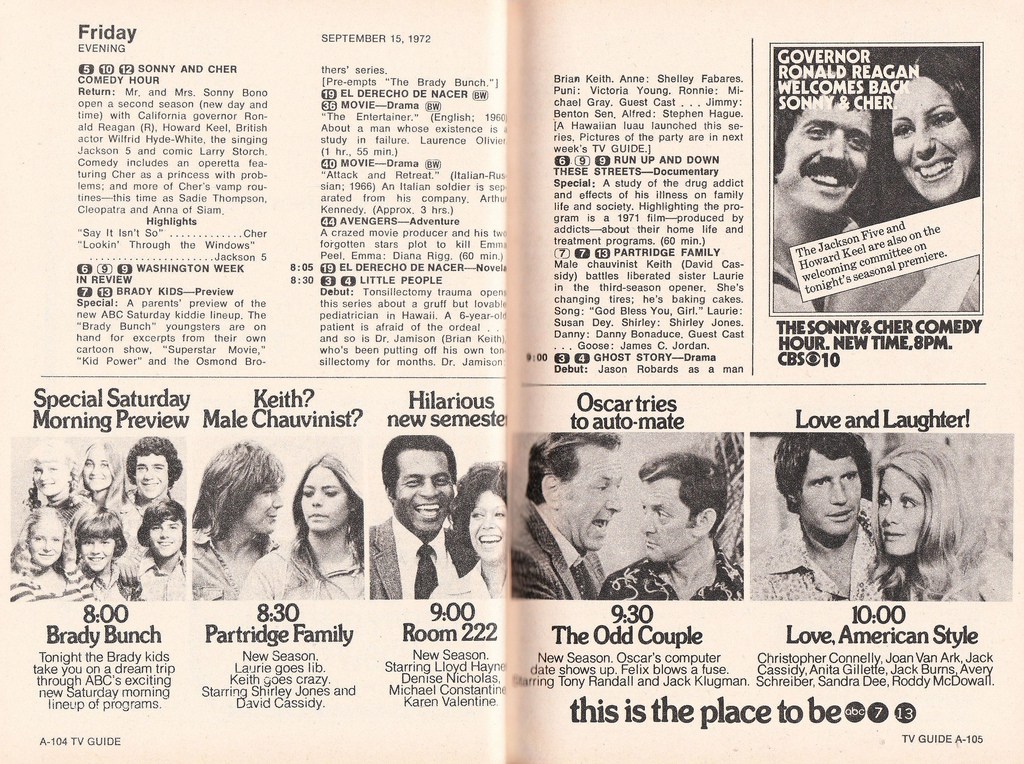
ABCFriday_1972

There was something magical about the Friday evening television schedule from 1971-1973.  Anyone who was born in the late 1950s or early 1960s can remember sitting down in front of the television at 7 pm (central time) for the Brady Bunch and staying put through The Partridge Family, Room 222, The Odd Couple, and Love, American Style.  Sitting through an entire evening of shows was almost unheard of back then, but we binge watched every Friday night. While the boys were divided between Marcia Brady and Laurie Partridge, every girl of that age had was in love with Keith Partridge.  Watching an episode of The Partridge Family today makes me feel 10 again. For the next five weeks, I’m taking a look at each of the shows that made this schedule so enjoyable.

las18

Today we begin with Love, American Style. This show was an iconic 1970s show. Like Laugh In, the clothing, furnishings, and vocabulary do not make it timeless. But it was a lot of fun. This fast-paced anthology show featured two to four mini episodes each week, and between them were quick skits, often featuring a brass bed. Each smaller episode is titled “Love and the _______.”

A troupe of players was featured on each show for the in-between skits. These regulars included William Callaway, Buzz Cooper, Phyllis Davis, Mary Grover, James Hampton, Stuart Margolin, Lynn Marta, Barbara Minkus, and Tracy Reed. Margolin went on to a regular role in The Rockford Files; Tracy Reed was featured in McCloud and Knot’s Landing; Phyllis Davis was part of the cast of Vega$ and Magnum PI, and James Hampton will be familiar if you watched The Doris Day Show or F-Troop. Both Reed and Davis were featured on Love Boat episodes which had a similar format to Love, American Style.

The show had a memorable and catchy theme song. Written by Arnold Margolin, the first year it was performed by The Cowsills.  You will see a lot of overlap between these five Friday night shows, and music is one of those cross-overs. The Partridge Family was based on the life of The Cowsills.

During the second and subsequent years that Love, American Style was on the air, the theme song was performed by the Ron Hicklin Group. The Ron Hicklin Group could be heard in a variety of motion pictures and commercials, and they also appeared on recordings with stars such as Paul Revere and the Raiders and Cher. John and Tom Bahler, brothers who sang under The Charles Fox Singers were also part of this group. The group provided television theme song recordings including Batman, That Girl, Happy Days, and Laverne and Shirley. They also did the singing for The Partridge Family theme and songs performed on the show as well as the Brady Bunch kids. Ron retired in the early 2000s, and Tom does a variety of things. He is also known for writing Bobby Sherman’s hit, “Julie Do You Love Me?”. John married Janet Lennon, one of the Lennon sisters who performed on The Lawrence Welk Show. He currently lives in Branson and conducts the “new” Lawrence Welk orchestra.

hicklin singers

The snappy melody was set to the following words:

Love, Love, Love

Love, American Style,
Truer than the Red, White and Blue.
Love, American Style,
That’s me and you.

And on a star-spangled night my love,

My love come to me.
You can rest you head on my shoulder.
Out by the dawn’s early light, my love
I will defend your right to try.

Love, American Style,
That’s me and you.

Paramount Television developed the show. The executive producer of the show was Arnold Margolin, Stuart’s brother. There were 53 different directors during the four-year run. The series received Emmy nominations for Outstanding Comedy Series in 1970 and 1971; Best Music Composition in 1971, 1972, and 1973, winning in 1973; and winning the Emmy in 1970 for Outstanding Original Music and Lyrics.

las8

Many people wrote for the show, but Garry Marshall and Jerry Belson received the most credits. One of the writers, Peggy Elliott, was interviewed by the Huffington Post in May of 2013, and she talked about her time writing for the show.

“But the show I loved writing the most, was Love, American Style. For every other show, I was writing for characters created out of someone else’s head. Sure, we could create the occasional guest-star role, and we had been told to make every role, no matter how small, a real person. ‘Think of the actor who’s playing that delivery boy,’ I can hear Billy Persky, the co-creator or That Girl, say: ‘This is a big break for him — it’s the biggest role he’s had so far. Give him something to work with.’

But with Love, American Style, every character was our very own; every situation came out of our heads. Each segment of the hour the show ran each week was a one-act play created entirely by us. Added to the attraction was the fact that we could say and do things that were taboo on every other TV show in the early ‘70s. Arnold Margolin, co-creator of the show with Jim Parker, told me recently that the creative side of the network wanted the show to be more daring, while the censors kept their red pencils ready. There was a full-time position on the show just to run interference.

We must have put both sides through the hoops with one episode we wrote: ‘Love and The Hand-Maiden.’ A young guy was dating a centerfold model. As their relationship developed, he discovered that she had no problem with shedding her clothes, but she always kept her hands covered — with artful poses in magazines, and with gloves in real life. He became obsessed with seeing her hands and came up with one ruse after another to get her to take off her gloves. We had a ball writing it, with one double-entendre after another.”

If you were a star of any kind in the early 1970s, you most likely were on Love, American Style.  The show produced 108 episodes, and those shows featured 1112 different actors. Some of the famous names showing up in the credits include Milton Berle, Sid Caesar, Phyllis Diller, Arte Johnson, Ozzie and Harriet Nelson, Regis Philbin, Burt Reynolds, Sonny and Cher, Flip Wilson, and Jo Anne Worley. Karen Valentine from Room 222, Ann B Davis and Robert Reed from The Brady Bunch, and both Jack Klugman and Tony Randall from The Odd Couple show up along the way.

Brad Duke wrote a biography about Harrison Ford and he said Ford had fond memories of appearing on Love, American Style. “He recalled that he had been given little time to prepare his wardrobe for the role of a philosophical hippie in the November 1969 episode, “Love and the Former Marriage.” He appeared on set with long hair and a beard thinking they were appropriate for the role. He was surprised when he was told he needed a haircut and trim than given a navy blue dress shirt and vinyl burgundy jeans with a large belt. They even had a scarf with a little ring to put around my neck. And I thought, someone has made a mistake here. So, rather than argue with the wardrobe people, I put on the clothes and went to find the producer. I walked on the set and he was pointed out.  I tapped his shoulder and when he turned around he had on the same clothes I did. He was a hippie producer I guess. At least the check went through, and I got paid.”

harrison1love and the former marriage

The best way to get a good understanding of what the show was like is to look at a couple of the episodes.

January 23, 1970: Love and the Big Night

Starring Ann Elder, Buddy Lester, Frank Maxwell, Julie Newmar, and Tony Randall, this episode was often listed as a favorite. Randall is a married businessman who escorts his voluptuous secretary (Newmar) to her apartment after a late night at the office. Eager to get home to his wife, Randall hurriedly tries to open a stubborn jar of mayonnaise and winds up covered with mayo. Newmar cleans his suit, but while it’s drying, it’s stolen. After a series of amusing mishaps, Randall finally gets back to his own apartment and creeps into bed with his wife–only to find out she’s not there.

February 25, 1972: Love and the Television Set

It starred Harold Gould, Marion Ross, Ron Howard, and Anson Williams. Reading this list of names might give you a hint about what happened to this episode after it aired. Garry Marshall had written a pilot about a 1950s family that did not sell.  He turned it into an episode for Love, American Style. George Lucas caught the episode and was impressed with Ron Howard and offered him a role in his new movie American Graffiti about 1950s teens. The movie was so popular, that the network decided to put Marshall’s pilot in the fall line-up as Happy Days. Harold Gould’s role was given to Tom Bosley for the series. When Love, American Style went into syndication, this episode was retitled “Love and the Happy Days.”

October 22, 1970: Love and the Bashful Groom

This is the episode I recall when I think of the series. When I watched it originally, I was staying overnight at my grandparents’ house and my grandmother was shocked at the “vulgarity.” It really seems quite tame today, but back then it probably was unexpected. She would approve of Tom Bahler marrying Janet Lennon though because I watched Lawrence Welk with her and my grandfather whenever I was at their house.

In this episode, Paul Petersen, Christopher Stone, Meredith MacRae, Jeff Donnell, and Dick Wilson are featured. Harold (Petersen) and Linda (MacRae) are getting married. He learns that she grew up in a nudist colony and is not comfortable being naked for his wedding.  After a soul-searching talk with his best friend, and realizing he loves Linda enough to be uncomfortable, he decides to go through with the ceremony.  He gets to the church a bit late and walks in, only to see that everyone else is dressed in their Sunday best. His bride informs him that they always dress up for weddings. One of the congregation members says something like “Let’s not make him uncomfortable,” and they all begin to undress.  Of course, you see nothing improper, only clothes flying. This was probably not the best episode to “expose” my grandmother to as a first glimpse of the show.

The show lasted for four years and was cancelled in 1973. In 1985, a reboot was created, but it was on in the mornings and only lasted a few months.  The show was on at the same time as everyone’s favorite game show, The Price is Right. For the 1998 fall season, a pilot was created for prime time, but it was never ordered. While doing my research for this blog, I noticed that there was a Love, American Style project in production, so we may see it resurface again.  I’m not sure I would want to watch a 2019 or 2020 version of the show though. It was such a product of its time, and I fear what a current version would be like after seeing the reboot of Match Game which has been airing the past year or so.

Let’s all write to Antenna TV and Me TV to see if they will make the original 1971 television schedule happen, and we can watch these original shows again, reliving the excitement we experienced the first time around.

Next week we get to know The Odd Couple.