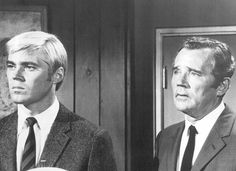
Funny Duos is our blog theme for June. Today we look at a partnership that’s a little different than the other shows we checked out so far. Mr. Adams and Eve, starred Howard Duff and Ida Lupino, a couple that was married in real life. Another difference with this series is that it made it two seasons before being canceled.
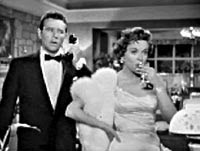
In an interview with the Television Academy, Sol Saks said he was very proud of this show. He said it was the first time Lupino had done comedy and she was great to work with. He said he met with the couple and just hanging out at their home, he heard several plots for shows. For example, he heard their maid making horse bets on the phone and at one time, Lupino answered the door and a vacuum salesman was there and wanted to sell her an appliance, but she said she would have to ask their financial people and get back to him. Saks then learned that Lupino didn’t know how to purchase an appliance by herself. So many of the stories from their real life ended up in scripts.
Saks left this show because he was tired of always writing for one show over and over and decided to write movie scripts and pilots.
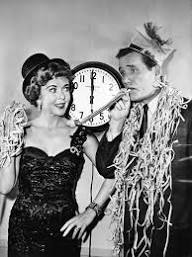
The show debuted on CBS in January 1957. The series follows two Hollywood stars who live in Beverly Hills. Eve (Lupino) grew up in a family in the entertainment business and is more dramatic and over the top while her husband Howard (Duff) is a humble and quiet man.
There was a large supporting cast in this show. It includes their studio boss Joe J.B. Hafter (Alan Reed), director Max Cassolini (Lawrence Dobkin/Christopher Dark), agent Steve (Hayden Rorke), housekeeper Elsie (Olive Carey), Eve’s mother Connie (Lee Patrick), and the Stewarts (Frances Robinson and Dan Tobin), their good friends. Their daughter Bridget also pops up on one episode portraying Mary Pickford.
While some of the plots are about their domestic life, most of the action involves their professional challenges.
David Rose was brought on as composer. I’m not sure how awkward it was or was not, but Lupino’s ex-husband Collier Young was the creator and executive producer.
The show originally aired on Friday nights. Its competition was Treasure Hunt and The Joseph Cotton Show. I would think with two stars of their magnitude, they would win the ratings for this time slot, but the show was moved to Tuesdays during the second season. The competition that night was a bit tougher with established shows Cheyenne and The Eddie Fisher Show.
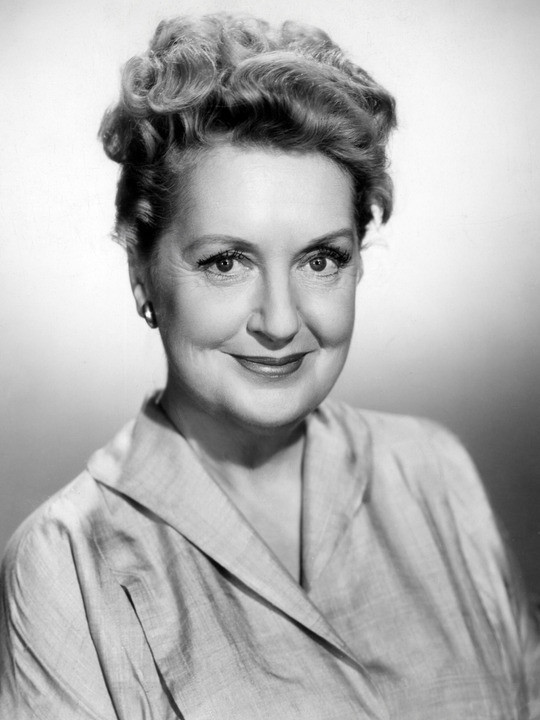
Lupino and Duff made the decision to end the show when they didn’t get the viewership they were hoping for to pursue individual projects for the following year. Duff starred in Dante about a nightclub owner which only lasted one season. While both stars appeared in many different television series over the decades, neither of them starred in another show. The couple’s marriage lasted much longer than their show but it did end in divorce in 1984.
Lupino was nominated for an Emmy both years and Richard Kinon was nominated for director. Lupino had some tough competition. In 1958 she competed against Spring Byington (December Bride), Eve Arden (The Eve Arden Show), Jane Wyatt (Father Knows Best), and Jan Clayton (Lassie). In 1959 other nominees were Byington, Wyatt, Ann Sothern (The Ann Sothern Show), Gracie Allen (Burns and Allen), and Donna Reed (The Donna Reed Show.) Wyatt won both years, and the directing Emmy went to Peter Tewksbury also for Father Knows Best.
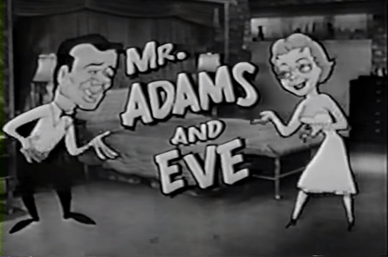
Perhaps one of the best things about this show was its opening. It had cartoonish figures similar to the Bewitched opening, but they were in a real setting, another show Sol Saks worked on. One of my favorite characters was Eve’s mother Connie who Eve called Connie. She brought a lot of fun to every scene she was in.
The episodes I watched were pretty good, especially for the late fifties. At least the Duffs made a successful transition from the movies to television and ended the show on their own terms. There is a DVD of shows out there as well as episodes on YouTube.