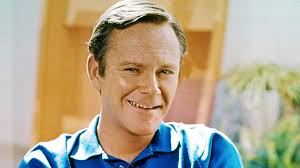
Welcome to February! This month we are learning about some Bewitching characters, four actors who appeared on the show Bewitched: Dick Sargent, Dick York, George Tobias, and Alice Pearce. We are beginning with Dick Sargent.
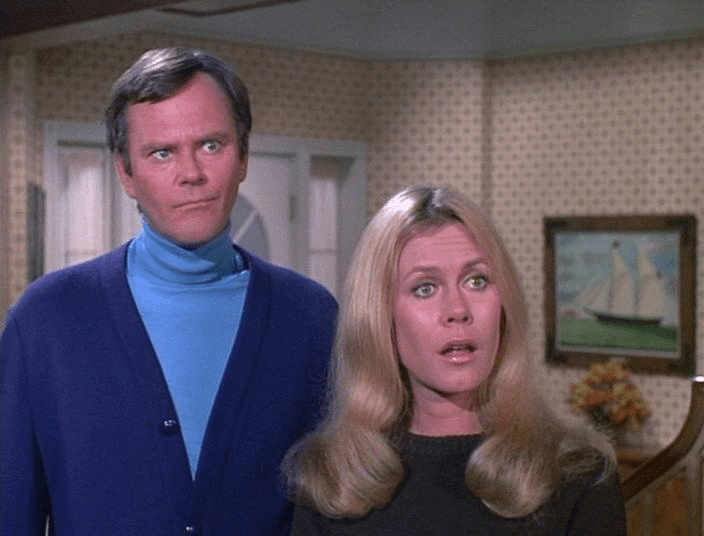
📷imdb.com Darrin #2
Richard Cox was born in California in 1930. He later changed his name to Dick Sargent for his career. Sargent’s mother, Ruth McNaughton, was an actress using the name Ruth Powell. His father was a manager for many famous Hollywood actors including Douglas Fairbanks and Erich von Stroheim.
Dick majored in drama at Stanford University, appearing in a couple of dozen plays with the Stanford Players. After graduation, he began his movie career with his first film, Prisoner of War in 1954 starring Ronald Reagan. He had small roles in 35 films during his career including Love Me Tender with Elvis Presley, Operation Petticoat with Cary Grant, and That Touch of Mink with Doris Day. 1954 was also the year he began his television career in I Married Joan. Sargent would go on to appear in another 78 series before his career ended.
In the sixties he had his first roles as a cast member. He was in One Happy Family in 1961, Broadside in 1964, and The Tammy Grimes Show in 1966.
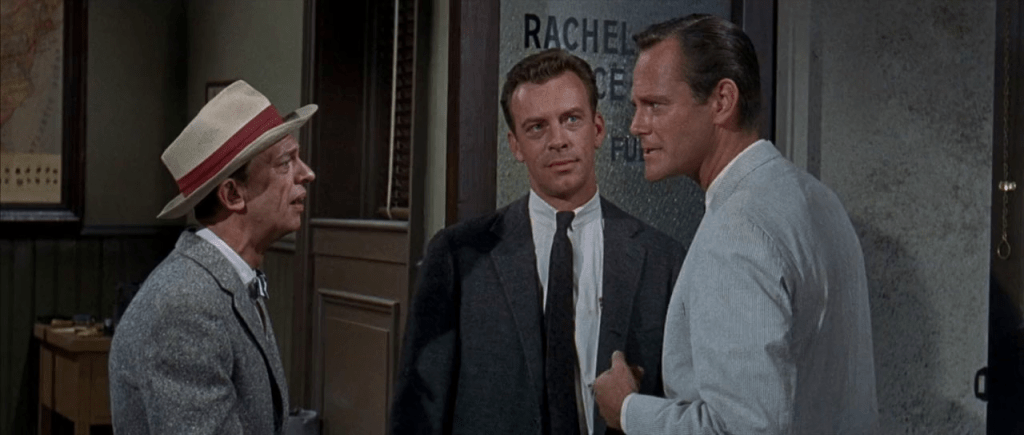
📷imdb.com The Ghost and Mr. Chicken
He was cast as Darrin Stephens in Bewitched from 1969-1972.
Sargent was originally asked to play Darrin in the pilot of Bewitched, but he was under contract with Universal, so he had to turn it down. I will admit, he had great credentials and a great career, and I appreciated his acting ability and admired him for his charitable work, but to be honest, I never liked him as Darrin, much preferring Dick York. I felt the same way about Sandra Gould who replaced Alice Pearce; she was a fine actress, but she just wasn’t Gladys.
It was more than the fact that they were both replacements. Dick York just seemed to have all the great traits of Darrin, and I understood why Samantha fell in love with him, even when he was being stubborn and unreasonable. However, with Sargent, he seemed to have a touch of arrogance and impatience. I also think York’s mannerisms gave more depth to the role and provided more humor. However, I do think the writing was much better in the early years, so if Sargent had been free to accept the role from the beginning, maybe his character would have been more likable.
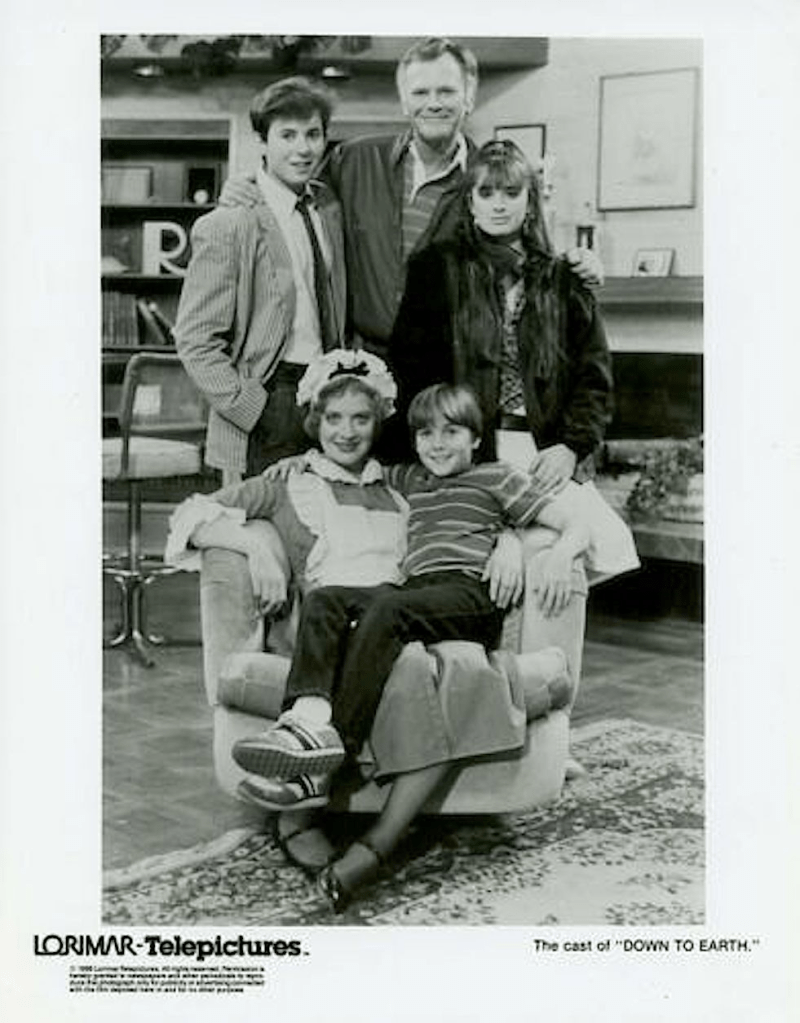
Sargent’s only other regular cast role came in 1984 in Down to Earth. There were a lot of weird plots on sitcoms in the eighties, and this was one of them. After being struck down by a trolley in 1925, Ethel MacDoogan, a flapper, waits in heaven for a chance to help a family and earn her wings. That chance arrives in the form of the Preston family with Sargent as the father.
In between 1972 and 1984 he continued his television roles appearing on I Dream of Jeannie, Here’s Lucy, Taxi, Alice, Fantasy Island, Charlie’s Angels, The Waltons, and Murder She Wrote.
Sargent was an advocate for many charities. He and Sally Struthers raised money for the Christian Children’s Fund. He also worked on behalf of Special Olympics, World Hunger, AIDS Project Los Angeles, and the American Foundation for AIDS Research.
Sargent was a closeted gay man for much of his career, but in 1991 on National Coming Out Day, he admitted that he was gay. He said he felt he had to open up because he was concerned about the high rate of suicide among young, gay men. Sargent said when he finally came out at age 61, “It was such a relief. I lived in fear of being found out. Now it’s given me a whole new mission in life.”
📷threads.com
In 1989, Sargent was diagnosed with prostate cancer and passed away five years later.
Despite my preference for Dick York as Darrin, Sargent had an amazing career. He was able to continue in both film and television until he passed away in 1989. He gave back to the community and tried to make the world better for children, which I greatly appreciate. Whether you prefer York or Sargent, they were both Bewitching characters who helped make the show a favorite for decades.
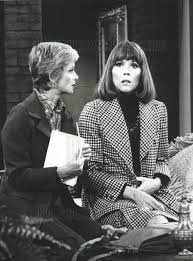
As we take a peek at some one-named sitcoms, today we travel back about fifty years to 1973 and visit Diana which debuted on NBC. Created by Leonard Stern, the show was filmed in front of a live audience. Stern was the creator behind several series including McMillan and Wife and He and She. In addition to this show, he wrote for several series including The Phil Silvers Show, Get Smart, and Holmes and Yo-Yo. He has a decent amount of producing credits including executive producer for Get Smart.
📷en.wikipedia.com
The premise is that divorced Diana Smythe (Diana Rigg) moves from London to New York City as a fashion coordinator for a department store. Her brother lets her live in his apartment while he’s out of town. Not only does Diana have to deal with learning about life in America, she has to take care of her brothers great dane Gulliver. Quickly, she realizes a lot of women have keys to her brother’s apartment and they show up regularly.
Rounding out the cast was neighbor Holly (Carole Androsky), copywriter Howard (Richard B. Shull), window decorator Marshall (Robert Moore), her bosses Norman and Norman Bronik (David Sheiner and Barbara Barrie), and friend Jeff (Richard Mulligan), a mystery novel writer.
Jerry Fielding composed the Diana theme. Fielding was a three-time Oscar nominee with 115 composing credits including McMillan and Wife, Mannix, Hogan’s Heroes, and Star Trek. He also was listed as part of the music department for lots of great series and movies.
📷wikimediacommons.com
Riggs took on the role due to the success of The Mary Tyler Moore Show and wanted to do something similar. I will say they tried a bit too hard to be similar. Their apartments are almost identical, and the work set was also set up with one coworker next to Diana and her boss’s office to the right. The show was placed on the Monday night schedule before Here’s Lucy. It was up against Gunsmoke and TheRookies. Gunsmoke had been on forever and was still in the top 20 while The Rookies was in the top 30. While a lot of shows debuted in 1973, the only real hit was Happy Days.
This show might have wanted to emulate The Mary Tyler Moore Show, but it lacked a few things including the amazing cast, the great writing, and the perfect timeslot. Fans never warmed up to this show and the ratings never took off, so the show was canceled before the end of the season.
📷facebook.com
It wasn’t a terrible show, but it wasn’t anything worth watching either. I thought the dialogue was not great and it tried way too hard. The jokes seem a bit tired. While the cast also wasn’t awful, they weren’t overly likable either. I think that there were valid reasons this one was canceled after only 15 episodes. At least she had The Avengers to remember which was a much better and beloved show. Diana summed up how this series fared when she related a story that when she arrived in American, the network had her picked up at the airport in a limousine and when she left America after a canceled show, they sent her to the airport in a shabby, yellow cab. I guess limousines and shabby cabs are part of all of our lives.
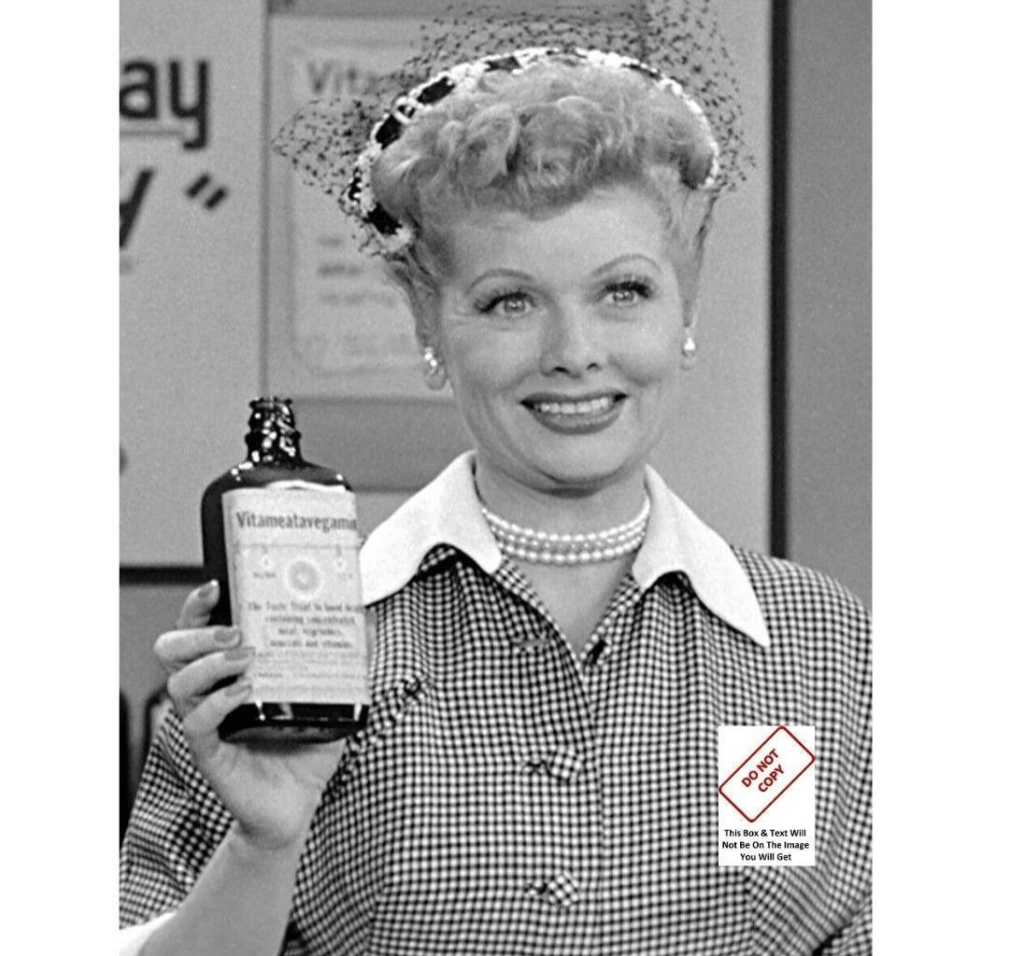
This month we are learning why We All Love Lucy. We’ll delve into her sitcoms and get to know Jess Oppenheimer and hear about his role in her television life. But today, we are starting with the woman herself, Lucille Ball.
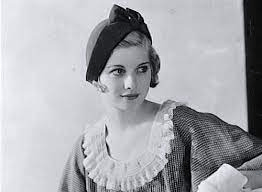
📷facebook. A young Lucille Ball
Lucille Desiree Ball was born August 6, 1911, in Jamestown, New York. She was the only daughter of Henry Durrell Ball, a lineman for Bell Telephone, and Desiree Evelyn Hunt Ball. They lived at 60 Stewart Avenue. The family belonged to the Baptist Church there, and many of her relatives were among some of the first European settlers in Massachusetts.
The family moved frequently for her father’s career, but Jamestown always had a claim on Lucy, and they celebrate her in many ways there. The family lived in Montana, New Jersey, and Michigan before her father passed away from typhoid fever at age 27 in 1914.
Her mother returned to New York, living in Celoron, a summer resort on Chautauqua Lake. The road she grew up on is now named Lucy Lane. Celoron had an amusement park with a boardwalk, the Pier Ballroom, a roller coaster, a bandstand, and a stage.
📷Good Housekeeping
Lucy’s mother remarried four years later. It was her stepfather who encouraged Lucy to audition for his Shriner’s chorus line, which gave her the first taste of what it would be like to be in show business. When she was 16 the family returned to Jamestown.
When Lucy was only 14, she was dating a 21-year-old hoodlum. Her mother was devastated by the situation and finally enrolled Lucy in the John Murra Anderson School for Dramatic Arts in New York City to encourage her in her theater career. Ball did not love the school, and her instructors told her she would not be successful in the entertainment business. Luckily, Lucy did not take their comments to heart. She later said that “one of the things I learned the hard way was that it doesn’t pay to get discouraged. Keeping busy and making optimism a way of life can restore faith in yourself.”
In an attempt to prove the school wrong, Lucy began working as an in-house model for Hattie Carnegie. This was where she first changed her hair. Being a brunette, Carnegie taught Ball to bleach her hair blonde. Her modeling was interrupted for two years when she dealt with the effects of rheumatic fever.
At the ripe old age of 21, Ball returned to New York City to pursue an acting career. She went back to the Carnegie agency and became the Chesterfield Cigarette Girl.
📷Brittanica
In 1933 she was in Roman Scandals as a Goldwyn Girl; while playing a slave girl, she had to have her eyebrows entirely shaved off, and they never grew back. Some of the things an actor goes through for roles is crazy. After that movie she moved to Hollywood to try a film career. After becoming a contract player for RKO Radio Pictures, she received a decent amount of work. At this time, she met the Marx Brothers, appearing in Room Service. She also worked with Fred Astaire and Ginger Rogers in several musicals.
When she registered to vote in 1936, both she, her brother, and her mother registered as Communists. During that year she signed a document as a Communist supporting Emil Freed for assembly and was appointed delegate to the State Central Committee of the Communist Party of California.
Ball later claimed she never had a strong political affiliation. In 1944, Lucy can be seen in a newsreel fund raising for Franklin Roosevelt. She also mentioned that she voted for Eisenhower in 1952 when he was on the Republican docket. In 1953 Ball met with HUAC and gave a sealed testimony. She said that she voted Communist at her grandfather’s insistence and did not know she had been appointed a delegate. Before filming episode 68 of their show, her husband and co-star Desi addressed the audience and said Lucy was not a Communist; she was just influenced by her grandfather. He joked that “the only thing red about Lucy is her hair, and even that is not legitimate.”
📷pinterest
In the late thirties, she dabbled in radio to earn some additional money. She was a regular on “The Phil Baker Show” and on “The Wonder Show” where she met announcer Gale Gordon.
In 1940 Lucy met Desi Arnaz when they both appeared in the movie Too Many Girls. They fell in love immediately, and before the year was out, they eloped. Arnaz was drafted in 1942, but a knee injury kept him from active service, and he was placed in Hollywood organizing and performing USO shows for wounded GIs.
Lucy finally got her big break in 1943. Arthur Freed was making a movie based on the play “DuBarry Was a Lady”; he bought it for Ann Sothern, but when she turned it down, she recommended her best friend, Lucille Ball.
In 1944, Ball filed for divorce, but the couple reconciled before it went through. Lucy and Desi had Lucie in 1951 when Lucy was almost 40, and son Desi was born during the series and written into the scripts in 1953. Mom and son appeared on the first cover of TV Guide which came out in 1953.
📷HollywoodHistoricPhotos.com
Ball continued to make movies throughout the forties and kept a foot in radio. In 1948 she was cast as Liz Cooper on the radio show, “My Favorite Husband” on CBS.
When CBS wanted to transition the show to television, Lucy wanted Desi to be her television husband. CBS said no, so the couple went on the road with an act to prove the popularity of the them working together and CBS backed down.
The show was incredibly successful. (If you want to learn more details about the series and all the history that it produced, keep an eye out for my blog which will post January 13, 2025.) The couple created their own production company and had many “firsts” with technology producing their show. During filming breaks of the show, Lucy and Desi made two movies: The Long, Long Trailer in 1954 and Forever, Darling in 1956.
After years of turmoil and ups and downs in their marriage, the couple divorced. However, they continued to remain in each other’s lives through their children and their relationship. Later in life, Lucy said “Desi was the great love of my life. I will miss him until the day I die.”
📷closerweekly.com Ball and Vance
Lucy bought Desi’s share in the production company which produced a variety of shows including Mission: Impossible, Star Trek, and The Untouchables. In 1967 Lucy sold her shares to Gulf+Western, owned by Paramount, for $17 million, which would translate into $138 million today.
Lucy married Gary Morton in 1961. At the time, Morton was a comedian 13 years younger than Lucy. He said he had never seen an episode of I Love Lucy. Ball hired Morton for her production company, teaching him the television business.
For the next decade, Lucy worked on a number of television specials. She also tried sitcom life again. She starred in The Lucy Show from 1962-68 and in Here’s Lucy from 1968-1974. We’ll discuss these shows the last week of January. Many of Lucy’s friends appeared on these shows. Her close friends included Mary Jane Croft, Judy Garland, Ethel Merman, Barbara Pepper, Ginger Rogers, Ann Sothern, Vivian Vance, and Mary Wickes.
📷ebay.com
Ball kept busy acting during the early 1980s. Desi Arnaz passed away in 1986. In 1988 Lucy had a mild heart attack. She appeared at the 1989 Academy Awards show and she and co-presenter Bob Hope were given standing ovations. She died a month later. Lucy had been a heavy smoker, and her cause of death was abdominal aortic aneurysm which is seen more in smokers.
Lucy always sent flowers to Carol Burnett on her birthday. The day before she died, she ordered them, and they were delivered a few hours after Carol learned of her death.
Lucy was cremated and her ashes were interred in Forest Lawn Cemetery with her mother’s remains. In 2002, both women’s remains were moved to the Hunt family plot in Jamestown. In Jamestown you can find the Lucille Ball Desi Arnaz Museum & Center for Comedy and the Lucille Ball Little Theater.
In 2009 a statue of Lucy was erected in Celoron. Many people called it “scary,” and it became known as “Scary Lucy,” which I totally endorse. In 2016, a more lifelike statue was created to replace Scary, but the scary statue had become so popular, it was left on display with the new one as its neighbor.
📷youtube.com The different sides of Lucy
Those two statues symbolize my relationship with the show. I appreciate the show and everything it did to create the classic age of television. Whether it’s technical filming strategies, the writing, the way the business was run, everything was important in this show. However, I have to admit, it’s not a show I choose to watch. It changed the entire course of television in similar ways that All in the Family would do a few decades later, but I honestly don’t enjoy watching either of these series. That might be a fault in my genes, but I also have to be honest.
However, Lucy Ricardo, while we may think of her as naïve and sophisticated, traditional and unconventional, submissive and disobedient, was an important icon in the way that women thought about themselves in the fifties.
Women had been brought in to work and gain independence while so many men were overseas fighting, and then they were asked to give it all up and go back to a domestic and tranquil life. Leslie Feldman, a political scientist and author of The Political Theory of I Love Lucy, writes that Lucy was “a transitional figure—she’s on the cutting edge. . . Are [women] going to stay home and be wives and mothers? Are they going to go to work? Or are they going to do both? And what if they really do better and earn more money than their husbands? What about that? That’s an element of Lucy too.”
📷biography.com
Lucy was a force in show business. While she was not alone in taking control of her own career—Donna Reed, Betty White, and Ann Sothern were also powerhouses in establishing their own companies and running them—Lucy did it with the nation watching her. Even the choices she made about whether to divorce Desi or not were all done in the public eye and were sending messages whether people chose to receive them or not.
Lucille Ball was an amazing actress and an amazing business person. Apart from whether I enjoy watching the show or not, it changed the history of television and the way sitcoms were written, cast, and remembered. Thank you, Lucille Ball, for not listening when your instructors told you that you would never make it in show business. You not only made it in television, you truly made television what it is today.
We are winding up our series: Bam! Pow! Batman Villains. Today it’s all about The Joker: Cesar Romero.
📷turnerclassicmovies.com
Romero was born in New York City in 1907. His father was an import/export merchant, and his mother was a concert singer. He grew up in Bradley Beach, New Jersey. His father lost most of his money during the 1929 Wall Street Crash.
Romero teamed up with dancer Lisbeth Higgins and they formed a professional dance partnership, appearing in nightclubs and theaters throughout New York City including the Ambassador Roof and the Montmartre Café. Although he had no professional training, he was often compared to Fred Astaire. He also was cast in several off-Broadway productions including “Stella Brady” and “Dinner at Eight.”
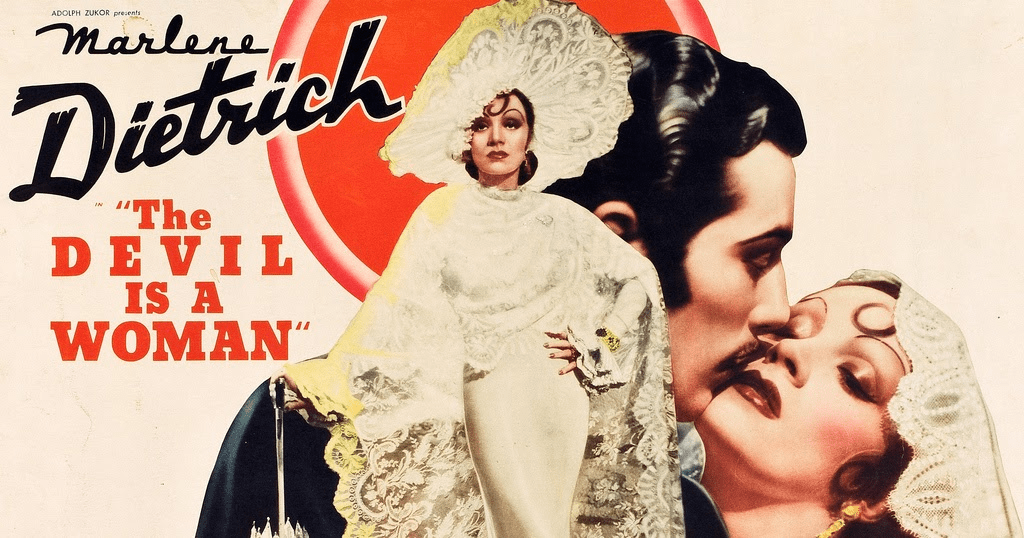
Later Romero would refer to himself as the Latin from Manhattan and he provided for his family members who followed him to Hollywood. He played the stereotypical Latin lover during the thirties and forties, including The Devil is a Woman with Marlene Dietrich in 1935. However, he also made westerns and did a bit of dancing during these decades on the big screen.
His friendship with Frank Sinatra brought him roles in Around the World in 80 Days, Pepe, Marriage on the Rocks, and Oceans’ 11.
📷imdb.com Wagon Train
In 1942, Cesar enlisted in the US Coast Guard, serving in the Pacific Theater of Operations. After his military career ended, Romero returned to his acting career.
His television career began in 1948 in the show, Variety. During the fifties he was primarily appearing on dramas, but he did show up on Private Secretary with Ann Sothern and continued his western roles on Wagon Train, Zorro, and Death Valley Days.
The sixties kept him extremely busy on television. He kept people laughing on Pete and Gladys, The Ann Sothern Show, Get Smart, and Here’s Lucy. He rode the range on Stagecoach West, Bonanza, Rawhide, and Daniel Boone. He stayed dramatic on shows including 77 Sunset Strip, Dr. Kildare, and Ben Casey.
📷wallpaper.com
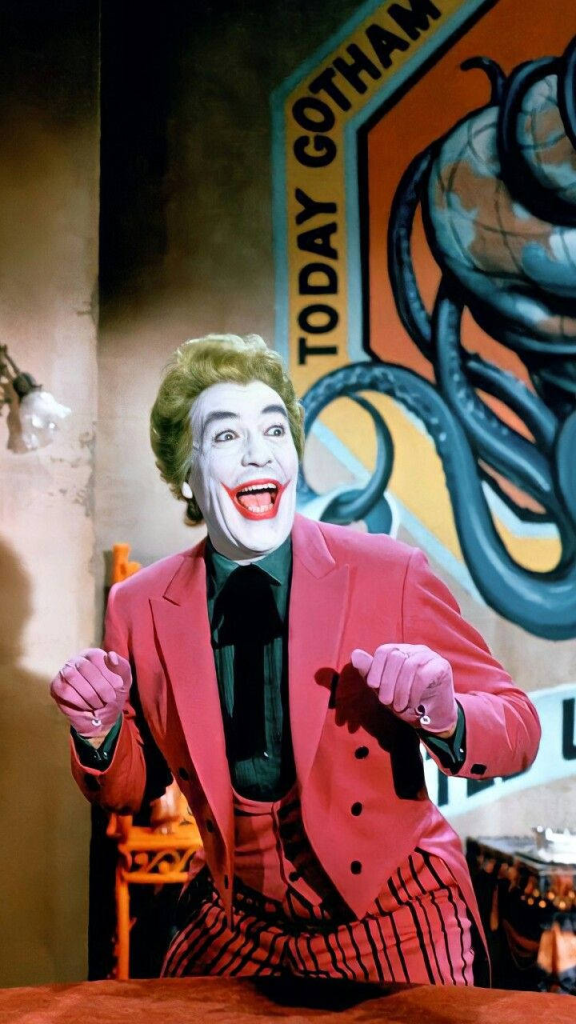
However, the show he was best known for in the sixties, is the show that made him part of my blog series this month, Batman. He had to endure a long time in the make-up chair. He refused to shave his mustache for the role, so white face makeup was smeared all over his face until it was hidden.
Romero admitted that this role reinvigorated his career. When he was offered the role of the Joker, he was 59 years old. Romero said the role was “the kind of part where you can do everything you’ve been told not to do as an actor. You can be as hammy as you want.”
He discussed how surprised he was when William Dozier called him about the show. He said Dozier told him that “the important characters were all villains. They had done the first two with the Riddler and the Penguin with Frank Gorshin and Burgess Meredith, and now they were ready to do the third, and the villain was the Joker. He said, ‘I would like you to play the part.’ So, I said I would like to read the script and know what it is all about. He said, ‘Come on over to the studio, and I will show you the film of the first episode.’ Of course, it was great. I said, ‘Let me read this Joker part, and if it is as good as the first one, hell yes, I will do it.’ So I read the script, and I thought it was a gas, and I said, ‘Sure, I’ll do it.’”
No serious villain, the Joker was cheerful and extroverted. He oozed goofiness and always appeared to be having a great time carrying out his nefarious activities. Dressed in his famous purple costume, he had his own automobile that could rival the Batmobile.
📷facebook.com
While most of the villains saw Batman and Robin as roadblocks in their evil schemes and problems to take care of, the Joker found great joy in taking down the superheroes. In one episode he says “Oh, but I must, I must! Why, outwitting Batman is my sole delight, my heaven on earth, my very paradise!”
You couldn’t miss him if you watched almost any television in the 1970s and 1980s. He appeared on a ton of shows, just a few of which included Bewitched, Nanny and the Professor, Love American Style, The Love Boat, Night Gallery, Mod Squad, Ironside, Medical Center, Charlie’s Angels, and Hart to Hart.
From 1985-88, he was a regular on Falcon Crest. Earl Hamner Jr., the creator of The Waltons, created this show featuring the Gioberti family, owners of Falcon Crest Winery. Romero played the love interest of matriarch Angela Channing, played by Jane Wyman.
He finished his career in the 1990s. He was in his eighties when he appeared on The Golden Girls, and Murder She Wrote, his last television role.
Romero also played a role in politics. As a registered Republican, he was very involved in many campaigns. He worked for Nixon-Lodge in 1960 and later supported Lodge in his run for President. When Lodge did not get the results that he hoped for, Romero turned his support to Barry Goldwater for the general election. He also worked for his friend George Murphy in his run in the California senate race. He later helped Ronald Reagan in his gubernatorial runs in California as well as his presidential campaigns.
It was reported in many articles that Romero had 30 tuxedos and more than 500 suits. That is not surprising because he had a clothing line, Cesar Romero Ltd. He was also a model and spokesperson for Petrocelli suits in the sixties.
Romero stopped acting in 1990. He remained busy though with several ventures including hosting classic movie programs on television. In 1994, Romero died from complications of a blood clot on New Year’s Day. He was being treated for bronchitis and pneumonia.
I enjoyed getting to know a bit more about Cesar Romero, but, I have to admit, that I don’t feel like I know him much better than I did before. He seemed to have been stereotyped as a Latin lover and then again as the Joker. I would like to go back and watch some of his appearances on westerns. It was hard to find much information about Romero beyond his career and political interests.
📷etsy.com
I know The Joker was not his most challenging role, but he will always have a place in America’s heart for the work he did on Batman as will these fun super villains we got to know this month.
As we take a look back at some Classic TV Shows this month, one of the shows I chose I hesitated about. As we all know, some shows included many stereotyped characters and oftentimes inappropriate portrayals. These shows include series like Amos n Andy, Beulah, and Lum and Abner which I just never write about.
📷wikipedia.com
I also think it is important to remember some of the shows from the past that make us wince or just turn off the dial now because it reminds us that we have a lot to learn but that we have made improvements in the current series on television. It’s a very complicated subject. If you read the differences of opinions Jimmie Walker had about his character JJ on Good Times compared to John Amos and Esther Rolle’s opinions of the character, you can see just how complex the issue is.
Life with Luigi could fall into this category for sure. However, it has a lot of fans and is still a big draw on Sirius Classic Radio. So, I decided to delve in and learn more about it. It was one of the earliest classic sitcoms transferred from the radio where it was aired from 1948-1953 to television. The show was created by Cy Howard who was the talent behind My Friend Irma. J. Carrol Naish voiced Luigi, and Alan Reed gave life to Pasquale in Life with Luigi.
Luigi Basco arrives in Chicago from Italy and has to make a new life for himself. He attends night school to learn English. His friend Pasquale is always trying to marry his daughter Rosa, played by Jody Gilbert, off to Luigi, who had no intention of being wed to her. Each episode began and ended with news in a letter to Luigi’s mom about his life in America.
📷alchetron.com
In 1952 CBS decided to air the show on television with Naish and Reed continuing their roles on the small screen. The program was sponsored by Instant Maxwell House Coffee. Norman Tokar was the director along with Mac Benoff who also wrote for the series with Lou Derman. Tokar would go on to direct many of the episodes of Leave It to Beaver and The Donna Reed Show. Benoff became a writer for The Danny Thomas Show while Derman wrote most of the Mister Ed scripts as well as writing for Here’s Lucy and All in the Family. The show followed I Love Lucy, so it had a great lead-in for a new show.
The series had good ratings, but the Italian American community was offended by the stereotyping of Italian immigrants even though (and perhaps more offensive) Naish was actually Irish. Because Luigi did not always understand English phrases, he took things too literally at times which I’m guessing was the problem for fellow Italians. CBS replaced the leads with Vito Scotti as Luigi, Thomas Gomez as Pasquale, and Murial Landers as Rosa. The revisions did not make anyone happy, and the show was finally canceled. The show ran its final episode in December of 1952.
Joseph Patrick Carrol Naish was a very versatile character actor who was born in New York City in 1896. He attended Catholic schools until he ran away from school at age 14 to become a song plugger. At 15 he enlisted in the Navy and after being asked to leave due to his age, re-enlisted during the war and was with the Army-Signals Corps in France. He learned eight languages during this time. He also spent some time in Paris singing and dancing with a group of performers.
📷radiospirits.com
While he was in California on the way to China, he was spotted by a Fox studio talent scout and landed a few roles. In 1929, he married another Irish actor, Gladys Heaney. With the dialects he had acquired in the Army, he easily portrayed Asians, Middle Easterners, Hispanics, Frenchmen, Germans, Native Americans, Italians, and East Indians. Time Magazine referred to him as “Hollywood’s one-man United Nations.” Ironically one of the parts he had a hard time obtaining was an Irishman because of his black hair and mustache.
In 1943, Batman was introduced in his first big-screen feature. The first evil villain he had to face was Naish as Prince Daka, a Japanese super spy. Daka had an atomic death ray, an alligator pit, and the ability to turn American scientists into zombies.
During his career, he would obtain almost 225 credits. In 1973, both Naish and his wife passed away. The couple had one child. When he was not acting, he spent time writing, singing, cooking, playing tennis, and playing golf.
Much of the late forties and early fifties were learning curves for television which led to the golden age. Life with Luigi was part of that learning curve. While many people felt the show was honest and well written, it offended a large part of the American population. It would not be the last show to do so. You might want to check out an episode or two for yourself and see how you feel about the show and its portrayals.
I devoted this month to some of our favorite actresses from the golden age of television. This list would not be complete without Reta Shaw who popped up in almost every popular program during the fifties and sixties.
Photo: imdb.com
Shaw was born in Maine in 1912. She was born into the entertainment business; her father was an orchestra leader and her younger sister Marguerite also became an actress (I could only find one credit for her; it was a 1959 movie titled The Ballad of Louie the Louse.) After graduation, Reta attended the Leland Powers School of the Theater in Boston.
She then headed for the bright lights of Broadway and in 1947 was cast in “It Takes Two.” In 1954 she was Mabel in “The Pajama Game” and later appeared in “Gentlemen Prefer Blondes”, “Picnic”, and “Annie Get Your Gun.”
Photo: jacksonupperco.com
Her motion picture career overlapped with her television career. She had feature roles in several big-screen successes including Picnic; The Pajama Game; Pollyanna; The Ghost and Mr. Chicken; Escape to Witch Mountain; one of my favorites as a kid, Bachelor in Paradise with Bob Hope; and most famously, the cook in Mary Poppins, as well as a maid in Meet Me in St. Louis.
In 1952 she married William Forester, another actor. William appeared in Mister Peepers and The Pajama Game movie with his wife. He was very busy with television appearances during the early sixties. They were married a decade but divorced in 1962; the couple had a daughter.
She appeared in many of the same shows as the other actresses we learned about this month. Her first television role was on Armstrong Circle Theater. Her second role was as a regular cast member of a little-remembered show, Johnny Jupiter in 1953. It was a quirky show about a store clerk named Ernest P. Duckweather who invented an interplanetary television set and developed a friendship with a puppet named Johnny Jupiter.
Photo: papermoon loves lucy
From 1953-1955 she would appear with Marion Lorne on Mister Peepers as Aunt Lil. She continued receiving both movie and television roles throughout the fifties. In 1958 she received another recurring role on The Ann Sothern Show as Flora Macauley.
She began the sixties with another permanent job on The Tab Hunter Show. This show as about comic strip author Paul Morgan. His comic strip was “Bachelor at Large” and he wrote about his own amorous adventures. Shaw, as Thelma his housekeeper, had a very different view of that life than Paul’s best friend Peter did. When that show went off the air, she was given another spot on Oh! Those Bells. The Wiere brothers, well-known comedians, portrayed the Bell Brothers who worked for Henry Slocum in a Hollywood prop shop. The brothers managed to create a disaster out of the most minor matters. The show only lasted two months.
Throughout the sixties she could be seen on a variety of series; although she certainly excelled at comedy she was just as accomplished in dramas such as Wagon Train, I Spy, The Man From UNCLE, and FBI. Reta also made more than a dozen movies during this time.
Photo: pinterest.com
However, her sitcom career flourished, and she was kept very busy during the sixties with roles on The Many Loves of Dobie Gillis, Father of the Bride, Lost in Space, The Dick Van Dyke Show, The Cara Williams Show, My Three Sons, The Farmer’s Daughter, The Lucy Show, The Patty Duke Show, The Adventures of Ozzie and Harriet, The Monkees, That Girl, Please Don’t Eat the Daisies, and I Dream of Jeannie. She had a recurring role on Bewitched as Aunt Hagatha/Bertha. She was featured in The Andy Griffith Show twice, but one of them is one of my all-time favorite episodes, “Convicts at Large” when she plays Big Maud Tyler who enjoys dancing with Barney.
Photo: jacksonupperco.com
The end of the decade brought her another recurring role as housekeeper on The Ghost and Mrs. Muir. On May 1, 2014, Madman Entertainment interviewed Kellie Flanagan who played one of the kids on the show. It must have been a fun show to work on. When she recalled her time with the cast, she said “The set was a very happy set, with parties every Friday night, and I remember that all the ladies were swooning over Mulhare and always disappointed to find out the beard had to be applied every day. His real beard was red, was the reason I remember, and they needed that salt-and-pepper thing. Hope was extremely sweet and kind to us, though I do remember there was a period where we were not supposed to bother her – I think she may have been going through a divorce – I believe she had a daughter about my age. Hope was lovely and her voice is fabulous. Reta Shaw was a delight and Charles Nelson Reilly was hilarious. The dog annoyed me!”
Photo: scottrollinsfilmandtvtriviablog.com
Shaw continued to take on roles during the early seventies and could be seen on The New Dick Van Dyke Show, Here’s Lucy, The Odd Couple, Cannon, Happy Days, and The Brian Keith Show. Her career culminated with her role on Escape to Witch Mountain in 1975.
Shaw lived another seven years and died in 1982 from emphysema.
An interesting note is that Shaw grew up in a family who practiced spiritualism and said she had been “brought up on a Ouija board.” However, I’m not sure if she believed in it as well.
Shaw certainly had a very interesting and successful career as an actress. Although she often took on the housekeeper role, she was not stereotyped into just that slot. She appeared in both television and movies and she took on dramas as well as comedy. It would have been fun to see what she would have been able to do if she had been given a series of her own.
Whenever I see Reta Shaw in an old show, I know I am in for a treat.
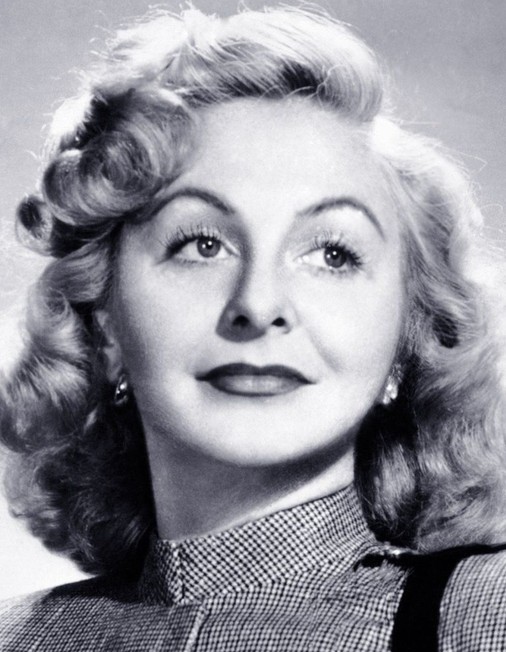
In October we are having fun with the “What a Character” series. Although this actress spent less than two decades on television, she had a memorable career. Today let’s learn more about Mary Jane Croft.
Photo: rottentomatoes.com
Mary Jane Croft was born in 1916 in Muncie, Indiana. She described herself as a “stage-struck 17-year-old just out of high school,” when she began working at the Muncie Civic Theatre. Moving on to the Guild Theatre Company in Cincinnati led her to radio station work at WLW.
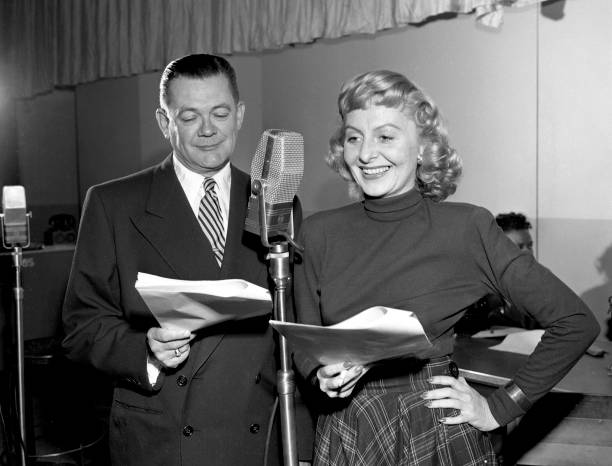
In the thirties, she received a lot of experience and she described her work there: “from 1935-1939, I played parts with every kind of voice and accent: children, babies, old women, society belles, main street floozies—everything.” She appeared in Life with Luigi, Blondie, The Adventures of Sam Spade, The Mel Blanc Show, and Our Miss Brooks, among other shows. She was a frequent guest star on My Favorite Husband, Lucille Ball’s radio show which would become very important to her television career.
Croft had married Jack Zoller, another actor earlier in her life. The marriage did not last long but produced a son, Eric. After her divorce, she moved to Hollywood in 1939.
On the radio Photo: closerweekly.com
While Croft appeared in three big-screen films, most of her professional career was spent on television. Her first role was in Eve Arden’s show, Our Miss Brooks from 1953-1955 once it moved from radio to television. She portrayed Daisy Enright whom she had also voiced on the radio show. Daisy and Connie Brooks competed for the head English teacher position and for the attention of Mr. Boynton. During that time, she also was cast in The Lineup, The Life of Riley, I Married Joan, and Dragnet.
From 1954-1957, she was on I Love Lucy seven times. She and Lucy continued both their professional and personal relationships. In the final season of Lucy’s show, she played Betty Ramsey, a neighbor of the Ricardos and Mertzs when they moved to Connecticut.
In the mid-fifties, she showed up on A Date with Angels, The Eve Arden Show, and The Court of Last Resort.
In 1959, she married Elliott Lewis and they were married until he died in 1990. She met Lewis while appearing on Lucy’s show; he was the producer. Sadly, her son Eric was killed in action in Vietnam.
Photo: ebay.com
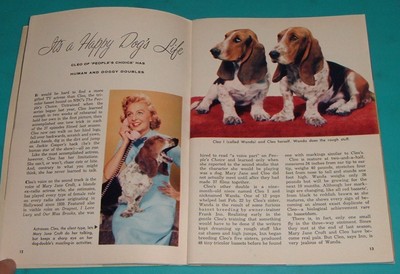
From 1955-1958 she was the voice of Cleo on The People’s Choice for 99 episodes. This is another one of those quirky shows from the fifties. The premise is that Socrates Miller, known as “Sock,” joins the city council and clashes with the mayor, John Peoples. Sock then dates and marries John’s daughter Mandy. Sock has a basset hound named Cleo, and Cleo shares her thoughts with the audience about what is going on.
Croft with Lyle Talbot and the Randolphs on Ozzie and Harriet–Photo: pinterest.com
From 1955-1966 she appeared as Clara Randolph on the Ozzie and Harriet Show for a total of 75 episodes. Joe and Clara Randolph were the Nelsons’ neighbors and good friends.
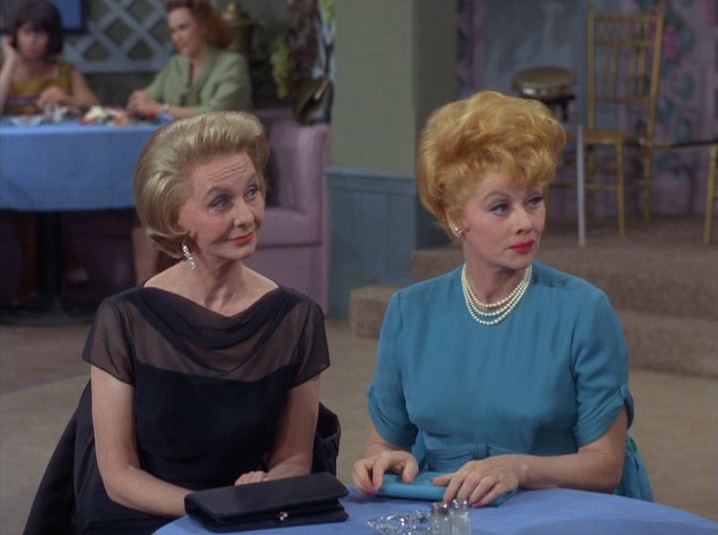
Although Croft did accept roles on Vacation Playhouse in 1966 and The Mothers-in-Law (another Arden show) in 1969, her career from 1962-1974 was with Lucille Ball. She was on The Lucy Show from 1962-1968 as Mary Jane Lewis when Lucy’s original sidekick Vivian Vance left the show. She continued that same role into Here’s Lucy from 1969-1974 for an additional 34 episodes.
Her last acting credit was a TV Movie with Lucille Ball titled Lucy Calls the President.
Croft with Lucille Ball–Photo: closerweekly.com
Croft died of natural causes in 1999.
Ball and Croft–Photo: closerweekly.com
Geoffrey Mark who wrote The Lucy Book: A Complete Guide to Her Five Decades on Television, got to spend time with Croft. He said she was “nothing like the characters she played,” in an exclusive interview with Closer Weekly. “She was intelligent, thoughtful in her speech and prettier than you would think. I found her to be very honest in that there was no nonsense about what she said. If she said it, she meant it. She was aware that she had become this icon mostly because of her association with Lucille Ball, but also because of other things that she did.”
When he asked her how she was able to assume so many character voices, she said that she thought about what the backstory of the character might be and invented a voice that would serve that character. It was something she learned when she worked in radio.
Photo: tumblr.com
Although Croft only appeared on 26 different shows, she had a busy and lucrative career. She is remembered for three major roles: Daisy Enright on Our Miss Brooks, Clara Randolph on Ozzie and Harriet, and Mary Jane Lewis on The Lucy Show and Here’s Lucy. And even if her television career was not long, she was in the entertainment business for her entire life after graduation. She created many memorable radio voices as well. With her numerous roles, she truly was quite a character.
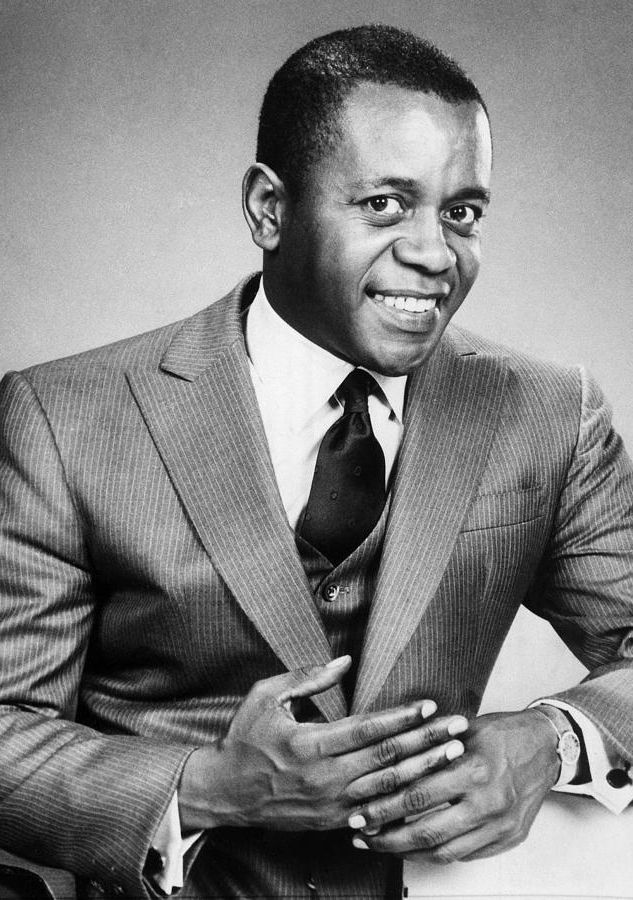
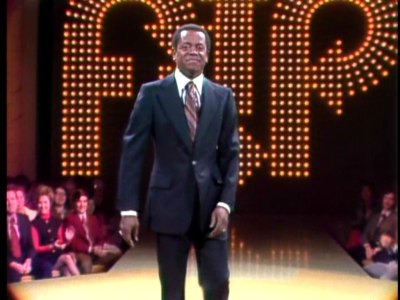
As we continue with the “They Call Me Wilson” blog series, today we take a look at a comedian who was a household name in the seventies but might not be well known today—Flip Wilson.
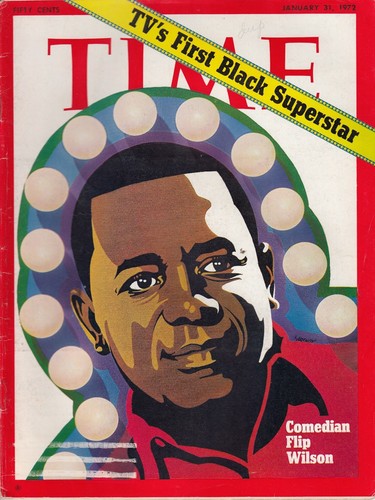
Flip Wilson was known best for his character of Geraldine and his catch phrase, “Here Comes de Judge.” In 1972, Time magazine heralded him “TV’s first black superstar.”
Photo: pinterest.com
Born Clerow Wilson Jr. in 1933 in New Jersey, Flip had nine brothers and sisters. His father, a handyman, was unable to find work during the Depression. His mother abandoned the family when Flip was only seven. His father was forced to place most of his children in foster homes. Flip said his happiest childhood memory was when he was in reform school. One of his teachers gave him the first birthday present he ever remembered–a box of Cracker Jacks and a can of shoe polish.
When he was sixteen, Flip lied about his age, joining the US Air Force. His outgoing personality and comedic demeanor made him popular with his barrack mates. It was at this time, he got the nickname “Flip” because his friends said he re-enacted outlandish stories in various dialects. Often he would use mock-Shakespearean phrases and one day a friend replied to one of them, “He flippeth his lid.” One of his superiors encouraged him to take some typing courses and do some studying.
After being discharged in 1954, he went to work as a bellhop at the Manor Plaza Hotel in San Francisco. He invented an inebriated character skit which he performed between acts in the nightclub there.
Eventually he wrote new material and began touring nightclubs throughout the US. He became a regular at Harlem’s Apollo Theater.
In 1957, Wilson married Lavenia “Peaches” Wilson and they divorced ten years later.
One night when Redd Foxx was a guest on the Tonight Show in 1965, Johnny Carson asked him who he thought was the funniest comedian around, and Redd said “Flip Wilson.” Carson booked Flip to appear on the show and so did Ed Sullivan. Again, his warm and friendly personality was mentioned. Richard Pryor once told Wilson that “You’re the only performer that I’ve ever seen who goes on the stage and the audience hopes that you like them.”
In 1968 he appeared on the Jerry Lewis Show, and in 1969 you could see him on Love American Style. During this time, he made his first of fourteen appearances on Laugh In.
Photo: amazon.com
In 1970, Flip was awarded a Grammy for his album, The Devil Made Me Buy this Dress. It was a great year for him and he received his own variety series also, The Flip Wilson Show on NBC. He would perform comedy sketches and featured many African American celebrities including The Supremes, The Jackson Five, Redd Foxx, and Bill Russell. George Carlin made frequent appearances in front of the camera with him and wrote for the show behind the camera.
Wilson would often show up as Reverend Leroy, the pastor of the “Church of What’s Happening Now.”
Photo: youtube.com
He also took on the persona of sassy Geraldine whose boyfriend was “Killer.” She often said “The devil made me do it” and “What you see is what you get.”
Photo: pinterest.com
Unlike many comedians in the seventies, Flip stayed away from politics and social satire. A lot of his stories involved black characters viewing historic events from a different perspective. Some critics praised him for his choice and others said he was “defusing his blackness.” Wilson’s response to these critics was that “funny is not a color. . . my main point is to be funny; if I can slip a message in there, fine.” One contemporary said he was a rare comic in that he told stories that didn’t make black people feel angry or make white people feel guilty.
During his four years on the show, Wilson had high ratings; the show received eleven Emmy Award nominations, winning two; he also won the Golden Globe’s Best Actor in a Television Series. Wilson ended the show while it still was receiving raving reviews. By 1972, he was making a million dollars a year.
During the run of his show, he accepted a role on one other television show—Here’s Lucy in 1971. After his show went off the air, he could be seen in The Six Million Dollar Man in 1976 and Insight in 1978. He also appeared on the big screen in several movies.
Flip took some time off in the seventies to care for his children. Having four children with his common-law wife Blonell Pitman, he received full custody of them in 1979. In that same year, he married Tuanchai “Cookie” MacKenzie and had a fifth child, but they divorced in 1984.*
During the 1980s and 1990s, he continued to be offered roles in television. He was on The Love Boat in 1981, in 227 in 1988 and 1989, in American Playhouse in 1990, and on The Drew Carey Show in 1996 and 1998.
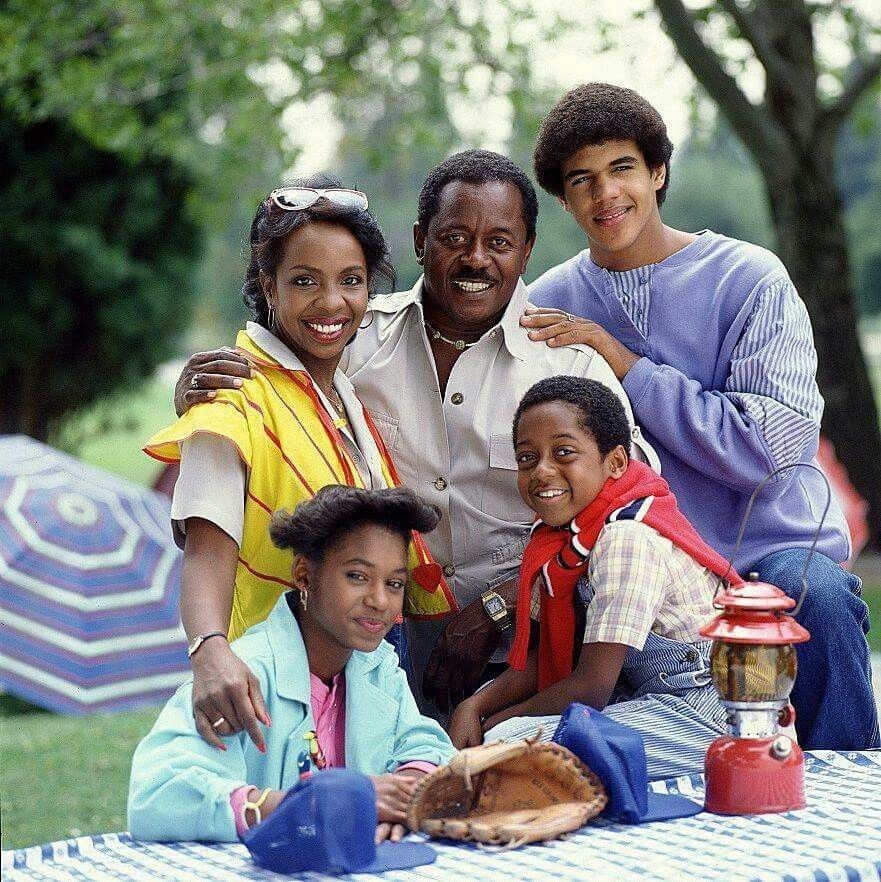
Wilson with Gladys Knight, Kristoff St. John, Jaleel White, and Fran Robinson–Photo: pinterest.com
In 1985, he tackled a regular series again, starring in Charlie and Co. with Gladys Knight. Flip portrayed Charlie who worked for the Division of Highways and Gladys his wife Diana, a school teacher. The middle-class family raised their three children—16-year-old Junior, 15-year-old Lauren, and 9-year-old Robert–on the South side of Chicago. The show was cancelled after only 18 episodes.
In 1998, Wilson died from liver cancer.
Photo: pinterest.com
Dying at 65 cut Wilson’s career short, especially because he took off so much time to raise his kids, so they would have a different type of childhood than he did. However, he achieved what he set out to. He was a self-made millionaire, a man who performed the type of comedy he chose, and a good father who raised his children to have a better life than he did. You could not ask for a better definition of success.
*while a couple of sources I read stated that Flip had five children, a reader mentioned that in the book by Kevin Cook, the fifth child Michelle Trice was said to be Blonell Pitman’s daughter from a previous relationship. Since Cook wrote the biography, I’m assuming he is correct.
As we continue with our National State Day Celebrations, this week finds us in West Virginia. Who else can we pick but Don Knotts?
Photo: amazon.com
Born in 1924 in Morgantown, WV, Don Knotts was the youngest of four boys. Don had a rough youth. His parents were farmers and his mother was 40 when he was born. His father suffered from mental illness, and Don’s birth led to a nervous breakdown. His father died when he was 13 and his mother made her living running a boarding house after that. At an early age, Don began performing as a ventriloquist and comedian at church and school functions.
After graduation, Knotts began college but then enlisted in the army, serving during WWII from 1943-1946. He toured the Pacific Islands entertaining the GIs as a comedian. In 1948 he graduated from West Virginia University with a major in education, a member of the honor society.
Photo: pinterest.com
Before graduating, Knotts married Kathryn Metz. They would remain married until 1964 when they divorced. After college, the couple moved to New York to pursue a career in the entertainment industry.
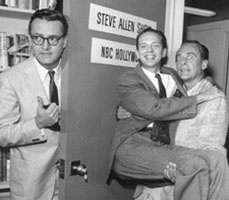
Steve Allen, Knotts, and Louis Nye–Photo: ebay.com
Believe it or not, his first role was in the soap opera Search for Tomorrow, and he would become part of the cast from 1953-1955. In 1956, he got his big break on the Steve Allen Show, playing a nervous man. He stayed with the show until 1959. The Tonight Show relocated to Hollywood with Jack Paar as host in 1959, and Don went with him. However, during his time on the show, he had a role in the play “No Time for Sergeants” and then in the film version with Andy Griffith.
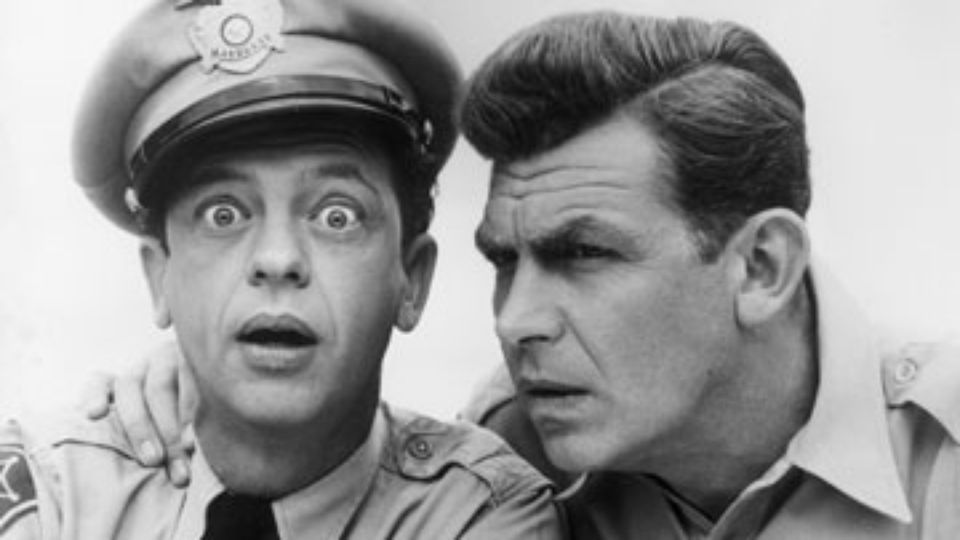
Andy Griffith and Knotts-Photo: tvseriesfinales.com
In 1960 Andy Griffith was putting together his own sitcom, The Andy Griffith Show, and he offered Knotts the role of Barney Fife, deputy. During his time as Barney, Knotts received five Emmy awards (three during his first five years).
Photo: bobshideout.com
The Museum of Broadcast Communications sums up Barney’s character perfectly:
“Self-important, romantic, and nearly always wrong, Barney dreamed of the day he could use the one bullet Andy had issued to him, though he did fire his gun on a few occasions. He always fired his pistol accidentally while still in his holster or in the ceiling of the court house, at which point he would sadly hand his pistol to Andy. This is why Barney kept his one very shiny bullet in his shirt pocket. In episode #196, Andy gave Barney more bullets so that he would have a loaded gun to go after a bad guy that Barney unintentionally helped escape. While Barney was forever frustrated that Mayberry was too small for the delusional ideas that he had of himself, viewers got the sense that he couldn’t have survived anywhere else. Don Knotts played the comic and pathetic sides of the character with equal aplomb.”
Mayberry Family: Knotts, Ron Howard, Griffith, Frances Bauvier– Photo: tvtropes.com
Originally, Don was supposed to be the straight man to Andy’s character, but Griffith quickly realized the reverse would make the show more successful. Andy always said he wanted to be done after five years. During that fifth year, Knotts began to search for his next job. He signed a five-film contract with Universal Studios. Then, Andy decided not to quit after season five, but since Knotts was already committed, he left the show in 1965.
Knotts with Betty Lynn–Photo: mesquitelocalnews.com
From everything I’ve read, it seems like the cast of TAGS got along very well. Although Frances Bavier seemed to take things more personally than others, the actors seemed to enjoy working together. Betty Lynn who played Barney’s girlfriend Thelma Lou described Knotts as “a very quiet man. Very sweet. Nothing like Barney Fife.” Mark Evanier, a television writer, called him “the most beloved person in all of show business.”
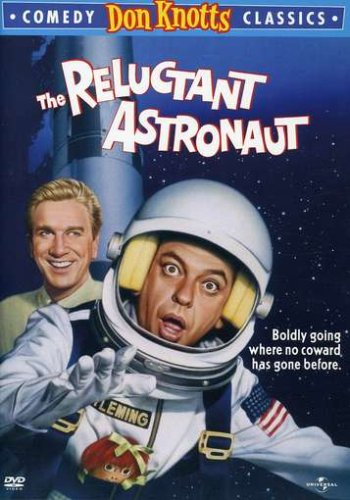
Knotts family-viewable films were very popular including It’s a Mad, Mad, Mad, Mad World; The Incredible Mr. Limpet; The Ghost and Mr. Chicken; The Reluctant Astronaut; The Shakiest Gun in the West; The Love God?; and How to Frame a Figg.
One of my favorite roles of Don’s was as the shoe salesman in the Doris Day-James Garner movie, Move Over Darling.
He also returned to Mayberry for several episodes. (Two of his Emmys came from these guest spots.)
Doris Day and Knotts– Photo: pinterest.com
Knotts also kept busy on other television shows including appearances on The Bill Cosby Show, Here’s Lucy, Fantasy Island, The Love Boat, Newhart, and That Seventies Show.
Also, during these years, Knotts tried marriage again wedding Loralee Czuchna in 1974. The couple called it quits in 1983.
He received his second starring role in 1979 as Mr. Furley on Three’s Company. Knotts replaced Stanley and Helen Roper (Norman Fell and Audra Lindley) who left for their own spin-off show.
Suzanne Somers and Knotts– Photo: history garage.com
He became the new landlord for the trio upstairs. He would stay with the show until it ended in 1984, racking up 115 episodes. I will admit that I did not enjoy the show, and I felt Knott’s performance was over the top and too stereotyped; I felt that way about the other characters also.
Don and Andy remained close friends throughout their lives. When Andy returned to television as Matlock, Knotts also received a role on the show as Les Calhoun, Matlock’s neighbor from 1988-1992.
Knotts and Griffith in later years– Photo: sitcomsonline.com
Don suffered from macular degeneration, and eventually it caused him to become virtually blind. In 2002 Don married a third time when Frances Yarborough became his wife.
Knotts died in 2006 from pulmonary and respiratory complications from pneumonia related to lung cancer.
Off screen, Knotts seemed to be a very funny guy. His daughter Karen said, “Here’s the thing about my dad. He had this funniness that was just completely, insanely natural.”
Photo: directexpose.com
He told his daughter his high school years were some of his happiest. His home town loved him too, and a statue honoring him was unveiled in 2006 in front of the Metropolitan Theatre. The statue was designed by local artist Jamie Lester, another West Virginia native.
Photo: guardianlv.com
Don Knotts had a spectacular career. As a young man, he got a job in a chicken factory and spent his days pulling feathers off dead chickens because he was told he had no future in the acting profession. It would have been hard for him to imagine at the time the legacy of performances he would leave—television shows and movies that generations of fans would watch. More than sixty years after Barney Fife put that bullet in his pocket for the first time, viewers continue to watch and love the Mayberry residents as they go about life in their small town. And the fact that the place where he first learned about life cared enough to fundraise and build a memorial to honor him says a lot. Thank you Don Knotts for showing us the importance of humor and following your dreams!
As we continue to celebrate National State Days, this week we are visiting Kansas. Our Sunflower star is Vivian Vance. Vivian was born in Cherryvale, Kansas in 1909. Her family moved to Independence when she was six. She knew she wanted to be an actress, but her mother’s strict religious beliefs prohibited her. She began sneaking out of her room at night to perform and eventually moved to Albuquerque, New Mexico where she changed her last name from Jones to Vance.Vivian married Joseph Shearer Danneck Jr. in 1928 at age 19 but they divorced in 1931.
Photo: showbizcheatsheet.com
In 1930 she was hired for her first job at the Albuquerque Little Theatre. After appearing in many other plays for the group, the local theater community paid her way to New York so she could study with Eva Le Gallienne.
In 1932, Vance began working on Broadway and was often a chorus member. In 1937 she replaced Kay Thompson in “Hooray for What!” and then began receiving supporting roles. In 1941, she joined Danny Kaye and Eve Arden in Cole Porter’s musical “Let’s Face It” for 500 performances. She would appear in 25 plays with her last being “Harvey” in 1977.
Photo: pinterest.com
In 1933 Vance tried marriage again, wedding George Koch, but that relationship also ended in divorce in 1940. Her third marriage to Philip Ober in 1941 would also last only 8 years.
Until 1950 she was offered some small roles in big screen in several films. In 1949, she appeared in her first television series, Philco TV Playhouse.
Photo: famouspeople.com
In 1951, Lucille Ball and Desi Arnaz decided to launch their sitcom I Love Lucy. Ball was hoping to cast Barbara Pepper or Bea Benarderet in the role of Ethel Mertz. Bea had already taken the role of Blanche Morton on The George Burns and Gracie Allen Show. CBS declined to hire Pepper because they said she had an addiction to alcohol. After many roles as “The Dame” in the movies, Pepper later played Doris Ziffel on Green Acres. It’s interesting that CBS allowed William Frawley to be hired for the show because he had a well-known alcohol problem at that time, but Desi gave him strict rules.
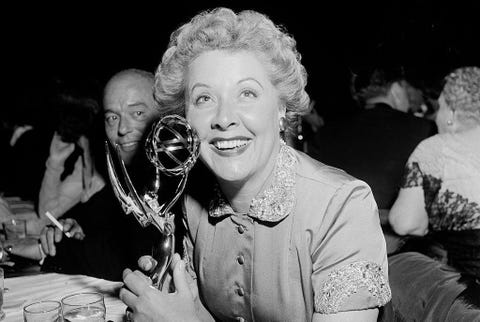
Director Marc Daniels had seen Vance perform in the “Voice of the Turtle” and suggested her for the role. She would play Ethel for 179 episodes. She was nominated for her work in 1954, 1956, and 1957, winning in 1954.
Photo: countryliving.com
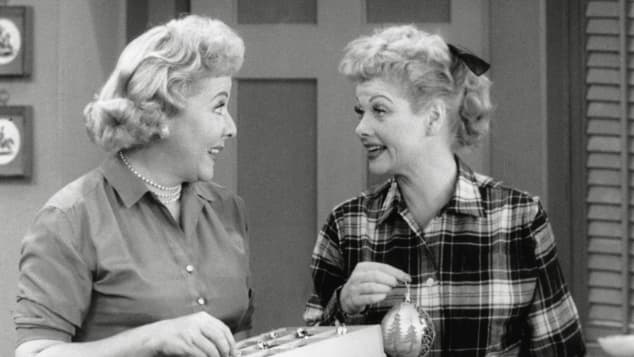
Apparently, she was a very good actress because although she and William Frawley who played her husband Fred had great comedic timing, they could not stand each other. Vivian wasn’t happy that she had to wear frumpy clothing and that Frawley was supposed to be her husband because he was 22 years older than her. He overheard a derogatory comment she made about their age difference, and they never developed any type of cordial friendship after that. However, their coworkers claimed they were professionals and treated each other with respect on the set.
Vance with Frawley, Arnaz, and Ball–Photo: hollywoodmemorabilia.com
When the sitcom ended, Vance continued to play Ethel on The Lucille Ball-Desi Arnaz Show. She and Frawley were offered a spin-off series, but Vance passed because she didn’t want to continue working with Frawley. Vance was interested in another show however, and Desilu, Ball and Arnaz’s production company, put together a show called Guestward Ho! for her, but the network rejected the pilot. Desilu made some changes to the show and hired Joanne Dru for the lead. ABC picked it up but cancelled it after one season.
In 1961, Vance married John Dodds, an agent, editor and publisher. They moved to Stamford, Connecticut, and Vance always felt pulled between her marriage and career. In 1974 the couple moved to California. Vivian had no children from her four marriages but was godmother to Lovin’ Spoonful band member John Sebastian.
Candy Moore, Ball, Jimmy Garrett, Ralph Hart and Vance–Photo: hitstv.com
When Ball put together a new show, The Lucy Show in 1962, she invited Vance to costar on the show. The concept featured Ball as Lucy Carmichael, a widow, raising two children in Danfield New York. Vance played her best friend Vivian Bagley, a divorced mother of one son. After a few years, Vance wanted a bit more control and a bit of controversy developed between Lucy and Vivian. Vivian left the show, but they resolved their differences and she guest starred on the show and joined Lucy on reunion shows and on her third sitcom, Here’s Lucy which ran from 1968-1974.
Photo: pinterest.com
Vance had very few television roles after leaving Ball’s sitcom, although she did make appearances on Off to See the Wizard, Love American Style, Rhoda, and Sam.
She was best known during those years as the Maxine, the Maxwell Coffee lady starring in numerous commercials for the coffee company. She was paid $250,000 for her three-year contract.
Photo: pinterest.com
The last time Vivian and Lucy appeared together was Ball’s special Lucy Calls the President in 1977. Not long afterward, Vance suffered a stroke which left her partly paralyzed. She died in 1979 from bone cancer.
Both Ball and Arnaz commented on her death. Desi shared that “it’s bad enough to lose one of the great artists we had the honor and the pleasure to work with, but it’s even harder to reconcile the loss of one of your best friends.”
Ball commented on Vivian’s performance as Ethel: “I find that now I usually spend my time looking at Viv. Viv was sensational. And back then, there were things I had to do—I was in the projection room for some reason—and I just couldn’t concentrate on it. But now I can. And I enjoy every move that Viv made. She was something.” Both Vance and Frawley were inducted into the Television Academy Hall of Fame in March of 2012.
Photo: allvipp.com
Some actors have the ability to adapt to a variety of television roles and we’re grateful for them. Other stars create one that is so memorable it becomes completely entwined with part of our life. Thank you Vivian Vance for being Lucy’s best friend. While we love Lucy’s antics, you are the one the majority of us identified with and for seventy years you have been influencing comedy and making new fans.













![The Devil Made Me Buy This Dress [Vinyl]](https://i.ebayimg.com/images/g/QRUAAOSwgaxehKlH/s-l640.jpg)










 thewritelife61