I’m Dickens, He’s Fenster: Building Comedy Into Every Episode

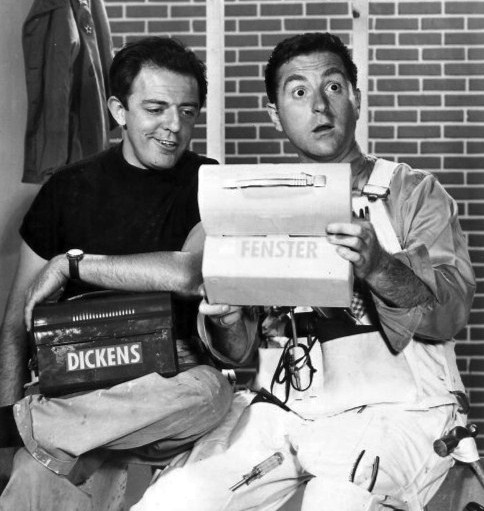
June’s blog theme is Funny Duos. Last week we learned about the Governor and J.J., a show created by Leonard Stern. Today it’s another show created and produced by Stern, I’m Dickens, He’s Fenster.
📷wikipedia.com

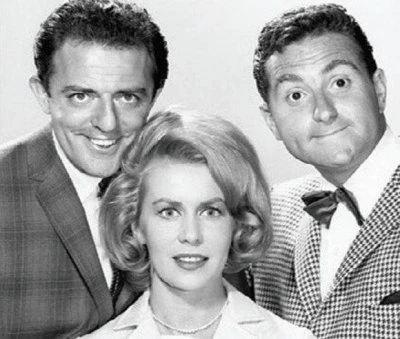
This show debuted on ABC in September 1962 and was canceled after one season. It starred John Astin and Marty Ingels.

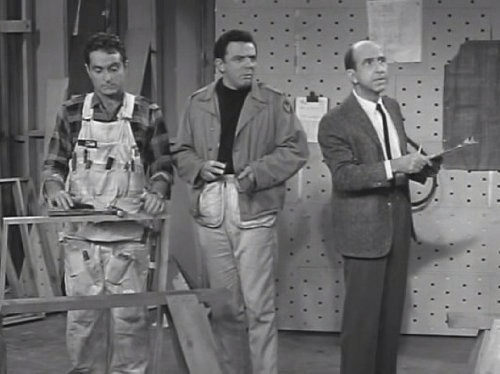
The plot is that two carpenters are best friends. Harry Dickens (Astin) is married to Kate (Emmaline Henry) while Arch Fenster (Ingels) is a swinging bachelor whose lifestyle is not okay with Kate. The two often clash with their boss, Mr. Bannister (one of my favorites, Frank DeVol). Rounding out the cast are coworkers Mel (Dave Ketchum), Bob (Henry Beckman), and Bentley (Noam Pitlik). We also meet a few of Fenster’s girls including Yvonne Craig, Ellen Burstyn, and Lee Meriwether.

Stern talked about casting for the show in his interview with the Television Academy. He had Ingels hired and then Stern and his wife saw Astin in a play at UCLA, and he was added to the cast. Stern said he needed a director who liked comedy and could bond with the actors well and was innovative because Stern didn’t like the three-camera shot. He hired Arthur Hiller who fit all three qualifications.

The show, unusual for the time, was filmed in front of a live audience. The comedy combined witty comments with slapstick comedy.
📷imdb.com

ABC placed it on Friday nights between The Flintstones, which was created for adult viewing, and 77 Sunset Strip. This should have provided a built-in audience, even though it was competing against Sing Along with Mitch and Route 66. At the end of the first season, it beat the competition in the ratings but was still canceled. One of the problems measuring viewership at this time was that a person watching was a person watching whether they were 6, 26, 56, or 106, so it was hard to tell which shows appealed to adults.

Astin discussed the reviews for this show during one of his interviews and said that “some of the critics said it’s the kind of humor that makes you laugh out loud in the living room, and that’s an accomplishment. How often do we really laugh out loud in the living room when we’re watching a television show? We’re lucky if we smile.”
📷televisionheaven.com

The idea for this show occurred when Stern had some work done at his home. On Christmas Eve 1961, the builders were in a hurry to finish work and get home to celebrate with their families. They were finishing a new fireplace with a built-in brick chimney. Unfortunately, one of the crew forgot to remove the ladder when they were finished in the chimney and they bricked up the hearth before realizing they had now lost their ladder. Stern thought the misadventures of a couple of construction workers might make a great sitcom.

In an interview with the Television Academy, Stern said he asked musician Irving Szathmary for a theme that evoked a Laurel and Hardy feeling. (Szathmary was also the composer behind the unforgettable Get Smart theme.) It must have worked because Stan Laurel said he thought this series was “one of the funniest and most highly imaginative comedies to have its thirty minutes of fame on television.”

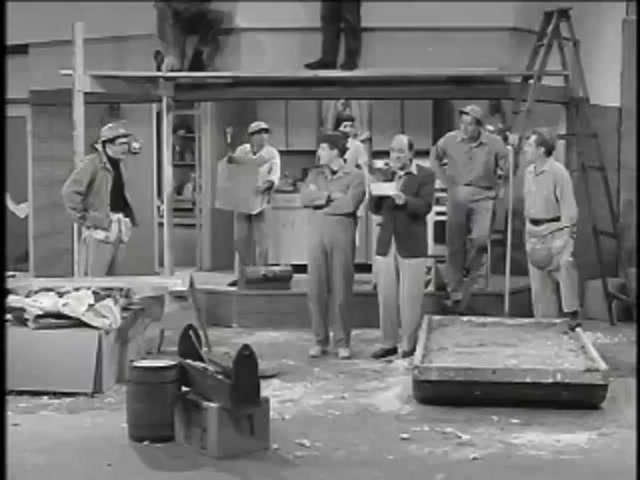
One of the running gags on the show was just like the cobbler’s children have no shoes, Dickens’ house was always in a state of upheaval with paint samples on the wall and cabinet doors not working properly; it was in constant renovation. We see this immediately in the pilot as Fenster stops by to pick up Dickens and sees Kate trying to work with the various kitchen issues under construction.
📷tvguide.com

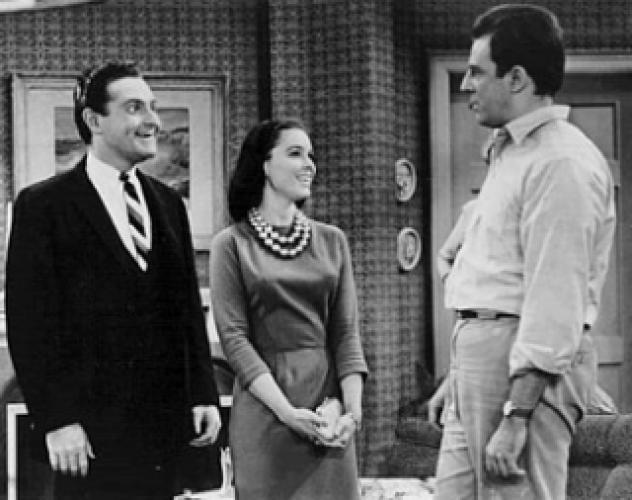
The pilot was a typical plot line for not only this show but most early sixties sitcoms. Dickens is up for a promotion to foreman and is afraid he won’t get the job. In the past, whenever Dickens is waiting for something special, he gets nervous and always ruins the opportunity. When the boss shows up at the project, he doesn’t seem to know Harry Dickens’ name, so the two friends decide to put it into his subconscious by whispering it here and there when they walk by him. That evening Fenster brings his girlfriend over. Harry doesn’t want to spend the evening with them, but once he meets the girlfriend, he falls all over himself being nice to her. Lorna mentions to Fenster that he should try for the foreman job himself.

The next morning, Fenster comes to get Dickens, and Harry is rude to him because he thinks he wants the foreman job. At the end of the day, Bannister calls Dickens into the office to give him the promotion and tells him that Fenster must be fired because he overheard a lot of bad things about him when the crew was talking. When Dickens talks to the other guys, they said that they never complained about Fenster, although they did repeat some of the funny things Dickens said about Fenster. Fenster tells Bannister that he just got fired by Dickens and then Dickens comes in to say it’s been a misunderstanding and Fenster should not be fired and would make a better foreman than Dickens. Bannister said he’ll let them know what decision has been made the next morning.
📷episodate.com

That night Fenster shows up with a different girlfriend who just happens to be Bannister’s daughter. There was a great mixture of slapstick and witty banter during the episode. Something did feel a bit off with the characters. I think the characters should have reversed roles; Aston seems more the playboy type, and Ingels seems more the married man for typical sixties sitcoms.

Astin would go on to star in The Addams Family while Henry would marry Dr. Bellows on I Dream of Jeannie. Unfortunately, with only 32 episodes, the show didn’t qualify for syndication. The first sixteen episodes are included on a DVD set released in 2012 if you want to check out the show. You can also find some of them online in different sites.
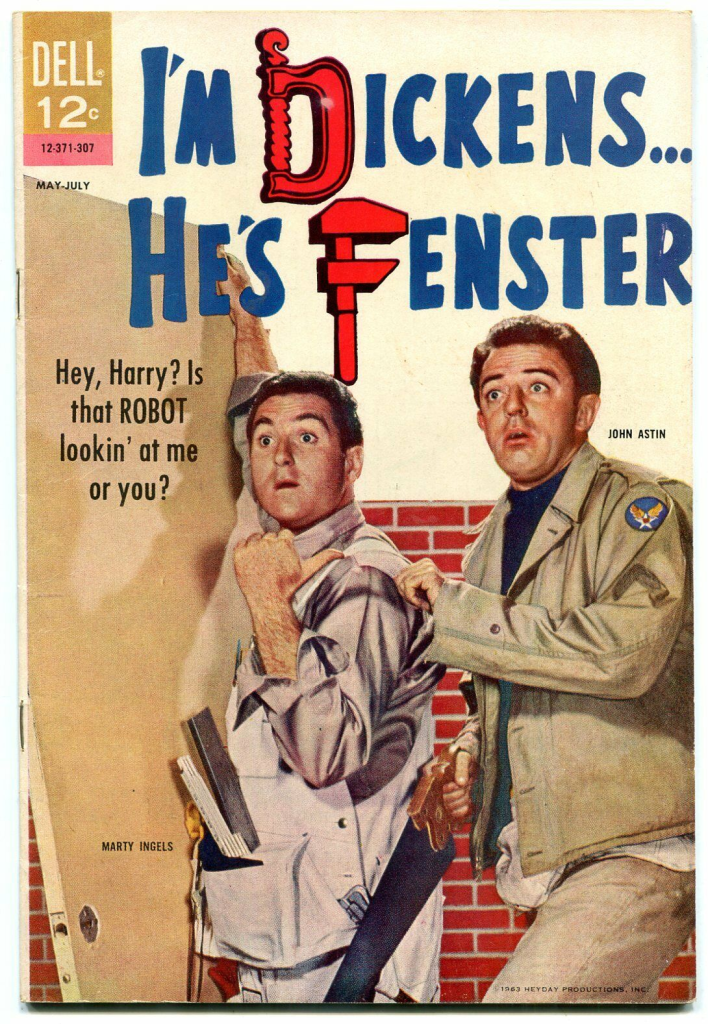
Like The Governor and J.J., this series also made it to Dell Comics; if you’re a collector of comic books about old television series, you can take a look.

I had heard a lot about this show but never watched it till now. It was different and funnier than I thought it would be.

How My Living Doll Became Cat Woman

This month we are learning more about some of our favorite robots in this blog series called “I Robot.” Today we go back to the mid-sixties for My Living Doll.

Photo: pinterest.com

This was both a science fiction and comedy show that debuted in September of 1964. Jack Chertok produced it for Television Productions with CBS. The show was filmed at Desilu studios. Chertok had been the creative force behind My Favorite Martian. James Aubrey, president of CBS, approached Chertok about doing another show. He did not even require a pilot to be made. Chertok’s writers from My Favorite Martian, Bill Kelsay and Al Martin, created the show from an idea proposed by Leo Guild. Kelsay wrote many of the episodes for Date with the Angels starring Betty White and several My Three Sons plots. Martin wrote for many earlier shows and screenplays including Roy Rogers.

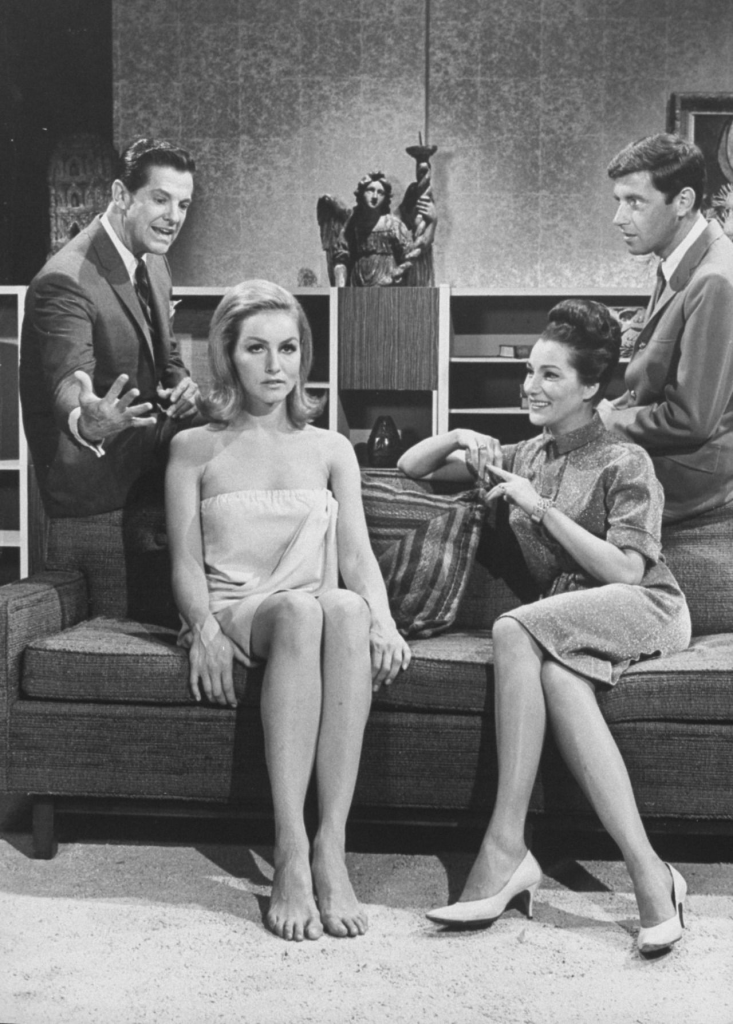
The plot they created was that Dr. Bob McDonald (Bob Cummings), a psychiatrist for the Air Force, was given Rhoda Miller (Julie Newmar), a lifelike robot to protect. He was trying to keep her out of the hands of the military. Rhoda’s formal name was AF709. Dr. Carl Miller (Henry Beckman) built her for the US Air Force but she eventually lands in McDonald’s care when Miller is transferred to Pakistan. His job is to help educate her to be the perfect woman while keeping her true identity a secret. Beauty marks on her back were the control buttons. Her main power switch was on her right elbow. Her eyes could be covered to prompt a system relaxation. Rhoda’s memory bank contained 50 million pieces of information. Bob told his coworkers Rhoda was Dr. Miller’s niece, and she took on the role of his secretary at the office, typing 240 words a minute. On other episodes, she learned to calculate where dice would fall and how to make trick shots playing pool.

In one episode, Rhoda is asked to play Chopin’s “Fantasie Impromptu” on the piano. Newmar actually played the piece herself. She had studied under concert pianist Dr. MacIntyre, and she said that scene is the only one she’s done with her playing the piano which had been her career choice before acting.

Meeting the Robot Photo: pinterest.com

Like I Dream of Jeanne, many of the episodes deal with Bob trying to keep Rhoda out of trouble while she is learning what society and the current culture is like. Rhoda learns human emotions throughout the first season; perhaps this would have led to a romantic relationship between the robot and the doctor.

Rounding out the cast was Peter Robinson (Jack Mullaney), Bob’s neighbor and coworker who thinks Rhoda is someone he wants to date. Irene Adams (Doris Dowling) plays Bob’s sister who moves in to act as housekeeper and chaperone so the neighbors are not suspicious of a single woman living there. On Love That Bob, Rosemary DeCamp played Bob’s sister who moves in to take care of the household for him. Mrs. Moffat was added later on as Peter’s housekeeper.

The show never really found its viewer base. The New York Times reviewer Jack Gould noted that it “very probably had the makings of a popular novelty hit . . . with Miss Newmar giving a light and amusing performance as the automated dish, the premise could work out . . . Bob Cummings, an old hand at chaperoning pretty girls, again is cast in his familiar assignment.”

Newmar didn’t feel that Cummings was the right actor for the role. She said that “They originally wanted Efrem Zimbalist Jr. It was not a flip part—it needed a straight actor who could play opposite this bizarre creature so the comedy would come off. That quality was lost when they hired Bob. The show could have been wonderful. I think it would have run for many seasons had they hired Efrem because he had the right qualities.”

Photo: yiddio.com

The ratings were not good; however, another issue was the fact that it was on Sunday nights against Bonanza, one of the most popular shows ever. In December, CBS moved the show to Wednesday nights but the ratings did not improve. In January, Cummings asked to be written off the show. CBS agreed but never got a replacement for him. He was said to have been transferred to Pakistan, and Robinson took over caring for Rhoda with his housekeeper living in his house again to keep the neighbors from talking.

Apparently, Cummings and Newmar never hit it off. She complained that he had tried to teach her to act and that he seemed unhappy that she was getting more press attention. Later Newmar stated that the real trouble on the set was Cumming’s addiction to methamphetamines. She said he had erratic behavior and became increasingly more depressed and insecure.

In her new home Photo: imdb.com

After Cummings left the show, another five episodes were aired, and then the show was canceled. The show ended up ranking 79th out of 96 shows. Two decades later, producer Howard Leeds would go on to create the show we will discuss next week, Small Wonder.

I was not able to confirm it, but I read several sources that said this show coined the term, That does not compute” which is what Rhoda said when she was asked something she did not understand.

During the summer of 1965, CBS aired repeats of the show. After that, the show was never seen on television again in the United States. Rumors were rampant about whether the 26 episodes had been damaged in a fire, hidden by Chertok, or destroyed. Two episodes seemed to have survived, but there were also reports that six or ten existed in all. CBS was able to obtain about half the episodes somewhere and released a DVD with them on it. We will have to see if the additional episodes ever show up or not.

Transitioning to Cat Woman Photo:designyoutrust.com

This was another of those shows that seemed to suffer from an identity complex. Cummings was known as a ladies’ man to viewers from his seasons on Love That Bob. If the show was not going for romance, then it seems that Newmar was correct in her assessment of Cummings being the wrong person for the role. With Bewitched debuting the same year and I Dream of Jeanne coming right on the heels of My Living Doll, it seems like one of the shows might not obtain enough viewers. Cummings’ addiction problems certainly did not help the show. Newmar should probably be happy the show ended when it did, allowing her to step into the role of Cat Woman on Batman. Like My Living Doll, Cat Woman had all the qualities Batman admired and wanted in a romantic partner, but unlike Rhoda who was not human, Cat Woman was all too human and too much of a villain to allow Batman to act on his passion for her.

Although the show debuted almost sixty years ago, many of the issues of working with a robot are still with us today as scientists work on giving robots a sense of humor and some empathy. We are seeing more of them in the workplace, and it will be interesting to see if any new shows take up the subject in the near future.