As we continue with our “Favorite Crime Solvers of the Past,” we turn to 77 Sunset Strip. Even if you never watched the show, you might be familiar with the theme song where they snapped and kept repeating “77 Sunset Strip.”
📷facebook.com
Created by Roy Huggins, the show debuted on ABC in 1958 and ran until spring of 1964. This was the third appearance by Detective Stuart Bailey. In 1946, Huggins’ novel, The Double Take, was published. In 1948, Bailey stepped into the big screen, starring in I Love Trouble played by Franchot Tone. A decade later he showed up on television played by Efrem Zimbalist Jr.
Bailey, a former WWII secret agent and foreign languages professor, works with former government agent Jeff Spencer (Roger Smith). Their office is at 77 Sunset Strip, Suites 101 and 102. Suite 103 is occupied by Suzanne Fabry (Jacqueline Beer), a French switchboard operator who handles phones for several clients including Bailey and Spencer. Occasionally she helps them solve a crime.
Other characters come and go from the offices including Roscoe (Louis Quinn), who gives out horse-racing tips when he’s not at the track; he often is an operative for the duo.
📷allposters.com
Gerald “Kookie” Kookson (Ed Byrnes) is a bit of a kook. He loves rock and roll, is witty, appreciates looking good, and works as a valet at the club next door. But he wants to be a private detective and makes full partner during the show. Kookie provides some comedy with his slang like “ginchiest” for coolest or “piling up Zs” for sleeping. During season 2, Byrnes asked for more money with his character expanding his role, but the answer was a firm no, so he left the show. Warner Brothers eventually settled with him, and he returned in May of that year.
Other occasional visitors include Lt. Roy Gilmore (Byron Keith) and the Frank Ortega Trio (played by themselves), a jazz band, who perform next door. They recorded for Warner Brothers who was also behind the television show.
The show had a fun, witty edge to it making it interesting to watch the interactions of the characters in addition to the crime solving. Bailey and Spencer were updated versions of forties’ noir detectives. Some of the shows had very different plots, something like the shows Moonlighting would feature a few decades later. “The Silent Caper” had no dialogue and, in another one, Bailey finds himself in a ghost town and he’s the only main character in the episode. During the last season in “The Target,” roles were played by crew members who were usually behind the camera including director William Conrad, associate producer James Lydon, and writer Tony Barrett.
Guest stars were plentiful and included Robert Conrad, Dyan Cannon, Cloris Leachman, Shirley MacLaine, Elizabeth Montgomery, Mary Tyler Moore, Roger Moore, William Shatner, Marlo Thomas, Robert Vaughn, and Adam West.
📷starstills.com
Mack David and Jerry Livingston wrote the famous theme which became a top 10 hit on the Billboard chart. The duo worked on several other Warner Brothers crime shows including Surfside Six, Bourbon Street Beat, and Hawaiian Eye, all based on the 77 Sunset Strip formula and exotic location.
By 1963, ratings were declining and the show revamped. If you read my blog often, you realize this is one of my pet peeves. If they want to change the casts, I understand that. However, in this one, like so often, Bailey is suddenly working alone and there is no mention made of any of the other characters, just as if they never existed. They did this on Happy Days, The Doris Day Show, and several other popular series.
In addition to booting the cast, Jack Webb was brought in as executive producer and William Conrad as director. And if the name William Conrad sounds familiar, yes, it is the same person as the man who starred on Cannon. During the fifties and sixties, Conrad racked up 32 directing credits.
Bailey is now a solo investigator. The title didn’t change, but the old office is no longer there nor the club nor the theme song. A new one written by Bob Thompson was used, and the show took on a darker, more serious nature. Bailey gets a secretary named Hannah who we rarely see.
📷ebay.com
The show was on Fridays for its entire run, just switching time slots now and then. By season two it was in the top ten. In seasons three through five, it got its biggest competition from Route 66, which it beat in the ratings. The final season, the show got moved to a later slot, going up against The Alfred Hitchcock Hour but, neither of them were in the top thirty.
Big surprise, viewers weren’t fans of the changes or the more serious tone of the show, and they drifted away. The show was cancelled in February. Efrem Zimbalist Jr. moved over to the FBI. Roy Huggins had a hugely successful career. He would write for and create more top shows including Run for Your Life, Maverick, Alias Smith and Jones, The Rockford Files, and The Fugitive. Viewers at least got the satisfaction of knowing that making such drastic changes to the show caused the end of that story. Stream a few of the early seasons on Philo, Roku, or Pluto TV and let me know what you think.
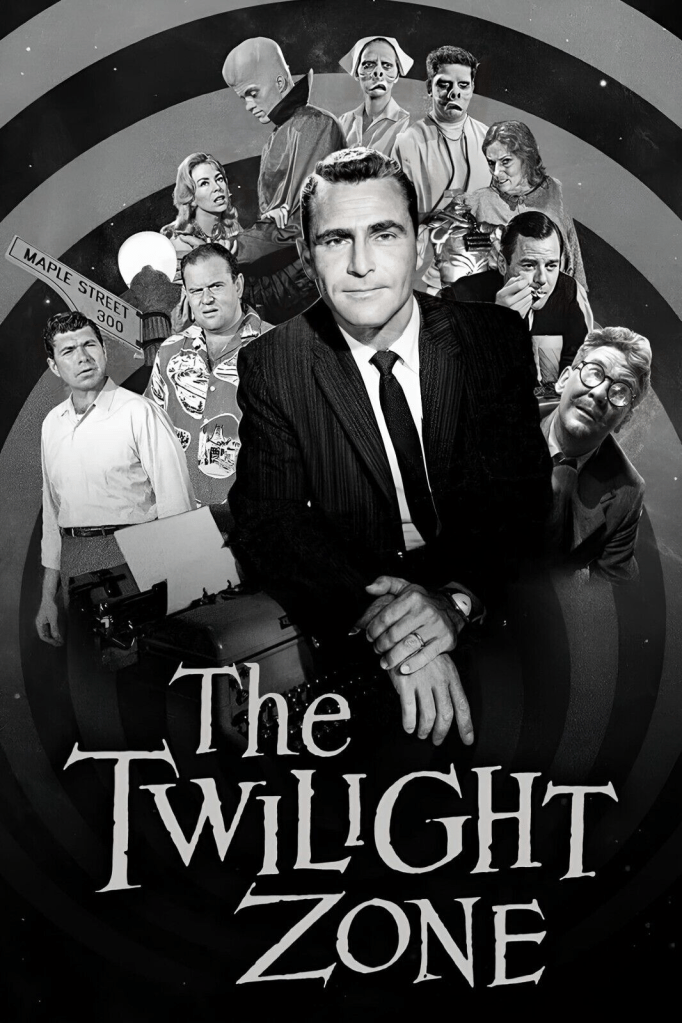
As we wind up our Eerie Shows blog series, we are ending with a show I remember being both fascinated by and totally creeped out by – The Twilight Zone. In 1958 CBS purchased a teleplay written by Rod Serling called “The Time Element.” It was introduced by Desi Arnaz. It became an anthology series called The Twilight Zone and was on the air from 1959-1964.
This show had more lives than The Brady Bunch. A second version debuted in 1985 and was on four years on CBS. From 2002-2003, it appeared again on UPN hosted by Forest Whitaker. But that still was not the end. In 2019, a fourth reboot was on for a season. In addition to the reboots, Steven Spielberg produced Twilight Zone: The Movie in 1983 starring Dan Aykroyd, Albert Brooks, and John Lithgow. Leonardo DeCaprio was rumored to be putting together a current film and Aron Eli Coleite was hired to write the screenplay. Four years later, Christine Lavaf was brought on to write a script. I could not find any information whether this movie was still in the works or not.
In this blog, I am focusing on the original series. While the show could be described as fantasy or science fiction, the episodes covered a lot of genres including absurdism, dystopian fiction, suspense, horror, and psychological thrillers.
📷reddit.com
The opening is one many of us remember: “There is a fifth dimension, beyond that which is known to man. It is a dimension as vast as space, and as timeless as infinity. It is the middle ground between light and shadow, between science and superstition, and it lies between the pit of man’s fears and the summit of his knowledge. This is the dimension of imagination. It is an area which we call The Twilight Zone.” The “Twilight Zone” was a term used by US Air Force pilots when crossing the day and night sides above the world.
📷wired.com
The series was produced by Cayuga Productions, Inc., owned by Serling. There were a lot of other famous writers who penned episodes on this show. Of the 156 episodes, Serling, Charles Beaumont, and Richard Matheson wrote 127 of them. Other famous writers included Ray Bradbury, Earl Hamner Jr., George Clayton Johnson, and Jerry Sohl. Many of the episodes were social commentaries about nuclear war, McCarthyism, racial inequality, and the greed of capitalism.
One of the earliest shows, “The Monsters Are Due on Maple Street,” is a great example of the Cold War and McCarthy subthemes. It aired in 1960, and the themes are still relevant today. The residents of Maple Street are alarmed when they hear rumors of monsters from outer space in their neighborhood. After a shadow passes by and a loud roar is heard, the citizens start accusing each other of being aliens. One man dies, another is physically attacked, and rioting occurs. We watch the residents destroy each other without seeing aliens involved. The twist is that there are aliens. They cut the power, but they let the humans destroy themselves. The message was if we think communists are in our midst, we’ll invent evidence to prove it and attack each other while Russia simply sits back and watches us destroy each other.
📷powerpop.com
All the shows were filmed in black and white. Seasons one, two, three and five were half-hour shows, while season four was an hour long. The Twilight Zone was never very high in the ratings, and the show struggled to find sponsors during its run. To save some money in season two, the network decided to shoot episodes on videotape instead of film. I’ve heard of this happening with several television shows in the sixties, but I wasn’t sure what the difference was. Apparently, videotape was very primitive at that time. Using videotape meant that the show was “camera-cut” which means using four cameras on a sound stage. Location shooting was not possible, and editing the tape was almost impossible. These disadvantages, along with the poor visual quality, made it hard to work with, and the technology was abandoned after a brief trial period.
The original theme for season one was composed by Bernard Herrmann. Season two switched to a theme by Marius Constant which is the most-remembered theme song. (The Grateful Dead performed the theme in 1985 for the reboot, Johnathan Davis of Korn composed the 2002 version, and Marco Beltrami was on board for the 2019 revival. The 1983 movie used composer Jerry Goldsmith.)
📷imdb.com
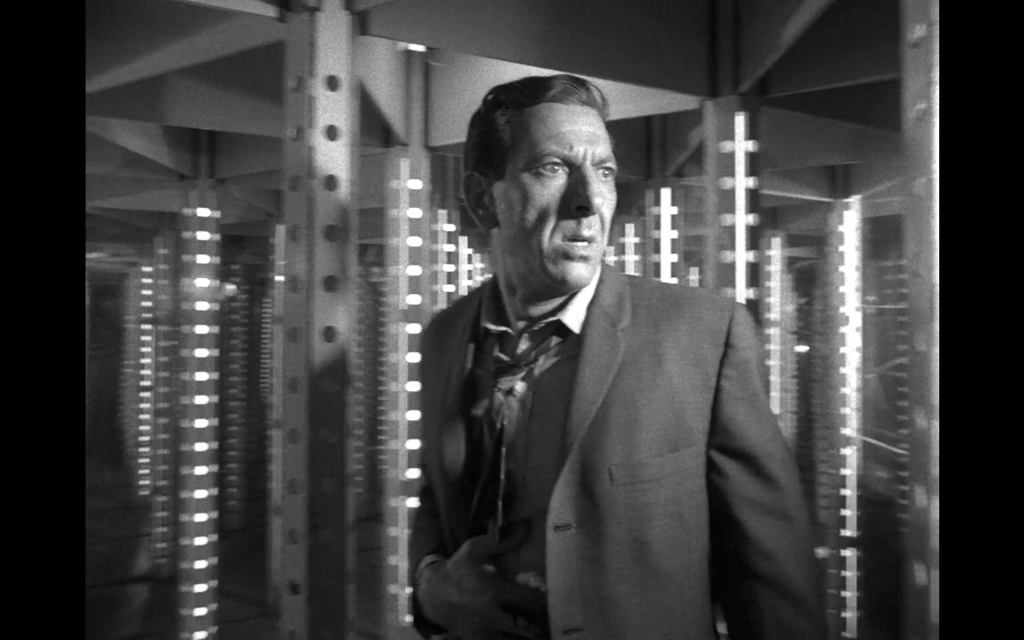
Several actors were in more than one episode and are noted for their appearances in the show: Jack Klugman, Burgess Meredith, Warren Oates, William Shatner, Jack Warden, Fritz Weaver, and William Windom.
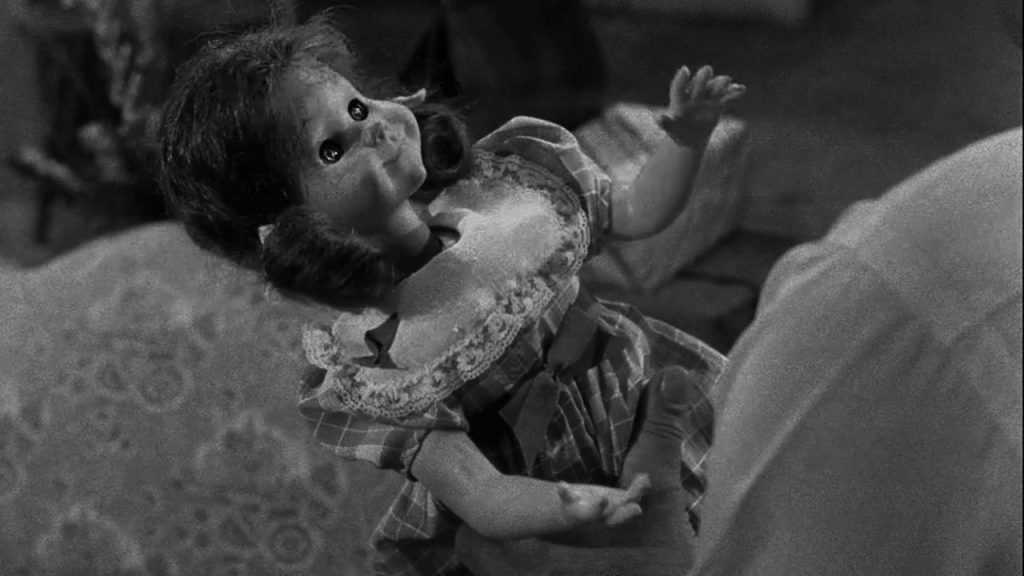
Everyone has their favorite scary episode. “The Dummy” from 1962 is about ventriloquist Jerry Etherson who thinks his dummy Willie is alive and evil. He locks Willie in a trunk, deciding to write a new act with another dummy, but Willie doesn’t like the plan.
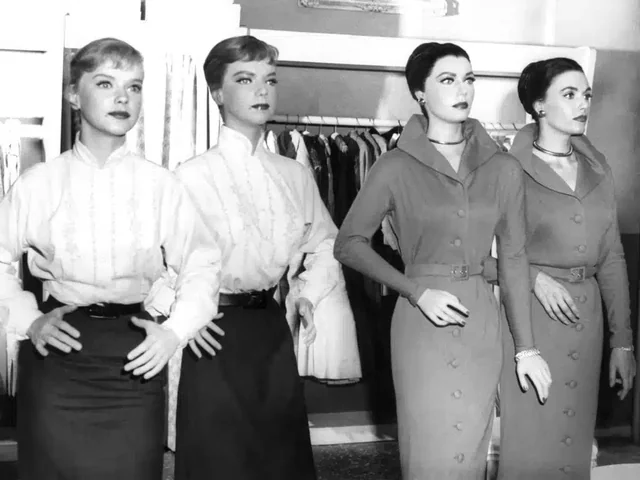
In “The After Hours,” a woman is locked in a department store after hours and it seems as though the mannequins have come to life. Even though no one is left in the store, she is treated badly by several “salespeople.”
📷imdb.com
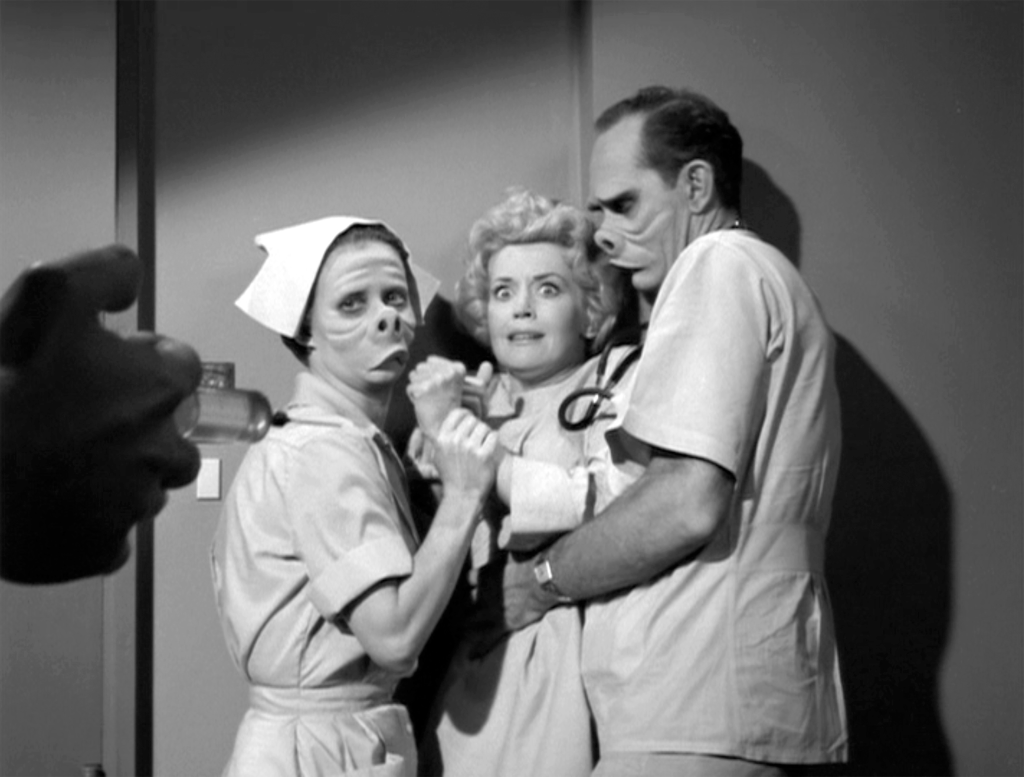
My most-remembered episode was “Eye of the Beholder.” Donna Douglas stars in this one about a young woman lying in a hospital bed with her head wrapped in bandages. She is waiting to see the outcome of a surgical procedure that was supposed to make her look “normal.” We see the bandages come off, we see the beautiful face of Donna Douglas, we see her look into a mirror, and then we hear her scream. When the scene pans out, everyone else has the face of a distorted pig and Douglas is devastated by her “ugliness.”
Also, like The Brady Bunch, the show has never been off the air since it debuted thanks to syndication. The episodes, despite being in black and white, have stood up to the test of time very well. Many things have changed in society since 1959, but people really have not changed much, and the stories are still applicable today. Newton Minnow who headed the FCC in 1961 is the person who called television a “vast wasteland.” The only series he praised was The Twilight Zone. (The US Minnow on Gilligan’s Island was named for Newton.)
📷paramountplus.com
There are some shows that are classics for their writing, some are classics for the quality of actors on the show, some are classics for their ability to transcend time and stay relevant for decades, and some are classics for the novelty they bring to the television schedule. The Twilight Zone is a classic because it does all these things and is as enjoyable to watch today as it was more than 60 years ago.
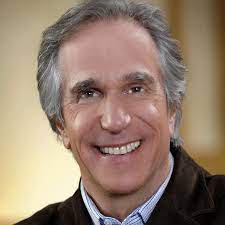
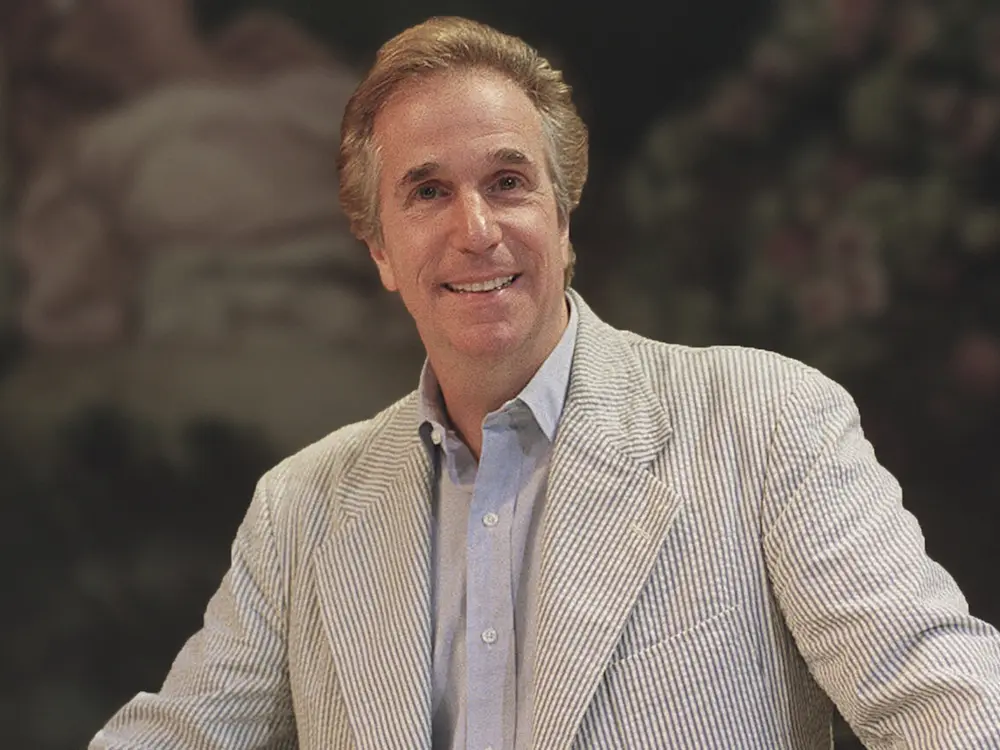
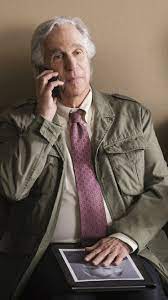
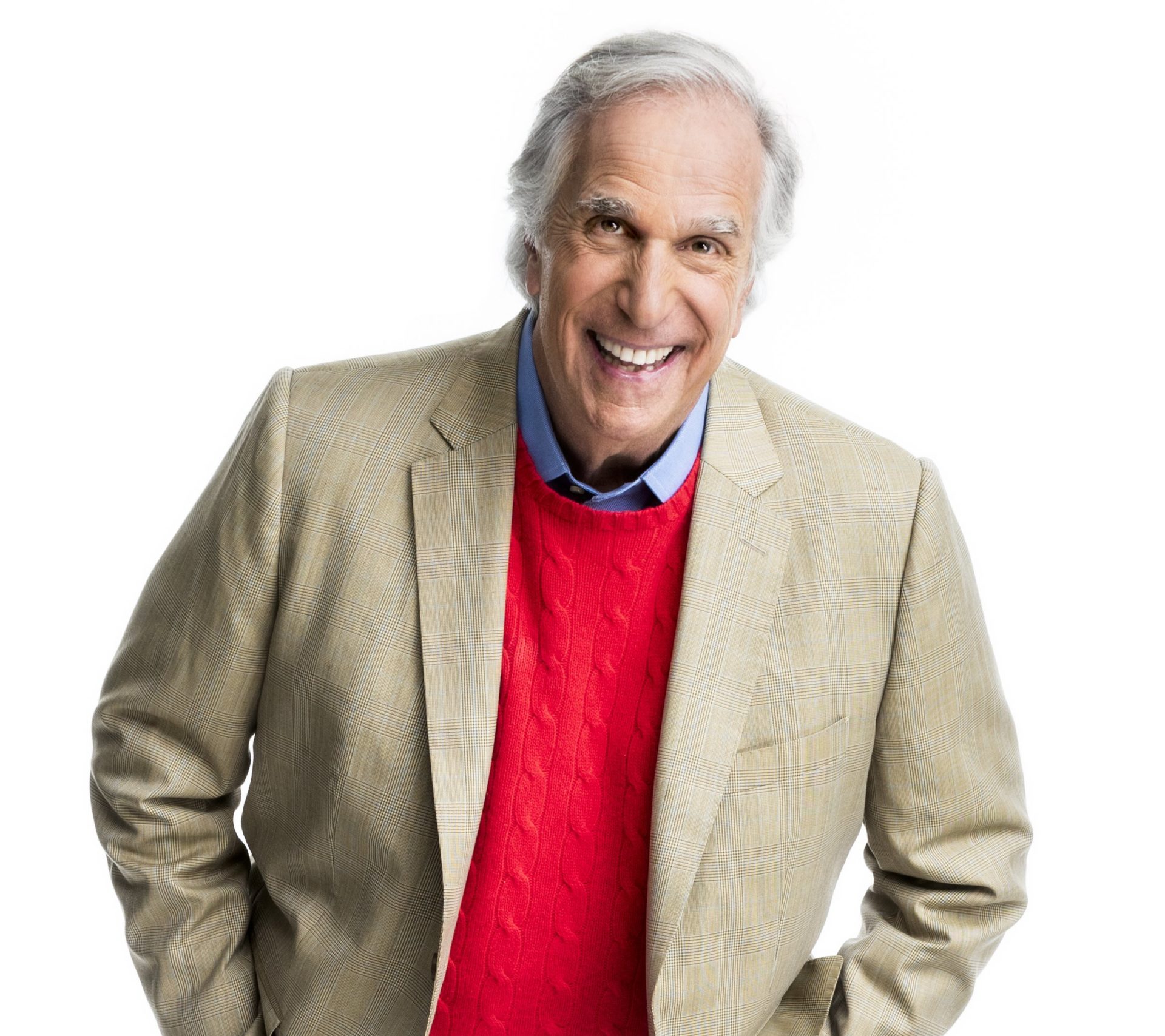
Today we are learning about the career of Henry Winkler. Although he was typecast for many years following Happy Days, he managed to continue his career with a variety of roles.
Photo: wikifandom.com
His parents were German Jews who lived in Berlin during the occupation of Nazi Germany. His father knew they would not be safe there and left in 1939. Winkler described what happened in an interview with Terry Gross on NPR in 2019: “My father knew that it was time. He got a six-week visa from Germany to come and do work in New York but was expected to come right back. I have told this story–that he took his mother’s jewelry, bought a box of chocolate, melted the chocolate down, put the pieces of jewelry in the chocolate box, melted–poured the chocolate over the jewelry, put the box under his arm, so when he was stopped by the Nazis and they said, are you taking anything of value out of Germany, he said, no, you can open every bag; we’ve got nothing. And the jewelry that he encased in chocolate, he sold when he came out of Ellis Island into New York and was able to start a new life here, slowly but surely. I have the actual letters from the government each time my father requested to stay a little longer, and they would say yes. And I was born.”
Photo: goodhousekeeping.com
Although his family did not keep kosher, Henry and his sister Beatrice were raised with the traditions of Conservative Judaism.
Winkler struggled with his studies but he was popular and very funny. His parents were frustrated by his inability to learn. Apparently, his father spoke eleven languages and could easily do math in his head. Henry’s self-esteem began to suffer during these years. Because his grades weren’t better, he was banned from most theater productions, which was what he was most interested in. He was able to appear in “Billy Budd” in eighth grade and in “Of Thee I Sing” in high school.
Photo: imdb.com
When Winkler gave a talk at the Yale Center for Dyslexia and Creativity, he tried to describe what it had been like for him in school: “You want so badly to be able to do it and you can’t. And no matter how hard you try, it’s not working . . . I would study my words. I would know them cold. I would know them backwards and forwards. I would go to class. I would pray that I had retained them. Then I would get the test and spend a lot of time thinking about where the hell those words went. I knew them. They must have fallen out of my head. Did I lose them on the street? Did I lose them in the stairwell? Did I lose them walking through the classroom doorway? I didn’t have the slightest idea of how to spell the words that I knew a block and a half away in my apartment the night before.”
Photo: understood.org
After high school, he attended Emerson College to study theater. He applied to 28 colleges but his grades kept him from being accepted at 26 of them. He majored in theater and minored in child psychology. During his time there he was a member of the Alph Pi Theta fraternity. He had a role in “Peer Gynt” as Peer Gynt. Although he also struggled with college courses, he stayed the course for four years and graduated in 1967. He was admitted to the Yale School of Drama in 1967. He appeared in a number of productions there. He received his MFA in 1970. Twenty-six years later he spoke at Graduation Day at Yale.
He began doing commercials in New York after graduation and starred in TheLords of Flatbush and Crazy Joe, two independent films. He appeared one day on Broadway; the show opened and closed on the same day. He also performed with an improv group, Off the Wall in New York.
Photo: usajacket.com
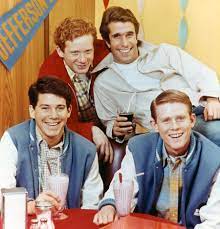
In 1973 he moved to California. His first role there was on The Mary Tyler Moore Show. Although he paid his dues in New York, he was hired as Arthur Fonzarelli on Happy Days his second week in Hollywood. He would portray the Fonz for a decade. The part was originally written a minor role on the show. Winkler did not want to portray the character as a stereotyped role which is probably why he became so popular. He was allowed to wear a black leather jacket only on his motorcycle the first year. Winkler never drove the cycle because the first time he tried, he crashed. His motorcycle on the show was the same one Steve McQueen used in the last scene of The Great Escape in 1963.
During his time on the show, he was diagnosed with dyslexia, explaining his tough time at school.
During the middle of season two, his character became a regular cast member. Many fans attribute to his performance in the episode “Guess Who’s Coming to Christmas.” By season three, he was considered one of the leads in the show.
Both Ron Howard who played Richie and Winkler told writer Stephanie Nolasco of Fox News how they felt about each other and their time on Happy Days. Winkler had a hard time dealing with his sudden fame, and Howard was able to provide some grounding for him. Winkler described this time, “It’s unnatural—the human condition does not prepare you for stardom. That’s just the way it is. So, you have to hold on to yourself and then you’ve got friends like Ron who doesn’t take it all seriously. I learned from him; he was my teacher. And Garry Marshall never took bad behavior from anybody. He was a father figure. He was very funny and very idiosyncratic, and then he was very strict.”
With Ron Howard Photo: decider.com
Winkler also discussed his friendship with Howard. “I think people gravitate to the Fonzie/Richie relationship because Ron and I are ten years apart. He was 19 and I was 27. We had a connection that you cannot describe in real life, and it was similar off-camera. He gave me my first mitt; I’d never played baseball before. He’s my brother.”
Howard echoed the sentiments. “We were fast friends from the beginning. It continues all these years later. It was exciting for me to work with Henry because he was really a trained actor who attended Yale Drama School; just a trained New York actor. And, I’d grown up sort of through the Hollywood television system, so for me to work with this guy who was so thoughtful, so creative, and yet so hilarious, was really an opportunity for me to learn and grow and we just clicked, you know.”
Happy Days Photo: ew.com
The sudden fame for Fonzie might have damaged the friendship Winkler had with Ron Howard, but they were both professionals and never had their egos inflated. They honestly discussed what was happening and while Howard had a harder transition with the show, he understood that Fonz had become a national icon. Even now decades after the show ended, people recognize his “Ayyy” and “correctamundo” catch phrases and his thumb’s up gesture.
After the show was canceled, his leather jacket was acquired by the Smithsonian Institution for the National Museum of American History. A bronze statue of the Fonz was erected in Milwaukee in 2008 along the Milwaukee Riverwalk.
Photo: ew.com
Fonzie was adored by many kids, especially kids who needed some extra help or attention. Marshall was asked if the show could do something to help kids realize how important reading was. In one of the episodes, The Fonz went to the library and checked out a book, saying “Everybody is allowed to read.” That week, library card registrations increased by 500%. In another situation, one day a call came to Paramount Studios. It was from a teenage boy who was contemplating suicide. He wanted to talk to Fonzie. Winkler picked up the call and gave the boy hope, convincing him not to take his life.
Tom Bosley and Marion Ross Photo: ebay.com
He received 50,000 letters a week. He also received $50,000 an episode. Winkler described The Fonz as his alter ego; he said that Fonz was everything he had always wanted to be: in charge, confident, and adored by others. Winkler credits Marion Ross and Tom Bosley, Mr. and Mrs. Cunningham on Happy Days, with being his acting mentors. He loved them for what they taught him and for being great people. When Bosley died, Winkler said “Tom was a family member, both on and off the sound stage. We acted together, traveled together, and played charades together. He was a loving husband, a doting father, and a fantastic grandfather.”
During his years on Happy Days, Winkler was able to tackle several other roles in the off season. He was a Vietnam War vet with PTDS in Heroes for which he received a Golden Globe nomination. He was in Carl Reiner’s The One and Only and in Ron Howard’s Night Shift.
Henry and Stacey Photo: wideopencountry.com
He also tackled the role of husband, when he married Stacey in 1978. After two years of dating, they married in the same synagogue where Winkler had his bar mitzvah. Together they raised three children, and they have been involved with a variety of children’s charities including the Children’s Action Network, the Annual Cerebal Palsy Telethon, the Epilepsy Foundation of America, the Toys for Tots, the National Committee for Arts for the Handicapped, and Special Olympics.
Even with these roles and several other television appearances under his belt, when Happy Days ended, Winkler was typecast and could not get quality roles. Winkler went the route of producer and director. He was one of the developers of MacGyver and produced and directed Sabrina the Teenage Witch. He worked on two movies: Memories of Me with Billy Crystal and Cop and a Half with Burt Reynolds. He also had appearances in Scream in 1996 and The Waterboy in 1998 and on television in The Practice in 1997 and Arrested Development in 2003.
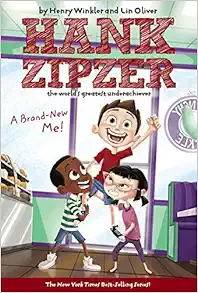
In 2003, he added writer to his resume, creating a new series of children’s books, Hank Zipzer about a dyslexic boy, with co-author Lin Oliver. The BBC televised the series, and Winkler appeared as Mr. Rock in the show. Winkler and Oliver went on to create Here’s Hank, the Ghost Buddy series and the Alien Superstar series. Queen Elizabeth appointed him Honorary Officer of the Order of the British Empire in 2011, and he was named one of the United Kingdom’s Top Ten Literary Heroes in 2013. In 2019, he was awarded the Bill Rosendahl Public Service Award for Contributions to the Public Good for his book series. In 2016, the award was renamed after Bill Rosendahl, a progressive political leader, Los Angeles’ first openly gay City Council member, an educator, a Vietnam veteran, an award-winning host of thousands of public affairs programs, and president of the Los Angeles Press Club.
In 2016 he joined the ranks of actors participating in reality shows on Better Late Than Never. During season two, Winkler traveled to Berlin and shared his family’s story. This was a quirky 12-episode reality show. NBC described it as: “This hilarious fish-out-of-water comedy/reality show follows cultural icons Henry Winkler, William Shatner, Terry Bradshaw and George Foreman on their greatest adventure yet. Deciding it’s Better Late Than Never, these four national treasures embark on the journey of a lifetime, traveling across Asia on their own with no schedule and no itinerary. The only “help” will come from Jeff Dye, a young, strong, tech-savvy comedian with an agenda of his own – who isn’t above leading the men off track. Each stop is packed with hilarious cultural experiences, heartwarming spectacles and unexpected twists as our legends take on this unforgettable adventure.”
Photo: entertainmentweekly.com
Photo: vanityfair.com
In 2018, Winkler starred in the show Barry and won his first Outstanding Supporting Actor in a Comedy Series Emmy. The plot features a hit man from the Midwest who moves to Los Angeles and becomes fascinated with the city’s theater life.
The show was on HBO for two seasons and Bill Hader, one of the creators and star of the show, wanted Henry for the part of acting teacher Gene Cousineau. Winkler mentioned he was 27 when he got the regular role on Happy Days and 72 when he got the role on Barry. Stage 19 of Paramount was where Barry was filmed; it was also the same sound stage used for Happy Days. Hader wrote Cousineau as a dark, cold character and while he could humiliate his students, Winkler brought some warmth to the character as well.
Winkler is a loyal Democrat and has campaigned for, and financially supported, Jimmy Carter, Bill Clinton, Al Gore, John Kerry, and Barack Obama.
With Friend John Ritter Photo: outsider.com
In addition to being lifelong friends with Ron Howard, Winkler was a close friend of John Ritter. They met at an ABC party in 1978 and became close friends. Winkler was actually on the set of John’s show when he collapsed and had to be taken to the hospital shortly before his death.
I do like to add some personal stories to my blogs when possible. I found a fun article in New York Magazine that looked at what famous people like to buy. One of the pieces was about Henry Winkler from October 2021. So, what did the famous Mr. Winkler purchase?:
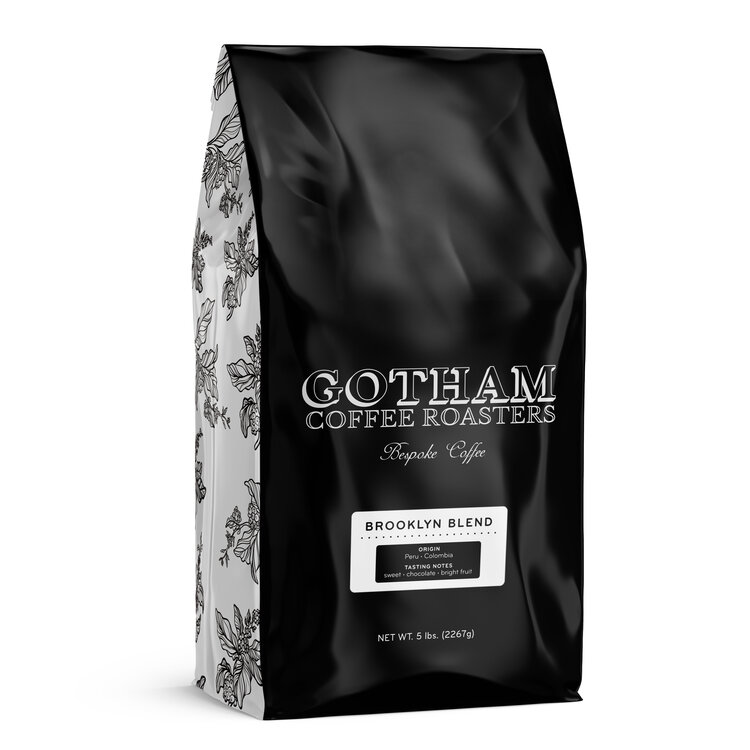
Penn Ultra-Blue racquetballs to play with his dog Sadie. ($4); A Sony Alpha a6000 Mirrorless Camera ($650); Landmark Theatre Gift Cards ($5); Katz’s Pastrami and Rye food boxes ($155), a reminder of his youth; Munster Cheese from The Cheese Store of Beverly Hills ($15); Winston Boron fly fishing rod ($825); Knudsen’s heavy whipping cream ($4); Gotham Coffee Roasters Brooklyn Blend Coffee ($18) which needs the above cream, no half ‘n half for Henry; and Lavley I’d Rather Be Fly Fishing socks ($12), because no one likes the socks where the elastic stops working after two wash cycles. A bit of fun trivia about an icon’s shopping list.
Perhaps one of the best stories that displays the importance of Henry Winkler comes from journalist Anderson Cooper. Cooper is also dyslexic and said that one of the books that influenced his life was The Fonz: The Henry Winkler Story. He keeps it in his office at CNN. He also mentioned that in meeting Winkler in person as an adult, he realized what a kind and gracious person he is. That is something I read over and over; everyone described Winkler as kind, level-headed, grounded, unbelievably nice, and many other similar sentiments.
Photo: sandiegocountynews.com
Henry Winkler would be amazing just based on what he did with the character of The Fonz. He would be amazing just based on what he has done for his children’s charity work. He would be amazing just based on how seriously he takes his roles as husband and father. He would be amazing just based on his directing and producing work. He would be amazing just based on his later roles on Arrested Development and Barry. He would be amazing just based on his friendships with coworkers including Ron Howard, Marion Ross, Tom Bosley, Adam Sandler, and John Ritter. He would be amazing just based on his book series as an author. And he would be amazing just based on the work he has done to help others understand dyslexia. Put them all together and add the fact that no one can talk about him without describing what a genuine and kind person he is, and he is well, just simply amazing. Thank you, Henry Winkler, for all the ways you have amazed us over the decades.
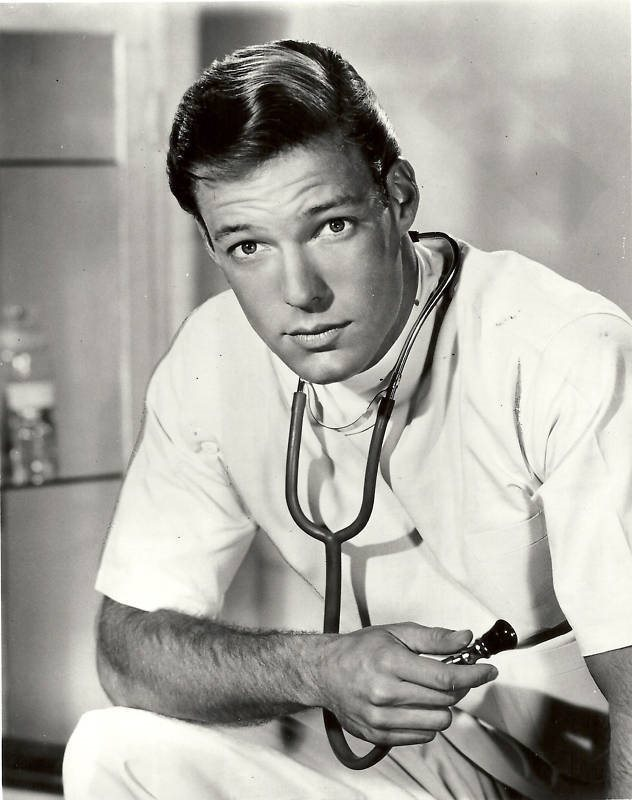
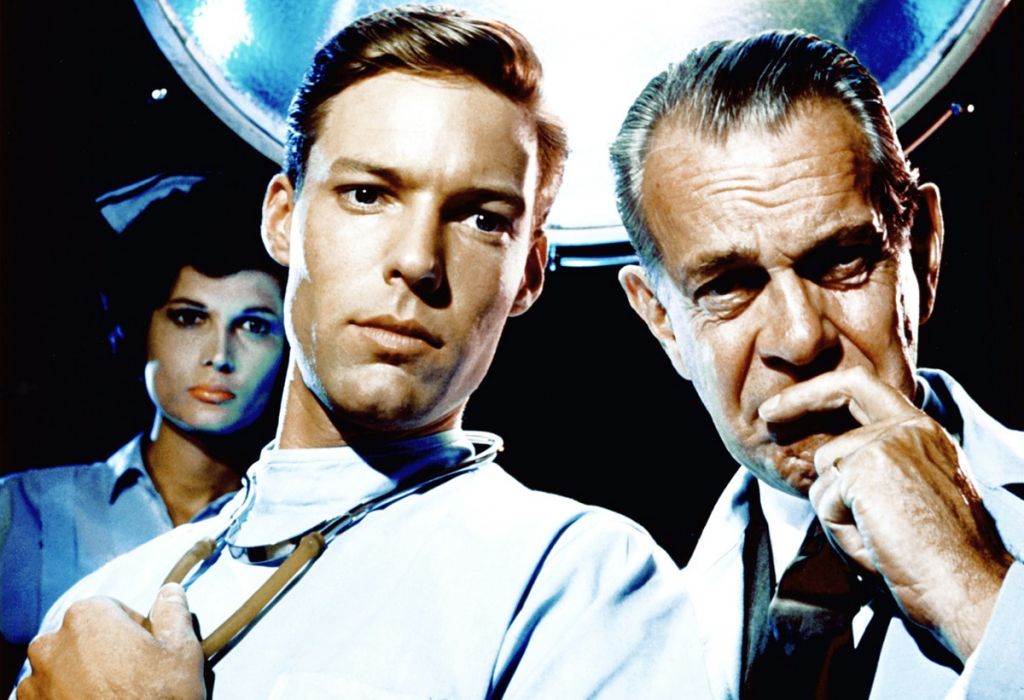
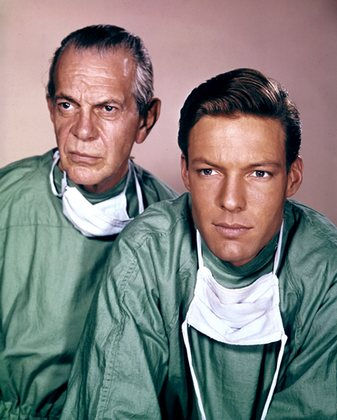
This month we are checking out a few favorites in a blog series: “Examining Our Favorite Medical Shows.” Last week we learned a bit about Ben Casey. Today we are looking at a similar show to Ben Casey, although in many ways it was very different: Dr. Kildare.Dr. Kildare was also on the air from 1961-66. MGM produced this show created by Max Brand in the 1930s. The show had previously been a movie and a radio series. Unlike Ben Casey who seemed to argue with everyone, Dr. Kildare (Richard Chamberlain) was a respectful intern at Blair General Hospital. He wants to help his patients and listens to his mentor, Dr. Leonard Gillespie (Raymond Massey). In season three, Kildare became a resident, and the episodes focused more on the stories about the patients.
In 1960 a pilot was filmed with Joseph Cronin in the Kildare role and Lew Ayres as Gillespie which did not sell. The role of Kildare was offered to William Shatner and James Franciscus who both turned it down. In 1961, a new pilot was produced with Chamberlin and Massey. One of the reasons Massey accepted the role is because he was certain the show would only last one season, and he wanted to continue with his movie career. The popularity of the show put his film career on hold for five years.
Photo: medium.com
Other cast members who appeared on the show included Dr. John Kapish (Ken Berry), Nurse Fain (Jean Inness), Dr. Agurski (Eddie Ryder), Dr. Gerson (Jud Taylor), Dr. Lowry (Steve Bell) Nurse Conant (Jo Helton), and Nurse Lawton (Lee Kurty).
The guest stars on this show were amazing. I feel like this should be read in auctioneer mode but here goes: Eddie Albert, Jack Albertson, Fred Astaire, Ed Asner, Lauren Bacall, Ed Begley, Joan Blondell, Tom Bosley, Beau Bridges, Charles Bronson, James Caan, Robert Culp, Ossie Davis, Ruby Dee, Angie Dickinson, Olympia Dukakis, Barbara Eden, Linda Evans, Douglas Fairbanks Jr., Peter Falk, Beverly Garland, Ron Howard, Kim Hunter, Celeste Holm, Carolyn Jones, James Earl Jones, Brian Keith, Ted Knight, Harvey Korman, Cloris Leachman, Jack Lord, Walter Matthau, Gavin McLeod, Ricardo Montalban, Harry Morgan, Jack Nicholson, Leonard Nimoy, Carroll O’Connor, Suzanne Pleshette, Basil Rathbone, Robert Redford, Robert Reed, Cesar Romero, Gena Rowlands, William Shatner, Jean Stapleton, Gloria Swanson, Rip Torn, Sam Waterston, Dennis Weaver, and Robert Young. For a show that was only on five years, it was an impressive guest cast.
Photo: imdb.com
To add more realism to the show, writer E. Jack Neuman spent several months working with interns in a large hospital. Technical advice was provided by the American Medical Association.
The show was realistic in portraying all the drama that is truly found in a city hospital. The plots involved a lot of medical and social issues including smallpox, physician competency, drug addiction, malpractice, and euthanasia. Neuman definitely captured what life in a large, city hospital was like. Kildare makes about $60 a month, or $500 in today’s terms, works long hours, rotates through the various medical departments and has senior physicians overrule his diagnoses.
Just like Ben Casey, the first seasons produced stand-alone episodes and after the success of Peyton Place, storylines carried over from one show to another to entice the audience to tune in again the next week.
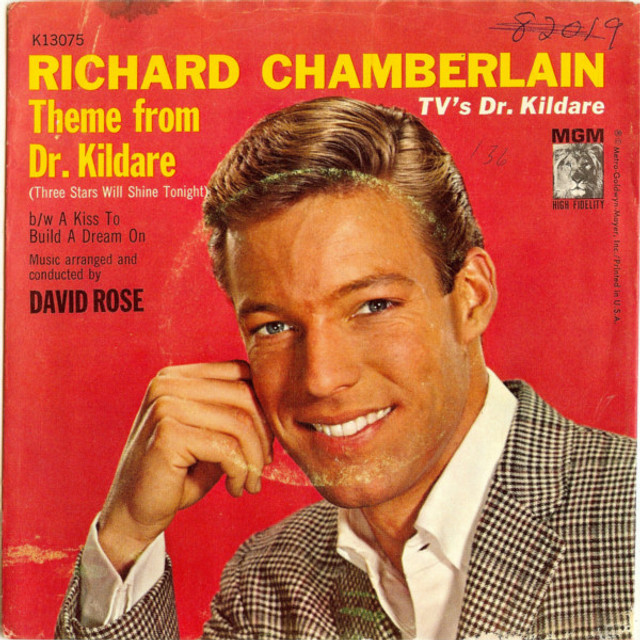
The theme music for the series was composed by Jerry Goldsmith. A CD set was released in 2009 which included the theme, the original music from the 1960 pilot, Richard Chamberlain’s recording of “Three Stars Will Shine Tonight,” and musical scores from the five seasons by Hurr Sukman, Richard Markowitz, Morton Stevens, Lalo Schifrin, John Green, and Burt Bacharach.
Airing on Thursday nights, the show was in the top ten during season one and the top twenty for seasons two and three. The show received about 12000 fan letters weekly, and, in addition, Chamberlain received letters personally asking for medical advice.
The network moved the show to Tuesday nights against Red Skelton and McHale’s Navy for season five and the viewers did not follow. The ratings declined, and the show was canceled.
This show really changed Chamberlain’s career. He had always been a small-role guy before this show, but he suddenly became a teen idol. He received more than 35,000 fan letters a month. Onscreen the idealistic Kildare and the wise, sometimes cantankerous, Gillespie don’t always agree but they had great chemistry on the set and apparently off the set as well. Unlike BenCasey, the cast on this show did get along and Chamberlain mentioned that he always enjoyed working with Massey.
Richard said he grew up in a family where they all pretended to be perfect. So, he went through life trying to be perfect too. He said that philosophy did not work well for his life, but it did work well for Dr. Kildare.
Following the show he would take a turn on Broadway, in big-screen movies, and back on television where he specialized in mini-series like Shogun and The Thorn Birds, both in the 1980s.
One fact I found interesting was that the DVD release of the show included a never-aired pilot from a different medical show, The Eleventh Hour in 1962. The episode originally was written for Dr. Kildare. Drs. Kildare and Gillespie assist Dr. Bassett (Wendell Corey), a psychiatrist diagnosing one of his patients Ann (Vera Miles). Instead of airing on Dr. Kildare, Chamberlain and Massey were cut out of the film and it was submitted as a pilot for the show, with the title “Ann Costigan: a Duel on a Field of White.”
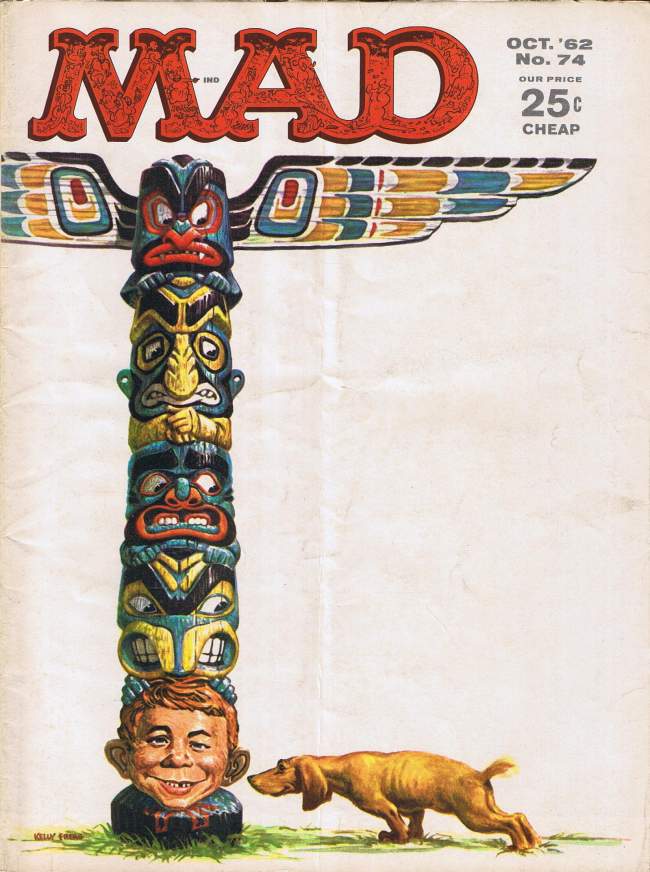
Even Mad Magazine got on the Kildare bandwagon. The 1962, #74 issue, featured “Dr. Killjoy,” a parody of the show.
Everyone seemed to like this show. Then again, what is not to like? You have a handsome doctor, exhilarating drama, a fun guest star every week, and realistic stories. The show would go on to inspire the talents behind a variety of medical series including Marcus Welby MD, ER, House, and Grey’sAnatomy.
We are winding up the blog series, “One-Named Detectives,” and I think we saved the most interesting private eye for today: Columbo.
Photo: americana.com
Columbo was on the air from 1971-2003, the longest of the five detectives we looked at in this series (Cannon, Kojak, Mannix, Matlock, and Columbo), but oddly had the fewest episodes with 68 (Cannon had 120, Kojak had 117, Matlock with 181, and Mannix had the most with 194).
Richard Levinson and William Link created Columbo (they also were the force behind Mannix). Levinson and Link met in junior high and they were a writing team until 1987 when Levinson passed away. This show was a bit different; it actually had two pilot episodes in 1968 and 1971. It originally aired from 1971-1978 in The NBC Mystery Movie series. It alternated with McMillan and Wife, McCloud and Hec Ramsey. ABC revived the show from 1989-2003, but it was not a weekly show then either. Falk didn’t want a weekly show, so the series was scheduled for one Wednesday a month. For season two, the series was moved to Sunday nights where it continued until 1978.
Falk with Hector Elizondo–Photo: columbophile.com
In the original concept for the show, Columbo was described as smooth-talking and cultured. The first choice for an actor to play the role was Bing Crosby who declined. When Falk showed up for his audition, he came in wrinkled clothing, aimlessly chattered, and seemed a bit scatter brained so the producers changed the character.
The show had some interesting directors. One of the directors on the show was Steven Spielberg who directed “Murder by the Book.” Falk himself directed the final episode of season one, “Blueprint for Murder.” Nicholas Colasanto who played Coach on Cheers directed two of the shows, “Etude in Black” and “Swan Song.” Patrick McGoohan directed five episodes (including three he guest starred in), as well as producing and writing two others. Falk’s friend actor Ben Gazzara directed “A Friend in Deed” and “Troubled Waters.”
On Columbo, we see the crime being committed long before we meet Lt Columbo (Peter Falk), so we know who committed the crime from the beginning. The fun of the episode is in watching Columbo investigate the crime and how he solves it. Columbo never introduces himself with his first name and no other character in the show uses it either. In season four, Colonel Rumford asks Columbo if he has a first name, and his response is “I do, but usually only my wife uses it.” Apparently, in one episode, a badge is scanned and lists his name as Frank, but William Link stated that Columbo was written without a first name.
Photo: pinterest.com
Columbo was a very disheveled detective who always showed up in a rumpled raincoat, smoking a cigar and appearing as if he was not quite all there. Falk used his own wardrobe for the character. The infamous raincoat was one he bought for $15 in 1967 when he got caught in a New York City rainstorm.
However, behind the façade of an inept policeman was a brilliant mind. He asked a lot of seemingly non-essential questions and paid attention to every detail. After interviewing a suspect, he always said, “Just one more thing.” Falk improvised during filming. He might ask for a pencil, search for something or throw in an unscripted line and did it to create a genuine confusion on the part of the other actor so it appeared more realistic.
This was definitely a one-man show, but there were a few characters who had recurring roles: Mike Lally played a bartender in 25 episodes, John Finnegan was Barney on 13 shows, and Bruce Kirby as Sgt George Kramer was seen nine times.
Photo: recordonline.com
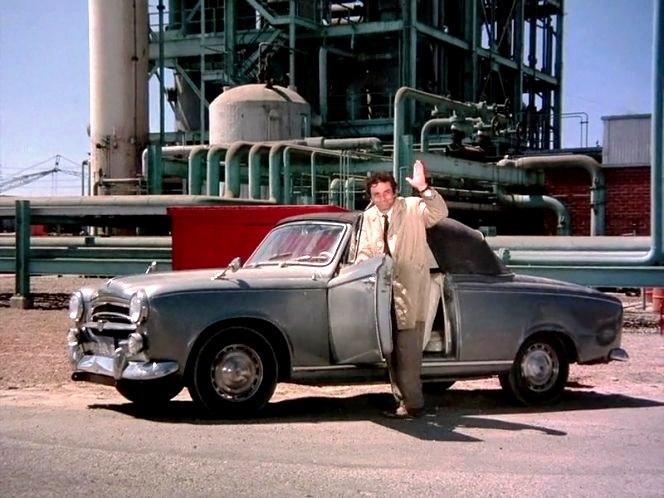
Columbo’s car is a 1959 Peugeot 403. Apparently, only 504 convertibles with two doors were made that year. When NBC cancelled the series, the car was sold. ABC had to locate a replacement when they picked the show up later. You can tell the difference because the license plate from NBC seasons was 044-APD and the plate from ABC shows was 448-DBZ.
Most of the suspects on the show were clever, wealthy people who think they have covered their tracks and have a solid alibi.
For only 68 episodes, there were a lot of famous guest stars on the show. Some stars even portrayed two different criminals including Jack Cassidy, Robert Culp, George Hamilton, Patrick McGoohan, and William Shatner. Other guest stars showing up were Anne Baxter, Johnny Cash, Faye Dunaway, Jose Ferrer, Ruth Gordon, Lee Grant, Janet Leigh, Vera Miles, Ray Milland, Leonard Nimoy, Donald Pleasence, Dick Van Dyke, and Robert Vaughn.
Falk with Dick Van Dyke–Photo: amazon.com
There was a variety of music written for each episode of the show. The Mystery Movie Theme was written by Henry Mancini and was used for the NBC shows. Both Quincy Jones and Mike Post also wrote versions of The Mystery Movie theme. One song uniquely belonging to Columbo was “This Old Man.” Falk can be heard humming or whistling it in various episodes after it was introduced in a 1973 show.
The show received thirteen Emmys during its run. Falk won the Emmy the first season and again in 1976. He was nominated in 1973, 1977 and 1978 but lost to Richard Thomas, James Garner and Ed Asner respectively. The series was nominated in 1972, 1973, 1976, 1977, and 1978 (winners were Elizabeth R Masterpiece Theater; The Waltons; Police Story; Upstairs, Downstairs; and The Rockford Files).
Photo: wallpapersplanet.net
The show was very popular and was broadcast in 44 countries. There is a statue of Columbo in his coat in Budapest, Hungary on Falk Miksa Street. The story behind it is that according to then-mayor Antal Rogan, Falk is a relative of Falk Miksa who was a Hungarian writer and politician, but I could not verify if that was true or not. What is true is that it was put up in 2014 at a cost of $63,000.
When he is questioning witnesses, Columbo often throws in random references to his wife and or something the couple liked to do, but we never see her in the series. However, later a show was created, Mrs. Columbo starring Kate Mulgrew. Falk’s real-life wife Shera Danese was cast in six of the Columbo episodes, always appearing as a different character.
A group of novels was adapted from the Columbo tv series by MCA written by Alfred Lawrence, Henry Clements, and Lee Hays.
Columbo has been a popular show in syndication and can currently be seen on ME TV Sunday nights. The shows run from 70-98 minutes which probably makes syndication interesting. The entire set is available on DVD for about $50.
Unfortunately, Peter Falk was diagnosed with dementia in 2007, and by 2009 he could not recognize photos of himself and did not remember playing Columbo. He passed away in 2011.
Columbo
It’s been fun looking at these five detectives for this series. When I put this together, I chose five private eyes I thought would make good articles. What I didn’t realize, is that four of them were all from the same era. In fact, in 1973, Columbo was on Sunday nights followed by Mannix and both were in the top twenty and on Wednesday nights Cannon was on followed by Kojak and both were in the top ten. The following year, Sunday nights featured Kojak before Mannix which was still in the top 20 and they were on at the same time as Columbo. Cannon eventually moved to Sunday night but also spent part of the year on Wednesdays where it was also in the top twenty. Matlock debuted in the late eighties, after the other shows except Columbo had all gone off the air.
Cannon, Kojak, Mannix, Matlock, and Columbo—five very different types of detectives who had one thing in common: good writing. Check them all out and I’d love to hear which one is your favorite.
We are in the midst of our western series, and today we turn our attention to a show that was on ABC for four years, from 1965-1969: The Big Valley. Created by A. I. Bezzerides and Louis F. Edelman and produced by Levy-Gardner-Laven (a trio of Jules V. Levy, Arthur Gardner, and Arnold Laven).
Photo: amazon.com
The series is set on the Barkley Ranch in the 1870s, home of the Barkleys, one of the wealthiest families in the area. The ranch is based on the 30-acre Hill Ranch which existed from 1855-1931. Lawson Hill was murdered in 1861 ad then his wife Euphemia ran it. They also had three sons and one daughter. Today the ranch is covered by Camanche Reservoir waters. The exterior shot of the house used in the show was also Tara in Gone with the Wind.
Photo: pinterest.com
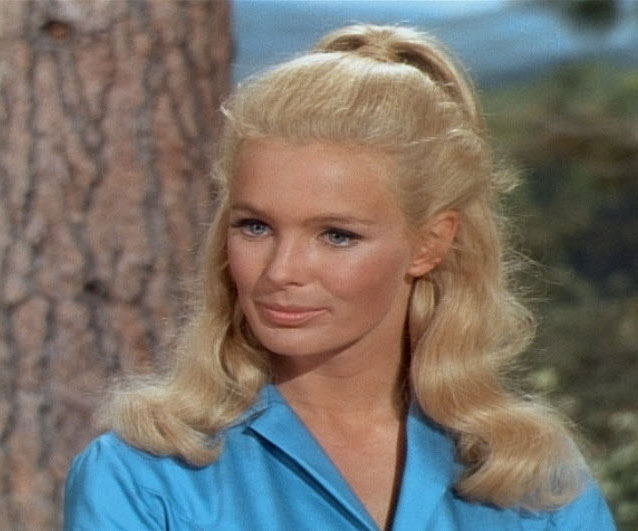
On Big Valley, Victoria Barkley (Barbara Stanwyck) runs the ranch with the help of her sons Jarrod (Richard Long), Heath (Lee Majors), and Nick (Peter Breck) and daughter Audra (Linda Evans).
Barbara Stanwyck Photo: pinterest.com
Heath was her husband’s illegitimate son, but she considered him her own child. He never met his father who had never been told of his existence; Heath learned it from his mother on her deathbed.
The boys of Big Valley Photo: tapatalk.com
Jarrod was an attorney and was refined and well educated. He was briefly married but his wife was killed shortly after by a bullet meant for him. Nick was the younger, hot-tempered son who helped his mother run the ranch. He was a soldier in the Union Army during the Civil War. He had a great sense of humor and was very loyal to his family.
Linda Evans Photo: insp.com
Audra was rather bold for the times. She was a tomboy but had a soft heart and tended to children at the local orphanage.
There was another younger Barkley, Eugene (Charles Briles), who was a medical student at Berkeley. He was seen off and on through season one, then drafted into the army and never really mentioned again.
Considering that the show was only on the air four years, a lot of stars appeared. A small sample includes Jack Albertson, Lew Ayres, Anne Baxter, Milton Berle, Charles Bronson, John Carradine, Yvonne Craig, Yvonne DeCarlo, Richard Dreyfuss, Robert Goulet, Julie Harris, Ron Howard, Cloris Leachman, Gavin MacLeod, Leslie Nielsen, Regis Philbin, Lou Rawls, Pernell Roberts, Wayne Rogers, Katharine Ross, William Shatner, and Adam West.
Lou Rawls guest star Photo: imdb.com
The Big Valley was a western but with a few twists and never predictable. It was the first time a woman would have the lead in a western. The Barkleys may have been wealthy, but they were raised right. They were hardworking and fought for the underdog, making sure justice prevailed. However, it was not a cliché; no one could be trusted and nothing was exactly as it looked. Characters who appeared angelic ended up being truly evil.
Photo: hulu.com
Unfortunately for the show, it was coming in at the end of the western’s popularity and was never in the top 30 during its time on the air. The other new shows that began when it did included Get Smart, I Dream of Jeannie, Hogan’s Heroes, Lost in Space, F Troop, and The Wild Wild West.
However, it received good reviews, and in 1966, Stanwyck was nominated and won the Emmy for drama series. She would also be nominated in 1967 and 1968, losing to Barbara Bain from Mission Impossible both years.
The theme was composed by George Duning. In 1966, a soundtrack from the show was released in mono and stereo versions. During his career Duning would work on more than 300 movie and television scores.
Like many television shows in the fifties and sixties, Dell Comics published six comic books based on the show. For some reason, I did not see much in the way of merchandising for this show compared to other westerns or shows from the sixties.
Photo: pinterest.com
The cast got along well. Evans and Stanwyck were exceptionally close and rehearsed at Barbara’s house every Saturday. When Arthur Gardner was interviewed on the Television Academy, he said that Stanwyck mentored the younger cast members. He said “he could not praise her enough” for the work she did.
Photo: pinterest.com
It’s too bad the show didn’t begin earlier in the decade; it might have been able to stay on the air a bit longer. It was a unique concept with a powerful woman as the star. You can currently see it on Me TV on Saturdays as well as a few other networks.
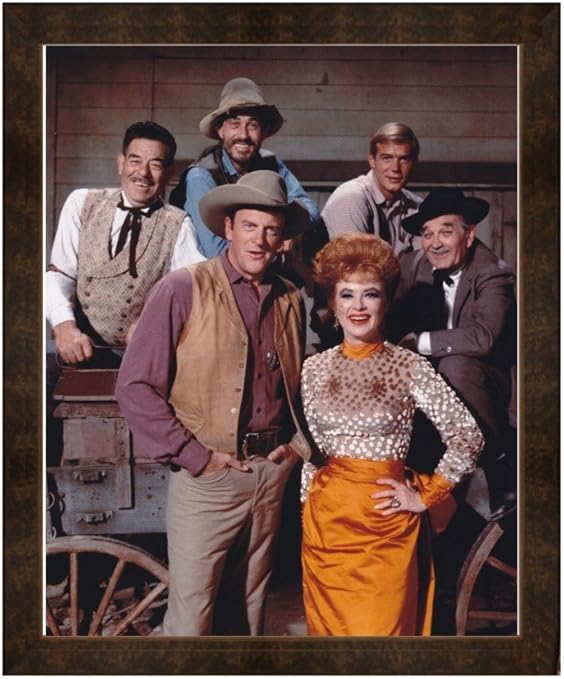
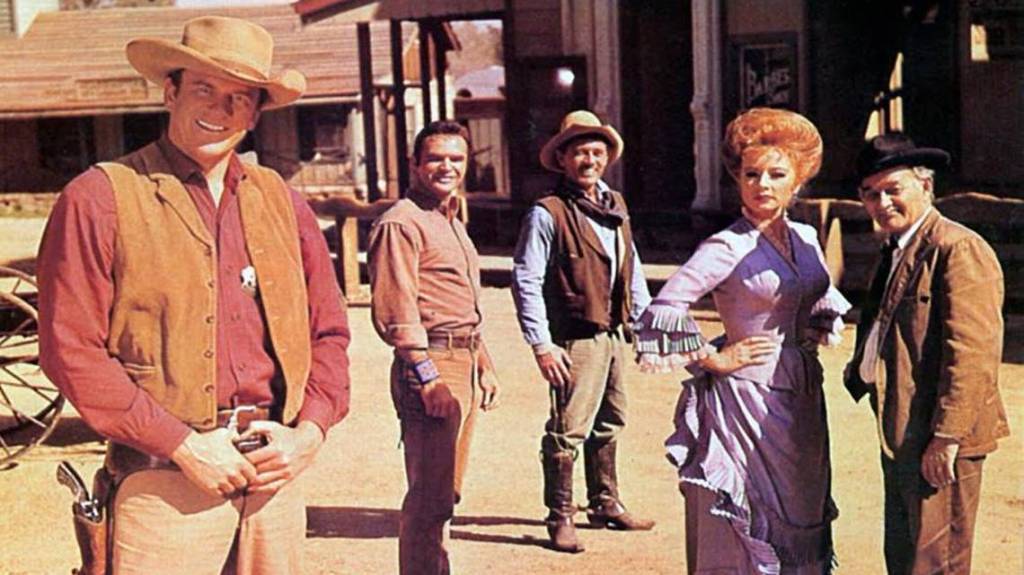
From 1952-1961, you could tune into Gunsmoke on your local radio to hear the adventures of the folks in Dodge City, Kansas created by Norman Macdonnell and John Meston. The primary characters were Marshal Matt Dillon (William Conrad), Doc Charles Adams (Howard McNear), Miss Kitty Russell (Georgia Ellis) and Chester Wesley Proudfoot (Parley Baer). Three years after its debut, the series shifted to television as well, running on CBS from 1955-1975, producing an incredible 635 episodes. For television, Macdonnell took over the reins as producer with Meston the head writer.
James Arness was offered the role of Dillon on television. The network wanted John Wayne who turned it down. He did, however, introduce the first episode. Both Raymond Burr and Denver Pyle were also considered for the role. Matt Dillon spent his youth in foster care, knew the Bible well, and at some point was mentored by a caring lawman. He also talks about his time in the Army in some episodes.
Photo: allposters.com
The role of Chester, with a new last name of Goode now, was played by Dennis Weaver. Chester was not only a loyal employee to Marshal Dillon, but he brewed a mean pot of coffee. He had a noticeable limp which apparently resulted from an injury in the Civil War. Weaver later said if he realized how hard it would be to film that long with a fake limp, he would have not used it. Other sidekicks to the Marshal included Ken Curtis as Festus Haggen, Burt Reynolds as Quint Asper (1962-65), Roger Ewing as Thad Greenwood (1966-68), and Buck Taylor as Newly O’Brien (1967-75).
Photo: pinterest.com
Doc was now Galen Adams and played by Milburn Stone. Doc was an interesting guy. He apparently was educated in Philadelphia and spent some time as a ship doctor on gambling boats on the Mississippi River where he met Mark Twain. His young wife died from typhus two months after their marriage. He finally settled in Dodge City after wandering a bit.
Photo: ebay.com
Miss Kitty was portrayed by Amanda Blake. Perhaps the closest bond she had with Dillon was that she also grew up in foster care in New Orleans. She was in more than 500 of the television episodes. In addition to her role as “entertaining men” in Dodge City, she is half owner of the Long Branch Saloon. Kitty and Matt obviously are attracted to each other and are very close. Kitty was a successful business owner and had a cold demeanor about professional matters but had a soft heart in other matters. Blake was ready to leave the show in 1974, and her storyline was that she finally returned to New Orleans.
Photo: wikipedia.com
During its twenty-year stint, the show had some notable guest stars. Just a few celebrities who graced the set include Jack Albertson, Ed Asner, James Backus, Beau Bridges, Charles Bronson, Bette Davis, Angie Dickinson, Richard Dreyfuss, Buddy Ebsen, Barbara Eden, Jodie Foster, Mariette Hartley, Ron Howard, June Lockhart, Jack Lord, Rose Marie, Howard McNear, Harry Morgan, Leonard Nimoy, Carroll O’Connor, Denver Pyle, Wayne Rogers, William Shatner, Cicely Tyson, and Adam West.
While the show portrayed the hard life in the West, it was also a warm and humorous celebration of a group of people making a new life together.
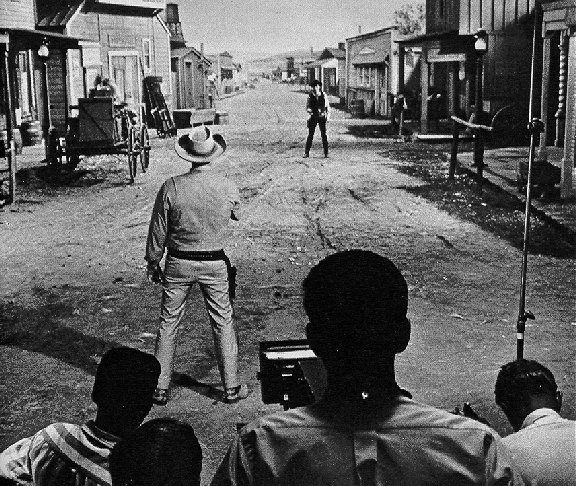
The opening of the show is a gunfight between Matt and a “bad guy.” It was shot on the same Main Street set used in High Noon, the Grace Kelly/Gary Cooper classic. The scene was dropped in the 1970s when a nonviolence emphasis was placed on television shows and the opening was Matt riding his horse.
Photo: marksmannet.com
The show began its life on Saturday nights at 10 pm ET. In 1961 when the radio show left the air, the television show switched from half an hour to an hour. For season 13, it moved to Monday nights at 7:30 for four years, and then at 8 pm for four years. By season two it was a top ten hit, rising to number one where it remained until 1971.
The first seven seasons were sponsored by L&M cigarettes and Remington shavers.
The well-known theme from the show and radio was “Old Trails” composed by Rex Koury. Lyrics were later recorded by Tex Ritter in 1955 but not used in either radio or tv. Although I could not confirm it, I read several mentions that Koury was so busy, he actually penned the song while using the bathroom. William Lava composed original theme music for television; other composers who contributed music during the twenty years were Elmer Bernstein, Jerry Goldsmith, Bernard Herrmann, Jerome Moross, and Franz Waxman.
Photo: amazon.com
Surprisingly, the show was only nominated for fifteen Emmys during its reign. Of those, there were only three wins: one for best dramatic show in 1957, one for Dennis Weaver as supporting actor in 1958, and one for Milburn Stone in 1967.
After surviving the rural purge Paley conducted, the cast thought they were not in jeopardy and were all stunned by the cancellation in 1975. CBS had not prepared them that they were debating ending the show. They assumed the show was continuing till it had 700 episodes and many of the stars read about the cancellation in the trade magazines.
The show has appeared in syndication in three different versions. One package is half-hour episodes from 1955-1961, one package contains hour-long black and white episodes from 1961-1966, and the final package contains one-hour color episodes from 1966-1975. Me TV currently airs the one-hour color shows.
Photo: wichitaeagle.com
Arness would appear in five made-for-television movies after the show went off the air. In 1987, Gunsmoke: Return to Dodge featured Blake as Miss Kitty and Taylor as O’Brien. Stone had passed away in 1980, so his role was not part of the new film. Gunsmoke: The Last Apache premiered in 1990 without Blake who had died in 1989. In 1992-1994, Gunsmoke: To the Last Man, Gunsmoke: The Long Ride, and Gunsmoke: One Man’s Justice would appear before the series rode off into the sunset for good.
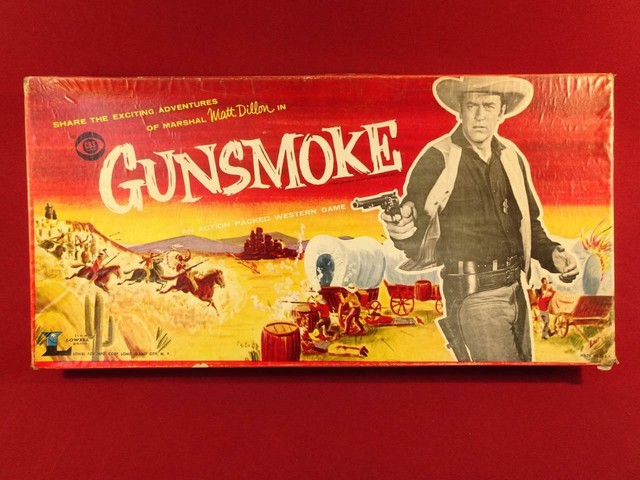
After being on television so long, it’s not surprising that there were a lot of merchandising opportunities for the show. In addition to typical items like lunch boxes, there was Gunsmoke cottage cheese. A Matt Dillon figurine was available with his Horse Buck.
There were also board games, puzzles and a variety of books including numerous paperbacks and comic books from Dell and Gold Key.
Fans had an affinity for the show. During its time on the air more than thirty westerns came and went, but Gunsmoke continued, in the top ten for most of its two decades. Few series have their own museum, but you can visit Boot Hill Museum in Dodge City to learn all about the show. Furniture from the series is included, as well as signed photos from the cast and other memorabilia including one of Miss Kitty’s dresses.
When you hear someone say “Get outta Dodge,” you can fondly remember Gunsmoke which is where this phrase began. Perhaps being cancelled was a blessing in disguise. After two decades, maybe it was time to get outta Dodge, maintaining the high standards and high ratings that made the show such a long-running success.
We are in the midst of our Murder, Mystery, and Mayhem series this month. In the mid-1960s, westerns were still the most popular show on television with rural sitcoms coming on the scene. Crime shows still had their fair share of air time, but spy shows were non-existent. With the end of the Cold War, Bond movies, and books like The Spy Who Came in From the Cold, these types of thrillers were bound to hit the small screen. From 1964-1968, The Man from UNCLE took us behind the scenes to observe the dangerous life of special agents.
Photo: booktrib.com
Beginning on Tuesday nights on NBC, the show was produced by Metro Goldwyn Mayer. The creator, Norman Felton, asked Ian Fleming to act as a consultant. (Some sources list Felton as the sole creator; some credit Sam Rolfe as a co-creator.) The book The James Bond Films mentions that Fleming suggested two characters: Napoleon Solo and April Dancer. Napoleon Solo became one of the main characters on The Man from UNCLE, and we will learn more about April Dancer later. Solo was also a villain in the movie Goldfinger. Originally titled “Solo,image of ” the popularity of the film led to a title change in the television show to The Man from Uncle.
Photo: filmandfurniture.com
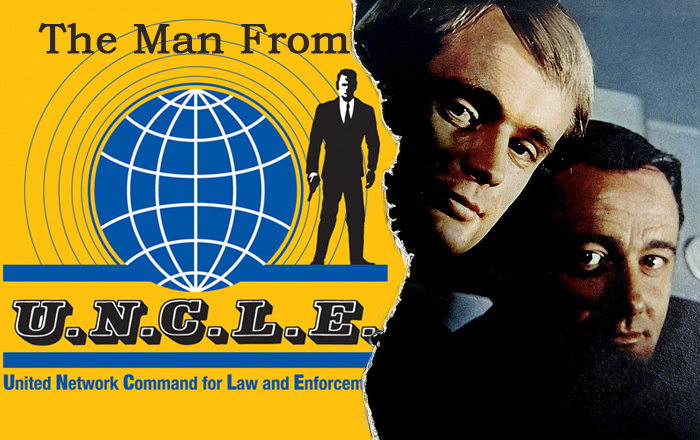
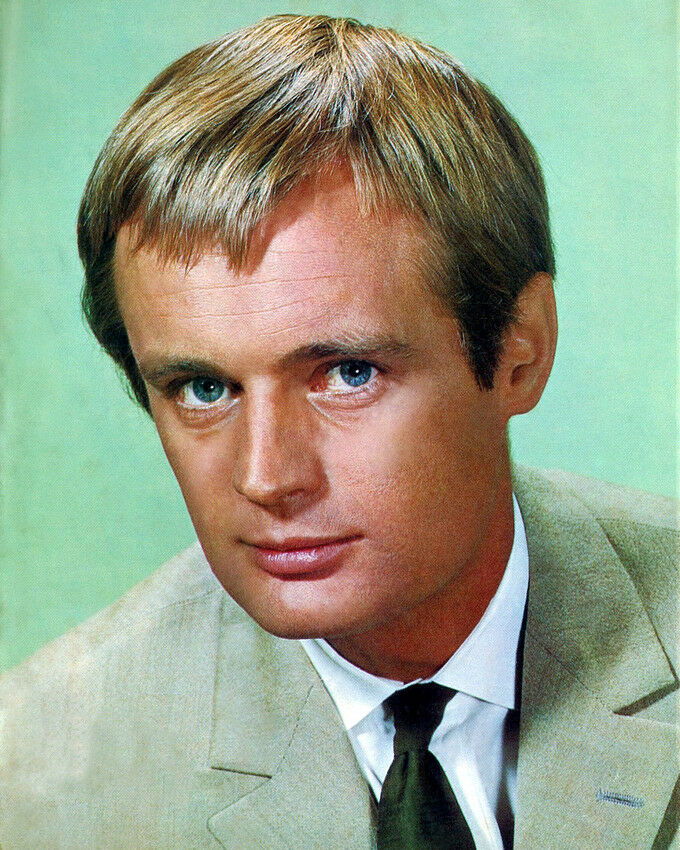
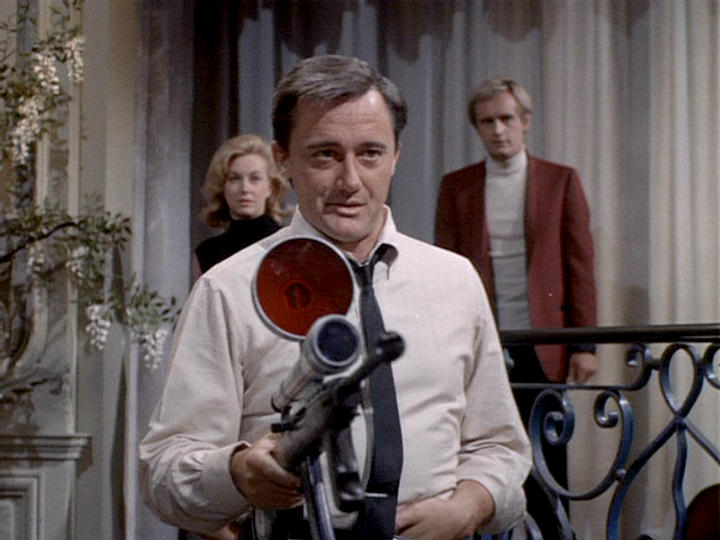
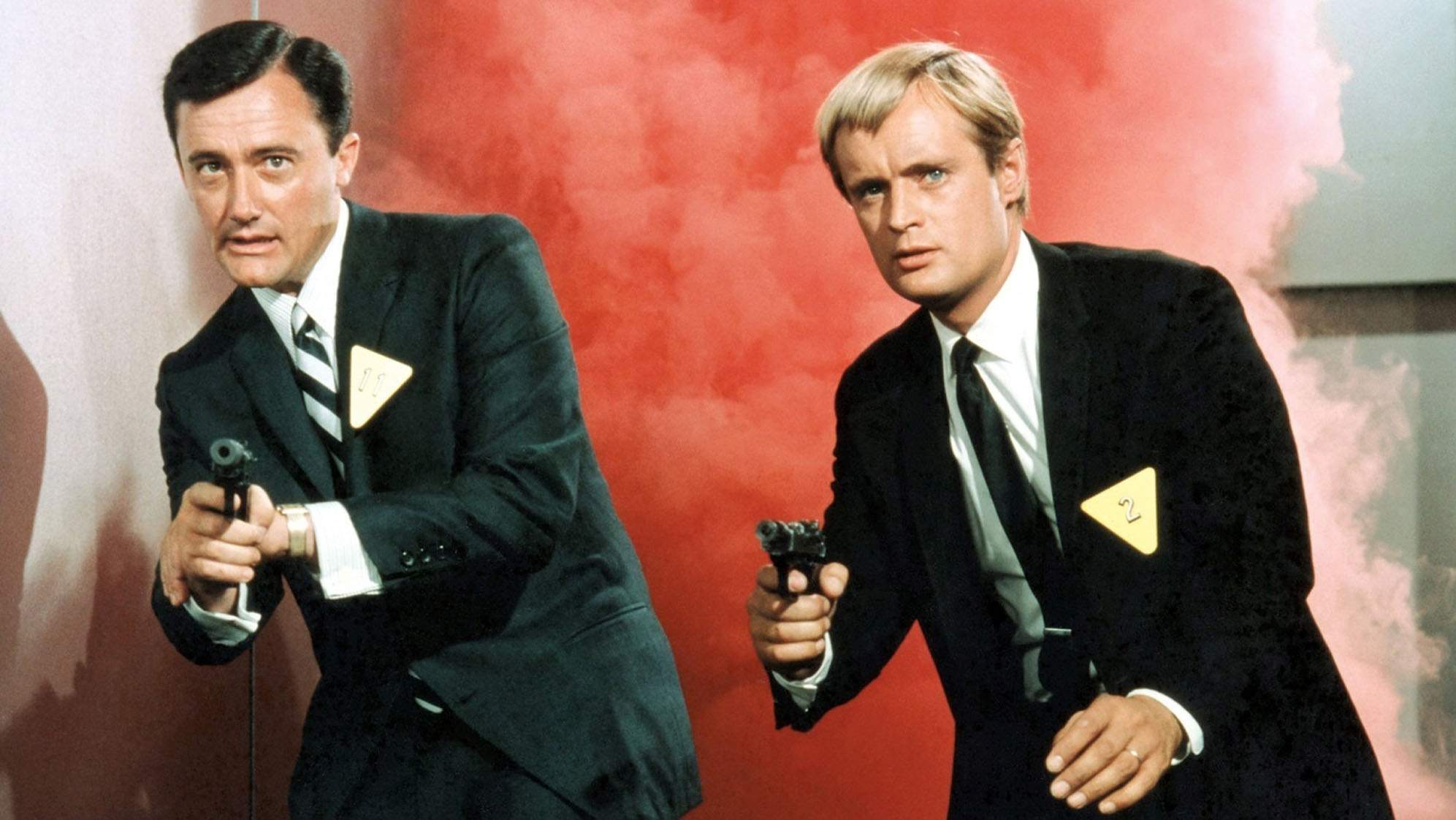
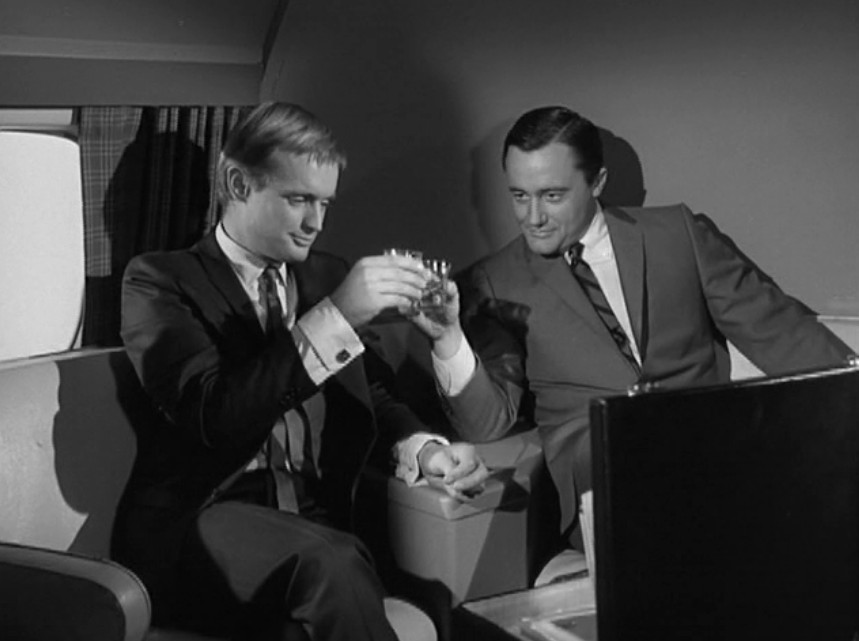
Solo (Robert Vaughn), being an American, was set up in a partnership with a Russian, Illya Kuryakin (David McCallum). The duo would take on multinational secret intelligence work under UNCLE, The United Network Command for Law and Enforcement. They sometimes worked with Alexander Waverly (Leo G. Carroll) who headed up an English organization. They frequently went up against THRUSH. We never learned who was part of THRUSH or what their goals were, apart from taking over the world of, course.
Photo: ebay.com David McCallum
Solo was
supposed to be the typical ladies’ man, with Kuryakin being the intelligent,
funny, and loyal partner, but McCallum turned into an instant celebrity.
Hysterical fans attended promotional appearances and magazines gave he and his
wife Jill Ireland little peace and quiet. One article I read discussed an
incident in Baton Rouge, LA when McCallum was locked in a bathroom so the
police could clear out the screaming women. When he was supposed to do a spot
in a Macy’s store in New York, police had to disperse 15,000 screaming women
who made it too dangerous for him to appear and did “a colossal amount of
damage” to the store.
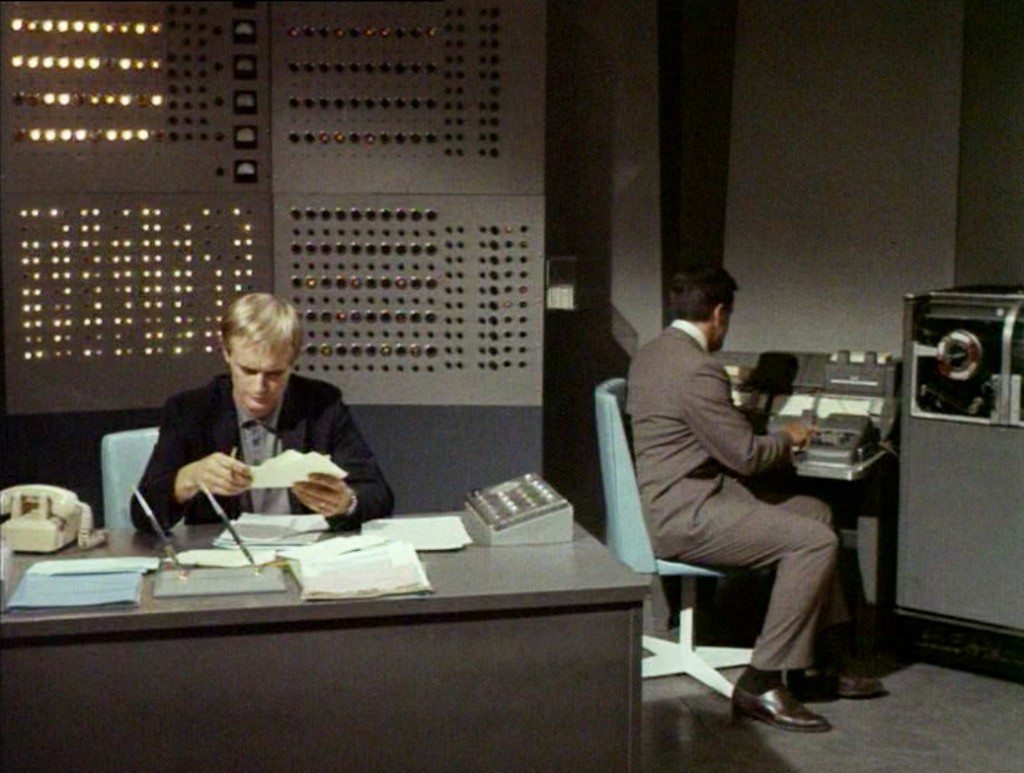
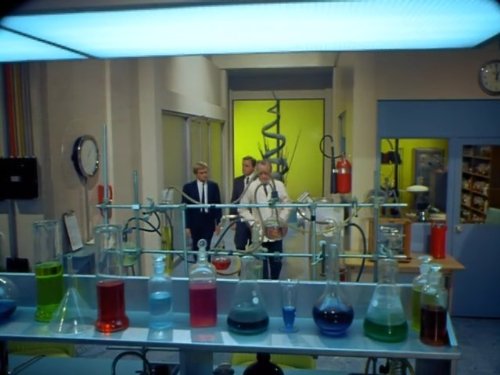
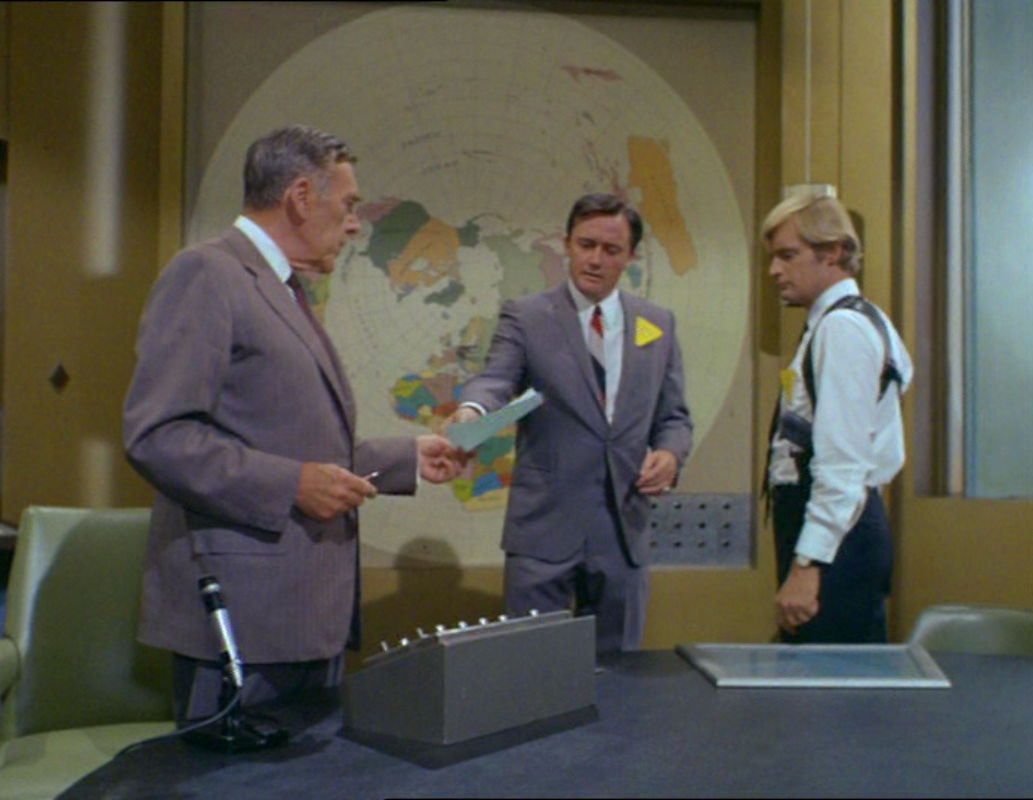
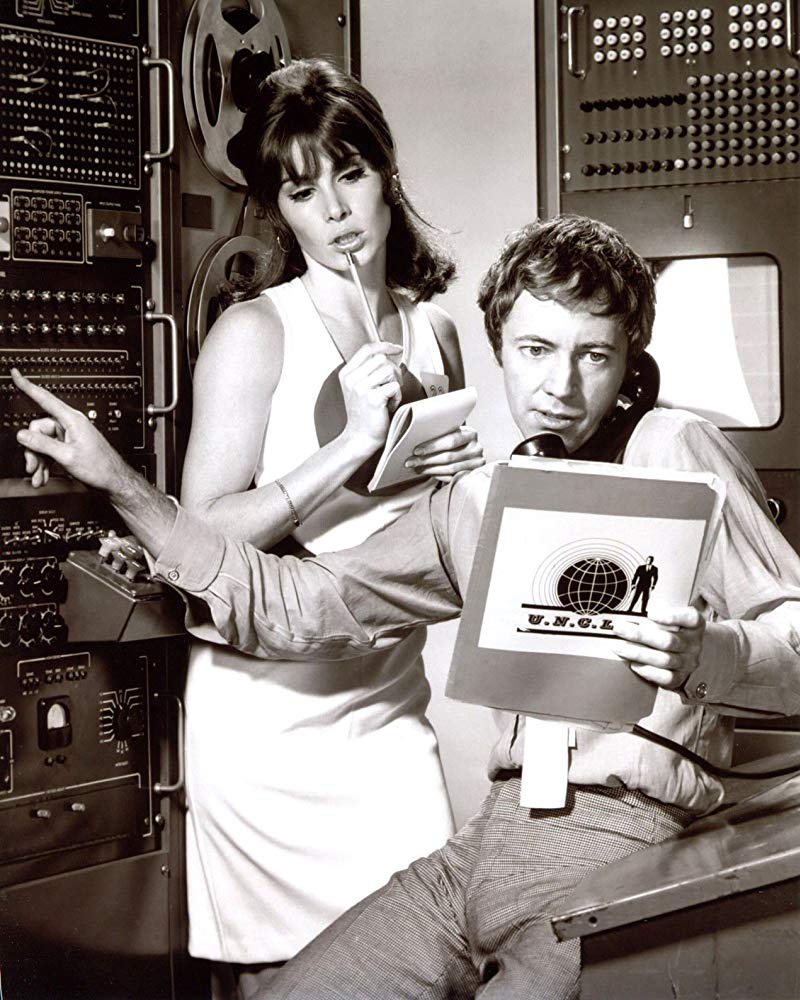
Solo and Kuryakin accessed their secret headquarters through a tailor’s shop, Del Floria’s.
Photo: filmandfurniture.com
In an
interesting twist, the creators decided to feature an “innocent character,”–a
Joe Doe or Jane Smith who the viewers could identify with—in every episode.
The theme
music was created by Jerry Goldsmith, changing slightly each season as new
composers came on board, eight in all.
Photo: imdb.com
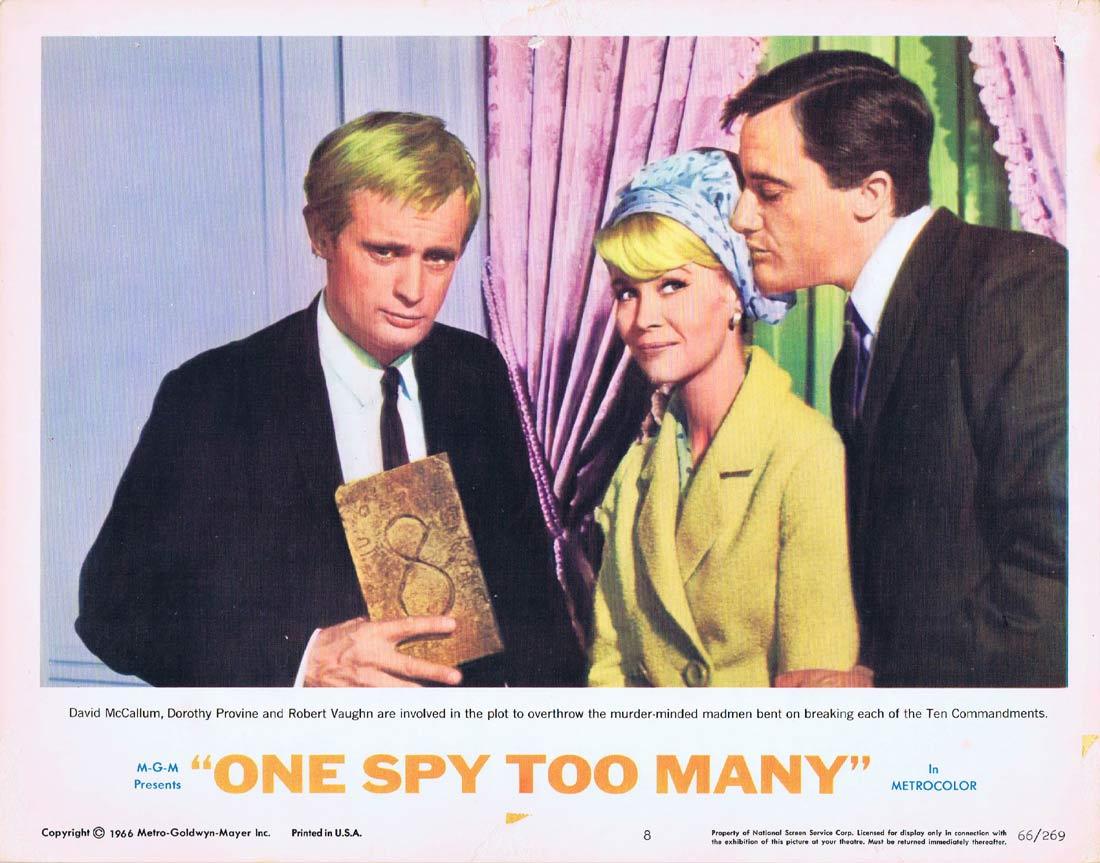
With the exception of one show, the episodes were titled “The ______ Affair.” Every year at least one two-part show was aired. The pair of shows became theatrical films released in Europe. Additional footage was added to the movies. Some of these films were later seen on American television and include To Trap a Spy (1964), The Spy with My Face (1965), One Spy Too Many (1966), The Spy in the Green Hat (1967), and How to Steal the World (1968), among others.
Photo: imdb.com
Although stuntmen were hired for the two leads, they also did their own stunts. Typically, the actor and stuntman did each stunt, and the final version combined the best of them. However, McCallum tried to avoid heights, and Vaughn disliked water scenes.
Like Get Smart, the recurring characters were a small group, and guest stars were necessary for each episode. Both high-profile and up-and-coming actors were eager to appear on the show. William Shatner and Leonard Nimoy can be seen together in “The Project Strigas Affair” two years before they starred on Star Trek. Other actors who appeared include Judy Carne, Joan Collins, Yvonne Craig, Broderick Crawford, Robert Culp, Chad Everett, Barbara Feldon, Anne Francis, Werner Klemperer, Janet Leigh, June Lockhart, Jack Lord, Ricardo Montalban, Leslie Nielsen, Carroll O’Connor, Vincent Price, Cesar Romero, Kurt Russell, Sonny and Cher, and Telly Savalas.
Photo: theunclefiles.com
Of course,
spies need technological gadgets to get a leg up on the competition. Some of
their communication devices included a security badge and a business card. They
could also communicate with a portable satellite disguised as a cigarette case
or fountain pen.
Like all good crime fighters, the duo needed a car, and theirs was a Piranha Coupe, based on the Chevrolet Corvair.
Photo: tvguide.com
Weapons were
also a necessity in their line of work. The UNCLE Special was a semi-automatic
weapon which was useful except at night when THRUSH had access to a
“sniperscope” which allowed the villains to shoot in total darkness.
The gadgets,
props, and clothing for the show were so popular that they are exhibited in the
Ronald Reagan Presidential Library. The CIA also exhibits some of the show’s
items.
Season 1 was a great success even though partway through the season, the show moved from Tuesdays to Mondays. With season 2 came more “tongue-in-cheek” dialogue, and the series switched from black and white to full color. Athough the show was moved to Friday nights, its popularity continued.
Photo: mtv.com
Season 3
added a campy element, a la the Batman
and The Monkees craze, against the
stars’ wishes. The ratings decreased and the show never attained the same
quality and ratings again. It was renewed for a fourth season but cancelled
partway through when there was no increase in viewership.
Although the show was only extremely popular for two years, it garnered eight Emmy nominations and five Golden Globe nominations, including a win for David McCallum as best star in 1966.
Photo: filmandfurniture.com
Of course,
like all popular shows from the 1960s, a tv movie was made a few years later
and a big-screen remake came decades later.
The Return of the Man from UNCLE: The
Fifteen Years Later Affair
was seen on CBS, not NBC, in 1983 with both Vaughn and McCallum reprising their
roles. At the beginning of the movie, we learn that although THRUSH was
obliterated with the arrest of its leader, he has now escaped from prison.
Rather than stick with the chemistry of the two leads, the tv movie pairs each
lead with a younger agent.
In 2015, Guy Ritchie’s big-screen The Man from UNCLE was set in the 1960s featuring Solo (Henry Cavill), Kuryakin (Armie Hammer), and Gaby Teller (Alicia Vikander). The trio must work together in a joint mission to stop an evil organization from using Gaby’s father’s expertise in science to build a nuclear bomb. All the while, they don’t totally trust each other, and secretly put their own country’s agendas first. As far as reboots go, the film was actually a good rendition of the original show.
Photo: worthpoint.com
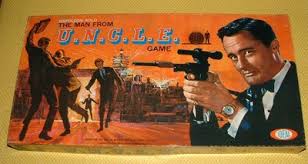
Of course, there was no limit to the merchandising in connection with the show. Several comic books based on the series were published, as well as two dozen novels. In addition to membership cards, viewers could show their love
for the show with board games, action figures, model kits, lunch boxes, and toy guns.
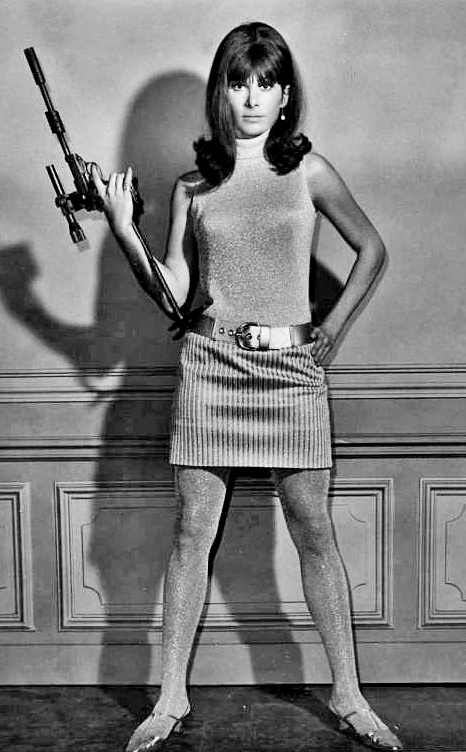
I did promise to get back to April Dancer. Halfway through The Man from UNCLE series, the network released a spin-off, The Girl from UNCLE starring Stefanie Powers as April Dancer. Not as popular as the original, it was cancelled after one season.
Photo: sixtiescity.net
Dancer works with British agent Mark Slate (Noel Harrison). Leo G. Carroll appeared as Mr. Waverly in this series also. Luckily Powers was fluent in several languages, because Dancer often went undercover with a foreign accent.
Photo: business.facebook.com
Unfortunately, Dancer reeled in the bad guys, but Slate was the one who got to kill them. However, April did get some cool gadgets such as a perfume atomizer that sprayed gas and exploding jewelry.
This show
also used Goldsmith’s theme music in an arrangement by Dave Grusin.
Both The Girl from UNCLE and The Man from UNCLE are available on DVD.
Although The Man from UNCLE was only hugely popular for two years and The Girlfrom UNCLE never attained a fan base, the shows ’ concept spawned a huge pop culture obsession. At one point, more than 10,000 letters a week were delivered to the network. The show sparked an interest in spy shows that would pave the way for future shows such as Mission Impossible; The Wild, Wild West; I Spy; and Get Smart. Like The Man from UNCLE, each of these shows would result in reboot big-screen movies in later decades, as well as a large output of memorabilia.
Photo: oldies.com
It’s interesting
that this show feels dated now with the current technology, yet GetSmart
continues to be a hit. I think the humor and campiness of Get Smart keeps it relevant which is ironic, because that is what
basically brought about the end of TheMan from UNCLE. Despite its current non-relevancy,
it was an important part of pop culture and deserves to be celebrated for its
cult status in the mid-sixties and the realistic portrayal of spies to
generations of viewers.
John Lennon said, “Reality leaves a lot to the imagination.” That is especially true when looking at our two television shows today. We are going to explore two shows that mixed reality and fantasy, or humanity and puppets more accurately. Madame’s Place and The Muppets are both what they now call a mockumentary. Both shows featured a puppet hosting a late-night tv show, interacting with humans. On Madame’s Place, Madame was the only non-human, while The Muppets blended muppets and humans throughout the show. We’ll also take a quick peek at the men behind the fantasy: Wayland Flowers and Jim Henson.
Madame’s Place debuted in 1982 while The Muppets began in 2015, 33 years apart. Both shows lasted one season and featured celebrities interacting with the characters. Both Madame and Miss Piggy had Jay Leno on their show. Both shows also went beyond the professional lives of their stars, featuring their personal lives as well.
Madame’s Place
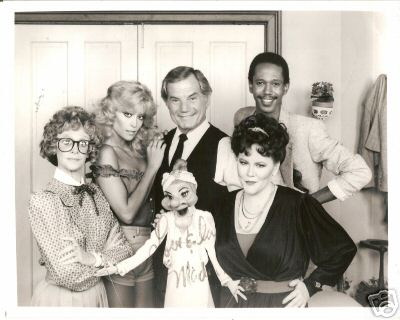
Madame lived in a large mansion. All 51 episodes included her three-person staff: Bernadette Van Gilder (Susan Tolsky) who was her secretary; Walter Pinkerton (Johnny Haymer) who was an ex-boxer, now butler; and her niece Sara Joy Pitts (Judy Landers) who was a bit of a dumb blonde. A young Corey Feldman appeared in half the shows as Buzzy St. James, the next-door neighbor boy.
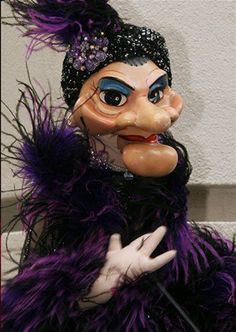
Madame clad herself in feathers and sequins. Madame was never described as politically correct, and she did not mince words with her staff or her nightly guests. She always had a witty comeback.
Some of the guests on her show included Frankie Avalon, Joyce Brothers, Scatman Crothers, Phyllis Diller, Eva Gabor, George Gobel, Arsenio Hall, Pee-Wee Herman, Jay Leno, Anthony Newley, Charles Nelson Reilly, Debbie Reynolds, John Schneider, William Shatner, Toni Tenille, Betty White, and Fred Willard.
I was surprised to learn that Wayland Flowers was actually born Wayland Parrott Flowers in Georgia in 1939. He passed away in 1988 in California from cancer. He always performed with Madame, and their first break happened when they were cast on The Andy Williams Show in the mid-1960s. They appeared on Laugh-In, The Hollywood Squares, and The Mike Douglas Show, as well as four years on Solid Gold.
Flowers once said that Madame had a mind of her own, and sometimes what she said shocked him.
If you wish to see Madame in action, there are several youtube videos of her. Madame’s Place s0le13 is an episode where Madame holds a contest to determine her next (and 7th) husband.
The Muppets
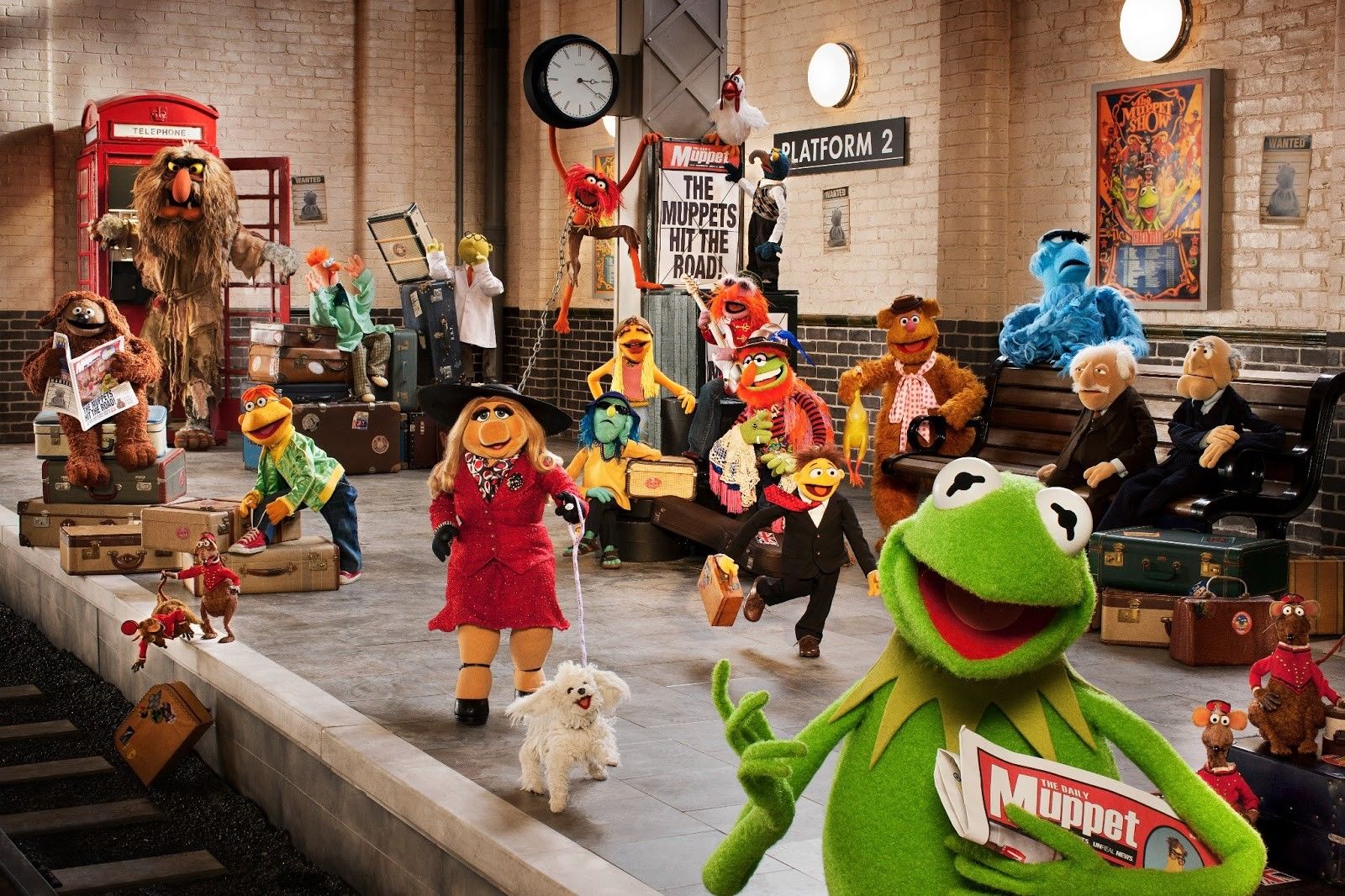
Like Madame’s Place, The Muppets showed life on a late-night talk show. The gang is all here. Kermit and Miss Piggy have ended their relationship, but it is obvious they still have feelings for each other. The show is Up Late with Miss Piggy. Before the show went live, Kermit always said, “Time to get things started.”
THE MUPPETS – “Pig Girls Don’t Cry (Pilot)” – Miss Piggy is furious that Kermit booked Elizabeth Banks as a guest on her late night talk show Up Late with Miss Piggy, Fozzie Bear meets his girlfriend’s parents, and Grammy Award-winning rock band Imagine Dragons performs their new single “Roots,” on the season premiere of “The Muppets,” TUESDAY SEPTEMBER 22 (8:00-8:30 p.m., ET) on the ABC Television Network. (ABC/Andrea McCallin) KERMIT THE FROG
Kermit is the executive producer; his best friend, Fozzy Bear, is the co-host; Gonzo is the head writer with fellow writers Rizzo the Rat and Pepe the King Prawn; Scooter is in charge of talent, Bobo is the stage manager; Dr. Bunsen Honeydew and Beaker are the prop handlers; Uncle Deadly is in charge of Miss Piggy’s wardrobe; Sam the Eagle is in charge of the network’s Standards and Practices; Denise, another Pig, and Kermit’s current girlfriend, is in charge of marketing; the house band is the Electric Mayhem; and we’re not totally sure what the Swedish Chef actually does. Rowlf the Dog owns a bar across the street and many of the characters retire there after the show to talk about the evening’s performances.
THE MUPPETS – “Pig Girls Don’t Cry (Pilot)” – Miss Piggy is furious that Kermit booked Elizabeth Banks as a guest on her late night talk show Up Late with Miss Piggy, Fozzie Bear meets his girlfriend’s parents, and Grammy Award-winning rock band Imagine Dragons performs their new single “Roots,” on the season premiere of “The Muppets,” TUESDAY SEPTEMBER 22 (8:00-8:30 p.m., ET) on the ABC Television Network. (ABC/Andrea McCallin) ELIZABETH BANKS, MISS PIGGY
The show mixes humans and muppets. For example, Fozzy is dating a human girl, and her parents don’t approve.
THE MUPPETS – “Pig Girls Don’t Cry (Pilot)” – Miss Piggy is furious that Kermit booked Elizabeth Banks as a guest on her late night talk show Up Late with Miss Piggy, Fozzie Bear meets his girlfriend’s parents, and Grammy Award-winning rock band Imagine Dragons performs their new single “Roots,” on the season premiere of “The Muppets,” TUESDAY SEPTEMBER 22 (8:00-8:30 p.m., ET) on the ABC Television Network. (ABC/Eric McCandless) KERMIT THE FROG, MISS PIGGY
The show cleverly made fun of a lot of the late-night shows. Some of the guests who came to dish with Piggy included Christina Applegate, Elizabeth Banks, Jason Bateman, Jere Burns, Kristen Chenoweth, Laurence Fishburn, Josh Groban, Joan Jett, Mindy Kaling, Jay Leno, Willie Nelson, and Reese Witherspoon.
The show was cancelled after one year. A lot of people complained about The Muppets living as adults in adult situations. This was unfair criticism because the Muppets began as a show aimed at adults.
Jim Henson was born in Mississippi in 1936 and died in New York in 1990. He began creating puppets in high school. While at the University of Maryland, he created a show starring Kermit among other now-unknown puppets called Sam and Friends, an adult show. The show appeared in television in the Washington, DC area from 1955-1961.The puppets lip-synched popular songs and acted in sketches spoofing television shows. Henson founded Muppets, Inc. in 1958. The Muppets then appeared on late night talk shows.
In 1969, the Muppets moved to Sesame Street where they became famous. The Muppet Show was on television from 1976-81, and the crew made several movies including The Muppet Movie, The GreatMuppet Caper, and The Muppets Take Manhattan.
In the 1980s, Disney became involved with the Muppets and several television shows occurred (The JimHenson Hour in 1989 and Muppets Tonight from 1996-98), along with a couple more movies. In 2004, Disney acquired all rights to the Muppets and made additional movies.
I’m not sure why neither of these shows made it to year two. Maybe people just couldn’t accept the interaction of puppets and humans. With The Muppets, I think some people who would have liked the show assumed it was for kids while people who assumed it was for kids were unhappy it was an adult show.
I found both shows a lot of fun. They didn’t take themselves or celebrities too seriously. Another show I fell in love with that put kids’ characters into modern situations was the New Looney Tunes, but that’s a show we’ll explore in detail in a future blog.
I could not find an author for the following quote: “It’s not reality that shapes us, but the lens through which your brain views the world that shapes your reality.” I don’t know about you, but in watching the news and reading newspapers (ok, almost no one reads newspapers anymore), I find reality is not a fun place to dwell in. I will happily add a bit of fantasy. It seems to produce a lot of great one-liners.
Piggy: I’m telling you this because we’re friends: we are no longer friends.
Cousin Charlie: Well, if you need me I’ll be in my dressing room practicing my collection of one-liners.
Madame: Well, be sure to do a good job darling. They’re all in your face.
*********************************************************************************
Madame: These are my Summer Diamonds. Some are diamonds, some are not.


























 thewritelife61