The Six Million Dollar Man: A $37,000,000 Man in 2026

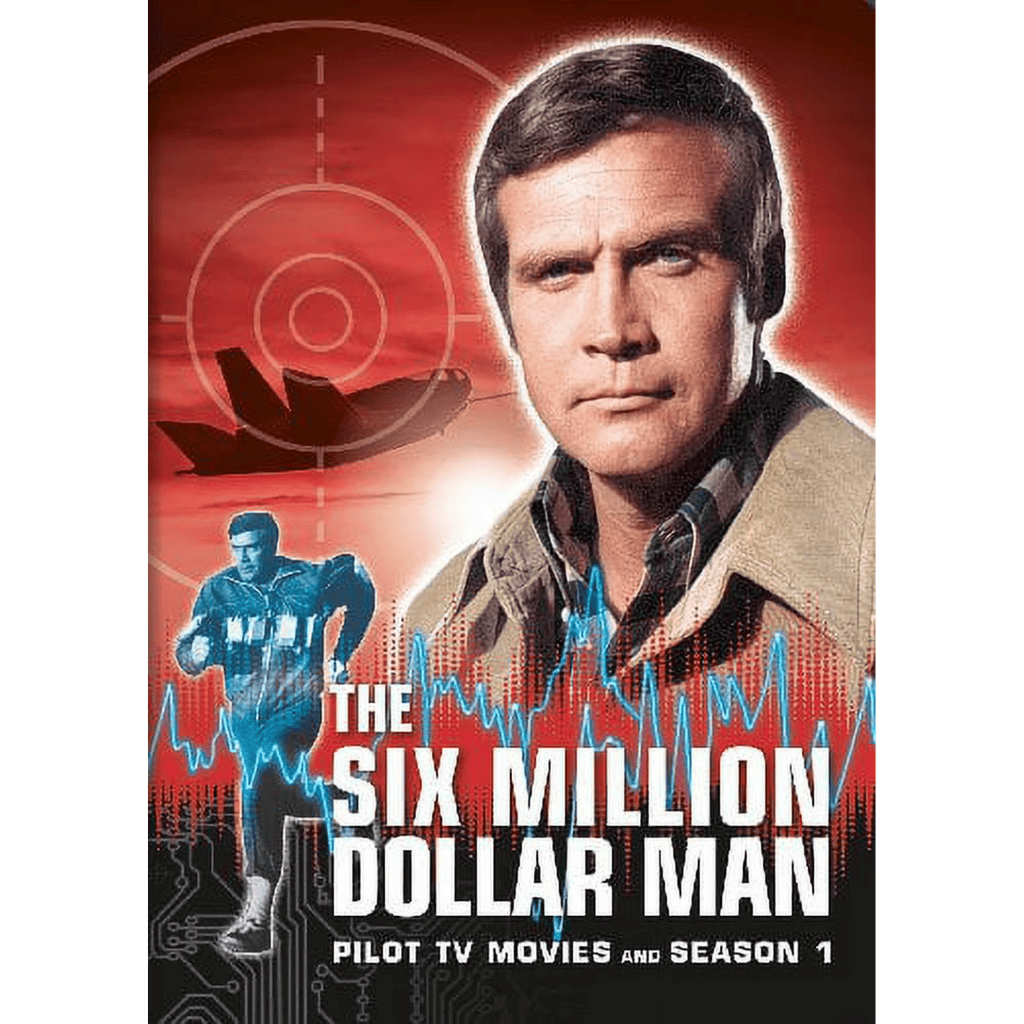
We are right in the middle of our “Expensive Parts” blog theme, learning about The Bionic Woman, The Six Million Dollar Man, and the stars who played them. Up today is The Six Million Dollar Man.

📷imdb.com

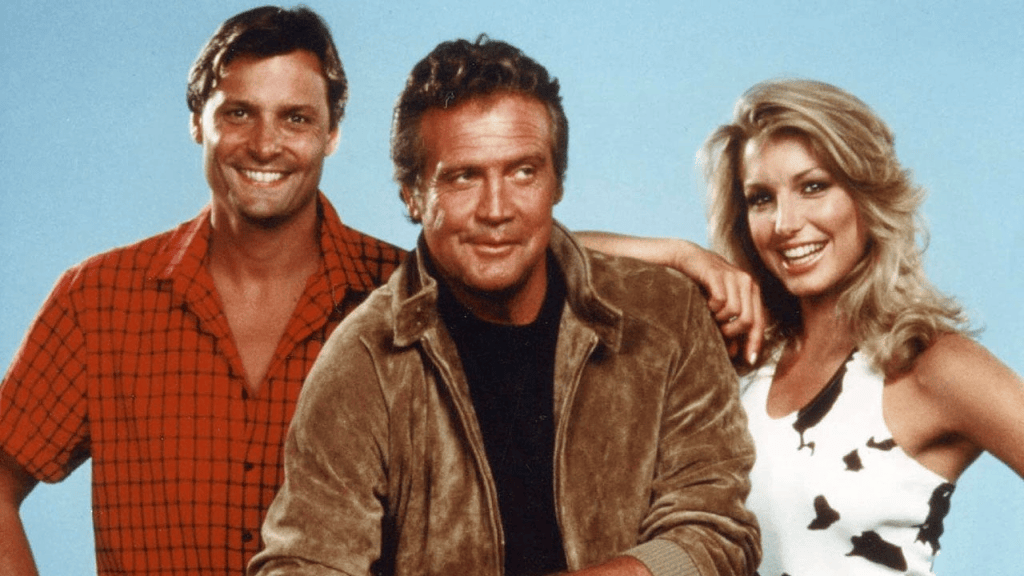
This science fiction show debuted in 1973. Steve Austin is a former astronaut played by Lee Majors. Majors always maintained that he did 90% of his stunts on the show. After an accident, he is rebuilt with superhuman strength, speed, and vision. Austin is transferred to OSI and takes on secret missions for the government. If the show was rebooted today, it would need to be titled “The Thirty-Seven Million Dollar Man.” The show was based on a book from 1972 called Cyborg written by Martin Caidin, an expert on aviation and aerospace technology.

Monte Markham was the first choice of both Caidin and the producers, but he was committed to another show so Majors got the part. Markham did appear on the show several times though.

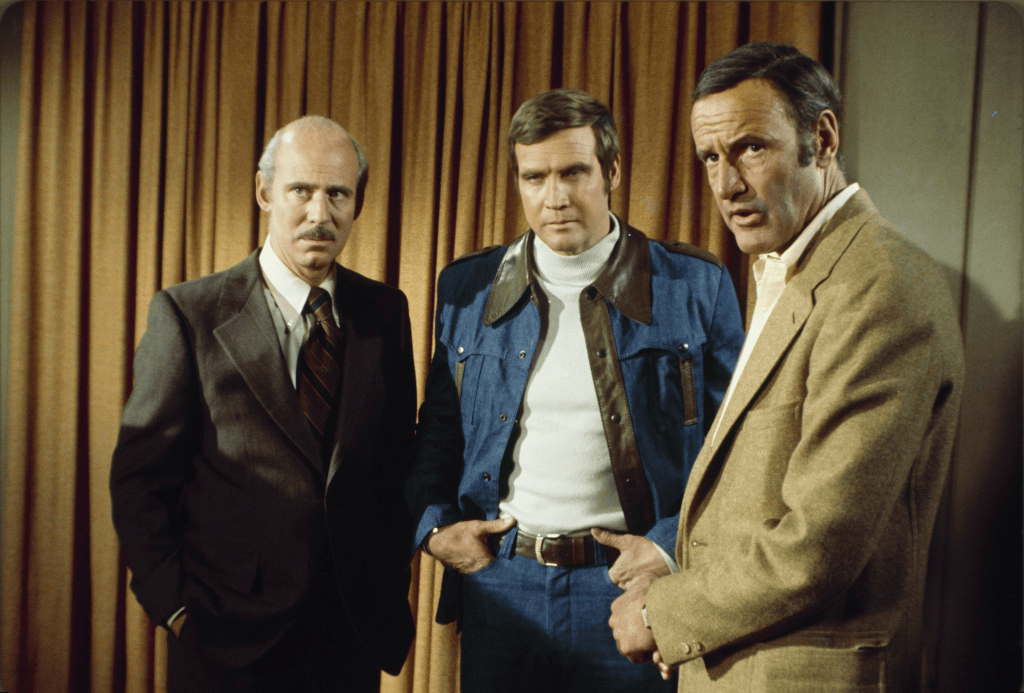
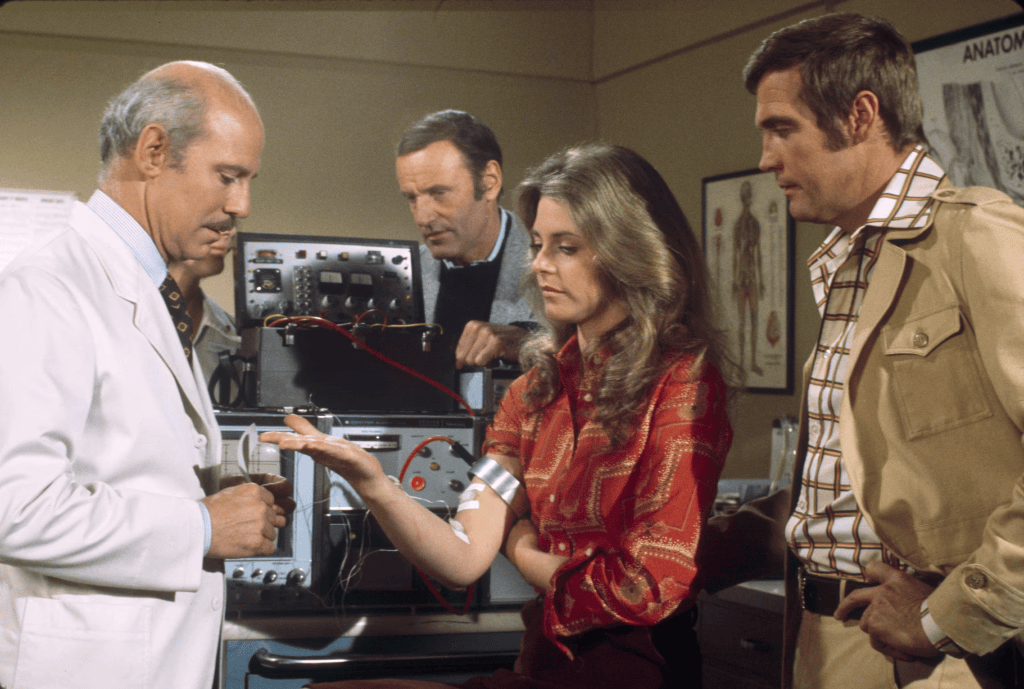
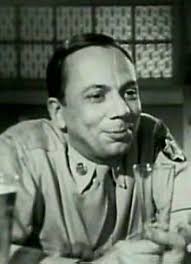
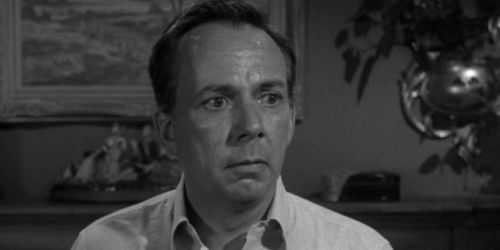
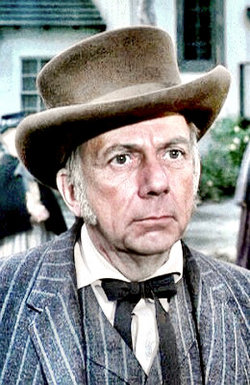
Rounding out the cast were Oscar Goldman (Richard Anderson), director of OSI; Rudy Wells (Alan Oppenheimer/Martin E. Brooks), Austin’s doctor; and Peggy Callhan (Jennifer Darling), Goldman’s secretary.

Two weeks ago, we learned the backstory behind The Bionic Woman, a spinoff of this show. When the spinoff was created, Majors tried to get the part for his wife Farrah Fawcett, but she lost out to Lindsay Wagner. However, Fawcett appeared on the show as three different characters during the run of the series and in 1976 she became an Angel.

Oliver Nelson composed the theme music, but it was replaced with the narration about building Austin, “Gentlemen, we can rebuild him, we have the technology.” The accident in the beginning was a real crash by a pilot who survived the tragedy walking away.

Majors was an accomplished musician who learned to play the piano at age 6. He also worked on It Takes A Thief, Night Gallery, Columbo, and Ironside, among other shows.

The show’s executive producer was Harve Bennett (who had recently produced The Mod Squad). Producer Kenneth Johnson created very specific limits of what Austin could and could not do right away so the show never seemed unbelievable. He was fitted with a bionic eye, a bionic arm, and bionic legs. However, these set limits seemed to expand after season two. The two producers would go on to other science fiction successes. Bennett produced Star Trek films II and III, and Johnson created several shows including The Incredible Hulk and Alien Nation.

The first season scripts included a few episodes where Austin had to kill a villain. Once the network realized kids were tuning in as fans, the violence level of the show decreased.

Austin had new contract demands in 1977 and refused to tape any episodes until they were met. At one point the producers considered hiring a new actor for the role. Gil Gerard, Bruce Jenner, and Harrison Ford were all discussed as replacements. Eventually, the demands were met, but he was still out of a job the next year. A fun fact is that Ford was rejected quickly because the producers didn’t think he was a hero type. Indiana Jones anyone?

📷pinterest.com

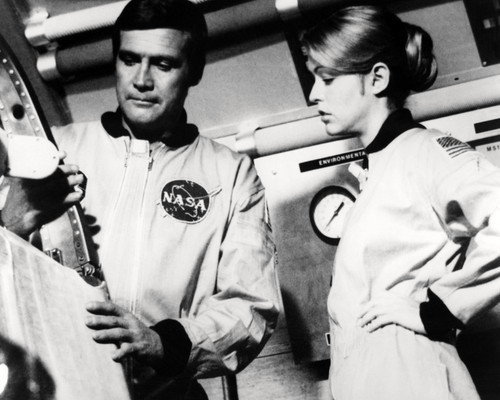
Dorothy Fontana, a writer for the show, discussed the series in her Television Academy interview. She wrote about an air force nurse who became an astronaut. While in outer space, the woman’s partner suffers from appendicitis, she has to drive the spaceship home and Austin goes to help her. She said NASA was in an era where it wanted good publicity and she was given a lot of NASA footage to use for the show. This episode was one of the ones that featured Farrah Fawcett. Most of Fontana’s 50 writing credits were for science fiction scripts.

When the show began it was on ABC Friday nights before Kolchak. Midway through the year it was moved to Sunday nights and The Bionic Woman debuted on Wednesdays. The Six Million Dollar Man had no competition that year, but The Bionic Woman was up against Little House on the Prairie. Despite that, both shows were in the top ten. Schedules stayed the same for the next season. While The Six Million Dollar Man was still in the top ten, The Bionic Woman had slipped into the top twenty. ABC canceled the show which was then picked up by NBC who moved it to Saturday nights. Both shows had slipped out of the top thirty by that point, and they were both cancelled. However, the networks weren’t finished with the couple. They would return for three made-for-tv movies in the eighties.

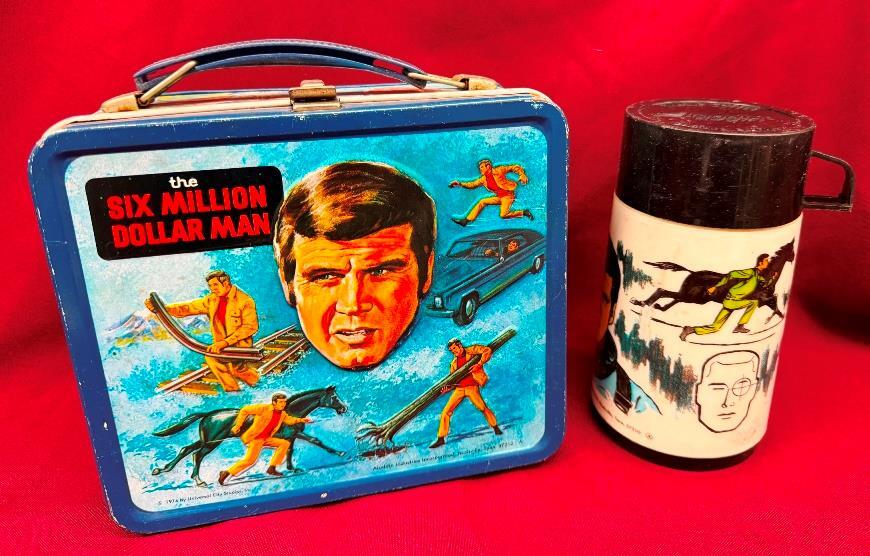
Six Million Dollar Man merchandise was everywhere. There were board games, comic books, and lunch boxes. One of the most successful tie-ins were Steve Austin and friends action figures. Extra bionic limbs could be swapped out on the figures for specific activities and there were vehicles and other accessories.

The Six Million Dollar Man was very different from any shows that had appeared before and it was popular for several seasons. I’m guessing that the kids who grew up with the show got older and busy and it didn’t have the same appeal to preteens and teens that it had in the past. The producers did create a pilot for “The Bionic Boy” in 1978 to appeal to younger viewers but the screenings didn’t produce a lot of positive comments, and it was shelved, probably for the best.

For the time, the special effects were amazing, but it doesn’t hold up today with all the changes that have come along with technology. I feel the same way about Wonder Woman which was also on the schedule with these two shows. I’m guessing the thing that is most memorable about the show is the sound effects that always were heard when Steve used his bionic parts and the slow motion of Austin in action.

If this was a favorite of yours, I’d love to hear if you still enjoy it or if it lost some of its watchability over the years.

Lindsay Wagner: An Expensive Lady

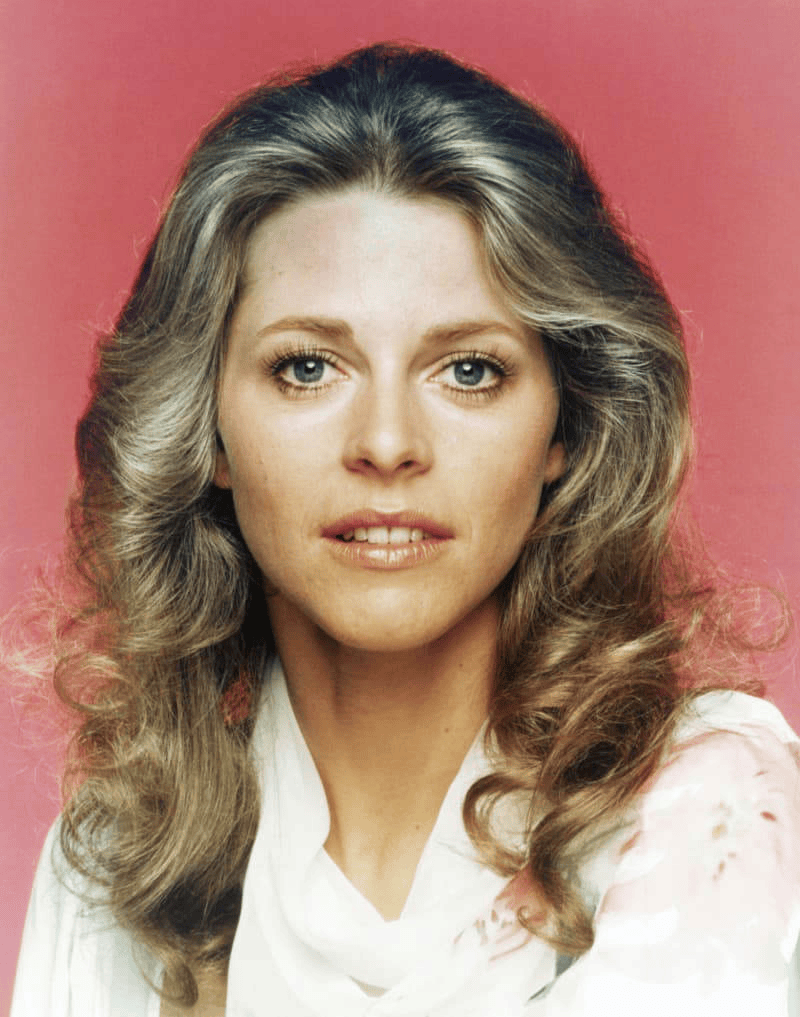
As we continue with our “Expensive Parts” blog theme, today we are learning about the career of Lindsay Wagner, the person behind The Bionic Woman which we learned about last week.

📷x.com

Wagner was born in Los Angeles in 1949. Her parents divorced when she was seven, and later her mother and stepfather moved to Oregon where she attended high school and got involved in school plays.

After high school, Wagner spent some time in France before enrolling at the University of Oregon. She later transferred to Mt. Hood Community College but soon dropped out. School was difficult for her, and she was eventually diagnosed with dyslexia.

Wagner returned to Los Angeles where she tried acting. During that time, she was a contestant on The Dating Game in 1969. In 1971, she was offered a contract with Universal Studios.

Her first television appearance was in 1971 on Adam-12. During the seventies, she continued to take television roles on a variety of shows including Owen Marshall Counselor at Law, The FBI, The Rockford Files, and Marcus Welby MD. I loved her role on Rockford. As Sara Butler, she was one of the few women who spoke her mind to Jim Rockford . . . and he listened! However, their relationship began in the pilot with her giving him a NSF check. I’m guessing if she hadn’t gotten the call for The Bionic Woman, she might have been on Rockford as his romantic interest for more episodes. It would have been fun to see where that might have taken the show from where it ended up.

Through her Universal contract, she was given the role of Jaime Sommers on an episode of The Six Million Dollar Man in 1975. The creator, Ken Johnson, hired her after watching her Rockford episode. As we learned last week, this was supposed to be a one-time appearance. Sommers was a high-school sweetheart of Steve Austin, The Six Million Dollar Man character. After she has an accident, he convinces his government bosses to save her in the same way he had been saved, using bionic parts. They agree if she will work as a government operative. At the end of the episode, Sommers’ body is rejecting the bionic parts and Steve learns of her death.

📷clickamercana.com

However, the character was so popular that they decided to spin off a show, and The Bionic Woman was created by Johnson. The show was popular during its first two seasons, but ABC cancelled it and NBC took it over for a final third season. Both The Bionic Woman and The Six Million Dollar Man were cancelled in 1978.

After the show ended, most of Wagner’s roles were in television miniseries or made-for-tv movies. Her only series work was on an episode of The Fall Guy in 1983. The following year, she received another recurring role on a new show called Jessie where she played a psychologist who helped the California Police solve murders. However, this one only lasted for 11 episodes.

In 1989 she was offered another cast role in A Peaceable Kingdom. This was about a Rebecca Cafferty, a recent widow from New York with three young children who accepts a job as the managing director of a large California zoo where her brother Dr. Jed McFadden, also works. This one made it to twelve episodes before being cancelled.

She continued to act through the nineties and 2000s, appearing in movies and television movies and a few more obscure series. In 2018 she was cast on Grey’s Anatomy as Alex Karev’s mother. For the next two years, she was in four episodes. In June of that year, she costarred in a video game being developed by Sony.

facebook.com

Though she continued doing some acting, most of her time since then has been spent working on books and taping commercials. Her first book was about using acupressure to achieve results formerly available only with a surgical facelift. In 1994, she was one of the first celebrities to come out with a cookbook, High Road to Health filled with vegetarian options.

Off screen Lindsay is passionate about the study and sharing of holistic health, the healing of body, mind and spirit.  From 2003-2006, in collaboration with the L.A. County Sheriff’s Department, Lindsay co-facilitated a support group for families reuniting who were struggling with domestic violence. In addition, she has taught acting and camera technique.

I would consider Wagner’s career successful, but I’m not sure if her acting career was successful for her. I could not find out what her goals were and what type of acting career would have been satisfying for her specifically. However, she has helped thousands of people with her off-screen roles and is to be applauded for using her life to help others.

Her website states that “Lindsay Wagner makes little distinction between her life as an actress, advocate, mother, or author. What unites these various parts is a commitment through her work and her personal life to exploring and advancing human potential.” I love that, what more can I say?

The Bionic Woman: Serving Up a New Career

This month our blog theme is “Expensive Parts.” We are taking a look at The Bionic Woman and The Six Milion Dollar Man and the stars who were behind the characters.

📷msn.com

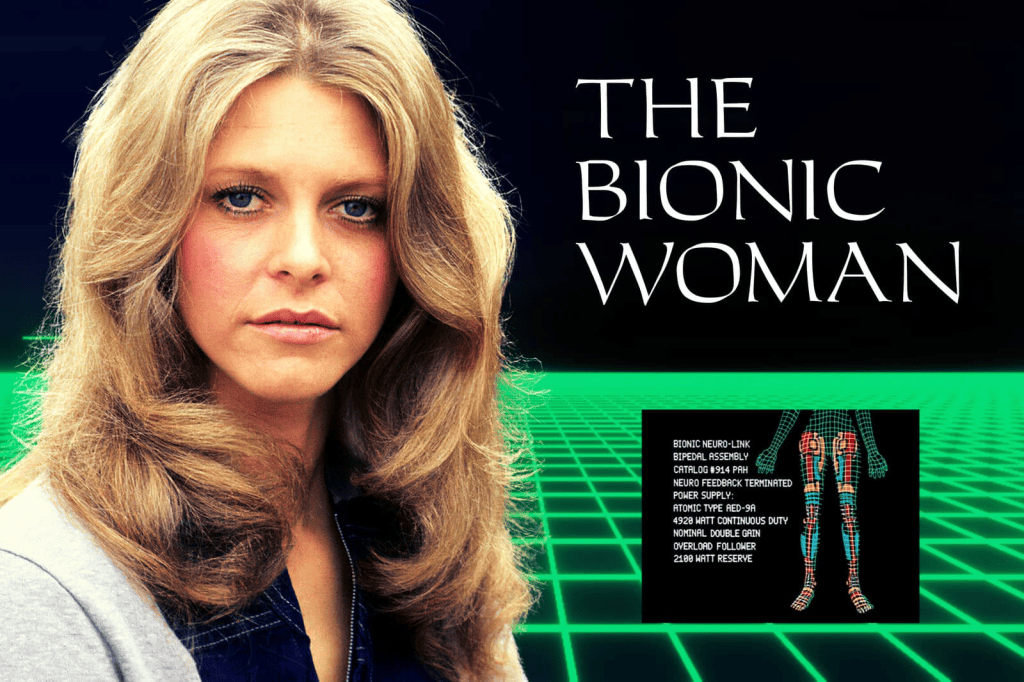
We are beginning with The Bionic Woman. This show was a science fiction adventure series that debuted in 1976. Created by Kenneth Johnson, it was based on a 1972 novel, Cyborg by Martin Caldin.

Lindsay Wagner starred in the show as Jaime Sommers. Sommers has superhuman bionic powers and uses them to help the government on secret missions.  Both Sally Field and Stefanie Powers were considered for the role. Field was bypassed because she was too identified with Gidget and The Flying Nun. I have a hard time picturing Field in the role, but I can see Powers.

The backstory was that Sommers was a tennis player who was injured while sky diving. Two doctors manage to save her life with bionic surgical implants. After the surgery, Sommers had a bionic ear that allowed her to hear low volumes over long distances. She also has extraordinary strength in her right arm and both legs which allow her to jump great distances and run at high speed (60 mph).

The Bionic Woman was a spinoff of The Six Million Dollar Man. Steve Austin (Lee Majors) travels to his hometown and reconnects with Sommers, his high school sweetheart. When she has her accident, he advocates for her with his boss who agrees to save her life if she also becomes a government operative. Steve tries to talk them out of using her in high-risk missions after her surgery; however, she agrees to do it and during her first mission, she gets sick when her body rejects her parts and Steve thinks she is dead.

📷facebook.com

The character was so popular that The Bionic Woman became a series of its own. Eventually Steve finds out she is alive and realizes she has lost her memories of their relationship and her accident, so they start over as friends. In the series, Jaime quits tennis and teaches at an Air Force base in Ojai, living in an apartment on the ranch owned by Steve’s parents who are clued in to the fact that Steve and Jaime have bionic parts and do special work for the government. On this show, Jaime comes into contact with a bionic dog named Max and when he survives, he becomes her pet and helps her with some of her adventures. The original plot was to spin Max off on his own series which seems a bit too over the top for me.

It was important to creator Ken Johnson that limits be set on what Jaime could do. He said, “When you’re dealing with the area of fantasy, if you say ‘Well, they’re bionic so they can do whatever they want,’ then it gets out of hand, so you’ve got to have really, really tight rules. . . . They can jump three stories, but they can’t jump four . . . Jaime can’t turn over a truck, but she can turn over a car.”

The types of missions she was involved with were less realistic than Scorpion episodes and more science fiction. She fights Fembots, powerful female robots in several episodes. She also stymies a scientist’s plan to destroy all life on Earth with a nuclear weapon. Some of them remind me of plots that could have been on The Wild Wild West.

The series began in January of 1976 with fourteen episodes airing that season. It was the number five show that year, ahead of The Six Million Dollar Man. The second season, it was down to fourteenth. Even though it was still very popular and Wagner won an Emmy for her work on the show, ABC decided not to renew it because it felt it wasn’t getting the demographics that the network was hoping for. NBC picked it up for a third season. Because it could no longer “work” with The Six Million Dollar Man, a new character named Chris (Christopher Stone) was developed as a love interest for Jaime.

📷parade.com

In 1978 both The Bionic Woman and The Six Million Dollar Man were cancelled. However, that was not the end of the characters. Three made-for-tv movies were produced between 1989 and 1994, and in the final one, the couple marries.

Jaime Sommers’ stunts were performed by Rita Egleston. She also performed as a stunt double for Connie Sellecca and Farrah Fawcett, as well as performing in Tron and Blade Runner.

Jerry Fielding was the composer for the series. He wrote the opening and closing themes as well. During season two, his friend Joe Harnell took over the regular music duties and wrote a new opening and closing. When Field mentioned he felt bad his music was no longer being used, the network compromised by using Fielding’s opening and Harnell’s closing.

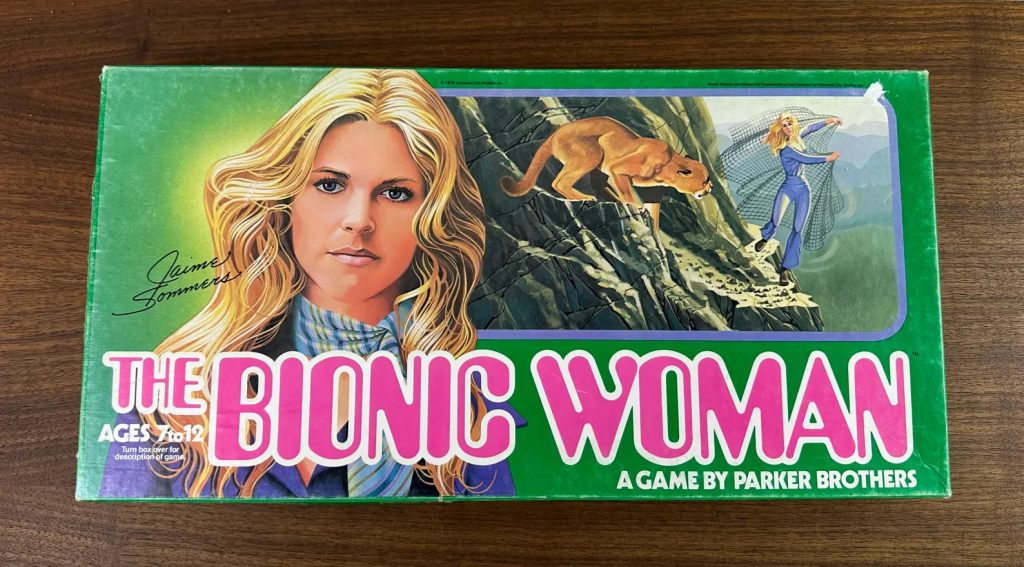
As you might imagine, this show produced a lot of merchandise during the three years it was on the air. Kenner produced a Bionic Woman doll as well as stickers and tattoos. A lunchbox was available as was a board game by Parker Brothers. In addition, several comic books were published some featuring a partnership between The Bionic Woman and Lynda Carter’s Wonder Woman and one with Charlie’s Angels.

Like so many older shows, a reboot for this one was planned for 2002 that never got off the ground. It was released in 2006 starring Michelle Ryan but was a much darker version of the character and only lasted for nine episodes.

I admit, I never got into this show or The Six Million Dollar Man, perhaps because I was in high school at the time and busy with a lot of other things. Many people remember it fondly and it was notable for the first time that a woman was the science fiction star of a television series.

With Flip Wilson, What You See is What You Get

As we continue with the “They Call Me Wilson” blog series, today we take a look at a comedian who was a household name in the seventies but might not be well known today—Flip Wilson.

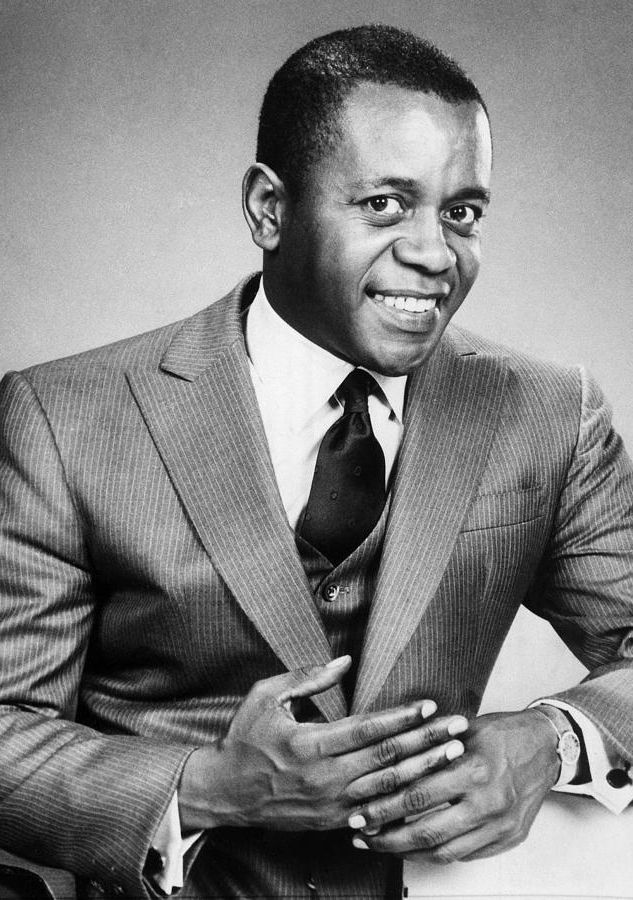
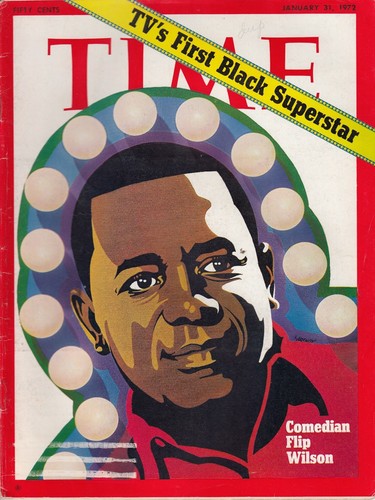
Flip Wilson was known best for his character of Geraldine and his catch phrase, “Here Comes de Judge.” In 1972, Time magazine heralded him “TV’s first black superstar.”

Photo: pinterest.com

Born Clerow Wilson Jr. in 1933 in New Jersey, Flip had nine brothers and sisters. His father, a handyman, was unable to find work during the Depression. His mother abandoned the family when Flip was only seven. His father was forced to place most of his children in foster homes. Flip said his happiest childhood memory was when he was in reform school. One of his teachers gave him the first birthday present he ever remembered–a box of Cracker Jacks and a can of shoe polish.

When he was sixteen, Flip lied about his age, joining the US Air Force. His outgoing personality and comedic demeanor made him popular with his barrack mates. It was at this time, he got the nickname “Flip” because his friends said he re-enacted outlandish stories in various dialects. Often he would use mock-Shakespearean phrases and one day a friend replied to one of them, “He flippeth his lid.” One of his superiors encouraged him to take some typing courses and do some studying.

After being discharged in 1954, he went to work as a bellhop at the Manor Plaza Hotel in San Francisco. He invented an inebriated character skit which he performed between acts in the nightclub there.

Eventually he wrote new material and began touring nightclubs throughout the US. He became a regular at Harlem’s Apollo Theater.

In 1957, Wilson married Lavenia “Peaches” Wilson and they divorced ten years later.

One night when Redd Foxx was a guest on the Tonight Show in 1965, Johnny Carson asked him who he thought was the funniest comedian around, and Redd said “Flip Wilson.” Carson booked Flip to appear on the show and so did Ed Sullivan. Again, his warm and friendly personality was mentioned. Richard Pryor once told Wilson that “You’re the only performer that I’ve ever seen who goes on the stage and the audience hopes that you like them.”

In 1968 he appeared on the Jerry Lewis Show, and in 1969 you could see him on Love American Style. During this time, he made his first of fourteen appearances on Laugh In.

Photo: amazon.com

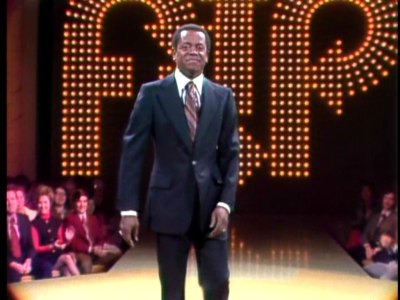
In 1970, Flip was awarded a Grammy for his album, The Devil Made Me Buy this Dress. It was a great year for him and he received his own variety series also, The Flip Wilson Show on NBC. He would perform comedy sketches and featured many African American celebrities including The Supremes, The Jackson Five, Redd Foxx, and Bill Russell. George Carlin made frequent appearances in front of the camera with him and wrote for the show behind the camera.

The Devil Made Me Buy This Dress [Vinyl]

Wilson would often show up as Reverend Leroy, the pastor of the “Church of What’s Happening Now.”

Photo: youtube.com

He also took on the persona of sassy Geraldine whose boyfriend was “Killer.” She often said “The devil made me do it” and “What you see is what you get.”

Photo: pinterest.com

Unlike many comedians in the seventies, Flip stayed away from politics and social satire. A lot of his stories involved black characters viewing historic events from a different perspective. Some critics praised him for his choice and others said he was “defusing his blackness.” Wilson’s response to these critics was that “funny is not a color. . . my main point is to be funny; if I can slip a message in there, fine.” One contemporary said he was a rare comic in that he told stories that didn’t make black people feel angry or make white people feel guilty.

During his four years on the show, Wilson had high ratings; the show received eleven Emmy Award nominations, winning two; he also won the Golden Globe’s Best Actor in a Television Series. Wilson ended the show while it still was receiving raving reviews. By 1972, he was making a million dollars a year.

Time-Magazine-1972-January-31-Comedian-Flip-Wilson

During the run of his show, he accepted a role on one other television show—Here’s Lucy in 1971. After his show went off the air, he could be seen in The Six Million Dollar Man in 1976 and Insight in 1978. He also appeared on the big screen in several movies.

Flip took some time off in the seventies to care for his children. Having four children with his common-law wife Blonell Pitman, he received full custody of them in 1979. In that same year, he married Tuanchai “Cookie” MacKenzie and had a fifth child, but they divorced in 1984.*

During the 1980s and 1990s, he continued to be offered roles in television. He was on The Love Boat in 1981, in 227 in 1988 and 1989, in American Playhouse in 1990, and on The Drew Carey Show in 1996 and 1998.

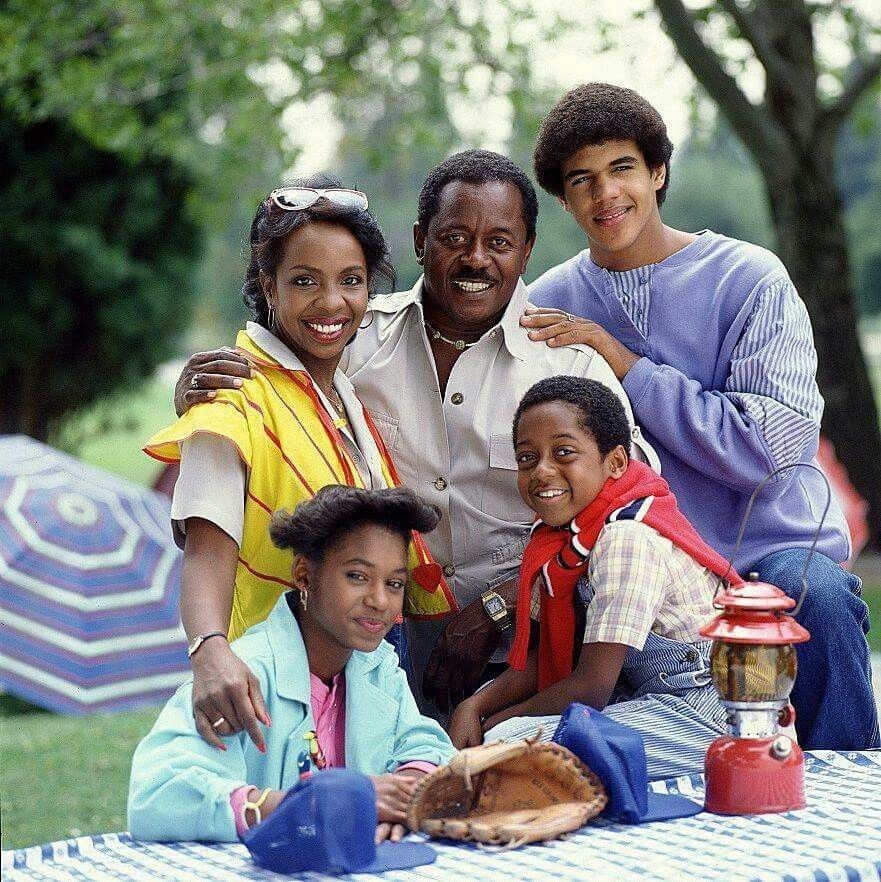
Wilson with Gladys Knight, Kristoff St. John, Jaleel White, and Fran Robinson–Photo: pinterest.com

In 1985, he tackled a regular series again, starring in Charlie and Co. with Gladys Knight. Flip portrayed Charlie who worked for the Division of Highways and Gladys his wife Diana, a school teacher. The middle-class family raised their three children—16-year-old Junior, 15-year-old Lauren, and 9-year-old Robert–on the South side of Chicago.  The show was cancelled after only 18 episodes.

In 1998, Wilson died from liver cancer.

Photo: pinterest.com

Dying at 65 cut Wilson’s career short, especially because he took off so much time to raise his kids, so they would have a different type of childhood than he did. However, he achieved what he set out to. He was a self-made millionaire, a man who performed the type of comedy he chose, and a good father who raised his children to have a better life than he did. You could not ask for a better definition of success.

*while a couple of sources I read stated that Flip had five children, a reader mentioned that in the book by Kevin Cook, the fifth child Michelle Trice was said to be Blonell Pitman’s daughter from a previous relationship. Since Cook wrote the biography, I’m assuming he is correct.

Just a Couple of Characters, Part 3: Henry Jones and Olan Soule

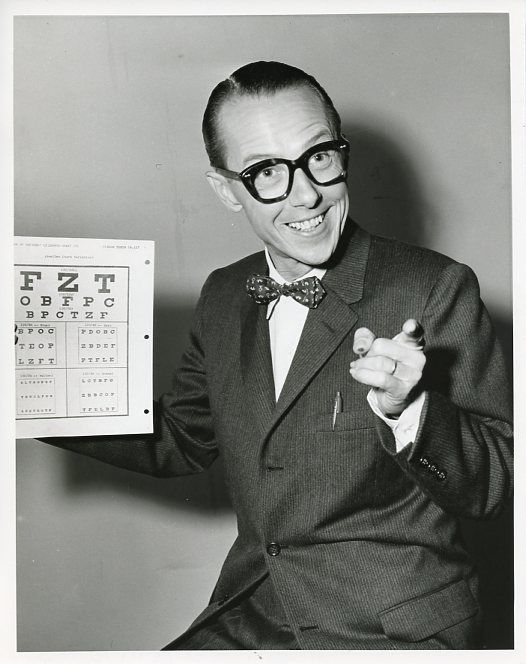
My series, “Just a Couple of Characters” continues with Part 3 today. This month, we learn more about actors we recognize but may not know much about. This week Henry Jones and Olan Soule are on the hot seat.

Henry Jones

Photo: en.wikipedia.org

Born in New Jersey in 1912 and raised in Pennsylvania, his grandfather was a first-generation Prussian immigrant who became a Representative. Henry went to St. Joseph’s College, a Jesuit school. He landed his first Broadway show in 1938, playing Reynaldo and a grave digger in “ Hamlet. ” Like many of the actors in the late 30s and early 40s, Henry joined the Army for World War II. He was a private. During his service, he was cast as a singing soldier, Mr.  Brown, in Irving Berlin’s “This is the Army.”

When he came back to the US, he married Yvonne Sarah Bernhardt Buerger in 1942. Sadly she passed away at age 22. This information was supplied by a blog reader, and I appreciate receiving the updated information because several sources refer to his divorce which is not the case. Yvonne’s father was a renowned surgeon. One of his patients had been Sarah Bernhardt which is where Yvonne go her middle name from.

Jones continued his stage roles and began a movie career. He had bit parts in 35 films, including The Bad Seed, Will Success Spoil Rock Hunter?, Vertigo, and Butch Cassidy and the Sundance Kid. He won a Supporting Actor Tony in 1958 for his performance of Louis Howe in “Sunrise at Campobello.”

Photo: fanpix.famousfix.com

In 1948 he married Judith Johnson. They had two children (one is actress Jocelyn Jones) but divorced in 1961.

Bridging the gap of television and film, he starred in seventeen tv movies as well.

Although his movie career kept him somewhat busy, it was nothing compared to his television work. Jones was credited with 205 acting appearances, meaning he had roles in 153 different television series. Jones was able to tackle a wide range of roles, being believable as a judge, a janitor, a murderer, or a minister. Jones had no illusions about becoming a romantic lead. He once said that “casting directors didn’t know what to do with me. I was never tall enough or good looking enough to play juvenile leads.”

Photo: findagrave.com

His first television appearance was in drama series, Hands of Mystery, in 1949. His work in the 1950s was primarily in theater shows about dramas. He also appeared in the George Burns and Gracie Allen Show and Father Knows Best.

Photo: michaelstvtray.com

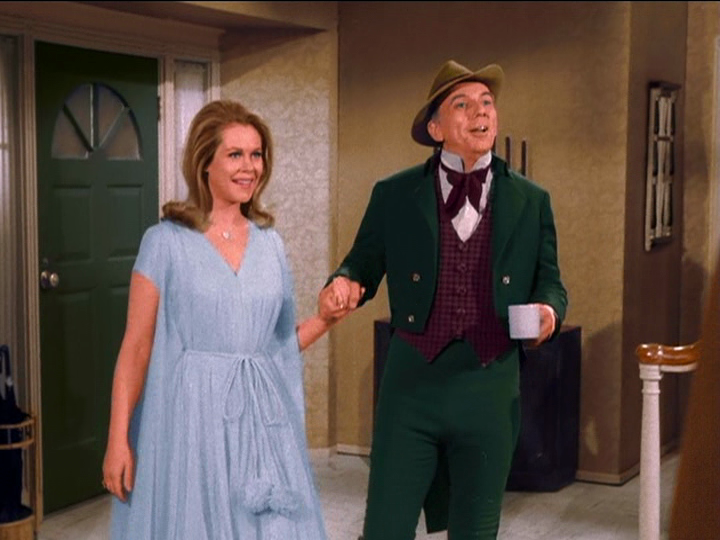
He continued his drama roles into the 1960s. He also appeared in 3 episodes of The Real McCoys and westerns including Wagon Train, The Big Valley, and Daniel Boone. He showed up on mysteries such as the Man from U.N.C.L.E. and The Name of the Game. He also found work on unique shows including Lost in Space, Route 66, and the Alfred Hitchcock Show. Hitchcock liked his work and used him five times. He also appeared in several comedies, Bewitched and That Girl. He starred in Channing in 1963-64.  Jones played Fred Baker, a dean who mentors Professor Joe Howe who teaches English at Channing College while he writes his memoir about the Korean War.

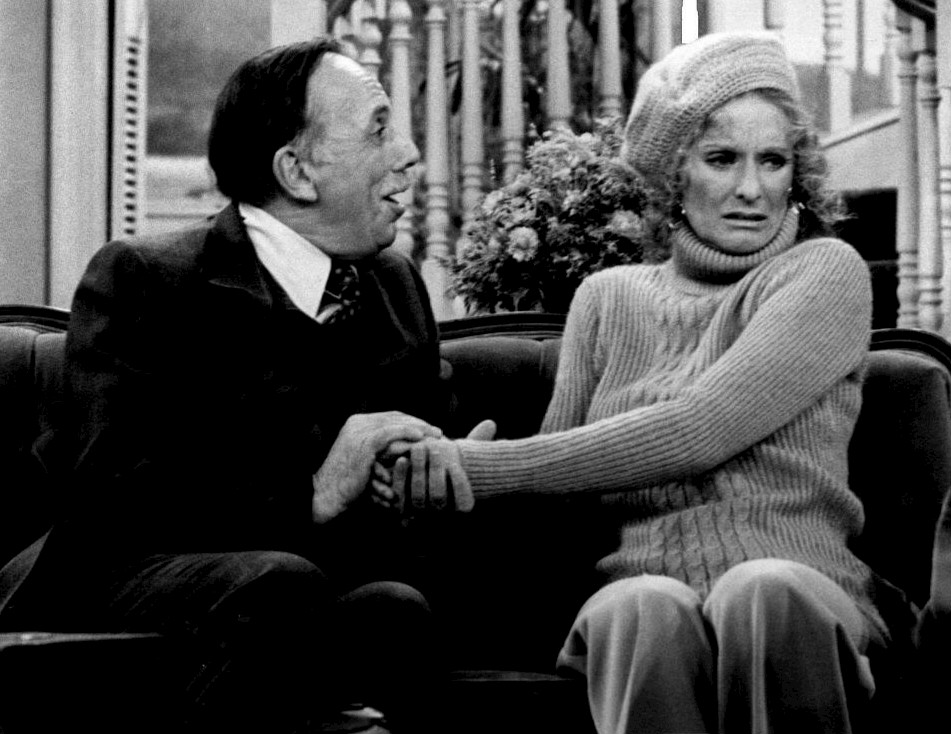
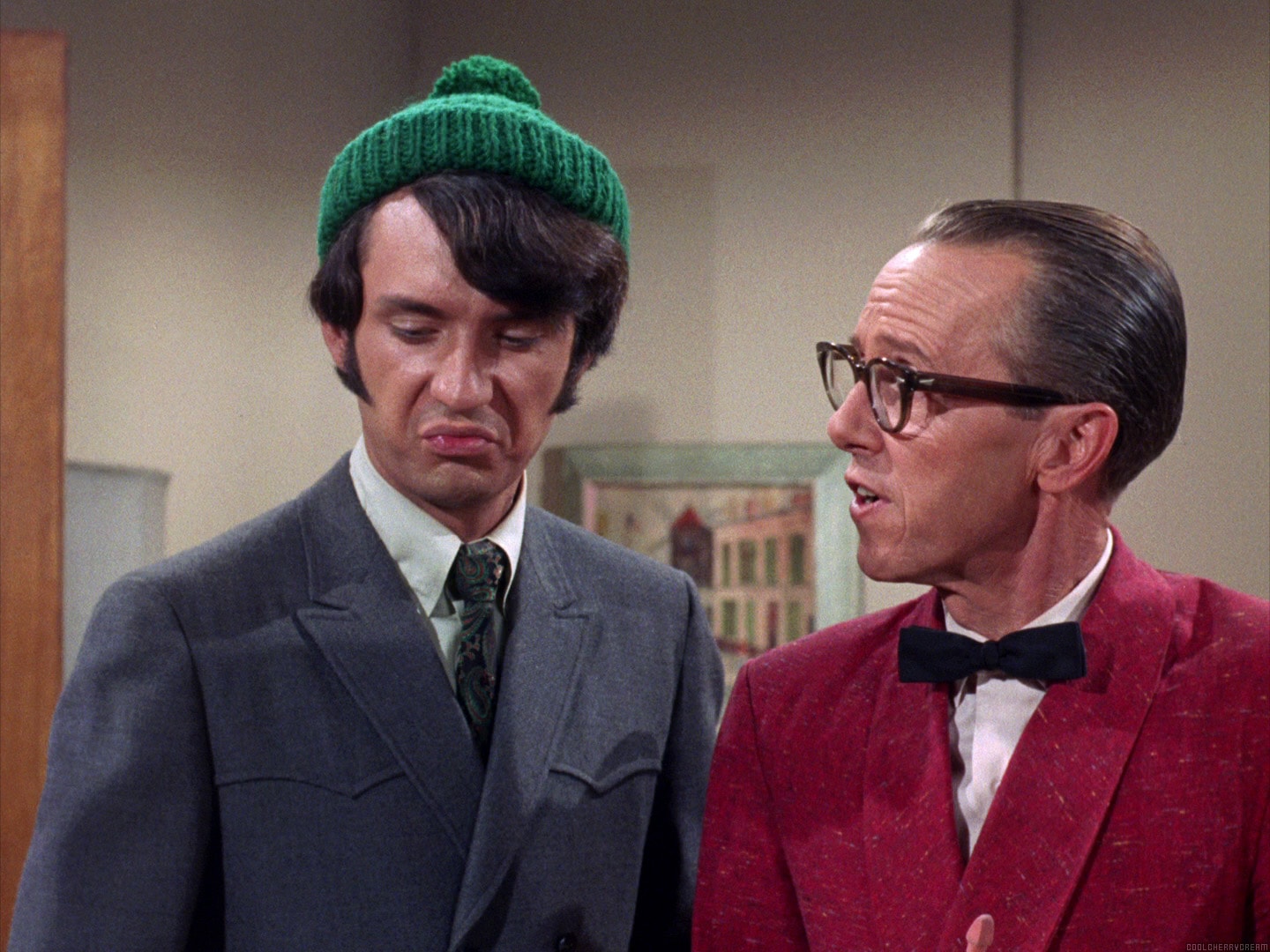
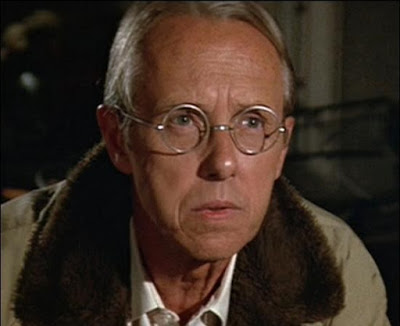
During the 1970s, he continued to work on a variety of genre shows. We see him on westerns, The Virginian, Gunsmoke, and Bonanza. We see him in thrillers like The Mod Squad; McMillan and Wife; Owen Marshall, Counselor at Law; and The Six Million Dollar Man, on which he had a recurring role as Dr. Jeffrey, a scientist who built robots. However, comedies continued to be his mainstay, and he appeared in many of them including Nanny and the Professor, the Mary Tyler Moore Show, The Paul Lynde Show, The Doris Day Show, the Partridge Family, and Barney Miller.

commons.wikimedia.org

In addition to all his guest spots, he was cast in three shows during this decade. In The Girl with Something Extra, he played Owen Metcalf in 1973. The role he was best remembered for was Judge Johnathan Dexter on Phyllis. He was Phyllis’s father-in-law from 1975-1977. As Josh Alden, he appeared on Mrs. Columbo for thirteen episodes.

Photo: totallykate.com

Recurring roles comprised most of his television appearances in the 1980s. He continued to accept guest roles on such shows as Quincy ME, Cagney and Lacey, Magnum PI, Murder She Wrote, The Love Boat, and Mr. Belvedere. He would make regular appearances on Gun Shy, Code Name: Foxfire, Falcon Crest, and I Married Dora.

Jones continued to appear in shows in the 1990s, including Coach and Empty Nest. In 1999, he passed away after suffering from complications from an injury from a fall.

Olan Soule

Photo: pinterest.com

Olan Soule’s timeline was similar to Jones. He was born in Illinois in 1909, growing up in Iowa, and he passed away in 1994. While Jones’ grandfather arrived in America, Soule’s ancestors included three Mayflower passengers. He began his acting career on the radio.

In 1929 he married Norma Miller. They would be married until her death in 1992 and they had two children.

For eleven years, he was part of the cast of the soap, “Bachelor’s Children.” His roles changed when he transitioned to television. On radio, he could play any role, but his 135-pound frame prohibited him from getting many roles he played on radio. He told the Los Angeles Times during an interview that “People can’t get over my skinny build when they meet me in person after hearing me play heroes and lovers on radio.”

Photo: tralfaz.blogspot.com

However, he certainly was not lacking in roles. Soule is credited with more than 7000 radio episodes and commercials, 60 films, and 200 television series.

The 1950s found him appearing in many sitcoms, including George Burns and Gracie Allen, I Married Joan, I Love Lucy, December Bride, the Ann Sothern Show, and Dennis the Menace.

Photo: complete-hitchcock.com

He would appear regularly in Dragnet from 1952-59 and in Captain Midnight from 1954-56.

Photo: riflemanconnors.com

He got even busier in the 1960s, working nonstop. The only show he had a recurring role on was The Andy Griffith Show where he played choir director and hotel clerk John Masters. Other comedies he appeared on included The Jack Benny Show, Pete and Gladys, Bachelor Father, Make Room for Daddy, Mister Ed, My Favorite Martian, The Addams Family, The Monkees, Petticoat Junction, and That Girl. He also took on roles in suspense shows including One Step Beyond, the Alfred Hitchcock Show, and the Twilight Zone. He also specialized in westerns, including Maverick, Stage Coach West, Have Gun Will Travel, The Rifleman, Bonanza, Gunsmoke, and The Big Valley.

Photo: pinterest.com

He started the 1970s continuing to show up on series such as Family Affair, My Three Sons, McMillan and Wife, Cannon, Police Woman, and a recurring role on the comedy Arnie.

Photo: monkees.coolcherrycream.com

In the mid-1970s he began appearing on Battlestar Galactica and Project UFO. Most of his career in the decade was spent providing voiceovers for animated shows, primarily Batman.

The Towering Inferno Director: John Guillermin US Premiere: 10 December 1974 Copyright 1974 Twentieth Century Fox Film Corporation and Warner Bros. Inc.

In 1994, Soule died from lung cancer at age 84.

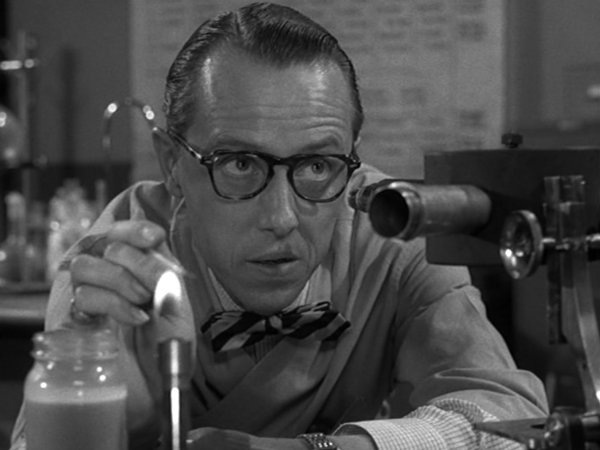
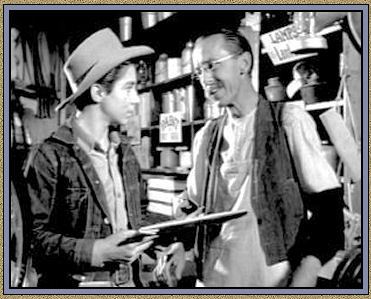
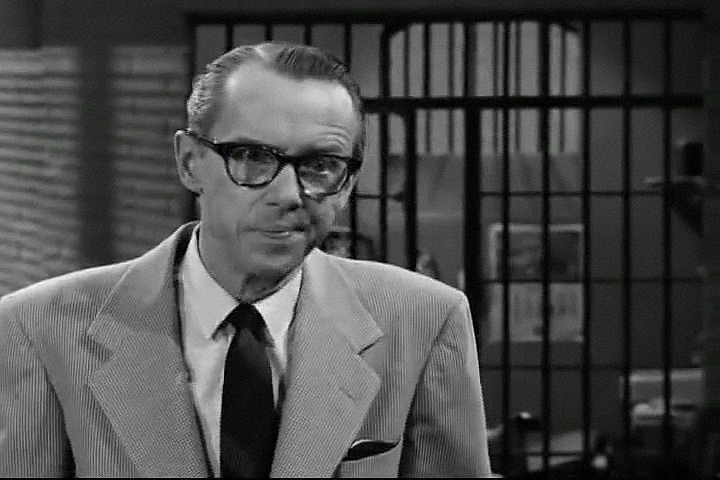
Both Soule and Jones were prolific actors who had long and successful careers. Neither one of them were the leading men type of actors, but they could tackle a wide range of roles. Soule once said, “Because of my build and glasses, I’ve mostly played lab technicians, newscasters, and railroad clerks.” Not a bad life for someone who loves acting. If you watch Antenna or Me Tv, chances are you will see these two characters pop up quite often.