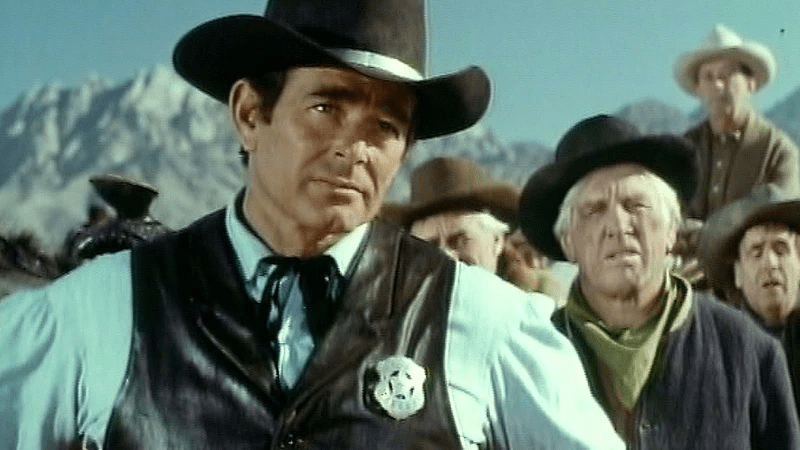
As we wind up our “Go West Young Man” blog series, we turn our attention to CimarronStrip for the last blog of the series. This show was only on the air for one season, from 1967-68. It was produced by the creators of Gunsmoke, America’s most beloved western. Like The Virginian, it was a 90-minute show.
📷mubi.com
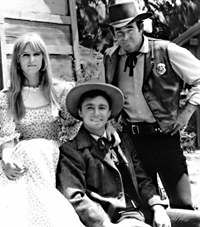
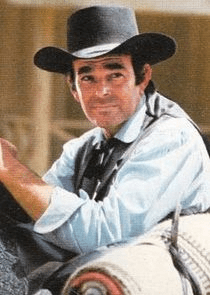
Set in the Oklahoma in 1890, the series occurred in a geographical region called No Man’s Land, an ungoverned area for several decades. Marshal Jim Crown (Stuart Whitman) tries to bring law and order there. Crown arrives only to learn that the sheriff has resigned, and it’s up to him to bring peace to the area with no Army support. We get to know Dulcey Coopersmith (Jill Townsend) who comes to live with her father, but upon her arrival, she discovers he is dead. Her father’s partner MacGregor (Percy Herbert) has let their Wayfarer’s Inn become a bit dilapidated, but Dulcey is determined to bring it back. Marshal Crown stayed there when he was in Cimarron City. Francis Wilde (Randy Boone) often served as Crown’s deputy.
📷pinterest.com
Rounding out the cast is the bartender at the Inn, Fabrizio (Jack Braddock); Major Covington at a nearby Army fort (Andrew Duggan); a Dr. Kihlgren (Karl Swenson); and Hardy Miller (Robert J. Wilke).
The show was on Thursday nights, up against Batman, The Flying Nun, and Bewitched on ABC. It faced Daniel Boone and Ironside on NBC. Definitely some tough competition.
The theme song was composed by Maurice Jarre, who was the scorer for the films Lawrence of Arabia and Doctor Zhivago for which he won two Oscars.
The show never attained the ratings numbers it needed to keep its place on the schedule. From what I have been able to find out, it was well written and well cast. Guest stars kept it interesting, and the scenery was beautifully filmed.
📷tvmaze.com
I’m guessing the main reason the show didn’t make it was just viewer fatigue with the western genre. There were already shows like Bonanza and Gunsmoke which were hugely popular. One more western might just have been one too many, no matter how good it was. In addition to the western series, some of the shows that were on the air when Cimarron Strip debuted included That Girl, Hogan’s Heroes, Mannix, Batman, Lost in Space, Get Smart, and Rowan and Martin’s Laugh In—very different choices than westerns. I do remember Arnold the pig on Green Acres always wanting to watch westerns on television. We still fall prey to this on the major three networks. After ER became popular, the next season featured ten new medical shows. And then most of them get cancelled, not necessarily because they’re bad but because it’s just an overload of medical shows.
Most people don’t want the same supper every night even if it’s steak or lasagna. That said, this seemed to be a steak kind of show, so just because it couldn’t survive the mass onslaught of westerns in the sixties doesn’t mean it’s not worth watching. If you check it out, let me know what you think.
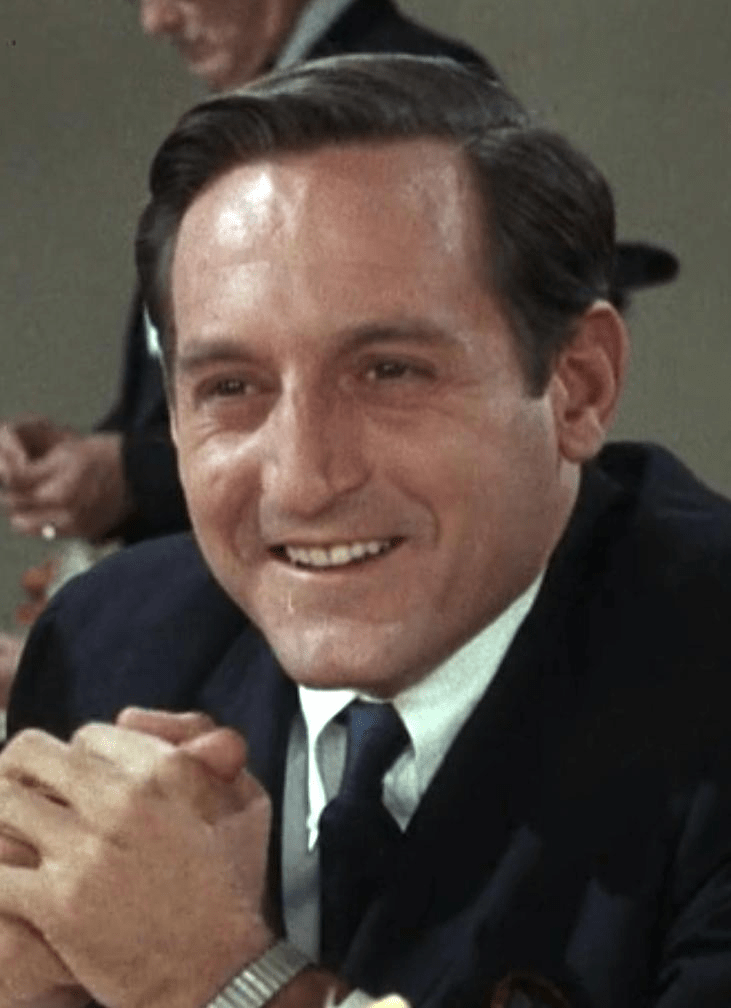
This month we are right in the middle of one of my favorite blog series, What a Character. This week we are delving into the career of Noam Pitlik; in addition to his acting, he won an Emmy for his work as a director. Which show? Let’s find out.
Pitlik was born in Philadelphia in 1932. After graduating from high school, he enrolled at Gratz College and later was a theater major at Temple University in 1954. Pitlik had a two-year stunt in the Army and earned a master’s degree in theater at New York University.
He began his acting career on WCAU in a western. In 1951, he was hired for the set design and construction crew for the Philadelphia Experimental Theater. He carried a bit of his hometown with him when he was part of the Summer Theater Guild in Indiana, Pennsylvania in the “Philadelphia Story.” He was hired for his Broadway debut in an off-Broadway production of The Threepenny Opera.”
📷imdb.com
In 1961 he moved to Los Angeles and received his first television roles, appearing on Cain’s Hundred and Dr. Kildare. Cain’s Hundred was not a show I remembered hearing much about. It was about a former underworld lawyer who works with the federal government to bring the top 100 criminals to justice. The show lasted one season. Pitlik had a variety of offers for shows throughout the sixties. Most of them were dramas and westerns, but we also see him on My Favorite Martian, The Munsters, Gidget, The FlyingNun, The Monkees, The Andy Griffith Show, The Doris Day Show, Get Smart, That Girl, and I Dream of Jeannie.
During the sixties, he married for the first time. His marriage with Jesse Blostein in 1967 would only last three years.
Pitlik also appeared in fourteen films and eight made-for-tv movies. The most memorable films are The Graduate, Fitzwilly, and The Fortune Cookie.
📷famousfix.com
The seventies were his most prolific decade of acting. He appeared in 26 different series, often in 2-5 different episodes. You’ll see Pitlik in reruns in a variety of genres including Hogan’s Heroes, Room 222, Bewitched, LoveAmerican Style, All in the Family, The FBI, Cannon, Mannix, The PartridgeFamily, The Bob Newhart Show, The Odd Couple, and Barney Miller. His last acting appearance was in Becker in 1998.
The seventies were also when he tried the role of husband again, marrying Linda Hirsch in 1974; this marriage also lasted three years.
He began directing in the seventies and obtained 39 directing credits throughout the next two decades.
📷imdb.com
In an interview with Temple University for the Alumni Review in 1979, Pitlik said that the switch in his career was not “a case of my needing to change functions for economic reasons. I used to figure out what I made a day as an actor, and it was obscene. I changed for emotional reasons. I had become very frustrated by the kinds of things I was doing in acting, and I was looking for a change in my life that would be more challenging. I enjoyed acting, but I never seemed to get enough to do.” His first episode as director was on The New Dick Van Dyke Show. He directed 12 episodes for The Practice and 11 for Taxi.
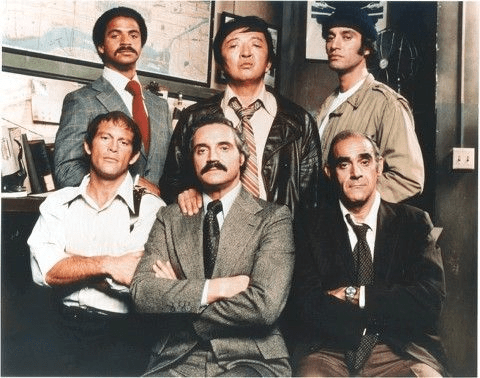
However, Barney Miller was where he perfected his skill as director for 102 of its 171 episodes. In 1979, he won an Emmy as Director for the show. He beat out Paul Bogart for All in the Family, Alan Alda and Charles Dubin for M*A*S*H, and Jay Sandrich for Soap. He also received a Peabody Award and a Directors Guild of America Award for his work on Barney Miller. He lost the Emmy in 1981 to James Burrows for Taxi. His co-nominees included Jerry Paris for Happy Days, Linda Day for Archie Bunker’s Place, Burt Metcalfe and Alan Alda for M*A*S*H, and Rod Daniel for WKRP in Cincinnati.
📷tumblr.com Cast of Barney Miller
In the Temple interview, Pitlik said that his “main responsibility is to create an atmosphere in which each of the people involved in the production can conform to their best work. Although a director oversees all aspects of the production, there are many people involved, and he’s dependent on all of them. There’s no more collaborative business than the television business. Each person contributes to the success or failure of a show whether he or she is a writer, actor, cameraman, or whatever.”
In 1995 he began directing episodes of The Home Court and did so for 14 of the 20 episodes. I must admit I do not remember this show at all. The synopsis was Sydney Solomon was a family court judge who had to deal with the toughest prosecuting attorneys and repeat offenders. However, her biggest challenges came when dealing with her kids, four boys aged 11-19.
📷pinterest.com
Pitlik had better luck with his third marriage to Susan Whittaker which lasted from 1986 until his death in 1999. Whittaker was a television producer. Noam passed away from lung cancer at age 66.
Like Jerry Paris, Pitlik had a very successful acting career before finding his passion behind the camera. If you are responsible for directing a series, Barney Miller is a great accomplishment. It was fun to learn more about his career both in front of and behind the camera.
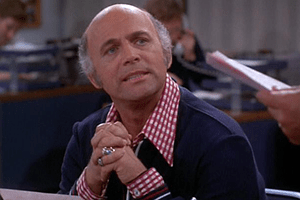
As we wind up our up close and personal blog series, we are focusing on Gavin MacLeod. I have mentioned Gavin MacLeod’s name a lot in my blogs, but I have never devoted an entire to blog to him, so today is the day. Gavin had an impressive career; he starred in three sitcoms but those three garnered him almost 500 episodes. In addition, he took on more than a hundred guest roles on both the small and big screen.
MacLeod was born Allan George See in 1931 in New York. His mother worked for Reader’s Digest, and his father was an electrician. In 1952, MacLeod graduated from Ithaca College with a bachelor’s degree in fine arts, studying acting.
On Perry Mason Photo: imdb.com
He served in the US Air Force where he wrote, produced, and directed plays. After his service, he moved to New York City. While tackling acting auditions, he worked at Radio City Music Hall. While working as an usher there, he met Joan Rootvik, a Rockette. They married in 1955 and had four children. About this time, he took on the name Gavin MacLeod. MacLeod was a tribute to his acting coach at Ithaca, Beatrice MacLeod.
His movie career began with three movies in 1958. He would make 20 more before 2005, including Operation Petticoat and The Gene Krupa Story.
His television appearances began in 1957 on The Walter Winchell File. He would make another lucky 13 performances during the fifties including The Thin Man and Whirlybirds.
On Hogan’s Heroes Photo: pinterest.com
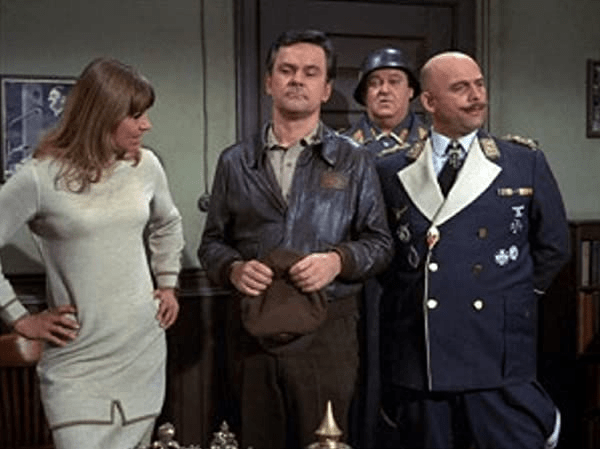
The sixties kept him busy. He took on comedy in The Dick Van Dyke Show, The Munsters, Gomer Pyle USMC, The Andy Griffith Show, My Favorite Martian, The Flying Nun, and several different characters on Hogan’s Heroes. Westerns called him for Rawhide, The Iron Horse, Death Valley Days, and The Big Valley. He landed dramas including The Man from UNCLE, Perry Mason, Ironside, Hawaii Five-0, and Ben Casey.
From 1962-1964 he starred as Happy in McHale’s Navy. The show continued until 1966, but Gavin left the show halfway through. He was dealing with alcoholism, and he received an offer to make the movie The Sand Pebbles with Steve McQueen. However, he remained close friends with Ernest Borgnine, the star of the show, until his death in 2012. (He quit drinking in 1974.)
Murray and Mary Photo: showbizcheatsheet.com
During the 1970s, he appeared on Love American Style, Charlie’s Angels, and Wonder Woman, but the character we loved best during that decade was Murray Slaughter on The Mary Tyler Moore Show. From 1970-1977, Murray sat next to Mary, helping her through the ups and downs of life. Gavin was originally auditioning for the role of Lou Grant, but ended up reading for Murray. He and Ted Baxter were enemies on the show, but he and Ted Knight were dear friends in real life. They had lived near each other before being cast in the show.
During the run of the show, Gavin and his first wife divorced, and he married his second wife Patti Steele. That marriage also ended in divorce in 1982. Patti became part of a Bible Study group after their divorce and became a Christian. Gavin reached out to her, also became a Christian, and they remarried in 1985.
Photo: travelweekly.com
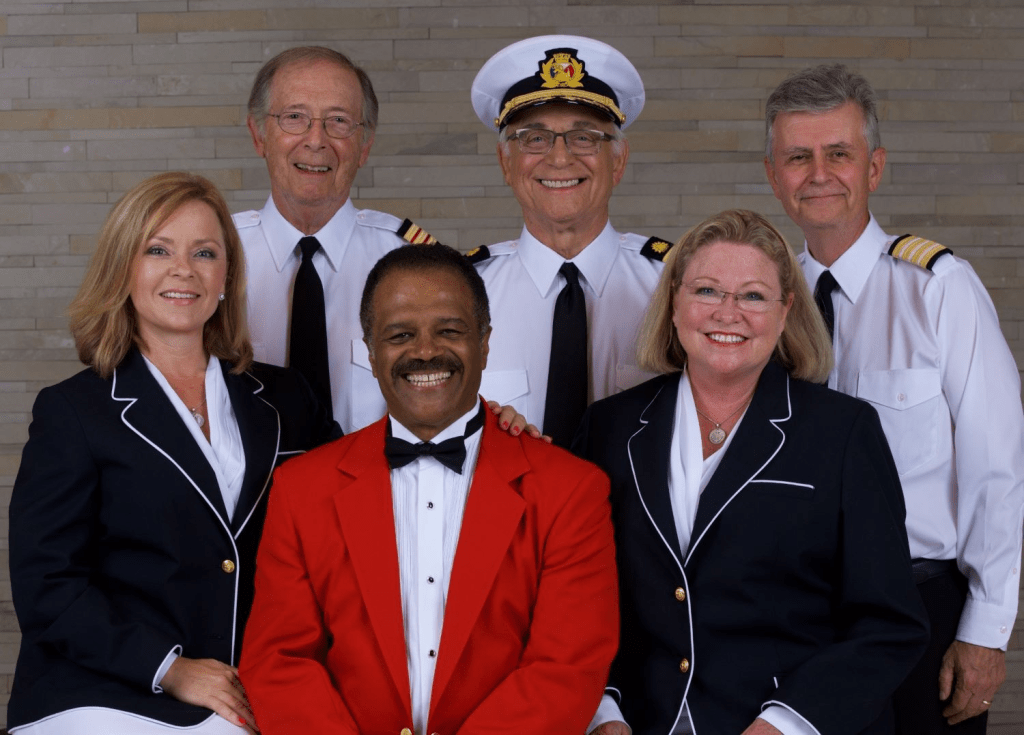
Upon the ending of Mary’s show, he was immediately hired as Captain Stubing on The Love Boat. This time he was in charge of his coworkers. One of his best friends was Bernie Kopell who played Dr. Adam Bricker on the show. Gavin was on the seas for a decade. His best friend Telly Savalas (the lollipop-loving Kojak star) popped up on The Love Boat; the two were very close until Telly’s death in 1994.
When the show ended in 1987, he got a well-deserved break, but he still managed to find time to tour with Michael Learned in “Love Letters.”
Celebrating on Murder She Wrote Photo: imdb.com
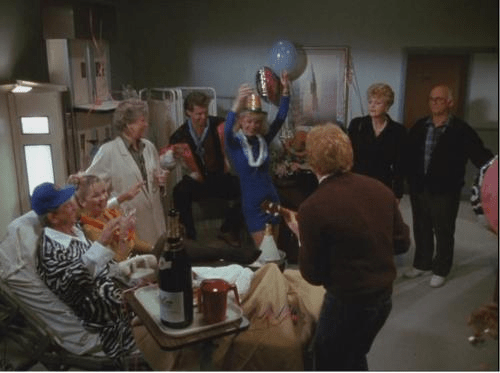
He landed a variety of television show appearances in the 1990s and 2000s, including Murder She Wrote, King of Queens, JAG, and That 70s Show. His final appearance was in 2014 on The Comeback Kids; then he decided to retire. He also did several musicals after The Love Boat including “Gypsy,” “Annie Get Your Gun,” and “Gigi.”
MacLeod and his wife hosted a show on marriage on Trinity Broadcasting Network for 17 years. He also served as the honorary mayor of Pacific Palisades from 2006-2011 when Sugar Ray Leonard took over.
The Love Boat was a big part of his life. Instead of being bitter about being typecast, he embraced the role. He celebrated his 80th birthday in 2011 aboard the Golden Princess with his family, celebrating with a 3D replica cake of The Pacific Princess, his boat on the show.
Photo: princesscruises.com
In 2013, MacLeod joined his former coworkers on The Talk for a cast reunion. Several members of the cast including Gavin took part in The Rose Bowl Parade in 2015.
The cast apparently was very close. Ted Lange who played bartender Isaac Washington mentioned the crew in an interview in 2017 with “The Wiseguyz Show,” saying “Oh yeah, sure, Gavin was wonderful. Gavin lives down here in Palm Springs and we’re still tight, all of us, Gavin and Bernie and Jill; we still see each other. Fred [who played Gopher] lives in a different state, we’re still close, we’re still good friends.”
In his spare time, Gavin enjoyed traveling, playing tennis, dancing, golfing, sailing, reading the Bible, and watching movies. Gavin passed away in May of 2021 at his home.
Photo: twitter.com
During the past decade, he released a memoir, This is Your Captain Speaking: My Fantastic Voyage Through Hollywood, Faith & Life. He explained his goal for writing this book: “My life has taken one incredible turn after another,” writes MacLeod. “I’ve gotten to do what I wanted to do. I’ve been a captain! I’ve been given this incredible gift of life and now I want to use it to give back. That’s why I’m sharing my story here, the fun parts and even some not-so-fun parts, in the hopes that maybe someone will take a nice walk down memory lane with me – and maybe I’ll even give someone a little bit of hope.”
Good memories and a little bit of hope is all we can ask for; thanks, Gavin, for giving that to us.
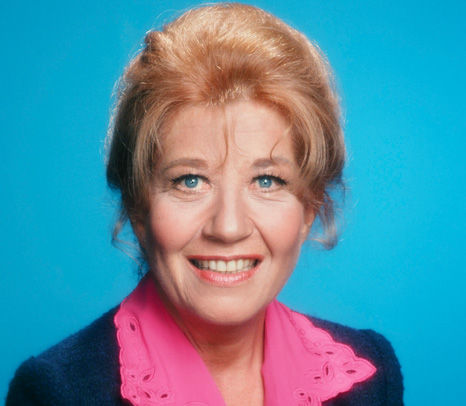
This week we are winding up our series of favorite female actors with Charlotte Rae. If you remember last week we learned about June Lockhart. Charlotte was born a year after June and died a year before her, and their careers were very similar. Both were actresses for more than six decades, appeared in Broadway, movies, and television.
Rae was born in Milwaukee, WI in 1926. Her parents were Russian Jewish immigrants. Her mother Esther had been friends with Golda Meir since childhood. For her first ten years, the family lived above her father’s tire business. In 1936 they moved to a home in Shorewood. At age 16, she became an apprentice with the Port Players, a professional theater company that came to Milwaukee for the summer. After graduation, Charlotte did some radio work and did some performing with the Wauwatosa Children’s Theatre.
Photo: legacy.com
Although she never completed her degree, Rae attended Northwestern University. She and Cloris Leachman became friends there. She also met Agnes Nixon, Charlton Heston, Paul Lynde, and Claude Akins. In later years she would always recommend wanna-be actors get a degree first.
Photo: thejewishnews.com
In 1948, she moved to New York City where she performed in theater and nightclubs. She worked at a variety of clubs including the Village Vanguard and the Blue Angel. During her early days, a radio star told her that her last name of “Lubotsky” would not work well, and she replaced it with her middle name of Rae.
In 1951 she received her first television job on Once Upon a Tune. She would appear on ten other drama theater shows during the fifties. In an interview with Milwaukee Talks in 2016 she said, “When I started out, I wanted to be a serious actor, I never thought I’d get into comedy.”
The same year, Rae married composer John Strauss. They had two sons, but in the mid seventies he came out as a bisexual. Rae was not interested in an open marriage, so the couple decided to divorce in 1976.
Charlotte also loved singing, and she released an album in 1955, Songs I Taught My Mother. Rae also loved being on the stage. In the seventies, Vanguard Records went out of business, and Rae was able to buy back the album for $5000.
She would have stage roles in “Three Wishes for Jamie” in 1952, “The Threepenny Opera” in 1954, “Li’l Abner” in 1956, and “Pickwick” in 1965 among others. Later in her career she would also appear in several off-Broadway shows.
Photo: amazon.com
In 1958, she got a break with a guest spot on The Phil Silvers Show which led to her getting the part of Sylvia Schnauzer, the wife of Leo Schnauzer (Al Lewis) on Car 54 Where Are You when it debuted in 1961. Her husband John did the music for the show. Apart from that role, most of the other television work she did in the sixties was in drama series.
Photo: pinterest.com
Rae also appeared in 14 big-screen movies. Can I take a shameless plug and say that one of my favorite Charlotte Rae roles is in Hello Down There? This movie from 1969 screams IT’S THE SIXTIES from the moment it starts until it ends, but it’s a great sit-back-and-just watch movie. If nothing else, it has an amazing cast including Tony Randall, Janet Leigh, Ken Berry, Jim Backus, Merv Griffin, and Richard Dreyfuss among others.
Photo: muppet wiki fandom.com
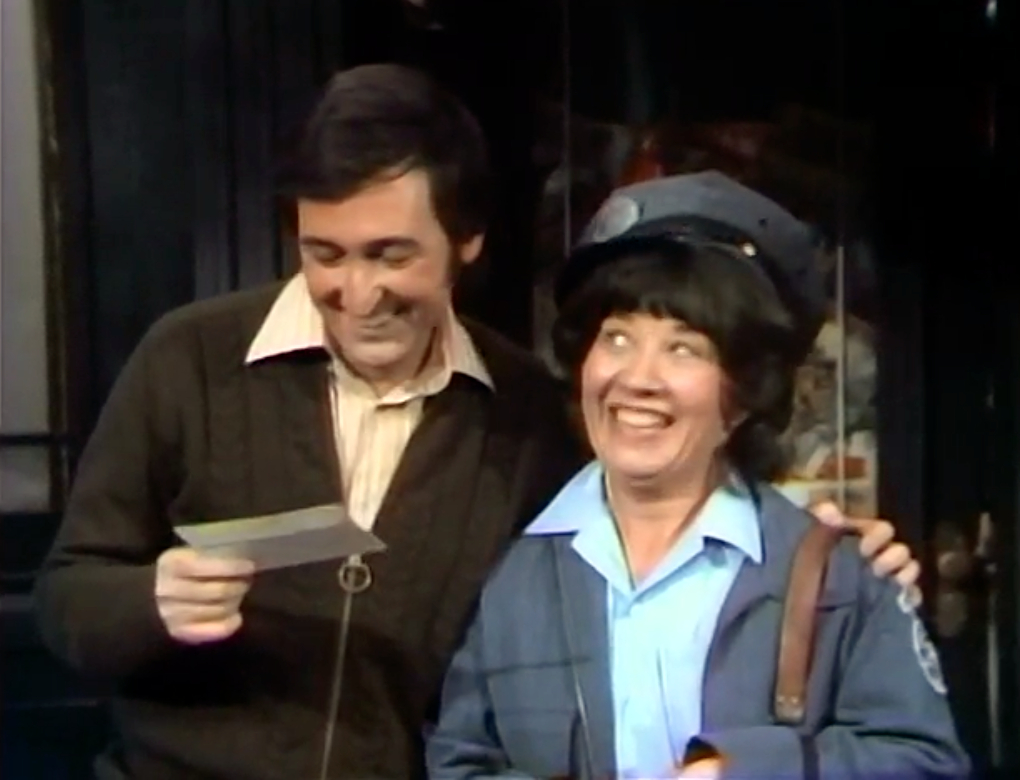
The seventies were her busiest decade of work. She started with a recurring role on Sesame Street as Molly the Mail Lady. During the early seventies you could see her on The Partridge Family, McMillan and Wife, Love American Style, and The Paul Lynde Show. I always appreciated her character on The Partridge Family. When Danny is thinking about quitting school to get on with life, she plays his very smart and creative guidance counselor.
In 1974 Rae moved to Los Angeles. She did guest spots on All in the Family and Good Times, both Norman Lear shows. In 1975, she became a regular on Lear’s show, Hot l Baltimore. She played Mrs. Bellotti, whose son lived at the hotel. The show was a bit controversial and was cancelled after the first season.
During the remainder of the seventies, Rae kept busy working for a variety of genres. You could have seen her on The Flying Nun, Barney Miller, The Rich Little Show, All’s Fair, CPO Sharkey, Family, The Eddie Capra Mysteries, and on her friend Cloris Leachman’s show Phyllis.
In 1978 Norman Lear was working on Diff’rent Strokes about a single father who adopts two brothers whom he raises along with his daughter with help from his housekeeper. Lear signed Rae on as the housekeeper. Charlotte wanted to do the series, but as she related in a Television Academy interview, she was under contract at CBS when NBC made the offer. She had a few weeks left on her CBS option. The network offered her the role of a lady sheriff on a new western but it didn’t ring true to her, and she didn’t want to do it. While she was filming an Eddie Capra Mystery episode, she drove over to explain her predicament to Lear. He said that Bud Grant owed him a favor and he did indeed get her out of the contract.
One episode on the first season was “The Girls’ School” when Edna Garrett is asked to help out at Kim’s private school called East Lake. She does but at the end of the episode decides she’d rather be working in the Drummond home.
Photo: imdb.com
In an interview with the Television Academy, Rae said she thought she was going to be fired from Diff’rent Strokes. She noticed her lines getting fewer and fewer and when she was called into talk with the producer, she thought that was it. However, they proposed a spinoff show for her based on “The Girls’ School” episode called The Facts of Life. They wanted Edna to become housemother for the boarding students at the school. It was a prestigious private school now called Eastland. The writers were focusing on issues affecting high school age girls including weight gain, dieting, depression, drug and alcohol use, dating, mental illness, and other subjects that kids that age deal with. Rae said the show was about growing up, family, love, and working out problems. “I had a lot of input with issues like suicide, divorce, death. I’m really very proud.”
Charlotte was a single mother and afraid to lose her Diff’rent Strokes income on a possibility that might not pan out. The producers wrote into her contract that if the show was cancelled, she could return to Diff’rent Strokes, so she agreed.
Photo: redbook.com
The first season gained some fans, but ratings were so-so. For the second season, some cast changes were made and the show was moved from Fridays to Wednesdays. The show finished in the top thirty that year, and Rae became a household name. In 1982, Rae received an Emmy nomination. (She lost to Carol Kane from Taxi.) During the 1984 and 1985 seasons, Rae asked to be used less. She felt that the girls were older and would rely more on each other than a housemother for discussions about life issues.
When discussing the character of Edna, Rae explained “I want to bring in as much humanity as possible, as well as humor. I’ve tried to make her a human being with dimensions. The way they write her now is with a great deal of sensitivity and understanding. But I don’t want her to be Polly Perfect, because she must have human failings and make mistakes. She’s also a surrogate mother to the girls. I told them I wanted to be firm with the girls because I know it’s important. Parents must lay down ground rules for their children to help them grow up and to learn responsibility for their actions. They must learn to stand on their own two feet.”
No doubt that this show took place in the 1980s Photo: pinterest.com
Rae wanted to do more theater and she wanted to travel. When she decided to leave the series, Cloris Leachman replaced her in the role. The two-part finale of the eighth season had Edna Garrett marrying and moving to Africa with her husband to work for the Peace Corps. Her sister Beverly (Rae’s real sister’s name) comes for the wedding and then decides to stay with the girls at school. Cloris Leachman was signed on for two seasons. At the end of her time, she was willing to continue for another season, but cast members Nancy McKeon and Mindy Cohn were ready to end the show and take on new projects. It was not the end of the show, however. In 2001 a television reunion movie aired with much of the original cast. In 2007 the entire cast was invited to the TV Land Awards where they sang their old theme song.
Murder She Wrote Photo: backofthecerealbox.com
Charlotte took on several other roles after leaving the show. During the eighties and nineties, she appeared on The Love Boat, St. Elsewhere, Murder She Wrote, Sisters, and Alex Mack among others.
She was busy until she passed away, and continued to act throughout the 2000s, including an appearance on King of Queens, and a recurring role on ER. Her last acting credit on television was in 2014’s Girl Meets World.
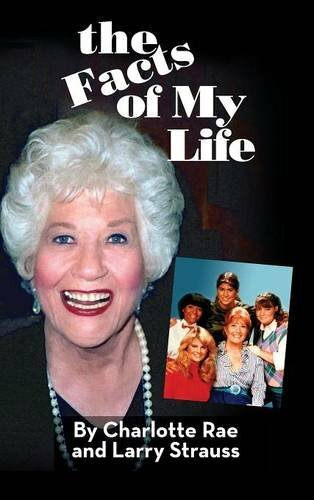
In 2015, Rae wrote her memoirs with her son Larry. At many of her book signings, adults came to purchase the book and told her over and over that they had been latch-key kids and saw Edna as a second mother to them. A description from Amazon sums up the book: “Charlotte Rae’s career spans more than seventy years, from the golden age of television to Shakespeare in the Park, the New York Cabaret scene of the late 1940s and 50s to her hit series, The Facts of Life and well beyond. Off stage and screen, Charlotte’s life has been one of joy and challenge, raising an autistic son, coming to terms with alcoholism, the heartache of a broken marriage, the revelation of a gay husband and the sudden challenge of facing middle-age with financial and emotional uncertainties–a crisis she ultimately turned into the determination that brought her stardom. The Facts of My Life is the first opportunity for Charlotte’s fans to explore the fascinating story of her extraordinary life: poignant and hilarious, a story of courage and triumph, one that speaks for a generation of women breaking barriers, taking on challenges, overcoming personal tragedy, and paving the way for others.”
Rae suffered from several health issues. In the early seventies, she joined Alcoholics Anonymous which was a critical part of the rest of her life. In 1982, she had a pacemaker implanted. It worked well for thirty years, but then stopped, requiring surgery for another smaller device. She also had open heart surgery to replace her mitral valve. Pancreatic cancer ran in her family, so she was screened often and when she was diagnosed with cancer, it was early so she had six months of chemotherapy and was then declared cancer free. In 2017, she was diagnosed with bone cancer. She died at her home in 2018. Todd Bridges from Diff’rent Strokes, tweeted, “You were loved by everyone on our show.”
Photo: doyouremember.com
Charlotte said she never minded fans coming up to her because she realized that in being a television actor you were in people’s homes. “It was an intimate relationship.”
She said she wanted to be remembered as someone who took people out of themselves into a different world and allowed them to laugh or cry, and that would make her happy because we need as many laughs as we can get.
Thank you, Charlotte for making us cry a little and laugh a lot.
Continuing our series about “Valerie,” today we look at a slice of American life from the 1970s. It’s hard to emphasize how much the movie Saturday Night Fever changed American culture. In the movie, a high school graduate played by John Travolta, escapes his hard life by dancing at the local disco. The hippie culture of the late 1960s and early ‘70s was shoved aside by the bold and brash disco era. It was hard to go anywhere without the background soundtrack of the movie being heard. Extravagant clothing and three-piece suits were back in style, along with platform shoes and blingy jewelry.
Photo: ebay.com Saturday Night Fever, the movie that started it all
A year after the movie debuted, a new show called Joe and Valerie appeared in April of 1978. Joe (Paul Regina) works at his father’s plumbing store. He meets Valerie (Char Fontane) at the disco and they get romantically involved. However, Joe’s roommates, Paulie (David Elliott), a hearse driver, and Frankie (Bill Beyers/Lloyd Alan), a spa worker and chauvinist, have their opinions on the romance as does Valerie’s divorced mother Stella (Arlene Golonka). Rounding out the cast were Robert Costanzo as Joe’s father Vincent and Rita/Thelma (Donna Ponterotto), Valerie’s best friend.
Photo: moviepictures.org
The series was produced by Bob Hope’s production company, Hope Enterprises, and his daughter Linda served as executive producer. Bill Persky, who had been one of the forces behind That Girl, directed the first episode.
The writers for the show included Howard Albrecht, Hal Dresner, Bernie Kahn, and Sol Weinstein. Kahn and Dresner also served as producer for an episode each. Art direction was credited to Bruce Ryan and shop coordinator to Edwin McCormick.
Photo:ebay.com The chic couple: Makes a person wonder doesn’t it
The series was divided into two parts; in 1978 the episodes show Joe and Valerie meeting, falling in love and planning their future. Jumping to January 1979, the episodes center around the couple beginning their married life. Four half-hour episodes aired in April and May of 1978. Four half-hour episodes were set to air in January, but only three did; the final episode never was played on the air.
Episode 1, “The Meeting” aired April 24, 1978. Joe and Valerie meet at the disco and fall in love when Joe bets his roommates that he can take Valerie away from her dancing partner.
Episode 2, “The Perfect Night” aired May 1, 1978. Valerie arranges dates for Frank and Paulie. She sets up Frank with her best friend Thelma and the date is a disaster. The woman she set Paulie up with ended up getting married the night before, so Valerie is frantically looking for a substitute. Albrecht and Weinstein were credited as writers.
Episode 3, “Valerie’s Wild Oat” aired May 3, 1978. Joe and Valerie’s romance hits a potential roadblock when Valerie finds out that her new boss at the store is her ex-boyfriend Ernie (Marcus Smythe).
Photo: backdrops.com.au The Village People, a big part in the disco fad
Episode 4, “The Commitment” aired May 10, 1978. When Valerie’s mother is unexpectedly called away for the weekend, Joe and Valerie face the prospect of spending their first night together. Joe loves Valerie too much to stay but worries how his roommates will react if he doesn’t.
Episode 5, “The Engagement” aired January 5, 1979. Joe and Valerie break the news to their parents that they are going to live together and looking for a place to live through a rental service which adds to the confusion.
Photo: blogspot.com Disco fashion
Episode 6, “The Wedding Guest” aired January 12, 1979. Joe and Valerie learn that a gangster’s funeral has been scheduled at the same time as their wedding at the church.
Episode 7, “The Wedding” aired January 19, 1979. The newly married couple look back at the events that occurred around their wedding. Some of the problems included Vince wanting Valerie to wear his wife’s old-fashioned wedding dress, Frank and Paulie fighting over who is best man, and Valerie’s mother threatening to stay away from the wedding if her ex-husband comes.
The final episode, “Paulie’s First Love,” was never aired.
This was a bad year for series’ debuts. A number of shows flopped during this year including Hizzoner, Sweepstakes, and Supertrain, none of them making it to more than nine episodes.
Photo: celebritybio.com Char Fontane
Char Fontane (also listed as Fontaine occasionally) was born in California in 1952. She passed away from breast cancer in 2007. Before being cast in Joe and Valerie, she appeared on a variety of tv series in the 1970s and a couple after: LoveAmerican Style (1972), The FBI (1973), Barnaby Jones (1979), Supertrain (1979), Sweepstakes (1979), The Love Boat (1979), and Nero Wolfe (1981). In the mid-1980s she took a role in a made-for-tv movie, The Night the Bridge Fell Down and two movie roles: Too Much (1987) and The Punisher (1989). She was not credited with any roles after the 1989 movie.
Photo: weebly.com Char Fontane in The Night the Bridge Fell Down
Paul Regina was born in Brooklyn in 1956 and passed away from liver cancer in 2006.
Photo: snipview.com
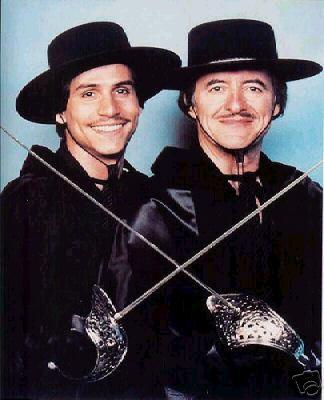
Before his role on Joe and Valerie, he had parts in The Hardy Boys/Nancy Drew Hour and Police Woman both in 1978. After the show ended, his career stayed fairly busy. Throughout the 1980s and 1990s, he could be seen on many popular television shows including Benson, Gimme a Break, TJ Hooker, Hunter, and EmptyNest. He would be cast in three series: Zorro and Son in 1983, Brothers from 1984-89, and The Untouchables in 1993-94. He also had a recurring role as a lawyer on LA Law between 1988-1992.
Photo: waytoofamous.com
Post 2000 before his death he was in Law and Order several times as well as two movies, The Blue Lizard and Eddie Monroe.
David Elliott had a successful career going when he received the role of Paulie. He began with several roles on tv including a mini-series, Pearl, that Char Fontane was also in. From 1972-1977, he had a role in The Doctors in 272 episodes. Before beginning Joe and Valerie, he had a role on Angie in 1979.
OLYMPUS DIGITAL CAMERA Photo: imdb.com
After the show ended, he continued showing up in television series including TJHooker, St. Elsewhere, Simon and Simon, and Murder She Wrote. He ended his credited acting career with seven movies in the 1990s.
He is an interesting guy. After dropping out of high school, he drove a cab in New York. He was a professional boxer, ran a PI business in Hollywood, received his pilot’s license, sat on the board of a major labor union, and traveled extensively through every continent except Africa and Antarctica. Recently he earned a certificate in both long and short fiction from the UCLA Writer’s program and has written a novel, The Star Shield, about a body guard trying to rescue a kidnapped movie star. Currently he is working on a collection of short stories.
The role of Frankie was played by two different actors, Bill Beyers in 1978 and Lloyd Alan in 1979.
Photo: headhuntersholo.com Bill Beyers
Bill Beyers was born in New York in 1955 and died in 1992 in Los Angeles. His first role was that of Frankie on Joe and Valerie. Following the end of that show he was cast in several series including Barnaby Jones, Quincy ME, The Incredible Hulk, CHiPs, Too Close for Comfort, and Murder She Wrote. He had a recurring role on Capitol, appearing in 24 episodes from 1982-1987.
Photo: ztams.com
Lloyd Alan was in 1952. He might have had the shortest career of the cast. Before being cast in Joe and Valerie, he was in an episode of Eight is Enough. After he appeared in The Love Boat, Knight Rider, and Baywatch. His last credited acting job was 1998. I was unable to locate a photo of Lloyd Alan.
The actors with the longest careers were Robert Costanzo who played Joe’s father Vince; Arlene Golonka who was Stella, Valerie’s mother; and Donna Ponterotto who played Rita/Thelma, Valerie’s best friend.
Donna Ponterotto had a successful career following the cancellation of Joe and Valerie. She came to the show having appeared on The Police Story, Happy Days, and Rhoda.
Photo: imdb.com
Following the show, she appeared on Trapper John MD, Laverne and Shirley, TheLove Boat, Who’s the Boss, Murder She Wrote, Night Court, Murphy Brown, ER, Mad About You, Third Rock from the Sun, and NYPD Blue among others. Her last film was Sharkskin in 2015.
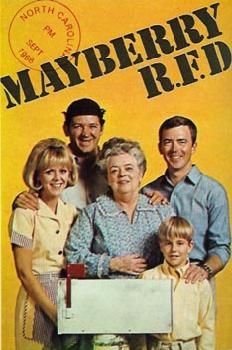
Arlene Golonka grew up in Chicago where she was born in 1936. She began taking acting classes when she was quite young. At age 19, she headed for New York and began a career on Broadway. In the 1960s she relocated to Los Angeles. She continued to appear in movies and appeared in dozens of television programs during the next three decades. While she is probably best known as Millie on Mayberry R.F.D., she has appeared in many respected series.
Photo: blogspot.com
Golonka came into Joe and Valerie with a strong resume. She had made appearances in shows such as The Naked City, Car 54 Where Are You, The Flying Nun, Big Valley, Get Smart, I Spy, That Girl, M*A*S*H, All in the Family, Barnaby Jones, Alice, The Rockford Files, and Love American Style. She made five appearances on The Doctors with David Elliott.
Photo: pinterest.com
After Joe and Valerie, she continued to receive many roles including on FantasyIsland, The Love Boat, Simon and Simon, Benson, and Murder She Wrote. Her last appearance was on The King of Queens in 2005, and she is now retired.
Robert Costanzo was born in New York in 1942. He also came into the show with a very strong string of shows, having been in Rhoda, The Bob Newhart Show, and Lou Grant. He also was in several profitable movies including Dog Day Afternoon, The Goodbye Girl, and Saturday Night Fever.
Photo: pinterest.com
Following the end of Joe and Valerie, he would continue his successful career. Costanzo has been cast in recurring roles in ten shows: Last Resort, Checking In, The White Shadow, Hill Street Blues, LA Law, 1st Ten, Glory Days, NYPD Blue, Charlie and Grace, and Champions. He has continued to take roles on other series including Barney Miller, Alice, Who’s the Boss, Family Ties, St. Elsewhere, The Golden Girls, Friends, and Murder She Wrote.
His movie career has also been very successful, and he is remembered for his roles in Used Cars, Total Recall, Die Hard 2, and Air Bud.
Currently Costanzo is still acting and has several movies debuting in the next couple of years.
Photo: sitcomsonline.com
I have to admit I do not remember Joe and Valerie, and obviously I did not watch it, but I don’t think I missed much. It’s fun to learn about some of the more obscure shows that had a brief flicker in television history. There are many more shows that lasted for less than 20 episodes than there are the classics we remember today. If nothing else, the show captures a unique time in American history.
This month we are in the midst of the series, “Girls, Girls, Girls.” Today we take a look at another sitcom whose cast was primarily female.
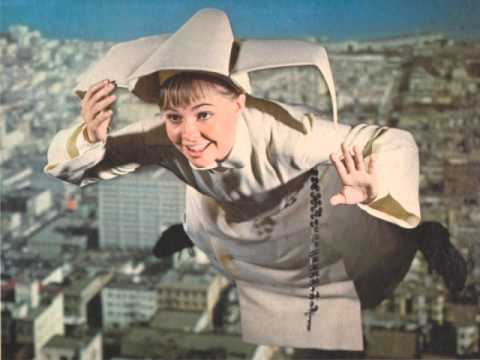
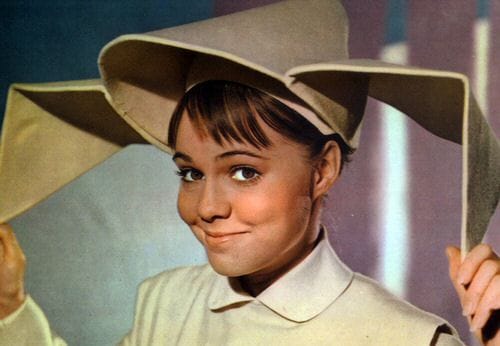
From 1965-1966, Gidget starring Sally Field was on the air. When it was cancelled after only 32 episodes, producers were scrambling to find another vehicle for Field. Harry Ackerman, with co-producers Bernard Slade (who would create The PartridgeFamily and just passed away last week) and Max Wylie came up with The Flying Nun. They based it on a book published in 1965, The Fifteenth Pelican by Tere Rios. Beginning on ABC in September of 1967, the show continued through the fall of 1970, resulting in 82 episodes.
I did read that Patty Duke was the first choice for the show, so I’m assuming when she turned it down, they asked Sally Field. Apparently, they were trying to find a show for Field, but this show was not created for her. Field also turned it down, thinking it was a silly concept, so the producers went to their third choice, Ronne Troup, who would play Polly on My Three Sons. Troup began filming the pilot. Sally’s stepdad, Jock Mahoney, told her she should reconsider because she might not get another chance in show business if she didn’t accept the role. When Sally informed the producers that she had changed her mind, Troup was let go.
Photo: sitcomsonline.com
In the hour-long pilot, we meet Elsie Ethrington. Elsie, who grew up in Chicago, is arrested in New York during a protest. We learn that the rest of her family has chosen medicine for their vocation. (In a later episode, we meet one of her birth sisters who is a physican played by Elinor Donohue.) Elsie goes to Puerto Rico. She is impressed with the missionary work her aunt has been doing, so she ends her relationship with her boyfriend, a toy salesman, and becomes a nun at the Convento San Tanco, taking on the name Sister Bertrille. In one episode, Sister Bertrille watches home movies of her life and what we are actually seeing is footage from Gidget.
Photo: pinterest.com
One day Sister Bertrille, who is only 90 pounds, realized that the heavily starched cornette on her head, allowed her to be able to “fly” as the high winds picked her up. As she tried to explain to several people, “when lift plus thrust is greater than load plus drag, anything can fly.” Of course, a nun flying around town caused quite a stir. Field said she was humiliated by her directors as she was hung from a crane and moved around the set like a prop.
Photo: pinterest.com
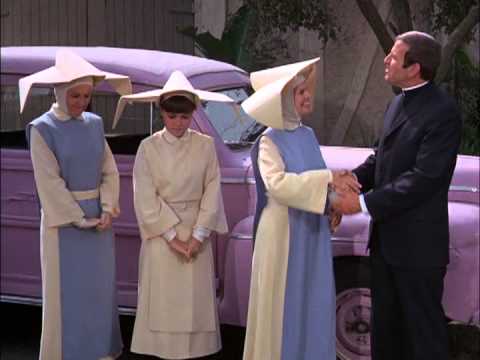
The Reverend Mother Placido (Madeleine Sherwood) runs the convent. She is kind, but strict. Sister Jacqueline (Marge Redmond), who sees the humor in most situations, becomes good friends with Sister Bertrille. Sister Ana (Linda Dangcil) and Sister Sixto (Shelley Morrison) are also friends of hers. The other major characters are Captain Gaspar Fomento (Vito Scotti) who is a police officer that the nuns keep from learning about Sister Bertrille’s flying ability and Carlos Ramirez (Alejandro Rey) who owns a casino and is a ladies’ man. Ramirez was raised by the nuns, and they constantly try to reform him. He will not be reformed, but out of appreciation, he always tries to help them, and Sister Bertrille is constantly involving him in zany schemes or asking him to finance some plan of hers.
Photo: flickr.com
This was the
first (and perhaps only) sitcom to be set in Puerto Rico. Although the pilot
and opening and closing credits were shot in Puerto Rico, the show was shot at
Warner Brothers Ranch in Burbank, California.
The producers
were worried about how Catholics would react to the show. They asked the
National Catholic Office for Radio and Television to serve as an advisor. The
show actually was popular with Catholic religious leaders who felt the show
“humanized” the image of nuns.
The show was also popular with viewers of every other religion. The first two years, it aired Thursday nights, competing with Daniel Boone. The sitcom was sandwiched between Batman and Bewitched. Although it was declared a hit immediately, the ratings eroded during the two years.
Photo: epguides.com
The producers had a hard time deciding on a focus for the show. During the second season it contained more slapstick comedy. The third season it went back to the warm and fuzzy feelings it used in the first season. For the third season, the network moved the show to Wednesdays and put it up against The Glen Campbell Goodtime Hour which insured its cancellation. It didn’t help in the third year that Field was pregnant. She mentioned in an interview that “you can only imagine what a pregnant flying nun looked like,” and the crew had to hide her behind props and scenery.
Photo: thenewyorktimes.com
Critics never took to the show, but the public kept it on the air three times longer than Gidget. Many fans remember the series fondly. The plots were often heart-warming. In “With Love from Irving,” a pelican falls in love with Sister Bertrille. When Sister Bertrille is forced to go to the dentist for a toothache, Dr. Paredes puts her under hypnosis. The doctor gives them a suggestion that whenever they hear “red,” she and the Reverend Mother will switch personalities. In another show, Sister Bertrille wants Carlos to finance an expedition to find a bell that sunk long ago that was supposed to go to the convent because their old one is rusted and they can’t afford a new one. Carlos uses the opportunity to woo a young woman, but Sister Bertrille tags along. The girlfriend gets thrown overboard, but the bell is found in the end.
Relying on uplifting morals (pun intended) and Field’s delightful and talented performances, the show continued on the air. Marge Redmond was nominated for an Emmy as supporting actress. Unfortunately, she was up against Marion Lorne, who won it for her role of Aunt Clara on Bewitched.
TV Guide ranked the show number 42 on its worst tv shows of all times list in 2002. However, it continues to do well in syndication and has an international fan club.
Photo: ebay.com
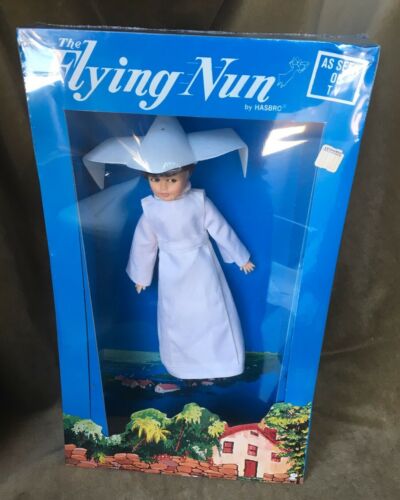
While the show was on the air, it sold a variety of merchandise, including paper dolls, lunch boxes, trading cards, view master reels, a board game, and a doll.
Photo: ebay.com
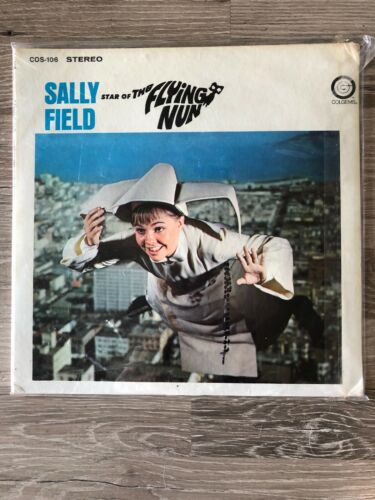
Sally Field released a soundtrack LP with songs from the series in 1967. Dell Comics came out with four comic books based on the series in 1968.
Photo: ebay.com
Photo: ebay.com
I must admit I was not a big fan of the show. However, I have gone back and watched quite a few episodes for this blog, and it is better than I remembered it. Although the concept does sound as silly as Field thought, the show is charming and can be quite funny at times. Although it might not be in your top 25, it probably deserves a second look if you have not seen it for a while.
As we proceed
with our Behind the Scenes series this month, today we are thinking about set
designers. Before the interior designs are done, the production team needs to
find the perfect home for our television friends.
Did you ever daydream about places you might want to live in, even if you never would actually consider leaving your home? Perhaps it’s a small rose-covered cottage in the English countryside, maybe a ski chalet in the Swiss alps, or a house on the Maine coast with green shutters and a widow’s walk. I’ve thought about all of these places, but now I have another one to consider. It’s an historic neighborhood where some of my favorite television friends lived. Today we learn a bit about the Columbia Ranch.
Photo: columbiaranch.net
Now called
Warner Brothers Ranch, the former Columbia Ranch was in Burbank, CA. In
addition to dozens of television shows, it was the setting for many movies as
well such as Mr. Deeds Goes to Town,High Noon, and Lost Horizon. The neighborhood interiors were typically shot at other
studio locations.
In 1934, Harry Cohn, head of Columbia Pictures, purchased 40 acres in Burbank. In 1948, Columbia got into the television business under Screen Gems.
Photo: pinterest.com
During the
1950s, Captain Midnight, Father Knows Best, The Donna Reed Show, and Dennis
the Menace were filmed here. By the 1960s, the ranch was used continuously
for television and movies. The set was about six blocks but looked much larger
on camera shots. Shows during the 1960s included My Sister Eileen, Hazel, Our Man Higgins, The Farmer’s Daughter, Bewitched,
Gidget, I Dream of Jeannie, The
Monkees, and The Flying Nun.
In 1970, a
fire destroyed a quarter of the neighborhood, including many buildings on
Blondie Street. After rebuilding, taping continued on the set. During the next
three decades, shows included The
Partridge Family, Bridget Loves
Bernie, Apples Way, The Scarecrow and Mrs. King, and Life Goes On.
In 1971, Columbia and Warner Brothers combined their companies and merged into The Burbank Studios. The Ranch then was relegated to a back backlot.
Photo: columbiaranch.net
When Columbia Pictures moved its production facilities to Culver City in 1990, Warner Brothers gained ownership of the Ranch.
Photo: pinterest
Photo: pinterest
It’s continued to be a busy spot for filming. The fountain in the park was the one shown in the opening credits in Friends.
Nearby is also a swimming pool used on a variety of shows, including The Partridge Family.
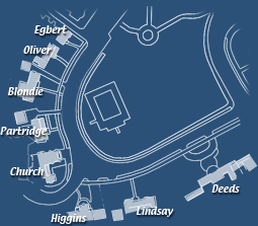
The most famous street in the Ranch was Blondie Street. Blondie Street was named for Blondie Bumstead because the Blondie movies of the 1940s were filmed here. Walking down Blondie Street reveals homes that we were all familiar with growing up in the sixties and seventies.
Photo: columbiaranch.net
It’s a curved
residential street with twelve different houses, surrounding a large, central
park. There is also a brick church and paved sidewalks. Three of the buildings—the
Lindsay House, the Little Egbert House, and the Oliver House—were original to
the 1935 set production.
The Blondie House
Photo: columbiaranch.net
This set, constructed in 1941, was the home for Major Nelson on I Dream of Jeannie, Mr. Wilson on Dennis the Menace, and the Andersons on Father Knows Best, in addition to the Blondie movies. Later it housed the operations office for the Warner Ranch. Of course, Jeannie’s house was not here, it was a Jim Beam decanter that was sold during Christmas of 1964.
The Corner Church
Photo: columbiaranch.net
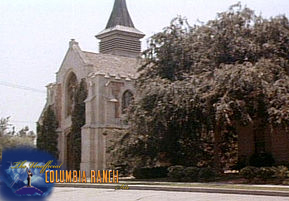
When thePartridge Family drives off for a show in their bus, you can often spot the
church which is just down the road from their home, across from The Stephens’
home on Bewitched. It was moved here
in 1953. When any of the series needed a church, this was the one. It can be
seen on an episode of Hazel when the
family attends church.
The Deeds Home
Photo: columbiaranch.net
Originally built for Frank Capra’s movie, Mr. Deeds Goes to Town in 1936, the house is only seen briefly in the movie. The Three Stooges filmed there in the thirties and forties. In the sixties it was seen in Batman. Both Gidget and The Partridge Family used the house as the high school and Bewitched used it as a civic building. In 1989, the original house was demolished. In its place, The Chester House and the Griswold House were built. The Griswold House was built for National Lampoon’s Christmas Vacation.
The Lindsay House
Photo: columbiaranch.net
Constructed in 1936, this house was best
known as the Baxter home on Hazel. It
also served as the Lawrence home on Gidget.
The Higgins House
Photo: columbiaranch.net
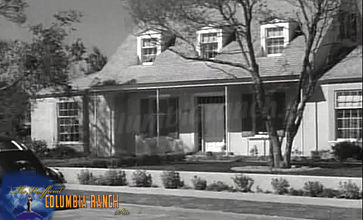
This structure was constructed for the show Our Man Higgins in 1962. It was later the home of Darrin and Samantha Stephens on Bewitched from 1964-1972. On I Dream of Jeannie, it was the home of Alfred and Amanda Bellows.
Photo: pinterest.com
For Bewitched, the interior and backyard scenes were filmed on a sound stage. The stairs ended in a hallway, but the doors only led to small closets, not the master bedroom. A modular first floor served as a setting for all the rooms. The den doubled as the nursery. A fake wall was put up to hide the view to the kitchen. When the den was needed, brown paneling was put over the nursery walls and the window was covered with a wall near the fireplace.
Photo: darkershadows.com
If you look closely, you’ll notice the avocado and gold flowered sofa in the Stephens’ living room was the same one used by Alfred and Amanda Bellows in their living room. But the shows shared well. On one episode of Bewitched, Louise and Larry Tate are seen at their kitchen table, but the kitchen looks identical to Major Nelsons’s. Roger Healey’s bedroom eerily resembled Darrin and Samantha’s.
Photo: youtube.com
Photo: pinterest.com
I guess I was too busy crying to notice that this house was also Brian Piccolo’s home in Brian’s Song.
The Partridge Family House
Photo: pinterest.com
The house across the street from the
Stephens’ house was home to Abner and Gladys Kravitz. During the filming of Dennis the Menace, it was Mrs. Elkins’
house. It was also the home of The Partridge
Family. In 1989 it became the Thatcher home on Life Goes On.
The home was built in 1953, modeled after a Sears, Roebuck & Co. plan. The modest two-story home was a perfect fit for the Partridges with its white, picket fence. The interiors were filmed at the Ranch as well. Located next door to the Blondie House, there were shrubs between the homes that were featured several times on the Partridge Family. In an episode where Keith shoots a movie, Shirley is clipping the hedges and begins dancing for the film, not realizing her neighbor is watching her. We see the hedges again when Keith moves into the room above the garage next door and gets free rent in return for yard work.
Photo: flickr.com
Photo: flickr.com
Because they were filming the show when the infamous fire broke out, some of the structure had to be rebuilt for the remainder of the series. From season 1 to 2, Danny and Keith’s bedrooms switch back and forth a couple times, and I wonder if this is the reason.
The Oliver House
Photo: columbiaranch.net
Constructed in 1935 for a movie, the Oliver house was moved to Blondie Street for the home of the Stone family in The Donna Reed Show. It was also the Mitchell home where Dennis resided with his parents.
The Little Egbert House
Photo: columbiaranch.net
Technically, Little Egbert is not on Blondie Street but on its own, Little Egbert Street, basically an alley. Fortunately, the 1970 fire did not damage any of the original structure. The house was also used in Minding the Mint and as The Shaggy Dog, the hangout for Gidget and her friends.
Photo: retrospace.org
For sentimental reasons, I would choose the Partridge Family home to live in. However, I would have to remodel the kitchen. I could live with the red breakfast table set. The avocado and gold flowered wall paper may have been very chic in its day, but even I am not that sentimental!
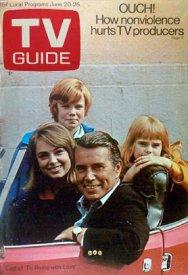
We continue our series with a salute to fathers looking at one of my favorite actors, John Forsythe in a little-remembered show, To Rome with Love.
Photo: en.wikipedia.org
The show debuted on CBS in September of 1969 and aired until spring of 1971. In 1967 Forsythe had starred in The John Forsythe Show and in the successful sitcom, BachelorFather, seven years before that.
Photo: pinterest.com The John Forsythe Show
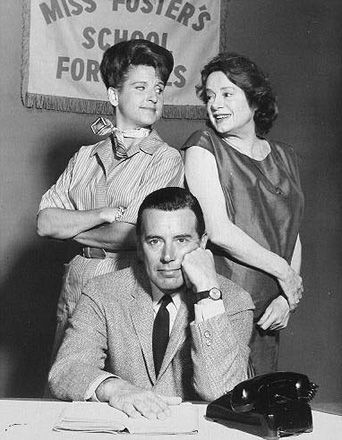
After the acclaim of Bachelor Father, The John Forsythe Show was a big disappointment. The premise of the show was that Forsythe as retired US Air Force Major John Foster inherits a private girls’ school in San Francisco. A buddy of his and former sergeant helps him run the school and they have conflicts with the principal Miss Culver. Forsythe once commented on it, saying “I choose to froget about that one. It was a disaster from the start. I hope the world forgets it too, especially the name.”
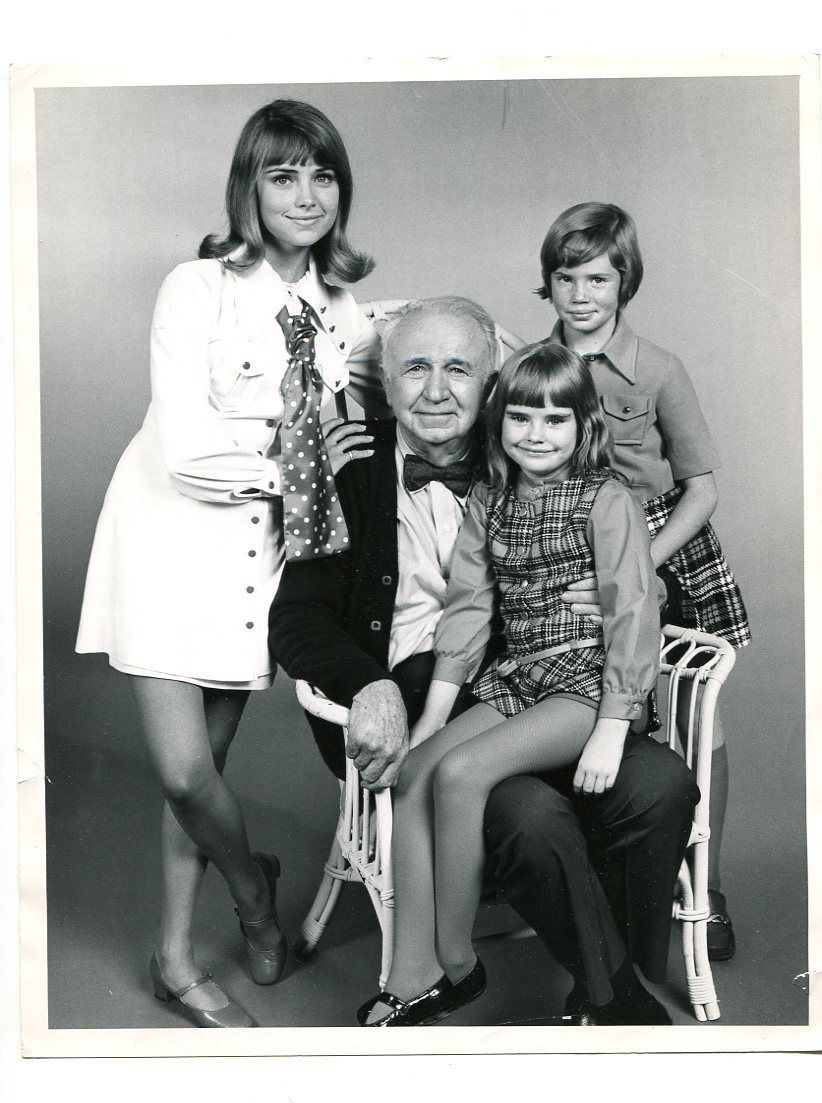
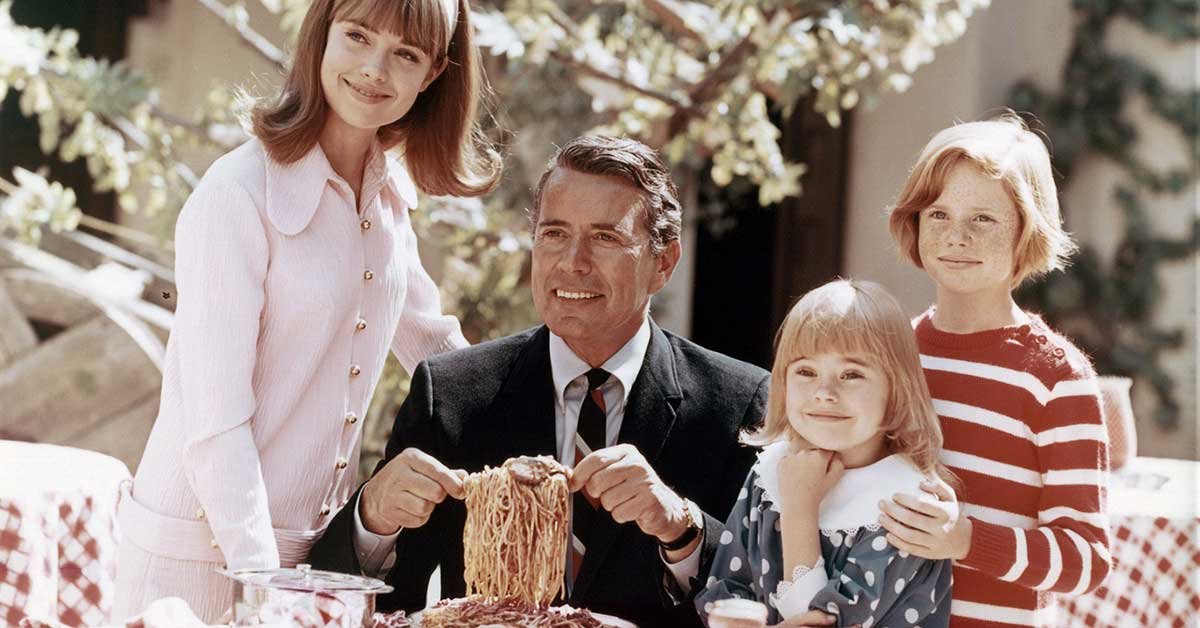
To Rome with Love also had a school setting. Forsythe played Michael Endicott, a widow with three daughters. He accepts a teaching position at an American school in Rome and relocates his family there from Iowa. His sister Harriet (Kay Medford) comes with the family for season one to help out. Endicott’s father-in-law, Andy Pruitt (Walter Brennan), comes to Rome to visit and ends up moving there during the second season.
Photo: nndb.com
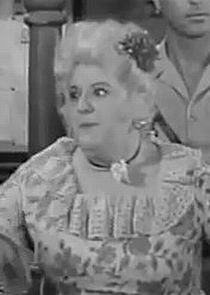
The oldest daughter is Alison (Joyce Menges), the middle is tomboy Penny (Susan Neher) and the youngest is Mary Jane, nicknamed Pokey (Melanie Fullterton). None of the girls continued in television past 1974. Menges had been a former tv and magazine model. She appeared in two films, one before (1967) and one after (1972) the show. Fullerton made an appearance on High Chaparral before this show and appeared in two movies (1972 and 1974). Neher had the most productive acting career. She was cast on Accidental Family before appearing on To Rome with Love. After the show, she would guest star on Young Lawyers, Getting Together, Love American Style, The Partridge Family, with her last appearance was on Paul Sand in Friends and Lovers in 1974.
Photo: allstarpic.famousfix.com
Photo: famousfix.com
Photo: famousfix.com
Photo: pinterest.com
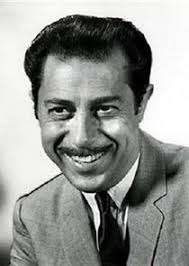
Rounding out the cast was Vito Scotti who played Mr. Mancini and Peggy Mondo who was Mama Vitale in Rome.
Photo: tvmaze.com
Photo: tvmaze.com
The show was on Sunday nights at 7:30 for the first year. It was up against Land of the Giants and The Wonderful World of Disney. The second year it switched to Tuesdays at 9:30 for the first half of the year on against movies of the week and then was moved to Wednesdays at 8:30 for the rest of the season. On Wednesdays it was up against The Smith Family and the Men from Shiloh. They were one-hour shows and To Rome with Love was on during the second half of both shows. The show never received the ratings the network had hoped for.
Photo: metv.com
Jack Gould reviewed the show before its debut. His comment was “the personable John Forsythe is the main asset of the series, but it is doubtful if he alone can overcome the handicap of imposing Hollywood nonsense on a city rich in drama and laughter and yet to be explored with understanding by TV. For the viewer, one solution is to turn off the sound and settle for incidental scenic background.” Donald Freeman from the San Diego Union called the show “all stereotyped and unfailingly pleasant.” Terrence O’Flaherty of the San Francisco Chronicle described it as a “giant pizza which appears to be filled with every situation comedy cliché in TV history and every Italian character actor south of San Luis Obispo. Dwight Newton of the San Francisco Examiner said it was “another little innocuous comedy drama series.” Apparently, viewers agreed with their opinions.
The combination of bad reviews and going up against Disney before moving to two different nights almost guaranteed its failure.
Photo: incredibleinman.com
Don Fedderson and Edmond Hartman produced the show. They were also the creative forces behind My Three Sons and Family Affair. An interesting concept was the cross-over episode. In season two, Anissa Jones and Johnnie Whitaker from Family Affair appear on the show on episode 4, “Roman Affair.” Episode 6 featured William Demarest, Don Grady, and Tina Cole from My Three Sons in “Rome is Where You Find It.”
After the show ended, Forsythe commented that his “fate is to be surrounded by ladies at home and at work which is not at all painful. I have a wife and two daughters at home. But on the television, I’ve always been unmarried. We might have started the single-parent trend with ‘Bachelor Father.’ Now the air is filed with widows and widowers raising children alone. There’s a reason for it. One unqualified parent dealing with children is more amusing because of the difficulty it presents.”
This sounded a bit exaggerated to me, so I went back to take a closer look at the shows that were on during the 1960s, and he was right. I always think of the typical sitcom as a nuclear family like the Donna Reed Show or Leave It To Beaver, but during this decade many shows were about adults. Think of Get Smart, The Joey Bishop Show, That Girl, The Odd Couple, The Mary Tyler Moore Show, or The Flying Nun. When shows were about families, the norm was almost to have a single parent. In addition to Bachelor Father, My Three Sons, and Family Affair, we had The Farmer’s Daughter, The Ghost and Mrs. Muir, The Doris Day Show,The Andy Griffith Show, Petticoat Junction, Gidget, and Julia. It wasn’t confined to sitcoms either; consider The Rifleman, Bonanza, and The Big Valley. The genre would continue into future decades as well. Some of the most popular shows featured single parents: The Partridge Family,The Courtship of Eddie’s Father, Nanny and the Professor,Diff’rent Strokes, One Day at a Time, Eight is Enough, and Alice.
Photo: dailymail.co.uk
Fortunately for viewers, Forsythe did not throw in the towel and retire into obscurity. Forsythe would go on to star as Blake Carrington on Dynasty.
We’ve all experienced that moment we’re at the grocery store and see someone we know, but we can’t remember their name or how we know them. Maybe it was work or school, or their kids were friends with ours. Sometimes we even remember we spent a lot of time with them and like them, but the name and relationship is just not there.
This month we are meeting some of our television friends that we’ve gotten to know, even if we can’t remember their names or what we watched them on. We’ll learn more about eight different character actors. We start off the month learning about Edward Andrews and Herb Edelman.
Edward Andrews
Photo: findagrave.com
I remember
Edward Andrews from Doris Day and Disney comedies. Anyone who grew up in the
1960s or 1970s will remember this military man with a grandfatherly softness to
him.
Andrews was born in Georgia in 1914. His father was a minister and their family moved a lot; he lived in Pittsburgh; Cleveland; and Wheeling, West Virginia. He had a very small part in a James Gleason production at age 12. He attended college at the University of Virginia. In 1935, he got his first part in a Broadway production, “So Proudly We Hail.” He continued in Broadway for the next twenty years, including a touring production of “I Know My Love” with Lunt and Fontaine. During that time, he took a leave from his career to serve in WWII. He was a Captain and commanding officer of Battery C with the 751st Artillery Battalion of the Army.
Photo: movieactors.com
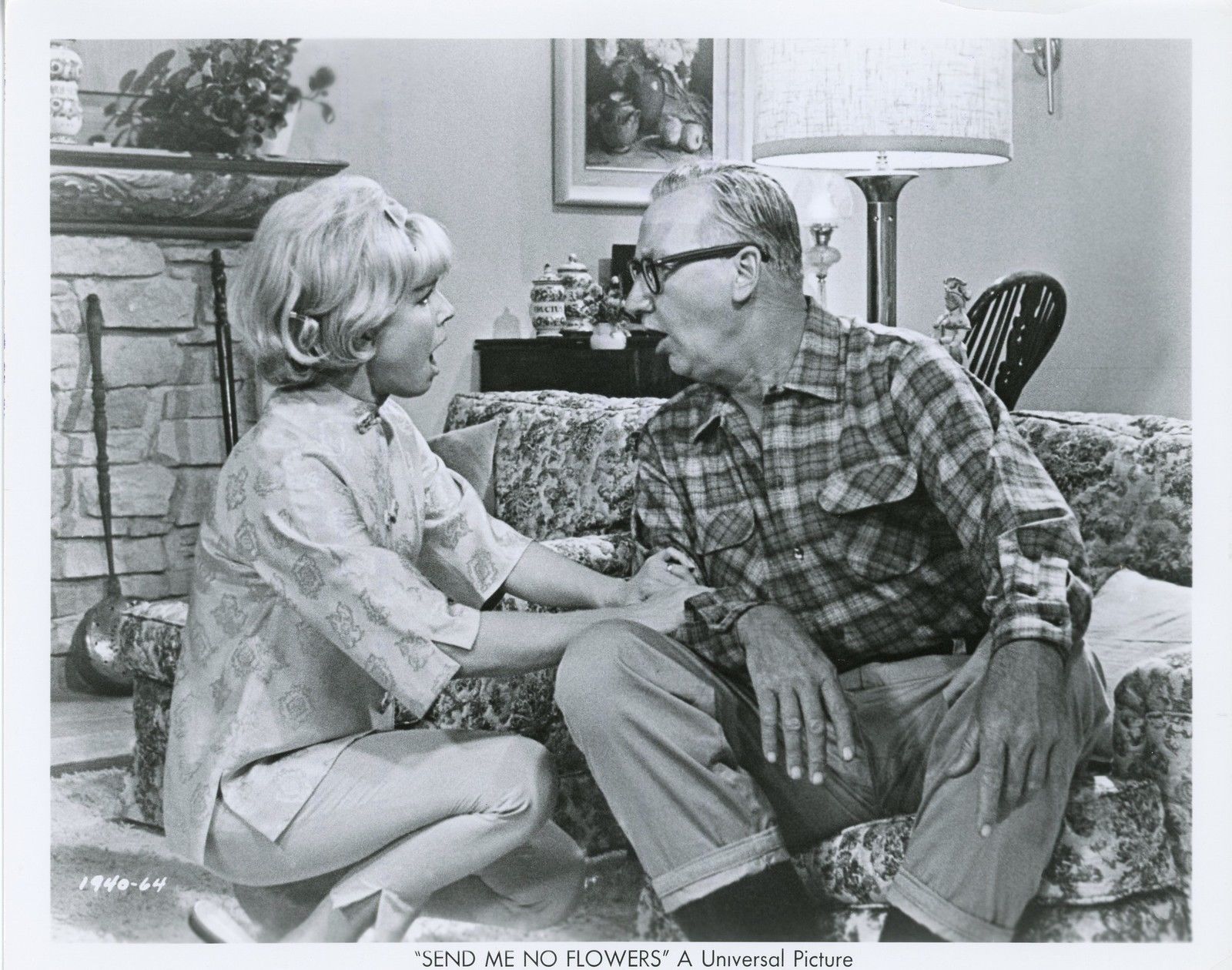
In 1955 he married Emily Barnes and they would have three children, remaining together until his death. About the same time, his movie career took off. Andrews looked older than his age which helped him get parts for older roles. He could play a grandfather, then turn around and handle a sleazy businessman or legalistic bureaucrat. He portrayed George Babbitt in Elmer Gantry in 1960. He worked for Disney playing the Defense Secretary in both The Absent-Minded Professor (1961) and Son of Flubber (1963). I remember him fondly in Doris Day’s movies, The Thrill of It All (1963), Send Me No Flowers (1964), and The Glass Bottom Boat (1966). One of his last roles was Grandpa Howard in Sixteen Candles in 1984. His movie credits totaled 46.
Photo: dorisday.com
Edward also kept busy with television appearances. One of the first actors to guest star on television, in 1950, Andrews was on Mama. As early as 1952, he began acting in the variety of drama shows on television. During the 1950s he would appear in eighteen of these shows including The US Steel Hour, Robert Montgomery Presents, Studio One in Hollywood, and Omnibus.
Photo: scsottrolling. blogspot.com On The Wild Wild West
He showed up in westerns including The Real McCoys, Bonanza, Gunsmoke, and Rawhide. We saw him on medical and legal dramas such as Ben Casey,The Defenders, The Bold Ones, Ironside, and Owen Marshall, Counselor at Law. Mysteries and crime thrillers also found a place for him. You might remember him from Naked City, The Wild Wild West, The Mod Squad, Hawaii Five-0, McMillan and Wife, and Quincy, ME.
Photo: pinterest.com
Like his films, he seemed to excel in comedy. Andrews played George Baxter in the pilot for Hazel, but unfortunately when the show went into production, the part was recast with Don DeFore. He would guest star in some of the most popular sitcoms, including The Phil Silvers Show, The Andy Griffith Show, I Dream of Jeannie, Bewitched, The Paul Lynde Show, Love American Style, The Bob Newhart Show, and Three’s Company.
Photo: pinterest.com
In 1964 he starred in Broadside. Commander Adrian (Edwards) is not happy when a group of Waves are posted to his station on the South Seas island Ranakai. His men no longer have focus, so he spends the series trying to get the women relocated.
In 1970 he had a recurring role on The Doris Day Show as Colonel Fairburn. He also starred as Harry Flood in the show Supertrain in 1979. Playing on the Love Boat and Hotel themes, the show was about a bullet train that had new passengers each episode.
Photo: imdb.com On Bewitched
Perhaps Andrews will be best remembered for his guest starring role on two Twilight Zone episodes, “Third From the Sun” (Andrews plays a company man who thinks a coworker William, a nuclear engineer, and his friend Jerry are going to steal a spaceship to leave Earth) and “You Drive” (Andrews hits a newspaper boy and then flees the scene, trying to hide the crime).
In all, he appeared on 118 different television series as well as made-for-television movies.
Photo: pinterest.com
Andrews enjoyed playing a character actor. He said it ensured more work and longevity in his career. He was quoted as saying, “What you get are people who speak to you. They know you from somewhere, but they don’t think of you as an actor. They stop and say, ‘Harry, how’s everything in Miami?’ I’ve learned by experience not to argue with them.”
In March of 1985, Andrews had a heart attack and passed away at age 70. With his white hair, and horn-rimmed glasses, Andrews was an adaptable character actor. Whether he was playing a lovable doctor, a nosy coworker, a fun-loving grandfather, or a despicable murderer, he was believable. He truly was a great character.
Herb Edelman
Herb Edelman, circa 1981 Photo: travsd.wordpress.com
Another fun actor
everyone will recognize is Herb Edelman. Herb was born in Brooklyn, New York in
1933 in the midst of the Depression. Tall, lanky, and prematurely bald, he
would go on to have a long career in movies and television.
Originally, Edelman wanted to be a veterinarian, and he went to school at Cornell but left after his first year. He served in the Army as an announcer for Armed Forces Radio. After he left the service, he started college again, this time studying acting at Brooklyn College. Once again, he dropped out. He made a living as a hotel manager and a cab driver.
Photo: cscottrollins.blogspot.com In Barefoot in the Park
In the mid-1960s he began both his film and television careers. Some of his best-known roles were in the movies. He played Harry Pepper, a wise-cracking telephone operator, in Barefoot in the Park and Murray the Cop in The Odd Couple, as well as Harry Michaels in California Suite.
Photo: movie-mine.com In The Odd Couple as Murray the cop
However, it was television where he received most of his work. In the 1960s, he began his career, appearing on a variety of shows, including That Girl, The Girl from U.N.C.L.E., and The Flying Nun. During these years he also dated and married Louise Sorel who he was wed to for six years.
Photo: en.wikipedia.com
In 1968, he accepted the role of Bert Gamus in The Good Guys. Bert and his friend Rufus (Bob Denver) open a diner, their dream. Bert’s wife Claudia (Joyce Van Patten) helped him serve customers.
In the 1970s, his career continued as he appeared in many shows every year. Some of the hit series we saw him on during this decade include Room 222, Bewitched, McMillan and Wife, The Partridge Family, Love AmericanStyle, Maude, Happy Days, Barney Miller, Kojak, and Charlie’s Angels.
Photo: sitcomsonline.com On Barney Miller
In 1976, he was again cast in a show, Big John Little John. Edelman was a middle school teacher who drank out of the fountain of youth on vacation. Afterward, he would randomly turn into a thirteen-year-old and worked to keep the secret from his friends and coworkers. The show was short-lived.
Photo: picclick.com
Edelman’s work schedule did not slow down in the 1980s. He would have roles in the cast of five television shows and spent time in between guest starring on other shows such as Trapper John, Highway to Heaven, The LoveBoat, and thirtysomething.
From 1980-81, he was cast as Reggie on Ladies’ Man, about a woman’s magazine with one male journalist. From 1981-82, he appeared as Commissioner Herb Klein on Strike Force. This show followed a strike force team that handles cases too difficult for the mainstream officers. The following year, he was Harry Nussbaum on Nine to Five, the show based on the movie about a group of office workers. From 1984-88, he was cast as Richard Clarendon on St. Elsewhere, a teaching hospital.
Photo: aveleyman.com On Murder She Wrote
Although his roles decreased in the 1990s, he had one of his most memorable roles during those years as Stanley Zbornak, Dorothy’s ex-husband, on Golden Girls; he was nominated twice for his role on the show.
In 1990, he played Sergeant Levine on Knot’s Landing. Knot’s Landing was a night-time soap about the lives of the wealthy who live in a coastal suburb of LA. His last recurring role was Lieutenant Artie Gelber on Murder She Wrote, about a mystery writer who helps solve crimes.
Photo: imdb.com On Golden Girls
Edelman died much too early in 1996 from emphysema at age 62.
Another character
who was unforgettable in his movie and television roles. Whether playing a repairman,
a cop, a teacher, or a ex-husband, he always came through as an authentic
actor.
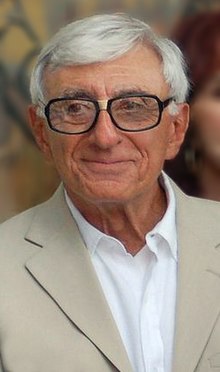
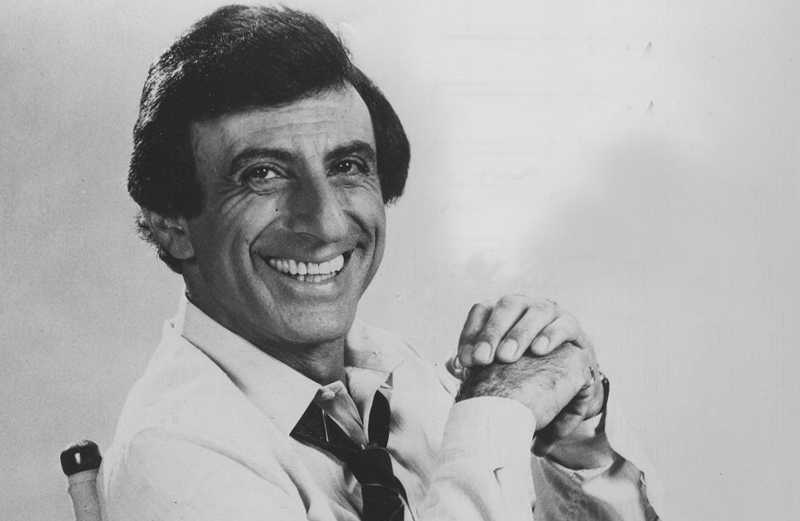
Jamie Farr was born Jameel Joseph Farah on July 1, 1934 in Toledo, Ohio. His mother was a seamstress and his father a grocer. They attended the St. George Antiochian Orthodox Church.
Farr’s first acting success occurred at age 11, when he won two dollars in a local acting contest.
He graduated from Woodward High School with honors and was named most outstanding student. In addition to writing and acting in two variety shows, he was a member of the Drama Society, class president for three years, feature editor of the school newspaper, president of the radio class, manager of the football and basketball teams and a member of the varsity tennis team.
Before becoming a successful actor, he worked for a lithograph company, a post office clerk, an army surplus store clerk, an airline reservations clerk, and at a chinchilla ranch.
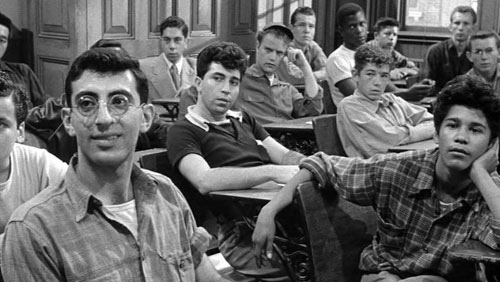
After graduation he attended the Pasadena Playhouse where a Metro-Goldwyn-Mayer talent scout discovered him, offering him a screen test for Blackboard Jungle. He won the role of the mentally challenged student, Santini. He was drafted by the United States Selective Service into the United States Army, undergoing his basic training with the 6th Infantry Division, Fort Ord, California, he served for two years, with service in Japan and Korea. The dog tags he wore on M*A*S*H were his own. (Alan Alda also served as a gunnery officer in Korea.)
In 1958, Warner Brothers cast him as the co-pilot of a TB-25 in the Andy Griffith military comedy No Time for Sergeants, which also brought the young TV comic Don Knotts to motion pictures. Farr appeared as Thaddaeus in the 1965 film The Greatest Story Ever Told, along with minor roles in Who’s Minding the Mint? and with future costar William Christopher in With Six You Get Eggroll. He would also appear in Cannonball Run and Cannonball Run II.
CANNONBALL RUN II, Jack Elam, (l.), Jamie Farr (r.), 1984, (c)Warner Bros.
In the late 1960s, he became a regular on the Red Skelton Show. He appeared in a variety of shows in the 1960s including Hazel, My Three Sons, Donna Reed, The Dick VanDyke Show, IDream of Jeannie, My Favorite Martian, Get Smart, Gomer Pyle, The Flying Nun, and Family Affair. Farr received roles in several commercials as well, including an ad for Wonder Bread where he says, “If it isn’t fresh, I’m outta business.”
During this decade, he also married Joy Ann Richards. They are still married and have two children.
He continued his television acting career through the 1970s appearing on a variety of shows including Room 222, Love American Style, Toma, Emergency, BarnabyJones, and The Love Boat.
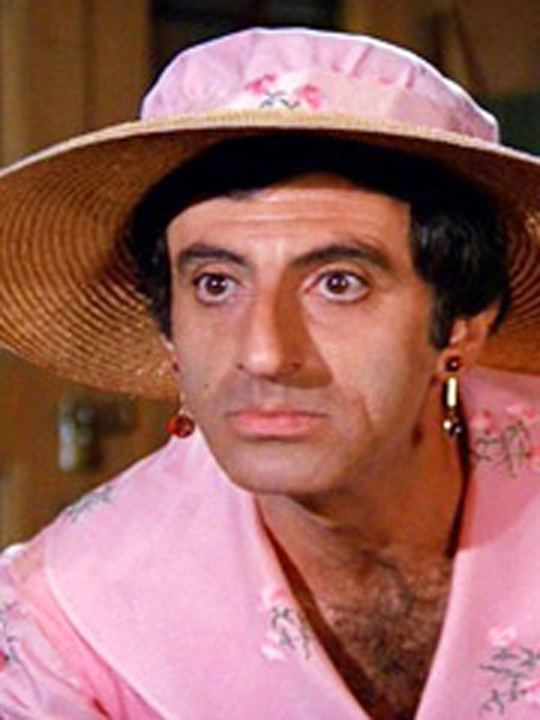
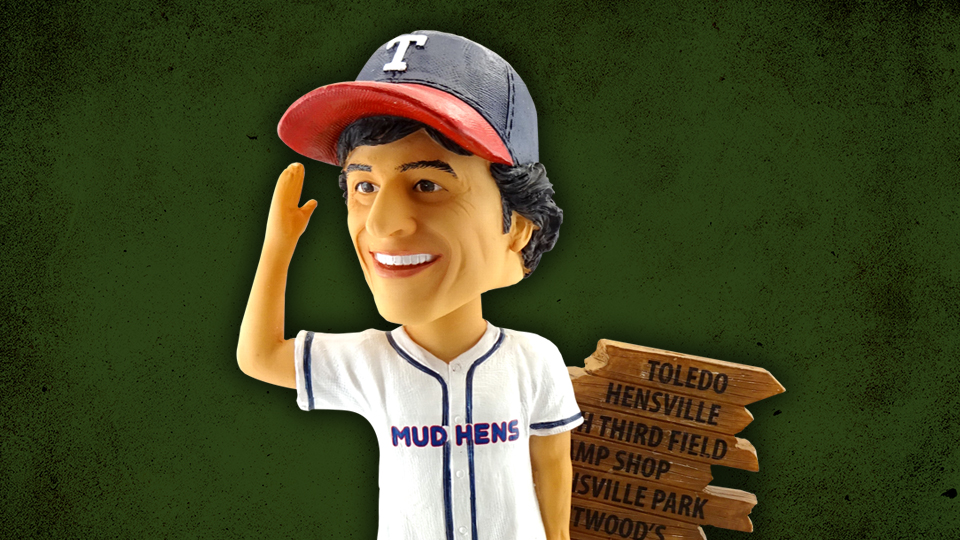
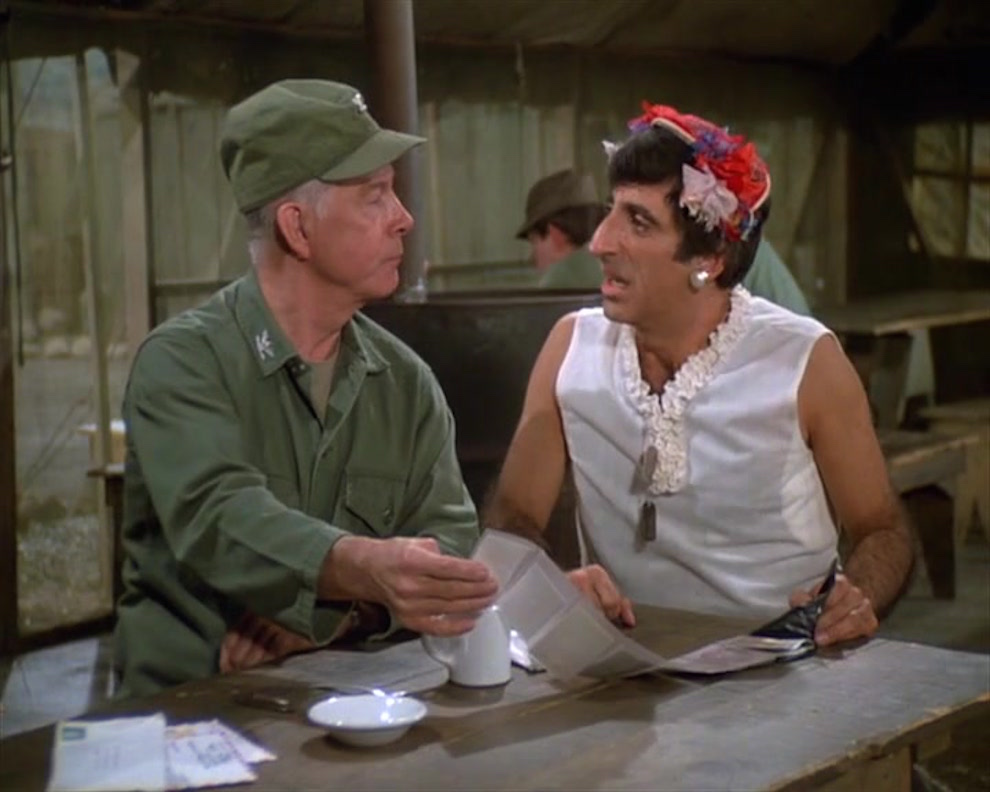
In October of 1972, he was hired to appear on one episode of M*A*S*H as Corporal Klinger. He wore women’s clothing, hoping to be discharged from the Army for a Section 8 discharge. He was asked back for the second season to appear in 12 episodes and became a regular cast member in the fourth season. When Radar left the show, and Klinger took over as Company Clerk, he stopped being fashionable and returned to uniforms. He said he did not want his kids to be made fun of because of his cross dressing. He was a resourceful and kind soldier. His character on the show was also from Toledo, and he often mentioned one of Farr’s favorite restaurants, Tony Packo’s Hot Dogs and talked about his love for the Toledo Mud Hens. (In 2017, he was inducted into the Mud Hens Hall of Fame. A bobble head was given to the first 2000 fans to the game that night.) He continued with M*A*S*H until 1983 when it left the air.
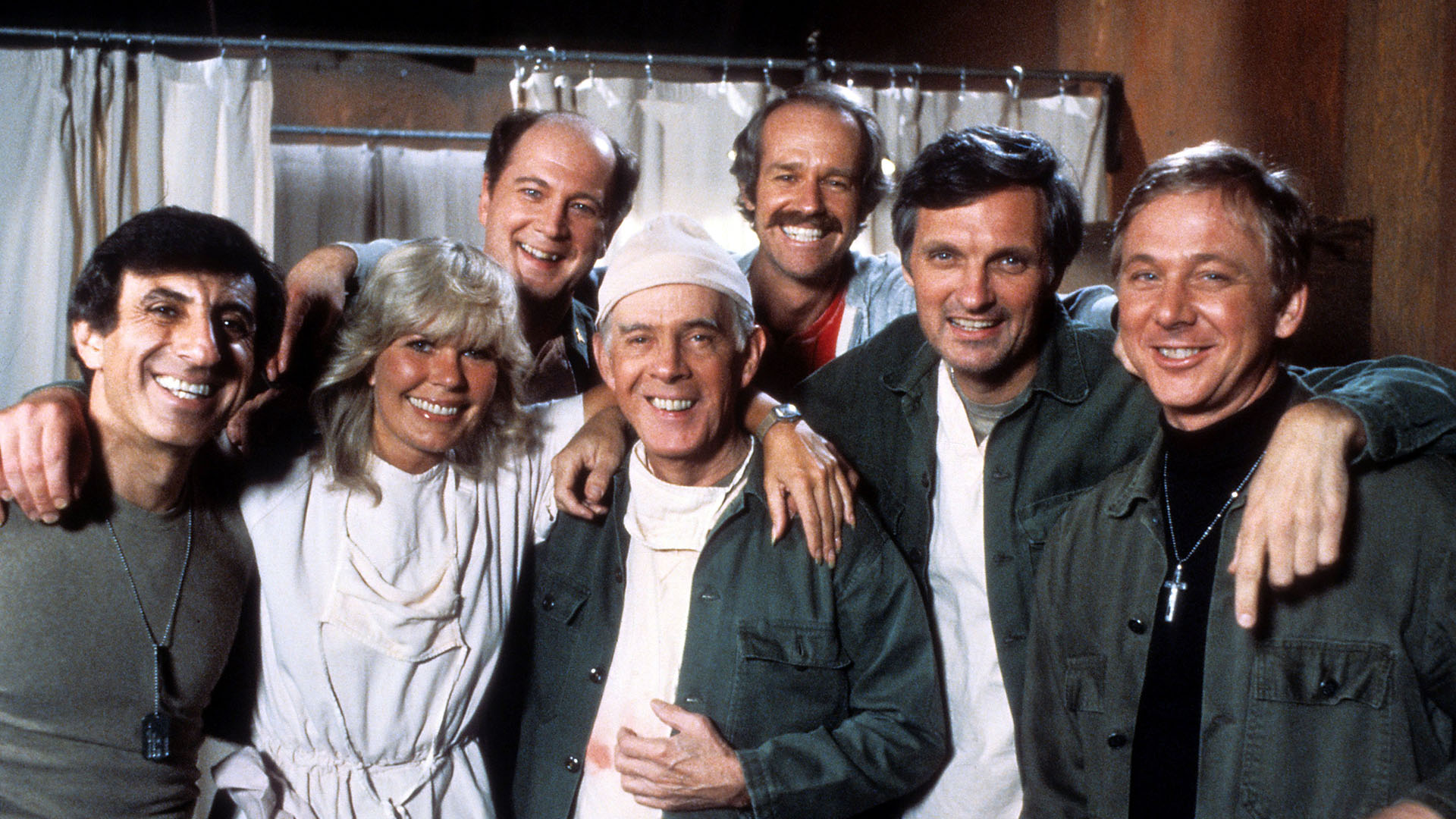
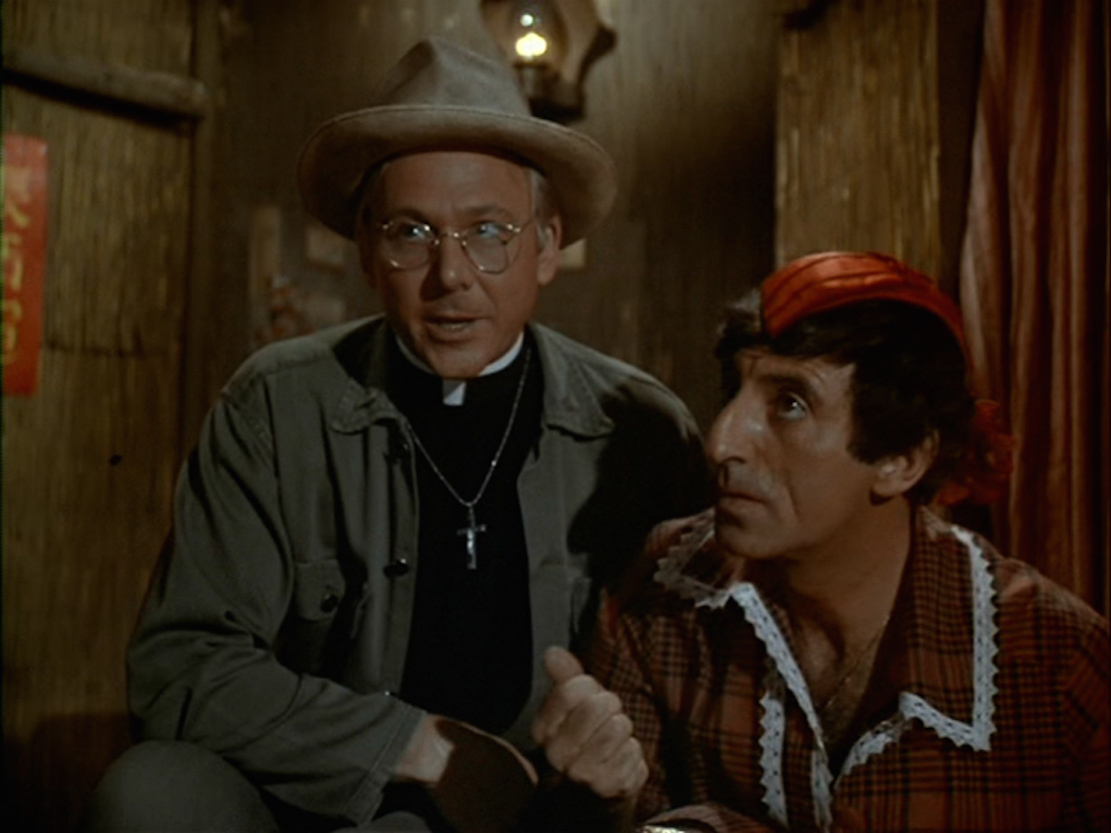
Along with Harry Morgan and William Christopher, he appeared in After M*A*S*H for two years. The show never got the fan base the original show had and was cancelled after 30 episodes.
The cast of both M*A*S*H and After M*A*S*H were very close. On the death of Harry Morgan, Farr commented, “Harry was very special to all of us cast members. Not only was he a wonderful performer that made such a difference … he was a dear friend to every cast member. He was absolutely a pixie, a gremlin as mischievous as all get out. You couldn’t be around Harry for very long without wanting to embrace him and I think our Lord will feel the same way.”
He also commented on William Christopher’s passing: “We are all devastated by our beloved Bill’s passing. I have known him for over 50 years. During the 1960s we lived in the same neighborhood in Studio City. My Joy and I would see him and his wife Barbara going for walks as we were going for walks. Bill and I did the very last Doris Day movie together, With Six You Get Egg Roll. We were both cast in the tv series M*A*S*H at almost the same time. He was a gentle soul and, in my opinion, probably the most under rated actor of all of us on the show. He was wonderful. During between set ups for camera angles Bill would read his Homeric book in Homeric Greek. He was a real egg head. He and his Barbara traveled the world and he would try to learn the language of the countries they were going to visit. He went to Egypt one year and tried his Arabic on me. He was better than I was. We used to imitate Bill on the set using his high-pitched voice. One time he came down with hepatitis, and when he returned to the series we had his actor’s chair painted yellow. Bill and I did a National Tour of the play “The Odd Couple” with Bill portraying Felix and me doing Oscar, Bill was at one time on the Board of the Devereaux Foundation for Autistic Children. It was a real honor to have had him and Barbara as friends and a great honor to have shared the tv screen with this gracious, talented and charming soul. May his memory be eternal. Rest in Peace Father Mulcahy.”
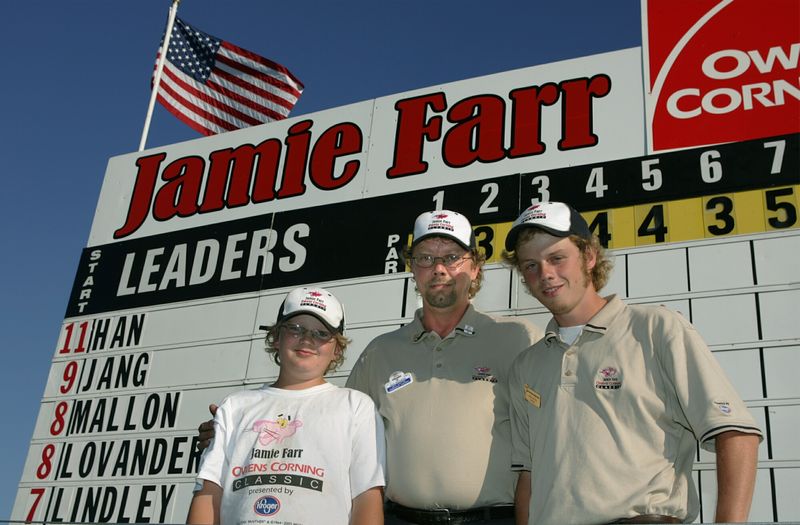
Like many celebrities who were typecast in a specific role, Farr realized there were advantages and disadvantages to his fame. He said that “the benefits from stardom as Klinger outweigh any setbacks. It’s a double-edged sword. What makes you famous is what interferes with getting other roles. But there are things that never would have happened without M*A*S*H. There certainly would be no Jamie Farr Kroger Golf Classic.”
Farr has always been generous with his hometown. The golf classic he discussed above is now the Jamie Farr Owens Corning Classic. The tournament has raised more than $6 million dollars for local children’s charities.
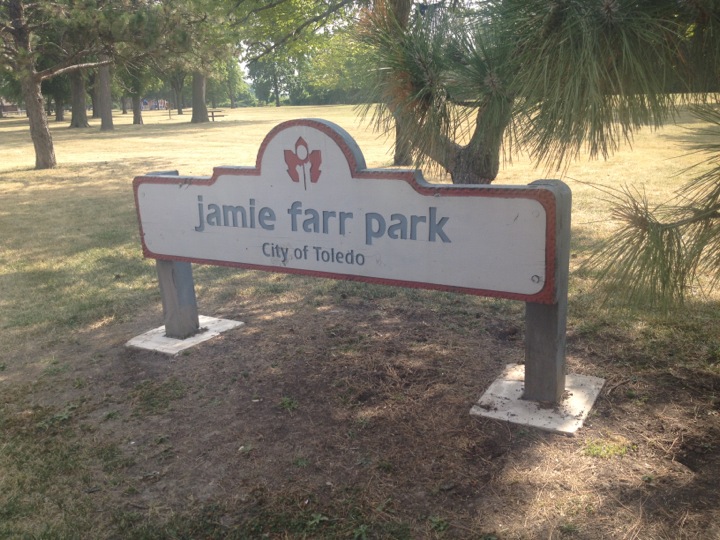
The city has shown its love for Farr as well. The park in Toledo where Farr used to hang out when he was younger was renamed “Jamie Farr Park” in his honor on July 5, 1998. About the park, he said, “I wanted to be an actor, a famous actor, and I wanted my hometown of Toledo, Ohio, to be proud of me.” Farr spoke to about four hundred admirers and was quoted in the New York Post: “Jamie Farr Park is certainly a highlight of my life and career.”
Farr also made a gift of his scripts to the University of Toledo. The scripts were from movies and television, including M*A*S*H, After M*A*S*H, The Blackboard Jungle, With Six You Get Eggroll, No Time for Sergeants, Who’s Minding the Mint, among others. He also donated call sheets with each script. Call sheets list the personnel and equipment needed for each day of productions, the scenes being filmed, shooting schedules, and the scenes to be filmed.
Farr has also appeared in plays during the second half of his career. In the 1990s, Farr played the role of Nathan Detroit in a Broadway revival of “Guys and Dolls.” Farr is still active in regional theater and guest-stars occasionally on television.
In 1996–97 Farr went on a national tour with “The Odd Couple,” playing Oscar Madison, playing opposite his old friend William Christopher in the role of Felix Ungar.
Most recently he was in the national touring production of “Say Goodnight, Gracie,” a one-man show about longtime entertainer George Burns.
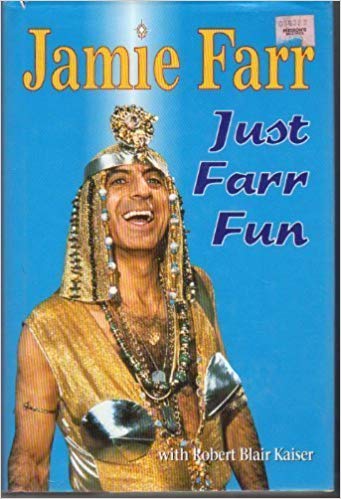
Farr has also tackled being an author. In 1994, he published his autobiography, Just Farr Fun. With his wife, he also wrote a children’s book, Hababy’s ChristmasEve, a Christmas book where the story is told from the view point of the animals.
Jamie Farr has had a successful and fun career. He has been a movie star, a television celebrity, an author, and a Broadway performer. He was not bitter about his role as Klinger but accepted the benefits that came with it and made the most of it. He has also been generous, raising money and publicizing Toledo. He truly sounds like a very nice man. It was fun to learn more about his life.











































 thewritelife61