“Oh, Millie”: The Career of Ann Morgan Guilbert

Anyone who watched the Dick Van Dyke Show knows that the supporting cast was a big part of the show. While Sally and Buddy helped Rob come up with the perfect jokes at work, Millie and Laura were a great comedy team at home. Ann Guilbert continued to find other great supporting roles after the show ended. She was still fine-tuning those roles when she passed away in 2016. She was then playing a grandmother on Life in Pieces.

Ann Morgan Guilbert was born in Minneapolis, MN in 1928. She was an only child and her father worked for the Veterans’ Administration. He moved the family around for jobs quite often. Growing up, she lived in Tucson, AZ; Asheville, NC; Livermore, CA; and El Paso, TX. The family was in Milwaukee, WI during her high school years.

Until she was 14, Ann wanted to be a nurse, but from that time on, she knew she had the acting bug.

When her father took a job in San Francisco, Ann decided to go with her parents and attended Stanford University where she majored in theater arts. Her first part there was as Topsy in “Uncle Tom’s Cabin.” She realized that she liked to make people laugh.

Photo: hollywoodreporter.com

While in school, she met fellow major George Eckstein. They married in 1951. Although they majored in theater arts, George went to law school and Ann worked as a legal secretary. During the summer when George was off, they went to Ashland, Oregon for the Shakespeare Festival where she specialized in playing “nutty” ladies. George was drafted and sent to El Paso; Ann went with him. She was involved in the Little Theater there.

When Ann joined the Screen Actors Guild, there was an actress named Ann Gilbert, so Ann was asked to change her name. She went with her real name, Ann Morgan Guilbert. Morgan was her mother’s maiden name. (Her mother was related to Mayflower passenger William Brewster.)

George practiced law for a short time and decided he wanted to get back into the entertainment business. He got a job producing The Billy Barnes Revue. Ann had a part in the show and Carl Reiner saw her in that performance in two different cities.

Before The Dick Van Dyke Show, Guilbert made three appearances on television on My Three Sons, Hennessey, and Alfred Hitchcock Presents.

Jerry Paris, who played her husband on The Dick Van Dyke Show, had been a friend of her and her husband for a long time. He took Ann in to audition for the role of Millie, his wife. She was hired and was on the show for the entire five years it was on the air. Millie was based on one of Reiner’s neighbors from New York who would do things like take out the garbage on the wrong day or paint herself into a corner of a room. She said she wasn’t given a contract for the first two years. During the third season, Reiner wanted to provide her with one, but she said things had been going along well enough.

Photo: nytimes.com

Ann became pregnant early in the first season. She was afraid to tell Reiner, worrying she would be replaced because it was so early in the show’s life. However, he was very happy for her, and they hid her pregnancy behind large tops or props. That baby is actress Hallie Todd, who is best known as Lizzie’s mother on Lizzie McGuire. George and Ann would have another daughter Nora, an acting teacher and writer.

Ann’s favorite part of the show was Thursdays when the cast would sit around the table with the writers to look at the new script. Ann thought their writers were hysterical. Some of them included Reiner, Garry Marshall (who would go on to create The Odd Couple, Happy Days, Laverne and Shirley, and Mork and Mindy), as well as Bill Persky and Sam Denoff (who wrote for many shows, including That Girl.) Everyone had a say in the script and could throw out one-liners or make suggestions.

The Dick Van Dyke Show ended in 1966 and that same year George and Ann divorced. George was best known for being the writer and producer of The Fugitive.

Photo: weaversdepartmentstore.com

Guilbert said she never watched the reruns much. She recalled, “When I do see them, it seems like it never happened. I just can’t remember it at all.” Once the show ended, Ann, like so many fellow actresses, was typecast as Millie. During the 1970s and 1980s, she would guest star on some of the best sitcoms on the air including The Andy Griffith Show, I Dream of Jeannie, Room 222, The Partridge Family, Love American Style, Barney Miller, Cheers, and Newhart.

In 1969 Ann married character actor Guy Raymond. About that time, she decided to give Broadway a try. Her daughter said Ann loved performing on stage and that is when she felt her career was most important. She appeared in “The Matchmaker,” “Arsenic and Old Lace”, “Waiting for Godot”, “To Kill a Mockingbird”, “Harvey”, “Green Grow the Lilacs”, among others. She won the Helen Hayes Award for Outstanding Lead Actress in a Non-Resident Production in 1988 for her role of Alma in “The Immigrant: A Hamilton County Album”.

She also appeared in eight movies during her career including A Guide for the Married Man, Viva Max!, and Grumpier Old Men.

Photo: imdb.com

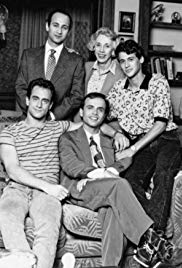
But Guilbert didn’t give up on television. In 1990, she starred in The Fanelli Boys. Ann played Teresa Fanelli. She is a recent widow living in Brooklyn and heading for Florida to live when her adult boys all move back in. Frankie is a ladies’ man, Ronnie dropped out of school, Dom is a scammer, and Anthony runs the family business, a funeral home which is $25,000 is debt. Teresa’s brother Angelo is a priest who gives advice to the boys, but not always good advice.

Photo: syracuse.com

She made several guest appearances in the 1990s but had recurring roles on Empty Nest, Picket Fences, and Seinfeld.

Photo: today.com

The role many younger tv fans know her best is Yetta in The Nanny. She would join the cast, appearing in 56 shows between 1993 and 1999. She had fun doing the role. When she met with the wardrobe staff, they decided she would dress outrageously. She was able to wear sequined jackets, jazzy pants, and crazy tops. She also appreciated working with Ray Charles, who played her boyfriend.

During this time, her second husband passed away in 1997.

Photo: express.co.uk

Ann would continue guesting on shows into the 2000s, including Grey’s Anatomy in 2015 and Modern Family in 2013. She also was cast in the show Getting On from 2013-2015. This was a dark comedy on HBO that took place in the geriatric wing of a financially failing hospital. Laurie Metcalf of Roseanne and The Big Bang also was part of the cast.

MODERN FAMILY – “ClosetCon ’13” – With some urging from Claire, Jay begrudgingly agrees to return to ClosetCon this year, and things get interesting when Jay is reunited with some old colleagues. Cam takes Mitch and Lily to the Tucker family farm for the first time and is excited to fold them into country life, that is until Grams pays an unexpected visit. And back at home, Phil, Gloria and the kids get into some mischief involving Jay’s very delicate Apollo 13 spacecraft model, on “Modern Family,” WEDNESDAY, NOVEMBER 20 (9:00-9:31 p.m., ET), on the ABC Television Network. (ABC/Ron Tom) ANN GUILBERT

Her last series was Life in Pieces. She played Gigi, Joan’s mother. She was in two episodes before she passed away in 2016. One of the episodes, “Eyebrow Anonymous Trapped Gem” was dedicated to her memory. In a tribute to her, each of the four stories involve her character.

Photo: mashable.com
Unfortunately, her Yetta character and Ann both refused to give up smoking.

Her doctor had been trying to convince her to give up her several-pack-a-day cigarette habit, but she refused and talked about it often. She died from cancer at age 87.

Cheers to a funny lady who kept us laughing for more than fifty years.

Catch This Phrase: Memorable Expressions From Our Favorite Shows

We all have those family members who seem to find fun catch phrases which get repeated by friends. Then there are those relatives who say something that drives us crazy and overuse expressions. That is what we’re talking about today: catchphrases from our favorite television shows. I prepared a list of twenty phrases that caught on with viewers. What seems strange to me are expressions that come from a series or movie that were never actually said. For example, “Play it again Sam,” from Casablanca is a well-known phrase. However, that line was never said in the actual movie. You often hear someone say, “Beam me up Scotty,” but once again, it was never said in Star Trek. The closest line was only used once, and it was, “Beam us up, Mr. Scott.”

I’ll list these memorable phrases by shows alphabetically and tell you how often they were used: none, one, fun, or overdone. I also rate them: green light means I like it, yellow if it was getting close to being overkill, and red for those expressions that never should have been used at all. Here we go.

Photo: thefamouspeople.com

The A Team – Pity the fool

Mr. T often says this on commercials, public appearances,and as a guest on other shows, but he never said it on The A-Team. Mr. T explained how this phrase came about on the Conan show one night, “When you pity someone, you’re showing them mercy. I didn’t start this pity stuff, it was in the bible. You’ll find pity so many times in the Bible and fool so many times, so I put ‘em together. Pity the fool,” Mr. T said. He added, “Lotta guys in the Bible [were] asking for pity. And then a lot of them were saying, I did a foolish act. So, I put ‘em together.”

Not only has he trademarked the phrase, but he actually had a series developed around the phrase which was the title of the show. It aired in October of 2006 and was off the air by November 6, so I pity the fool who stuck money into it.

Rating: None, Green– I can’t really give it a light because it was never used but it was a good expression at the time.

Photo: throwbacks.com

Alf – I kill me

The Tanner family members weren’t often amused by Alf’s jokes. When no one responded or someone shook their head at him, he was often heard to say, “I kill me.”

The phrase was so popular, a poster and a t-shirt were sold featuring it.

Rating: Fun, Green – I also thought Alf was pretty funny, even when the Tanners were not as impressed.

Photo: pinterest.com

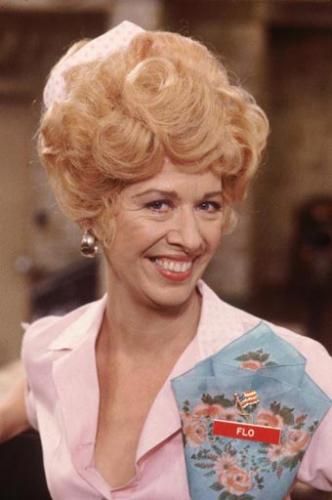
Alice – Kiss my grits

While Flo was a warm-hearted person who would do anything to help a friend, or Mel, she didn’t take any sass from anyone. Whenever someone did something to irritate her, she responded, “Kiss my grits.”

Rating: Overdone, Yellow– Only Flo could get away with using the phrase so often, but it did become a bit too much.

Photo: youtube.com

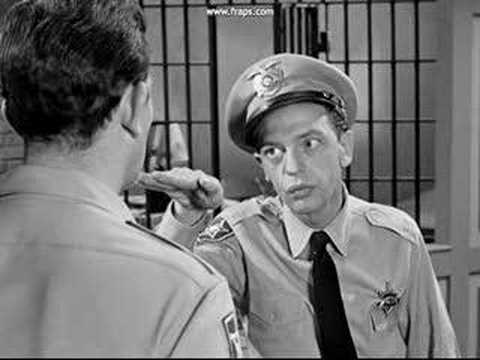
The Andy Griffith Show – Nip it in the bud

Barney liked being on top of situations and being in charge.When something happened whether it was questionable behavior by Opie or a dangerous criminal activity being plotted, he was heard to say, “Just nip it, nip it in the bud.”

Rating: Fun, Green –Barney Fife was just a great character.

Photo: nme.com

Big Bang Theory – Bazinga

Sheldon learned about sarcasm during season 2 of the show. Whenever he said something sarcastic or something that proved others wrong in a humorous way, he would utter, “Bazinga.” The first time he used it, it was not actually in the script, but he added it and it stuck.

Rating: Fun-ish, Green– I added the “ish” because it can be overdone some shows

Photo: imdb.com

The Brady Bunch – Marcia, Marcia, Marcia

Jan didn’t like being the middle child. While Cindy was the cute younger one and Marcia the pretty older one, Jan often felt left out. When she was upset Marcia was getting attention or doing something she wanted to do, she would pout, “Marcia, Marcia, Marcia.”

In the Season 3 episode, “Her Sister’s Shadow,” Jan said, “all I hear all day long at school is how great Marcia is at this or how wonderful Marcia did that. Marcia, Marcia, Marcia!”  Jan did not say the phrase much, but viewers sure did.

Rating: One, Green – I think every middle child understood what Jan meant. Apparently, viewers loved it, because it is an iconic quote for being only said one time. Actually, I always thought Jan was the cool one.

Photo: tvseriesfinales.com

Columbo – Just one more thing

When the bad guy thought he had gotten away with a crime, Columbo would often turn around and say, “Just one more thing,” and that “thing” was usually the evidence he needed to arrest someone.

Rating: Fun, Green – Even when we knew it was coming, it was fun to see how the villain of the week realizes he has been found out.

Photo: imgflip.com

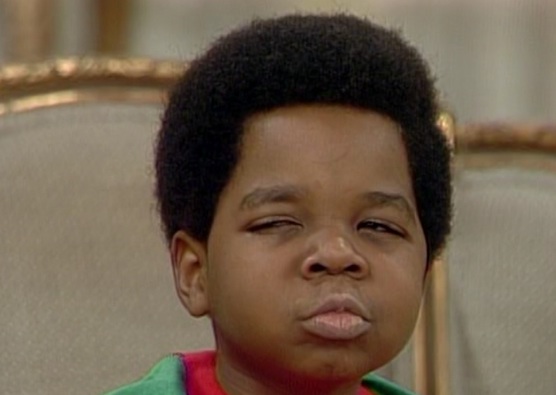
Diff’rent Strokes – What you talkin’ bout Willis?

Arnold was the “cute” kid in the Drummond family and often made others laugh. Whenever Willis said something Arnold didn’t want to do or thought should not happen, he would look at his brother and say, “What you talkin’ ‘bout Willis?”

Rating: Overdone, Red– Ok, I know I have a bias because this was one of those Norman Lear shows my readers know I don’t care for, but I do remember at the time, it was used a bit too often on the show. There is a fine line between defining a character and stereotyping a character.

Photo: tenor.com

Friends – How you doin’?

Joey was definitely the ladies’ man on Friends. He was always searching for his next social conquest. When he met a girl he wanted to get to know better, he often drawled, “How you doin?” It was a basic pick-up line, but he was so good looking, it almost always worked. While it became his catchphrase, it was not used for the first time until Season 4.

Rating: Fun, Yellow – It was a fun expression that is still used today but it was getting close to being overused.

Photo: bustle.com

Full House – Have mercy

Typically, it was Uncle Jesse who said, “Have mercy,” but occasionally another character would use it. He says Garry Marshall always told him he needed a catch phrase. He took on “Have mercy,” and it was probably one of the most-used phrases ever during the run of the show.

Rating: Fun, Green– I can still hear the exact tone of his voice whenever he used the line.

Photo: bondsuits.com

Get Smart – Missed it by that much

Maxwell Smart often messed up a spy mission, and 99 always saved the day. Often when the bad guys were put away and he was analyzing what had gone wrong, he would say, “Missed it by that much” which usually meant he was nowhere near to taking care of business.

Rating: Fun, Green– Everything on this show was fun and there were enough catch phrases that none of them took over.

Photo: tvparty.com

Good Times – Dy-no-mite!

The Evans were a close-knit family who lived in the projects. JJ was an artist and the class clown. His favorite expression was “Dy-no-mite!”

He revived his catch phrase in several Panasonic commercials in the mid-1970s.

Rating: Overdone, Yellow– Sorry, it’s my Norman Lear bias again, but I feel like not only did JJ Evans overuse this phrase, but you heard it from viewers everywhere you went. I agree that imitation is the sincerest from of flattery, so it worked, and people liked it, but I thought it was overdone.

Photo: people.com

Happy Days – Sit on it

I think every cast member used the phrase “Sit on it” at one point or another. It was said when someone said something or insinuated something a character didn’t like.

Rating: Overdone, Yellow– This was a fun phrase when it started but it was overused and overused by everyone on the show.

Photo: memorabletv.com

Hawaii Five-O – Book ‘em Danno

The original Hawaii Five-O would end each arrest with Steve saying “Book ‘em Danno.” They did not resurrect the phrase for the current Hawaii Five-0. However, if you were watching the November 30th episode in 2018, you saw the conclusion of an older cold case homicide and a comic book created the ending to the mystery and in the book, McGarrett did say, “Book 
’em Danno.”

Rating: Overdone, Green– It was over used although it did not occur on each episode, but I gave it green because it worked and fit the situation when it was used.

Photo: theherald.com.au

Hogan’s Heroes – I know nothing

Sargent Schultz began saying “I know nothing” when he didn’t want to answer questions Hogan asked him. He realized Hogan could always get him to talk by offering him food of some type. Later, the prisoners were not afraid of telling Schultz things they were doing or planning to foil the Nazis’ plans, and whenever he heard them talking about an upcoming mission, he also emphatically said, “I know nothing.”

Rating: Fun, Green– Schultz said it a lot but that was fitting for his character.

Photo: cbsnews.com

The Honeymooners – Bang, zoom, to the moon, Alice

This particular phrase is quoted a lot. Actually, Ralph Kramden had many similar expressions such as Bang, zoom” or “To the moon Alice,” but they all had similar wording and inferred that he was threatening her. The phrase would not go over well in a show today. However, Alice was never worried. She knew Ralph loved her and was all bark and no bite. Of course, one of the expressions he also used in a lot of shows was “Baby, you’re the greatest.”

Rating: One, Red – I only saw one episode that used the exact wording that has become a quote of the show. While I know it was innocent fun back then, I can’t say I was ever fond of the expression.

Photo: dga.org

I Love Lucy – Lucy, you got some ‘splaining to do

Lucy always had some type of scheme in the works to get something she wanted. Often, it was something her husband had forbidden her to do. When he found out what she was up to, he often said, “Lucy, you got some ‘splaining to do” in his Cuban accent. Like Ralph Kramden, he rarely said this exact phrase; instead, he would tell her to “splain what happened” or “try to splain why you are here” or something along those lines. Viewers picked up on the exact wording that gets repeated still.

Rating: One, Green – Desi used similar words but not this exact phrase. However, when he used it, it was always an appropriate use because Lucy had done something that did need to be explained.

Photo: wvxu.org

Laugh In – Sock it to me

Because so many people on the show say, “Sock it to me” started by Judy Carne, it has become a famous line. Of course, the celebrity who got the most attention saying it was Richard Nixon.

Rating: Fun, Yellow– It was still fun because it was used in different situations and with different celebrities but if the show had continued, it might have been overdone.

Photo: refelctionsonfilmandtelevision.blogspot.com

Lost in Space – Danger Will Robinson

Even kids who never heard of Lost in Space, quote “Danger Will Robinson” when they want to warn someone about an issue. The funny thing is it was only said one time on the show, but like The Brady Bunch, viewers have made it their own and it is now part of our lexicon.

Rating: One, Green– Although it was only said once, viewers have made it into a well-loved expression.

Photo: purpleclover.com

Welcome Back Kotter – Up your nose with a rubber hose

This was probably one of the most unusual catch phrases. The Sweathogs gave the image that they would not put up with nonsense and they made the rules. One of Vinnie Barbarino’s favorite insults was “Up your nose with a rubber hose.”

Rating: Fun, Green– I was not a huge fan of Welcome Back Kotter, but the phrase fit Barbarino, and he had enough other expressions, it was not overused.

I hope you had fun looking back at some of the expressions we grew up with in the 1960s, 1970s, and 1980s. It’s interesting to think about what current shows will produce catch phrases that kids will still be using in 2050.

Earle Hagen Whistles a Happy Tune

We don’t often notice music in the background of our favorite shows, but it has a significant impact on our appreciation for a series. One of my favorite CDs in the 1980s was the music from thirtysomething. I admit I didn’t often pay attention to the music while watching the show, but I loved listening to the soundtrack.

hagen14

Photo: findagrave.com

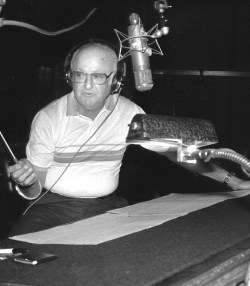
Today we get to spend some time learning about one of the most prolific songwriters in the television industry: Earle Hagen. Earle was born in the Midwest in 1919, in Chicago, but moved with his family to Los Angeles. He began playing the trombone in junior high school.

At age 16 he left home to play with some of the best big bands in the country: Tommy Dorsey, Benny Goodman, Ray Noble.

hagen2earlhagen.net

Photo: earlehagen.net

During his time with Noble, when he was only 20, Hagen composed the song “Harlem Nocturne” as a tribute to Duke Ellington and Johnny Hodges. It would be recorded by numerous musicians over the years and later was adopted as the theme for both Mickey Spillane’s Mike Hammer and The New Mike Hammer.

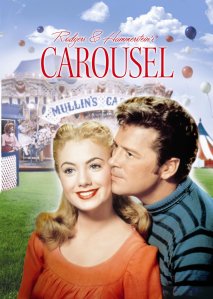
In 1940 Earle was hired by CBS as a staff musician. Like many of the composers we have been learning about, Hagen enlisted in the military for World War II. When he came home, he became an orchestrator and arrangement writer for 20th Century Fox. He worked on a variety of films including Gentlemen Prefer Blondes and Carousel.

In 1943 he married Lou Sidwell, a big band singer. They would remain married until she passed away in 2002 and produce two sons.

When Earle accepted the Irwin Kostal Tribute Award in 2000, he explained that “In 1953, the studios committed to large screen production and we went from 38 pictures a year to one. There were other pictures on the planning board but not immediate enough to support the huge studio staffs. So, along with 1199 other people, I migrated to television.”

The first show he worked on was a short-lived series, It’s Always Jan which was on the air from 1955-56.

Then Hagen met Sheldon Leonard. As he says, “There again my good fortune held. I teamed up with Danny Thomas and Sheldon Leonard at a time when they were starting a string of hits that lasted 17 years.” Earle wrote the theme for Make Room for Daddy.

Those 17 years were busy. Leonard initiated the practice of using original music for sitcoms, so a lot of background music was required. Hagen said that during that era, the composer was part of the creative team. His opinion was asked for and respected in pre-production, production, and post-production.

He loved working in television. He said that there was “something about the immediacy of TV that I enjoyed. It was hard work, with long hours and endless deadlines, but being able to write something one day and hear it a few days later appealed to me. I think a statistic of which I am most proud is that in the 33 years I spent in television I was associated with some three thousand shows. Every one of them was recorded in Los Angeles with a live orchestra.”

His work continued with Leonard, and he wrote the theme song for The Dick Van Dyke Show.

hagen6

Photo: brioux.tv

Then Sheldon asked him to come up with a theme for a show about some gentle town folks and their sheriff. Earle said he struggled a while trying to come up with the perfect theme. As he described the process: It’s like “peeling an onion. Half of coming up with something good is throwing away what’s not.” Finally, he had a brainstorm and “he simply whistled the catchy tune which entered his head.” It’s the whistling of Hagen we hear on The Andy Griffith Show when we hear “The Fishin’ Hole.” Despite the difficulty of coming up with the theme song, Hagen enjoyed his time with The Andy Griffith Show. He said, “I guess my favorite show . . . was The Andy Griffith Show. It covered the spectrum from warmth to complete zaniness. It also was easy to write. Worthwhile, when you are doing four or five different series a week.”

hagen5

Photo: mtairynews.com

He went on to work on several shows in the 1960s, including The Bill Dana Show, That Girl, Accidental Family, Gomer Pyle USMC, Mayberry RFD, and The Mod Squad. Hagen based the Mod Squad theme on Schoenberg’s 12-tone scale which added some tension to the scenes, along with a jazzy theme song.

Hagen’s songs are some of the most recognizable ones in television. However, his most innovative and beautiful scores were done for a show that is not remembered much today, I Spy. Leonard wanted original soundtracks for each episode. This humorous spy show was filmed in locations all around the world, so the music had to vary as well.

hagen9

This was the first show to star an African American. Bill Cosby and Robert Culp were spies who took on assignments around the globe. I would like to say that the reason for the lack of the show being rerun is due to Bill Cosby and the poor personal choices he made which has resulted him being sentenced to jail and the shows he was involved with disappearing from television schedules. However, I rarely remember this show being available even before Cosby’s criminal trials, and I’m not sure why that is. In 2008, all three seasons of DVDs were released.

On the website earlehagen.net, we read that “During the run of the series he amassed one of the most comprehensive collections of ethnic music in existence at that time–some of it on commercial records bought in the countries he visited with the production team, but much of it taped live in situ with local musicians. These recordings containing priceless material of musical genres never before recorded, and in some cases, now extinct, were then mixed into the background music produced by the studio orchestra in Los Angeles.  The result was what has been deemed ‘the richest musical palette ever composed for any American television series.’ ”

hagen10

Photo: desertnews.com

Sheldon relied on Hagen to literally scout the world for filming locations. The couple visited Japan, Hong Kong, Bangkok, India, Israel, Greece, Italy, France, and New York. Hagen discussed this trip. “Before the show started, at Sheldon Leonard’s invitation, Lou (my wife of 58 years so far), and I were invited to go on a `round the world trip with the Leonard’s scouting locations for the upcoming series, I Spy. On that 52-day trip we traveled first class, stayed in first class accommodations and at every airport were met by a car, driver, and interpreter, who stayed with us as long as we were in the country.”

Earle wanted viewers to remember that these were US spies so he named his music “semi jazz,” which fused local world cultures with American jazz music.

Deborah Young-Groves discusses the variety of music Hagen used in her article, Creating the Perfect Vibes for “I Spy.”

“And who could forget the frantic–almost joyous–chase across the University of Mexico in ‘Bet Me A Dollar’–Spanish brass–almost Copeland-esque (remember ‘El Salon Mexico’?), too loud to ignore but erratic and happy. And yet, like Copeland, Hagen only scored where he deemed appropriate. In that very same episode the child, who urgently seeks help for Kelly, runs in utter silence.  We hear only his pounding feet and his sobbing gasps.

But the two best episodes for music are ‘Home to Judgment’ and ‘The Warlord,’ for equally fascinating reasons. ‘The Warlord’ borrows heavy oriental imagery for the action sequences (always punctuated by that American jazz – but it works) using snare drums and brass.  How Hagen can get a trumpet to sound Asian simply by a jagged sequence of notes is still a mystery to me!

Then he changes completely and takes a plangent delicate note for the love theme between Chuang Tzu and Katherine, caught between their separate worlds.  It is somber, powerful and almost painful – one of the saddest pieces of music I have ever heard.”

hagen11

Photo: thestar.com

I Spy was on the schedule for three seasons. Hagen was nominated for an Emmy all three years for his work on the show, and he won it the last year the show aired. When asked about his favorite episodes, Hagen said, “Some of the shows of course stand out in memory: ‘Tatia,’ ‘Laya,’ ‘Home to Judgment’ ‘Warlord,’ and one of my favorites, ‘Mainly on The Plains.’ ”

hagen3

Photo: planetoftheapes.com

The music was so memorable on this show, that Hagen was able to record two albums from the series. The first album was recorded by Warner Brothers and the second was Capitol. He said he enjoyed the Capitol album more only because he was able to work on in the off season, so he had more time to devote to it.

hagen1

Earle would continue with his work on television throughout the 1970s, working on a variety of shows, including The New Perry Mason, Eight is Enough, and Mary Hartman, Mary Hartman. In the 1980s, he worked on Dukes of Hazard.

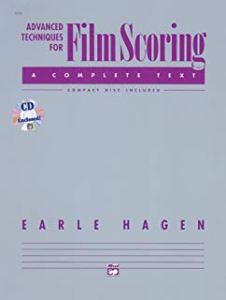
During the last decades of his life he taught and wrote books on scoring and music arrangements. He wrote the textbook, Scoring for Films: A Complete Text. In 2000, he published his autobiography, Memoirs of a Famous Composer Nobody Ever Heard Of.

In 2005, he married his second wife, Laura Roberts. Hagen died from natural causes in 2008.

In 2011, he was inducted into the Television Academy Hall of Fame.

Perhaps his website sums up his career best: “When one considers the vast range Earle Hagen’s career has covered, and just where he was at each stage in his life—playing trombone in the big bands during the 30s, writing arrangements for Frank Sinatra, working at 20th Century Fox during the reign of Alfred Newman, creating TV themes and scores for Sheldon Leonard shows, not to mention teaching brilliant young composers the art of scoring, and publishing the top texts in his field—it can truly be said that he lived through the best times in each of these worlds.”

hagen4

Photo: themusicsover.com

Earle Hagen was another one of the great pioneers in the golden age of television and he should be celebrated for his amazing career.

Sheldon Leonard: A True TV Pioneer

leonard4

The Depression changed the course of Sheldon Leonard’s life. He was born in Manhattan to Jewish parents. He went to Syracuse University on an athletic scholarship. While there, he was president of the dramatics club. His degree was in finance, and he landed a job at a prestigious brokerage firm. Then the Depression hit, and he was out of a job. He had to fall back on the only other skill he could think of which was acting.

In 1931 he married Frances Bober whom he was married until his death. They would have two children.

Acting was not quick money either though. It took five years until he landed his first major Broadway role in Hotel Alimony in 1934. It did not have a long run, but his next two shows were more successful: Having a Wonderful Time in 1937 and Kiss the Boys Goodbye in 1938.

leonard7

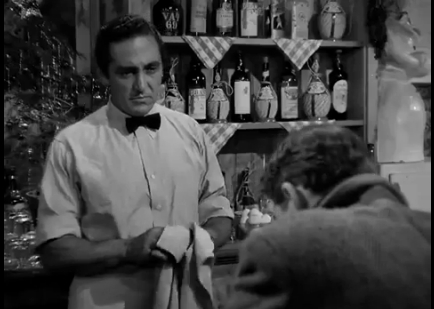
He then entered film work. He had several very small roles in a couple of movies and a couple of shorts, but in 1939 he was cast in Another Thin Man, the popular movie series with William Powell and Myrna Loy. That began his career as a heavy, often being cast as a gangster. He would appear in To Have and Have Not with Bogie and Bacall in 1944. In 1946 he was cast as the bartender in It’s a Wonderful Life with Jimmy Stewart and Donna Reed. Because it has become a Christmas staple, it has brought Sheldon a lot of recognition. Sheldon would appear in 74 movies during his career, 69 of them by 1952.

leonard2

During this time, he also gave radio a try. He was working on both sides of the mic. He sold scripts to several shows including Broadway is My Beat. He also portrayed his stereotyped gangster role on many shows including as Grogan on The Phil Harris, Alice Faye Show. You could hear him on Jack Benny, Burns and Allen, Bob Hope, Duffy’s Tavern, the Halls of Ivy, and The Judy Canova Show, among others.
sheldon6

Photo: radiospirits.com

It was only a matter of time before Sheldon took his talents to television. He appeared in four episodes of Your Jeweler’s Showcase in 1952. In addition, he was listed as producer and director for several of these episodes. He appeared in I Love Lucy in 1953 as vacuum salesman Harry Martin and several I Married Joan episodes in 1952-53. One of my favorites was his role as Johnny Velvet on Burns and Allen when he kidnaps Gracie but takes her back because she drives him crazy. In 1954 he co-starred in The Duke which lasted 13 episodes.  This show featured an artistic boxer who leaves the ring to open a nightclub. Sheldon also directed the pilot as well as some early episodes of Lassie and The Real McCoys.

leonard14

However, the show that made him a household name was his director/producer role on Make Room for Daddy, Danny Thomas’s hit sitcom. The show was in the top ten, and Sheldon even found time to appear on the show 19 times. The show continued from 1953-1964. Leonard had found his sweet spot. During his career, he would direct and produce shows such as The Dick Van Dyke Show, The Andy Griffith Show, Gomer Pyle USMC, and I Spy.

sheldon4

Sheldon convinced Carl Reiner to step back from acting as Rob Petrie and produce The Dick Van Dyke Show. That conversation resulted in Dick Van Dyke accepting the role, leading to 158 episodes. If you watch carefully, you will notice Sheldon appearing twice on the show in minor roles. The show was nominated for 25 Emmys and won 15.

leonard12

Sheldon also is credited with creating the spinoff. One of Danny Thomas’s episodes was set in North Carolina where he gets picked up for speeding in a rural town and has a run-in with Sheriff Andy Taylor. This episode turned into the long-running The Andy Griffith Show which was on the air from 1960-1968 netting 249 episodes. The show won 6 of the 9 Emmys it was nominated for.

sheldon3

The spinoff was so successful he did it again, moving Jim Nabors as Gomer Pyle from the gas station attendant on The Andy Griffith Show to his own show, Gomer Pyle USMC. That show was on the air for five years (150 episodes), and Sheldon would also make an appearance there as Norman Miles.

Thomas and Leonard as L&T Productions were also behind the The Joey Bishop Show and The Bill Dana Show. Thomas and Leonard’s shows were notable for emphasizing characters and relationships over slapstick or situation comedy. You cared about the characters even when they were a little kooky like Gomer Pyle or Barney Fife. They were committed to high-quality scripts. Many of the writers they employed went on to successful shows of their own including Danny Arnold for Barney Miller; Garry Marshall and Jerry Belson for The Odd Couple, Happy Days, and Laverne and Shirley, Mork and Mindy; and Bill Persky and Sam Denoff for That Girl and Kate and Allie. L&T Productions ended in 1965.

leonard9dga.org

Photo: dga.com

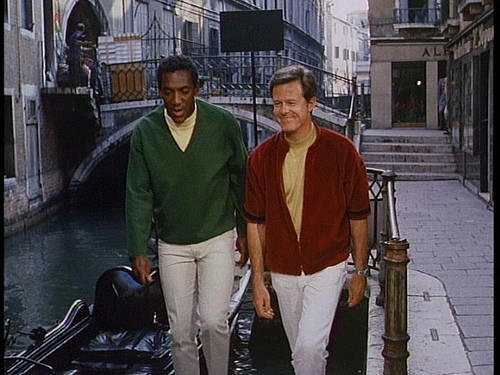
In the mid-1960s Sheldon produced I Spy. He cast Bill Cosby and Robert Culp as secret agents.  This was the first series to star a black actor in a lead role. In a March 7, 2016 Modern Times article, David Fantle and Tom Johnson discussed Sheldon Leonard and I Spy. Leonard said he knew what he was doing. “Race was very much an issue at that time,” he said. “I was intellectually conscious of it, but emotionally unaware of it. When I say emotionally unaware, I mean I was free to think of Cosby as the man to fill the slot I needed. Intellectually I knew the problems I’d have to face to get him on the air.” I Spy was a humorous suspense show and was known for its exotic locations, filming in countries such as Hong Kong, England, Morocco, France, and Greece among others. The critics rewarded Leonard. The show was nominated for Outstanding Dramatic Series Emmy every year of its three-year run and earned Leonard an Emmy nomination for directing in 1965.

sheldon7

Sheldon was also the producer behind Accidental Family and Good Morning World, both shows debuting in 1967 and ending in 1968 and My World and Welcome to It in 1969. Accidental Family was about a widower who is a stand-up comedian. He buys a California farm which is managed by Sue Kramer who is also his son’s governess and his love interest. Good Morning World was about morning disc jockeys in LA. One is happily married, and one is a ladies’ man. Goldie Hawn was the next-door neighbor and Billy De Wolfe was their boss. On My World and Welcome To It, John Monroe is a married man with a daughter. He frequently daydreams and fantasizes about life. This show was unusual in that it included some animation along with the live action.

sheldon9

In the Fantle and Johnson article referenced above, Leonard also talked about his favorite sitcom. He said his favorite might be the one that needed the most attention. “My favorite show was cancelled after the first year. My World and Welcome to It, based on the writings of James Thurber and starring William Windom. It won every award, and they cancelled . . . It was satire and above their (the network bosses’) heads. That show and I Spy are my favorites.”

In the early 1970s Sheldon would produce From a Bird’s Eye View and Shirley’s World. From a Bird’s Eye View was a sitcom about two stewardesses, Millie from England and Maggie from America. Millie was always getting into mischief and Maggie bailed her out. Shirley’s World starred Shirley MacLaine as a photographer who travels the world for her London-based magazine. The locales were similar to I Spy.

leonard3bigeddie

In 1975 Sheldon starred in a new sitcom, Big Eddy which only lasted for ten episodes. He was Eddie Smith was the owner of the Big E Sports Arena in New York. He was an ex-gambler fighting the impulse to get back into it. He has a bunch of eccentric people in his life including his ex-stripper wife Honey and their granddaughter Ginger.

In the 1980s, Sheldon would continue to show up on various television shows, appearing in Sanford and Son, The Cosby Show, Matlock, Murder She Wrote, and Cheers.

Along with author Mickey Spillane, Leonard was one of the first two people to become a Miller Lite spokesman. In his New York accent, he tells the audience, “I was at first reluctant to try Miller Lite, but then I was persuaded to do so by my friend, Large Louis.”

Sheldon Leonard passed away at the age of 89 in 1997. His wife Frances passed away in 1999.

leonard1

Sheldon Leonard is undoubtedly one of the greatest television producers. Most of his shows were consistently in the top ten. They are classic shows still on the air today.  Sheldon required scripts that brought characters to life. He created spinoffs when he believed in the characters. He was not afraid to take risks. Besides casting Bill Cosby, he cast Lois Nettleton as divorced Sue Kramer on Accidental Family. This was in the mid-1960s and yet when Mary Tyler Moore’s show aired in 1970, the network refused to allow her to be a divorced character.

In the Mercurie Blogspot from November 10, 2013, Carl Reiner discussed Leonard: “Sheldon has mentored more people in our business than anyone else I know. He knew how to teach what he knew, and what he knew was situation comedy with the three-camera technique. Sheldon was a producing genius who understood comedy. He had four or five shows going, but he would walk in and give his intelligence and his time to every script that was being read for the week. And we always came away with a better script because we would discuss and argue and come to a better situation.”

sheldon5

Garry Marshall was also quoted in this same article: “Sheldon was a sort of man’s man, yet he had all the creative sensitivity of the artist. No matter what story you were working on, he could help you fix it. He would never put down your idea. If I had to describe Sheldon in one word, it would be gentleman. He was a Renaissance man with a New York accent—and possibly a gun!”

The Herb Garden Germination

Photo: americanprofile.com

As a salute to Leonard, the writers of The Big Bang Theory, named their main characters Sheldon and Leonard in honor of Sheldon Leonard.

sheldon1

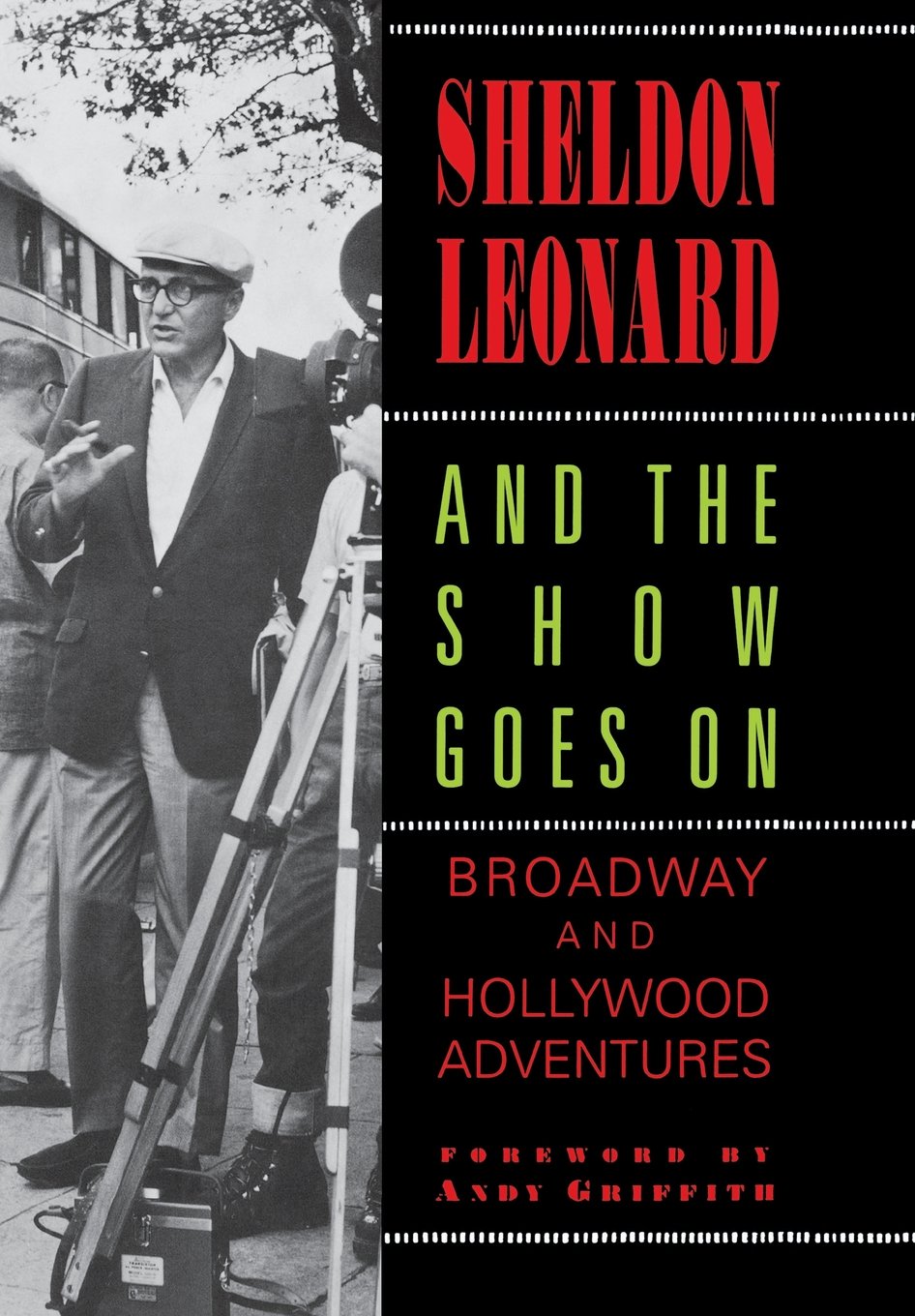
Sheldon himself seems to explain his success best. After working on his memoir in 1995, And the Show Goes On: Broadway and Holiday Adventures, he said “I was driven by an urge to survive and being very self-indulgent. I never did anything for very long that I didn’t like or enjoy. I would survive only on my own terms. I had to enjoy what I was doing, and I would have done what I did even if nobody paid me. That’s the secret of success in any business: do it well and enjoy doing it.”

leonard11

He did it all well, and we all enjoyed it.

The Skipper and His Little Buddy: Alan Hale Jr. and Bob Denver

We continue our month-long exploration of the actors who appeared on Gilligan’s Island. Today we look at the two biggest stars: Alan Hale Jr. and Bob Denver.

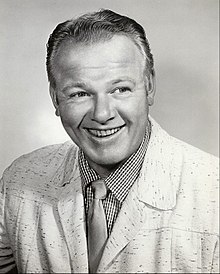
Alan Hale Jr.

hale1

Alan Hale Jr. (Alan Hale Mackahan, Jr.) was born in 1921 in Los Angeles, California.  He looked exactly like his father, Alan Hale Sr. who was a well-known movie actor acting with legends like Douglas Fairbanks and Errol Flynn. His mother, Gretchen Hartman, was also a silent film star.

Hale’s first screen role was when he was 12 in Wild Boys of the Road.

hale3

He appeared in more movies and television series than any of the other Gilligan’s Island cast.  In all he would appear in 92 movies and 123 different tv shows.

In 1943 he married Bettina Reed Doerr. They would be married for twenty years and have four children. During World War II, Hale served in the US Coast Guard.

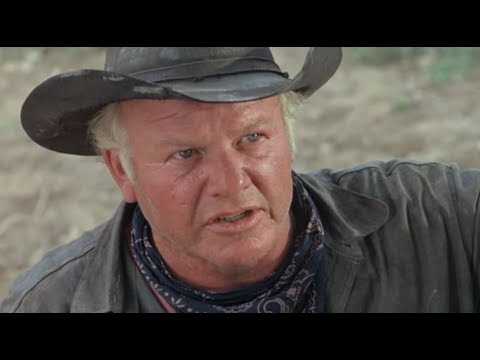
In the 1950s, he could be seen in many westerns as well as The Loretta Young Show and The Adventures of Ozzie and Harriet. He had regular roles on two sitcoms in that decade: Biff Baker USA and Casey Jones. Biff Baker is a businessman who becomes involved in espionage.  He and his wife travel around the world, working behind the scenes to solve problems. Although it was a serious show, there was some humor in the episodes also. As Casey Jones, Hale drove his train, The Cannonball Express, around the country.

hale4

The early 1960s was a prolific time for Alan Hale. The majority of his television credits came during this decade. You can see him in reruns of Jack Benny, The Lucy Show, Perry Mason, My Favorite Martian, and The Andy Griffith Show.

The year 1964 was a momentous one for Alan. He married Naomi and remained with her till his death. He also tackled the role he would become famous for.

hale5

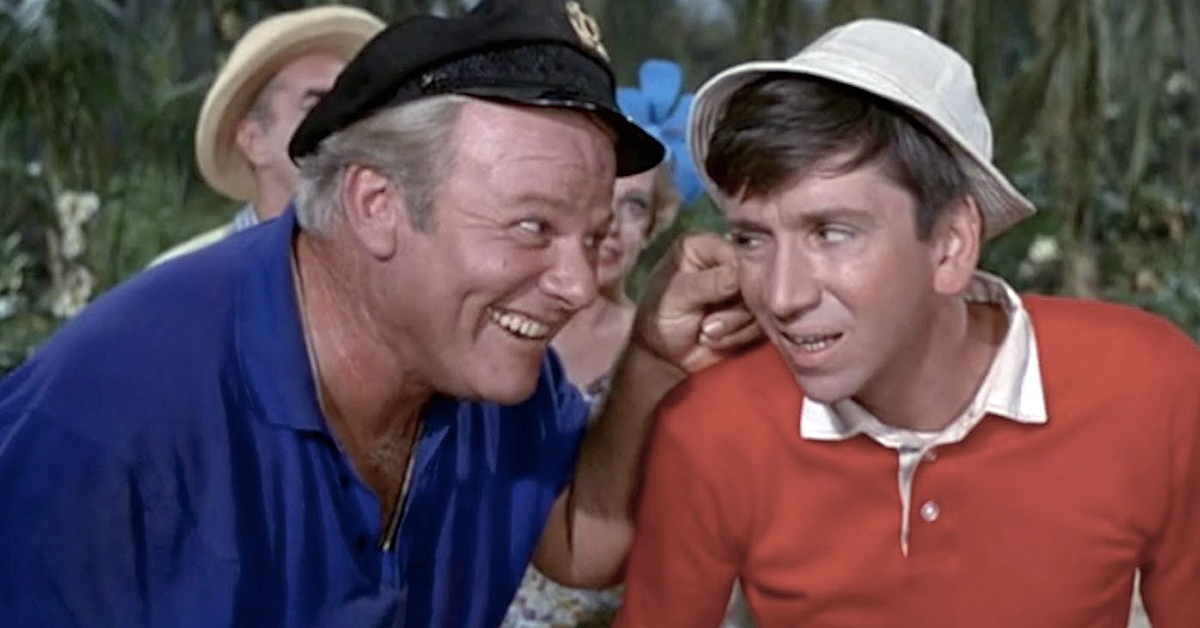
Sherwood Schwartz said he was having trouble finding the right person to play Jonas Grumby. He auditioned a lot of people, including Carroll O’Connor. One night while having dinner at a local restaurant he saw Hale dressed in a Civil War costume and decided he might be the one. Although the Skipper often became frustrated with Gilligan, they had a father and son relationship. Hale and Denver managed to pull that off. They were close friends in their personal lives as well.

hale3

Unlike some of the cast who felt typecast after they left the show, Hale embraced the role he had played. He would later own and manage a popular restaurant in Los Angeles called “Alan Hale’s Lobster Barrel” and could be seen greeting guests as the Skipper. Both he and Jim Backus appeared on Bob Denver’s sitcom Good Guys in 1968.

hale4

After Gilligan, Hale’s career did not slow down. Until his death he would continue to appear in a variety of series including Batman, Green Acres, The Flying Nun, The Wild, Wild West, Here’s Lucy, Marcus Welby, The Doris Day Show, Gunsmoke, McMillan and Wife, Simon and Simon, Growing Pains, The Love Boat, and Magnum PI.

In addition to acting and his restaurant business, Alan enjoyed fishing, golfing, cooking, traveling, storytelling, spending time with his family, and philanthropy. In 1990, Hale died after suffering from thymus cancer at the young age of 68.

Alan Hale had a long and prosperous career.  From all accounts, he liked acting and enjoyed life. Perhaps we should leave the last word to his costars who knew him best.

hale2

Bob Denver said, “He was a big, lovable man who made everyone feel good. He had a great time with his life.”

Dawn Wells described him: “What a dear man . . . what a dear, dear man . . I never saw him disgruntled, having a temper tantrum or depressed. He was so jovial and so sweet and so strong. . . He was a nice man.”


Bob Denver

denver7

Bob Denver was born in New York in 1935. He went to college at Loyola University in Los Angeles, majoring in political science. He worked as a mailman and a teacher before deciding to go into acting full time.  His first appearance was on Silent Service in 1957.

While Alan Hale was in more shows and movies than any of the other crew members, Bob Denver was easily in the fewest.  While he appeared in seven movies, he was only in 21 television shows, and on six of them he had regular roles.

denver5

His sister suggested him for the part of Maynard G. Krebs on The Many Loves of Dobie Gillis. His role as Dobie Gillis’s best friend propelled him into stardom. Dobie Gillis was on the air for four years, producing 144 shows.

denver8

In the 1960s he would appear on Dr. Kildare, The Farmer’s Daughter, The Andy Griffith Show, Make Room for Daddy, and I Dream of Jeannie. In the mid-1960s, Bob was offered the role of Gilligan on a new show, Gilligan’s Island.  In 1966 he married Maggie Ryan. They would have two children during the six years before they divorced.

Schwartz wanted to cast Jerry Van Dyke in the role who turned it down to play Dave Crabtree in My Mother the Car. Denver was perfect in the role of the inept Gilligan who caused many mishaps on the island but was the center of affection of the rest of the castaways, especially the Skipper.

The same year Gilligan was cancelled, Denver remarried. Like many sitcoms, the relationship with Jean Webber lasted three years before the couple cancelled it.

denver2

Although Denver was given a lead role in three more sitcoms, most of his work after 1967 cashed in on his character of Gilligan. In 1968, he starred in Good Guys. He played the role of Rufus Butterworth who opens a diner with his best friend from childhood.  The show only lasted for 42 episodes. Like Gilligan’s Island, Sherwood Schwartz produced this show. In an interview in 1994 with Peter Anthony Holder on Montreal radio station CJAD 800 AM, Denver discussed Schwartz. “Oh yeah, sure. Sherwood, as a producer, he was one of the best writer producers. It’s amazing. That man was just amazing. We never knew there were any problems when we were shooting. He kept all the network craziness away from us. He was writing scripts literally four months in advance, so that special effects and props always got them in plenty of time. . . you just memorized your words and went down there and had a great time. It wasn’t until afterwards when I left that I realized that not everybody was in the same situation. So every time I had a chance to work with him I did.”

At this time, Bob was also involved with Broadway and dinner theater plays after 1970.

denver3

In 1972 Denver tried marriage a third time. He and Carole Abrahams made it three years and produced one child before divorcing. In 1973, he took the lead on Dusty’s Trail. As Dusty, he manages to get a wagon and stage separated from the rest of the wagon train heading west, and the lost group of travelers try to catch up with the rest of their party.  This one only lasted 26 shows.

In 1975, Denver appeared in his weirdest sitcom yet, Far Out Space Nuts. Lasting only 12 episodes, Denver played a maintenance man in a space company who is accidentally launched into space with a co-worker. Apparently, television producers decided Denver looked like someone who was always lost.

denver4

In 1979, Bob tried the marriage ride one more time. This time he would stay married to Dreama Perry until his death.  The couple would have a child, making a total of four children for him.

denver6

Like many of the other castaways, Denver published a book of memoirs.  It was called Gilligan, Maynard, & Me.

In 2005, Denver passed away from complications following throat cancer surgery, leaving Dawn Wells and Tina Louise as the only surviving actors from the show.

denver1

While Denver is obviously the most-recognized character from Gilligan’s Island, he also had the most difficult situation to work with in being typecast. He was never able to shake the traits that were part of Gilligan to explore other roles.  He mentioned he would have liked to be in Northern Exposure. I wonder if he would have been happier being a teacher or if he enjoyed his career.

hale7

Next week we will discover more about our last regular member of the show, Russell Johnson.

“Oh, he was a nice, nice man.”

With all the research I have done, I have discovered a lot of nice folks in the entertainment industry (as well as a few not so nice people), but I have never read about anyone more liked than Howard McNear.  Everyone went out of their way to say what a kind and caring man he was.

mcnear5

McNear was born in Los Angeles in 1905. He studied at the Oatman School of Theater and then joined a stock company in San Diego. During World War II, he enlisted as a private in the US Army Air Corps. He went on to a career in radio, films, and television. In the mid-1960s, he had a stroke and died from complications of pneumonia in 1969. Parley Baer, a life-long friend, delivered his eulogy. He was buried in Los Angeles, completing his California life cycle.

mcnear3radio

Howard began working in the radio industry in the 1930s. He was featured in many radio shows, including The Adventures of Bill Lance – a detective drama starring John McIntire as Lance. McNear played the part of Ulysses Higgins, a friend and assistant to Lance. He also filled the role of Clint Barlow on Speed Gibson of the International Secret Police. Some of the other shows he often appeared on included Suspense, Lux Radio Theater, Escape, CBS Radio Workshop, Family Theater, Let George Do It, The Adventures of Masie, Fort Laramie, Wild Bill Hickock, and Richard Diamond, Private Eye. He and Parley Baer were part of the cast of The Count of Monte Cristo, a drama. He continued to work often Baer they both voiced characters frequently on Yours Truly Johnny Dollar. He played congressmen, hotel managers, French detectives, and occasionally the villain.

mcnear6gunsmoke radio

He was still working with Baer when they both created their most famous radio characters—Baer as Chester and McNear as Doc Charles Adams—in Gunsmoke which was on the air from 1952-1956. Baer would later show up in Mayberry as the mayor.

McNear made his film debut in the 1951 sci-fi film, The Day the Earth Stood Still. He followed that up with Escape from Fort Bravo. In 1959 he played Dr. Dompierre in Otto Preminger’s Anatomy of a Murder. Some of his most famous films were Voyage to the Bottom of the Sea and two Elvis flicks, Blue Hawaii and Follow That Dream. He was also featured in three Billy Wilder comedies: Irma La Douce, Kiss Me Stupid, and The Fortune Cookie.

mcnear7

Overall, he appeared in more than 100 films and television shows. He transitioned into television in the 1950s, appearing The Jack Benny Show and the Burns and Allen Show. He appeared in comedies such as I Love Lucy, Private Secretary, December Bride, The Donna Reed Show, Bachelor Father, and The Adventures of Ozzie and Harriet. He also showed up in dramas like The Thin Man, Playhouse 90, Richard Diamond, The Twilight ZoneThe Zane Grey Show, Maverick, and Alfred Hitchcock. Ironically, he had a role as a barber in Leave It to Beaver.

Although McNear had a long career on radio and in films, he will forever be remembered for his memorable and scene-stealing portrayal of chatty and naïve Floyd the Barber in the long-running The Andy Griffith Show (TAGS). Don Knotts once said that playing Floyd wasn’t much of a stretch for McNear, as his real personality was pretty much like Floyd to begin with.

baldwin

The first episode of TAGS to feature Floyd did not star McNear; Walter Baldwin was Floyd Lawson. After that episode, McNear took over and made the role his own. On his first appearance he was Floyd Colby, but the next time his name was mentioned it had become Floyd Lawson. Floyd’s shop was where the Mayberry men gathered to gossip and play checkers, and they occasionally got haircuts.

mcnear1

We usually see Floyd wearing his well-groomed mustache, thick glasses, and his white barber coat. We learned several things about Floyd during the course of the show. He is a widower. His wife was named Melva and they had two children, a son and a daughter. His son Norman plays the saxophone and baseball. When he retired he moved in with his daughter and her family. Floyd had a niece in town named Virginia Lee who entered the Miss Mayberry Pageant. He was also Warren Ferguson’s uncle; Ferguson would replace Barney as deputy when he moved from Mayberry to the big city.

Floyd often (incorrectly) attributed famous quotes to Calvin Coolidge. Floyd had a dog named Sam and raised pansies. He typically drank coffee but enjoyed a Nectarine Crush or a Huckleberry Smash soda now and then, and he thought Wally had the best pop in town.

mcnear8

Floyd liked to write. He wrote the song for the Miss Mayberry Pageant: “Hail to thee, Miss Mayberry; All hail to thee, all hail; Your loveliness, your majesty; Brings joy to every male; All hail, all hail, all hail; All hail, all hail, all hail.” He even tried to write a novel but had writer’s block after creating a brilliant first sentence: “The sun is dropping lazily down behind the purple hills in the western skies.”

floyd2

In the middle of the show’s run, McNear suffered a debilitating stroke, leaving half his body paralyzed. He took some time off to recover. Andy asked him to come back, and the production crew went to great lengths to make things comfortable for him. Although he could not walk or stand, he was seen sitting outside on a bench. There was a special platform built so he could cut hair looking like he was standing while sitting.  Often a he holds a prop with his left hand, using his right hand as he spoke his lines. In 1967, he left the series for good when he could not remember his lines.

floyd1

My two favorite Floyd episodes were “Floyd, the Gay Deceiver” and “Convicts At Large.”

In “Floyd, the Gay Deceiver,” Floyd has been corresponding with a wealthy pen pal, a widow. She wants to visit Mayberry which gets him frustrated. He wants to meet her, but he has painted himself as an equally wealthy man. Andy helps him maintain the ruse by using a mansion of a man who is out of town. Eventually, Floyd realizes that the widow was not the wealthy woman she made herself out to be either.

In “Convicts At Large,” the normally excitable Floyd displays a calm demeanor after he and Barney are taken hostage by three escapees from the women’s prison–Big Maude, Naomi, and Sally. When they go into town to buy food, Andy realizes that there is something fishy going on and recaptures the women.

floyd5

The cast members who worked with McNear can best describe the type of man he was. In Richard Kelly’s book, The Andy Griffith Show, Andy Griffith, Jack Dodson, and Richard Linke share their memories of Howard McNear. It seems fitting to let them have the last words of this blog.

Andy Griffith:

Howard, first of all, was a leading man in the San Diego theatre years ago. He never was in New York in his life. He developed this comic character, I believe, on The Jack Benny Show. Howard was a nervous man and he became that man, Floyd.

Then Howard had a stroke and was bad off for a long time. He was out of our show for about a year and three-quarters. We did a lot of soft shows, that is, those that were not hard on comedy — stories about the boy or the aunt. But we needed comedy scenes to break up things.

We were working on a script one day, and Aaron [Ruben] said, `Boy do I wish we had Howard.’ And one of us said, ‘Why don’t we see if we can get him.’ So right then we called up Howard’s house and we got his wife, Helen. ‘Oh,’ she said, `it would be a godsend.’

Well, we wrote him a little scene. He was paralyzed all down his left side and so we couldn’t show him walking. We had him sitting or we built a stand that supported him. He could then stand behind the barber chair and use one hand. Most of the time, however, we had him sitting. His mind was not affected at all. He was with us about two years after that before he died. Finally poor Howard died. I’m sorry because there was never anyone like him. Kind, kind man.

Jack Dodson:

Unfortunately, I didn’t know Howard before his stroke. Even after his stroke he was just a wonderful human being and a splendid actor. Sadly, it was during the playing of a scene with Howard that we realized he couldn’t go on anymore.

It was the segment where I wanted to raise the rent on the barbershop. The characters had a great falling out and then, at the end of the show, they were brought back together in the courthouse. Howard had a little difficulty with that segment. We had to change our shooting schedules a little so that his days were not quite so long as they had been. And then, finally, we had a very simple scene of reconciliation. He couldn’t remember it. He went over it and over it, frustrated with himself. Seeing his despair and anxiety was the most painful experience that I’ve ever had. And then he didn’t come back after that.

Richard Linke:

We went to the funeral, and I have to say that it was the only funeral I’ve ever been to where the laughs exceeded the tears. There were a couple of people who knew him well. They spoke in the form of a eulogy — I guess you could call it that. Oh, but it was funny. They related Howard McNear stories from the pulpit. It was something else. Really, it made a nice thing. I think Hal Smith, who played Otis, got up there. It was something else, those stories. And yet, it was all done with dignity. Oh, he was a nice man.


Please Report to Room 222

Last week we continued to paid homage to the Friday night schedule of shows airing in 1970 and 1971, learning about The Odd Couple. Today we continue that theme as we meet the cast of Room 222.

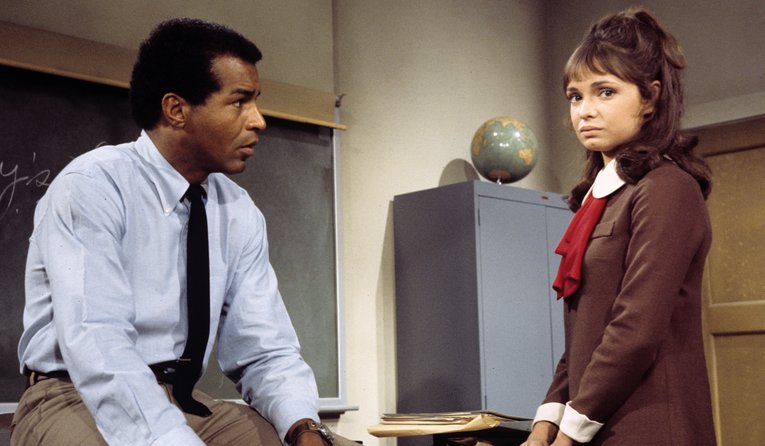
Debuting in 1969, Room 222 produced 113 episodes by 1974 when it was cancelled for low ratings. The show, one of the first dramedies, was a more serious counterpart to the later-seen Welcome Back Kotter.

room3

The series was created by James Brooks who wrote for That Girl and The Andy Griffith Show and would go on to create Taxi, The Mary Tyler Moore Show, Rhoda and Lou Grant. What all these shows have in common is a group of characters who have a depth and sophisticated writing that captures the realistic language and behavior of individuals in their settings.

kaufman and dixon

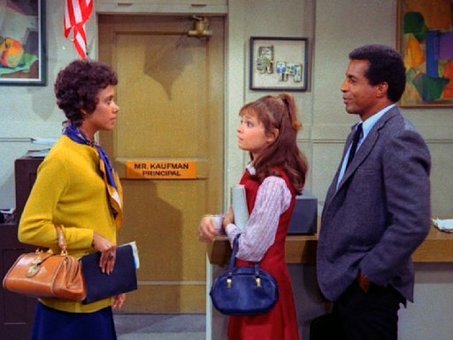
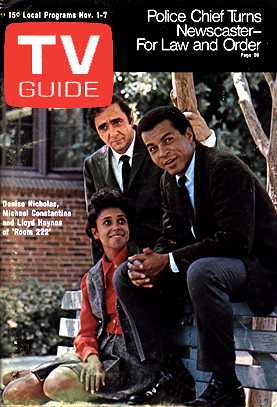
The show featured Seymour Kaufman (Michael Constantine), the principal of Walt Whitman High School, a racially mixed school in Los Angeles; American history teacher Pete Dixon (Lloyd Haines); the guidance counselor (and Pete’s girlfriend) Liz McIntyre (Denise Nicholas); and student teacher Alice Johnson (Karen Valentine). The four staff members were friends, but they did not always agree.  They debated issues and solutions but always with respect. Kaufman displayed a dry humor and could make Dixon laugh. Dixon was the easy-going, wise, and insightful thinker in the bunch. Liz was compassionate while Alice was enthusiastic and idealistic, but a bit naïve. The staff members invest in the students, acting as surrogate parents teaching them important life lessons. The other staff member we get to know is Miss Hogarth (Patsy Garrett), Mr. Kaufman’s secretary.

room10


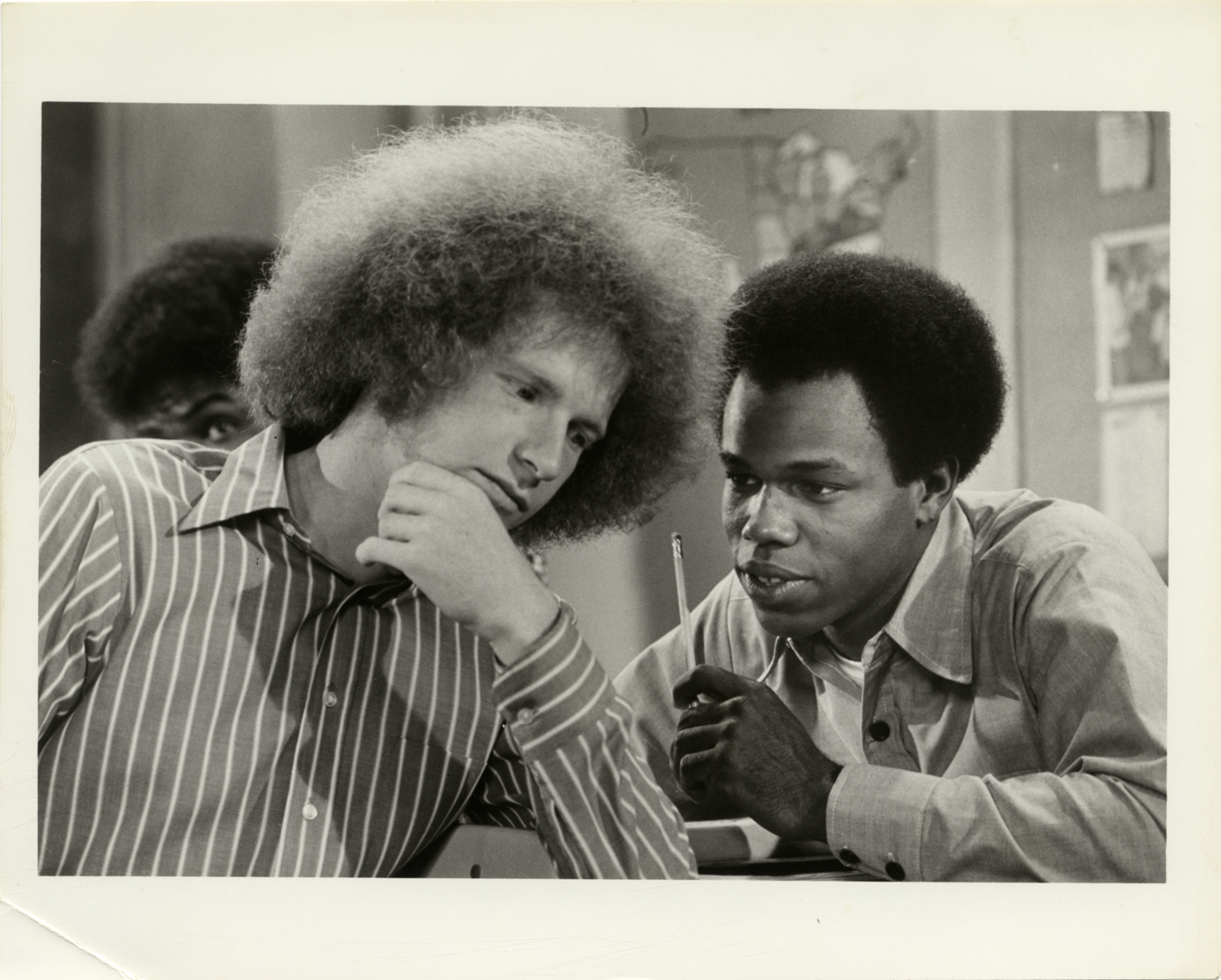
We also spend a lot of time with several students who interacted with staff members in the classroom and occasionally outside of school. There was Richie Lane the Brain (Howard Rice); Jason Allen, tough guy (Heshimu Cumbuka); Pamela, Miss Popular (Ta-Tanisha); Helen Loomis, shy but thoughtful (Judy Strangis); and Bernie, the sports jock and class clown (David Joliffe). Although students were a large part of the show, many episodes focused on the teachers and administrators.

students


Room 222 is Dixon’s classroom where the students are given free range to discuss topics from a variety of viewpoints.  Some of the issues were topical such as the Vietnam war, women’s lib, and Watergate; however, most of the debates could be pulled from today’s headlines:  race relations, shoplifting, drug use, illiteracy, police presence in schools, dress codes, guns in schools, and teen pregnancy. Dixon lets the students lead many discussions, but he preaches tolerance and the ability to see things from others’ shoes. He is respected and liked by his students.

room12

Imdb.com summarized the pilot episode as: Pete Dixon teaches history in Room 222 at Walt Whitman High School. Principal Seymour Kaufman introduces Pete to Alice Johnson, a perky but painfully insecure student teacher. Pete’s most enthusiastic student is Richie Lane, who goes so far as to dress a lot like Pete and even takes roll in his absence. But Guidance Counselor Liz McIntire has discovered some disturbing news about Richie — the home address he submitted is fake, suggesting that he may not live in the school district, and therefore might be ineligible to keep attending Whitman.

room11

Many guest stars showed up at Walt Whitman High including Ed Begley Jr., Richard Dreyfuss, Jamie Farr, Teri Garr, Mark Hamill, Bernie Kopell, Donny Most, Chuck Norris, Rob Reiner, Kurt Russell, and Cindy Williams.

The show was originally on Wednesday nights, and the ratings weren’t great. The network was planning on cancelling the series, but then the show won the Emmy for Outstanding New Series, Michael Constantine won for Outstanding Supporting Actor in a Comedy Series, and Karen Valentine won for Outstanding Supporting Actress in a Comedy Series. The show was moved to the Friday night line up between The Partridge Family and The Odd Couple where its ratings soared.

heshimu and joliffe

The first season used a laugh track which was not used for subsequent seasons, helping to add drama to the show.

The theme song was written by Jerry Goldsmith. He would go on to be nominated for seven Academy Awards for music, winning for The Omen. A series of novels was created based on the show by William Johnston in the early 1970s, and Dell Comics published four issues about Room 222 in 1970-1971.

karen

The show propelled Valentine to star status. Mark Voger interviewed her online for New Jersey Advance Media for NJ.com on October 25, 1970. Part of his article is quoted below:

“I had gone in to meet the casting person for ‘Room 222,'” the Santa Rosa, Calif., native told me during a telephone interview some years back.

He took down the color of my eyes and the color of my hair, and I was dismissed. Nothing happened for a number of months.

Then I was called in again to meet with (series producer) Gene Reynolds. When you talk about naivete — the character of Alice Johnson was a bit of a bumbler and very naive and just wet behind the ears.

When I read for Gene, everything imaginable went wrong. I mean, I went to put my purse down, and I had sunglasses on my head; they fell off. I went to pick those up, the pages went all over the floor. I had to pick those up.

I looked up at him and I said, ‘I don’t know what’s going on. I’m really rather chic, you know. This is so strange.’ And he said, ‘Don’t change a thing.'”

Valentine believes she’d hit upon the essence of the character that Reynolds sought.

She continued: “After I read, I was leaving the office. He said, ‘Don’t get hit by a car.’ And I thought, ‘Boy, this is a good sign. It’s the first time anyone cared whether I was dead or alive in this town.'” . . .

“It was a real forerunner for integrated shows,” Valentine said. “It was the first show, I think, that showed blacks and whites interacting so well together, and role models in teachers and counselors. It was so well accepted that in certain parts of the country, ‘Room 222’ was required viewing by some of the teachers and principals and administrative staffs around different schools.”

room13

While the hair-do’s and clothing tie the show to the early 1970s, the scripts could easily be part of current television shows. I’m not sure if that is positive because the show was so well written or if it’s negative because we are dealing with these issues almost 50 years later without much progress. Either way, taking some time to watch the show will be time well spent.

clothing


Go Green, Green Acres That Is

In the 1950s, a lot of the top shows were set in residential or suburban areas:  Father Knows Best, Ozzie and Harriet, the Donna Reed Show, and December Bride to name a few.  In the early 1960s, the rural sitcom became the hottest genre.  In 1963 The Beverly Hillbillies was #1, Petticoat Junction was #4, and The Andy Griffith Show was #5. Filmways offered Paul Henning the chance to produce a new rural show with no pilot necessary.  Filmways was created in 1952, and the company was behind many successful shows including The Debbie Reynolds Show, The Pruitts of Southampton, Mr. Ed, The Addams Family, and Cagney and Lacey.

Paul Henning approached Jay Sommers to create the new rural comedy. Sommers based the series on a radio show he had written in 1950 —  Granby’s Green Acres.  Granby was based on a book, Acres and Pains by S.J. Perelman. The radio show only lasted for 13 episodes and starred Gale Gordon and Bea Benaderet. Granby was a former banker who moved to the country to run a farm.  He also had a daughter, and the general store owner was a major character, Will Kimble, played in the first episode by Howard McNear. A couple of titles proposed were Country Cousins and The Eddie Albert Show, but the final decision was Green Acres.

green4

Green Acres ran on CBS from 1965-1971 with solid ratings. It produced 170 episodes, all filmed in color.  Richard Bare directed most of the shows. At the end of each episode, Eva Gabor would say “This has been a Filmways presentation dahling.”

While the Beverly Hillbillies took a family out of the mountains and put them in Beverly Hills, Green Acres went with the opposite scenario.

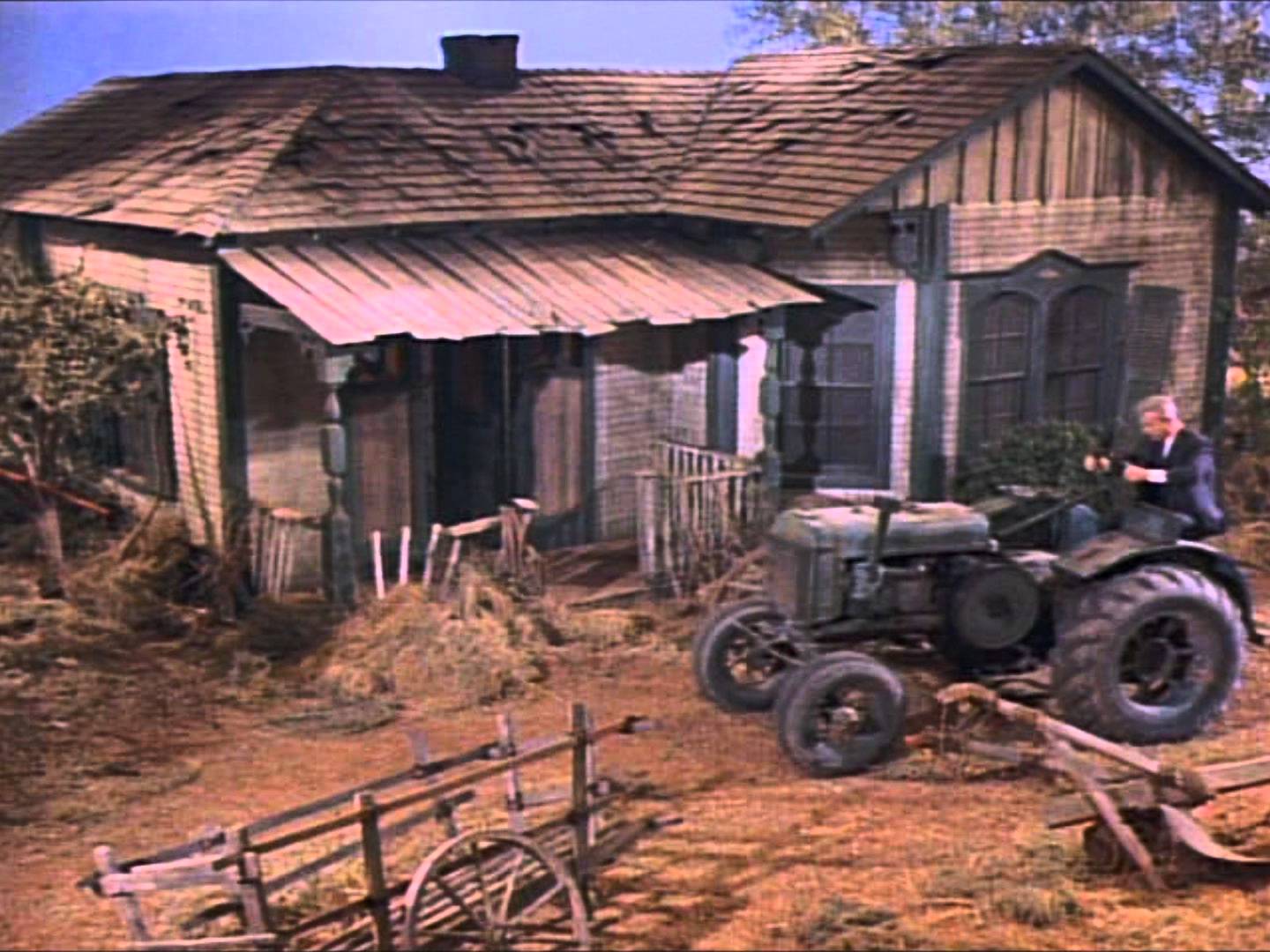
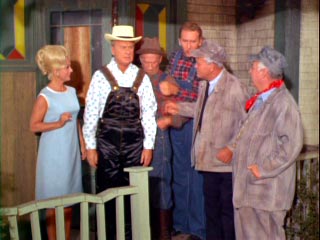
The premise of the show was that Oliver Douglas  who had been a busy attorney in New York City decides he wants to move to the country to run his own farm. His wife Lisa  does not agree. He buys a farm unseen in Hooterville. We are never told where Hooterville is, and I think everyone has their own idea of which state it might be in. The house and farm are more run-down and dilapidated than Lisa ever imagined in her worst nightmare.  The citizens of Hooterville are a quirky set of characters.

green7

The debut show was done as a documentary narrated by John Daly, a former newscaster and the host then of What’s My Line.  Eddie Albert and Eva Gabor appeared on What’s My Line later in the fall as a thank you to Daly. As you can see below, Oliver’s mother is horrified by his choice.

green18

The theme song is memorable and tells the backstory of the Douglases:

Oliver: Green Acres is the place to be – Farm living is the life for me –Land spreading out so far and wide – Keep Manhattan, just give me the countryside.

Lisa: No, New York is where I’d rather stay – I get allergic smelling hay – I just adore a penthouse view – Darling, I love you but give me Park Avenue

Oliver: The chores

Lisa: The stores

Oliver: Fresh air

Lisa: Times Square

Oliver: You are my wife

Lisa: Goodbye city life

Both: Green Acres, we are there

Snippets of country and New York city were shown while the stars sing, and ends with both of them in the same pose as “American Gothic” by Grant Wood.

green1

Like the Andy Griffith Show, the series worked because of the interaction between these Hooterville citizens who become believable for us. Let’s meet the cast of characters.

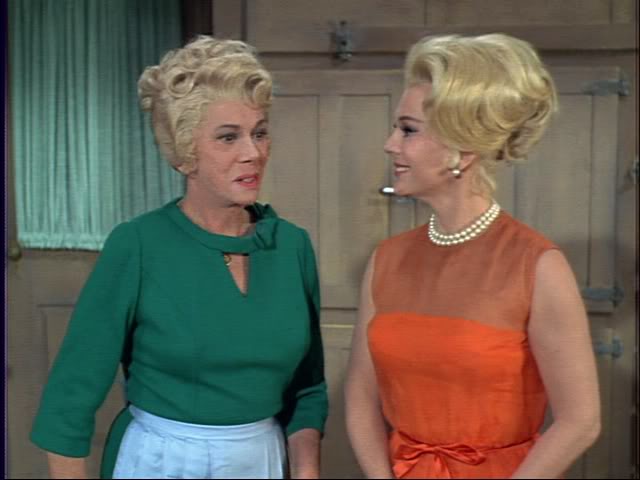
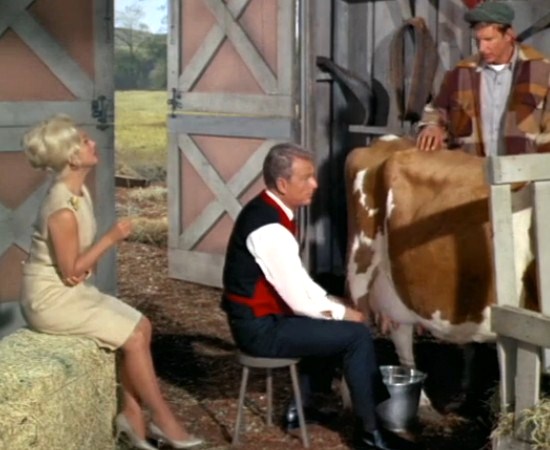
Oliver Wendell Douglas (Eddie Albert) – Oliver is intelligent, hard-working, and practical to a fault.  He has to deal with a kooky wife, a disapproving mother (played by Eleanor Audley who was only 5 months older than Albert), and the quirky neighbors that surrounded him. However, Oliver has a respect for the wisdom these people have about farming and rural life.  Despite the fact that he seems to be the only sane person in the valley, it’s obvious he truly has an affection for the folks he lives with.

albert

Lisa Douglas (Eva Gabor) – Lisa grew up in a wealthy Hungarian family. Her misuse of the English language is one of her endearing qualities. She has a hard time adjusting to farm life.  In one episode she is using a stapler to fix Oliver’s socks.  While Oliver is telling her how woman for centuries have sewn socks, Fred Ziffel, the most experienced farmer in Hooterville enters the room and tells her he notices she is mending socks; his wife does it the same way. Despite the fact that Lisa did not want to leave the city, she adapts to living in the country quickly and develops an understanding with the neighbors Oliver never attains.

green31

Eb Dawson (Tom Lester) – Eb is the farmhand who lives with the Douglases.  He comes off as naïve, but we understand Eb is much smarter than he lets on.  He is always trying to get less work for more money.  He calls them Mom and Dad which Lisa loves but drives Oliver crazy.

green17

Mr. Eustace Haney (Pat Buttram)- Mr. Haney is the unethical and dishonest salesman who originally sold Oliver the farm, which belonged to his family. He is always showing up to sell them something they need at outrageous prices. [Pat Buttram was Gene Autrey’s sidekick in the movies and tv; Smiley Burnette, Charley, who runs the Cannonball, the local train on Green Acres and Petticoat Junction, was Autrey’s sidekick in radio and movies and  Buttram replaced him when he moved on.]

green5

Sam Drucker (Frank Cady) – Sam was a busy guy; he ran the general store, he was the newspaper editor, was the only printer in town, he was part of the volunteer fire department, he was the justice of the peace, and he’s the postman. Apart from Oliver, he was the smartest and most sane person in the valley, and he and Oliver often commiserated about the crazy life going on around them.

Hank Kimball (Alvy Moore) – Mr. Kimball was the county agricultural agent who was supposed to help Oliver adjust to farming. He often loses his train of thought and rarely follows through on the news or information he is supposed to relay.

moore

The Monroe Brothers – Alf (Sid Melton) and Ralph (Mary Grace Canfield) are a brother and sister team that Alf portrays as brother and brother in order get work. Their projects are never finished on time, and rarely finished the right way.

green8


Fred and Doris Ziffel (Hank Patterson and Barbara Pepper/Fran Ryan) – the Ziffels were successful farmers.  They had no children, but they had a pet pig that they considered a son.


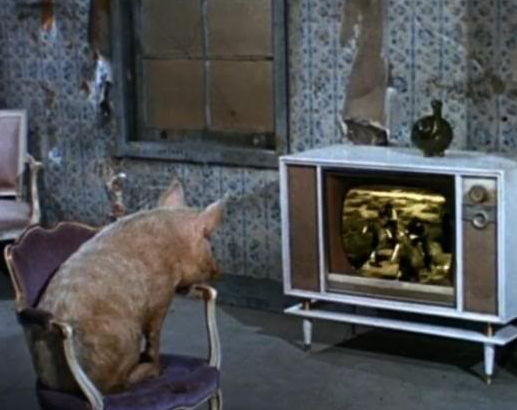
Arnold Ziffel – Arnold Ziffel was their pet pig and one of the most intelligent people in Hooterville. He understands English, attends the local grade school, lives inside in his own bedroom, can sign his name, and is a bit addicted to television watching, especially westerns. A new pig was used each season because they grew so fast. The Union demanded the pigs be payed $250 a day and were trained by Frank Inn. In 1967 Arnold won a Patsy award.

green20

Some of the other animals featured on the show included Eleanor the Cow; Bertram the rooster; Alice the hen; and Mr. Haney’s dog, Cynthia, a basset hound who had a huge crush on Arnold.

Green Acres had its fair share of guest stars including Parley Baer, Robert Cummings, June Foray, Alan Hale Jr., Elaine Joyce, Gordon Jump, Bernie Kopell, Al Lewis, Rich Little, Al Molinaro, Pat Morita, Jerry Van Dyke, and Jesse White.

The show was 25% surrealism, 25% satire, and 50% just plain fun.

Some of the running gags on the show were the fact that people, except Oliver, could see the credits running, and Lisa often commented on them. A lot of the jokes were at Oliver’s expense.  He was the only one in town who could not understand Arnold’s grunts. Also, whenever Oliver got passionate about something, he went into a monologue, usually patriotic, and everyone but him could hear fifes playing.

green3

Lisa’s hotcakes were good for many projects, just not eating. The Douglases had a feud with the phone company because they were supposed to move their phone inside.  Whenever they had to use the phone, Oliver had to climb up a phone pole to talk. Oliver had a Hoyt-Clagwell tractor which was usually breaking down, catching on fire, or falling apart.

green29

We also had the stark extremes of sophisticated New York living and rural life.  Lisa continued to dress in beautiful gowns and furs.  They slept in a huge, expensive bed, with an elaborate chandelier over their heads, but their closet had no back so neighbors walked in on and off. The fire department marching band often practices at Sam Drucker’s store but for all five years whenever they practice, they only know one song, There’ll Be a Hot Time in the Old Town Tonight.

Although Lisa continues to threaten to move back to New York City, aided and abetted by Oliver’s mother, we know she loves him and will never leave without him.  Despite their arguments, Lisa and Oliver are frequently seen kissing and hints are given about them retiring to their room together. In real life, Albert and Gabor were dear friends and they are both buried in Westwood Village Memorial Park Cemetery in Los Angeles. Tom Lester, Eb, credited Albert with helping him as an actor and being a surrogate father to him; the two remained close friends until Albert passed away.

green10

There are many cross-overs with Petticoat Junction and the Beverly Hillbillies. Sam Drucker was featured in both Green Acres and Petticoat Junction. Some of the characters visited each other on various episodes. It is funny that Bea Benaderet starred in Petticoat Junction as well as the radio show Granby’s Green Acres which means Green Acres was based on her radio show and was a spin-off of her television show. In 1968, a Beverly Hillbillies Thanksgiving Show united cast members from all three shows.

green9

green6

With 170 episodes, it’s hard to come up with the best five, but after looking at various polls and tv guide reviews, I will do my best to represent the majority’s votes:

“Music to Milk By” – Eb wants to win a radio contest and he has to listen day and night which cuts into his chores, especially when the cow swallows the radio.

radio

“I Didn’t Raise My Pig to be a Soldier” – Arnold Ziffel gets a draft notice. Oliver acts as his attorney before the draft board. They are assuming Oliver is making fun of them with the pig and the real Arnold is elsewhere. After a lot of explanations and some time in jail, Oliver convinces them Arnold is really a pig.  The end of the show has Oliver back before the draft board because Ralph Monroe, a woman, who they think is a man, has been drafted.

draft

“The Hooterville Image” – The town agrees Oliver needs to do chores in overalls. He has been farming in a vest and dress shirt. They finally convince him to become more accepted by switching his attire until they see the overalls Lisa’s dress designer came up with.

green28

“The Computer Age” – Ralph Monroe joins a computer dating service. Oliver and Lisa disagree on whether that is a good idea. Oliver thinks it is. He also thinks computers are the best way to run a farm. To prove her point, Lisa uses the service to see if she and Oliver would have been paired up.

computer

“A Star Named Arnold is Born, Parts 1 and 2” – Arnold appears in a play at the local theater. Lisa arranges for an old friend to give him a chance in show business. In the second part, Lisa and Oliver chaperone his trip to Hollywood to star in a motion picture.

arnold

Oddly enough the top four were all from season 2, and “A Star Named Arnold Is Born” is from season 3.

green16

In Spring of 1971, Green Acres was still pulling in good ratings.  However, the Rural Purge of 1971 got rid of all shows that had country leanings whether they were audience favorites or not.


In full disclosure, I loved Petticoat Junction growing up, and I could not stand the Beverly Hillbillies.  I thought Green Acres was okay but if I missed it that was okay too.  As I’ve gotten older, I still love Petticoat Junction, and I still don’t care for the Beverly Hillbillies, but I have developed a much greater appreciation for Green Acres.  If a show was capable of having a sense of humor, this one did.   It never took itself seriously.  Eddie Albert was willing to be the straight guy to the rest of the ensemble. The character interaction worked, and no dialogue came off as too zany.  The citizens might not have always agreed or understood each other’s lifestyles, but they had affection and respect for each other. Lisa’s reading the credits and different characters addressing the audience brought us in on the jokes and made us part of the Green Acres family. Now when I watch the show, I laugh out loud – a lot! I don’t laugh at the characters, I laugh with them. For being a rural sitcom, this show has some sophisticated humor.  If you have not watched the show in a while, you owe it to yourself, as well as the cast and crew who created it, to get to know the folks in Hooterville.


Elinor Donahue Through the Decades

donahue23

Elinor Donahue always displays a warmth and comes across as a genuinely nice person. Her first sitcom became her most famous role.  She played Betty in the iconic Father Knows Best. Although none of her later sitcoms reached the same popularity, she has had a long and full career.

She was born in April of 1937 in Tacoma, Washington. She began tap dancing at 16 months old. As a toddler, she did some acting and received a contract with Universal at the ripe old age of 5. From 1955-1961 she was married to Robert Smith. She was married her second husband, Harry Ackerman, from 1962-1991. Ackerman was a producer for shows including Leave It to Beaver, Gidget, and Bewitched.  She married her third husband Louis Genevrino in 1992.

Donahue appeared in 18 movies between 1942 and 1952 including Tea for Two with Doris Day and My Blue Heaven. She made the transition to television in 1952 appearing in 8 shows in the 1950s. One of the shows I remember her in although I only saw it in reruns was one of my favorite shows, The George Burns and Gracie Allen Show. She was typically cast as the girl-next-door type. Her most famous role came in 1954 when she was cast in a new sitcom, Father Knows Best.

Father Knows Best – 1954-1960

This was one of the typical family shows of the 1950s. The Andersons lived in Springfield with three children: Betty, called Princess (Elinor Donahue), James Jr., or Bud (Billy Gray) and Kathy, usually called  Kitten (Lauren Chapin). The show debuted in the fall of 1954 on CBS. The show was cancelled in 1955 and the public was furious. Letters came pouring in, so it was reinstated. NBC took over the next year until 1958 when it went back to CBS.  In 1960, Robert Young decided he was done. These were warm and inviting parents, providing guidance and object lessons galore. Critics panned it later because it was not reality.  We have reality shows today, and please, give me fiction. We did learn life lessons on the show – following through on promises, working for what you want, being yourself, and taking responsibility for your mistakes.

Shortly after Father Knows Best left the airwaves, Donahue accepted the role of Elly Walker in The Andy Griffith Show.

The Andy Griffith Show – 1960-1961

Most of us are very familiar with The Andy Griffith Show and many of the characters who inhabit Mayberry:  Widower Andy Taylor (Andy Griffith) and his son Opie (Ron Howard) live with Andy’s Aunt Bee (Frances Bavier) who takes care of them;  Barney (Don Knotts) is the inept deputy but also Andy’s best friend;  Helen Crump (Anita Corsaut), the school teacher and Andy’s girlfriend later in the series; Thelma Lou (Betty Lynn), Barney’s girl; Otis Campbell (Hal Smith), town drunk but nice guy; Gomer Pyle (Jim Nabors), who runs the gas station; and his cousin Goober Pyle (George Lindsey). Andy had several romances early in the show.  He dated the county nurse Mary Simpson (played by several actresses), spent a limited amount of time with Daphne (Jean Carson) who had a crush on him; and in the first two seasons, he was sweet on Ellie Walker (Donahue), who ran the local drug store. Ellie cared about Andy, but she always stood up for herself and women’s rights.  Andy and Ellie never had the chemistry they were hoping for but they respected each other and like each other. Elinor raved about the cast and her opportunity to be on the show. She said Andy was in charge and expected quality but was fair and a nice man. She described Ron Howard as the best child actor she ever worked with.  She liked Frances Bavier and got along well with her.  She had a huge respect for Don Knott’s comedic ability. She is still friends with Betty Lynn.

She appeared on a variety of shows in the mid-1960s including 77 Sunset Strip, Dr. Kildare, The Virginian, Dennis the MenaceStar Trek, and The Flying Nun. She tried her luck with one other sitcom in the 1960s.

Many Happy Returns – 1964-1965

This sitcom was also about a widower.  Walter Burnley (John McGiver) ran the Complaint Department at a LA department store. The show also featured his daughter (Donahue) and a coworker Lynn Hall (Elena Verdugo). His boss (Jerome Cowan) did not want him to take in any returns, so he had to resolve complaints without making his boss mad. Apparently Burnley couldn’t solve the complaints that came in from viewers because the show was cancelled after 24 episodes.

donahue18

Father Knows Best came out with two television movies in 1977: The Father Knows Best Reunion and Father Knows Best – Home for Christmas, and Elinor was in both. While still showing up in random shows during the 1970s such as The Rookies, Police Woman, and Diff’rent Strokes, Donahue found time to appear in two 70s shows on a regular basis.

donahue12

The Odd Couple – 1972-1975

Neil Simon’s The Odd Couple came to Friday nights in 1970. Felix Unger (Tony Randall) and Oscar Madison (Jack Klugman), two divorced men who are complete opposites but best friends, try to live together without killing each other. The show had a great supporting cast including Donohue as Miriam Welby from 1972-1974, Felix’s girlfriend.

donahue7mulligan

Mulligan’s Stew – 1977

This show from 1977 starred Elinor Donahue as Jane Mulligan.   She and her husband Michael (Lawrence Pressman) are trying to raise three kids on his teacher’s salary when they suddenly add four orphaned nieces and nephews to their family. One of the kids was played by Suzanne Crough, Tracy from The Partridge Family, one of the few shows she was in. The series only lasted for seven episodes.

donahue13

The 1980s found Donahue still working regularly.  She was in Barnaby Jones, Mork & Mindy, One Day at a Time, Fantasy Island, The Love Boat, Newhart, and Golden Girls. One sitcom in the 1980s captured her attention about Beans Baxter.

donahue17beans

The New Adventures of Beans Baxter – 1987

Here is the plot for this one: Beans Baxter’s (Jonathan Ward) father who he thought was a mailman disappears one day.  Teenage Bean discovers that his dad worked for a secret government agency.  He is then drawn into becoming a spy for the government. The show features his adventures as he tries to find the enemy agents who are holding his father hostage while his mother played by Donahue is completely oblivious that anything strange is happening. Viewers also didn’t realize anything was happening because the show was cancelled after 17 episodes.

Entering her 60s, Elinor joined the cast of three sitcoms in the 1990s. She also made several movies including Pretty Woman in 1990 and The Princess Diaries 2 in 2004.

donahue8getlife

Get a Life – 1990-1992

Shows don’t get much weirder than this one. Comedian Chris Elliot plays a 30-year-old paperboy Chris Peterson who lives with wacky parents (Donahue and Bob Elliott, Chris’s real father).  Some of the strange things that happen during the 36 episodes include eating a space alien, beheadings, and a robot paperboy. In this bizarre series, Chris actually dies in a third of the episodes. During the run of the show, he died from old age, tonsillitis, a stab wound, a gunshot wound, was strangled, got run over by a car, choked on his cereal, was crushed by a giant boulder, and actually exploded.


donahue26

Eek!stravaganza – 1992-1993

Donahue plays “The Mom” in this animated show about Eek, a purple cat who always finds himself in dangerous situations. The series was on the air for five seasons.

Dr. Quinn, Medicine Woman – 1993-1997

During the six years the show was on the air, Donahue reprised her role as Rebecca Quinn ten times. The show followed the ups and downs experienced by a female doctor practicing in a wild western town.

Interestingly, Donahue appeared in three different soap operas toward the end of her career: Santa Barbara, Days of Our Lives, and The Young and the Restless.  Elinor also appeared on a variety of documentaries and award shows. She was in the Match Game/Hollywood Squares Hour. In 1998, she wrote her memoirs titled, In the Kitchen with Elinor Donahue. The book included about 150 of her favorite recipes. Elinor’s career has been long and she appeared in many shows and movies over the years. She hasn’t appeared in a movie or television show since 2010, although she did do some theater.  In September of 2015, she appeared in one of my favorite plays, “Harvey” in North Carolina.

donahue25

Donahue’s career reminds me of many of the actors we have gotten to know in this blog including William Christopher, Betty White, Ken Berry, and Shelly Fabares.  These actors and actresses all appear to be very nice, talented people who have careers they should be proud of.  In a day when bad decisions and selfish actions are splattered across our television screens and newspapers, perhaps one of the best compliments we can give someone is that they had a long and fulfilling career and didn’t step all over other people to achieve it.

donahue9

When a rainy day shows up this summer, take a moment to watch some of Elinor’s sitcom episodes. Thank you Elinor Donahue for the entertainment and memories you gave us.

donahue4harvey


Life Changes in the Blink of an Eye: The Career of Barbara Eden

Many baby boomers equate Barbara Eden with I Dream of Jeannie.  While she never escaped her iconic role as Jeannie, she has had a long and full career.

beden1

Barbara Jean Morehead was born in Tucson, Arizona in August of 1931. Her parents divorced when she was three, and she then took her stepfather’s last name of Huff. Moving to California, she went to high school in San Francisco and then studied at the San Francisco City College, the San Francisco Conservatory of Music, and the Elizabeth Holloway School of Theatre. In 1951, she was crowned Miss San Francisco.

She began working in television in 1956, and her career has been going strong ever since. In 1958, she married actor Michael Ansara.  They had a son in 1965 who passed away from a drug overdose.  Eden said of his struggle, “He won a lot of battles, but he lost his personal war.”  She and Ansara divorced in 1974. From 1977-1983 she was married to Charles Donald Fegert.  In 1991, she married her current husband, Jon Eicholtz, and they live in Beverly Hills.

In addition to her screen and television career, she performed in Lake Tahoe, Las Vegas, and Atlantic City. She had an album produced in 1967 and performed on many variety shows.  She traveled with Bob Hope and starred in many musicals and plays.

beden30

She received a Walk of Fame star in 1998.

In 2011, she wrote her autobiography, Jeanne Out of the Bottle.

beden2

She has used her celebrity status to help many nonprofits, raising money for The Trail of the Painted Ponies Breast Cancer Research, the American Cancer Society, the Wellness Community, Make-A-Wish Foundation, the March of Dimes, the American Heart Association, Save the Children, and Childhelp, USA.

Her television career can be divided into three phases, each including a major series.

She began her acting career making appearances in many shows from 1956-1958 including West Point, Highway Patrol, I Love Lucy, The Millionaire, Crossroads, Perry Mason, Gunsmoke, Bachelor Father, December Bride, Father Knows Best, and The Lineup.

In 1957, she received her first starring role in a sitcom, 52 episodes of How to Marry a Millionaire. Based on a movie (starring Marilyn Monroe, Lauren Bacall, and Betty Grable), she starred as Loco Jones, a model. Her friends were Michele Page (Merry Anders), a secretary, and Greta Lindquist (Lori Nelson), a quiz host.  The three women lived together in Manhattan, all sharing the goal of finding a wealthy husband.

beden14

In the 1960s, she made appearances in many more well-known shows including Adventures in Paradise, The Andy Griffith Show, Target: The Corruptors, Cain’s Hundred, Saints and Sinners, Dr. Kildare, Route 66, The Virginian, Rawhide, Burke’s Law, Slattery’s People, The Rogues, and Off to See the Wizard.

In 1965, she took on her role of Jeannie in I Dream of Jeannie.  The show lasted five years, filming 139 episodes. Captain Tony Nelson (Larry Hagman) finds a bottle when he crash lands on a deserted island in the South Pacific. When he opens it, Jeannie emerges.  He brings her home and tries to keep her a secret from NASA. His best friend Roger (Bill Daily) finds out, and he and Tony perform a lot of stunts to avoid anyone else figuring it out.  In the final year of the show, Jeannie and Tony get married, exposing her to the rest of the crew at NASA who know something is different but never figure out what it is. Personally, I like the Jeannie in the first year who is mischievous and intelligent. While the show was only on for five years, certainly not one of the longest-running shows, it defined Eden because since it debuted, it has been on television continually in reruns.
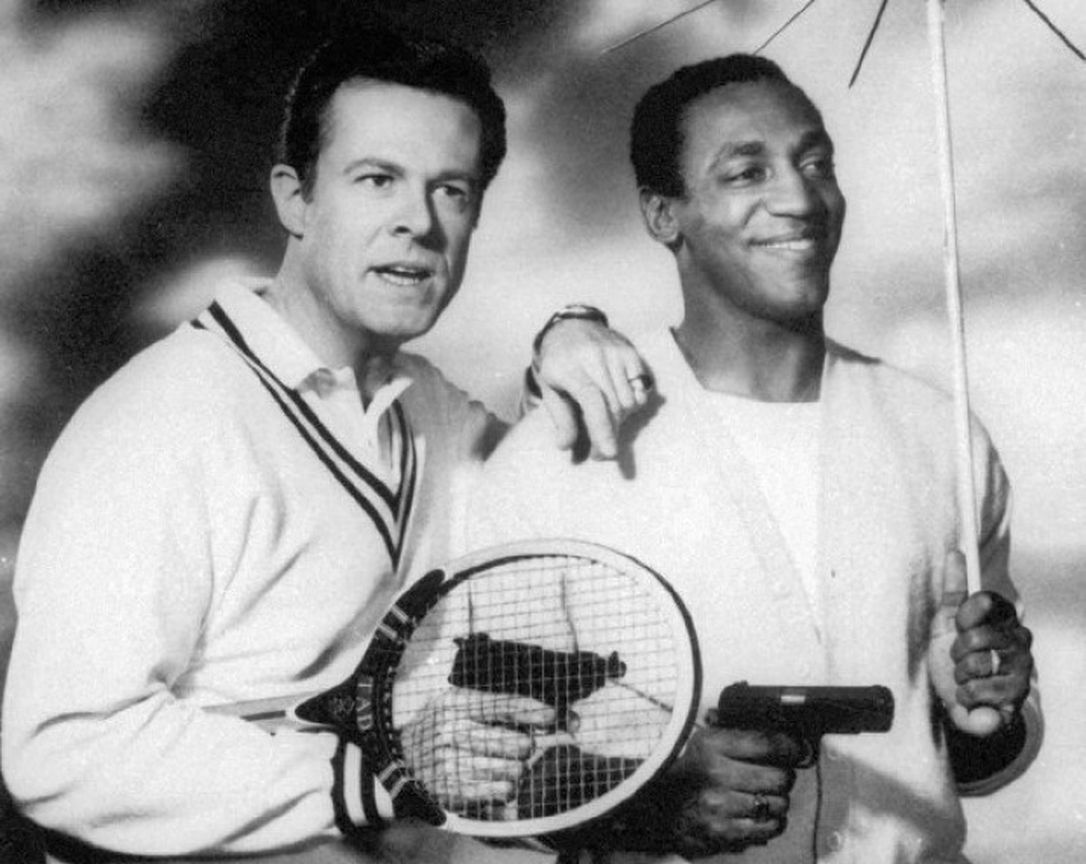
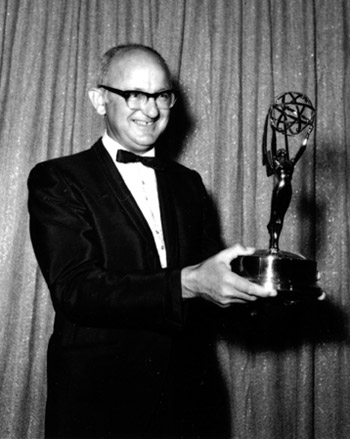
After I Dream of Jeannie, her television career continued as she appeared on NBC Special Treat, Condominium, A Brand New Life, Dallas, Team Supremo, Sabrina the Teenage Witch, George Lopez, and Army Wives.

beden8

Based on the song by Jeannie C. Riley and a movie also starring Eden, she took on the role of Stella Johnson in Harper Valley PTA from 1981-82 with costar Fannie Flagg. The show lasted for 30 episodes. Stella is a widow who moves to Harper Valley with her 13-year-old daughter which is a town filled with hypocrites.  The other women severely criticize her for wearing miniskirts, and not acting like they thought a mother should.  Meanwhile, the board members were always trying to find ways to discredit her.  Fannie Flagg was the beauty shop owner Cassie Bowman.  The show never really caught on with the public. Maybe Stella was too drastic of a role change from Jeannie.

Along with her range of television acting jobs, Eden also was in 26 movies, including Flaming Star in 1960 with Elvis Presley, Voyage to the Bottom of the Sea in 1961, The Brass Bottle in 1964 which led to the idea for the sitcom I Dream of Jeannie, and Harper Valley PTA in 1978 which led to her third series.

In The Brass Bottle, Tony Randall plays Harold Ventimore, an architect who buys an antique urn that houses a djinn played by Burl Ives.  Grateful for being released, the djinn tries to help Harold to show his gratitude.  However, being unfamiliar with contemporary times, he causes a lot of trouble for Harold, especially with his girlfriend Sylvia, played by Eden.

She also starred in 28 made-for-tv movies.  My favorite was The Feminist and the Fuzz which you never see aired on television anymore.

beden9

The Feminist and the Fuzz aired in 1971.  I remember watching this movie when it originally aired.  The story was about a scientist played by Eden and a cop played by David Hartman.  They both end up at an apartment at the same time and have lost so many apartments that they decide to share it until one of them can find somewhere else to live. She is a feminist, and he dates a playboy bunny played by Farrah Fawcett.  One night, the women’s libbers raid the bunny club, and while most of them are being arrested, Hartman carries Eden to a waiting police car and tells him to get her home.  Fawcett, watching this, realizes they have feelings for each other, even though they don’t acknowledge it themselves yet.  The movie had a great cast with Joann Worley, Herb Edelman, Julie Newmar, John McGiver, and Harry Morgan.

If her television show jobs and movie roles were not enough, Barbara appeared as herself on 177 different television variety and game shows from 1961-2016.

At 85, Eden continues her career with credit in Shimmer and Shine in 2016. She has also been to the Mayberry Conventions to meet her fans. She continued her friendship with Larry Hagman up to his death.

One might assume that Eden would want to distance herself from Jeannie and rely on her other body of work, but that is not the case.  Some actors develop a dislike for the character they are unable to shake off, but Eden’s advice to actors is:  “I would embrace the character, because it won’t do any good if you don’t. And another thing: Don’t whine or talk trash about it. I don’t think you ever demean to your public what you’ve done. You’re insulting them if you demean your work.”

beden6

While Jeannie certainly provided Barbara Eden with a lot of fame, future work opportunities, and money (although probably not so much from the tv show directly), taking a survey of her career proves just how versatile of an actress she was.  No one-hit wonder here.  She accumulated a wealth of roles both on television and in the movies. She traveled around the country appearing in musicals and plays. She sang and danced, performing at some of the top clubs in the country.  She appreciated her fans and never demeaned Jeannie in their eyes.  She used her celebrity to raise money for great causes. She had a full career any actress could be proud of.