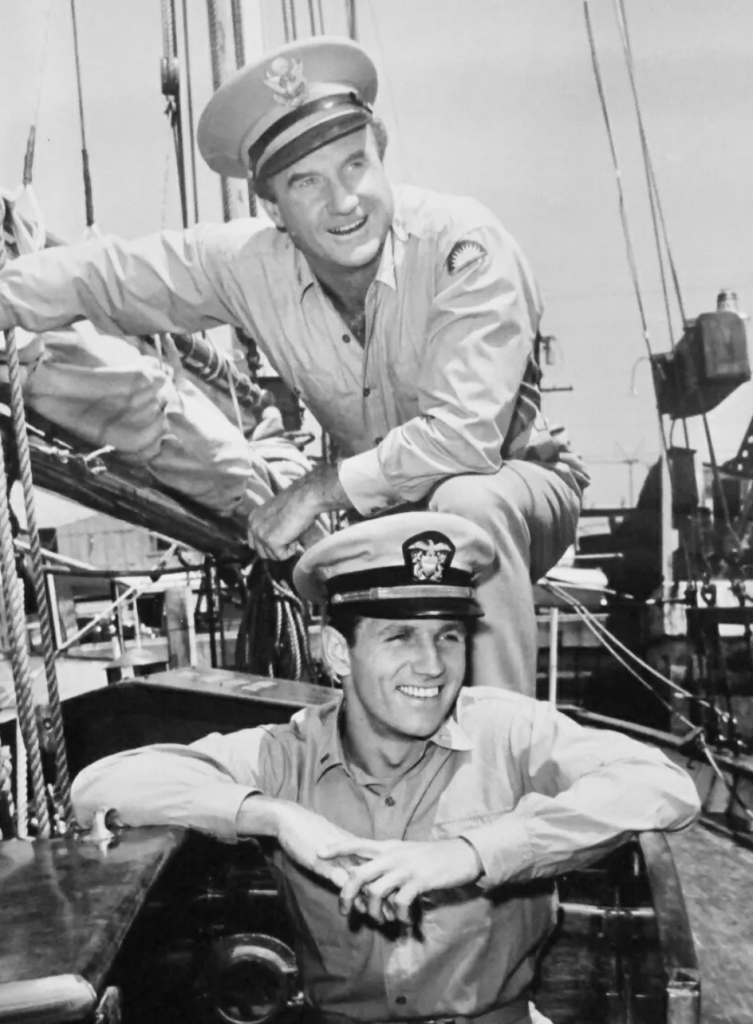
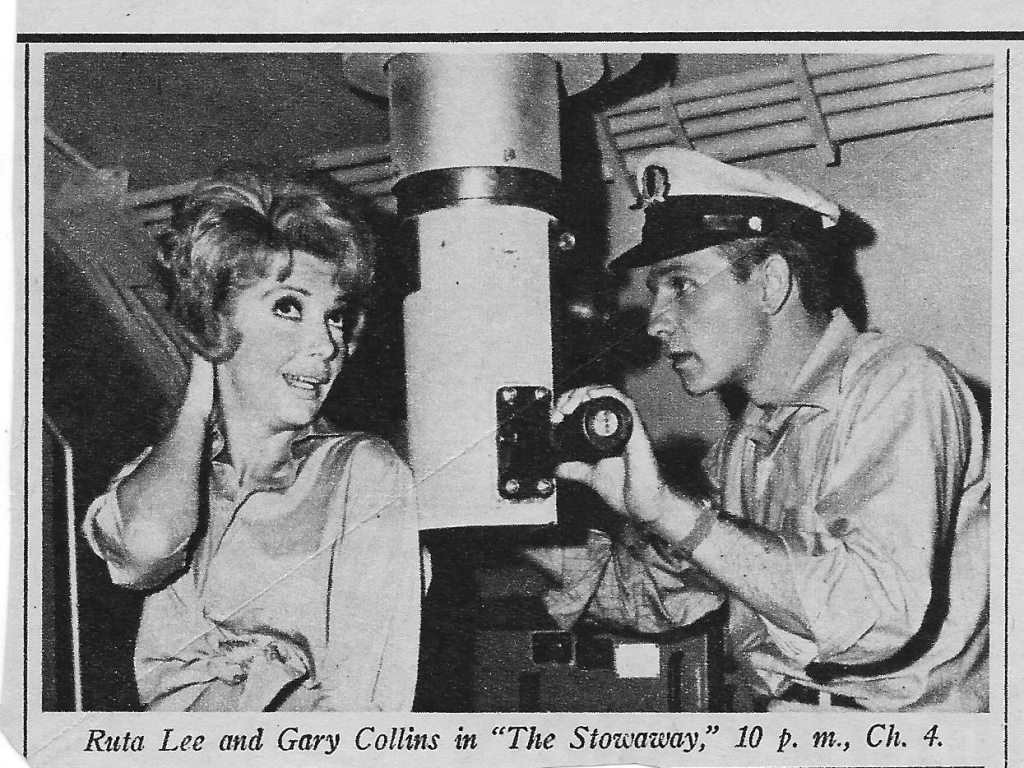
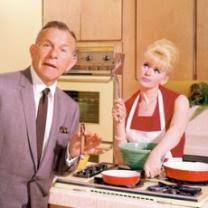
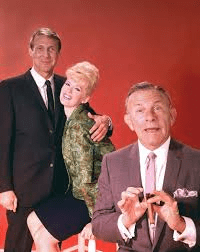
As we continue our theme of Funny Duos, today we delve into Wendy and Me, starring George Burns. This one debuted on ABC in fall of 1964 and was canceled by the next season.
đˇtvtango.com
Gracie Allen passed away from a heart attack in 1964. She had quit the Burns and Allen show to get away from the fast pace of show business. Burns wasnât ready to retire, so he agreed to star in this sitcom with Connie Stevens.
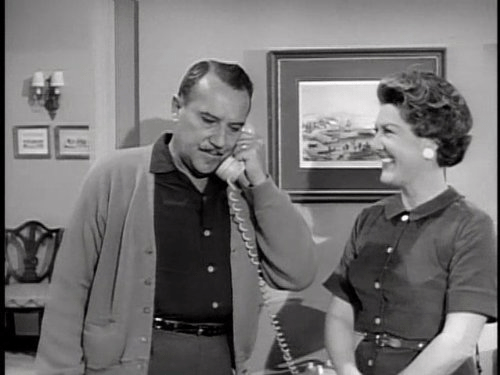
Burns, a former entertainment performer, owns an apartment building where Wendy Conway (Stevens) lives with her husband Jeff (Ron Harper). Burns practices singing for five or six hours a day just in case he is able to make a comeback. There were a lot of complaints, so he had to buy the building to keep practicing. Also in the cast was Danny Adams (James T. Callahan), a friend of Jeffâs whoâs a playboy, and Mr. Bundy (J. Pat OâMalley), the superintendent.
Like his previous show, Burns can watch a television playing Wendy and Me and talk to the audience about the events. This show was also similar to Burn and Allen in that George is the straight man while Stevens is the naĂŻve, bit ditzy, scatterbrained blonde who is an airline stewardess and Jeff is a pilot. As George says, âhaving Wendy help you is like being lost in a desert for four days and then having someone give you a glass of sand.â
A running gag on the show is that Wendy celebrates everything from when she and Jeff had their first date to when she first put sugar in his coffee.
đˇfacebook.com
The show aired Monday nights. It was sandwiched between No Time for Sergeants, a military comedy, and The Jack Benny Show. However, its competition was The Lucy Show and The Andy Williams Show. The Andy Griffith Show was on before The Lucy Show, and both were top-ten hits so the struggle for viewers was challenging.
Actually the show was well written and I thought the dialogue was great. If this had been the original version of this show, it probably would have been a big hit. Iâm guessing that it was hard to compete with Gracie and with her having just passed away, it felt wrong to cheer for me to root for someone else in her place. While those feelings might have come into some of the audience draw, Iâm guessing the tough competition was this showâs biggest hurdle. It probably could have drawn viewers from younger generations who never saw the original Burns and Allen, but when it was up against The Lucy Show that followed The Andy Griffith Show, the viewers chose NBC. The Andy Williams Show also struggled in this time slot. Â If you want to check out a fun show from the sixties, this would definitely be a fun one to watch.
As we wind up our April blogs What a Character!, we end with Sara Seegar. Seegar was born in Indiana but grew up in London, Paris and Hollywood where she went to school. She then attended Los Angeles Junior College, majoring in drama.
đˇbewitched-wikifandom.com
She moved to London to appear on the stage there but returned to the United States once WWII began. Seegar began performing on Broadway before appearing on film, radio, and television.
The year she came home from London she met Ezra Stone while performing in Horse Fever. They were married two years later.
The couple raised their children in Bucks County, Pennsylvania, performing at the Bucks County Playhouse.
Seegar would appear in eight films, the most famous of which was The Music Man.
She only had 37 televisions credits, but she made memorable appearances on many of the most popular shows. She began her television career on several of the fiftiesâ drama shows that were so popular early in television history.
đˇimdb.com
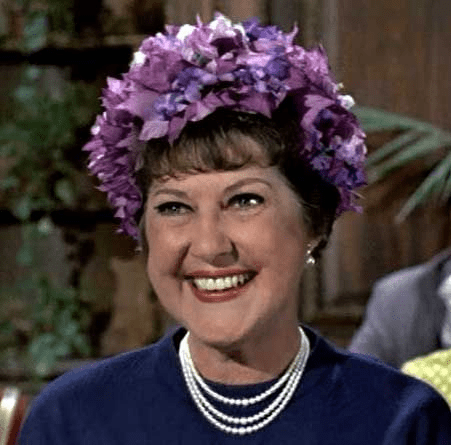
She began the sixties on Perry Mason, then moving to sitcoms including The Donna Reed Show, The Andy Griffith Show, and The Patty Duke Show. Her most famous role was Eloise Wilson on Dennis the Menace. Sylvia Field and Joseph Kearns played Martha and George Wilson from 1959-1962. After Kearns passed away, Field left the show, and Gale Gordon and Seegar took over as Georgeâs brother and sister-in-law. Sara discussed her role of Eloise, saying âOne of the things Iâve enjoyed about the role as Mrs. Wilson is that she could be me. Of course, basically, sheâs sweeter, but Iâve been pretty much myself.â
She continued her roles in both sitcoms and dramas in the seventies including Marcus Welby MD, The Brady Bunch, and Kojak. She was in ten episodes of Bewitched, often playing the wife of one of Darrin and Larryâs clients. Her last appearance was in 1979 on The White Shadow.
đˇfindagrave.com
From 1967-1990 Seegar was a workshop leader, lecturer, and guide for the American College Theater Festival and the Kennedy Center. Seegar passed away in 1990 in Pennsylvania.
I wish I knew more about the life of Sara Seegar. Viewers often mention how funny she was in the scenes she was in on Bewitched. It sounds like she had a lovely career.
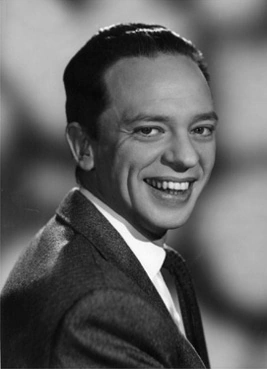
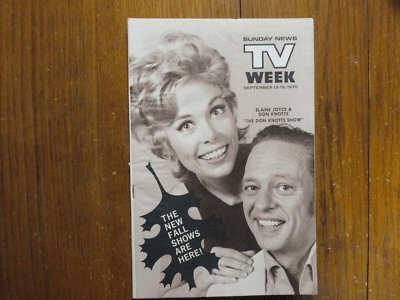
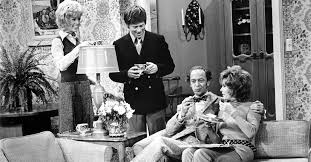
This month our theme is âVariety is the Spice of Life.â If I mention the name Don Knotts, almost everyone probably pictures Barney Fife from Mayberry. You might also think about some of his well-known movies including The Ghost and Mr. Chicken or The Shakiest Gun in the West. However, you might be surprised to know that Don Knotts had his own variety show on NBC for a season in 1970.
đˇwikifandom.com
Don had a few regulars in his cast including Gary Burghoff, Louis Nye, and Elaine Joyce. He had musical guests interspersed with skits. Joyce might have made the worse choice in her entire career when she agreed to join this show because to do it, she turned down a chance to be part of the cast of The Carol Burnett Show.
Two recurring skits were about the process it took to put a weekly television show together and another one was similar to one Carol Burnett and Harvey Korman did called âThe Front Porchâ with Don and a guest sitting on a rocking chair discussing life.
Knottsâ show did not attract viewers. After a few episodes, the network hired Bob Sweeney who had directed The Andy Griffith Show. Don said Sweeney âcame in and made some changes in the writing staff. Then he made some changes in the show creatively. And he did a good job, He improved the show, I thought.â Sweeney also hired Burghoff for the show.
While Andy Williams debuted the Osmond Brothers, Donâs claim to fame for his variety show was debuting The Carpenters.
While there were a lot of variety shows on television, the schedulers didnât do Knotts any favors. His show was up against The Mod Squad on ABC and The Beverly Hillbillies and Green Acres on CBS. That is some tough competition. And this was an era when a family typically had one television, and the entire family had to agree on what they were watching together.
During his Television Academy interview, Don discussed his show. âWe did all kinds of things, but in the end, the show just couldnât compete with shows like The Carol Burnett Show, Donny & Marie, or Sonny & Cher. There was tremendous competition that season for variety, because everybody and his brother had a variety show.â
I think Don was right about why his show failed, but even with so many variety shows, I think there were a few other problems with this one. There were 12 other variety shows on the air during this year, including Knottsâ friend Jim Nabors, but scheduling was a huge barrier to overcome.
đˇfacebook.com
Also, Knotts was introduced to America as a cast member of The Steve Allen Show, and he was great on that one. I think the country wasnât ready to accept him as a host on a show though. He spent his entire career as Barney Fife, an over-confident sidekick who helped the sheriff in Mayberry. His movie characters were all nervous, timid people who found a surprising way to beat the bad guys. Suddenly he was the star of the show and itâs a tough typecasting role for fans to adjust to.
That said, Iâm putting this failure on the network for having too many variety shows on the air and not scheduling them against each other so the most popular ones rose to the top. And this was in the early seventies. Think about the shows that were starting at the time, very different shows from the fifties and sixties hits. Knotts was not the only one to fail at this time, so he could chalk it up to a life lesson learned and quickly wipe it from his memory.
This month we are taking a look at some of our favorite âCrime Solvers of the Past.â Today we wrap up the blog series with The Felony Squad which ran three seasons, debuting on ABC in 1966.
đˇblu-ray.com
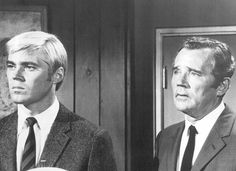
Originally titled âMen Against Evil,â the show was going to be more of a soap opera feel which was broadcast twice a week. However, by the time the show aired, most of the personal relationships had been taken out of the plot. The series focused on Sergeant Sam Stone (Howard Duff) and Rookie Detective Jim Briggs (Dennis Cole). Rounding out the cast was Desk Sergeant Dan Briggs (Ben Alexander), also known as Dad to Jim and District Attorney Adam Fisher (Len Wayland). The first seasons included Captain Frank Nye (Barney Phillips) while later seasons featured Captain Ed Franks (Robert DoQui).
The show was known for having some big names in directing, writing, and guest stars. Many of the directors racked up more than 75 credits each and included George McCowan who worked on The Mod Squad and Cannon, Allen Reisner known for Hawaii Five-0, Lee Katzin who directed Mission Impossible, Laslo Benedek known for work on Perry Mason, and Vincent McEveety who directed stars in Murder She Wrote,Heat of the Night, and Simon & Simon. Howard Duff jumped behind the camera in season two to direct âDeadly Abductorsâ after directing seven episodes of Camp Runamuck a couple of years earlier.
Crafting scripts for the show were writers such as Richard Murphy who was the creator of this show, Don Brinkley who worked on Trapper John and Medical Center, Jack Turley who wrote for Cannon and The Man from UNCLE, and John Kneubuhl who also wrote for the Wild Wild West.
đˇpinterest.com
A handful of the guest stars included Ed Asner, Richard Dreyfuss, Robert Duvall, Roddy McDowell, Ricardo Montalban, George Takei, Vic Tayback, and Cicely Tyson.
The Felony Squad theme was composed by Pete Rugolo. Rugolo had 83 credits in the business including writing music for a wide variety of television genres including Leave It to Beaver, The Fugitive, and Family. This theme was an instrumental and very reminiscent of a sixties action movie.
I couldnât find a lot of reviews, but the New York Timesâ Jack Gould described it as âa very old-fashioned and conventional yarn about tight-lipped detectives doing a dayâs work.â
The series was on Monday nights until 1968 when it was moved to Fridays. The first two seasons the show was up against The Andy Griffith Show which was in the top ten. For the final season, the show moved to the weekend where it was up against an Andy Griffith Show spinoff, Gomer Pyle USMC, which was also a top ten.
The show obviously did well to stay on the air three years when it faced such tough competition. I wonder if being a 30-minute show as opposed to an hour was part of its downfall. No matter how great the writers are, itâs tough to get sophisticated and detailed enough with a plot to wrap up in half an hour. The show certainly found talented directors, writers, cast members, and guest stars. The show was shot in color and had a different feel to it, more realistic. The action is right in your face like youâre on set instead of watching from far off. Considering it maintained decent ratings before it was moved, it would have been interesting to see what would have happened if this show had been the competition with a newer show to see how it fared. Fans loved it, so if you want to see something different, check out a few episodes. Iâm not sure why this series isnât seen more, but YouTube is your best bet to find the most available episodes. Also, as a fun aside, if you want to see Stone, check out Batmanâs second season episode, âThe Impractical Joker,â when Duff as Stone peers out the window while watching the Dynamic Duo climb the wall.
As we look at a few little-remembered shows from the past, today we are learning about My Sister Eileen. The series was adapted from short stories by Ruth McKenney published in The New Yorker. The stories became a book in 1938, a play in 1940 and two movies in 1942 and 1955.
đˇwikipedia.com
In the 1955 Hollywood movie, two small-town sisters — an aspiring writer, Ruth (Betty Garrett), and a would-be actress, Eileen (Janet Leigh) — move to New York City. They find lodging in a shabby apartment and struggle to locate promising gigs. Ruth eventually meets magazine editor Bob Baker (Jack Lemmon), who tells her to write about her life experiences rather than fiction. As it turns out, Eileen’s life, with her various romantic encounters, is far more interesting, so Ruth steals the stories for herself.
This show joined the television schedule in 1960 and featured Elaine Stritch and Shirley Bonne (Ruth and Eileen Sherwood), who move to New York City. Like the movie, one is a writer and one is an actress. Living in a Greenwich brownstone, they become friends with a reporter Chick Adams (Jack Weston) and Ruthâs coworker Bertha (Rose Marie). Rounding out the cast is Eileenâs agent Marty Scott (Stubby Kaye), their landlord Mr. Appopoplous (Leon Belasco), Ruthâs boss D.X. Beaumont (Raymond Bailey), and their Aunt Harriet (Agnes Moorehead). The sisters are stereotyped with Ruth being the smart, plain one and Eileen being the beautiful and naĂŻve one.
The pilot was seen on the Alcoa-Goodyear Theater with Anne Helm portraying Eileen.
Earl Hagen who composed âThe Fishing Holeâ for The Andy Griffith Show composed this theme as well.
đˇimdb.com Rose Marie on the show
Rose Marie talked about being on this sitcom for the Television Academy. She said she was friends with the producer Dick Wesson. She said her character Bertha was a wise-cracking one similar to Sally on The Dick Van Dyke Show. Rose Marie didnât like working with Elaine Stritch. She felt she was not very professional on this show; she said she came to work late and goofed off a lot.
In 1960 it appeared on the schedule on CBS opposite Hawaiian Eye and Perry Comoâs Kraft Music Hall. Hawaiian Eye was on the air four years, and this was itâs second season. With Connie Stevens, Robert Conrad and Poncie Ponce, it was about two private investigators in Hawaii, a Korean war vet and a former police detective.
I donât think the writing helped the show stay on the air too long. During the first season some of the plots included: Ruth’s boss ignores her pleas for a pay increase until he encounters her working as a waitress in a German restaurant — and in a skimpy costume and the Sherwood sisters decide to break their lease with a wild party to which they invite a one-man band, a junior Tarzan, and a fireman with his siren.
đˇmoviesanywhere.com 1955 film version
Iâm guessing part of the problem was that it had appeared in so many versions already. Many people read the book. Lots of people saw one, if not two, of the movies. And the play was being featured around the country. I can see that having a television series which has to expand the hour-and-a-half play and film might not have enough material to draw out the same old plot and keep it interesting for more than a few episodes.
This one is another one that youâre probably better off watching the 1955 silver screen adaptation and skipping the television series.
This month itâs all about The Bill Dana Show. After learning more about the show, we are taking a look at some of the cast members who were part of the series. Today we meet Maggie Peterson.
đˇtvinsider.com
Maggie Peterson was born in Greeley, Colorado in 1941. Her father was a doctor, and her mom was a stay-at-home mom. She grew up in a musical family and always claimed some of her earliest memories included music. Peterson joined her brother Jim and two friends in the Ja-Da Quartet, and they would ride around in the back of a pickup truck singing.
When Dick Linke heard Peterson singing at a Capital Records convention in 1954, he encouraged her to come to New York after graduating, so in 1958 she did, and she brought the quartet with her. They were on the Perry Como and Pat Boone shows. In 1959 they released their only album, âItâs the Most Happy Sound.â Not longer after it came out, the band broke up.
For several years after that, Peterson joined The Ernie Mariani Trio (later known as Margaret Ann and Ernie Mariani Trio). They played in Las Vega, Lake Tahoe, and Reno. Bob Sweeny and Aaron Ruben, the director and producer for The Andy Griffith Show, spotted here there.
đˇtagsrwc.com Charlene Darling
Originally, Peterson was brought in to read for the role of Ellie Walker, a love interest for Andy, but Elinor Donahue received that role. Then Maggie was offered the role of Charlene Darling.
Like her birth family, The Darlings were a musical group; however, Roscoe Darling and Maggieâs father were nothing alike. Because she had recurring roles on Andy Griffith, she also was cast on The Bill Dana Show and Gomer Pyle USMC during the same years.
Maggie kept busy in 1969, appearing in an episode of The Queen and I and in three big-screen movies. In 1970, she showed up on Love American Style, Green Acres, and Mayberry RFD. The seventies found her on an episode of Karen and The Odd Couple. During the eighties, she only did a few made-for-tv movies, including Return to Mayberry. Her last acting credit was in The Magical World of Disney in 1987.
In 1968, Peterson opened for Griffith at Lake Tahoe. While there, she met jazz musician Ronald Bernard Mancuso (Gus), and he and Maggie married ten years later. Gus was a well-known musician. He won Playboy Jazz Poll New Artist of the Year in the late fifties. He toured the world with Sarah Vaughn and Billie Eckstine. He also backed a lot of performers in Las Vegas.
đˇfacebook
The couple lived in Los Angeles for a bit before moving to Las Vegas where Maggie became a film and television location scout. At that time, Gus was working with Quincy Jones. Eventually the couple landed back in Las Vegas and Gus taught at the University of Nevada there.
Gus passed away from Alzheimers in 2021, and Maggie died in her sleep a year after her husband.
I wonder why Maggie switched from acting to location scout. I could not find that out. It seems like music was her real love and she got into acting to help pay bills. I’m glad music came back as a big part of her life with Gus. She seemed to have a fun career. It was interesting to learn a bit more about her since I only knew her as Charlene Darling before this blog.
This month we are looking at some of our favorite character actors. As we wrap up the series, we are ending on a high note with the amazing Burt Mustin. Like Charles Lane, Mustin had a prolific career in Hollywood and television. However, unlike Lane, Mustin was offered his first acting job at age 67 after he had retired.
đˇWidener University Archives
Mustin was born in Pittsburgh in 1884. His father was a stockbroker. After high school, Mustin enrolled in the Pennsylvania Military College (now Widener University) with a degree in civil engineering. During his college career he played trombone in the band and played goalie for his hockey team.
After graduation, Mustin toured Europe, planning to work at his fatherâs brokerage firm. However, a financial panic destroyed the company.
One of Burtâs university classmates was Charles Spinney. According to Burt, Spinney displayed lots of photographs of young ladies from his hometown of Memphis, Tennessee. One day, he was showing them to Burt when he spotted the photo of what he referred to as âthe prettiest girl in the room.â Mustin traveled to Memphis to meet her and in 1915 he married Frances Robina Woods. The couple had no children and remained together for their entire lives, with Frances passing away in 1969.
đˇimdb.com
After working as an engineer for a few years, Mustin decided to try to sell automobiles. In an interview, Mustin admitted, âI was the worst engineer the school turned out.â He began selling Oakland Sensible Sixes and later Franklins, Lincolns, and Mercurys. WWII put an end to car sales for a few years, so Mustin began working for the Better Business Bureau and then the Chamber of Commerce. He stayed in Pittsburgh until he retired.
He did a bit of amateur acting and continued his passion for music. He was part of the oldest Gilbert and Sullivan troupe in the country, the Pittsburgh Savoyards; the Pittsburgh Opera; and an officer in the Society for the Preservation and Encouragement of Barbershop Quartet Singing in America.
He was a founding member of the Pittsburgh Lions Club in 1921 and a life member in the Fellows Club of Pittsburgh. Mustin served as an announcer for the first weekly variety show on radio station KDKA.
đˇthat’sentertainment.com
After retiring, Mustin and his wife moved to Tucson, Arizona for her health where he continued acting. William Wyler saw him in a stage production of âDetective Storyâ and told Mustin to let him know if he ever wanted to pursue a film career. When Wyler was casting for Detective Story in 1951, Mustin reached out to him. The couple later moved to Los Angeles. Mustin would appear in 67 films overall.
In 1968 Mustin was cast in Speedway with Elvis and Nancy Sinatra. In one scene the stars have a loverâs quarrel in a coffee shop. When they make up, Elvis sings a song for his girl. Mustin is in the background cleaning the cafĂŠ and working at the counter. The producers felt the scene needed something else. That something else ended up being Mustin singing and dancing with a mop. No one on the set realized that Burt could sing before that adlibbed scene.
1951 was also the year that Mustin appeared on television in The Adventures of Kit Carson. He would find a new career in television for the next two decades, appearing in more than 130 series (which would equal more than 400 actual episodes).
đˇimdb.com
During the fifties, he would be attracted to many westerns and dramas; however, he found his way onto a few comedies including The Great Gildersleeve, December Bride, and Our Miss Brooks.
If I listed half of the 1960s shows he appeared on, you would still be reading this blog next Monday when my new one is dropped. Take my word for it that he was on almost every popular sixtiesâ sitcom, including 14 episodes as Gus the fireman on Leave it to Beaver. Other sixties hits you can find him on include The Many Loves of Dobie Gillis, The Dick Van Dyke Show, The Joey Bishop Show, The Jack Benny Show, The Beverly Hillbillies, Get Smart, TheAndy Griffith Show, The Lucy Show, Bewitched, Gomer Pyle USMC, PetticoatJunction, and My Three Sons, not to mention many dramas and westerns including Bonanza and Gunsmoke. He was no less busy in the seventies where we could catch him in Marcus Welby, The Mary Tyler Moore Show, The Brady Bunch, Love American Style, Adam-12, All in the Family, and Phyllis.
đˇimdb.com
Johnny Carson loved having Mustin on The Tonight Show, where he was a fan favorite. He shared a lot of fun stories on the show. One of them was about him being at the first World Series for baseball in 1903 when the Pittsburgh Pirates played the Boston Red Sox. Unfortunately for Burt, Boston came back to win the series, but as a bonus he did get to see Honus Wagner play on the diamond.
Mustin passed away eight years after his wife at the age of 92. He left a gift to the college he was loyal to his entire life, enabling Widener University to renovate their theater. It is now named the Burton H. Mustin Theatre and Lecture Hall.
Itâs hard to wrap your head around what a busy film and television career Mustin had. He was an actor for the last 25 years of his life, and with 67 movies and more than 400 episodes, that means that he accumulated about 20 credits per year which is almost two a month from age 67 to 92. Talk about an amazing career. Mustin proved that itâs never too late to find your next passion. Thanks for so many great memories Burt Mustin.
This month we are right in the middle of one of my favorite blog series, What a Character. This week we are delving into the career of Noam Pitlik; in addition to his acting, he won an Emmy for his work as a director. Which show? Letâs find out.
Pitlik was born in Philadelphia in 1932. After graduating from high school, he enrolled at Gratz College and later was a theater major at Temple University in 1954. Pitlik had a two-year stunt in the Army and earned a masterâs degree in theater at New York University.
He began his acting career on WCAU in a western. In 1951, he was hired for the set design and construction crew for the Philadelphia Experimental Theater. He carried a bit of his hometown with him when he was part of the Summer Theater Guild in Indiana, Pennsylvania in the âPhiladelphia Story.â He was hired for his Broadway debut in an off-Broadway production of The Threepenny Opera.â
đˇimdb.com
In 1961 he moved to Los Angeles and received his first television roles, appearing on Cainâs Hundred and Dr. Kildare. Cainâs Hundred was not a show I remembered hearing much about. It was about a former underworld lawyer who works with the federal government to bring the top 100 criminals to justice. The show lasted one season. Pitlik had a variety of offers for shows throughout the sixties. Most of them were dramas and westerns, but we also see him on My Favorite Martian, The Munsters, Gidget, The FlyingNun, The Monkees, The Andy Griffith Show, The Doris Day Show, Get Smart, That Girl, and I Dream of Jeannie.
During the sixties, he married for the first time. His marriage with Jesse Blostein in 1967 would only last three years.
Pitlik also appeared in fourteen films and eight made-for-tv movies. The most memorable films are The Graduate, Fitzwilly, and The Fortune Cookie.
đˇfamousfix.com
The seventies were his most prolific decade of acting. He appeared in 26 different series, often in 2-5 different episodes. Youâll see Pitlik in reruns in a variety of genres including Hoganâs Heroes, Room 222, Bewitched, LoveAmerican Style, All in the Family, The FBI, Cannon, Mannix, The PartridgeFamily, The Bob Newhart Show, The Odd Couple, and Barney Miller. His last acting appearance was in Becker in 1998.
The seventies were also when he tried the role of husband again, marrying Linda Hirsch in 1974; this marriage also lasted three years.
He began directing in the seventies and obtained 39 directing credits throughout the next two decades.
đˇimdb.com
In an interview with Temple University for the Alumni Review in 1979, Pitlik said that the switch in his career was not âa case of my needing to change functions for economic reasons. I used to figure out what I made a day as an actor, and it was obscene. I changed for emotional reasons. I had become very frustrated by the kinds of things I was doing in acting, and I was looking for a change in my life that would be more challenging. I enjoyed acting, but I never seemed to get enough to do.â His first episode as director was on The New Dick Van Dyke Show. He directed 12 episodes for The Practice and 11 for Taxi.
However, Barney Miller was where he perfected his skill as director for 102 of its 171 episodes. In 1979, he won an Emmy as Director for the show. He beat out Paul Bogart for All in the Family, Alan Alda and Charles Dubin for M*A*S*H, and Jay Sandrich for Soap. He also received a Peabody Award and a Directors Guild of America Award for his work on Barney Miller. He lost the Emmy in 1981 to James Burrows for Taxi. His co-nominees included Jerry Paris for Happy Days, Linda Day for Archie Bunkerâs Place, Burt Metcalfe and Alan Alda for M*A*S*H, and Rod Daniel for WKRP in Cincinnati.
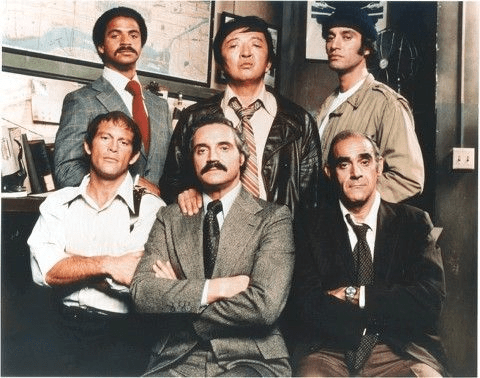
đˇtumblr.com Cast of Barney Miller
In the Temple interview, Pitlik said that his âmain responsibility is to create an atmosphere in which each of the people involved in the production can conform to their best work. Although a director oversees all aspects of the production, there are many people involved, and heâs dependent on all of them. Thereâs no more collaborative business than the television business. Each person contributes to the success or failure of a show whether he or she is a writer, actor, cameraman, or whatever.â
In 1995 he began directing episodes of The Home Court and did so for 14 of the 20 episodes. I must admit I do not remember this show at all. The synopsis was Sydney Solomon was a family court judge who had to deal with the toughest prosecuting attorneys and repeat offenders. However, her biggest challenges came when dealing with her kids, four boys aged 11-19.
đˇpinterest.com
Pitlik had better luck with his third marriage to Susan Whittaker which lasted from 1986 until his death in 1999. Whittaker was a television producer. Noam passed away from lung cancer at age 66.
Like Jerry Paris, Pitlik had a very successful acting career before finding his passion behind the camera. If you are responsible for directing a series, Barney Miller is a great accomplishment. It was fun to learn more about his career both in front of and behind the camera.
We are learning about some of our favorite female character actresses. Today we are learning more about the life of Virginia Sale.
đˇchampaigncounty history museum.com
Virginia was born in 1899 in Illinois. Her father Frank was a dentist, and her mother Lillie Belle was a poet and truant officer for the Urbana Illinois School District. After graduation, she attended the University of Illinois for two years and then transferred to the American Academy of Dramatic Arts in New York where she graduated in the early twenties. Her brother Charles was a vaudeville comic, and he persuaded her to go to Hollywood to pursue a film career.
She began her career in Hollywood as an extra. In 1931, she did an interview for the Kansas City Star where she said âI had known an assistant director [named Ned] when I lived in New York. He introduced me to King Vidor, then casting for The Crowd. He gave me quite a good bit in the picture, although it lasted only five days. When asked how much salary I wanted, Ned told me to say $350 a week. âWell, I think you ought to work for us for $25 a dayâ the casting director said. âThatâs an awful comedown I protested,â trembling in my boots. âAll right then, letâs compromise on $35 a day,â he said. I was awfully glad to get it.â That would be almost $600 a day currently.
đˇx.com
During her first two years in Hollywood, Virginia lived at the Hollywood Studio Club. She appeared in 54 films between 1930 and 1935.
The Hollywood Studio Club was created as a safe place for starlets to live. Mary Pickford, along with several other women, was trying to raise money to construct a new building to house actresses. Will Hays gave $20,000 and soon after the studios contributed. Julia Morgan was hired as the architect. She designed an Italian Renaissance Revival style building that opened in 1926. The first floor had a spacious lobby, a library, writing rooms, a dining room, and a stage. The upper stories were single, double, and triple rooms. Men were only allowed to be on the first floor. You had to be between 18-35 years old, be seeking work as an actress, and could stay a maximum of three years. A hundred women lived there, paying $10-15 a week for room and board.
đˇmayberrywikifandom.com
Barbara Hale, Donna Reed, Dorothy Malone, Ann B. Davis, Barbara Eden, Sharon Tate, and Sally Struthers were just a few of the women who lived there. The most famous resident was Marilyn Monroe. After the culture shift in the sixties and seventies, the residents decreased until the Club could no longer financially exist. In 1975 the doors were closed, and the contents were auctioned off.
In Hollywood Sale was often cast as an older woman, even though she was still in her twenties. She entered the movie entertainment business just as silent films were ending. Her first role was in Legionnaires in Paris in 1927. During her film work, she met actor and studio executive Sam Wren, and they married in 1935. In 1936 they had twins named Virginia and Christopher.
In the thirties, Virginia developed a one-woman show based on her life growing up in Illinois which she called âAmerican Sketches.â She performed the piece more than 6000 times throughout the thirties, forties, and fifties, even touring Europe during WWII. This sounds like it would have been a fun show to see. Some of the different pieces of the performance included: âTraveling on the Illinois Centralâ where she portrays a mother trying to keep her son under control after a visit with relatives; âLife of the Partyâ where she is a giggling, talkative woman who annoys a young man she is trying to impress; âMealtime in Indianaâ where she impersonates a housewife trying to get ready for the Ladies Guild while preparing supper for her family; âThree OâClock in the Morningâ as a weary hostess trying to get her guests to go home, and âI Remember Abraham Lincolnâ where she is Grandma Willoughby reminiscing about her encounters with Lincoln.
đˇrottentomatoes.com
She also received some radio work, including a serial, For Those We Love, playing Martha the maid every Sunday for eight years.
Her film career continued to develop during those decades and she appeared in Topper, When Tomorrow Comes, They Died with Their Boots On, and Night and Day.
Sam served in WWII as part of the Air Corps. When he returned home, he had a six-year position as executive secretary for the Actorâs Equity. He was an executive at both Warner Brothers and Columbia studios.
đˇimdb.com Topper
In 1949 as television was developing, she and Sam created a sitcom, Wrenâs Nest which featured the life of the Wrens starring Virginia, Sam, and the twins. The show aired three times a week. Virginia took over writing duties on the show. Many of her scripts were based on real events that happened to the family. The series contained 47 episodes.
During the fifties, Sale took a break from the big screen, focusing on television shows and commercials. She appeared in several series in the fifties, but she hit her stride during the sixties. If you watch a lot of television from that decade, you can catch her in a variety of shows including The Many Lives of Dobie Gillis, Ben Casey, The BeverlyHillbillies, Wild Wild West, The Andy Griffith Show, Green Acres, and I Spy. She had a recurring role on Petticoat Junction where she played several characters. Her final television role was in Police Woman in 1975.
Sam passed away in 1962, and Virginia lived another thirty years, dying in 1992 from heart failure. Both Sam and Virginia are buried in Arlington National Cemetery. She spent her final years at the Motion Picture and Television Country Hospital in Woodland Hills, California.
đˇ
Sale could thank Mary Pickford for her home once again. Pickford was part of the Motion Picture Relief Fund which she founded with Joseph Schenck and Reverend Neal Dodd. When several former Hollywood stars died destitute in the thirties, 48 acres were purchased in the San Fernando Valley to build a Motion Picture Country House. In 1948, the Motion Picture Hospital was dedicated on the grounds. Later television actors were invited to live there as well. By that time, the site included a retirement community with individual cottages, administrative offices, and a hospital. Fees are based on the ability to pay. Actors, artists, backlot men, cameramen, directors, extras, producers and security guards are all eligible to live there. To live there, residents must be at least 70 and have worked in the entertainment industry for at least 20 years.
It was fun to learn not only about Virginia Sales but also the places she lived at the beginning and the end of her career.
This month, our theme is Bam! Pow! Batman Villains. We have learned a bit about the careers of the Joker and Cat Woman, and today we are spending some time with the Riddler, portrayed by Frank Gorshin.
đˇimdb.com
Gorshin started out as an impressionist and comedian before transitioning into acting.
Frank was born in Pittsburgh in 1933 into a blue-collar, middle-class family. His mom was a seamstress, and his father was a railroad worker. His paternal grandparents arrived in the US from Slovenia and his mother was born in Slovenia, coming to the Pittsburgh area as a young girl; his parents were very involved in the Slovenian community, both singing with the Preseren, a Slovenian singing society.
When he was 15, Gorshin got a part-time job as an usher at the Sheridan Square Theatre. He studied the mannerisms of the actors he watched in those movies and developed an impressionist act. Some of his favorite actors to mimic included James Cagney, Cary Grant, Al Jolson, and Edward Robinson. After entering a talent contest in 1951, he won a week-long engagement at the Carousel nightclub in New York.
Sadly, Gorshinâs older brother was hit by a car two days before and died. His parents convinced him to keep his performance schedule and sent him to New York.
After high school, Gorshin enrolled at the Carnegie Tech School of Drama (now Carnegie Mellon University).
đˇimdb.com
At age 20, Frank was drafted into the US Army and sent to Germany. He was an entertainer in Special Services for a year and a half. When Gorshin left the Army, he began his acting career, appearing in four movies and on television in Alfred Hitchcock Presents.
I canât imagine the horror Gorshinâs parents felt when getting a call in 1957 that their son had fallen asleep while driving from Pittsburgh to Hollywood, a 39-hour trip for a screen test. With their other son passing away from a car crash six years earlier, now they had to deal with the fact that their other son was in a coma with a fractured skull. Luckily, he made a full recovery.
Another big event occurring in 1957 was his marriage to Christina Randazzo. They had a son and separated later in life, but they never did divorce as far as I could tell.
Until his death, Gorshin would appear in more than sixty big-screen films. During the fifties, he only appeared in a handful of television series, but that would change in the 1960s. Some of the most memorable shows included The Defenders, The Munsters, Star Trek, and The High Chapparal. With his comedy act, he visited The Ed Sullivan Show four times. The first time he did his impressionist act on the series, he would be scheduled with this new band called The Beatles.
đˇmetv.com
The sixties also found him on Batman, his reason for being in this monthâs blog series. He said that he developed a fiendish laugh at Hollywood parties. âI listened to myself laugh and discovered that the funniest jokes brought out the high-pitched giggle that I use on the show. With further study, I came to realize that it wasnât so much how I laughed as what I laughed at that created the sense of the menace.â
He did not love the unitards that many of the comic book villains wore, so he asked for a green business suit and bowler hat, covered with question marks since he always left riddles for Batman and Robin to solve. He often said âRiddle me this, Batmanâ which became a catchphrase of the mid-sixties.
Gorshin said âWhen I was first approached to play the Riddler, I thought it was a joke. Then I discovered the show had a good script and agreed to do the role. Now I am in love with the character.â
đˇimdb.com
Gorshin was the only villain to be nominated for an Emmy. He got the nod in 1966 for the episode âHi Diddle Riddle.â He had some tough competition, going against Werner Klemperer as Colonel Klink on Hoganâs Heroes, Morey Amsterdam on The Dick Van Dyke Show, and winner Don Knotts on The Andy Griffith Show.
Gorshin was in ten episodes of the show, but after appearing numerous times, he was unavailable, and the producers replaced him with John Astin. I realized hindsight is 20/20 as they say, so the producers were never considering the effect the show would have on pop culture and the decades it would be a fan favorite, but that switch seems extreme. However, they did it with Julie Newmar and Eartha Kitt as well, so maybe they figured if you have to replace a villain, letâs replace them with someone very different from the original. Gorshin, however, was not a fan of being replaced but did get over it enough to accept his tenth episode role in season three and appeared as Riddler in the 1979 made-for-television movie Legends of the Superheroes.
Frank made his Broadway debut in 1969 in the musical biography, âJimmyâ which was about the controversial life of New York mayor Jimmy Walker.
Gorshin was very busy in the seventies and eighties. Among the twenty plus shows he appeared on were The Virginian, Martin and Rowanâs Laugh In, Ironside, Hawaii Five-0, Charlieâs Angels, and Murder She Wrote.
In the last three decades of his life, he spent more time making big-screen films. One thing I found surprising is that Gorshin appeared in three soap operas, all at different times in his career: General Hospital in 1963, The Edge of Night in 1982, and The Bold and the Beautiful in 1999.
In the early 2000s, Gorshin did a one-man Broadway show, portraying George Burns. He was reunited with his Batman cast in a made-for-tv movie, Return to the Batcave: The Misadventures of Adam and Burt. His last appearance was on CSI: Crime Scene Investigation on âGrave Dangerâ on which he played himself. The episode was directed by Quentin Tarantino and was dedicated to Gorshin.
đˇdiscogs.com
Unfortunately, Gorshin was a heavy smoker throughout his life. Adam West once said that âFrank could reduce a cigarette to ash with one drawâ and his nightclub performances warned patrons they would be exposed to a lot of second-hand smoke if they attended. Not surprisingly, he died from lung cancer, complicated by emphysema and pneumonia.
I enjoyed getting to know Frank Gorshin in this blog. While I was much more familiar with the careers of Burgess Meredith and Julie Newmar, Gorshin and Cesar Romero are actors I knew very little about. I hope you are also enjoying getting to know these fun âvillains.â