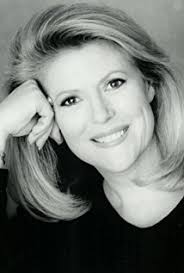
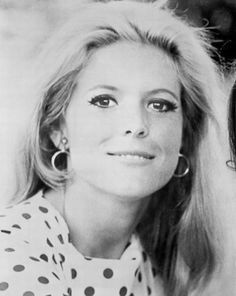
I Know That Girl From Somewhere: The Career of Meredith MacRae

mac1

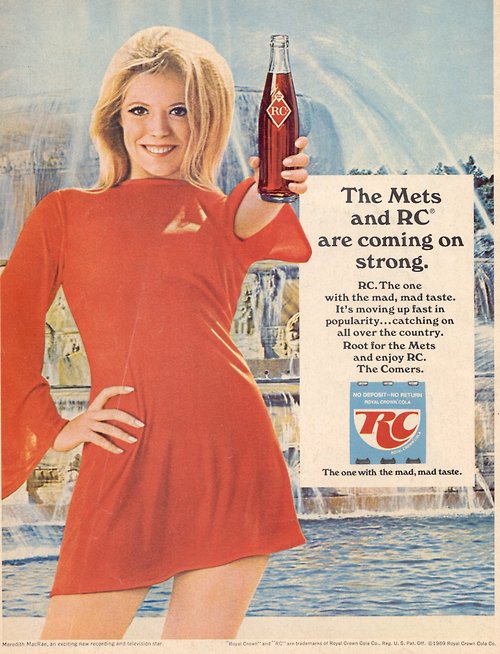
Meredith MacRae is one of those actresses almost everyone recognizes but are not always sure why they remember her. Perhaps it was one of her 14 movies. Then again it could be the two television shows she had a regular role on or one of the other 18 shows she appeared on. It might be from a game show where she was a a panelist or as a singer on a variety show or one of her many commercials. Some folks saw her talk show in LA. She also worked hard for a variety of charities and traveled around the country speaking on alcoholism. Viewers might not be exactly sure how they know her, but everyone realizes they liked her. She had that friendly and caring quality.

mac11parents

MacRae was born on May 30, 1944, in Houston, Texas on a military base where her father was stationed. Her father, Gordon MacRae was a big star, featured in Roger & Hammerstein’s Oklahoma and Carousel. Her mother, Sheila MacRae was an actress and comedienne, appearing as Jackie Gleason’s wife on The Honeymooners.

Meredith began her acting career at a young age, receiving a part in By the Light of the Silvery Moon in 1953, which starred her father. Her part was later cut.

Her father struggled with alcoholism, and her parents divorced when she was ten.  Meredith was always close with her siblings.

mac9norwood

She attended UCLA and obtained a Bachelor of Arts degree in English. She had roles in two of the ever-popular beach blanket movies—Beach Party in 1963 and Bikini Beach in 1964. That same year she married Richard Berger, former president of MGM. They divorced four years later.

mac4

Meredith would appear on the big screen ten more times, none of the movies being well remembered.

mac2

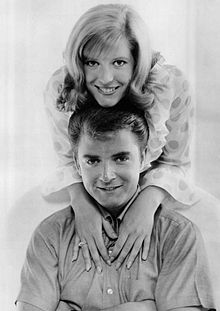
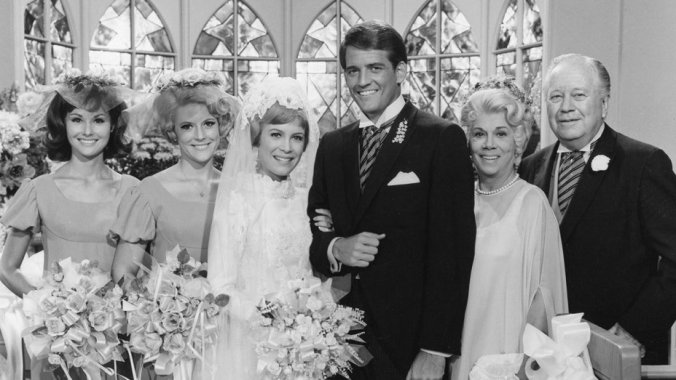
In 1963, Meredith was offered a role on My Three Sons. She played Sally, Mike’s girlfriend and later wife from 1963 until 1965. Although the show was on the air until 1972, Tim Considine who played Mike, left the show in 1965 and the story line was that he and Sally moved to Arizona.

mac8

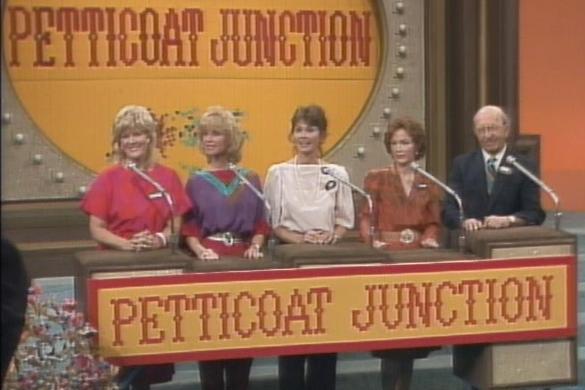
MacRae was offered another sitcom role when her work on My Three Sons ended. She took the role of Billie Jo Bradley on Petticoat Junction, appearing in 114 episodes. She was the third star to play Billie Jo. In 1970 the show as cancelled.

greg

In 1969, Meredith married again, this time to actor Greg Mullavey (best known from his role on Mary Hartman, Mary Hartman). They divorced in 1972 but remained friends and had a daughter Allison. Meredith was extremely close to her daughter and she traveled with her often.

Meredith released two singles with Lori Saunders and Linda Kaye Henning, her sisters on Petticoat Junction. She also had two singles as a solo artist. She was also seen on many game shows including Match Game, Family Feud, and the $10,000 Pyramid.

mac6

Meredith would continue her television career throughout the 1970s and 1980s. She was seen in The Interns, The FBI, The Rockford Files, CHiPs, Fantasy Island, Webster, Magnum PI, and was on my favorite episode of Love American Style.

mac7

Eventually Meredith became a television producer and writer. She also made several PBS specials tackling women’s issues, medical problems, and the aging of America. She received her own talk show which was really an investigative show called “Mid-Morning Los Angeles” for which she won an Emmy.

During the late 1990s, MacRae complained about vertigo and a loss of short-term memory. She was misdiagnosed as having issues related to peri-menopause. In 1999, she struggled with severe headaches and was told it was muscle spasms.  When she went in for a second opinion, she discovered she had Stage 4 brain cancer. She had the tumor removed and then agreed to join an experimental cancer drug treatment group, but she had an allergic reaction which caused her brain to swell. She had more surgeries and then broke her hip.

Many people praised her for maintaining her dignity and sense of humor during this painful time.

Meredith had a way of making others feel important. She had a genuine warmth and was friendly, appearing sincerely interested in others. I read about a Ladies’ Fun Night which she held every month or two. She would invite her friends and a guest speaker. Typically, about 25 women were invited including her old friend Linda Henning.

Meredith always found time to travel to discuss the effects of alcoholism on families. She enjoyed seven years with her father when he was sober before he passed away, and he approved of her speaking engagements.  She also worked for many charities including the League of Women Voters, Women in Film, Committee for the Children’s Burn Foundation, and the United Cerebral Palsy Foundation (UCPF). Her parents had also supported UCPF, and Meredith was their telethon host for 20 years. After she passed away, the MacRae/Edelman Center, a place where adults with cerebral palsy can get help, was named for her.

mac5

When asked what helped her get through some of the tough times in her life, she replied “I believe in getting help from your friends. I don’t know what I would do without my women friends.” Many viewers who never met Meredith in person considered her a friend. She lived an incredibly meaningful life.


The Alliterative Harry Morgan (Famous for saying Horse Hockey and Beaver Biscuits as Colonel Potter)

morgan1


When it comes to prolific actors in television and film, few people can equal Harry Morgan’s career. Known for his deadpan delivery, he was in more than 100 films. He also starred in 11 television series and appeared on 6 TV Guide covers.


Born Harry Bratsberg in 1915, he grew up in Muskegon, Michigan. His parents came from Norway and Sweden.  Harry went to the University of Chicago, planning on becoming an attorney but got interested in acting instead. In 1937, he began appearing with stock companies, followed by Broadway roles.

Harry Morgan From 'December Bride'


His first wife was Eileen Detchon who he was married to from 1940 until her death in 1985. Her photo appears on Colonel Potter’s desk on M*A*S*H. They had four sons: Christopher, Charley, Paul and Daniel. Morgan remarried in 1986 and was married to Barbara Bushman until his death.

morgan8


He was signed by Twentieth Century Fox in 1942. His screen debut was The Shores of Tripoli under the name Henry Morgan. Later that year he appeared in Orchestra Wives and a few years later was in The Glenn Miller Story with Jimmy Stewart. In 1943, he starred with Henry Fonda in the highly acclaimed The Ox-Bow Incident.


In 1954, he was offered the role of Pete Porter in December Bride which ran until 1959. In the show, he complained about his wife Gladys a lot, but we never meet her. When the show ended, he starred in a spin-off Pete and Gladys from 1960-1962. Pete Porter is an insurance salesman. His scatter-brained, but beautiful, wife is played by Cara Williams.


The next year he was cast in The Richard Boone Show from 1963-1964. This was an anthology series which Richard Boone hosted.  A cast of 15 actors appeared in different roles each episode. Morgan appeared in all 25 episodes. The show never captured viewers, probably because it was on against Petticoat Junction.

richard boone


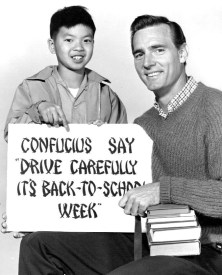
Almost immediately upon its ending, he was again cast in a television show with a role on Kentucky Jones during 1964 and 1965. Kentucky Jones is a veterinarian and former horse trainer.  He and his wife adopted a Chinese boy named Dwight Eisenhower “Ike” Wong. After his wife’s death, the local Asian community and handyman Seldom played by Morgan helps him raise Ike.

ky jones


Morgan had a couple of years of guest starring in shows such as The Wackiest Ship in the Army and Dr. Kildare, and then he was cast in Dragnet from 1967-1970. He and Jack Webb were friends before the show and continued to be best friends throughout Harry’s life. Webb had directed the previous Dragnet show in the 1950s and revived the show in 1967, convincing his friend to play the role of Officer Joe Gannon who helped Sergeant Joe Friday (Webb) solve crimes in Los Angeles.

morgan4


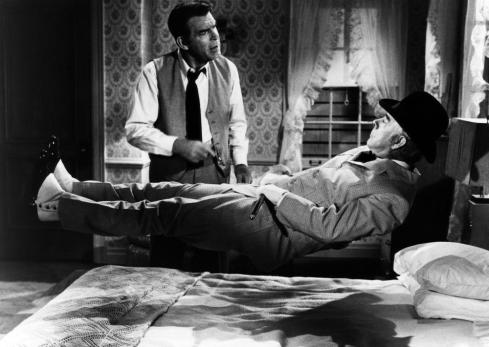
Between 1970 and 1972 he would show up in The Partridge Family in two different roles and Love American Style among other shows. 1972 would find him starring in another show, Hec Ramsey, until 1974. This show reunited Morgan with Richard Boone who starred in it and Jack Webb who produced it. Ramsey was a western detective who preferred to solve crimes with his brain rather than his gun. The show only lasted for ten episodes.

morgan23


From 1974-1983, he was cast in his most famous role, that of Colonel Potter on M*A*S*H. A military hospital staff treating soldiers during the Korean war rely on laughter to get through the gruesome work. The show combined heartache and joy to tell the story of the 4077th. When the show was cancelled, Harry continued the role in the spin-off, After M*A*S*H from 1983-1985.

morgan14

On M*A*S*H Morgan painted the portraits attributed to Colonel Potter. He won the Emmy for Outstanding Supporting Actor in 1980, receiving 11 nominations overall during the run of the show.

morgan13

His description of Colonel Potter was: He was firm. He was a good officer, and he had a good sense of humor. I think it’s the best part I ever had. I loved playing Colonel Potter.”

morgan11

When asked if he was a better actor after working with the show’s talented cast, Morgan responded, “I don’t know about that, but it’s made me a better human being.


MBDCHAN EC021

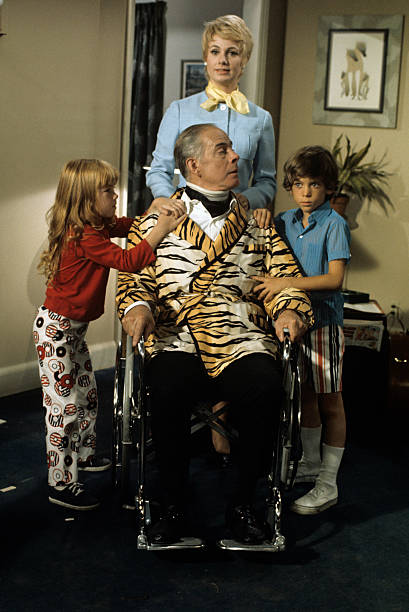
Morgan also appeared in several Disney movies during the 1970s, including The Barefoot Executive, Snowball Express, Charley and the Angel, The Apple Dumpling Gang, The Cat from Outer Space, and The Apple Dumpling Gang Rides Again.

In 1986 he was cast in Blacke’s Magic. The show featured a magician and his father, a con man, who solve crimes. Unfortunately, like many of the shows he was a part of, this one only lasted 15 episodes. When it ended in 1987, Harry was immediately given a role in You Can’t Take It with You where he appeared on three episodes during 1987 and 1988. Morgan starred as Martin; the show was based on the original play, but the television series was set in the 1980s.  Although Morgan was only in three episodes, he was in the majority of them, because the entire show consisted of four episodes.

morgan22blackes


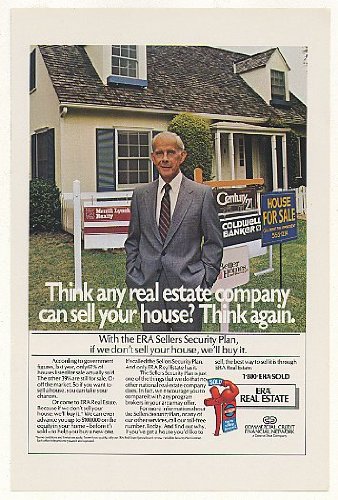
In the 1980s, he appeared in commercials for ERA realty and Toyota.

era


During the late 1980s and early 1990s, he appeared in six different shows, with recurring roles on The Simpsons and Third Rock from the Sun. In 1996 he retired.

morgan25thirdrock


In 2006, Morgan was inducted into the Hall of Great Western Performers at the National Cowboy & Western Heritage Museum.


Many of his western films were done with James Stewart. They did five films together, and Morgan says Stewart was one of the nicest men he ever met and extremely professional.


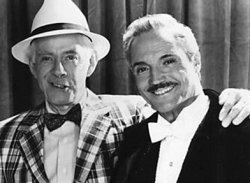
In addition to Jack Webb, he was good friends with Tim Conway and Don Knotts.

A very interesting man, in his spare time, he enjoyed golfing, fishing, travel, spending time with his family, reading, raising horses, horse riding, painting, and poetry.

morgan5

He died in 2011 from pneumonia.

Following Morgan’s death, Mike Farrell, who played B.J. Hunnicutt, starring with Morgan in M*A*S*H, released the following statement:

“He was a wonderful man, a fabulous actor and a dear and close friend since the first day we worked together. As Alan [Alda] said, he did not have an unadorable bone in his body . . . He was a treasure as a person, an imp at times, and always a true professional. He had worked with the greats and never saw himself as one of them. But he was . . . He was the rock everyone depended on and yet he could cut up like a kid when the situation warranted it. He was the apotheosis, the finest example of what people call a ‘character actor’. What he brought to the work made everyone better. He made those who are thought of as ‘stars’ shine even more brightly . . . The love and admiration we all felt for him were returned tenfold in many, many ways. And the greatest and most selfless tribute to the experience we enjoyed was paid by Harry at the press conference when our show ended. He remarked that someone had asked him if working on M*A*S*H had made him a better actor. He responded by saying, ‘I don’t know about that, but it made me a better human being.’ It’s hard to imagine a better one.”

morgan6


Today, I Get to Introduce You to One of My Very Favorite People, Blanche Morton, via Bea Benadaret

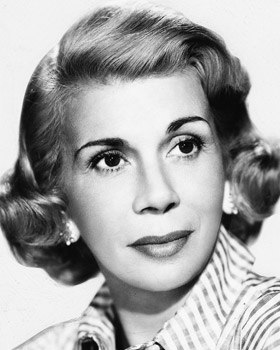
This week I’m excited to learn more about one of my favorite entertainers—Bea Benardaret. Bea had a long and successful career in radio and television, as well films. Nick-named Busy Bea, she would get credit for making more than 1000 radio and television appearances.

bea2

Born in 1906 in New York City, she was raised in San Francisco. Her first radio appearance occurred when she was 12 years old in Beggar’s Opera.  While still in high school, Bea went to work for radio station KFRC where she acted, sang, wrote, produced, and announced. She went on to the Reginald Travis School of Acting.

bea15

She married Jim Bannon in 1938. Their marriage would last until 1950 and produce two children, Maggie and Jack. She later married Gene Twombly in 1958 and remained married until her death.  Jack tells a story about when his mother was very pregnant with his sister. While exiting a cab, she fell and broke her pelvis.  It was so traumatic that her brunette locks turned white. At that time, she began dyeing her hair the blonde color we would all recognize once she transitioned to television.

Bea’s son Jack became an actor who has 91 credits for television and movie work. He appeared on Petticoat Junction 15 times, but was best known for his role of Art Donovan on Lou Grant. He was married to Ellen Travolta and passed away in the fall of 2017.

bea21

Bea could probably win the award of most-often misspelled name. You can find her name spelled Benardaret correctly or Benederet or Benadaret. On several episodes of Burns and Allen, you can even find credits spelling her first name “Bee.”

bea20

After graduation, she entered the radio business full time. She moved to Hollywood in 1936 and found work on The Jack Benny Show and shortly after with Orson Welles’ Mercury Theater in 1937. She was featured in 36 different radio shows with her most famous roles being Gertrude Gearshift on The Jack Benny Show, Eve Goodwin on The Great Gildersleeve, Millicent Carstairs on Fibber McGee and Molly, Gloria the maid on The Adventures of Ozzie and Harriet, and Iris Atterbury on My Favorite Husband. She received a starring role in Granby’s Green Acres, the forerunner of the Green Acres Show.

bea5

In 1943, she became one of the primary voices of Warner Brothers Merrie Melodies and Looney Toons cartoons. She met Mel Blanc during this time and they remained friends for life.

bea1

Bea also received roles in six films including a government clerk in Notorious (1946), one of two women Gene Kelley and Frank Sinatra encounter on the subway in On the Town (1949), and Tender is the Night (1962).

Bea’s first television role was my favorite character—Blanche Morton on the George Burns and Gracie Allen Show. Bea had appeared on their radio show and when the duo transitioned into television, she made the move with them. From 1950-1958 she was Gracie’s best friend and long-suffering wife of Harry Morton. Bea credited George Burns for teaching her about comedy. Bea was awarded two Emmy nominations for her portrayal of Blanche.

Not long after she was obligated to play Blanche, Lucille Ball offered her the role of Ethel Mertz on her new show I Love Lucy. Bea had to decline, but she did make an appearance on the show in 1952. Her “husband” on My Favorite Husband and Granby’s Green Acres was Gale Gordon.  He, too, was approached to play Fred Mertz; however, similarly to Bea’s situation, he had already agreed to transition from radio to television on Our Miss Brooks. He too would costar on the show and later he was able to work with Lucille Ball again on her other television shows.

bea3

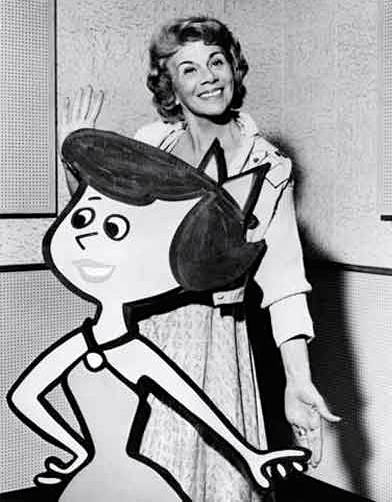
In 1960 Bea accepted the role of the housekeeper on Peter Loves Mary. That same year she agreed to provide the voice for Betty Rubble when The Flintstones debuted on Friday nights. She would provide voices on The Flintstones for 112 episodes.

bea11

Paul Henning was one of the writers for Burns and Allen. He and Bea became friends in the 1940s, and in 1962 he created a show called The Beverly Hillbillies. He brought in Bea for the role of Granny, but when Bea saw Irene Ryan’s audition, she told Paul he had definitely found his Granny. He then created the role of Pearl Bodine for Bea. She would appear in 22 episodes. Donna Douglas, who played Elly May, said that “watching her timing is like watching a ballerina. She’s so effortless.”

When Henning created a spin-off in Petticoat Junction, the role of Kate Bradley was written specifically for Bea. She appeared in 179 of the episodes of the show that aired from 1963-1969. Henning’s wife’s family ran the Burris Hotel in Eldon, Missouri that catered to salesmen traveling by railroad, and those stories became the basis for Petticoat Junction. Kate, a widow, runs the hotel with help of her Uncle Joe who is often busier trying to avoid work than helping out. She has three daughters Billie Jo, Bobby Jo, and Betty Jo. (During the show’s run, there would be three Billie Jo’s, and two Bobby Jo’s but only one Betty Jo, who was portrayed by Linda Kay Henning, Paul’s daughter.)

bea13

Charley Pratt and Floyd Smoot run the Cannonball, a train that enables the Bradleys to travel to Pixley and Hooterville. Cut off from the main railroad twenty years earlier in a trestle demolition, the train caters to local residents, often stopping to move cows or let someone visit a neighbor between official stops. Sam Drucker runs the general store in Hooterville and is always the center of local society. Though it was never made too obvious, Kate and Sam had a special relationship, and we always assumed that once the girls were grown and gone, and Sam was ready for retirement, he and Bea would end up together. The old-fashioned hotel offers home cooking and a nostalgic feel. Other titles considered were Ozark Widow, Dern Tootin’, and Whistle Stop. When Steve Elliott, the crop duster, came to town, he dated Billie Jo. They made a glamorous couple, but a season or two later, he realized he truly loved Betty Jo, the youngest and the tomboy who helped in repair his plane. They married and had a daughter, Kathy Jo.

bea23

In 1967 Smiley Burnette (Charley) passed away. In 1968 Bea became ill and died that year from lung cancer and pneumonia. Bea’s second husband, Gene Twombly, passed away four days later from a heart attack. June Lockhart was brought on to the show as Dr. Janet Craig to help be a mother figure to the girls. Ratings declined in season 6 with the loss of Bea; however, the network renewed the show for another year so there would be five years of colored episodes for syndication. Ratings increased during the last year, but in 1969 when the new administration cancelled all the rural shows, Petticoat Junction received its walking papers too.

bea12

There were always rumors that there would be a reunion from the show, but that never happened, although the cast did take on both the Brady Bunch and Leave it to Beaver crews on Family Feud in 1983.

bea22

Bea was known for her laugh. By all accounts, she was a kind woman and extremely professional in all her roles. While I enjoy Petticoat Junction, I adore Gracie Allen, and am always happy to indulge myself watching Burns and Allen Show episodes. Bea holds her own on the show and makes a wonderful practical counterpart to Gracie’s illogical logic. If I had a time machine, one of the first visits I would make would be back to 1950 to enjoy a cup of coffee with Gracie and Blanche.

bea16

I Wish You a “Busy Christmas”

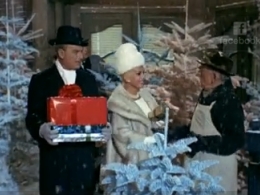
Merry Christmas!  I hope you are all enjoying a peaceful and happy day. We have a lot of holiday traditions in our family. When it comes to pop culture “must see” shows, we always watch Frosty, The Snowman; How the Grinch Stole Christmas; and a Charlie Brown Christmas, and the other specials are extras if we get them in.  Christmas movies are different for each generation.  I like White Christmas, while my oldest son never misses Elf.  But when it comes to television, one episode we all agree on is “Busy Christmas” from the Adventures of Ozzie and Harriet.  Our family makes an effort to watch this every year together. There is something charming about watching an episode that is more than 60 years old but still speaks to us in how we celebrate Christmas.  Ozzie, after vowing not to, involuntarily agrees to so many Christmas activities that he has no time to put up lights or buy a tree.

busy2

The show first aired in December 19, 1956 . It was the 12th episode of season 5. It was written by Jay Sommers, Don Nelson, Ozzie Nelson, and Alfred Nelson.  Alfred’s only writing credits were 4 Nelson episodes.  Ozzie, of course, helped write almost every episode.  Don Nelson, another brother, enjoyed a long writing career.  He helped Ozzie write the movie Here Come the Nelsons and he went on to write for a variety of shows including Bachelor Father, the Donna Reed Show, the Mothers-in-Law, the Doris Day Show, Bridget Loves Bernie, Herbie the Love Bug, Julia, The Ghost and Mrs. Muir, Nanny and the Professor, as well as a few episodes of Ozzie and Harriet’s later show, Ozzie’s Girls and 326 episodes of The Adventures of Ozzie and Harriet. Jay Sommers got credit for 146 of the Nelson episodes and went on to write for Dennis the Menace, wrote many Petticoat Junction shows, almost all the Green Acres scripts, and, surprisingly, Hello Larry which we looked at a few weeks ago.

Produced by Ozzie and Leo Pepin, the show’s set decoration was created by Jack Moore.  Moore had six Academy Award nominations and won for Little Women in 1949. The costume designer was George Sedilla, and the show was filmed at the General Service Studios, 1040 N. Las Palmas, Los Angeles.

In addition to the regular cast, Phil Arnold appears as a tailor and Isabelle Randolph is Mrs. Brewster.

This episode opens with Ozzie and Harriet looking at some of their Christmas cards.  Ozzie mentions he wished people took time to write in their cards.  He sees one that is a perfect example of what a card should say.  It has a very warm and sentimental message.  When Harriet agrees it is nice and asks who sent it, Ozzie replies, “Acme Cleaners.”


Modern Christmas cards were started by the Hall brothers whose company would become Hallmark.  They were post cards, but people did not have enough room to write what they wanted to tell people they didn’t see often. In the 1930s, Hallmark switched to a “book format” which is our card today.  The cards increased in popularity from the mid-1930s to the 1960s. Hallmark began commissioning famous artists to design cards including Salvador Dali, Grandma Moses, and Norman Rockwell. The Nelsons would have had to use regular postage stamps, because Christmas stamps did not debut until 1962. It’s funny that the switch to these cards was made so people could write more, but Ozzie’s complaint (and one you hear often today) is that people didn’t write anything personal.


busy12

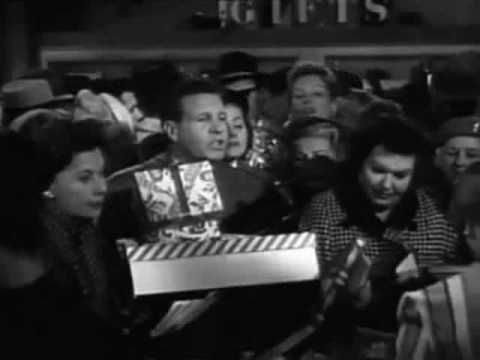
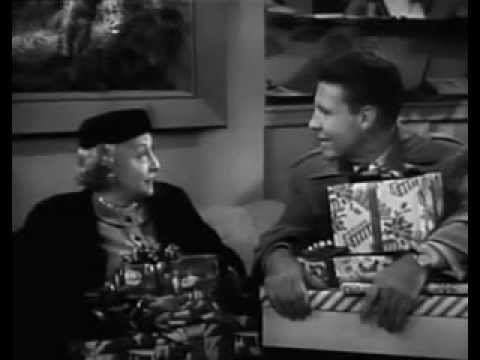
Scene 2 cuts to Ozzie trying to maneuver through a mad rush of people shopping in a department store.  His arms are full of wrapped packages. He tries to ask a clerk for a Donkey Party game.  Giving up, he takes cover in a seating area and ends up sitting next to Mrs. Brewster.  We learn it is a week before Christmas. They are watching a busy crowd and listening over the speaker as Irving Muller is lost and they attempt to find his mother.  Eventually they find her, but now Irving is gone.  Ozzie reminisces about a Christmas when he and Harriet were first married.  They were looking at the tree when all the sudden they heard “Silent Night” and were caught up in the beauty of the song and the carolers on Christmas Eve.  Mrs. Brewster says that is perfect because they would like the Nelsons to join them for caroling this Christmas Eve.  Ozzie says he’ll talk to Harriet, and if she agrees, they will.  Mrs. Brewster smiles and says Harriet has already agreed to it if Ozzie was willing. Over the loudspeaker they hear little Ozzie Nelson is missing and then the message is corrected that Mrs. Nelson is looking for Mr. Nelson.

busy10


Donkey Party was a version of pin-the-tail-on-the donkey. It came with a poster and 24-30 tails. Some of the other classic toys from this year are Candy Land, Mr. Potato Head, a Slinky Dog, and a Lone Ranger guitar.

busydonkey

Following World War II, the nation displayed an era of peace, productivity, and prosperity and this could be seen in the nation’s department stores.  At Christmas the windows were magical places where beautiful scenes were created, often with moving parts.  Ozzie’s presents were wrapped because that was a service department stores provided, saving the customer time later. Here are some vintage options Ozzie might have been able to choose from.


By Scene 3, a few days have passed. Ozzie is helping Harriet hang a wreath on the wall. When Harriet asks him about the tree and putting up lights, he says it’s too early to get the tree, and he decided not to put up lights this year.  He tells her he is not going to get overly busy again this year.  The doorbell rings and Doc Williams enters in.  Doc tells Ozzie that he has been appointed entertainment chairman of the Men’s Club for Christmas, and instead of the regular pageant, they have decided to do a shortened version of the Christmas Carol. Doc will be playing Bob Cratchet. Ozzie tells Harriet this is exactly what he was talking about.  They make one of the busiest men in town chairman and how unfair that is.  Doc looks confused and then starts to laugh.  He assumes Ozzie is auditioning for the role of Scrooge and he gives him the role. Doc asks when the lights are going up, and when Harriet says Ozzie isn’t putting them up this year, Ozzie says yes he is, he just hasn’t gotten around to it yet.


busyj

I have a beautifully illustrated book of  The Christmas Carol, and I try to find time to read it each year.  I also have a Scrooge in his striped night shirt, who is about 4 feet and I love him, although most of my family find him creepy.  My grandfather had a set of Dickens books and liked The Christmas Carol, and I find it inspiring that many generations have enjoyed and learned from this book.

Scene 4 finds Ozzie in his garage a day or so later trying to untangle lights. His friend Joe Randolph stops by and says the guy who always helped as Santa at the orphanage Christmas Eve party moved away.  Now they realized he used his own suit.  Ozzie offers his suit; however, Joe thinks his is also offering to be Santa.  Joe has to hurry off before Ozzie can explain.

busy11

Ozzie would be filling in for Santa because the real Big Guy was too busy Christmas Eve delivering gifts. NORAD began tracking his movements in 1955, so the Nelsons would have been able to follow his progress around the globe.

busy8

Scene 5 is December 23. Mrs. Brewster has dropped off a song, and Doc has dropped off his part. Ozzie climbs the ladder to hang lights and has Rick practice the part of Scrooge with him.  Rick, wearing a sheet like a ghost, leans out the window and plays Marley, ad-libbing the part till Ozzie tells him he must learn the part the way it’s written. David comes in the room and tells Rick to take off the sheet because it’s from David’s bed.  The boys get into a conversation and walk off, leaving Ozzie wondering what is going on.  Ozzie remembers he has to get the Santa suit out of the attic and goes to retrieve it. Mrs. Brewster stops by before he can get back on the ladder to bring more music and asks him to please learn the bass part, because she is short on basses. As he goes back up the ladder to put up the lights, he is called to dinner.


busy1

Scene 6 begins on Christmas Eve day.  Ozzie is walking around practicing his play part and singing his bass parts. He is just leaving the house to get a tree when the phone rings.  It’s Joe Randolph saying that there are so many children at the orphanage, they will have to do two parties instead of one.  Then Doc stops by and says he was called to the hospital for an emergency and Ozzie will have to go pick up the costumes. David offers to drive him.  They rush to pick up costumes from the tailor, then to the orphanage, and then to the play.  During the play, Ozzie knocks a picture off the wall, then drops a prop and, when he picks it up, his pants rip.

Everyone is back at home for Scene 7.  Ozzie is complaining that once again he was too busy.  He talks about how embarrassing the play was and how he hurt his knee hopping in and out of the car.  David says the audience thought what Ozzie did was part of the play and it was funny. Then David says he got a parking ticket.  That is the last straw for Ozzie, but when Harriet inspects it, she realizes it is an invitation to the Policeman’s Ball. At that moment, the carolers arrive to pick up the Nelson family. They are singing “Silent Night” and the family gets quiet and listens to the song, realizing how beautiful it is and what Christmas is all about.  Ozzie goes to get his coat which Harriet has put in the den.  Ricky comes into the hall with a Charlie Brown tree saying that was all they had left when he got to the lot.  As Ozzie opens the den door, a huge tree is revealed decorated with bulbs and tinsel with tons of presents under it. Harriet and Ricky said they did it while Dave and Ozzie were gone.

Tree decorations is one area that has changed drastically today.  Rarely do you see tinsel, garland, or snow flocking.  Back in the 1950s you might have seen bubble lights, or popcorn strands, and the rainbow colors of Shiny Brite ornaments.


They go outside for Scene 8 to join the carolers.  It begins to snow lightly. Doc mentions it’s too bad lights didn’t get put up, but then Ricky hits the light switch and he explains he and Harriet took care of those too. The group moves off singing “Deck the Halls.”

busy9

That’s the end of the 1956 episode, but in 1964, Ozzie replayed this show and added a Scene 10.  It is now 1964.  David is married to June Blair and they have a son Danny. Rick is married to Kris Harmon and they have a daughter Tracy. The entire Nelson family gathers around the tree.  Ricky plays his guitar, sitting in front of the fireplace and decorated tree and sings “The Christmas Song.”  While he sings, the camera pans around watching the rest of the family. It ends with everyone wishing the viewers a merry Christmas.


So much of our culture has changed today from 1956; however, thankfully many Christmas traditions remain.  We still send and get cards, although some of them are on the computer.  We still put up lights and a tree; we just tend to do it earlier, so we can enjoy it longer. We still do things for others like orphanage parties; we just don’t have actual orphanages much anymore. We also can get quiet, listening to “Silent Night” and be deeply touched by the season and what it means to us. This episode is a reminder of that for me every year, and I look forward to it.


Dear Santa

Dear Santa,

I have checked everything off from my to-do list, and as I am sitting down to enjoy some Christmas music and bask in the glow of the Christmas lights and the smell of hot chocolate made from scratch, I wanted to send you my list.  You know I have been very really  fairly  kind of good this past year. These are things no one can buy for me.


A charm bracelet, but no ordinary one. I would love to have charms that are sitcom logos that express my passion for my favorite shows.  You can decide which ones to include–shows like My Three Sons, That Girl, The Partridge Family; you know the ones with the fun symbols.


I wish to host a dinner party with some of my favorite television characters or stars. I think parties work best with an equal number of men and women. Please send invitations to Gracie Allen (Burns and Allen Show),  Carol Burnett (Carol Burnett Show), Steve Douglas (My Three Sons), Bentley Gregg (Bachelor Father), Rhoda Morganstern (Mary Tyler Moore Show), Blanche Morton (Burns and Allen Show), Alice Nelson (The Brady Bunch),  Bob Newhart (Bob Newhart Show), Rob Petrie (Dick Van Dyke Show), Hawkeye Pierce (M*A*S*H), Sally Rogers (Dick Van Dyke Show), Buddy Sorrel (Dick Van Dyke Show), Donna Stone (Donna Reed Show), and Uncle Arthur (Bewitched). I would like to start out with a spinach salad with walnuts and warm brown butter dressing, followed by French onion soup, then lemon-thyme lamb chops with roasted carrots, and finally, a maple crème brulee (catered of course!)


Could you arrange for me to be written into one of my favorite sitcoms? Perhaps I could be Ann Marie’s cousin who has been studying in Europe or one of Laurie Partridge’s friends who Keith has asked for a date. I’d happily take a ride on the Cannonball Express to stay at the Shady Rest for a few days while getting to know the Bradley family. I could play a new neighbor in town who gets to have coffee with Gracie and Blanche. Playing a part in a skit with Carol, Harvey, Vicki, and Tim would be amazing. I would be willing to learn some nursing skills to serve under Major Houlihan. I think I’m a pretty good nose twitcher, so I could be one of Samantha’s relatives who schemes with Uncle Arthur to play a practical joke on Darrin. These are just a few ideas – I’m sure you have several good ones of your own.


So many people buy their clothes at Target, Kohl’s, and other places where they all look similar. I would love to wear some of the outfits my favorite characters wear. Gracie Allen always looked classy in her dress designs. Of course, everything Ann Marie wore was cute and fashionable. One of Bob Mackie’s creations for Carol Burnett would make a nice addition to my closet.  Lisa Douglas had some beautiful sheath dresses that I would like. Phoebe Buffay had some pretty cool outfits on Friends. If you’re having a hard time deciding, I’m sure Mrs. Claus would have some great input.


Finally, Santa, I am happy with the DVDs I have been collecting from my favorite shows. Do you think that you could find me some extra time to actually sit down and watch them?

Thanks Santa.  Don’t miss the milk and cookies on the table for you.  Enjoy December 26.


Love, Diana

Go Green, Green Acres That Is

In the 1950s, a lot of the top shows were set in residential or suburban areas:  Father Knows Best, Ozzie and Harriet, the Donna Reed Show, and December Bride to name a few.  In the early 1960s, the rural sitcom became the hottest genre.  In 1963 The Beverly Hillbillies was #1, Petticoat Junction was #4, and The Andy Griffith Show was #5. Filmways offered Paul Henning the chance to produce a new rural show with no pilot necessary.  Filmways was created in 1952, and the company was behind many successful shows including The Debbie Reynolds Show, The Pruitts of Southampton, Mr. Ed, The Addams Family, and Cagney and Lacey.

Paul Henning approached Jay Sommers to create the new rural comedy. Sommers based the series on a radio show he had written in 1950 —  Granby’s Green Acres.  Granby was based on a book, Acres and Pains by S.J. Perelman. The radio show only lasted for 13 episodes and starred Gale Gordon and Bea Benaderet. Granby was a former banker who moved to the country to run a farm.  He also had a daughter, and the general store owner was a major character, Will Kimble, played in the first episode by Howard McNear. A couple of titles proposed were Country Cousins and The Eddie Albert Show, but the final decision was Green Acres.

green4

Green Acres ran on CBS from 1965-1971 with solid ratings. It produced 170 episodes, all filmed in color.  Richard Bare directed most of the shows. At the end of each episode, Eva Gabor would say “This has been a Filmways presentation dahling.”

While the Beverly Hillbillies took a family out of the mountains and put them in Beverly Hills, Green Acres went with the opposite scenario.

The premise of the show was that Oliver Douglas  who had been a busy attorney in New York City decides he wants to move to the country to run his own farm. His wife Lisa  does not agree. He buys a farm unseen in Hooterville. We are never told where Hooterville is, and I think everyone has their own idea of which state it might be in. The house and farm are more run-down and dilapidated than Lisa ever imagined in her worst nightmare.  The citizens of Hooterville are a quirky set of characters.

green7

The debut show was done as a documentary narrated by John Daly, a former newscaster and the host then of What’s My Line.  Eddie Albert and Eva Gabor appeared on What’s My Line later in the fall as a thank you to Daly. As you can see below, Oliver’s mother is horrified by his choice.

green18

The theme song is memorable and tells the backstory of the Douglases:

Oliver: Green Acres is the place to be – Farm living is the life for me –Land spreading out so far and wide – Keep Manhattan, just give me the countryside.

Lisa: No, New York is where I’d rather stay – I get allergic smelling hay – I just adore a penthouse view – Darling, I love you but give me Park Avenue

Oliver: The chores

Lisa: The stores

Oliver: Fresh air

Lisa: Times Square

Oliver: You are my wife

Lisa: Goodbye city life

Both: Green Acres, we are there

Snippets of country and New York city were shown while the stars sing, and ends with both of them in the same pose as “American Gothic” by Grant Wood.

green1

Like the Andy Griffith Show, the series worked because of the interaction between these Hooterville citizens who become believable for us. Let’s meet the cast of characters.

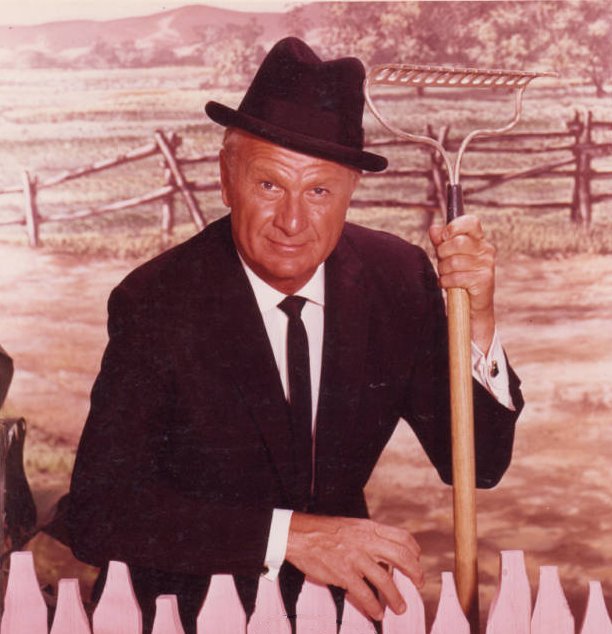
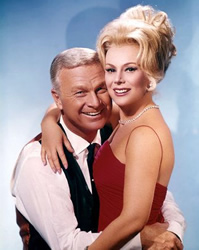
Oliver Wendell Douglas (Eddie Albert) – Oliver is intelligent, hard-working, and practical to a fault.  He has to deal with a kooky wife, a disapproving mother (played by Eleanor Audley who was only 5 months older than Albert), and the quirky neighbors that surrounded him. However, Oliver has a respect for the wisdom these people have about farming and rural life.  Despite the fact that he seems to be the only sane person in the valley, it’s obvious he truly has an affection for the folks he lives with.

albert

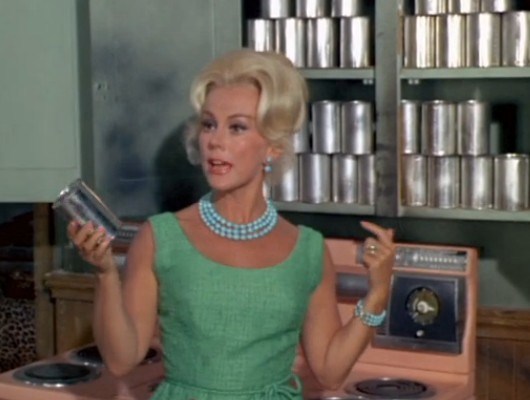
Lisa Douglas (Eva Gabor) – Lisa grew up in a wealthy Hungarian family. Her misuse of the English language is one of her endearing qualities. She has a hard time adjusting to farm life.  In one episode she is using a stapler to fix Oliver’s socks.  While Oliver is telling her how woman for centuries have sewn socks, Fred Ziffel, the most experienced farmer in Hooterville enters the room and tells her he notices she is mending socks; his wife does it the same way. Despite the fact that Lisa did not want to leave the city, she adapts to living in the country quickly and develops an understanding with the neighbors Oliver never attains.

green31

Eb Dawson (Tom Lester) – Eb is the farmhand who lives with the Douglases.  He comes off as naïve, but we understand Eb is much smarter than he lets on.  He is always trying to get less work for more money.  He calls them Mom and Dad which Lisa loves but drives Oliver crazy.

green17

Mr. Eustace Haney (Pat Buttram)- Mr. Haney is the unethical and dishonest salesman who originally sold Oliver the farm, which belonged to his family. He is always showing up to sell them something they need at outrageous prices. [Pat Buttram was Gene Autrey’s sidekick in the movies and tv; Smiley Burnette, Charley, who runs the Cannonball, the local train on Green Acres and Petticoat Junction, was Autrey’s sidekick in radio and movies and  Buttram replaced him when he moved on.]

green5

Sam Drucker (Frank Cady) – Sam was a busy guy; he ran the general store, he was the newspaper editor, was the only printer in town, he was part of the volunteer fire department, he was the justice of the peace, and he’s the postman. Apart from Oliver, he was the smartest and most sane person in the valley, and he and Oliver often commiserated about the crazy life going on around them.

Hank Kimball (Alvy Moore) – Mr. Kimball was the county agricultural agent who was supposed to help Oliver adjust to farming. He often loses his train of thought and rarely follows through on the news or information he is supposed to relay.

moore

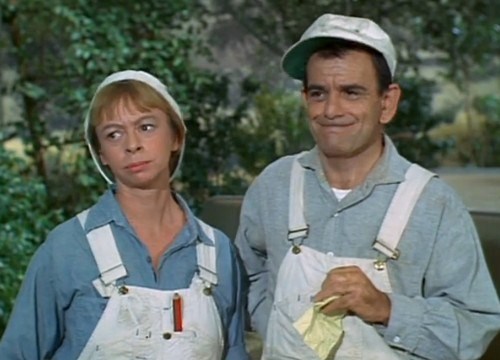
The Monroe Brothers – Alf (Sid Melton) and Ralph (Mary Grace Canfield) are a brother and sister team that Alf portrays as brother and brother in order get work. Their projects are never finished on time, and rarely finished the right way.

green8


Fred and Doris Ziffel (Hank Patterson and Barbara Pepper/Fran Ryan) – the Ziffels were successful farmers.  They had no children, but they had a pet pig that they considered a son.


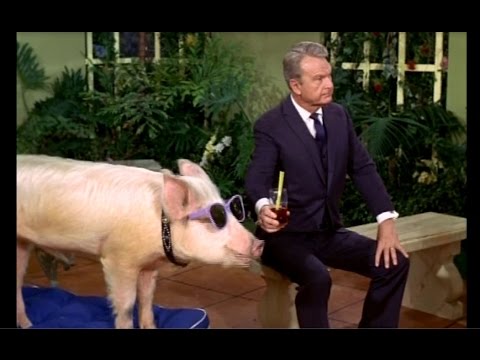
Arnold Ziffel – Arnold Ziffel was their pet pig and one of the most intelligent people in Hooterville. He understands English, attends the local grade school, lives inside in his own bedroom, can sign his name, and is a bit addicted to television watching, especially westerns. A new pig was used each season because they grew so fast. The Union demanded the pigs be payed $250 a day and were trained by Frank Inn. In 1967 Arnold won a Patsy award.

green20

Some of the other animals featured on the show included Eleanor the Cow; Bertram the rooster; Alice the hen; and Mr. Haney’s dog, Cynthia, a basset hound who had a huge crush on Arnold.

Green Acres had its fair share of guest stars including Parley Baer, Robert Cummings, June Foray, Alan Hale Jr., Elaine Joyce, Gordon Jump, Bernie Kopell, Al Lewis, Rich Little, Al Molinaro, Pat Morita, Jerry Van Dyke, and Jesse White.

The show was 25% surrealism, 25% satire, and 50% just plain fun.

Some of the running gags on the show were the fact that people, except Oliver, could see the credits running, and Lisa often commented on them. A lot of the jokes were at Oliver’s expense.  He was the only one in town who could not understand Arnold’s grunts. Also, whenever Oliver got passionate about something, he went into a monologue, usually patriotic, and everyone but him could hear fifes playing.

green3

Lisa’s hotcakes were good for many projects, just not eating. The Douglases had a feud with the phone company because they were supposed to move their phone inside.  Whenever they had to use the phone, Oliver had to climb up a phone pole to talk. Oliver had a Hoyt-Clagwell tractor which was usually breaking down, catching on fire, or falling apart.

green29

We also had the stark extremes of sophisticated New York living and rural life.  Lisa continued to dress in beautiful gowns and furs.  They slept in a huge, expensive bed, with an elaborate chandelier over their heads, but their closet had no back so neighbors walked in on and off. The fire department marching band often practices at Sam Drucker’s store but for all five years whenever they practice, they only know one song, There’ll Be a Hot Time in the Old Town Tonight.

Although Lisa continues to threaten to move back to New York City, aided and abetted by Oliver’s mother, we know she loves him and will never leave without him.  Despite their arguments, Lisa and Oliver are frequently seen kissing and hints are given about them retiring to their room together. In real life, Albert and Gabor were dear friends and they are both buried in Westwood Village Memorial Park Cemetery in Los Angeles. Tom Lester, Eb, credited Albert with helping him as an actor and being a surrogate father to him; the two remained close friends until Albert passed away.

green10

There are many cross-overs with Petticoat Junction and the Beverly Hillbillies. Sam Drucker was featured in both Green Acres and Petticoat Junction. Some of the characters visited each other on various episodes. It is funny that Bea Benaderet starred in Petticoat Junction as well as the radio show Granby’s Green Acres which means Green Acres was based on her radio show and was a spin-off of her television show. In 1968, a Beverly Hillbillies Thanksgiving Show united cast members from all three shows.

green9

green6

With 170 episodes, it’s hard to come up with the best five, but after looking at various polls and tv guide reviews, I will do my best to represent the majority’s votes:

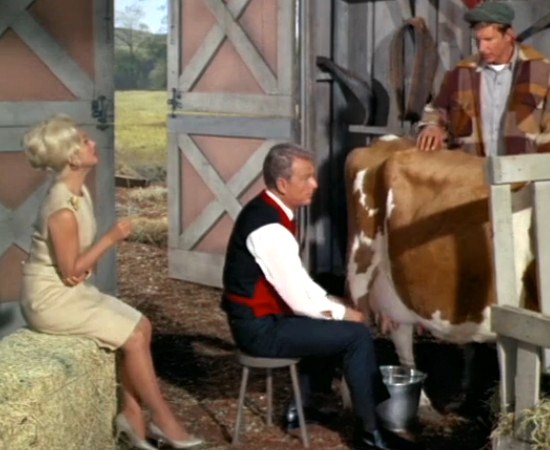
“Music to Milk By” – Eb wants to win a radio contest and he has to listen day and night which cuts into his chores, especially when the cow swallows the radio.

radio

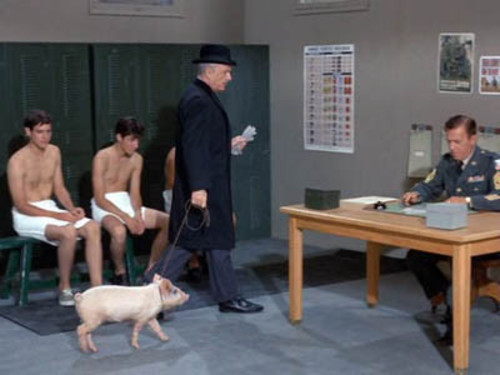
“I Didn’t Raise My Pig to be a Soldier” – Arnold Ziffel gets a draft notice. Oliver acts as his attorney before the draft board. They are assuming Oliver is making fun of them with the pig and the real Arnold is elsewhere. After a lot of explanations and some time in jail, Oliver convinces them Arnold is really a pig.  The end of the show has Oliver back before the draft board because Ralph Monroe, a woman, who they think is a man, has been drafted.

draft

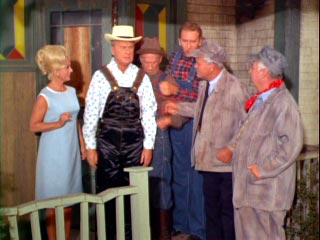
“The Hooterville Image” – The town agrees Oliver needs to do chores in overalls. He has been farming in a vest and dress shirt. They finally convince him to become more accepted by switching his attire until they see the overalls Lisa’s dress designer came up with.

green28

“The Computer Age” – Ralph Monroe joins a computer dating service. Oliver and Lisa disagree on whether that is a good idea. Oliver thinks it is. He also thinks computers are the best way to run a farm. To prove her point, Lisa uses the service to see if she and Oliver would have been paired up.

computer

“A Star Named Arnold is Born, Parts 1 and 2” – Arnold appears in a play at the local theater. Lisa arranges for an old friend to give him a chance in show business. In the second part, Lisa and Oliver chaperone his trip to Hollywood to star in a motion picture.

arnold

Oddly enough the top four were all from season 2, and “A Star Named Arnold Is Born” is from season 3.

green16

In Spring of 1971, Green Acres was still pulling in good ratings.  However, the Rural Purge of 1971 got rid of all shows that had country leanings whether they were audience favorites or not.


In full disclosure, I loved Petticoat Junction growing up, and I could not stand the Beverly Hillbillies.  I thought Green Acres was okay but if I missed it that was okay too.  As I’ve gotten older, I still love Petticoat Junction, and I still don’t care for the Beverly Hillbillies, but I have developed a much greater appreciation for Green Acres.  If a show was capable of having a sense of humor, this one did.   It never took itself seriously.  Eddie Albert was willing to be the straight guy to the rest of the ensemble. The character interaction worked, and no dialogue came off as too zany.  The citizens might not have always agreed or understood each other’s lifestyles, but they had affection and respect for each other. Lisa’s reading the credits and different characters addressing the audience brought us in on the jokes and made us part of the Green Acres family. Now when I watch the show, I laugh out loud – a lot! I don’t laugh at the characters, I laugh with them. For being a rural sitcom, this show has some sophisticated humor.  If you have not watched the show in a while, you owe it to yourself, as well as the cast and crew who created it, to get to know the folks in Hooterville.


July is the Perfect Time for Berry Picking

berry1

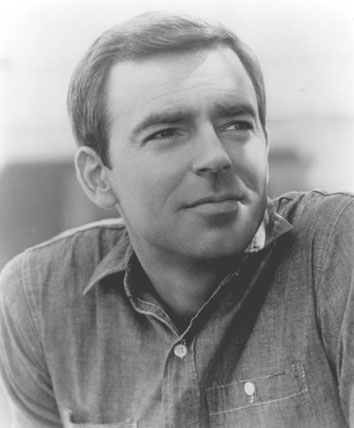
Ken Berry was born in Moline, IL in 1933. After watching a group perform when he was 13, he decided he wanted to be a dancer. He loved Fred Astaire and Gene Kelly movies, especially Easter Parade, Royal Wedding, and On the Town. At 16, he traveled with the Horace Heidt Youth Opportunity Program, performing in small towns for 15 months.

berry12

He went into the army at Fort Bragg and was in the artillery. He was then moved to an entertainment division under Leonard Nimoy. During his second year, he won the All-Army Talent competition which allowed him to appear on Ed Sullivan in 1948. Nimoy encouraged him to move to Los Angeles where he made some connections for Berry. Both 20th Century Fox and Universal offered him jobs and he accepted the Universal contract.  In 1956, he opened for Abbott and Costello for their stage act. In 1957, Berry enrolled in Falcon Studios to study acting. He worked at the Cabaret Theater, making $11 per week. The same year he won Arthur Godfrey’s Talent Show.

berry6

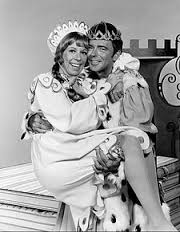
In 1958, he received an opportunity to join the Billy Barnes Revue. While in the Billy Barnes Revue, Berry met Jackie Joseph, and they married in 1960. His work in the BBR led to several lucrative connections. Lucille Ball saw him and offered him a job with Desilu Studios for $50 per week. Carol Burnett also watched a performance and had him on her variety show. (In 1972, she would offer him the co-starring role with her in Once Upon a Mattress, a television movie.)

berry7

The first Desilu show he had a regular role on was the Ann Sothern Show. On the air from 1958-1961, Ann played Katy O’Connor who worked at a New York hotel. Originally, Mr. Macauley (Ernest Truex) was her boss, but he was berated by his controlling wife (Reta Shaw). Katy’s best friend from her previous show Private Secretary, which aired from 1953-1957, was Ann Tyrrell as Vi.  In this show, her name is Olive. The format wasn’t working, so Mr. Macauley the hotel owner, was transferred to Calcutta and James Devrey (Don Porter also from Private Secretary) took over.  Ratings improved, and the show was renewed for another season. During this season, Louis Nye was introduced as a funny dentist in the hotel who dates and marries Olive, and Berry played bellboy Woody Hamilton, replacing Jack Mullaney.  Most of the episodes revolve around the staff and guests of the hotel. As in Private Secretary, there is a lingering romance between Mr. Devrey and Katy throughout the run of the show. The ratings fell drastically in 1961 after the show was moved to Thursdays, and the network cancelled it.

In 1961, Berry obtained a job with Dr. Kildare, appearing in 25 episodes as Dr. John Kapish. Richard Chamberlin starred in the series about a doctor working in an urban hospital under his mentor Dr. Leonard Gillespie (Raymond Massey). In the third season, Dr. Kildare was promoted to resident and the series centered on his patients. The show aired until 1966, but Berry left the show in 1964. This was one of the shows that paved the way for Marcus Welby, MD and the medical dramas today including ER and Gray’s Anatomy.

berry13

He also appeared on several shows in the early 1960s: The Jim Backus Show, Hennesey, Ensign O’Toole, The Dick Van Dyke Show, Hazel, and No Time for Sergeants, among others.

berry3

In 1965, he was offered the lead in F-Troop. The show was set during the Civil War.  Berry played Will Parmenter.  At a critical moment during the Battle of Appomattox, Will gets credit for the defeat.  He is a private and was sent to get his commanding officer’s laundry. He was sneezing continuously, but the men thought he was saying “Charge,” so they did.  They won a decisive battle, and Will was promoted for his quick decision-making skills and bravery. He was then promoted to Fort Courage.

berry5

The cast had a crazy bunch of characters. The NCOs at the fort, Sergeant O’Rourke (Forrest Tucker) and Corporal Agarn (Larry Storch) are always scheming to raise money. The Hekawis tribe, with Chief Wild Eagle (Frank de Kova) worked on shady business deals with them. Although the officers manipulate Will, they are also protective of him. Melody Patterson plays Jane Thrift, Will’s girlfriend, who is always pressuring him to propose. The show relied on a lot of puns, slapstick, and running gags.

When F-Troop was cancelled two years later, Berry headlined the cast of Mayberry RFD as widower Sam Jones because Andy Griffith was leaving the show. Since Andy and Helen had married and moved away, Aunt Bee became Sam’s housekeeper. Sam and his son were introduced in Griffith’s final season when Sam is elected to the town council. Arlene Golonka plays Millie, Sam’s love interest. The show was rated as high as 4th and only as low as 15th, so it continued to pull in good ratings, but in 1971, the show was cancelled in the general “rural house cleaning” that the network performed getting rid of any shows such as Green Acres, Beverly Hillbillies, Petticoat Junction, etc.

During the late 1960s and 1970s, he was on 14 shows including The Danny Thomas Show, The Lucy Show, Love American Style, The Brady Bunch, and The Love Boat.

berry18

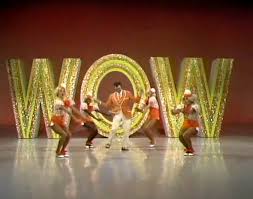
The network developed a show Ken Berry WOW, a variety show that lasted five episodes that Berry was not wowed with. In 1973, Sherwood Schwartz wrote a pilot for a Brady Bunch spinoff called Kelly’s Kids. The concept of the show was that Berry adopts three boys, one white, one African American, and one Asian. No network showed an interest in the show.

One of the most unusual jobs he had occurred in 1976.  An album called “Ken Berry RFD,” where he sang, backed by a full orchestra, was released. He and Joseph divorced that same year. Joseph later remarried and continued to have a long and full career.  She appeared on a variety of sitcoms including Designing Women, Full House, Newhart, Love American Style, Petticoat Junction, That Girl, Hogan’s Heroes, McHale’s Navy, F-Troop, and the Andy Griffith Show. She also had a productive movie career, including Gremlins, The Cheyenne Social Club, With Six You Get Eggroll, Who’s Minding the Mint, and Little Shop of Horrors.

Taking a break from television, Ken went on the road, performing in stock shows around the country.  He also played Caesar’s Palace between Andy Griffith and Jerry Van Dyke.

berry16

He returned to television to join the cast of Mama’s Family with Vickie Lawrence. The show derived from a skit on the Carol Burnett Show which led to a TV movie called Eunice. It featured the Harper family and their neighbors and friends. The matriarch is Thelma Harper (Lawrence) who speaks her mind freely. She is hot tempered and sarcastic, but she loves her family as she berates them. And they typically deserve a berating. They move back in with her and are happy to have her clean and cook for them as well.

For the first season and part of the second, the show was on NBC. Thelma lives with her spinster sister Fran (Rue McClanahan) who is a journalist. After Thelma’s daughter-in-law leaves her family, they move in with Thelma. Her son Vint began a relationship with Thelma’s next-door neighbor Naomi Oates (Dorothy Lyman). Her children from the Burnett sketch, Ellen (Betty White) and Eunice (Burnett), along with hubby Ed (Harvey Korman) are seen during this time.

berry17

The show was cancelled after two years and went into syndication.  The reruns were so popular, 100 new episodes were ordered. A new set had to be constructed and some cast adjustments were made as well. Lawrence, Berry and Lyman were the only original characters on this new version. Since White and McClanahan were now starring on The Golden Girls, and Burnette and Korman chose not to return, a new character was created. Mitchel (Allan Kayser) was Eunice’s son who was always getting into trouble. Another addition was Beverly Archer who played Iola Boylen, Thelma’s neighbor and best friend.

Once Mama’s Family was cancelled the second time, Berry traveled around the country, appearing in “The Music Man”, “Gene Kelly’s Salute to Broadway”, and “I Do I Do” with Loretta Swit. He also went back to television for brief appearances on several shows including CHiPs, Fantasy Island, Gimme a Break, Small Wonder, Golden Girls, The New Batman, and Maggie Winters.

berry20

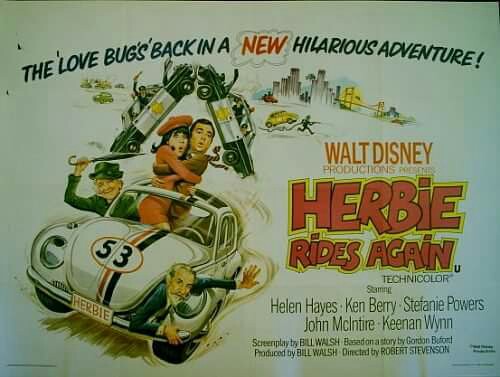
Berry also appeared in six movies including Two for Seesaw (1962), The Lively Set (1964), Hello Down There (1969), Herbie Rides Again (1974), Guardian of the Wilderness (1976), and The Cat from Outer Space (1978).

Guardian of the Wilderness was based on the life of Galen Clark who convinced Abraham Lincoln to make Yosemite Park the first public land grant. It covers a series of unusual adventures Clark had as he battled lumber companies to save wilderness land.  One of my favorite quintessential 1960s movies was Hello Down There.  Tony Randall and Janet Leigh star.  Randall is an architect who creates an underwater home.  To prove a family could live there, he cajoles his family to moving there for the summer.  His kids are in a band so they force him to take the entire band or no one.  Charlotte Rae is their housekeeper. Berry plays a rare role for him as the bad guy.

berry19

Early in his career, Ken appeared in a variety of commercials. From the mid-1970s to the mid-1980s, he was the spokesman for Kinney Shoes.

He appeared in two game shows, Hollywood Squares and Tattletales.  He also starred as himself on a variety of shows including Art Linkletter, Joey Bishop, Leslie Uggams, Jim Nabors, Julie Andrews, Sonny and Cher, Dean Martin, Laugh In, and Mike Douglas.

berry10

Berry retired in 1999. Berry loves cars and was an avid motorcyclist and camper.

Although Berry was never in a hugely successful series, he had a long and full career that any actor would be proud of.  Hopefully his well-deserved retirement has been fun and full of memories.

berry2

In Memory of Adam West

west1

Adam West was born William West Anderson on September 19, 1928 in Walla Walla, Washington.  He just passed away this summer on June 9. His father farmed and his mother gave up her career as an opera singer and concert pianist.  Like all kids, he had a collection of comic books including Batman. When his parents divorced, he moved to Seattle with his mother. He attended Whitman College in Washington and graduated with a BS in literature. He was drafted into the Army and became an announcer on the American Forces Network television.

After his service career, he became a milkman until he moved to Hawaii to pursue a career in television. In 1959, he took on his stage name of Adam West and moved to Hollywood with his wife and children. He quickly became an actor and appeared in 33 television shows, including 77 Sunset Strip, Maverick, Hawaiian Eye, Tales of West Fargo, Perry Mason, Gunsmoke, Petticoat Junction, and Bewitched.
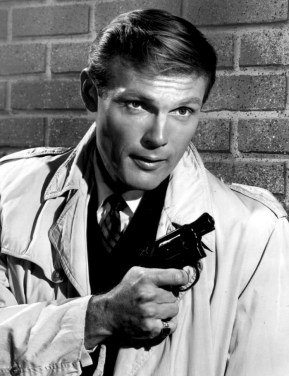
west4

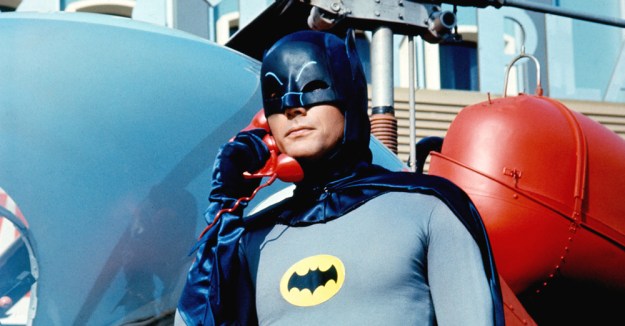
In 1966, William Dozier, producer for a new show about Batman decided to cast West over Lyle Waggoner after seeing him as a James Bond-type character in a Nestle Quik commercial. DC Comics described Batman as 6’2” and that was West’s height.
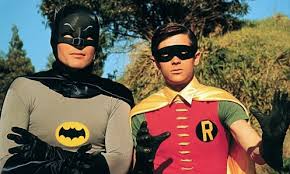
west2

When the series ended, he and Burt Ward found themselves typecast as Batman and Robin.  He did a series of appearances about the Batman character while pursuing a movie career. He ended his career with 49 movies to his credit.

He appeared in 78 television shows after Batman ended including The Big Valley, Emergency, Alice, Police Woman, Laverne and Shirley, The Love Boat, Hart to Hart, Murphy Brown, Diagnosis Murder, News Radio, Drew Carey, King of Queens, and 30 Rock.

After 1990, he apparently embraced his Batman character and appeared on numerous television shows as himself or Batman. When asked about this, he said, “I think it evolved. I learned a long time ago that because people love Batman, I should too. I learned that I shouldn’t resent it even though it prevented me from getting other roles. I really had to become fond of Batman in order to deal with it. I embraced it.”

In 1957, he and his first wife Billie divorced.  He married  dancer Frisbie Dawson in 1957 and divorced in 1962. In 1970, he married Marcelle, and they were together until his death.  He had two children with each of his wives and two stepchildren.

In 1994, he wrote an autobiography Back to the Batcave. In 2012, he received a star on the Hollywood Walk of Fame on Hollywood Boulevard.
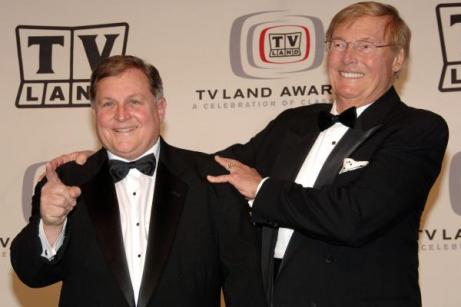
west8

West loved outdoor activities and had a lot of hobbies including fishing, sailing, hiking, skiing, golfing, riding motorcycles, swimming, surfing, dancing, traveling, as well as spending time with his family, listening to classic rock, reading, and watching movies.

West died after a short battle with leukemia at age 88. The next week, LA shined the bat signal on city hall to honor him.

While West certainly had a full and varied career despite his typecasting from Batman, I would like to spend some time looking at the series that gave him his fame. Typically, I am not really into super heroes, but I loved this show when I was younger and still get a kick out of watching the campy comedy. I can still hear the narrator saying, “Same bat time, same bat channel.” The show was canceled not only because of low ratings but also because the special effects and lighting had tremendous costs.  When ABC dropped it, they tried to find another network to take it over.  They had no offers, so they dismantled the set. Two weeks later, NBC offered to pick up the show, but decided it was too expensive to start from scratch.
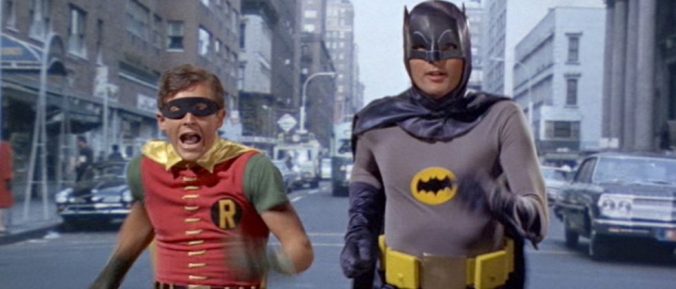
batman4

In the 1960s, Ed Graham Productions received the rights to the comic strip Batman and intended to produce an adventure show similar to Superman or The Lone Ranger. ABC was thinking about a prime time show so DC Comics bought back the rights and sold them to 20th Century Fox. 20th Century gave it to William Dozier to produce.  Dozier had never read comic books and felt that the show should take a campy, pop-art approach. The show was originally an hour-long series, but with only half-hour time slots available, it was changed to a bi-weekly half-hour show.

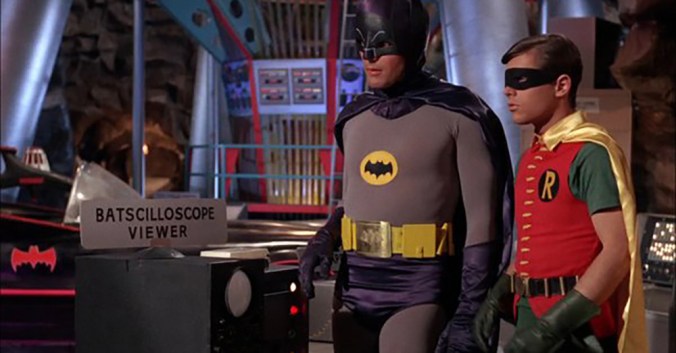
The concept of the show was that millionaire Bruce Wayne and his ward Dick Grayson lead a double life in Gotham City.  When they move a shelf in their library and slide down the bat pole to the bat cave, they become Batman and Robin.  Only their butler Alfred is aware of their real identity. Police Commissioner Gordon calls them on the batphone, often referring to them as the dynamic duo. They usually hop in their bat mobile and speed to city hall to learn what villain is up to no good in their city.
west5

Adam West took the role of Batman/Bruce Wayne and Burt Ward was Robin/Dick Grayson. Other cast members included Alan Napier as Alfred the Butler, Neil Hamilton as Commissioner Gordon, Stafford Repp as Chief O’Hara, Madge Blake as Aunt Harriet, and Yvonne Craig as Batgirl.

My favorite villians included Julie Newmar and Eartha Kitt as Cat Woman, in love with Batman but not willing to give up her criminal life; Burgess Meredith as Penguin always carrying an umbrella; Frank Gorshin as The Riddler leaving riddles for clues; Vincent Price as Egghead a bald-headed genius who loves eggs; Cesar Romero as the Joker who leaves jokes for clues; and Victor Buono as King Tut when evil and Professor William McElroy as his non-evil personality.

The show aired twice a week on back-to-back nights. The first episode would set up the situation and end with the dynamic duo in some dangerous situation. Batman and Robin would get their assignment from the Commissioner and then, using a series of clues, try to figure out who the villain is and then how to defeat them. At some point, there was always a fistfight with the villain’s entourage at which time the villain typically escaped. During the fight, words would pop up on the screen like POW, BAM, ZONK, BOOM. Then the crime fighters would go to look for them at which point the dangerous and perhaps deadly situation occurred and the next episode would summarize what happened on the previous episode before defeating the bad guys for good. They often used inventions like shark repellant bat spray to aid them in their search.
batman5

In Season 3, Bat Girl was added to the cast. The ratings were starting to fall so Dozier wanted to bring in a girl character to attract female viewers. Her real identity was Barbara Gordon, the Commissioner’s daughter.  The Commissioner never seemed to realize she was familiar to him. Because of low ratings, the show also became a once a week series in the third season.  Eartha Kitt took over the Catwoman role since Newmar was filming a movie at the time. Madge Blake’s health was failing, and her role was limited to two appearances during the last season.

The show was cancelled before the next season but it has continued to be popular in reruns. In 1966, an album was released “Batman: The Exclusive Original Soundtrack Album.” It included music by Nelson Riddle, dialogue excerpts from several of the characters in the show, as well as the Batman theme song, Batusi A Go Go, and several other tunes.

A lot of collectibles were produced during the run of the show including trading cards, Batmobile kits, coloring books, lunch boxes, board games, and View-Master reels. In 2013, Mattel designed an action figure line based on the tv characters, and several Hot Wheels/Matchbox cars have been produced. The Batmobile from the show was auctioned in 2013, selling for $4.2 million.  The huge profits from the car as well as the line of action figures prove the continuing interest in and success of this show now 50 years old.

Here are some fun facts I found about the series:

A total of 352 “Holy” words were used by Robin from “Holy Agility” to “Holy Zorro”.

Cesar Romero’s Joker laugh was created almost by accident. Shortly after being cast, Romero met with producers to discuss his role on his series. While waiting to meet with them, Romero happened to see conceptual art of Joker’s costuming. Romero felt the pictures almost looked absurd, and as a result spontaneously broke out into a playfully loud and almost manic laughter. A producer overhearing it responded by telling Romero “That’s it, that’s your Joker’s laugh!”

Burgess Meredith had not smoked in 20 years when he was cast as the Penguin. He came up with the Penguin’s distinctive squawking sound because the cigarettes were irritating his throat. Like his trademark “quack”, the Penguin’s waddling was largely a result of improvisation by Burgess Meredith, as he found it difficult to stand and walk straight while wearing the rubber padded fat suit that was part of his costuming.

Before going on the air, this show received the worst audience test scores in the history of ABC. It only went on the air because so much money had already been invested in it.

This was one of the “in” shows to appear on if you were a big name in Hollywood during the 1960s, and many top names guested on the show, including many who didn’t do much TV otherwise. Those performers who weren’t cast as guest villains could frequently be seen popping their heads out of windows to exchange a few words with Batman and Robin when the latter would be climbing up a building wall. Frank Sinatra, Natalie Wood, and Cary Grant were all fans of the show, and wanted to be on it, but the producers were never able to come up with the right roles for any of them. During the run of the series, this show crossed over with The Green Hornet (1966).

The “Giant Lighted Lucite Map of Gotham City” is a reverse image of St. Louis, right down to Forest Park, Fairground Park, Tower Grove Park, Lafayette Park, and Horseshoe Lake on the Illinois side, as well as the other river and road networks.

Each main villain had their own theme music.

In the first season, Burt Ward (Robin) was paid $350 per week.

Yvonne Craig has stated that she briefly did have a stunt double, but did most of her stunts herself. She actually operated the Batgirl Cycle herself as well. She was an accomplished biker at the time, and actually owned a bike.

Adam West (Bruce Wayne / Batman), Burt Ward (Dick Grayson / Robin) and  Neil Hamilton (Commissioner Gordon) are the only actors to appear in all 120 episodes of the series.

Suzanne Pleshette was one of the original choices to play Catwoman before Julie Newmar landed the role.

The show aired from January 12, 1966 to March 14, 1968 on ABC for 120 episodes. It was one of few TV series to be seen on 2 different nights a week: 7:30 Wednesdays and Thursdays. It remained there for a season and a half (Jan. 1966-Aug. 1967) until it was moved back once a week (Thursdays 7:30) for its final season. The episodes were generally two-parters: Wednesday’s episode was a cliffhanger, resolved in Thursday’s episode. The 1966-1967 season had 2 3-parter episodes (“The Zodiac Crimes/The Joker’s Hard Times/The Penguin Declines”[ep. #2.37-9, 1/11-12 & 18/1967] and “Penguin is a Girl’s Best Friend/Penguin Sets a Trend/Penguin’s Disastrous End”[ep. #2.42-4, 1/26/, 2/1 & 2/1967]) which left cliffhangers that would be solved the following week. When the series was reduced to (mostly) one part episodes during season three, the cliffhanger death traps and threats were still used, but greatly scaled back and occurring at the middle commercial break.

The three primary cast members of The Addams Family each made appearances on Batman. Carolyn Jones played the villainess Marsha, Queen of Diamonds, and John Astin played the Riddler during the second season. Additionally, Ted Cassidy had a window cameo, appearing in his part as Lurch from The Addams Family. Interestingly, Cassidy’s cameo took place in a story involving the Penguin, with whom Jones’ character Marsha teamed up in one of the three-part stories.

In episode 7, Alfred refers to Robin as Mr. Ward, and not Mr. Grayson.

While Superheroes and the movies and television shows they appear in seem to cycle up and down throughout the decades, the popularity of the Batman television show has never wavered.  The fact that Mattel would create action figures based on the original stars almost 50 years after the show debuted says a lot about the fans and the place the show holds in their hearts.

Thank you Adam West for creating such a memorable and well-loved character.  Rest in peace.

batman2

I Don’t Have a Free Toothbrush For You, But . . .

Are you feeling comfortable?  You might want to lean back, put on a pair of plastic glasses, and say Ahhh.  Sorry, I guess I’m getting carried away by our topic today.  March 6 is National Dentists Day.  I thought it might be fun to delve into some shows that featured dentists.  Apparently, the average viewer finds nothing funny about dentists.  They are hard to spot on the small screen.  Perhaps it brings back too many pain-filled memories of the sound of drills and mouths so numb you bite your lip without realizing it. Finding dentists on television was like pulling teeth – sorry I’m getting carried away again. Let’s look at a few of them.

When we think of television dentists, most of us probably conjure up pictures of Jerry Helper (played by Jerry Paris) on The Dick Van Dyke Show or Jerry Robinson (played by Peter Bonerz) on The Bob Newhart Show. These two shows can make anything funny, even dentists.

Jerry and Millie Helper are the Petries’ next-door neighbors and best friends on The Dick Van Dyke Show.  Jerry is a dentist, and Millie is a stay-at-home mom with a son the same age as Richie, Rob and Laura’s son.  Jerry is a kidder and his comments often get him in trouble.

One episode, “Punch Thy Neighbor” from the first season, shows Jerry taking his teasing too far.  Jerry and Millie are watching the Alan Brady Show with Rob and Laura, and Jerry makes comments about how bad it is. Rob isn’t happy, but the next day he gets mad when several people, including the Helpers’ son Freddie and the milkman, tell Rob Jerry mentioned how bad the show was. Rob goes to talk to Jerry and ends up punching him accidentally. When he attempts to show Laura how it happened, he hit her as well. Richie tells Millie his dad hit his mom, and she sends Jerry over to get Rob under control.  Jerry walks in seeing Rob yelling, not knowing it’s because he tripped over a toy.  Trying to calm him down, Jerry wrestles him to the floor. Jerry realizes he was out of line with his joking.  You would think he learned his lesson, but at the end of the episode, Jerry starts again, and Rob hits him in the face with a pie. Like all the Dick Van Dyke episodes, this one is true to life, well written, and funny.

I’m sure it was also well directed, although not by Jerry Paris.  However, Paris kept nagging Reiner to let him direct.  Once he did a couple of shows, Reiner realized that “he understood our show more than any of the other directors.” In 1963-64, Paris won an Emmy for directing the show.  He directed 84 of the 158 episodes. After The Dick Van Dyke Show ended, he went on to direct many shows including 2 episodes of The Partridge Family, 3 episodes of Love American Style, 3 episodes of The Mary Tyler Moore Show, 7 episodes of The New Dick Van Dyke Show, 18 episodes of The Odd Couple, and 237 of the 255 episodes of Happy Days.

From 1972-1978, Jerry Robinson was Bob Hartley’s best friend on The Bob Newhart Show.  Bob realizes his friends and family are not any more emotionally stable than his patients; they just get his advice for free. Jerry is an orthodontist, and he shares a receptionist with Bob. When interviewed about his character, Bonerz said “Jerry Robinson was written by 25 guys. It was my job to make those 25 different versions of Jerry the dentist credible.” Robinson was a swinging single, slow to trust others, and easily angered. Yet, his character was likeable, and he credited that to a well-balanced cast who all made each other better.  They were like a close family; you don’t always approve of your family members, but you love them.  Bonerz’s theory was that Bob Newhart was the psychologist/listener of the family, and that role made everything else fall into place. If you needed a root canal, Dr. Helper might be more proficient, but you would enjoy the conversation during the procedure more with Dr. Robinson.

36blog

One dentist who was a critical component of a show, although most people don’t remember him, was Dr. Barry Farber.  Dr. Farber is the man Rachel Green was supposed to marry on Friends, but she left him at the altar, ending up living with Monica and meeting a new group of friends.

Several other shows, not as well-known as these three, also featured a dentist in their cast.

img0102A

Doc Corkle was on the air in 1952.  Doc, played by Eddie Mayehoff, was a neighborhood dentist.  He lived with his father (Chester Conklin) and his daughter (Connie Marshall). Poor Doc has some money problems.  The biggest financial setback was the fact that the network cancelled the show after only three episodes.

TSDIMAB EC001

I’m a Big Girl Now featured Diana Canova who played a divorced woman, Diana Cassidy, who goes home to live with her father Benjamin Douglass, a dentist (Danny Thomas).  His partner and his wife have run off to Spain.  Diana also has a daughter Rebecca and a neurotic brother named Walter. The show was cancelled mid-season.

36blog7

Charley Shanowski, played by Ted McGinley, is a dentist on Hope & Faith.  His wife Hope (Faith Ford) is a stay-at-home mom with three children.  Her sister Faith (Kelly Ripa) was a soap opera star whose character was killed off on the show.  She moves in with her sister but expects to be treated like the star she used to be.  Charlie does not like Faith and spends a lot of his time trying to get her to leave.  We can understand why.  It seems like every time a dentist has a show where a family member moves in, the network cancels the show.  At least this show made it three seasons instead of three episodes before it got pulled.

Probably my favorite show with a dentist was an episode of The Carol Burnett Show. Like so many of the funniest episodes, this one featured Tim Conway (the dentist) and Harvey Korman (the patient). When interviewed about the skit, Conway said that memorable sketches often create themselves.  “The novocaine portion of the dentist sketch wasn’t planned—it just happened. That’s the magic of comedy; you never know when it is going to sneak up on you and make you laugh.” The dentist skit was based on Conway’s real-life dentist who stuck the needle of novocaine into his own thumb while working on a patient. Korman didn’t know Conway was going to put that in the sketch.

Last, but not least, I wanted to mention Edgar Buchanan, Uncle Joe in Petticoat Junction.  Buchanan earned a DDS degree from North Pacific College of Dentistry in Oregon. His father was also a dentist. During the time he was a pre-med student, Edgar took acting classes at the University of Oregon and eventually left dental school to take a position in their drama department. His father convinced him to finish his dental degree first.  When he returned to North Pacific he met Mildred Spence, another dental student.  They graduated in 1928. After marrying, the couple moved back to Eugene, Oregon where they opened a private practice. From 1930-1937, Edgar was chief of oral surgery at the Eugene Hospital Clinic but also worked as an assistant director in the University of Oregon drama department. In 1939, the couple moved to Pasadena. When Edgar appeared in a production at the Pasadena Playhouse, he received his first film offer.  So, at the age of 36, he turned over the practice to his wife and became an actor.  He appeared in more than 100 films between 1941 and 1974. He was the only cast member of Petticoat Junction to appear in all 222 episodes.

Apparently dentists are not too popular.  There are a handful of shows about them while there are tons of shows about attorneys.  But dentists are our friends, so to celebrate their day today, take a moment and watch the following:

www.liftable.com/edwardtofil/tim-conway-made-harvey-korman-wet.

Tim Conway talks about The Dentist episode to Conan O’Brien and they play a clip from it. If you watch it enough times, you might not actually look forward to going to the dentist, but you might not dread it as much. And if you’re a hopeful television creator, write a show about dentists.  They’re due for a big hit.

Do We Have Reservations? Yes We Do.

February has finally arrived.   Some of us are getting a bit tired of winter, so this is a popular month for travel to a warmer destination.  If you aren’t able to physically get away, stay home and watch the February Sweeps, the only time you’re guaranteed new episodes of your favorite show for a month straight.  This week I decided to look at sitcoms set in hotels or resorts.  I did not discuss Fantasy Island or The Love Boat because I thought we could talk about them another time.

resort

Based on the length of many of these shows, the hotel business is a tough one to be successful in. Let’s look at a bunch of shows that didn’t last too long.

buddyfeb6

Stanley was a show starring Buddy Hackett and his girlfriend played by Carol Burnett that aired in 1956. Stanley ran a newsstand in the lobby of a New York City hotel. The hotel owner was played by Paul Lynde.  The show was cancelled in March of 1957, supporting the philosophy that no news is good news.

happyfeb62

Happy starred George and Gracie’s son, Ronnie Burns. Ronnie was married to a woman played by Yvonne Lime and they were co-owners and managers of the Desert Palm, a ritzy resort. Included in the cast was their Uncle Charlie and the co-owner played by Doris Packer.  Happy was their son who commented on what was going on, sort of like Family Guy’s Stewie.  It was a summer entry in 1960, but 9 months later it gave birth to a cancellation which made the cast not Happy.  I don’t know why, but apparently viewers could accept a talking horse or a talking car, but not a talking baby.

Another show that began as a summer replacement was Holiday Lodge in 1961. Johnny Wayne and Frank Shuster, two comedians from Canada, played social directors at a New York state hotel. They tried to provide entertainment but always ran into trouble, including being taken off the air after a few episodes.

The Bill Dana Show was interestingly based on the character Jose Jiminez developed by Dana for the Steve Allen Show and later brought to the Danny Thomas Show.  In 1963 The Bill Dana Show portrayed Jiminez as a bellhop at the New York City Park Central Hotel and the show centered on him trying to get used to life outside Mexico. Often his dream sequences took him into bizarre situations.  The most interesting fact about this show might be that the house detective was played by Don Adams who went on to star in Get Smart. Jimeniz’s dream became a nightmare when the show was cancelled after 42 episodes.

hotlbaltimorefeb6

One of the most controversial shows to air on television in the 1970s was Hot L Baltimore debuting in the fall of 1975.  Many stations refused to air the show because it was lewd and racy.  Norman Lear, the producer behind All in the Family, Maude, and The Jeffersons developed the concept based on a play. The cast was made up of a desk clerk, his girlfriend, the manager, a hooker, an unemployed waitress, a dying man, a gay couple, and an eccentric woman. After four months, the waitress was not the only one unemployed because the show was done.

The Last Resort was developed by MTM in 1979, the company that created The Mary Tyler Moore Show, Rhoda, and Phyllis. The resort, set in the Catskills in upper New York, included a bunch of college students working their way through school. It featured a stereotyped crew including the brilliant premed student, a bookworm, a snob, an overweight clumsy guy, the pastry chef who left her wealthy husband to pursue her career, a Japanese chef, and a maitre’d who ran the place like a drill sergeant. It was cancelled after three episodes. Retooled, it came back in December only to be finished for good in March when the last resort of The Last Resort was no more.

Checking In must be in the running for the shortest show to appear on television. In 1980, Marla Gibbs, playing Florence the maid on The Jeffersons, got her own show, transferring to a hotel in New York City where she was the head housekeeper. She answered to a snobby manager played by Larry Linville who would later become Frank Burns on M*A*S*H. The rest of the cast included an assistant, a house detective, a maintenance supervisor, and a bellboy. After several weeks, the hotel was shut down and Florence went back to working for The Jeffersons.

goldenpalacefeb6

The Golden Girls was one of the most beloved shows in television, but I’m guessing few people remember The Golden Palace which debuted in 1992.  After Dorothy got married, the other three characters decide to invest in a hotel in Miami. Only two employees are left at the hotel:  a manager and a chef. After 24 shows, no one was left at the hotel.

In 1999 Payne, a remake of the British show Fawlty Towers hit the air.  Set in a California inn, Whispering Pines, the hotel was owned by Royal Payne and his wife Constance.  It went on the air in March.  At the end of April, the network ended its Payne by taking two aspirins and cancelling the show.

whoopifeb62

Compared to some of the shows, Whoopi! might have seemed successful, lasting an entire season.  Set in the Lamont Hotel in New York City, a one-hit wonder musician played by Whoopi Goldberg decides to put her money into a hotel and run it the way she sees fit.  She has an assistant from Iran, a brother who is a conservative Republican, and his girlfriend who is white but acts more African American than the black members of the hotel. Of course, these three characters give her much controversy to deal with.  The network, acting as referee, blew the whistle and cancelled the entire thing after one year.

In 2008 Do Not Disturb debuted.  If you missed it, don’t feel bad.  It debuted on Fox and featured The Inn, a hip Manhattan hotel.  The staff is not as competent as they appear to their guests. The manger is arrogant, the head of human resources is loud and tactless, the front desk clerk is an aging model who does not want to be a desk clerk or older, the reservations clerk is a famous musician wannbe, and the head of housekeeping has problems at home. The network, not wanting to disturb the viewing public, pulled the plug after three shows. Larry, played by Jesse Tyler Ferguson, would go on to star in Modern Family in 2009.

Before you begin to think shows about hotels are doomed, let’s check in with four successful shows that knew how to make a profit.

From 1996-2001 The Jamie Foxx Show on WB featured Jamie Foxx as a musician who moves to California to work at his aunt and uncle’s (played by Ellia English and Garett Morris) hotel, King’s Tower.  He has two co-workers played by Christopher B. Duncan and “Fancy” played by Garcelle Beauvais. He is interested in Fancy, but she doesn’t feel the same until the final two seasons when they become engaged. The show aired 100 episodes before the network finally got reservations.

Disney’s Suite Life of Zach and Cody set in the Tipton Hotel ran from 2005-2008. The twins lived in the hotel because their mother was the lounge singer.  Somewhat like Eloise at the Plaza, the boys got into mischief and interacted with other employees including the wealthy heiress London Tipton, the candy counter salesgirl Maddie Fitzpatrick, and the manger Marion Moseby.  In 2008 the show sailed off, literally, and became Suite Life on Deck running until 2011.

With 184 episodes, Newhart debuted in 1982. With its quirky cast of characters, it became a big hit. Set in Vermont, Dick Loudon (Bob Newhart) is a writer who buys the hotel and runs it with his wife Joanna (Mary Frann). Their handyman George Utley (Tom Poston) and their maid Stephanie Vanderkellen (Julia Duffy) make life both easier and more difficult at the inn. Later Dick becomes a local television celebrity working with Michael Harris (Peter Scolari) who marries Stephanie.  Larry, (William Sanderson) his brother Darryl (Tony Papenfuss) and his other brother Darryl (John Voldstad) are memorable characters.  Darryl and Darryl never speak until the final episode.  That finale has the best ending ever in a television series when Bob Newhart wakes up in bed, tells his wife he had a really weird dream, and we see the wife is Suzanne Pleshette, his wife Emily from The Bob Newhart Show in which he played a psychiatrist from 1972-78. This series delightfully captured the life in a small New England town until 1990.

While Newhart is hard to top, my favorite hotel sitcom is Petticoat Junction which featured the Bradley Girls from 1963-1970. Kate (Bea Benaderet) ran the hotel with her three daughters Billie Jo, (Jeannine Riley till 1965, Gunilla Hutton until 1966, and Meredith MacRae until 1970), Bobby Jo (Pat Woodell until 1965 and Lori Saunders through 1970, and Betty Jo (Linda Henning), along with her Uncle Joe (Edgar Buchanan). The Shady Rest is near Hooterville, so we get to know a variety of town folk including Sam Drucker who runs the general store; Floyd and Charley, who run the Cannonball train; and Steve Elliott, crop duster, who is Billie Jo’s boyfriend first but later marries Betty Jo; and we run into the Ziffels and the Douglases from the show Green Acres. It’s a charming and heart-warming show loaded with loveable but zany characters. It ran for 222 episodes, even surviving the death of Bea Benaderet, who was replaced by Janet Craig (June Lockhart), a woman doctor who moves into the hotel. The amazing Charles Lane shows up throughout the series as Homer Bedloe, a railroad employee whose sole mission is shutting down the Cannonball.

If you can’t physically travel this month, take some time and watch a season or two of Newhart or Petticoat Junction, and you can still get away and experience life in a small-town hotel.