Good Evening Alfred Hitchcock

đŸ“·noizetv.com

In October, we are tackling a blog series on Eerie Shows. It would be almost impossible to not include Alfred Hitchcock Presents which was on television for a decade.

The show premiered in 1955. Hitchcock had been directing films for more than three decades at that time. The series experienced several changes. It began as Alfred Hitchcock Presents on CBS but would switch both nights and networks during its run. In 1962 it became an hour-long show and was called The Alfred Hitchcock Hour.

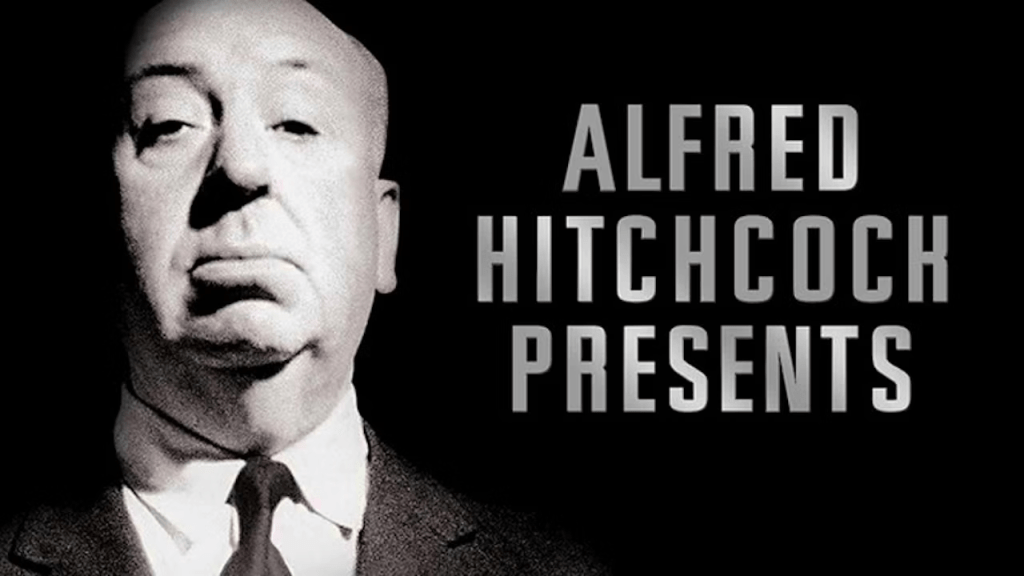
Many fans recall the opening. There is a line-drawing of Hitchcock’s profile with the “Funeral March of a Marionette” playing in the background. Hitchcock appears at the edge of the screen and walks to the center where he fades into the caricature line drawing. Then he said, “Good evening.” The silhouette was one that Alfred drew. He began his entertainment career illustrating title cards for silent movies.

đŸ“·peacock.com

Hitchcock himself directed 17 of the episodes of the series. Two of those were nominated for Emmy awards: “The Case of Mr. Pelham” in 1955 with Tom Ewell and “Lamb to the Slaughter” in 1958 with Barbara Bel Geddes.

Hitchcock’s job during this series was to introduce the story and then to wrap it up at the end. Both the openings and closings were written by James B. Allardice. Allardice wrote for 38 different shows, many of them very popular series in the fifties and sixties. Norman Lloyd, who produced the show and appeared in five episodes, said Hitchcock respected Allardice so much that he never even changed a comma that he wrote.

The network demanded that if a character got away with murder during the show, then Hitchcock would let them know during the closing that he was eventually brought to justice; in the TV Guide, Hitch described this as “a necessary gesture to morality.” Lloyd gave an example of this in a Television Academy interview. In one episode, a woman kills her husband with a frozen lamb’s leg and gets away with it. At the end of the show, Alfred explains that she later remarried and tried the same trick again but when she took out the leg and hit her husband with it, it was not frozen enough, so he caught her in the act and turned her in.

đŸ“·genresnaps.com

The episodes were not your average thriller shows. They included drama, suspense, and humor. Audiences never knew just “who done it” till the end.

The show debuted on CBS on Sunday nights for five years, up against drama anthologies for two years and then competing with The Dinah Shore Show for three years. For the next two seasons it moved to NBC on Tuesday nights. It aired against The Many Loves of Dobie Gillis on CBS those years and against Wyatt Earp on ABC. For three months it went back to CBS on Thursdays before moving to Fridays on CBS the next season with The Price is Right and 77 Sunset Strip. The ninth year found it on CBS on Fridays with little competition and the final year it showed up on NBC’s schedule on Mondays against Ben Casey. I could never find the reason for cancelling the show. I’m assuming ratings began to decline but if anyone knows, I’d love to hear it.

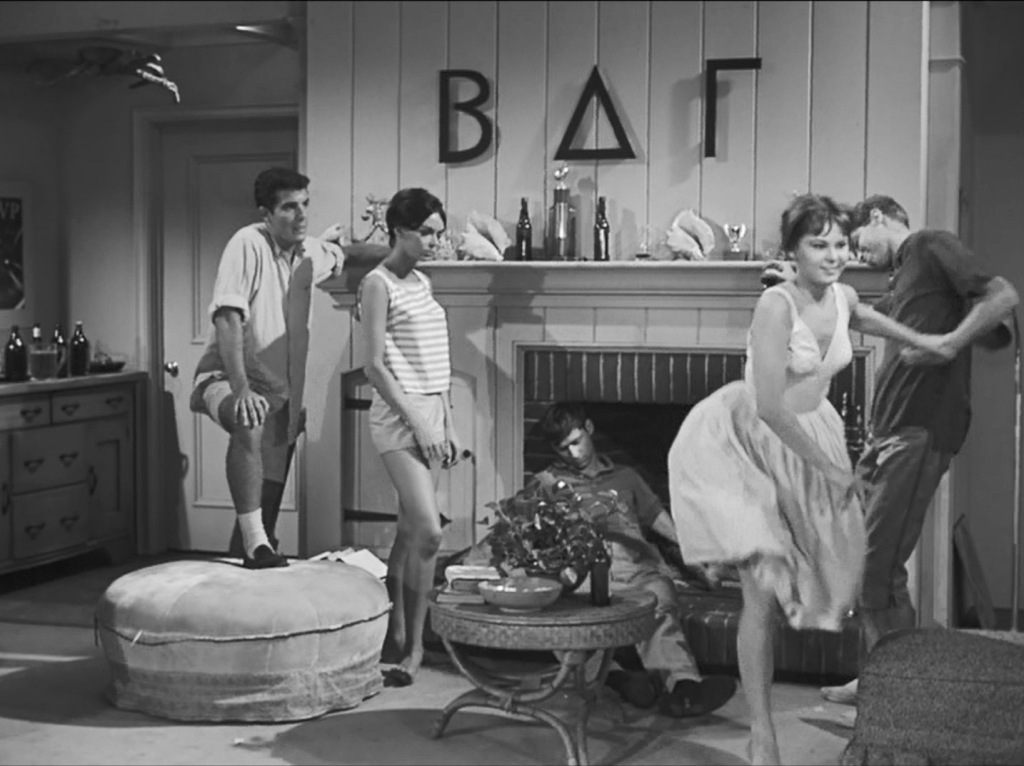
NBC chose not to air a 1962 episode called “The Sorcerer’s Apprentice” because the sponsor felt the ending was too gruesome. In the episode, a magician’s helper is supposed to help in a trick where he “sawed” a woman in half, but he doesn’t realize he truly saws her in half.
đŸ“·thecompletehitchcock.com

As you might guess, with a new story every week, many celebrities appeared on the show including Charles Bronson, Bette Davis, Bruce Dern, Robert Duvall, Clint Eastwood, Peter Falk, Joan Fontaine, Peter Lorre, Walter Matthau, Steve McQueen, Vera Miles, Claude Rains, Robert Redford, Burt Reynolds, Thelma Ritter, George Segal, and Jessica Tandy.

In addition to the Hitchcock-directed episodes, the show received Emmy nominations for Best Series four times. In 1956 it was up for Best Action or Adventure Series, but it lost to Disneyland. The following year found the show in the Best Series – Half Hour or Less category, but it lost to The Phil Silvers Show. 1958 found it in the category of Best Dramatic Anthology Series. You would think that would be a no-brainer win for this show, but it lost to Playhouse 90. It had its fourth category nomination in 1959 as Best Dramatic Series – Less Than One Hour and lost to Alcoa Theatre. I guess the Emmy committee had a hard time determining categories for a few years.

In a different twist, NBC tried to air the show again in 1985. Hitchcock had passed away five years earlier from renal failure. A made-for-TV-movie combined new stories with colorized segments from the original show. It lasted a year before NBC canceled it. USA picked it up for three more seasons.

đŸ“·screentunes.com

The original show can still be seen on a few different networks including MeTV.

With Hitchcock’s popularity in 1955, it’s no wonder that this show was a successful series for a decade. The episodes were well written, and they had a wonderful cast of actors. Many people probably tuned in just to see Hitchcock, and his personality was larger than life, even if his behavior was a bit despicable at times. One of Alfred’s quotes about the show was that “television has brought murder back into the home – where it belongs.”
Dr. Kildare: The “Perfect” Doctor

Photo: collectors.com

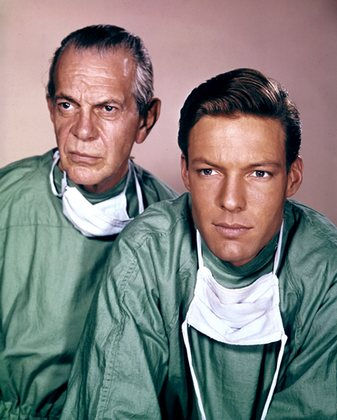
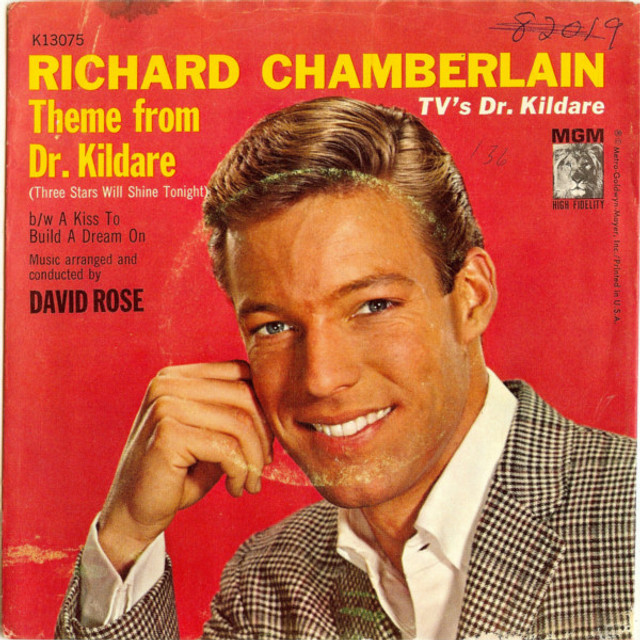
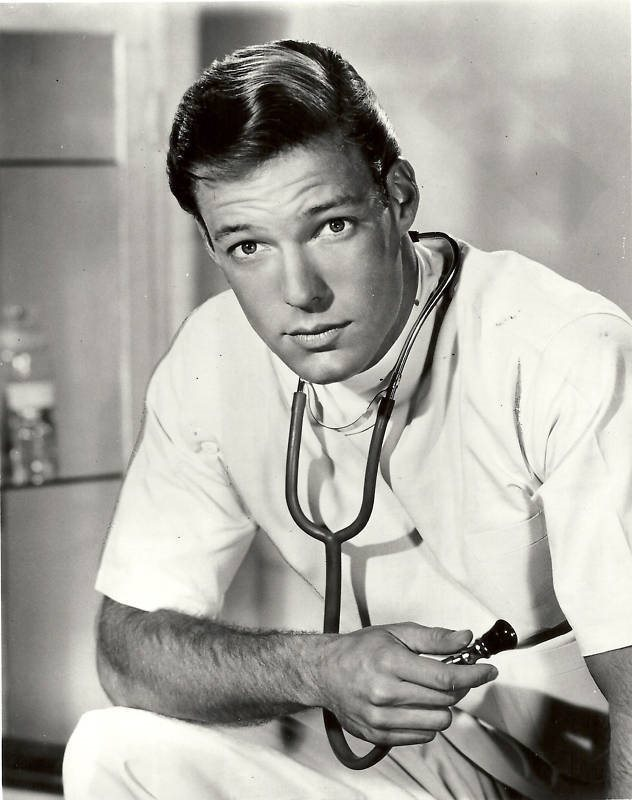
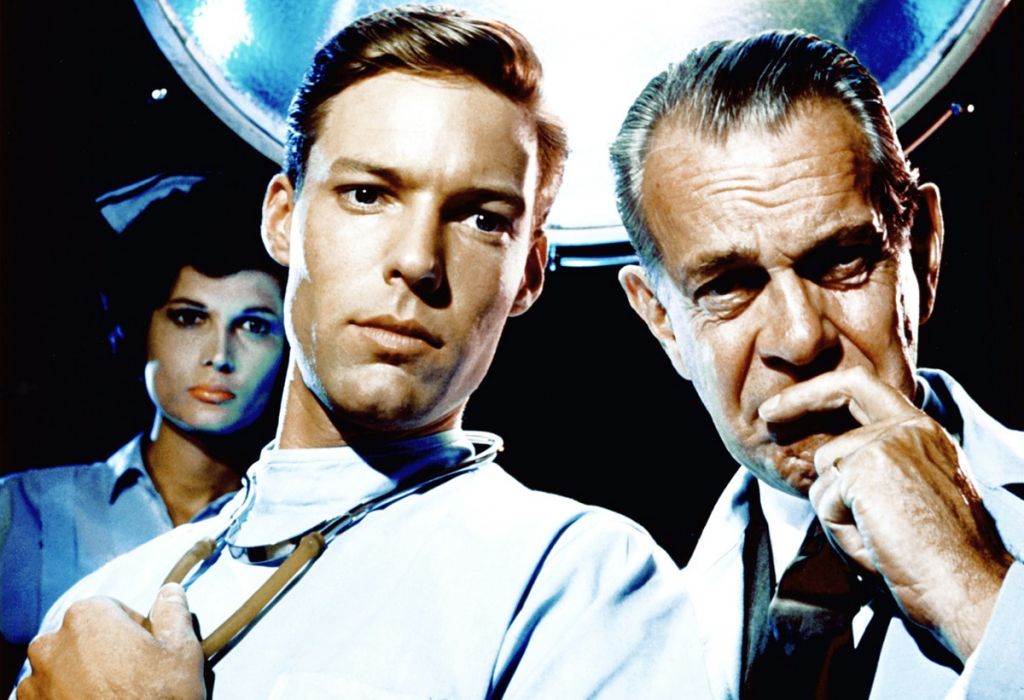
This month we are checking out a few favorites in a blog series: “Examining Our Favorite Medical Shows.” Last week we learned a bit about Ben Casey. Today we are looking at a similar show to Ben Casey, although in many ways it was very different: Dr. Kildare.  Dr. Kildare was also on the air from 1961-66. MGM produced this show created by Max Brand in the 1930s. The show had previously been a movie and a radio series. Unlike Ben Casey who seemed to argue with everyone, Dr. Kildare (Richard Chamberlain) was a respectful intern at Blair General Hospital. He wants to help his patients and listens to his mentor, Dr. Leonard Gillespie (Raymond Massey). In season three, Kildare became a resident, and the episodes focused more on the stories about the patients.

In 1960 a pilot was filmed with Joseph Cronin in the Kildare role and Lew Ayres as Gillespie which did not sell. The role of Kildare was offered to William Shatner and James Franciscus who both turned it down. In 1961, a new pilot was produced with Chamberlin and Massey. One of the reasons Massey accepted the role is because he was certain the show would only last one season, and he wanted to continue with his movie career. The popularity of the show put his film career on hold for five years.

Photo: medium.com

Other cast members who appeared on the show included Dr. John Kapish (Ken Berry), Nurse Fain (Jean Inness), Dr. Agurski (Eddie Ryder), Dr. Gerson (Jud Taylor), Dr. Lowry (Steve Bell) Nurse Conant (Jo Helton), and Nurse Lawton (Lee Kurty).

The guest stars on this show were amazing. I feel like this should be read in auctioneer mode but here goes: Eddie Albert, Jack Albertson, Fred Astaire, Ed Asner, Lauren Bacall, Ed Begley, Joan Blondell, Tom Bosley, Beau Bridges, Charles Bronson, James Caan, Robert Culp, Ossie Davis, Ruby Dee, Angie Dickinson, Olympia Dukakis, Barbara Eden, Linda Evans, Douglas Fairbanks Jr., Peter Falk, Beverly Garland, Ron Howard, Kim Hunter, Celeste Holm, Carolyn Jones, James Earl Jones, Brian Keith, Ted Knight, Harvey Korman, Cloris Leachman, Jack Lord, Walter Matthau, Gavin McLeod, Ricardo Montalban, Harry Morgan, Jack Nicholson, Leonard Nimoy, Carroll O’Connor, Suzanne Pleshette, Basil Rathbone, Robert Redford, Robert Reed, Cesar Romero, Gena Rowlands, William Shatner, Jean Stapleton, Gloria Swanson, Rip Torn, Sam Waterston, Dennis Weaver, and Robert Young. For a show that was only on five years, it was an impressive guest cast.

Photo: imdb.com

To add more realism to the show, writer E. Jack Neuman spent several months working with interns in a large hospital. Technical advice was provided by the American Medical Association.

The show was realistic in portraying all the drama that is truly found in a city hospital. The plots involved a lot of medical and social issues including smallpox, physician competency, drug addiction, malpractice, and euthanasia. Neuman definitely captured what life in a large, city hospital was like. Kildare makes about $60 a month, or $500 in today’s terms, works long hours, rotates through the various medical departments and has senior physicians overrule his diagnoses.

Just like Ben Casey, the first seasons produced stand-alone episodes and after the success of Peyton Place, storylines carried over from one show to another to entice the audience to tune in again the next week.

The theme music for the series was composed by Jerry Goldsmith. A CD set was released in 2009 which included the theme, the original music from the 1960 pilot, Richard Chamberlain’s recording of “Three Stars Will Shine Tonight,” and musical scores from the five seasons by Hurr Sukman, Richard Markowitz, Morton Stevens, Lalo Schifrin, John Green, and Burt Bacharach.

Airing on Thursday nights, the show was in the top ten during season one and the top twenty for seasons two and three. The show received about 12000 fan letters weekly, and, in addition, Chamberlain received letters personally asking for medical advice.

The network moved the show to Tuesday nights against Red Skelton and McHale’s Navy for season five and the viewers did not follow. The ratings declined, and the show was canceled.

This show really changed Chamberlain’s career. He had always been a small-role guy before this show, but he suddenly became a teen idol. He received more than 35,000 fan letters a month. Onscreen the idealistic Kildare and the wise, sometimes cantankerous, Gillespie don’t always agree but they had great chemistry on the set and apparently off the set as well. Unlike Ben Casey, the cast on this show did get along and Chamberlain mentioned that he always enjoyed working with Massey.

Richard said he grew up in a family where they all pretended to be perfect. So, he went through life trying to be perfect too. He said that philosophy did not work well for his life, but it did work well for Dr. Kildare.

Following the show he would take a turn on Broadway, in big-screen movies, and back on television where he specialized in mini-series like Shogun and The Thorn Birds, both in the 1980s.

One fact I found interesting was that the DVD release of the show included a never-aired pilot from a different medical show, The Eleventh Hour in 1962. The episode originally was written for Dr. Kildare. Drs. Kildare and Gillespie assist Dr. Bassett (Wendell Corey), a psychiatrist diagnosing one of his patients Ann (Vera Miles). Instead of airing on Dr. Kildare, Chamberlain and Massey were cut out of the film and it was submitted as a pilot for the show, with the title “Ann Costigan: a Duel on a Field of White.”

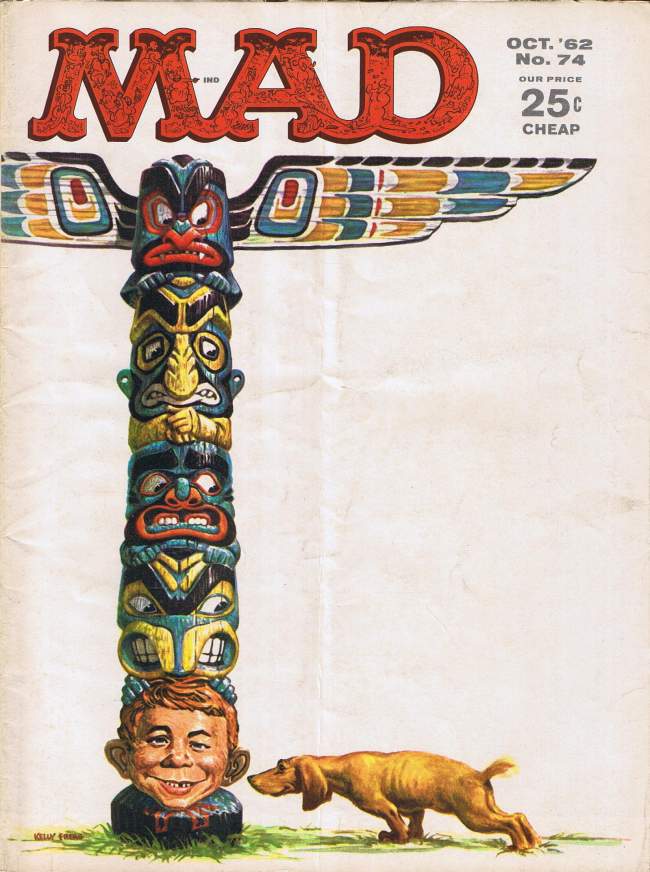
Even Mad Magazine got on the Kildare bandwagon. The 1962, #74 issue, featured “Dr. Killjoy,” a parody of the show.

Everyone seemed to like this show. Then again, what is not to like? You have a handsome doctor, exhilarating drama, a fun guest star every week, and realistic stories. The show would go on to inspire the talents behind a variety of medical series including Marcus Welby MD, ER, House, and Grey’s Anatomy.

Add Some Color to Your Life with Reading Rainbow

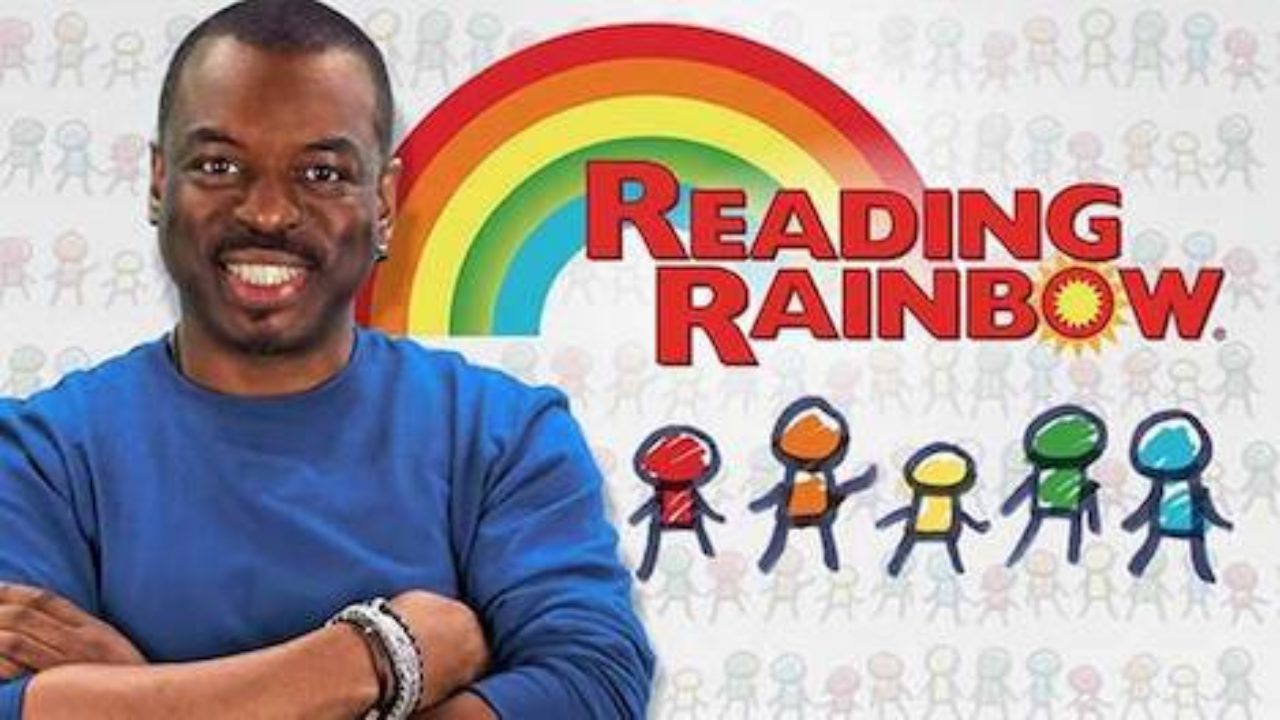
Reading Rainbow was an American 30-minute children’s series that was broadcast on PBS. The show began in 1983. Producing 155 episodes, the series aired new episodes until 2006 and then showed reruns until 2009.

How Reading Rainbow Inspired Me
Photo: bookriot.com

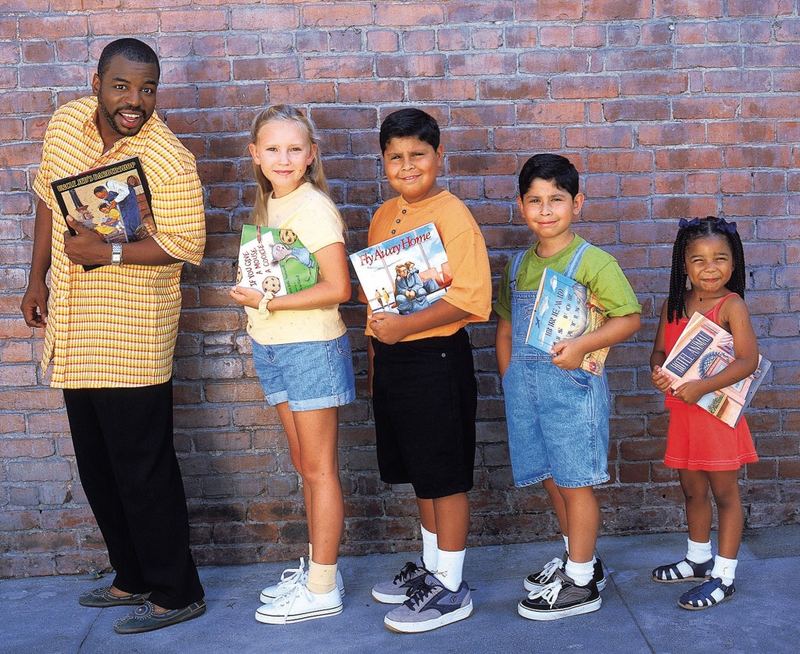
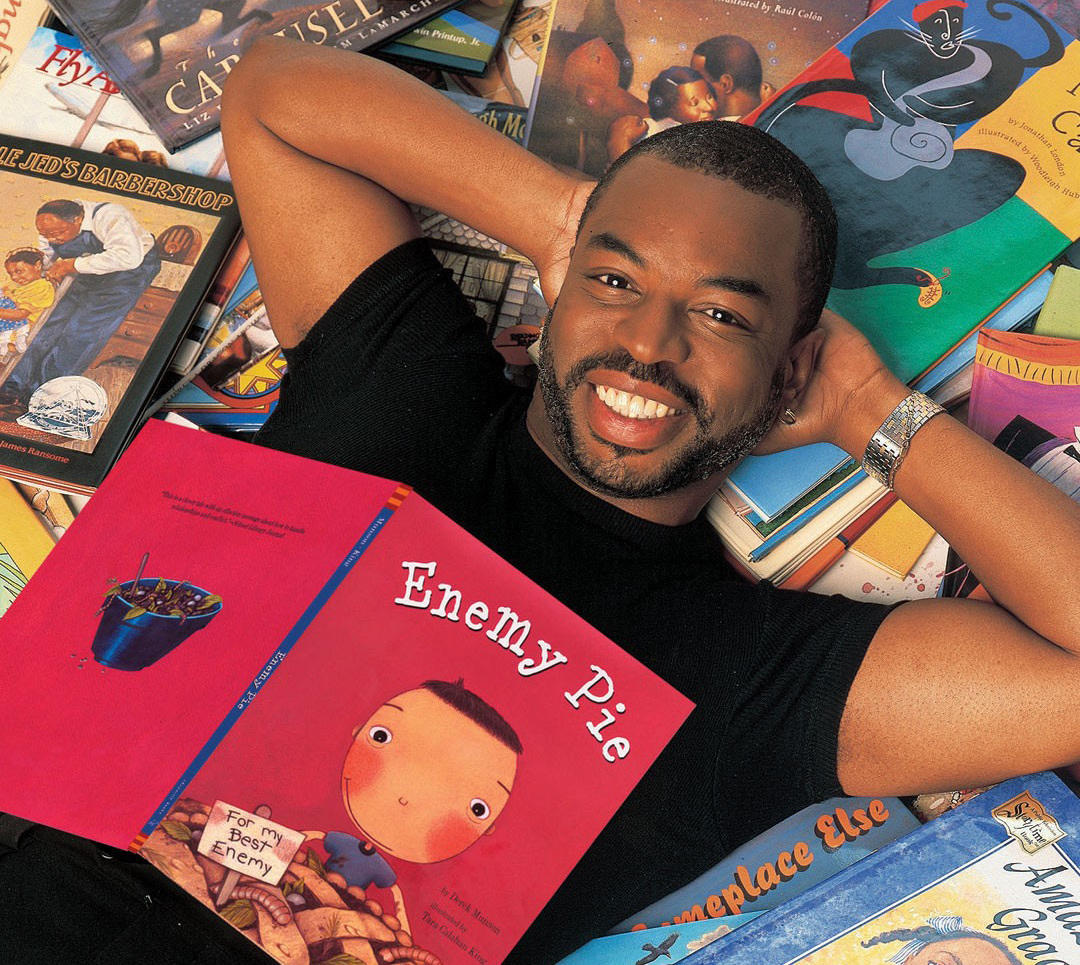
The show was developed to encourage children to read. Twila Liggett created the show with Cecily Truett Lancit and Larry Lancit of Lancit Media Productions. Lynne Ganek, Tony Buttino, and host LeVar Burton were also part of the creative team. The group met with Fred Rogers, Joan Ganz Cooney, and The Electric Company crew to explore ways to make television more engaging to fans. During an interview in 2003, Burton said “I think reading is part of the birthright of the human being. It’s just such an integral part of the human experience—that connection with the written word.”

Many educators found that during the summer, children lost a lot of their reading abilities because they were watching “uneducational” television and not reading. The producers of the show wanted to air a new program during the summer months that would keep kids excited about reading even when they weren’t in school. It was a great goal, but the show was often threatened with cancellation due to a lack of funding.

The show received more than 200 awards including a Peabody Award. Ten of its twenty-six Emmys were for Outstanding Children’s Series. It was the third-longest children’s show on the air right after, you guessed it, Mister Rogers and Sesame St.

LeVar Burton Asks Fans to Help Bring Back 'Reading Rainbow' | The Takeaway  | WNYC Studios
Photo: WNYC Studio.com

A topic was introduced in each episode and then a featured children’s book was read, often narrated by a celebrity. After the story, Burton visited places relating to the theme of the day. The show ended with book suggestions for kids to read. In an Esquire interview in 2019, Burton discussed why listening to books is so important: “It gives you the opportunity to, without the mechanism of reading, engage immediately in your imagination. When you’re reading, you’re multitasking. You’re reading and making the movie in your head. When you’re listening to storytelling, there’s no activity, there’s no multitasking—you’re indeed in your imagination as you’re engaged with the content of the story. It’s a shortcut for visualization.”

Steve Horelick was the composer of the theme song with Dennis Neil Kleinman and Janet Weir writing lyrics. The show had three versions of the song with the third version sung by Chaka Khan.

There are a lot of great stars who showed up to read to kids, including Ruth Buzzy, Julia Child, Ossie Davis, Ruby Dee, Kermit the Frog, Peter Falk, Jane Goodall, and Run D-M-C.

Margret Aldrich in wrote an article in 2014, and she chose the top ten books from the series. It’s a great place to start if you want to find a couple of books to read to your child.

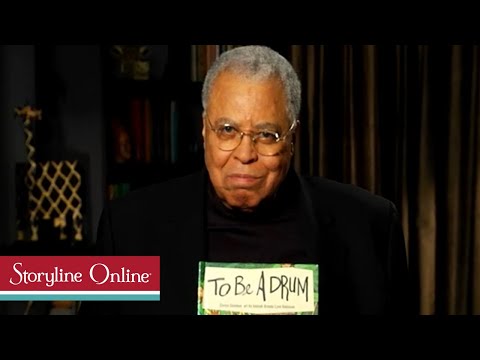
To Be A Drum read by James Earl Jones - YouTube
James Earl Jones Photo: youtube.com
  1. All the Colors of the Race by Arnold Adoff, read by Maya Angelou.
  2. Sunken Treasure by Gail Gibbons, read by Robert Morse
  3. On the Day You Were Born by Debra Frasier, read by Patrick Stewart.
  4. Amazing Grace by Mary Hoffman, read by Tyne Daly.
  5. Animal Café by John Stadler, read by Martin Short.
  6. The Magic Schoolbus Inside the Earth by Joanna Cole, read by Keshia Knight Pulliam.
  7. Paul Bunyan by Steven Kellogg, read by Buddy Ebsen
  8. Arthur’s Eyes by Marc Brown, read by Bill Cosby.
  9. Bringing the Rain to Kapiti Plain by Verna Aardema, read by James Earl Jones.
  10. Abiyoyo by Pete Seeger and Michael Hays, read by Pete Seeger.

So, why was the show canceled? According to John Grant, who is in charge of content at WNED Buffalo, the show’s home station, “The show’s run is ending because no one—not the station, not PBS, not the Corporation for Public Broadcasting—will put up the several hundred thousand dollars needed to renew the show’s broadcast rights.” And, just like that, the last chapter was closed for good.

Burton Calls On 'Star Trek' Fans To Bring 'Reading Rainbow' To The Next  Generation | KRWG
Photo: npr.org

Reading Rainbow was an essential motivation for kids to read. However, adults have to realize that they also have to make time for reading. Let’s allow Levar to have the last word. In that Esquire interview, he also talked about why all of us need to read:

“You need to make the time. You have time to eat; you have time to sleep; you have time to love. I think reading for pleasure is an act of self-care, genuinely. I really do, especially in today’s world. You’ve gotta turn off the news; you’ve got to create some escape time in your imagination. You have to feed yourself, people! Otherwise, we have a tendency to get locked into the circumstances of life, and less engaged in the solution aspect of ourselves. It’s really critical for us to read for pleasure. One of the miracles of the modern era is that on my iPad, and consequently, because of the Cloud, on my phone, I carry a library of reading material. I mean, literally a library. It’s so available. We just have to shift our awareness a degree in that direction.”

Columbo: The Disheveled Detective

We are winding up the blog series, “One-Named Detectives,” and I think we saved the most interesting private eye for today: Columbo.

How Peter Falk made detective TV show 'Columbo' work - Click Americana
Photo: americana.com

Columbo was on the air from 1971-2003, the longest of the five detectives we looked at in this series (Cannon, Kojak, Mannix, Matlock, and Columbo), but oddly had the fewest episodes with 68 (Cannon had 120, Kojak had 117, Matlock with 181, and Mannix had the most with 194).

Richard Levinson and William Link created Columbo (they also were the force behind Mannix). Levinson and Link met in junior high and they were a writing team until 1987 when Levinson passed away. This show was a bit different; it actually had two pilot episodes in 1968 and 1971. It originally aired from 1971-1978 in The NBC Mystery Movie series. It alternated with McMillan and Wife, McCloud and Hec Ramsey.  ABC revived the show from 1989-2003, but it was not a weekly show then either. Falk didn’t want a weekly show, so the series was scheduled for one Wednesday a month. For season two, the series was moved to Sunday nights where it continued until 1978.

Columbo Hassan Salah
Falk with Hector Elizondo–Photo: columbophile.com

In the original concept for the show, Columbo was described as smooth-talking and cultured. The first choice for an actor to play the role was Bing Crosby who declined. When Falk showed up for his audition, he came in wrinkled clothing, aimlessly chattered, and seemed a bit scatter brained so the producers changed the character.

The show had some interesting directors. One of the directors on the show was Steven Spielberg who directed “Murder by the Book.” Falk himself directed the final episode of season one, “Blueprint for Murder.” Nicholas Colasanto who played Coach on Cheers directed two of the shows, “Etude in Black” and “Swan Song.” Patrick McGoohan directed five episodes (including three he guest starred in), as well as producing and writing two others. Falk’s friend actor Ben Gazzara directed “A Friend in Deed” and “Troubled Waters.”

On Columbo, we see the crime being committed long before we meet Lt Columbo (Peter Falk), so we know who committed the crime from the beginning. The fun of the episode is in watching Columbo investigate the crime and how he solves it. Columbo never introduces himself with his first name and no other character in the show uses it either. In season four, Colonel Rumford asks Columbo if he has a first name, and his response is “I do, but usually only my wife uses it.” Apparently, in one episode, a badge is scanned and lists his name as Frank, but William Link stated that Columbo was written without a first name.

Columbo | Columbo, Peter falk, Columbo peter falk
Photo: pinterest.com

Columbo was a very disheveled detective who always showed up in a rumpled raincoat, smoking a cigar and appearing as if he was not quite all there. Falk used his own wardrobe for the character. The infamous raincoat was one he bought for $15 in 1967 when he got caught in a New York City rainstorm.

However, behind the façade of an inept policeman was a brilliant mind. He asked a lot of seemingly non-essential questions and paid attention to every detail. After interviewing a suspect, he always said, “Just one more thing.” Falk improvised during filming. He might ask for a pencil, search for something or throw in an unscripted line and did it to create a genuine confusion on the part of the other actor so it appeared more realistic.

This was definitely a one-man show, but there were a few characters who had recurring roles: Mike Lally played a bartender in 25 episodes, John Finnegan was Barney on 13 shows, and Bruce Kirby as Sgt George Kramer was seen nine times.

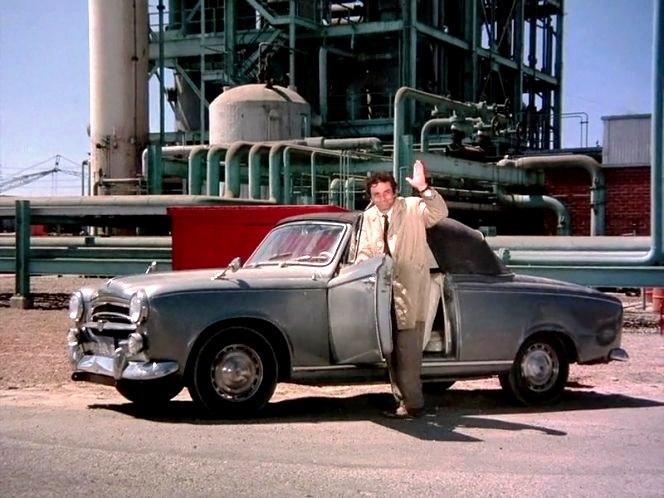
Car history: The Peugeot and the TYV show "Columbo."
Photo: recordonline.com

Columbo’s car is a 1959 Peugeot 403. Apparently, only 504 convertibles with two doors were made that year. When NBC cancelled the series, the car was sold. ABC had to locate a replacement when they picked the show up later. You can tell the difference because the license plate from NBC seasons was 044-APD and the plate from ABC shows was 448-DBZ.

Most of the suspects on the show were clever, wealthy people who think they have covered their tracks and have a solid alibi.

For only 68 episodes, there were a lot of famous guest stars on the show.  Some stars even portrayed two different criminals including Jack Cassidy, Robert Culp, George Hamilton, Patrick McGoohan, and William Shatner. Other guest stars showing up were Anne Baxter, Johnny Cash, Faye Dunaway, Jose Ferrer, Ruth Gordon, Lee Grant, Janet Leigh, Vera Miles, Ray Milland, Leonard Nimoy, Donald Pleasence, Dick Van Dyke, and Robert Vaughn.

Peter Falk Dick Van Dyke Color Poster Columbo Rare at Amazon's  Entertainment Collectibles Store
Falk with Dick Van Dyke–Photo: amazon.com

There was a variety of music written for each episode of the show. The Mystery Movie Theme was written by Henry Mancini and was used for the NBC shows. Both Quincy Jones and Mike Post also wrote versions of The Mystery Movie theme. One song uniquely belonging to Columbo was “This Old Man.” Falk can be heard humming or whistling it in various episodes after it was introduced in a 1973 show.

The show received thirteen Emmys during its run. Falk won the Emmy the first season and again in 1976. He was nominated in 1973, 1977 and 1978 but lost to Richard Thomas, James Garner and Ed Asner respectively. The series was nominated in 1972, 1973, 1976, 1977, and 1978 (winners were Elizabeth R Masterpiece Theater; The Waltons; Police Story; Upstairs, Downstairs; and The Rockford Files).

Columbo Wallpapers Wallpapers - All Superior Columbo Wallpapers Backgrounds  - WallpapersPlanet.net
Photo: wallpapersplanet.net

The show was very popular and was broadcast in 44 countries. There is a statue of Columbo in his coat in Budapest, Hungary on Falk Miksa Street. The story behind it is that according to then-mayor Antal Rogan, Falk is a relative of Falk Miksa who was a Hungarian writer and politician, but I could not verify if that was true or not.  What is true is that it was put up in 2014 at a cost of $63,000.

When he is questioning witnesses, Columbo often throws in random references to his wife and or something the couple liked to do, but we never see her in the series.  However, later a show was created, Mrs. Columbo starring Kate Mulgrew. Falk’s real-life wife Shera Danese was cast in six of the Columbo episodes, always appearing as a different character.

A group of novels was adapted from the Columbo tv series by MCA written by Alfred Lawrence, Henry Clements, and Lee Hays.

Columbo has been a popular show in syndication and can currently be seen on ME TV Sunday nights. The shows run from 70-98 minutes which probably makes syndication interesting. The entire set is available on DVD for about $50.

Unfortunately, Peter Falk was diagnosed with dementia in 2007, and by 2009 he could not recognize photos of himself and did not remember playing Columbo. He passed away in 2011.

Best 45+ Columbo Wallpaper on HipWallpaper | Columbo Wallpaper, Columbo TV  Wallpaper and Peter Falk Columbo Wallpaper
Columbo

It’s been fun looking at these five detectives for this series.  When I put this together, I chose five private eyes I thought would make good articles. What I didn’t realize, is that four of them were all from the same era.  In fact, in 1973, Columbo was on Sunday nights followed by Mannix and both were in the top twenty and on Wednesday nights Cannon was on followed by Kojak and both were in the top ten. The following year, Sunday nights featured Kojak before Mannix which was still in the top 20 and they were on at the same time as Columbo. Cannon eventually moved to Sunday night but also spent part of the year on Wednesdays where it was also in the top twenty. Matlock debuted in the late eighties, after the other shows except Columbo had all gone off the air.

Cannon, Kojak, Mannix, Matlock, and Columbo—five very different types of detectives who had one thing in common: good writing. Check them all out and I’d love to hear which one is your favorite.

The Dick Cavett Show: Television’s Classiest Talk Show Host

Dick Cavett made a career of being a talk show host. He began on ABC in March of 1968 and ended on TCM in 2007. In between, he showed up during the day, in prime time, late at night, on PBS, in syndication, and on CNBC. The Dick Cavett Show seems to refer to all the shows as a collected whole, so that’s how I will present it in my blog.

Image result for images of dick cavett
Photo: chicagotribune.com

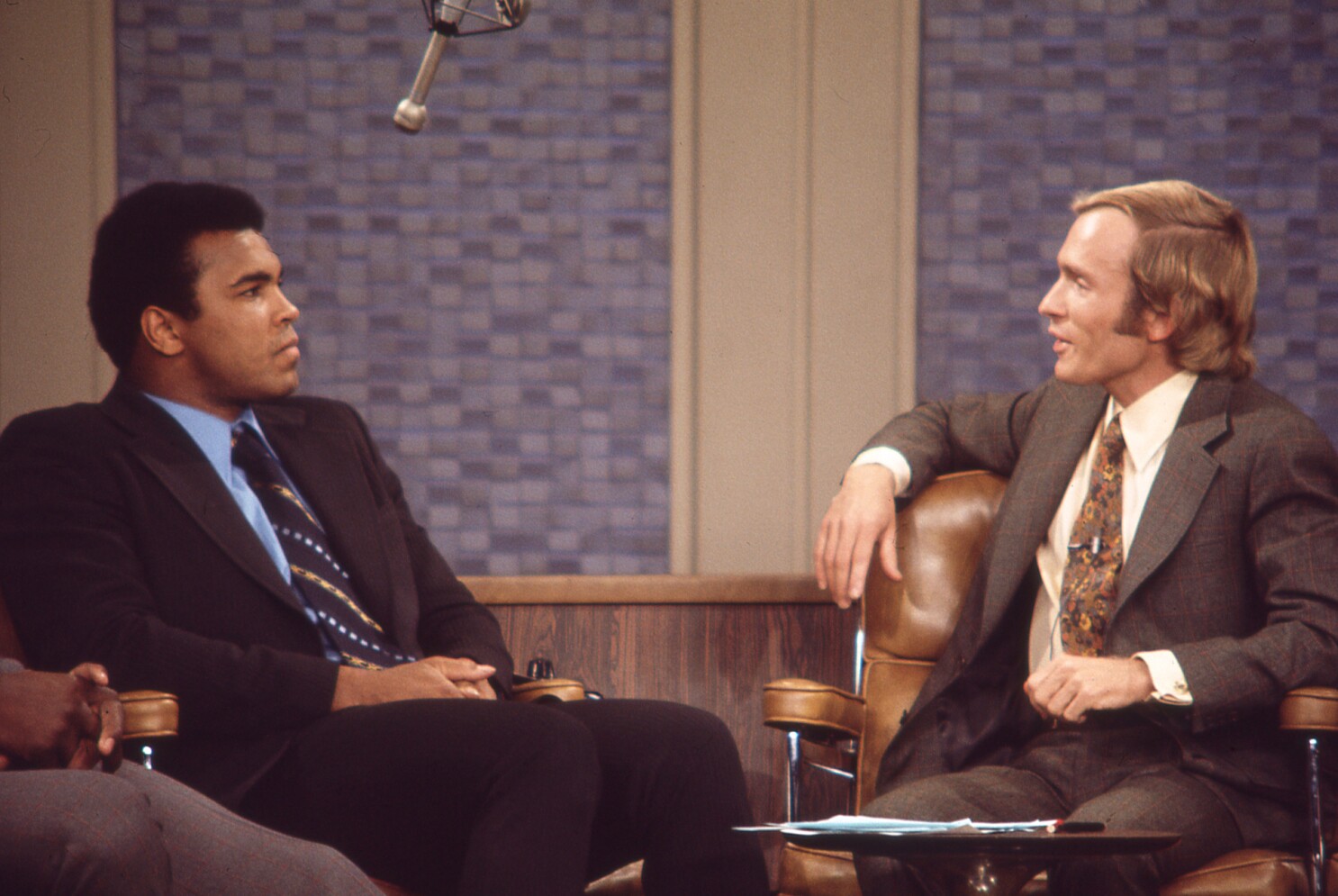
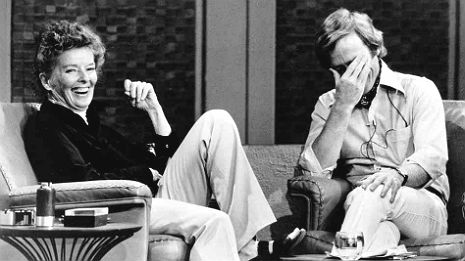
If you have ever seen Cavett in action, he has such a smooth, polite manner that sometimes you forget he may be asking an invasive question. Some of the most memorable shows were conversations with Christine Jorgenson (who walked off the show in 1968); Groucho Marx (1969); Jimi Hendrix (1969); The Woodstock Show (1969); Eric Clapton (1970); Alfred Lunt, Lynn Fontanne and Noel Coward (1970); Orson Welles (1970); Salvador Dali (1971); John Kerry debating on Vietnam (1971); Watergate and Beyond (1974); Angela Davis (1972); Jackie Robinson (1972); Marlon Brando (1973); Katharine Hepburn (1973); Carol Burnett (1974); and  Mohammad Ali (several shows). As you can see, in addition to entertainers, Cavett interviewed influential authors, politicians, athletes, and newsmakers.

Image result for images of dick cavett
Talking to the Great One: Ali Photo: latimes.com

Cavett often had several guests on each show, but sometimes he devoted the entire night to one person such as Laurence Olivier, Judy Garland, Bette Davis, Janis Joplin, Alfred Hitchcock, Fred Astaire, Gloria Swanson, Lucille Ball, Bob Hope, and David Bowie.

Politics were often covered by Cavett, and over the years, he interviewed many including political guests including Carl Bernstein and Bob Woodward, Walter Cronkite, John Ehrlichman, John Dean, Gerald Ford, Barry Goldwater, Henry Kissinger, and G. Gordon Liddy.

In various interviews of his own, Cavett mentioned different shows that were memorable or brought in a lot of mail. Early in the show’s history, Cavett was interviewing Peter Falk, Ben Gazzara, and John Cassavetes about a movie they were in. Cassavetes was so drunk and incoherent, Cavett walked off the stage.

Image result for images of dick cavett
Laughing with Katharine Hepburn Photo: dangerousminds.com

Georgia governor Lester Maddox appeared in a panel with Truman Capote and Jim Brown about segregation. Cavett made a reference to “bigots” who supported Maddox. When Maddox demanded an apology, Cavett apologized to Georgians who supported him without being a bigot. Maddox left the studio. However, later Maddox relented and made another appearance, and Cavett walked off the set as a joke.

One memorable episode was something no host wants to encounter. Publisher J. I. Rodale was on the show. Cavett was talking to another guest when Rodale seemed to be snoring, but everyone soon realized something was wrong. He actually died there on the set. The audience didn’t even realize it until Cavett called for a doctor. The program was taped but not aired.

Director Ingmar Bergman did few television interviews and no US interviews, but he made an exception for Dick Cavett.

Image result for images of dick cavett
With David Bowie Photo: nostalgiacentral.com

So, what types of things might you have learned from Cavett’s show? Well, Hitchcock explained how some of his most ingenious special effects worked.  Gale Sayers talked about the movie Brian’s Song (maybe he could have given me a hint how not to cry every single time I see the movie.).  BB King revealed what his name stands for. Jack Benny demonstrated how to play the violin. Melba Moore told what it was like to open at the Apollo Theater. James Garner explained how he accidentally broke co-star Doris Day’s ribs, and Jacques Cousteau discussed the mystery of manatees.

And finally, I had to find out who was Cavett’s favorite interview, and who were the ones that got away? The two he never got to interview but always wished he had was an easier answer to find: Cary Grant and Frank Sinatra.

Image result for images of dick cavett and groucho marx
Photo: WBUR

It was a lot harder to answer the first question.  If you read the other three blogs in this series, you know the other talk show hosts (Mike Douglas, Phil Donahue, and Tom Snyder) began careers in Ohio. I was hoping to find an Ohio link for Dick, and that’s when I found the answer to my question of his favorite interviewee.  Cavett landed in Cleveland at the end of his career, which seems fitting since he is ending this series.

He was talking about an upcoming show at The Nightclub in Cleveland and mentioned Jack Paar was his mentor. (Cavett wrote for The Tonight Show when Paar hosted it, and Paar began his career in Canton, Ohio; I know it’s one coincidence after another.) Jack told him he didn’t need humor, singing, or anything except a desire to have a conversation. Then Cavett said, “I watch clips from the shows when I’m invited to give a talk and they show them, and I’m always surprised by the number of little delightful moments I’ve forgotten. I watched a moment the other night when Groucho was on the show with [zoologist] Jim Fowler. And Fowler brought a sloth on the stage, and Groucho said, ‘That’s the lousiest-looking dog I’ve ever seen.’ I’d forgotten that. That was the same night Groucho proposed marriage to Truman Capote. . . .’I love to do Q&A with the audience, but there’s only one forbidden question, and it doesn’t have anything to do with sex or politics,’ he said. ‘The forbidden question is, Who has been your most interesting guest?’ . . . But then he went on to say that ‘If pushed to the wall, I have to admit that Groucho was the guest who meant the most to me.’ Cavett said that ‘In a letter from Miriam, Groucho’s daughter, she wrote, ‘My father thought the world of you.’ It gets me even now when I say that out loud.’”

Image result for images of dick cavett and groucho marx
The unique Groucho Marx Photo: pinterest.com

In 2005 several box sets were released of some of Cavett’s shows. They are collected by theme of the interviewee such as The Rock Icons, etc. The network Decades, which recently went off the air, broadcast these shows also. Before the network was disbanded, I was able to watch about ten of these episodes, and they were as good as I had hoped for.

I have really enjoyed reviewing these talk show hosts and their guest interviews this month.  It makes me want to invite a bunch of friends over, one at a time, for coffee and conversation.  Just be forewarned, if I invite you over, I may have a list of questions I’ll want to be asking you.