Welcome To the Twilight Zone

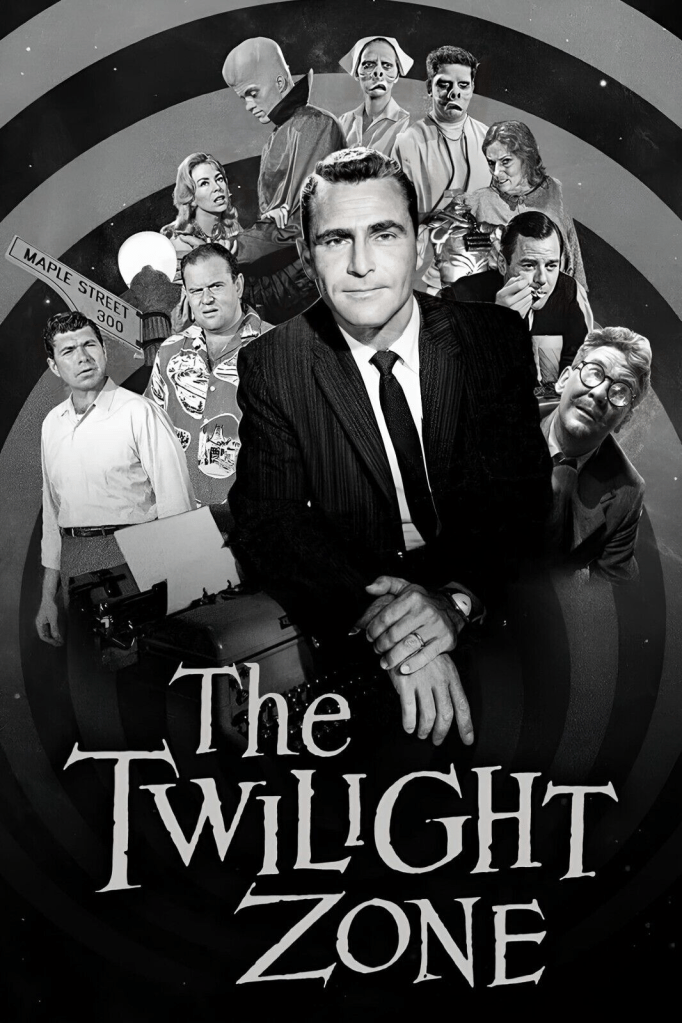
As we wind up our Eerie Shows blog series, we are ending with a show I remember being both fascinated by and totally creeped out by – The Twilight Zone. In 1958 CBS purchased a teleplay written by Rod Serling called “The Time Element.” It was introduced by Desi Arnaz. It became an anthology series called The Twilight Zone and was on the air from 1959-1964.

This show had more lives than The Brady Bunch. A second version debuted in 1985 and was on four years on CBS. From 2002-2003, it appeared again on UPN hosted by Forest Whitaker. But that still was not the end. In 2019, a fourth reboot was on for a season. In addition to the reboots, Steven Spielberg produced Twilight Zone: The Movie in 1983 starring Dan Aykroyd, Albert Brooks, and John Lithgow. Leonardo DeCaprio was rumored to be putting together a current film and Aron Eli Coleite was hired to write the screenplay. Four years later, Christine Lavaf was brought on to write a script. I could not find any information whether this movie was still in the works or not.

In this blog, I am focusing on the original series. While the show could be described as fantasy or science fiction, the episodes covered a lot of genres including absurdism, dystopian fiction, suspense, horror, and psychological thrillers.
📷reddit.com

The opening is one many of us remember: “There is a fifth dimension, beyond that which is known to man. It is a dimension as vast as space, and as timeless as infinity. It is the middle ground between light and shadow, between science and superstition, and it lies between the pit of man’s fears and the summit of his knowledge. This is the dimension of imagination. It is an area which we call The Twilight Zone.” The “Twilight Zone” was a term used by US Air Force pilots when crossing the day and night sides above the world.

📷wired.com

The series was produced by Cayuga Productions, Inc., owned by Serling. There were a lot of other famous writers who penned episodes on this show. Of the 156 episodes, Serling, Charles Beaumont, and Richard Matheson wrote 127 of them. Other famous writers included Ray Bradbury, Earl Hamner Jr., George Clayton Johnson, and Jerry Sohl. Many of the episodes were social commentaries about nuclear war, McCarthyism, racial inequality, and the greed of capitalism.

One of the earliest shows, “The Monsters Are Due on Maple Street,” is a great example of the Cold War and McCarthy subthemes. It aired in 1960, and the themes are still relevant today. The residents of Maple Street are alarmed when they hear rumors of monsters from outer space in their neighborhood. After a shadow passes by and a loud roar is heard, the citizens start accusing each other of being aliens. One man dies, another is physically attacked, and rioting occurs. We watch the residents destroy each other without seeing aliens involved. The twist is that there are aliens. They cut the power, but they let the humans destroy themselves. The message was if we think communists are in our midst, we’ll invent evidence to prove it and attack each other while Russia simply sits back and watches us destroy each other.

📷powerpop.com

All the shows were filmed in black and white. Seasons one, two, three and five were half-hour shows, while season four was an hour long. The Twilight Zone was never very high in the ratings, and the show struggled to find sponsors during its run. To save some money in season two, the network decided to shoot episodes on videotape instead of film. I’ve heard of this happening with several television shows in the sixties, but I wasn’t sure what the difference was. Apparently, videotape was very primitive at that time. Using videotape meant that the show was “camera-cut” which means using four cameras on a sound stage. Location shooting was not possible, and editing the tape was almost impossible. These disadvantages, along with the poor visual quality, made it hard to work with, and the technology was abandoned after a brief trial period.

The original theme for season one was composed by Bernard Herrmann. Season two switched to a theme by Marius Constant which is the most-remembered theme song. (The Grateful Dead performed the theme in 1985 for the reboot, Johnathan Davis of Korn composed the 2002 version, and Marco Beltrami was on board for the 2019 revival. The 1983 movie used composer Jerry Goldsmith.)
📷imdb.com

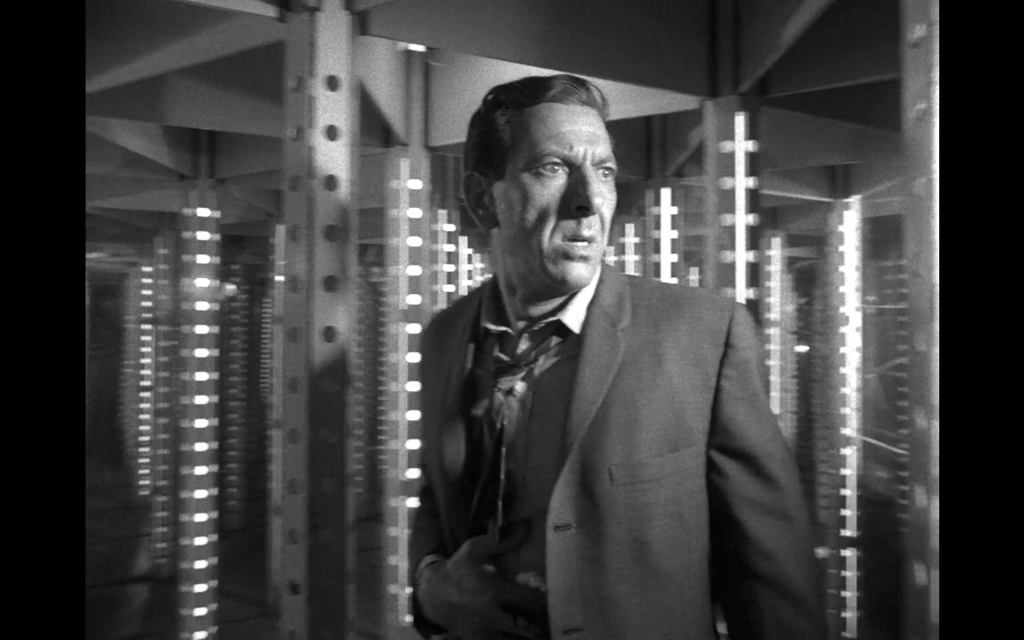
Several actors were in more than one episode and are noted for their appearances in the show: Jack Klugman, Burgess Meredith, Warren Oates, William Shatner, Jack Warden, Fritz Weaver, and William Windom.

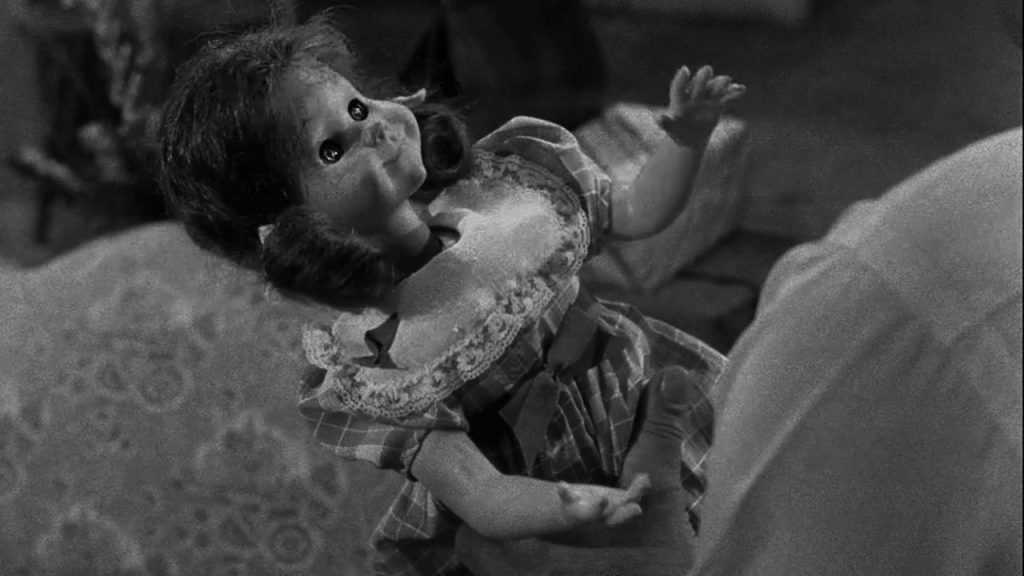
Everyone has their favorite scary episode. “The Dummy” from 1962 is about ventriloquist Jerry Etherson who thinks his dummy Willie is alive and evil. He locks Willie in a trunk, deciding to write a new act with another dummy, but Willie doesn’t like the plan.

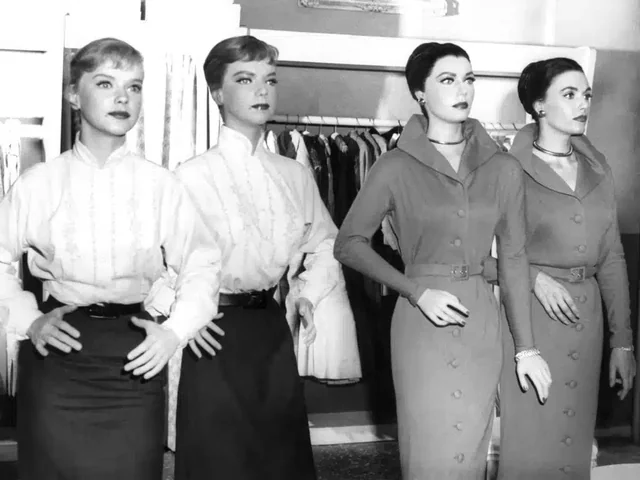
In “The After Hours,” a woman is locked in a department store after hours and it seems as though the mannequins have come to life. Even though no one is left in the store, she is treated badly by several “salespeople.”
📷imdb.com

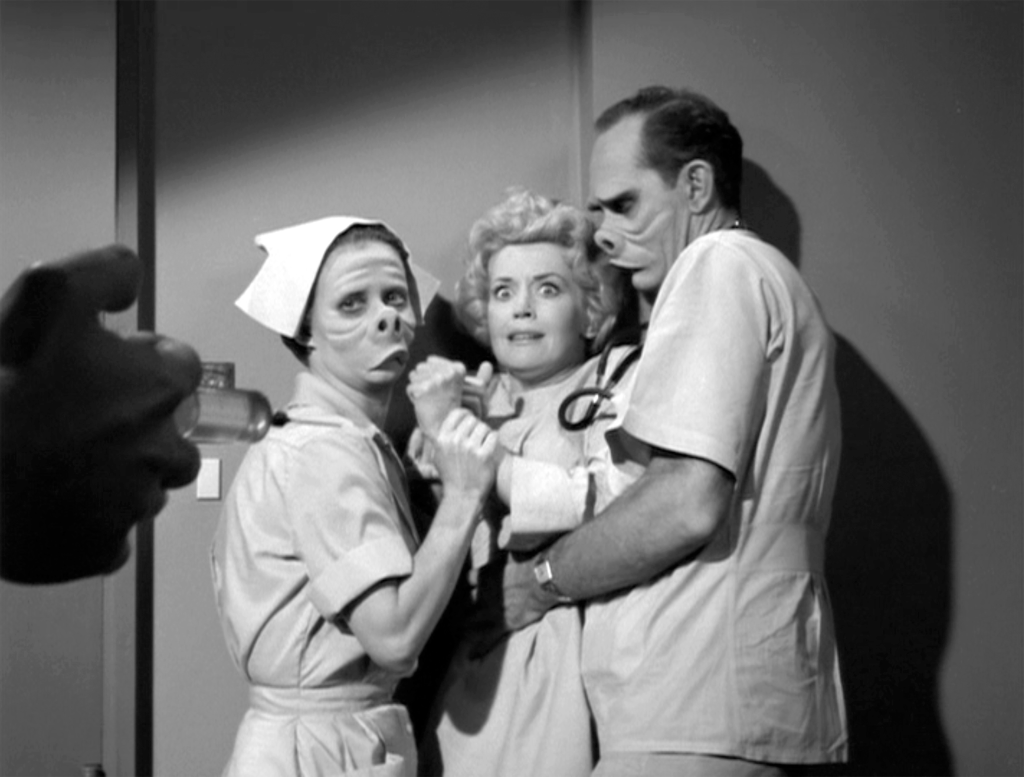
My most-remembered episode was “Eye of the Beholder.” Donna Douglas stars in this one about a young woman lying in a hospital bed with her head wrapped in bandages. She is waiting to see the outcome of a surgical procedure that was supposed to make her look “normal.” We see the bandages come off, we see the beautiful face of Donna Douglas, we see her look into a mirror, and then we hear her scream. When the scene pans out, everyone else has the face of a distorted pig and Douglas is devastated by her “ugliness.”

Also, like The Brady Bunch, the show has never been off the air since it debuted thanks to syndication. The episodes, despite being in black and white, have stood up to the test of time very well. Many things have changed in society since 1959, but people really have not changed much, and the stories are still applicable today. Newton Minnow who headed the FCC in 1961 is the person who called television a “vast wasteland.” The only series he praised was The Twilight Zone. (The US Minnow on Gilligan’s Island was named for Newton.)
📷paramountplus.com

There are some shows that are classics for their writing, some are classics for the quality of actors on the show, some are classics for their ability to transcend time and stay relevant for decades, and some are classics for the novelty they bring to the television schedule. The Twilight Zone is a classic because it does all these things and is as enjoyable to watch today as it was more than 60 years ago.
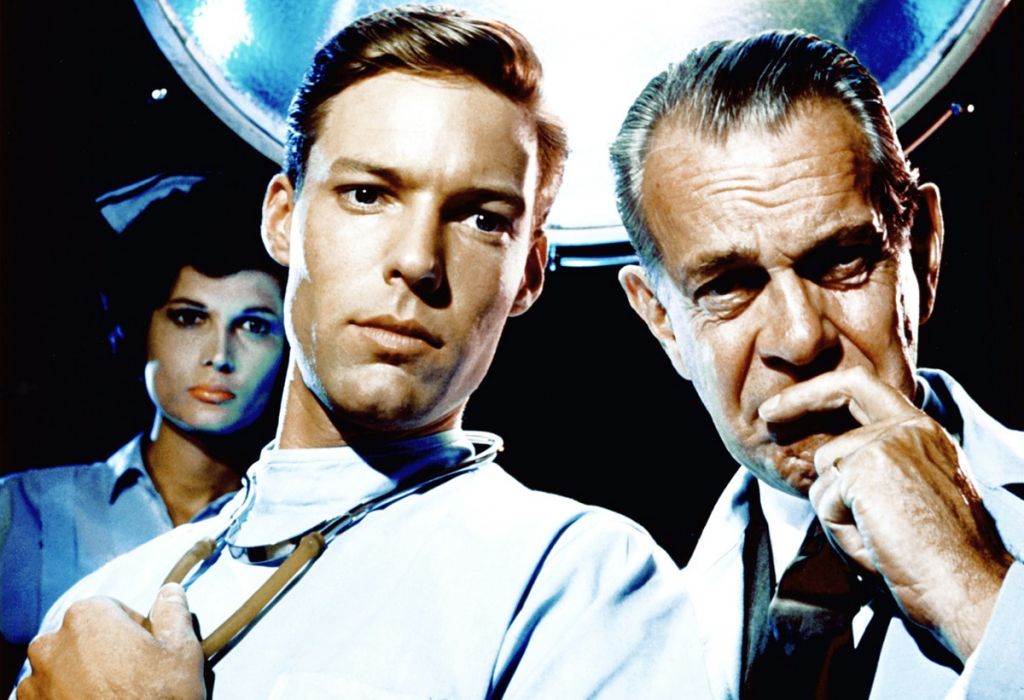
Dr. Kildare: The “Perfect” Doctor

Photo: collectors.com

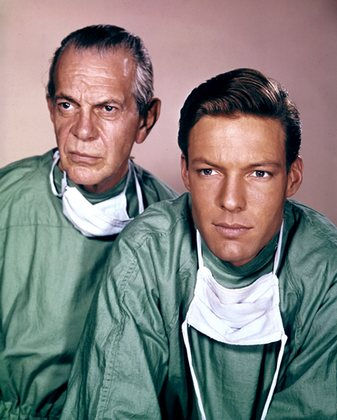
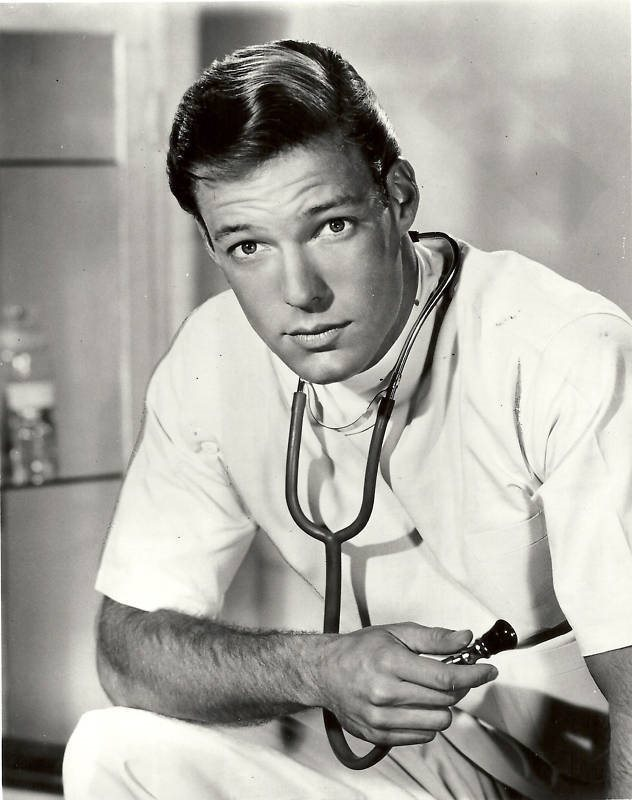
This month we are checking out a few favorites in a blog series: “Examining Our Favorite Medical Shows.” Last week we learned a bit about Ben Casey. Today we are looking at a similar show to Ben Casey, although in many ways it was very different: Dr. Kildare.  Dr. Kildare was also on the air from 1961-66. MGM produced this show created by Max Brand in the 1930s. The show had previously been a movie and a radio series. Unlike Ben Casey who seemed to argue with everyone, Dr. Kildare (Richard Chamberlain) was a respectful intern at Blair General Hospital. He wants to help his patients and listens to his mentor, Dr. Leonard Gillespie (Raymond Massey). In season three, Kildare became a resident, and the episodes focused more on the stories about the patients.

In 1960 a pilot was filmed with Joseph Cronin in the Kildare role and Lew Ayres as Gillespie which did not sell. The role of Kildare was offered to William Shatner and James Franciscus who both turned it down. In 1961, a new pilot was produced with Chamberlin and Massey. One of the reasons Massey accepted the role is because he was certain the show would only last one season, and he wanted to continue with his movie career. The popularity of the show put his film career on hold for five years.

Photo: medium.com

Other cast members who appeared on the show included Dr. John Kapish (Ken Berry), Nurse Fain (Jean Inness), Dr. Agurski (Eddie Ryder), Dr. Gerson (Jud Taylor), Dr. Lowry (Steve Bell) Nurse Conant (Jo Helton), and Nurse Lawton (Lee Kurty).

The guest stars on this show were amazing. I feel like this should be read in auctioneer mode but here goes: Eddie Albert, Jack Albertson, Fred Astaire, Ed Asner, Lauren Bacall, Ed Begley, Joan Blondell, Tom Bosley, Beau Bridges, Charles Bronson, James Caan, Robert Culp, Ossie Davis, Ruby Dee, Angie Dickinson, Olympia Dukakis, Barbara Eden, Linda Evans, Douglas Fairbanks Jr., Peter Falk, Beverly Garland, Ron Howard, Kim Hunter, Celeste Holm, Carolyn Jones, James Earl Jones, Brian Keith, Ted Knight, Harvey Korman, Cloris Leachman, Jack Lord, Walter Matthau, Gavin McLeod, Ricardo Montalban, Harry Morgan, Jack Nicholson, Leonard Nimoy, Carroll O’Connor, Suzanne Pleshette, Basil Rathbone, Robert Redford, Robert Reed, Cesar Romero, Gena Rowlands, William Shatner, Jean Stapleton, Gloria Swanson, Rip Torn, Sam Waterston, Dennis Weaver, and Robert Young. For a show that was only on five years, it was an impressive guest cast.

Photo: imdb.com

To add more realism to the show, writer E. Jack Neuman spent several months working with interns in a large hospital. Technical advice was provided by the American Medical Association.

The show was realistic in portraying all the drama that is truly found in a city hospital. The plots involved a lot of medical and social issues including smallpox, physician competency, drug addiction, malpractice, and euthanasia. Neuman definitely captured what life in a large, city hospital was like. Kildare makes about $60 a month, or $500 in today’s terms, works long hours, rotates through the various medical departments and has senior physicians overrule his diagnoses.

Just like Ben Casey, the first seasons produced stand-alone episodes and after the success of Peyton Place, storylines carried over from one show to another to entice the audience to tune in again the next week.

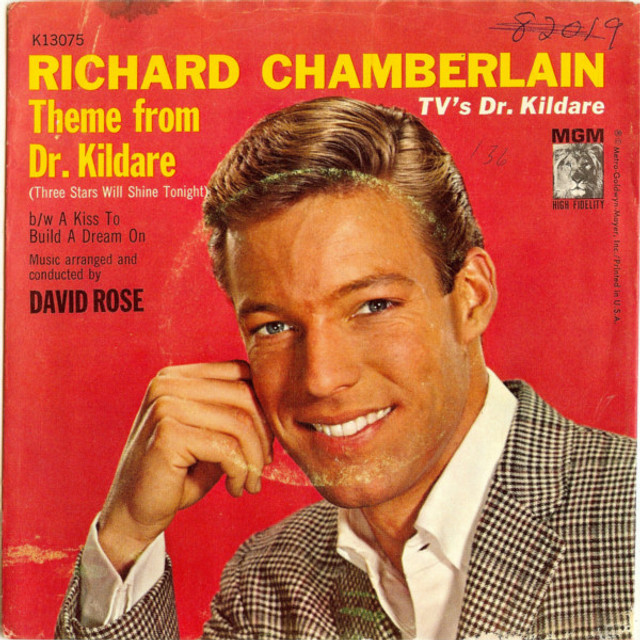
The theme music for the series was composed by Jerry Goldsmith. A CD set was released in 2009 which included the theme, the original music from the 1960 pilot, Richard Chamberlain’s recording of “Three Stars Will Shine Tonight,” and musical scores from the five seasons by Hurr Sukman, Richard Markowitz, Morton Stevens, Lalo Schifrin, John Green, and Burt Bacharach.

Airing on Thursday nights, the show was in the top ten during season one and the top twenty for seasons two and three. The show received about 12000 fan letters weekly, and, in addition, Chamberlain received letters personally asking for medical advice.

The network moved the show to Tuesday nights against Red Skelton and McHale’s Navy for season five and the viewers did not follow. The ratings declined, and the show was canceled.

This show really changed Chamberlain’s career. He had always been a small-role guy before this show, but he suddenly became a teen idol. He received more than 35,000 fan letters a month. Onscreen the idealistic Kildare and the wise, sometimes cantankerous, Gillespie don’t always agree but they had great chemistry on the set and apparently off the set as well. Unlike Ben Casey, the cast on this show did get along and Chamberlain mentioned that he always enjoyed working with Massey.

Richard said he grew up in a family where they all pretended to be perfect. So, he went through life trying to be perfect too. He said that philosophy did not work well for his life, but it did work well for Dr. Kildare.

Following the show he would take a turn on Broadway, in big-screen movies, and back on television where he specialized in mini-series like Shogun and The Thorn Birds, both in the 1980s.

One fact I found interesting was that the DVD release of the show included a never-aired pilot from a different medical show, The Eleventh Hour in 1962. The episode originally was written for Dr. Kildare. Drs. Kildare and Gillespie assist Dr. Bassett (Wendell Corey), a psychiatrist diagnosing one of his patients Ann (Vera Miles). Instead of airing on Dr. Kildare, Chamberlain and Massey were cut out of the film and it was submitted as a pilot for the show, with the title “Ann Costigan: a Duel on a Field of White.”

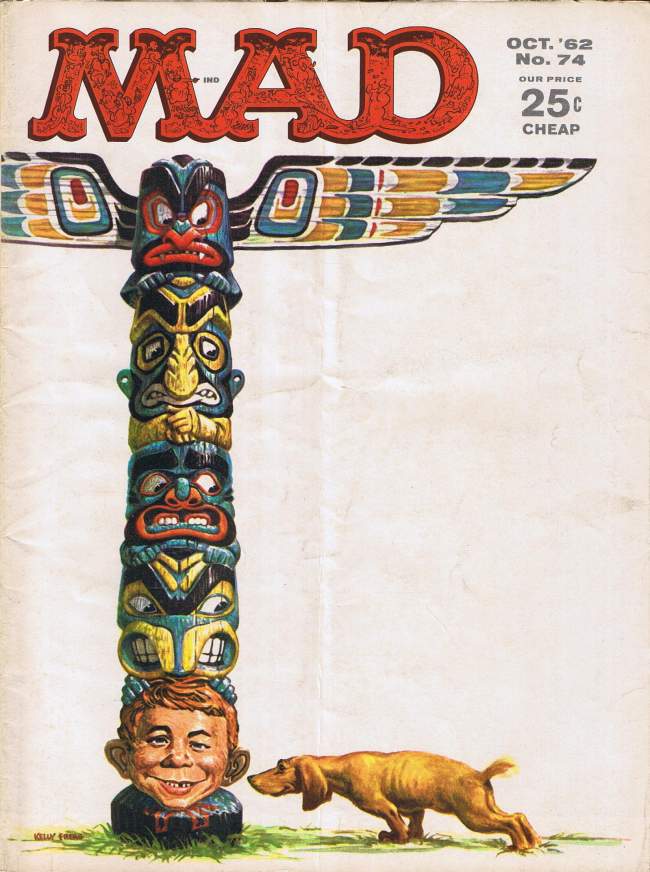
Even Mad Magazine got on the Kildare bandwagon. The 1962, #74 issue, featured “Dr. Killjoy,” a parody of the show.

Everyone seemed to like this show. Then again, what is not to like? You have a handsome doctor, exhilarating drama, a fun guest star every week, and realistic stories. The show would go on to inspire the talents behind a variety of medical series including Marcus Welby MD, ER, House, and Grey’s Anatomy.

No One Can Get Too Much “Data” These Days

Today we are winding up our “I Robot” blog series. We began our journey with Buck Rogers in the 25th Century, an outer space drama that was not that successful. Today we are at the other end of the universe spectrum, discussing Star Trek: The Next Generation. You will be very familiar with this show if you were a teen or young adult in the late eighties and early nineties or if you were a devoted fan of The Big Bang Theory.

The Cast Photo startrek.com

Gene Roddenberry, the creator of Star Trek, brought Star Trek: The Next Generation to the small screen two decades later; this show would stay on the air for seven seasons, producing 178 episodes. The series is set in the 24th century; the original show was set in the 23rd. Earth belongs to the United Federation of Planets, and this show features a Starfleet ship, the USS Enterprise, as it explores the Milky Way.

Roddenberry served as executive producer, as did Maurice Hurley, Rick Berman, Michael Piller, and Jen Taylor. The show focuses on the mission and the personal lives of the crew members: Captain Jean-Luc Picard (Patrick Stewart), William Riker (Jonathan Frakes), Worf (Michael Dorn), Geordi La Forge (LeVar Burton), Deanna Troi (Marina Sirtis), Tasha Yar (Denise Crosby), Wesley Crusher (Wil Wheaton), Dr. Beverly Crusher (Gates McFadden), and our major concern today, Data (Brent Spiner).

Photo: startrek.com

The show was very popular, and by its fifth season, reached 12 million viewers. The show would go on to spur other Star Trek series and movies, as well as novels and comic books.

Critics also liked the show, and it received 19 Emmy Awards and a Peabody. In 1994 it became the first syndication show to be nominated for an Outstanding Drama Series Emmy.

The theme was also a nod to the original series, combining Alexander Courage’s original piece with Jerry Goldsmith’s theme for Star Trek: The Motion Picture released in 1979.

In an unusual deal, Paramount decided to broadcast the show in first-run syndication on independent networks. As a “barter syndication,” the show was offered to local stations for free. The station got five minutes of commercial time to sell to local businesses, and Paramount sold seven minutes to national advertisers. Stations had to agree to purchase reruns in the future, and only those stations that participated in this deal were able to purchase reruns of the original series which was still extremely popular.

Some sites stated that Paramount received $1 million for advertising for every episode; by 1992 the studio received $90 million a year and the episodes cost $2 million each to produce.

The show debuted in 1987. The first season did not start off so well. The show had a $1.3 million per episode budget. The staff had a lot of creative freedom, but many of the writers had disagreements with Roddenberry and left the show. They felt that Roddenberry was too strict with the themes and the characterizations. It’s hard to argue with his vision too much because it won several Emmys and was extremely popular.

Photo: treknews.com

Season two brought some critical changes to the series. Beverly Crusher was replaced by Chief Medical Officer Katherine Pulaski (Diana Muldaur). Whoopi Goldberg guest starred in her first episode. The plots were more sophisticated and there were some comic elements sprinkled throughout the drama.

Personnel changes were made for season three. Head writer Hurley was let go. Roddenberry suffered from some health issues which necessitated his stepping back and Berman took over more production chores. Season four had eight episodes nominated for Emmys. The episode “Family” was the only one that did not feature Data. Crusher left the show in season four as well.

Roddenberry passed away during season five. During season six, astronaut Mae Jemison came on board as Lt. Palmer, and Stephen Hawking appeared in the season six cliffhanger.

Photo: tor.com

The final season introduced themes that would carry into Star Trek: Deep Space Nine and Star Trek: Voyager. The finale of the show was filmed in Toronto where thousands of people watched in person.

The cast was surprised that the seventh season was the last one, because they had contracted for eight seasons. Paramount wanted to make several films and felt that the movies would be less successful if the television show was still airing. The cast must have been close because they claimed to be life-long friends, and in 1992 when Burton married, Spiner was best man and Stewart, Frakes, and Dorn were ushers.

Data was an android who served as lieutenant commander. Data’s perspective on humanity was similar to Spock’s in the original show. Spiner would also be cast as Data in 2020 in Picard. Data was found by Starfleet in 2338. He was the sole survivor on Omicron Theta in the rubble of a colony left after an attack from the Crystalline Entity.

Dr. Noonian Soong built Data on Omicron Theta. He had an evil twin, (who doesn’t have one on television?), named Lore. Eventually, Data dismantled Lore. One resource I read said that Data was destroyed during the Enterprise E’s battle with the Scimitar in 2378. I have to take their word for that because my Star Trek trivia is not advanced enough to confirm or deny it.

In 1974 Roddenberry created a project for television called The Questor Tapes. The show centered around an android who was studying humanity. When The Next Generation was proposed, Roddenberry reinvented this android and combined it with Xon, the curious Vulcan from Star Trek: Phase II and came up with Data. However, Spiner said he modeled Data after Disney’s Pinocchio.

Photo: aniandizzy.com

Fun fact, since we started with Buck Rogers in this month’s blog, Data has a positronic brain—in 1981, Buck Rogers used this same term in one of their episodes. They both were honoring Isaac Asimov who first used the term in his story “Runaround” in 1942.

According to Spiner, Data was pronounced “dat-uh” but Stewart, being British, said “day-tah.” On the show Data has a pet cat named Spot. Spiner was not fond of that idea because he was not a cat fan at all.

Data was supposed to be the Chief Science Officer, the same position Spock had on the original show. The uniform for that position was blue. Unfortunately, the blue clashed with his make-up. He was transferred to the Chief Operations Officer with a gold uniform. I never really understood why the Chief Science Officer could not wear a gold uniform. This was a new generation and I did not think that there were other shows from that century that made it impossible to portray that officer in gold? I mean, sports teams change their colors from time to time. However, if I am missing something, please feel free to enlighten me.

Obviously, comparing Buck Rogers to Star Trek: The Next Generation, it is easy to see why the Next Generation was on the air so much longer and attracted so many more fans.

Photo: startrek.com

Data was a fun character. While he can blink and age, we are reminded that he is not human. His duties with the crew included navigation and systems control. Because androids don’t sleep, he was able to take the night shift. Data was interested in literature and the humanities. He likes mysteries. Like Spock, with his lack of emotions, love is very hard, if not impossible, for him. He does make many friends though. He can’t get sick which is convenient if the rest of the crew is affected, but computer viruses can damage him. While he can process data in a millisecond, his inability to read human emotions is troubling for him. Although he does feel a bit arrogant; as he said “I am superior, sir, but I would gladly give it up to be human.” I can’t argue with his claim of superiority when I look around at some of the things humans have been doing the past three or four years.

If I had to go through life with a robot, based on the four we discussed this month, Data would definitely be my choice. I hope you had fun with this series.

Gunsmoke Took 20 Years to Get Outta Dodge

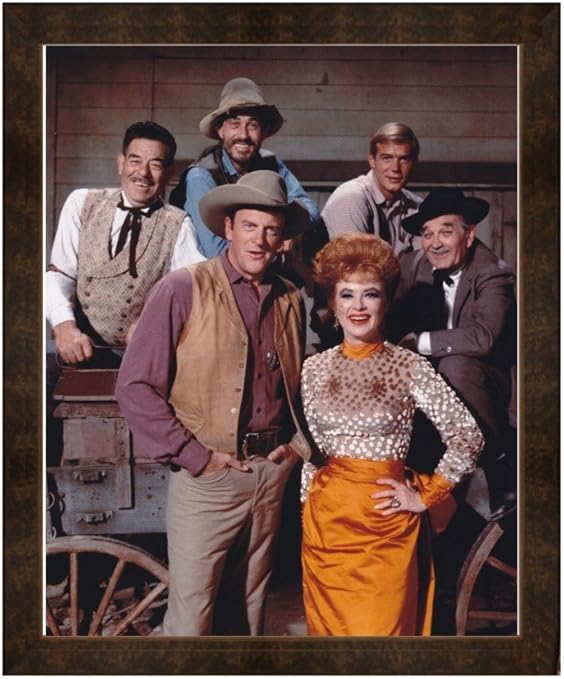
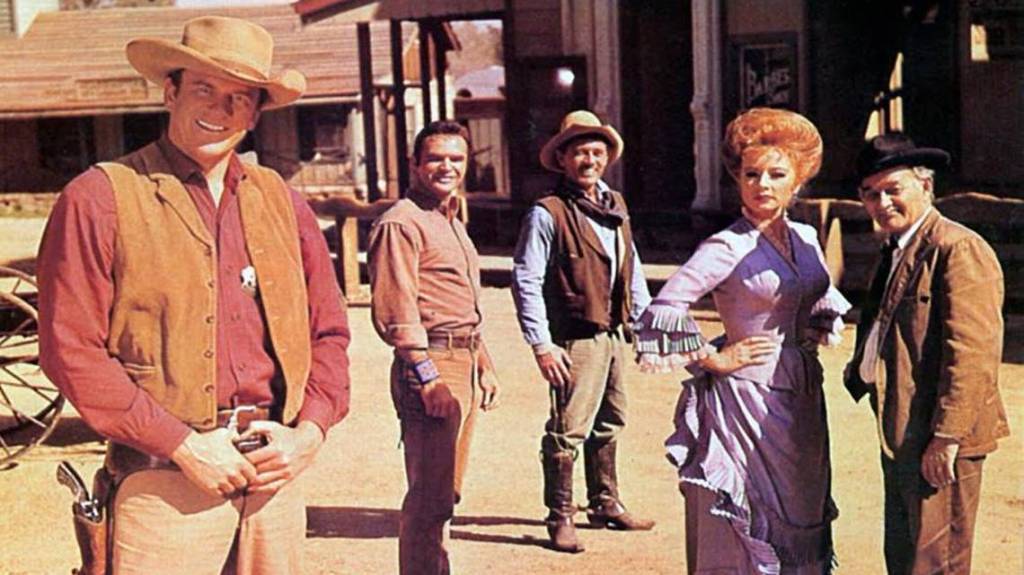
From 1952-1961, you could tune into Gunsmoke on your local radio to hear the adventures of the folks in Dodge City, Kansas created by Norman Macdonnell and John Meston. The primary characters were Marshal Matt Dillon (William Conrad), Doc Charles Adams (Howard McNear), Miss Kitty Russell (Georgia Ellis) and Chester Wesley Proudfoot (Parley Baer). Three years after its debut, the series shifted to television as well, running on CBS from 1955-1975, producing an incredible 635 episodes. For television, Macdonnell took over the reins as producer with Meston the head writer.

Amazon.com: Gatsbe Exchange Framed Print Gunsmoke Cast Marshal Dillon Kitty  Fester and Doc: Posters & Prints

James Arness was offered the role of Dillon on television. The network wanted John Wayne who turned it down. He did, however, introduce the first episode. Both Raymond Burr and Denver Pyle were also considered for the role. Matt Dillon spent his youth in foster care, knew the Bible well, and at some point was mentored by a caring lawman. He also talks about his time in the Army in some episodes.

Gunsmoke Cast Matt Dillon 8x10 Photograph – Vintage Poster Plaza
Photo: allposters.com

The role of Chester, with a new last name of Goode now, was played by Dennis Weaver. Chester was not only a loyal employee to Marshal Dillon, but he brewed a mean pot of coffee. He had a noticeable limp which apparently resulted from an injury in the Civil War. Weaver later said if he realized how hard it would be to film that long with a fake limp, he would have not used it. Other sidekicks to the Marshal included Ken Curtis as Festus Haggen, Burt Reynolds as Quint Asper (1962-65), Roger Ewing as Thad Greenwood (1966-68), and Buck Taylor as Newly O’Brien (1967-75).

Chester Good....Dennis Weaver Gunsmoke I've always loved that hat | Movie  stars, Actors, Tv westerns
Photo: pinterest.com

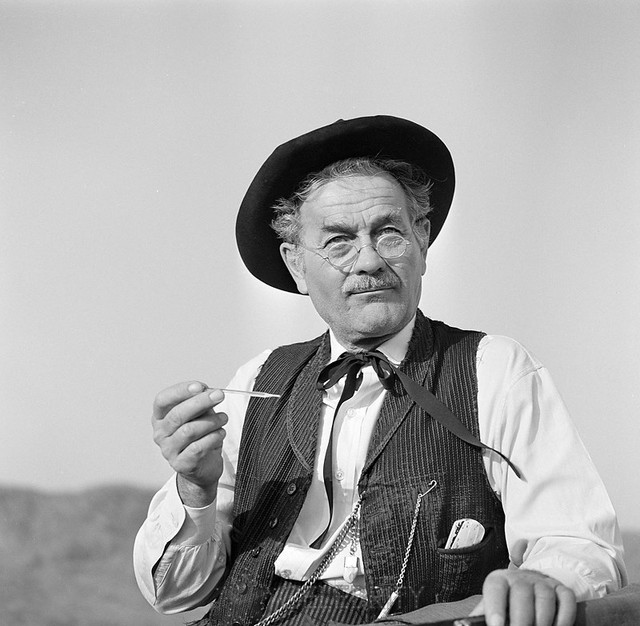
Doc was now Galen Adams and played by Milburn Stone. Doc was an interesting guy. He apparently was educated in Philadelphia and spent some time as a ship doctor on gambling boats on the Mississippi River where he met Mark Twain. His young wife died from typhus two months after their marriage. He finally settled in Dodge City after wandering a bit.

Gunsmoke photo 197 Milburn Stone
Photo: ebay.com

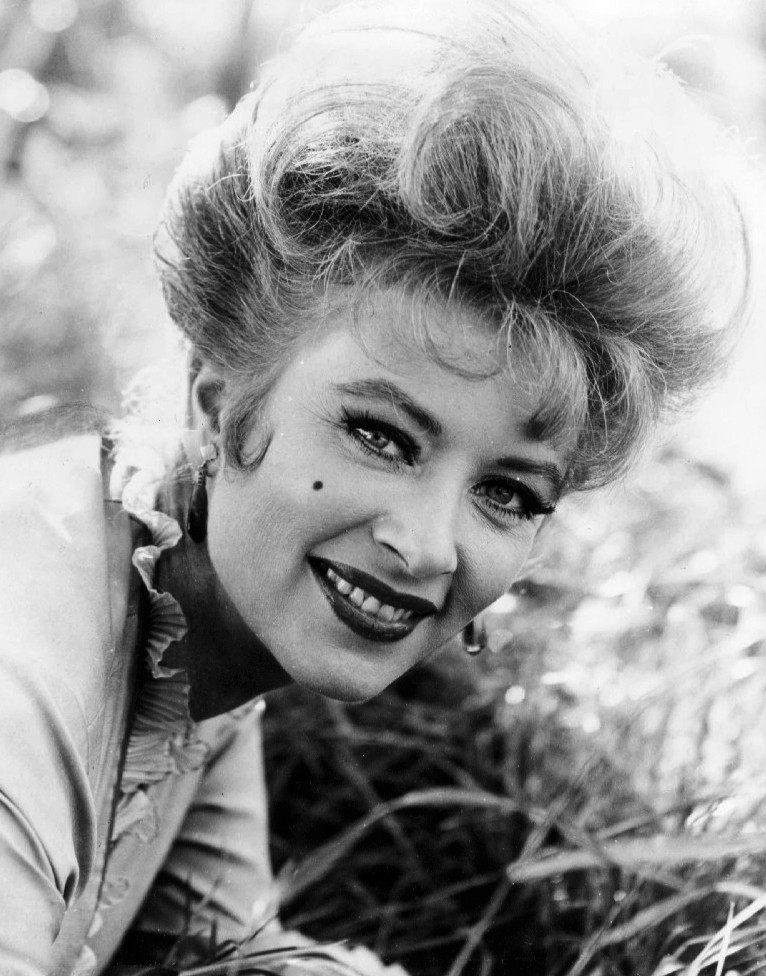
Miss Kitty was portrayed by Amanda Blake. Perhaps the closest bond she had with Dillon was that she also grew up in foster care in New Orleans. She was in more than 500 of the television episodes. In addition to her role as “entertaining men” in Dodge City, she is half owner of the Long Branch Saloon. Kitty and Matt obviously are attracted to each other and are very close. Kitty was a successful business owner and had a cold demeanor about professional matters but had a soft heart in other matters. Blake was ready to leave the show in 1974, and her storyline was that she finally returned to New Orleans.

Amanda Blake - Wikipedia
Photo: wikipedia.com

During its twenty-year stint, the show had some notable guest stars.  Just a few celebrities who graced the set include Jack Albertson, Ed Asner, James Backus, Beau Bridges, Charles Bronson, Bette Davis, Angie Dickinson, Richard Dreyfuss, Buddy Ebsen, Barbara Eden, Jodie Foster, Mariette Hartley, Ron Howard, June Lockhart, Jack Lord, Rose Marie, Howard McNear, Harry Morgan, Leonard Nimoy, Carroll O’Connor, Denver Pyle, Wayne Rogers, William Shatner, Cicely Tyson, and Adam West.

While the show portrayed the hard life in the West, it was also a warm and humorous celebration of a group of people making a new life together.

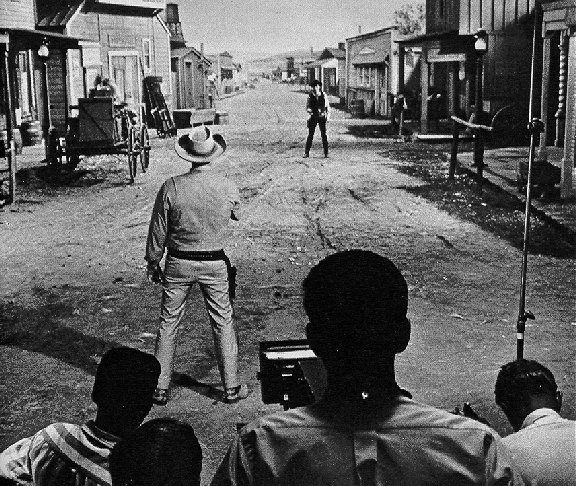
The opening of the show is a gunfight between Matt and a “bad guy.” It was shot on the same Main Street set used in High Noon, the Grace Kelly/Gary Cooper classic. The scene was dropped in the 1970s when a nonviolence emphasis was placed on television shows and the opening was Matt riding his horse.

Gunsmoke, The Great American Western
Photo: marksmannet.com

The show began its life on Saturday nights at 10 pm ET. In 1961 when the radio show left the air, the television show switched from half an hour to an hour. For season 13, it moved to Monday nights at 7:30 for four years, and then at 8 pm for four years. By season two it was a top ten hit, rising to number one where it remained until 1971.

The first seven seasons were sponsored by L&M cigarettes and Remington shavers.

The well-known theme from the show and radio was “Old Trails” composed by Rex Koury. Lyrics were later recorded by Tex Ritter in 1955 but not used in either radio or tv. Although I could not confirm it, I read several mentions that Koury was so busy, he actually penned the song while using the bathroom. William Lava composed original theme music for television; other composers who contributed music during the twenty years were Elmer Bernstein, Jerry Goldsmith, Bernard Herrmann, Jerome Moross, and Franz Waxman.

Photo: amazon.com

Surprisingly, the show was only nominated for fifteen Emmys during its reign. Of those, there were only three wins: one for best dramatic show in 1957, one for Dennis Weaver as supporting actor in 1958, and one for Milburn Stone in 1967.

After surviving the rural purge Paley conducted, the cast thought they were not in jeopardy and were all stunned by the cancellation in 1975. CBS had not prepared them that they were debating ending the show. They assumed the show was continuing till it had 700 episodes and many of the stars read about the cancellation in the trade magazines.

The show has appeared in syndication in three different versions. One package is half-hour episodes from 1955-1961, one package contains hour-long black and white episodes from 1961-1966, and the final package contains one-hour color episodes from 1966-1975. Me TV currently airs the one-hour color shows.

Photo: wichitaeagle.com

Arness would appear in five made-for-television movies after the show went off the air. In 1987, Gunsmoke: Return to Dodge featured Blake as Miss Kitty and Taylor as O’Brien. Stone had passed away in 1980, so his role was not part of the new film. Gunsmoke: The Last Apache premiered in 1990 without Blake who had died in 1989. In 1992-1994, Gunsmoke: To the Last Man, Gunsmoke: The Long Ride, and Gunsmoke: One Man’s Justice would appear before the series rode off into the sunset for good.

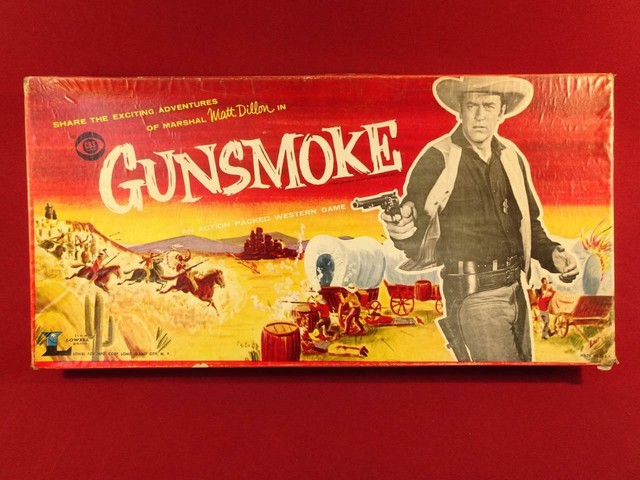
After being on television so long, it’s not surprising that there were a lot of merchandising opportunities for the show. In addition to typical items like lunch boxes, there was Gunsmoke cottage cheese. A Matt Dillon figurine was available with his Horse Buck.

Picture 2 of 8

There were also board games, puzzles and a variety of books including numerous paperbacks and comic books from Dell and Gold Key.

1950s Gunsmoke lunch box with thermos. Vintage Gunsmoke Matt Dillon U.S.  Marshall metal lunchbox with thermos. Lunchbox depicts James Arness as Matt  Dillon draw…

Fans had an affinity for the show. During its time on the air more than thirty westerns came and went, but Gunsmoke continued, in the top ten for most of its two decades. Few series have their own museum, but you can visit Boot Hill Museum in Dodge City to learn all about the show. Furniture from the series is included, as well as signed photos from the cast and other memorabilia including one of Miss Kitty’s dresses.

When you hear someone say “Get outta Dodge,” you can fondly remember Gunsmoke which is where this phrase began. Perhaps being cancelled was a blessing in disguise. After two decades, maybe it was time to get outta Dodge, maintaining the high standards and high ratings that made the show such a long-running success.

Please Report to Room 222

Last week we continued to paid homage to the Friday night schedule of shows airing in 1970 and 1971, learning about The Odd Couple. Today we continue that theme as we meet the cast of Room 222.

Debuting in 1969, Room 222 produced 113 episodes by 1974 when it was cancelled for low ratings. The show, one of the first dramedies, was a more serious counterpart to the later-seen Welcome Back Kotter.

room3

The series was created by James Brooks who wrote for That Girl and The Andy Griffith Show and would go on to create Taxi, The Mary Tyler Moore Show, Rhoda and Lou Grant. What all these shows have in common is a group of characters who have a depth and sophisticated writing that captures the realistic language and behavior of individuals in their settings.

kaufman and dixon

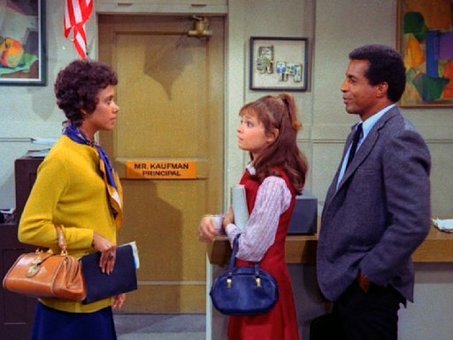
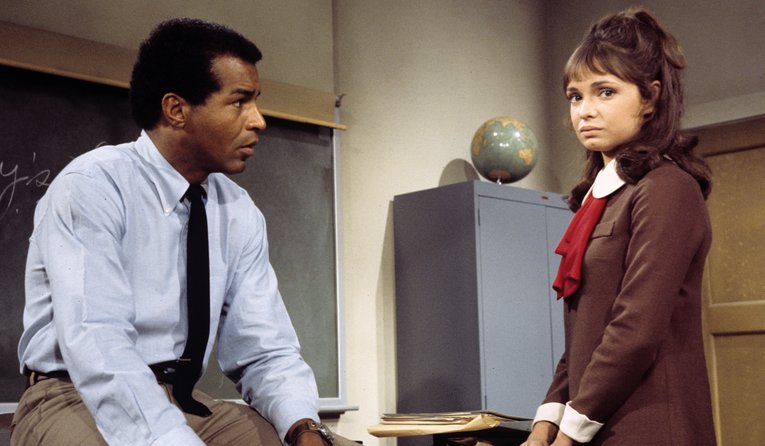
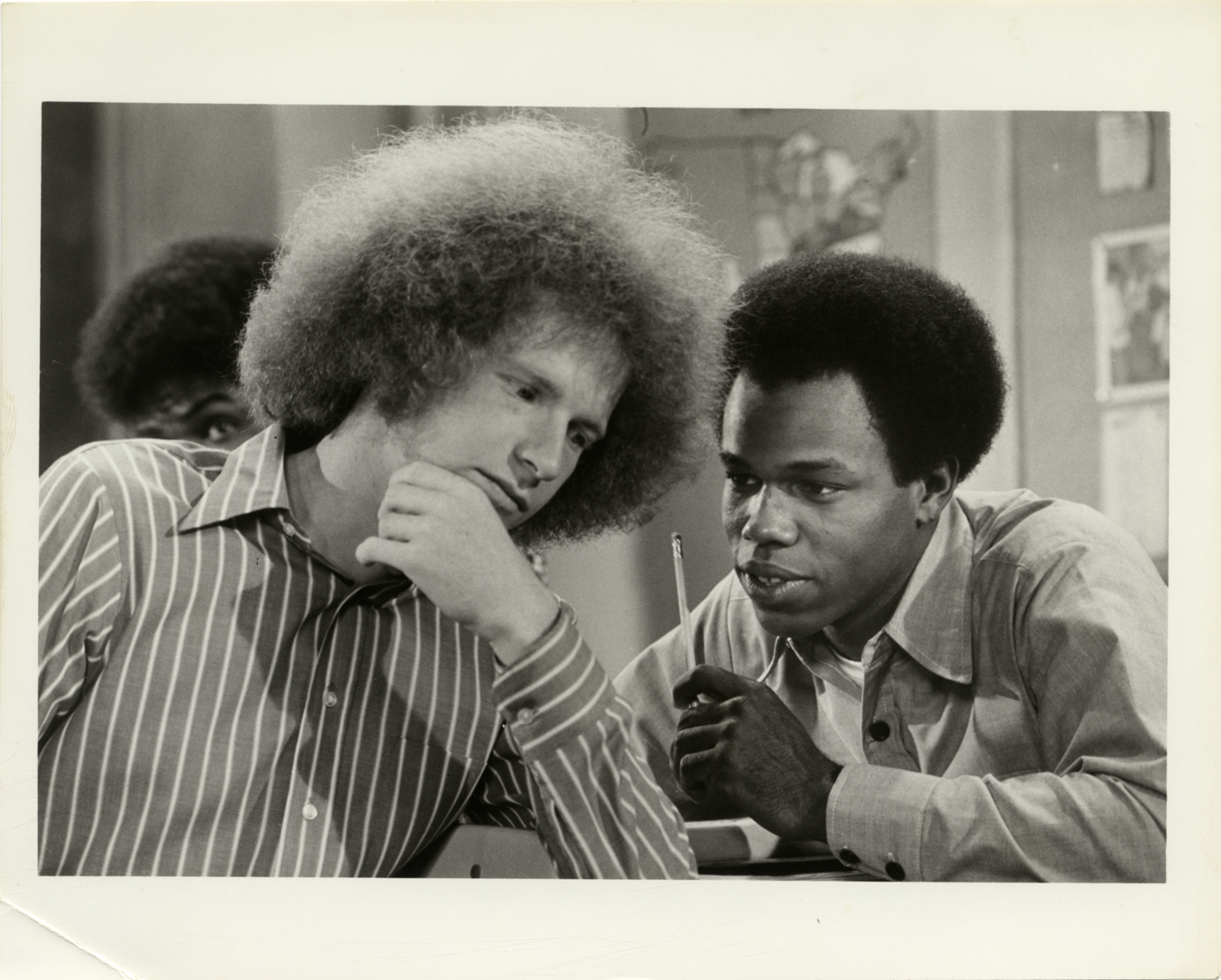
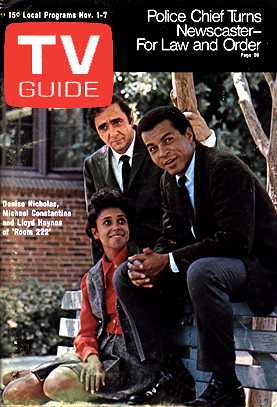
The show featured Seymour Kaufman (Michael Constantine), the principal of Walt Whitman High School, a racially mixed school in Los Angeles; American history teacher Pete Dixon (Lloyd Haines); the guidance counselor (and Pete’s girlfriend) Liz McIntyre (Denise Nicholas); and student teacher Alice Johnson (Karen Valentine). The four staff members were friends, but they did not always agree.  They debated issues and solutions but always with respect. Kaufman displayed a dry humor and could make Dixon laugh. Dixon was the easy-going, wise, and insightful thinker in the bunch. Liz was compassionate while Alice was enthusiastic and idealistic, but a bit naïve. The staff members invest in the students, acting as surrogate parents teaching them important life lessons. The other staff member we get to know is Miss Hogarth (Patsy Garrett), Mr. Kaufman’s secretary.

room10


We also spend a lot of time with several students who interacted with staff members in the classroom and occasionally outside of school. There was Richie Lane the Brain (Howard Rice); Jason Allen, tough guy (Heshimu Cumbuka); Pamela, Miss Popular (Ta-Tanisha); Helen Loomis, shy but thoughtful (Judy Strangis); and Bernie, the sports jock and class clown (David Joliffe). Although students were a large part of the show, many episodes focused on the teachers and administrators.

students


Room 222 is Dixon’s classroom where the students are given free range to discuss topics from a variety of viewpoints.  Some of the issues were topical such as the Vietnam war, women’s lib, and Watergate; however, most of the debates could be pulled from today’s headlines:  race relations, shoplifting, drug use, illiteracy, police presence in schools, dress codes, guns in schools, and teen pregnancy. Dixon lets the students lead many discussions, but he preaches tolerance and the ability to see things from others’ shoes. He is respected and liked by his students.

room12

Imdb.com summarized the pilot episode as: Pete Dixon teaches history in Room 222 at Walt Whitman High School. Principal Seymour Kaufman introduces Pete to Alice Johnson, a perky but painfully insecure student teacher. Pete’s most enthusiastic student is Richie Lane, who goes so far as to dress a lot like Pete and even takes roll in his absence. But Guidance Counselor Liz McIntire has discovered some disturbing news about Richie — the home address he submitted is fake, suggesting that he may not live in the school district, and therefore might be ineligible to keep attending Whitman.

room11

Many guest stars showed up at Walt Whitman High including Ed Begley Jr., Richard Dreyfuss, Jamie Farr, Teri Garr, Mark Hamill, Bernie Kopell, Donny Most, Chuck Norris, Rob Reiner, Kurt Russell, and Cindy Williams.

The show was originally on Wednesday nights, and the ratings weren’t great. The network was planning on cancelling the series, but then the show won the Emmy for Outstanding New Series, Michael Constantine won for Outstanding Supporting Actor in a Comedy Series, and Karen Valentine won for Outstanding Supporting Actress in a Comedy Series. The show was moved to the Friday night line up between The Partridge Family and The Odd Couple where its ratings soared.

heshimu and joliffe

The first season used a laugh track which was not used for subsequent seasons, helping to add drama to the show.

The theme song was written by Jerry Goldsmith. He would go on to be nominated for seven Academy Awards for music, winning for The Omen. A series of novels was created based on the show by William Johnston in the early 1970s, and Dell Comics published four issues about Room 222 in 1970-1971.

karen

The show propelled Valentine to star status. Mark Voger interviewed her online for New Jersey Advance Media for NJ.com on October 25, 1970. Part of his article is quoted below:

“I had gone in to meet the casting person for ‘Room 222,'” the Santa Rosa, Calif., native told me during a telephone interview some years back.

He took down the color of my eyes and the color of my hair, and I was dismissed. Nothing happened for a number of months.

Then I was called in again to meet with (series producer) Gene Reynolds. When you talk about naivete — the character of Alice Johnson was a bit of a bumbler and very naive and just wet behind the ears.

When I read for Gene, everything imaginable went wrong. I mean, I went to put my purse down, and I had sunglasses on my head; they fell off. I went to pick those up, the pages went all over the floor. I had to pick those up.

I looked up at him and I said, ‘I don’t know what’s going on. I’m really rather chic, you know. This is so strange.’ And he said, ‘Don’t change a thing.'”

Valentine believes she’d hit upon the essence of the character that Reynolds sought.

She continued: “After I read, I was leaving the office. He said, ‘Don’t get hit by a car.’ And I thought, ‘Boy, this is a good sign. It’s the first time anyone cared whether I was dead or alive in this town.'” . . .

“It was a real forerunner for integrated shows,” Valentine said. “It was the first show, I think, that showed blacks and whites interacting so well together, and role models in teachers and counselors. It was so well accepted that in certain parts of the country, ‘Room 222’ was required viewing by some of the teachers and principals and administrative staffs around different schools.”

room13

While the hair-do’s and clothing tie the show to the early 1970s, the scripts could easily be part of current television shows. I’m not sure if that is positive because the show was so well written or if it’s negative because we are dealing with these issues almost 50 years later without much progress. Either way, taking some time to watch the show will be time well spent.

clothing