I’m Dickens, He’s Fenster: Building Comedy Into Every Episode

June’s blog theme is Funny Duos. Last week we learned about the Governor and J.J., a show created by Leonard Stern. Today it’s another show created and produced by Stern, I’m Dickens, He’s Fenster.

📷wikipedia.com

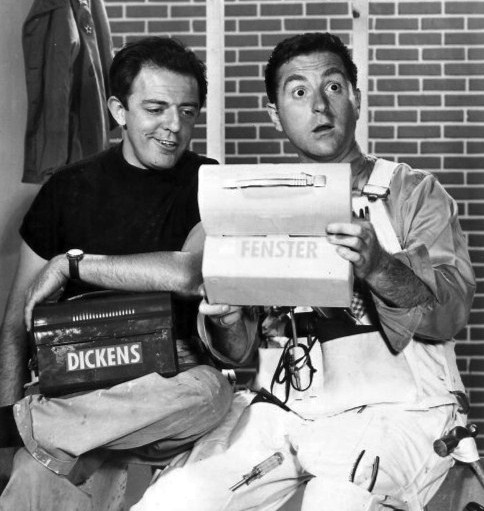
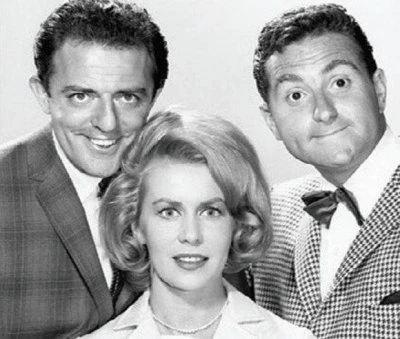
This show debuted on ABC in September 1962 and was canceled after one season. It starred John Astin and Marty Ingels.

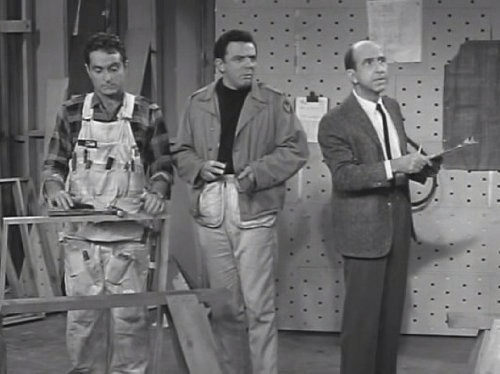
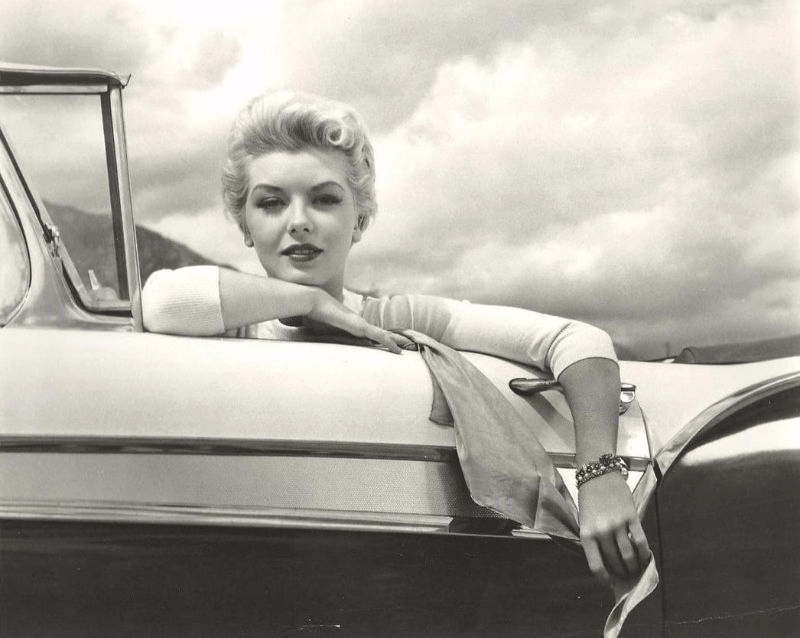
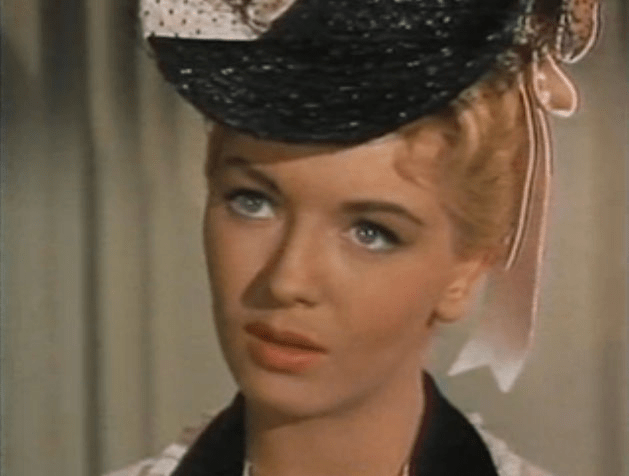
The plot is that two carpenters are best friends. Harry Dickens (Astin) is married to Kate (Emmaline Henry) while Arch Fenster (Ingels) is a swinging bachelor whose lifestyle is not okay with Kate. The two often clash with their boss, Mr. Bannister (one of my favorites, Frank DeVol). Rounding out the cast are coworkers Mel (Dave Ketchum), Bob (Henry Beckman), and Bentley (Noam Pitlik). We also meet a few of Fenster’s girls including Yvonne Craig, Ellen Burstyn, and Lee Meriwether.

Stern talked about casting for the show in his interview with the Television Academy. He had Ingels hired and then Stern and his wife saw Astin in a play at UCLA, and he was added to the cast. Stern said he needed a director who liked comedy and could bond with the actors well and was innovative because Stern didn’t like the three-camera shot. He hired Arthur Hiller who fit all three qualifications.

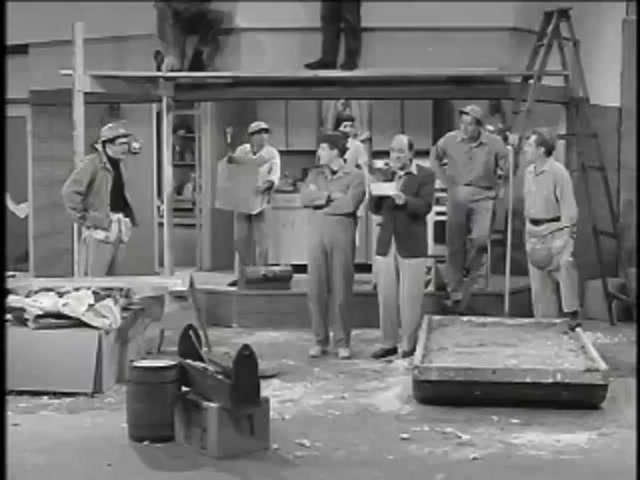
The show, unusual for the time, was filmed in front of a live audience. The comedy combined witty comments with slapstick comedy.

📷imdb.com

ABC placed it on Friday nights between The Flintstones, which was created for adult viewing, and 77 Sunset Strip. This should have provided a built-in audience, even though it was competing against Sing Along with Mitch and Route 66. At the end of the first season, it beat the competition in the ratings but was still canceled. One of the problems measuring viewership at this time was that a person watching was a person watching whether they were 6, 26, 56, or 106, so it was hard to tell which shows appealed to adults.

Astin discussed the reviews for this show during one of his interviews and said that “some of the critics said it’s the kind of humor that makes you laugh out loud in the living room, and that’s an accomplishment. How often do we really laugh out loud in the living room when we’re watching a television show? We’re lucky if we smile.”

📷televisionheaven.com

The idea for this show occurred when Stern had some work done at his home. On Christmas Eve 1961, the builders were in a hurry to finish work and get home to celebrate with their families. They were finishing a new fireplace with a built-in brick chimney. Unfortunately, one of the crew forgot to remove the ladder when they were finished in the chimney and they bricked up the hearth before realizing they had now lost their ladder. Stern thought the misadventures of a couple of construction workers might make a great sitcom.

In an interview with the Television Academy, Stern said he asked musician Irving Szathmary for a theme that evoked a Laurel and Hardy feeling. (Szathmary was also the composer behind the unforgettable Get Smart theme.) It must have worked because Stan Laurel said he thought this series was “one of the funniest and most highly imaginative comedies to have its thirty minutes of fame on television.”

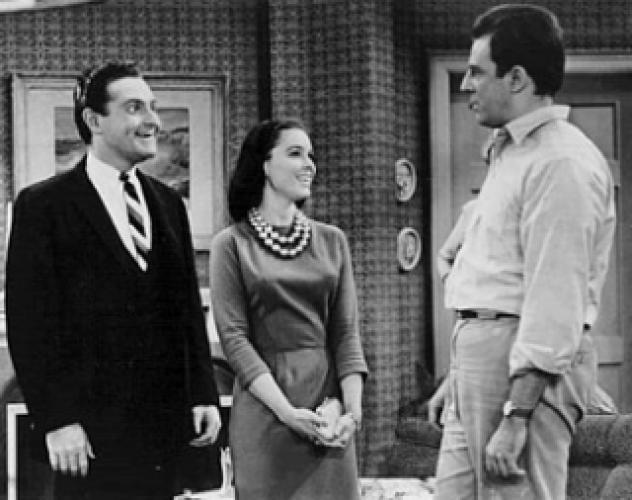
One of the running gags on the show was just like the cobbler’s children have no shoes, Dickens’ house was always in a state of upheaval with paint samples on the wall and cabinet doors not working properly; it was in constant renovation. We see this immediately in the pilot as Fenster stops by to pick up Dickens and sees Kate trying to work with the various kitchen issues under construction.

📷tvguide.com

The pilot was a typical plot line for not only this show but most early sixties sitcoms. Dickens is up for a promotion to foreman and is afraid he won’t get the job. In the past, whenever Dickens is waiting for something special, he gets nervous and always ruins the opportunity. When the boss shows up at the project, he doesn’t seem to know Harry Dickens’ name, so the two friends decide to put it into his subconscious by whispering it here and there when they walk by him. That evening Fenster brings his girlfriend over. Harry doesn’t want to spend the evening with them, but once he meets the girlfriend, he falls all over himself being nice to her. Lorna mentions to Fenster that he should try for the foreman job himself.

The next morning, Fenster comes to get Dickens, and Harry is rude to him because he thinks he wants the foreman job. At the end of the day, Bannister calls Dickens into the office to give him the promotion and tells him that Fenster must be fired because he overheard a lot of bad things about him when the crew was talking. When Dickens talks to the other guys, they said that they never complained about Fenster, although they did repeat some of the funny things Dickens said about Fenster. Fenster tells Bannister that he just got fired by Dickens and then Dickens comes in to say it’s been a misunderstanding and Fenster should not be fired and would make a better foreman than Dickens. Bannister said he’ll let them know what decision has been made the next morning.

📷episodate.com

That night Fenster shows up with a different girlfriend who just happens to be Bannister’s daughter. There was a great mixture of slapstick and witty banter during the episode. Something did feel a bit off with the characters. I think the characters should have reversed roles; Aston seems more the playboy type, and Ingels seems more the married man for typical sixties sitcoms.

Astin would go on to star in The Addams Family while Henry would marry Dr. Bellows on I Dream of Jeannie. Unfortunately, with only 32 episodes, the show didn’t qualify for syndication. The first sixteen episodes are included on a DVD set released in 2012 if you want to check out the show. You can also find some of them online in different sites.

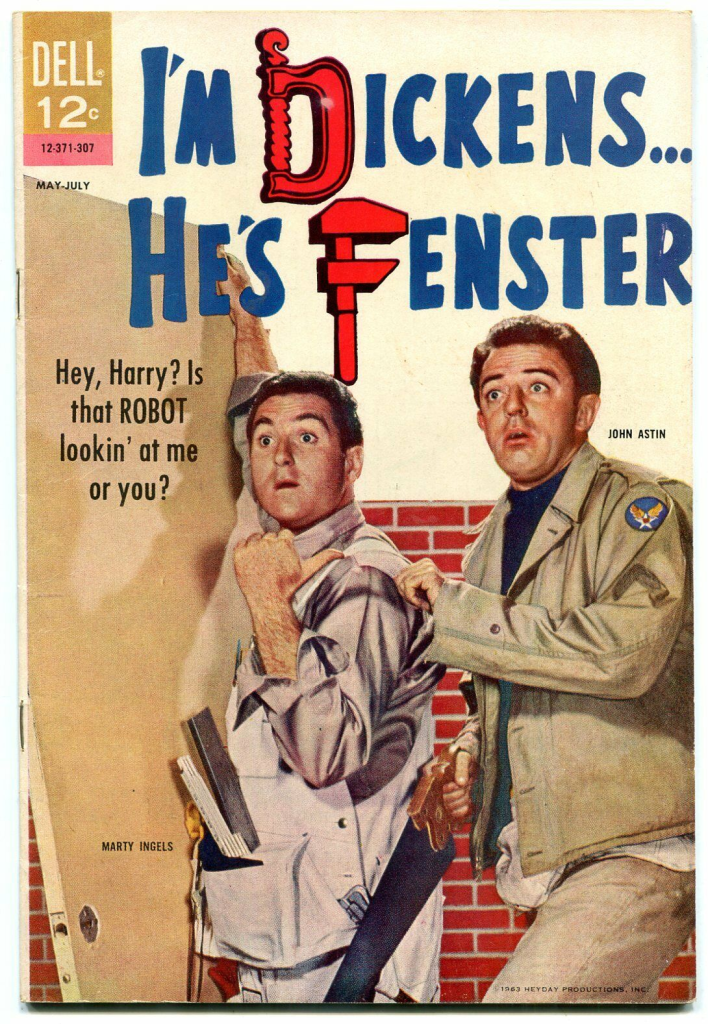
Like The Governor and J.J., this series also made it to Dell Comics; if you’re a collector of comic books about old television series, you can take a look.

I had heard a lot about this show but never watched it till now. It was different and funnier than I thought it would be.

The Governor and J.J.: You Didn’t Often Hear “Yes, Guv’nor”

In June, our theme is “Funny Duos,” and we are taking a look at a few shows that are not so well-known.

📷jacksonupperco!.com

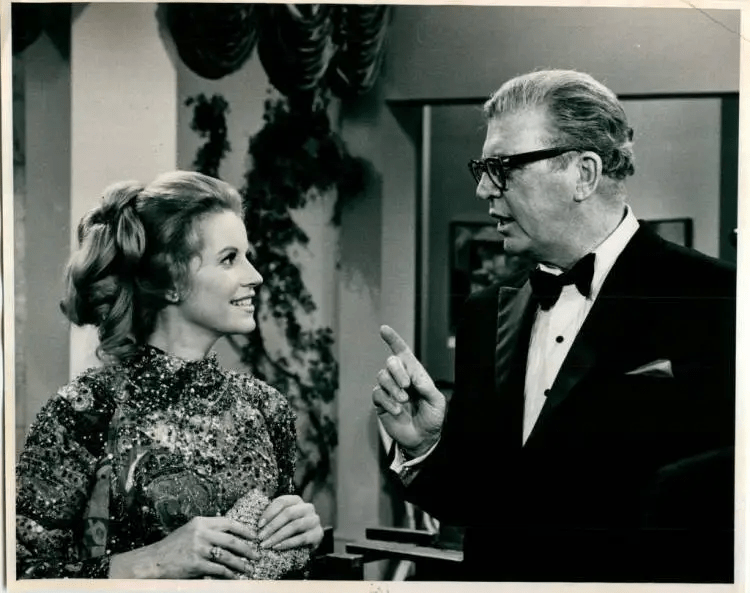
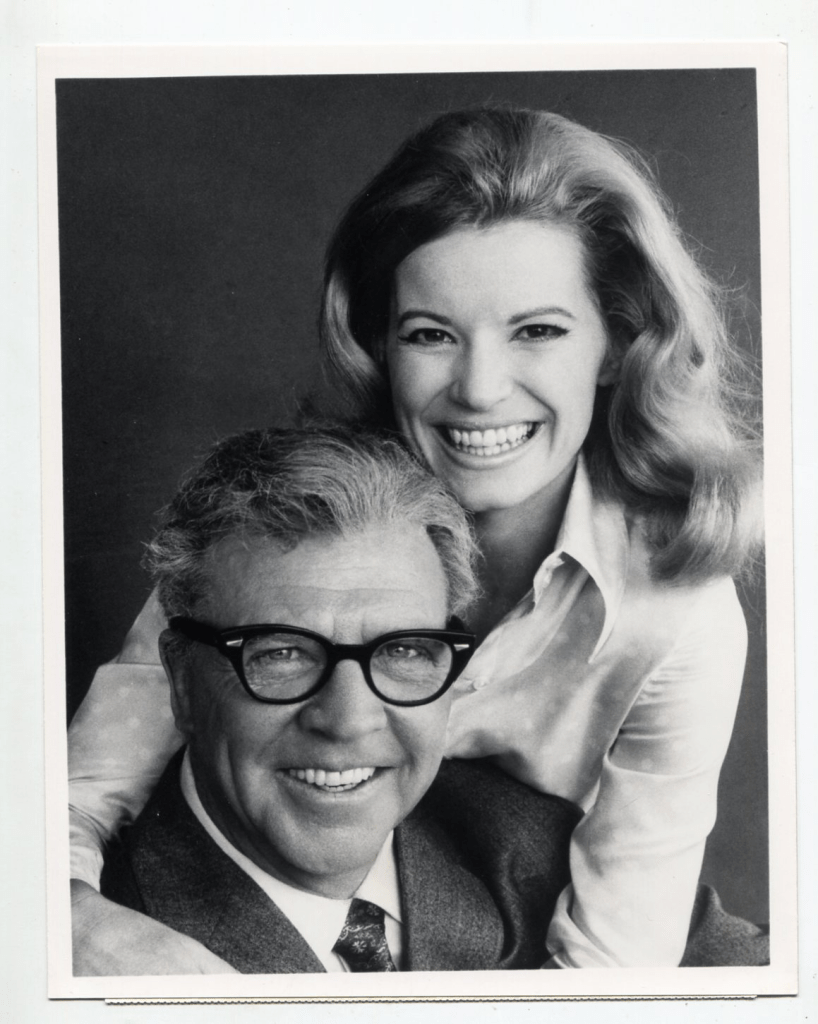
Up first is The Governor & J.J. This show debuted in September of 1969 and ran for one season on CBS. Starring Dan Dailey and Julie Sommars, it was about a Midwestern governor and his daughter Jennifer Jo, or JJ, who acted as first lady for him. Her day job was an assistant curator at a local zoo. Of course, she and her dad had very different opinions as he was more conservative and she was more liberal. Although in real life, Sommars was a dedicated Republican. Rounding out the cast were secretary Maggie (Neva Patterson), press secretary George (James T. Callahan), and housekeeper Sara (Nora Marlowe). Eventually the Drinkwaters’ basset hound Guv also became a character.

The casting of Sommars and Dailey was true chemistry. Dailey became a surrogate father for Sommars and was reportedly the first one at the hospital pacing the floors when she had her baby.

📷oldabebooks.com

Leonard Stern created the show. He was the producer and writer behind many successful shows including McMillan and Wife, Holmes and Yo-Yo, The Honeymooners, The Phil Silvers Show, and the amazing Get Smart.

Although it didn’t get nominated for any Emmys, it did win the Golden Globe for best comedy, best actress in a comedy and best actor in a comedy. Dailey was a well-known and respected actor when this show began and would have been a big draw for the show, although it was created to showcase Sommars.

The show was on Tuesday nights for the first few months and then was switched to Wednesday nights an hour earlier. Tuesdays it was up against the movie of the week on both ABC and NBC. When it moved to Wednesdays, if faced Room 222 and The Men from Shiloh.

Leonard Stern discussed the casting of the show during his interview with the Television Academy. He said one night his kids were watching The Man from UNCLE and he heard a voice and called his wife in and said he wanted to write a script for the character. He watched the rest of the show, trying to find the actress’s name and later asked Casting to send her over for a meeting. When the woman showed up, it was the wrong actress. He said it was a Bronx accent he heard on the show and this was a very Midwestern actress wearing gloves. However, he subsequently learned that she was the same actress when she went into her Bronx accent. So, he wrote the show for her. Then Sommars and Stern went to see Dan Dailey in “The Odd Couple” and he was hired. Carroll O’Connor was brought in as an Archie Bunker type of character, Orrin Hacker. He had starred in the pilot for All in the Family, but it had not sold. However, during this show, another network bought it and O’Connor left. Stern replaced him with one of his favorite actors from Get Smart, Edward Platt.

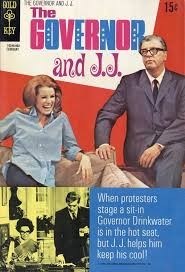
Fun fact is that in 1970 three comic books were issued by Gold Key.

Many viewers seemed to enjoy the show. However, one of the faults might have been that father and daughter, while on separate sides of political issues, they really weren’t in much conflict. I would say their differences of opinion weren’t so much left vs right as doing things the way they have always been done vs trying something new. That might have been fine for the show had All in the Family not debuted the same season. The differences between Archie Bunker and his son-in-law Mike were truly conflicting. When the Governor and J.J. was canceled after 39 episodes, it was replaced with To Rome with Love which got displaced for All in the Family. To Rome with Love made it 48 episodes before its removal while All in the Family not only lasted for 207 episodes but then morphed into Archie Bunker’s Place about Archie’s life after Edith passed away; it ran for another 97 episodes.

This seemed to be a well-written and well-casted show. In the episodes I watched for this blog, I admit that I had a hard time with the shows. I liked the interactions between the Governor and JJ, but I found the laugh track annoying and some of the characters like Jack Cassidy’s role as a speech consultant were a bit grating. If it had debuted five years earlier, it would probably have been a hit for a few seasons, but things were changing so much in television at this time, it never caught on.

Dick York: His Job Was Back-Breaking Work

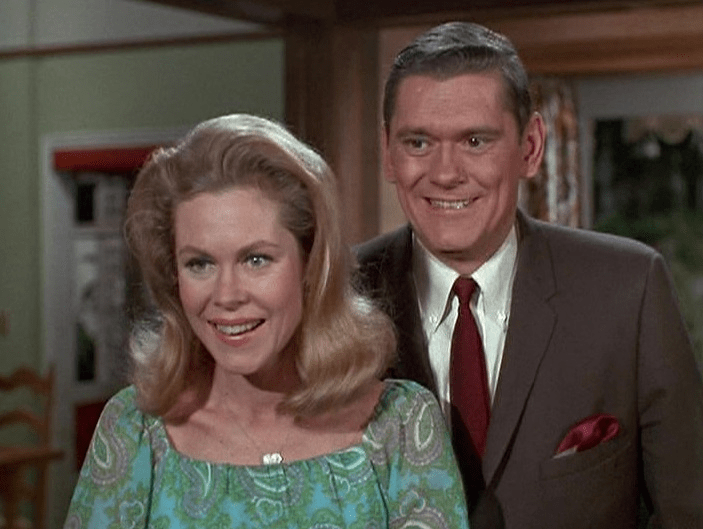
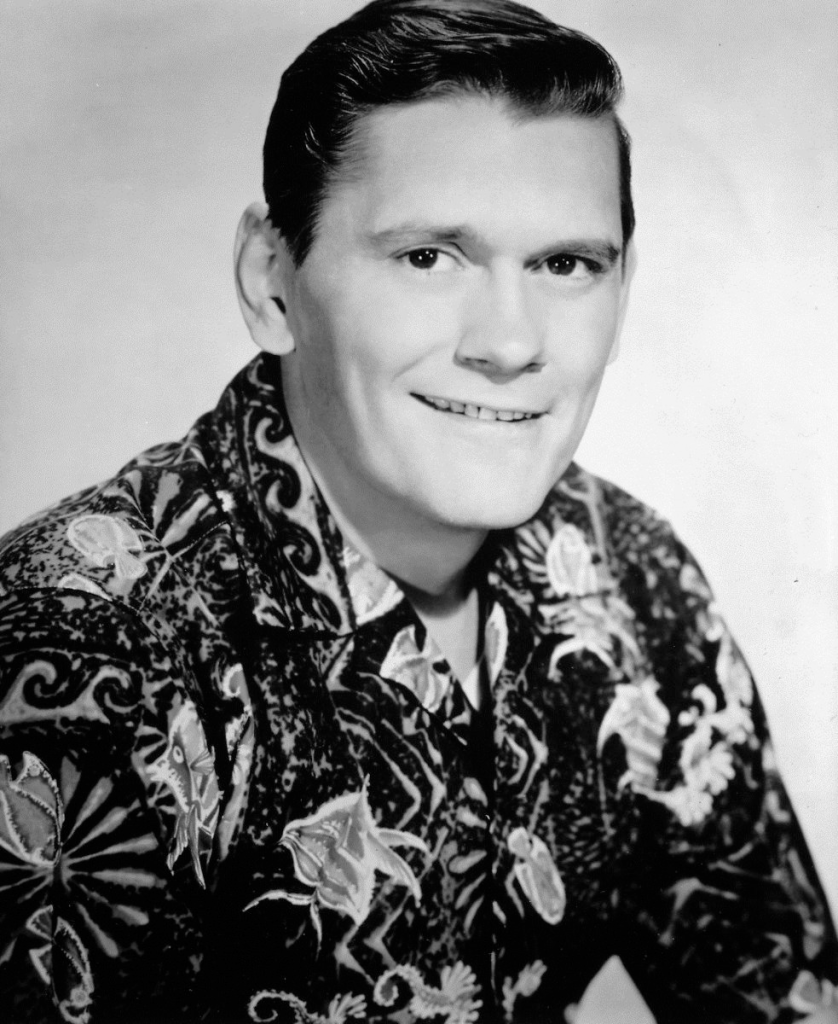
This month we are learning about some Bewitching characters and their careers. Today we get to learn more about Dick York, the first actor to portray Darrin Stephens.

📷imdb.com the first Darrin Stephens

York was born in 1928 in Fort Wayne, Indiana, part of a working-class family; his father was a salesman, and his mother was a seamstress. During his younger years, the family relocated to Chicago, and at 15 he began acting on the radio in “That Brewster Boy.”

He would appear in hundreds of radio episodes and instructional films before heading to New York City in 1951 where he lived at the YMCA. In New York, he appeared on Broadway and then began his film career. That same year, York married Joan Alt. While he was doing the radio show “Jack Armstrong, All-American Boy,” they met when she came in to do a commercial.

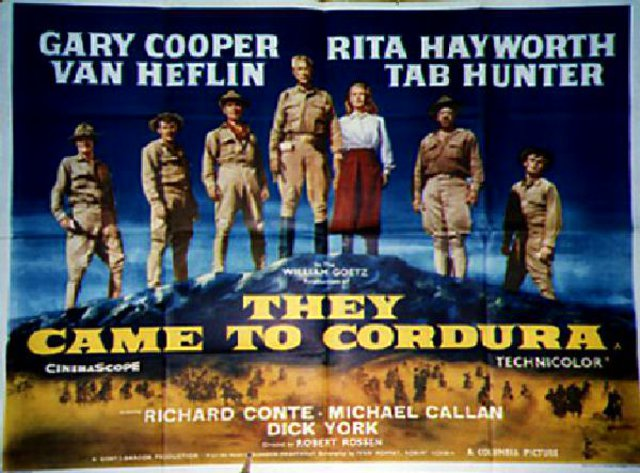
In 1959, he was filming They Came to Cordura with Gary Cooper and Rita Hayworth when he suffered a back injury on the set. As York described it, “Gary Cooper and I were propelling a handcar carrying several wounded men down a railroad track. I was on the bottom stroke of this sort of teeter-totter mechanism that made the handcar run. I was just lifting the handle up as the director yelled ‘Cut’ and one of the wounded cast members reached up and grabbed the handle. Now, instead of lifting the expected weight, I was suddenly, jarringly, lifting his entire weight off the flatbed—180 pounds or so. The muscles along the right side of my back tore. They just snapped and let loose. And that was the start of it all: the pain, the painkillers, the addiction, the lost career.”

However, the injury didn’t catch up with him at that exact moment. A year later he was offered a role in Inherit the Wind. He would end up in ten films during his career, but it was television where he spent most of his time.

📷imdb.com The Twilight Zone

A couple of years later he was part of the cast of Going My Way for a season. His television career continued, and you’ll see him in episodes of The Twilight Zone, Dr. Kildare, Alfred Hitchcock Presents, Route 66, and Wagon Train, among others.

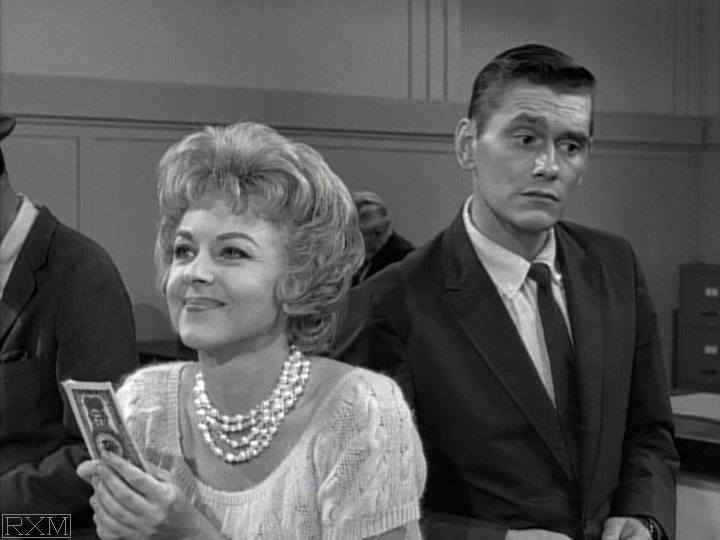
In 1964 he was offered the role that made him a house-hold name, Darrin Stephens on Bewitched. York was with the series for five years and was nominated for an Emmy in 1968. York was nominated along with Richard Benjamin from He and She and Brian Keith and Sebastian Cabot from Family Affair, but they were all beat by Don Adams from Get Smart.

His back caused him a lot of pain while on the Bewitched set. The crew constructed a wall where he could lean between scenes, but half-way through season three, he was diagnosed with a degenerative spine condition which often sent shooting pains through his body. Watching seasons three and four, Darrin often can be found lying down or on the couch in many of his scenes.

Things escalated during the fifth season. York fell ill with a temperature of 105 degrees. He was feeling awful but decided to try to get through a few scenes. He was sitting on a scaffolding with Maurice Evans, Samantha’s dad on the show, when he told a crew member that he thought he should get down. “He started to help me down and that’s the last thing I remember until I woke up on the floor. That’s about all I remember of the incident . . . I’d managed to bite a very large hole in the side of my tongue before they could pry my teeth apart.” While he was in the hospital, he and William Asher had the tough talk about his future, and he agreed he needed to quit; he was then replaced with Dick Sargent.

In his autobiography, York says the next 18 months found him bedridden and dependent on painkillers. He got off the meds, but it took six months. He was able to beat his addiction. He and Joan had five children that needed care.

📷wikipedia.com

The family struggled economically after his addiction. In the mid-seventies, a real estate investment of theirs failed, and they were forced to go on welfare. In the early eighties the couple moved to Michigan to help care for York’s mother-in-law; they were surviving on a $650 monthly pension from the Screen Actors Guild.

York always kept a positive attitude. While he was bedridden, he made phone calls to help raise money for the homeless. He said, “I’ve been blessed. I have no complaints. I’ve been surrounded by people in radio, on stage, and in motion pictures and television who love me. The things that have gone wrong have been simply physical things.” He tried to revive his career, appearing on Simon & Simon and Fantasy Island, but it was just too late.

In addition to his back issues, York smoked three packs of cigarettes a day, and he eventually was diagnosed with emphysema. By 1989, he needed oxygen to help him breathe. He passed away from complications of the disease in 1992 at the young age of 63.

What a sad and painful ending to such a promising career. It’s amazing that someone in that kind of torment could still reach out to help others and try to spin a positive attitude about what he was grateful for. Thank you, Dick York, for leaving us with 68 great roles and the chance to get to know Darrin Stephens.

Merry Anders: She Became the Golden Girl

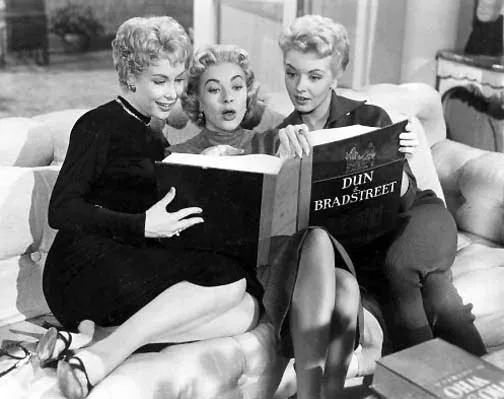
We started the year off with “Worth a Million,” learning about the careers of several of the cast members from How to Marry a Millionaire. This show debuted in 1957 and aired for two years. Today we focus on Merry Anders.

📷pinterest.com

According to imdb.com, the plot of the show is “Motherly Mike, ditzy but sexy Loco, and sensible Greta move to the big city to find themselves wealthy men to turn into husbands. After the first year Greta gets married with Gwen the new roommate in this syndicated series.”

Merry Anders, who played Mike, also had a small part as a model in the 1953 Marilyn Monroe movie that the series was based on.

Anders was born Merry Anders in Chicago in 1934. When she was 15, she and her mother visited Los Angeles for two weeks and never left. Former actress Rita Leroy encouraged her to begin a modeling career, and Anders studied acting at the Ben Bard Playhouse. A talent scout spotted her there, signing her to a film contract for 20th Century Fox in 1951.

📷vintageeveryday.com

Her first film was Golden Girl that same year. She continued with small roles on the big screen and various offers on television before being offered a cast role in It’s Always Jan in 1955. When it was canceled, she took the part of Mike on How to Marry a Millionaire. Her next cast role came a decade later on Dragnet.

Anders was married to John Stephens, a producer, but they separated after four months. He was abusive, and when she found out she was pregnant, she divorced him.

By 1968 it was clear that her career was in a rut, and she accepted a job as a receptionist at Litton Industries. Her last role was a two-part Gunsmoke story which aired in 1971. In 1972, she officially retired from acting. She became a customer relations coordinator at Litton where she remained for another twenty years.

📷wikipedia.com On Gunsmoke

She shared that she had a couple of years where she only grossed about three thousand dollars, and she couldn’t make a living. She said, “her dad wrote her a letter and said, ‘Get out of that movie business, get yourself a decent job, girl!’ I was divorced and it’s hard to raise a child, have a nice home, put up the appearance of success, drive a car in perfect running shape and everything when you’re on unemployment.”

In 1986 Anders married again, this time to engineer Richard Benedict and they were together until his death in 1999. Anders passed away in 2012, but no cause was shared. Before her retirement, she was in 45 big-screen films including Three Coins in the Fountain, Desk Set, and Airport. Add another 46 television shows including The Ann Sothern Show; Richard Diamond, Private Detective; Bonanza; Perry Mason; and Get Smart. Overall, she racked up 91 credits in two decades which is impressive. I hope she enjoyed her life after acting and was able to share lots of great stories with her family and friends.

Diana: Might Have Moved Too Quick

As we take a peek at some one-named sitcoms, today we travel back about fifty years to 1973 and visit Diana which debuted on NBC. Created by Leonard Stern, the show was filmed in front of a live audience. Stern was the creator behind several series including McMillan and Wife and He and She. In addition to this show, he wrote for several series including The Phil Silvers Show, Get Smart, and Holmes and Yo-Yo. He has a decent amount of producing credits including executive producer for Get Smart.

📷en.wikipedia.com

The premise is that divorced Diana Smythe (Diana Rigg) moves from London to New York City as a fashion coordinator for a department store. Her brother lets her live in his apartment while he’s out of town. Not only does Diana have to deal with learning about life in America, she has to take care of her brothers great dane Gulliver. Quickly, she realizes a lot of women have keys to her brother’s apartment and they show up regularly.

Rounding out the cast was neighbor Holly (Carole Androsky), copywriter Howard (Richard B. Shull), window decorator Marshall (Robert Moore), her bosses Norman and Norman Bronik (David Sheiner and Barbara Barrie), and friend Jeff (Richard Mulligan), a mystery novel writer.

Jerry Fielding composed the Diana theme. Fielding was a three-time Oscar nominee with 115 composing credits including McMillan and Wife, Mannix, Hogan’s Heroes, and Star Trek. He also was listed as part of the music department for lots of great series and movies.

📷wikimediacommons.com

Riggs took on the role due to the success of The Mary Tyler Moore Show and wanted to do something similar. I will say they tried a bit too hard to be similar. Their apartments are almost identical, and the work set was also set up with one coworker next to Diana and her boss’s office to the right. The show was placed on the Monday night schedule before Here’s Lucy. It was up against Gunsmoke and The Rookies. Gunsmoke had been on forever and was still in the top 20 while The Rookies was in the top 30. While a lot of shows debuted in 1973, the only real hit was Happy Days.

This show might have wanted to emulate The Mary Tyler Moore Show, but it lacked a few things including the amazing cast, the great writing, and the perfect timeslot. Fans never warmed up to this show and the ratings never took off, so the show was canceled before the end of the season.

📷facebook.com

It wasn’t a terrible show, but it wasn’t anything worth watching either. I thought the dialogue was not great and it tried way too hard. The jokes seem a bit tired. While the cast also wasn’t awful, they weren’t overly likable either. I think that there were valid reasons this one was canceled after only 15 episodes. At least she had The Avengers to remember which was a much better and beloved show. Diana summed up how this series fared when she related a story that when she arrived in American, the network had her picked up at the airport in a limousine and when she left America after a canceled show, they sent her to the airport in a shabby, yellow cab. I guess limousines and shabby cabs are part of all of our lives.

Angie: Always on the Move

This month we are learning about sitcoms with one name, and today is Angie. Angie had a short run from February 1979 until September of 1980, producing 36 episodes. It was one of the few Garry Marshall shows not to be a long-running hit. He created it with Dale McRaven. We all know Marshall’s amazing career with Happy Days, Laverne and Shirley, The Odd Couple, not to mention all of his great movies. McRaven also had a prolific career as a producer and writer. He’s listed as producer for The Partridge Family, The Betty White Show, Mork and Mindy, and Perfect Strangers. His writing credits includes all of these shows, as well as The Dick Van Dyke Show, That Girl, Get Smart, The Odd Couple, and Room 222 among others.

📷ihearthollywood.com

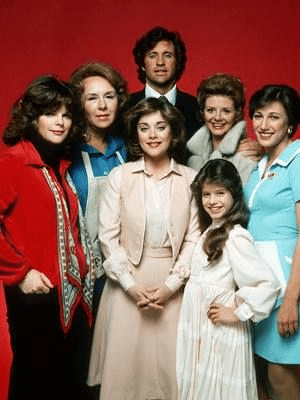
The cast was quite talented: Donna Pescow played Angie, Robert Hays was her boyfriend-later-husband, the amazing Doris Roberts was her mother Theresa before Raymond came along, and Debralee Scott played her sister Marie.

Bradley Benson is a young pediatrician who comes from a wealthy family comprised of his stuffy father Randall (John Randolph), his overbearing sister Joyce (Sharon Spelman), and her daughter Hillary (Tammy Lauren). The show is set in Philadelphia.

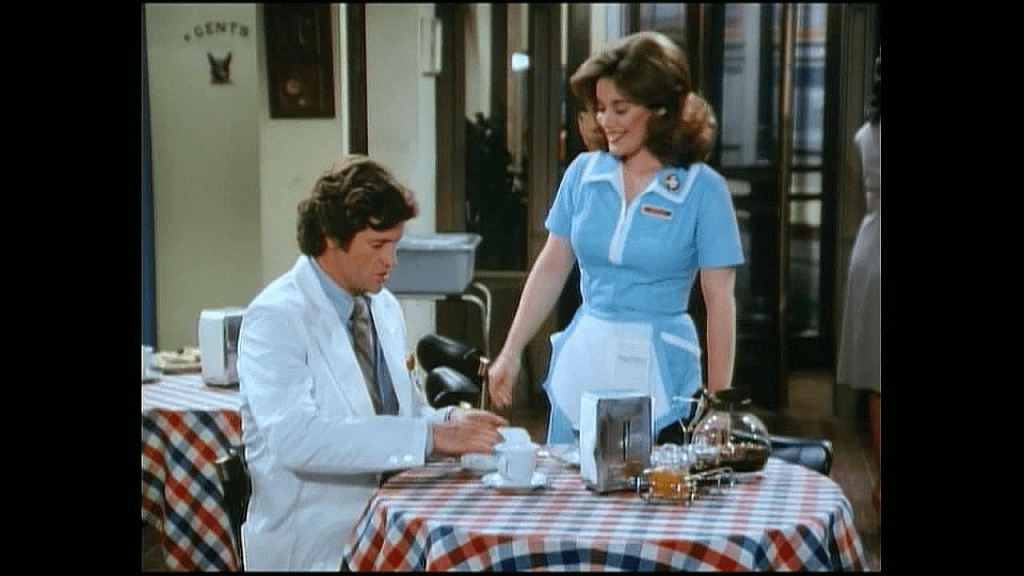
Angie is a coffee-shop waitress who falls in love with Brad. Many scenes are set in the diner with Angie’s friend and co-waitress Didi (Diane Robin). When their families argue about wedding plans, Brad and Angie elope. Later Angie’s mother plans a small family wedding for the two families to get to know each other, and Brad buys the coffee shop for Angie.

At the beginning of the second season, Angie sells the coffee shop to buy a salon with her mother.

📷imdb.com

The theme song was “Different Worlds,” written by Norman Gimbel and Charles Fox. Gimbel is still hard at work and has amassed 494 credits so far while Fox has 131 credits for many impressive television series and big-screen films. Maureen McGovern sang it; she’s best known for her top-forty hit “The Morning After.”

The show was sandwiched between Happy Days and Three’s Company on Tuesday nights, which ensured great ratings. This one was fifth its first week. The show just could not find its fan base. By the end of the season, the Nielsen ratings had fallen drastically, and the show had moved to Monday nights following Monday Night Football. Angie wasn’t the only show to struggle in this time slot. Once it was moved, three other shows—One in a Million, Goodtime Girls, and Laverne and Shirley—all tried this scheduling spot. I’m not sure if the shows were just not very good in 1979, if people were too busy to watch television, or the network heads were inexperienced, but when you look at the schedule from 1979 most prime times had a different show in the slot every season of the year. When it’s not only one show on a network moving, but many shows on a network moving and then all networks having a bunch of shows moving, how are viewers supposed to figure out where anything was? Out of the 54 new shows debuting in 1979, by the next season every network basically had one hit show out of the bunch: ABC-Hart to Hart, CBS-Trapper John MD, and NBC-The Facts of Life. While these are all decent shows, none of them were classics in my opinion. In 1980 another 30 shows were brand new.

📷rewatchclassictv.com

The show was put on hiatus. It did return in April on Saturday nights, but it was officially canceled in May.

When you look at this show on paper, it had all the right elements. First of all, we have Garry Marshall and Dale McRaven, very successful creators and writers. The cast was amazing. Even the theme song was composed and sung by extremely talented people. Then you have the fact that there were not a lot of great shows debuting this year; a decent show should have crushed it. So, what happened here?

I think I’m putting the blame for this one on the network. I watched the pilot and while pilots are meant to pull you back for the next one, most pilots aren’t the best of the series. Some of the pilots for shows I love are almost dreadful. This pilot was not dreadful. The characters were likable, the writing was funny, and the theme was not overdone over the years. It was similar to The Mothers-In-Law from a decade earlier but more of a Dharma and Greg (which came two decades later) where they fall in love despite their economic differences.

📷youtube.com

This series was better than a lot of shows that are currently on the air. I did watch another later episode where the couple elopes. Once again, the writing was good and the characters were a bit eccentric, but the writers knew how far to go to keep them likable and charming rather than odd. If ABC had kept it in a time slot for more than a month or two and given it a bit of time, it might have been a big hit.

If you want to check it out, let me know what you think. For a late seventies/early eighties show, it’s aged very well.

Cimarron Strip: Steak, Anyone?

As we wind up our “Go West Young Man” blog series, we turn our attention to Cimarron Strip for the last blog of the series. This show was only on the air for one season, from 1967-68. It was produced by the creators of Gunsmoke, America’s most beloved western. Like The Virginian, it was a 90-minute show.

📷mubi.com

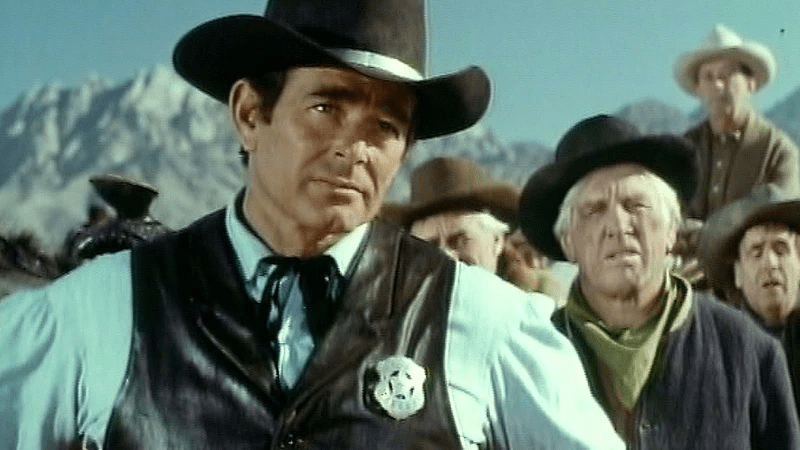
Set in the Oklahoma in 1890, the series occurred in a geographical region called No Man’s Land, an ungoverned area for several decades. Marshal Jim Crown (Stuart Whitman) tries to bring law and order there. Crown arrives only to learn that the sheriff has resigned, and it’s up to him to bring peace to the area with no Army support. We get to know Dulcey Coopersmith (Jill Townsend) who comes to live with her father, but upon her arrival, she discovers he is dead. Her father’s partner MacGregor (Percy Herbert) has let their Wayfarer’s Inn become a bit dilapidated, but Dulcey is determined to bring it back. Marshal Crown stayed there when he was in Cimarron City. Francis Wilde (Randy Boone) often served as Crown’s deputy.

📷pinterest.com

Rounding out the cast is the bartender at the Inn, Fabrizio (Jack Braddock); Major Covington at a nearby Army fort (Andrew Duggan); a Dr. Kihlgren (Karl Swenson); and Hardy Miller (Robert J. Wilke).

The show was on Thursday nights, up against Batman, The Flying Nun, and Bewitched on ABC. It faced Daniel Boone and Ironside on NBC. Definitely some tough competition.

The theme song was composed by Maurice Jarre, who was the scorer for the films Lawrence of Arabia and Doctor Zhivago for which he won two Oscars.

The show never attained the ratings numbers it needed to keep its place on the schedule. From what I have been able to find out, it was well written and well cast. Guest stars kept it interesting, and the scenery was beautifully filmed.

📷tvmaze.com

I’m guessing the main reason the show didn’t make it was just viewer fatigue with the western genre. There were already shows like Bonanza and Gunsmoke which were hugely popular. One more western might just have been one too many, no matter how good it was. In addition to the western series, some of the shows that were on the air when Cimarron Strip debuted included That Girl, Hogan’s Heroes, Mannix, Batman, Lost in Space, Get Smart, and Rowan and Martin’s Laugh In—very different choices than westerns. I do remember Arnold the pig on Green Acres always wanting to watch westerns on television. We still fall prey to this on the major three networks. After ER became popular, the next season featured ten new medical shows. And then most of them get cancelled, not necessarily because they’re bad but because it’s just an overload of medical shows.

Most people don’t want the same supper every night even if it’s steak or lasagna. That said, this seemed to be a steak kind of show, so just because it couldn’t survive the mass onslaught of westerns in the sixties doesn’t mean it’s not worth watching. If you check it out, let me know what you think.

Wagon Train: Heading West

This month we are celebrating, “Go West Young Man” by taking a look at some of the westerns from the fifties and sixties. Up today is Wagon Train. This series debuted on NBC in 1957; in 1962 it moseyed over to ABC for its final three seasons. Lew Wasserman was involved with Universal which produced Wagon Train. When they sold the series to ABC, NBC was not happy, but Wasserman told them that he had a new show for them, The Virginian, which we’ll learn about in two weeks.

📷pinterest.com

The series was very popular, jumping to number one immediately. The plot is that a large wagon train is traveling through the west from Missouri to California. Ward Bond starred as the wagon master Seth Adams (when he died in 1960, John McIntire took over). Robert Horton played scout Flint McCullough; eventually he opted to leave and was replaced by Robert Fuller. Oddly, Horton and Fuller shared a birthday and were six years apart in age.

If I listed all the guest stars during the eight seasons, you would still be reading this next Monday. Just know, there were a lot.

The show was adapted from a 1950 John Ford film titled Wagon Master. In a 1960 episode, John Ford stepped in to direct an episode, “The Colter Craven Story.” One guest star I have to mention in this one was John Wayne. He speaks from the shadows as General Sherman (Wayne’s real name was Marion Michael Morrison, so for this credit, he went by Michael Morris) in this episode.

The original theme song was written by Henri Rene and Bob Russell and conducted by Stanley Wilson. A more contemporary theme accompanied season two, and it changed a few more times during the run of the show.

📷msn.com

The show had a huge budget for the time: $100,000 (about a million in today’s world of television). It was about 40% more expensive than most westerns at the time, and that is part of why it was able to feature so many guest stars.

When Gene Roddenberry pitched Star Trek to the networks, he described it as “a Wagon Train traveling across the universe.” He also hired writer Gene L. Coon who wrote 23 episodes of Wagon Train.

While wagon trains are considered an icon from our history, so was the product of the series’ first sponsor, the Edsel Division of the Ford Motor Co.

The show was an hour long and shot in black and white for the first six seasons. For season seven, the network filmed the show in color and increased the length to 90 minutes. The ratings were still high but didn’t increase, so the network could not justify the changes, and the television show went back to an hour in black and white.

📷dvdtalk.com

The show was placed on Wednesday nights up against Leave it to Beaver and Disneyland. Even with that competition, it was in the top thirty and by its second season, had jumped to the top ten where it stayed until it was sold to ABC. ABC kept the show on Wednesday nights, and it ran against The Virginian, both being in the top thirty in 1962.

So many people have fond memories of this show. It was on six seasons, but I think it was finally cancelled even though it was in the top thirty because of the western overload, ushering in the shows like Get Smart, The Man From UNCLE, Lost in Space, and The Smothers Brothers Show. Check out your favorite guest stars who were on the show and watch those episodes to see what it was like.

Camp Runamuck: Campers Loved It More than Viewers

This month we are checking out a few sitcoms that are rarely remembered anymore. Today we are exploring the show Camp Runamuck. It debuted on NBC in 1965 and featured campers for 26 weeks before being cancelled.

📷imdb.com

Dave Madden was counselor Pruett; Commander Wivenhoe was played by Arch Johnson, and senior counselor Spiffy was played by David Ketchum. In the pilot, one of my favorites, Frank DeVol, played Doc Joslyn but illness forced him to hand over the part to Leonard Stone. Bobby Darrin sang the theme song.

If you are a fan of The Partridge Family, you will appreciate that this show was the introduction of actor Dave Madden, later Rueben who would manage the Partridges. Johnson began on television in the fifties, but this was his first cast role. Ketchum started his career a decade after Johnson and this was his second starring role after being in I’m Dickens, He’s Fenster in 1962. One camper who is featured in two of the 26 episodes is Maureen McCormick. This was the year she started her acting career, also appearing in Bewitched, The Farmer’s Daughter, and Honey West. Before becoming Marcia Brady, she would also show up in My Three Sons and I Dream of Jeannie.

Wivenhoe was an interesting camp leader. He didn’t like kids, didn’t like to part with his money, and didn’t appreciate the 6am morning wake-up song sung by the girls across the lake accompanied by a bugle. He did like playing golf and enjoying a quince for breakfast.

Across the lake was Camp Divine owned by Eulalia (Hermione Baddeley) who was helped by counselors Mahalia May (Alice Nunn) and Caprice Yeudleman (Nina Wayne).

The opening featured a peppy tune with fifes and you see the lake and hear the music before you see the camp counselors leading the campers (all in white; the poor laundry crew) marching down the road.

📷youtube.com

Most of the plots featured the counselors as opposed to the campers. Typical plots were the female campers being ordered to steal Wivenhoe’s bathtub so they could take a real bath and the boys getting it back. In another episode, the campers learn a civics lesson. They are given the task of electing a camp commander. However, the candidate who gets in becomes a dictator and tries to put everyone who had been in charge, namely the adults, in jail. This sounds vaguely familiar from the recent news.

In the credits I learned Cal Howard was in charge of visual gags. I never had seen that designation before in a sitcom. Howard, who was born in 1911 and passed away in 1993, had a long career as an actor and writer. He received 178 writing credits, mostly in animation. He worked for Walter Lanz and Walt Disney and wrote a few Bugs Bunny and Alvin and the Chipmunks episodes.

Just to add a sense of weirdness and whimsy to the series, two bears named Irving and Virginia would share their opinions of what was going on around the camp.

The series was up against The Wild Wild West and The Flintstones, pretty tough competition for the time. First of all it was on Friday nights when many viewers might be starting their weekend celebrations. The Flintstones was originally written for adults, but by 1965 families were watching the show together. The Wild Wild West was new, but immediately hit the top 30, and it was followed by another new CBS show, Hogan’s Heroes, and then Gomer Pyle, USMC, so most television fans were glued to that network Friday nights. Other new NBC shows included Get Smart, I Dream of Jeannie, and I Spy so competition was tough to retain a schedule spot. ABC didn’t have a lot of hits that year but they did debut three shows that I liked but all faded away within two seasons: Batman, Honey West, and Gidget.

Camp Runamuck might have gotten a second season if it didn’t have so much competition to deal with. If you loved camp as a kid, or hated camp as a kid, it might be worthwhile to watch a few shows and see what you think.

Don Adams: Always Smart

This month our blog series is titled “All About The Bill Dana Show.” The first week in March we learned about the show and now we have been spending time with some of the cast. We end our series with Don Adams.

Adams was born Donald James Yarmy in Manhattan in 1923. Don was a blend of cultures, Hungarian Jewish on his dad’s side and Irish-American on his mom’s. Don was raised Catholic while his brother Dick was raised Jewish. I could not find out what their sister decided to do. She later became a writer under the name Gloria Burton and wrote a script for Get Smart. His brother was also an actor. Dick has about 50 acting credits and appeared in many of the most popular sitcoms during the sixties and seventies, including three appearances on Get Smart.

Adams dropped out of high school and went to work as a theater usher. In 1941 he joined the US Marine Corp. At one point he was injured during a Japanese assault on Tulagi. He was the only survivor from his platoon. While recovering, he came down with blackwater fever, a side effect from malaria and was evacuated to New Zealand. He was not expected to recover, but when he did, he was sent back to the US as a Marine drill instructor.

After his discharge, he moved to Florida to work as a comedian. He refused to do material he considered “blue” and was fired.

In 1947 he married Adelaide Efantis, and her stage name was Adelaide Adams. Don decided to take the name Adams as well for his stage name. He worked as a commercial artist and cashier to support their family.

In 1954, Don was the winner of Arthur Godfrey’s Talent Scouts with a comedy act written by Bill Dana. He began making appearances on The Steve Allen Show, where Dana was a writer. In 1961 he became a regular on the Perry Como Show.

About this time, Don and Adelaide divorced, and Adams married Dorothy Bracken, another actress. They split up in 1977 when he married Judy Luciano, also an actress but that marriage also ended in divorce. (I could only find one credit for his last two wives; Bracken was on Get Smart, while Luciano appeared on The Love Boat.)

While discussing his marriages, Don said “I’m no longer independently wealthy. I guess it’s the result of too many wives, too many kids and too much alimony. I’ve been paying alimony since I was 14 and child support since 15. That’s a joke, but not by much. . . I like getting married, but I don’t like being married.”

In 1963 Adams was offered the role of Byron Glick, hotel detective on The Bill Dana Show. As we’ve discussed this month, the show was on the air for a season and a half. While working on the show, Don was also the voice of cartoon Tennessee Tuxedo which he continued doing until 1973.

During those years he also made an appearance on The Danny Thomas Show and on Pat Paulsen’s Comedy Hour.

In 1965 he was offered the role of Maxwell Smart in a new spy satire, Get Smart.

The sixties saw westerns being overtaken by spy shows such as The Man From U.N.C.L.E., I Spy, The Pink Panther, and The Avengers. Mel Brooks and Buck Henry decided to try their hand at writing a campy sitcom and Get Smart was born.

The role of Smart was created for Tom Poston, but ABC turned it down, and NBC said yes. They had Adams under contract, so he got the part. Rounding out the cast was Edward Platt as the Chief and Barbara Feldon as Agent 99.

Smart and 99 had great chemistry and married in a later season. Feldon and Adams remained life-long friends.

One of the most memorable parts of the show was all the catch phrases Adams created on the show including “Sorry about that Chief,” “Would you believe,” and “Missed it by that much.”

In addition to acting, Adams worked as a producer and director on the show. He was nominated for an Emmy from 1966-1969. He won three of those, losing to William Windom for the little-remembered one-season show, My World and Welcome to It. Lloyd Haynes from Room 222 and Bill Cosby for The Bill Cosby Show were also nominated that year.

The show moved to CBS for the final season, but the ratings never recovered, and the show was canceled after that year.

Like so many of our successful actors with unusual characters, Adams suffered from typecasting after the show ended. He did become part of two additional sitcom casts during his career.

In 1971 he was on The Partners. According to imdb.com, the plot is that “Lennie Crooke and George Robinson are inept detectives teamed up to solve crimes. Captain Andrews is their exasperated boss, Sgt. Higgenbottom is a smarmy co-worker, and Freddy confesses to most of the neighborhood crimes.” Adams played Crooke, but the show only produced 20 episodes.

In 1985, Adams tried a sitcom again on Check it Out. This one was about a grocery store and its employees. Adams played Howard Bannister. The show lasted three seasons, ending in 1988. The show was not very popular in the US but was a hit in Canada.

In between those two shows, Adams appeared in a handful of series including Fantasy Island, The Fall Guy, The Love Boat, Empty Nest, and Nick Freno: Licensed Teacher. He made most of his salary appearing in nightclubs. He also had his Smart character resurrected in several big screen films and television series.

Because of the typecasting, he returned to animation and found a lot of success, especially with Inspector Gadget which he voiced from 1983-1999.

He also tried his hand at a game show. Called Don Adams’ Screen Test, it had an interesting concept. The show was filmed in two 15-minute parts; Adams would randomly select an audience member to recreate a scene from a Hollywood movie such as From Here to Eternity with Adams as director. It ended after 26 episodes.

In his spare time, it sounds like he visited the racetracks, betting on horses. He also spent a night a week at the Playboy Mansion playing cards with Caan and Rickles. He loved history and studied Abraham Lincoln and Adolf Hitler in depth. He also wrote poetry and painted.

Don passed away in 2005 from a lung infection and lymphoma. The eulogists at his funeral included James Caan, Bill Dana, Barbara Feldon, and Don Rickles.

It’s hard to know what to make of Adams’ career. Obviously, he was hard working, an excellent Marine, and a man of many interests. He was fired for not performing blue material but then put horse racing and gambling above the needs of his family, according to several of his friends. He created the amazing role of Maxwell Smart, one of the best characters in television history, but that feat kept him from achieving other great roles in the following decades due to typecasting. It sounds like Check It Out was very popular in Canada, so maybe if he had been given a few chances to create characters different from Smart in a couple other sitcoms, it would have helped.

I feel bad for those actors who are so successful in the characters they help create that they are barred from future jobs, but then again, those characters are some of the best actors in television: George Reeves as Superman, Ray Walston as My Favorite Martian, Henry Winkler from Happy Days, Frank Cady from Green Acres, and Jack Klugman from The Odd Couple. I guess you trade being warmly remembered for fewer quality roles.

Apart from Get Smart, I knew little about Adams before writing this blog, so it was fun to get to know him a bit.