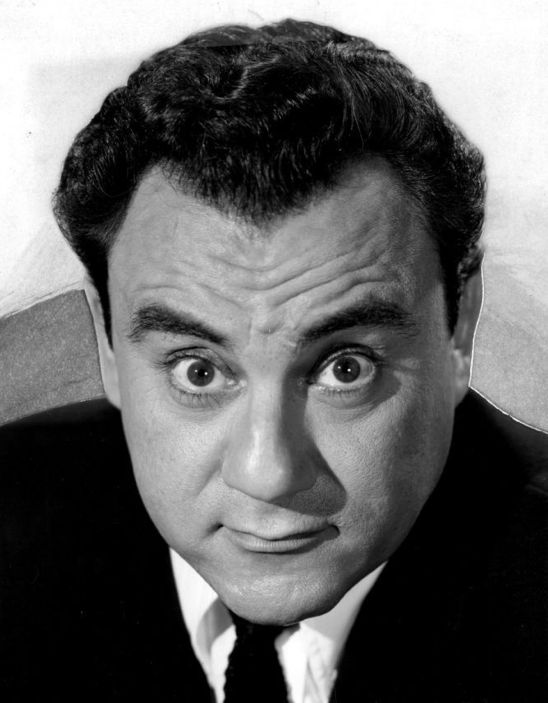
Bill Dana: Actor? Script Writer? Author? Talent Agent? Yep

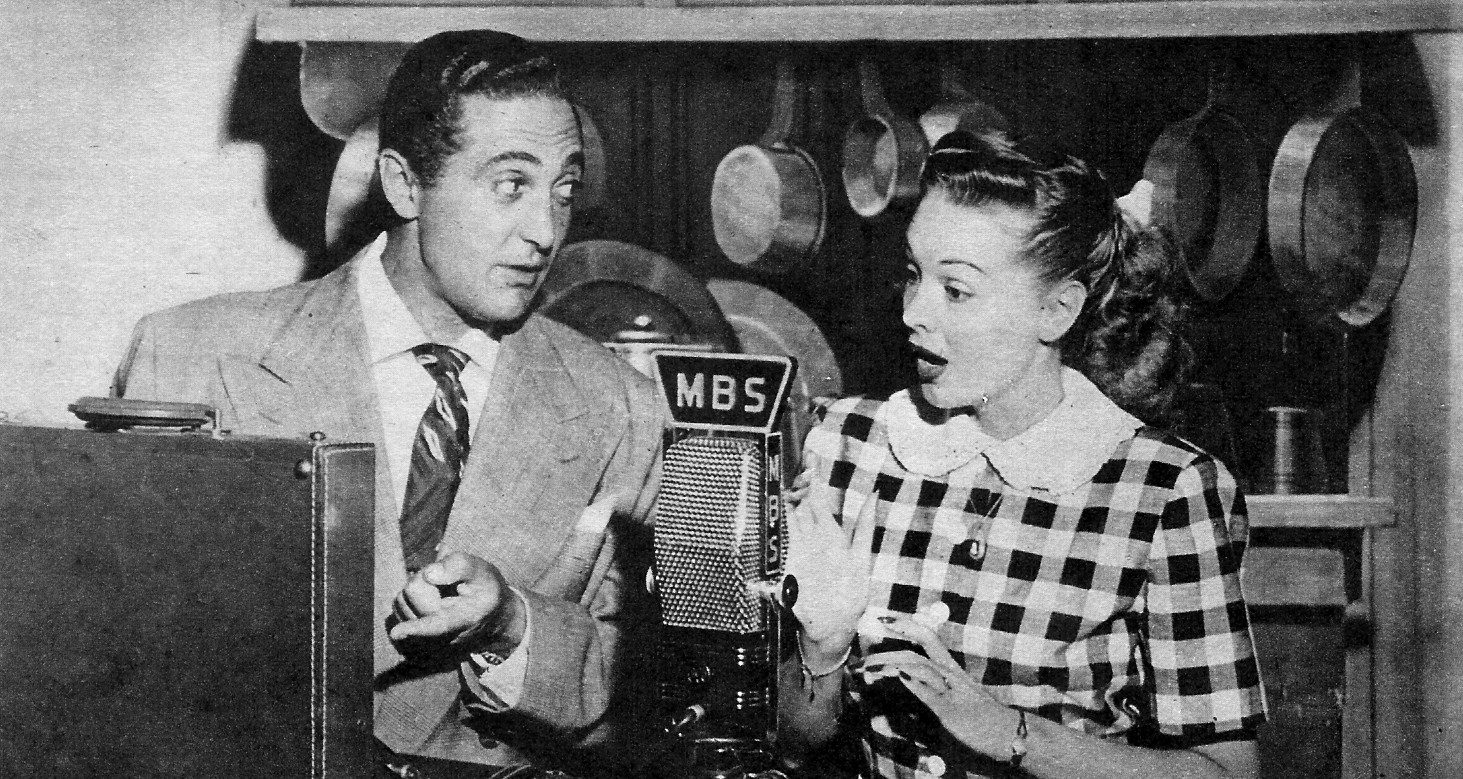
This month we are exploring The Bill Dana Show for our blog series. Last week we talked a bit about the show itself, and for the rest of the weeks, we are looking at some of the other cast members’ careers. Today we begin with Bill Dana himself.

📷findagrave.com

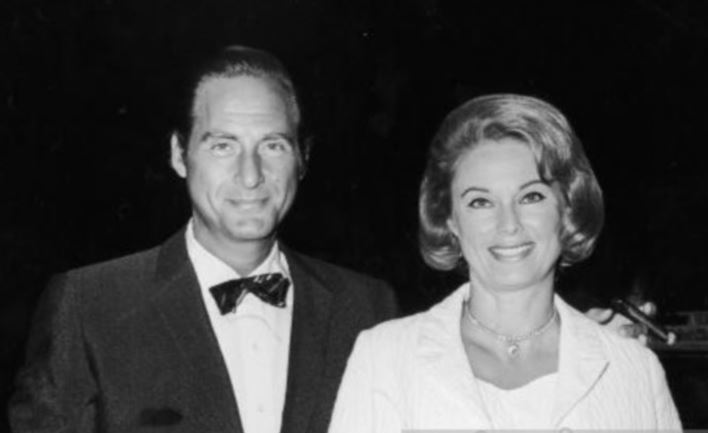
Dana was born William Szathmary in Quincy, Massachusetts in 1924. He was the youngest of six children. His older brother Arthur was fluent in several languages and inspired Bill to learn different accents.

Dana served with the US Army during WWII as a machine gunner and was awarded the Bronze Star Medal.

After the war, Bill enrolled at Emerson College. After graduation, he was hired as a page at NBC’s Studio 6B, or 30 Rock.  He was also trying to break into comedy performing around New York. During the fifties he appeared on The Imogene Coca Show. He also did some writing and producing for The Spike Jones Show.

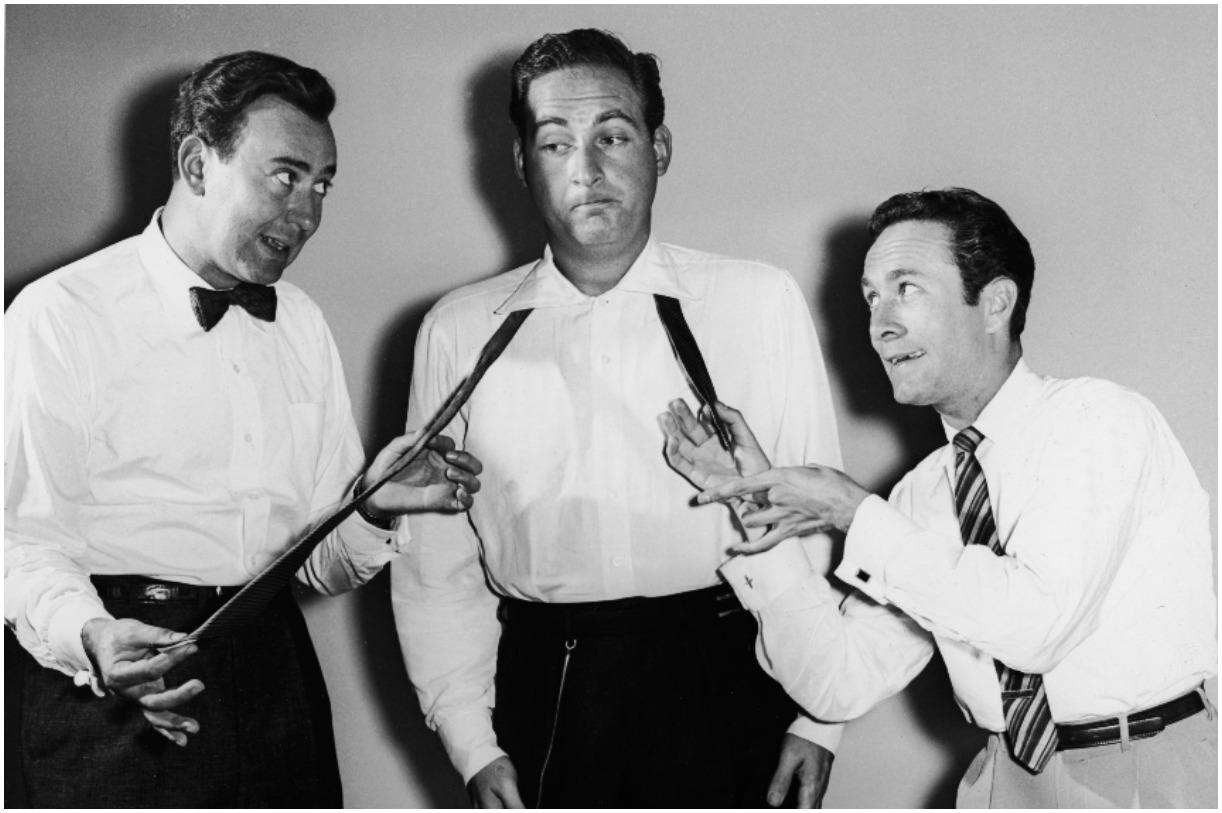
He met Don Adams and began writing routines for him in the fifties. He and Don would be part of each other’s lives for a bit. Don would be one of the cast members on The Bill Dana Show. Dana would appear on Adams’ show Get Smart, and Dana’s older brother Irving was the composer of the Get Smart theme song. Bill would also cowrite the script for the Get Smart film The Nude Bomb.

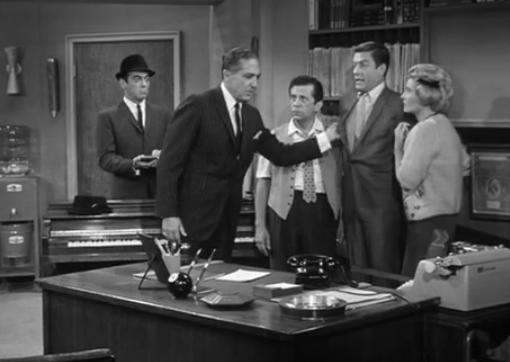
📷thenewyorktimes.com

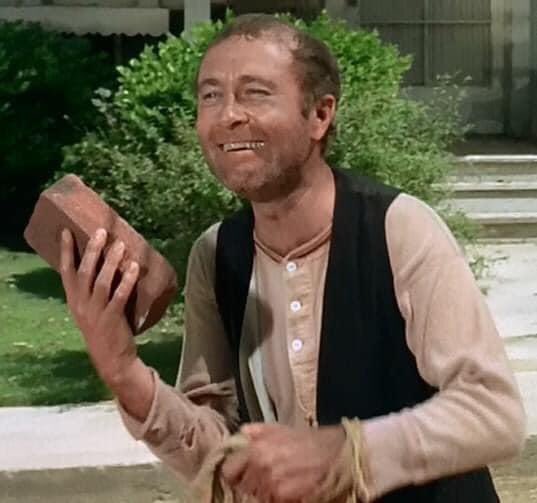
In the late fifties, Steve Allen hired Dana as a writer. Bill created a character, Jose Jimenez, for the “Man in the Street” segments of Allen’s show. Soon Jose became his alter ego. He made appearances as Jose on The Red Skelton Show, The Spike Jones Show, The Danny Thomas Show, and The Ed Sullivan Show. He even had a comedy album featuring the character.

Dana told a story on Ed Sullivan’s show that some people truly thought he was Jose Jimenez. One lady who met him out and about asked if his birth name was Jose Jimenez and he told her, “No, it’s Bill Szathmary.” She said “Wow, no wonder you changed it to Jimenez.”

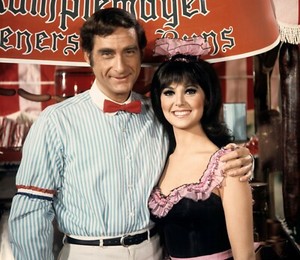
In 1961, Dana began a recurring role on The Danny Thomas Show. He played Jimenez as an elevator operator. People responded so well that Danny Thomas and Leonard Sheldon spun off the character, now a bellhop at a luxury New York hotel, and The Bill Dana Show was created. In addition to Adams, Jonathan Harrison was part of the cast and Maggie Peterson joined them in season two. The show was on the air for one and a half seasons.

As we discussed last week, some people saw Jimenez as a hard-working immigrant who noticed some of the crazy things Americans did, and others saw him as a stereotyped Latino caricature. The pre-show Jimenez fit the second description better and the show Jimenez leaned more toward the first portrayal. However, as the character developed, viewers were not flocking to the show. It was also up against Lassie which at the time was a huge family show on Sunday nights.

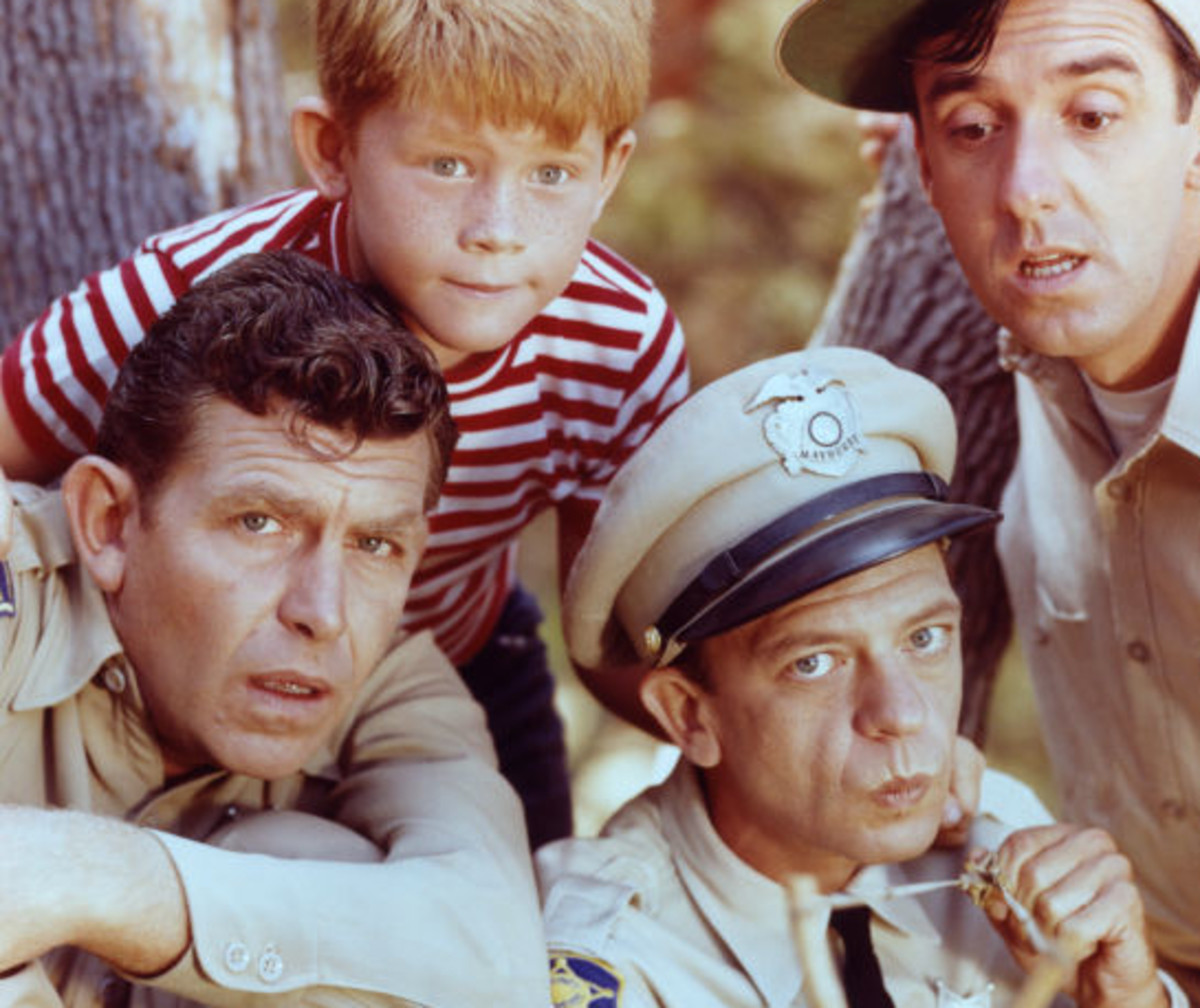
📷wikipedia.com

The last time Jimenez was on the screen as a character was a 1966 episode of Batman in a cameo on the famous wall. Later Dana apologized for his caricature of Jimenez and became a bit of an activist for Latino causes. The National Hispanic Media Coalition endorsed the Jose Jimenez character and invited Dana to sit on their advisory board.

Dana jumped back and forth from actor to writer for a couple of decades. He wrote the script for All in the Family’s episode “Sammy’s Visit” starring Sammy Davis Jr. He also wrote for Bridget Loves Bernie, Chico and the Man, Donny and Marie, The Smothers Brothers Comedy Hour, and Matlock.

His acting landed him in The Courtship of Eddie’s Father, Love American Style, The Snoop Sisters, Police Woman, McMillan and Wife, Ellery Queen, Switch, Vega$, Fantasy Island, The Facts of Life, and Empty Nest among a few others.

He had recurring roles on two additional shows during his career. He was on St. Elsewhere as Howie Mandel’s character’s father for three episodes. He also was Angelo on six episodes of The Golden Girls.

One of his last projects was founding the American Comedy Archives at Emerson College. He and Jenni Matz interviewed more than 60 comedians for this archive, including Phyllis Diller, Norman Lear, Carl Reiner, Betty White, and Jonathan Winters.

Dana was a man of many talents. He also ran a talent management company and an advertising agency. He wrote a book, The Laughter Prescription, with Dr. Laurence J. Peter.

Dana passed away in June of 2017 at his home in Nashville.

Certainly, Dana had a full career. I think starting off with the Jose debacle probably kept him from getting different roles early in his career. He also didn’t seem to know what he wanted to be when he grew up. Was he a comedy writer? A dramatic writer? A variety show writer? Was he an actor? A talent agent? An author? Not that you can’t be more than one thing in life, but in the span of three decades he never seemed to settle on one or two careers. Hopefully he had fun and enjoyed all the different hats he wore.

Good Morning World: Tune In

As we are in the middle of our What in the World? blog series, today it’s a forgotten sitcom from the sixties: Good Morning World.

📷wikipedia.com

This series was created by Sam Denoff and Bill Persky, the team behind That Girl. The concept was based on Persky and Denoff’s time as writers for a New York radio station in the fifties.

In fact, William B. Williams, a WNEW DJ was given screen credit because the title was based on his daily greeting, “Hello, World.” William B. Williams was quite a character and an icon in the world of music. He was born in 1923 and after attending the University of Syracuse, he got a job with WAAT in New Jersey. He filled in for a DJ who failed to come to work but then was fired for, believe it or not, wearing red socks to work. He was hired by WNEW in New York City. He became a beloved radio icon. The radio station said at his funeral there was a huge crowd outside which included taxi drivers, sanitation workers, bookies, waitresses, singers, songwriters, politicians, housewives, first responders, and even the Rockettes.

📷radiohalloffame.com William B. Williams

According to the radio station’s website, “William B. Williams respected singers and songwriters, music and musicians, and it showed. He had a permanent, perhaps profound, effect on the lexicon of pop music.

He bestowed the ‘Count’ on Basie and the ‘Duke’ on Ellington. Billie Holiday was ‘Lady Day.’ Ella Fitzgerald was the ‘First Lady of Song.’ Louis Armstrong was ‘Pops.’ Sinatra was ‘Francis Albert,’ the ‘Chairman of the Board.’ Nat ‘King’ Cole was simply ‘Nathaniel.’”

The show was produced by Sheldon Leonard and Carl Reiner. Looking at that alone and you would expect it to be a hit.

The premise was two radio disc jockeys who have a morning show, “Lewis and Clarke,” in Los Angeles. Dave Lewis is happily married, and Larry is a lady’s man and party boy.

They had some problems casting this show. Roddy McDowell and Sharon Farrell were cast as the married couple. Then Ron Rifkin replaced McDowell. Then they were both let go and David Lewis was played by Joby Baker, his wife Linda was played by Julie Parrish, and Ronnie Schell was cast as Larry Clarke.

📷pinterest

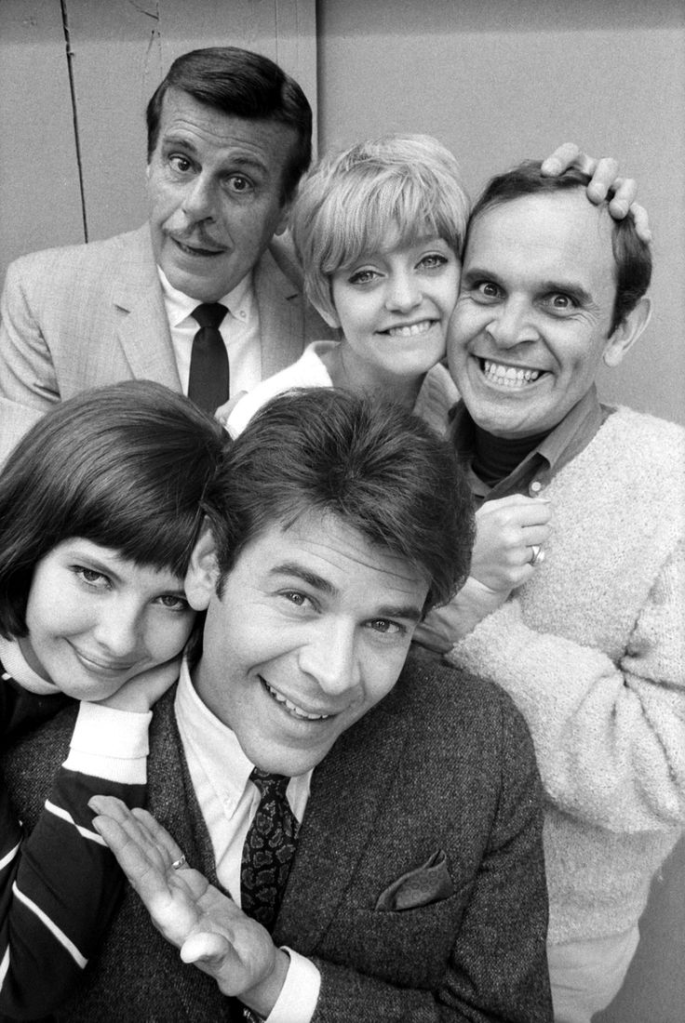
Billy de Wolfe and Goldie Hawn were fun additions to the cast. De Wolfe played Roland Hutton, the stuffy station manager. Hawn was Linda’s best friend Sandy Kramer.

The series debuted on CBS in 1967. It was on Tuesday nights, sponsored by Procter and Gamble. It was competing with N.Y.P.D., a police crime show and Tuesday Night at the Movies which began half an hour before Good Morning World.

Given that the talent behind The Dick Van Dyke Show was contributing to this show as well, it’s not surprising that it seems to be a mixture of The Dick Van Dyke Show and the later Mary Tyler Moore Show. Like Dick Van Dyke, the show features the DJs’ home and work life; like Mary Tyler Moore, you have a Lou Grant-type manager, and we learn about life at a radio station.

The theme music was by David Grusin. The opening was a different look for a sitcom. It’s a bouncy theme that begins with an alarm clock ticking, the guys quickly getting ready, morning traffic, life in LA, and the two DJs barely getting into their chairs before the show started.

The show was not awful in ratings, but the network had two concerns. They still were not sure Baker and Parrish were the right actors to play the married couple, and Parrish had some health concerns that affected the show. They were also concerned that the show did not pull in more of the viewers who were watching The Red Skelton Show which was on before Good Morning World. I don’t think that is surprising. I’m guessing people who enjoyed watching Red Skelton would not love this show as much and vice versa. Full disclosure, I am not a Red Skelton fan. I didn’t find his humor funny, and I have read too many stories shared by actors and writers who experienced his ego and lack of respect dealing with coworkers.

📷imdb.com

The network made the decision not to renew the show for a second season. Schell, who had been playing a private on Gomer Pyle: USMC, another Leonard/Reiner show, returned to military life with a promotion to corporal.

Goldie Hawn was free to accept an offer to appear on Martin and Rowan’s Laugh In which was a turning point for her career. De Wolfe became part of the cast of his close friend Doris Day’s show.

Baker never starred in another show, but he was a busy character actor. Parrish was later cast in Return to Peyton Place and also stayed busy in television; she later had a recurring role on Beverly Hills 90210.

This would be an easy series to binge watch with 26 episodes available. S’more Entertainment released the series on DVD in 2006 and its’ on Roku, so viewers can check it out for free.

“Mad About You” . . . And Them

Photo: today.com

For our blog series this month, we are looking at some of our favorite duos from the eighties and nineties in “Duos to Love.” Today we will meet Paul and Jamie Buchman and their daughter Mabel. Yep, it’s Mad About You. It’s not about you, it’s about them, but I am mad about you too—very thankful you are on this journey with me learning about the golden, and sometimes tarnished, age of television.

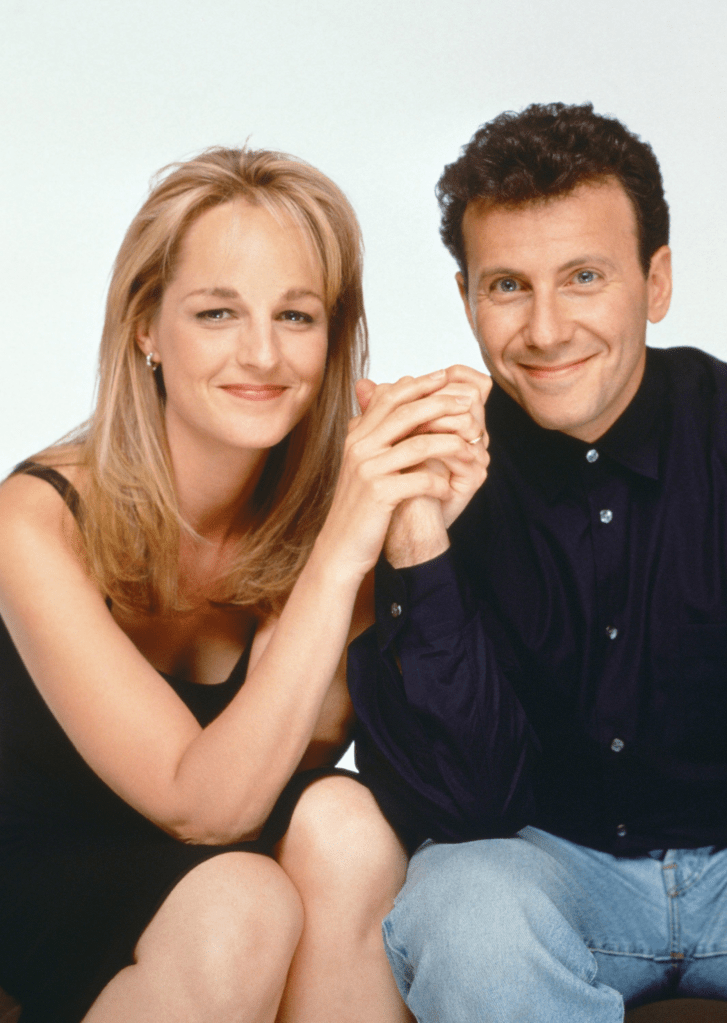
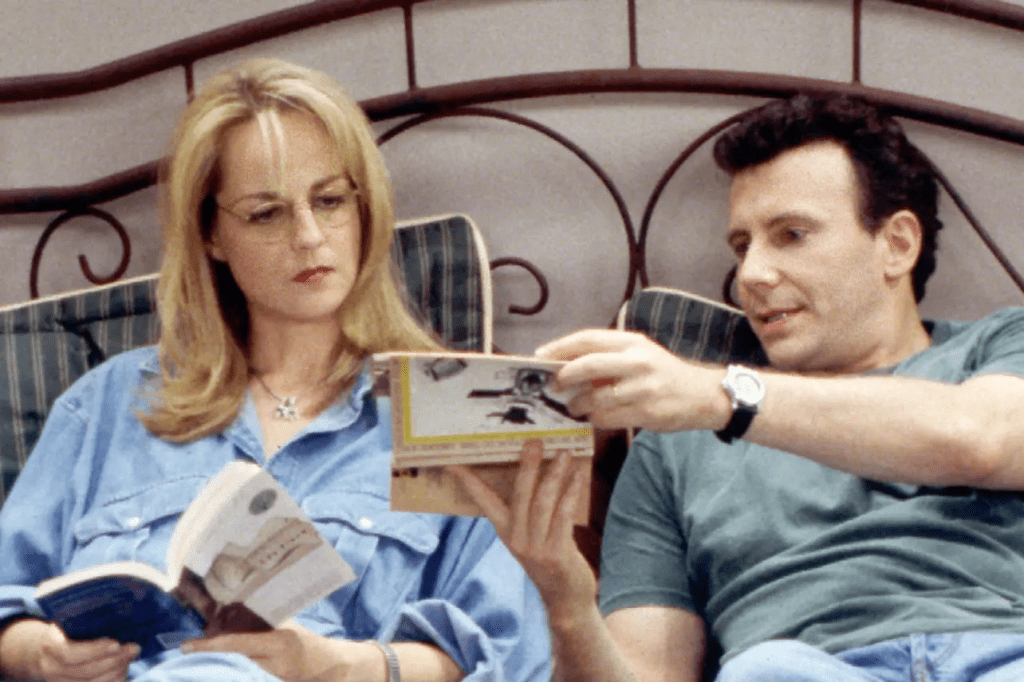
In 1992, NBC aired Mad About You. The series was about newlyweds Paul (Paul Reiser) and Jamie (Helen Hunt) Buchman, He was a documentary filmmaker and she worked in public relations. They lived in Greenwich Village for seven years until they were canceled. Both Teri Hatcher and Valerie Bertinelli were considered for the role of Jamie. It’s hard to imagine anyone but Helen in the role. I think the critics agreed; Hunt was nominated for six Emmy Awards for Best Actress in a Comedy Series. In 1993, she lost to Roseanne Arnold for Roseanne; in 1994 and 1995, she lost to Candice Bergen for Murphy Brown; in 1996 and 1997 and 1998 she won. Overall, the show won thirty-four nominations, with twelve wins.

Photo: decider.com

For seasons one through six, the two top stars received $250,000 per episode but in season seven they got a nice raise, landing $1,000,000 per episode.

Before Mabel (Alyssa and Justin Baric) came along, their “baby” was Murray their dog. Paul met Jamie while he was on a walk with Murray. They meet at a newsstand when they are both looking for The New York Times. In real life, the two stars met because Hunt was sharing a house with a good friend of Paul’s wife, Paula. After reading Reiser’s pilot, Hunt changed her mind about concentrating on her film career and wanted the role.

When Reiser pitched the idea to NBC he said it was about the life of a couple in their private moments. He compared it to a couple going to a party but this show was more about what happens when they leave the party and it’s just the two of them in the car talking on the way home. Reiser also compared it to the successful thirtysomething but “shorter and funnier.”

Carol Burnett Photo: deadline.com

The rest of the cast included Lisa Semple (Anne Ramsay), Jamie’s older sister; Fran Devanow (Lelia Kenzle), Jamie’s best friend; Ira Buchman (John Pankow), Paul’s cousin and friend; Sylvia Buchman (Cynthia Harris), Paul’s mother-in-law who is not in the running for Best Mother-in-Law according to Jamie; Burt Buchman (Louis Zorich), Paul’s father; and Dr. Mark Devanow (Richard Kind), Fran’s ex-husband who is a bit eccentric but not too odd because he wins her back as his wife during the show’s run.

There were a lot of recurring characters on this show. Several showed up more often than others: Debbie Buchman (Robin Bartlett), Paul’s sister; Dr. Joan Golfinos (Suzie Plakson), Debbie’s life partner; Nat Ostertag (Hank Azaria), the Buchmans’ dog walker; Mr. Wicker (Jerry Adler), the apartment building superintendent; Dr. Sheila Kleinman (Mo Gaffney), the Buchmans’ therapist; Maggie Conway (Judy Geeson), their neighbor; Jay Selby (Tommy Hinkley), Paul’s college friend; and Sid (George O. Petrie), Paul’s colleague.

Lisa Kudrow Photo: biography.com

However, there were also a few very famous recurring characters. Mel Brooks showed up as Paul’s uncle Phil in four shows. Cyndi Lauper was Ira’s on/off again girlfriend Marianne in five episodes. Jamie’s mom was in 15 shows but played by three different women: Carol Burnett (10), Penny Fuller (4) and Nancy Dussault (1). Another interesting recurring character was Lisa Kudrow. She was Ursula Buffay, the waitress at their favorite restaurant, Riff’s. She appeared 24 times and when Friends was created, her twin sister Phoebe was written into the show. In one episode after not seeing Ursula much, Paul asks her where she has been and she says “I’ve been hanging out with friends.”

You can imagine how huge the guest star list is for this series. Get ready for auctioneer speed and I will list some of them; just know I am leaving out a lot of famous and fun people. Here goes: We have Ed Asner, Kevin Bacon, Christie Brinkley, Garth Brooks, Sid Caesar, Tim Conway, Ellen DeGeneres, Jamie Farr, Barbara Feldon, Al Gore, Seth Green, Billy Joel, Nathan Lane, Jerry Lewis, Yoko Ono, Regis Philbin, Carl Reiner, Jerry Seinfeld, and Bruce Willis.

Paul Reiser also composed the theme song, “Final Frontier,” with Don Was. Both Andrew Gold and Anita Baker versions of the song were used during the eight-year run. Reiser also played the piano for the theme recording.

Mabel grows up. Photo: parade.com

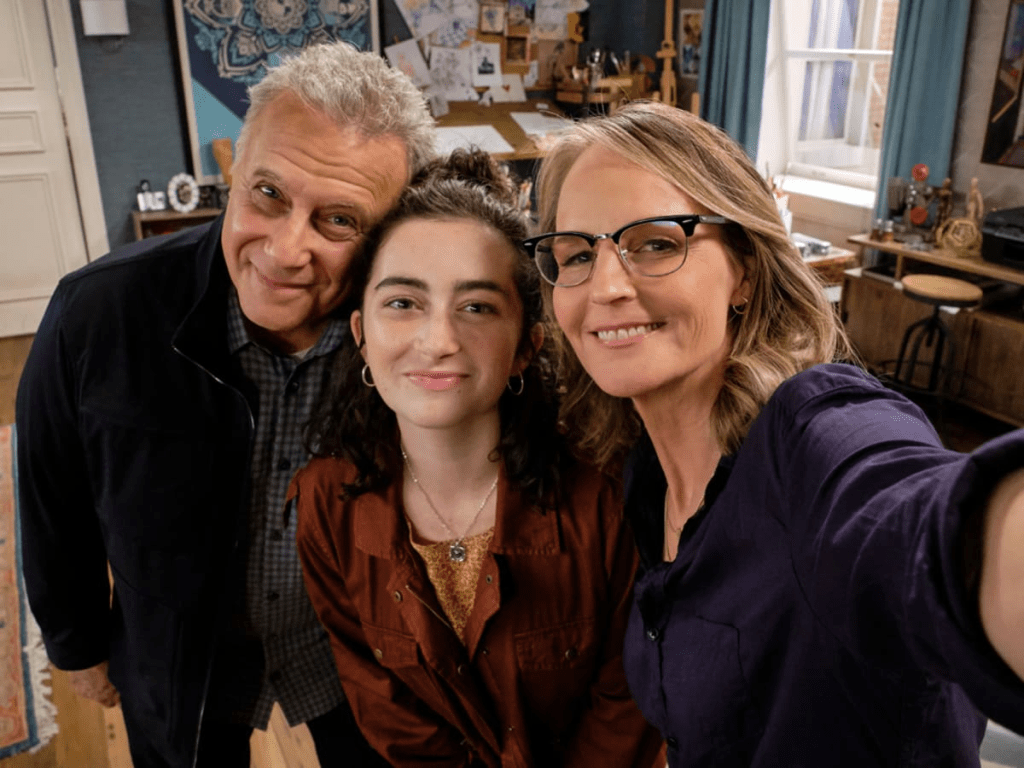
In 2019, a twelve-episode revival series debuted. Both Reiser and Hunt returned for the sequel. The Buchmans are now empty nesters after dropping Mabel off at college. Other veterans returning included Ramsay, Pankow, Kind, Harris, Adler, Gaffney, and Carol Burnett. Abby Quinn was Mabel.

This was a popular show that was always discussed around the water cooler. It’s first year on NBC it aired Wednesday nights against In the Heat of the Night and Coach; Coach was in the top twenty. The next season it was moved to Thursdays nights and oddly was still up against In the Heat of the Night but was also on against The Simpsons. Season three found it with little competition and it was ranked eleventh place for the year. As networks do, now that it had a dedicated audience, it was moved to Tuesday nights where it dropped out of the top forty. The show remained in the Tuesday slot, still up against Roseanne but its audience returned and it crept into the top twenty again. It remained in the same spot for its final two years, one year competing with JAG and the next year against Home Improvement which was a top-ten show. I know this was a lot of detail, but I think it helps to think about how much the schedule moving can potentially hurt a show. Fans get used to a certain night and sometimes clear their schedule for that evening and when shows continue to move around, it is frustrating for everyone. Now, we can just DVR shows and it’s not such a big deal.

Photo: tvseriesfinale.com

This was a well-written show, and the producers and writers spent a lot of time on character development. It had some quirky moments and did some fun plot twists that kept it fun and fresh. Of course, both Hunt and Reiser were amazing actors and went on to great success in the movies. I did not see much about how the 2019 reboot was received by viewers. Considering the competition that the show faced as the network moved it around, it did very well for its seven years. The critics loved it and it was certainly recognized by the Emmy committee every year. I am hoping it will come to Antenna or ME TV soon and we can again spend some time with the Buchmans.

Howard Morris: The Hamlet of Animation

After learning about Your Show of Shows and the stars of the show, I turned my attention to the cast members. Carl Reiner and Howard Morris were the two actors who were most involved with the skits. Reiner had a long and successful career, and we’ll look at his life in more detail later, but today I would like to concentrate on Howard Morris. 

Howard Morris Theatre Credits and Profile
Photo: abouttheartist.com

Most people recognize Morris as Ernest T Bass from The Andy Griffith Show. While I have a great appreciation for the series and the well-written scripts and delightful characters of Mayberry, I was never a big fan of Ernest T or the Darling family. They seemed to be a bit too over the top for me and diminished the reality of Mayberry.

J. Mark Powell on Twitter: "Howard Morris, better known as Mayberry's  rock-throwing Ernest T. Bass on @AndyGriffithShw, was born 101 years ago  today.… https://t.co/AwvE2WMBvR"
Ernest T Bass Photo: twitter.com

So, when I began to learn more about Morris who first became known to television fans for his work on Your Show of Shows, I was amazed at how versatile an actor he was and how much he accomplished during his career. 

Howard Morris was born in The Bronx in 1919. He later received a scholarship to attend New York University as a drama major, planning to work as a classically trained Shakespeare actor. During WWII he became first sergeant in the US Army Special Services unit. The group was based in Honolulu and entertained troops throughout the Pacific. Maurice Evans (who played Samantha’s father on Bewitched among other roles); Carl Reiner (whom we all know and love); and Werner Klemperer (Col Klink on Hogan’s Heroes) were all part of this unit.

In 1945 he married Mary Helen McGowan. While they were married until 1958; he had four other marriages during his life.

When Morris got the offer to appear in Sid Caesar’s new show, he was able to work with Reiner again. This was his first television or movie appearance, but it would not be his last.

Howard Morris - Net Worth, Bio, Wife, Children, Death, Biography - Famous  People Today
With Reiner and Caeser Photo: famouspeopletoday.com

One of the sketches from the show was a take on This is Your Life, the Ralph Edwards show. Morris said it was his favorite skit from the series. David Margolick wrote in the New Yorker in 2014 that “Though the competition is stiff, many feel that this sketch is the funniest that Your Show of Shows ever did . . . that night nearly sixty years ago, the show produced what is probably the longest and loudest burst of laughter—genuine laughter, neither piped in nor prompted—in the history of television.”

Morris moved to Hollywood in 1961. In the 1960s he began his multi-talented career of television actor, movie actor, director, and animation voice-over star. Unbelievably, he would rely on the quartet of skills the rest of his professional life, excelling in all of them.

Howard Morris (Ernest T. Bass) on The Lucy Show - Sitcoms Online Photo  Galleries
On The Lucy Show Photo: sitcomsonline.com

As a television actor, he appeared in a variety of series including The Dick Van Dyke Show, The Twilight Zone, The Lucy Show, The Andy Griffith Show, Love American Style, The Bob Newhart Show, Fantasy Island, Trapper John MD, The Love Boat, and Murder She Wrote.

Although he is known for his role of Ernest T Bass on The Andy Griffith Show, he was only made five appearances as that character on the show. Aaron Rubens sent him the script that introduced Ernest to Morris to look over and “fix.” Morris fell in love with the character. He said the show had a terrific cast, and they were wonderful people to work with. He said fans loved Ernest because he did whatever he felt like doing including spontaneously bad behavior choices that everyone wanted to make.

As a movie star, he appeared in several films throughout the sixties, seventies, and eighties. Some of the highlights were The Nutty Professor; With Six You Get Eggroll; High Anxiety; The History of the World, Part I; and Splash.

On The Many Faces (and Voices) of Howard Morris – (Travalanche)
Photo: travalanche.com

Not content with just acting in films, Morris became interested in directing early in his career. He began his directing career in the sixties and continued through the eighties. His first directing job was on The Bill Dana Show. He was very busy in the sixties and seventies, directing episodes of Gomer Pyle, USMC; The Dick Van Dyke Show; The Andy Griffith Show; The Patty Duke Show; the pilot of Get Smart; Bewitched; Love American Style; Hogan’s Heroes, and The Love Boat among others. He also directed for the big screen. You’ll see directing credits in his name for Who’s Minding the Mint?, With Six You Get Eggroll, and Don’t Drink the Water.

During an interview with the television academy, he said he loved directing Hogan’s Heroes. Robert Clary became one of his best friends for life. He also loved Klemperer. He said working on With Six You Get Eggroll was a wonderful experience. He said Doris Day just had a natural talent, and Brian Keith was a great guy. He felt being an actor allowed him to be a better director. He understood what the process was for the cast and was able to help them. He knew he could not teach them to act.

Perhaps the biggest surprise for a classically trained Shakespeare actor is that he had the most success in the animation world. I could not begin to list all his credits here, or you would still be reading next week when the new blog comes out. Beginning with Krazy Kat in 1962, he would go on to provide voices for more than fifty series. You will hear his voice in The Flintstones, The Jetsons, Mr. Magoo, The Magilla Gorilla Show, The Atom Ant Show, Duck Tales, a variety of Archie series, and Garfield and Friends.

Howard Morris voiced more than 100 characters on The Flintstones
Photo: metv.com

In a Television Academy interview, he admitted that he accepted voice-over work because he needed the money. It also appealed to him because you did not have to worry about wardrobe or make-up. He said the actors sat in the room together recording the show at the same time which allowed them to relate to each other better than today when everyone records by himself.

In 1962, he married Dolores Wylie and they were together until 1977. I read several sources that listed him being married five times but could not find confirmation of the other marriages, although one cite mentioned two other spouses, Judith and Kathleen and noted that he was married to one of his spouses twice. They all ended in divorce.

In 2005 Morris died from congestive heart failure. Carl Reiner was one of the people who gave a eulogy at his funeral.

The Andy Griffith Show" My Fair Ernest T. Bass (TV Episode 1964) - IMDb
Photo: imdb.com

Howard Morris had a very long and prolific career. About the only genre he did not act in was Shakespearean drama, which is what he trained for. I was curious about whether he enjoyed his comedic career, or if he was disappointed that he did not work more in drama.

During his Television Academy interview, when asked what advice he would give someone thinking about entering the acting or directing profession, he replied “to avoid it and shun every opportunity because it was too hard.” He certainly deserves to be remembered for more than being Ernest T Bass even though he is a much-loved character. Morris said he would like to be remembered as a guy that was able to reveal certain things of humor and reality to the public and for his great gratitude for the fans who have always been there.” Well said. And, well done.

Sid Caesar: The Ultimate Comedian

This month’s blogs are dedicated to Your Show of Shows and the stars who made the show such a success. Last week we learned about the career of Imogene Coca, and today it’s Sid Caesar’s turn.

Sid Caesar - Wikipedia
Photo: wikipedia.com

Sid Caesar was born in Yonkers, New York, the youngest of three boys. His parents ran a 24-hour luncheonette. Sid grew up waiting on tables which allowed him to study the accents and mannerisms of a wide range of people and ethnicities. His brother David loved comedy sketches, and the brothers worked on comedy routines together.

At the young age of 14, Caesar traveled to the Catskill Mountains, playing saxophone with the Swingtime Six. Occasionally he performed sketches with his collected accents.

After graduating from high school in 1939, Caesar struck out on his own, pursuing a career in music. He landed in Manhattan where he worked as an usher and a doorman at the Capitol Theater. He played sax at the Vacationland Hotel, a resort also in the Catskills. He was able to audit clarinet and saxophone classes at Julliard.

After a few months, he decided to enlist in the US Coast Guard. He was stationed in Brooklyn, and he played in military revues and shows.

In 1942 Caesar met Florence Levy at the Avon Lodge in the Catskills. They were married the following year and had three children. In November of 2009, Greg Crosby wrote about an interview with the Caesars in the Tolucan Times. He quoted Florence, “I thought he would be just a nice boyfriend for the summer. He was cute looking and tall, over six feet . . . I was in my last year at Hunter College; we were still dating when Sid went into the service, the Coast Guard. Luckily, he was stationed in New York, so we were able to continue seeing each other, even though my parents weren’t too happy about it. They never thought he would amount to anything, that he’d never have a real career or make any money. But we were married one year after we met, in July of 1943.” They would remain married until her death in 2010.

After joining the musicians’ union, Sid played with several well-known bands, including Benny Goodman.

Sid Caesar Wiki, Wife, Career, Net worth and Death children, House,
With wife Florence Levy
Photo: hollywoodmagazine.com

While in the Coast Guard, he was able to collaborate with Vernon Duke, the composer of “Autumn in New York,” “April in Paris,” and “Taking a Chance on Love.” He and Duke put together a show called “Tars and Spars.” Max Liebman, future director of Your Show of Shows, was also part of the show, although not part of the military. Liebman asked Sid to do a few stand-up bits between songs and when the show toured nationally, Sid continued these routines.

Caesar left the service in 1945. He and his wife moved to Hollywood. In 1946, Sid was able to reprise his role in the film version Tars and Spars with Columbia Pictures.

Eventually, he returned to New York and accepted the offer of opening act for Joe E. Lewis at the Copacabana. He also received a contract with the William Morris Agency. He was able to perform in a Broadway show, “Make Mine Manhattan.”

In the fall of 1948, Sid made an appearance on Milton Berle’s popular show, Texaco Star Theater. The following year, he and Liebman met with Pat Weaver, VP of television at NBC. The meeting resulted in the Admiral Broadway Revue with Imogene Coca. It was very successful but Admiral could not keep up with the demand for new television sets so it pulled the sponsorship and the show was canceled after 26 weeks.

Sid Caesar's “Your Show of Shows,” the Best TV Has Ever Offered – Once upon  a screen…
Photo: onceuponascreen.com

In 1950, Weaver, Liebman, and Company created Your Show of Shows. It started life as a second half of the Saturday Night Review but became its own 90-minute program in 1951. In 1954, a 160 episodes later, it ended so Coca and Caesar could both have their own shows.

Sid’s show was called Caesar’s Hour, a one-hour show with Howard Morris and Carl Reiner from Your Show of Shows as well as Bea Arthur and Nanette Fabray. The show was not a success. In 1958, Sid tried again with Sid Caesar Invites You.

In the sixties, Caesar took stage roles, as well as big and small-screen parts. He had several specials on television, starred on Broadway in “Little Me,” which got him a Tony award nomination. He also was part of the ensemble of It’s a Mad, Mad, Mad, Mad World, a huge success that earned six Academy award nominations.

Sid appeared in a few television shows during his career but only a handful. A couple of those include That Girl, Love American Style, Laugh In, Vega$, and The Love Boat.

THAT GIRL - TV SHOW PHOTO #E-13 - MARLO THOMAS + SID CAESAR | eBay
That Girl Photo: ebay.com

Caesar didn’t write his own material. He often performed long sketches, 10-15 minutes. He relied on body language, accents, and facial expressions. Larry Gelbart called him a “pure TV comedian.” Fabray said he always stayed in character, “he was so totally in the scene he never lost it.” He was able to pantomime many different types of characters: a tire, a gumball machine, a lion, a punching bag, a telephone, an infant, a piano, even a bottle of seltzer. Neil Simon said that “Sid would make it [a sketch] ten times funnier than what we wrote.”

Many of his favorite comic sketches were parodies of films including gangster, western, and spy movies. Gerald Nachman wrote Seriously Funny: The Rebel Comedians of the 1950s and 1960s. He said, “the Caesar shows were the crème de la crème of fifties television, studded with satire and their sketches sharper, edgier, more sophisticated than the other variety shows.” Historian Susan Murphy agreed, describing Sid as “best known as one of the most intelligent and provocative innovators of television comedy.”

Unfortunately, like many comedians, Caesar had some demons of his own. His stardom ended quickly. He had no interest in the movies. He was using pills and alcohol to help relieve the pressures of headlining and producing a weekly show. In 1977, Caesar blacked out during a stage performance of “The Last of the Red-Hot Lovers” in Canada and gave up alcohol immediately. He discussed his substance abuse to alcohol and sleeping pills in his two autobiographies, Where Have I Been? And Caesar’s Hours. He said at his worst, he “had been downing eight Tuinals and a quart of Scotch a day.”

Later in his career, Sid came back to the movies. He was in Silent Movie and History of the World, Part I with Mel Brooks; Airport 1975, and Grease and Grease 2, playing Coach Calhoun.

Grease (1978) starring John Travolta, Olivia Newton-John, Stockard  Channing, Jeff Conaway, Barry Pearl, Michael Tucci, Kelly Ward, Didi Conn,  Jamie Donnelly, Di… | John travolta, Grease john travolta, John lennon  beatles
From Grease with John Travolta Photo: pinterest.com

In 1983, Caesar hosted Saturday Night Live and received a standing ovation. In 1996, The Writers Guild of America, West gathered Sid and his writers from Your Show of Shows and Caesar’s Hour for a two-hour panel discussion which was broadcast on PBS.

Sid passed away in 2014 after an illness. He left behind an amazing career and a legacy of actors and comedians he inspired. I’ll let his friends have the last word since they knew him so well. Carl Reiner commented at the time that “he was the ultimate, he was the very best sketch artist and comedian that ever existed.” Mel Brooks agreed and said “Sid Caesar was a giant, maybe the best comedian who ever practiced the trade. And I was privileged to be one of his writers and one of his friends.”

We were all privileged to watch a master at work. Thank you for the many memorable moments and teaching us what funny honestly looks like.

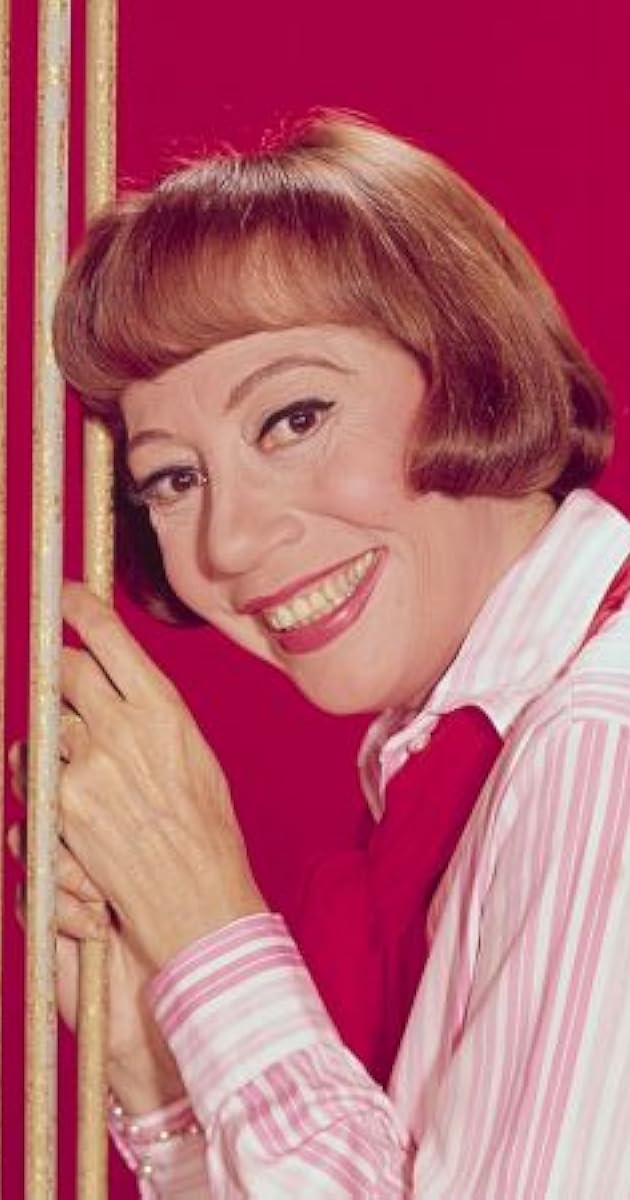
Imogene Coca: Born to Perform

After learning about Your Show of Shows last week, we are going to take a closer look at some of the forces behind the award-winning show. We begin with Imogene Coca.

Imogene Coca - IMDb
Photo: imdb.com

Imogene Coca was born Emogeane Coca in 1908. Her father was a violinist and vaudeville orchestra conductor, and her mother was a dancer and magician’s assistant.

Emogeane Fernández Coca (1908 - 2001) - Genealogy
Photo: geni.com

She began appearing in vaudeville as a child acrobat. She also took piano, dance, and voice lessons as a child. She was drawn to dance and studied ballet and moved from Philadelphia to New York to become a dancer while still a teenager. Her first job was in the chorus of a Broadway musical, “When You Smile.” For a few decades, she appeared in stage musical revues, cabaret, summer stock, and movies.

In 1935, Coca married Bob Burton. They were married until 1955 when he passed away.

Coca discussed her early career: “I never thought of myself in comedy at all. I loved going to the theater and seeing people wearing beautiful clothes come down the staircase and start to dance. I wanted to play St. Joan.”

In her forties, Coca decided to add comedian to her slate of talents, and she was a natural. In 1948 she appeared on Buzzy Wuzzy on television. If you have never heard of it, don’t feel bad. I thought it might be a kid’s show. ABC was trying to develop its network, with all of its five stations. Jerry Bergen a comedian wanted to try a variety series. This 15-minute-long show lasted only four weeks.

She might not have had an illustrious beginning, but tv was good to Imogene. For fifty years, she would appear on tv, including six shows as a regular cast member.

The Sid Caesar, Imogene Coca, Carl Reiner, Howard Morris Special (TV  Special 1967) - IMDb
Photo: imdb.com with Caesar, Reiner and Morris

In 1950 she joined the cast of Your Show of Shows, becoming a household name. She was nominated for five Emmys on the show. She won the award in 1952 and lost the other years to Gertrude Berg, Lucille Ball, Red Skelton, and Eve Arden. When discussing the chemistry that she and Caesar had, Imogene said “Two people couldn’t be less alike than Sid and myself. But we kind of know what the other one’s going to do. We pick up each other’s vibes.”

A born comedian, Life magazine described her as taking “people or situations suspended in their own precarious balance between dignity and absurdity, and pushing them over the cliff with one single, pointed gesture.” A critic at the time, said she was not the typical, loud, brash comedian and was “a timid woman who, when aroused, can beat a tiger to death with a feather.”

Pin on Imogene
Photo: imdb.com Cast members

Your Show of Shows was a great success and everyone tuned in Saturday nights to catch the latest show. Fans loved the ongoing skits such as Coca and Caesar playing the bickering couple, the Hickenloopers or a Bavarian town clock that had real life figures and broke down whenever it chimed the hour.

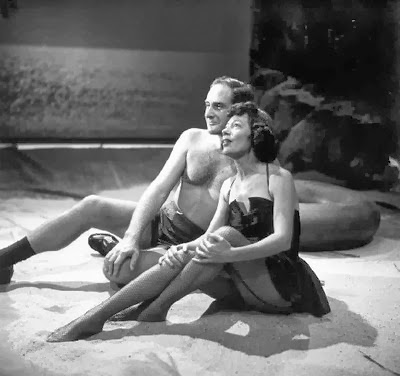
Many viewers mentioned the parodies the show did of movies. These were similar to the ones the Carol Burnett Show also did so well. Two of the scenes that came up often in viewers’ memories were the scene spoofing On the Waterfront when Marlon Brando tells his brother “I could have been a contender” and the parody of From Here to Eternity when Deborah Kerr and Burt Lancaster have a romantic moment on the beach. In Your Show of Shows version, the couple is continually hit with waves until they almost drown.

Comedy Legend Imogene Coca: I'm Cuckoo for Coca | The Scott Rollins Film  and TV Trivia Blog
From Here to Obscurity parody Photo: scottrollinsfilmandtvtriviablog

When the network chose to break up the Caesar-Coca team and give them their own shows, Coca had her own show, but it only lasted a year. For the rest of the fifties, she appeared primarily on drama shows which often aired plays.

In 1960, Imogene tried marriage a second time. She wed King Donovan and they would be together until his death in 1987.

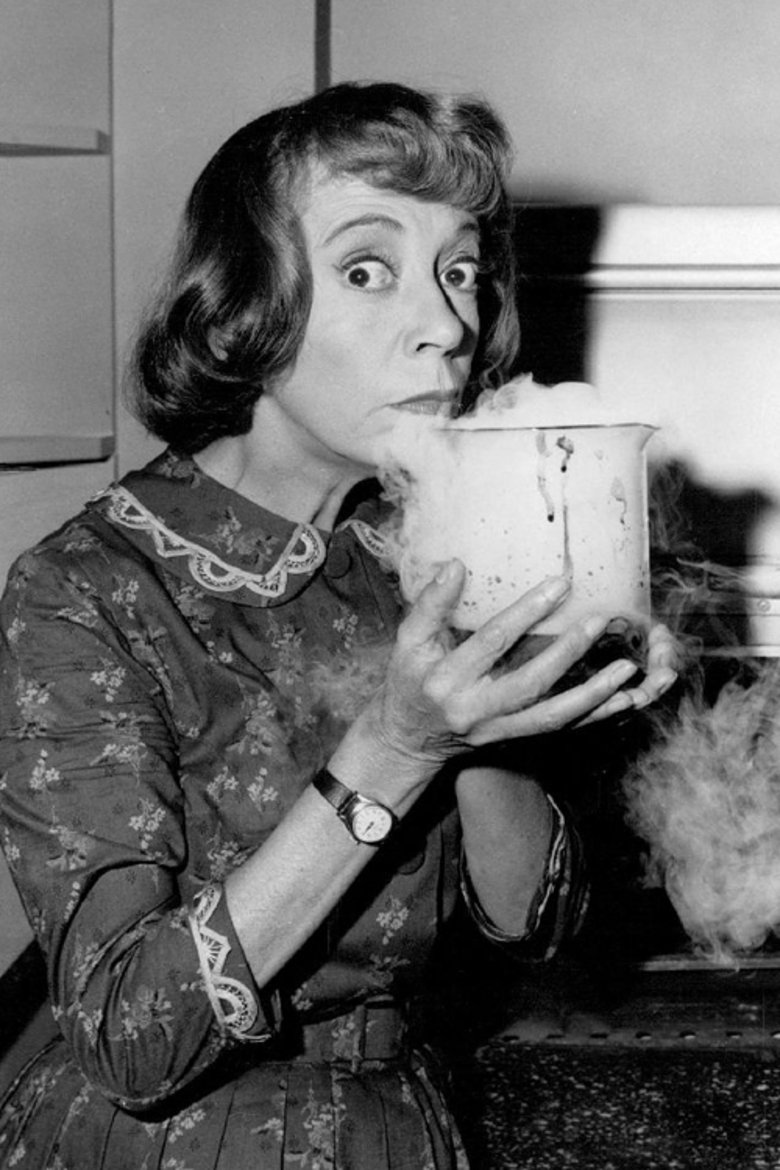
From 1963-64, she joined the cast of Grindl which also lasted only one season. Coca played Grindl. She was an employee of the Foster Temporary Service, and she worked for Anson Foster (Jim Millhollin). Grindl accepts and completes a variety of jobs including babysitter, bank teller, and theater ticket taker. Most of the assignments get her involved in some type of crime or mystery. The show was on Sunday nights between Walt Disney’s Wonderful World of Color and Bonanza which was a great spot, but it also competed with the popular Ed Sullivan Show.

Grindl - DVD PLANET STORE
Grindl Photo: dvdplanetstore.com

In 1966-1967, she jumped into another new sitcom, It’s About Time. This wacky show was created by Sherwood Schwartz and also starred Jim Millhollin. The premise is that two astronauts who were traveling faster than light end up in prehistoric Earth time and when they are unable to return, make friends with the locals living there. This show preceded The Ed Sullivan Show but then ended up competing with Walt Disney’s Wonderful World of Color.

1966-67 Television Season 50th Anniversary: It's About Time (part 3 of 3) -  YouTube
It’s About Time Photo: youtube.com

During the seventies, she appeared on many shows, including Bewitched, Night Gallery, The Brady Bunch, and Love American Style.

Her busy career didn’t flounder in the eighties. She continued to guest star on shows including Trapper John, MD and Mama’s Family. She appeared in an episode of Moonlighting which produced her sixth Emmy nomination. She would lose to Shirley Knight for thirtysomething.

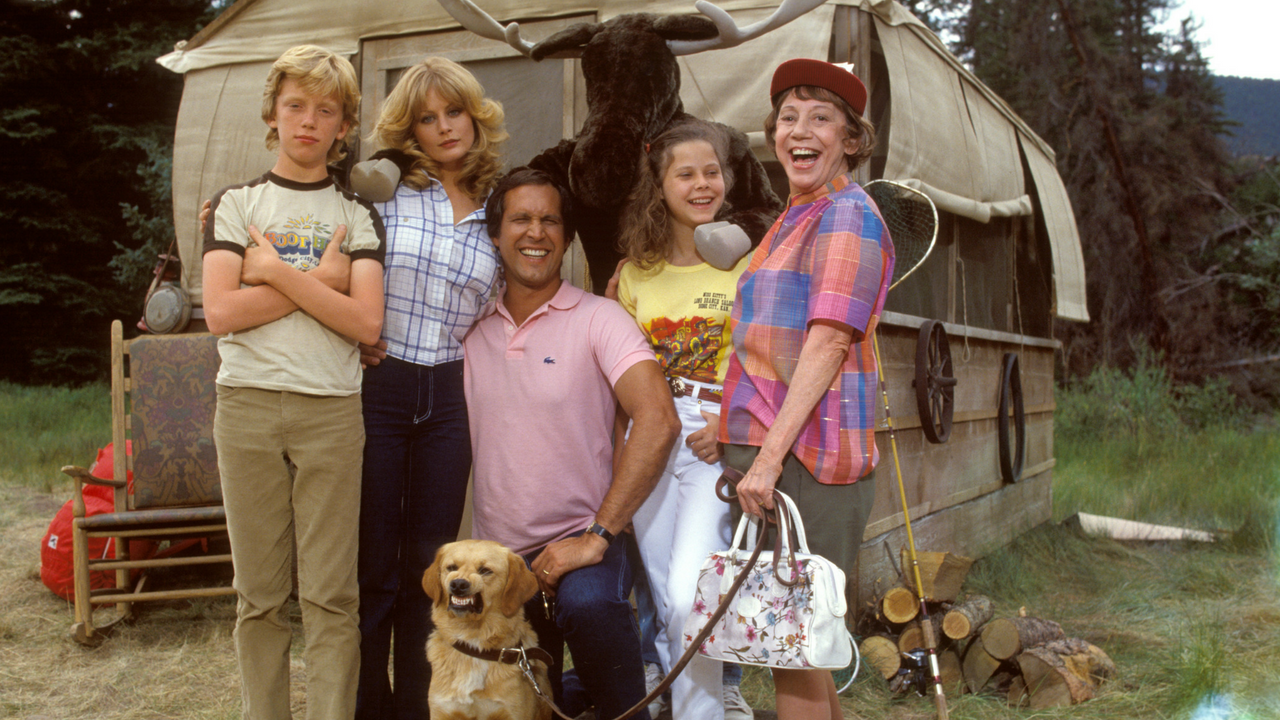
She was in movies off and on through the decades and perhaps is best known for her role of Aunt Edna in National Lampoon’s Vacation.

National Lampoon's Vacation – IFC Center
Aunt Edna in National Lampoon’s Vacation Photo: ifccenter.com

Of course, during these decades she also continued to appear on many variety and game shows. You will spot her in reruns of The Carol Burnett Show, The George Gobel Show, and Bob Hope and Dean Martin specials among other shows. She also did not ignore her early love of Broadway. She received a Tony Award nomination for “On the Twentieth Century.”

The Brady Bunch: Jan's Aunt Jenny | The Very Special Blog
On the Brady Bunch Photo: theveryspecialblog.com

In 1988 at age 80, Coca received the Lifetime Achievement Award in Comedy; her male counterpart receiving the award that year was George Burns. She was also honored in 1995 with the Women in Film Lucy Award, named for Lucille Ball.

Coca finished her career voicing characters for children’s programming. Sadly, she suffered from Alzheimer’s disease. She passed away at home in 2001. When he heard of her passing, Sid Caesar said, “All the wonderful times we shared together meant the world to me.”

Greatest Women in Comedy - Legacy.com
Photo: legacy.com

Imogene Coca was truly a special person. She had several different careers rolled into one. It’s hard to imagine that she did not begin comedy until her forties because she was one of the best. I’m sad that at the end of her life she was not able to retain the beautiful memories she gave us during her professional life. Thank you for creating a lifetime of special moments that you left for us.

The Dick Van Dyke Show: Writing At Its Best

This blog series is “It’s My Show,” about actors who featured their names in the titles of shows. I’ve definitely saved the best for last: The Dick Van Dyke Show. During the past five plus years of writing my blog, I have realized that my favorite shows are those that feature amazing writing and concentrate on relationships. This show is no exception.

Review: The Dick Van Dyke Show, “The Curious Thing About Women” | This Was  Television
Photo: thiswastelevision.com

From 1961 till 1966, this show aired on CBS, resulting in 158 episodes. Created by Carl Reiner, it was produced by Calvada Productions. Calvada was named for Carl Reiner, Sheldon Leonard, Dick Van Dyke, and Danny Thomas. The show was filmed at Desilu Studios in front of a live audience. Bill Persky and Sam Denoff wrote 29 of the episodes.

The theme song was written by the great Earle Hagen. (For more on Hagen, you can see my blog from December 10, 2018; Hagen wrote many great theme songs including The Danny Thomas Show, Gomer Pyle, I Spy, The Mod Squad, and most memorably, The Andy Griffith Show.)

The Story of Dick Van Dyke and the Ottoman – Once upon a screen…
Photo: pinterest

The opening of the show had Rob walking into the living room. In one version, he trips over an ottoman, falling on the floor. In the another, he steps around the ottoman. You never knew which opening you would see, a fun element of the show.

I love that this show realized our professional lives are equally important to our personal and family life, and this show not only featured both, but often they meshed together just like all our lives do.

Not only was Rob Petrie’s (Dick Van Dyke) work life part of the show, but he was a television writer, which provided even more insights into what we were watching. Rob writes “The Alan Brady Show” with cowriters Sally (Rose Marie) and Buddy (Morey Amsterdam). Mel (Richard Deacon) is star Alan Brady’s (Carl Reiner) producer. Buddy and Mel have an ongoing feud, insulting each other on a daily basis. (In real life, Deacon and Amsterdam were good friends and often came up with new insults when they had drinks together after work.) Reiner originally planned on starring in the show and played Petrie in the pilot, but he was persuaded to give the role to another actor by Leonard.

The Dick Van Dyke Show' Changed Television as We Know It
Moore, Van Dyke and Mathews–Photo: wideopencountry.com

Rob’s home life consisted of wife Laura (Mary Tyler Moore), son Ritchie (Larry Mathews), and neighbors/best friends Jerry and Millie Helper (Jerry Paris and Ann Morgan Guilbert). Paris directed 84 of the show’s episodes and would go on to a career as a director later.

Recap and React: The Dick Van Dyke Show, season 2, episodes 11 – 15 – The  Motion Pictures
Moore, Paris, Guilbert, and Van Dyke
Photo: motionpictures.com

In the pilot, titled “Head of the Family,” Barbara Britton played Laura, Gary Morgan played Ritchie, Morty Gunty played Buddy, and Sylvia Miles played Sally. Jack Wakefield played Alan Sturdy who was the star of the tv show.

The characters are very much like people we all know, except maybe a bit funnier. Rob loved his wife and son. He was a big fan of cowboy movies and Laurel and Hardy. He met Laura, a USO dancer, when he was in the Army as a Special Services Sergeant in Camp Crowder, Missouri. His brother Stacey appeared on the show a few times (played by real life brother Jerry Van Dyke). Richie is a typical kid who gets in trouble sometimes but is a good kid, just curious and looking to test his boundaries. Their neighbors Millie and Jerry have a son about Richie’s age, and they are their best friends; Jerry is also their dentist.

Mary Tyler Moore | Couple sleeping, Bed, Classic television
Moore, Van Dyke–Photo: pinterest.com

The only thing not realistic about his home life is that Rob and Laura have twin beds. Reiner asked the network to allow the couple to sleep in the same bed, but they would not approve it, so like most sitcom married couples, they had separate beds.  About the only couples who were able to get around the challenge were the Stephens on Bewitched and Katie and Robbie on My Three Sons. The network also didn’t love that Moore wore capri pants but they did end up allowing her to do so.

Rob’s coworkers are also endearing characters. Buddy is energetic and sarcastic. He is married to Pickles and shares a lot of jokes about some of the scatterbrained things she does. We know he is in love with Sally, but they never take their relationship anywhere other than friendship. She is often making fun of herself for looking for a man, but we realize she is very lonely. Mel is an excellent producer who puts up with a lot from both Buddy and Alan.

The Best 'Dick Van Dyke Show' Episodes, Ranked
Amsterdam, Deacon, Van Dyke, Marie, Moore–Photo: vulture.com

Van Dyke had to give up Bye, Bye Birdie to star in the show but definitely made the right choice. The role of Laura was a hard one to cast. Sixty actresses auditioned for the character. Moore almost chose not to go, and when she did, she lied about her age, making herself older than she was. Sally Rogers was based on Lucille Kallen who wrote for Your Show of Shows and Selma Diamond who wrote for Caesar’s Hour.

After the first season, CBS said they were cancelling the show. Procter & Gamble threatened to remove all its advertising and viewers complained loudly. The network didn’t need to worry about ratings in season two; the show was in the top ten by episode three and was popular for the rest of its time on air.

To color or not was a big question during the sixties. Reiner actually considered filming the show in color in the third season until he found out it would add $7000 per episode (the equivalent of about $59,000 today).

Carl Reiner, beloved creator of 'Dick Van Dyke Show,' dies | Taiwan News |  2020/07/01
Deacon, Moore, Van Dyke, Leonard, Reiner, Paris
Photo: taiwannews.com

I’m not the only one who thought this was an amazing show. The series was nominated for 25 Emmy awards and won 15 of them. Reiner won three times for writing, Van Dyke three times for acting, and Moore twice for leading actress in a comedy role.

Some of my favorite episodes are “Pink Pills and Purple Parents” (season 4) a flashback to when Laura meets Rob’s parents. She takes some anti-anxiety medicine Millie gives her. She gets a bit loopy and Rob’s mother thinks she has a drinking problem; “The Ghost of a Chantz” (season four) where Rob, Laura, Buddy, and Sally spend the night in what’s said to be a haunted cabin. Characters disappear one by one and finally we learn that Mel pranked them to test out a concept for a show called Sneaky Camera; “Coast to Coast Big Mouth” (season five) when Laura reveals on a TV game show that Alan is bald and wears a toupee. Laura bravely goes to the office to apologize; another one about Laura, “The Curious Thing About Women” (season one) when Rob writes a comedy skit about Laura’s bad habit of reading his mail. All her friends tease her after it airs, and she tries to deny it, but when a package comes to the house, she opens it and an inflatable raft opens up which she cannot put back; and finally, “That’s My Boy” (season 3) when Rob is convinced that the hospital switched their son with another boy born that day. He has to resolve this, and invites the other couple over to discuss the situation.  When Rob opens the door, he sees an African American couple, and it gets one of the longest audience laughs than any other sitcom episode.

Carl Reiner Knew TV Like the Back of His Head - The New York Times
Moore, Reiner–Photo: nytimes.com

CBS may have wanted to end the show after season one, but they did not want to end it after season five. However, the cast made the decision to quit while they were still producing high-quality shows. I appreciate that they did this. One of the saddest things for me as a viewer is when a show goes on a year or two longer than it should and the quality diminishes greatly.

I just can’t think of anything about this show that needed improving.  It had a great cast, great writers, likable characters, and a timeless quality. Sixty years after the show began, it is just as funny and easy to watch as it was then. Thank you, Carl Reiner and cast, for knowing how to make a memorable show and when to end it to keep it that way.

Car 54, Where Are You: Muldoon and Toody: The Bert and Ernie of the NYPD

Car 54, Where Are You? aired on NBC beginning September of 1961. I was surprised to learn that there are only 60 episodes in this series. The show revolves around officers Gunther Toody, Badge 1432 (Joe E. Ross) and Francis Muldoon, Badge 723 (Fred Gwynne). Their patrol car is Car 54, and they are with the 53rd precinct in New York. Toody and Muldoon are complete opposites which is why they get along so well. Toody is short, extremely talkative and not overly bright.  He’s married to Lucille (Beatrice Pons), a bit of a loud, overbearing woman. Muldoon is tall, quiet and very smart. He’s a bachelor who lives with his mother (Ruth Masters) and two younger sisters.

Photo: imdb.com

Rounding out the large cast are officers Dave Anderson (Nipsey Russell), Omar Anderson (Ossie Davis), Kissel (Bruce Kirby), Nelson (Jim Gormley), Nicholson (Hank Garrett, O’Hara (Albert Henderson), Schnauser (Al Lewis), Steinmetz (Joe Warren), and Wallace (Frederick O’Neal), as well as Captain Block (Paul Reed), Sergeant Abrams ( Nathaniel Frey), Sylvia Schnauser (Charlotte Rae), and Claire Block (Patricia Bright).

A young Nipsey Russell Photo: yahoo.com

Nat Hiken (the creative force behind The Phil Silvers Show) created the series. He wrote many of the scripts and also directed several episodes, one of which he won an Emmy for. The show was nominated for three other Emmys. It was up for Outstanding Program Achievement in the Field of Humor in 1961 which went to The Bob Newhart Show (not that Bob Newhart show, this was a variety show hosted by Newhart) and for Outstanding Writing Achievement in Comedy in both 1961 and 1962 but got beat out both years by Carl Reiner for The Dick Van Dyke Show.

As recounted in Martin Grams, Jr.’s book Car 54, Where Are You?, after visiting a New York police precinct house and noticing what a communal feel it had, unlike any of the depictions of police on television, Hiken came up with the idea for a police-themed situation comedy. He continued to do research by spending weeks in a precinct squad room during late 1960, getting a feel for how the officers talked and interacted amongst each other, members of the community, and even repeat offenders, who were often treated more like family than threats. Hiken enlisted the support of Eupolis Productions and then pitched the idea to Proctor & Gamble, who agreed to finance a pilot.

Fred Gwynne and Al Lewis were coworkers before they were relatives Photo: shoutfactorytv.com

According to Kliph Nesteroff in the definitive account of Joe E. Ross’ tawdry life off-screen, “King of Slobs: The Life of Joe E. Ross,” Hiken originally wanted to cast Jack Weston in the role of Gunther Toody (televisionheaven.co.uk says it was Jack Warden) and Mickey Shaughnessy as Francis Muldoon, but contract negotiations broke down with both, so he turned to Ross and Fred Gwynne as suitable replacements, though in Ross’ case he later regretted it.

John Strauss who had collaborated with Hiken on the theme song for The Phil Silvers Show, teamed up with Hiken once again for this theme. Strauss was married to Charlotte Rae, who appeared on the show. Strass was the composer, and Hiken wrote the lyrics. The familiar theme song is:

There’s a hold-up in the Bronx,

Brooklyn’s broken out in fights;

There’s a traffic jam in Harlem

That’s backed up to Jackson Heights.

There’s a scout troop short a child,

Khrushchev’s due at Idlewild,

Car 54, where are you?

The show was originally titled “The Snow Whites.” (Maybe because the sponsor made Chlorox bleach.) The show was given a great time slot on Sunday nights between Walt Disney’s Wonderful World of Color and Bonanza. The producers thought the working title would confuse viewers since the show followed Disney. Since the theme song was already written, the last line of the song became the show’s title.

Critics were split on the show. While many people praised the series, some reviewers considered it disrespectful. The Chicago Sun Times deemed it “a preposterous (and sometimes cruel) depiction of the policeman.” The Dallas Times Herald stated, “The humor might be there, all right, but not much of it was showing.” The Alabama Journal complained, “It is insulting to the law enforcement and to the general public.” However, many policemen liked the show and found it funny.

The show was filmed at Biograph Studios in the Bronx and on location. The cars were painted bright red and white which photographed perfectly. There is some controversy about the patrol cars. Some articles listed them as Savoys, some as Dodges. According to Martin Grams blog from May 4, 2012,  “On June 29, 1961, Arthur Hershkowitz signed the contract and during the first week of July, the following four automobiles were delivered to Eupolis Productions”: two 1961 Plymouth Belvederes, one Dodge Dart, and one Plymouth, all four-door sedans. Grams said “the cars were returned to the dealership and when the show was renewed for season two, the following cars were delivered”: two 1962 Plymouth Belvederes, three 1962 Plymouth Furys, one 1962 Dart 330, and a 1962 Chrysler New Yorker.  One article I read said that the large circular object on the dashboard between the officers was an auxiliary fan used before air conditioning was available.

Despite the success of Car 54, which placed 20th in the ratings for 1961-62, Hiken soon began to feel overwhelmed with his responsibilities.  Apparently, NBC wanted part ownership in the show in exchange for renewing it for season three, and Hiken would not agree to the deal. The show’s sponsor Proctor and Gamble tried to talk CBS into taking the show over, but there was no room on their schedule. Hiken was a bit burnt out with writing, directing, and overseeing the show and was exasperated with Ross who caused a lot of issues not remembering his lines, so Hiken ended the show and never worked on another series again.

Considering the short time that the show was on the air, there was a full slate of guest stars including Carl Ballantine, Tom Bosley, Wally Cox, Hugh Downs, Margaret Hamilton, Katherine Helmond, Hal Linden, Mitch Miller, Charles Nelson Reilly, Sugar Ray Robinson and Jean Stapleton.

The episodes are well written and similar to other sitcoms at the time.

Photo: shoutfactory.com

In one, Toody is feeling henpecked by Lucille, but musters the courage to become king of his castle after seeing a stirring performance of Shakespeare’s “The Taming of the Shrew.”

In another, Muldoon shares a childhood experience when the kids at school called him “Horse Face.” Toody, trying to console him, says “Don’t worry Francis, kids just repeat what other people say” and later added “After all, Francis, everybody liked Black Beauty.”

One script has Toody working an undercover detail in Brooklyn with a female cop posing as his wife and a small boy as his child. When his wife’s sister spots him, the rumors begin.

Even though there were only 60 episodes, the show went into syndication in 1964. It was one of the staples on Nick at Nite in the 1980s, aired on Comedy Central in the 1990s, and a few years ago it could be seen on both MeTV and Decades. The show came out on DVD in 2011 and 2012.

Like any show that was even somewhat successful, the show had a film made based on the series in 1994. The big screen version starred John C. McGinley as Muldoon, David Johansen as Toody, Rosie O’Donnell as Toody’s wife Lucille and Fran Drescher as Velma Velor. Not surprisingly, it was a dud. One reviewer said it “was one of the worst movies to ever come out of Hollywood.”

One fun fact I learned doing research for this blog was that this show was William Faulkner’s favorite tv show. He hated television but visited a friend’s house weekly to watch the show.

Photo: amazon.com

This show debuted during the decade when merchandising was a big part of every show. There were at least six comic books based on the show. There was a board game, puppets of Toody and Muldoon, and a car model.

The show was funny in its prime, but I’m not sure it holds up as well today as other shows from the sixties. However, two seasons of DVDs is not a large investment, so check out an episode on youtube and see what you think.

Jeopardy: What is My Favorite Game Show?


Three games shows have been around for a majority of my life: The Price is Right, Wheel of Fortune, and Jeopardy. As a fan, I think most viewers fall in one of the three camps. I am definitely in the Jeopardy camp.

The Back Story of Jeopardy

The original Jeopardy was created by Merv Griffin in 1964. On the site, mervgriffinabc.blogspot, a story is included where Merv explains how Jeopoardy was created: “My wife Julann just came up with the idea one day . . . She noted that there had not been a successful “question and answer” game on the air since the quiz show scandals. Why not do a switch and give the answers to the contestants and let them come up with the question? . . . I loved the idea, went straight to NBC with the idea, and they bought it without even looking at a pilot show.”

jeop22stl

Photo: stl.com

It was hosted by Art Fleming and ran until 1975. While Jeopardy’s format of giving contestants the answers and requiring them to provide the answer is unique, it was not the first tv game show to do that.  Television Quiz, airing in 1941-1942, also used this structure.
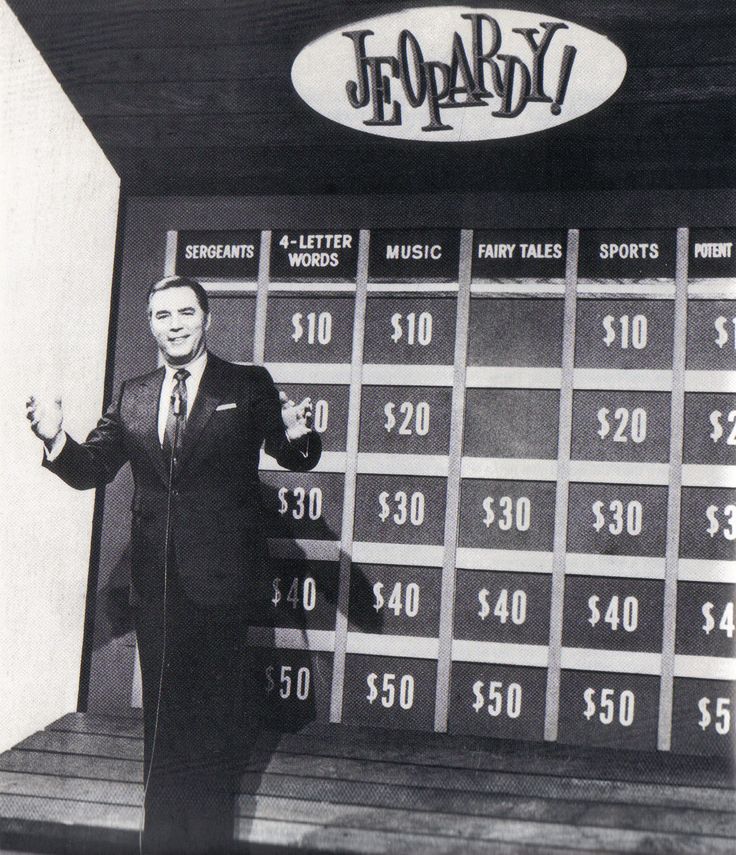
jeopcpinterest

Photo: pinterest.com

A nighttime syndicated show was on in the evenings from 1974-1975. Don Pardo was the announcer for both the original and the nighttime show. John Harlan was hired as the announcer for a show titled The All-New Jeopardy which aired in October 1978 and ended in March 1979.

In September of 1984, the current version hosted by Alex Trebek (whose real name is George), began and continues today. Johnny Gilbert has partnered with Alex as announcer during the show’s run. The current version has produced more than 7000 episodes, just in case you wanted to watch them before you audition. Five shows are taped a day for 46 days. That would be a fun job to have with lots of time to recharge every year.

jeopfjohnnygilbert.tv

Photo: johnnygilbert.tv

When I was in college in the mid-1980s, I remember listening to a radio show on Sunday nights from St. Louis that Art Fleming hosted and, as I remember it, it was very similar to Jeopardy.

Jeopardy has won a record-setting 34 Emmys. It also won the Peabody Award in 2011 for “decades of consistently encouraging, celebrating and rewarding knowledge of this, that and the other.” It has won several other awards including the Writers Guild of America Award in 2014.

The Rules of the Game

While there have been a few changes to the Jeopardy format over the years, the game has remained basically the same. Three contestants answer questions. Whoever buzzes in first is allowed to answer. Until 1985 contestants could answer as soon as the clue was revealed. In September of 1985, it was required that the contestant not hit the buzzer until the clue is read. The Jeopardy round has a clue where the contestant can bet an amount of their money, or up to $1000 if they have less than that amount. In the Double Jeopardy round, there are two clues available and players can bet up to $2000 or the amount of money they have.

A contestant chooses from categories of clues. Each of the clues vertically increases in monetary value. The second round, Double Jeopardy, features six new categories of clues. Clue values are doubled from the Jeopardy round.

jeop1

The Final Jeopardy round features a single clue. Contestants write their wagers using a light pen to write on an electronic display on their lectern. The contestants have 30 seconds to write their responses, while the show’s iconic “Think!” music plays in the background. In the event that either the display or the pen malfunctions, contestants can use an index card and a marker to manually write their response and wager.

The contestant with the highest score at the end of the round is that day’s winner. If all three contestants finish with $0, no one returns as champion for the next show. The second and third place winners receive a small amount of money.  The top scorer(s) in each game retains the value of the winnings in cash and return to play in the next day’s show. If there is a tie, both players can come back the next day.

Seven times a show has ended with no winner. Three new contestants then show up the next day.

The Clue Crew

jeopemaximumfun.org

Photo: maximumfun.org

In 2001, the Clue Crew was formed. They travel around the world to tape clues. More than 5000 people applied for the three positions. The current crew is comprised of Sarah Whitcomb, Joe Cannon, and Kelly Miyahara. The team has been to more than 280 cities, including all 50 states and 44 other countries.

The Writers

Nine writers and five researchers create the categories and clues for Jeopardy.

You’ve Probably Hummed the Theme Even if You Don’t Watch the Show

Since the debut of Jeopardy in 1964, several different songs and arrangements have served as the theme music for the show, most of which were composed by Griffin. The main theme for the original Jeopardy series was “Take Ten” composed by Griffin’s wife Julann. The best-known theme song on Jeopardy is “Think!” originally composed by Griffin under the title “A Time for Tony”, as a lullaby for his son. “Think!” has always been used for the 30-second period in Final Jeopardy when the contestants write down their responses, and since the syndicated version debuted in 1984, a rendition of that tune has been used as the main theme song.

jeop2youtube

Photo: youtube.com

Even Game Shows Have Spin-offs

In addition to the daily show, three other versions of Jeopardy have been created: Rock & Roll Jeopardy which was on VH1, Jep! which was on the Game Show Network, and Sports Jeopardy! hosted by Dan Patrick.

More Than Fifteen Minutes of Fame

Ken Jennings holds the record for the longest appearance on Jeopardy, June 2 – November 30, 2004. He won $2,520,700.  Many people have studied Jennings’ streak and determined that due to filming fatigue, no one is likely to break his record.

The highest earner is Brad Rutter who won $4,355,102 between his first appearances and his tournaments. Roger Craig has the all-time record for a single day of winning. In 2010, he won $77,000.

AP TV-JEOPARDY TOURNAMENT A ENT FILE USA CA

Photo: usatoday.com

Julia Collins who was on in 2014 holds the record for female both for number of games and total winnings. She won $429,100.

Another famous contestant is buzz kill Arthur Chu. He was the first contestant to consistently skip around the board trying to find the daily doubles. Since Chu’s appearance, many contestants have jumped around the board instead of trying to run the categories from top to bottom. Often the categories can be understood better if contestants pick them in order. Personally, I admit that I did hold a grudge against Chu for many years for “ruining” Jeopardy.

Watson, I Presume

jeopwatsonyoutube

Photo: youtube.com

The IBM Challenge aired February 14–16, 2011, and featured IBM’s Watson computer facing off against Ken Jennings and Brad Rutter in a two-game match played over three shows. Watson won both the first game and the overall match to win the grand prize of $1 million, which IBM divided between two charities (World Vision International and World Community Grid). Jennings, who won $300,000 for second place, and Rutter, who won the $200,000 third-place prize, both pledged to donate half of their winnings to charity.

Tournaments

During the most recent version of Jeopardy, various tournaments have been held annually. Currently, there is a Tournament of Champions featuring the top fifteen winners from the past year, The Teen Tournament, The College Championship, Celebrity Jeopardy, and the Teachers Tournament.

jeop8berkeleyside

Photo: berkeleyside.com

Portrayals and Parodies

Jeopardy has been part of several television shows and movies over the years. In 1988, a show titled “Mama on Jeopardy” featured Thelma Harper (Mama’s Family) competing on the show when Iola was rejected. She doesn’t know many answers but starts to make a comeback and is able to move into Final Jeopardy. She ends up in second place but wins a trip to Hawaii for herself and her ungrateful family.

In 1990, an episode titled “What Is . . . Cliff Clavin?” aired on Cheers. Cliff appears on Jeopardy and wins $22,000, way more money than his competitors have. However, for Final Jeopardy, Cliff bets everything. The answer is “Archibald Leach, Bernard Schwartz, and Lucille LeSueur” and the correct question is “What are the real names of Cary Grant, Tony Curtis, and Joan Crawford,” but Cliff’s answer is “Who are three people who have never been in my kitchen” and he ends up with no money.

jeop23metv

Photo: metv.com

In 1992 on the Golden Girls in “Questions and Answers,” Dorothy auditions but is rejected because they don’t think she’s likable enough for the viewers to root for her. She has a dream that night where she does appear, competing against Rose and neighbor Charlie.

jeop21imdb

Photo: imdb.com

Perhaps the most famous show to host Jeopardy was Saturday Night Live with their version.

Happy New Year

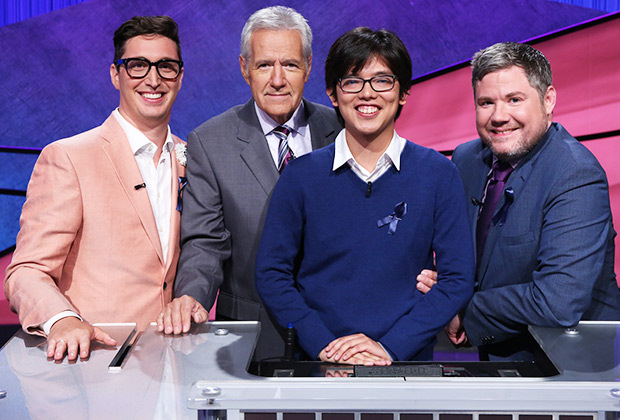
In honor of its 35th anniversary, Jeopardy is holding a special All-Star tournament this year. Six teams will compete in February during a two-week period. Some of our favorite contestants will be part of the celebration. Captains were chosen and they each drafted their own team. Captains include Buzzy Cohen, Colby Burnett, Julia Collins, Austin Rogers, Ken Jennings, and Brad Rutter. This should be a fun couple of weeks.

I admit these three were my favorite contestants during a tournament. This was a fun couple days. One of my favorite moments was during the introduction of the contestants when they portrayed See No Evil, Hear No Evil,  Speak No Evil. (Buzzy Cohen, Alex Trebek, Alan Lin, Austin Rogers)
 jeopbtvline.coom

Photo: tvline.com

Will You Marry Me?

One of the contestants in 2018 was Michael Pascuzzi. When it came time for Alex to talk with the contestants after the first commercial break, he announced he had no information on his card about Pascuzzi. So, Alex told him to say whatever he wanted. He then proposed to his girlfriend, Maria Shafer, who was in the audience. She must also be a fan, because not only did she say yes, she answered “What is yes.”


To Be-ard or Not to Be-ard

bearddailymail.co.us

Photo: dailymail.co.uk

Of course one of the most asked questions at the beginning of each fall season is will Alex have the mustache or not. This year, Alex took it a step further. He began the year with a full beard in addition to the mustache and let viewers decide whether it was a keeper or gotta go. Spoiler alert: You will only see the beard for a few shows.


jeop3dailymotion

Photo: dailymotion.com

So, You Want to Be on the Show

Auditioning for the current version of the show begins with a written exam, comprising fifty questions in total. This exam is administered online periodically, as well as being offered at regional contestant search events. If you have considered auditioning for Jeopardy, here is what you should know. I took these paragraphs directly from the Jeopardy site:

“First, you must take and pass the online test. If you pass the test and meet the minimum eligibility requirements, you will be placed into a random selection process for an invitation to an audition. Assuming you perform well at the audition, you will be placed into the contestant pool and could be invited to compete up to 18 months from your audition date. Making it to an audition is not a guarantee of being invited to compete on the show.

There is no fee to take any of the tests, but any costs you incur in connection with the test are your responsibility. Likewise, if you are invited to participate in an in-person audition, all costs (including, but not limited to, accommodations, meals, transportation and parking) must come at your own expense.

If you pass the test and do well at your audition, you will be placed in a pool of potential contestants for 18 months after your audition date. But attending an audition and being put in the pool does not guarantee that you will be invited to appear on the show. If you are selected to compete on the show, our contestant coordinators will contact you with full details. Prospective contestants are notified about a month in advance of their tape date.”

What is My Favorite Jeopardy Story?

Some of the most entertaining parts of Jeopardy are when Alex talks to the contestants. I remember one woman who was in Yellowstone and while the rest of the family was taking a class about what to do if bears show up, her mom was alone at the campsite with several bears. One lady said she and her mom learned Swedish because they loved Abba songs. One guy said he met his wife because she came over and introduced herself. Later he found out, she did that because she thought he was very smart and talking about philosophy because she heard him discussing Plato. He had to inform her they were discussing play-doh, nothing enlightening. One poor girl said her parents got pregnant late in life and could not decide on a name. Her mom asked her bridge club for suggestions. She ended up taking the first letter from each of their names and calling her daughter “Pidge.”

brooksyoutube

Photo: youtube.com

One of my favorite facts about Jeopardy was discovered on a Seinfeld episode of Comedians in Cars Getting Coffee, but it has also been discussed on the show.  Mel Brooks and Carl Reiner get together every night for dinner to watch Jeopardy. Watching an episode with them is definitely on my bucket list.

There are a lot of shows that made me sad when they left the air, but when Jeopardy is cancelled, I will go into a major withdrawal. Like so many Jeopardy fans, it’s a multi-generational interest. my son Brice and daughter-in-law Melanie and I share many texts about watching Jeopardy shows and how we feel about categories or contestants. For my entire life I’ve counted on people dying, paying taxes, and watching Jeopardy. I can give up the first two, but the last one is gonna be a challenge!
 

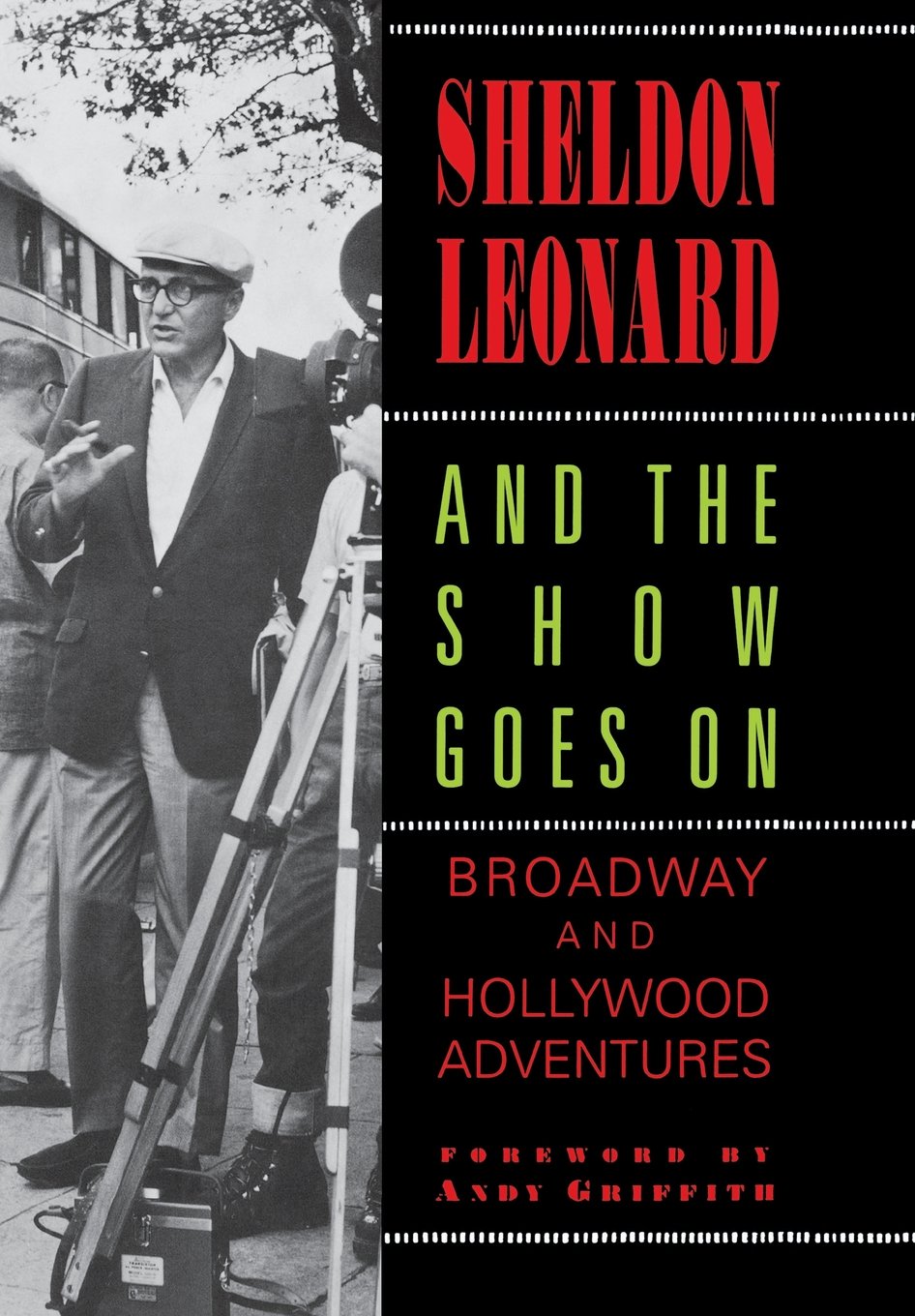
Sheldon Leonard: A True TV Pioneer

leonard4

The Depression changed the course of Sheldon Leonard’s life. He was born in Manhattan to Jewish parents. He went to Syracuse University on an athletic scholarship. While there, he was president of the dramatics club. His degree was in finance, and he landed a job at a prestigious brokerage firm. Then the Depression hit, and he was out of a job. He had to fall back on the only other skill he could think of which was acting.

In 1931 he married Frances Bober whom he was married until his death. They would have two children.

Acting was not quick money either though. It took five years until he landed his first major Broadway role in Hotel Alimony in 1934. It did not have a long run, but his next two shows were more successful: Having a Wonderful Time in 1937 and Kiss the Boys Goodbye in 1938.

leonard7

He then entered film work. He had several very small roles in a couple of movies and a couple of shorts, but in 1939 he was cast in Another Thin Man, the popular movie series with William Powell and Myrna Loy. That began his career as a heavy, often being cast as a gangster. He would appear in To Have and Have Not with Bogie and Bacall in 1944. In 1946 he was cast as the bartender in It’s a Wonderful Life with Jimmy Stewart and Donna Reed. Because it has become a Christmas staple, it has brought Sheldon a lot of recognition. Sheldon would appear in 74 movies during his career, 69 of them by 1952.

leonard2

During this time, he also gave radio a try. He was working on both sides of the mic. He sold scripts to several shows including Broadway is My Beat. He also portrayed his stereotyped gangster role on many shows including as Grogan on The Phil Harris, Alice Faye Show. You could hear him on Jack Benny, Burns and Allen, Bob Hope, Duffy’s Tavern, the Halls of Ivy, and The Judy Canova Show, among others.

sheldon6

Photo: radiospirits.com

It was only a matter of time before Sheldon took his talents to television. He appeared in four episodes of Your Jeweler’s Showcase in 1952. In addition, he was listed as producer and director for several of these episodes. He appeared in I Love Lucy in 1953 as vacuum salesman Harry Martin and several I Married Joan episodes in 1952-53. One of my favorites was his role as Johnny Velvet on Burns and Allen when he kidnaps Gracie but takes her back because she drives him crazy. In 1954 he co-starred in The Duke which lasted 13 episodes.  This show featured an artistic boxer who leaves the ring to open a nightclub. Sheldon also directed the pilot as well as some early episodes of Lassie and The Real McCoys.

leonard14

However, the show that made him a household name was his director/producer role on Make Room for Daddy, Danny Thomas’s hit sitcom. The show was in the top ten, and Sheldon even found time to appear on the show 19 times. The show continued from 1953-1964. Leonard had found his sweet spot. During his career, he would direct and produce shows such as The Dick Van Dyke Show, The Andy Griffith Show, Gomer Pyle USMC, and I Spy.

sheldon4

Sheldon convinced Carl Reiner to step back from acting as Rob Petrie and produce The Dick Van Dyke Show. That conversation resulted in Dick Van Dyke accepting the role, leading to 158 episodes. If you watch carefully, you will notice Sheldon appearing twice on the show in minor roles. The show was nominated for 25 Emmys and won 15.

leonard12

Sheldon also is credited with creating the spinoff. One of Danny Thomas’s episodes was set in North Carolina where he gets picked up for speeding in a rural town and has a run-in with Sheriff Andy Taylor. This episode turned into the long-running The Andy Griffith Show which was on the air from 1960-1968 netting 249 episodes. The show won 6 of the 9 Emmys it was nominated for.

sheldon3

The spinoff was so successful he did it again, moving Jim Nabors as Gomer Pyle from the gas station attendant on The Andy Griffith Show to his own show, Gomer Pyle USMC. That show was on the air for five years (150 episodes), and Sheldon would also make an appearance there as Norman Miles.

Thomas and Leonard as L&T Productions were also behind the The Joey Bishop Show and The Bill Dana Show. Thomas and Leonard’s shows were notable for emphasizing characters and relationships over slapstick or situation comedy. You cared about the characters even when they were a little kooky like Gomer Pyle or Barney Fife. They were committed to high-quality scripts. Many of the writers they employed went on to successful shows of their own including Danny Arnold for Barney Miller; Garry Marshall and Jerry Belson for The Odd Couple, Happy Days, and Laverne and Shirley, Mork and Mindy; and Bill Persky and Sam Denoff for That Girl and Kate and Allie. L&T Productions ended in 1965.

leonard9dga.org

Photo: dga.com

In the mid-1960s Sheldon produced I Spy. He cast Bill Cosby and Robert Culp as secret agents.  This was the first series to star a black actor in a lead role. In a March 7, 2016 Modern Times article, David Fantle and Tom Johnson discussed Sheldon Leonard and I Spy. Leonard said he knew what he was doing. “Race was very much an issue at that time,” he said. “I was intellectually conscious of it, but emotionally unaware of it. When I say emotionally unaware, I mean I was free to think of Cosby as the man to fill the slot I needed. Intellectually I knew the problems I’d have to face to get him on the air.” I Spy was a humorous suspense show and was known for its exotic locations, filming in countries such as Hong Kong, England, Morocco, France, and Greece among others. The critics rewarded Leonard. The show was nominated for Outstanding Dramatic Series Emmy every year of its three-year run and earned Leonard an Emmy nomination for directing in 1965.

sheldon7

Sheldon was also the producer behind Accidental Family and Good Morning World, both shows debuting in 1967 and ending in 1968 and My World and Welcome to It in 1969. Accidental Family was about a widower who is a stand-up comedian. He buys a California farm which is managed by Sue Kramer who is also his son’s governess and his love interest. Good Morning World was about morning disc jockeys in LA. One is happily married, and one is a ladies’ man. Goldie Hawn was the next-door neighbor and Billy De Wolfe was their boss. On My World and Welcome To It, John Monroe is a married man with a daughter. He frequently daydreams and fantasizes about life. This show was unusual in that it included some animation along with the live action.

sheldon9

In the Fantle and Johnson article referenced above, Leonard also talked about his favorite sitcom. He said his favorite might be the one that needed the most attention. “My favorite show was cancelled after the first year. My World and Welcome to It, based on the writings of James Thurber and starring William Windom. It won every award, and they cancelled . . . It was satire and above their (the network bosses’) heads. That show and I Spy are my favorites.”

In the early 1970s Sheldon would produce From a Bird’s Eye View and Shirley’s World. From a Bird’s Eye View was a sitcom about two stewardesses, Millie from England and Maggie from America. Millie was always getting into mischief and Maggie bailed her out. Shirley’s World starred Shirley MacLaine as a photographer who travels the world for her London-based magazine. The locales were similar to I Spy.

leonard3bigeddie

In 1975 Sheldon starred in a new sitcom, Big Eddy which only lasted for ten episodes. He was Eddie Smith was the owner of the Big E Sports Arena in New York. He was an ex-gambler fighting the impulse to get back into it. He has a bunch of eccentric people in his life including his ex-stripper wife Honey and their granddaughter Ginger.

In the 1980s, Sheldon would continue to show up on various television shows, appearing in Sanford and Son, The Cosby Show, Matlock, Murder She Wrote, and Cheers.

Along with author Mickey Spillane, Leonard was one of the first two people to become a Miller Lite spokesman. In his New York accent, he tells the audience, “I was at first reluctant to try Miller Lite, but then I was persuaded to do so by my friend, Large Louis.”

Sheldon Leonard passed away at the age of 89 in 1997. His wife Frances passed away in 1999.

leonard1

Sheldon Leonard is undoubtedly one of the greatest television producers. Most of his shows were consistently in the top ten. They are classic shows still on the air today.  Sheldon required scripts that brought characters to life. He created spinoffs when he believed in the characters. He was not afraid to take risks. Besides casting Bill Cosby, he cast Lois Nettleton as divorced Sue Kramer on Accidental Family. This was in the mid-1960s and yet when Mary Tyler Moore’s show aired in 1970, the network refused to allow her to be a divorced character.

In the Mercurie Blogspot from November 10, 2013, Carl Reiner discussed Leonard: “Sheldon has mentored more people in our business than anyone else I know. He knew how to teach what he knew, and what he knew was situation comedy with the three-camera technique. Sheldon was a producing genius who understood comedy. He had four or five shows going, but he would walk in and give his intelligence and his time to every script that was being read for the week. And we always came away with a better script because we would discuss and argue and come to a better situation.”

sheldon5

Garry Marshall was also quoted in this same article: “Sheldon was a sort of man’s man, yet he had all the creative sensitivity of the artist. No matter what story you were working on, he could help you fix it. He would never put down your idea. If I had to describe Sheldon in one word, it would be gentleman. He was a Renaissance man with a New York accent—and possibly a gun!”

The Herb Garden Germination

Photo: americanprofile.com

As a salute to Leonard, the writers of The Big Bang Theory, named their main characters Sheldon and Leonard in honor of Sheldon Leonard.

sheldon1

Sheldon himself seems to explain his success best. After working on his memoir in 1995, And the Show Goes On: Broadway and Holiday Adventures, he said “I was driven by an urge to survive and being very self-indulgent. I never did anything for very long that I didn’t like or enjoy. I would survive only on my own terms. I had to enjoy what I was doing, and I would have done what I did even if nobody paid me. That’s the secret of success in any business: do it well and enjoy doing it.”

leonard11

He did it all well, and we all enjoyed it.