Jo Anne Worley: What a Character

📷imdb.com

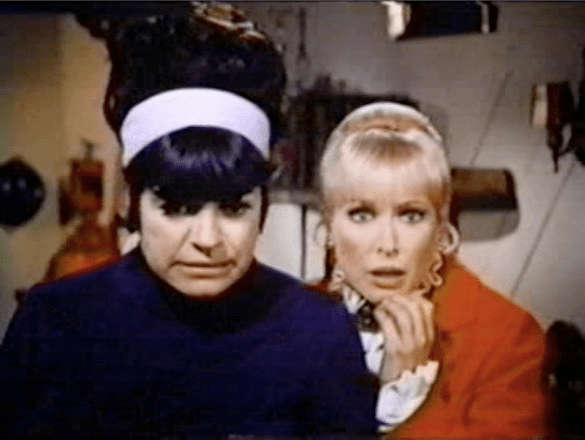
We are winding up a blog series about Supportive Women. One of the women I wanted to include was Jo Anne Worley. I didn’t know much about her apart from her appearances on Rowan & Martin’s Laugh-In and being in my favorite made-for-television movie, The Feminist and the Fuzz.

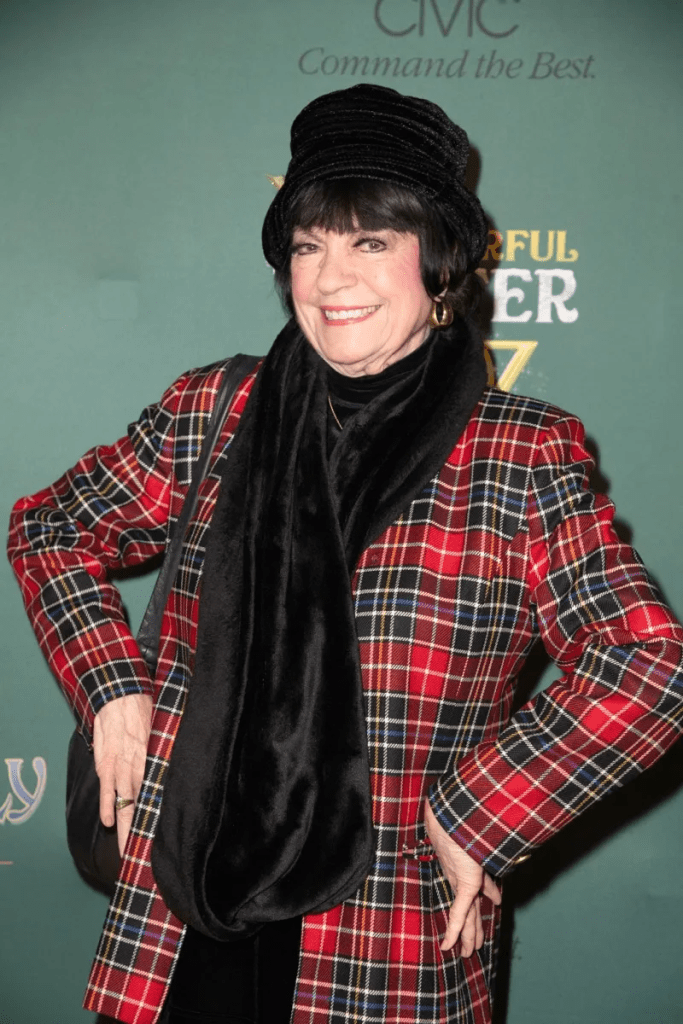
Jo Anne was born in 1937 in Lowell, Indiana. Her loud voice was not an acting tool. She always felt she was loud. She said, “I have a big mouth, and I’m sorry to say I’ve always had one. When I was young, in church, I never sang with everybody else. I only mouthed the hymns, so I wouldn’t drown anyone else out. I have my quiet moments. But I don’t have many.” She was named school comedienne at her high school.

In one interview with a Lowell reporter, she said “I’ll never forget the place I’d work every summer while in high school. It was called Robert’s Hotel, Gas and Café, and it was at the intersection of US 41 and Highway 2. They had an old juke box in the café where I worked, and I’d sing and joke around whenever the business was slow, which seemed like most of the time.”

After graduation, Worley moved to Blauvelt, New York to work with the Pickwick Players. She was later offered a scholarship to Midwestern State University in Wichita Falls, Texas. After two years at the school, she moved to Los Angeles City College and enrolled at the Pasadena Playhouse. Her first musical role was in “Wonderful Town.”

📷hellodolly.com

In 1961 she was in the off-Broadway musical show “Billy Barnes Revue” with Charles Nelson Reilly and Larry Hovis (who was Carter on Hogan’s Heroes). The original show in 1959 featured Bert Convy, Joyce Jameson, Patti Regan, Ken Berry, Ann Guilbert, Jackie Joseph, and Len Weinrib.

Jo Anne was in two episodes of The Many Loves of Dobie Gillis in 1961-2. During the rest of the sixties, she was offered several big-screen roles.

In 1964 she was given a role in “Hello, Dolly.” A year later she developed her own comedy and singing act in Greenwich Village where she was discovered there by Merv Griffin.

📷palmspringslife.com Laugh-In

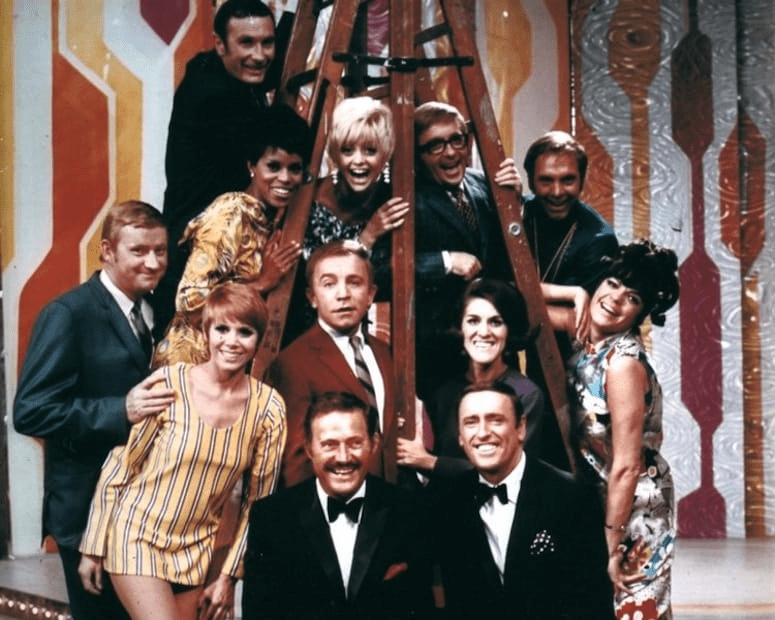
Griffin encouraged her to appear on his show which she did forty times. Like Marcia Wallace, who we learned about last week, her appearance on Merv Griffin was seen by someone who recommended her for a new show. In this case, George Schlatter cast her in Rowan & Martin’s Laugh-In.

Worley left the show in 1970. She made guest appearances on The Tonight Show Starring Johnny Carson. She also appeared on several game shows, including Super Password, Hollywood Squares, and many versions of Pyramid.

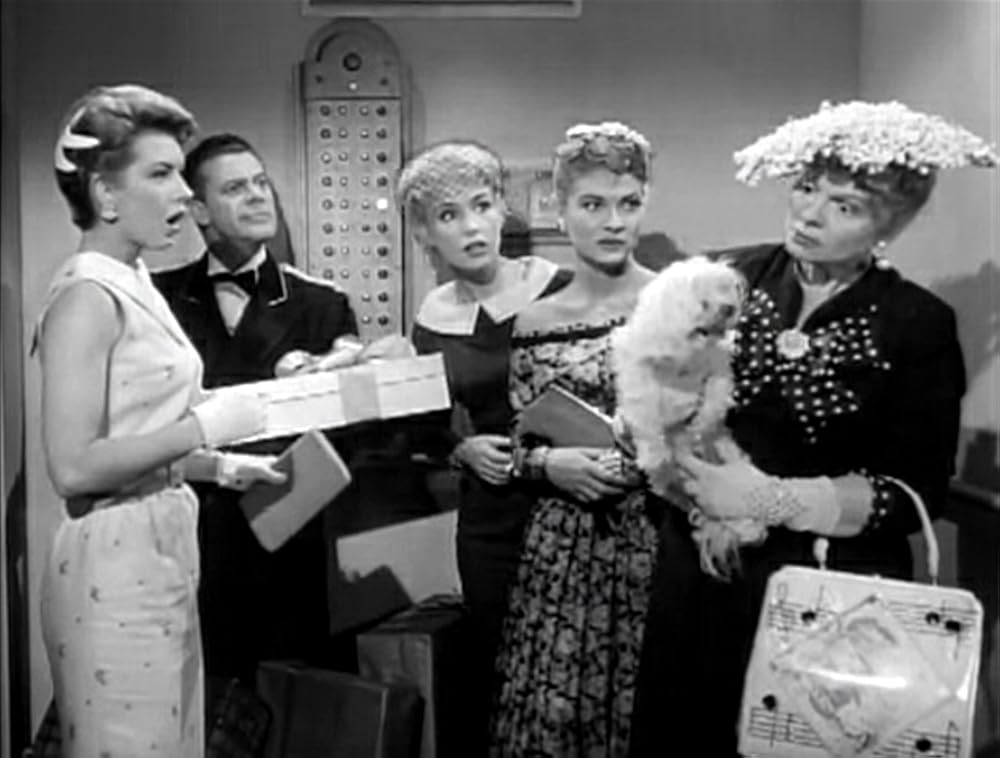
In 1971 she made the television movie I discussed above, The Feminist and the Fuzz. It starred David Hartman, Barbara Eden, Farrah Fawcett, Worley, Julie Newmar, and Henry Morgan. I would love to see it again.

For most of her career, Worley would be providing voices for animation. However, she appeared in a handful of shows during the seventies and eighties, including Adam 12, Love American Style, Hawaii Five-0, CHiPs, Murder She Wrote, The Love Boat, Mad About You, Curb Your Enthusiasm, and The Middle.

📷modcinema.com Feminist and the Fuzz

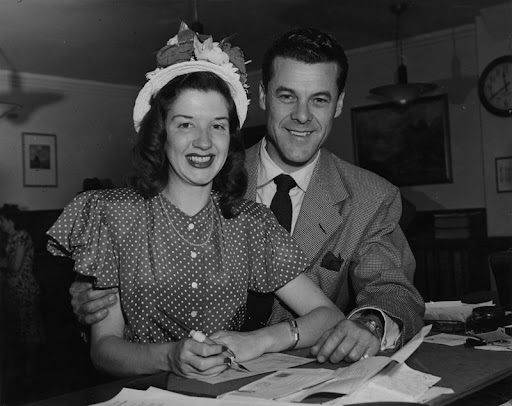
In 1975, Worley married Roger Perry. They would stay together for 25 years, divorcing in 2000. Perry has 95 acting credits and appeared in many popular shows in the seventies, eighties, and nineties. He was also in The Feminist and The Fuzz. After divorcing Worley, he would marry actress Joyce Bulifant.

During the seventies and eighties, Worley did a lot of regional theater in Milwaukee and several cities in California.

In the 1990s she got involved with Disney and provided her voice for Beauty and the Beast and A Goofy Movie. She also was on several Disney series including Kim Possible and the Wizards of Waverly Place.

📷bestlife.com

She was in a limited run of a musical production of “The Wizard of Oz,” playing the wicked witch of the west in 1999. In 2007, she appeared on Broadway as Mrs. Tottendale in “The Drowsy Chaperone,” and she reprised the role in 2015 at The Cape Playhouse. She was also cast in “Wicked” as Madame Morrible in 2008.

Jo Anne Worley once said, “my goal in life is to be the kind of person my dog thinks I am.” That seems to be good advice for all of us. It was fun getting to know a little more about this funny woman. We love her as much as her dog did.

Virginia Sale: What a Character

We are learning about some of our favorite female character actresses. Today we are learning more about the life of Virginia Sale.

📷champaigncounty
history museum.com

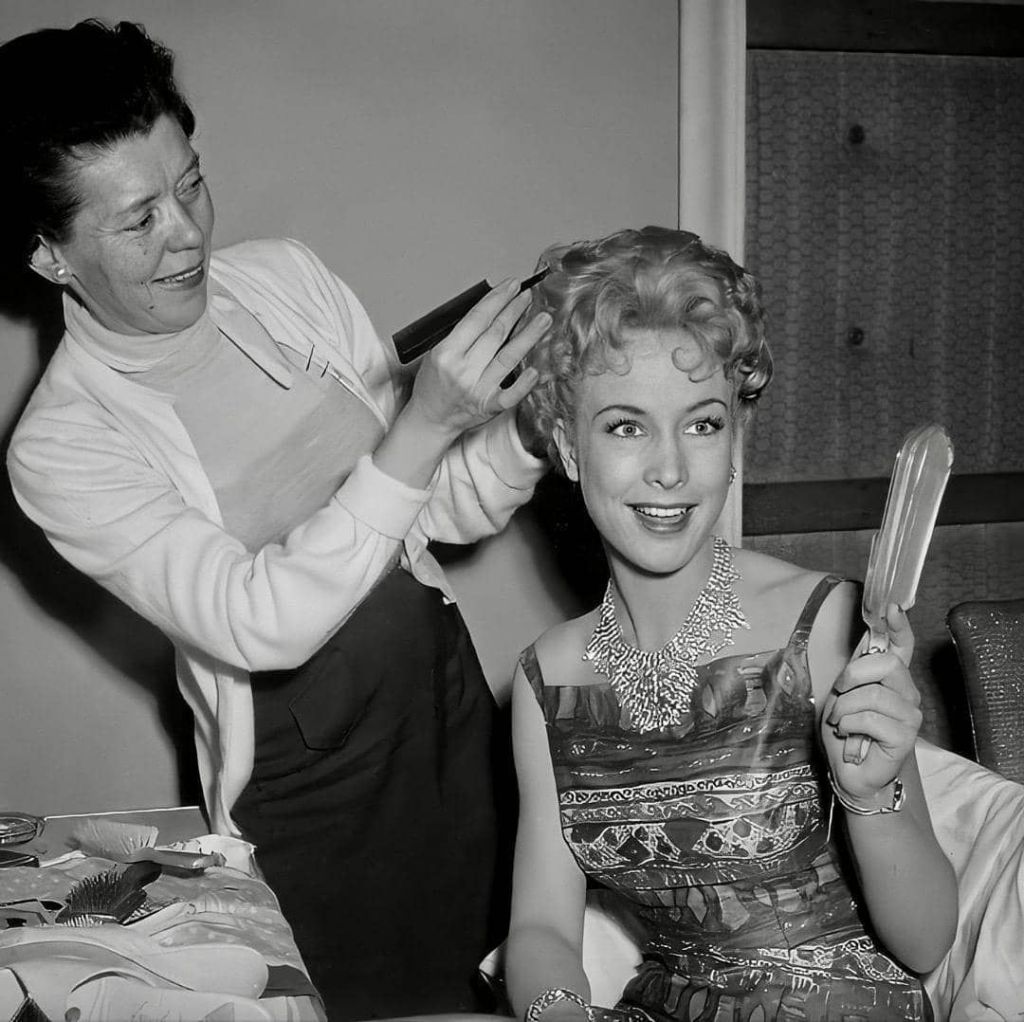
Virginia was born in 1899 in Illinois. Her father Frank was a dentist, and her mother Lillie Belle was a poet and truant officer for the Urbana Illinois School District. After graduation, she attended the University of Illinois for two years and then transferred to the American Academy of Dramatic Arts in New York where she graduated in the early twenties. Her brother Charles was a vaudeville comic, and he persuaded her to go to Hollywood to pursue a film career.

She began her career in Hollywood as an extra. In 1931, she did an interview for the Kansas City Star where she said “I had known an assistant director [named Ned] when I lived in New York. He introduced me to King Vidor, then casting for The Crowd. He gave me quite a good bit in the picture, although it lasted only five days. When asked how much salary I wanted, Ned told me to say $350 a week. ‘Well, I think you ought to work for us for $25 a day’ the casting director said. ‘That’s an awful comedown I protested,’ trembling in my boots. ‘All right then, let’s compromise on $35 a day,’ he said. I was awfully glad to get it.” That would be almost $600 a day currently.
📷x.com

During her first two years in Hollywood, Virginia lived at the Hollywood Studio Club. She appeared in 54 films between 1930 and 1935.

The Hollywood Studio Club was created as a safe place for starlets to live. Mary Pickford, along with several other women, was trying to raise money to construct a new building to house actresses. Will Hays gave $20,000 and soon after the studios contributed. Julia Morgan was hired as the architect. She designed an Italian Renaissance Revival style building that opened in 1926. The first floor had a spacious lobby, a library, writing rooms, a dining room, and a stage. The upper stories were single, double, and triple rooms. Men were only allowed to be on the first floor. You had to be between 18-35 years old, be seeking work as an actress, and could stay a maximum of three years. A hundred women lived there, paying $10-15 a week for room and board.

📷mayberrywikifandom.com

Barbara Hale, Donna Reed, Dorothy Malone, Ann B. Davis, Barbara Eden, Sharon Tate, and Sally Struthers were just a few of the women who lived there. The most famous resident was Marilyn Monroe. After the culture shift in the sixties and seventies, the residents decreased until the Club could no longer financially exist. In 1975 the doors were closed, and the contents were auctioned off.

In Hollywood Sale was often cast as an older woman, even though she was still in her twenties. She entered the movie entertainment business just as silent films were ending. Her first role was in Legionnaires in Paris in 1927. During her film work, she met actor and studio executive Sam Wren, and they married in 1935. In 1936 they had twins named Virginia and Christopher.

In the thirties, Virginia developed a one-woman show based on her life growing up in Illinois which she called “American Sketches.” She performed the piece more than 6000 times throughout the thirties, forties, and fifties, even touring Europe during WWII. This sounds like it would have been a fun show to see. Some of the different pieces of the performance included: “Traveling on the Illinois Central” where she portrays a mother trying to keep her son under control after a visit with relatives; “Life of the Party” where she is a giggling, talkative woman who annoys a young man she is trying to impress;
“Mealtime in Indiana” where she impersonates a housewife trying to get ready for the Ladies Guild while preparing supper for her family; “Three O’Clock in the Morning” as a weary hostess trying to get her guests to go home, and “I Remember Abraham Lincoln” where she is Grandma Willoughby reminiscing about her encounters with Lincoln.

📷rottentomatoes.com

She also received some radio work, including a serial, For Those We Love, playing Martha the maid every Sunday for eight years.

Her film career continued to develop during those decades and she appeared in Topper, When Tomorrow Comes, They Died with Their Boots On, and Night and Day.

Sam served in WWII as part of the Air Corps. When he returned home, he had a six-year position as executive secretary for the Actor’s Equity. He was an executive at both Warner Brothers and Columbia studios.

📷imdb.com Topper

In 1949 as television was developing, she and Sam created a sitcom, Wren’s Nest which featured the life of the Wrens starring Virginia, Sam, and the twins. The show aired three times a week. Virginia took over writing duties on the show. Many of her scripts were based on real events that happened to the family. The series contained 47 episodes.

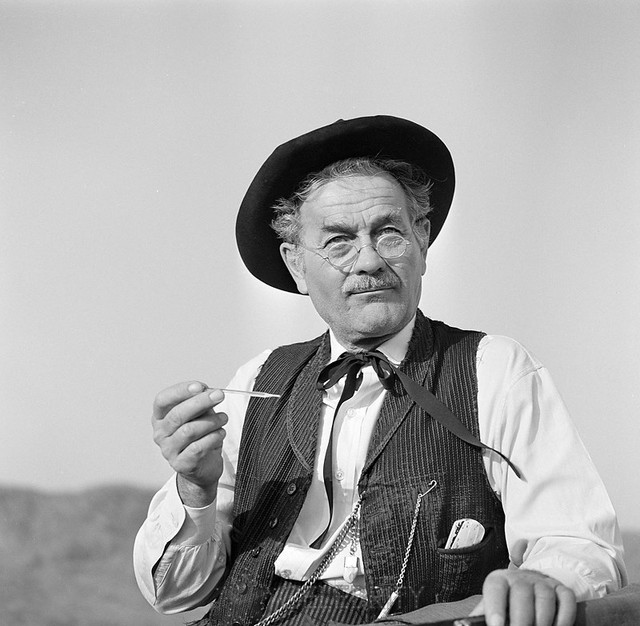
During the fifties, Sale took a break from the big screen, focusing on television shows and commercials. She appeared in several series in the fifties, but she hit her stride during the sixties. If you watch a lot of television from that decade, you can catch her in a variety of shows including The Many Lives of Dobie Gillis, Ben Casey, The Beverly Hillbillies, Wild Wild West, The Andy Griffith Show, Green Acres, and I Spy. She had a recurring role on Petticoat Junction where she played several characters. Her final television role was in Police Woman in 1975.

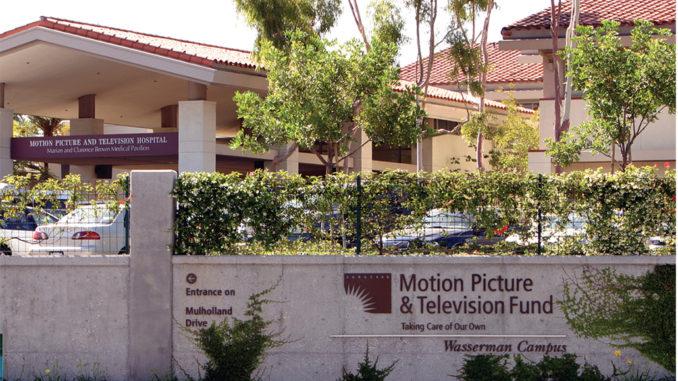
Sam passed away in 1962, and Virginia lived another thirty years, dying in 1992 from heart failure. Both Sam and Virginia are buried in Arlington National Cemetery. She spent her final years at the Motion Picture and Television Country Hospital in Woodland Hills, California.

📷

Sale could thank Mary Pickford for her home once again. Pickford was part of the Motion Picture Relief Fund which she founded with Joseph Schenck and Reverend Neal Dodd. When several former Hollywood stars died destitute in the thirties, 48 acres were purchased in the San Fernando Valley to build a Motion Picture Country House. In 1948, the Motion Picture Hospital was dedicated on the grounds. Later television actors were invited to live there as well. By that time, the site included a retirement community with individual cottages, administrative offices, and a hospital. Fees are based on the ability to pay. Actors, artists, backlot men, cameramen, directors, extras, producers and security guards are all eligible to live there. To live there, residents must be at least 70 and have worked in the entertainment industry for at least 20 years.

It was fun to learn not only about Virginia Sales but also the places she lived at the beginning and the end of her career.

Julie Newmar: Batman’s Most Beautiful Villain

This month we are learning a bit about the Batman villains and their careers. No study of Batman’s favorite nemesis would be complete without Cat Woman, Julie Newmar. Julie shared the role of Cat Woman with Eartha Kitt who appeared the final television season and Lee Meriwether who was so catty in the Batman movie. What else did Julie Newmar do during her career? Let’s find out.

📷pinterest.com

Born Julia Chalene Newmeyer in 1933, Julie Newmar as she is known in the acting world, was a television and film actress, dancer, singer, and stage performer. But, as they say in the commercials, that’s not all. She also was known for writing, designing lingerie, and managing real estate investments.

Newmar was born in LA. Her father Don was head of the physical education department for the Los Angeles College. Her mother, of both Swedish and French descent, was a fashion designer under the name Chalene and later worked in real estate.

Julie began dancing early in life and performed as a prima ballerina with the Los Angeles Opera when she was only 15. With an IQ of 135, Newmar graduated from John Marshall High School at age 15. She continued dancing in films in the early fifties. At age 19, she was also working as a dancer/choreographer for Universal Studios. In 1954, she appeared in Seven Brides for Seven Brothers as Dorcas, one of the seven brides.
📷facebook.com

In 1955 she got her first Broadway appearance in “Silk Stockings.” She continued her movie and Broadway careers throughout her years in entertainment, appearing in 33 films in all.

Television is where Newmar gained most of her fame. Her first television appearance was on The Phil Silvers Show in 1957 and then Ominbus in 1959. But it was in the sixties that she became a household name. She started the decade in Adventure in Paradise in 1960, followed by a variety of shows including The Defenders, Route 66, and The Twilight Zone in the early sixties.

In 1964 she was offered the role of Rhoda on My Living Doll, where she played a robot. She was not enthralled with the choice of Bob Cummings as her costar and did not seem to enjoy her time on this show. She said that “They originally wanted Efrem Zimbalist Jr. It was not a flip part—it needed a straight actor who could play opposite this bizarre creature so the comedy would come off. That quality was lost when they hired Bob. The show could have been wonderful. I think it would have run for many seasons had they hired Efrem because he had the right qualities.”

📷classicfilmandtvcafe.com

After appearing in several comedies including The Beverly Hillbillies and F Troop, she received another recurring role as Cat Woman in Batman. She would appear in the series 13 times, 12 as Cat Woman, the only villain to make Batman question his morals, because we knew he was in love with her, and if she showed any sign of remorse, who knows where things might have gone. Her Cat Woman costume now lives at the Smithsonian Institution.

Newmar lived in Beekman Place in New York in the mid-sixties. One weekend her brother had come to visit her from Harvard. They were sitting around chatting when the phone rang. She was asked if she would like to play Cat Woman on the Batman series. She was a bit miffed because they said they were casting in California, and the role started on Monday. Her comment was “That’s how television is done: they never know what they are doing until yesterday.” When her brother heard Batman, he jumped up and said that was the favorite show at Harvard and they even skipped classes to watch it. He told her to take the role, so she did.

📷firstforwomen.com

After Batman, she finished out the sixties in The Monkees, Star Trek, Get Smart and It Takes a Thief. With 11 seventies offers, you can see her in shows such as Bewitched, Columbo, McMillan and Wife, Love American Style, The Bionic Woman, and The Love Boat. One of my favorite made-for-tv movies was The Feminist and the Fuzz. It had an exceptional cast, including Newmar who appeared in the movie along with Barbara Eden, David Hartman, Jo Anne Worley, Farrah Fawcett, Harry Morgan, Herb Edelman, Penny Marshall, and John McGiver. This ensemble was directed by Jerry Paris, who directed so many great shows from The Dick Van Dyke Show to Happy Days.

Her other starring role in the seventies was a marriage to J. Holt Smith, an attorney. After the wedding, Newmar moved to Forth Worth, Texas until 1984 when they divorced.

📷remindmagazine.com

The eighties was a more quiet decade for the actress but she did accept roles on CHiPs, Fantasy Island, and Hart to Hart. In 1992, she appeared in George Michael’s music video, “Too Funky,” She was still working in 2016 and 2017 in Batman animation features.

If you were a fan of Batman and Dark Shadows in the sixties, you were in luck when Newmar took on the role of Dr. Julia Hoffman (played in the original series by Grayson Hall) in Dark Shadows: Bloodline, the audio drama miniseries.

She was not just a pretty face, however. She received two US patents for pantyhose and one for a bra, under the name Nudemar. She also began investing in LA real estate and was credited with helping to improve the neighborhoods of La Brea Avenue and Fairfax Avenue. In one episode of My Living Doll, Rhoda is asked to play Chopin’s “Fantasie Impromptu” on the piano. Newmar played the piece herself. She had studied under concert pianist Dr. MacIntyre, and she said that scene is the only one she’s done with her playing the piano which had been her career choice before acting. One of Julie’s comments about herself was “Tell me I’m beautiful, it’s nothing. Tell me I’m intellectual—I know it. Tell me I’m funny, and it’s the greatest compliment in the world anyone could give me.”

📷closerweekly.com

Julie also enjoys art and gardening. She has a rose, a day lily, and an orchid named for her. Her gardens are often chosen as a spot for holding charity events.

Like Barbara Feldon from Get Smart, Julie Newmar is beautiful, bright, and funny. I hope she enjoyed her career. Obviously, she could have been a brain surgeon or any other profession of her choice. She seems like she would be a fun person to just hang out with and the conversation would never run out. Thank you, Julie Newmar for choosing the entertainment business over medical science for our sakes.

Dr. Kildare: The “Perfect” Doctor

Photo: collectors.com

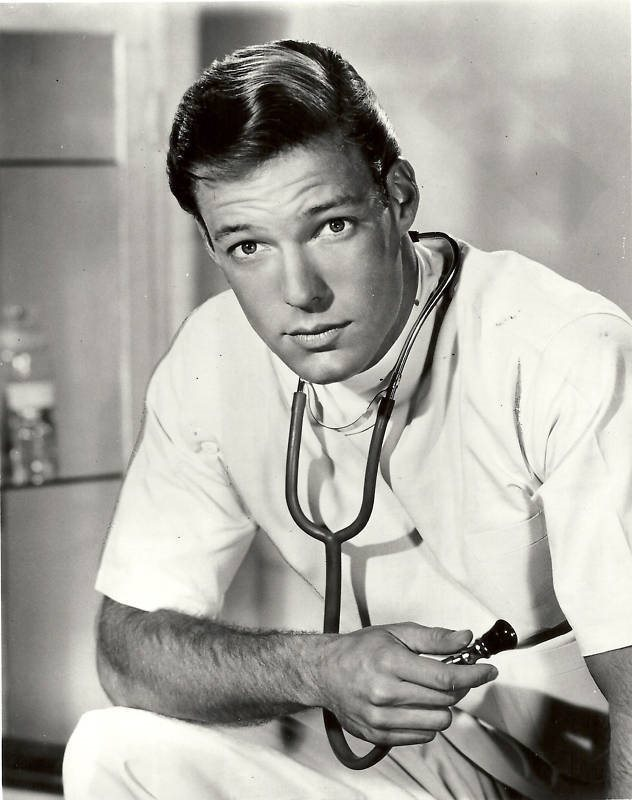
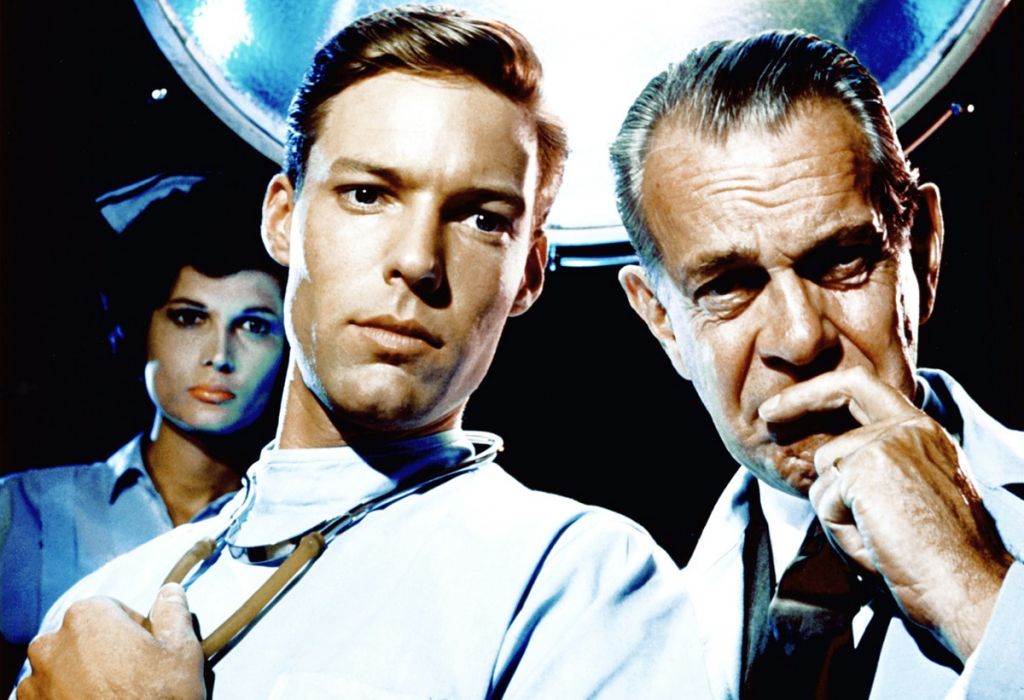
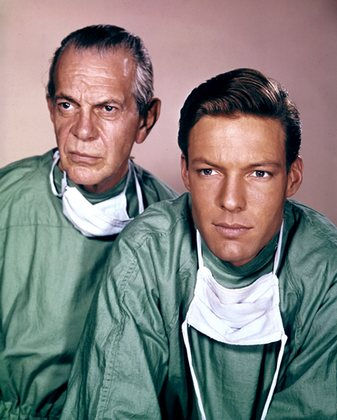
This month we are checking out a few favorites in a blog series: “Examining Our Favorite Medical Shows.” Last week we learned a bit about Ben Casey. Today we are looking at a similar show to Ben Casey, although in many ways it was very different: Dr. Kildare.  Dr. Kildare was also on the air from 1961-66. MGM produced this show created by Max Brand in the 1930s. The show had previously been a movie and a radio series. Unlike Ben Casey who seemed to argue with everyone, Dr. Kildare (Richard Chamberlain) was a respectful intern at Blair General Hospital. He wants to help his patients and listens to his mentor, Dr. Leonard Gillespie (Raymond Massey). In season three, Kildare became a resident, and the episodes focused more on the stories about the patients.

In 1960 a pilot was filmed with Joseph Cronin in the Kildare role and Lew Ayres as Gillespie which did not sell. The role of Kildare was offered to William Shatner and James Franciscus who both turned it down. In 1961, a new pilot was produced with Chamberlin and Massey. One of the reasons Massey accepted the role is because he was certain the show would only last one season, and he wanted to continue with his movie career. The popularity of the show put his film career on hold for five years.

Photo: medium.com

Other cast members who appeared on the show included Dr. John Kapish (Ken Berry), Nurse Fain (Jean Inness), Dr. Agurski (Eddie Ryder), Dr. Gerson (Jud Taylor), Dr. Lowry (Steve Bell) Nurse Conant (Jo Helton), and Nurse Lawton (Lee Kurty).

The guest stars on this show were amazing. I feel like this should be read in auctioneer mode but here goes: Eddie Albert, Jack Albertson, Fred Astaire, Ed Asner, Lauren Bacall, Ed Begley, Joan Blondell, Tom Bosley, Beau Bridges, Charles Bronson, James Caan, Robert Culp, Ossie Davis, Ruby Dee, Angie Dickinson, Olympia Dukakis, Barbara Eden, Linda Evans, Douglas Fairbanks Jr., Peter Falk, Beverly Garland, Ron Howard, Kim Hunter, Celeste Holm, Carolyn Jones, James Earl Jones, Brian Keith, Ted Knight, Harvey Korman, Cloris Leachman, Jack Lord, Walter Matthau, Gavin McLeod, Ricardo Montalban, Harry Morgan, Jack Nicholson, Leonard Nimoy, Carroll O’Connor, Suzanne Pleshette, Basil Rathbone, Robert Redford, Robert Reed, Cesar Romero, Gena Rowlands, William Shatner, Jean Stapleton, Gloria Swanson, Rip Torn, Sam Waterston, Dennis Weaver, and Robert Young. For a show that was only on five years, it was an impressive guest cast.

Photo: imdb.com

To add more realism to the show, writer E. Jack Neuman spent several months working with interns in a large hospital. Technical advice was provided by the American Medical Association.

The show was realistic in portraying all the drama that is truly found in a city hospital. The plots involved a lot of medical and social issues including smallpox, physician competency, drug addiction, malpractice, and euthanasia. Neuman definitely captured what life in a large, city hospital was like. Kildare makes about $60 a month, or $500 in today’s terms, works long hours, rotates through the various medical departments and has senior physicians overrule his diagnoses.

Just like Ben Casey, the first seasons produced stand-alone episodes and after the success of Peyton Place, storylines carried over from one show to another to entice the audience to tune in again the next week.

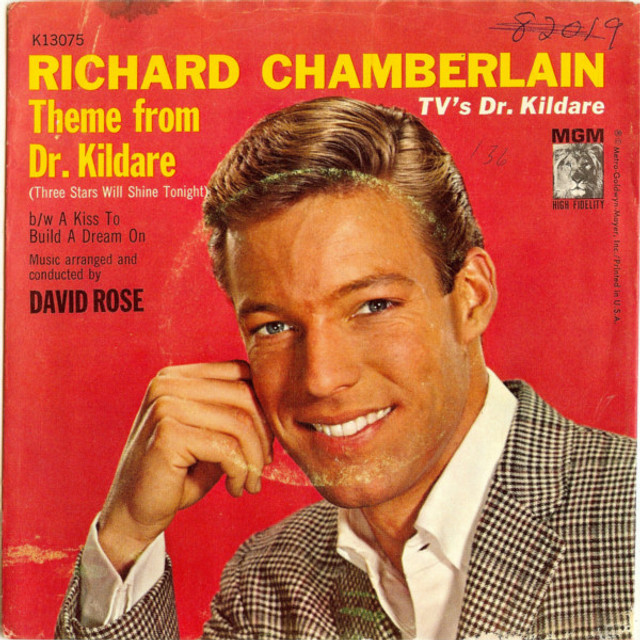
The theme music for the series was composed by Jerry Goldsmith. A CD set was released in 2009 which included the theme, the original music from the 1960 pilot, Richard Chamberlain’s recording of “Three Stars Will Shine Tonight,” and musical scores from the five seasons by Hurr Sukman, Richard Markowitz, Morton Stevens, Lalo Schifrin, John Green, and Burt Bacharach.

Airing on Thursday nights, the show was in the top ten during season one and the top twenty for seasons two and three. The show received about 12000 fan letters weekly, and, in addition, Chamberlain received letters personally asking for medical advice.

The network moved the show to Tuesday nights against Red Skelton and McHale’s Navy for season five and the viewers did not follow. The ratings declined, and the show was canceled.

This show really changed Chamberlain’s career. He had always been a small-role guy before this show, but he suddenly became a teen idol. He received more than 35,000 fan letters a month. Onscreen the idealistic Kildare and the wise, sometimes cantankerous, Gillespie don’t always agree but they had great chemistry on the set and apparently off the set as well. Unlike Ben Casey, the cast on this show did get along and Chamberlain mentioned that he always enjoyed working with Massey.

Richard said he grew up in a family where they all pretended to be perfect. So, he went through life trying to be perfect too. He said that philosophy did not work well for his life, but it did work well for Dr. Kildare.

Following the show he would take a turn on Broadway, in big-screen movies, and back on television where he specialized in mini-series like Shogun and The Thorn Birds, both in the 1980s.

One fact I found interesting was that the DVD release of the show included a never-aired pilot from a different medical show, The Eleventh Hour in 1962. The episode originally was written for Dr. Kildare. Drs. Kildare and Gillespie assist Dr. Bassett (Wendell Corey), a psychiatrist diagnosing one of his patients Ann (Vera Miles). Instead of airing on Dr. Kildare, Chamberlain and Massey were cut out of the film and it was submitted as a pilot for the show, with the title “Ann Costigan: a Duel on a Field of White.”

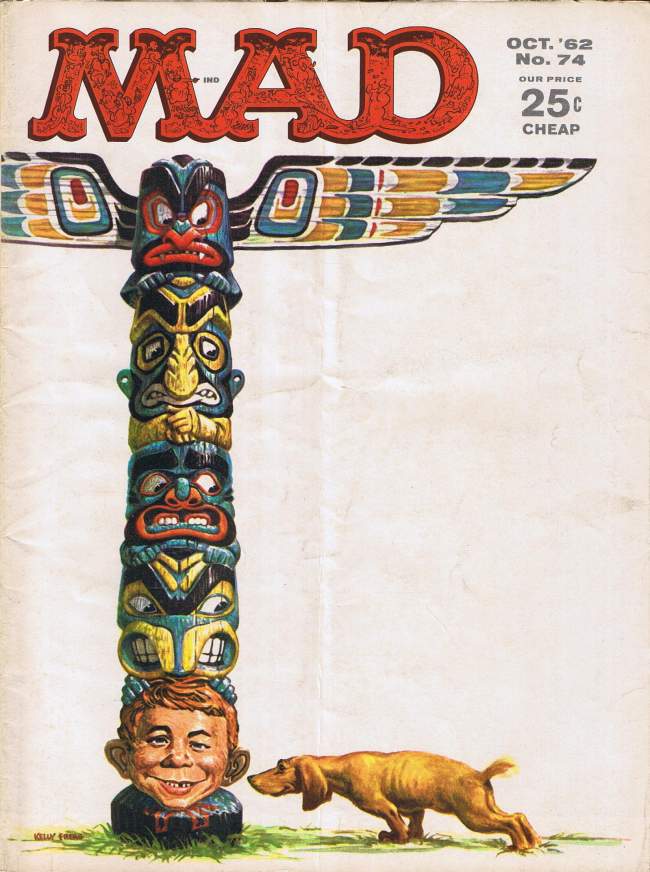
Even Mad Magazine got on the Kildare bandwagon. The 1962, #74 issue, featured “Dr. Killjoy,” a parody of the show.

Everyone seemed to like this show. Then again, what is not to like? You have a handsome doctor, exhilarating drama, a fun guest star every week, and realistic stories. The show would go on to inspire the talents behind a variety of medical series including Marcus Welby MD, ER, House, and Grey’s Anatomy.

The Phyllis Diller Show: So Much Potential

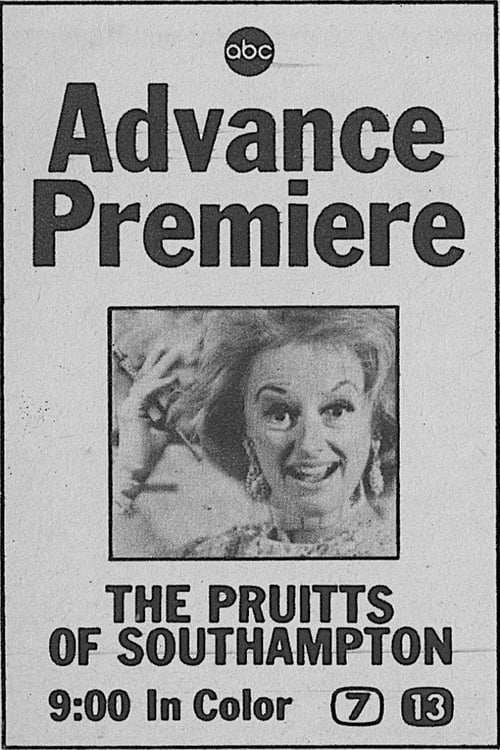
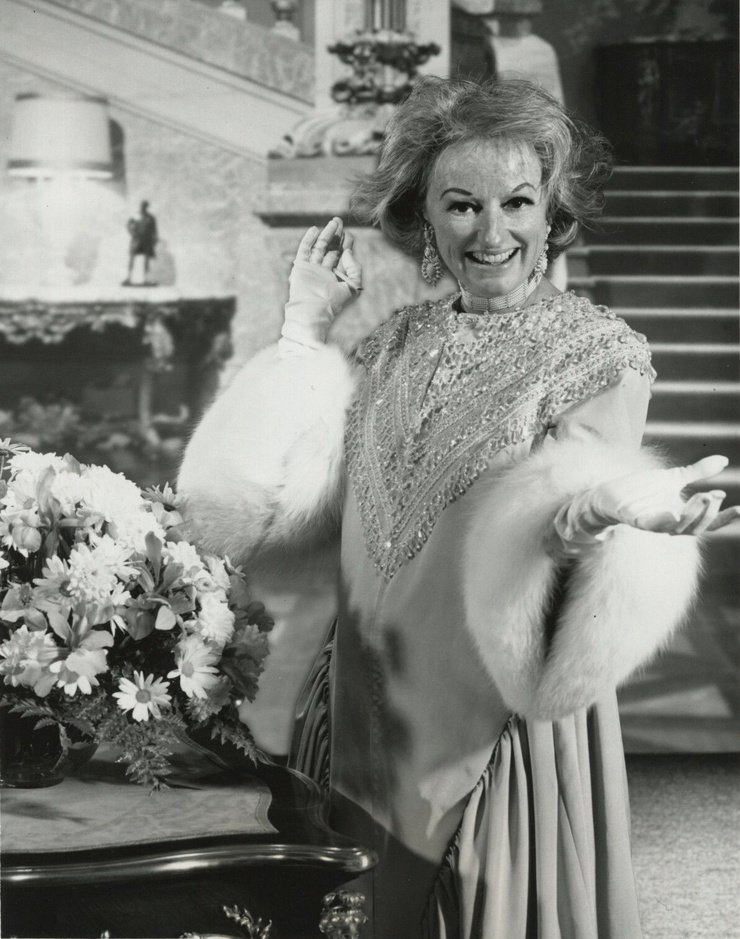
This month’s blog series is “It’s My Show.” Today we are beginning with a show I’ve discussed a few times over the years that had the perfect cast and concept, but it was cancelled after only one season: The Phyllis Diller Show which also went by The Pruitts of Southampton.

Image result for images of the pruitts of southampton
Photo: pinterest.com

The show was created by David Levy in 1967 and was loosely based on the book House Party by Patrick Dennis.  Levy was also the creator/producer for The Addams Family which aired from 1964-1966. The shows also shared composer Vic Mizzy who wrote the themes for both series. Mizzy also wrote the catchy tune from Green Acres. The opening theme song had Phyllis Diller dancing, skipping, and singing through the mansion, and the lyrics were:

PD: Howcha do howcha do, howcha do my dear
What a LOVELY surprise, nice to see you here.

RG: All the bills have been long overdue my dear.

PD: File them under I.O.U…
Howcha do, howcha do, Well HELLO, it’s you!
Like my beads, like my dress?
Aren’t they marvy-poo?
They belong to the internal revenue.
And they got us eating stew.

CHORUS: The Pruitts of Southampton,

Image result for images of the pruitts of southampton


Live like the richest folk,
But what the folk don’t know is that
The Pruitts are flat broke!

PD: Howcha do, howcha do, howcha do, my dear

RG: We are out of champagne, and I’m stuck, my dear.

PD: Ask the butler to lend you a buck, my dear.
Howcha do, howcha do, howcha do…

The Pruitts, an incredibly wealthy family, live in the Hamptons. After going through an IRS audit, the family realizes they owe so much in back taxes, $10,000,000 in fact, that they were now broke. The IRS agrees to let them continue living in their mansion because they think exposing such a wealthy family’s poverty would cause a lot of repercussions.

Image result for images of the phyllis diller show
Photo: pinterest.com

Phyllis Diller starred as Phyllis Pruitt. Phyllis lives with her uncle Ned (Reginald Gardiner), her brother Harvey (Paul Lynde), her daughter Stephanie (Pam Freeman), brother-in-law (John Astin), and their butler (Grady Sutton). Midseason, the show was revamped and the family brings in boarders to raise money, including Norman Krump (Marty Ingels) and Vernon Bradley (Billy De Wolfe). They should have been able to raise a bit of money with 68 bedrooms in the house. Other characters included Regina Wentworth (Gypsy Rose Lee), their nosy neighbor and Baldwin (Richard Deacon), the IRS agent. The incredible Charles Lane plays Max.

In addition, there were a lot of guest stars during that single season including Ann B Davis, Bob Hope, Arte Johnson, John McGiver, Louie Nye, Hope Summers, and Mary Wickes.

The shots of the family home were filmed at the Vanderbilt mansion, Biltmore.

The show began on Tuesday nights. At the time, The Red Skelton Hour was one of the most popular shows on television and was tough competition. When the show was revamped, it moved to Friday nights where it was up against Friday Night at the Movies and T.H.E. Cat.  If you don’t remember that show, don’t feel bad, you probably remembered very few of the new series that debuted that year.

Image result for images of the pruitts of southampton
Photo: nostalgiacentral.com

1967 was not a very profitable year for sitcoms specifically. Besides Phyllis Diller’s show, the season aired Run Buddy Run, Mr. Terrific, The Jean Arthur Show, Occasional Wife, and Pistols and Petticoats. That Girl was one of the few shows to return the following season.

Even though it was named as one of the worst sitcoms ever in several TV Guide listings, critics at the time praised the show. Phyllis Diller was nominated for a Golden Globe for Best Actress in 1967. Marlo Thomas won, but there was some great competition including Elizabeth Montgomery, Barbara Eden, and Barbara Stanwyck.

Image result for images of the pruitts of southampton
Photo: listal.com

One reviewer on imdb.com titled their review “The worst thing I have ever seen in my life” and followed up with a review that said, “Just kidding, this show is amazing and hilarious and that is why I gave it a 10/10.”

When Vic Mizzy discussed the show in a Televison Academy interview, he said the director was not any good, the scripts weren’t as funny as they could have been and sometimes Phyllis didn’t know her part. He thought those were the reasons the show failed. He thought it could have been unbelievabley funny.

One day Vic got a large check from England and it turns out the show was a hit there decades after it was aired in the United States.

I watched a couple of the episodes on youtube for this blog. Phyllis Diller was in rare form. Her hair is crazy like always and slapstick was part of her performance. The laugh track was annoying, but the show was funny at times. Pam Freeman was a breath of fresh air. In one of the episodes, Phyllis and her brother-in-law were trying to finance a pizza-making machine. They had to work around the fact that Baldwin from the IRS put a pay phone in the home to keep them from making so many long-distance calls.  One of the funniest scenes was when Phyllis and her brother-in-law climb up one of the phone poles to tap into the line to talk to Baldwin pretending to be other people in order to get Baldwin to approve their financing. Phyllis had to come up with a variety of different voices during the calls. You could definitely hear a bit of Green Acres influence in the background music for this show. This was a show that only could have been produced in the sixties.

One of the best parts of watching the show was seeing the old commercials.  I had forgotten the one about Joy dish soap when the dinner guests could see themselves in the plates. It just reminded me it was joyful to see these old shows in their entirety.

It was a fun show to learn about with an outstanding cast and should have been much more successful than it was. Whether the failure came from the director, the scripts, or some other behind-the-scenes issue, I’m not sure. It’s worth watching an episode or two just to see the wackiness that was associated with some sixties shows, but if I have to watch ten episodes of a show, I’ll take That Girl every time.


Gunsmoke Took 20 Years to Get Outta Dodge

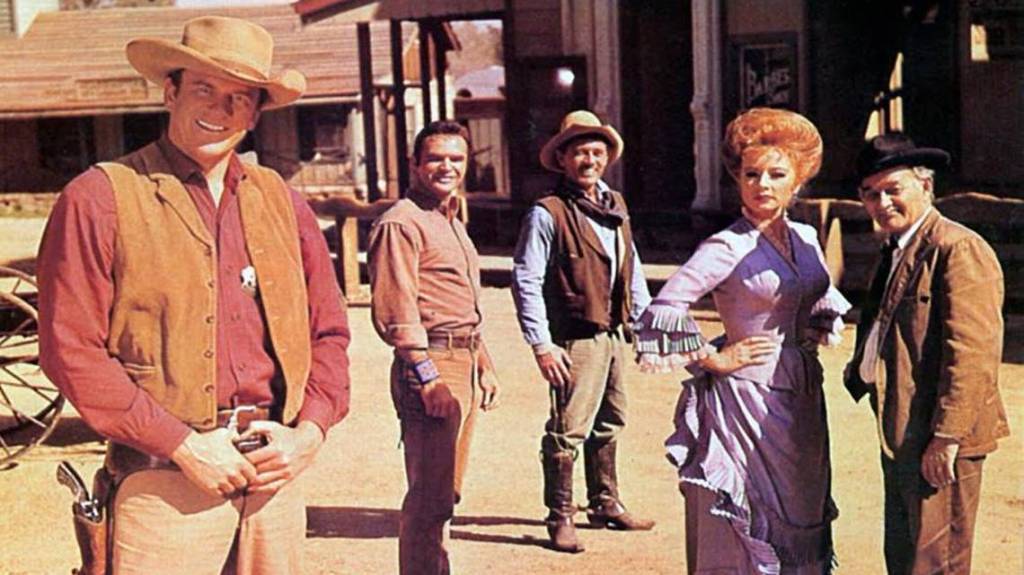
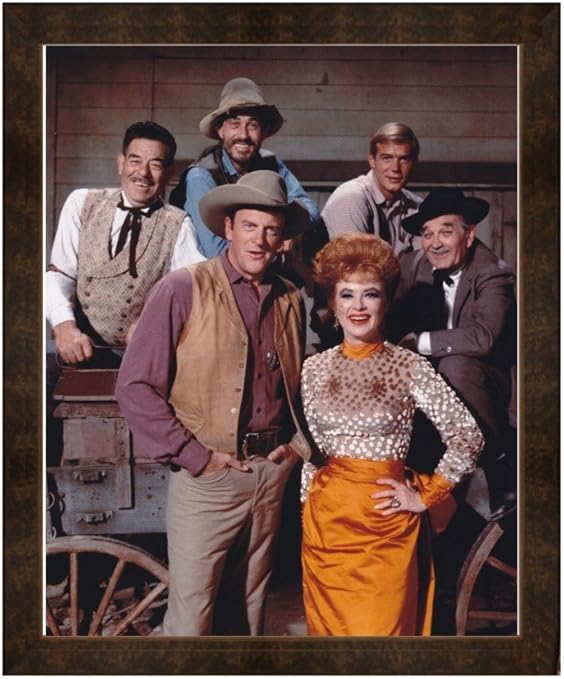
From 1952-1961, you could tune into Gunsmoke on your local radio to hear the adventures of the folks in Dodge City, Kansas created by Norman Macdonnell and John Meston. The primary characters were Marshal Matt Dillon (William Conrad), Doc Charles Adams (Howard McNear), Miss Kitty Russell (Georgia Ellis) and Chester Wesley Proudfoot (Parley Baer). Three years after its debut, the series shifted to television as well, running on CBS from 1955-1975, producing an incredible 635 episodes. For television, Macdonnell took over the reins as producer with Meston the head writer.

Amazon.com: Gatsbe Exchange Framed Print Gunsmoke Cast Marshal Dillon Kitty  Fester and Doc: Posters & Prints

James Arness was offered the role of Dillon on television. The network wanted John Wayne who turned it down. He did, however, introduce the first episode. Both Raymond Burr and Denver Pyle were also considered for the role. Matt Dillon spent his youth in foster care, knew the Bible well, and at some point was mentored by a caring lawman. He also talks about his time in the Army in some episodes.

Gunsmoke Cast Matt Dillon 8x10 Photograph – Vintage Poster Plaza
Photo: allposters.com

The role of Chester, with a new last name of Goode now, was played by Dennis Weaver. Chester was not only a loyal employee to Marshal Dillon, but he brewed a mean pot of coffee. He had a noticeable limp which apparently resulted from an injury in the Civil War. Weaver later said if he realized how hard it would be to film that long with a fake limp, he would have not used it. Other sidekicks to the Marshal included Ken Curtis as Festus Haggen, Burt Reynolds as Quint Asper (1962-65), Roger Ewing as Thad Greenwood (1966-68), and Buck Taylor as Newly O’Brien (1967-75).

Chester Good....Dennis Weaver Gunsmoke I've always loved that hat | Movie  stars, Actors, Tv westerns
Photo: pinterest.com

Doc was now Galen Adams and played by Milburn Stone. Doc was an interesting guy. He apparently was educated in Philadelphia and spent some time as a ship doctor on gambling boats on the Mississippi River where he met Mark Twain. His young wife died from typhus two months after their marriage. He finally settled in Dodge City after wandering a bit.

Gunsmoke photo 197 Milburn Stone
Photo: ebay.com

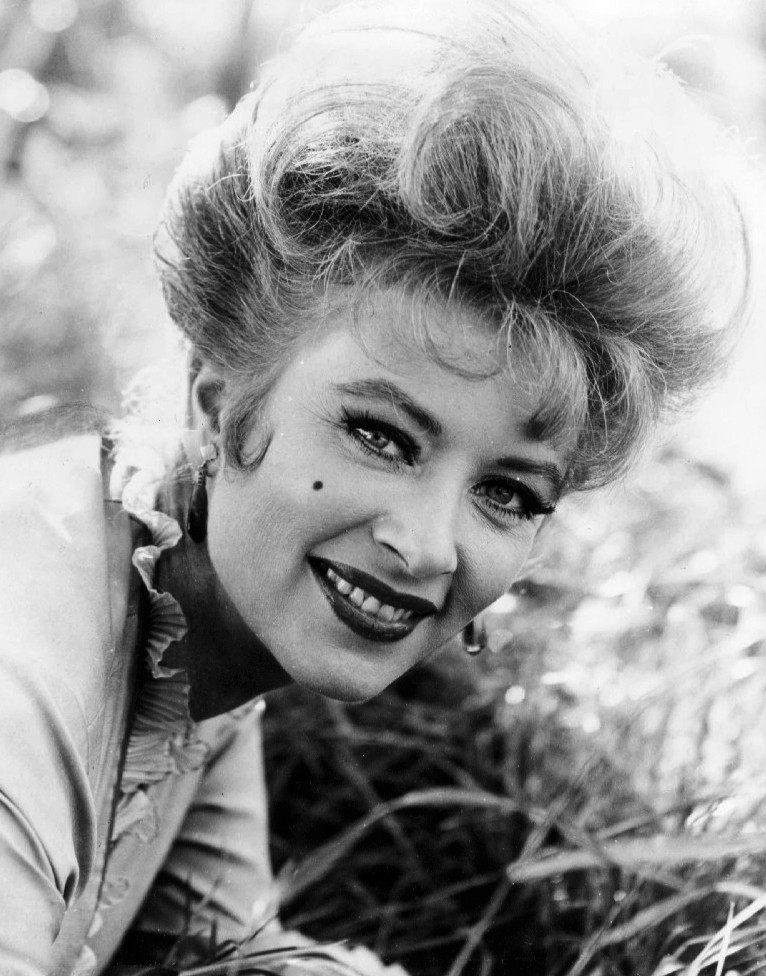
Miss Kitty was portrayed by Amanda Blake. Perhaps the closest bond she had with Dillon was that she also grew up in foster care in New Orleans. She was in more than 500 of the television episodes. In addition to her role as “entertaining men” in Dodge City, she is half owner of the Long Branch Saloon. Kitty and Matt obviously are attracted to each other and are very close. Kitty was a successful business owner and had a cold demeanor about professional matters but had a soft heart in other matters. Blake was ready to leave the show in 1974, and her storyline was that she finally returned to New Orleans.

Amanda Blake - Wikipedia
Photo: wikipedia.com

During its twenty-year stint, the show had some notable guest stars.  Just a few celebrities who graced the set include Jack Albertson, Ed Asner, James Backus, Beau Bridges, Charles Bronson, Bette Davis, Angie Dickinson, Richard Dreyfuss, Buddy Ebsen, Barbara Eden, Jodie Foster, Mariette Hartley, Ron Howard, June Lockhart, Jack Lord, Rose Marie, Howard McNear, Harry Morgan, Leonard Nimoy, Carroll O’Connor, Denver Pyle, Wayne Rogers, William Shatner, Cicely Tyson, and Adam West.

While the show portrayed the hard life in the West, it was also a warm and humorous celebration of a group of people making a new life together.

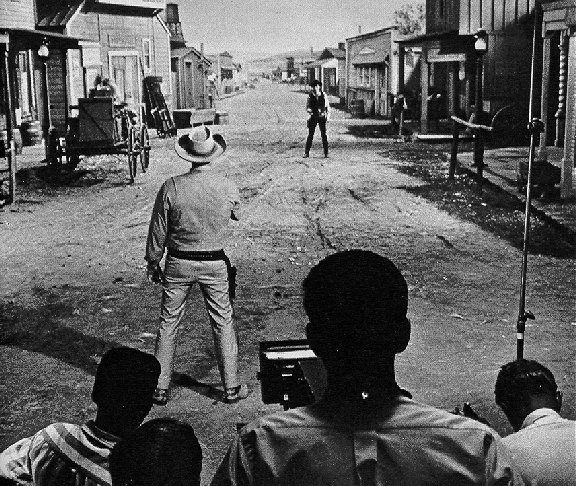
The opening of the show is a gunfight between Matt and a “bad guy.” It was shot on the same Main Street set used in High Noon, the Grace Kelly/Gary Cooper classic. The scene was dropped in the 1970s when a nonviolence emphasis was placed on television shows and the opening was Matt riding his horse.

Gunsmoke, The Great American Western
Photo: marksmannet.com

The show began its life on Saturday nights at 10 pm ET. In 1961 when the radio show left the air, the television show switched from half an hour to an hour. For season 13, it moved to Monday nights at 7:30 for four years, and then at 8 pm for four years. By season two it was a top ten hit, rising to number one where it remained until 1971.

The first seven seasons were sponsored by L&M cigarettes and Remington shavers.

The well-known theme from the show and radio was “Old Trails” composed by Rex Koury. Lyrics were later recorded by Tex Ritter in 1955 but not used in either radio or tv. Although I could not confirm it, I read several mentions that Koury was so busy, he actually penned the song while using the bathroom. William Lava composed original theme music for television; other composers who contributed music during the twenty years were Elmer Bernstein, Jerry Goldsmith, Bernard Herrmann, Jerome Moross, and Franz Waxman.

Photo: amazon.com

Surprisingly, the show was only nominated for fifteen Emmys during its reign. Of those, there were only three wins: one for best dramatic show in 1957, one for Dennis Weaver as supporting actor in 1958, and one for Milburn Stone in 1967.

After surviving the rural purge Paley conducted, the cast thought they were not in jeopardy and were all stunned by the cancellation in 1975. CBS had not prepared them that they were debating ending the show. They assumed the show was continuing till it had 700 episodes and many of the stars read about the cancellation in the trade magazines.

The show has appeared in syndication in three different versions. One package is half-hour episodes from 1955-1961, one package contains hour-long black and white episodes from 1961-1966, and the final package contains one-hour color episodes from 1966-1975. Me TV currently airs the one-hour color shows.

Photo: wichitaeagle.com

Arness would appear in five made-for-television movies after the show went off the air. In 1987, Gunsmoke: Return to Dodge featured Blake as Miss Kitty and Taylor as O’Brien. Stone had passed away in 1980, so his role was not part of the new film. Gunsmoke: The Last Apache premiered in 1990 without Blake who had died in 1989. In 1992-1994, Gunsmoke: To the Last Man, Gunsmoke: The Long Ride, and Gunsmoke: One Man’s Justice would appear before the series rode off into the sunset for good.

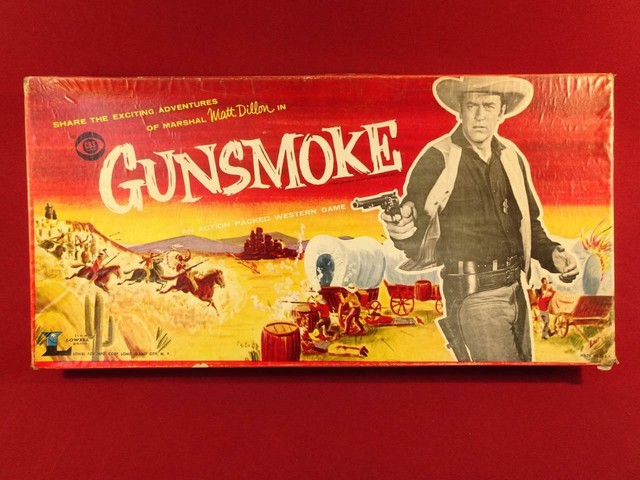
After being on television so long, it’s not surprising that there were a lot of merchandising opportunities for the show. In addition to typical items like lunch boxes, there was Gunsmoke cottage cheese. A Matt Dillon figurine was available with his Horse Buck.

Picture 2 of 8

There were also board games, puzzles and a variety of books including numerous paperbacks and comic books from Dell and Gold Key.

1950s Gunsmoke lunch box with thermos. Vintage Gunsmoke Matt Dillon U.S.  Marshall metal lunchbox with thermos. Lunchbox depicts James Arness as Matt  Dillon draw…

Fans had an affinity for the show. During its time on the air more than thirty westerns came and went, but Gunsmoke continued, in the top ten for most of its two decades. Few series have their own museum, but you can visit Boot Hill Museum in Dodge City to learn all about the show. Furniture from the series is included, as well as signed photos from the cast and other memorabilia including one of Miss Kitty’s dresses.

When you hear someone say “Get outta Dodge,” you can fondly remember Gunsmoke which is where this phrase began. Perhaps being cancelled was a blessing in disguise. After two decades, maybe it was time to get outta Dodge, maintaining the high standards and high ratings that made the show such a long-running success.

Learning How to Marry a Millionaire Can Be Fun

Today starts a fun, new blog series, “The Movie Came First.” For the month of December, we’ll be learning about shows that began life as a big-screen movie. Our first sitcom is How to Marry a Millionaire.

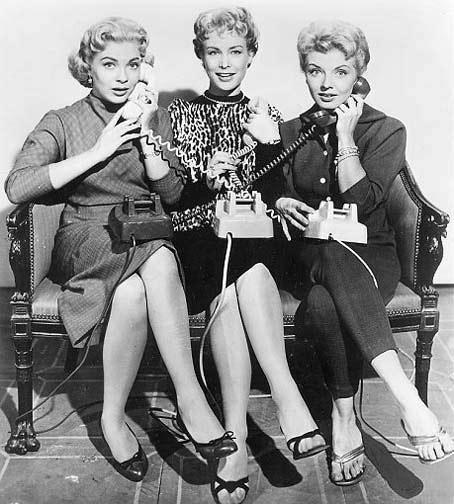
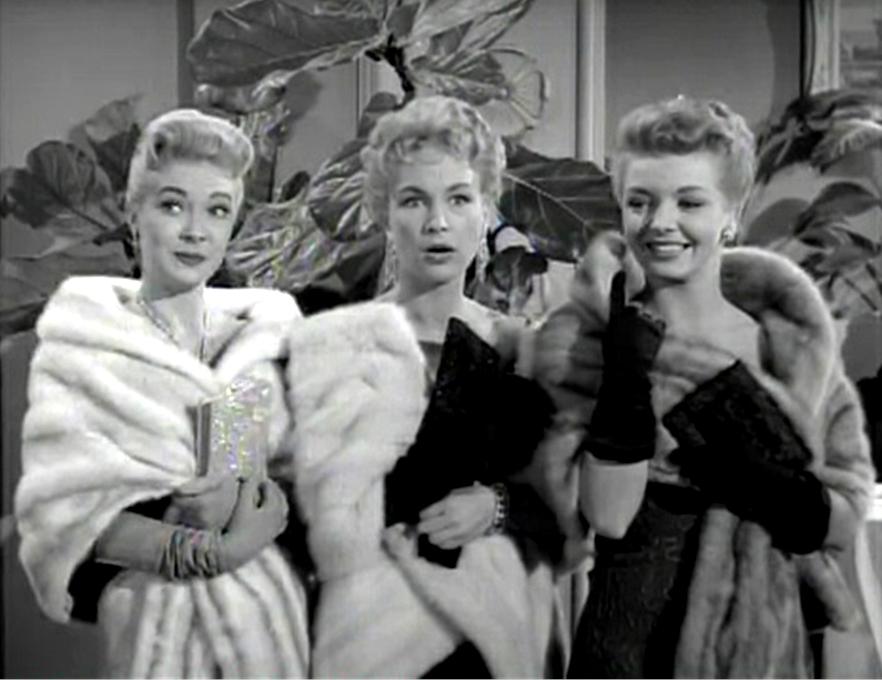
In 1953, Betty Grable, Marilyn Monroe, and Lauren Bacall starred in a comedy romance about three women who make a pact to help each other find millionaires to marry but end up finding love instead. Their love interests are played by Cameron Mitchell, David Wayne, and Rory Calhoun.

An interesting fact about this movie is that it was the first one filmed in Cinemascope. In order to highlight the incredible sound, the movie begins with an orchestra performance. It was a bit awkward because it has nothing whatsoever to do with the movie, but is an interesting intro. It was also the first movie to air on television when it appeared on NBC Saturday Night at the Movies in September of 1961.

Another fun fact about the movie is that Merry Anders who would appear in the television show had a bit part as a model in the film.

Photo: filmaffinity.com

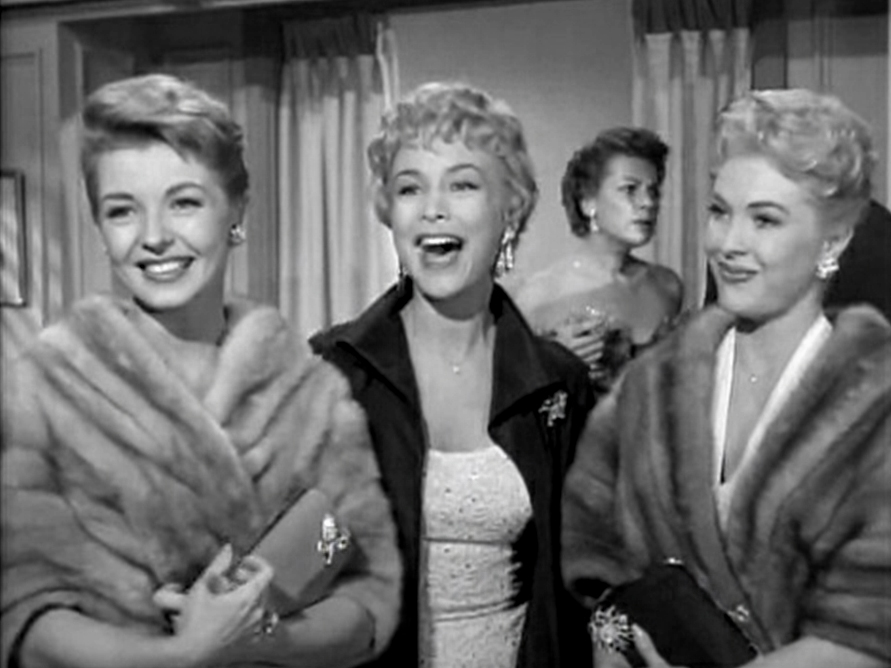
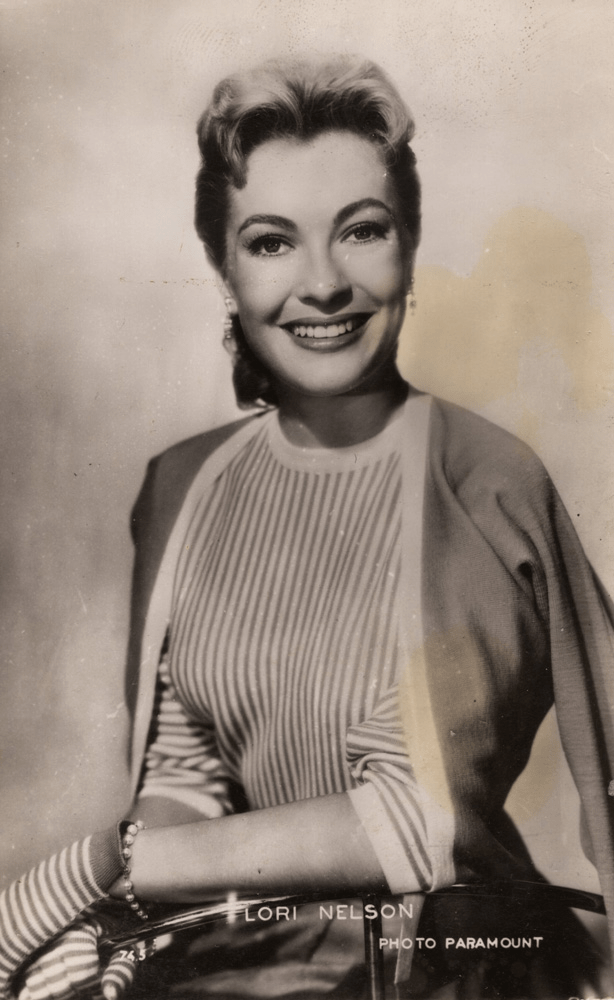
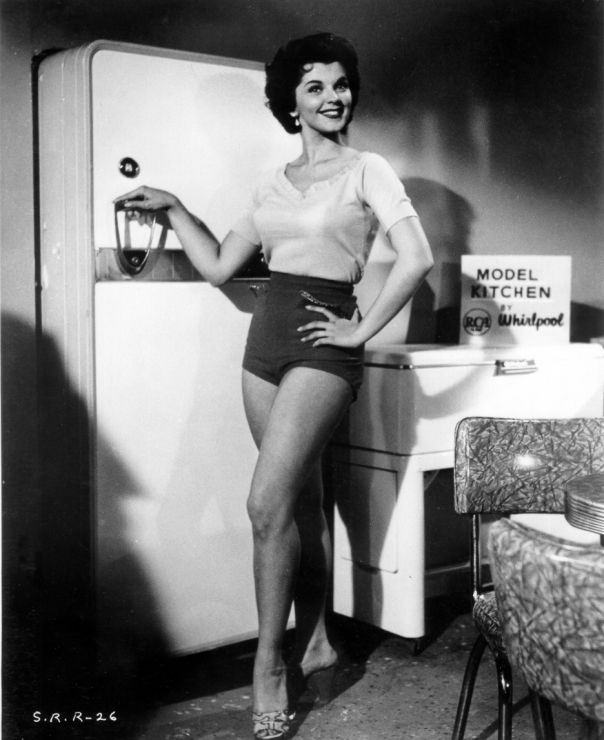
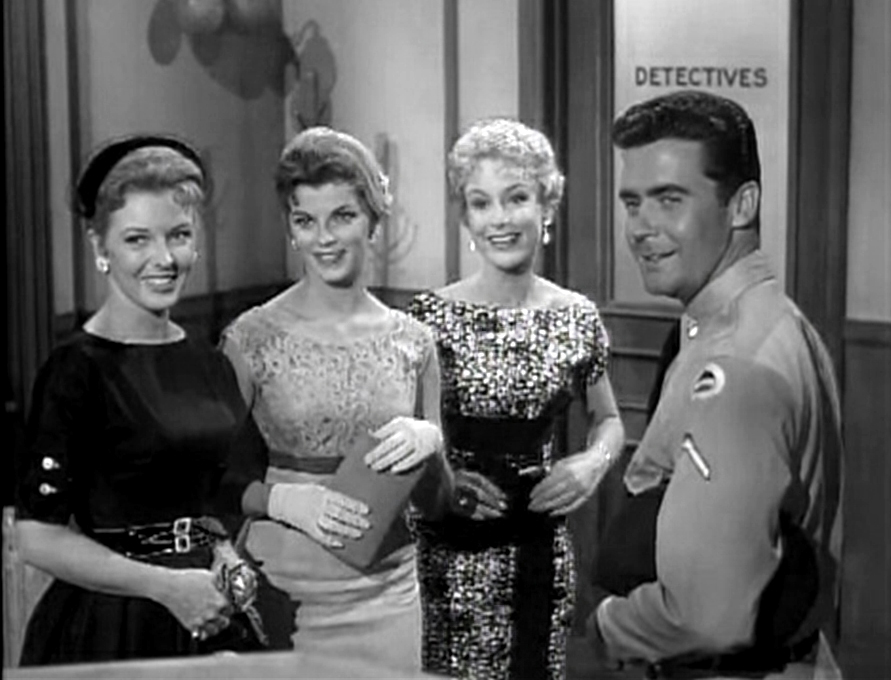
In 1958, the movie came to the small screen with Merry Anders (Mike) filling Lauren Bacall’s role, Barbara Eden (Loco) is the sexy bombshell Monroe played, and Lori Nelson (Greta) is the neutral one in between played by Grable. Greta is the co-host of a quiz show, Go for Broke. Mike, whose real name is Michelle, works as a secretary on Wall Street, and Loco is a fashion model. One of the weekly gags is that Loco has terrible eyesight, but thinks men don’t like girls in glasses, so she often has mishaps not seeing correctly.

In order to find a wealthy husband, they found a chic penthouse apartment while wearing designer clothing even if they could not afford to eat. I guess that’s why they went on a lot of dinner dates.

Photo: imdb.com

The girls are often short of money and have trouble paying the rent on time. Mr. Blandish (Dabbs Greer), their landlord, is always threatening to evict them. The elevator operator Jesse (Jimmy Cross) sometimes helps and sometimes hinders the trio with their get-rich-husbands schemes.

The pilot was filmed in 1957 with Lori Nelson as Greta but her roommates at the time were played by Charlotte Austin (Loco) and Doe Avedon (Mike, who had been married to photographer Richard Avedon). By the time the show was sold in 1958, the roles had been recast and after looking at more than seventy auditions, the producers picked Eden and Anders.

Photo: sitcomsonline.com

Anders discussed the camaraderie of the three stars. She said they were amazingly similar. She said they all wore size 8, all drove Thunderbirds, and all had French poodles and this was before they met. Anders had tested for the role of Mike and Loco because she had been playing a lot of ditzy blonde roles. When she was given the role of Mike, Eden was brought on board as Loco. Anders said the cast worked hard. After filming all week, they did late night interviews and early morning shows. One weekend they were sent to New York for a personal appearance. They got back late Sunday night and still had to be at work early Monday morning.

Photo: wundaba.ne

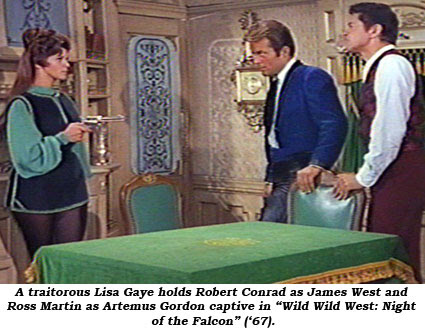
The second season found Nelson out with Lisa Gaye as Gwen in. Nelson claims she was the best actress and that she decided to move on, disliking her character’s development. Other sources say she was fired because she gave an interview criticizing her role. Nelson said her role wasn’t defined well with Anders getting the “Eve Arden wisecracks” and Eden being the sexy, bubbly personality. Greta supposedly married a gas station owner and then moved to California. Only thirteen episodes were aired for season two and then the show was cancelled.

Photo: imdb.com

Barbara Eden was interviewed for the Television Academy and discussed her time on the show. She said she was doing a play in LA when director Mark Robson saw her. He offered her a role in his new movie Peyton Place. However, the studio gave the part to another actress who was under contract at the time; but because of Robeson’s interest, they brought Eden in for a test at Fox. One of the television executives called her and said he had seen the test and read her notices for the LA play and was wondering if she was interested in doing a television series.  He asked her to go to the Fox Western studios for some still shots. When she got there, she thought the part was still in the process of being cast, but realized the stills were being taken because she had the part and the other girls were her costars.

Photo: amazon.com

Eden said she was a huge fan of Marilyn Monroe and had seen the original movie. She felt trying to take on the part by imitating Marilyn would have ended badly because she could never compete with Marilyn’s version, so she took the part and made it her own. Like Anders, she also said the three costars were close and became good friends.

Eden said the time on the show was her “finishing school.” She learned so much about filming before the cameras, lighting details, and building stamina. The stars sometimes filmed up to thirteen hours a day in three-inch heels which she said was painful. After long days, they would be given new dialogue to learn for the next day’s shooting. It was a very tough job but prepared her for film work.

Photo: etsy.com

If you like cultural history, the show is fun to watch just to see the wardrobes and settings. The clothing was provided by Mr. Mort. Mortimer Goldman owned his design business in 1952, producing mid-priced stylish dresses. During the run of the show, Stan Herman came on board as a designer. Throughout the sixties, Herman’s designs were the height of fashion. Stan Herman later opened his own design studio, producing items under his label as well as for other companies. In the 1990s he began appearing on QVC with his design line of comfortable clothing and sleep ware.

The show was pitched to the three major networks, but they all passed on the series. So, in 1958, NTA Film Network sold the show into syndication to 115 stations. It packaged a three-series deal including Man Without a Gun and This is Alice.

Photo: imdb.com

Both critics and fans liked the show, but it had some tough competition. The show aired Friday nights against The Adventures of Ellery Queen, The Wide World of Disney, and Rawhide. Eden said she never knew exactly why the show was cancelled. She assumes that because Fox was trying to be the fourth network and it didn’t work out at the time, all the Fox shows were just dropped.

So, what happened to the NTA network? The company that referred to itself as the fourth network launched in 1956 with 100 affiliate stations. Twentieth Century Fox bought half of the company with the intention of producing original programming. The shows were filmed and then mailed to each station. By 1961, the network was losing money and the flagship station was sold to the Educational Broadcasting Corporation which later became National Educational Television and eventually PBS. One of their largest stations, KTTV in Los Angeles became part of the Fox television network, co-owned by Twentieth Century Fox, part of 21st Century Fox.

Photo: boomtownamerica.com

I was able to watch a few of these shows online. I’m not sure how the fourth network’s ownership affected syndication. Youtube has four episodes available. For this blog, I watched the first episode again. The jokes were a bit overdone and the laugh track was annoying, but I’ve seen worse. There were some charming moments in the show, and Barbara Eden’s comic ability was obvious with some funny scenes about her failure to wear glasses. Take some time to check out one of these four episodes to see what tv looked like in the mid fifties.

The Smothers Brothers Comedy Hour: Fifty Years After Getting the Pink Slip

The late 1960s and early 1970s might have contained the most diverse television shows than any other era. In 1968, there were the rural comedies like Green Acres and The Beverly Hillbillies; there were the standard sitcoms, My Three Sons, Get Smart, That Girl, Bewitched; there were the remains of a few westerns including The High Chaparral, The Virginian, and Gunsmoke; there were crime and thrillers such as Hawaii Five-0 and Mission Impossible; there was the crime/western in The Wild, Wild West, there were gameshows on at night including Let’s Make a Deal, The Dating Game, and The Newlywed Game; there were sci-fi shows like Star Trek and The Land of the Giants; family shows like Lassie; and even Lawrence Welk.

In addition, there were a couple of shows that were a bit edgier and introduced more  provocative concepts and themes. The Mod Squad featured three teens who were helping solve crimes in lieu of jail time, and then there was the almost-impossible-to-describe Laugh In.

Photo: neatorama.com

Similar to Laugh In was The Smothers Brothers Comedy Hour which also debuted in 1967 featuring Tom and Dick Smothers. It had more of a variety format to it but it had the same topical and satirical humor.

Photo: retrokimmer.com
The Who

In addition to poking fun at politics, the war, religion, and current issues, you could tune in to the Smothers Brothers for some of the best and sometimes controversial music in the industry. Performers such as Jefferson Airplane, Steppenwolf, Simon and Garfunkel, The Who, Cream, Pete Seeger, and The Doors appeared on the show.

Photo: metro.com
Jefferson Airplane

The show aired Sunday nights against Bonanza on NBC; ABC aired The Sunday Night Movie in its first season and Hee Haw in its second season.

The series had some of the best writers on television: Alan Blye, Hal Goldman, Al Gordon, Steve Martin, Lorenzo Music, Don Novello, Rob Reiner, David Steinberg, and Mason Williams. Reiner and Martin both commented on the show in an interview by Marc Freeman in the Hollywood Reporter 11-25-2017 (“The Smothers Brothers Comedy Hour at 50: The Rise and Fall of a Ground-Breaking Variety Show”).  

Reiner relayed that “you had two cute boy-next-doors wearing red suits, one with the stand-up bass and the other with his guitar. They looked like the sweetest, most innocent kids. You got drawn to them, and then they hit you with the uppercut you didn’t see coming.”

Photo: tvbanter.net

Martin elaborated “When you have the power wrapped up in innocence, it’s more palatable. They were like little boys, but you also had Dickie there to reprimand Tommy when he would make an outrageous statement. It’s like the naughty ventriloquist dummy who can get away with murder as long as the ventriloquist is there to say ‘You can’t say that.’ It’s the perfect setup for getting a message across.”

Photo: pinterest.com
Jack Benny

In addition to the musical acts, hundreds of celebrities appeared on the show between 1967 and 1969, including Jack Benny, Carol Burnett, George Burns, Bette Davis, Jimmy Durante, Barbara Eden, Nanette Fabray, Eva Gabor, Shirley Jones, Don Knotts, Bob Newhart, Tony Randall, Ed Sullivan, Danny Thomas and Jonathan Winters, along with so many others.

Part of the show was the brothers’ ongoing sibling rivalry about whom their parents liked best. They also began to add political satire and ribald humor. Pat Paulsen delivered mock editorials about current topics such as the draft and gun control, and in 1968 he had a mock presidential campaign.

Photo: rollingstone.com
Pat Paulsen for president

Church sermon sketches poked fun at religion. The show lampooned many of the values older Americans valued, often delivering anti-establishment and pro-drug humor. No one was given an exception, and the show lambasted the military, the police, the religious right, and the government.

Battles over content were ongoing with the network. The network pulled Pete Seeger’s performance of his anti-Vietnam War song, “Waist Deep in the Big Muddy.” They nixed Harry Belafonte’s song, “Don’t Stop the Carnival” because it had a video collage behind him of the 1968 Democratic National Convention riots.

Younger viewers were tuning in, and despite the conflicts, the show was picked up for a second season. The network insisted they receive a copy of the show at least ten days in advance for editing. In April of 1969, William Paley canceled the show without notice. Some sources contend it was canceled by CBS president Robert Wood. Some sources cite the issue with unacceptable deadlines and others mention Tom Smothers lobbying the FCC and members of Congress over corporate censorship that brought about the firing. The brothers filed a breach of contract suit against the network and after four years of litigation, a federal court ruled in their favor, awarding them $776,300.

Photo: blogspot.com

Here’s a typical joke from the show that was not as controversial.

Tom: You can tell who’s running the country by how much clothes people wear, see?

Dick: Do you mean that some people can afford more clothes on, and some people have . . . less on? Is that what you mean?

Tom: That’s right.

Dick: I don’t understand.

Tom: See, the ordinary people, you’d say that the ordinary people are the less-ons.

Dick: So, who’s running the country?

Tom: The morons.

The Smothers Brothers elicited humor that was as topical, influential, and critical as anyone had ever heard before on television. Fifty years later, both the network and the brothers realized everyone over-reacted. If the Smothers Brothers had tried to play by the rules a bit, they would not have lost their platform to continue to help change what they saw as a messed-up culture.

Photo: Wikipedia.com

The CBS executives felt the program created too much controversy. In their defense, politicians, especially Lyndon Johnson and Richard Nixon, exerted a lot of pressure on the network. Remember this was a time of three networks and ads are what produced the profits to fund shows. The network received a boatload of hate mail daily about the program and, when viewers begin talking boycotting advertisers, executives sit up a bit straighter and listen.

The Smothers Brothers Show, a less controversial series, debuted in 1975. They had two specials on NBC later and another CBS series in 1988 but never regained the influence they had in the sixties. However, the show did help pave the way for a future that permitted, and later embraced, shows with controversy beginning with All in the Family, continuing with Saturday Night Live, and recently seen on shows such hosted by Jon Stewart and Stephen Colbert. Although the comedy spouted on the show would seem quite tame by today’s standards, the show had an important part in the history of television and the rights of free speech.

Photo: wvxu.com

I have seen some DVDs out there from this show, but they are pricey. Recently I saw season two going for $190. I do see Laugh In on Decades quite often, so perhaps The Smothers Brothers might show up somewhere too, although I’m not sure this show would hold up as well as Laugh In, but the musical performances would be fun to see.

Georgia Engel: Reflecting Joy

We continue our series to honor television stars who passed away in 2019 by looking at the career of Georgia Engel.

Photo: Wikipedia.com

Georgia was born in Washington DC in 1948 as Georgia Bright Engel. Although she attended several high schools, she graduated from the Academy of the Washington Ballet. Her father was an admiral, and perhaps her family landed in Hawaii, but she went on to earn a theater degree from the University of Hawaii at Manoa.

In 1969, Engel would move to New York City. She was in an off-Broadway production, Lend an Ear and as Minnie Fay in Hello Dolly! for a year. When she was appearing in The House of Blue Leaves, Mary Tyler Moore and her husband Grant Tinker saw her performance one night.

Photo: pressfrom.info

She was cast in The Mary Tyler Moore Show soon after, appearing in 57 episodes as Georgette Baxter, Ted’s girlfriend, and later, wife. Mary described the character as a cross between Stan Laurel and Marilyn Monroe. Georgette was devoted to Ted. She received two Emmy nominations for her role on the classic show.

Photo: vipfaq.com

Betty White played Sue Ann Nivens on The Mary Tyler Moore Show, and when White received a show of her own, The Betty White Show, in 1977, she brought Engel in as part of the new series as Mitzi Maloney. The plot featured White as a middle-aged actress who gets the starring role in a police series, Undercover Woman. Unfortunately, she soon learns her ex-spouse, whom she calls “old pickle puss” is the director. Mitzi is her naïve girlfriend and roommate.

Photo: sitcomsonline.com

In 1980 she joined the cast of Goodtime Girls as Loretta Smoot. Set in 1942, the show was about a group of women who shared a small apartment in the Coolidge Boarding House. Loretta was described as a middle-aged war bride waiting for her husband to come back home from the war.

Like so many well-known television stars, Engel did her duty, appearing on The Love Boat (4 episodes) and Fantasy Island (5 episodes).

In 1983 she took on the role of Susan Elliott on Jennifer Slept Here. Ann Jillian starred in this show as Jennifer Farrell. Farrell, a popular movie actress who was run over by an ice cream truck in 1963, had lived in the house. Twenty years later, the Elliott family moves in. Jennifer haunts the place but can only be seen by the Susan’s teenage son.

Between 1991 and 1997 she made 20 appearances on Coach as Shirley Burleigh. Shirley’s husband is the athletic director who clashes with Coach Hayden Fox.

Photo: arizonarepublic.com

From 2003-2005 she was cast as Amy’s mother, Pat MacDougall, on Everybody Loves Raymond. This role would reward her with three Emmy nominations. It’s hard to picture a better couple of wacky parents than Engel and Fred Willard!

The soap opera Passions beckoned her in 2007 where she made several portrayals of Esmeralda.

Photo: stylemagazine.com
On The Office

In 2012 she joined the cast of The Office as Irene, an older woman being aided by Erin.  

Photo: pinterest.com

The years 2012-2015 found her working with Betty White once again as Mamie, Elka’s (White) best friend in Hot in Cleveland. In the fourth season, the two friends run an illegal pharmacy.

Although Georgia was busy with television, she also found time to get back on the stage. In 2001, she toured with Barbara Eden in the female version of The Odd Couple. She appeared on Broadway in The Drowsy Chaperone with Sutton Foster and Edward Hibbert. She appeared in various productions at The Muny Theater in St. Louis between 2004-2010. 2005 found her playing Agnes Gooch in Mame; 2007 was Aunt Eller in Oklahoma!; 2009 was Mrs. Paroo in The Music Man.

Photo: denverpost.com
The Drowsy Chaperone

In 2015 she was cast in an off-Broadway play, John. Engel won a 2016 Obie for Distinguished Performance by an Actress for her role. Following that play, Engel starred in Gotta Dance, a musical playing in Chicago.

Georgia passed away in Princeton, New Jersey in April of this year. We don’t know what her cause of death was. She was a member of the Christian Scientists. A friend of hers, Joe Quilty, told the New York Times that because of her religious beliefs, she did not contact any doctors.

Photo: insideedition.com

Following Engel’s death, Betty White said she was “one of a kind and the absolute best.” During a 2012 TV Land interview, White commented on her relationship with Georgia: “You don’t get a chance very often in your life to meet a friend like Georgia, let alone an actress that you’re working with, and to suddenly find pure gold.  That’s a privilege.”

Photo: entertainmentheartbeat.com

Perhaps it’s best to end with Georgia Engel’s view of her career. Despite her being typecast as a bit of a ditzy blonde, she said, “Although I play silly parts, in order for others to share in the laughter, I think it’s important to have a heart that’s full of joy and gratitude. Joy is a very holy thing and we can never own it. We can only reflect it.”

Her lengthy and varied television career definitely reflected that joy.

My Secret, Guilty Pleasure: The Feminist and The Fuzz

For those of you who have been with me on this blog journey, I have shared quite a bit with you during the two and a half years I’ve been writing. You have learned I can’t stand All in the Family or Good Times. You have learned I think that perhaps the best sitcoms ever written were The Dick Van Dyke Show and M*A*S*H. You know that I love the Doris Day comedies from the 1960s. I became vulnerable enough to share with you that Bachelor Father, My Three Sons, That Girl, and The Partridge Family are some of my favorite classic sitcoms. Today I’m catching a long breath and taking my confessions a step further.

Television movies have been a staple since the 1960s. Different networks came up with a show that was an incentive for viewers to stay home and watch movies. In 1961, NBC Saturday Night at the Movies debuted. A movie previously released in the theaters was shown. Since each network had their own version of the show, eventually there was a shortage of previous movies to air. At that time, networks decided to fill the gap by producing their own “made-for-tv” movies. The first was See How They Run which aired October 7, 1964 on NBC.

I’m sure I watched more than my share of these movies growing up, but most of them left no impression on me. However, there is one that I do remember. I’m not sure if it was the incredible cast or just the topic of women’s lib which I was just beginning to understand at age ten, but I loved this movie. I watched it live on television and never saw it again. It was The Feminist and The Fuzz. Although I’m sure it’s full of politically incorrect dialogue and actions, I decided to learn a bit more about this treasure that I have not seen in more than 40 years.

Photo: pinterest.com

Screen Gems made the movie for ABC. It aired on The ABC Movie of the Week on January 26, 1971. Barbara Eden and David Hartman were the stars of the show. The movie was written by James Henerson. He wrote eighteen television movies, as well as scripts for several sitcoms including I Dream of Jeannie and Bewitched. Jerry Paris, who was Jerry Helper, the Petries’ neighbor on The Dick Van Dyke Show, was the director. Claudio Guzman produced the movie, and Emil Oster was the cinematographer.

Photo: youtube.com

Jane Bowers (Eden) is a pediatrician. She is engaged to Wyatt Foley (Herb Edelman). Wyatt is a lawyer and a bit of a mother’s boy. Jane has recently been drawn into the women’s liberation movement. Apartments in San Francisco are few and far between. We learn she has been trying to find one for a while. As she arrives at the latest apartment in her hunt, she meets Jerry Frazer (Hartman), a cop who is also looking for an apartment. The landlord assumes they are a married couple as he shows them around.

When he leaves, they argue about who gets the apartment. Neither one of them is willing to give in, so they finally come to an understanding that they will share the apartment. They work opposite shifts, so they decide they will rarely be there together. Jerry is dating Kitty Murdock (Farrah Fawcett), a bunny at the Playboy Club.

Photo: pinterest.com

Jane explains what is going on to Wyatt, but Jerry does not want Kitty to find out he is living with Jane. Jerry is a bit of a ladies’ man but treats women respectfully. Jane refers to Jerry as a “cop-lawyer-sexual bigot-Boy Scout,” and she insists he treat her like he would another man.

Although the plan is that Jane and Jerry don’t spend any time together, of course they end up being thrown together. Despite their first impressions of each other and their intention to dislike each other, the viewers realize that they are falling in love.

Photo: modcinema.com

While Jane has been exploring the entire feminist movement, she has not bought into it as much as her friends. Her best friend is another doctor, Debby Inglefinger (Jo Anne Worley). Debbie is a hardcore protester and women’s libber. She decides her club, Women Against Men, or WAM is going to stage a protest at the Playboy Bunny Club.

Photo: modcinema.com

Jane joins her friends at the Club. The women are all wearing swimsuits and carrying signs; Jane’s says, “Men are Playboys, Women are Playthings.” WAM refuses to leave the premises, so the manager calls the police. Of course, Jerry is one of the officers who come to get things under control. While the other women are being arrested, Jerry picks up Jane, who is in a bikini, and carries her to a taxi, telling the driver to take her home. She is incensed that she is not going to jail with the other women. While this is going on, Kitty spots him and realizes he is protecting Jane. Some of the women who are arrested at the Club include Sheila James, Jill Choder, Merri Robinson, Penny Marshall, and Amanda Pepper.

Photo: aveleyman.com

Jane calls her father, Horace (Harry Morgan) who is also a doctor. She has not admitted to him that she has a male roommate. He decides to drive into town to talk to her in person. In the meantime, Lilah (Julie Newmar), a kind-hearted prostitute asks Jerry to arrest her, so she has a place to sleep that night. He feels sorry for her and lets her stay in his room at the house that night because he will be at work. When Jane’s father arrives, he runs into Lilah who he assumes is Jane’s roommate. Jane is not there because she was still angry and got even madder when she thought Jerry is sleeping with Lilah. She leaves him a note that she is moving out.

Jerry tries to call Jane at work and when he finds out she left early, he rushes home. Of course, by this time Horace and Lilah have gotten to know each other well. Kitty also shows up at the apartment and sees Jane and recognizes her from the Club. Wyatt and Debbie also stop by.

Jerry finally admits he loves Jane. Jane is in a fluster and runs out of the apartment. Kitty gets mad and asks Debbie if she can join WAM. Wyatt finds Debby’s controlling nature attractive and they begin a relationship.

Jerry catches up with Jane in the middle of an intersection where he kisses her, stopping traffic. Horace is happy because never liked Wyatt but likes Jerry a lot.

Photo: worthpoint.com

Like Laugh-In, With Six You Get Eggroll, or The Brady Bunch, this movie could only have come out of this era. Everything about the movie screams the seventies—the clothing, the interiors, the cars, the language—which is probably why I was drawn to it. Everyone in the cast is a well-known star, which also made it fun to watch.

There were a lot of impactful and important television movies made in the 1960s and 1970s, so I’m not sure why this movie, primarily fluff, is so memorable for me. I guess I was not alone because it was the second-highest ranked television movie when it aired. It is on my bucket-list of shows to watch again. What is the movie that you love but hate to admit how much you love it?