This month we are starting a new blog series, Casting Celebrities. We’re going to take a look at four shows that featured a group of celebrities every week. We’ll learn more about Love, American Style; Fantasy Island; The Love Boat, and Supertrain. When we discuss Supertrain, we’ll also look at the small number of stars who appeared on all four shows.
Today we begin with Love, American Style. This show was an iconic 1970s show. Like Laugh In, the clothing, furnishings, and vocabulary do not make it timeless. But it was a lot of fun. This fast-paced anthology series featured two to four mini episodes each week, and between them were quick skits, often featuring a brass bed. Each smaller episode is titled “Love and the _______.”
📷gms.com The regular cast
A troupe of players was featured on each show for the in-between skits. These regulars included William Callaway, Buzz Cooper, Phyllis Davis, Mary Grover, James Hampton, Stuart Margolin, Lynn Marta, Barbara Minkus, and Tracy Reed. Margolin went on to a regular role in TheRockford Files; Tracy Reed was featured in McCloud and Knot’s Landing; Phyllis Davis was part of the cast of Vega$ and Magnum PI, and James Hampton will be familiar if you watched The Doris Day Show or F-Troop.
The show had a memorable and catchy theme song. Written by Arnold Margolin, the first year it was performed by The Cowsills. The snappy melody was set to the following words:
Love, Love, Love
Love, American Style, Truer than the Red, White and Blue. Love, American Style, That’s me and you.
And on a star-spangled night my love,
My love come to me. You can rest you head on my shoulder. Out by the dawn’s early light, my love I will defend your right to try.
Love, American Style, That’s me and you.
📷imdb.com
During the second and subsequent years that Love, American Style was on the air, the theme song was performed by the Ron Hicklin Group. The Ron Hicklin Group could be heard in a variety of motion pictures and commercials, and they also appeared on recordings with stars such as Paul Revere and the Raiders and Cher. John and Tom Bahler, brothers who sang under The Charles Fox Singers were also part of this group. The band provided television theme song recordings including Batman, That Girl, Happy Days, and Laverne and Shirley. They also did the singing for The Partridge Family theme and songs performed on the show as well as the Brady Bunch Kids. Ron retired in the early 2000s, and Tom does a variety of things. He is also known for writing Bobby Sherman’s hit, “Julie Do You Love Me?”. John married Janet Lennon, one of the Lennon sisters who performed on The Lawrence Welk Show. He currently lives in Branson and conducts the “new” Lawrence Welk orchestra.
Paramount Television developed the show. The executive producer of the show was Arnold Margolin, Stuart’s brother. There were 53 different directors during the four-year run. The series received Emmy nominations for Outstanding Comedy Series in 1970 and 1971; Best Music Composition in 1971, 1972, and 1973, winning in 1973; and winning the Emmy in 1970 for Outstanding Original Music and Lyrics.
📷rewatchclassictv.com
Many people wrote for the show, but Garry Marshall and Jerry Belson received the most credits. One of the writers, Peggy Elliott, was interviewed by the Huffington Post in May of 2013, and she talked about her time writing for the show.
“But the show I loved writing the most, was Love, American Style. For every other show, I was writing for characters created out of someone else’s head. Sure, we could create the occasional guest-star role, and we had been told to make every role, no matter how small, a real person. ‘Think of the actor who’s playing that delivery boy,’ I can hear Billy Persky, the co-creator or That Girl, say: ‘This is a big break for him — it’s the biggest role he’s had so far. Give him something to work with.’
But with Love, American Style, every character was our very own; every situation came out of our heads. Each segment of the hour the show ran each week was a one-act play created entirely by us. Added to the attraction was the fact that we could say and do things that were taboo on every other TV show in the early ‘70s. Arnold Margolin, co-creator of the show with Jim Parker, told me recently that the creative side of the network wanted the show to be more daring, while the censors kept their red pencils ready. There was a full-time position on the show just to run interference.
We must have put both sides through the hoops with one episode we wrote: ‘Love and The Hand-Maiden.’ A young guy was dating a centerfold model. As their relationship developed, he discovered that she had no problem with shedding her clothes, but she always kept her hands covered — with artful poses in magazines, and with gloves in real life. He became obsessed with seeing her hands and came up with one ruse after another to get her to take off her gloves. We had a ball writing it, with one double-entendre after another.”
📷imdb.com
If you were a star of any kind in the early 1970s, you most likely were on Love, American Style. The show produced 108 episodes, and those shows featured 1112 different actors. Some of the famous names showing up in the credits include Milton Berle, Sid Caesar, Phyllis Diller, Arte Johnson, Ozzie and Harriet Nelson, Regis Philbin, Burt Reynolds, Sonny and Cher, Flip Wilson, and Jo Anne Worley.
Brad Duke wrote a biography about Harrison Ford, and he said Ford had fond memories of appearing on Love, American Style. “He recalled that he had been given little time to prepare his wardrobe for the role of a philosophical hippie in the November 1969 episode, “Love and the Former Marriage.” He appeared on set with long hair and a beard thinking they were appropriate for the role. He was surprised when he was told he needed a haircut and trim and then was given a navy blue dress shirt and vinyl burgundy jeans with a large belt. They even had a scarf with a little ring to put around my neck. And I thought, someone has made a mistake here. So, rather than argue with the wardrobe people, I put on the clothes and went to find the producer. I walked on the set and he was pointed out. I tapped his shoulder and when he turned around he had on the same clothes I did. He was a hippie producer I guess. At least the check went through, and I got paid.”
The best way to get a good understanding of what the show was like is to look at a couple of the episodes.
January 23, 1970: Love and the Big Night
📷facebook.com
Starring Ann Elder, Buddy Lester, Frank Maxwell, Julie Newmar, and Tony Randall, this episode is often listed as a favorite of viewers. Randall is a married businessman who escorts his voluptuous secretary (Newmar) to her apartment after a late night at the office. Eager to get home to his wife, Randall hurriedly tries to open a stubborn jar of mayonnaise and winds up covered with mayo. Newmar cleans his suit, but while it’s drying, it’s stolen. After a series of amusing mishaps, Randall finally gets back to his own apartment and creeps into bed with his wife–only to find out she’s not there.
February 25, 1972: Love and the Television Set
📷that’s entertainment.com
It starred Harold Gould, Marion Ross, Ron Howard, and Anson Williams. Reading this list of names might give you a hint about what happened to this episode after it aired. Garry Marshall had written a pilot about a 1950s family that did not sell. He turned it into an episode for Love, American Style. George Lucas caught the episode and was impressed with Ron Howard and offered him a role in his new movie American Graffiti about 1950s teens. The movie was so popular that the network decided to put Marshall’s pilot in the fall line-up as Happy Days. Harold Gould’s role was given to Tom Bosley for the series. When Love, American Style went into syndication, this episode was retitled “Love and the Happy Days.”
October 22, 1970: Love and the Bashful Groom
📷listral.com
This is the episode I recall when I think of the series. When I watched it originally, I was staying overnight at my grandparents’ house and my grandmother was shocked at the “vulgarity.” It really seems quite tame today, but back then it probably was unexpected. She would approve of Tom Bahler marrying Janet Lennon though because I watched Lawrence Welk with her and my grandfather whenever I was at their house.
In this episode, Paul Petersen, Christopher Stone, Meredith MacRae, Jeff Donnell, and Dick Wilson are featured. Harold (Petersen) and Linda (MacRae) are getting married. He learns that she grew up in a nudist colony and is not comfortable being naked for his wedding. After a soul-searching talk with his best friend, and realizing he loves Linda enough to be uncomfortable, he decides to go through with the ceremony. He gets to the church a bit late and walks in, only to see that everyone else is dressed in their Sunday best. His bride informs him that they always dress up for weddings. One of the congregation members says something like “Let’s not make him uncomfortable,” and they all begin to undress. Of course, you see nothing improper, no naked bodies, only clothes flying. This was probably not the best episode to “expose” my grandmother to as a first glimpse of the show.
The show lasted for four years and was cancelled in 1973. In 1985, a reboot was created, but it was on in the mornings and only lasted a few months. The show was on at the same time as everyone’s favorite game show, The Price is Right. For the 1998 fall season, a pilot was created for prime time, but it was never ordered. While doing my research for this blog, I noticed that there was a Love, American Style project in production, so we may see it resurface again. I’m not sure I would want to watch a contemporary version of the show though. It was such a product of its time, and I fear what a current version would be like after seeing the reboot of Match Game which has been airing the past few years.
The life of a writer is not always an easy one. I want you to know that in order to serve my readers, I took on this challenge with no complaining. Yes, I was willing to sit down and watch 25 hours plus of Partridge Family episodes to come up with my favorite 50.
If you were a kid in the early 70s, you understand how just hearing the theme song transports you right back to that era watching the show with friends on Friday nights.
If you grew up in another era, you are rolling your eyes right now, but I know that you have your own happy place where you go when watching those nostalgic shows that were such a vital part of who we all become.
This month marks 50 years since The Partridge Family debuted. To celebrate, I have listed my top 50 in order. I’d love to hear your favorite episode. Better yet, get the DVDs if you don’t already have them and watch them in this order to see how my ranking matches yours.
You might want to grab a can of Tab, put on a smiley face t-shirt, and bell bottoms while you watch. Happy Viewing!
The Partridge Family (ABC) later seasons (1971 – 1974) Shown from left: (top) Brian Forster, Danny Bonaduce, Suzanne Crough; (front) David Cassidy, Shirley Jones, Susan Dey
Danny has a new girlfriend at school. Renee is Jewish, so Danny pretends to be Jewish. When her father wants to call on the family and then invites them to perform, Danny tries to keep his secret from his family.
Shirley is surprised to learn that an old boyfriend is in town to make a speech. It turns out he is now a navy Captain and Keith and Danny are suspicious of his motives for their mother. They overhear him talking about his new boat and old one and assume he is discussing women and Shirley is the old one he can’t wait to get rid of. Danny, Keith, Shirley and Chuck end up at Muldoon’s Point.
To raise money and create publicity, Reuben hosts a contest where the winner can spend a week with the Partridges at their home. The winner? Mrs Doris Nugast, a middle-aged woman. Doris brings a new dimension to the family. She doesn’t want to leave because she thinks the family needs her. She and Keith also end up at Muldoon’s Point.
Shirley’s mother (Amanda) and father (Walter) argue over Amanda wanting a job outside the house. She leaves home and goes to Shirley’s house. Amanda gets a job with a service company, and Shirley hires a maid. Guess who is the maid? Her job and her husband’s attitude about it turns the family into the men against the women. One of the best parts of the show is when Ricky sings a song about grandmothers.
Greg, a former childhood friend of Laurie’s, returns to town and reconnects. Turns out he is now a minister. They go out together and have a great time catching up on their lives. Laurie starts to fall for him and Shirley is worried. After assuming they have eloped, Laurie tells her mom they are not seeing each other as much till she is done with school, but the episode leads us to believe Laurie and Greg might end up together permanently when she graduates.
Keith’s newest girlfriend is a cellist in the school band. Rachel thinks Keith is wasting his talent on rock and roll songs, and convinces him to write a piece of classical music. One of the funniest things is when a bust of Beethoven appears on Keith’s piano. There are a lot of great one-liners in this episode: Reuben mentions that Beethoven is rubbing off Keith because apparently he’s deaf, not better; Danny being a genius, is asked to disappear like Howard Hughes; Danny tells Reuben he doesn’t want to get in a battle of wits with an unarmed man; and he also describes Keith’s tux looking like a nervous penguin. Rachel finally accepts their music makes people happy.
Danny has a promotional plan to show the Partridges conserves energy. The newspaper does an article to show their energy saving ways. It creates a buzz in town. But Danny’s mistake in reading the meter shows the Partridges use more electricity than ever. They spend an entire day without electricity by stealing hair dryers, turning off toothbrushes, etc. They listen to the victrola, make a fire, roast marshmallows and just hang out together. When all is said and done, they are okay, but Reuben ends up on the billboard for being an energy hog. We see the basement for the first time in this episode.
Laurie’s friend Frankie tries out for the school basketball team but is rejected because she is a girl. Laurie runs for homecoming queen so she can speak her mind on discrimination. Keith enters a friend into the competition. He is first runner up and Laurie wins. She makes a speech about disliking gender discrimination before giving up her crown, the school board agrees to look into a girl on the basketball team, and Jerry has to follow through with being homecoming queen upon Laurie’s resignation.
It’s a battle of the sexes as Shirley and Laurie prove to their male chauvinist counterparts to be better able to handle the wilderness. While Laurie and Shirley are perfectly able to take care of themselves, the guys realize they have no blankets, no food, or other camping necessities. They steal some beans from the girls but Reuben realizes his can opener is back in the car. When they get back to the house, Shirley makes them supper – a large pan of baked beans.
Laurie excitedly tells her mother she has been selected to be a peer teacher at school. She is assigned seventh grade English, which just happens to be Danny’s classroom. Things do not go well for either of them. When Danny “borrows” a Hemingway story and Laurie gives him a D, he proves to his mom she is unfair. Shirley goes to school and has Danny’s teacher show Laurie her videotape of her with the class early. Laurie is humiliated. She apologizes to Danny.
It’s role reversal time in the Partridge household as Keith takes home economics and Laurie takes auto shop. Keith’s struggles with cooking make him the target of barbs from the school bully, and things really heat up when Laurie gives the tough a Judo flip. Keith is then challenged to a fight, and must face up to the bully even if it means getting his face turned to hamburger.
Stillman Kelly asks his old buddy Reuben to manage his daughter Dora, who is an aspiring singer. Unfortunately, when she auditions in front of Reuben and the Partridges, her vocal abilities leave much to be desired. Unfortunately, Keith, who has fallen for her, is so taken with her beauty that he doesn’t even notice. However, when he hears a tape of her singing, he soon snaps to his senses and now must try to summon the courage to tell Dora how untalented she is without hurting her feelings. Reuben has to come up with a plan to keep her from feeling embarrassed on stage.
The Partridges attend a lecture given by a mystery writer. The Partridges & author get into a discussion as to whether his stories are realistic. He makes them an offer–they can hide, and he will find them all within 24 hours. They think they win, and he gives them $25,000 for their favorite charity and then they realize he had won and just didn’t tell them.
Keith and Laurie are inspired about a local politician. Shirley goes out with him to discuss political views and they form a close bond. Keith works for his campaign to keep an eye on him. He eventually realizes why he was inspired in the first place and tries hard to get him elected whether he and Shirley get together or not. Richard played by Bert Convy becomes Shirley’s serious boyfriend for a while.
Keith decides he has to be a better role model to his younger brothers and sisters, but it seems like everything backfires. The kids decide to play a joke on him and when he overhears them laughing at him, his feelings are hurt and they have to convince him they truly are sorry.
Danny seems to be getting into a lot of trouble at school, and now decides to drop out. Shirley and his teacher discuss how to prevent this. They decide to let him think he has dropped out, and find out what the real world is like. Eventually, he realizes he can’t get into the type or work he wants to do without an education.
Reuben manages a new twin singing act, but the boys have a crush on Laurie. They won’t perform until she decides which one of them she wants to go out with. She doesn’t want to hurt their feelings but she knows they are too young for her.
Danny goes to see a movie but sneaks in without paying. He is caught, and Shirley imposes a punishment on the whole family by having everyone be totally honest for 24-hours. After holding everyone to telling the truth, Danny lies to Laurie. The boy she really wanted to go out with breaks their date because he got a better offer. Danny, not wanting to hurt her, says the guy broke his ankle. He then realizes why some white lies are necessary.
Lester is a new transfer to San Pueblo High, and he already is beginning to develop a reputation as quite the ladies’ man. However, Keith panics when he hears that Laurie has accepted a date with the Lothario. After Danny plants the seed in his head that he might try something with Laurie, Keith goes after them with Danny in tow to make sure his sister’s reputation remains intact, even though he promised Shirley he would butt out. Unfortunately, Keith’s efforts meet with disastrous results as he winds up humiliating his sister. Now he must find a way to make it up to her and he gets Lester to agree to go out with her again. This time Lester is all over her and she has to walk home.
Reuben has a burglar alarm installed in the Partridge home for their security. They keep setting off the alarm accidentally so much that everyone starts to ignore it. When a real burglar breaks in played by Arte Johnson, no one realizes it is a real break in. They begin to bond with him when they realize he was a convict who was used as a hostage by some other prisoners to escape. They convince him to turn himself in and it turns out, the prison employees already knew he didn’t leave by choice after seeing camera footage.
The Partridges start looking at new homes, but first have to sell their current home. Shirley keeps making it difficult for prospective buyers to buy the house so they take it off the market. Just when the kids realize she doesn’t want to leave either, Reuben accidentally signs a contract to sell.
Danny is tired of being a young child. He wants to make his own decisions. His efforts to show he is mature only annoys his family when he calls their accountant to review the books, quits school, calls the girls in Keith’s “black book,” and then wants to double date with Keith. When he does, he realizes he is not ready to be a young adult. Charlotte Rae has a great appearance as the guidance counselor working with Shirley to get Danny back in school.
Shirley has a first date with a pediatrician. At dinner, he orders the food so Shirley does not eat fat, cholesterol, salt, or other negative food items. She tries to discourage him from another date, but he is persistent. After a few dates, she realizes he is a good person but there is no magic. After the papers link their names, his mother comes to visit and he decides to ask Shirley to marry him, but he can’t go through with it because he likes being a bachelor and Shirley is relieved that she doesn’t have to tell him no.
Danny receives a letter from the Draft Board that he’s been drafted into the United States Army. Shirley contacts he Draft Board and tries to convince them that Danny is 12, but they won’t believe her; On top of that, they say the Draft Board doesn’t make mistakes and he is to report. Now the family has to try once again to convince the Army that Danny is too young to serve and he reports as ordered. Danny gets half way through his induction before they realize he truly is 12.
Keith does not have a date for a party after the most popular girl, Joanna Houser (Cheryl Ladd), declines his date request, citing another date, so Laurie sets him up with one of her friends. The next day when the popular girl’s plans fall through, she belatedly accepts the date with Keith. Now he has two dates for the same party. Keith pretends to be sick to get out of the date with Laurie’s friend and talks his friend into taking her out. She realizes what is going on and brings him soup and then Laurie tells him she knew and was happier dating Keith’s friend. Right before he leaves, Joanna calls to cancel her date with him because her original date had plans change.
Classmate Cindy gives Laurie an envelope to give to a teacher. When Laurie does, the teacher says it is the stolen exam answers for math and blames Laurie for taking them. Laurie hopes that Cindy will confess it was her that took them; however, Cindy’s father is the principal and the added pressure is why she cheated in the first place. Laurie is put on trial with her class and finally when it is obvious she won’t reveal the actual culprit, Cindy speaks up.
While parking their bus, Shirley bumps into a car. There is no damage, but when the driver finds they are famous, he fakes an injury for the insurance. Shirley and the family try to prove he is not injured by staying with him 24 hours. Harry Morgan gives a great performance as a crochety man out to get whatever he can from the insurance company. Farrah Fawcett has a guest appearance in this episode. He gets close to the family, especially the kids and when Tracy starts to fall, he jumps up to grab her, giving away the fact that he is not injured.
A talent agent sees Keith and offers him a screen test for a Hollywood movie. He practices his scene and drives to the studio with the whole family. Keith is offered the part. The whole town is excited and is giving him a surprise party but an hour before, he learns that he lost the part. This is an interesting episode because you see a lot of background characters in this one that you have seen before and you understand Keith’s heartbreak that he had his big break and just like that through no fault of his own, it’s over.
Shirley tells the children they have to start being nice to Reuben. She says they have gotten into a habit of insulting him and when his date has to cancel their plans, that insulting was hurtful. However, Reuben didn’t mind. But since he is not used to this new attitude, he thinks it is because they heard he is dying. The nicer they are, the more he thinks he is dying especially when his mother who is quite cheap flies out to see him. His mother is played by the great Margaret Hamilton. In this episode, we realize Reuben and Bonnie Kleinschmidt are quite serious and Mrs. Kincaid is assuming they will get married, and they agree with her.
Reuben sets up an aggressive summer tour schedule. Shirley does not want to go on tour as it is tiring to drive all day and sing all night, so they hire a bus driver. But Danny is suspicious when they find out that he’s an ex-con. Danny spies on him and then when a robbery is committed nearby, calls Reuben who comes to figure out if their driver did it. When Reuben goes to the police station to see if they caught the guy, they realize it might be him and puts him in jail. Eventually Tracy remembers he called from jail and they go retrieve him when Danny and Reuben blame their driver. The robber is arrested but the driver quits until the kids convince him they really want him to stay and since he got a second chance, he gives them one also.
At college, Keith enrolls in a sociology course. He is partnered with an older woman to work on a paper. He finds himself attracted to her despite the fact that she is older. He thinks she has feelings for him and then realizes she is married. When Shirley realizes what is happening, the woman decides to invite Keith to dinner so he can see how much in love she is with her husband, although Keith thinks she is going to spill the beans to her husband about her love for Keith.
Shirley is awarded Mother of the Year by a magazine. The family travel by bus to Sacramento to accept the award. Taking the back road leads them to wrong turns, lost wallet, traffic tickets, a bus breakdown, and other annoyances. All of the setbacks made them late and they show up filthy, just adding to the bad impression she made throughout the day. However, Keith gives a loving speech about his mom and she gets a standing ovation. When they get back home the next day, Reuben shows up unhappy. Their idyllic drive sounded good, so he took the same back roads and encountered a few crises himself.
When Danny is unable to find his birth certificate or pictures of himself as a baby, he is convinced that he is adopted and sets out to find his birth family. He finds the only boy born at their local hospital on that date and is convinced that is his real identity. Finally, his birth certificate arrives. Shirley explains he was born two weeks early in a hospital in a nearby town.
Laurie gets the bad news that she needs braces just as she thinks Jerry might finally get up the nerve to ask her to go steady. However, if that wasn’t bad enough, Reuben informs the Partridges that they have been booked to appear on a high-profile talk show. Things then go from bad to worse when Laurie’s braces somehow pick up radio signals during rehearsals and causes her to play a different tune than what the band is. Her dentist, who was invited to the taping, informs her if she is willing to wear a brace at night she won’t have to worry about picking up signals in her mouth but she’ll have to wear it twice as long. Laurie is thrilled to not have the braces, and Jerry asks her out before he finds out the braces are temporary.
With a hit record on the radio, Keith is starting to be followed and adored by the girls at his school. He is not too happy about it. However, the one girl Janet he does like is not impressed that he is a recording star. He likes her because she doesn’t care about his music, but she also doesn’t care about him. Meanwhile a young girl thinks he is wonderful and Shirley invites her to dinner. When the Janet finally agrees to come for dinner, Keith goes to tell Kathy that she can’t come that night, but he can’t do it. He breaks his date with Janet instead.
The family gets a good review from a famous columnist after one of their recent performances. However, she was seemingly impressed with Danny and declares him a future star. Unfortunately, Danny lets the review go to his head and is seriously contemplating leaving the band, even to the point where he holds auditions for his replacement. Now it is up to Shirley to convince her middle son that going solo is not such a hot idea. After their concert, the columnist shows up in their dressing room and coos over Chris whom she thought was Danny.
Laurie comes home from school excited because her friend Phyllis asked her to be a campaign manager for student body president. The excitement changes to a constant battle when Keith announces he is running for president – against Phyllis. Phyllis lacks confidence and slowly comes out of her shell. Keith realizes she is the best candidate and tells everyone he is voting for her because she’s so qualified and they should too. However, Keith is voted in. The night they learn the results, Phyllis comes in crying. Everyone thinks she knows she lost but she is crying because a cute boy asked her out. When they get the call Keith won, she says not to feel sorry for her because she made a lot of friends and has more confidence. Keith asks her to be his advisor.
Keith gave an interview for a magazine and revealed that Laurie has a crush on a classmate, Harry Murphy. Laurie is upset and says it is the wrong name anyway. A motorcyclist, Harry Murphy (played perfectly by Rob Reiner), comes to visit Laurie to see who she is as a joke. Snake likes Laurie but embarrasses her by literally driving his cycle through the halls at school and throwing a rock through the window with a message. When she takes some time to talk to him about this, she realizes he is a nice guy and invites him to take her to her school dance. He is made fun of there and takes as much as he can before dumping the punch all over one of the guys. Laurie explains she doesn’t think they have enough in common to date but he understands she likes him and he respects her.
School finals are approaching and Keith has a problem in one course. America’s heartthrob is failing sex education. The teacher seems to be picking on Keith and it takes some work to find out why it seems like that. After Keith studies for three days so he knows he’ll get an A, he falls asleep the morning of the test in a quiet place at school. He tells the teacher that who finally gives him a new test. He calls Keith and Shirley into his office the next day and Keith assumes he failed and will not be graduating. Mr. Grisby informs him that he aced the test. He says Keith has a great mind but only does enough to get by. Keith says he is the only one who thinks that and is hard on him, but Mr. Grisby says he talked to his other teachers who agreed with him but like Keith and said he did enough so they gave him decent grades. Mr. Grisby wanted to push him to do better than average.
This is a remake of the pilot. The kids have a band and when their singer gets sick the day they are recording, they ask their mother to stand in for her. When a famous manager is in town, Danny goes to his hotel room to try to make him listen to their song. After several attempts that don’t work, he corners him in the bathroom at the airport and plays the song. Reuben realizes it could be a hit and takes on the family as his client. This is a fun first episode and lays out the groundwork for the basis of the show and the personalities of each of the main characters.
This is the first time Bonnie Kleinschmidt’s name comes up. Reuben yells at Danny for telling Bonnie Reuben can get her into show business. Shirley decides Reuben needs a wife and introduces her to a friend she used to work with. When they decide to get married, she wants Reuben to give up managing and join her company. Reuben agrees. The kids are sad but try to support him. When they do their first out-of-town gig without him, everything goes wrong. As Reuben is trying to help them, his fiancé tells him how much kids mess up your life and he realizes she won’t want kids. Next we know, he is at the hotel just in time to straighten everything out.
Shirley meets an old friend Larry and goes on a date with him. The children are worried that she is too interested in him, and even more worried when they see him with another woman (Jaclyn Smith). They try to get Reuben to investigate him only to learn he is quite wealthy. After they tell Shirley he’s a two-timer, he brings the woman to their hotel room and introduces his niece. The kids feel terrible they might have stopped Shirley’s special romance and so Shirley and Larry stage a proposal where she turns him down so the kids are let off the hook.
When Keith is worried that he may not be able to write songs anymore because he has musician’s writer’s block, Danny decides that it’s time for him to become the group’s songwriter. Keith finally has a breakthrough. Unfortunately, the song he writes is the song Danny played for the family before Keith got up. They both claim it’s their song and finally Shirley realizes the walls are thin between their rooms and Danny heard it while he was sleeping. She has Keith write a bad song and Danny claims the song as his the next day but says he is now a bad song writer. When Keith plays it and Danny recognizes it as his, they explain what has been happening. However, Keith says Danny made the original song better so he gives him credit for cowriter.
Shirley enrolls in college using her maiden name so her real name does not draw unwanted attention. She meets someone in her class as a friend, but develops a crush on her. He tells his parents and they do not approve of his dating an older woman. When they come by to visit, Shirley is wearing hot pants that might be their new uniform. They are really distressed to learn she has five kids. The parents are Norman Fell and Ann Morgan Guilbert (or Mr. Roper from Three’s Company and Millie Helper from The Dick Van Dyke Show). She assures them they are only friends and she invites him to dinner where he learns she is part of the Partridge Family. After dinner he asks if he can take Laurie on a date.
Danny wants to lose weight so Gloria Hickey will be his date at her pool party. Shirley puts him on a diet. After a week, he weighs more because of cheating. Reuben teases him about no will power so they decide to tackle their own vices – Danny’s food and Reuben’s smoking. They both drive everyone crazy trying to cheat and complaining about what they can’t have, so Shirley tells them to go ahead and eat cake and smoke. When she does, they realize they need to want to stop on their own and do so.
Danny gets a job writing articles about the Partridge Family for the local newspaper. To be sure his article is a success, he embellishes the truth about the family. The first article is about Keith and how he has a tattoo in a private place and loves girls who wear black armbands and has a crush on his English teacher, the middle-aged Mrs. Damian. Everyone teases him mercilessly and Mrs. Damian reads love poetry to him in class. Things finally pass over and Danny apologizes. Shirley tells Keith as a famous face he needs to get used to people writing untrue things, etc. Danny says he will never do it again except for the second article which was already written and ready to be published. Then Shirley finds out it is about her and goes after Danny till Laurie and Keith give her the same speech she gave Keith. The article says she ran an exotic dancing school, loves men in trench coats and beards. She goes through the same humiliation Keith did before things get back to normal. Even the milk man delivers in a trench coat.
Shirley’s recent boyfriend, the politician, comes to town. He brings his youngest daughter along, played by Jodi Foster. While Shirley and Dick enjoy being together, his daughter has a crush on Danny and he cannot escape her. Laurie and Keith tell him he has to be nice to her for the weekend they are in town. The next day he tries to kiss her and she punches him. Danny goes to Shirley and Richard for help, saying one day she liked him and he didn’t like her and the next day it was reversed. Now he is sure he is in love. They tell him to talk to Julie. He takes her for a soda and they have what sounds like an adult conversation but people around them keep referring to them as just kids. They decide to be friends for now and let the future take care of itself.
Danny has a crush on Gloria Hickey but pretends he can’t stand her. When Shirley finally understands what is going on, she talks to him. He wants to invite her to the class dance but keeps chickening out. Gloria comes to the house and tells Shirley and Laurie she wants to ask out Shirley’s son to the dance and they assure her he will go and has admitted to liking her. Suddenly, they realize she had been talking about Keith. Later she comes over to ask Keith to the dance and Danny is furious at Keith. Danny comes into the room to fight for her and Keith tells Danny he has no interest in Gloria; she is just a little girl. Gloria is humiliated and runs home. Later she comes back to ask Danny to the dance and to thank him for defending her. After a concert for the girl scouts, Keith has his pen ready but all the girls run to Danny for autographs.
Keith wants his own apartment so he can have some peace and quiet to write music. Shirley reluctantly agrees to let him move into a room in the house next door once Reuben reminds her in a year Keith can leave as an adult and there might not be an apartment next door. Having his own place is not what he expects. He gets free rent for light gardening which turns out to be 3 hours a day so he has trouble getting his school work done. Danny charges him for meals and clean clothes. Keith gets peanut butter and jelly sandwiches even though he overhears the family is having soup and roast beef. Shirley figures out what is going on and decides to take food to Keith at the same time he invites a date over. Danny sends him a message by arrow. He hides his date in the closet while Shirley is there, trying to hide any evidence. Later that night he goes home to see if he can use his old room to write a song in because his place is too crowded and noisy. His date invited a bunch of people over. Shirley asks how a simple date turned into a party. He asks how she knew and she lists off the smell of perfume, a pompom under the couch, and a Bolero album on the record player. Keith decides he would like to move home. This episode has a very touching scene between Keith and Shirley when he has to explain he is not ready to live on his own and wants to come home which is not easy for a 17-year-old to admit.
After being scolded because they left the kitchen a mess, Chris and Tracy decided to run away from home. Shirley helps them get ready to run away, explaining to the other kids that they all did the same thing and ended up at Mrs. Monahan’s for brownies before coming home. Keith watches the kids go to Mrs. Monahan’s. However, they don’t come home and when Shirley calls, Mrs. Monahan says they left a while ago and should be home. It turns out, they went to Reuben’s apartment building. He calls Shirley in code and lets her know. They cause several mishaps at his place and then Bonnie comes over as a surprise. He decides to get the kids to go home. He says they will play Blackjack and if they lose, he decides what will happen. They keep winning. Finally, Shirley shows up and says she is running away too because she is always the bad guy and she doesn’t have any little kids left to take care of. They explain they wanted to come home an hour ago but thought they should keep playing with Reuben since he let them stay. I liked this episode because we see the relationships that all the characters have. The older kids are truly sad Chris and Tracy are gone for the day and worried. Reuben shows his affection for them. They understand there are consequences for bad behavior and they need to follow rules.
Ahoy matey. We are currently in the middle of the “We Salute You!” blog series. Today we go behind the scenes of one of the most popular military sitcoms: McHale’s Navy.
Photo: blogspot.com
The series is centered around the adventures of a US Navy crew aboard the PT boat PT-73 during WWII. One of the best crews in the Navy, they often try to outwit Captain Binghamton (Joe Flynn) and his aide Lt. Carpenter (Bob Hastings). Stationed in the South Pacific, the crew often is involved in antics to make life more enjoyable during wartime. Quinton McHale (Ernest Borgnine) is fun-loving but sometimes has to reign his crew in when they go too far.
Debuting on ABC in 1962, the show sailed on for four seasons, producing 138 episodes. In April of 1962, a drama on Alcoa Premiere a/k/a Fred Astaire’s Premier Theatre aired that was titled Seven Against the Sea with Borgnine as the lead. It became the pilot for what would become McHale’s Navy.
Photo: thehollywoodreporter.com
Edward Montagne who was the producer of the new show had worked on The Phil Silvers Show. Montagne decided to turn the dramatic Seven Against the Sea into a “Bilko in the Navy” type of show. He recruited some of the actors and writers who had appeared on the prior series.
The basic plot of the show is that while these are respected, hard-working men when necessary, they have a lot of wacky schemes involving women, making money, and having fun. Captain Binghamton’s goal is to get rid of the entire bunch. The crew is said to live on an island across the bay from Taratupa, the fictional base. The geographic distance gives them extra time and more freedom to get into and out of their complicated situations.
Similar to The Phil Silvers Show, this sitcom also had a very large cast compared to most other shows.
Photo: wikiwand.com
McHale is a strong, competent leader and goes to great pains to protect his crew. He likes to wear Hawaiian type clothing when off duty. Sometimes the crew uses the PT boat to go deep-sea fishing or water skiing. When the crew has laundry, they put the clothes into a barrel with holes, add soap and drag it behind the boat. McHale speaks Japanese, Italian, and some of the local island dialects.
Photo: pauldavisoncrime.com
Ensign Charles Parker (Tim Conway) is McHale’s goofy second-in command. McHale calls him “Chuck.” Conway captured the lovable, naïve, bungler perfectly. He often refers to his home town Chagrin Falls, Ohio which was Conway’s hometown. Parker says he worked for the Chagrin Falls Gazette. Parker is too dizzy to get much respect, and his resume is full of errors and ineptitude. For example, it’s mentioned that he crashed a destroyer escort into a dock, and he called a naval airstrike on a gasoline dump. He has all the naval regulations memorized but can’t remember his serial number. From time to time, Parker is asked by the crew to impersonate President Roosevelt when calling Binghamton.
In the first episode, Parker is assigned to the crew. We learn that they have gone through several men already who could not put up with their insubordinate behavior and one of them even had a nervous breakdown. The men like Parker and treat him better than their previous ensigns.
Conway later stated that he and Ernest Borgnine had a wonderful working relationship both on and off the set. In the late 1990s, they would voice Mermaid Man and Barnacle Boy on SpongeBob SquarePants.
Photo: pinterest.com
Captain Wallace Binghamton, who the crew calls “Old Leadbottom” because he once took a bullet in the butt, previously managed a yacht club, although at times it’s mentioned he was the editor of a yachting magazine. He is gruff and grumpy and dreams about being promoted. He spends much of his time trying to catch McHale and the boys in one of their schemes. He is blind without his glasses, so sometimes the crew knocks them off to prevent him from seeing something incriminating. One of his most-uttered lines is “Why me? Why is it always me?”
Photo: pinterest.com
A typical interaction between Binghamton and McHale follows:
Binghamton: Commander, how would you and your men like two weeks with nothing to do but play gin rummy, go surfing, have luaus with steel drum bands, dancing girls, hmm?
McHale: Two whole weeks? Woo hoo, oh that’d be a wonderful change sir. Yes sir.
Binghamton: Knock it off McHale. That’s what you do every week.
Photo: thewrap.com
Binghamton’s aide is Lt. Elroy Carpenter who is also inept. He talks too much and is clumsy. He often gets the brunt of Binghamton’s tirades.
Photo: pinterest.com
McHale’s crew is composed of Quartermaster George Christopher (Gary Vinson), Radioman Willy Moss (John Wright), Torpedoman’s Mate Lester Gruber (Carl Ballantine), Motor Machinist Mate Harrison Bell (Billy Sands), Gunner’s Mate Virgil Edwards (Edson Stroll), and Seaman Joseph Haines (Gavin MacLeod). Houseboy Fuji (Yoshido Yoda) was often found cavorting with the crew. He is boyish, fun loving, and loyal to McHale. Fuji was a deserter from the Japanese Navy, but the captain knows nothing about his existence. In exchange for not living in a POW section, he acts as houseboy for the crew.
Photo: groovyhistory.com
Although the crew is always chasing women and trying to throw parties that they can invite them to, McHale has several romantic relationships during the show. Nurse Molly Turner (Jane Dulo) from New Jersey is always trying to trap him in a serious relationship. Two other love interests are Kate O’Hara (Joyce Jameson) and Maggie Monohan (Jean Willes).
Photo: tumblr.com The great Don Knotts
A lot of guest stars dropped anchor on the show including Jerry Colonna, Bernard Fox, Pat Harrington Jr., Arte Johnson, Ted Knight, George Kennedy, Don Knotts, Bernie Kopell, Sue Ane Langdon, Marlo Thomas, and Raquel Welch.
Photo: lingerandlook.com
The PT-73 is almost like a character on the show. It was a 72-foot type II Vosper motor torpedo boat. The war ended before the boat (PT-694) could be sent to Russia, and it was then purchased by Howard Hughes. He loaned or sold it to Universal Pictures.
Photo: Wikipedia.com
The set of the Pacific Ocean naval base was built on the back lot of Universal Studios. After the show went off the air, it became an attraction on the studio tour.
In one episode, McHale replaces Binghamton temporarily during an inspection and learns what a hard job he actually has. While that gives him some respect for the captain, they still don’t see eye to eye. Sometimes Binghamton tries to get them legitimately transferred for a scheme and other times he is not above inventing a story such as the time he tried to get them sent away by telling a psychiatrist that they are suffering from combat fatigue.
Photo: pinterest.com
For the final season, the crew, including Fuji, is transferred to Italy to the coastal town of Voltafiore. Many plot twists come about from the crooked Mayor Lugatto and the quirky residents. The move probably came about to be able to add some additional plot lines but it was perhaps too far-fetched for viewers, and the show was cancelled.
The show had a consistent schedule for most of its run. The first season it was on Thursday night up against The Twilight Zone and Hazel. The second and remaining seasons it was on Tuesday nights against Red Skelton on CBS and a variety of shows on NBC, including the forgettable Redigo and You Don’t Say, as well as The Man from UNCLE, Hullabaloo, and Dr. Kildare.
Photo: moviepostershop.com
During the run of the show, two big-screen movies were made based on the series: McHale’s Navy in 1964 and McHale’s Navy Joins the Air Force in 1965. Borgnine was unavailable for the second film due to a schedule conflict. The first film brought in a respectable $2,250,000 and the second netted $1,500,000.
Photo: ebay.com
McHale’s Navy was a popular show both in the 1960s and in syndication. It may have been one of the first shows to produce related merchandise. Trading cards, comic books, a board game, 3-ring binders, and a model of the PT-73 were some of the items available to its fans. The show was well-written and the characters were fun and quirky. Unfortunately, a show like this can only sustain so many similar plots before it begins to feel like you’re watching repeats.
Photo: flickr.com Revell :: McHale’s Navy :: PT 73 Boat
The show is currently on Antenna TV Saturdays from 7-8 pm eastern time. It is also available on DVD. Take some time and enjoy getting to know McHale and his PT-73 crew.
As we continue honoring revered television actors who passed away in 2019, Arte Johnson certainly is at the top of the list. Although he accepted roles in movies, most of his work was on the small screen.
Photo: blogspot.com
Arte was born in Benton Harbor, Michigan in 1929. Acting was not Arte’s first profession. He graduated with a radio journalism major from Illinois and decided to pursue a career in the advertising world. He left Chicago when he could find no ad agency jobs and moved to New York where he began at Viking Press. He loved books and collected them throughout his life.
Unlike the stories of people who hone their craft in hundreds of auditions in the Big Apple, Arte impulsively stepped into an audition line for Gentlemen Prefer Blondes and got the part. His real name was Arthur and he decided on Art E. Johnson for his stage name, but “Arte” was mistakenly printed on the playbill, and he decided he liked that better.
Although acting began easily for him, after he moved to LA, his career hit a rough spot and he did take a job as a men’s clothing salesman for a while at Carroll & Co. in Beverly Hills.
Photo: cvta.biz It’s Always Jan
Arte began on television in the 1950s. In the mid-50s, he had a recurring role on It’s Always Jan starring Janis Paige and Merry Anders. A widowed nightclub singer, Janis Stewart, shares a small apartment with an aspiring actress, a secretary, and her daughter. Arte plays a deli employee, showing up in 4 of the 26 episodes.
He was cast as in his first ongoing role later that year. He played Bascomb Bleacher, Jr. on Sally. His father, a department store owner, was played by Gale Gordon. This show about a girl who worked in a department store who became a wealthy matron’s companion also lasted 26 episodes.
Photo: sharetv.com Cousin Edgar on Bewitched
During the 1960s, Arte would appear in 32 different series, including The Twilight Zone, The Andy Griffith Show, McHale’s Navy, Bewitched, Lost in Space, The Donna ReedShow, and I Dream of Jeannie. Once again, he was cast as a regular on a show, Don’t Call Me Charlie. If you’re not familiar with the show, you are not alone. The show starred Josh Peine as a rural veterinarian who is drafted into the Army. He leaves Iowa and heads for Paris. Like Gomer Pyle he retains his simple view of life and his “Sargent Carter” is Colonel Barker. Johnson played the part of Col. Lefkowitz.
Photo: inquisitor.com The Cast of Laugh In
In 1968, Arte was offered a job that would change his life. Along with a handful of other cast members, he appeared on the new edgy Laugh-In. This is a hard show to describe if you never watched it. (It does appear on the Decades channel quite often.) The show was comprised of fast-moving comedy bits featuring guest stars, skits, regulars performing specific characters, gags, and punchlines in rapid format. It was quite different from anything else that had ever appeared in television. Arte was on the show from 1967-1971.
Photo: pinterest.com “Wolfgang”
He was a master of accents and is best known for the characters he created on this show. “Wolfgang” was a cigarette-smoking German soldier hiding out who refused to believe WWII had ended. One of Arte’s taglines was “Verrrrry Interrrrresting.” He would also be seen in a yellow raincoat riding a tricycle that he would fall off from.
Photo: blogspot.com Tyrone and Gladys
Another favorite was “Tyrone” who was an old man wearing a trench coat, always trying to seduce Ruth Buzzy’s “Gladys” on a park bench. She would hit him with her purse, and he often fell off the bench. Oddly, in a far-reaching concept, years later these two characters formed the nexus of a Saturday morning cartoon show, Baggy Pants and the Nitwits.
Photo: fox8.com On The Partridge Family
During the 1970s, Johnson continued his television appearances with 17 different series, including two roles on The Partridge Family and several on Love American Style. He also could be seen on Match Game and Hollywood Squares.
Photo: sitcomsonline.com
His prolific career continued through the 1980s where he was seen on 25 different shows, including Murder She Wrote and The Love Boat. At the end of the ’80s, he began voicing characters for animation shows, but in the 1990s he accepted roles on 14 shows, including Night Court.
At the end of his career, his love of books provided him an opportunity to begin recording the narration for more than 80 audiobooks, including Dave Barry Is Not Making This Up in 2005.
Photo: vulture.com
Married to his wife Gisela since 1968, he survived a battle with non-Hodgkin lymphoma in 1997. In 2006 he retired from acting. He passed away mid-year in 2019 after suffering from bladder and prostate cancer. Ruth Buzzy, his comrade on Laugh-In, shared this message upon his death: “Thank you for a wonderful half-century of friendship. I could not have shared the spotlight with a nicer guy. Rest in peace. And yes, Arte Johnson, I believe in the hereafter.”
I like to think Arte is working on some skits, waiting for Ruth Buzzy, and some day when we get to heaven, we’ll be able to watch Gladys and Tyrone team up for us again.
Airing in 1965, Lost in Space follows the travels of a family whose ship is off course, traveling through outer space. The show was on the air for three seasons, producing 84 episodes.
Photo: nytimes.com
The premise
of the show was that in 1997, earth becomes overpopulated. Professor John
Robinson (Guy Williams); his wife Maureen (June Lockheart); and their kids,
Judy (Marta Kristen), Penny (Angela Cartwright), and Will (Billy Mumy) are
selected to go to the third planet in the Alpha Centauri star system to
establish a new colony. Major Don West (Mark Goddard) is also accompanying
them. Doctor Zachary Smith (Jonathan Harris) an enemy government agent is sent
to sabotage the mission. He becomes trapped on the ship after he reprograms the
robot (voiced by Dick Tufeld), altering the course for the spaceship, the
Jupiter 2. The group is now lost and trying to find their way back home. During
the course of the show, Smith becomes less sinister. It was no secret that the
show was a science fiction version of Swiss
Family Robinson.
The pilot, created by Irwin Allen, was titled “No Place to Hide.” A ship called the Gemini 12 was supposed to take a family on a 98-year journey to a new planet. When an asteroid knocks the shop off course, the family must try to find their way back. CBS bought the series, choosing Lost in Space over another new show, Star Trek. Dr. Smith and the Robinsons’ robot were added to the cast and the ship was renamed Jupiter 2.
Photo: fandom.com
Dr. Robinson was an astrophysicist who specialized in planetary geology. Williams who played the part was a well-known actor who had starred in the show Zorro. He thought his lead role would be a dramatic part, but the show became increasingly campy like Batman, and Williams’ role was more of a supporting character than a star. He was bitter about the turn of events and when the show was cancelled, he moved to Argentina where Zorro was popular and never acted again.
Photo: en.wikipedia.org
Maureen Robinson was also a doctor; she was a biochemist who also performed housewife duties such as preparing meals and tending the garden. Her chores were not too taxing though because the “auto-matic laundry” took seconds to clean, iron, fold, and package clothing in plastic bags. The dishwasher also did a load in seconds. In addition to the hydroponic garden maintained by Maureen, the crew had protein pills available that would substitute for food during emergencies. One fun fact I learned about Lockhart was that she had the largest parking spot on the 20th Century Fox lot because she often drove a 1923 Seagrave fire truck.
West was the pilot of the Jupiter 2 and the only crew member who could land the ship.
Photo: digitalvortex.info
Judy is the oldest child. Being the oldest, she was allowed a more glamorous wardrobe and hairstyle. There was always the undercurrent that she and West would get together. Penny is eleven and loves animals and classical music. She finds a pet similar to a chimpanzee which she named “Bloop.” Will is nine and the youngest member of the family, but he is a genius when it comes to electronics and computer technology.
Photo: pinterest.ca
Photo: tvdatabase.wiki.com
Dr. Smith is an expert in cybernetics. Carroll O’Connor, Jack Elam, and Victor Buono were all considered for the part of Dr. Smith. Smith was only supposed to be a guest star but became the best-loved character in the show. Harris rewrote many of his lines that he considered boring. He redefined his character as an attention-getting egoist with a flamboyant style and arrogant dialogue.
Photo: nytimes.com
The Robot is an M-3, Model B9, General Utility Non-Theorizing Environmental Robot which had no name. It did have superhuman strength and weaponry that was futuristic in nature. It can display human characteristics such as laughter, sadness, and mockery.
Photo: denofgeek.com
The robot was designed by Robert Kinoshita. It cost $75,000 to produce and weighed more than 200 pounds. Kinoshita also designed Robby the Robot for the Forbidden Planet in 1956. The Lost in Space robot was a Burroughs B-205. It had a flashing light and large reel-to-reel tape drives. It could be seen in a variety of movies and television shows, including Voyage to the Bottom of the Sea (1964), Batman (1966), The Land of the Giants (1968), and Austin Powers: The Spy Who Shagged Me (1999).
A number of
stars chose to appear on the show including Werner Klemperer, Kurt Russell,
Wally Cox, Lyle Waggoner, Arte Johnson, Hans Conried, and Daniel J. Travanti.
The pilot and many shows from season one used Bernard Herrmann’s score from The Day the Earth Stood Still, a 1951 film. John Williams wrote the opening and closing themes for the show. Season three used a faster tempo version and the opening featured live action shots of the cast. The theme music is unforgettable, and although I haven’t seen the show since its original airing until recently, I immediately remembered the entire score.
Photo: friends-club.info
In season one, the ship crashes on an alien world, later identified as Priplanus. The crew spends most of the season on the planet, surviving many adventures. Most of the episodes emphasize the daily life of the Robinsons adjusting to their new conditions. The show was on Wednesday nights against The Adventures of Ozzie and Harriet and The Patty Duke Show on ABC and The Virginian on NBC.
Photo: pinterest.ca
In season two, the ship is repaired and launched into space. Priplanus is destroyed after a series of earthquakes. Eventually, the spaceship lands on another planet and is delayed there. The show became campier during this time because it was scheduled against Batman for a second year. Costumes were brighter and the show was filmed in color. Most of the plots featured outlandish villains. More emphasis was placed on Will, Dr. Smith, and the robot and serious science fiction was sacrificed. Like season one, each episode ended with a cliff hanger.
Photo: pinterest.com
Season three shows the Jupiter 2 travelling through space visiting a new setting on each episode. A space pod allows transportation between the ship and the planets they explore. Humor was still a mainstay of the show and the crew encountered space hippies, pirates, intergalactic zoos, and ice princesses. The cliff hanger disappeared, and the robot would show highlights from the upcoming episode before the closing credits. The show continued its slot on Wednesdays and was still on opposite The Virginian on NBC but also The Avengers on ABC
Photo: mightymega.com
The show was probably best known for its technology and futuristic props. The Jupiter 2 was a two-deck spacecraft, nuclear powered. It used “deutronium” for fuel. The crew slept in Murphy beds. A laboratory was also designed as part of the spaceship. The characters could travel between two levels by an electronic glide tube elevator or a ladder. The ship could be entered or exited through an airlock on the upper deck or landing struts on the lower deck.
Photo: pinterest.com
The crew
traveled on the Chariot. It had six bucket seats for passengers, a radio
transceiver, a public address system, a rack holding laser rifles, and interior
spotlights.
The crew members could use a jet pack, the Bell Rocket Belt. The robot ran air and soil tests. He could detect threats with his scanner and produce a smoke screen for protection. He could understand speech and speak to the crew. He claimed he could read minds by translating thought waves back into words.
Photo: view.yahoo.com
One of the things Lost In Space is best remembered for is the catchphrase, “Danger Will Robinson.” What is funny is that it was only used one time in the series. Smith also had several lines he is remembered for: “Oh, the pain, the pain” and “Never fear, Smith is here” are two of them. He also was famous for his alliterative phrases such as “Bubble-headed booby,” “Cackling Cacophony,” “Tin-Plated Traitor,” “Blithering Blatherskyte,” and “Traitorous Transistorized Toad” which he used to insult the robot.
Photo: en.wikipedia.org
Lost in Space ranked in the top 35 shows all three
seasons it was on the air (32nd, 35th, and 33rd
respectively). It was ranked number three in the top five favorite new shows of
1965-66, along with The Big Valley, Get Smart, I Dream of Jeannie, and F-Troop.
The show was nominated for an Emmy for Cinematography Special Photographic
Effects in 1966 and for Achievement in Visual Arts & Make-up in 1968 but
did not win either award.
Despite its good ratings, CBS Chairman William Paley hated the show and didn’t understand why it was popular. He instructed his executives to cancel it the minute its ratings dipped. Unfortunately, it was never able to air a finale.
Photo: metv.com
In the 1970s,
Mumy wrote a script for a reunion movie. He arranged for the casting and had approval
from 20th Century Fox and CBS. However, Allen who was worried that Mumy
might be entitled to a copyright claim on the original, refused to even review
the script. Without his okay, the reunion was never able to be filmed.
Lost in Space was successful in reruns and syndication. All three seasons are available on DVD. Like many science-fiction shows and movies from the 1960s, it was eerily predictive of technology and glaringly wrong at the same time. The show is campy, but I don’t mind that. Along with The Monkees and Batman, it seems to fit the times it was produced in.
Photo: lrmonline.com
Perhaps it’s not that bad that Mumy was not able to film the reunion. The show was made into a movie in 1998 which received poor reviews. Legendary Television has brought a reboot of the show to Netflix in 2018. It is currently getting ready for its second season. It has not received the greatest reviews either. Lost in Space can be seen on Antenna TV on Saturday nights, so you might want to catch an episode or two this winter. Sometimes the real thing just can’t be duplicated.
Merry Christmas Eve. In honor of It’s a Wonderful Life which will be playing quite often today, this week’s blog is about Donna Reed, who played Mary in the Jimmy Stewart holiday favorite.
In 1958, most of the television shows were game shows, variety shows, or westerns. Almost all the sitcoms on the air were based on a star; we had The Danny Thomas Show, The Ann Sothern Show, The Bob Cummings Show, and The Adventures of Ozzie and Harriet. It was also the year The Donna Reed Show began. The show would last eight seasons, resulting in 275 episodes.
Photo: dallas.wikia.com
The series was created by William Roberts. Donna and her husband Tony Owen developed and produced the show, under the name “Todon.” We had shows about single adults in The Bob Cummings Show and The Ann Sothern Show. We had families, including The Danny Thomas Show, Father Knows Best, and The Adventures of Ozzie and Harriet. Roberts wanted to concentrate on the demanding roles a stay-at-home mom had to juggle. Reed agreed with him. As she noted, “We started breaking rules right and left. We had a female lead, for one thing, a strong, healthy woman. We had a story line told from a woman’s point of view that wasn’t soap opera.”
Photo: imdb.com
The Donna Reed Show is often evoked by critics who say television scripts are not realistic but center around unreal family expectations, but that is not the goal Reed and her husband had. Donna described the show as “realistic pictures of small-town life—with an often-humorous twist. Our plots revolve around the most important thing in America—a loving family.” The shows featured typical family problems families faced in the late 1950s: having to fire a clumsy housekeeper, quality time with your spouse, dealing with disciplinary issues, or Donna being swamped with requests to volunteer for charity drives or community theater shows. However, there were times the show delved into more controversial issues such as women’s rights or freedom of the press.
Photo: metv.com
The Stone family includes Donna, Alex, Mary and Jeff. Donna (Donna Reed) is the iconic mother. She grew up on a farm (which Reed did). She became a nurse and occasionally helps Alex (Carl Betz), a pediatrician who has his office at the house. Mary (Shelly Fabares) is in her first year of high school. She studies ballet and plays the piano. During the series, she has several boyfriends. Mary left for college before the show ended, but Fabares made guest appearances. Jeff (Paul Petersen) is in grade school. He loves sports, likes to eat, and often teases his sister. In 1963 when Fabares leaves, Paul Petersen’s real sister, Patty was cast as a runaway orphan taken in by the Stone family. The Stones live in Hilldale, an All-American town.
Photo: pinterest.com
Several other characters appear often. Dave and Midge Kelsey (Bob Crane and Ann McCrea) are good friends of Donna and Alex’s. Dave is also a doctor. Another of Alex’s colleagues who is a good friend is Dr. Boland (Jack Kelk), whom the kids call “Uncle Bo.” Smitty Smith (Darryl Richard) is Jeff’s best friend and Scotty (Jimmy Hawkins) is Mary’s boyfriend.
Photos: pinterest.com and metv.com
With Donna’s movie relationships, many guest stars appeared on the show during its run. Baseball players Don Drysdale, Leo Durocher, and Willie Mays played themselves. Musicians Harry James, Tony Martin, and Lesley Gore appeared. Buster Keaton was featured in two different shows. Esther Williams played a fashion designer. Other stars who showed up included Jack Albertson, John Astin, Dabney Coleman, Ellen Corby, Richard Deacon, Jamie Farr, Gale Gordon, Arte Johnson, Ted Knight, Harvey Korman, Cloris Leachman, Marion Ross, William Schallert, Hal Smith, Marlo Thomas, and William Windom.
In the opening credits, Reed comes down the stairs and answers the telephone which she gives to Alex. She then hands the kids their lunches and books and sends them off to school. When Alex leaves on a call, she closes the door and smiles. In 1964 when The Munsters debuted, their opening credits were a parody of Donna’s show as Lily performs the same actions.
Photo: metv.com
The Donna Reed Show faced the Milton Berle show, Texaco Star Theater Wednesday nights and ratings were not great. It was renewed and moved to Thursdays the next year. I was surprised to learn that during the eight years the show was on the air it was only in the top 20 in season six and only in the top 30 in season four.
Photo: cinemacats.com (Look closely and you’ll notice this was the living room for I Dream of Jeannie as well).
Although the show never received very high ratings, Donna Reed was nominated for an Emmy every year from 1959 to 1962. (Jane Wyatt won in 1959 and 1960, Barbara Stanwyck won in 1961, and Shirley Booth won in 1962.) Donna Reed won the Golden Globe in 1963.
Photo: metv.com
In 1962 Donna felt that the writers had run out of creative ideas and were recycling plots. Both Mary and Jeff were allowed to perform in this season. Fabares debuted a single, “Johnny Angel” in February which went to number one on the charts, selling more than a million copies. In October, Petersen sang “My Dad” which made it to number six. Donna decided that would be the last season, but when ABC made her a very lucrative offer for three more seasons, she and her husband agreed.
Photo: nytimes.com
When this contract ended in 1966, Donna was ready to retire. Reed was considering a television movie reunion but when Betz passed away in 1978, she decided it was no longer an option.
Campbell Soup was the first sponsor, and later sponsors included Johnson & Johnson and The Singer Company. Whenever a scene takes place in a supermarket, Campbell’s Soup, V-8 Juice, Franco-American Spaghetti and Johnson & Johnson Baby Powder are likely to be in the shot.
Photo: metv.com
Reruns of the show were seen on Nick at Nite from 1985-1994 and on TV Land from 2002 until 2004. MeTV began airing the show in September of 2011.
The cast was a close-knit one and continued their relationships after the show ended. Paul Petersen credited Donna as being the nurturing adult he needed in his life to get him through the years of being a child star. She helped him understand how the industry worked and helped him during some tough times during his life. Shelly Fabares also said Donna and Carl were amazing. Realizing how tough the industry can be for young kids, they protected Paul and herself and loved them as second parents. Donna never forgot to send Shelly a birthday gift. In 1986, before she passed away from pancreatic cancer, her final words were to make sure Shelly’s birthday gift was wrapped and delivered.
Photo: lapostexaminer.com
Despite the bad raps the show often received from the women’s lib organizations, Donna Reed did help advance the way women were perceived in the media. She endowed her character with strong emotions, definite opinions on issues, and independence. In her personal life, Reed expressed her views on the medical industry and the political arenas.
Photo: geocaching.com
Paul Petersen summed up the value of the show in an interview he did in 2008. In his words, The Donna Reed Show, “depicts a better time and place. It has a sort of level of intelligence and professionalism that is sadly lacking in current entertainment products. The messages it sent out were positive and uplifting. The folks you saw were likable, the family was fun, the situations were familiar to people. It provided 22-and-a-half-minutes of moral instructions and advice on how to deal with the little dilemmas of life. Jeff and Mary and their friends had all the same problems that real kids in high school did. That’s what the show was really about, the importance of family. That’s where life’s lessons are transmitted, generation to generation. There’s a certain way in which these are transmitted, with love and affection.”
As we continue our look at actors and actresses who made great character roles their own, our last meeting is with Ruth Buzzi. While she was primarily known for her characters on Laugh-In, she has had a long and full career.
Ruth was born in July of 1936 in Rhode Island. Her father was a famous sculptor who was born in Switzerland. He carved the marble eagles at Penn Station in New York City, the Leif Erikson Memorial in Providence, and several animals at the American Museum of Natural History in New York. For his family business, he created thousands of tombstones. In one article I read that he was asked to work on the Mount Rushmore presidents, but declined because he had a fear of heights. I was not able to confirm that story however. She was raised in Connecticut. Her brother took over the family business and sold it a couple of years ago.
Ruth was head cheerleader in high school. At 17, she enrolled at the Pasadena Playhouse for the Performing Arts where she studied voice, dance, and acting, graduating with honors. Her classmates there included Dustin Hoffman and Gene Hackman.
Her first job was while she was still in school, traveling with Rudy Vallee in a musical and comedy act. After graduation, she moved to New York City and appeared in revues throughout New England. She teamed up with Dom DeLuise in a skit where he was an incompetent magician and she was his assistant. Buzzi decided to name her character, who never spoke, Shakuntala. They appeared to a national audience when they were booked on The Garry Moore Show in 1958. In the late 1960s Buzzi received a role on The Steve Allen Show.
Buzzi married Bill Keko in 1965. They would divorce a decade later.
During this time, Ruth was hired by Bob Fosse to perform in a Broadway show, “Sweet Charity.” She also had an appearance on The Monkees. While she was in the play, she auditioned for a role on Rowan & Martin’s Laugh-In in 1967.
She received the role, and it was on that show that many of her funniest characters were created. Along with Dick Martin and Dan Rowan, she was the only person to appear in every episode of the show. (Gary Owens also appeared every series episode, but he was not in the Laugh-In special.) Buzzi was a versatile performer; her quirky characters included Busy-Buzzi, a Hollywood gossip columnist; a prostitute, Kim Hither; Doris Swizzle (sometimes Sidebottom), who ends up drinking too much with her husband; and one of two inconsiderate flight attendants.
Her most beloved character was Gladys Ormphby, a spinster dressed in a hair net and drab clothing. She always carried a purse and would use it to hit people when she was frustrated. Gladys was often paired with Arte Johnson as Tyrone, a dirty old man who was hit many times. (I have read about a lot of strange cartoons in the 1970s and one of them was The Nitwits, a cartoon about Gladys and Tyrone. Johnson and Buzzi voiced their characters.) Her performances on Laugh-In earned her a Golden Globe Award and five Emmy nominations.
While I remember Buzzi from Laugh-In, the role I knew her best in was Pete Peterson, Ann Marie’s friend on That Girl which she appeared on during her Laugh-In tenure.
Buzzi was one of the many starts who frequently appeared on Sesame Street. She was nominated for an Emmy on that show for her role of Ruthie, a store owner. She later appeared at the dedication of Jim Henson’s star on Hollywood Boulevard after his death.
In the early 1970s, Buzzi would continue to appear on television series, including Walt Disney, Night Gallery, Here’s Lucy, Love American Style, Lotsa Luck, and Medical Center.
In 1975, she starred with Jim Nabors in The Lost Saucer. This was a Sid and Marty Krofft production, so you know it was a bit odd. The stars were time-traveling androids Fi and Fum. The show was cancelled after 16 episodes.
During the 1970s, Ruth also was the spokesperson on a number of products, including Clorox 2, Clairol, Ban deodorant, the Santa Anita Raceway, and Sugar Crisp Cereal. In the Sugar Crisp ads, she was Granny Goodwitch, a role she created for a 1960s animation show, Linus! The Lion Hearted.
In 1978, another important milestone occurred for Ruth when she married her husband, Kent Perkins.
Her television work continued into the 1980s when she appeared on CHiPs, TrapperJohn, and The Love Boat. She was Chloe, the never seen, but often mentioned wife of Henry Beesmeyer on Alice. She also made eight appearances on The Tonight Show with Johnny Carson. She was in 25 films during her career including The AppleDumpling Gang Rides Again and Freaky Friday. She currently has two movies in post-production: One Month Out with Barry Bostwick and John Schneider and Glen’s Gotta Go.
Buzzi is also well known as a voice actress. Most of her roles since 1985 have been for animation series. She voiced characters in the series Pound Puppies, Mama Bear in The Berenstain Bears, Smurfs, Chip and Dale, Darkwing Duck, Rocket Power, and Angry Beavers.
She also had a nightclub act which toured the United States for a year. In addition, she was on most of the Dean Martin Roasts, typically playing Gladys.
Ruth currently lives with her husband in Texas on a 600-acre ranch. Her hobby is painting. The couple also collects antique automobiles, primarily post-war English cars. She also volunteers for a variety of charities.
Like Fanny Flagg, Bill Daily, and Howard McNear, Buzzi can be described as delightful. I’m happy to celebrate such a full career for such a fun woman.
We are in the midst of looking at the Friday night shows that aired in September 1970 through May 1972. Today we meet the cast of ThePartridge Family.
The Partridge Family was created by Bernard Slade. Slade wrote for Bewitched, was a script supervisor for The Courtship of Eddie’s Father, and created several other shows including The Flying Nun, Bridget Loves Bernie, and Love on a Rooftop. Bob Claver served as executive producer.
The concept was loosely based on The Cowsills, a family band who grew up in Rhode Island and toured with their mother. Shirley Jones was signed to be the star of The Partridge Family. The Cowsill kids were offered the role of her children, but they refused to do the show without their mother. David Cassidy, Jones’ step son, was hired as lead singer Keith Partridge. Susan Dey, a model, age 17, was hired as Laurie Partridge, keyboards. Danny Bonaduce is the ten-year-old Danny who acts 45 and plays bass guitar; Jeremy Gelbwaks is Chris the drummer, while Suzanne Crough is the tambourine-playing Tracy, the youngest member of the family.
The pilot was filmed in December of 1969, but when the first episode aired, a few things had changed. Shirley was originally named Connie, and she had a boyfriend played by Jack Cassidy. The family lived in Ohio, not California.
In the first episode, the Partridge kids convince their mom, a widow and a bank teller, to fill in to record a song with them in their studio/garage. Danny goes through a few shenanigans to get Reuben Kincaid to listen to the demo, eventually trapping in him the rest room. Rueben loves it, hires on as their manager, and the song hits the top 40, propelling the family to stardom. They buy an old school bus which they paint and go on the road, performing in Caesar’s Palace in Las Vegas.
While many of the episodes take place on the road, most of the shows are set in San Pueblo, their home city, dealing with the typical issues siblings had then and still encounter today.
Ray Bolger and Rosemary DeCamp show up often as Shirley’s parents. We also get to know Reuben’s stewardess girlfriend Bonnie Kleinschmidt played by Elaine Giftos.
For the second season, a few additional changes took place. Shirley started out narrating the episodes but stopped partway through season one. Jeremy Gelbwaks’ family moved to the east coast; and he was replaced with Brian Forster. David Cassidy mentioned that young Jeremy had a personality conflict with most of the cast members. When he got older, he must have been easier to get along with because as an adult, he has appeared with the rest of the cast on reunion shows. The theme song was also tweaked. Titled “Singin’ Together” the first year, it was given a new arrangement, a new name in “C’mon Get Happy,” and new lyrics:
We had a dream, we’d go travelin’ together,
We’d spread a little lovin’ then we’d keep movin’ on.
Somethin’ always happens whenever we’re together
We get a happy feelin’ when we’re singing a song Travelin’ along there’s a song that we’re singing, C’mon get happy
Scattered throughout the 96 episodes are more than 50 celebrity guest stars, an astonishing number for a sitcom. We saw sitcom stars from classic shows including Morey Amsterdam, John Astin, Edgar Buchanan, Jackie Coogan, and Arte Johnson. We saw popular hosts like Dick Clark. Howard Cosell represented the sports industry. Movie stars showed up like Margaret Hamilton, Charlotte Rae, and Harry Morgan. Future stars made their mark: Jodie Foster, Mark Hamill, Meredith Baxter, and Bert Convy. Three of the Charlie’s Angels first appeared on The Partridge Family: Farrah Fawcett, Jaclyn Smith, and Cheryl Ladd. Musicians Johnny Cash and Bobby Sherman appeared, as did comedian Richard Pryor.
Danny struggled with his lines. He was dyslexic, but he also had an eidetic memory, so he not only memorized his lines, but the rest of the cast’s lines as well, and they didn’t always appreciate him telling them what they could not remember. He was a bit of a wild child. Shirley Jones said once the cast ganged up on him and poured a pitcher of milk on his head to get him to behave. Once she forgot he was not her real son and sent him to his room for a time out. Danny had reason to misbehave though. He was verbally and physically abused at home. Dave Madden who played Reuben took him in to live with him for a while. On the show, the two of them pretended to have a love/hate relationship, but you knew Danny was Reuben’s favorite. Some of their dialogue was:
Reuben Kincaid: …Tell me, did your mother ever tell you not to play in traffic?
The Partridge house is a popular house in television series. It was the home of the Kravitzes in Bewitched and was later Margaret’s house in Pleasantville and the home of the Thatcher family in Life Goes On.
Most people might not remember that The Partridge Family created a spin-off series. On one episode, Bobby Sherman and Wes Stern are introduced by the family and become a successful song-writing duo. It became a show Getting Together during the 1971-72 year. Too bad it wasn’t titled Staying Together, because it only lasted 14 episodes. The concept was based on Boyce and Hart who wrote for several famous singers including The Monkees and Jay and the Americans.
Music was an important part of The Partridge Family. The early 1970s had a range of popular music. You could choose from Janis Joplin, Jimmy Hendrix, Led Zeppelin or the Archies–ranging from hard rock to pure bubblegum.
The music for the pilot was recorded by Shorty Rogers. Rogers had worked with Woody Herman and Stan Kenton. He was a trumpet player and music composer. He recorded music for several movies and later for Starsky and Hutch. Wes Farrell produced the songs for the rest of the series. Farrell has written or produced more than 500 songs, the most famous being “Hang on Sloopy.” He wrote 30 songs for the Partridge Family. The Wrecking Crew were Los Angeles session musicians, most of whom had classical or jazz backgrounds. They were the house band for Phil Spector and played behind many singers including Sonny and Cher, The Mamas and the Papas, Frank Sinatra, The Monkees, and The Beach Boys.
The most famous Partridge Family song was “I Think I Love You,” written by Tony Romeo who wrote for The Cowsills. The song went to number 1 on the Billboard charts. When the first album came out, it went to number 4. Romeo also wrote the music for the movie Rain Man as well as for other television shows and a variety of jingles. I have to say that my favorite Partridge song, hands down, is “Oh, No, Not My Baby.” By the end of the show, 8 albums had been released including a Christmas one.
Shirley Jones sang on many of the songs while David Cassidy was the lead singer, but the rest of the cast lip-synched their songs. The show took a toll on David. He was made a teen idol but was not playing the type of music he was passionate about. He toured playing Partridge Family staples. Sony made a fortune off him. He wasn’t paid royalties, and they were allowed to use his image however they wanted to without his permission. Even the dues paid by his fan club members went to Sony. His manager realized that David had signed his contract at 19 when the legal age was 21, so his contract became null and void, allowing him to renegotiate it for better terms. Until then, he was paid $600 per episode and that was it.
In 1974, The Partridge Family was moved to Saturday night opposite All in the Family and could not survive the ratings war.
Oddly enough, later that year, a Saturday cartoon was aired called The Partridge Family 2200 AD. It was produced by Hanna-Barbera. Shirley Jones and David Cassidy were not involved at all and Dave Madden and Susan Dey had limited involvement.
The cast reunited November 25, 1977 for a reunion show with the cast of My Three Sons. They also got together on the Arsenio Hall Show, Danny Bonaduce’s radio show, and three different documentaries.
Perhaps the best measure of the show’s popularity is the incredible amount of items that were produced during the four short years the show was on the air. There is a Partridge Family game (which I have and still play), trading cards, mystery books and comic books starring the family, lunch boxes, blankets, Christmas ornaments, a Keith Partridge watch, dolls, song books and sheet music, a Johnny Lightning bus replica, Viewmaster reels, and many other items. Johnny Ray Miller wrote a book in titled When We’re Singin’: The Partridge Family and Their Music, chronicling the music of the show.
Shirley Jones enjoyed her time on The Partridge Family. She has continued to keep busy performing and spending time with her real family.
Dave Madden also kept quite busy following the cancellation of the show. Being a smoker most of his life, he quit smoking after the episode “Every Dawn I Diet” when he and Danny have a bet that he can quit smoking and Danny can lose some weight. He passed away in 2014 at age 82 from complications of myelodyplastic syndrome, a disease where red blood cells don’t mature in the marrow.
Jeremy Gelbwaks became a management consultant.
Brian Forster is a race car driver, participating in community theater. In a side note, his mother was related to Charles Dickens, and his step-grandfather was Alan Napier, the butler Alfred on the Batman television show.
Suzanne Crough made a few appearances in shows and movies through 1980. She went to college, worked at a bookstore and managed an office supply store. She married and had two children. She passed away unexpectedly in 2015 from cardiomyopathy.
Susan Dey had roles on several shows following her stint on The Partridge Family. She and David Cassidy tried dating after the show was off the air, but it did not end well. He revealed their relationship in his 1994 autobiography when she apparently severed ties with him altogether.
Danny Bonaduce has had a rough ride but has been a busy and productive radio host for the past decade or so. David Cassidy also had some tough years with drug use and alcohol. He passed away in December. After Cassidy’s death, Bonaduce wrote: “I have known, loved, and admired David Cassidy for 48 out of my 58 years. He has been as kind to me as any real brother could ever be. We’ve been through a lot together and he was always there for me. This loss is huge. RIP my dear friend.”
Brian Wilson, the lead singer of the Beach Boys, said he was “very sad” to hear about Cassidy’s death. “There were times in the mid-1970s when he would come over to my house and we even started writing a song together,” he tweeted. “He was a very talented and nice person.”
Bonaduce shared some of his remembrances about Cassidy:
David Cassidy was a god to me. We weren’t close when we did The Partridge Family — I was 10 years old; he was 20 — but to me he was like Elvis Presley, down to the jumpsuit and the arenas filled with fans. . .
We did become friends much later, in the 1990s. I was going through some trouble — I was on the cover of all the tabloids, “Ex-Child Star Gone Wrong” — and David was having problems of his own. He gave me some advice. He said, “You know, Danny, you should be in on the joke; you shouldn’t become the joke.” Then he invited me to go on tour with him. “It’s going to be fantastic,” he said. “We’re going to go on my tour bus, and at the end you’re going to get a job out of it. But here’s the deal: There’s going to be no drugs, no alcohol, no smoking and no women.” I said, “Then I’m not going.”
But I did go on tour, doing stand-up before David performed, and at every stop I did interviews with local radio stations. And around the fifth radio interview, they said: “Boy, you’re really good at this. You want to stay?” They offered me more money than I’d ever seen in my life: $75,000 a year. David told me the tour would give me a career, and it did.
When it came to his own career, though, David got robbed. When he decided he didn’t want to be Keith Partridge anymore, he quit The Partridge Family. He wanted to go on tour and be a real rock ‘n’ roll star. But the road he chose to go down after the show, it didn’t go as far. He became the Partridge Family theme song, he became the act of looking like David Cassidy, with the same thousand fans coming to every show. He never did get the life he wanted. It really was a tragedy. I was in Europe when he died, but I heard he was surrounded by his family — Shirley Jones, Shaun Cassidy, Patrick Cassidy. And I heard his last words were, “So much wasted time.”
On the first episode, the Partridge clan goes to a car dealer to buy their bus. In reality, the studio purchased it from the Orange County School District. After the show was cancelled, the bus ended up behind Lucy’s Tacos near UCLA. When the restaurant did some repaving, the bus was moved to a local dump: the windows were broken, the tires were flat, and the paint had faded.
In our memories, the bus will be forever colorful and bright, Keith will continue to make girls swoon, Laurie will give wise counsel to her siblings, Danny will make us laugh, Chris and Tracy will put in their occasional one-liners, and Shirley will take teach us important life lessons. There is something timeless about The Partridge Family, and I appreciate each of the 96 episodes. On the next rainy day, watch a few of the DVDs from the four seasons and find something to appreciate in each one as well.
There was something magical about the Friday evening television schedule from 1971-1973. Anyone who was born in the late 1950s or early 1960s can remember sitting down in front of the television at 7 pm (central time) for the Brady Bunch and staying put through The PartridgeFamily, Room 222, The Odd Couple, and Love, American Style. Sitting through an entire evening of shows was almost unheard of back then, but we binge watched every Friday night. While the boys were divided between Marcia Brady and Laurie Partridge, every girl of that age had was in love with Keith Partridge. Watching an episode of The Partridge Family today makes me feel 10 again. For the next five weeks, I’m taking a look at each of the shows that made this schedule so enjoyable.
Today we begin with Love, American Style. This show was an iconic 1970s show. Like Laugh In, the clothing, furnishings, and vocabulary do not make it timeless. But it was a lot of fun. This fast-paced anthology show featured two to four mini episodes each week, and between them were quick skits, often featuring a brass bed. Each smaller episode is titled “Love and the _______.”
A troupe of players was featured on each show for the in-between skits. These regulars included William Callaway, Buzz Cooper, Phyllis Davis, Mary Grover, James Hampton, Stuart Margolin, Lynn Marta, Barbara Minkus, and Tracy Reed. Margolin went on to a regular role in TheRockford Files; Tracy Reed was featured in McCloud and Knot’s Landing; Phyllis Davis was part of the cast of Vega$ and Magnum PI, and James Hampton will be familiar if you watched The Doris Day Show or F-Troop. Both Reed and Davis were featured on Love Boat episodes which had a similar format to Love, American Style.
The show had a memorable and catchy theme song. Written by Arnold Margolin, the first year it was performed by The Cowsills. You will see a lot of overlap between these five Friday night shows, and music is one of those cross-overs. The Partridge Family was based on the life of The Cowsills.
During the second and subsequent years that Love, American Style was on the air, the theme song was performed by the Ron Hicklin Group. The Ron Hicklin Group could be heard in a variety of motion pictures and commercials, and they also appeared on recordings with stars such as Paul Revere and the Raiders and Cher. John and Tom Bahler, brothers who sang under The Charles Fox Singers were also part of this group. The group provided television theme song recordings including Batman, That Girl, Happy Days, and Laverne and Shirley. They also did the singing for The Partridge Family theme and songs performed on the show as well as the Brady Bunch kids. Ron retired in the early 2000s, and Tom does a variety of things. He is also known for writing Bobby Sherman’s hit, “Julie Do You Love Me?”. John married Janet Lennon, one of the Lennon sisters who performed on The Lawrence Welk Show. He currently lives in Branson and conducts the “new” Lawrence Welk orchestra.
The snappy melody was set to the following words:
Love, Love, Love
Love, American Style,
Truer than the Red, White and Blue.
Love, American Style,
That’s me and you.
And on a star-spangled night my love,
My love come to me.
You can rest you head on my shoulder.
Out by the dawn’s early light, my love
I will defend your right to try.
Love, American Style,
That’s me and you.
Paramount Television developed the show. The executive producer of the show was Arnold Margolin, Stuart’s brother. There were 53 different directors during the four-year run. The series received Emmy nominations for Outstanding Comedy Series in 1970 and 1971; Best Music Composition in 1971, 1972, and 1973, winning in 1973; and winning the Emmy in 1970 for Outstanding Original Music and Lyrics.
Many people wrote for the show, but Garry Marshall and Jerry Belson received the most credits. One of the writers, Peggy Elliott, was interviewed by the Huffington Post in May of 2013, and she talked about her time writing for the show.
“But the show I loved writing the most, was Love, American Style. For every other show, I was writing for characters created out of someone else’s head. Sure, we could create the occasional guest-star role, and we had been told to make every role, no matter how small, a real person. ‘Think of the actor who’s playing that delivery boy,’ I can hear Billy Persky, the co-creator or That Girl, say: ‘This is a big break for him — it’s the biggest role he’s had so far. Give him something to work with.’
But with Love, American Style, every character was our very own; every situation came out of our heads. Each segment of the hour the show ran each week was a one-act play created entirely by us. Added to the attraction was the fact that we could say and do things that were taboo on every other TV show in the early ‘70s. Arnold Margolin, co-creator of the show with Jim Parker, told me recently that the creative side of the network wanted the show to be more daring, while the censors kept their red pencils ready. There was a full-time position on the show just to run interference.
We must have put both sides through the hoops with one episode we wrote: ‘Love and The Hand-Maiden.’ A young guy was dating a centerfold model. As their relationship developed, he discovered that she had no problem with shedding her clothes, but she always kept her hands covered — with artful poses in magazines, and with gloves in real life. He became obsessed with seeing her hands and came up with one ruse after another to get her to take off her gloves. We had a ball writing it, with one double-entendre after another.”
If you were a star of any kind in the early 1970s, you most likely were on Love, American Style. The show produced 108 episodes, and those shows featured 1112 different actors. Some of the famous names showing up in the credits include Milton Berle, Sid Caesar, Phyllis Diller, Arte Johnson, Ozzie and Harriet Nelson, Regis Philbin, Burt Reynolds, Sonny and Cher, Flip Wilson, and Jo Anne Worley. Karen Valentine from Room 222, Ann B Davis and Robert Reed from The Brady Bunch, and both Jack Klugman and Tony Randall from The Odd Couple show up along the way.
Brad Duke wrote a biography about Harrison Ford and he said Ford had fond memories of appearing on Love, American Style. “He recalled that he had been given little time to prepare his wardrobe for the role of a philosophical hippie in the November 1969 episode, “Love and the Former Marriage.” He appeared on set with long hair and a beard thinking they were appropriate for the role. He was surprised when he was told he needed a haircut and trim than given a navy blue dress shirt and vinyl burgundy jeans with a large belt. They even had a scarf with a little ring to put around my neck. And I thought, someone has made a mistake here. So, rather than argue with the wardrobe people, I put on the clothes and went to find the producer. I walked on the set and he was pointed out. I tapped his shoulder and when he turned around he had on the same clothes I did. He was a hippie producer I guess. At least the check went through, and I got paid.”
The best way to get a good understanding of what the show was like is to look at a couple of the episodes.
January 23, 1970: Love and the Big Night
Starring Ann Elder, Buddy Lester, Frank Maxwell, Julie Newmar, and Tony Randall, this episode was often listed as a favorite. Randall is a married businessman who escorts his voluptuous secretary (Newmar) to her apartment after a late night at the office. Eager to get home to his wife, Randall hurriedly tries to open a stubborn jar of mayonnaise and winds up covered with mayo. Newmar cleans his suit, but while it’s drying, it’s stolen. After a series of amusing mishaps, Randall finally gets back to his own apartment and creeps into bed with his wife–only to find out she’s not there.
February 25, 1972: Love and the Television Set
It starred Harold Gould, Marion Ross, Ron Howard, and Anson Williams. Reading this list of names might give you a hint about what happened to this episode after it aired. Garry Marshall had written a pilot about a 1950s family that did not sell. He turned it into an episode for Love, American Style. George Lucas caught the episode and was impressed with Ron Howard and offered him a role in his new movie American Graffiti about 1950s teens. The movie was so popular, that the network decided to put Marshall’s pilot in the fall line-up as Happy Days. Harold Gould’s role was given to Tom Bosley for the series. When Love, American Style went into syndication, this episode was retitled “Love and the Happy Days.”
October 22, 1970: Love and the Bashful Groom
This is the episode I recall when I think of the series. When I watched it originally, I was staying overnight at my grandparents’ house and my grandmother was shocked at the “vulgarity.” It really seems quite tame today, but back then it probably was unexpected. She would approve of Tom Bahler marrying Janet Lennon though because I watched Lawrence Welk with her and my grandfather whenever I was at their house.
In this episode, Paul Petersen, Christopher Stone, Meredith MacRae, Jeff Donnell, and Dick Wilson are featured. Harold (Petersen) and Linda (MacRae) are getting married. He learns that she grew up in a nudist colony and is not comfortable being naked for his wedding. After a soul-searching talk with his best friend, and realizing he loves Linda enough to be uncomfortable, he decides to go through with the ceremony. He gets to the church a bit late and walks in, only to see that everyone else is dressed in their Sunday best. His bride informs him that they always dress up for weddings. One of the congregation members says something like “Let’s not make him uncomfortable,” and they all begin to undress. Of course, you see nothing improper, only clothes flying. This was probably not the best episode to “expose” my grandmother to as a first glimpse of the show.
The show lasted for four years and was cancelled in 1973. In 1985, a reboot was created, but it was on in the mornings and only lasted a few months. The show was on at the same time as everyone’s favorite game show, The Price is Right. For the 1998 fall season, a pilot was created for prime time, but it was never ordered. While doing my research for this blog, I noticed that there was a Love, American Style project in production, so we may see it resurface again. I’m not sure I would want to watch a 2019 or 2020 version of the show though. It was such a product of its time, and I fear what a current version would be like after seeing the reboot of Match Game which has been airing the past year or so.
Let’s all write to Antenna TV and Me TV to see if they will make the original 1971 television schedule happen, and we can watch these original shows again, reliving the excitement we experienced the first time around.
Occasionally, a show is so entrenched in the time and culture it debuts in, it becomes almost impossible to describe or understand away from its original setting. Dan Rowan and Dick Martin were nightclub comics who co-hosted a special called Laugh-In in 1967. The name was a play on words based on the love-in’s and sit-in’s happening in the 1960s. The special was so popular it was turned into a weekly series. I think of Laugh-In as Sesame Street for adults. Both shows debuted in the late 60s and had a rapid-fire approach, continually moving on to the next segment so the viewer would not get bored. The show captured the counterculture movement and the lime green, turquoise, fuschia, deep orange, bright yellow, and paisley flowers kept our eyes moving as quickly as the jokes did. The show lasted six seasons.
Regular cast members who went on to other careers included Ruth Buzzi, Gary Owens, Alan Sues, Arte Johnson, Henry Gibson, Lily Tomlin, Richard Dawson, Jo Anne Worley, Goldie Hawn, Judy Carne, Dave Madden, and Flip Wilson.
Numerous celebrities flocked to the show. Movie stars that were reeled in included John Wayne, Jack Benny, Peter Lawford, Zsa Zsa Gabor, Charles Nelson Reilly, Debbie Reynolds, Rock Hudson, Jack Lemmon, Edward G. Robinson, Sally Field, Orson Welles, and Rita Hayworth. Noted musicians included Sammy Davis Jr., Dinah Shore, Johnny Cash, Perry Como, Liberace, Bing Crosby, Cher, Rosemary Clooney, and Liza Minelli. Sports stars tackled the chore including Joe Namath, Wilt Chamberlin, Sugar Ray Robinson, and Howard Cosell. Comedians who laughed their way on the show included Rich Little, Don Rickles, Bob Hope, Bob Newhart, Paul Lynde, and Carol Burnett. Classic tv stars who accepted starring roles were Tim Conway, Carl Reiner, Steve Allen, Jim Backus, Ernest Borgnine, Eve Arden, Andy Griffith, Desi Arnaz, and Wally Cox.
The format rarely changed from week to week. Rowan and Martin opened each show with a dialogue; Rowan acted as the straight man, and Martin took on the gullible role. Then the regular cast, along with celebrities, danced against a psychedelic background, firing off one-liners and short gags. Comedy bits, taped segments, and sketches filled in the rest of the hour and always ended with Rowan telling Martin to “Say goodnight, Dick” and Dick replying, “Goodnight Dick.”
Some of the regular features were:
The Cocktail Party where the cast stood around spouting politically and sexually suggestive jokes.
Letters to Laugh-In where the cast read letters.
It’s a Mod, Mod World where go-go dancers danced in bikinis with puns and word play phrases painted on their bodies.
The Farkel Family about a group of red-headed, freckled family members.
The Flying Fickel Finger of Fate Award where dubious achievements were celebrated.
Laugh-In Looks as the News was comparable to the Saturday Night Live news sketches of today.
New Talent Time showing various weird skills.
Many of the regular cast members had their own skits that were repeated during the series’ run:
Judy Carne was always tricked into saying “Sock it to Me” which then caused her to get doused with water, fall through a trap door, or endure some other indignity. Sometimes celebrities ended up being the ones to say “Sock it to me,” the most famous being Richard Nixon when he was campaigning for president.
Arte Johnson played Tyrone, an inappropriate senior citizen who tries to seduce geriatric Ruth Buzzi as Gladys, forcing her to eventually hit him with her purse.
Henry Gibson came on stage holding an oversized paper flower, reciting poetry.
Lily Tomlin performed skits as Ernestine, a telephone operator or Edith Ann, a young girl sitting in a rocking chair. (Personal note: When I was in 4th grade, I performed an Ernestine and an Edith Ann skit for our talent show. Why a 9-year-old was watching Laugh-In and the school approved the skits, I can’t say, but I remember getting a lot of compliments. And Lily Tomlin didn’t sue me for stealing her material!)
Alan Sues portrayed Uncle Al, a children’s show host, who was short tempered and often in bad shape from his late partying nights.
Flip Wilson was Geraldine.
Jo Anne Worley would say “Bor-ing” in the midst of jokes.
Goldie Hawn as the ditzy blonde.
The series also became known for some of its catch phrases including “Look that up in your Funk & Wagnalls,” “You bet your sweet bippie,” “Beautiful downtown Burbank,” “Is that a chicken joke?,” “Sock it to me,” “Here come de judge,” and “Verrrry Interesting.”
The show was one of the highest rated shows in the late 1960s. It was in the top 4 of the top 40 shows for its entire run. It won Emmy and Golden Globe awards. The Nielsen polling determined it was the most-watched show in seasons 1 and 2.
The show had its own magazine for a year. Trading cards were sold with catch phrases and images from the show. Several records were produced capturing the humor of the time. There was even a set of View-master reels made, as well as lunch boxes and other memorabilia.
Laugh-In debuted fifty years ago, but still feels new and edgy. Because the show has not been syndicated in re-runs, it is hard for the current generation to imagine how very different this show was from anything else that appeared on television before it. The closest show to capturing any of its essence since then is Saturday Night Live. This was a time when everything was changing: civil rights, Vietnam, women’s lib, the hippie lifestyle, psychoactive drugs, anti-authoritarianism, freedom of speech and assembly, and environmental concerns, especially littering and pollution.
The Generation Gap was a real concept in the 1960s but this show might have come as close as anything else to bridge that gap. Families sat down together to watch the show. Many of the phrases still have a life of their own decades later even thought decades of kids have never seen the show. Plan your own little sit-in when you check out a couple of the you-tube videos to get a flavor of what the series was like.


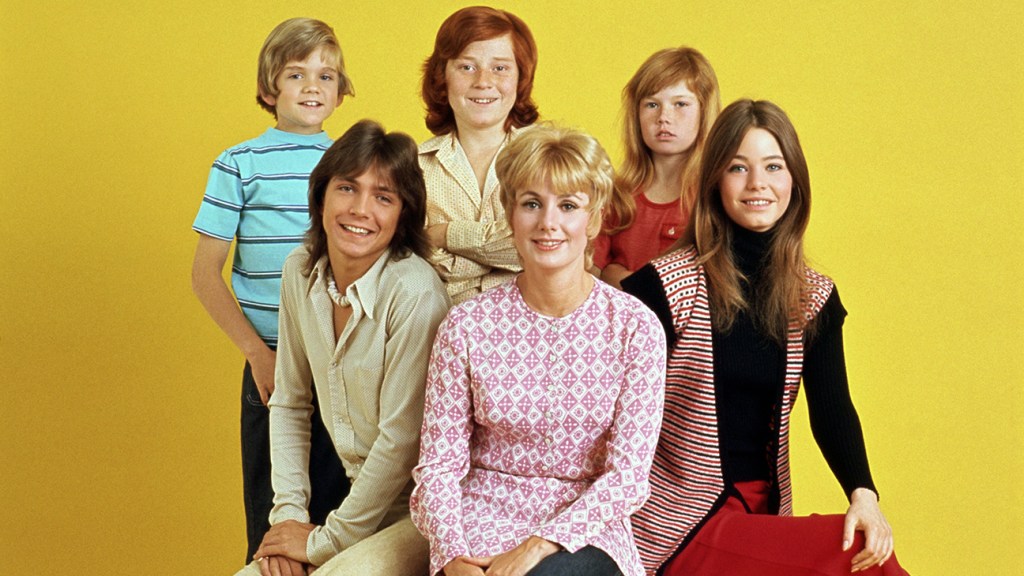
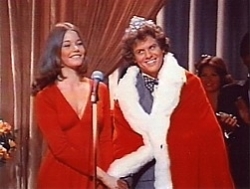

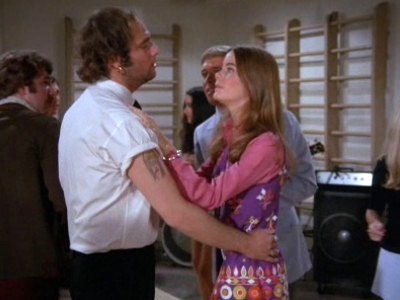
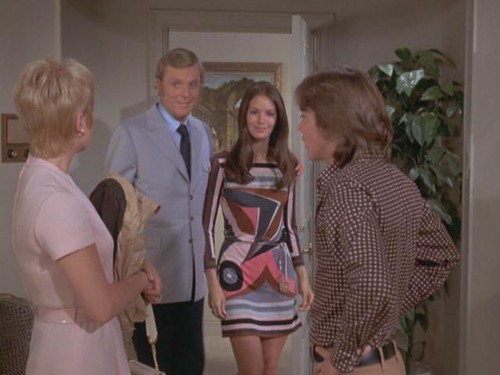
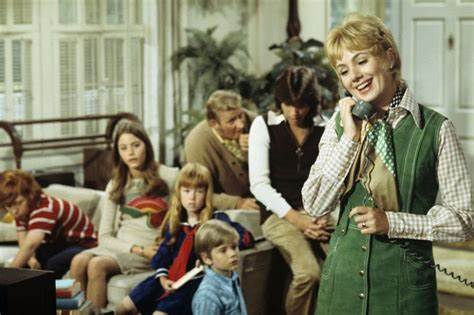
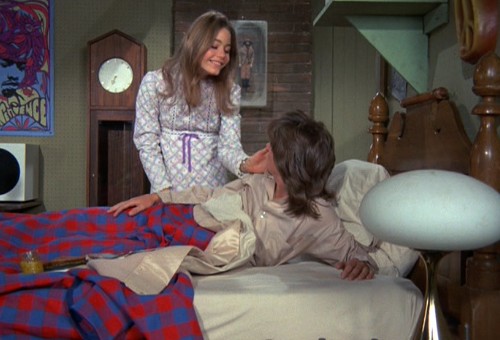


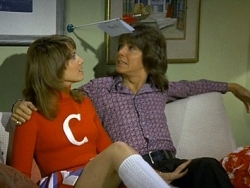


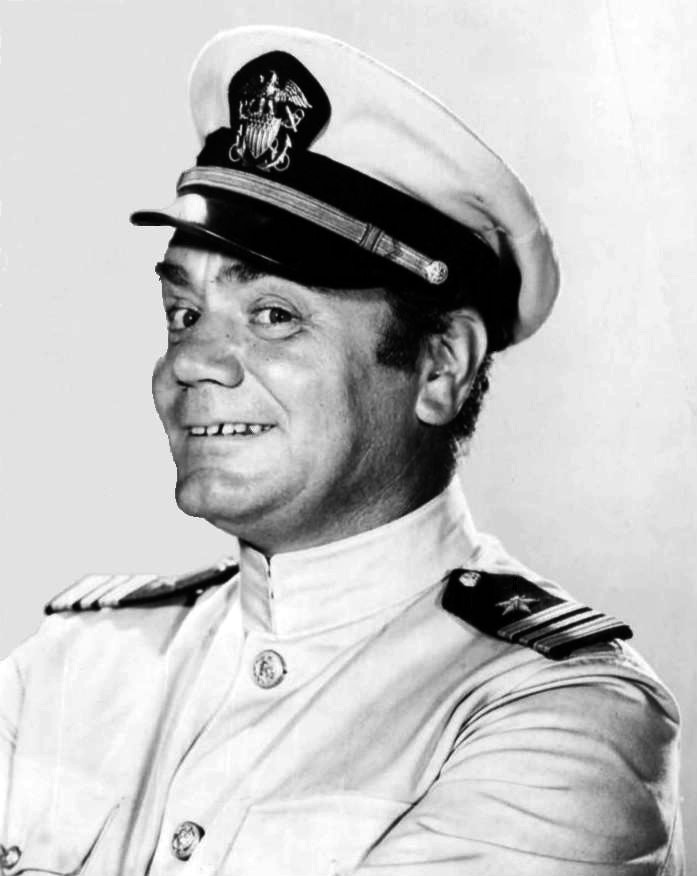


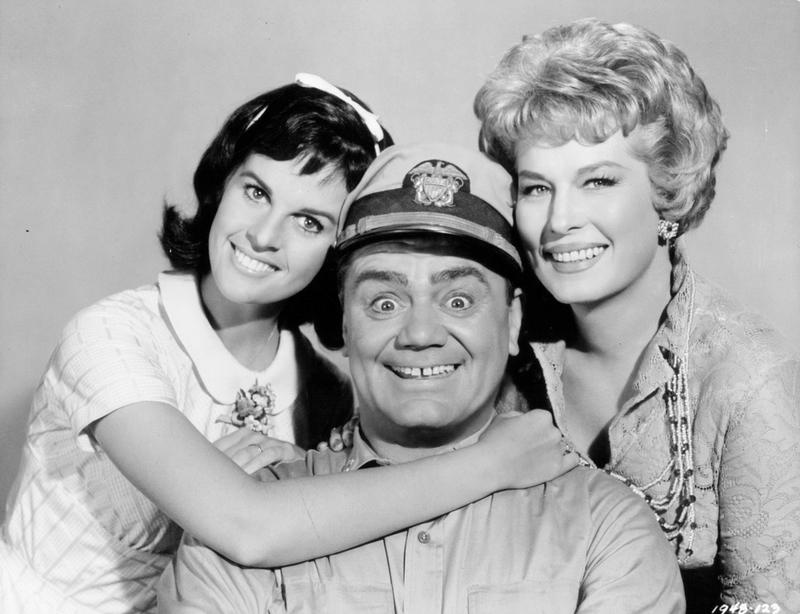
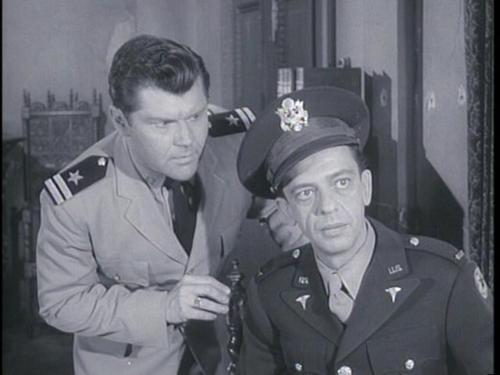

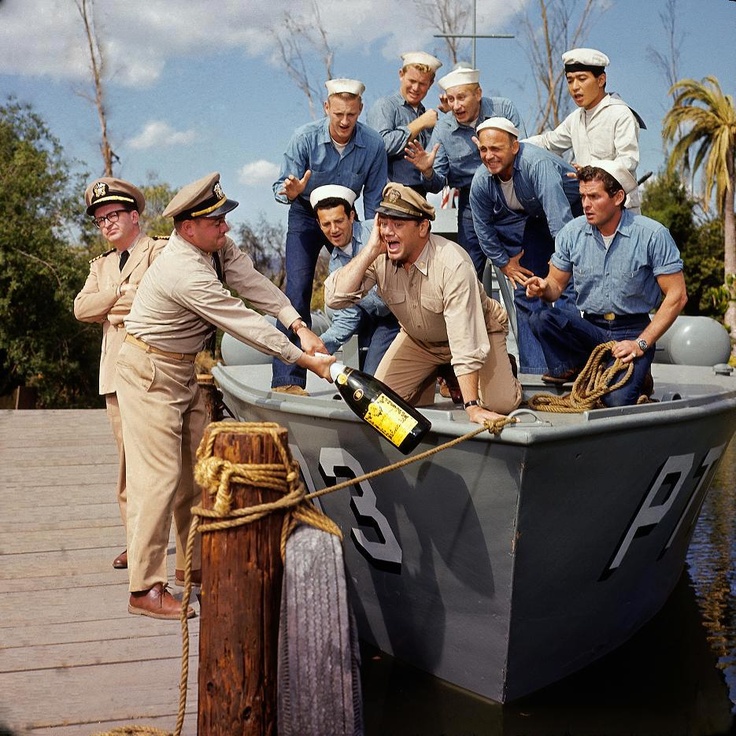
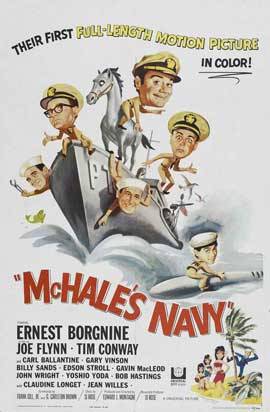

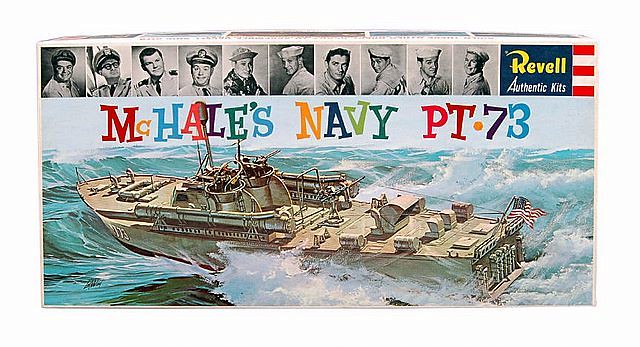

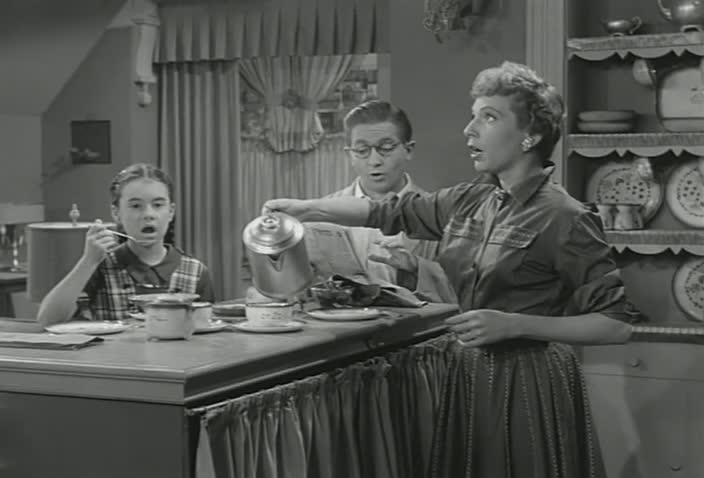
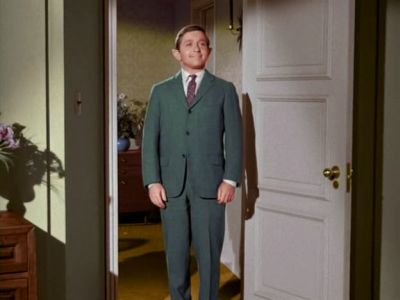


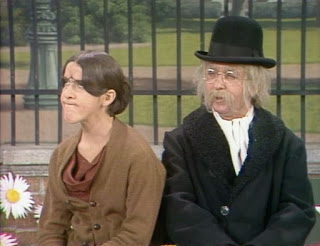
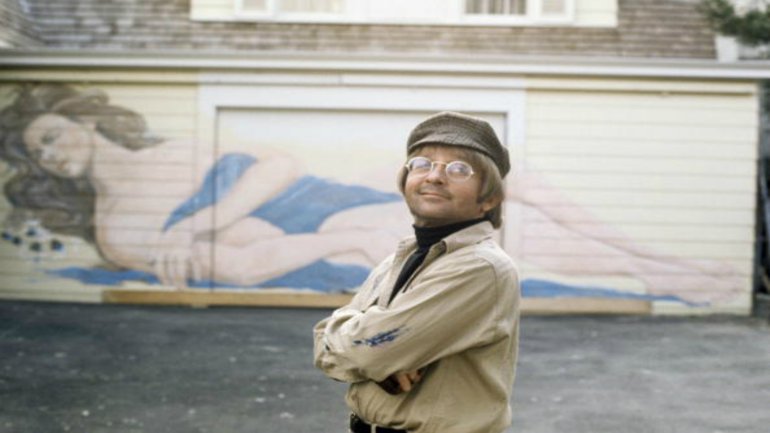


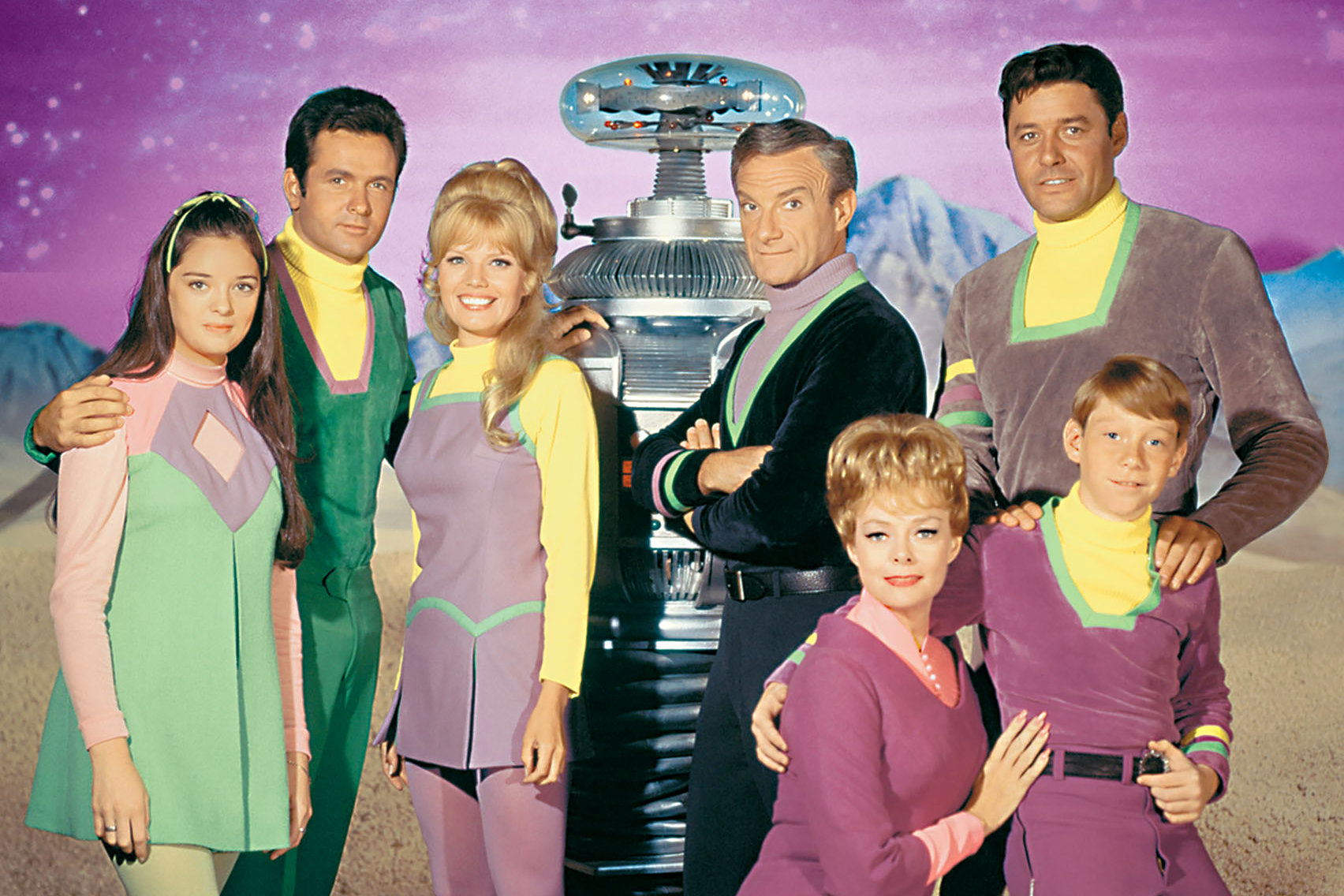


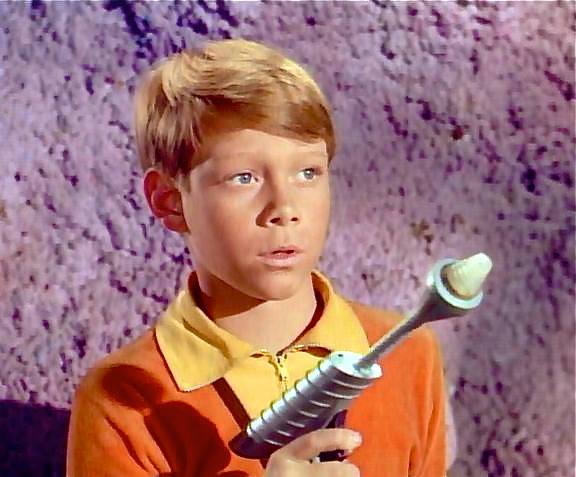
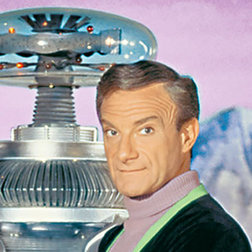

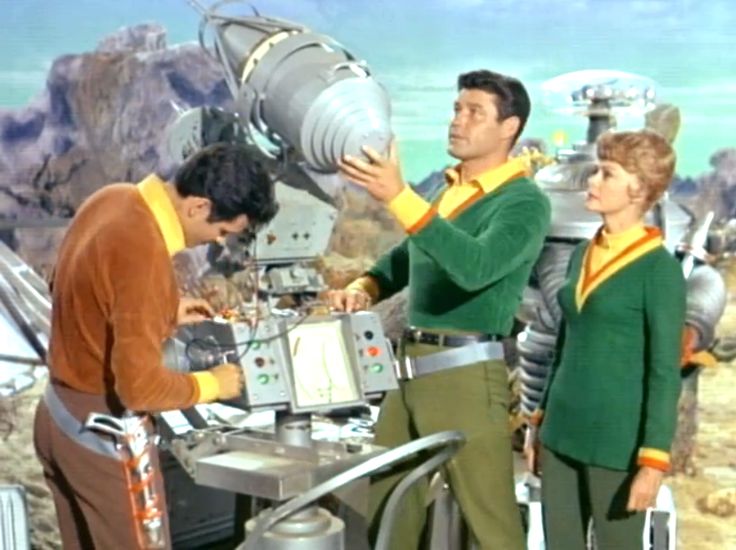


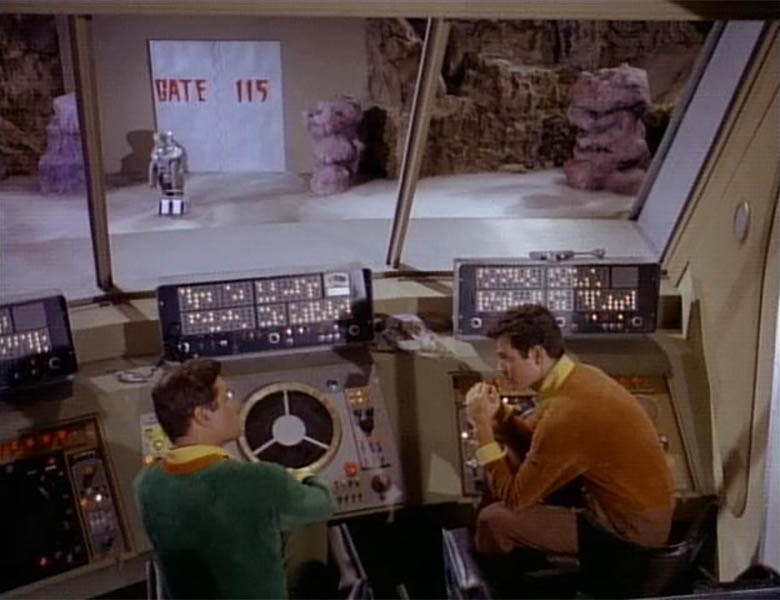

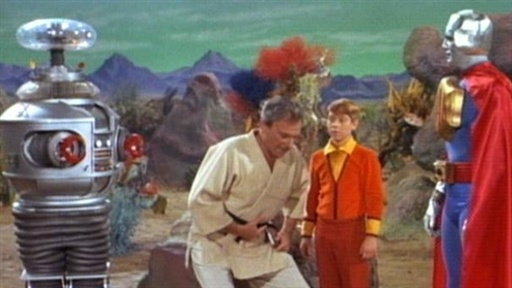

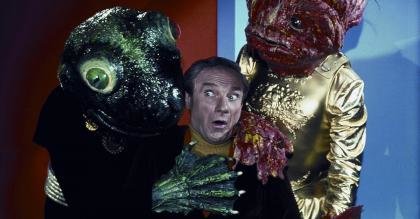


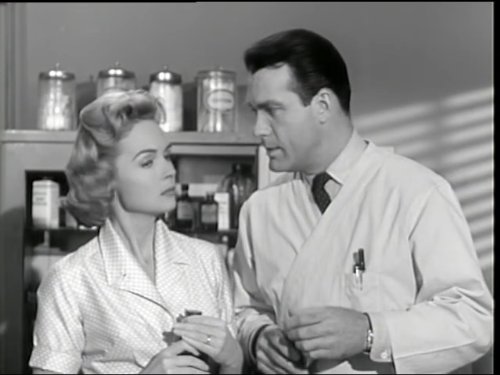


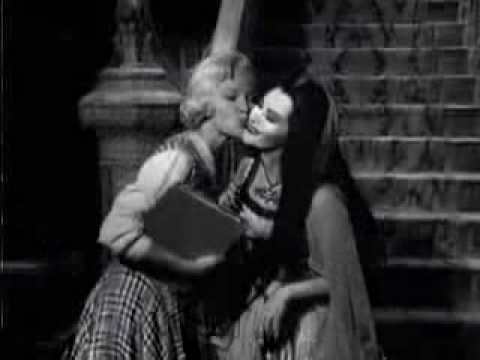


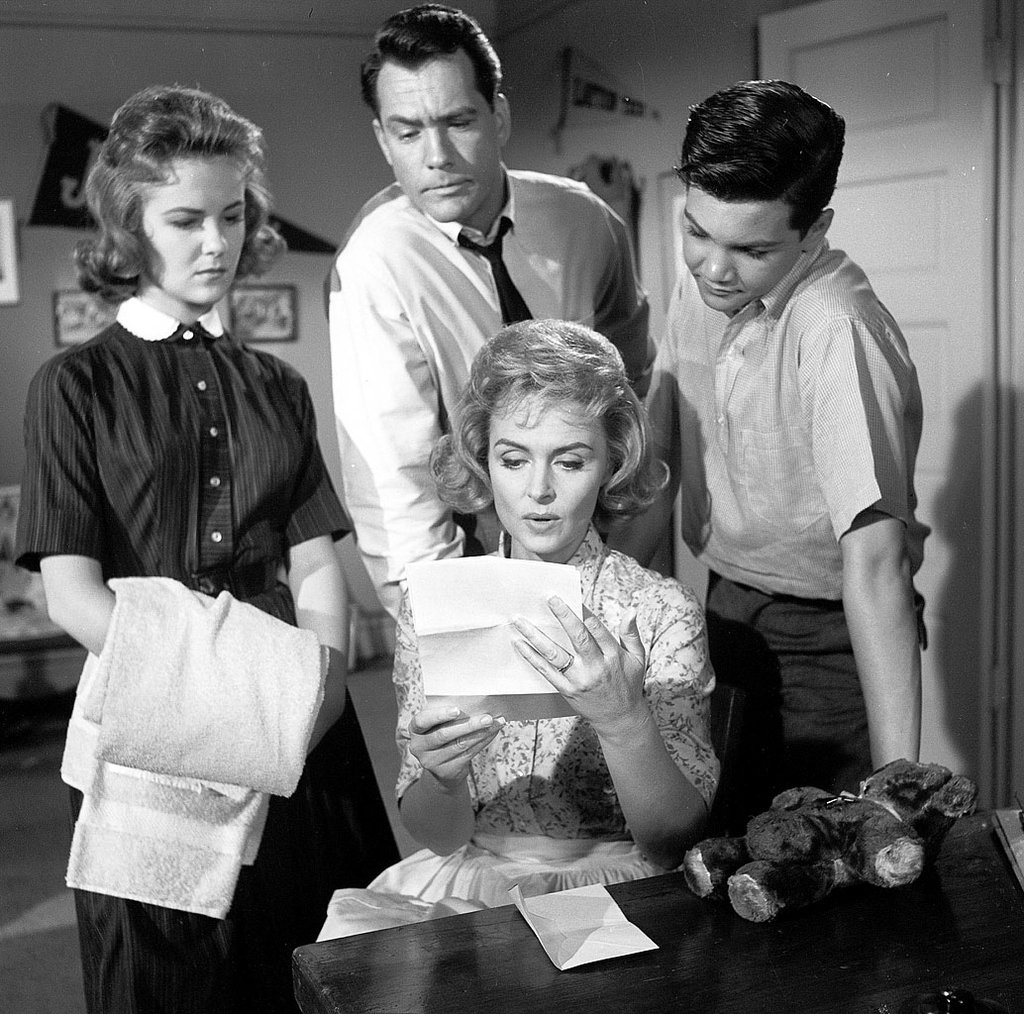








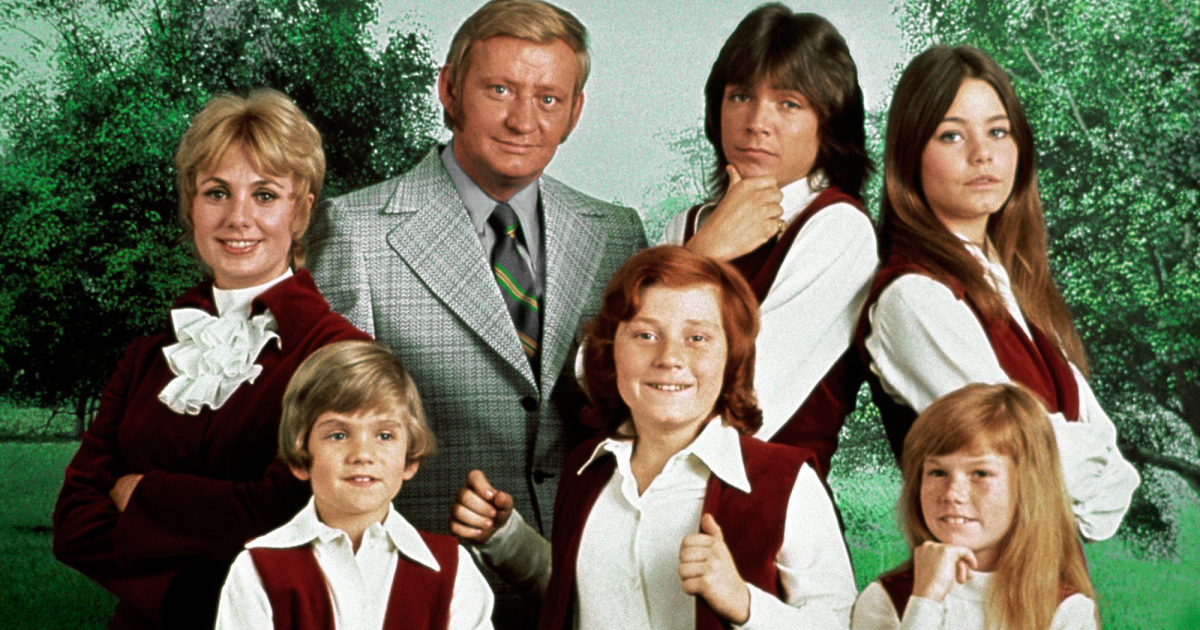


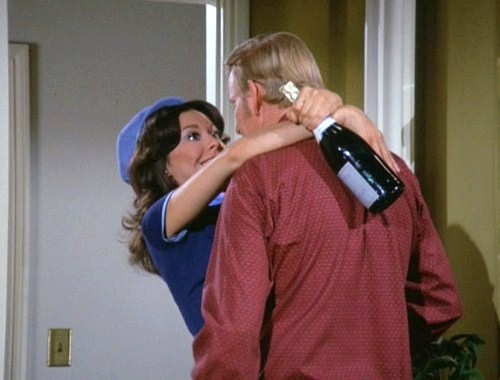


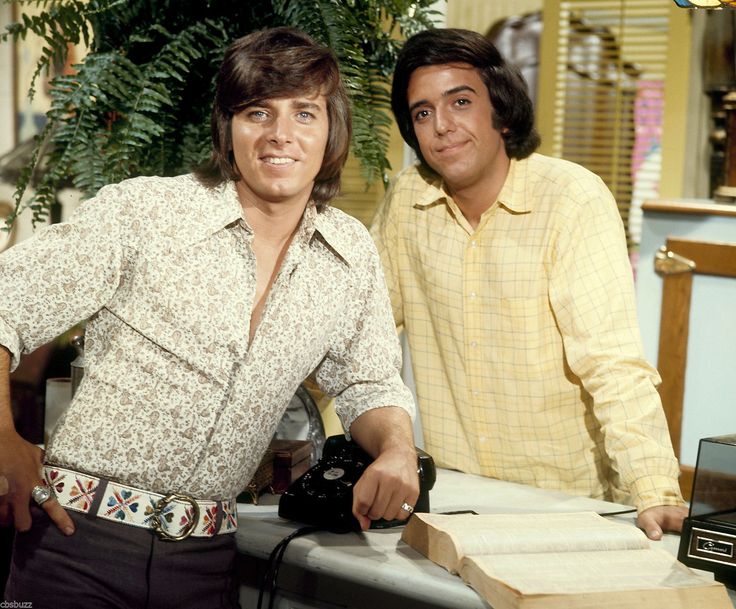
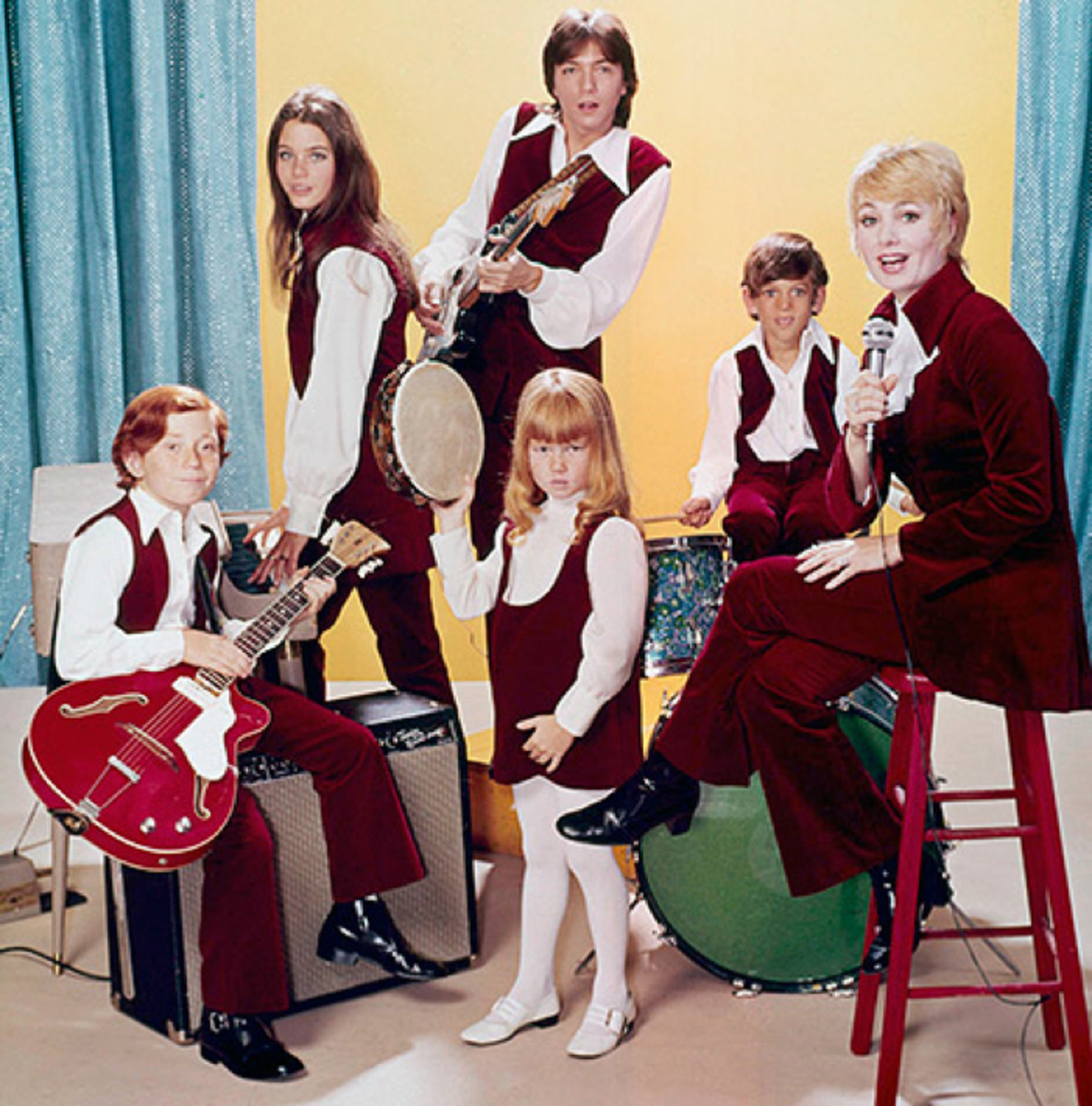
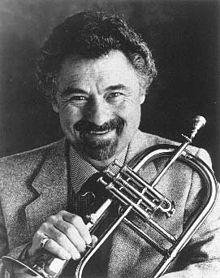
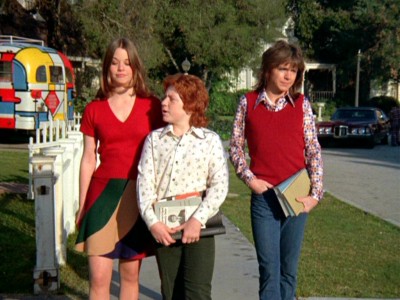
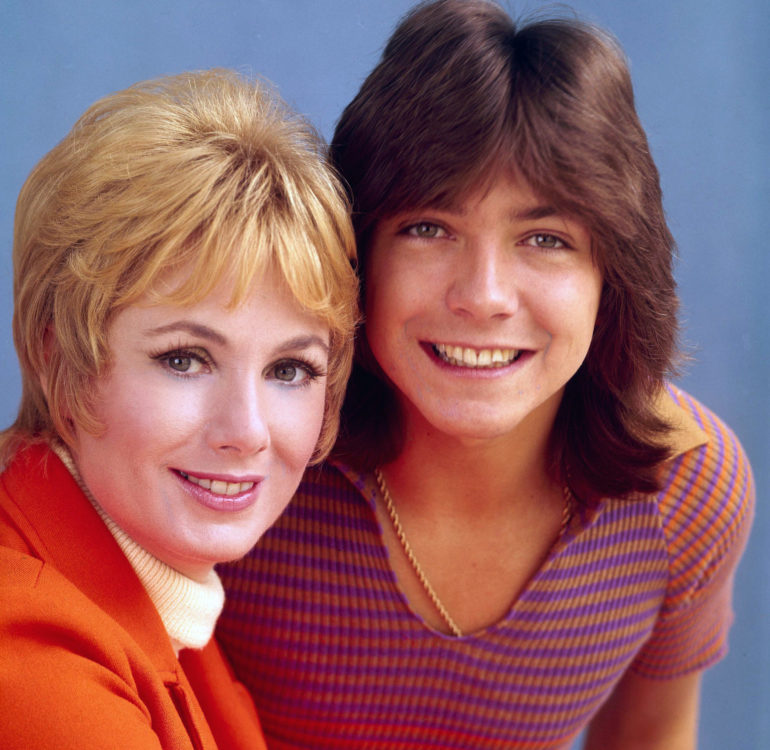


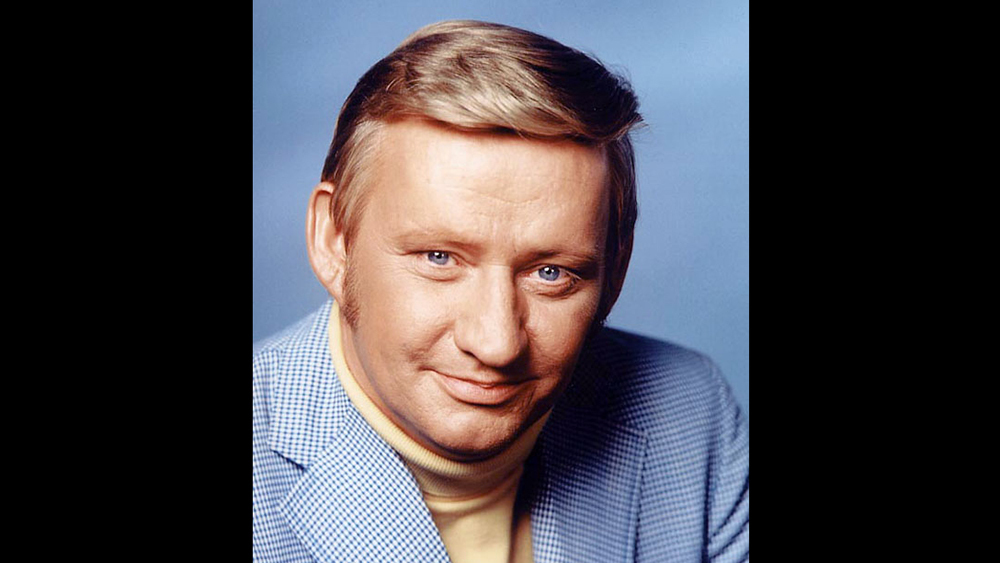

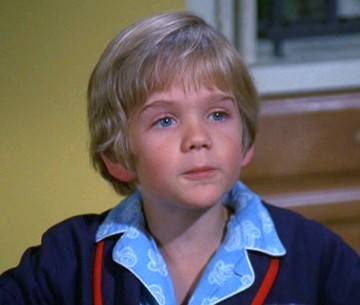
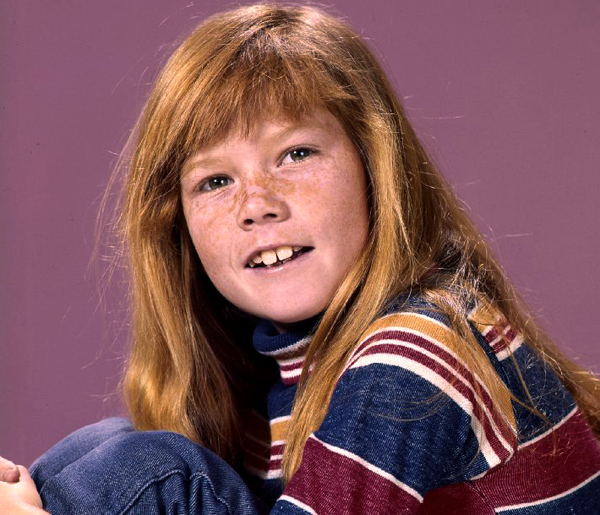

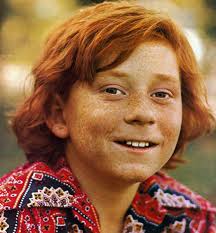

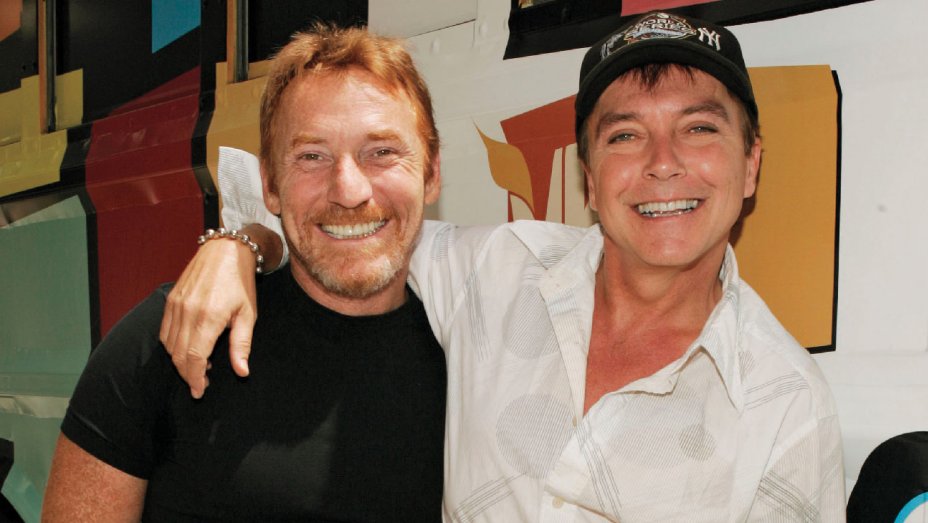

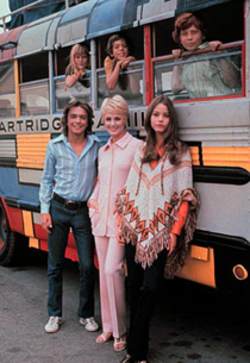
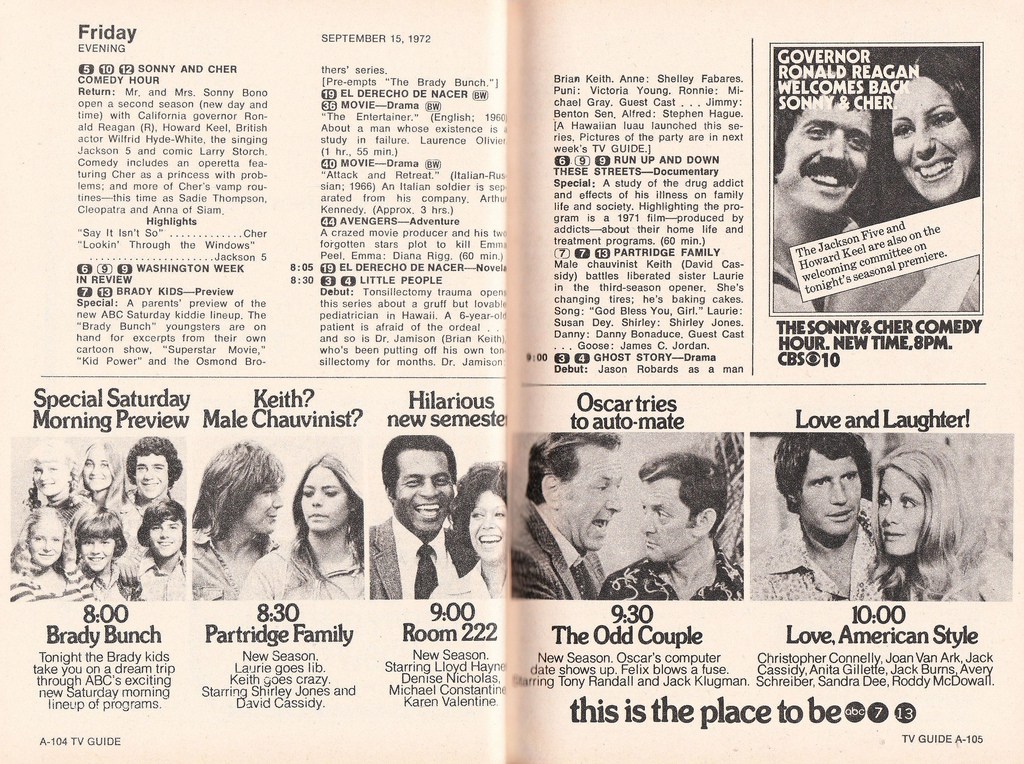
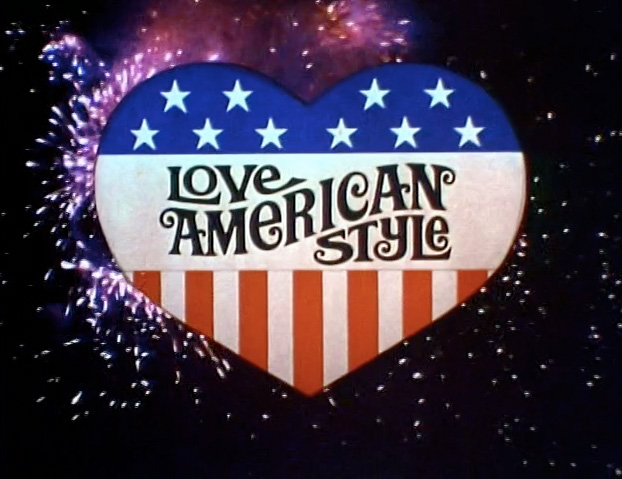


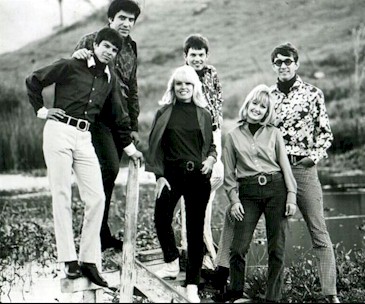


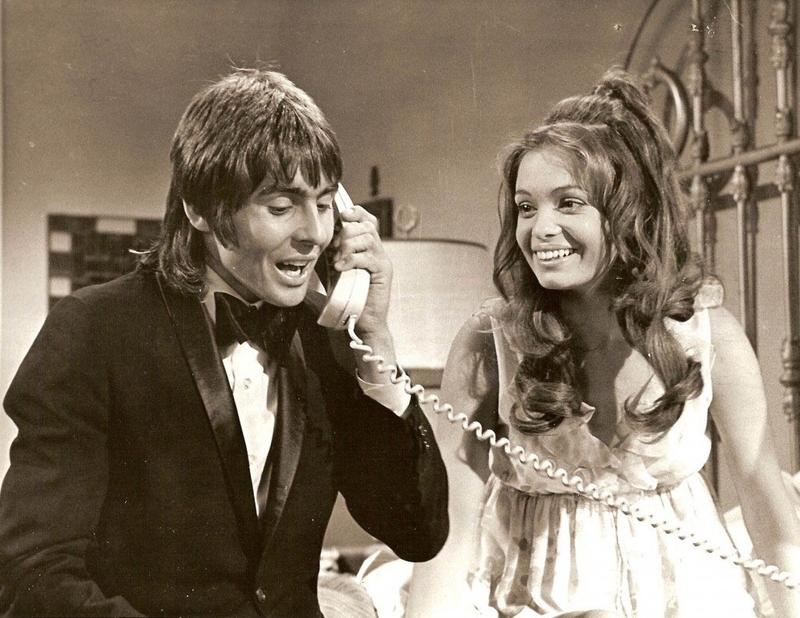


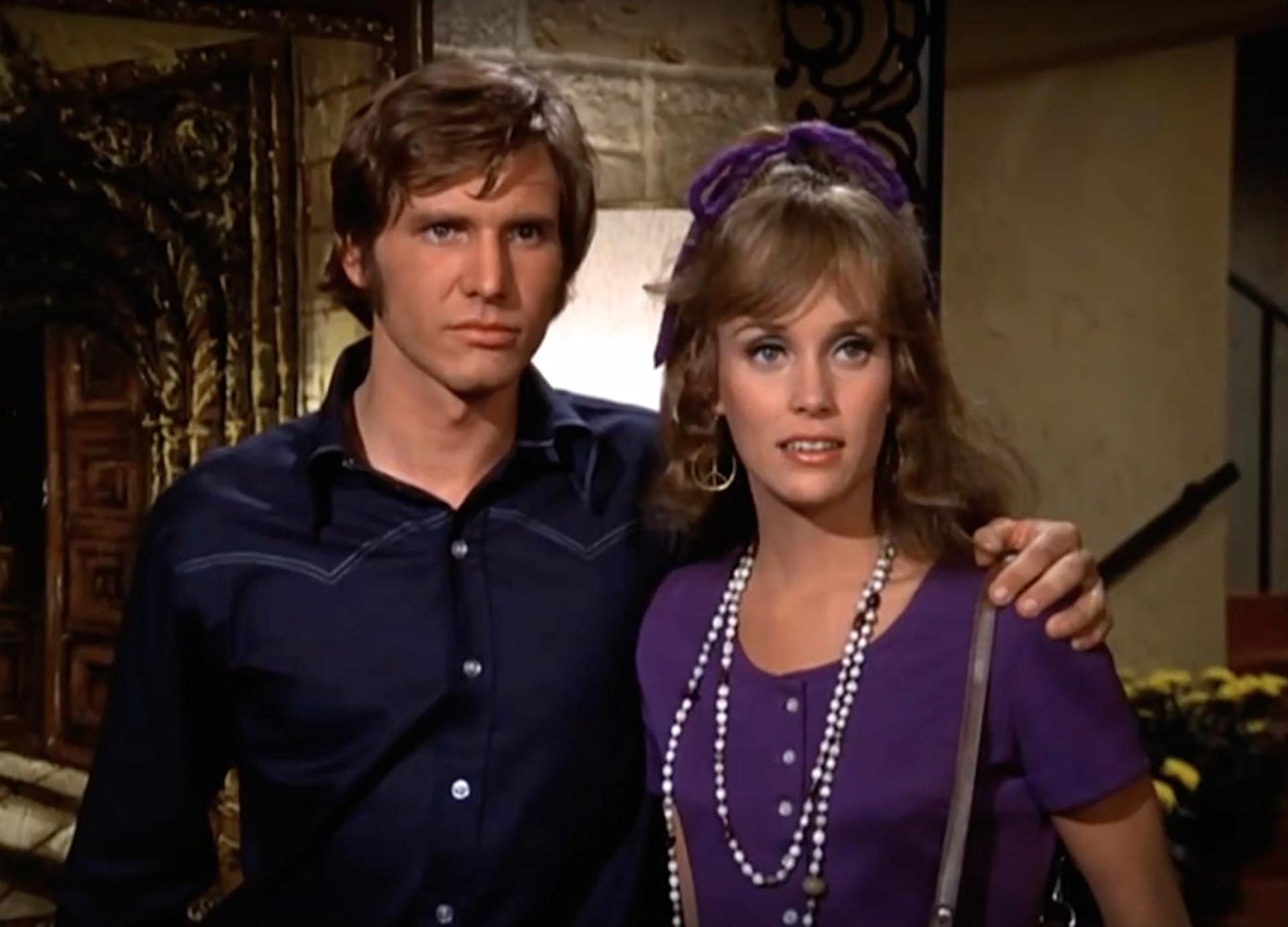


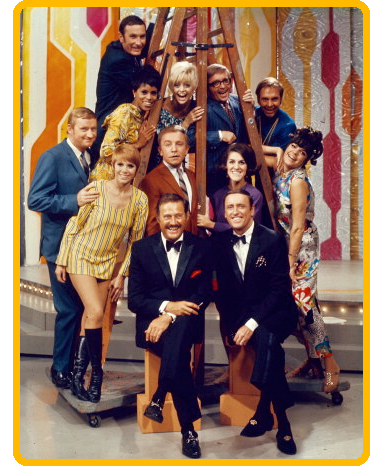


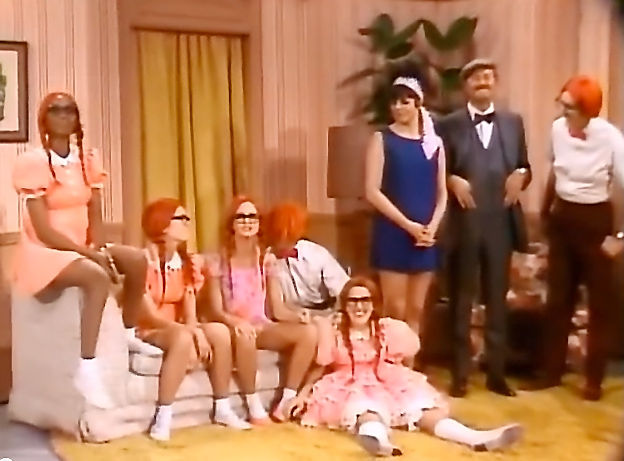


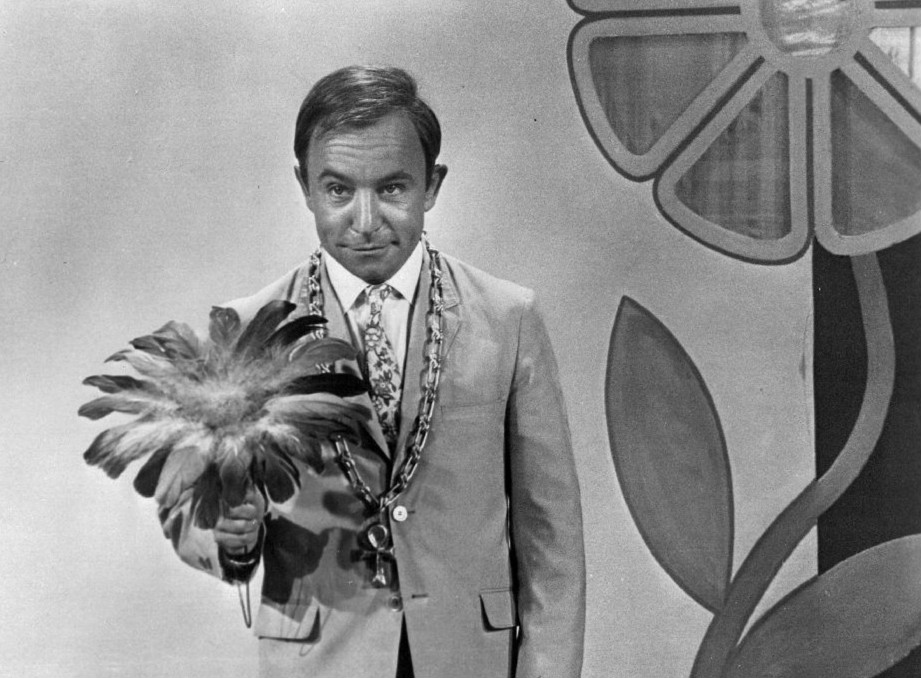


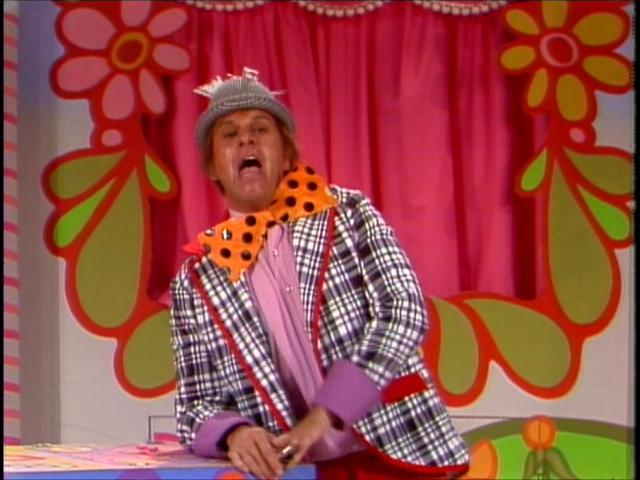


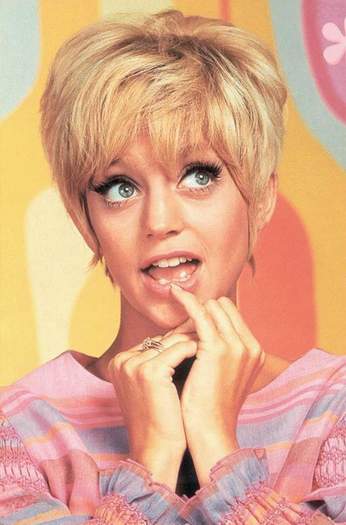


 thewritelife61