Please Report to Room 222

Last week we continued to paid homage to the Friday night schedule of shows airing in 1970 and 1971, learning about The Odd Couple. Today we continue that theme as we meet the cast of Room 222.

Debuting in 1969, Room 222 produced 113 episodes by 1974 when it was cancelled for low ratings. The show, one of the first dramedies, was a more serious counterpart to the later-seen Welcome Back Kotter.

room3

The series was created by James Brooks who wrote for That Girl and The Andy Griffith Show and would go on to create Taxi, The Mary Tyler Moore Show, Rhoda and Lou Grant. What all these shows have in common is a group of characters who have a depth and sophisticated writing that captures the realistic language and behavior of individuals in their settings.

kaufman and dixon

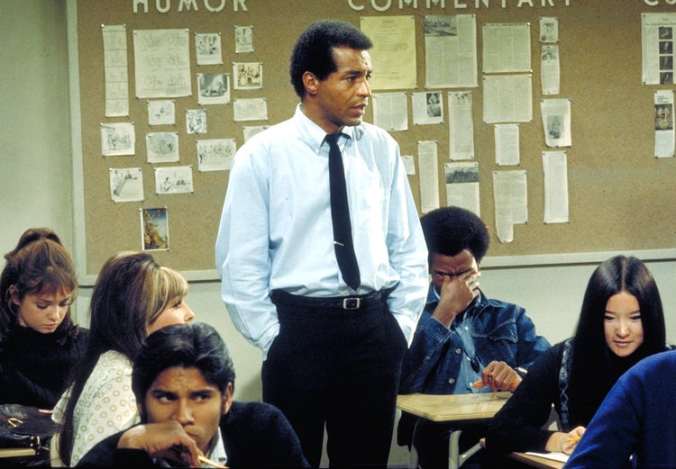
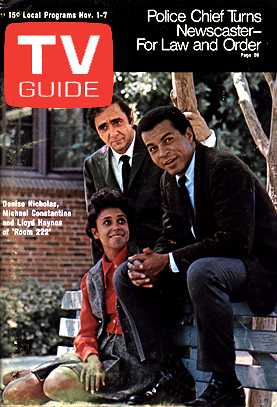
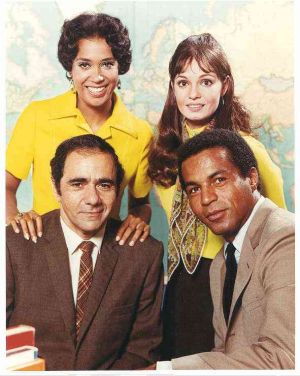
The show featured Seymour Kaufman (Michael Constantine), the principal of Walt Whitman High School, a racially mixed school in Los Angeles; American history teacher Pete Dixon (Lloyd Haines); the guidance counselor (and Pete’s girlfriend) Liz McIntyre (Denise Nicholas); and student teacher Alice Johnson (Karen Valentine). The four staff members were friends, but they did not always agree.  They debated issues and solutions but always with respect. Kaufman displayed a dry humor and could make Dixon laugh. Dixon was the easy-going, wise, and insightful thinker in the bunch. Liz was compassionate while Alice was enthusiastic and idealistic, but a bit naïve. The staff members invest in the students, acting as surrogate parents teaching them important life lessons. The other staff member we get to know is Miss Hogarth (Patsy Garrett), Mr. Kaufman’s secretary.

room10


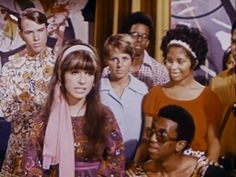
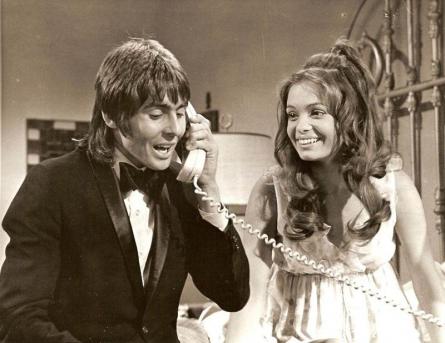
We also spend a lot of time with several students who interacted with staff members in the classroom and occasionally outside of school. There was Richie Lane the Brain (Howard Rice); Jason Allen, tough guy (Heshimu Cumbuka); Pamela, Miss Popular (Ta-Tanisha); Helen Loomis, shy but thoughtful (Judy Strangis); and Bernie, the sports jock and class clown (David Joliffe). Although students were a large part of the show, many episodes focused on the teachers and administrators.

students


Room 222 is Dixon’s classroom where the students are given free range to discuss topics from a variety of viewpoints.  Some of the issues were topical such as the Vietnam war, women’s lib, and Watergate; however, most of the debates could be pulled from today’s headlines:  race relations, shoplifting, drug use, illiteracy, police presence in schools, dress codes, guns in schools, and teen pregnancy. Dixon lets the students lead many discussions, but he preaches tolerance and the ability to see things from others’ shoes. He is respected and liked by his students.

room12

Imdb.com summarized the pilot episode as: Pete Dixon teaches history in Room 222 at Walt Whitman High School. Principal Seymour Kaufman introduces Pete to Alice Johnson, a perky but painfully insecure student teacher. Pete’s most enthusiastic student is Richie Lane, who goes so far as to dress a lot like Pete and even takes roll in his absence. But Guidance Counselor Liz McIntire has discovered some disturbing news about Richie — the home address he submitted is fake, suggesting that he may not live in the school district, and therefore might be ineligible to keep attending Whitman.

room11

Many guest stars showed up at Walt Whitman High including Ed Begley Jr., Richard Dreyfuss, Jamie Farr, Teri Garr, Mark Hamill, Bernie Kopell, Donny Most, Chuck Norris, Rob Reiner, Kurt Russell, and Cindy Williams.

The show was originally on Wednesday nights, and the ratings weren’t great. The network was planning on cancelling the series, but then the show won the Emmy for Outstanding New Series, Michael Constantine won for Outstanding Supporting Actor in a Comedy Series, and Karen Valentine won for Outstanding Supporting Actress in a Comedy Series. The show was moved to the Friday night line up between The Partridge Family and The Odd Couple where its ratings soared.

heshimu and joliffe

The first season used a laugh track which was not used for subsequent seasons, helping to add drama to the show.

The theme song was written by Jerry Goldsmith. He would go on to be nominated for seven Academy Awards for music, winning for The Omen. A series of novels was created based on the show by William Johnston in the early 1970s, and Dell Comics published four issues about Room 222 in 1970-1971.

karen

The show propelled Valentine to star status. Mark Voger interviewed her online for New Jersey Advance Media for NJ.com on October 25, 1970. Part of his article is quoted below:

“I had gone in to meet the casting person for ‘Room 222,'” the Santa Rosa, Calif., native told me during a telephone interview some years back.

He took down the color of my eyes and the color of my hair, and I was dismissed. Nothing happened for a number of months.

Then I was called in again to meet with (series producer) Gene Reynolds. When you talk about naivete — the character of Alice Johnson was a bit of a bumbler and very naive and just wet behind the ears.

When I read for Gene, everything imaginable went wrong. I mean, I went to put my purse down, and I had sunglasses on my head; they fell off. I went to pick those up, the pages went all over the floor. I had to pick those up.

I looked up at him and I said, ‘I don’t know what’s going on. I’m really rather chic, you know. This is so strange.’ And he said, ‘Don’t change a thing.'”

Valentine believes she’d hit upon the essence of the character that Reynolds sought.

She continued: “After I read, I was leaving the office. He said, ‘Don’t get hit by a car.’ And I thought, ‘Boy, this is a good sign. It’s the first time anyone cared whether I was dead or alive in this town.'” . . .

“It was a real forerunner for integrated shows,” Valentine said. “It was the first show, I think, that showed blacks and whites interacting so well together, and role models in teachers and counselors. It was so well accepted that in certain parts of the country, ‘Room 222’ was required viewing by some of the teachers and principals and administrative staffs around different schools.”

room13

While the hair-do’s and clothing tie the show to the early 1970s, the scripts could easily be part of current television shows. I’m not sure if that is positive because the show was so well written or if it’s negative because we are dealing with these issues almost 50 years later without much progress. Either way, taking some time to watch the show will be time well spent.

clothing


“I’m a neurotic nut, but you’re crazy!”

odd1

Today we learn about the story behind The Odd Couple.  I think that this show is one of the most under-appreciated shows out there. It came at a time when shows like The Mary Tyler Moore Show, The Bob Newhart Show, and M*A*S*H were being acclaimed for their sophisticated writing and depth of characters.  The Odd Couple achieved these same credentials. Garry Marshall learned the importance of character-driven scripts during his time writing for The Dick Van Dyke Show. Ironically, Marshall wrote 18 scripts for The Dick Van Dyke Show and Jerry Paris (Jerry Helper on The Dick Van Dyke Show) directed 18 episodes for The Odd Couple.

movie

In March of 1965, the play debuted. Written by Neil Simon, The Odd Couple was based on the real-life experiences of his brother Danny. The play ran for 966 performances and was nominated for a Tony that year. In 1968, a movie was made starring Walter Matthau as Oscar Madison and Jack Lemmon as Felix Unger. Simon signed away his television rights. When Garry Marshall and Jerry Belson developed the series, it was listed as “Neil Simon’s Odd Couple. Simon objected to his name being associated with the show, because he said he did not know what the writing would be like. His name was removed, but he did come to appreciate the series, and he had a cameo role in the episode “Two on the Aisle” in 1974.

odd10

The show was on the air for five years from 1970-1975, producing 114 episodes. Tony Randall was hired first.  Both Dean Martin and Art Carney were considered for the part of Felix. Randall was pushing for Mickey Rooney to get the role of Oscar.  Martin Balsam was also under consideration. Garry Marshall fought hard for Jack Klugman, and eventually Klugman received the part. Both Randall and Klugman had starred in different versions of the play.

The show was on the verge of cancellation every year, but the summer ratings were always so high that the show continued to be renewed. Jack Klugman had high hopes for the syndication of the show, and he convinced Tony Randall to give up part of his salary for syndication rights. Klugman was right; in the 1980s, the show was on the air on several channels. Although the show never cracked the top 30, critics liked the show and it was nominated for an Emmy three times for Outstanding Comedy Series. Both Klugman and Randall were nominated for Emmys every year the show was on the air for Outstanding Lead Actor in a Comedy Performance; Klugman won in 1971 and 1973 while Randall took home the award in 1975.

split personality

This was the memorable introduction to the show each week:

“On November 13, Felix Unger was asked to remove himself from his place of residence. (A door slams shut, only to reopen and we see someone angrily hand Felix his saucepan) That request came from his wife. Deep down, he knew she was right, but he also knew that someday, he would return to her. With nowhere else to go, he appeared at the home of his childhood friend, Oscar Madison. Sometime earlier, Madison’s wife had thrown him out, requesting that he never return. Can two divorced men share an apartment without driving each other crazy?”

Bill Woodson narrated the opening. The actions of the two leads during the credits changed a bit from year to year but centered around Oscar being a slob and Felix being a neat freak.

odd9

There were several variations about how Felix and Oscar met.  As you can see in the opening, they were mentioned as being childhood friends. However, in the first season, one of the episodes recalled a murder trial where Felix and Oscar were jurors, claiming they met then.  Later several episodes mentioned them meeting in the Army. In Season 3, the word “childhood” was removed from the opening segment.

odd7

During the first season, the show was filmed in the same apartment as the movie version. It was done with one camera and a laugh track.  For the second and subsequent years, three cameras were used, and the laugh track was replaced by a live audience.

Oscar and Felix lived at 1049 Park Avenue, an existing address in New York. The actual building was used for the opening credits and exterior shots. Almost all the exterior shots feature two cars: a 1966 Ford 4-door station wagon and a red VW Beatle. Fans still visit the building, and occasionally mail is delivered for Oscar or Felix.
sommers

Many of the show’s details were adapted from real life. Brett Somers played Oscar’s ex-wife and just happened to be his ex-wife in real life. Oscar and Klugman both followed horse racing. Oscar wrote for the New York Herald.  The Herald did exist from 1835-1924 when it merged with the Tribune.
edna

Felix’s kids were named Edna and Leonard. Tony Randall’s middle name was Leonard, and his sister’s name was Edna. Felix moved out of the house November 13, Garry Marshall’s birthday. Randall and Felix both had an appreciation for opera and classical music.
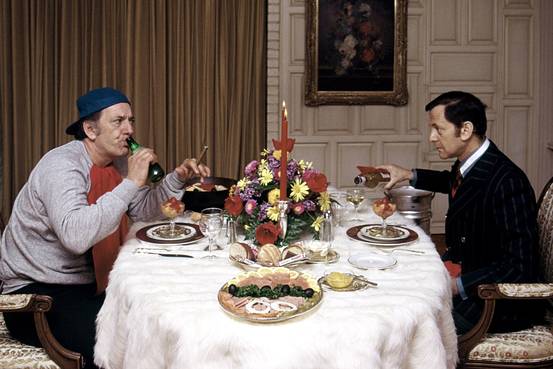
oscar and felix

Oscar was a hot dog and beer guy while Felix was a filet mignon and red wine person.

ABC was always worried about the issue of homosexuality. As a prank, Klugman and Randall would occasionally provide improvised dialogue to send to the network just to get them worked up.

As mentioned earlier, Brett Somers played Oscar’s ex-wife. Randall’s ex-wife Gloria was played by Janis Hansen. Pamela Ferdin had the role of Edna, while the role of Leonard was played by two different actors who would both go on to become teen idols: Willy Aames and Leif Garrett.

Al Molinaro played Murray the cop, the guys’ friend and one of the regular poker players. Penny Marshall played Oscar’s secretary Myrna Turner. Elinor Donahue played Miriam Welby who was Felix’s girlfriend until the last season. The last episode of the series reunites Felix and Gloria who remarry.

There were many celebrity guest stars on the show for the five-year run, and many of them played themselves. Some of the famous faces to appear on the show include Martina Arroyo, Roone Arledge, Dick Clark, Roy Clark, Howard Cosell, Richard Dawson, Richard Fredricks, Monty Hall, Hugh Hefner, Billy Jean King, Allen Ludden, Jaye P. Morgan, Bobby Riggs, Bubba Smith, Betty White, Paul Williams, and Wolfman Jack. Garry Marshall shows up four different times on the show–as a drummer, as Werner Turner, and as Man 1 and Man 2.

Two of the best-loved episodes were “Password” and “Fat Farm.”

password


In “Password,” Oscar Madison  is invited to be a celebrity guest on Password after he runs into the show’s host, Allen Ludden, and his wife, Betty White, at a restaurant. Because  Felix loves Password, he begs Oscar to accept the invitation, and to bring Felix along as his partner. During the taping, Felix overthinks every clue. When Oscar says “meat,” Felix says “Lincoln” (because “Lincoln loved mayonnaise”). When the password is “bird,” Felix gives Oscar the clue “Aristophanes” (because Aristophanes wrote The Birds). “If Charlie Chan had these clues, he’d be running a laundry,” Oscar grumbles. But the game isn’t a total disaster. When Oscar gets the password “ridiculous,” he gives Felix the clue “Aristophanes” right back, and Felix responds correctly. The friends lose the game but not their friendship.

In “Fat Farm,” proving he’s in top shape, Felix stands on his head and jumps onto a desk (earning Randall applause from the audience), while Oscar can barely make it through a couple of push-ups. Oscar rationalizes why he should not go on Felix’s annual two-week visit to a health camp–“I like my blubber! It keeps me warm, it keeps me company, it keeps my pants up!.” Felix wears him down, so Oscar goes along. It makes him crazy that the camp serves imaginary desserts and bans food from the bedrooms. Soon Oscar discovers a delicatessen just down the road and undertakes a smuggling operation.

Jack Klugman and Tony Randall developed a very close and life-lasting friendship during the years they appeared together as Oscar and Felix. After the show was cancelled, they continued to see each other often. They performed in regional productions of The Odd Couple from the late 1980s through the mid 1990s. They appeared in commercials as Felix and Oscar for Yoplait yogurt, Yahtzee, and Eagle snacks. They even recorded an album “The Odd Couple Sings” for London Records.

On March 23, 2001, Larry King Live featured Jack Klugman and Tony Randall. This clip from the show gives us a good idea of what their friendship meant to them.

KING: Was it as much fun doing it, Tony, as it appeared there?

RANDALL: Yes, yeah. Especially working with Jack. It sounds as if I’m saying the right thing, but it’s true. But acting has always been fun for me. I’d rather act than do almost anything else.

KING: Did you — Jack, was this a natural simpatico between the two of you? It just happened?

KLUGMAN: Oh yeah, it happened so beautifully. Like, we had maybe five pages that would remain — from Monday when we read the script — five pages would remain by Friday by the time we did it.

If for instance, he had to teach me manners, it would be Tony teaches Jack manners, and it would be four blank pages, and then we’d improvise. And he’s the best improviser in the world. He taught me how to improvise. People when they improvise, they talk, talk, trying to fill time. He would provoke — I had to teach him football, right? He knows it, he watches sports all the time. But instead of — I said, all right, now get down, so he came next to me. So, I said we’re not the Rockettes, come over here. And then he put his face right here, and I said, I don’t want to dance with you. So, he would provoke you into saying something funny. That’s true improvisation. It was wonderful. I had a great time. I learned a lot.

KING: Was it natural for you too, you and him?

RANDALL: It just clicked.

KING: It just clicked?

RANDALL: That doesn’t always happen.

KING: No.

RANDALL: It doesn’t even happen always with good actors.

KING: You could put two good actors and put them together, and it doesn’t necessarily mean it will work, right?

RANDALL: That’s right, that’s right.

KING: So, there has to be a natural chemistry?

RANDALL: A spark. You can’t explain, you can’t predict it.

KLUGMAN: But you also, if I may say, you both got to want the same thing, which is the best show you can put on. See, I mean, we were not interested in billing or in stardom. We wanted this to be the best show we could. And we never had any of that, I should get more, he should get more. We never, ever had that kind of argument, never. We may have discussed what’s funny to him, what’s funny to me, and we’d work it out. But it was wonderful that way. There was no jealousy.

. . .

CALLER: And I was very touched by that, and I was wondering if you could tell us how much your friendship has played a part in your life and your careers and forgive me if you’ve already talked about that.

KING: Good question. Tony?

RANDALL: Well, perhaps this is an odd thing to say. I’ve had almost no friends in my life. Very few. You count them on this many fingers, so the friendship with Jack is pretty important.

KING: Why?

RANDALL: I don’t know. I was married for 54 years. And we didn’t have children, and we were sufficient to each other. And we didn’t have friends. We were just a little world. And we were happy. And we had almost no social life. And my friendship with Jack just grew and it was about the only friendship I had.

KING: Do you agree The Odd Couple is about friendship?

RANDALL: It’s about male bonding, absolutely. That’s what the play’s about.

KING: Jack, what kind of friend is Tony Randall to you?

KLUGMAN: He’s the best.

book

Tony Randall passed away in 2004 at age 84 from pneumonia following heart surgery. Following Randall’s death, Jack Klugman authored a book with Burton Rocks titled Tony and Me: A Story of Friendship which was published in August of 2005. He wanted to pay a tribute to his friend and hoped to raise money through royalties which would enable a theater to be named in honor of Randall. Klugman talks about the Broadway that existed when they were young and how it influenced each of them. He said Randall founded the National Actors Theater with $8,000,000. He worked diligently to promote it from 1991 when it opened until his death in 2004. And he paid $35,000 a week to bring local students in to expose them to good theater. After his death, it disbanded.

I could not find a Tony Randall Theater, but I was able to locate the Tony Randall Theatrical Fund which supports “nonprofit theater companies, innovative productions, initiatives in art education, and arts-based community outreach programs.”

oscar sportscaster

In commenting on Randall’s death, Klugman said “My favorite episode of The Odd Couple was one where we were on Password. They were throwing Tony off the show, and he had a great adlib. He said, ‘Oh, boy, what a gyp!’ And that’s the way I feel now. What a gyp.”

Jack Klugman died in 2012 from prostrate cancer at the age of 90.

odd6

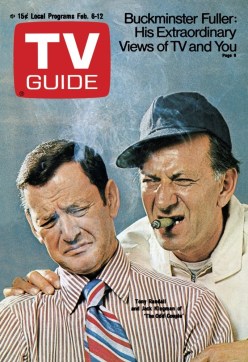
It’s nice to learn that Felix and Oscar were truly the friends we thought them to be in real life. With all the articles currently being written about the lack of male friendships and how detrimental that is on men’s health, these two were good role models.
odd19

In 2005, the American Booksellers Association posted an interview with Klugman on November 3, written by Tom Nolan. Jack was discussing some of the book events he attended and what it meant to him to talk with viewers who watched and enjoyed The Odd Couple. He received intimate feedback from strangers about why the show was important to them. He said “You know you do a show, and you do the best you can. We used to work until eleven o’clock every night on The Odd Couple, to make it good. Now it’s 30 years since it’s been off the air, and I go around, and people say: ‘I grew up with you. I sat on the couch with my mother or my father, and we laughed with you.’ And suddenly the people have faces, and names, and feelings. It’s been invigorating! You know, you don’t count on that; you don’t know that you’re really entertaining people or having an effect on people’s lives. I had a guy from Sports Illustrated who did an interview with me say he became a sportswriter because I was a sportswriter on The Odd Couple. Yeah, it’s like wow, you’re kidding. Now I’m getting this in person, and I really love it.”

odd8

We all thank you Jack Klugman and Tony Randall for the entertainment you provided and the friendship you created!
Love and the Funny Show

ABCFriday_1972

There was something magical about the Friday evening television schedule from 1971-1973.  Anyone who was born in the late 1950s or early 1960s can remember sitting down in front of the television at 7 pm (central time) for the Brady Bunch and staying put through The Partridge Family, Room 222, The Odd Couple, and Love, American Style.  Sitting through an entire evening of shows was almost unheard of back then, but we binge watched every Friday night. While the boys were divided between Marcia Brady and Laurie Partridge, every girl of that age had was in love with Keith Partridge.  Watching an episode of The Partridge Family today makes me feel 10 again. For the next five weeks, I’m taking a look at each of the shows that made this schedule so enjoyable.

las18

Today we begin with Love, American Style. This show was an iconic 1970s show. Like Laugh In, the clothing, furnishings, and vocabulary do not make it timeless. But it was a lot of fun. This fast-paced anthology show featured two to four mini episodes each week, and between them were quick skits, often featuring a brass bed. Each smaller episode is titled “Love and the _______.”

A troupe of players was featured on each show for the in-between skits. These regulars included William Callaway, Buzz Cooper, Phyllis Davis, Mary Grover, James Hampton, Stuart Margolin, Lynn Marta, Barbara Minkus, and Tracy Reed. Margolin went on to a regular role in The Rockford Files; Tracy Reed was featured in McCloud and Knot’s Landing; Phyllis Davis was part of the cast of Vega$ and Magnum PI, and James Hampton will be familiar if you watched The Doris Day Show or F-Troop. Both Reed and Davis were featured on Love Boat episodes which had a similar format to Love, American Style.

The show had a memorable and catchy theme song. Written by Arnold Margolin, the first year it was performed by The Cowsills.  You will see a lot of overlap between these five Friday night shows, and music is one of those cross-overs. The Partridge Family was based on the life of The Cowsills.

During the second and subsequent years that Love, American Style was on the air, the theme song was performed by the Ron Hicklin Group. The Ron Hicklin Group could be heard in a variety of motion pictures and commercials, and they also appeared on recordings with stars such as Paul Revere and the Raiders and Cher. John and Tom Bahler, brothers who sang under The Charles Fox Singers were also part of this group. The group provided television theme song recordings including Batman, That Girl, Happy Days, and Laverne and Shirley. They also did the singing for The Partridge Family theme and songs performed on the show as well as the Brady Bunch kids. Ron retired in the early 2000s, and Tom does a variety of things. He is also known for writing Bobby Sherman’s hit, “Julie Do You Love Me?”. John married Janet Lennon, one of the Lennon sisters who performed on The Lawrence Welk Show. He currently lives in Branson and conducts the “new” Lawrence Welk orchestra.

hicklin singers

The snappy melody was set to the following words:

Love, Love, Love

Love, American Style,
Truer than the Red, White and Blue.
Love, American Style,
That’s me and you.

And on a star-spangled night my love,

My love come to me.
You can rest you head on my shoulder.
Out by the dawn’s early light, my love
I will defend your right to try.

Love, American Style,
That’s me and you.

Paramount Television developed the show. The executive producer of the show was Arnold Margolin, Stuart’s brother. There were 53 different directors during the four-year run. The series received Emmy nominations for Outstanding Comedy Series in 1970 and 1971; Best Music Composition in 1971, 1972, and 1973, winning in 1973; and winning the Emmy in 1970 for Outstanding Original Music and Lyrics.

las8

Many people wrote for the show, but Garry Marshall and Jerry Belson received the most credits. One of the writers, Peggy Elliott, was interviewed by the Huffington Post in May of 2013, and she talked about her time writing for the show.

“But the show I loved writing the most, was Love, American Style. For every other show, I was writing for characters created out of someone else’s head. Sure, we could create the occasional guest-star role, and we had been told to make every role, no matter how small, a real person. ‘Think of the actor who’s playing that delivery boy,’ I can hear Billy Persky, the co-creator or That Girl, say: ‘This is a big break for him — it’s the biggest role he’s had so far. Give him something to work with.’

But with Love, American Style, every character was our very own; every situation came out of our heads. Each segment of the hour the show ran each week was a one-act play created entirely by us. Added to the attraction was the fact that we could say and do things that were taboo on every other TV show in the early ‘70s. Arnold Margolin, co-creator of the show with Jim Parker, told me recently that the creative side of the network wanted the show to be more daring, while the censors kept their red pencils ready. There was a full-time position on the show just to run interference.

We must have put both sides through the hoops with one episode we wrote: ‘Love and The Hand-Maiden.’ A young guy was dating a centerfold model. As their relationship developed, he discovered that she had no problem with shedding her clothes, but she always kept her hands covered — with artful poses in magazines, and with gloves in real life. He became obsessed with seeing her hands and came up with one ruse after another to get her to take off her gloves. We had a ball writing it, with one double-entendre after another.”

If you were a star of any kind in the early 1970s, you most likely were on Love, American Style.  The show produced 108 episodes, and those shows featured 1112 different actors. Some of the famous names showing up in the credits include Milton Berle, Sid Caesar, Phyllis Diller, Arte Johnson, Ozzie and Harriet Nelson, Regis Philbin, Burt Reynolds, Sonny and Cher, Flip Wilson, and Jo Anne Worley. Karen Valentine from Room 222, Ann B Davis and Robert Reed from The Brady Bunch, and both Jack Klugman and Tony Randall from The Odd Couple show up along the way.

Brad Duke wrote a biography about Harrison Ford and he said Ford had fond memories of appearing on Love, American Style. “He recalled that he had been given little time to prepare his wardrobe for the role of a philosophical hippie in the November 1969 episode, “Love and the Former Marriage.” He appeared on set with long hair and a beard thinking they were appropriate for the role. He was surprised when he was told he needed a haircut and trim than given a navy blue dress shirt and vinyl burgundy jeans with a large belt. They even had a scarf with a little ring to put around my neck. And I thought, someone has made a mistake here. So, rather than argue with the wardrobe people, I put on the clothes and went to find the producer. I walked on the set and he was pointed out.  I tapped his shoulder and when he turned around he had on the same clothes I did. He was a hippie producer I guess. At least the check went through, and I got paid.”

harrison1love and the former marriage

The best way to get a good understanding of what the show was like is to look at a couple of the episodes.

January 23, 1970: Love and the Big Night

Starring Ann Elder, Buddy Lester, Frank Maxwell, Julie Newmar, and Tony Randall, this episode was often listed as a favorite. Randall is a married businessman who escorts his voluptuous secretary (Newmar) to her apartment after a late night at the office. Eager to get home to his wife, Randall hurriedly tries to open a stubborn jar of mayonnaise and winds up covered with mayo. Newmar cleans his suit, but while it’s drying, it’s stolen. After a series of amusing mishaps, Randall finally gets back to his own apartment and creeps into bed with his wife–only to find out she’s not there.

February 25, 1972: Love and the Television Set

It starred Harold Gould, Marion Ross, Ron Howard, and Anson Williams. Reading this list of names might give you a hint about what happened to this episode after it aired. Garry Marshall had written a pilot about a 1950s family that did not sell.  He turned it into an episode for Love, American Style. George Lucas caught the episode and was impressed with Ron Howard and offered him a role in his new movie American Graffiti about 1950s teens. The movie was so popular, that the network decided to put Marshall’s pilot in the fall line-up as Happy Days. Harold Gould’s role was given to Tom Bosley for the series. When Love, American Style went into syndication, this episode was retitled “Love and the Happy Days.”

October 22, 1970: Love and the Bashful Groom

This is the episode I recall when I think of the series. When I watched it originally, I was staying overnight at my grandparents’ house and my grandmother was shocked at the “vulgarity.” It really seems quite tame today, but back then it probably was unexpected. She would approve of Tom Bahler marrying Janet Lennon though because I watched Lawrence Welk with her and my grandfather whenever I was at their house.

In this episode, Paul Petersen, Christopher Stone, Meredith MacRae, Jeff Donnell, and Dick Wilson are featured. Harold (Petersen) and Linda (MacRae) are getting married. He learns that she grew up in a nudist colony and is not comfortable being naked for his wedding.  After a soul-searching talk with his best friend, and realizing he loves Linda enough to be uncomfortable, he decides to go through with the ceremony.  He gets to the church a bit late and walks in, only to see that everyone else is dressed in their Sunday best. His bride informs him that they always dress up for weddings. One of the congregation members says something like “Let’s not make him uncomfortable,” and they all begin to undress.  Of course, you see nothing improper, only clothes flying. This was probably not the best episode to “expose” my grandmother to as a first glimpse of the show.

The show lasted for four years and was cancelled in 1973. In 1985, a reboot was created, but it was on in the mornings and only lasted a few months.  The show was on at the same time as everyone’s favorite game show, The Price is Right. For the 1998 fall season, a pilot was created for prime time, but it was never ordered. While doing my research for this blog, I noticed that there was a Love, American Style project in production, so we may see it resurface again.  I’m not sure I would want to watch a 2019 or 2020 version of the show though. It was such a product of its time, and I fear what a current version would be like after seeing the reboot of Match Game which has been airing the past year or so.

Let’s all write to Antenna TV and Me TV to see if they will make the original 1971 television schedule happen, and we can watch these original shows again, reliving the excitement we experienced the first time around.

Next week we get to know The Odd Couple.


The Alliterative Harry Morgan (Famous for saying Horse Hockey and Beaver Biscuits as Colonel Potter)

morgan1


When it comes to prolific actors in television and film, few people can equal Harry Morgan’s career. Known for his deadpan delivery, he was in more than 100 films. He also starred in 11 television series and appeared on 6 TV Guide covers.


Born Harry Bratsberg in 1915, he grew up in Muskegon, Michigan. His parents came from Norway and Sweden.  Harry went to the University of Chicago, planning on becoming an attorney but got interested in acting instead. In 1937, he began appearing with stock companies, followed by Broadway roles.

Harry Morgan From 'December Bride'


His first wife was Eileen Detchon who he was married to from 1940 until her death in 1985. Her photo appears on Colonel Potter’s desk on M*A*S*H. They had four sons: Christopher, Charley, Paul and Daniel. Morgan remarried in 1986 and was married to Barbara Bushman until his death.

morgan8


He was signed by Twentieth Century Fox in 1942. His screen debut was The Shores of Tripoli under the name Henry Morgan. Later that year he appeared in Orchestra Wives and a few years later was in The Glenn Miller Story with Jimmy Stewart. In 1943, he starred with Henry Fonda in the highly acclaimed The Ox-Bow Incident.


In 1954, he was offered the role of Pete Porter in December Bride which ran until 1959. In the show, he complained about his wife Gladys a lot, but we never meet her. When the show ended, he starred in a spin-off Pete and Gladys from 1960-1962. Pete Porter is an insurance salesman. His scatter-brained, but beautiful, wife is played by Cara Williams.


The next year he was cast in The Richard Boone Show from 1963-1964. This was an anthology series which Richard Boone hosted.  A cast of 15 actors appeared in different roles each episode. Morgan appeared in all 25 episodes. The show never captured viewers, probably because it was on against Petticoat Junction.

richard boone


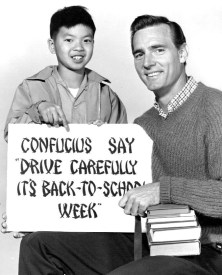
Almost immediately upon its ending, he was again cast in a television show with a role on Kentucky Jones during 1964 and 1965. Kentucky Jones is a veterinarian and former horse trainer.  He and his wife adopted a Chinese boy named Dwight Eisenhower “Ike” Wong. After his wife’s death, the local Asian community and handyman Seldom played by Morgan helps him raise Ike.

ky jones


Morgan had a couple of years of guest starring in shows such as The Wackiest Ship in the Army and Dr. Kildare, and then he was cast in Dragnet from 1967-1970. He and Jack Webb were friends before the show and continued to be best friends throughout Harry’s life. Webb had directed the previous Dragnet show in the 1950s and revived the show in 1967, convincing his friend to play the role of Officer Joe Gannon who helped Sergeant Joe Friday (Webb) solve crimes in Los Angeles.

morgan4


Between 1970 and 1972 he would show up in The Partridge Family in two different roles and Love American Style among other shows. 1972 would find him starring in another show, Hec Ramsey, until 1974. This show reunited Morgan with Richard Boone who starred in it and Jack Webb who produced it. Ramsey was a western detective who preferred to solve crimes with his brain rather than his gun. The show only lasted for ten episodes.

morgan23


From 1974-1983, he was cast in his most famous role, that of Colonel Potter on M*A*S*H. A military hospital staff treating soldiers during the Korean war rely on laughter to get through the gruesome work. The show combined heartache and joy to tell the story of the 4077th. When the show was cancelled, Harry continued the role in the spin-off, After M*A*S*H from 1983-1985.

morgan14

On M*A*S*H Morgan painted the portraits attributed to Colonel Potter. He won the Emmy for Outstanding Supporting Actor in 1980, receiving 11 nominations overall during the run of the show.

morgan13

His description of Colonel Potter was: He was firm. He was a good officer, and he had a good sense of humor. I think it’s the best part I ever had. I loved playing Colonel Potter.”

morgan11

When asked if he was a better actor after working with the show’s talented cast, Morgan responded, “I don’t know about that, but it’s made me a better human being.


MBDCHAN EC021

Morgan also appeared in several Disney movies during the 1970s, including The Barefoot Executive, Snowball Express, Charley and the Angel, The Apple Dumpling Gang, The Cat from Outer Space, and The Apple Dumpling Gang Rides Again.

In 1986 he was cast in Blacke’s Magic. The show featured a magician and his father, a con man, who solve crimes. Unfortunately, like many of the shows he was a part of, this one only lasted 15 episodes. When it ended in 1987, Harry was immediately given a role in You Can’t Take It with You where he appeared on three episodes during 1987 and 1988. Morgan starred as Martin; the show was based on the original play, but the television series was set in the 1980s.  Although Morgan was only in three episodes, he was in the majority of them, because the entire show consisted of four episodes.

morgan22blackes


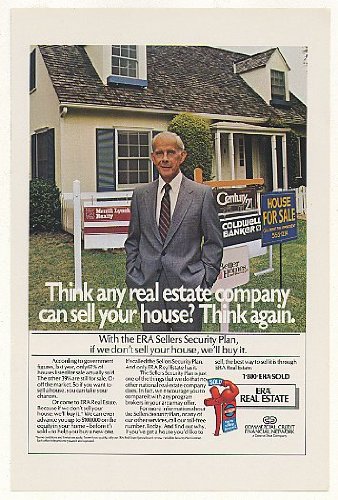
In the 1980s, he appeared in commercials for ERA realty and Toyota.

era


During the late 1980s and early 1990s, he appeared in six different shows, with recurring roles on The Simpsons and Third Rock from the Sun. In 1996 he retired.

morgan25thirdrock


In 2006, Morgan was inducted into the Hall of Great Western Performers at the National Cowboy & Western Heritage Museum.


Many of his western films were done with James Stewart. They did five films together, and Morgan says Stewart was one of the nicest men he ever met and extremely professional.


In addition to Jack Webb, he was good friends with Tim Conway and Don Knotts.

A very interesting man, in his spare time, he enjoyed golfing, fishing, travel, spending time with his family, reading, raising horses, horse riding, painting, and poetry.

morgan5

He died in 2011 from pneumonia.

Following Morgan’s death, Mike Farrell, who played B.J. Hunnicutt, starring with Morgan in M*A*S*H, released the following statement:

“He was a wonderful man, a fabulous actor and a dear and close friend since the first day we worked together. As Alan [Alda] said, he did not have an unadorable bone in his body . . . He was a treasure as a person, an imp at times, and always a true professional. He had worked with the greats and never saw himself as one of them. But he was . . . He was the rock everyone depended on and yet he could cut up like a kid when the situation warranted it. He was the apotheosis, the finest example of what people call a ‘character actor’. What he brought to the work made everyone better. He made those who are thought of as ‘stars’ shine even more brightly . . . The love and admiration we all felt for him were returned tenfold in many, many ways. And the greatest and most selfless tribute to the experience we enjoyed was paid by Harry at the press conference when our show ended. He remarked that someone had asked him if working on M*A*S*H had made him a better actor. He responded by saying, ‘I don’t know about that, but it made me a better human being.’ It’s hard to imagine a better one.”

morgan6


Today, I Get to Introduce You to One of My Very Favorite People, Blanche Morton, via Bea Benadaret

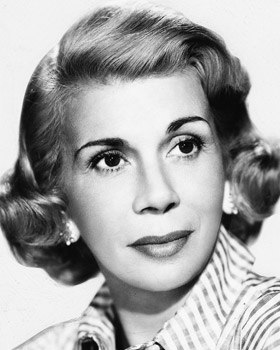
This week I’m excited to learn more about one of my favorite entertainers—Bea Benardaret. Bea had a long and successful career in radio and television, as well films. Nick-named Busy Bea, she would get credit for making more than 1000 radio and television appearances.

bea2

Born in 1906 in New York City, she was raised in San Francisco. Her first radio appearance occurred when she was 12 years old in Beggar’s Opera.  While still in high school, Bea went to work for radio station KFRC where she acted, sang, wrote, produced, and announced. She went on to the Reginald Travis School of Acting.

bea15

She married Jim Bannon in 1938. Their marriage would last until 1950 and produce two children, Maggie and Jack. She later married Gene Twombly in 1958 and remained married until her death.  Jack tells a story about when his mother was very pregnant with his sister. While exiting a cab, she fell and broke her pelvis.  It was so traumatic that her brunette locks turned white. At that time, she began dyeing her hair the blonde color we would all recognize once she transitioned to television.

Bea’s son Jack became an actor who has 91 credits for television and movie work. He appeared on Petticoat Junction 15 times, but was best known for his role of Art Donovan on Lou Grant. He was married to Ellen Travolta and passed away in the fall of 2017.

bea21

Bea could probably win the award of most-often misspelled name. You can find her name spelled Benardaret correctly or Benederet or Benadaret. On several episodes of Burns and Allen, you can even find credits spelling her first name “Bee.”

bea20

After graduation, she entered the radio business full time. She moved to Hollywood in 1936 and found work on The Jack Benny Show and shortly after with Orson Welles’ Mercury Theater in 1937. She was featured in 36 different radio shows with her most famous roles being Gertrude Gearshift on The Jack Benny Show, Eve Goodwin on The Great Gildersleeve, Millicent Carstairs on Fibber McGee and Molly, Gloria the maid on The Adventures of Ozzie and Harriet, and Iris Atterbury on My Favorite Husband. She received a starring role in Granby’s Green Acres, the forerunner of the Green Acres Show.

bea5

In 1943, she became one of the primary voices of Warner Brothers Merrie Melodies and Looney Toons cartoons. She met Mel Blanc during this time and they remained friends for life.

bea1

Bea also received roles in six films including a government clerk in Notorious (1946), one of two women Gene Kelley and Frank Sinatra encounter on the subway in On the Town (1949), and Tender is the Night (1962).

Bea’s first television role was my favorite character—Blanche Morton on the George Burns and Gracie Allen Show. Bea had appeared on their radio show and when the duo transitioned into television, she made the move with them. From 1950-1958 she was Gracie’s best friend and long-suffering wife of Harry Morton. Bea credited George Burns for teaching her about comedy. Bea was awarded two Emmy nominations for her portrayal of Blanche.

Not long after she was obligated to play Blanche, Lucille Ball offered her the role of Ethel Mertz on her new show I Love Lucy. Bea had to decline, but she did make an appearance on the show in 1952. Her “husband” on My Favorite Husband and Granby’s Green Acres was Gale Gordon.  He, too, was approached to play Fred Mertz; however, similarly to Bea’s situation, he had already agreed to transition from radio to television on Our Miss Brooks. He too would costar on the show and later he was able to work with Lucille Ball again on her other television shows.

bea3

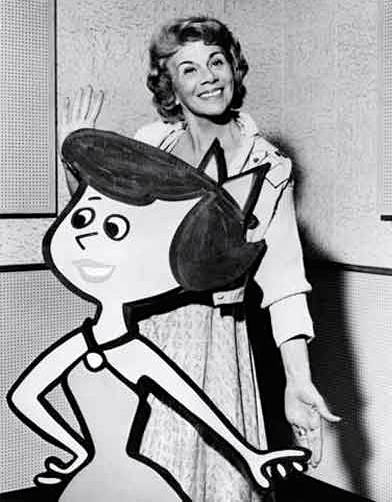
In 1960 Bea accepted the role of the housekeeper on Peter Loves Mary. That same year she agreed to provide the voice for Betty Rubble when The Flintstones debuted on Friday nights. She would provide voices on The Flintstones for 112 episodes.

bea11

Paul Henning was one of the writers for Burns and Allen. He and Bea became friends in the 1940s, and in 1962 he created a show called The Beverly Hillbillies. He brought in Bea for the role of Granny, but when Bea saw Irene Ryan’s audition, she told Paul he had definitely found his Granny. He then created the role of Pearl Bodine for Bea. She would appear in 22 episodes. Donna Douglas, who played Elly May, said that “watching her timing is like watching a ballerina. She’s so effortless.”

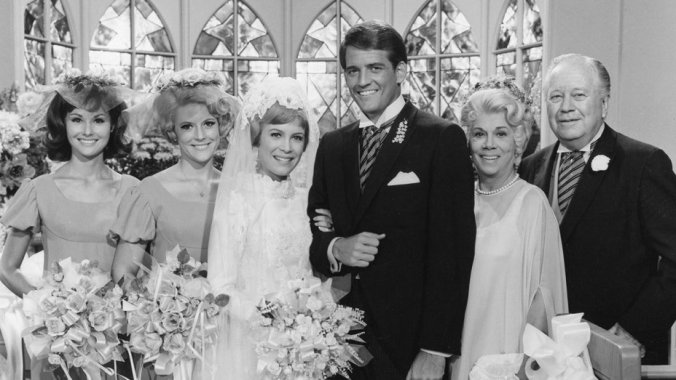
When Henning created a spin-off in Petticoat Junction, the role of Kate Bradley was written specifically for Bea. She appeared in 179 of the episodes of the show that aired from 1963-1969. Henning’s wife’s family ran the Burris Hotel in Eldon, Missouri that catered to salesmen traveling by railroad, and those stories became the basis for Petticoat Junction. Kate, a widow, runs the hotel with help of her Uncle Joe who is often busier trying to avoid work than helping out. She has three daughters Billie Jo, Bobby Jo, and Betty Jo. (During the show’s run, there would be three Billie Jo’s, and two Bobby Jo’s but only one Betty Jo, who was portrayed by Linda Kay Henning, Paul’s daughter.)

bea13

Charley Pratt and Floyd Smoot run the Cannonball, a train that enables the Bradleys to travel to Pixley and Hooterville. Cut off from the main railroad twenty years earlier in a trestle demolition, the train caters to local residents, often stopping to move cows or let someone visit a neighbor between official stops. Sam Drucker runs the general store in Hooterville and is always the center of local society. Though it was never made too obvious, Kate and Sam had a special relationship, and we always assumed that once the girls were grown and gone, and Sam was ready for retirement, he and Bea would end up together. The old-fashioned hotel offers home cooking and a nostalgic feel. Other titles considered were Ozark Widow, Dern Tootin’, and Whistle Stop. When Steve Elliott, the crop duster, came to town, he dated Billie Jo. They made a glamorous couple, but a season or two later, he realized he truly loved Betty Jo, the youngest and the tomboy who helped in repair his plane. They married and had a daughter, Kathy Jo.

bea23

In 1967 Smiley Burnette (Charley) passed away. In 1968 Bea became ill and died that year from lung cancer and pneumonia. Bea’s second husband, Gene Twombly, passed away four days later from a heart attack. June Lockhart was brought on to the show as Dr. Janet Craig to help be a mother figure to the girls. Ratings declined in season 6 with the loss of Bea; however, the network renewed the show for another year so there would be five years of colored episodes for syndication. Ratings increased during the last year, but in 1969 when the new administration cancelled all the rural shows, Petticoat Junction received its walking papers too.

bea12

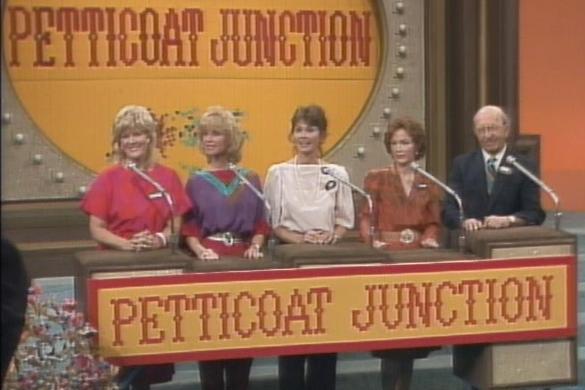
There were always rumors that there would be a reunion from the show, but that never happened, although the cast did take on both the Brady Bunch and Leave it to Beaver crews on Family Feud in 1983.

bea22

Bea was known for her laugh. By all accounts, she was a kind woman and extremely professional in all her roles. While I enjoy Petticoat Junction, I adore Gracie Allen, and am always happy to indulge myself watching Burns and Allen Show episodes. Bea holds her own on the show and makes a wonderful practical counterpart to Gracie’s illogical logic. If I had a time machine, one of the first visits I would make would be back to 1950 to enjoy a cup of coffee with Gracie and Blanche.

bea16

Oh, Alice

By the time February arrives, I am typically tired of winter and ready for some nicer weather.  Since I am not traveling anywhere warm this month, I decided to indulge myself and learn more about some of the actors and actresses behind some of my favorite television characters this month.


davis1

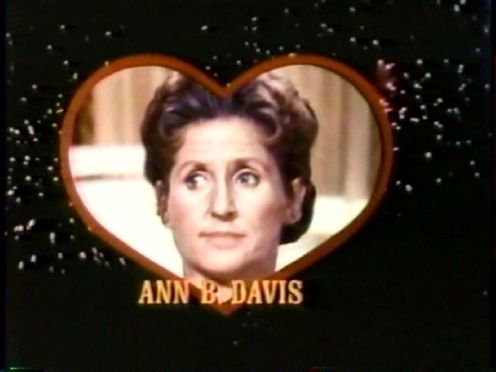
I begin with Ann B. Davis.  Most of us recognize her as Alice on The Brady Bunch, but Ann was quite an established actress long before the show began, receiving her star on the Hollywood Walk of Fame in 1960.


anntwin

Ann was born in 1926 in New York. Her mother was a professional actress who performed with many stock companies and smaller theaters. She had an older brother and a twin sister Harriet. In a foreshadow perhaps of her future career, Ann made $2 working with puppets at age 6. The family moved to Erie, Pennsylvania where Ann spent most of her school years, graduating from high school in Erie.


She went on to the University of Michigan where she majored in pre-med. Her brother toured the country as the lead dancer in a production of Oklahoma which inspired her to try acting.  She loved acting so much that she changed her major to drama and speech, graduating from college in 1948.

davis8


She paid her dues for six years, performing in California in various theaters and stock companies, before moving to Hollywood. She received parts in several stage productions including The Women and Twelfth Night. In 1953, she was one of the musical judges on Jukebox Jury. The show aired Sunday nights and typically minor stars would judge new music.

davis6


Her first film was Strategic Air Command in 1955 with Jimmy Stewart. Unfortunately, her scene was cut from the film before it was released. She would go on to star in six additional films including A Man Called Peter (1955), The Best Things in Life are Free (1956), Pepe (1960), All Hands On Deck (1961), Lover Come Back (1961), Naked Gun (1994), and The Brady Bunch Movie (1995).

davis35


In 1958 Ann accepted a position on the SAG board of governors.


She explored her love of theater throughout her career and in 1960 she replaced Carol Burnett in Once Upon a Mattress.

davis4

Ann found most of her fame in television. She began appearing in series in 1956 when she was on Matinee Theater and Lux Video Theater.


In 1955 she received a starring role in The Bob Cummings Show as Schultzy, Bob’s assistant. For four years, she loved Bob from afar while he chased after many of the models he photographed. His sister who lived with him was trying to reform him, so he would settle down, but we knew deep in his heart he loved Schultzy. Ann won two Emmys for her portrayal of Schultzy.


When the show ended, she went back to making appearances, taking roles on Wagon Train (1960), The New Breed (1962), McKeever and the Colonel (1963), and Bob Hope Presents the Chrysler Theater (1964).


During 1965-66, she would receive another starring role appearing as Miss Wilson, the physical education teacher on The John Forsythe Show. The premise was that John had inherited a private girls’ school from his aunt. A bachelor and a retired air force major, he later becomes a spy and the school staff is eliminated from the show.


davis26

After the cancellation of Forsythe’s series, Davis appeared on The Phyllis Diller Show (1966), Insight (1968), and Love American Style three times from 1970-1973. Between the years 1959 and 1969, Ann volunteered by traveling with the USO at various times.

davis30


The year 1969 brought her the role she would become famous for as Alice Nelson on The Brady Bunch.  Ann played Alice from 1969-1995 exclusively. Ann might hold a record for playing the same character in six different series: The Brady Bunch (1969), The Brady Bunch Variety Hour (1976), The Brady Brides (1981), Day by Day (1981), The Bradys (1990), and Hi Honey I’m Home (1991). She also reprised her role as Alice in two made-for-tv movies: The Brady Girls Get Married and A Very Brady Christmas

davis2


Along with Florence Henderson and Barry Williams, she was in every Brady Bunch episode. Alice was a friend to each of the Brady kids never playing favorites, but on one episode she gives Jan a locket because they were both middle children with an older glamorous sister Emily/Marcia and a younger cutesy sister Myrtle/Cindy. In real life, Ann said that she felt Eve Plumb was the best actor of the Brady kids.


Florence Henderson and Ann remained friends for life.


On the show, Alice never got far from her roots.  She had gone to the same high school Greg and Marcia attended. Becoming a housekeeper for the Bradys before Mike’s wife died, she stayed on when he married Carol and her three daughters moved in. Alice spent as much time mediating family disputes, doling out advice, trying to keep the kids from getting in trouble with their parents, and dispensing sarcastic words of wisdom to the entire family as she did cleaning and cooking.

Alice rarely was seen out of her sky-blue uniform. She dated Sam the butcher and kept waiting for his marriage proposal. They often bowled and won a prize for their Charleston dancing. I think Sam knew all along, he couldn’t propose till Mike and Carol became empty nesters.  Alice was never a maid, she was a valued member of the family who went on vacations with the family and was invited to their school performances and into their friends’ lives. In today’s economy, Alice would probably net $50,000 a year for her job, but we know it was never about the money for her.


Ann received endorsements from her Alice role as well. She was in television commercials for many products including Ikea, Ford Motor Co., Shake and Bake, and Minute Rice.


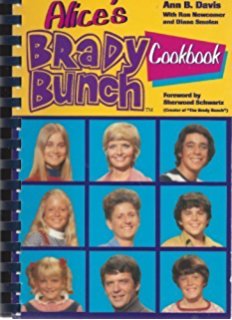
Her role as Alice also led to her publishing Alice’s Brady Bunch Cookbook with recipes inspired by the show or contributed from cast members.

davis28


In 1976, she moved to Denver to live with Bishop Frey and his wife Barbara in their Episcopal community, a large historical home.  For many years, Ann had volunteered with the local and national Episcopal church conferences. When Bishop Frey accepted the position as Dean of Trinity School for Ministry in Pennsylvania, Ann moved with the couple. She again moved with them to San Antonio Texas. Ann was very committed to her church and her prayer life and performed a lot of volunteer work for her church. She also appreciated her fans.  According to Bishop Frey, she spent several days even at the end of her life answering fan mail.

Ann considered herself semi-retired from show business, but in the 1990s, she made several films and accepted a role with a theater group for Arsenic and Old Lace as well as a world tour of a show called Crazy for You. She also made appearances on TV Land for award shows in 2004, 2006, and 2007.


Ann was extremely healthy in her golden years, but she fell, hitting her head which caused her death in 2014.

Alice Nelson has become a pulp culture icon; however, like Sally Rogers on The Dick Van Dyke Show, there was so much more to Ann B. Davis’s career than her role as a maid. She had an amazing career in theatre, film, and television. While I appreciate her work as Schultzy on The Bob Cummings Show and Miss Wilson on The John Forsythe Show, Alice took care of me, along with the Brady kids, in the early seventies, and I will always have a special place in my heart for her.


A Tribute to Rose Marie

rosemarie2

Rose Marie had one of the longest-running careers in the entertainment industry – more than 90 years in the business. During her career, she was in vaudeville, on the radio, in the movies, performed in live concerts around the country, did some Broadway, and became most famous for her television performances.


rosemarie6

Born in 1923 as Rose Marie Mazetta, she won a contest at 3 and began performing as Baby Rose Marie. On her official site, she mentions she was born the same day the Broadway show Rose Marie opened. In 1927 at the age of 4 she was featured in a Vitaphone short that opened with Al Jolson’s Jazz Singer.


rosemarie21

By age 5, she had her own national radio show. She worked in vaudeville with Edgar Bergen and Milton Berle. She made several records, and the first one released was with Fletcher Henderson’s orchestra. By 1933 at age 10, she was starring in her first film, International House. During these years, she performed at the White House three times—for Presidents Coolidge, Hoover, and Franklin Roosevelt.


Rose Marie

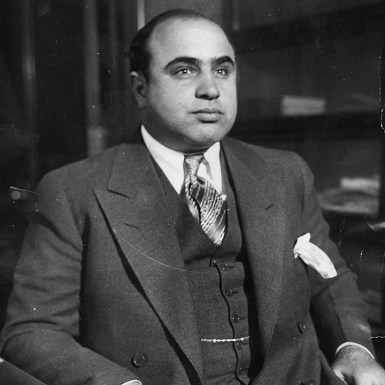
It was during her vaudeville stint that the doorman informed her and her father that a gentleman wanted to see them in the back alley.  The “gentleman” was Al Capone who called her father Happy Hank and told them that “the guys” wanted to meet Rose Marie. She was taken to Capone’s house the next day where she performed for about 24 guys.  Al gave her a ring with three diamonds which she still had when she passed away. He said they would always take care of her.  He was true to his word. Even after he was incarcerated, Rose Marie was met and protected by the mob for her entire career.  Decades after the most notorious gangsters were gone, men showed up at her shows checking on her just to make sure she was doing okay, getting work,  and not in need of anything. Later she learned that her father, who was an actor by trade, was Capone’s arsonist, the one who burned down buildings of men who disappointed the gangster. There is an article about her meeting with Capone on The Mob Museum’s website. (The Mob Museum is located in Las Vegas.)

rosemarie20


As a teenager, Rose Marie transitioned to clubs, touring the United States. In order to make her sets longer, she began to add comedy to her singing acts.


In 1946 she met Bobby Guy who as with the Kay Kyser Orchestra. They were engaged within a week, and he remained the love of her life until he passed away in 1964. They had one child, Georgianna. Guy would become the lead trumpeter on The Tonight Show.


It was also in 1946 that Rose Marie opened the Flamingo with Jimmy Durante. Jimmy Durante mentored her earlier in her career and she loved him. He was always mentioned as one of her favorite people.  At that time, the only other hotels in Vegas were the Last Frontier and El Rancho. Bugsy Siegel owned the Flamingo, and Rose Marie received work in clubs from her mob connections. She also had a 40-year friendship with Frank Sinatra that was also probably tied to some of their mob connections.


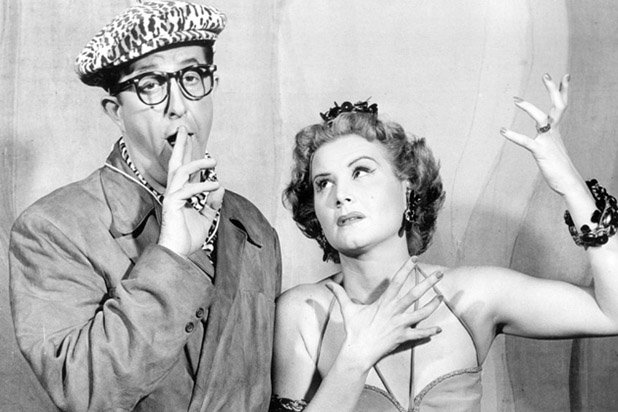
In 1951, Rose Marie tried her hand at Broadway, appearing in Top Banana with Phil Silvers. She knew Silvers from appearing on his radio show with Alice Faye. She played their daughter and Sheldon Leonard (who would hire her for The Dick Van Dyke Show) played their son.

rosemarie5

In 1954, Top Banana was made into a film. Once again Phil Silvers was in it. Rose Marie recorded her musical numbers. The producer tried to manipulate her to have sex with him. She said no in front of several people, and in retaliation he cut all her numbers from the film. In 2017 before her death, she shared the incident on Twitter to help support the women who have been exposing the sexual assault in Hollywood. She appeared in ten movies after that, most of them in the 1980s and 1990s, but she quickly became disillusioned with the film industry.

rosemarie14


Tired of the Hollywood politics, Rose Marie embraced the new television culture. She appeared in Gunsmoke in 1957 and would continue to receive roles in the new medium through 2011. During her career, she appeared on 48 different shows.

In the 1950s, she had a recurring role in The Bob Cummings Show as Martha Randolph and she appeared in The Many Loves of Dobie Gillis. The first sitcom she had a permanent role in was My Sister Eileen; she played the sisters’ friend Bertha. The show ran for 24 shows during 1960 and 1961.


rosemarie17

In 1961, Sheldon Leonard cast Rose Marie in the role of Sally Rogers on The Dick Van Dyke Show. She recommended Morey Amsterdam for the role of Buddy Sorrel whom she had known since age 9. The show was originally to star the office cast with the home life coming in second; however, as things changed, Mary Tyler Moore became the costar with the home life dominating the scripts and Sally and Buddy were featured less. The show produced 158 episodes and is undoubtedly one of the best written sitcoms ever produced. She and Morey received the same salary despite her being a woman. That sounds only fair today, but at the time it was not the normal practice. She loved working on The Dick Van Dyke Show. When asked about her time on the show, Rose Marie said, “We loved each other, we helped each other . . . We were really very close.”


After The Dick Van Dyke Show ended, Rose Marie took roles on several shows including The Monkees and My Three Sons. In 1969, she received a role as Myrna Gibbons on The Doris Day Show, playing Doris’s friend and coworker.


She showed up in many series during the 1980s and 1990s including The Love Boat, Mr. Belvedere, Suddenly Susan, Wings, and was a cast member in Hardball, about a struggling baseball team.


In the 1990s, Rose Marie would take on the role of Frank Fontana’s mother on Murphy Brown. Later she would appear in S.W.AT. as Hilda providing doughnuts and coffee, as well as comic relief, on the show.

rosemarie28

In the late 1990s and early 2000s, Rose Marie transitioned to voice overs for such shows as Hey Arnold and Garfield.

Rose Marie also liked game shows and was a regular on Hollywood Squares through all the different versions.


From 1977-1981, she performed across the country with Helen O’Connell, Rosemary Clooney, and Margaret Whiting. They called the show 4 Girls 4. Rosemary’s nephew, George drove their bus for them.  At some point they made enough money to afford airfare, and George Clooney went on to create a little career for himself.


Rose Marie received the 2184th star on the Hollywood Walk of Fame in 2000. Her baby shoes, along with 40 other items, have become artifacts in the Smithsonian’s American History Museum.

Her hobbies included cooking Italian meals, knitting, and reading; she especially loved Stephen King novels.


rosemariebook

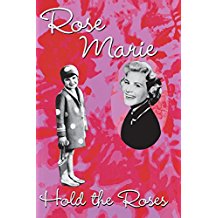
When she first appeared as Baby Rose Marie, someone handed her a bouquet of roses, but she needed to take her bow, so she handed them off and said, “Hold the Roses.” That became the title of her autobiography that was published in 2002.


rosemarielaugh

She was the subject of a documentary Wait For Your Laugh in 2017. Dick Van Dyke said that was her catchphrase, and whenever they were anywhere something funny happened, even a waiter dropping a tray full of food, she always repeated the phrase.


rosemarie10

She accomplished so much in her career you wonder how she could have had any regrets, but she was denied two accomplishments.  She received three Emmy nominations for her role as Sally Rogers but never won an Emmy.  She also wanted to direct and never had an opportunity to do so.


rosemarie3

Sadly, Rose Marie passed away in December. Happily, she left an amazing legacy of performances in a variety of mediums for us to remember her by. While she was so much more than a television star, Sally Rogers will always be one of my favorite characters. Thank you Rose Marie for so many fond memories.

I’m Feeling A Little Looney!

Today we get to explore one of my favorite animation sitcoms.  If you wait long enough, everything comes back into style. In looking at new movies which will debut in the next few years, we have remakes coming of A Star is Born, Dirty Dancing, and Hitchcock’s classic The Birds. All-white kitchens that were popular in the 1950s have returned.  One of the photos below is from the 1960s and one is from the past year.  Can you tell which is which?

In my opinion, most of the reboots are lackluster and not nearly as good as the originals. Case in point is the Parent Trap.  The original Disney version with Hayley Mills is much better than the remake with Lindsay Lohan.   Sometimes a gem is created.  Father of the Bride with Steve Martin and Diane Keaton is just as entertaining, if not better, than the original.


From 1930 through 1969, Warner Brothers produced tons of Looney Tunes cartoons – the golden age being 1944-1964. Many of us grew up with these cartoons and watched them in syndication with our kids. In 1996, many of these characters were featured in Space Jam, and a new generation of fans was created. In May of 2011, Warner Brothers again debuted Looney Tunes. Created by Spike Brandt and Tom Cervone, 52 episodes were produced in two seasons of shows that ran until August of 2014 on The Cartoon network. in reading the reviews of the shows and perusing blogs about the show, many people felt cheated by this new adaptation and considered it a betrayal of the Looney Tunes branding.  I, on the other hand, loved them.


In 2011, the gang had grown up just as I had.  Bugs Bunny lived in a wealthy, middle-class neighborhood.  He made his fortune inventing a new carrot peeler; he even won a Nobel prize. The 30-minute sitcom included adult-oriented humor and dialogue-driven scripts, but it also appealed to kids. We had three different generations watching it at our house and everyone enjoyed it.


Bugs has a great sense of humor.  He is extremely patient which is good because Daffy now lives with him.  Their relationship is a cross between Felix and Oscar on The Odd Couple and George and Jerry on Seinfeld. Daffy tries a variety of get-rich quick schemes but none of them pan out.  He can’t hold a job.  He is either fired for incompetence, or he quits from laziness.  He is constantly making trouble for Bugs with his friends and neighbors. Daffy is self-focused and rude to everyone.  However, he truly wants to be a good friend and his heart sometimes gets in the way of his hare-brained schemes, no pun intended. Both characters are voiced by Jeff Bergman.


The rest of the Looney Tunes characters are also in the show. Porky (voiced by Bob Bergen) is highly intelligent and interested in culture.  Daffy often tries to manipulate him. Porky quit his boring corporate job and opened his own catering service. He also serves on the city council.   We see Porky writing and performing opera on episodes.


Speedy Gonzales (played by Fred Armisen) runs a pizza joint called Pizzarriba.  The rest of the cast often dines there.


Several minor characters are Bugs’ neighbors.  Yosemite Sam (Maurice LaMarche voices him) lives next door and causes no end of problems for Bugs who tolerates him almost as well as he does Daffy. Granny lives across the street with Tweety. Voiced by the amazing June Foray, Granny was an allied spy during World War II and now teaches piano. I’m not sure of all the details but apparently the show did not have permission to use the witch Hazel so Lezah who looks identical to her lives down the street (voiced by Roz Ryan).

Elmer Fudd shows up now and again as a local news reporter.


looney4

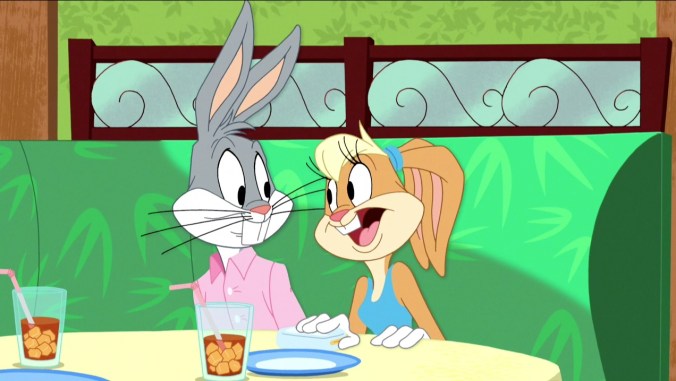
Lola, who appeared in Space Jam, is again Bug’s girlfriend. She is a bit scatter-brained and fast talking, but likable. (Kristen Wiig plays Lola.)


looney8

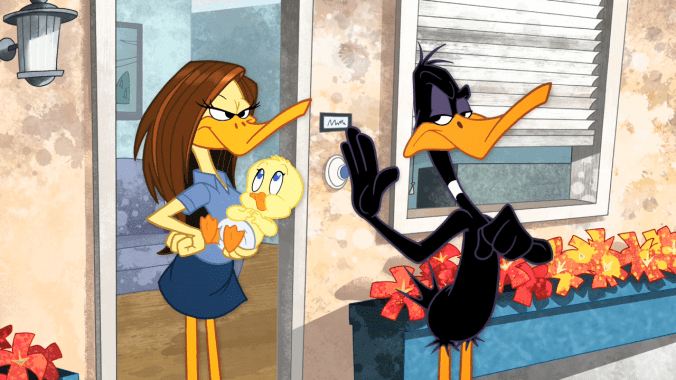
Daffy also has a long-suffering girlfriend, Tina.  Tina is a female duck who works at The Copy Place. She’s very practical, and tries to get Daffy to grow up and become responsible. (Tina was voiced by Jennifer Esposito and Annie Mumolo.)


looney5

There is a bit of a Friends-like atmosphere about the show. The characters have character flaws, but they are all likable and fun loving. The plots feature adult problems and issues:  dating, careers, fulfilling dreams, and mundane chores like going to the DMV.


There are three episodes that stand out for me as my favorites.

Newspaper Thief (2011) and Spread Those Wings and Fly (2013) are two shows that feature a lot of the humor that makes this show so much fun.

In Newspaper Thief, Daffy accuses the neighbors of stealing his newspaper. Bugs lectures him, and they plan a dinner party for Daffy to apologize.  Instead of apologizing, he gets Porky to help him set up a trap to capture the thief. There are some great one-liners in the show.


In Spread Those Wings and Fly, Daffy and Porky go to hear a motivational speaker. Daffy is a skeptic and wants nothing to do with it. Of course, he is reeled in and buys books and motivational tapes. Porky understands the goal is to fly by pursuing your dreams, but Daffy takes it literally.  He takes flying lessons, planning on becoming a pilot.  He is terrible and wrecks the plane. He then becomes a stewardess, wearing high heels and is dressed like a female, even though Bugs explains guys can be flight attendants now.  He quits when he realizes he literally flies back and forth to a city and doesn’t get any time to sight see. The ending of the show has everyone invited to Porky’s opera debut.  Porky has pursued his dream of singing and performs for his friends.  He is amazing, but Daffy totally misses the talent and complains about him the entire time.  Before they leave, the camera pans to Daffy’s feet and shows him still wearing the high heels.  He tells Bugs he likes the height they give him.


My favorite show though is Best Friend Redux. Bug’s best friend Rodney, whom he met at Camp when they were young,  comes to visit for a couple of days. Daffy tries to figure out if he or Rodney is Bug’s best friend. Bugs tells him adults don’t have best friends; they just have friends. Daffy tries to make Bugs jealous by hanging out with Porky.  When that doesn’t work, and he gets bored listening to Bugs and Rodney reminisce, Daffy steals Lezah’s time machine.  He goes back to camp and convinces Rodney to go home because they overbooked. It works, although Little Porky who was at the camp in another cabin gets brought back to the future. Daffy takes him to the adult Porky’s house and drops him off.  He goes home only to realize that Bugs doesn’t know him.  Lezah explains Daffy can’t change history without changing the present.  She said because Bugs never met Rodney, he never met Daffy because he meets Daffy at the post office mailing a letter to Rodney. Daffy realizes his error and goes back in time, taking little Porky with him. He stops Rodney’s bus and takes him back to camp to introduce him to Bugs. Then he puts Little Porky into their cabin instead of the boring one he was supposed to be in. At the end of the show, Rodney realizes why Daffy looks familiar.  He says he looks like their camp director, Chuck Winnanatke which confuses Bugs who says that was not the camp director’s name. Daffy quickly gets them to change the subject.


It seems like most people love or hate this reboot of Looney Tunes.  Take a day this winter and have a Looney Tunes fest.  Both seasons are available on DVD. You can revisit your nostalgic youth while enjoying the show from an adult point of view. I’d love to hear what you think of the show.

Today We Take a Peek at the Future by Looking at the Past

Building on the popularity of The Flintstones, in 1962 ABC and Hanna-Barbera decided to debut another new animation show aimed at adults. Instead of the prehistoric past, this show would be set in the far-off future. It aired Sunday nights.  It was also the first show on ABC to air in color. It was The Jetsons. The Flintstones had been recorded in color, but the first two years it aired in black and white. However, it was up to the affiliates to decide if they wanted to broadcast both of these shows in color or black and white. Often they chose black and white because only 3% of the population had color televisions in 1962 which increased to 50% by 1972.

jetson2

Hoyt Curtin created the theme song. This show featured the typical 1950s sitcom plots. It was adult oriented and used a laugh track.

jetson17

The Jetsons live in Orbit City in the Skypad Apartments, high in the sky. George is a family man.  George is not Fred Flintstone.  However, he does get into many predicaments like Fred, and his boss fires him often.  George works for Spacely Space Sprockets, and his boss is Cosmo Spacely. Their competitor is Mr. Cogswell who runs Cogswell Cogs. Mr. Spacely is easily angered and hard to work for. He and George were childhood friends. George’s work computer was RUDI – Referential Universal Differential Indexer.  He has a human personality. George was voiced by George O’Hanlon. Mr. Spacely was voiced by Mel Blanc.


jetson10

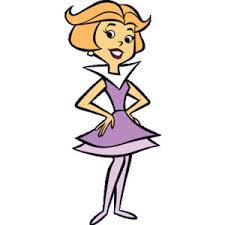
George is married to Jane, a homemaker like Wilma.  Jane is a member of the Galaxy Women’s Historical Society.  Her favorite store is Mooning Dales.  Penny Singleton, the original Blondie of the movies, plays Jane.


They have two children, Judy, a 16-year-old, who attends Orbit High School and Elroy, 6, who attends the Little Dipper School.  Judy likes clothes, boys, and her diary, much like teens in the 1960s.  Elroy is quiet, easy going, and highly intelligent, and he studies space history, astrophysics, and star geometry. Janet Waldo was the voice of Judy, while Daws Butler provided the voices of Elroy and Spencer Cogswell.


Rosie is their robot maid and Astro is their dog. Rosie is an outdated robot, but the family loves her. She performs all the housework and does some parenting of Elroy. Surprisingly, Rosie was only in 2 of the 24 episodes that aired in 1962. Astro precedes Scooby Doo but talks like him and looks very much like a gray Scooby. Jean Vander Pyl and Don Messick from The Flintstones take on the voices of Rosie and Astro.


Two other characters who make appearances are George’s eccentric grandfather, Montague Jetson voiced by Howard Morris.  Stella/Petunia Spacely, Cosmo’s wife, is overbearing and snobby and she was voiced by Jean Vander Pyl.


In 1963, Morey Amsterdam and Pat Carroll sued H-B for breach of contract.  Apparently, they were signed to a 24-episode contract to voice George and Jane.  They were guaranteed $500 per episode. According to the network, they had to be replaced because of sponsor conflicts with their other shows, The Dick Van Dyke Show and Make Room for Daddy. I believe the suit was dropped; however, I couldn’t find proof of that.


The show did not get very good ratings.  Part of the problem was that so many people were watching it in black and white. Another problem is that it was up against Car 54, Where Are You and, ironically, Walt Disney’s Wonderful World of Color. After the first year, the network moved it to Saturday morning. In 1985, 41 episodes were made and 10 additional shows were created in 1987. It’s hard to believe, but those of us who grew up in the 1960s and 1970s watched the same 24 episodes over and over since new ones weren’t made for 23 years after the debut.

Although it was only on the air in prime time for one year, marketing certainly did not suffer.  Many Jetson toys, games, and figures were sold.


The Jetsons endorsed Electrasol, Tums, and Radio Shack. Many comic books were based on the series. Gold Key printed 36 from 1963-1970, Charlton created 20 between 1970-1973, Harvey published 5 in 1992-1993, and Archie Comics produced 17 from 1995-1996.

In addition, two tv films, a tv special, and a movie were created.

The show was on Boomerang from 2000-2014 and again from 2016-2017. It was aired on The Cartoon Network from 1992-2004 and again in 2012. It is available now on Comcast’s video-on-demand service.


Many of the inventions the Jetsons used are currently being produced today. A flying car will most likely debut in 2018. There are several start-up companies developing jetpacks to allow people to fly. Robot butlers exist at some hotels (Japan and California). Holograms have existed for a few years. 3-D printers can make food, and our current drones are similar to the pods the Jetsons used. Smart watches were also shown on the series; in one episode a student in Elroy’s class watches a Flintstones episode on his watch instead of paying attention to the teacher. Although The Jetsons was set in 2062, they featured moving walkways and smart homes which we have used for some time.


What is so surprising about The Jetsons is its current popularity.  A Jetson big-screen film is in the works and, in August of 2017, ABC ordered a live-action sitcom of The Jetsons. It will be interesting to see if they rely on the same technology used in 1962 on the show or if they project into our future.

jetson1

While many of the popular shows from the early 1960s are only remembered by baby boomers, The Flintstones and The Jetsons are still well known to kids of every generation. They have truly survived the test of time. By this time next year, The Jetsons could once again be a hit television show. Like the Bewitched-I Dream of Jeannie debate, or the Mary Ann vs Ginger question, most people prefer watching the past or the future.  I am in The Jetsons camp, but enjoy watching Fred and Wilma from time to time also.  Next week we’ll look at my favorite adult animation show, and no, it’s not The Simpsons.

If It’s Friday Night, It’s Time for the Adults to Gather Round and Watch . . . Cartoons?

In September 1960 several iconic shows had their debut including My Three Sons and The Andy Griffith Show. On Friday nights at 8:30 eastern time, a very unusual show also began on ABC that fall:  The Flintstones.  Many viewers don’t realize that The Flintstones began life as a prime-time animated show aimed at adults. Created by Hanna-Barbera (H-B), it continued to run at night until April of 1966, a total of 166 episodes.

H-B went to New York for 8 weeks to pitch the show. After being turned down by every ntework, ABC decided to take a chance on it.  It was the most financially successful animated show for 30 years until The Simpsons was created. Variety described its premier as “a pen and ink disaster,” but the show was nominated for Outstanding Comedy, losing to The Jack Benny Show.

flint1

Set in Bedrock, population 2500, the Flintstones and the Rubbles were neighbors and best friends.  The show’s success had a lot to do with the fact that these Stone Age families participated in the same modern-day activities that families did in the 1960s. They relied on the same technology; it’s just that their technology was powered primarily by animals and rocks.

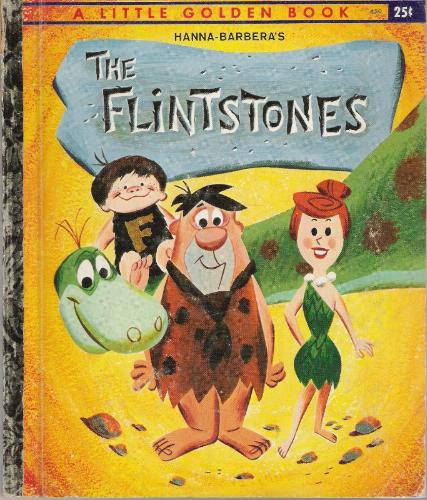
H-B considered other historical eras for the show.  They researched hillbillies, the Roman Empire, and American Indians before settling on Stone Age characters. The original title was The Flagstones.  It was then changed to The Gladstones, and, finally, The Flintstones. In the first creation, Fred and Wilma had a son — Fred Jr. H-B decided that they wanted both couples to be childless, so Fred Jr. was written out.  A Golden Book which came out in 1960 was released before the show changed its concept, and it features Fred Jr.

flint8

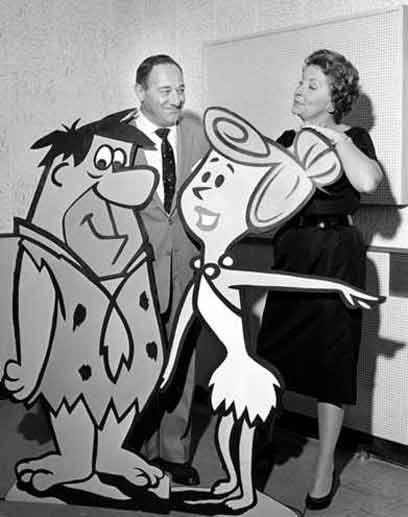
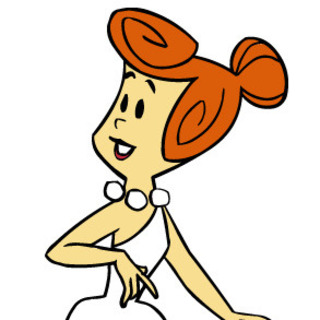
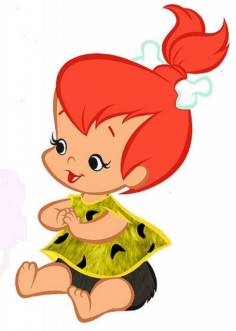
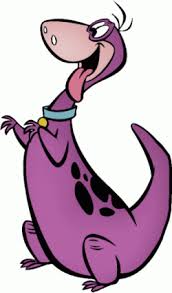
Let’s review the regular characters.

Fred Flintstone works at Slate Rock and Gravel Co. He had a quick temper but was a loving father and husband.  He is tall and broad with black hair. He was on a bowling team and belonged to the Loyal Order of Buffaloes, Lodge No. 26. Alan Reed was the voice of Fred. In one episode, Fred was supposed to yell “Yahoo.” Reed asked if he could say “Yabba Dabba Doo” which he based on a Brylcreem jingle his mother used to say, “A little dab’ll do ya.” That became his catchphrase.  In 1977, when the show was in syndication, Henry Corden took over after Reed passed away. Fred was based on Ralph Kramden. In a 1986 , article Jackie Gleason revealed that his attorney told him he could have easily won a lawsuit and stopped The Flintstones, but he advised against it or Gleason would have been known as the man who destroyed The Flintstones.

fred


flinta

Wilma Flintstone is a practical and level-headed wife. She is a true redhead and loves to shop. She often has to get Fred out of bad situations or is forced to convince him to apologize to Barney or Mr. Slate. Jean Vander Pyl was the voice of Wilma.

wilma

Pebbles Flintstone was born at the end of Season 3.  She wore bones in her hair for bows and was a happy little girl. Vander Pyl also played Pebbles.

pebbles

Dino is their purple pet.  He barks and often acts like a dog, but he is officially a prosauropod. The incredible Mel Blanc was the voice of Dino.

dino

Barney Rubble is Fred’s best friend and next-door neighbor. He and Fred get into spats regularly. Barney is shorter than Fred, easy going, and friendly.  Barney was on Fred’s bowling team and part of the Water Buffaloes. Barney was also voiced by Mel Blanc. After Blanc’s death, several actors played Barney.

barnet

flintb

Betty Rubble is Wilma’s best friend.  They often conspire to get their husbands to mend their friendship.  Betty is a brunette. Bea Benaderet was the voice of Betty for seasons 1-4.  After her death, Gerry Johnson took over for seasons 5 and 6.

betty

Bamm-Bamm is the Rubbles’ adopted son.  He is absurdly strong and says “Bamm-Bamm” a lot. Don Messick was the voice of both Bamm-Bamm and the Rubbles’ pet.

bamm bamm

Hoppy is Rubbles’ pet hopparoo (a cross between a kangaroo and a dinosaur).  He doesn’t appear until Season 5.

hoppy

More than 100 “guest” characters appear on the show, but several are better known and appear more often, including:

Mr. Slate owns the company where Fred works.  Sometimes Barney works there as well but it doesn’t seem to be consistent. Mr. Slate fires Fred a lot but always takes him back. John Stephenson voiced Mr. Slate.

mr slate

Arnold is the Rubbles’ and Flintstones’ paperboy. Fred doesn’t like him because Arnold can outsmart him. Don Messick played Arnold.

arnold

Joe Rockhead is a friend of Fred and Barney’s. He is mentioned in one show as being the chief of the Bedrock Volunteer Fire Department. Irwin Keyes played Joe.

joe

Pearl Slaghoople is Wilma’s mother.  She is hard to please and has always disapproved of Fred. Verna Felton and Janet Waldo played Pearl.

flint13

Gazoo is an alien who helps Fred and Barney.  He can only be seen by those two, small children, and pets. Harvey Korman was the voice of Gazoo. He appeared during the final season as a way to boost viewership. The show had begun to try to capture younger viewers during the final two seasons.

flint19


flint14

Many famous people also showed up on the show. The 6th episode of the 6th season featured Darrin and Samantha Stephenson from Bewitched. H-B produced the animated opening of Bewitched, so there was a tie-in. Other stars included Stony Curtis (Tony Curtis), Ann Margrock (Ann Margaret), and Cary Granite (Cary Grant) as well as the Green Bay Pachyderms.

One strange thing about the show was that the Flintstones home and furniture placement was not consistent.  You can see changes in almost every episode. Their address also changed. It was given as 345 Cave Stone Rd., 1313 Cobblestone Way, and 222 Rocky Way.

flint12

A theme song, “Rise and Shine” was created for the show and used in seasons 1 and 2. The tune was similar to Bugs Bunny’s theme, and in season 3 it was changed to “Meet the Flintstones.” A 22-piece jazz band and a 5-person singing group, the Skip Jacks, recorded it. When the show went into syndication, “Rise and Shine” was replaced with “Meet the Flintstones” for the first two seasons as well. Hoyt Curtin was in charge of the underscores for seasons 1-5 and Ted Nichols took over for season 6.

flintc

Believe it or not, the first two seasons were sponsored by Winston Cigarettes, and there were ads featuring Fred and Barney smoking. These seasons were aired in black and white. Seasons 3-6 would be in color. In season 3, Welch’s became the sponsor for the last four years. They created jelly jars which could be re-used as drinking glasses. At this point, it was decided that the Flintstones would have a baby. A boy was written into the script. A marketing director suggested they change it to a girl because girl dolls sold better. Based on his recommendation, they created Pebbles. Apparently, he was right because during the first few months, they sold 3 million of them. In season 4, Bamm-Bamm was adopted.

flint9

Some of the clever products included an alarm clock that is a bird, a bird car horn, a dinosaur crane, an octopus dishwasher, a pelican garbage can, a porcupine hairbrush, and a swordfish knife. Several famous brands were seen in the stone age such as Stoneway Pianos and Polarrock cameras.

The show was offered in syndication till 1997. Ted Turner purchased H-B in 1992, and The Flintstones ran on TBS, TNT, and the Cartoon Network. In 2000, Boomerang began airing the show where it continued until 2016. Now it’s only available on Boomerang’s subscription video-on-demand service.

The Flintstones had 12 different television series versions and 13 tv specials produced. In addition, there have been 5 tv movies, 6 educational filmstrips and 2 big-screen films.

flint6

Two theme parks exist: Bedrock City in Custer, SD and Valle, AZ. A stage production took place in Universal Studios in Hollywood from 1994-1997. DC Comics produced a 2016 Flintstones comic book. Flintstones collectibles have been produced for almost 60 years.

flint7

Fifty-eight years after the debut of the show, Bedrock characters are still promoting products.  One-a-Day vitamins features Flintstones Chewables and Fruity and Cocoa Pebbles are made by Post.


A typical conversation between Fred and Barney is:

Fred: How can you be so stupid?

Barney: Hey, that’s not very nice. Say you’re sorry.

Fred: I’m sorry you’re stupid.

flintw

For the remainder of January, we will continue to look at prime-time animation series.