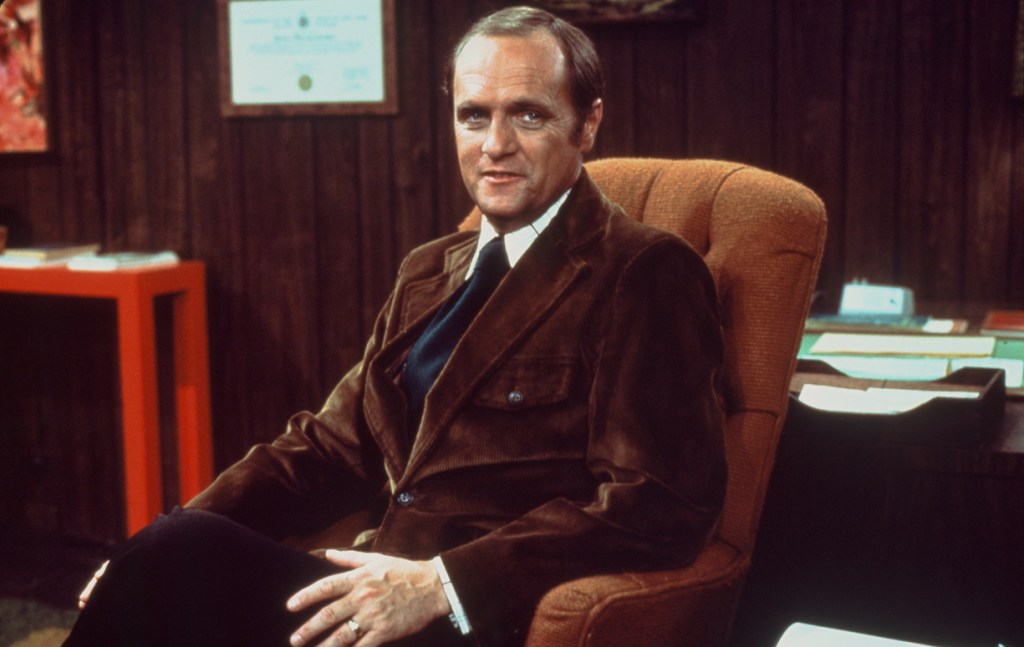
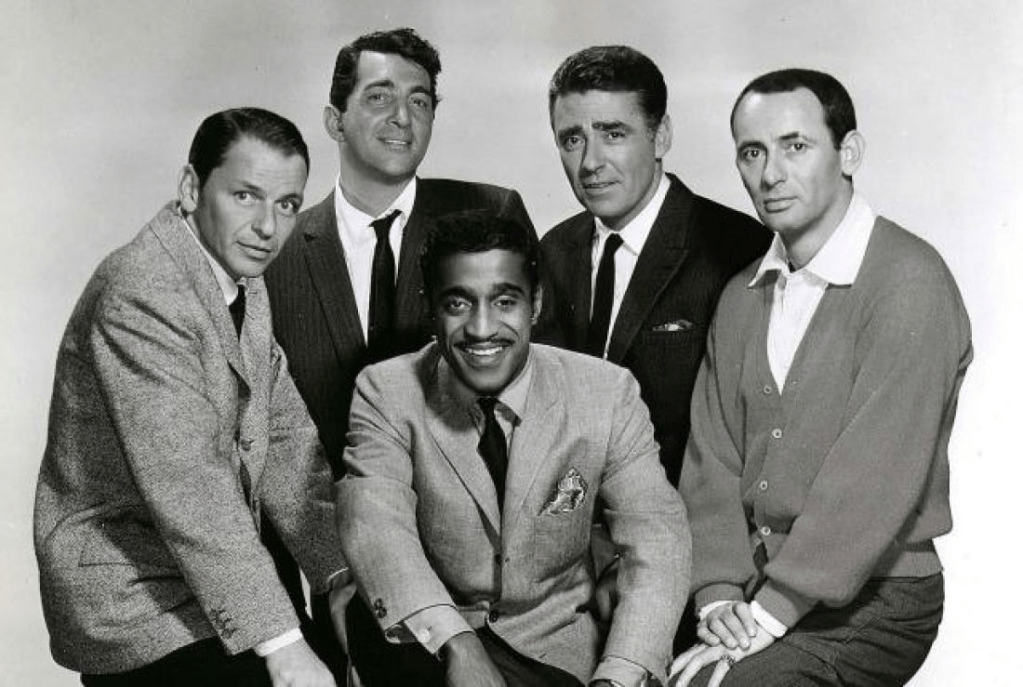
We continue our series to honor television stars who passed away in 2019 by looking at the career of Georgia Engel.
Photo: Wikipedia.com
Georgia was born in Washington DC in 1948 as Georgia Bright Engel. Although she attended several high schools, she graduated from the Academy of the Washington Ballet. Her father was an admiral, and perhaps her family landed in Hawaii, but she went on to earn a theater degree from the University of Hawaii at Manoa.
In 1969, Engel would move to New York City. She was in an off-Broadway production, Lend an Ear and as Minnie Fay in Hello Dolly! for a year. When she was appearing in The House of Blue Leaves, Mary Tyler Moore and her husband Grant Tinker saw her performance one night.
Photo: pressfrom.info
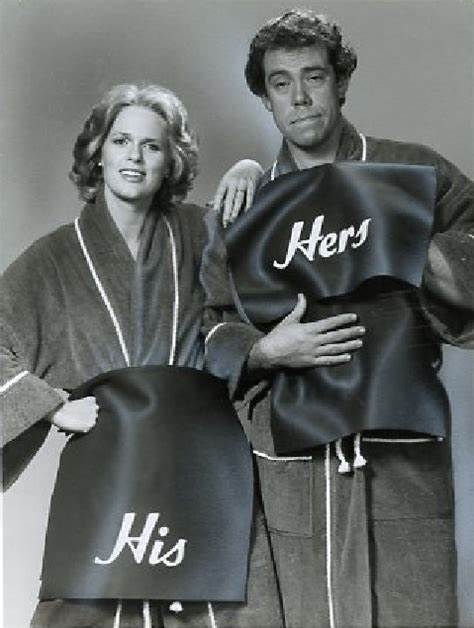
She was cast in The Mary Tyler Moore Show soon after, appearing in 57 episodes as Georgette Baxter, Ted’s girlfriend, and later, wife. Mary described the character as a cross between Stan Laurel and Marilyn Monroe. Georgette was devoted to Ted. She received two Emmy nominations for her role on the classic show.
Photo: vipfaq.com
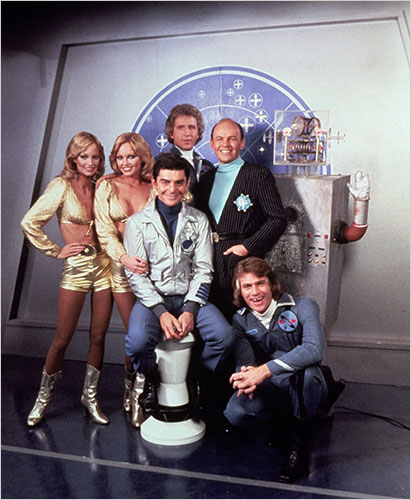
Betty White played Sue Ann Nivens on The Mary Tyler Moore Show, and when White received a show of her own, The Betty White Show, in 1977, she brought Engel in as part of the new series as Mitzi Maloney. The plot featured White as a middle-aged actress who gets the starring role in a police series, Undercover Woman. Unfortunately, she soon learns her ex-spouse, whom she calls “old pickle puss” is the director. Mitzi is her naïve girlfriend and roommate.
Photo: sitcomsonline.com
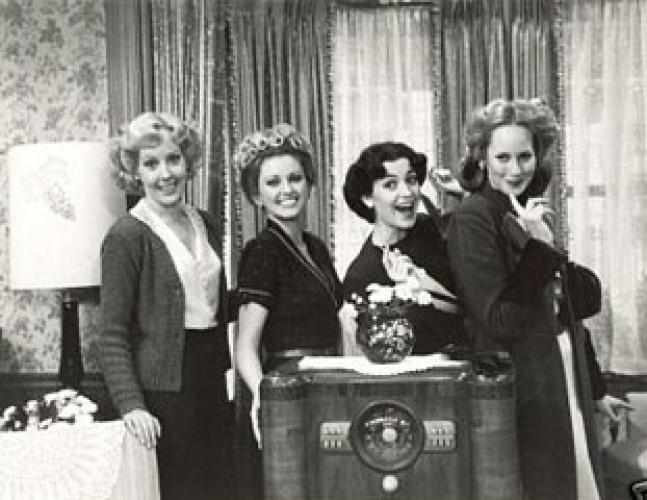
In 1980 she joined the cast of Goodtime Girls as Loretta Smoot. Set in 1942, the show was about a group of women who shared a small apartment in the Coolidge Boarding House. Loretta was described as a middle-aged war bride waiting for her husband to come back home from the war.
Like so many well-known television stars, Engel did her duty, appearing on The Love Boat (4 episodes) and Fantasy Island (5 episodes).
In 1983 she took on the role of Susan Elliott on Jennifer Slept Here. Ann Jillian starred in this show as Jennifer Farrell. Farrell, a popular movie actress who was run over by an ice cream truck in 1963, had lived in the house. Twenty years later, the Elliott family moves in. Jennifer haunts the place but can only be seen by the Susan’s teenage son.
Between 1991 and 1997 she made 20 appearances on Coach as Shirley Burleigh. Shirley’s husband is the athletic director who clashes with Coach Hayden Fox.
Photo: arizonarepublic.com
From 2003-2005 she was cast as Amy’s mother, Pat MacDougall, on Everybody LovesRaymond. This role would reward her with three Emmy nominations. It’s hard to picture a better couple of wacky parents than Engel and Fred Willard!
The soap opera Passions beckoned her in 2007 where she made several portrayals of Esmeralda.
Photo: stylemagazine.com On The Office
In 2012 she joined the cast of The Office as Irene, an older woman being aided by Erin.
Photo: pinterest.com
The years 2012-2015 found her working with Betty White once again as Mamie, Elka’s (White) best friend in Hot in Cleveland. In the fourth season, the two friends run an illegal pharmacy.
Although Georgia was busy with television, she also found time to get back on the stage. In 2001, she toured with Barbara Eden in the female version of The Odd Couple. She appeared on Broadway in The Drowsy Chaperone with Sutton Foster and Edward Hibbert. She appeared in various productions at The Muny Theater in St. Louis between 2004-2010. 2005 found her playing Agnes Gooch in Mame; 2007 was Aunt Eller in Oklahoma!; 2009 was Mrs. Paroo in The Music Man.
Photo: denverpost.com The Drowsy Chaperone
In 2015 she was cast in an off-Broadway play, John. Engel won a 2016 Obie for Distinguished Performance by an Actress for her role. Following that play, Engel starred in Gotta Dance, a musical playing in Chicago.
Georgia passed away in Princeton, New Jersey in April of this year. We don’t know what her cause of death was. She was a member of the Christian Scientists. A friend of hers, Joe Quilty, told the New York Times that because of her religious beliefs, she did not contact any doctors.
Photo: insideedition.com
Following Engel’s death, Betty White said she was “one of a kind and the absolute best.” During a 2012 TV Land interview, White commented on her relationship with Georgia: “You don’t get a chance very often in your life to meet a friend like Georgia, let alone an actress that you’re working with, and to suddenly find pure gold. That’s a privilege.”
Photo: entertainmentheartbeat.com
Perhaps it’s best to end with Georgia Engel’s view of her career. Despite her being typecast as a bit of a ditzy blonde, she said, “Although I play silly parts, in order for others to share in the laughter, I think it’s important to have a heart that’s full of joy and gratitude. Joy is a very holy thing and we can never own it. We can only reflect it.”
Her lengthy and varied television career definitely reflected that joy.
As we take time to remember some of our favorite television stars who passed away this year, Kaye Ballard definitely comes to mind.
Photo: pdxretro.com
Apparently, no one was surprised to learn that Catherine Gloria Ballota planned on a career in entertainment. Born in Cleveland in 1925, she was performing by age 5 and was known as the class clown. At age 16 she performed in a Cleveland USO stage production of Stage Door Canteen and began perfecting impressions of stars for her comedy act.
At the young age of 18, she received a job touring with Spike Jones and His Orchestra as the featured vocalist and flute/tuba player. When that gig ended in 1945, she made her way to New York and appeared on Broadway in Three to Make Ready in 1946. While appearing in other musicals, she earned a reputation in the nightclub circuit as a comedian/singer. She traveled around the country with her act, popping up in clubs such as The Bon Soir in New York, The Hungry i in San Francisco, and Mr. Kelly’s in Chicago. One of her catch phrases was something her mother often said to her, “Good luck with your MOUTH.”
Photo: blogspot.com
During the 1950s and 1960s, she began appearing on variety and talk shows. You would tune in and find her with Ed Sullivan, Jack Paar, Steve Allen, Perry Como, Red Skelton, Carol Burnett, Merv Griffin, Mike Douglas and Johnny Carson. In fact, she appeared on The Tonight Show 150 times. She continued her Broadway career during these two decades as well. She made a name for herself playing Helen of Troy in The Golden Apple in 1954. This same year she recorded “Fly Me to the Moon,” a song Frank Sinatra would make famous. She also was part of the casts of Wonderful Town (1958), Carnival (1961), and Cole Porter Revisited (1965).
In 1957 Julie Andrews starred in a live telecast of Cinderella, the Rodgers and Hammerstein’s version of the fairy tale. Ballard, along with Alice Ghostley, played the wicked stepsisters. It was at this time that Hollywood brought Ballard to Los Angeles. She was one of the comic foils, playing the friend of Jane Powell’s character in The Girl Most Likely. Although she would appear in several movies during her career, television is where she was best known.
Photo: Fredericksburg.com The Girl Most Likely with Jane Powell
In 1964 she played a teacher for models on The Patty Duke Show. In 1967 she was offered one of the leads, Kaye Buell, in The Mothers-in-Law. The other lead was played by Eve Arden as Eve Hubbard. When Kaye’s son married Eve’s daughter, it caused conflict between the neighboring families, especially with their kids living in the garage. The two families had very different lifestyles. Herb Hubbard was a wealthy attorney and his wife was a champion athlete and very organized. Roger Buell was a television writer and Kaye a stay-at-home mom who is a lazy housekeeper and very unorganized. Desi Arnaz produced the show which lasted two seasons.
Photo: mesquitelocalnews.com With Eve Arden
The show followed The Wonderful World of Disney and preceded Bonanza but never received the ratings the network hoped for. Desi agreed to pay most of the stars $2000 per week with the intent of giving them a $250 raise the second year. Because the show was not as successful as everyone thought it would be, the network agreed to renew it on the condition that all expenses, including salaries, were frozen. With the exception of Roger Carmel, all the cast members agreed to freeze their salaries. He refused, so he was replaced with Richard Deacon. With the change in the cast, the ratings went down even further, and the show was not renewed for a third year.
Photo: thenewyorktimes.com
Kaye was asked if she thought the $250 raise was a joke, and Kaye said she and Eve didn’t care about the money. They wanted to keep doing the show. At the time, Arden was making $5000 a week. The show was originally written for Arden and Ann Southern but the networks felt they were too much alike, so Ballard was brought in. Kaye couldn’t get over actors receiving one or two million dollars an episode a couple decades later.
Photo: desertsun.com
A long-time friendship developed between Ballard and Arden during the filming of the show. Ballard fondly remembered her co-star, “Eve was a joy to work with, and we never had an unpleasant moment. . . She could read a script once and know it almost completely.”
Another long friendship was made when Kaye worked with Shelley Winters on a film in 1964. Kaye relayed that when Shelley was cast in The Poseidon Adventure, she “used my (Kaye’s) pool to practice swimming underwater because the studio wouldn’t let her rehearse until they started shooting. She was a great swimmer but ruined all my flashlights by swimming with them.”
Photo: sitcomsonline.com
The 1970s found Kaye very busy. From 1970-1972 she was a regular on The Doris Day Show, playing restaurant owner Angie Pallucci. The series took some liberties with format. The first two years had Doris moving back to her dad’s ranch to raise her kids after the death of her husband. The third season found Doris and her dad and kids living in an apartment above the Pallucci’s restaurant. In the fifth and final season, the kids, dad, and the Palluccis all disappeared and were never mentioned!
In 1971 she guest starred on her friend’s show, Here’s Lucy. In 1970 Ballard purchased Ball and Arnaz’s home after their divorce. She would live there the rest of her life. Her friend Lucy would often stop by and talked about Desi whom she never quite got over.
Photo: maxresdefault.com
Ballard won the trifecta in the seventies, appearing on Love American Style, Fantasy Island, and The Love Boat. She accepted a handful of random roles on television shows after The Doris Day Show ended. You might have seen her on Police Story or Trapper John MD.
The 1990-1991 season found Kaye trying her hand at a situation comedy one more time. The show was called What a Dummy. This show did stretch reality a bit. Ed and Polly Branningan inherit his uncle’s trunk of props which includes his dummy Buzz who has been in the trunk for 50 years. Buzz can think and talk and likes to give the family his unsolicited advice. Ballard was Mrs. Tavalony, their next-door neighbor. No surprise that it was cancelled after 24 episodes.
Photo: sharetv.com
In 1995, Ballard was rewarded with a Golden Palm Star on the Palm Springs Walk of Stars.
Kaye continued to take a few movies now and then, but most of her time was spent on the stage. In 2005, she went on the road in Nunsense. She also accepted roles in The Pirates of Penzance, High Spirits, Funny Girl, The Full Monty, and The Odd Couple.
In 2006, Kaye added author to her resume, publishing an autobiography, How I Lost 10 Pounds in 53 Years.
In 2015, Kaye announced her official retirement. She was interviewed by Nick Thomas that same year and talked about writing a second book. She explained to Thomas that she never married but did not have any regrets. “I was engaged four times, but couldn’t give my all to a marriage or wanted children unless I could give them my complete attention. But I’ve got to meet so many great people because of my career. Who could regret that?”
One of those great people was Mother Teresa whom she met in 1992. Kaye discussed that meeting: “I’m an Irish Catholic girl, so it was a thrill. I went to her private quarters where she was having breakfast –a piece of cheese, half an apple and some toast—and we drank Sanka together. She spoke in English, simply and quietly, and was just so modest and humble.”
Although she survived breast cancer, Kaye passed away at age 93 at her home from kidney cancer in January.
Kaye Ballard, ca. 1958 Photo: thehollywoodreporter.com
The girl from Cleveland with the MOUTH had a long, successful, and interesting career. In her own words, “I’m one of the lucky ones. People get Master’s Degrees and they say, ‘I don’t know what I wanted to do.’ I always knew what I wanted to do. Isn’t that nice?”
I have to agree; it was nice for her and even nicer for those of us she entertained.
As we continue honoring revered television actors who passed away in 2019, Arte Johnson certainly is at the top of the list. Although he accepted roles in movies, most of his work was on the small screen.
Photo: blogspot.com
Arte was born in Benton Harbor, Michigan in 1929. Acting was not Arte’s first profession. He graduated with a radio journalism major from Illinois and decided to pursue a career in the advertising world. He left Chicago when he could find no ad agency jobs and moved to New York where he began at Viking Press. He loved books and collected them throughout his life.
Unlike the stories of people who hone their craft in hundreds of auditions in the Big Apple, Arte impulsively stepped into an audition line for Gentlemen Prefer Blondes and got the part. His real name was Arthur and he decided on Art E. Johnson for his stage name, but “Arte” was mistakenly printed on the playbill, and he decided he liked that better.
Although acting began easily for him, after he moved to LA, his career hit a rough spot and he did take a job as a men’s clothing salesman for a while at Carroll & Co. in Beverly Hills.
Photo: cvta.biz It’s Always Jan
Arte began on television in the 1950s. In the mid-50s, he had a recurring role on It’s Always Jan starring Janis Paige and Merry Anders. A widowed nightclub singer, Janis Stewart, shares a small apartment with an aspiring actress, a secretary, and her daughter. Arte plays a deli employee, showing up in 4 of the 26 episodes.
He was cast as in his first ongoing role later that year. He played Bascomb Bleacher, Jr. on Sally. His father, a department store owner, was played by Gale Gordon. This show about a girl who worked in a department store who became a wealthy matron’s companion also lasted 26 episodes.
Photo: sharetv.com Cousin Edgar on Bewitched
During the 1960s, Arte would appear in 32 different series, including The Twilight Zone, The Andy Griffith Show, McHale’s Navy, Bewitched, Lost in Space, The Donna ReedShow, and I Dream of Jeannie. Once again, he was cast as a regular on a show, Don’t Call Me Charlie. If you’re not familiar with the show, you are not alone. The show starred Josh Peine as a rural veterinarian who is drafted into the Army. He leaves Iowa and heads for Paris. Like Gomer Pyle he retains his simple view of life and his “Sargent Carter” is Colonel Barker. Johnson played the part of Col. Lefkowitz.
Photo: inquisitor.com The Cast of Laugh In
In 1968, Arte was offered a job that would change his life. Along with a handful of other cast members, he appeared on the new edgy Laugh-In. This is a hard show to describe if you never watched it. (It does appear on the Decades channel quite often.) The show was comprised of fast-moving comedy bits featuring guest stars, skits, regulars performing specific characters, gags, and punchlines in rapid format. It was quite different from anything else that had ever appeared in television. Arte was on the show from 1967-1971.
Photo: pinterest.com “Wolfgang”
He was a master of accents and is best known for the characters he created on this show. “Wolfgang” was a cigarette-smoking German soldier hiding out who refused to believe WWII had ended. One of Arte’s taglines was “Verrrrry Interrrrresting.” He would also be seen in a yellow raincoat riding a tricycle that he would fall off from.
Photo: blogspot.com Tyrone and Gladys
Another favorite was “Tyrone” who was an old man wearing a trench coat, always trying to seduce Ruth Buzzy’s “Gladys” on a park bench. She would hit him with her purse, and he often fell off the bench. Oddly, in a far-reaching concept, years later these two characters formed the nexus of a Saturday morning cartoon show, Baggy Pants and the Nitwits.
Photo: fox8.com On The Partridge Family
During the 1970s, Johnson continued his television appearances with 17 different series, including two roles on The Partridge Family and several on Love American Style. He also could be seen on Match Game and Hollywood Squares.
Photo: sitcomsonline.com
His prolific career continued through the 1980s where he was seen on 25 different shows, including Murder She Wrote and The Love Boat. At the end of the ’80s, he began voicing characters for animation shows, but in the 1990s he accepted roles on 14 shows, including Night Court.
At the end of his career, his love of books provided him an opportunity to begin recording the narration for more than 80 audiobooks, including Dave Barry Is Not Making This Up in 2005.
Photo: vulture.com
Married to his wife Gisela since 1968, he survived a battle with non-Hodgkin lymphoma in 1997. In 2006 he retired from acting. He passed away mid-year in 2019 after suffering from bladder and prostate cancer. Ruth Buzzy, his comrade on Laugh-In, shared this message upon his death: “Thank you for a wonderful half-century of friendship. I could not have shared the spotlight with a nicer guy. Rest in peace. And yes, Arte Johnson, I believe in the hereafter.”
I like to think Arte is working on some skits, waiting for Ruth Buzzy, and some day when we get to heaven, we’ll be able to watch Gladys and Tyrone team up for us again.
As another year comes to a close, I wanted to take the month of December to remember some of the amazing television stars who passed away in 2019. In previous blogs during 2019, we discussed Tim Conway, Katherine Helmond, Peggy Lipton, and Peter Tork. We’ll be learning about Valerie Harper’s career in January.
Photo: flashbackdallas.com
We start our tributes with Rip Torn, born Elmore Rual Torn Jr. in 1931 in Texas. Rip was a name that many men in his family used. Torn had an unlikely acting career path. He attended Texas A&M and the University of Texas where he majored in animal husbandry. During his time there, he did study acting with Shakespeare professor B. Iden Payne. His not-well-thought-out plan was to hitchhike to Hollywood, become a movie star, and retire after making enough money to buy a ranch. Although it was a dubious beginning, he would go on to a sixty-year career in the acting profession.
Photo: listal.com The Cincinnati Kid
He made his movie debut in 1956 in Elia Kazan’s Baby Doll. In the same year, he married Ann Wedgeworth. They would remain married for five years until he divorced her to marry Geraldine Page. He and Geraldine were married until her death in 1987.
He worked a number of odd jobs and took several television roles. When he got serious about his acting, he moved to New York City to study under Lee Strasberg. Later a relative of his, cousin Sissy Spacek, would also study under Strasberg. Along with acting, Torn studied dance with Martha Graham during his early years in New York. He made his Broadway debut in “Sweet Bird of Youth” in 1959 and was nominated for a Tony. He would continue to weave in and out of Broadway and Off-Broadway for the rest of his career. He didn’t limit himself, continuing to star in Broadway, movies, and television, winning two Obie awards for “The Deer Park” and “The Beard.” He later opened a stage company.
Photo: tumblr.com The Man Who Fell to Earth
Torn never lacked work. His roles varied as lead, second lead, supporting, and character. He took on a variety of roles in his movies. In 1965 he was Slade in The Cincinnati Kid with Steve McQueen. The part of George Hanson in Easy Rider, which was released in 1969, was written for Torn by Terry Southern. However, Rip did not get along with Dennis Hopper and withdrew from the film. Jack Nicholson took over the role, propelling his rise to stardom. Rip portrayed a country and western singer in Payday in 1972. In 1976, he joined David Bowie in The Man Who Fell to Earth. He was a politician 1979 in The Seduction of Joe Tynan with Alan Alda and Meryl Streep. In 1983 he was nominated for a best supporting Oscar for Cross Creek, the true story of how Marjorie Rawlings wrote The Yearling.
Photo: pinterest.com Airplane II: The Sequel
Most of his performances were in dramas, but he could also tackle comedy. Torn accepted the role of airline executive in Airplane II: The Sequel (1982) and as a tourist with John Candy in Summer Rental (1985).
In 1989 Torn would marry Amy Wright whom he was married to until his death this year when he passed away in July.
Photo: comicbook.com Men in Black
Many younger fans associate him with his role in Men in Black and Men in Black II in the late ‘90s and early 2000s where he worked with Will Smith and Tommy Lee Jones.
Photo: myneatstuff.ca The Man From UNCLE
Although Torn may be best known for his movie roles, he had a long and prolific television career. In the 1950s he appeared on the small screen eleven times, primarily in the drama and theater series so prevalent at that time. The 1960s found him in twenty series including The Man from UNCLE, Dr. Kildare, and Rawhide. In the 1970s, his television roles were primarily in crime shows with one appearance on Bonanza. While he did not appear in any series in the 1980s, he did show up in many made-for-tv-movies. During his career, he would appear in 32 tv movies and about a dozen mini-series.
Photo: newyorktimes.com The Larry Sanders Show
As Artie, the television producer on The Larry Sanders Show, he was nominated six years in a row (1992-1998) for an Emmy, winning in 1996.In addition to his time on The Larry Sanders Show, he also accepted eight other tv roles in the 1990s, including an appearance on Columbo. After 2000, he would show up on television six more times, including a recurring role on Will and Grace. He had a recurring role on 30 Rock as the Chief Executive Officer of General Electric from 2007-2009.
Photo: usatoday.com On 30 Rock
Unfortunately, he got into some trouble in 2010. He claimed that got him fired from 30 Rock, but no one at the show ever confirmed that. He was arrested after breaking into a bank office close to his residence. He was charged with carrying a firearm without a permit, carrying a firearm while intoxicated, trespassing, and criminal mischief. He said he broke in thinking the bank was his home. His lawyer told the judge Torn had a severe alcohol abuse problem. Torn was given a $100,000 bail and began treatment. One article I read cited that Torn was arrested three times for driving while intoxicated before this arrest.
I don’t know if he ever bought that ranch, but he earned the respect of generations of actors. He chose roles that interested him and didn’t worry if his part was the lead actor or a secondary role. He was not focused on whether a part would lead to a financial payday, choosing roles that were interesting or challenging to play. RIP Rip.
We are wrapping up our series, “Girls, Girls, Girls.” At the beginning of the month, we learned about a show that featured four women who spent much of their life together for seven years (Designing Women). Today we end our series with another show that featured a quartet of women that also ran for seven years.
In September of 1985, a new type of sitcom debuted. This show featured four retired women who lived life together, relying on humor to make things work. The show, Golden Girls, was on the air seven years, ending in 1992 and producing 177 episodes. The show was always on Saturday nights with the seventh season moving to an earlier hour.
Photo: tvseriesfinale.com
I read two different versions about the creation of the show, so take your pick. Maybe the truth is somewhere in the middle. One version is that the idea came from Brandon Tartikoff, an NBC executive. When he was visiting his aunt one day, he noticed that she and her next-door neighbor who was her best friend, argued a lot but loved each other. He thought the concept would make a great show.
The other version
credits NBC senior vice president Warren Littlefield. He was in the audience
when Selma Diamond and Doris Roberts acted in a skit called “Miami Nice,” a parody
of the popular Miami Vice. The skit featured old people living in Miami.
Either way, Susan Harris created the show itself, and it was produced by Witt/Thomas/Harris Productions, with Tony Thomas and Harris serving as original executive producers. After the first year, Harris was not as involved with the show, but still oversaw the scripts.
Photo: housebeautiful.com
The four main characters are quite different which is probably why the series was so successful. Blanche (Rue McLanahan) owns the house in Miami. Two women, widow Rose Nylund (Betty White) and divorcee Dorothy Zbornak (Bea Arthur) respond to an ad on a grocery store bulletin board to become Blanche’s roommates. In the pilot episode, the retirement home where Dorothy’s 80-year-old mother Sophia (Estelle Getty) lives burns down, so she joins the trio. All four of the characters appeared in every episode.
Photo: marginallyhuman@wordpress.com
Blanche worked for an art museum. She grew up in a wealthy family, living on a plantation outside Atlanta. When she married her husband George, they moved to Miami. With six kids, Blanche should be a busy family matriarch, but she was man-hungry and always involved in some romantic entanglement much to the chagrin of Rose.
Photo: goldengirls.wikia.com
Dorothy was a substitute teacher. She became pregnant in high school and married the father, Stanley. Stan and Dorothy moved to Miami but after 38 years of marriage, he had an affair with an airline stewardess and left Dorothy.
Photo: buzzfeed.com
Rose lived most of her life in a small farming town, St. Olaf, Minnesota. She and husband Charlie were happily married with five children. After he passes away, she moves to Florida and works at a counseling center. At one point she works for a consumer reporter at a local television station. Rose had an on-again, off-again relationship with a college professor, Miles Webber, during the run of the show.
Photo: thebettergoldengirls.wikia.com
Sophia left Italy to get out of an arranged marriage and ended up in New York where she met Salvadore Petrillo. Sophia also has a variety of jobs on the show, including a fast-food worker and a developer of a spaghetti sauce and sandwich business. Sophia is the only character to marry during the seven seasons. She married Max Weinstock, but they separated soon after the wedding.
The role of Sophia was the first one cast. Estelle Getty had received rave reviews for her performance in Torch Song Trilogy. Although Getty played Dorothy’s mother, in reality she was a year younger than Arthur. It took Getty three hours in make-up to transform into the older Sophia, donning a white wig, heavy make-up and thick glasses. Apparently, even though she was an experienced actress, she suffered from stage fright and often froze on camera. This affliction got worse as the show continued, and by the fifth season, she was reading her lines from cue cards. McClanahan tried to describe what Getty suffered with, “She’d panic. She would start getting under a dark cloud the day before tape day . . . you could see a big difference in her that day. She’d be walking around like Pig-Pen under a black cloud. By tape day, she was unreachable. She was just as uptight as a human being could get. When your brain is frozen like that, you can’t remember lines.”
Photo: refinery29.com
Originally McClanahan
was cast as Rose and White as Blanche. White had portrayed Sue Ann Nivens, a
man-crazy woman, on the Mary Tyler Moore Show. Director Paul Bogart felt
they should switch roles.
McClanahan came
up with the idea that Blanche should have a southern accent which she exaggerated
to make the character more interesting. Apparently, one of the set jokes was
where Rue McClanahan might be sleeping on the set. She was often found napping
in different places.
Although Harris created Dorothy as a “Bea Arthur type,” the producers originally wanted Elaine Stritch for the part, but her audition did not go well. Arthur didn’t want to do the show because she didn’t want her and McClanahan to be portrayed as Maude and Vivian as they were in the show Maude. After reading the script and learning about the role switch of her coworkers, she came on board.
Costume designer Judy Evans created a different look for each of the cast members. Rose was down home and Midwestern. Sophia relied on comfortable clothing. Dorothy had a “pulled-together, no nonsense” look. Blanche was sexy with flowing outfits. Rue had a clause written into her contract that she be allowed to keep all Blanche’s clothing, which was custom made. By the end of the series, she filled thirteen closets with the designer wardrobe. Late McClanahan would create a more affordable line of clothing for QVC, “A Touch of Rue” based on Blanche’s show wardrobe.
(Left to right) The cast of television series The Golden Girls Rue McClanahan, Betty White, Estelle Getty and Beatrice Arthur are shown in a scene from the show in this undated publicity handout photo. Photo: sydneymorningherald.com
While the characters argued from time to time, you knew they loved and cared about each other and were a family, even if they made each other crazy at times. In reality, Arthur was very difficult to get along with. Betty White, who seems to love everyone, admits she did not have a good relationship with Arthur. Apparently, White’s positive and perky manner irritated Bea. McClanahan said Bea was very eccentric and hard to be friendly with. However, White, always the professional, never revealed their difficulties until after Arthur passed away. White and McClanahan became close friends during the show’s run. White always loved game shows and she found a kindred spirit in Rue. They frequently played games between takes.
Photo: entertainmentweekly.com
The house was
often a fifth character on the show. The exterior of the home, which was supposed
to be at 6151 Richmond Street, was part of the backstage studio tour ride at
Disney’s Hollywood Studios for the first two seasons. Designer Ed Stephenson
used a “Florida look” for the home with wooden accents, columns, cypress doors,
rattan furniture, and tropical prints. Of course, Blanche’s bedroom featured pink
carpeting and a vanity table. Dorothy’s room was filled with books and
intricate wallpaper. Rose’s walls are covered with clouds, and her room contained
a lot of ruffles and chintz. Sophia’s room was also modern with dainty floral
wallpaper and mahogany furniture covered by bedding with a satin trim.
If you watch the scenes in the kitchen, you will notice that although four people live there, there are only three chairs at the table. If all four girls were sitting there, someone had their back to the camera, so the director solved the problem by only having three of them in the scene at a time.
Photo: popsugar.co.uk
Often the
plots would feature one of the characters mired in a problem, typically
involving their family, their love life, or ethical dilemmas. When they gathered
around the table to talk, the stories they told would help each other, even
though Rose’s stories from her youth typically had no connection to the current
problem and Sophia’s stories were often made up. Many controversial issues were
covered during the show including same-sex marriage, elder care, homelessness,
HIV/AIDS, immigration, death, assisted suicide, and discrimination whether racial,
sexual or gender.
The critics praised the show, and the public adored it. For six of the seven seasons, the show ranked in the top ten. Both Betty White and Estelle Getty received seven Emmy nominations during the seven-year period, while Bea Arthur and Rue McClanahan each received four. Fun fact, all of them won an Emmy during the run of the show. Overall, the show received 68 Emmy nominations.
Photo: aarp.com
The Queen
Mother loved the show so much that she asked the quartet to come to England and
perform for her personally. When the cast assembled in London, they appeared in
an episode about the visit to the Queen.
After the
seventh season, when the show had dropped into the top 30, Bea Arthur decided
to leave the show. In the finale, Dorothy finally meets the man for her, who
happens to be Blanche’s uncle Lucas (Leslie Nielsen), and they move to Atlanta.
Sophia is uncertain whether she should move with them or stay in Miami and, in
the end, decides to stay in Florida.
When the
series ended, White, McClanahan, and Getty reprised their Golden Girls roles
and starred in The Golden Palace about a hotel. The series ended after
the first year and never enjoyed the rankings of the original, coming in 57th
for the year.
Harris developed two spinoffs from the original series. Empty Nest starred Richard Mulligan as pediatrician Harry Weston who lives next to the women with his two grown daughters. The show was also very popular and lasted seven years as well.
The Cast of Empty Nest Photo: 123movie.care
Empty Nest then launched a show about some of the nurses who worked in Weston’s hospital, simply titled Nurses. While this series was never as popular as Golden Girls or Empty Nest, it did last three years.
The cast of Nurses Photo: tvseriesfinale.com
Although I
enjoyed The Golden Girls, I actually did not watch it often. I think maybe because it was on Saturday
nights during a time that I was not likely home in the evening. I did enjoy it
when I caught an episode but was never the fanatic many of my friends were. I
think I should let the “Girls” have the last words about their series:
Dorothy: You know, sometimes I can’t believe my ears. Sophia: I know. I should’ve taped them back when you were seven.
UNITED STATES – MAY 13: THE GOLDEN GIRLS – 9/24/85 – 9/24/92, ESTELLE GETTY, BEA ARTHUR, (Photo by ABC Photo Archives/ABC via Getty Images)
[Dorothy and
Sophia come home after Sophia’s best friend’s funeral]
Sophia: Well,
I guess Phyllis Glutman will be my new best friend.
Dorothy: I thought you hated Phyllis Glutman.
Sophia: I do, but at the rate my friends are going, I won’t have to spend too much time with her.
As we continue
our “Girls, Girls, Girls” series, we turn to a much-beloved show about two
women and their life in a picture-perfect New England town: Gilmore Girls.
Like Designing Women, this show was on the air for seven years debuting in 2000 on the WB; it produced 154 episodes which are often shown in syndication.
Photo: fanpop.com
When the series begins, Lorelai (Lauren Graham), age 32, lives with her intellectual teenage daughter Rory (Alexis Bledel) in Stars Hollow, Connecticut. Lorelai has a difficult relationship with her parents Richard and Emily (Edward Herrman and Kelly Bishop) who enjoy a high-society type of life. One of the running gags on the show is that most of the times Rory and Lorelai visit Richard and Emily, they have a new maid. The series can be summarized as a mother and daughter going through both joy and heartache who meet a lot of quirky characters along the way.
Photo: losangelestimes.com Emily and Richard
Created by Amy Sherman-Palladino, the show was filled with fast-paced dialogue and tons of pop culture references; e.g., their dog is named Paul Anka. Sherman-Palladino says after several of her pitches were rejected, she proposed a show where the mother and daughter were more friends and it was accepted. She now had to devise the show. After staying at the Mayflower Inn in Washington Depot, Connecticut, she decided that was the perfect setting for the series. She said she felt the “warmth and small-town camaraderie.” As she put it, she wanted to create a “family show that doesn’t make parents want to stick something sharp in their eyes while they’re watching it and doesn’t talk down to kids.”
Photo: zimbio.com
Sherman-Palladino
chose her writing philosophy to “make the small big, make the big small.” She
said the drama is low-key because “sometimes the average everyday things are
more impactful.” As journalist Constance Grady reflected, “On Gilmore Girls,
the explosion is never what matters: It’s the fallout.” The show had a small writing staff that
changed throughout the series. Amy and her husband Daniel wrote many of the scripts.
As we learn the backstory of the main characters, we realize Lorelai became pregnant at 16. Rory’s father, Christopher, is still a friend and in the picture. Lorelai could not adjust to the wealthy lifestyle of her parents and moved to Stars Hollow a year after Rory’s birth. She worked as a maid at a local inn, eventually becoming the executive manager.
Lorelai loves being independent, but she loves her daughter more so she is forced to ask her parents if they would provide tuition for Rory for a private school. They agree, with the condition that the two women join them for dinner every Friday night. Sherman-Palladino summed up this conflict: “I think the theme was always family and connection. I always felt like the underlying thing about Gilmore was that, if you happened to be born into a family that doesn’t really understand you, go out and make your own. That’s what Lorelai did. She went out and she made her own family. The ironic twist in her life is that then this daughter that she created this half family for, likes the family that she left. It was a cycle of crazy family.”
Photo: hookedonhouses.com
The show also follows the path they took to attain their dreams: Rory to attend an Ivy League college and become a journalist and Lorelai to open an inn with her best friend Sookie (Melissa McCarthy). At the end of season three, Rory decides to attend Yale, and Sookie and Lorelai are able to buy the Dragonfly Inn after a fire. (If you look closely, you’ll notice the exterior of the Dragonfly is the home of the Waltons.)
Photo: people.com Rory’s boyfriends
Of course, romance also has a big part in the series. Rory has three very different boyfriends during the course of the show: likable new kid Dean Forrester (Jared Padalecki), somewhat bad boy Jess Mariano (Milo Ventimiglia), and wealthy playboy Logan Huntzberger (Matt Czuchry). In real life, Bledel and Ventimiglia had a three-and-a-half-year relationship. While Lorelai dated other people on the show, her primary relationships are her unresolved feelings for Christopher and her love affair with Luke Danes (Scott Patterson), who owns the local diner.
Photo:gilmoregirls.wiki.com Luke
Patterson was originally hired to be in the pilot only, but there was so much chemistry between him and Lorelai that he became a regular. Ironically, his nephew (bad boy Jess) was also only scheduled for a couple appearances, but he also became a regular for a couple of years.
Luke’s Diner is a key setting on the show. Characters often stop in there for coffee. Rory and Lorelai are there for many major discussions. Ironically, Bledel hated coffee but since Rory “loved” it, Bledel put Coca-Cola in her coffee mug.
Photo: newyorktimes.com
The pilot was shot in Unionville outside Toronto while the rest of the series was filmed in Burbank, California, far away from New England. Because there was so much dialogue in the scripts, it took eight days to shoot one episode and days were often 14-20 hours long. The actors commented on the complicated filming often. Czuchry said “The pace of the dialogue was what made that show incredibly unique, and also incredibly difficult as an actor. To be able to maintain that speed, tone, and at the same time, try to make layered choices was a great experience to have early in my career. It really challenged me.” Graham commented a few years ago that “never before or since have I done as many takes of anything. . . that show—as fun and breezy and light as it is—is technically really challenging.”
dvdbash.com
Many actors got their start on the show, and many famous actors made guest appearances. This was Bledel’s first acting job. Sherman-Palladino mentioned her shyness and innocence which were essential for the character of Rory. Liza Weil tested for the role of Rory; she didn’t get the part but she was offered the role of Paris Geller, Rory’s classmate.
Lauren Graham was asked to audition, but she was committed to an NBC show. When that show was cancelled, she was able to accept the role on Gilmore Girls. Herrman was always in mind for Lorelai’s father Richard. Bishop received an offer immediately following her audition for the mother. Alex Borstein was cast as Sookie in the pilot, but was replaced by McCarthy when she could not get out of her Mad TV contract.
Some of the famous cameos include Carole King who appeared as a music shop proprietor in season 6;
Photo: entertainmentweekly.com Carole King
Christiane Amanpour, Rory’s idol who she met at the Dragonfly Inn; Jane Lynch as a nurse when Richard has a heart attack; Madeleine Albright; Norman Mailer who was the first person to learn Sookie was pregnant,
Photo: blogspot.com Christiane Amanpour
Jon Hamm, pre-Mad Men days; and Seth MacFarlane, Family Guy creator, appeared as a boyfriend of a classmate at graduation; Sherman-Palladino’s husband Daniel was a producer on Family Guy.
With a show like Gilmore Girls and all its allusions to pop culture, literature, and movies, the music was an important part of the show. Sam Phillips composed the music score for the entire run of the series. Phillips relied primarily on acoustic guitar and voice for his composition with an occasional piano, violin, or drums. The theme song is Carole King’s “Where You Lead.” King recorded a version with her daughter Louise Goffin just for this show. Many musical groups were featured performing on the show including The Bangles, Sonic Youth, the Sparks, and The Shins. In 2002, a CD soundtrack for the show was released as “Our Little Corner of the World: Music from Gilmore Girls.”
Critics adored the show. John Carman, writing for the San Francisco Chronicle, declared “It’s cross-generational, warm-the-cockles viewing, and it’s a terrific show.” The New York Times called it “a witty, charming show” that “is redefining family in a realistic, entertaining way for today’s audience, all the while avoiding the sappiness that makes sophisticated viewers run from anything labeled a ‘family show.’” The Hollywood Reporter’s Ray Richmond said “it was a genuine gem in the making, a family-friendly hour unburdened by trite cliché or precocious pablum.” The Philadelphia Inquirer’s Jonathan Storm described it as “a touching, funny lively show that really does appeal to all ages” and David Zurawik of the Baltimore Sun said “Gilmore Girls is one of the most pleasant surprises of the new season.”
Photo: hellogiggles.com
For a small network, the ratings were good, and the show became one of the mainstays of the new network. It debuted on Thursday nights up against Friends on NBC and Survivor on CBS.
For season two, the show was moved to Tuesday nights. It became the third-highest rated show on WB. The critics continued to praise the show. Hal Boedeker of the Orlando Sentinel said it “was one of television’s great, unsung pleasures . . . Amy Sherman-Palladino writes clever dialogue and ingratiating comedy, but she also knows hot to do bittersweet drama.” The Washington Post’s Emily Yahr said the second season was “pretty much a perfect season of television.”
Photo: entertainmentweekly.com
Seasons 4-7 pitted the Gilmores against the US’s top-rated show of the time, American Idol. Although there was a decline in viewership, season five finished with Gilmore Girls the second-most-watched prime time show on WB.
For the final
two seasons, most critics jumped ship. Maureen Ryan of the ChicagoTribune,
said it was “uneven at best” because “the protracted fight between Lorelai and
Rory Gilmore left the writers scrambling to cram the show with filler plots
that stretched many fans’ patience to the limit.”
There was already speculation that the seventh season would be the last one because both Graham and Bledel had contracts ending. To make matters worse, in 2006 the WB merged with UPN to form a new network, The CW. Gilmore Girls was put on the new schedule but the new network could not come to an agreement with Amy Sherman-Palladino so she was leaving the show. After having Amy as a controlling voice in all the scripts, ensuring consistency in the writing, this was a death knoll for the show. A finale was planned that could serve as an ending for the show or a new beginning for an eighth season. CW considered bringing the show back for a shorter 13-episode season but nixed the idea. Part of the issue for the two main actresses was the amount of time each episode required to film.
It was not the end of the story for Lorelai and Rory though. Nine years later, Netflix had a miniseries. Spoiler Alert Coming: Rory was well into her journalism career. While she had a boyfriend, she was having an affair with Logan who was engaged to another woman. Lorelai and Luke live together but still have arguments often. Richard had died of a heart attack. Emily and Lorelai try joint therapy to heal their relationship. Lorelai decides to take a trip to clear her mind and reflect on her life. She comes back, tells her mother a moving story about her father; her mother sells the house and moves to Nantucket to work for a museum. Lorelai proposes to Luke and they marry. Bad-boy Jess, still around, encourages Rory to write a memoir called, what else, Gilmore Girls. In an ending with a twist, Rory reveals that she is pregnant without sharing who the father is.
Photo: enews.com
I must admit I did not watch the show when it originally aired, despite my niece Joylyn telling me how wonderful the show was. When I did begin to catch episodes in syndication, I also fell in love with the writing and characters. Part of the reason fans related to the show was because they were able to watch both Rory and Lorelai grow up and mature. The show has been in syndication since 2004 and has continued to find new generations of fans. Gilmore Girls is the perfect show to binge watch during a winter snowstorm, so buy the DVDs and keep some popcorn and hot chocolate on hand for the first blizzard of the season.
This month we are in the midst of the series, “Girls, Girls, Girls.” Today we take a look at another sitcom whose cast was primarily female.
From 1965-1966, Gidget starring Sally Field was on the air. When it was cancelled after only 32 episodes, producers were scrambling to find another vehicle for Field. Harry Ackerman, with co-producers Bernard Slade (who would create The PartridgeFamily and just passed away last week) and Max Wylie came up with The Flying Nun. They based it on a book published in 1965, The Fifteenth Pelican by Tere Rios. Beginning on ABC in September of 1967, the show continued through the fall of 1970, resulting in 82 episodes.
I did read that Patty Duke was the first choice for the show, so I’m assuming when she turned it down, they asked Sally Field. Apparently, they were trying to find a show for Field, but this show was not created for her. Field also turned it down, thinking it was a silly concept, so the producers went to their third choice, Ronne Troup, who would play Polly on My Three Sons. Troup began filming the pilot. Sally’s stepdad, Jock Mahoney, told her she should reconsider because she might not get another chance in show business if she didn’t accept the role. When Sally informed the producers that she had changed her mind, Troup was let go.
Photo: sitcomsonline.com
In the hour-long pilot, we meet Elsie Ethrington. Elsie, who grew up in Chicago, is arrested in New York during a protest. We learn that the rest of her family has chosen medicine for their vocation. (In a later episode, we meet one of her birth sisters who is a physican played by Elinor Donohue.) Elsie goes to Puerto Rico. She is impressed with the missionary work her aunt has been doing, so she ends her relationship with her boyfriend, a toy salesman, and becomes a nun at the Convento San Tanco, taking on the name Sister Bertrille. In one episode, Sister Bertrille watches home movies of her life and what we are actually seeing is footage from Gidget.
Photo: pinterest.com
One day Sister Bertrille, who is only 90 pounds, realized that the heavily starched cornette on her head, allowed her to be able to “fly” as the high winds picked her up. As she tried to explain to several people, “when lift plus thrust is greater than load plus drag, anything can fly.” Of course, a nun flying around town caused quite a stir. Field said she was humiliated by her directors as she was hung from a crane and moved around the set like a prop.
Photo: pinterest.com
The Reverend Mother Placido (Madeleine Sherwood) runs the convent. She is kind, but strict. Sister Jacqueline (Marge Redmond), who sees the humor in most situations, becomes good friends with Sister Bertrille. Sister Ana (Linda Dangcil) and Sister Sixto (Shelley Morrison) are also friends of hers. The other major characters are Captain Gaspar Fomento (Vito Scotti) who is a police officer that the nuns keep from learning about Sister Bertrille’s flying ability and Carlos Ramirez (Alejandro Rey) who owns a casino and is a ladies’ man. Ramirez was raised by the nuns, and they constantly try to reform him. He will not be reformed, but out of appreciation, he always tries to help them, and Sister Bertrille is constantly involving him in zany schemes or asking him to finance some plan of hers.
Photo: flickr.com
This was the
first (and perhaps only) sitcom to be set in Puerto Rico. Although the pilot
and opening and closing credits were shot in Puerto Rico, the show was shot at
Warner Brothers Ranch in Burbank, California.
The producers
were worried about how Catholics would react to the show. They asked the
National Catholic Office for Radio and Television to serve as an advisor. The
show actually was popular with Catholic religious leaders who felt the show
“humanized” the image of nuns.
The show was also popular with viewers of every other religion. The first two years, it aired Thursday nights, competing with Daniel Boone. The sitcom was sandwiched between Batman and Bewitched. Although it was declared a hit immediately, the ratings eroded during the two years.
Photo: epguides.com
The producers had a hard time deciding on a focus for the show. During the second season it contained more slapstick comedy. The third season it went back to the warm and fuzzy feelings it used in the first season. For the third season, the network moved the show to Wednesdays and put it up against The Glen Campbell Goodtime Hour which insured its cancellation. It didn’t help in the third year that Field was pregnant. She mentioned in an interview that “you can only imagine what a pregnant flying nun looked like,” and the crew had to hide her behind props and scenery.
Photo: thenewyorktimes.com
Critics never took to the show, but the public kept it on the air three times longer than Gidget. Many fans remember the series fondly. The plots were often heart-warming. In “With Love from Irving,” a pelican falls in love with Sister Bertrille. When Sister Bertrille is forced to go to the dentist for a toothache, Dr. Paredes puts her under hypnosis. The doctor gives them a suggestion that whenever they hear “red,” she and the Reverend Mother will switch personalities. In another show, Sister Bertrille wants Carlos to finance an expedition to find a bell that sunk long ago that was supposed to go to the convent because their old one is rusted and they can’t afford a new one. Carlos uses the opportunity to woo a young woman, but Sister Bertrille tags along. The girlfriend gets thrown overboard, but the bell is found in the end.
Relying on uplifting morals (pun intended) and Field’s delightful and talented performances, the show continued on the air. Marge Redmond was nominated for an Emmy as supporting actress. Unfortunately, she was up against Marion Lorne, who won it for her role of Aunt Clara on Bewitched.
TV Guide ranked the show number 42 on its worst tv shows of all times list in 2002. However, it continues to do well in syndication and has an international fan club.
Photo: ebay.com
While the show was on the air, it sold a variety of merchandise, including paper dolls, lunch boxes, trading cards, view master reels, a board game, and a doll.
Photo: ebay.com
Sally Field released a soundtrack LP with songs from the series in 1967. Dell Comics came out with four comic books based on the series in 1968.
Photo: ebay.com
Photo: ebay.com
I must admit I was not a big fan of the show. However, I have gone back and watched quite a few episodes for this blog, and it is better than I remembered it. Although the concept does sound as silly as Field thought, the show is charming and can be quite funny at times. Although it might not be in your top 25, it probably deserves a second look if you have not seen it for a while.
This month we begin a new series—“Girls, Girls, Girls.” I am celebrating sitcoms that are based primarily on the relationships of women. We begin with a series that ran for seven years, resulting in 163 episodes. It revealed the joyful, disheartening, and disturbing details that occur in a long-term friendship. Today we learn more about Designing Women.
In September of 1986 a show debuted about not only friendship, but also about running a business, becoming independent, trusting in yourself, and living a truly southern lifestyle. We had watched shows about sisters before, about a workplace staff and how women rely on each other, but this show put it all in one place. Had this show been set in Chicago, Salt Lake City, or Boston, it would have been a totally different show.
Photo: pinterest.com
Julia Sugarbaker (Dixie Carter) owns a design firm and runs it from her house. Her shallow sister Suzanne (Delta Burke), who was a beauty queen and is still a diva, works there too, along with a divorced mother Mary Jo (Annie Potts), a naïve country girl Charlene (Jean Smart) and a black ex-con man named Anthony (Meshach Taylor) who not only delivers furniture for the business but delivers his unique viewpoint as a male among women. For the seven seasons the show was on the air we got to know each of the characters intimately. We saw them fall in and out of love, get married, get dumped, love each other, hate each other, and learn about themselves as they went through all these changes together.
While Julia
is the face of the company, Suzanne is a silent partner, Mary Jo is the head
designer, Charlene is the office manager, and Anthony takes on a variety of
duties that need to be tended to.
The famous exterior of the home/business was The Villa Marre, a Victorian mansion from 1981 that was located in the MacArthur Park Historic District in Little Rock, Arkansas. You can still drive by it today, and it’s listed in the National Registry of Historic Places.
Photo: pinterest.com
The Golden Girls (which we’ll look at in a couple of weeks), had premiered the year before Designing Women. You can definitely see a similarity in the two shows. Both were set in the south, the business was in Julia’s house while the older women friends lived in Blanche’s home. You can compare Dorothy to Julia and Charlene to Rose and, with a little stretching, Suzanne to Blanche. With a lot of stretching, Anthony and Mary Jo can be compared to Sophia; they’re more practical and always willing to offer advice, requested or not.
The sitcom was created by Linda Bloodworth-Thomason. She wrote about half of the episodes and was determined to include topics women were concerned about such as extra-marital relationships, body image, racial inequality, and terminal diseases. Although the show tackled many controversial issues, it was never preachy or judgmental. Linda’s husband Harry was an executive producer, so he also influenced the topics. The couple were friends with Bill and Hillary Clinton and voiced a decidedly more liberal viewpoint. This was especially tough on Dixie Carter who was a committed Republican.
Photo: sitcomsonline.com
Although the
show was beloved by fans, critics weren’t on board, at least at first. Below is
an excerpt from a New York Times article that ran September 29, 1986:
Like NBC’s “Golden Girls,” the new series “Designing Women,”tonight at 9:30, features four women with wisecracks to spare. Although they don’t live together in Florida, these women spend most of their time working together in a Victorian-type house in Atlanta. They are in the business of interior decorating.
The show was created by, and this evening’s premiere written by, Linda Bloodworth-Thomason, who also shares the executive-producer credit with her husband, Harry Thomason. The fictitious firm of Sugarbaker & Associates is headed by Julia Sugarbaker, a glamorous widow who is far from ready to become a blue-haired little old lady. Dixie Carter plays Julia as a graduate of the Beatrice Arthur-Elaine Stritch school of dripping sarcasm. Julia’s three partners are her man-hungry sister Suzanne (Delta Burke), whose alimony checks are filed alphabetically; the recently divorced Mary Jo (Annie Potts), who refused alimony, thinking capital punishment would be more appropriate, and dizzy but shrewd Charlene (Jean Smart), whose latest boyfriend is named Shadow and, for some unexplained reason, is walking around with a bullet hole in his pants.
This, then, is the basic mix, no less promising than any other in a season that continues to give white, middle-class parents to all sorts of minority children. Tonight, Suzanne discovers that her gynecologist is retiring. “Let him go,” advises Julia, “he’s paid his dues.” As it happens, Mary Jo’s former husband is a gynecologist. Suzanne visits his office and promptly returns with the news that they have fallen in love. Julia observes: “If sex were fast food, there’d be an arch over your bed.’” . . .
Ms. Bloodworth-Thomason is no Susan Harris, whose crackling humor keeps “The Golden Girls” popping steadily from week to week. On the other hand, “Designing Women” has a first-rate cast. . .
Now, it’s all a matter of figuring out where “Designing Women” goes from here. Mary Jo’s first husband, a major character this evening, isn’t even mentioned in next week’s episode, which revolves around not interior design but beauty pageants. And sure enough, Julia gets another scene in which she witheringly tells off another icky character. Already the show looks like four terrific actresses in search of a workable sitcom.
I was surprised to learn that none of the actresses auditioned for their roles. Bloodworth-Thomason had the four lead actresses in mind when she wrote the pilot. Smart was the only non-Southern native, having been raised in Seattle. Anthony was not intended to be a regular. He was supposed to have a one-time role but when asked to improvise with the lead characters, the producers were so impressed with the result that he was written into the show, becoming the first cast member to receive an Emmy nomination. All in all, the show would earn eighteen nominations.
Photo: amazon.com
The cast members’ real marriages intertwined with the character’s relationships. Hal Holbrook played Reese on the show, Julia’s beau, and the two were married in real life. Gerald McRaney beat out John Ritter for the role of Suzanne’s ex-husband Dash.
Photo: broadway.com
Although they were exes on the show, they married in real life. Richard Gilliland won the role of Mary Jo’s boyfriend J.D., but he won the heart of Jean Smart whom he married in 1987.
Photo: zimbio.com
The show began its run on Monday nights on CBS, following Newhart, and it got decent ratings. For whatever reason, CBS began moving the show all over the place. The ratings went down when it was moved to Thursdays against Night Court and then Sundays up against the movie of the week on both ABC and NBC. CBS was planning on cancelling the show but a public letter-writing campaign saved it from its fate. After receiving 50,000 letters, the network returned it to the Monday night slot again. It was often in the top 20, and always in the top 30 through mid-1992. In late 1992, the network moved the show to Fridays where it again decreased its ratings. The network then cancelled the show in 1993.
It was hard to blame the network for its eventual cancellation though. The cast went through too many changes and the show lost its original charm and focus with so many replacements. In 1990, Delta Burke appeared on a Barbara Walters special and stated that the set was not a happy one. She accused the Thomasons of manipulating her. After that Burke began showing up late and sometimes not at all. The writers had to write two different scripts, one with her and one without her. Some people blamed it on McRaney’s influence, but whatever the reason, her co-stars took the brunt of her difficulties, having to learn two scripts while continuing to fulfill their contracts. They decided as a cast that they could not continue working with her, and she was let go. Julia Duffy, Jan Hooks, and Judith Ivey were all brought onto the show as possible characters, but they were not popular with the audience.
Photo: greginhollywood.com
Burke and Carter had been close friends up to this point and the situation destroyed their friendship, at least temporarily. Later they were able to somewhat repair the strained relationship.
I know it
sounds like déjà vu, but as I have to add in many blogs, there is a rumor of a
revival of the show for 2020. This past August, CBS confirmed that the show
will be debuting again next year.
Like most shows, Designing Women had its highs and lows. Once Burke became difficult to work with, the chemistry on the show was never recaptured. When it was good, it was very good.
Photo: fanpop.com
While Julia was a proper southern lady, once her fiery rage was aroused, she could put anyone in their place and she did it well over the years. During season two, the firm is hired by a gay man who is dying of AIDS and wants help designing his funeral. The staff become close to him and learn a lot about HIV. A wealthy client of the firm tells Julia that AIDS is “killing all the right people” which earns him one of her most scathing put-downs. While episodes like this one are heart-breaking, many episodes are just hilarious. In a very funny moment in season three, it is not Julia’s tongue that gets the laughs, it is another body part. As she is participating in a charity fashion show, her dress gets caught in her pantyhose, and she ends up mooning 1200 of Atlanta’s most prestigious citizens, including the mayor. Not many series can excel with such a range of topics, emotions, and comedy skills.
If you find
yourself with a free week-end or a night with no plans, take some time to watch
this award-winning show. Just stick to the first four seasons, so you don’t
have to watch its disappointing decline.
A blog series on Murder, Mystery and Mayhem just wouldn’t be complete without the inclusion of Perry Mason. The show was based on the books by Erle Stanley Gardner in the 1930s and aired nine seasons from 1957 to 1966, producing 271 episodes, along with numerous movies. Perry Mason was the first weekly one-hour series. Fun fact, Gardner was a big fan of Youth’s Companion magazine which was quite popular for a hundred years until it merged with another periodical in 1929; it happened to be published by a Boston company, Perry Mason & Co.
automotivemileposts.com
Perry Mason (Raymond Burr) is a criminal defense attorney. His right-hand is secretary Della Street (Barbara Hale) and they are both aided by
parasoldreams.blogspot.com
investigator Paul Drake (William Hopper).
The cast is rounded out by DA Hamilton Burger (William Talman) and Lt. Arthur Tragg (Ray Collins).
William Talman Photo: directexpose.com
Due to an illness, Collins was only able to appear in a handful of episodes after 1960; however, his name was kept in the credits which allowed him to continue receiving medical benefits from the actors’ union. He passed away in 1965.
perrymasonandcontemporaryviolence.blogspot.com
While the
main cast members were in a minimum of 225 episodes, little-known actor Don
Anderson appeared in 128 episodes during the nine years. He is seen in minor
roles and played a variety of characters including a courtroom spectator, a
wedding guest, a rescue boat skipper, a bartender, a downhill snow skier, a
bank employee, and a German border guard.
Mason’s practice in Los Angeles attracts clients who have been falsely accused. The first half of the show typically set up the situation, the investigation was conducted, and usually the DA decides to prosecute Mason’s innocent client. The second half of the show was conducted in the courthouse. Usually the action occurs in a preliminary appearance because casting realized quickly that appearing before a judge would save having to find twelve jury members for each show. Burger would often object with his declaration of “Incompetent, irrelevant, and immaterial!” Della often pursues leads while Perry is in court. Mason pays attention to every detail and is often able to trick the guilty person into admitting their crime.
e-discoveryteam.com
Gardner’s literary agent was Thomas Cornwell Jackson. In 1947 he married Gail Patrick, who had studied law before becoming an actress. She and her husband had discussed bringing Gardner’s Mason character to television. Gardner had also been an attorney before becoming a writer, so he wanted some creative control. He had no desire to see Perry’s personal life or a love interest. He wanted the show to feature the law as its primary character. Gardner, Jackson, and Patrick formed a production company, Paisano, to film a pilot. CBS picked up the show for 1957.
Gail Patrick Jackson pinterest.com
Patrick began auditions for the role of Mason. Richard Carlson, Mike Connors, Richard Egan, William Holden, and Efrem Zimbalist Jr. were all frontrunners. CBS wanted Fred MacMurray and were in negotiations with him. Raymond Burr had been in to audition for the role of Hamilton Burger. When the production company realized they could not afford a big-name actor, Burr was offered the role of Mason. In another role switch, William Hopper, Hedda Hopper’s son, auditioned for Perry Mason but was offered the role of Paul Drake. Barbara Hale was asked to take the role of Della Street. Her children were little and she was not really interested in a series, but when she found out Burr would play the title character, she opted in since they had known each other since they both worked for RKO.
eccentricroadside.blogspot.com
The production
staff also included people who were well versed in law. Ben Brady, producer, practiced
law before entering show business and story editor Gene Wang went to law school
in Florida. Luckily, they had 69 Gardner novels featuring Perry Mason at their
disposal; all but three episodes in the first year were adapted from Gardner
novels.
Each episode had a budget of $100,000. The Superior Oil Company building in Los Angeles was used for the exterior of Mason’s Brent Building location, a modern structure built in 1956. In 2003, it received a historical landmark designation and is now The Standard Downtown LA Hotel. Filming was primarily done in and around Culver City. The early seasons were shot at William Fox Studios. When it closed in the early 1960s, production moved to General Service studios and finally to the Chaplin Studios until the end of the series.
thefrogseyebrows.blogspot.com
Auto sponsorship for the first season see-sawed between GM and Ford who alternated episodes. In an odd set of circumstances, Mason would drive a Ford Skyliner one week, and the next week he would find himself behind the wheel of a Cadillac convertible. Drake and Tragg’s cars also staggered from week to week. In one episode, Mason can be seen using a car telephone. Back then it was considered a radio, and you had to phone the operator to make a call, but it was still a cool technology feature.
directexpose.com
Even people who never watched the show are familiar with the theme song composed by Fred Steiner. Steiner says he wanted to write a theme that portrayed sophistication and toughness. He called the song, “Park Avenue Beat,” a symphonic R&B piece.
The show featured an interesting substitution during the middle of its run. Burr was unable to film several episodes in 1963 while he was recuperating from dental surgery. Mason was temporarily replaced by attorneys played by Bette Davis, Walter Pidgeon, Hugh O’Brian, Michael Rennie, and Mike Connors.
Bette Davis fills in pinterest.com
When Burr was making made-for-tv movies about Perry Mason, he was suffering from cancer. Hale, who was friends with Burr for the rest of his life, said “He was my hero. He was in such pain, such terrible pain. But that man had such strength and such willpower.” After his death, she described him as “a very, very strong, beautiful human. I shall miss him all my life.”
pinterest.com
Perry Mason got the slot of Saturday nights at 7:30 pm for its first five seasons where it was easily getting the most ratings, even against Bonanza. In 1961, Bonanza was moved to Sunday nights and Perry Mason to Thursdays at 8 pm where it also continued to win the ratings for the night. In 1963 it moved to Thursdays at 9 pm before being switched back to 8 pm for 1964. Before the 1965 season, Paley decided to move the lawyer to Sunday nights back against Bonanza, and when Bonanza received a higher rating that season, Perry Mason was cancelled, even though the show was receiving more mail than ever and the network had discussed a tenth season shot in color to be able to compete with the western.
cinemacats.com
The show was
loved by both viewers and critics and did well at annual Emmy awards shows. In
1958 it was nominated for the best dramatic series; in 1961 it was nominated
for film editing; and in 1962 it won for audio engineering. Raymond Burr received
a best actor nomination in 1960 and won best actor in both 1959 and 1961.
Barbara Hale was nominated for best supporting actress in 1961 and won the best
supporting Emmy in 1959. William Hopper was nominated for best supporting actor
in 1959 as well.
While the show was winning awards, Mason was winning cases. However, there were three clients who were found guilty. In season six, “The Case of the Witless Witness,” the client lost. In both season one and seven, the client was found guilty but they were both proved innocent later and avoided jail time.
In the final episode, “The Case of the Final Fade-Out,” Erle Stanley Gardner can be spied as judge.
Erle Stanley Gardner thepulp.net
Although all
but one episode was filmed in black and white, the show has been in syndication
almost continually since its cancellation.
In her book, My Beloved World, Sonia Sotomayor commented on the series. She said she was influenced greatly by the show which ignited a passion to be a prosecutor. She wrote she enjoyed watching Mason, “but my sympathies were not entirely monopolized by Perry Mason. I was fond of Burger, the prosecutor, too. I liked that he was a good loser, that he was more committed to finding the truth than to winning his case. If the defendant was truly innocent, he once explained, and the case was dismissed, then he had done his job because justice had been served.”
I feel like this is becoming a cliché for almost every blog I write, but like so many shows from the past, a new Perry Mason series is in the works for HBO. Originally, Robert Downey Jr. was to portray the attorney, but his schedule precludes him from starring. However, his production company has cast Matthew Rhys as Perry. Tim Van Patten has signed on as director and Tatiana Maslany will fill the Della Street spot. John Lithgow joined the series in May, as an attorney who will mentor Mason.
pinterest.com
I find it impressive when any show, made more than fifty years ago continues to win viewers and create new generations of fans. However, I find it especially remarkable that a show first filmed almost 63 years ago in black and white continues to hold its own alongside so many current law-themed shows in production. Perry Mason can currently be seen on FETV, METV, and the Hallmark Channel.
We are in the midst of our Murder, Mystery, and Mayhem series this month. In the mid-1960s, westerns were still the most popular show on television with rural sitcoms coming on the scene. Crime shows still had their fair share of air time, but spy shows were non-existent. With the end of the Cold War, Bond movies, and books like The Spy Who Came in From the Cold, these types of thrillers were bound to hit the small screen. From 1964-1968, The Man from UNCLE took us behind the scenes to observe the dangerous life of special agents.
Photo: booktrib.com
Beginning on Tuesday nights on NBC, the show was produced by Metro Goldwyn Mayer. The creator, Norman Felton, asked Ian Fleming to act as a consultant. (Some sources list Felton as the sole creator; some credit Sam Rolfe as a co-creator.) The book The James Bond Films mentions that Fleming suggested two characters: Napoleon Solo and April Dancer. Napoleon Solo became one of the main characters on The Man from UNCLE, and we will learn more about April Dancer later. Solo was also a villain in the movie Goldfinger. Originally titled “Solo,image of ” the popularity of the film led to a title change in the television show to The Man from Uncle.
Photo: filmandfurniture.com
Solo (Robert Vaughn), being an American, was set up in a partnership with a Russian, Illya Kuryakin (David McCallum). The duo would take on multinational secret intelligence work under UNCLE, The United Network Command for Law and Enforcement. They sometimes worked with Alexander Waverly (Leo G. Carroll) who headed up an English organization. They frequently went up against THRUSH. We never learned who was part of THRUSH or what their goals were, apart from taking over the world of, course.
Photo: ebay.com David McCallum
Solo was
supposed to be the typical ladies’ man, with Kuryakin being the intelligent,
funny, and loyal partner, but McCallum turned into an instant celebrity.
Hysterical fans attended promotional appearances and magazines gave he and his
wife Jill Ireland little peace and quiet. One article I read discussed an
incident in Baton Rouge, LA when McCallum was locked in a bathroom so the
police could clear out the screaming women. When he was supposed to do a spot
in a Macy’s store in New York, police had to disperse 15,000 screaming women
who made it too dangerous for him to appear and did “a colossal amount of
damage” to the store.
Solo and Kuryakin accessed their secret headquarters through a tailor’s shop, Del Floria’s.
Photo: filmandfurniture.com
In an
interesting twist, the creators decided to feature an “innocent character,”–a
Joe Doe or Jane Smith who the viewers could identify with—in every episode.
The theme
music was created by Jerry Goldsmith, changing slightly each season as new
composers came on board, eight in all.
Photo: imdb.com
With the exception of one show, the episodes were titled “The ______ Affair.” Every year at least one two-part show was aired. The pair of shows became theatrical films released in Europe. Additional footage was added to the movies. Some of these films were later seen on American television and include To Trap a Spy (1964), The Spy with My Face (1965), One Spy Too Many (1966), The Spy in the Green Hat (1967), and How to Steal the World (1968), among others.
Photo: imdb.com
Although stuntmen were hired for the two leads, they also did their own stunts. Typically, the actor and stuntman did each stunt, and the final version combined the best of them. However, McCallum tried to avoid heights, and Vaughn disliked water scenes.
Like Get Smart, the recurring characters were a small group, and guest stars were necessary for each episode. Both high-profile and up-and-coming actors were eager to appear on the show. William Shatner and Leonard Nimoy can be seen together in “The Project Strigas Affair” two years before they starred on Star Trek. Other actors who appeared include Judy Carne, Joan Collins, Yvonne Craig, Broderick Crawford, Robert Culp, Chad Everett, Barbara Feldon, Anne Francis, Werner Klemperer, Janet Leigh, June Lockhart, Jack Lord, Ricardo Montalban, Leslie Nielsen, Carroll O’Connor, Vincent Price, Cesar Romero, Kurt Russell, Sonny and Cher, and Telly Savalas.
Photo: theunclefiles.com
Of course,
spies need technological gadgets to get a leg up on the competition. Some of
their communication devices included a security badge and a business card. They
could also communicate with a portable satellite disguised as a cigarette case
or fountain pen.
Like all good crime fighters, the duo needed a car, and theirs was a Piranha Coupe, based on the Chevrolet Corvair.
Photo: tvguide.com
Weapons were
also a necessity in their line of work. The UNCLE Special was a semi-automatic
weapon which was useful except at night when THRUSH had access to a
“sniperscope” which allowed the villains to shoot in total darkness.
The gadgets,
props, and clothing for the show were so popular that they are exhibited in the
Ronald Reagan Presidential Library. The CIA also exhibits some of the show’s
items.
Season 1 was a great success even though partway through the season, the show moved from Tuesdays to Mondays. With season 2 came more “tongue-in-cheek” dialogue, and the series switched from black and white to full color. Athough the show was moved to Friday nights, its popularity continued.
Photo: mtv.com
Season 3
added a campy element, a la the Batman
and The Monkees craze, against the
stars’ wishes. The ratings decreased and the show never attained the same
quality and ratings again. It was renewed for a fourth season but cancelled
partway through when there was no increase in viewership.
Although the show was only extremely popular for two years, it garnered eight Emmy nominations and five Golden Globe nominations, including a win for David McCallum as best star in 1966.
Photo: filmandfurniture.com
Of course,
like all popular shows from the 1960s, a tv movie was made a few years later
and a big-screen remake came decades later.
The Return of the Man from UNCLE: The
Fifteen Years Later Affair
was seen on CBS, not NBC, in 1983 with both Vaughn and McCallum reprising their
roles. At the beginning of the movie, we learn that although THRUSH was
obliterated with the arrest of its leader, he has now escaped from prison.
Rather than stick with the chemistry of the two leads, the tv movie pairs each
lead with a younger agent.
In 2015, Guy Ritchie’s big-screen The Man from UNCLE was set in the 1960s featuring Solo (Henry Cavill), Kuryakin (Armie Hammer), and Gaby Teller (Alicia Vikander). The trio must work together in a joint mission to stop an evil organization from using Gaby’s father’s expertise in science to build a nuclear bomb. All the while, they don’t totally trust each other, and secretly put their own country’s agendas first. As far as reboots go, the film was actually a good rendition of the original show.
Photo: worthpoint.com
Of course, there was no limit to the merchandising in connection with the show. Several comic books based on the series were published, as well as two dozen novels. In addition to membership cards, viewers could show their love
for the show with board games, action figures, model kits, lunch boxes, and toy guns.
I did promise to get back to April Dancer. Halfway through The Man from UNCLE series, the network released a spin-off, The Girl from UNCLE starring Stefanie Powers as April Dancer. Not as popular as the original, it was cancelled after one season.
Photo: sixtiescity.net
Dancer works with British agent Mark Slate (Noel Harrison). Leo G. Carroll appeared as Mr. Waverly in this series also. Luckily Powers was fluent in several languages, because Dancer often went undercover with a foreign accent.
Photo: business.facebook.com
Unfortunately, Dancer reeled in the bad guys, but Slate was the one who got to kill them. However, April did get some cool gadgets such as a perfume atomizer that sprayed gas and exploding jewelry.
This show
also used Goldsmith’s theme music in an arrangement by Dave Grusin.
Both The Girl from UNCLE and The Man from UNCLE are available on DVD.
Although The Man from UNCLE was only hugely popular for two years and The Girlfrom UNCLE never attained a fan base, the shows ’ concept spawned a huge pop culture obsession. At one point, more than 10,000 letters a week were delivered to the network. The show sparked an interest in spy shows that would pave the way for future shows such as Mission Impossible; The Wild, Wild West; I Spy; and Get Smart. Like The Man from UNCLE, each of these shows would result in reboot big-screen movies in later decades, as well as a large output of memorabilia.
Photo: oldies.com
It’s interesting
that this show feels dated now with the current technology, yet GetSmart
continues to be a hit. I think the humor and campiness of Get Smart keeps it relevant which is ironic, because that is what
basically brought about the end of TheMan from UNCLE. Despite its current non-relevancy,
it was an important part of pop culture and deserves to be celebrated for its
cult status in the mid-sixties and the realistic portrayal of spies to
generations of viewers.