Those of you who have been with me for a while know I have a bit of a different definition for “classic tv.” My view of “classic” is a show that was a great show and is no longer on the air. Typically, I am writing and researching shows from 40-70 years ago, but every once in a while, I sneak in a more recent series.
Photo: imdb.com
That’s the case today. In 2017 a very different type of show aired called Trial & Error. For those of you who didn’t watch it, it was a spoof of documentaries and reality legal shows. Its humor is hard to describe. Created by Jeff Astrof (he was producer for a variety of shows including The New Adventures of Old Christine and Veronica’s Closet) and Matt Miller (supervising producer for Las Vegas) for NBC, the show was produced by Warner Brothers Television.
Astrof discussed how he got the idea for Trial & Error. He was watching The Staircase, a show documenting the trial of Michael Peterson, accused of murdering his wife. He thought he could turn it into a comedy/mockumentary. Peterson is a novelist who lives in North Carolina and was accused of pushing both his wife and a family friend down staircases.
Photo: imdb.com
I know that doesn’t sound like an idea for a funny show, but that’s what happened. I’m not one for the Dumb and Dumber type movies, so this is not that. It was based on character and the little town where the action takes place.
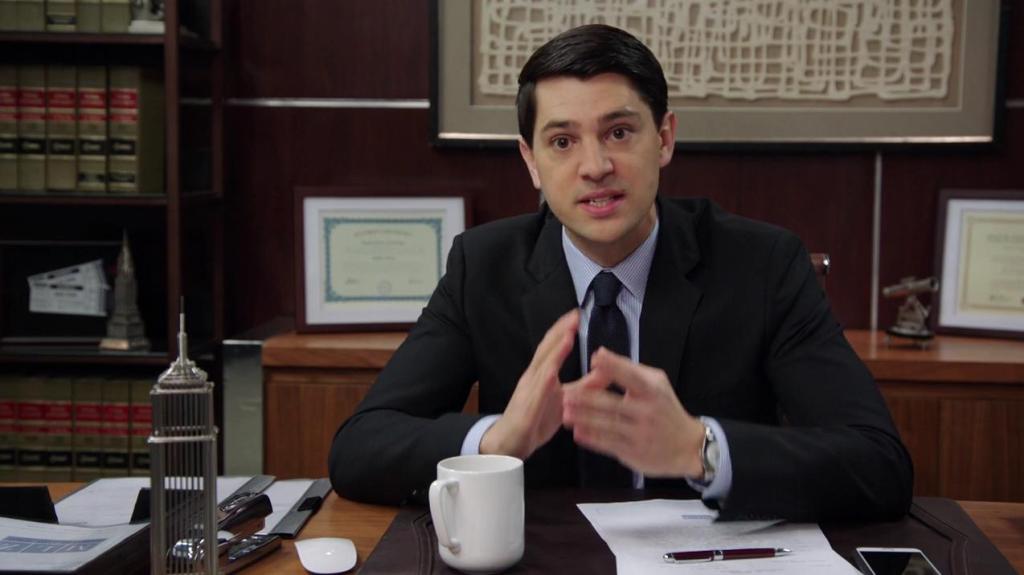
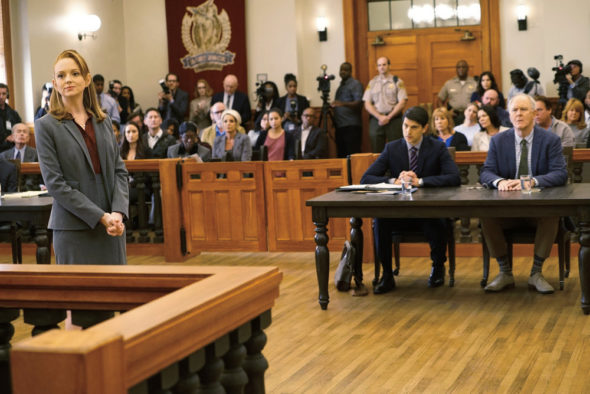
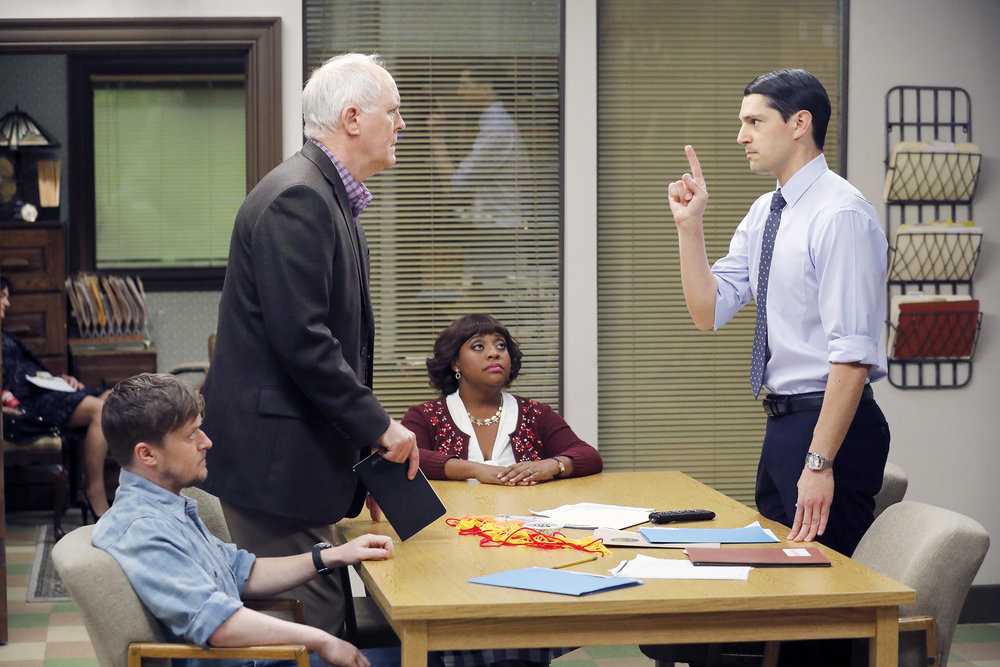
Trial & Error followed New York attorney Josh Segal (Nicholas D’Agosto) when his firm sends him to the small town of East Peck in South Carolina to represent Larry Henderson (John Lithgow) who is accused of murdering his wife. Henderson is a poet who lives in South Carolina and was accused of pushing both his wives through windows.
Photo: imdb.com
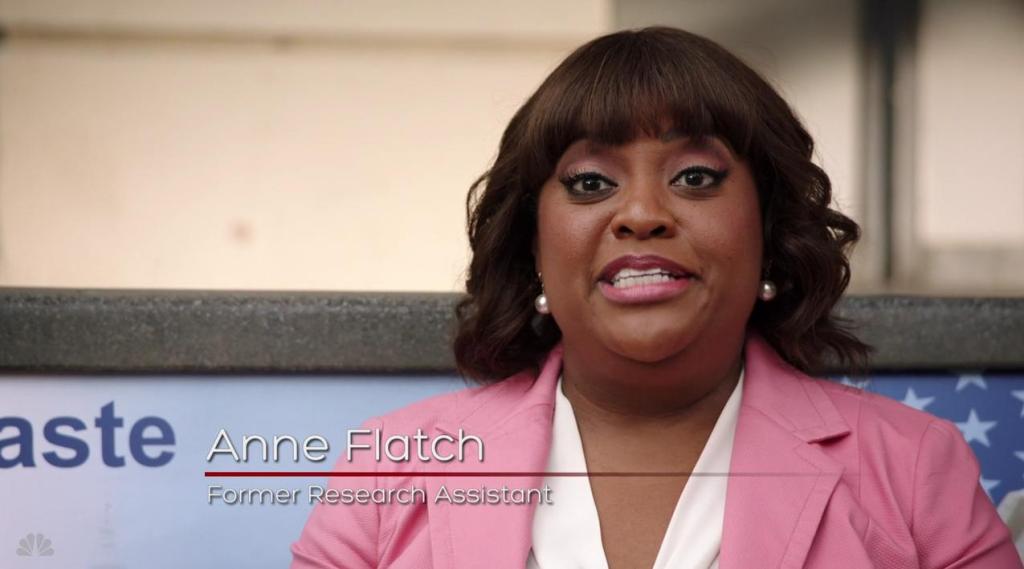
The first season introduced us to Josh’s “legal” team of Anne Flatch (Sherri Shepherd) and Dwayne Reed (Steven Boyer).
Reed is a fumbling former police officer and the lead investigator. Flatch is the researcher and assistant. She is very smart and often solves many mysteries, but she is plagued with dozens of syndromes which affect her health, sometimes at the worst times for trials. Some of her disorders include prosoapamnesia, dyslexia, involuntary emotional expression disorder, Stendhal syndrome (this causes her to faint when witnessing great beauty), foreign accent syndrome, nocturnal lagophthalmos, backwards cheerleader syndrome, and a strange condition where her left hand operates independently of her wishes. She also suffers from face blindness and she can’t see who the person is talking to her and when she is upset, she laughs hysterically.
Photo: imdb.com
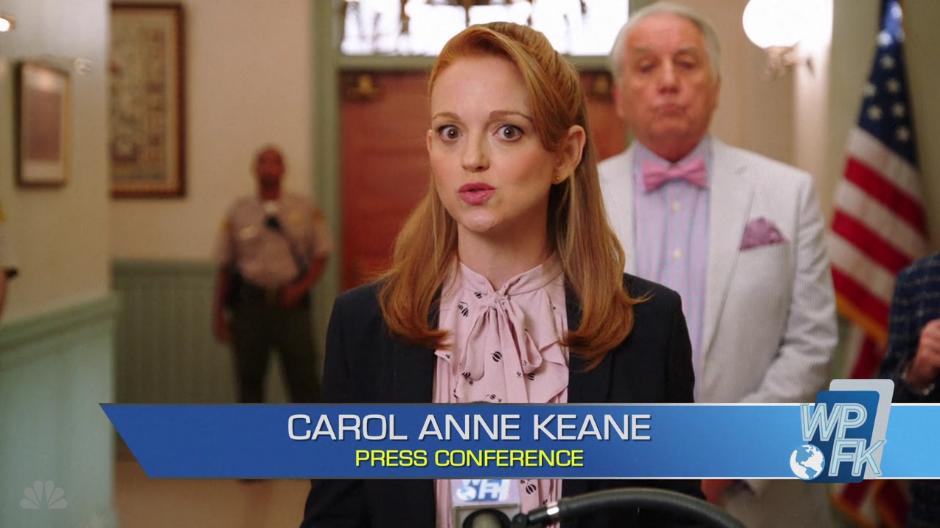
The eccentric poetry professor Henderson is portrayed by the amazing John Lithgow and his daughter Summer by Krysta Rodriguez. Josh and Assistant District Attorney Carol Ann Keane (Jayma Mays) butt heads and eventually succumb to the attraction that surrounds them when they get together.
Photo: imdb.com
No matter had hard Josh works, Larry always does or says something to make himself look guilty. Every time Josh figures out one mystery, it leads to another problem for his client. There is also a lot of subtle humor such as when Larry walks out of a room, we realize he is wearing an OJ Simpson jersey.
Photo: commonsensemedia.com
Not only does Josh have a pair of eccentric coworkers, but his office is part of the local taxidermy shop.
Spoiler Alert: If you haven’t watched the show and plan to, ignore this paragraph. Both the original Peterson case and the fictional Henderson case involved birds as a defense to murder. In Peterson’s case, his legal team was not willing to put their client’s life on the line with that defense. In Henderson’s case, Josh tells Dwayne and Anne to say the first thing that pops into their heads, and Dwayne says, “Bird. Birds fly into windows all the time.” The finale reveals that Margaret was killed by an owl.
Photo: wikipedia.com
Season two finds Josh let go by his firm and living in East Peck. He is hired by Lavinia Peck-Foster (Kristin Chenoweth) when she is also accused of murder. Lavinia, one of the town’s most beloved citizens, finds her husband’s body stuffed into a suitcase in her car. If you haven’t seen the series, the following description might give you a better indication of Lavinia; Chenoweth says she based the character on Lisa Vanderpump, Carol Burnett, Madeline Kahn, Julie Andrews, Dolly Parton, and Hannibal Lecter.
TRIAL & ERROR — “A Wrench in the Case” Episode 102 — Pictured: (l-r) Jayma Mays as Carol Anne, Nicholas D’Agosto as Josh — (Photo by: Evans Vestal Ward/NBC)
In season two, we see Carol Ann obviously pregnant. We assume Josh is the father, but you can’t assume anything in East Peck, because just when you think you have things figured out, a new twist appears. We also are introduced to Nina Rudolph (Amanda Payton) in season 2. She is a podcast host who also relocates from New York to East Peck to follow Lavinia’s trial. She ends up in a romantic triangle with Josh and Carol, with Josh is uncertain where his heart is being pulled.
A variety of other characters show up in seasons one and two who live in East Peck and have definite opinions on the guilt or innocence of the accused. In Larry’s case, it’s revealed the newspaper thinks Henderson is the fourth leading cause of death in East Peck; the third is cannonballs which are fired off at 5 am and 5 pm daily. The town itself has a lot of funny traditions and laws. For example, waterskiing with a cat is only a misdemeanor. Sometimes the coroner lists the cause of death as “just because.” Astrof described East Peck as a town of 600 residents where 400 of them are not quite right. One of the things that hit me as funny and should not be is that the town has a law that any woman driver must be preceded by a man on foot waving flags, yelling “Woman driver!”
Photo: youtube.com
Spoiler Alert 2: Unlike Larry, Josh realizes that Lavinia is actually the killer. However, we have an understanding of her and realize she is a victim too. She was molded into the golden debutante of East Peck and brought up to do whatever she wanted, and it was always fixed and okay. She is a sympathetic murderer. Her last speech is “At the end of the day, life is just a journey. If you’re lucky, you don’t have to take that journey alone. If you’re one of the blessed few, you take that journey with someone you love and you hold them forever. And we can take comfort in knowing all our journeys end in the same place: a hold in the ground.” It’s not the speech or series ending you anticipate, and much of the show is not what you anticipate. We also learn in the last episode that Josh is not the father of Carol’s baby but he still is with her when she is giving birth because he’s Josh.
Although the show received a lot of praise from critics, NBC declined to renew it for a third season, and there were no other networks willing to take it on. Rotten Tomatoes gave the first season an 86% rating based on 35 reviews. The second season jumped to 91% with 11 reviews.
TRIAL & ERROR — “A Hostile Jury” Episode 110 — Pictured: (l-r) Jayma Mays as Carol Anne, Nicholas D’Agosto as Josh, John Lithgow as Larry — (Photo by: Greg Gayne/NBC)
I was on the fence when I heard that this show was on the fall schedule, but it was truly funny. It was created with great attention to detail and consistency. Like I mentioned last week about Night Court, you have to have the perfect cast for a show like this. It could so easily be over the top and stereotypical. Even Anne with all her syndromes is believable and likable. That’s one of the great things about the show. Josh is able to put aside his New York judgments of the people and the town. Their craziness becomes normal for him, and you can tell he truly likes his coworkers and his clients.
TRIAL & ERROR — “Secrets & Lies” Episode 106 — Pictured: (l-r) Steven Boyer as Dwayne, John Lithgow as Larry, Sherri Shepherd as Anne, Nicholas D’Agosto as Josh — (Photo by: Trae Patton/Warner Bros/NBC)
Astrof was interviewed for undertheradarmag.com by Steve King on January 29, 2019. In that article, Astrof discussed the actors in the cast. Astrof said “Nick was the glue that holds the show together.” He said Nick was able to project a goofiness without putting his legal ability in jeopardy. He continued saying, “Without him, everything would fall apart, because you need someone who can not only do the slow burn, but generate comedy and likeability and sexiness but in a goofy way. I have nothing but positive things to say about Nick.”
Astrof revealed his appreciation of the entire cast: “I’m so blessed to work with this group. You’ve never seen anything like it. You’ve never seen a nicer cast.” Of Lithgow, he said, “Nobody could have played Larry with the same pathos that John has, and the comedy.” He said of Boyer, “Well Steven is just a genius and when he auditioned, we had never even heard of him.” About Shepherd, “We just fell in love with her. Anne was written to be a bit of a hangdog, and when Sherri came in, we were like, ‘You can give this character any affliction and she’s going to be upbeat.’”
Photo: tvguide.com
There are so many rapid-fire puns and great lines that it’s hard to catch them all. While most viewers found season two their favorite, there is something charming about Lithgow’s performance as Larry that makes season one my favorite, but not by a huge margin. This show was so unlike anything else on television. Its writing was so great, and its characters so likable and quirky. It made my brain think differently while watching.
Just so you don’t have to take my word on the show, I’ll end with a review from labman-40649 that was written on imdb March 26, 2017: The title was “Hilarious” and the review states: “This is the funniest television show I have seen in the last 25 years. My family and I laugh the entire length of the show until we are crying!!! Keep up the awesome work. You are the true Kings and Queens of Comedy!!!! The entire cast is beyond brilliant!!!! I truly hope this show will be on as long as Gunsmoke was.”
Unfortunately, in an era of so many shows that are underwhelming and unbearable with bad writing, this creative, unbelievably funny and well-written show couldn’t get the green light for a third season. Thankfully, the first two seasons are available on DVD, so you can check it out for yourself. They are definitely on my “must-buy to watch and re-watch” list.
In July we learned about Sirota’s Court which Night Court seemed to be a clone of. Debuting on NBC in January of 1984, Night Court ran for nine seasons until May of 1992. The series was supposed to begin in fall of 1983, but the executives at NBC were concerned about Harry Anderson’s lack of experience as an actor. They delayed the show; every show that debuted in fall of 1983 was cancelled, so Night Court was put on the schedule mid-season.
Photo: tvseriesfinale.com
Thursday nights on NBC were part of “Must See Thursday.” The schedule featured The Cosby Show, Family Ties, and Cheers followed by Night Court.
An unconventional judge, Harry Stone (Harry Anderson) presided over a Manhattan night court overseeing petty crime and dealing with a lot of wacky clients, odd coworkers, and bizarre situations. The role of Judge Stone was originally offered to Robert Klein, but he could not come to an agreement on the salary with NBC.
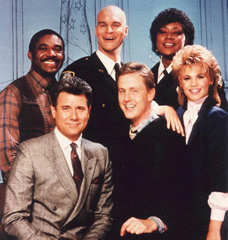
The main characters include Judge Stone, a public defender, a prosecutor, a couple bailiffs, and a clerk of court.
No Merchandising. Editorial Use Only. No Book Cover Usage.
Mandatory Credit: Photo by NBC-TV/Kobal/REX/Shutterstock (5882810g)
Harry Anderson
Night Court – 1984-1992
NBC-TV
TV Portrait
Harry Stone is a humorous judge (and magician). Although he was young, he was appointed because when the outgoing mayor called prospective judges, Harry was the only one who answered the phone. Stone likes old movies, Jean Harlow and adores Mel Tormè. The show’s creator Reinhold Weege discusses Stone’s admiration for Tormè on the DVD commentary. He said Tormè said he began to notice a younger audience at his concerts which he attributed to the Night Court references and happily appeared on an episode of the show.
Photo: wikia.com
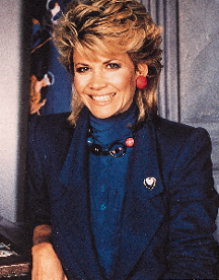
The public defender role went through several changes during the course of the show. Gail Strickland was Sheila Gardner in the pilot. Paula Kelly was Liz Williams during the first season. Ellen Foley was brought on board for season 2 as a possible romantic interest for Judge Stone. Markie Post showed up for season 3 as Christine Sullivan and stuck around for the next seven seasons. Post was the first choice for the role in 1984 but was committed to The Fall Guy. When that show was cancelled, she was hired. Christine was a bit naïve and committed to helping others. She was a fan of the royal family and collected Princess Diana memorabilia as well as porcelain thimbles.
Photo: pinterest.com
The prosecutor was Dan Fielding (John Larroquette). He was a sex-obsessed, somewhat witty, egotistical and greedy man. However, at times he could display compassion for others but not for long. He was always trying to get Christine to go out with him, but there was always a romantic tension between her and Stone.
Photo: pinterest.com
Nostradamus “Bull” Shannon (Richard Moll) was on the show for its entire run. He came off as a bit dim-witted but was patient, kind, and devoted to Judge Stone.
Photo: amazon.com
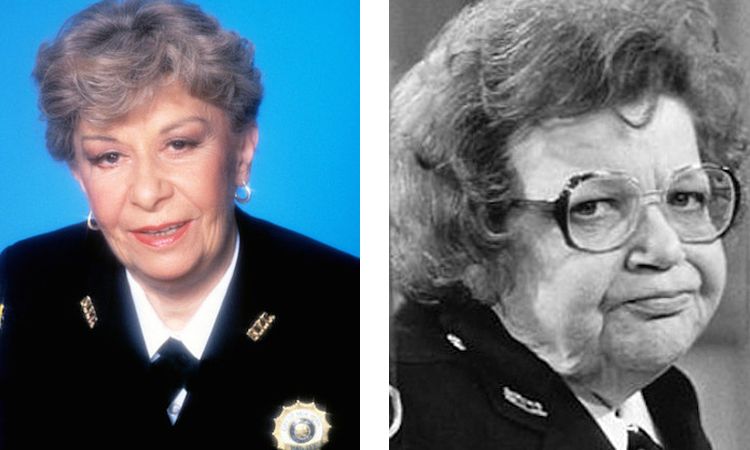
For the first two seasons, he worked with Selma Hacker (Selma Diamond), a chain-smoking older bailiff who had been married six times. Diamond was diagnosed with cancer after season 2 and passed away shortly after. Florence Kleiner (Florence Halop) came on for season 3. Older like Selma, they had similar personalities. “Flo” loved motorcycles and heavy metal music. Halop also was diagnosed with and died from cancer after season 3. Rosalind Russell (Marsha Warfield) began in season four and stayed for the duration of the show. She was a practical, no-nonsense woman.
Roz Russell Photo: ebay.com
Clerk Lana Wagner (Karen Austin), was asked to leave the show after only ten episodes. I could not substantiate it, but she claims it was her diagnosis of Bell’s palsy that ended in her being asked to resign. Macintosh “Mac” Robinson (Charles Robinson) would take over in season two for the rest of the series. A Vietnam veteran, he was easy going and funny and always wore a cardigan, plaid shirt and knit tie.
Photo: lastagetimes.com
Weege also mentioned in a DVD commentary that he named a lot of the pimps and hookers on the show after friends of his.
Although there were a lot of great crooks on the show, one of the most interesting episodes featured Seinfeld’s Kramer, Michael Richards. He appeared as a burglar who thought he was invisible and showed up naked in court. He was one of the funniest criminals on the show.
Photo: screenrant.com
Like many of the 1980s shows, Night Court had a jazz instrumental theme song. This one was written by Jack Elliott and featured Ernie Watts on saxophone.
Critics loved the show. It was nominated for Outstanding Comedy Series in the Emmy awards in 1985, 1987, and 1989. In 1985, the show was up against Kate and Allie and the rest of the shows that was part of the Must-See Thursday with The Cosby Show winning. In 1987 it was up against the same slate except Kate and Allie was replaced with The Golden Girls which won. In 1989 it lost to The Wonder Years. Larroquette, who was the most popular character in the show, won the Emmy for Best Supporting Actor four years in a row and then asked that his name be taken out of consideration. Overall, the show was nominated for 31 Emmys and won 7 of those. In an aside, Larroquette was offered his own spin-off show, but he turned down the offer.
Photo: pinterest.com
Anderson received credit for writing five of the episodes and Anderson, as well as Larroquette and Robinson directed several episodes of the series.
After season seven, the show began losing its audience. The cast members were getting tired of their characters, and the writers had a hard time coming up with new plots. Season eight was supposed to be the last one. Among other character wrap-ups, Harry and Christine would get married and Dan would become a priest. However, at the last minute, NBC renewed the show for another season, so the marriage did not take place and Dan ended up with Christine in the finale. The cast was offered more money to return for a tenth season, but they declined.
Mel Torme on Night Court Photo: wikia.com
In doing a bit of research, I learned that New York’s real night court operates from 5 pm to 1 am. Because of the crazy goings on that happen there, it has become a tourist attraction. It’s the only place where courts operate during these hours. One reporter wrote that “At 12:30 am on a freezing Wednesday morning, it’s not just New York City’s famously 24/7 bar and club scene that’s a hive of activity. Deep in the heart of Manhattan, a man in handcuffs is standing in front of a judge, listening to a string of firearm and assault charges as a crowd of lawyers hum around him and solemn family members watch from the benches. This is night court, an operation that has become a strange kind of tourist attraction for visitors in New York looking for something a little out of the ordinary.”
This show was based on characters rather than plots, and the wrong actors would have made the show a disaster. This cast was able to pull it off. They were quirky but still allowed the audience to get to know them and like them. The fact that the show was set in the same setting for most of the nine seasons and did not seem to be repeating plots over and over again is pretty impressive. I don’t think they should have done a season 9 but hindsight is always 20/20 as they say. The show holds up well after almost four decades. It’s worth watching just to see how the main characters interact and grow during the run of the show.
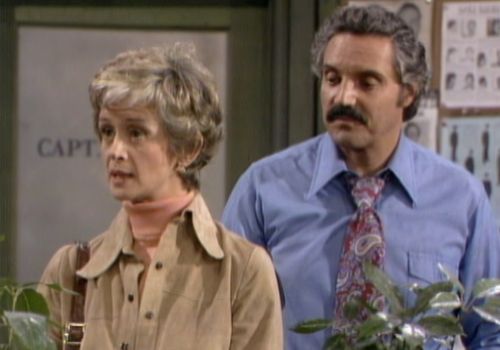
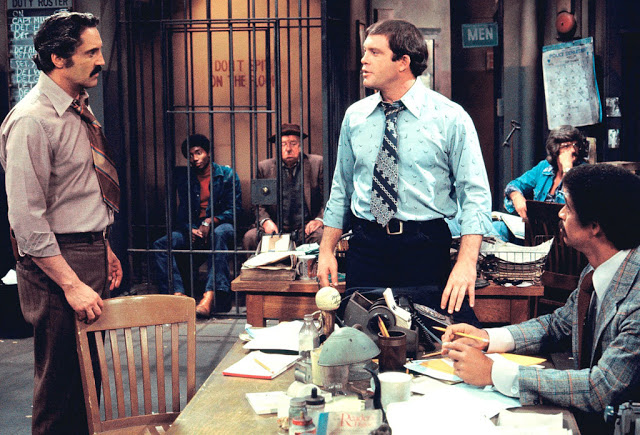
Currently, we are in the series, “Crime Isn’t Funny . . . or Is It?” Today we get to learn a bit more about a show which, along with MASH and The Mary Tyler Moore Show, had one of the best roster of characters ever written. I like to describe Barney Miller as a sitcom with a flair for drama. It debuted in January of 1975 and left the airwaves in May of 1982.
Photo: pinterest.com
It was set primarily in a New York Police Department station, supposedly the 12th precinct. NYPD has not had a 12th precinct since 1910. If you were a fan of Castle, you’ll notice that the set was refurbished for that show in 2009.
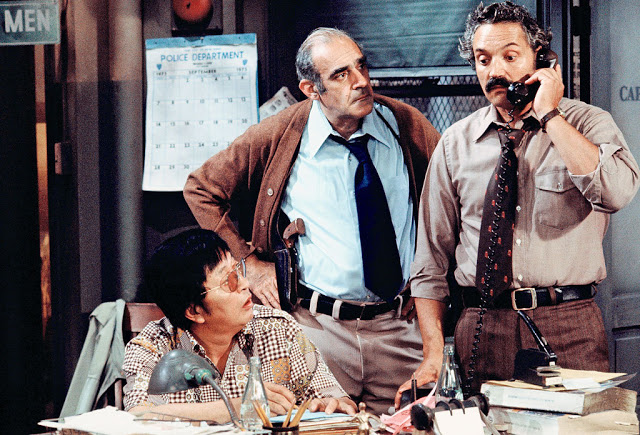
Most of the action took place in the squad room and Captain Miller’s office. Typically, there were two to three subplots surrounding the suspects that were brought into the station or something one of the detectives were dealing with personally.
Photo: pinterest.com
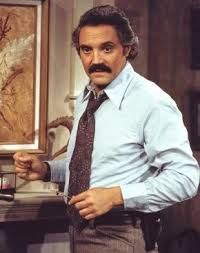
Captain Barney Miller (Hal Linden) is the practical and calm one in the precinct. His sense of humor allows him to deal with his staff and the city. He gets frustrated by all the red tape the city requires but is able to maintain peace and discipline in his precinct.
Photo: imdb.com
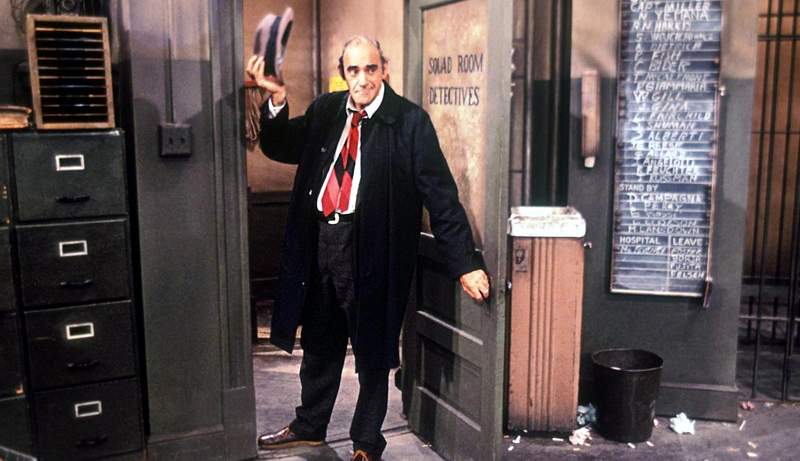
Sergeant Philip Fish (Abe Vigoda) is the oldest member and is getting close to retirement at the beginning of the show. Fish leaves the show and gets his own spinoff for a few years before returning to the show in season 7.
Photo: pinterest.com
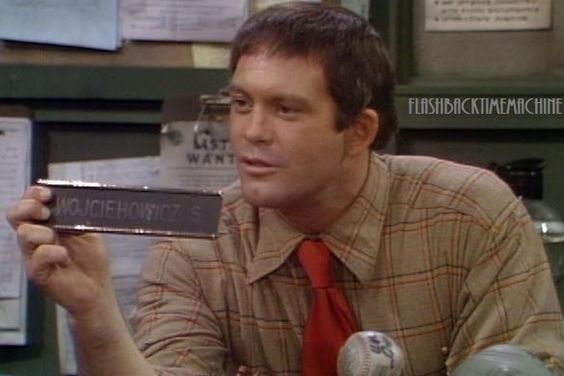
Detective “Wojo” Wojciehowicz (Max Gail) is a bit naïve but has a heart of gold. He sticks to the rules which sometimes causes conflict with his coworkers.
UNITED STATES – OCTOBER 19: BARNEY MILLER – “Non-Involvement” 11/18/76 Ron Glass (Photo by ABC Photo Archives/ABC via Getty Images)
Detective Ron Harris (Ron Glass) is the intellectual of the office. He often seems more concerned with his private life and his appearance than his job. He is also a writer. Later in the series he produces a best seller, Blood on the Badge.
Photo: unclemikesmusings.com
Sergeant Nick Yemana (Jack Soo) is philosophical and sarcastic. During the run of the show, he often makes wry observations about life and the station as other things are going on. Soo passed away during the run of the show and was not on the last three seasons.
Photo: pinterest.com
During seasons 1 and 2, Sergeant Miguel Amanguale (Gregory Sierra) was part of the cast. He gets worked up easily when things don’t go well and then rants in rapid Spanish.
Photo: aboatagainstthecurrent.blogspot
Appearing first in season 2, Sergeant Arthur Dietrich (Steve Landesberg) loves to share his knowledge of pretty much everything. However, he can’t seem to decide on the perfect career. He comes to police work after leaving both the law and medical fields.
Pinterest.com
Inspector Frank Luger (James Gregory) is the thorn in everyone’s side. He is often rambling and old-fashioned, if not worse, in his views.
Photo: imdb.com
Officer Carl Levitt (Ron Carey) is a hard-working employee who aspires to being promoted. Levitt is brought on board in season three.
Photo: sitcomsonline.com
Originally Barney’s wife Elizabeth (Barbara Barrie) was a regular character, but after season two she is seen in infrequently, even though Barney refers to her a lot. Once Barrie realized the show was focusing on the precinct, she asked to be released from her contract.
The show was created by Danny Arnold and Theodore J. Flicker. Noam Pitlik directed the majority of the episodes. The pilot originally was unsold. It appeared in a summer anthology series, Just for Laughs, as “The Life and Times of Captain Barney Miller” and only Linden and Vigoda carried into the series. While the pilot was never shown in syndication, it is part of the Shout Factory’s DVD set and was rewritten as the episode, “Ramon.”
The theme song which had several versions during the run of the show was an instrumental jazz piece written by Jack Elliott and Allyn Ferguson.
The cast of “Barney Miller” in September 1976: Ron Glass, Max Gail, Hal Linden, Abe Vigoda, Jack Soo.
Because most scenes were shot in the precinct, the show was filmed like a play. Only about a dozen of the episodes (out of 171 total) were shot outside that set. The way the show was filmed was compared to a marathon session. Seasons one and two were taped in front of an audience and a laugh track was used for additional scenes. Arnold would often rewrite or restage scenes after the audience left to allow for quiet moments. It was not uncommon for a taping to begin in the afternoon and continue late into the night or into the early morning hours.
“The day a show was taped, the actors would hang around on the stage waiting for pages to be sent down. Then—sometimes at 2 a.m.—they would have to learn new scenes. Ron Carey (Officer Levitt) would get his fairly quickly: ‘Here’s your mail, Captain.’ On the other hand, poor Steve Landesberg (Dietrich) might have to memorize long speeches explaining how nuclear fission works. Employing a live audience became impractical as lengthy reshoots became commonplace.” By Season 4, only a quiet laugh track was used when necessary.
Barney Miller received praise from police officers, who appreciated the realistic dialogue and quirky characters. In 2005, The New York Times published an op-ed by New York detective Lucas Miller about his view of the show:
“Real cops are not usually fans of cop shows. […] Many police officers maintain that the most realistic police show in the history of television was the sitcom Barney Miller, […] The action was mostly off screen, the squad room the only set, and the guys were a motley bunch of character actors who were in no danger of being picked for the N.Y.P.D. pin-up calendar. But they worked hard, made jokes, got hurt and answered to their straight-man commander. For real detectives, most of the action does happen off screen, and we spend a lot of time back in the squad room writing reports about it. Like Barney Miller’s squad, we crack jokes at one another, at the cases that come in, and at the crazy suspect locked in the holding cell six feet from the new guy’s desk. Life really is more like Barney Miller than NYPD Blue, but our jokes aren’t nearly as funny.”
The show took a while to become a hit. During an interview in November of 2018 with Hal Linden on CloserWeekly.com’s Classic TV & Film Podcast, Linden discussed why there was a lag time till the show found its audience. “ ‘It took a long time for people to catch onto it and become fans,’ Hal tells us during our exclusive conversation. ‘The reason? It wasn’t in your face. It was very subtle, basically. It was relationship, not punchlines. And everybody played it relatively realistically. All the comedy came from outside, in our reaction to the people coming in from outside, and that was not something that was expected in that time. Everything else was more straight line/punchlines. It was more sketchy than realistic. Happy Days, that’s what was expected. And there’s a lot of shows today that are quite sketchy. But [series creator] Danny Arnold envisioned it very differently, and he put the limitations on our doing shtick. His limitation was, ‘Would you go to a police officer for help who behaved like that?’ There was a lid on everything. You could never go too far just to get a laugh. You had to be a police officer, a real police officer that could do his job. Actually, that lesson stood me in good stead for the rest of my television career in terms of what works, how far you can go, or how far not to go.’ ”
It also probably did not help that in its first four and a half seasons it was up against fan favorite Hawaii Five-0.
Photo: criticsatlarge.com
The show garnered a lot of awards. It was nominated for an Emmy for Outstanding Comedy Series every year from 1976 to 1981 and won in 1982. It also won for writing in 1980 and directing in 1979 in addition to other nominations. It also won a Peabody in 1978.
The show was not cancelled by the network. Arnold ended production because he was worried about repeating storylines after eight seasons.
The blackboard is to the right. Photo: nostalgiacentral.com
After the show ended, the chalkboard which listed whether the policemen were on or off-duty, and the cell door were given to the Smithsonian Television Museum. In addition to the cast of actors in the show, the duty board listed the names of the technicians who worked on the show. The museum also has the police badges used by the actors and Yemana’s coffee mug.
In an article by Ed Gross from February 26, 2018, Hal Linden reflects on his time with the hit series:
“I have nothing but fond memories of Barney. It was certainly the best television experience I ever had, and I mean that from a creative standpoint, because it was like being in a stage company. Like a repertory company that would work together; we knew each other, and we were able to contribute to each other. I have never had as creative an experience in television since.”
Photo: criticsatlarge.com
The character-driven scripts are what makes the show memorable today. There have been technological advances in procedures and detective work, but the fact that people are still the same make the show fun to watch almost fifty years later. In an article in Today.com by Gael Fashingbauer Cooper from October of 2011, several scenes from the show were discussed that capture the characters’ personalities.
“Jack Soo’s Nick Yemana was known for his bad coffee, but in one episode he reveals to Barney that he is using rain water that’s leaking through the ceiling to make a fresh pot. ‘It’s coming through the ceiling, that moldy, termite-infested ceiling!’ protests Barney. ‘It filters out the impurities,’ Yemana insists. Abe Vigoda, played Phil Fish. But even in the 1970s, Fish was the oldster of the precinct. In a touching scene, Barney tells him he doesn’t think of him as old, but as experienced. ‘In an emergency, you’d be the first one I’d call,’ the captain says loyally. ‘You should call me first, I need time to put my teeth in,’ Fish responds. Steve Landesberg’s brainy Arthur Dietrich always had a little too much information. When a young black teenager called him “honky,” he’s not offended, instead he explains the word’s etymology. (Who knew it derived from the nasal tone African-Americans believed Caucasians speak with?) His explanation unnerves the kid more than a deluge of profanity ever could have. Hal Linden’s calm and cool Captain Barney Miller held the entire station together, but when he erupted, stand back. He once threatened to stuff a towel in the mouth of a loud-mouthed guy in the jail cell. When the guy blasted back that he wasn’t scared, Miller’s response was ‘You haven’t seen our towel!’ Max Gail’s Stan Wojciehowicz’s was a gentle soul, one who often seemed too kind for a police job. In one episode, Miller tries to explain racism to Harris by using a Polish joke. The gag is funny, but the scene itself is less humorous than it is sweet. ‘Well I thought (racial) differences weren’t important,’ Wojo says. ‘They’re not, but they are.’ Miller responds, only confusing the matter further. In a classic episode, Wojo’s girlfriend made brownies for the squad, but this being the 1970s, they were hash brownies. When Miller finds out, he orders Ron Glass’ always cool and classy Nathan Harris to have them analyzed. Which he does, by tossing another one in his mouth. ‘NOT THAT WAY!’ howls Miller. He later tells Harris to ‘stay home till you feel better.’ ‘OK, Barn, I’ll stay, but I ain’t never gonna feel no better,’ a herbally happy Harris announces.”
Photo: nostalgiacentral.com
I love the pictures that each of the above snippets portrays of the cast. I’ll end with a quote by Yemana, who may have been my favorite character on the show. In the episode “Copy Cat” from season 4, Yemana is asked if he likes cop shows:
Det. Sgt. Yemana: No, I don’t watch shows like that. I can’t enjoy them because, being a cop myself, I spot the mistakes and inaccuracies and the fantastic things that in real life never happen. Victim: On the show they caught him! Yemana: Good example!
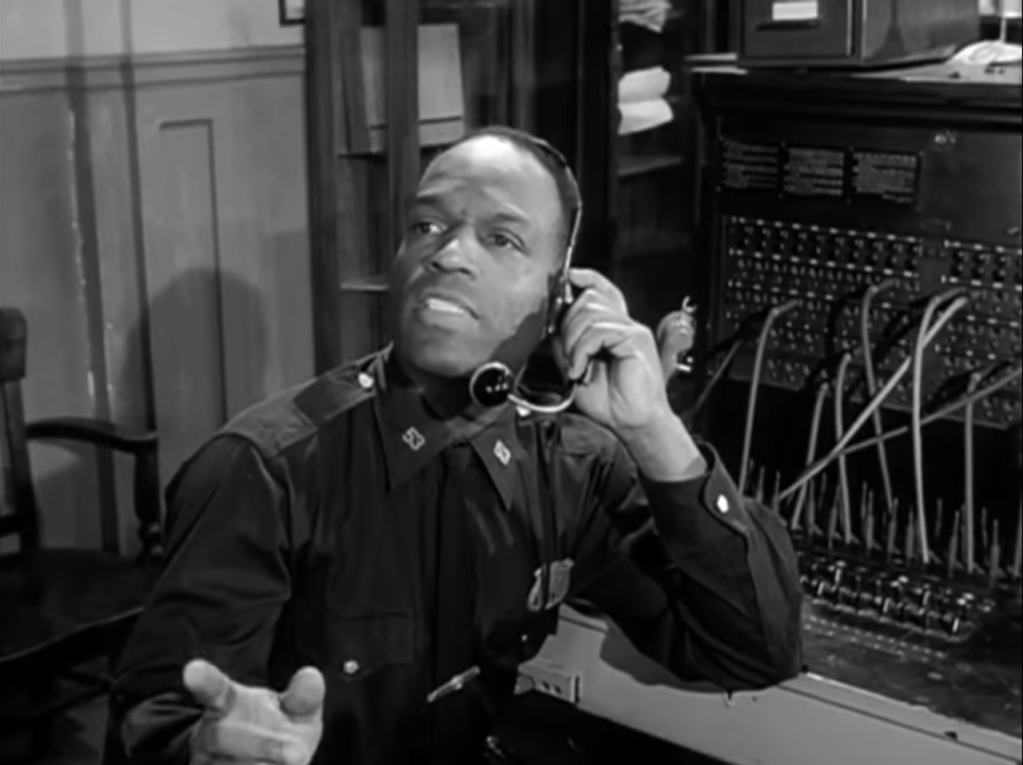
Car 54, Where Are You? aired on NBC beginning September of 1961. I was surprised to learn that there are only 60 episodes in this series. The show revolves around officers Gunther Toody, Badge 1432 (Joe E. Ross) and Francis Muldoon, Badge 723 (Fred Gwynne). Their patrol car is Car 54, and they are with the 53rd precinct in New York. Toody and Muldoon are complete opposites which is why they get along so well. Toody is short, extremely talkative and not overly bright. He’s married to Lucille (Beatrice Pons), a bit of a loud, overbearing woman. Muldoon is tall, quiet and very smart. He’s a bachelor who lives with his mother (Ruth Masters) and two younger sisters.
Photo: imdb.com
Rounding out the large cast are officers Dave Anderson (Nipsey Russell), Omar Anderson (Ossie Davis), Kissel (Bruce Kirby), Nelson (Jim Gormley), Nicholson (Hank Garrett, O’Hara (Albert Henderson), Schnauser (Al Lewis), Steinmetz (Joe Warren), and Wallace (Frederick O’Neal), as well as Captain Block (Paul Reed), Sergeant Abrams ( Nathaniel Frey), Sylvia Schnauser (Charlotte Rae), and Claire Block (Patricia Bright).
A young Nipsey Russell Photo: yahoo.com
Nat Hiken (the creative force behind The Phil Silvers Show) created the series. He wrote many of the scripts and also directed several episodes, one of which he won an Emmy for. The show was nominated for three other Emmys. It was up for Outstanding Program Achievement in the Field of Humor in 1961 which went to The Bob Newhart Show (not that Bob Newhart show, this was a variety show hosted by Newhart) and for Outstanding Writing Achievement in Comedy in both 1961 and 1962 but got beat out both years by Carl Reiner for The Dick Van Dyke Show.
As recounted in Martin Grams, Jr.’s book Car 54, Where Are You?, after visiting a New York police precinct house and noticing what a communal feel it had, unlike any of the depictions of police on television, Hiken came up with the idea for a police-themed situation comedy. He continued to do research by spending weeks in a precinct squad room during late 1960, getting a feel for how the officers talked and interacted amongst each other, members of the community, and even repeat offenders, who were often treated more like family than threats. Hiken enlisted the support of Eupolis Productions and then pitched the idea to Proctor & Gamble, who agreed to finance a pilot.
Fred Gwynne and Al Lewis were coworkers before they were relatives Photo: shoutfactorytv.com
According to Kliph Nesteroff in the definitive account of Joe E. Ross’ tawdry life off-screen, “King of Slobs: The Life of Joe E. Ross,” Hiken originally wanted to cast Jack Weston in the role of Gunther Toody (televisionheaven.co.uk says it was Jack Warden) and Mickey Shaughnessy as Francis Muldoon, but contract negotiations broke down with both, so he turned to Ross and Fred Gwynne as suitable replacements, though in Ross’ case he later regretted it.
John Strauss who had collaborated with Hiken on the theme song for The Phil Silvers Show, teamed up with Hiken once again for this theme. Strauss was married to Charlotte Rae, who appeared on the show. Strass was the composer, and Hiken wrote the lyrics. The familiar theme song is:
There’s a hold-up in the Bronx,
Brooklyn’s broken out in fights;
There’s a traffic jam in Harlem
That’s backed up to Jackson Heights.
There’s a scout troop short a child,
Khrushchev’s due at Idlewild,
Car 54, where are you?
The show was originally titled “The Snow Whites.” (Maybe because the sponsor made Chlorox bleach.) The show was given a great time slot on Sunday nights between Walt Disney’s Wonderful World of Color and Bonanza. The producers thought the working title would confuse viewers since the show followed Disney. Since the theme song was already written, the last line of the song became the show’s title.
Critics were split on the show. While many people praised the series, some reviewers considered it disrespectful. The Chicago Sun Times deemed it “a preposterous (and sometimes cruel) depiction of the policeman.” The Dallas Times Herald stated, “The humor might be there, all right, but not much of it was showing.” The Alabama Journal complained, “It is insulting to the law enforcement and to the general public.” However, many policemen liked the show and found it funny.
The show was filmed at Biograph Studios in the Bronx and on location. The cars were painted bright red and white which photographed perfectly. There is some controversy about the patrol cars. Some articles listed them as Savoys, some as Dodges. According to Martin Grams’ blog from May 4, 2012, “On June 29, 1961, Arthur Hershkowitz signed the contract and during the first week of July, the following four automobiles were delivered to Eupolis Productions”: two 1961 Plymouth Belvederes, one Dodge Dart, and one Plymouth, all four-door sedans. Grams said “the cars were returned to the dealership and when the show was renewed for season two, the following cars were delivered”: two 1962 Plymouth Belvederes, three 1962 Plymouth Furys, one 1962 Dart 330, and a 1962 Chrysler New Yorker. One article I read said that the large circular object on the dashboard between the officers was an auxiliary fan used before air conditioning was available.
Despite the success of Car 54, which placed 20th in the ratings for 1961-62, Hiken soon began to feel overwhelmed with his responsibilities. Apparently, NBC wanted part ownership in the show in exchange for renewing it for season three, and Hiken would not agree to the deal. The show’s sponsor Proctor and Gamble tried to talk CBS into taking the show over, but there was no room on their schedule. Hiken was a bit burnt out with writing, directing, and overseeing the show and was exasperated with Ross who caused a lot of issues not remembering his lines, so Hiken ended the show and never worked on another series again.
Considering the short time that the show was on the air, there was a full slate of guest stars including Carl Ballantine, Tom Bosley, Wally Cox, Hugh Downs, Margaret Hamilton, Katherine Helmond, Hal Linden, Mitch Miller, Charles Nelson Reilly, Sugar Ray Robinson and Jean Stapleton.
The episodes are well written and similar to other sitcoms at the time.
Photo: shoutfactory.com
In one, Toody is feeling henpecked by Lucille, but musters the courage to become king of his castle after seeing a stirring performance of Shakespeare’s “The Taming of the Shrew.”
In another, Muldoon shares a childhood experience when the kids at school called him “Horse Face.” Toody, trying to console him, says “Don’t worry Francis, kids just repeat what other people say” and later added “After all, Francis, everybody liked Black Beauty.”
One script has Toody working an undercover detail in Brooklyn with a female cop posing as his wife and a small boy as his child. When his wife’s sister spots him, the rumors begin.
Even though there were only 60 episodes, the show went into syndication in 1964. It was one of the staples on Nick at Nite in the 1980s, aired on Comedy Central in the 1990s, and a few years ago it could be seen on both MeTV and Decades. The show came out on DVD in 2011 and 2012.
Like any show that was even somewhat successful, the show had a film made based on the series in 1994. The big screen version starred John C. McGinley as Muldoon, David Johansen as Toody, Rosie O’Donnell as Toody’s wife Lucille and Fran Drescher as Velma Velor. Not surprisingly, it was a dud. One reviewer said it “was one of the worst movies to ever come out of Hollywood.”
One fun fact I learned doing research for this blog was that this show was William Faulkner’s favorite tv show. He hated television but visited a friend’s house weekly to watch the show.
Photo: amazon.com
This show debuted during the decade when merchandising was a big part of every show. There were at least six comic books based on the show. There was a board game, puppets of Toody and Muldoon, and a car model.
The show was funny in its prime, but I’m not sure it holds up as well today as other shows from the sixties. However, two seasons of DVDs is not a large investment, so check out an episode on youtube and see what you think.
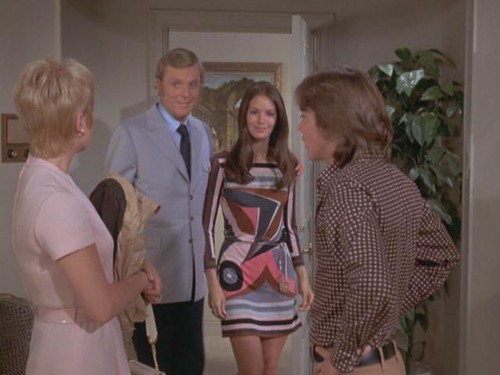
The life of a writer is not always an easy one. I want you to know that in order to serve my readers, I took on this challenge with no complaining. Yes, I was willing to sit down and watch 25 hours plus of Partridge Family episodes to come up with my favorite 50.
If you were a kid in the early 70s, you understand how just hearing the theme song transports you right back to that era watching the show with friends on Friday nights.
If you grew up in another era, you are rolling your eyes right now, but I know that you have your own happy place where you go when watching those nostalgic shows that were such a vital part of who we all become.
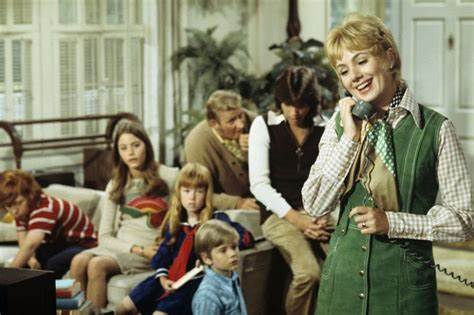
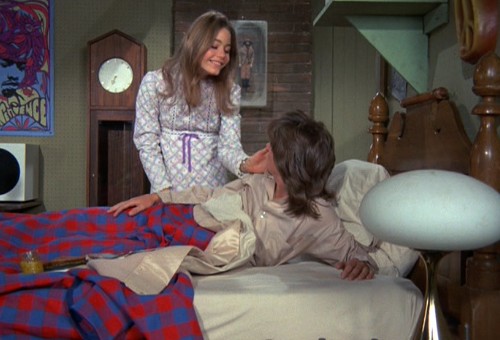
This month marks 50 years since The Partridge Family debuted. To celebrate, I have listed my top 50 in order. I’d love to hear your favorite episode. Better yet, get the DVDs if you don’t already have them and watch them in this order to see how my ranking matches yours.
You might want to grab a can of Tab, put on a smiley face t-shirt, and bell bottoms while you watch. Happy Viewing!
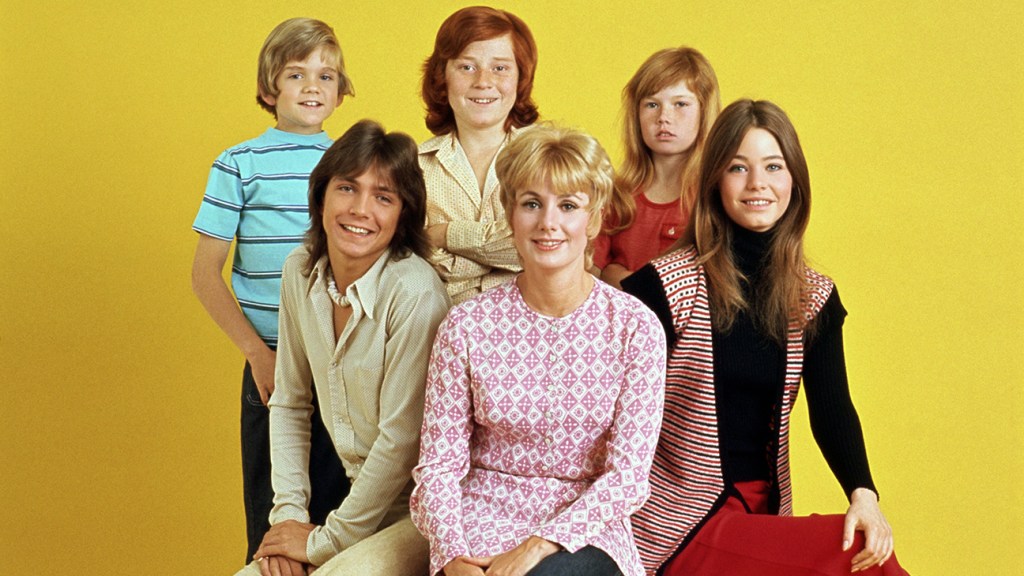
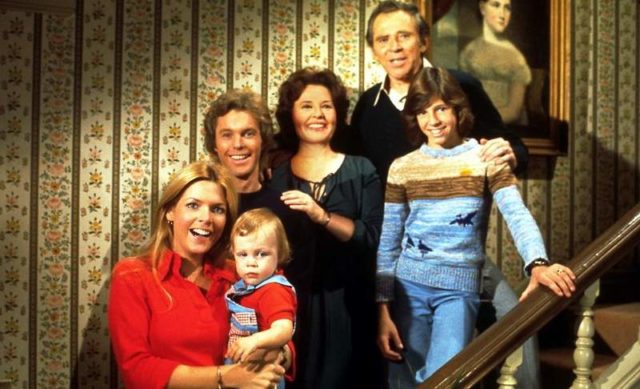
The Partridge Family (ABC) later seasons (1971 – 1974) Shown from left: (top) Brian Forster, Danny Bonaduce, Suzanne Crough; (front) David Cassidy, Shirley Jones, Susan Dey
Danny has a new girlfriend at school. Renee is Jewish, so Danny pretends to be Jewish. When her father wants to call on the family and then invites them to perform, Danny tries to keep his secret from his family.
Shirley is surprised to learn that an old boyfriend is in town to make a speech. It turns out he is now a navy Captain and Keith and Danny are suspicious of his motives for their mother. They overhear him talking about his new boat and old one and assume he is discussing women and Shirley is the old one he can’t wait to get rid of. Danny, Keith, Shirley and Chuck end up at Muldoon’s Point.
To raise money and create publicity, Reuben hosts a contest where the winner can spend a week with the Partridges at their home. The winner? Mrs Doris Nugast, a middle-aged woman. Doris brings a new dimension to the family. She doesn’t want to leave because she thinks the family needs her. She and Keith also end up at Muldoon’s Point.
Shirley’s mother (Amanda) and father (Walter) argue over Amanda wanting a job outside the house. She leaves home and goes to Shirley’s house. Amanda gets a job with a service company, and Shirley hires a maid. Guess who is the maid? Her job and her husband’s attitude about it turns the family into the men against the women. One of the best parts of the show is when Ricky sings a song about grandmothers.
Greg, a former childhood friend of Laurie’s, returns to town and reconnects. Turns out he is now a minister. They go out together and have a great time catching up on their lives. Laurie starts to fall for him and Shirley is worried. After assuming they have eloped, Laurie tells her mom they are not seeing each other as much till she is done with school, but the episode leads us to believe Laurie and Greg might end up together permanently when she graduates.
Keith’s newest girlfriend is a cellist in the school band. Rachel thinks Keith is wasting his talent on rock and roll songs, and convinces him to write a piece of classical music. One of the funniest things is when a bust of Beethoven appears on Keith’s piano. There are a lot of great one-liners in this episode: Reuben mentions that Beethoven is rubbing off Keith because apparently he’s deaf, not better; Danny being a genius, is asked to disappear like Howard Hughes; Danny tells Reuben he doesn’t want to get in a battle of wits with an unarmed man; and he also describes Keith’s tux looking like a nervous penguin. Rachel finally accepts their music makes people happy.
Danny has a promotional plan to show the Partridges conserves energy. The newspaper does an article to show their energy saving ways. It creates a buzz in town. But Danny’s mistake in reading the meter shows the Partridges use more electricity than ever. They spend an entire day without electricity by stealing hair dryers, turning off toothbrushes, etc. They listen to the victrola, make a fire, roast marshmallows and just hang out together. When all is said and done, they are okay, but Reuben ends up on the billboard for being an energy hog. We see the basement for the first time in this episode.
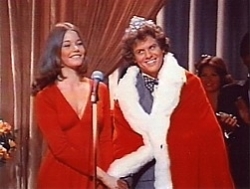
Laurie’s friend Frankie tries out for the school basketball team but is rejected because she is a girl. Laurie runs for homecoming queen so she can speak her mind on discrimination. Keith enters a friend into the competition. He is first runner up and Laurie wins. She makes a speech about disliking gender discrimination before giving up her crown, the school board agrees to look into a girl on the basketball team, and Jerry has to follow through with being homecoming queen upon Laurie’s resignation.
It’s a battle of the sexes as Shirley and Laurie prove to their male chauvinist counterparts to be better able to handle the wilderness. While Laurie and Shirley are perfectly able to take care of themselves, the guys realize they have no blankets, no food, or other camping necessities. They steal some beans from the girls but Reuben realizes his can opener is back in the car. When they get back to the house, Shirley makes them supper – a large pan of baked beans.
Laurie excitedly tells her mother she has been selected to be a peer teacher at school. She is assigned seventh grade English, which just happens to be Danny’s classroom. Things do not go well for either of them. When Danny “borrows” a Hemingway story and Laurie gives him a D, he proves to his mom she is unfair. Shirley goes to school and has Danny’s teacher show Laurie her videotape of her with the class early. Laurie is humiliated. She apologizes to Danny.
It’s role reversal time in the Partridge household as Keith takes home economics and Laurie takes auto shop. Keith’s struggles with cooking make him the target of barbs from the school bully, and things really heat up when Laurie gives the tough a Judo flip. Keith is then challenged to a fight, and must face up to the bully even if it means getting his face turned to hamburger.
Stillman Kelly asks his old buddy Reuben to manage his daughter Dora, who is an aspiring singer. Unfortunately, when she auditions in front of Reuben and the Partridges, her vocal abilities leave much to be desired. Unfortunately, Keith, who has fallen for her, is so taken with her beauty that he doesn’t even notice. However, when he hears a tape of her singing, he soon snaps to his senses and now must try to summon the courage to tell Dora how untalented she is without hurting her feelings. Reuben has to come up with a plan to keep her from feeling embarrassed on stage.
The Partridges attend a lecture given by a mystery writer. The Partridges & author get into a discussion as to whether his stories are realistic. He makes them an offer–they can hide, and he will find them all within 24 hours. They think they win, and he gives them $25,000 for their favorite charity and then they realize he had won and just didn’t tell them.
Keith and Laurie are inspired about a local politician. Shirley goes out with him to discuss political views and they form a close bond. Keith works for his campaign to keep an eye on him. He eventually realizes why he was inspired in the first place and tries hard to get him elected whether he and Shirley get together or not. Richard played by Bert Convy becomes Shirley’s serious boyfriend for a while.
Keith decides he has to be a better role model to his younger brothers and sisters, but it seems like everything backfires. The kids decide to play a joke on him and when he overhears them laughing at him, his feelings are hurt and they have to convince him they truly are sorry.
Danny seems to be getting into a lot of trouble at school, and now decides to drop out. Shirley and his teacher discuss how to prevent this. They decide to let him think he has dropped out, and find out what the real world is like. Eventually, he realizes he can’t get into the type or work he wants to do without an education.
Reuben manages a new twin singing act, but the boys have a crush on Laurie. They won’t perform until she decides which one of them she wants to go out with. She doesn’t want to hurt their feelings but she knows they are too young for her.
Danny goes to see a movie but sneaks in without paying. He is caught, and Shirley imposes a punishment on the whole family by having everyone be totally honest for 24-hours. After holding everyone to telling the truth, Danny lies to Laurie. The boy she really wanted to go out with breaks their date because he got a better offer. Danny, not wanting to hurt her, says the guy broke his ankle. He then realizes why some white lies are necessary.
Lester is a new transfer to San Pueblo High, and he already is beginning to develop a reputation as quite the ladies’ man. However, Keith panics when he hears that Laurie has accepted a date with the Lothario. After Danny plants the seed in his head that he might try something with Laurie, Keith goes after them with Danny in tow to make sure his sister’s reputation remains intact, even though he promised Shirley he would butt out. Unfortunately, Keith’s efforts meet with disastrous results as he winds up humiliating his sister. Now he must find a way to make it up to her and he gets Lester to agree to go out with her again. This time Lester is all over her and she has to walk home.
Reuben has a burglar alarm installed in the Partridge home for their security. They keep setting off the alarm accidentally so much that everyone starts to ignore it. When a real burglar breaks in played by Arte Johnson, no one realizes it is a real break in. They begin to bond with him when they realize he was a convict who was used as a hostage by some other prisoners to escape. They convince him to turn himself in and it turns out, the prison employees already knew he didn’t leave by choice after seeing camera footage.
The Partridges start looking at new homes, but first have to sell their current home. Shirley keeps making it difficult for prospective buyers to buy the house so they take it off the market. Just when the kids realize she doesn’t want to leave either, Reuben accidentally signs a contract to sell.
Danny is tired of being a young child. He wants to make his own decisions. His efforts to show he is mature only annoys his family when he calls their accountant to review the books, quits school, calls the girls in Keith’s “black book,” and then wants to double date with Keith. When he does, he realizes he is not ready to be a young adult. Charlotte Rae has a great appearance as the guidance counselor working with Shirley to get Danny back in school.
Shirley has a first date with a pediatrician. At dinner, he orders the food so Shirley does not eat fat, cholesterol, salt, or other negative food items. She tries to discourage him from another date, but he is persistent. After a few dates, she realizes he is a good person but there is no magic. After the papers link their names, his mother comes to visit and he decides to ask Shirley to marry him, but he can’t go through with it because he likes being a bachelor and Shirley is relieved that she doesn’t have to tell him no.
Danny receives a letter from the Draft Board that he’s been drafted into the United States Army. Shirley contacts he Draft Board and tries to convince them that Danny is 12, but they won’t believe her; On top of that, they say the Draft Board doesn’t make mistakes and he is to report. Now the family has to try once again to convince the Army that Danny is too young to serve and he reports as ordered. Danny gets half way through his induction before they realize he truly is 12.
Keith does not have a date for a party after the most popular girl, Joanna Houser (Cheryl Ladd), declines his date request, citing another date, so Laurie sets him up with one of her friends. The next day when the popular girl’s plans fall through, she belatedly accepts the date with Keith. Now he has two dates for the same party. Keith pretends to be sick to get out of the date with Laurie’s friend and talks his friend into taking her out. She realizes what is going on and brings him soup and then Laurie tells him she knew and was happier dating Keith’s friend. Right before he leaves, Joanna calls to cancel her date with him because her original date had plans change.
Classmate Cindy gives Laurie an envelope to give to a teacher. When Laurie does, the teacher says it is the stolen exam answers for math and blames Laurie for taking them. Laurie hopes that Cindy will confess it was her that took them; however, Cindy’s father is the principal and the added pressure is why she cheated in the first place. Laurie is put on trial with her class and finally when it is obvious she won’t reveal the actual culprit, Cindy speaks up.
While parking their bus, Shirley bumps into a car. There is no damage, but when the driver finds they are famous, he fakes an injury for the insurance. Shirley and the family try to prove he is not injured by staying with him 24 hours. Harry Morgan gives a great performance as a crochety man out to get whatever he can from the insurance company. Farrah Fawcett has a guest appearance in this episode. He gets close to the family, especially the kids and when Tracy starts to fall, he jumps up to grab her, giving away the fact that he is not injured.
A talent agent sees Keith and offers him a screen test for a Hollywood movie. He practices his scene and drives to the studio with the whole family. Keith is offered the part. The whole town is excited and is giving him a surprise party but an hour before, he learns that he lost the part. This is an interesting episode because you see a lot of background characters in this one that you have seen before and you understand Keith’s heartbreak that he had his big break and just like that through no fault of his own, it’s over.
Shirley tells the children they have to start being nice to Reuben. She says they have gotten into a habit of insulting him and when his date has to cancel their plans, that insulting was hurtful. However, Reuben didn’t mind. But since he is not used to this new attitude, he thinks it is because they heard he is dying. The nicer they are, the more he thinks he is dying especially when his mother who is quite cheap flies out to see him. His mother is played by the great Margaret Hamilton. In this episode, we realize Reuben and Bonnie Kleinschmidt are quite serious and Mrs. Kincaid is assuming they will get married, and they agree with her.
Reuben sets up an aggressive summer tour schedule. Shirley does not want to go on tour as it is tiring to drive all day and sing all night, so they hire a bus driver. But Danny is suspicious when they find out that he’s an ex-con. Danny spies on him and then when a robbery is committed nearby, calls Reuben who comes to figure out if their driver did it. When Reuben goes to the police station to see if they caught the guy, they realize it might be him and puts him in jail. Eventually Tracy remembers he called from jail and they go retrieve him when Danny and Reuben blame their driver. The robber is arrested but the driver quits until the kids convince him they really want him to stay and since he got a second chance, he gives them one also.
At college, Keith enrolls in a sociology course. He is partnered with an older woman to work on a paper. He finds himself attracted to her despite the fact that she is older. He thinks she has feelings for him and then realizes she is married. When Shirley realizes what is happening, the woman decides to invite Keith to dinner so he can see how much in love she is with her husband, although Keith thinks she is going to spill the beans to her husband about her love for Keith.
Shirley is awarded Mother of the Year by a magazine. The family travel by bus to Sacramento to accept the award. Taking the back road leads them to wrong turns, lost wallet, traffic tickets, a bus breakdown, and other annoyances. All of the setbacks made them late and they show up filthy, just adding to the bad impression she made throughout the day. However, Keith gives a loving speech about his mom and she gets a standing ovation. When they get back home the next day, Reuben shows up unhappy. Their idyllic drive sounded good, so he took the same back roads and encountered a few crises himself.
When Danny is unable to find his birth certificate or pictures of himself as a baby, he is convinced that he is adopted and sets out to find his birth family. He finds the only boy born at their local hospital on that date and is convinced that is his real identity. Finally, his birth certificate arrives. Shirley explains he was born two weeks early in a hospital in a nearby town.
Laurie gets the bad news that she needs braces just as she thinks Jerry might finally get up the nerve to ask her to go steady. However, if that wasn’t bad enough, Reuben informs the Partridges that they have been booked to appear on a high-profile talk show. Things then go from bad to worse when Laurie’s braces somehow pick up radio signals during rehearsals and causes her to play a different tune than what the band is. Her dentist, who was invited to the taping, informs her if she is willing to wear a brace at night she won’t have to worry about picking up signals in her mouth but she’ll have to wear it twice as long. Laurie is thrilled to not have the braces, and Jerry asks her out before he finds out the braces are temporary.
With a hit record on the radio, Keith is starting to be followed and adored by the girls at his school. He is not too happy about it. However, the one girl Janet he does like is not impressed that he is a recording star. He likes her because she doesn’t care about his music, but she also doesn’t care about him. Meanwhile a young girl thinks he is wonderful and Shirley invites her to dinner. When the Janet finally agrees to come for dinner, Keith goes to tell Kathy that she can’t come that night, but he can’t do it. He breaks his date with Janet instead.
The family gets a good review from a famous columnist after one of their recent performances. However, she was seemingly impressed with Danny and declares him a future star. Unfortunately, Danny lets the review go to his head and is seriously contemplating leaving the band, even to the point where he holds auditions for his replacement. Now it is up to Shirley to convince her middle son that going solo is not such a hot idea. After their concert, the columnist shows up in their dressing room and coos over Chris whom she thought was Danny.
Laurie comes home from school excited because her friend Phyllis asked her to be a campaign manager for student body president. The excitement changes to a constant battle when Keith announces he is running for president – against Phyllis. Phyllis lacks confidence and slowly comes out of her shell. Keith realizes she is the best candidate and tells everyone he is voting for her because she’s so qualified and they should too. However, Keith is voted in. The night they learn the results, Phyllis comes in crying. Everyone thinks she knows she lost but she is crying because a cute boy asked her out. When they get the call Keith won, she says not to feel sorry for her because she made a lot of friends and has more confidence. Keith asks her to be his advisor.
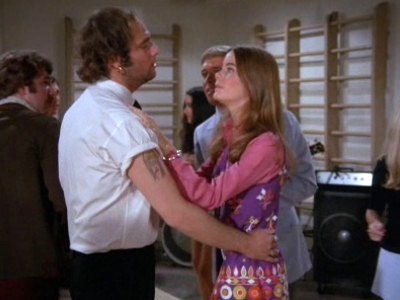
Keith gave an interview for a magazine and revealed that Laurie has a crush on a classmate, Harry Murphy. Laurie is upset and says it is the wrong name anyway. A motorcyclist, Harry Murphy (played perfectly by Rob Reiner), comes to visit Laurie to see who she is as a joke. Snake likes Laurie but embarrasses her by literally driving his cycle through the halls at school and throwing a rock through the window with a message. When she takes some time to talk to him about this, she realizes he is a nice guy and invites him to take her to her school dance. He is made fun of there and takes as much as he can before dumping the punch all over one of the guys. Laurie explains she doesn’t think they have enough in common to date but he understands she likes him and he respects her.
School finals are approaching and Keith has a problem in one course. America’s heartthrob is failing sex education. The teacher seems to be picking on Keith and it takes some work to find out why it seems like that. After Keith studies for three days so he knows he’ll get an A, he falls asleep the morning of the test in a quiet place at school. He tells the teacher that who finally gives him a new test. He calls Keith and Shirley into his office the next day and Keith assumes he failed and will not be graduating. Mr. Grisby informs him that he aced the test. He says Keith has a great mind but only does enough to get by. Keith says he is the only one who thinks that and is hard on him, but Mr. Grisby says he talked to his other teachers who agreed with him but like Keith and said he did enough so they gave him decent grades. Mr. Grisby wanted to push him to do better than average.
This is a remake of the pilot. The kids have a band and when their singer gets sick the day they are recording, they ask their mother to stand in for her. When a famous manager is in town, Danny goes to his hotel room to try to make him listen to their song. After several attempts that don’t work, he corners him in the bathroom at the airport and plays the song. Reuben realizes it could be a hit and takes on the family as his client. This is a fun first episode and lays out the groundwork for the basis of the show and the personalities of each of the main characters.
This is the first time Bonnie Kleinschmidt’s name comes up. Reuben yells at Danny for telling Bonnie Reuben can get her into show business. Shirley decides Reuben needs a wife and introduces her to a friend she used to work with. When they decide to get married, she wants Reuben to give up managing and join her company. Reuben agrees. The kids are sad but try to support him. When they do their first out-of-town gig without him, everything goes wrong. As Reuben is trying to help them, his fiancé tells him how much kids mess up your life and he realizes she won’t want kids. Next we know, he is at the hotel just in time to straighten everything out.
Shirley meets an old friend Larry and goes on a date with him. The children are worried that she is too interested in him, and even more worried when they see him with another woman (Jaclyn Smith). They try to get Reuben to investigate him only to learn he is quite wealthy. After they tell Shirley he’s a two-timer, he brings the woman to their hotel room and introduces his niece. The kids feel terrible they might have stopped Shirley’s special romance and so Shirley and Larry stage a proposal where she turns him down so the kids are let off the hook.
When Keith is worried that he may not be able to write songs anymore because he has musician’s writer’s block, Danny decides that it’s time for him to become the group’s songwriter. Keith finally has a breakthrough. Unfortunately, the song he writes is the song Danny played for the family before Keith got up. They both claim it’s their song and finally Shirley realizes the walls are thin between their rooms and Danny heard it while he was sleeping. She has Keith write a bad song and Danny claims the song as his the next day but says he is now a bad song writer. When Keith plays it and Danny recognizes it as his, they explain what has been happening. However, Keith says Danny made the original song better so he gives him credit for cowriter.
Shirley enrolls in college using her maiden name so her real name does not draw unwanted attention. She meets someone in her class as a friend, but develops a crush on her. He tells his parents and they do not approve of his dating an older woman. When they come by to visit, Shirley is wearing hot pants that might be their new uniform. They are really distressed to learn she has five kids. The parents are Norman Fell and Ann Morgan Guilbert (or Mr. Roper from Three’s Company and Millie Helper from The Dick Van Dyke Show). She assures them they are only friends and she invites him to dinner where he learns she is part of the Partridge Family. After dinner he asks if he can take Laurie on a date.
Danny wants to lose weight so Gloria Hickey will be his date at her pool party. Shirley puts him on a diet. After a week, he weighs more because of cheating. Reuben teases him about no will power so they decide to tackle their own vices – Danny’s food and Reuben’s smoking. They both drive everyone crazy trying to cheat and complaining about what they can’t have, so Shirley tells them to go ahead and eat cake and smoke. When she does, they realize they need to want to stop on their own and do so.
Danny gets a job writing articles about the Partridge Family for the local newspaper. To be sure his article is a success, he embellishes the truth about the family. The first article is about Keith and how he has a tattoo in a private place and loves girls who wear black armbands and has a crush on his English teacher, the middle-aged Mrs. Damian. Everyone teases him mercilessly and Mrs. Damian reads love poetry to him in class. Things finally pass over and Danny apologizes. Shirley tells Keith as a famous face he needs to get used to people writing untrue things, etc. Danny says he will never do it again except for the second article which was already written and ready to be published. Then Shirley finds out it is about her and goes after Danny till Laurie and Keith give her the same speech she gave Keith. The article says she ran an exotic dancing school, loves men in trench coats and beards. She goes through the same humiliation Keith did before things get back to normal. Even the milk man delivers in a trench coat.
Shirley’s recent boyfriend, the politician, comes to town. He brings his youngest daughter along, played by Jodi Foster. While Shirley and Dick enjoy being together, his daughter has a crush on Danny and he cannot escape her. Laurie and Keith tell him he has to be nice to her for the weekend they are in town. The next day he tries to kiss her and she punches him. Danny goes to Shirley and Richard for help, saying one day she liked him and he didn’t like her and the next day it was reversed. Now he is sure he is in love. They tell him to talk to Julie. He takes her for a soda and they have what sounds like an adult conversation but people around them keep referring to them as just kids. They decide to be friends for now and let the future take care of itself.
Danny has a crush on Gloria Hickey but pretends he can’t stand her. When Shirley finally understands what is going on, she talks to him. He wants to invite her to the class dance but keeps chickening out. Gloria comes to the house and tells Shirley and Laurie she wants to ask out Shirley’s son to the dance and they assure her he will go and has admitted to liking her. Suddenly, they realize she had been talking about Keith. Later she comes over to ask Keith to the dance and Danny is furious at Keith. Danny comes into the room to fight for her and Keith tells Danny he has no interest in Gloria; she is just a little girl. Gloria is humiliated and runs home. Later she comes back to ask Danny to the dance and to thank him for defending her. After a concert for the girl scouts, Keith has his pen ready but all the girls run to Danny for autographs.
Keith wants his own apartment so he can have some peace and quiet to write music. Shirley reluctantly agrees to let him move into a room in the house next door once Reuben reminds her in a year Keith can leave as an adult and there might not be an apartment next door. Having his own place is not what he expects. He gets free rent for light gardening which turns out to be 3 hours a day so he has trouble getting his school work done. Danny charges him for meals and clean clothes. Keith gets peanut butter and jelly sandwiches even though he overhears the family is having soup and roast beef. Shirley figures out what is going on and decides to take food to Keith at the same time he invites a date over. Danny sends him a message by arrow. He hides his date in the closet while Shirley is there, trying to hide any evidence. Later that night he goes home to see if he can use his old room to write a song in because his place is too crowded and noisy. His date invited a bunch of people over. Shirley asks how a simple date turned into a party. He asks how she knew and she lists off the smell of perfume, a pompom under the couch, and a Bolero album on the record player. Keith decides he would like to move home. This episode has a very touching scene between Keith and Shirley when he has to explain he is not ready to live on his own and wants to come home which is not easy for a 17-year-old to admit.
After being scolded because they left the kitchen a mess, Chris and Tracy decided to run away from home. Shirley helps them get ready to run away, explaining to the other kids that they all did the same thing and ended up at Mrs. Monahan’s for brownies before coming home. Keith watches the kids go to Mrs. Monahan’s. However, they don’t come home and when Shirley calls, Mrs. Monahan says they left a while ago and should be home. It turns out, they went to Reuben’s apartment building. He calls Shirley in code and lets her know. They cause several mishaps at his place and then Bonnie comes over as a surprise. He decides to get the kids to go home. He says they will play Blackjack and if they lose, he decides what will happen. They keep winning. Finally, Shirley shows up and says she is running away too because she is always the bad guy and she doesn’t have any little kids left to take care of. They explain they wanted to come home an hour ago but thought they should keep playing with Reuben since he let them stay. I liked this episode because we see the relationships that all the characters have. The older kids are truly sad Chris and Tracy are gone for the day and worried. Reuben shows his affection for them. They understand there are consequences for bad behavior and they need to follow rules.
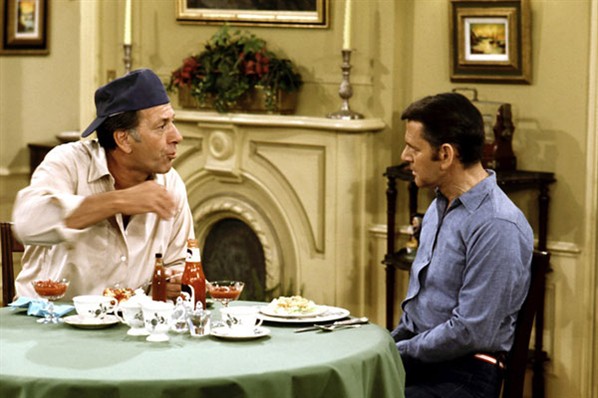
The Odd Couple debuted in 1970. Today we are celebrating its fiftieth anniversary with fifty fun facts.
Fifty Fun Facts
1. Although the show was based on The Odd Couple, a movie written by Neil Simon, Simon did not want his name associated with the television show. However, once he began watching it and realized the quality of the show, he changed his mind and made an appearance during the fifth season in “Two on the Aisle.”
2. The Odd Couple was based on Simon’s brother and a friend of his who were living together and having some conflict. While watching their interactions, he decided it would be a great idea for a play.
3. The Odd Couple had many lives: it began as a play, was made into a movie starring Walter Matthau and Jack Lemmon in 1968, a tv show in 1970, a revised play about women, another tv show starring Matthew Perry and Thomas Lennon in 2015 which was on the air three years.
4. In 1982, an African American version of the show was created starring Ron Glass and Demond Wilson. Called The New Odd Couple, it wasn’t new because it used the original eight scripts from the Klugman-Randall series. It was canceled part way through the season.
5. The show was developed by Garry Marshall and Jerry Belson.
6. The Odd Couple first aired on Friday, the 13th (November 13, 1970).
7. Garry Marshall appears in four different episodes: the one mentioned in fact #3 and as a drummer and as Man 1 and Man 2.
8. Garry’s sister Penny Marshall played Oscar’s secretary Myrna Turner. On her last appearance, she marries a man named “Sheldn” (the “o” had been eliminated from his birth certificate. Sheldn was played by Rob Reiner, Penny’s husband at the time. Garry and his sister Ronnie played Myrna’s siblings Werner and Verna in the same episode.
9. Oscar’s ex-wife Blanche was played by his real wife, Brett Somers. During the show Brett Somers and Jack Klugman got a divorce in real life.
10. The Odd Couple ran on Broadway for 964 performances.
11. In 1985, Simon rewrote the play with female leads, Olive and Florence. Rita Moreno and Sally Struthers were the leads.
12. Originally Dean Martin and Art Carney were considered for the part of Felix.
13. Both Mickey Rooney and Martin Balsam were considered for the role of Oscar.
14. Actor Richard Stahl appears in nine different episodes as nine different characters.
15. Jerry Paris, Jerry Helper from The Dick Van Dyke Show, directed 18 of The Odd Couple episodes.
Photo: pokerlistings.com
16. Oscar plays poker regularly with a group of guys including Murray, Roy, Speed, and Vinnie. Sometimes Felix is allowed to play with them.
17. Murray’s wife who is often talked about but seen in only one episode is Mimi.
18. A cartoon was created for Saturday mornings called “The Oddball Couple.” Spiffy and Fleabag, a cat and dog, are based on Oscar and Felix.
19. The first season was filmed in the same apartment as the 1968 move with one camera and a laugh track. Randall hated that set-up and the next year they began using three cameras and filmed in front of a live audience.
20. Oscar and Felix were said to live at 1049 Park Avenue in New York which was a real address. The actual building was used during the opening credits and exterior shots. Usually a 1966 Ford four-door station wagon or a red VW Beatle are often seen outside the building. The actual tenants got mail for Oscar and Felix.
Photo: movieforum.com
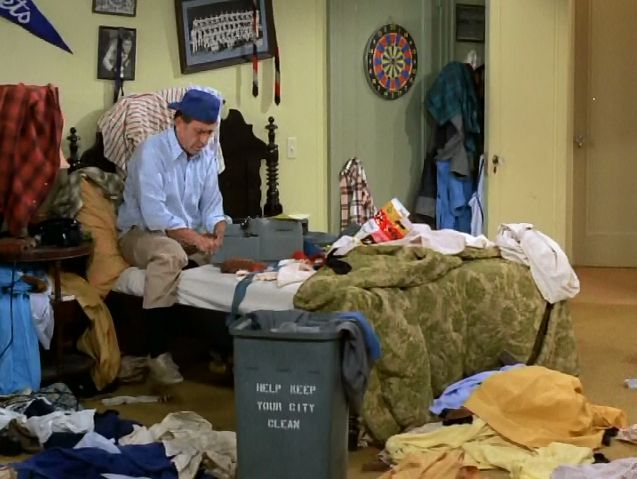
21. One problem the producers had was how to show Oscar was a slob and Felix a neatnik. They couldn’t have the kitchen or living room messy because obviously Felix would keep it clean. Finally, they decided to create Oscar’s bedroom and it was always a mess.
22. During the first season of the show, the guys date two English sisters, the Pigeon sisters, who live in the same apartment building.
23. The Odd Couple was not a ratings success and every season, it was up for cancellation. The summer rerun ratings saved it each year.
24. For some reason, there were inconsistent stories on the show about how Felix and Oscar met. One episode said they were childhood friends. Several references talk about how they met in the army. One episode told the story of how they met while serving on jury duty together.
Photo: youtube.com
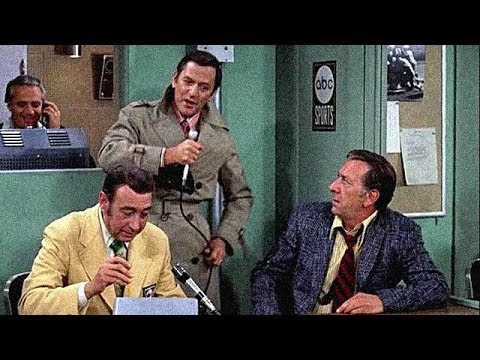
25. Howard Cosell was brought onto the show to help boost ratings. That was a bit of a gamble since Cosell was voted most loved and most hated sportscaster.
26. Tony’s middle name is Leonard and his sister’s name is Edna. Those were the names given to Felix’s two children on the show.
27. Monty Hall showed up twice on the show. He and Oscar had been college roommates.
28. Oscar’s favorite meal is lasagna with French fries and Boston cream pie is his favorite dessert.
29. Don’t let Oscar order pizza. When he orders one with the works, it includes a fried egg on top.
30. Felix and Murray played in a band that featured 1930s music called The Sophisticatos. In one episode they had to play country music and changed their name to Red River Unger and his Saddle Sores.
31. Oscar’s middle name is Trevor.
32. When Elinor Donahue was hired to play Miriam, Felix’s girlfriend, her last name was Welby. Donahue worked on Father Knows Best with Robert Young who later went on to star in Marcus Welby MD.
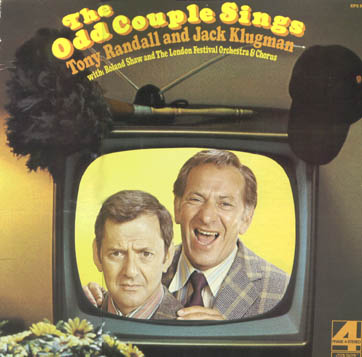
33. Klugman and Randall recorded an album “The Odd Couple Sings” for London Records.
34. ABC always wanted guest stars on the show to boost the ratings, so the writers started including guest stars that would not boost the ratings, opera singers and ballet dancers for instance, which drove the network crazy.
35. In one episode, singer Richard Fredericks is injured playing in one of Oscar’s soft ball games so Oscar has to stand in for Fredericks in Rigoletto, an opera that Felix was producing.
36. Like Harvey Korman and Tim Conway, Jack and Tony used to crack each other up. On one episode they dress as a horse to appear on Let’s Make a Deal. Klugman had to hide himself because he was laughing so hard.
Photo: pinterest.com
37. Klugman’s favorite episode was when the two friends made an appearance on Password with Allen Ludden and Betty White. Felix, who had always wanted to be on the game show, caused a lot of problems on the show and eventually they threw him off the show. His adlib when that happened was “Oh, boy, what a gyp.” Klugman said that was how he felt when Tony died.
38. You can always tell when Felix is really upset because he begins honking.
39. In one episode, Dick Clark plays himself as a radio DJ. He calls Oscar to let him know he has won a new car.
40. Both Willie Aames and Leif Garrett play Leonard, Felix’s son. They would both go on to successful careers and they would both act in the same show again when they appeared on Family.
41. When Oscar tries a dating service, he uses the fake name of Andre La Plume and ends up on a date with Felix’s ex-wife.
42. When Oscar saves Felix’s life, Felix attempts to play “Home on the Range” on his saxophone to thank him.
43. On one episode, the train breaks down in a tunnel. Felix decides to entertain the passengers with an improvised hand puppet he calls Harvey Hankie.
44. Jack Klugman and Tony Randall promoted several products together. They did commercials for the game Yahtzee and their photo was on the box for years. They also did a promotion for Eagle Snacks and Yoplait yogurt.
45. Klugman believed in syndication of the show. He convinced Randall to give up part of his salary for the syndication rights. It was the right move, and they made a lot of money after the show was cancelled.
46. Both Klugman and Randall were up for Emmys every year the show was on. Jack won in 1971 and 1973. When Randall won in 1975, the show had been cancelled and he mentioned during his acceptance speech that he wished he had a job.
47. The final episode had two planned endings. Felix and his ex-wife are getting remarried and Oscar is getting his home back. If the series didn’t get picked up, the marriage took place. If the series did get picked up, the wedding was cancelled by Gloria because Felix was so picky about the wedding details.
48. In 1993, Randall and Klugman worked together filming a television movie called The Odd Couple: Together Again. Klugman had gone through throat cancer treatments and this was written into the movie script. The plot of the movie is Felix helping Oscar recover and becoming overly involved in his daughter’s wedding.
49. Although Klugman didn’t appreciate what the show meant to people when it first began, later in life, he said “he would have people come up and tell him, ‘I grew up with you. I sat on the couch with my mother or my father, and we laughed with you.’ And suddenly the people have faces, and names, and feelings. It’s been invigorating! You know, you don’t count on that; you don’t know that you’re really entertaining people or having an effect on people’s lives. I had a guy from Sports Illustrated who did an interview with me say he became a sportswriter because I was a sportswriter on The Odd Couple. Yeah, it’s like wow, you’re kidding. Now I’m getting this in person, and I really love it.”
50. Randall and Klugman became life-long friends while working on the series. They developed a close bond. Because they both had a lot of character, they became close and helped take care of each other in old age.
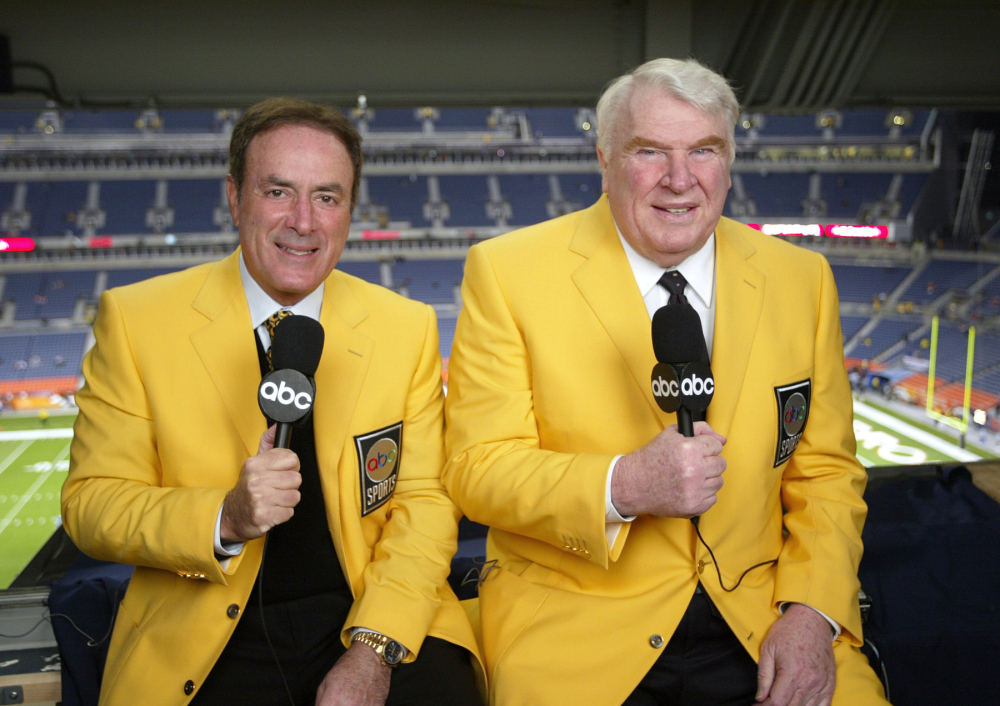
Monday Night Football is celebrating its 50th anniversary this month. On September 21, 1970, the ABC broadcasting team took the booth at Cleveland’s Municipal Stadium. A crowd of 85,703 attended the game in person, but millions watched on television. The Cleveland Browns beat the Jets 31-21. ABC doubled the number of cameras per game. Close-ups were used often. The broadcast booth was not like any other that had been on television. The weekly sports show pioneered a variety of technological innovations including slow-motion replays and computerized graphics.
Photo: pinterest.com
In addition to the play-by-play announcer Keith Jackson and color analyst Don Meredith, a third chair was added to the booth. Howard Cosell was added to give a bit of controversy to the broadcast. A TV Guide viewer poll in 1978 named Cosell the most loved — and hated — analyst at the same time. With no sports network on 24 hours a day, Cosell provided recaps of the weekly games during half time.
Photo: espnmediazone.com
The first sponsors were Marlboro Cigarettes, Ford Motor Company, and Goodyear Tires. The show would make history as one of the longest-running prime time television series and one of the highest-rated shows among male viewers.
In season two, Frank Gifford took over for Jackson and that trio would continue broadcasting till 1983. In 1975 and 1976, Alex Karras took over for Meredith. From 1979-1983, Fran Tarkenton joined the other three in the booth. Al Michaels and Frank Gifford manned the spot from 1987-1997. A variety of sportscasters joined them in the booth or took over for them until 2005 including O.J. Simpson, Dan Dierdorf, Lynn Swan, Leslie Visser, Boomer Esiason, Dan Fouts, Dennis Miller, Melissa Stark, Eric Dickerson, John Madden, Lisa Guerrero, and Michelle Tafoya.
DENVERus – NOVEMBER 11: (NO ARCHIVING, NO RESALE) In this handout photo provided by ABC, John Madden (R) broadcasts with Al Michaels during the 500th telecast of Monday Night Football in a game between the Denver Broncos and Oakland Raiders November 11, 2002 at Invesco Field at Mile High Stadium in Denver, Colorado. Madden announced his retirement from broadcasting on April 16. (Photo by Craig Sjodin/ABC via Getty Images) ORG XMIT: 85970668 GTY ID: 20D_0206
Hank Williams Jr. redid his song, “All My Rowdy Friends Are Coming Over Tonight” for the theme. When the last show aired on ABC, the song was switched to “Turn Out the Lights, the Party’s Over.”
Photo: thepoliticalinsider.com
In addition to the sportscasters who man the booth, many special guests have appeared on the show. Vice President Spiro Agnew, President Bill Clinton, California governor Ronald Reagan, Placido Domingo, John Lennon, and Kermit the Frog are a few of them.
When ABC first acquired the rights to air MNF in 1970, it did not include any playoff games. The network was eventually allowed into the rotation of channels airing the Super Bowl, starting with Super Bowl XIX in January 1985. When the league expanded the playoffs from a 10-team to a 12-team tournament in 1990, ABC was then given the rights to air the first two Wild Card Playoff games. Originally, ABC’s college football crews would call the first Wild Card Game.
The show would air on Monday nights on ABC until 2005. In 2006, the series moved to ESPN. The show has not been as successful as its earlier days.
In the past fourteen years, there has been a bit of a revolving door to the booth. Showing up on Monday nights we saw Mike Tirico, Tony Kornheiser, Joe Theismann, Suzy Kolber, Michele Tafoya, Ron Jaworski, Jon Gruden, Lisa Salters, Sean McDonough, Joe Tessitore, Jason Witten, and Booger McFarland come and go.
In an article titled “Monday Night Football’s Mid-Life Crisis: From Monopoly to Monotony” by Michael McCarthy in December of 2018, he laid out the current problems. “As it nears its 50th season, ESPN’s venerable Monday Night Football is struggling with a mid-life crisis. Yes, Monday Night Football changed the face of television. Yes, it can still dominate the sports conversation when it has great games like Rams vs. Chiefs. But Monday Night Football is bad. Too often, the game match-ups are not marquee. The football is not as exciting. The new announce team—featuring three Monday night rookies in Jason Witten, Joe Tessitore, and Booger McFarland—is a work in progress at best, a train wreck at worst. The most famous broadcast booth in sports no longer boasts legendary announcers like Howard Cosell, Dandy Don Meredith, Frank Gifford, John Madden, or Al Michaels. Instead, this season’s crew of Witten, Tessitore, McFarland and Lisa Salters has been roasted by fans and critics.”
Photo: espnpressroom.com
I could not find any announcement of who will be in the booth when football returns. (Note: This came out right before I published my blog this week: A three-man booth of play-by-play man Steve Levy and color commentators Brian Griese and Louis Riddick — who all called the back half of the 2019 Week 1 MNF doubleheader — have been upgraded to the top team for 2020. They replace Joe Tessitore and Booger McFarland. Lisa Salters remains the sideline reporter, a role she has had since joining Mike Tirico and Jon Gruden in 2012. Retired official John Parry returns for a second season as the rules analyst.)
Now ESPN has the added pressure of the Covid-19 virus. No one knows if there will be a football season or what it will look like if there is. You would think if a show like Monday Night Football lasts for fifty years, they would have it made. Never take anything for granted. At least ESPN has some extra time to try to figure out a better crew for the next season.
On a lighter note, here are some fun facts about the series. The most Monday night appearances belong to the Miami Dolphins with more than 80. The San Francisco 49ers are the most winning team with 49 wins. The Broncos have played the Raiders 19 times as of 2019 and The Cowboys have faced off against the Redskins 17 times. Candlestick Park in San Francisco, no longer used for the team, hosted the most wins, coming in at 36 including its final Monday night game in December of 2013. The highest-rated Monday Night Football telecast on ABC was the Miami Dolphins’ victory over the previously undefeated Chicago Bears on December 2, 1985, which drew a national Nielsen rating of 29.6 and a share of 46. ABC’s lowest-rated MNF game was the St. Louis Rams’ defeat of the Tampa Bay Buccaneers on October 18, 2004, which drew a 7.7 rating. Regardless of the technical difficulties, watching Monday Night Football is always a win if you’re a fan of the sport.
I love September. The beginning of fall conjures images of fall leaves, trips to the apple orchard, the sound of football games, and returning to a welcomed routine. One of my favorite autumn memories as a child and teenager was studying the Fall Preview of the TV Guide, so I could decide which shows were “do-not-miss” series.
TV Guide is still available, but there was something special in being able to peruse the upcoming episodes, read the articles, and do the crossword puzzle. Don’t get me wrong, I’m not advocating going back to only three channels plus Public TV, but there was something comforting in knowing what would be on every day on every channel and knowing that all your friends were watching the same thing, and you could discuss it at school. That nostalgic feeling disappears when you are trying to look at 200 channels, not to mention Apple TV, Netflix, Amazon, and the many other options out there.
As much as I enjoyed TV Guide, I knew little about it, so I thought it would be fun to learn some of the history behind this almost-seventy-year-old publication.
In 1948, Lee Wagner printed the New York City area television listings in The TeleVision Guide which was sold on newsstands. Gloria Swanson who starred in The Gloria Swanson Hour appeared on the first cover. With the success of that magazine, Wagner went on to publish issues for both the New England and Baltimore-Washington, DC areas. In 1953, Walter Annenberg bought the series of publications and incorporated them into his Triangle Publications. Wagner would remain a consultant for that business until 1963.
The first magazine titled TV Guide was issued April 3, 1953. It was sold in ten cities and boasted a circulation of 1,560,000. The cover featured a photo of Lucille Ball’s newborn son Desi Arnaz Jr. with the headline, “Lucy’s $50,000,000 Baby.” It cost 15 cents. For the first 52 years of its existence, it was digest size. Triangle Publications, headquartered in Radnor, PA, continued to buy local magazine listings, creating a national publication. Their contemporary building featured a large logo at the entrance, a vast computer system to save data on every television show and movie, and housed editors, production personnel and subscription processors.
In September of 1953, the magazine released its first Fall Preview edition and circulation increased steadily from then on. The guide was available by subscription or at grocery stores. Eventually a color section was added featuring television-related stories, articles about stars, and weekly columns. One of the columns was “Close-Up” which looked at different types of programs. “Cheers and Jeers” was a critique page for specific programs, “Hits and Misses” rated shows from 0 to 10. In addition, certain years included horoscopes, recaps of soap operas, lists of sporting events and crossword puzzles. Next to each television show was a number corresponding to the local channel. A brief description of the program was given. Networks often ran ads for various shows.
Beginning in the late fifties, “color” was set in a rectangular box for those shows that were broadcast in color. By 1972, the majority of programs were full-color, so the abbreviation “BW” was used for shows not in color. Until cable television entered the entertainment business, listings began about 5 am and went until midnight. By August of 1982, the magazine began expanding its coverage of cable programming with “CablePay Section” and “Cable and Pay-TV Movie Guide.”
In August of 1988, Triangle Publications was sold to the News American Corporation for $3 billion. It was one of the largest and the most expensive acquisitions at the time.
In March of 1996, TV Guide launched iGuide, a web portal. In June of 1998, News Corporation sold TV Guide to United Video Satellite Group for $800 million and 60 million shares of stock worth $1.2 billion. “The Robins Report” a review column was added, “Family Page” showcased family-oriented programs, and “Don’t Miss” which was select programs to watch during the week.
In 1999, TV Guide hosted a new award show, TV Guide Awards, telecast on Fox. Winners were chosen by TV Guide subscribers.
In 2002, to commemorate the 50th anniversary of the magazine, six special issues were created: “TV We’ll Always Remember: Our Favorite Stars Share Fifty Years of Memories, Moments, and Magic”; “50 Greatest Shows of All Time”; “Our 50 Greatest Covers of All Time”; “50 Worst Shows of All Time”; “50 Greatest Cartoon Characters of All Time”; and “50 Sexiest Stars of All Time.”
As more cable channels were added, space became a premium and the magazine had to decide which ones to include. In September of 2006, TV Guide launched an updated website with expanded editorial and user-generated content not included in the print edition.
With more channels, less detail was available about shows, and by 2007, circulation had decreased from its peak of twenty million in 1970 to less than three million. The weekly publication went through several other sales. In 2014, it underwent a major redesign. Fourteen pages of listings were eliminated, and programming information was only provided for top-rated broadcast and cable networks and included several new sections including the “Roush Review” where Matt Roush selected the top ten picks from the upcoming week. The size was then reduced to 7” x 10”.
In 2015, it was sold once again to NTVB Media.
Two spinoff magazines were produced by TV Guide: TV Guide Crosswords and TV Guide’s Parents’ Guide to Children’s Entertainment.
With over 3000 covers, almost every star and television show you can think of has been featured on the publication. The original 1953 cover of Desi remains the most expensive, valued at $3000. Another early cover of George Reeves as Superman runs a close second.
Lucille Ball has appeared on the most covers, with 39 total. Johnny Carson comes in second with 28 covers and Mary Tyler Moore and Michael Landon are tied for third place with 27 each.
In addition to photographers’ covers, TV Guide has featured a variety of artists over the years including 37 Al Hirschfield pieces, two Charles Addams, one each by Norman Rockwell, Peter Max, Andy Warhol, and Dali.
I guess I’ll have to pick up a TV Guide next time I’m at the grocery store just to see how it compares to my fond memories. I’m guessing I will have to shell out more than $.15. Considering all the changes that have taken place in the television industry since the late 1940s, the magazine has been impressive keeping up with all the transformations and still providing a guide for our viewing.
Last week’s blog was about Meredith Baxter. Today we are taking a more in-depth look at one of the shows she is best known for, Family Ties.
Photo: throwbacks.com
Steven (Michael Gross) and Elyse Keaton (Meredith Baxter) are liberal ex-hippies with three children when the show starts out: super conservative son Alex (Michael J. Fox), shopping maven, boy-crazy daughter Mallory (Justine Bateman), and easy-going Jennifer (Tina Yothers). Later they have a baby and Andrew (Brian Bonsall) is added to the family. The name Keaton was a tribute to Diane Keaton. (One fun fact is that Both Baxter and Gross had the same birthday, being born June 21, 1947.)
The concept was based on the life of Gary David Goldberg and his wife Diane when they transitioned from flower children to suburban family. Goldberg explained that “It really was just an observation of what was going on in my own life with my own friends. We were these old, kind of radical people, and all of a sudden, you’re in the mainstream . . . now you’ve got these kids and you’ve empowered them, and they’re super intelligent, and they’re definitely to the right of where you are. They don’t understand what’s wrong with having money and moving forward.”
Debuting in 1982, the show was on for seven years, producing 172 episodes.
Photo: architecturaldigest.com
Originally Ed O’Neill was considered for the role of Steven, and Matthew Broderick was slated to play Alex. When Broderick’s father became ill, he had to decline. (Broderick’s father played Baxter’s father on the show Family in the 1970s.) Another source simply stated that Broderick decided he didn’t want to move to LA. Fox made the role his own and won three Emmys. Despite his disdain of his parents’ ethics and lack of materialism, Alex was a likable character. When Goldberg explained why he liked Alex but not Alex’s philosophy, he said, “With Alex, I did not think I was creating a sympathetic character. Those were not traits that I aspired to and didn’t want my kids to aspire to, actually . . . But at the end of Family Ties, when we went off the air, then The New York Times had done a piece and they said, ‘Greed with the face of an angel.’ And I think that’s true . . . [Michael J. Fox] would make things work, and the audience would simply not access the darker side of what he’s actually saying.”
Photo: YouTube.com
Steven and Elyse went to school in Berkeley; he is now the manager of a public radio station in Columbus, Ohio and Elyse majored in architecture. Although she has been a stay-at-home mom, during the run of the show, she is now ready to return to work.
Photo: architecturaldigest.com Fox with Scott Valentine, Mallory’s boyfriend Nick
Rounding out the cast was Alex’s friend Skippy (Marc Price), Mallory’s boyfriend Nick (Scott Valentine), and Ellen (Tracy Pollan) who was Fox’s girlfriend and later wife in real life.
Photo: enews.com
The theme song is a memorable one. “Without Us” was written by Jeff Barry and Tom Scott. For the first season, it was performed by Dennis Tufano and Mindy Sterling, and for some reason, it switched to Johnny Mathis and Deniece Williams for the rest of the show’s run.
Photo: today.com
Freddie J. Rymond was the set decorator for the show. In an article “The Set Design of Family Ties” by Cathy Whitlock in 2012, we catch a glimpse of the thought process of Rymond’s creation.
“Rymond explains, ’Most sitcoms evolved around the living room in those days, and they all pretty much had the same furnishings.’ Rymond received numerous requests from viewers regarding the kitchen set’s appliances; of particular interest was the Wolf commercial-style range, an item that was gaining popularity in the consumer-driven ’80s. Executive producer Gary David Goldberg, who was very specific about the set’s decor, had a Wolf range in his home in Los Angeles. The kitchen was the epicenter of the Keaton family’s activity and one of the multi-camera sitcom’s three primary sets. . . At its best, set decor defines and supports a character—here, hanging above the bed of Alex P. Keaton is a poster of conservative icon William F. Buckley, Jr., rather than, say, Farrah Fawcett, who was probably the more popular poster subject of the time. The bedside WKS lamp comes from the local public television station where father Steven Keaton works. Rymond used what he called a ‘conglomeration’ of accessories to decorate youngest daughter and resident tomboy Jennifer’s bedroom. A pop-cultural mélange consisting of a Cleveland Browns pennant, a white iron–and-brass bed, and a world-globe throw pillow round out the set. Mom and dad Elyse and Steven’s master bedroom was reminiscent of so many interiors of the ’80s—shelves filled with clutter and white porcelain figurines, tchotchkes and knickknacks from a lifetime of family vacations.”
Photo: architecturaldigest.com
Although the show was a comedy, it tackled some dark subjects including alcoholism, incest, and death. In one of the earliest episodes, Mallory is scared and confused when “Uncle Arthur”, a close friend of the family and her father’s co-worker at the television station, makes a pass at her. Meanwhile, Steven prepares a farewell tribute to Arthur to air during the station’s pledge drive. In season five, Alex works with a renowned professor on an economics paper. Reviewing the final content, he finds the hypothesis is incorrect, but the professor wants to submit it with false data. During the final season, the Keatons are delighted by a surprise visit from Elyse’s Aunt Rosemary. The family starts to notice a difference in her actions, and Rosemary finally admits she is becoming forgetful. A doctor diagnoses the onset of Alzheimer’s disease.
The finale was a very emotional time for the entire cast. In an article “Cutting the ‘Family Ties’” by Daniel Cerone on May 2, 1989, some of the stars discuss what the week was like. In the final episode, Alex gets his dream job on Wall Street and is moving to New York City.
Photo: pinterest.com
The article interviewed the cast. “‘We taped the last episode in front of an audience of family and friends,’ said 27-year-old Michael J. Fox, who joined the show in 1982 as an unknown Canadian-born actor and parlayed his role as the conservative, wise-cracking Alex Keaton into a flourishing film career. ‘I was fine until the curtain call, then I started weeping. I felt like an idiot, until I looked around and realized I had company.’ Baxter also commented on the end of the show, ‘This week has been so much more grueling than anyone expected,’ said Meredith Baxter Birney, who plays Alex’s mother, Elyse Keaton. ‘Everyone involved thought the show would just sort of take care of itself. No one was prepared for what we went through. It was awful.’”
Goldberg also discussed the finale, “‘Last night was extraordinarily emotional,’ agreed 44-year-old Gary David Goldberg, whose UBU Productions produces ‘Family Ties’ in association with Paramount Network Television. ‘It was a very surreal feeling. We started a half-hour late because everyone was crying and we had to redo their makeup. The sadness is overwhelming. It’s like raising a great kid who you love to have around, and then he has to leave you and go to college.’”
Photo: tvseriesfinale.com
Although the show was based on the differences between the generations, it was not their differences that made the show one of the most-watched sitcoms of the decade. Despite their range of values, the kids loved and respected their parents. The parents truly liked their kids. While the show was very funny, it was also heart-warming. There was unconditional love in the family. Alex could be very sarcastic to Mallory, but then we would see them having an intimate conversation in the kitchen late at night. While the elements that separated the characters is what drew us to the show, it was the qualities and love that they shared that kept us coming back.
If you’ve been following my blog for a while, you know I am a big fan of the show Family starring James Broderick and Sada Thompson. Along with Gary Frank and Kristy McNichol, Meredith Baxter played one of their children on the show. As Nancy, she got divorced and moved into a garage apartment with her son Timmy. She went to law school to follow in her father’s footsteps. Today we will learn a bit more about the life Meredith Baxter had off the show.
Photo: wordpress.com
Baxter was born in 1947 in California. Her mother was Whitney Blake who played Dorothy Baxter on Hazel. Her father was a radio announcer. Her parents divorced when she was 6. She lived with her brothers and her mother who eventually remarried; Meredith’s stepfather was sitcom writer Allan Manings. Manings wrote for a variety of shows, including McHale’s Navy, Laugh-In, Good Times, and both the original and reboot of One Day at a Time.
Baxter went to Hollywood High. She briefly transferred to Interlochen Center for the Arts as a voice major, but returned to Hollywood High to graduate. Shortly afterward she married Robert Lewis Bush and they had two children. They divorced in 1971.
Photo: youtube.com
For the next few years, Meredith appeared on a variety of television shows and in several big-screen movies, including The Doris Day Show and The Partridge Family.
Image #: 2088657 David Birney (as Bernie Steinberg) and Meredith Baxter (as Bridget Fitzgerald Steinberg) in the CBS comedy series “Bridget Loves Bernie.” 1972 – – Picture by Landov / Retna Pictures – Job: 79439 Ref: LAN / CBS – UK Rights Only *Unbylined uses will incur an additional discretionary fee!*
The following year, Meredith got her first major acting role: Bridget Loves Bernie. She starred with David Birney. The premise behind this sitcom is that wealthy, Catholic Bridget Fitzgerald marries lower-class, Jewish Bernie Steinberg who drives a cab. Both sets of parents are uncomfortable with their children’s mates.
Although the show only lasted one season, she and Birney lasted a little longer. They married in 1974 and had twins. In 1989 they divorced and don’t have very good things to say about one another.
Photo: sitcomsonline.com Asea on The Love Boat
In the mid-seventies, television kept Meredith very busy with 11 appearances on shows such as Medical Center and McMillan and Wife and 10 made-for-tv movies.
She appeared on the big screen in All the President’s Men in 1976 before taking the role of Nancy Maitland on Family that same year. Family featured the Lawrences. Kate is a stay-at-home mom and a bit distant but obviously loves her children. Warm, friendly Doug is a lawyer and judge. Nancy is in her twenties but much more mature than her brother Willie who can’t decide what to do with his life. Buddy, a tweener, is the youngest in the family.
Photo: nostalgiacentral.com
Critics as well as viewers were devoted to the show. Baxter was nominated for an Emmy for Outstanding Continuing Performance by a Supporting Actress in a Drama Series in both 1977 and 1978. She was beat by her “sister” McNichol in 1977 (McNichol was nominated every year the show was on) and by Nancy Marchand for Lou Grant in 1978. For both years, Family was nominated as best show and Sada Thompson as lead actress which she won in 1978 (Thompson was also nominated every year). Gary Frank as Willie won in 1977. James Broderick also received a nomination during those years.
After Family ended, she went back to making made-for-tv movies with 7 during the 1980s and 21 in the 1990s.
Photo: tvseriesfinale.com
The following year, she would land the role that made her the most famous, Elyse Keaton on Family Ties. In this much-beloved show, Elyse and Steven, former hippies, raise their four children who have different values than they did. Alex, the oldest is a conservative interested primarily in money, Mallory cares more about shopping and boys than anything else, Jennifer has a dry sense of humor and is trying to find her spot in the family and the birth of baby Andy doesn’t help her figure that out. The show was on the air for seven seasons.
In 1995, Baxter married actor and screenwriter Michael Blodgett, but their married only lasted five years. (Blodgett wrote for a variety of television shows and several movies.) Shortly before her divorce, she was diagnosed with breast cancer. She made a full recovery and has become a spokesperson for treatment and research and developed a skin cream (Signature). A portion of the proceeds is donated for breast cancer prevention.
THE FACULTY — Meredith Baxter stars in the new comedy series, THE FACULTY, which airs on the ABC Television Network.
In 1996, she again attempted a television series, The Faculty. The show wasn’t renewed for a second season. Baxter played the role of a principal who is divorced and a single mother, and features the choices she has to make to balance her busy life. While the critics praised Baxter’s performance, they didn’t find much else to like about the show, and it was cancelled after 13 episodes.
Photo: wm.com/cold case
She made several television appearances on various shows or movies but her only recurring role was as Lilly Rush on Cold Case in 2007.
In 2011, Meredith published her memoir, Untied. She talks frankly about her unhappy marriages, including the abusive one with Birney. She also discloses that she was a recovering alcoholic and that she was gay. After coming out, she met Nancy Locke whom she married in 2013.
In 2014 Baxter accepted a role as Maureen, Nicky’s friend, on The Young and the Restless which began and ended that year. Since that time, she has appeared on a variety of television shows and in several movies. She has a couple of movies coming out soon.
Photo: tvguide.com With Melody Thomas Scott on The Young and the Restless
Baxter has also done a variety stage work including the two-character play, “Kissing Place” with David Ogden Stiers. Most recently she has appeared in “Women Beyond Borders,” “Angels in America” and “Love Letters.”
Photo: pinterest.com
Although Meredith has definitely had some trauma and sadness in her life, she has had a varied and long-lasting career. Being cast in three successful television shows is not something that happens for most actors. She seems to have come to a place in her life where she is happy and content and that is something all of us strive for. Join me next week as we look more closely at the show that made her a household name: Family Ties.