Jess Oppenheimer: The Brains Behind I Love Lucy

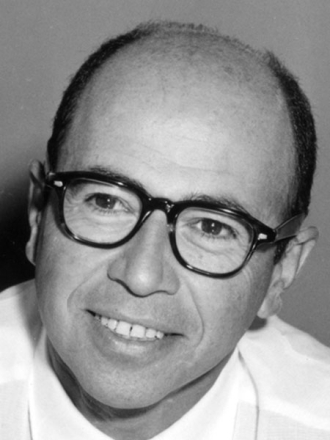
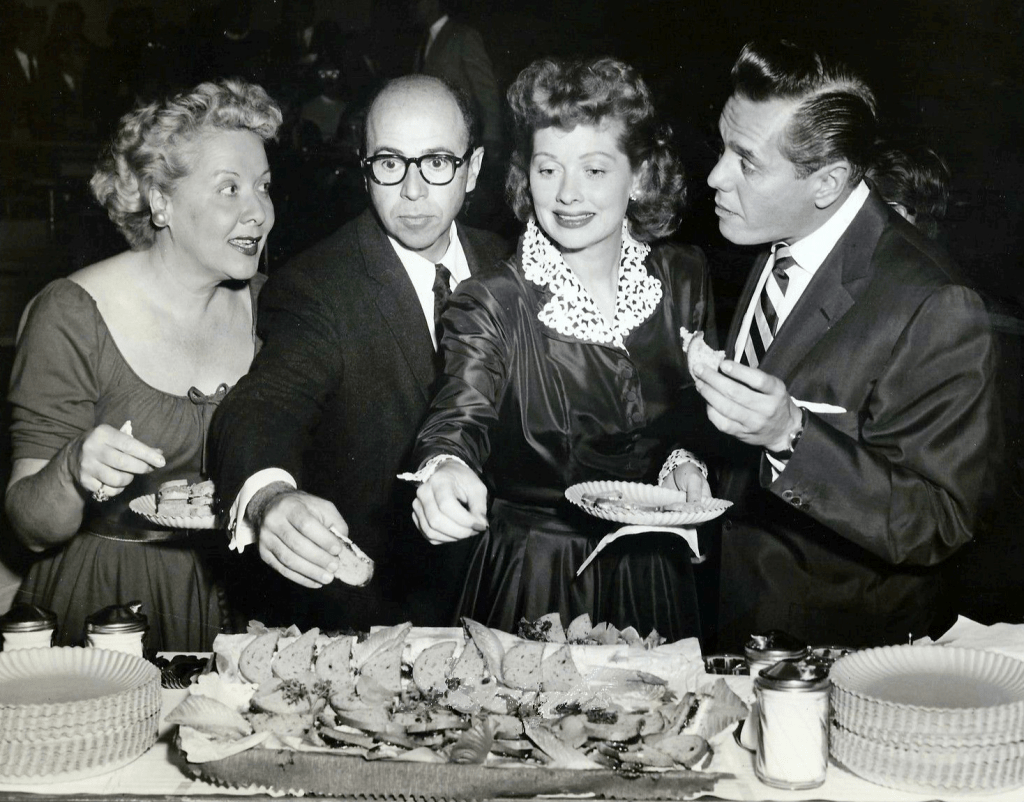
As we are learning all about Lucille Ball and her shows this first month of 2025, the month would not be complete without getting to know Jess Oppenheimer, the man Lucy called “the brains” behind I Love Lucy. He was also the producer and head writer of the show. Director William Asher said “he was the field general. Jess presided over all the meetings and ran the whole show. He was very sharp.”

📷televisionacademy.com

Oppenheimer was born in San Francisco in 1913. He took part in a study of gifted children in Stanford Professor Lewis Terman’s project. Ironically, one of Terman’s quotes about Jess was that he “could detect no signs of a sense of humor.” Jess’s father James owned the largest luggage store in San Francisco, but he died in an accident when Jess was 16.

Oppenheimer went on to attend Stanford in the 1930s. He started to spend a lot of his free time at radio station KFRC and performed in a comedy sketch he wrote for the show “Blue Monday Jamboree.”

In 1936 he moved to Hollywood and was hired as a writer on Fred Astaire’s radio show. He later went to work for Jack Benny as well as Edgar Bergen and Charlie McCarthy, George Burns and Gracie Allen, Bing Crosby, Marlene Dietrich, Judy Garland, Bob Hope, and Ginger Rogers.

When World War II began, Oppenheimer joined the US Coast Guard where he met Jack Dempsey and Cesar Romero. While he was there, he was diagnosed with double vision which had bothered him his entire life but had never been addressed.

Agent Ray Stark was Fanny Brice’s son-in-law and later Stark recruited him to write for her Baby Snooks Show based on his reputation in the Coast Guard.

In 1942, Oppenheimer met Estelle Weiss, an employee of Wallichs Music City. They married in 1947 and were together for the rest of his life.

📷wikipedia.com

In 1948, CBS hired Oppenheimer to write a script for a new radio show, “My Favorite Husband.” Several of the scripts portrayed the wife, played by Lucille Ball, as a sophisticated socialite. When Jess added slapstick comedy and transitioned her to a childlike, impulsive, naïve wife, the show was a big success.

In 1950, CBS moved the show to television to star Lucy and her real-life husband Desi Arnaz. Lucy demanded that Oppenheimer stay in charge. Jess suggested doing a show “about a middle-class working stiff who works very hard at his job as a bandleader and likes nothing better than to come home at night and relax with this wife who doesn’t like staying home and is dying to get into show business.” He suggested the title “I Love Lucy.”

For the first five seasons, Oppenheimer was the producer and head writer, with help from Madelyn Pugh and Bob Carroll Jr. as other writers. As part of his contract, Oppenheimer received 20% of the ownership in the show. He gave Pugh and Carroll each 5% of that amount.

A wannabe actor, Oppenheimer appeared on I Love Lucy in two episodes. In #6, “The Audition,” he was one of three TV executives who audition Desi and in #127, “The Tour,” he walks in front of the bus before Ethel and Lucy board it. In one of the more famous episodes, #30, “Lucy Does a TV Commercial,” Jess is the voice that tells Lucy to go ahead and begin her commercial.
📷

In 1956, Oppenheimer moved to NBC where he became a producer of special shows.

During the sixties, Oppenheimer created and produced three other sitcoms. In 1960 he worked with Annie Farge and Marshall Thompson on Angel; in 1963 with Glynis Johns on Glynis, and with Debbie Reynolds on The Debbie Reynolds Show. He also was listed as writer, producer, and director for the 1967 season of Get Smart.

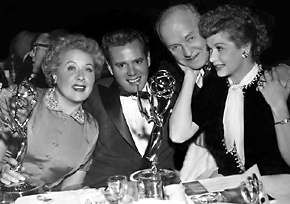
Oppenheimer received two Emmys and seven nominations. His Emmys were for Producer for Best Situation Comedy, I Love Lucy, in 1953 and 1954. He was also nominated for Producer for Best Situation Comedy, I Love Lucy, in 1952 and 1955; for Best Comedy Writer, I Love Lucy, in 1955 and 1956; for Best Single Program of the Year, General Motors 50th Anniversary Show in 1958; Program of the Year, The Danny Kaye Show with Lucille Ball in 1963; and Outstanding Program Achievement in Humor, The Danny Kaye Show with Lucille Ball in 1963.

He was also an inventor with 18 patents. One of his inventions was an in-the-lens teleprompter.

In 1962, Lucille Ball brought a new sitcom to television; however, Oppenheimer sued the show, claiming that Lucy Carmichael was Lucy Ricardo, his character, He received a financial settlement, and the character was changed, but unfortunately, it ruined the friendship between Oppenheimer and Ball.

The Oppenheimer family lived on Burlingame Avenue in Los Angeles. In a funny twist, Jess bought the house from MGM hairstylist Sydney Guilaroff; he was the person who turned Ball into a redhead for the 1943 movie, DuBarry was a Lady.

📷instagram

Jess’s best friends were Mel Blanc, Hans Conried, and Jerry Hausner, who had played Ricky’s agent on I Love Lucy.

In 1988, Oppenheimer had an intestinal surgery; he died shortly after from heart failure. At his death, Lucille Ball said he was “a true genius” and said that “she owed so much to his creativity and his friendship.”

I love hearing stories about people like Jess Oppenheimer and Sheldon Leonard who are creative geniuses and are the influence and inspiration for so many of the classic television shows.

Having a “Bawl” with I Love Lucy

This month we are learning to love Lucy. We have looked at the career of Lucille Ball, and today we are taking a peek back at the well-loved sitcom, I Love Lucy.

📷pinpage.com

The show starred Lucille Ball, Desi Arnaz, Vivian Vance, and William Frawley. The series featured a young housewife, Lucy Ricardo, who lived with her husband Ricky, a nightclub bandleader. Their landlords, Fred and Ethel Mertz, were also their best friends. Lucy and Ethel get involved in a variety of schemes to get into show business. Lucy relies on Ethel and Fred who were in vaudeville earlier in their career. Eventually Lucy and Ricky have a son which coincided with the birth of their son Desi Jr. Lucy and Ethel try Desi’s patience often with their antics. When he gets upset, he starts speaking Spanish. Fred doesn’t have much time for the women’s plots either. After living through the Depression, he is considered cheap and doesn’t tolerate nonsense. In season six, the quartet move to Connecticut.

In 2012, ABC News and People did a joint survey, listing I Love Lucy as the Best TV Show of All Time.

The theme music was composed by Eliot Daniel with lyrics by Harold Adamson.

The show had three directors: Marc Daniels was director from 1951-53; William Asher, who would later produce Bewitched among other shows, was director from 1952-57, and James V. Kern directed 39 episodes from 1955-57.

Jess Oppenheimer was producer for the first 153 episodes; Desi Arnaz was executive producer for the first 124 episodes and producer for the final 26.

Oppenheimer was credited with writing for seasons 1-5, Madelyn Pugh Davis and Bob Carroll Jr. assisted him.

📷📷wikipedia.com Best Friends

Lucille Ball had been starring in “My Favorite Husband” on the radio and in 1950, CBS wanted her to transition to television. Richard Denning had been her costar on the radio, but now she wanted to do a series with her real-life husband, Desi Arnaz. CBS did not think visitors would buy in to Lucy, the all-American girl, married to a Cuban musician. To prove them wrong, Lucy and Desi created a vaudeville act written by Carroll and Pugh that they performed with Arnaz’s orchestra in New York. The act was a big hit, so Harry Ackerman approved the couple doing the show.

The pilot was ordered in 1951. Oppenheimer, Pugh, and Carroll also made the move from radio to television. Philip Morris decided to sponsor the show. Ball wanted to continue her film career along with television show which was set to air biweekly. Philip Morris wanted the show to air weekly, and they wanted it filmed in New York. Because Lucy and Desi were expecting their first child, they wanted to stay in Hollywood. The couple agreed to reduce their pay by a $1000 a week in order to stay in California and cover the additional expenses of filming. They asked for 80% ownership in the films, with the remaining 20% going to Oppenheimer who shared 5% with Pugh and 5% with Carroll. Desilu (combining Desi and Lucy) became their production company.

The couple hired Carl Freund, who had worked on many big-screen movies, to film the show. He uniformly lit the set so all three cameras would pick up the same quality of the image. He also pioneered “flat lighting,” which lit everything with bright lights to get rid of shadows. The three-camera method became the standard sitcom technique.

📷rottentomatoes.com

A live audience produced a more authentic laugh than the canned laughter some shows used. Both Desi and Lucy’s mothers’ laughter can be detected in these early episodes.

When Lucy needed some rest after having her baby, the company could not finish their 39-episode commitment, so Oppenheimer and Desi decided to rebroadcast some of their favorite episodes instead. This out-of-the-box thinking proved to be so popular that it eventually led to the syndicated market.

When Lucy decided to transition her show from radio to television, Gale Gordon and Bea Benaderet were offered the roles of Fred and Ethel. However, both of them were already transitioning from radio to other televisions series. Gordon had already committed to Our Miss Brooks and Benaderet had agreed to star in The George Burns and Grace Allen Show.

The role of Ethel was then offered to Barbara Pepper, who was a good friend of Lucy’s. However, she was known to have a drinking problem; Wiliam Frawley also was a heavy drinker, so the production staff did not feel comfortable having two cast members with alcoholic issues, so the offer to Pepper was rescinded. Pepper would appear quite often in I Love Lucy and eventually she settled in Hooterville, married to Fred Ziffel.

📷pinterest.com

Frawley never appeared drunk during filming or caused any problem on the show. I did think it was funny though that he had a clause in his contract that he did not have to film when and if the New York Yankees were in the World Series. They made it to the big show every year the series ran except for 1954.

Mary Wickes was then offered the role, but she was afraid working with Lucy would harm their friendship. Director Marc Daniels suggested Vivian Vance who was performing in “The Voice of the Turtle.” Oppenheimer and Arnaz went to watch her performance and hired her on the spot. Lucy was not thrilled with the idea of Vance. She thought she was prettier than her vision of what Ethel would look like. Vance was only two years older than Ball, but the producers agreed to dress her in frumpier clothing. Eventually Ball and Vance became good friends. Vance was the first actress to win an Emmy for Outstanding Supporting Actress. When I Love Lucy ended, Ball asked Vance to star in her new series, The Lucy Show.

Unfortunately, Vance and Frawley never warmed to each other the way she and Lucy did. They barely tolerated each other, although they were both always professional on the set.

Lucy and Desi had several miscarriages and when they were able to sustain a pregnancy which resulted in daughter Lucie, they filmed Lucy without ever mentioning that she was pregnant. The sponsors thought it would be in poor tasted to talk about pregnancy. However, in the second season, they were pregnant once again, and the pregnancy was written into the show. They had to use the word “expecting” when talking about the baby. The episode “Lucy Goes to the Hospital” in 1953 was watched by almost 72% of families with televisions, the highest rating for quite some time. It was surpassed by Elvis Presley’s first appearance on The Ed Sullivan Show.

The show was on for from 1951-1957 on CBS, resulting in 180 episodes.

I Love Lucy aired on Mondays for its first run. In 1967 the network began offering the show in syndication and it has never been off the air.

📷pinterest.com

I Love Lucy was nominated for Best Comedy/Sitcom in 1952, 1953, 1954, and 1955, winning in 1953. Ball was nominated for Best Comedienne in 1953-1958, winning in 1953 and 1956. Vance was nominated for Best Supporting Actress in 1954, 1955, 1957 and 1958, winning in 1954. Frawley was also nominated for his role in 1954-1958. He never won but he lost to some great actors including Art Carney and Carl Reiner. Only Arnaz was denied a nomination for his comedy skills.

In 1957, Lucille Ball decided to end the show. She and Desi created a new show that wasn’t really new. It took the four main characters from I Love Lucy and moved them to Connecticut. Arnaz changed the format and length of the show, now an hour long, because he said he wanted to change it up before people got tired of the characters. He said this format kept the cast intact but also allowed for a celebrity guest star for Lucy to meet in every episode. In 1960 the show ended, the same year the couple’s real life marriage ended.

Unfortunately, the couple’s marriage dissolved in 1960, and in 1962, Lucy bought Desi’s shares of Desilu becoming the sole owner. She sold the company to Gulf+Western who owned Paramount Pictures.

We all remember the merchandising that accompanies shows in the sixties and seventies like dolls, board games, lunch boxes, etc, but I Love Lucy had more than its share of memorabilia. In 1952 a baby doll was released. Believe it or not, you could purchase an I Love Lucy bedroom set for $199 in the fifties, as well as I Love Lucy his and her pajamas.

The way it ended, I Love Lucy never had a proper finale. I wish I had the time to devote to how much this show changed the course of television, but a weekly blog just can’t contain as much history as there is to tell. I’m sure Lucy would be amazed if she knew that more than seventy years after the show began, we are still watching it and talking about it. Legacy doesn’t get any better than that.

Sisters at Heart: A Gift to Bewitched and Its Fans

This month we are looking at stories about some unique television writers. Today we are looking at a large group of writers who were lucky enough to write an episode for Bewitched.

Photo: wikipedia.com

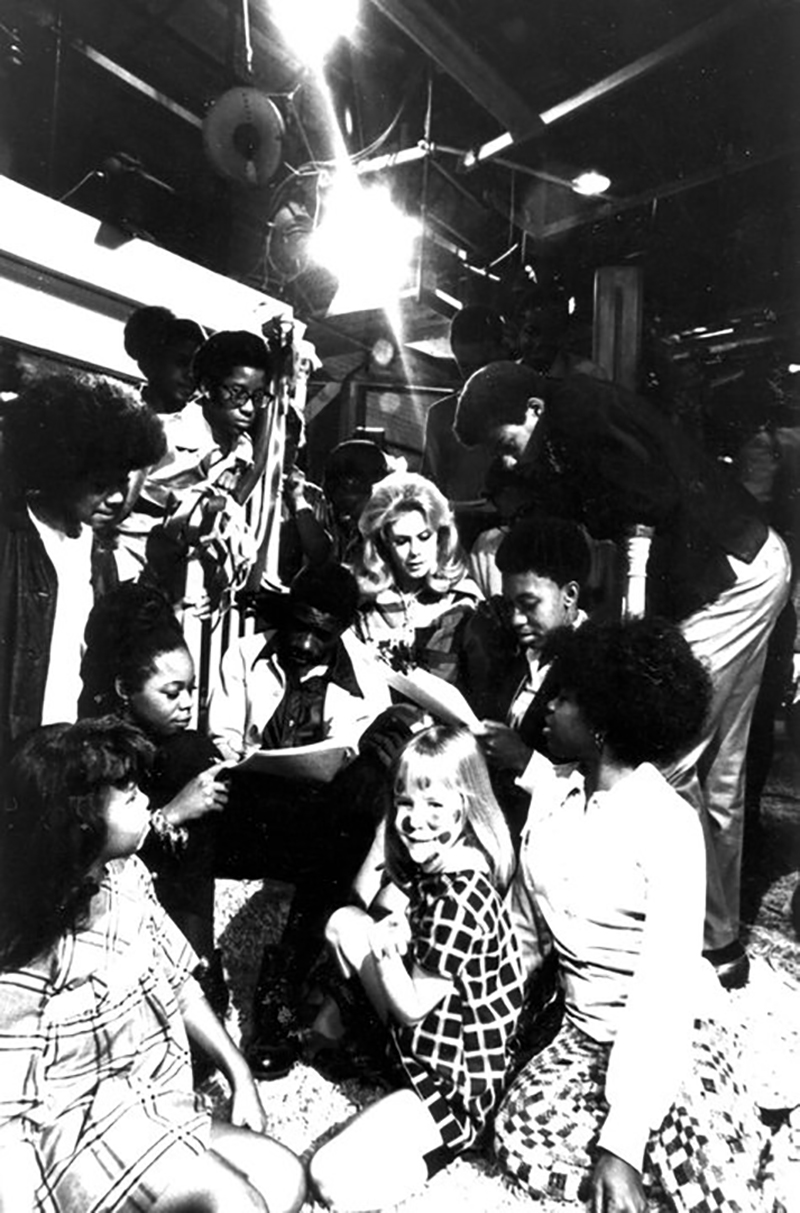
In 1969, Marcella Saunders, a young teacher at Jefferson High School in Los Angeles realized that her freshmen students were not able to read the short stories and poetry in their textbooks. She decided to try to teach them about writing using a television series. Her students were fans of Bewitched, Room 222, and Julia so she contacted the studios for each program. Bewitched was the only show to respond to her.

Saunders was able to meet with star Elizabeth Montgomery and her husband William Asher who produced and directed the show. She said most students at the school were unable to read, write, or comprehend at a high school level; 44% of students read at a third-grade level and less than 1% were at their ninth-grade level.

elizabeth-montgomery-bewitched
Photo: closerweekly.com

The Bewitched cast and crew invited the 26-member class to visit the set of Bewitched, and they paid for the transportation of the class from school to the studio. The students were impressed with their tour and decided to collaborate on a teleplay for the show with their teachers’ supervision. They wrote a script titled “Sisters at Heart” and presented it gift-wrapped to Montgomery and Asher. Montgomery and Asher were impressed with the quality of the script. Elizabeth said, “We’ve had bad scripts submitted by professional writers that weren’t as well written or creative.”

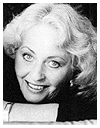
Barbara Avedon - Alchetron, The Free Social Encyclopedia
Barbara Avedon
Photo: alchetron.com

Asher said the script only needed a little bit of reworking and asked Barbara Avedon if she would work with the class. Avedon, who had written for a variety of shows including The Ann Sothern Show, The Donna Reed Show, Bewitched, and Cagney and Lacey, agreed. She visited the school and described the scene she entered upon: “I was horrified. Locker doors were hanging off their hinges. There wasn’t a blade of grass in sight.”

Avedon said that she explained that they had to expand the script to fit a full half-hour. She promised the kids that no changes would be made without their approval. To work with industry requirements, the final script credited the teleplay to Avedon and Asher and the story to the students who were all listed in alphabetical order. Asher produced and directed the episode.

The class was able to attend a production and rehearsal meeting. The State of California gave the high school a grant to allow students to participate in the filming and post-production work. Screen Gems, along with Montgomery and Asher individually, also contributed to the funding. Two additional trips were planned, allowing fifty students to visit the set. Asher sent 30 copies of the script to be used in classrooms.

Saunders considered the project a great success. She said kids who thought they could not write were now writing three pages of script. One of Dick Sargent’s favorite memories of the show was one of the high school students who was given the role of assistant director. At one point, the kid screamed “Quiet on the set.”

The show became the thirteenth episode of season seven; it aired December 24, 1970 and was rerun around Christmas 1971. Montgomery introduced the episode by telling viewers that it “evoked the true spirit of Christmas . . . conceived in the image of innocence and filled with truth.”

Photo: pinterest.com

So, what was the episode about? The concept is that Tabitha’s (Erin Murphy) friend, Lisa Wilson (Venetta Rogers), was visiting. Lisa is African American and Tabitha is Caucasian. Tabitha is excited that they get to spend a few days together and says they will be sisters. Lisa’s father Keith (Don Marshall) works with Darrin (Dick Sargent) at McMann and Tate. Darrin fails to land a million-dollar advertising account with a toy company owned by Mr. Brockway (Parley Baer) because Brockway is racist and when he stopped by the house, he assumed Lisa was Darrin’s daughter and his wife was Lisa’s mother Dorothy (Janee Michelle) because Lisa mentioned her father worked at the agency.

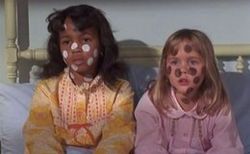
Samantha (Elizabeth Montgomery) takes the girls to the park and when they announce they are sisters, another kid tells them they can’t be sisters because they have different skin colors. Tabitha creates a spell so that both girls have spots in the other’s skin tone. When Samantha finds the girls, she tells Tabitha to reverse the spell. She can’t, and Sam realizes that Tabitha wants the spots to remain subconsciously so they can be sisters. She explains to the girls that their appearance does not prevent them from being sisters, so Tabitha is able to reverse the spell before Lisa’s parents arrive.

In the meantime, Mr. Brockway tells Larry Tate (David White) that he wants Darrin removed from the account. When Darrin and Sam host a Christmas party that Lisa’s parents are at, everyone is introduced and Mr. Brockway realizes Darrin is married to Samantha. Mr. Brockway says to put Darrin back on the account, but when Larry learns he originally removed him because he thought he was married to a black woman, Larry tells him they don’t want his business. To teach Brockway a lesson, Samantha puts a spell on him so he sees everyone, himself included, with black skin. Realizing how unfair he has been, Mr. Brockway returns to the Stephens to apologize and is invited to Christmas dinner, which is an integrated turkey, white and dark meat.

Elizabeth And Husband William Asher - Elizabeth Montgomery Photo (7716361)  - Fanpop
Photo: fanpop.com

Montgomery always mentioned this episode as her favorite. Of course, the entire series was about overcoming prejudice but it was witches who were stereotyped. The episode received The Governor’s Award at the Emmy Awards in 1971.

I love this story at so many levels. How great that a teacher cared enough about her students to think outside the box to help them learn to read and write, and that Montgomery and Asher cared enough about the kids to give them such an amazing opportunity. I would love to know if any of those students ended up writing for a living. What a fun experience! And what a great Christmas message. 

December Bride “Springs Into Action”

Today we get to spend some time learning about one of the earliest sitcoms, December Bride, which aired on CBS from 1954-59. It began life as a radio show in 1952.

Cast of December Bride–Photo: tumbral.com

The show was created by Parke Levy who wrote the episodes as well and claimed to base Lily on his own mother-in-law. He owned 50% of the program; Desilu, producer, owned 25%; and CBS owned 25%. Harry Morgan said he liked Desi Arnaz very much. They cast rarely saw Lucy and saw Desi frequently but not in a negative way; he just might show up to see how things were going. (As an aside, I remember an interview with Bob Schiller, who wrote for this show along with many others, loved the name of “Parke Levy” and said it sounded like a Jewish housing development in New York.) Levy also wrote the film scripts for My Friend Irma and My Friend Irma Goes West.

Spring Byington and Frances Rafferty–Photo: vintagetvandmore.com

One fun fact is that both Fred de Cordova and William Asher were directors for this sitcom. Both would go on to long careers; de Cordova would produce The Tonight Show and Burns and Allen, direct My Three Sons, and both produce and direct for The Jack Benny Show. Asher would go on to direct I Love Lucy and Alice and both produce and direct most of the Bewitched episodes.

Spring Byington–Photo: pinterest.com

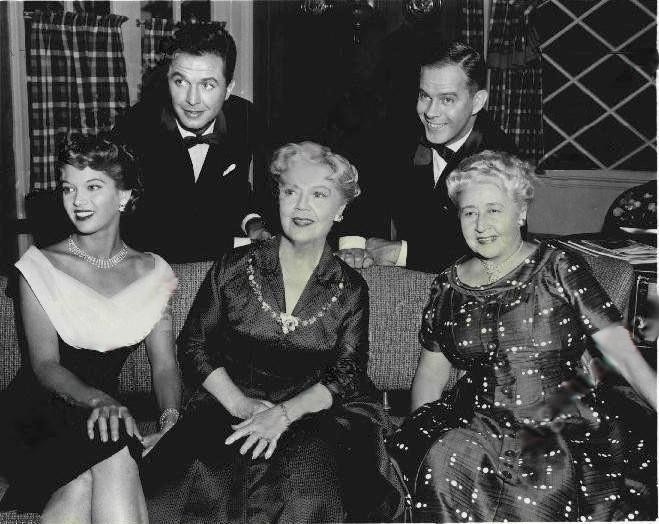
Spring Byington starred as Lily Ruskin, a lively widow who was looking for the right man.

Dean Miller and Frances Rafferty–Photo: pinterest.com

She lives with her daughter Ruth Henshaw (Frances Rafferty) and son-in-law Matt (Dean Miller) who help her in the search, as does her best friend, Hilda Crocker (Verna Felton).

Lily stays busy writing an advice column for the LA Gazette, “Tips for Housewives.”

Verna Felton–Photo: upperjacksonco

Pete Porter (Harry Morgan) is her next-door neighbor who also shows up often. (Next week we will learn about his spin-off from this show, Pete ‘n Gladys.) Pete enjoyed watching Matt and Lily’s interactions which he viewed as positive, unlike his relationship with his mother-in-law which he viewed negatively.

A lot of guest stars showed up including Jack Albertson, Morey Amsterdam, Desi Arnaz, Edgar Bergen, Madge Blake, Barbara Eden, Zsa Zsa Gabor, Nancy Kulp, Fred MacMurray, Howard McNear, Isabel Randolph, and Mickey Rooney

Harry Morgan–Photo: wikimedia.com

The scripts seemed about what you would expect for this era. In one of the funniest shows, Lily fails to deliver plans for Matt and as a result, Desi Arnaz’s family room collapses. In another one, Lily arranges for Pete to take riding lessons because his fear of horses is standing in the way of him earning a huge commission selling insurance to a wealthy ranch owner.

The gold standard for this decade seems to be Ozzie and Harriet Nelson’s show and the writing doesn’t measure up to that but seems like a fun show to watch.

Maxwell House Coffee was their sponsor for the entire run of the show.

The show was on Monday nights after I Love Lucy and had top-ten ratings for the first four years. For season five, the network moved it to Thursdays, where it was up against Zorro and The Ed Wynn Show. Ratings declined significantly, and it was cancelled. Fans have noted that the last season’s scripts were not as well written and the show had probably run its course.

Harry Morgan discussed the show for the Academy of Television interviews. He said it was a nice show to work on; he described it as “fluffy and light” and “typical for the time.” He said he enjoyed doing the show, all the cast was wonderful, especially Spring who was an amazing actress, and he became good friends with Dean Miller and Frances Rafferty. He said that it was a well-done show and he had a lot of fun during those five years.

I watched the episode about Desi’s family room caving in. Morgan’s description was pretty accurate. The show might not present deep philosophical moments, but it was well written. One of the bright spots was Desi’s butler played by Richard Deacon. I can certainly think of worse ways to spend a few hours than watching several of these classic television episodes.

Double Trouble: The Patty Duke Show

The Patty Duke Show was one I always enjoyed, but it was never a “must watch” for me. I think I viewed it as a show that was “good” because it wasn’t “bad.” I decided it was time to give it a more in-depth exploration.

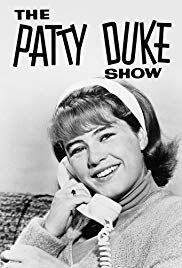
Photo: imdb.com

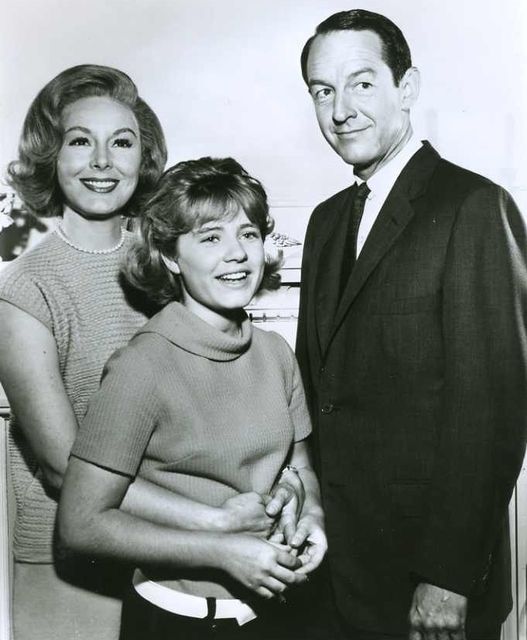
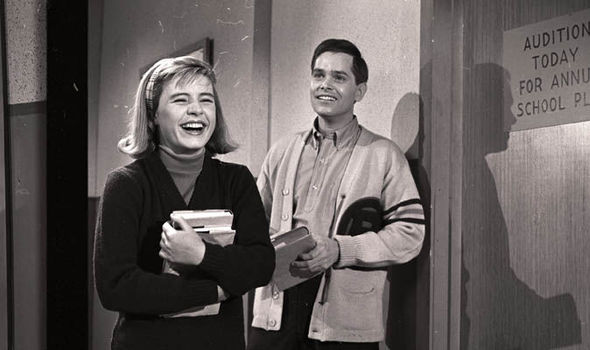
Patty Duke began her television and movie career in the mid-1950s. She appeared on a handful of shows in that decade. In 1962 she took on her Oscar-winning role of Helen Keller in The Miracle Worker. The following year she received her own television series at age 16. The show would continue until 1966, producing 105 episodes.

Patty not only starred in the show as Patty Lane, but she was also Cathy Lane, Patty’s identical twin. The girls’ fathers are not only brothers but identical twins, hence the look-alike cousins. Although they look the same, they have very different personalities. You can tell them apart because Patty’s hair is usually flipped up while Cathy has a more sophisticated hairdo, usually curled down. Patty was chatty and a typical New York teenager who loves rock and roll. Cathy is more cultured and loves the ballet and classical music. Patty gets herself into some big misadventures and Cathy usually bales her out.

Photo: youtube.com

The plots were situations that were likely to happen to a teenager in the sixties. For example, Patty wants to buy a new dress, so she starts a babysitting service that goes awry; Patty falls in love with her French teacher; or after school the kids eat a cake, only to find out it was for a contest. The three of them bake a replacement without their parents realizing what happened.  There were also episodes that could only involve twins. In one show, Cathy accidentally is given a shot for Patty. Cathy has a bad reaction to it and must miss the school dance. Patty decides to go to the dance with Cathy’s boyfriend as “Cathy” so her relationship with the boy continues.

Patty’s double is Rita McLaughlin Walter. She usually was seen only as “the back of a head” and at times you can see her as a background character. Rita continued her acting career and was seen in As The World Turns from 1970-1981.

Having a star with a dual role was challenging at the time. Special effects were not very high-tech in the mid-1960s. When Duke played both characters in the same frame, a split screen was used.

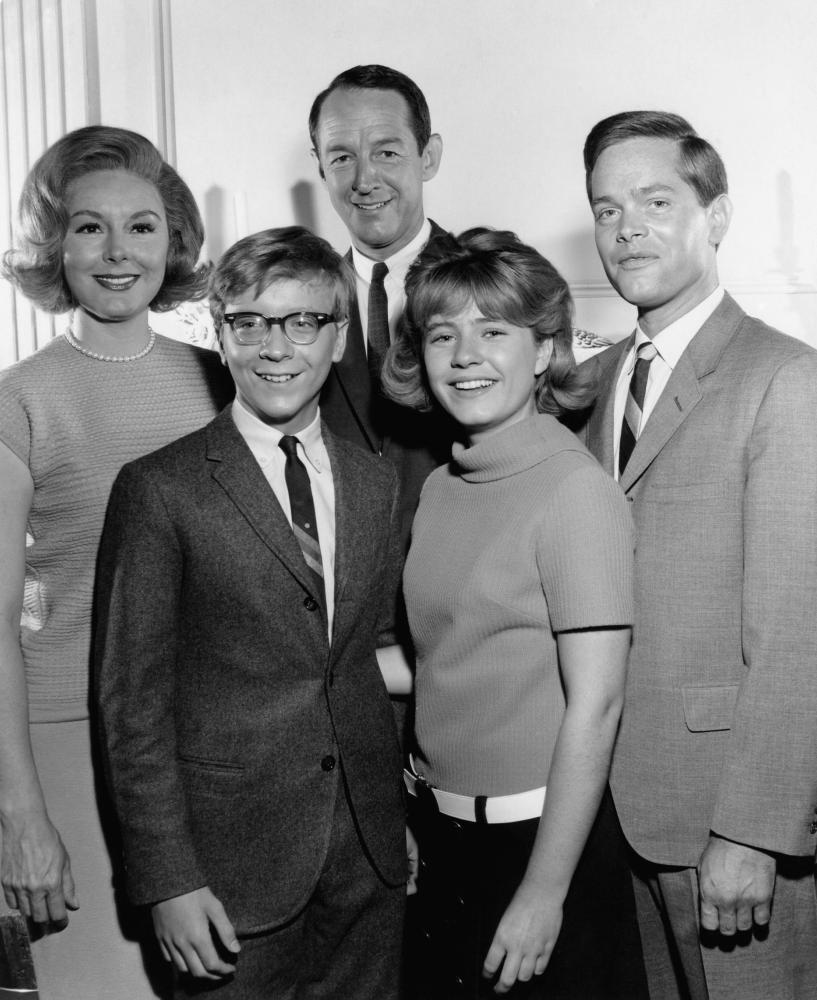
With Cathy’s family in Europe, she is sent to New York to live with her aunt and uncle, Patty’s parents are Natalie (Jean Byron) and Martin (William Schallert). Martin manages a newspaper. Patty has a younger brother Ross (Paul O’Keefe) and a boyfriend Richard (Eddie Applegate).

THE PATTY DUKE SHOW, (l-r): Jean Byron, Paul O”Keefe, William Schallert, Patty Duke, Eddie Applegate, 1963-66

ABC wanted to feature Duke in her own show but didn’t have a concept. The show’s creators were Sidney Sheldon and William Asher. (Sheldon would go on to create I Dream of Jeannie and Asher would was the producer for Gidget and Bewitched with his wife Elizabeth Montgomery.) Patty spent a week with the Sheldon family so Sidney could observe her. Sidney said he felt she almost had a dual personality and that gave him the idea to have the identical cousins. Asher and Sheldon wrote most of the episodes.

Because Patty was a minor, the show was filmed in New York City where child labor laws were more liberal than in California. The taping took place at Chelsea Studios in Manhattan. When Duke turned 18 in the last season, the entire production was moved to California, even though Duke preferred to stay in New York.

Photo: dvdtalk.com

The theme song, “Cousins,” was sung by the Skip Jacks, the same group that sang the theme for The Flintstones. At the time, Stella Stevens, a future actress, was part of the group. The lyrics captured the opposite personalities the cousins had. The song was composed by Sid Raimin and Robert Wells. The lyrics are:

Meet Cathy, who’s lived most everywhere,

From Zanzibar to Barclay Square

But Patty’s only seen the sight

A girl can see from Brooklyn Heights

What a crazy pair!

But they’re cousins,

Identical cousins all the way

One pair of matching bookends,

Different as night and day

Where Cathy adores a minuet,

The Ballet Russes, and crepe suzette,

Our Patty loves to rock and roll,

A hot dog makes her lose control

What a wild duet!

Still, they’re cousins,

Identical cousins and you’ll find,

They laugh alike, they walk alike,

At times they even talk alike

You can lose your mind,

When cousins are two of a kind

When asked what she did to give each cousin her own personality, Duke said, “it was to eliminate certain behaviors for each character. For instance, Cathy never talks with her hands. Patty always talks with her hands. Cathy would never wear ruffles, because they weren’t dignified. Patty would wear anything that was hot for a minute. But it was hard to get a whole person for each of them.”

Photo: boringoldwhiteguy.blogspot.com

Patty said although she played a typical Brooklyn teen, she was not one. She lived a very isolated life. Her managers were very strict and may have been abusive. She lived with them and worked most of her childhood. When she had to do a teenage dance, they needed to bring in regular kids to show her.

The show did well in the ratings every year it aired. However, ABC decided to get rid of all their black and white shows and replace them with color production. United Artists asked for a lot of money to make the change and the network decided it would be cheaper to acquire a new show rather than spend a lot of money moving from black and white to color on this show, although there may have been more factors to the decision. Patty was trying to terminate her relationship with her managers once she became a legal adult. Patty also suffered from mental health issues but at this time didn’t realize what was going on. Later she would be diagnosed with bipolar disorder.

The series went into syndication almost immediately and continued into the 1970s. In 1988, the show debuted on Nick at Nite where it stayed until 1993. Currently it is on and off ME Tv’s schedule. DVDs were released in 2009 and 2010.

Photo: pinterest.com

Although the show ended in 1966, in 1999 a tv movie was filmed, The Patty Duke Show: Still Rockin’ in Brooklyn Heights. All the original characters returned. We learn that Patty and Richard had gotten married and had a son who is also married with a daughter. Patty and Richard are divorced when the movie begins but reconcile at the end. Cathy lives in Scotland with her teenage son; she is a widow. The plot is a standard one. Patty is a drama teacher at Brooklyn Heights High School and her old nemesis Sue Ellen wants to raze it and put up a mall.

Photo: youtube.com

The 1999 movie was not Patty Lane’s last appearance, however. In 2009, Duke starred in a Social Security public service announcement (psa) as both Patty and Cathy. Though Jean who played her mother passed away in 2006, Schallert and reprised his role for a second Social Security psa.

Photo: littlethings.com

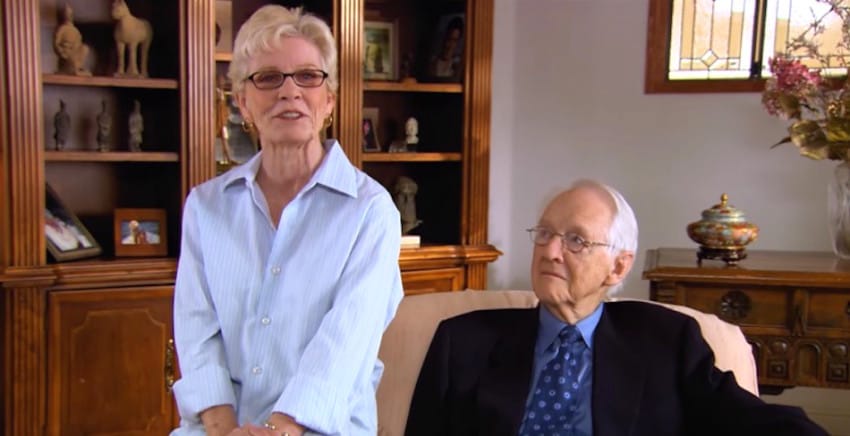
Duke always remained close to her “father” and “brother.” She said Schallert was the “dad I never got to spend time with.”  “He has always been able to make me laugh until I had to spit up. He was also a solid figure to me.” She also revealed that “the family we created in the show was very much a family. That was my safety zone.”

Photo: forums.tcm.com

The Patty Duke Show was a solid show. Like The Donna Reed Show, it captured a slice of life in the 1960s. Patty received an Emmy nomination in 1964 and a Golden Globe nomination in 1966.

Photo: pinterest.com

Sadly, Patty told a story later in life that she was not able to watch the show when she was acting on it. One day when she was visiting her husband at a military base, she was in the waiting room, clicking through tv channels for something to watch and there she was on the screen. It must have been a very strange feeling to see yourself looking happy and normal at a time that was sad and confusing.

Photo: express.co.uk

Since the cast was so close, they provided Patty some normalcy and security in a life that was anything but most of the time. The show is about a typical teenager played by a teenager.  It should have been Duke’s easiest role, yet it was one of her toughest, because she had never experienced a normal life. While that is sad, I’m happy she was able to find a safe haven for a time with the Lane family.

The Teacher We All Wished We’d Had: Our Miss Brooks

We kicked off the month looking at the successful transition of Burns and Allen from radio to television.  There were many shows that couldn’t make the leap to the small screen, and several that did very well like The Jack Benny Show and I Love Lucy. Our Miss Brooks not only had a successful radio show, but when their television show debuted, the radio show kept going. Many of the cast members starred in both mediums. In addition, they made it to the big screen with a movie and a comic book.

brooks6


So, what enabled Our Miss Brooks to do what many shows could not?  Let’s look a little closer at the series and the behind-the-scenes work that kept the show on the air for four seasons, producing 130 episodes.

brooks8

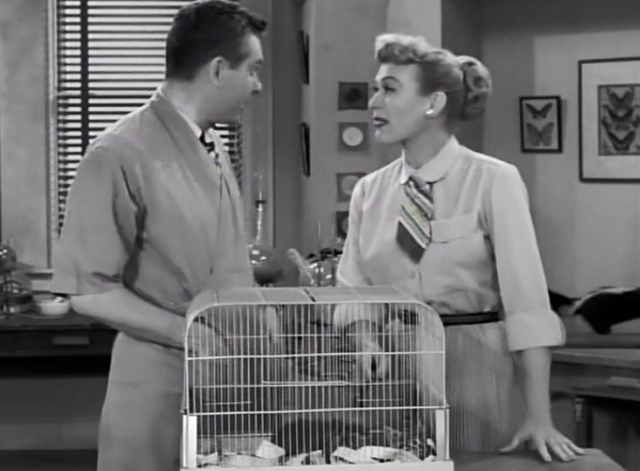
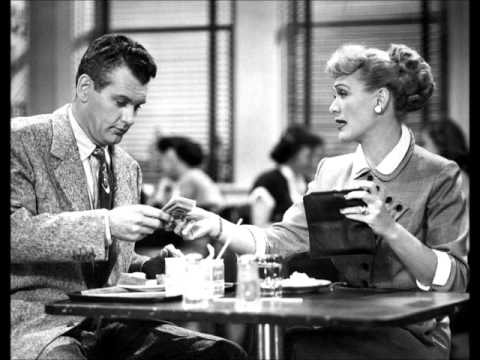
Connie Brooks (Eve Arden) is an English teacher at Madison High. She and her principal, Mr. Conklin (Gale Gordon), do not always see eye to eye, but she is close to his daughter Harriet and Harriet’s boyfriend Walter (Richard Crenna) who gives Miss Brooks a ride to school. She wants to be close to Mr. Boynton (Robert Rockwell), the science teacher, but he is oblivious to her charms. She rents a room from Mrs. Davis (Jane Morgan) where she lives with Mrs. Davis’s cat, Minerva.

brooks5


We also get to know Fabian “Stretch” Snodgrass (Leonard Smith), basically a “dumb jock” who is Walter’s best friend and Daisy Enright (Mary Jane Croft), another English teacher who is Connie’s love rival for Mr. Boynton.

The show debuted July 19, 1948 on the radio. The show program was sponsored by Colgate-Palmolive-Peet for its entire run which ended in 1957. The first choice for Miss Brooks was Shirley Booth, and the show was titled “Our Miss Booth.” In Gerald Nachman’s book Raised on Radio, he states Booth concentrated too much on the disadvantages of being a school teacher to be funny. There is an audition with her from April of 1948 and while she sounds pleasant, she doesn’t have the sarcastic wit of Arden. The television show began in 1953 and was sponsored by General Foods.


brooks12

Our Miss Brooks was a ground-breaking show featuring a single woman (teachers were usually single, and marriage might have ended her career). She was not a scatterbrained female like Lucy or Joan in I Married Joan, and she was not a housewife like June Cleaver or Donna Reed. She was a bright, attractive working woman. Eve remembered her third-grade teacher fondly and tried to give Miss Brooks some of her qualities. Eve was known for her sassy movie roles; one of the things she appreciated about the character of Connie Brooks was that it allowed her to be a warm, fun-loving person who had a self-deprecating side.

brooksa

The show was a Desilu Production, so they shared equipment and crews with I Love Lucy, as well as a director (William Asher) at times, to save money.

The show was funny because it is based on believable characters. Connie Brooks has a great sense of humor. Many of the plots involve misunderstandings or her trying to keep Walter out of trouble with Mr. Conklin. Here are a few episode summaries.

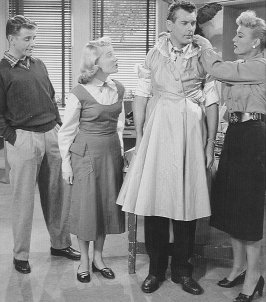
Miss Davis unknowingly uses school funds to buy Connie a new dress. Now Connie must sell the dress to return the money. Mr. Boynton even models the dress for the kids.

brooks7


Mr. Boynton asks Connie to play the role of Mrs. Boynton. She is thrilled,  imagining what it could lead to, until she realizes he meant his mother, not his wife.

Walter is listening to his home-made radio. Storm warnings come over the air for Bombay. Miss Brooks mistakenly thinks it is for their area and takes precautions to evacuate the school and prepare for a hurricane.

Mr. Conklin is furious when his bike is taken at the grocery store, and he wants the thief punished. Miss Brooks finds out that a poor boy borrowed it for his birthday and then returned it to the store. She goes to great lengths to protect the youngster.

brooks4


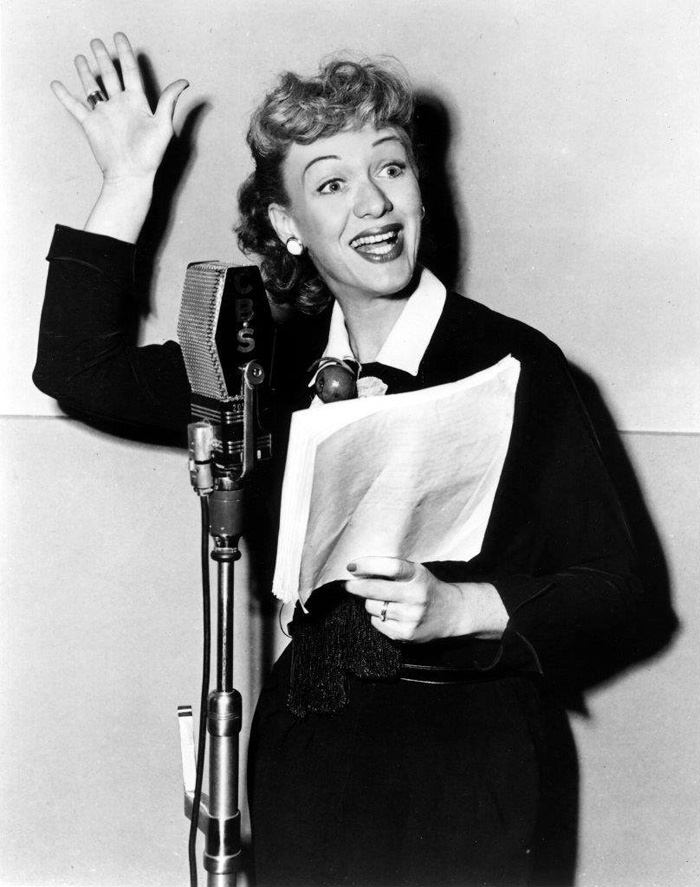
Radio Mirror magazine nominated Eve Arden as the top-ranking comedienne two years in a row for her characterization of Miss Brooks. The National Education Association recognized her for her sympathetic portrayal of teachers.

brooks3


Eve Arden was nominated for an Emmy for Best Actress Starring in a Regular Series in 1954, 1955, and 1956—winning in 1954. Gale Gordon was nominated for Best Supporting Actor in 1955, and the show was nominated Best Situation Comedy in 1954 and 1955.

Image result for images of our miss brooks


Eve Arden had to fight the same battle many celebrities do when they have a hit show. She handled her fame of being known as Miss Brooks with grace and practicality. As she explained it: “I originally loved the theater. I still do. And I had always wanted to have a hit on Broadway that was created by me. You know, kind of like Judy Holliday and Born Yesterday. I griped about it a little, and someone said to me, ‘Do you realize that if you had a hit on Broadway, probably 100 or 200,000 people might have seen you in it, if you’d stayed in it long enough. And this way, you’ve been in Miss Brooks, everybody loves you, and you’ve been seen by millions.’ So, I figured I’d better shut up while I was ahead.”


brooks13

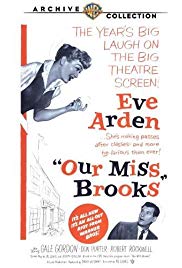
While the TV series never resolved the Boynton-Brooks romance, the 1956 film did. It was directed by Al Lewis, who directed many of the television episodes. In the movie, Miss Brooks is unaware that Mr. Boynton is saving money, so he can ask her to marry him. He is hoping to get a promotion to head of the department. In a subplot, Connie is having issues with a student who is failing her class. He has no friends because he is very arrogant. When she meets his wealthy father, she understands why he has no friends and she tries to help him.  Also, Mr. Conklin is running for Coordinator of Education, primarily to stop the other nominee, Superintendent Stone, who has threatened to fire Conklin. Miss Brooks decides to be Conklin’s campaign manager despite her butting heads with him most of the time. If Conklin wins, Mr. Boynton might be promoted to principal. In the end, Boynton finally proposes, only to have a chimpanzee steal away the ring.


Our Miss Brooks comic. (1956)

The movie was a box-office failure. After the movie, Dell Comics released a comic book titled “Our Miss Brooks.” In past decades, it sold for hundreds of dollars in mint condition. Today it can be found on ebay for under $50.

A fun fact I learned was that Eve Arden was born Eunice Quedens. When she was encouraged to take a different stage name, she looked over her cosmetic jar labels. She picked “Eve” from “Evening in Paris” and “Arden” from “Elizabeth Arden.”

brooks1

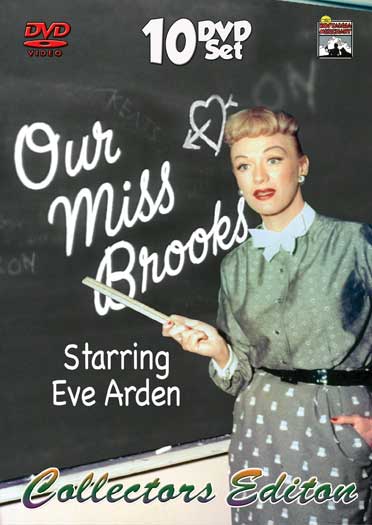
While many of the plots for Our Miss Brooks are predictable and not overly creative, it was a innovative sitcom. The scripts were well written, and the humor still works today. I could not find any channels currently broadcasting Our Miss Brooks, but it does appear on Me TV from time to time. The radio shows can be heard on Sirius Radio, channel 148. Of course, there are a variety of DVDs featuring the show. Add it to your list to understand why Eve Arden was so popular with women in the 1950s.

brooks14