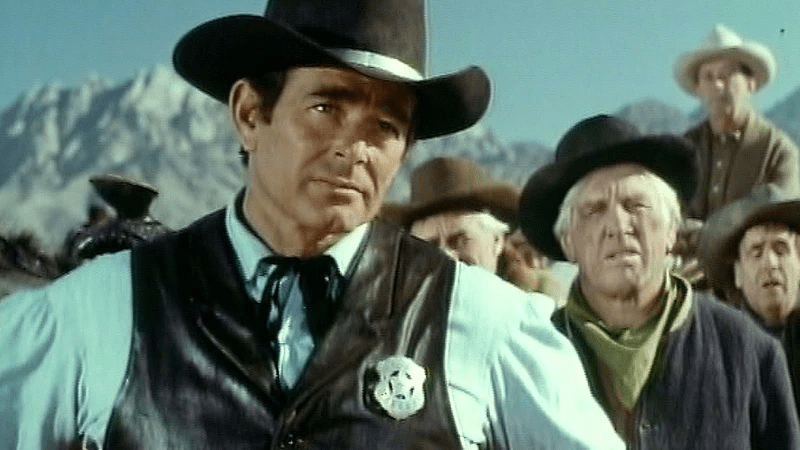
As we wind up our “Go West Young Man” blog series, we turn our attention to CimarronStrip for the last blog of the series. This show was only on the air for one season, from 1967-68. It was produced by the creators of Gunsmoke, America’s most beloved western. Like The Virginian, it was a 90-minute show.
📷mubi.com
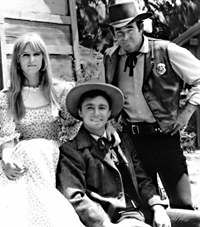
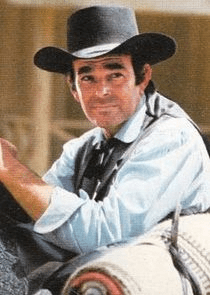
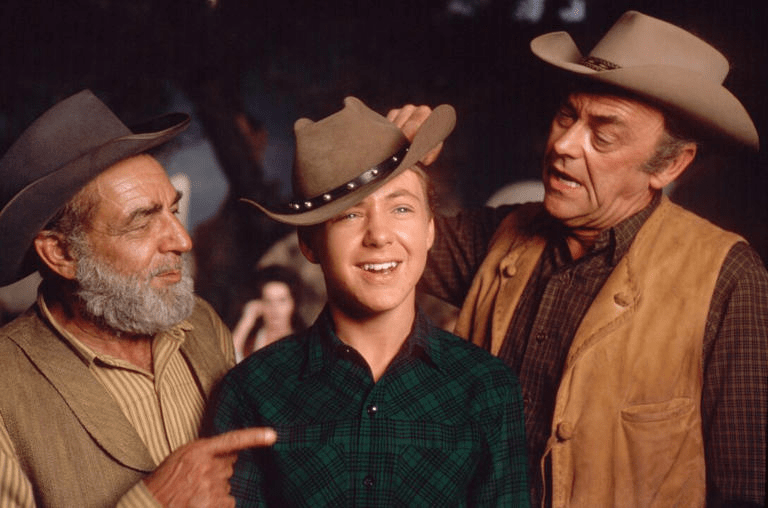
Set in the Oklahoma in 1890, the series occurred in a geographical region called No Man’s Land, an ungoverned area for several decades. Marshal Jim Crown (Stuart Whitman) tries to bring law and order there. Crown arrives only to learn that the sheriff has resigned, and it’s up to him to bring peace to the area with no Army support. We get to know Dulcey Coopersmith (Jill Townsend) who comes to live with her father, but upon her arrival, she discovers he is dead. Her father’s partner MacGregor (Percy Herbert) has let their Wayfarer’s Inn become a bit dilapidated, but Dulcey is determined to bring it back. Marshal Crown stayed there when he was in Cimarron City. Francis Wilde (Randy Boone) often served as Crown’s deputy.
📷pinterest.com
Rounding out the cast is the bartender at the Inn, Fabrizio (Jack Braddock); Major Covington at a nearby Army fort (Andrew Duggan); a Dr. Kihlgren (Karl Swenson); and Hardy Miller (Robert J. Wilke).
The show was on Thursday nights, up against Batman, The Flying Nun, and Bewitched on ABC. It faced Daniel Boone and Ironside on NBC. Definitely some tough competition.
The theme song was composed by Maurice Jarre, who was the scorer for the films Lawrence of Arabia and Doctor Zhivago for which he won two Oscars.
The show never attained the ratings numbers it needed to keep its place on the schedule. From what I have been able to find out, it was well written and well cast. Guest stars kept it interesting, and the scenery was beautifully filmed.
📷tvmaze.com
I’m guessing the main reason the show didn’t make it was just viewer fatigue with the western genre. There were already shows like Bonanza and Gunsmoke which were hugely popular. One more western might just have been one too many, no matter how good it was. In addition to the western series, some of the shows that were on the air when Cimarron Strip debuted included That Girl, Hogan’s Heroes, Mannix, Batman, Lost in Space, Get Smart, and Rowan and Martin’s Laugh In—very different choices than westerns. I do remember Arnold the pig on Green Acres always wanting to watch westerns on television. We still fall prey to this on the major three networks. After ER became popular, the next season featured ten new medical shows. And then most of them get cancelled, not necessarily because they’re bad but because it’s just an overload of medical shows.
Most people don’t want the same supper every night even if it’s steak or lasagna. That said, this seemed to be a steak kind of show, so just because it couldn’t survive the mass onslaught of westerns in the sixties doesn’t mean it’s not worth watching. If you check it out, let me know what you think.
As we get ready to “Go West Young Man,” today our blog series is getting to know the The Virginian (which is sometimes confusing because it was renamed The Men from Shiloh later for part of the series). This series debuted on NBC in 1962. It produced 249 episodes, running until 1971, making it the third longest-running western (Gunsmoke and Bonanza were the top two).
📷wikipedia.com
Lew Wasserman was involved with Universal, and they produced Wagon Train which was on NBC. Universal sold the series to ABC in 1962 after it had been on the air for three years, and NBC was not happy, but Wasserman told them that he had a new show for them, The Virginian.
It was also the first 90-minute western. Like Stagecoach West, it was set in the Wyoming Territory. While the pilot was black and white, the rest of the series was filmed in color.
The series was based on an Owen Wister novel, The Virginian: Horseman of the Plains which was published in 1902.
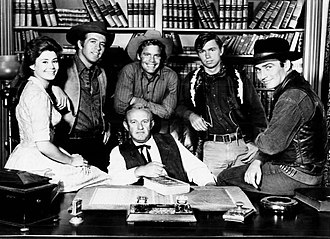
The series featured a foreman at the Shiloh Ranch near Medicine Bow played by James Drury. The foreman was never referred to by his name. Drury once said, “Nobody knows the name of my character, not even me.” His sidekick was Trampas (Doug McClure). Sheriff Abbott (Ross Elliott) also shows up on and off throughout the nine seasons. For the first four seasons, the ranch owner, Judge Henry Garth (Lee J. Cobb) and his daughter Betsy (Roberta Shore) also live there. The cast changed fairly often throughout the series, but Drury and McClure were along for the entire ride.
📷ebay.com
The plots of the show often revolve around themes of prejudice, injustice, being a responsible and hard worker, and standing up for the right thing.
During the final season, the show changed its title, and the series changed quite a bit. There was a new theme song, and it took on more of the character of the popular spaghetti westerns. Stewart Granger and Lee Majors joined the cast. While the ratings increased, the network was intent on cancelling the show, along with the rural purge that happened at that time.
Later when the show was no longer on the air, Drury discussed two of his castmates, one he admired and considered a friend and one he did not! About Grainger who joined the show for the last year, Drury said, “He was a disaster, and I couldn’t stand him. He wanted everything changed to make him the star of the show. . . . He also fired the whole camera crew and hired a new crew for his episodes.” However, on reflecting about his co-star Doug McClure, Drury recalled “off-screen Doug was quite like his character, and you couldn’t help but smile when he walked into a room because he was full of good humor and good spirits all the time. He could cheer anybody up. He became my best friend, and I still miss him terribly—you couldn’t ask for a better co-star.”
As you can imagine, being on the air for nine years meant a lot of guest stars showed up on the series, including Eddie Albert, Charles Bronson, Robert Culp, Joan Crawford, Bette Davis, Patty Duke, Robert Duvall, Harrison Ford, Jack Lord, Lee Marvin, Vera Miles, Leonard Nimoy, Ryan O’Neal, Robert Redford, George C. Scott, William Shatner and Franchot Tone.
📷facebook.com
The Virginian was on Wednesday nights for its entire run. When it began, it was up against Wagon Train on ABC while CBS ran CBS Reports and The Many Loves of Dobie Gillis. Both The Virginian and Wagon Train managed to hit the top thirty that year. The next year, its biggest competition was The Adventures of Ozzie and Harriet followed by The Patty Duke Show. The Nelsons hit the top thirty and The Virginian and The Patty Duke Show were in the top twenty. The show continued to be in the top twenty or top thirty for the rest of its run, hitting the top ten in 1966, despite being on at the same time as many popular sitcoms during those years, including Batman, The Beverly Hillbillies, The Courtship of Eddie’s Father, Gomer Pyle USMC, Lost in Space, MisterEd, and My Living Doll. It was still in the top twenty when it was canceled.
This show is fondly remembered by viewers who tuned it at the time. It’s been in syndication for decades, racking up new generations of fans. In one of his later interviews, Drury talked about the appeal of the show. He said, “People now tell me about their grandkids who discover the show on cable and start watching it. It’s a wonderful feeling to know the show is still viable after all these years.” That alone is reason to be proud of working on this show.
This month we are celebrating, “Go West Young Man” by taking a look at some of the westerns from the fifties and sixties. Up today is Wagon Train. This series debuted on NBC in 1957; in 1962 it moseyed over to ABC for its final three seasons. Lew Wasserman was involved with Universal which produced Wagon Train. When they sold the series to ABC, NBC was not happy, but Wasserman told them that he had a new show for them, The Virginian, which we’ll learn about in two weeks.
📷pinterest.com
The series was very popular, jumping to number one immediately. The plot is that a large wagon train is traveling through the west from Missouri to California. Ward Bond starred as the wagon master Seth Adams (when he died in 1960, John McIntire took over). Robert Horton played scout Flint McCullough; eventually he opted to leave and was replaced by Robert Fuller. Oddly, Horton and Fuller shared a birthday and were six years apart in age.
If I listed all the guest stars during the eight seasons, you would still be reading this next Monday. Just know, there were a lot.
The show was adapted from a 1950 John Ford film titled Wagon Master. In a 1960 episode, John Ford stepped in to direct an episode, “The Colter Craven Story.” One guest star I have to mention in this one was John Wayne. He speaks from the shadows as General Sherman (Wayne’s real name was Marion Michael Morrison, so for this credit, he went by Michael Morris) in this episode.
The original theme song was written by Henri Rene and Bob Russell and conducted by Stanley Wilson. A more contemporary theme accompanied season two, and it changed a few more times during the run of the show.
📷msn.com
The show had a huge budget for the time: $100,000 (about a million in today’s world of television). It was about 40% more expensive than most westerns at the time, and that is part of why it was able to feature so many guest stars.
When Gene Roddenberry pitched Star Trek to the networks, he described it as “a Wagon Train traveling across the universe.” He also hired writer Gene L. Coon who wrote 23 episodes of Wagon Train.
While wagon trains are considered an icon from our history, so was the product of the series’ first sponsor, the Edsel Division of the Ford Motor Co.
The show was an hour long and shot in black and white for the first six seasons. For season seven, the network filmed the show in color and increased the length to 90 minutes. The ratings were still high but didn’t increase, so the network could not justify the changes, and the television show went back to an hour in black and white.
📷dvdtalk.com
The show was placed on Wednesday nights up against Leave it to Beaver and Disneyland. Even with that competition, it was in the top thirty and by its second season, had jumped to the top ten where it stayed until it was sold to ABC. ABC kept the show on Wednesday nights, and it ran against The Virginian, both being in the top thirty in 1962.
So many people have fond memories of this show. It was on six seasons, but I think it was finally cancelled even though it was in the top thirty because of the western overload, ushering in the shows like Get Smart, The Man From UNCLE, Lost in Space, and The Smothers Brothers Show. Check out your favorite guest stars who were on the show and watch those episodes to see what it was like.
This month, our theme is Bam! Pow! Batman Villains. We have learned a bit about the careers of the Joker and Cat Woman, and today we are spending some time with the Riddler, portrayed by Frank Gorshin.
📷imdb.com
Gorshin started out as an impressionist and comedian before transitioning into acting.
Frank was born in Pittsburgh in 1933 into a blue-collar, middle-class family. His mom was a seamstress, and his father was a railroad worker. His paternal grandparents arrived in the US from Slovenia and his mother was born in Slovenia, coming to the Pittsburgh area as a young girl; his parents were very involved in the Slovenian community, both singing with the Preseren, a Slovenian singing society.
When he was 15, Gorshin got a part-time job as an usher at the Sheridan Square Theatre. He studied the mannerisms of the actors he watched in those movies and developed an impressionist act. Some of his favorite actors to mimic included James Cagney, Cary Grant, Al Jolson, and Edward Robinson. After entering a talent contest in 1951, he won a week-long engagement at the Carousel nightclub in New York.
Sadly, Gorshin’s older brother was hit by a car two days before and died. His parents convinced him to keep his performance schedule and sent him to New York.
After high school, Gorshin enrolled at the Carnegie Tech School of Drama (now Carnegie Mellon University).
📷imdb.com
At age 20, Frank was drafted into the US Army and sent to Germany. He was an entertainer in Special Services for a year and a half. When Gorshin left the Army, he began his acting career, appearing in four movies and on television in Alfred Hitchcock Presents.
I can’t imagine the horror Gorshin’s parents felt when getting a call in 1957 that their son had fallen asleep while driving from Pittsburgh to Hollywood, a 39-hour trip for a screen test. With their other son passing away from a car crash six years earlier, now they had to deal with the fact that their other son was in a coma with a fractured skull. Luckily, he made a full recovery.
Another big event occurring in 1957 was his marriage to Christina Randazzo. They had a son and separated later in life, but they never did divorce as far as I could tell.
Until his death, Gorshin would appear in more than sixty big-screen films. During the fifties, he only appeared in a handful of television series, but that would change in the 1960s. Some of the most memorable shows included The Defenders, The Munsters, Star Trek, and The High Chapparal. With his comedy act, he visited The Ed Sullivan Show four times. The first time he did his impressionist act on the series, he would be scheduled with this new band called The Beatles.
📷metv.com
The sixties also found him on Batman, his reason for being in this month’s blog series. He said that he developed a fiendish laugh at Hollywood parties. “I listened to myself laugh and discovered that the funniest jokes brought out the high-pitched giggle that I use on the show. With further study, I came to realize that it wasn’t so much how I laughed as what I laughed at that created the sense of the menace.”
He did not love the unitards that many of the comic book villains wore, so he asked for a green business suit and bowler hat, covered with question marks since he always left riddles for Batman and Robin to solve. He often said “Riddle me this, Batman” which became a catchphrase of the mid-sixties.
Gorshin said “When I was first approached to play the Riddler, I thought it was a joke. Then I discovered the show had a good script and agreed to do the role. Now I am in love with the character.”
📷imdb.com
Gorshin was the only villain to be nominated for an Emmy. He got the nod in 1966 for the episode “Hi Diddle Riddle.” He had some tough competition, going against Werner Klemperer as Colonel Klink on Hogan’s Heroes, Morey Amsterdam on The Dick Van Dyke Show, and winner Don Knotts on The Andy Griffith Show.
Gorshin was in ten episodes of the show, but after appearing numerous times, he was unavailable, and the producers replaced him with John Astin. I realized hindsight is 20/20 as they say, so the producers were never considering the effect the show would have on pop culture and the decades it would be a fan favorite, but that switch seems extreme. However, they did it with Julie Newmar and Eartha Kitt as well, so maybe they figured if you have to replace a villain, let’s replace them with someone very different from the original. Gorshin, however, was not a fan of being replaced but did get over it enough to accept his tenth episode role in season three and appeared as Riddler in the 1979 made-for-television movie Legends of the Superheroes.
Frank made his Broadway debut in 1969 in the musical biography, “Jimmy” which was about the controversial life of New York mayor Jimmy Walker.
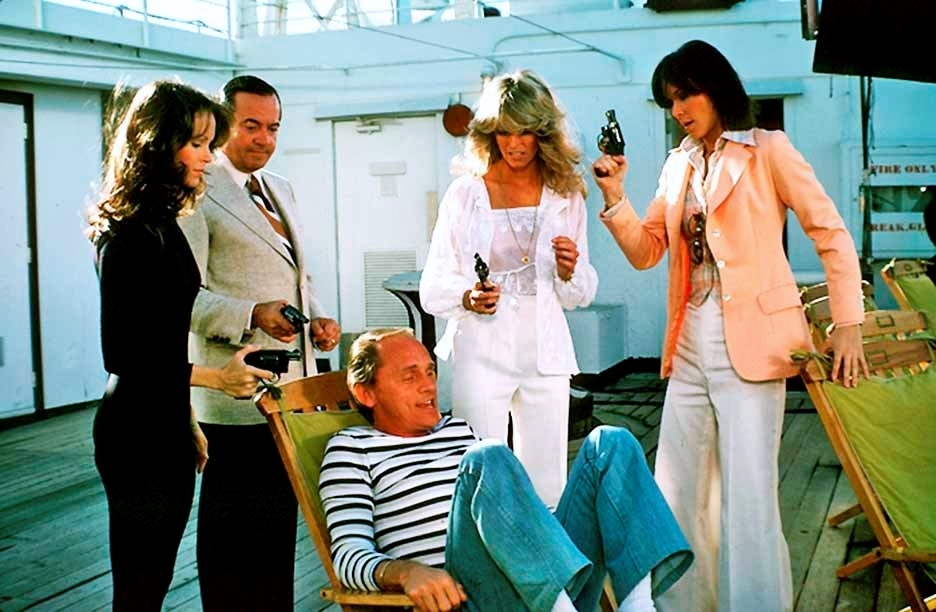
Gorshin was very busy in the seventies and eighties. Among the twenty plus shows he appeared on were The Virginian, Martin and Rowan’s Laugh In, Ironside, Hawaii Five-0, Charlie’s Angels, and Murder She Wrote.
In the last three decades of his life, he spent more time making big-screen films. One thing I found surprising is that Gorshin appeared in three soap operas, all at different times in his career: General Hospital in 1963, The Edge of Night in 1982, and The Bold and the Beautiful in 1999.
In the early 2000s, Gorshin did a one-man Broadway show, portraying George Burns. He was reunited with his Batman cast in a made-for-tv movie, Return to the Batcave: The Misadventures of Adam and Burt. His last appearance was on CSI: Crime Scene Investigation on “Grave Danger” on which he played himself. The episode was directed by Quentin Tarantino and was dedicated to Gorshin.
📷discogs.com
Unfortunately, Gorshin was a heavy smoker throughout his life. Adam West once said that “Frank could reduce a cigarette to ash with one draw” and his nightclub performances warned patrons they would be exposed to a lot of second-hand smoke if they attended. Not surprisingly, he died from lung cancer, complicated by emphysema and pneumonia.
I enjoyed getting to know Frank Gorshin in this blog. While I was much more familiar with the careers of Burgess Meredith and Julie Newmar, Gorshin and Cesar Romero are actors I knew very little about. I hope you are also enjoying getting to know these fun “villains.”
Bam! Pow! It’s Batman Villain Month. We will be looking at the career of an actor who played a Batman baddie every week this month. We are beginning with my favorite, The Penguin, played by Burgess Meredith.
📷pinterest.com
Oliver Burgess Meredith was born in Cleveland, Ohio in 1907. His father was a physician, and his mother was born into a family of Methodist revivalists. Burgess followed his Methodist faith for his entire life. After high school, he enrolled at Amherst College, until 1932 when he became a reporter for the Stamford Advocate. He worked in a variety of jobs while getting started in acting including retail, an editor, a merchant marine, and a runner on Wall Street.
He joined Eva Le Gallienne’s Civic Repertory Theatre in New York City. His Broadway debut was in this company’s “Romeo and Juliet” in 1930. His film debut came in 1935 in Winterset. Later in his career, he would return to Broadway as a director. He shared a Tony Award with James Thurber for their collaboration on “A Thurber Carnival” in 1960, and he earned a Tony nomination for his staging of “Ulysses in Nighttown” in 1974. In the late seventies, he directed Fionnula Flanagan’s one-woman play, “James Joyce’s Women” which toured for several years.
Meredith had more success in acting than marriage. Helen Derby Merrien Burgess was his wife from 1932-1935. His marriage to actress Margaret Perry only lasted two years, ending in 1938.
In 1942, Burgess enlisted in the US Army Air Forces for WWII, reaching the rank of captain. He was discharged in 1945. Meredith married another actress, Paulette Goddard, and they were together from 1944-1949. However, in 1951 he married Kaja Sundsten and they were together until his death.
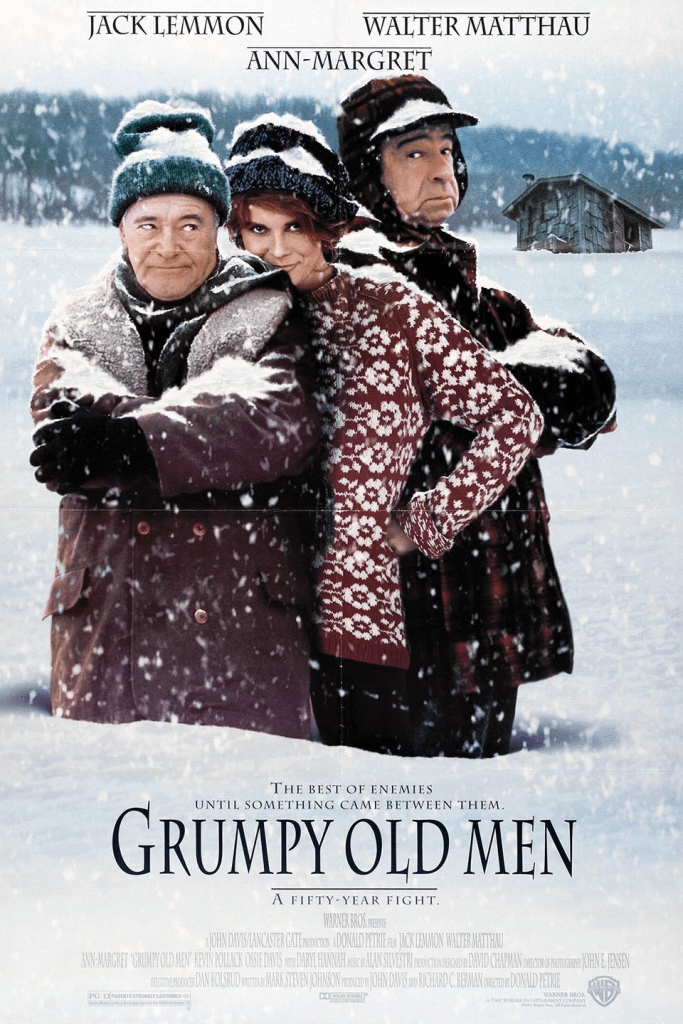
Meredith would appear in 80 movies during his career, as well as a number of made-for-television movies. He might be best known in the past few decades for Grumpy Old Men and Grumpier Old Men in the 1990s.
However, it was television where he found the most acclaim. His first appearances came in 1949 on the Ford Theater Hour and The Silver Theater. Throughout the fifties he continued receiving offers for theatric roles on these types of programs. During the early sixties, he was everywhere. You could catch his appearances on dramas such as The Naked City, Ben Casey, The Twilight Zone, The Bold Ones, Room 222, Ironside, and Mannix. He rode onto many western sets including Wagon Train, Rawhide, The Wild, Wild West, Bonanza, Daniel Boone, and The Virginian. He found his way onto several comedies such as Please Don’t Eat the Daisies and The Monkees.
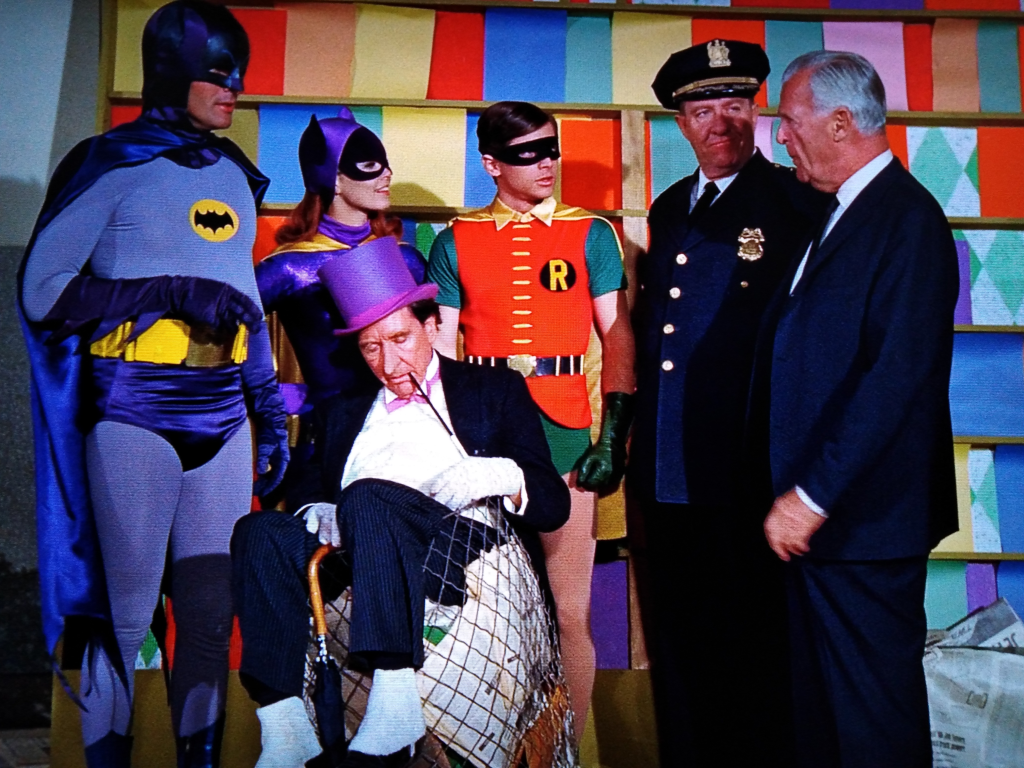
Given the astounding number of drama shows that he chose roles on, it is a bit surprising that one of his best-known roles was the campy, humorous 1960s series Batman. From 1966-1968, he made 21 appearances as the Penguin. When he appeared on The Monkees, it was also as the Penguin. Originally the producers wanted Spencer Tracy for the role of Penguin. Tracy said he would not accept the offer unless his character was allowed to kill Batman. So, Meredith got the role. The cast loved him, and the producers made sure there was always a Penguin script waiting so whenever Burgess was free, it could be filmed.
📷dcdatabase.com
He was perfect for the role with his raspy voice and that iconic Penguin laugh. The laugh came about because Burgess had given up smoking but had to smoke for his role on Batman. When he coughed, he covered it up with his trademark laugh. When asked why he did Batman, he replied that he did it “for two reasons, one of which was the salary. The other was that, after the first few episodes, Batman became the in-thing to do. Everybody would either play a villain or appear as himself in that cameo showcase where a celebrity would poke his head through the window of a building that Batman and Robin were climbing. Actually, we didn’t get as much money from the show as you might think, although we were paid decent money for the feature film version. The main impetus to continue appearing on Batman—beyond the desire to get some TV work—was that it was fashionable.”
Later in his career, Burgess continued appearing on the big screen and provided voice-over work and a bit of animation. Unfortunately, he was named as an unfriendly witness by the House Un-American Activities Commission which ended his studio work for several decades. Burgess also did commercial work and was known for his roles for Skippy Peanut Butter and United Air Lines.
📷imdb.com
Meredith was a life-long Democrat and was generous to the Democratic party. He was an environmentalist and tried to end pollution. He was also fascinated by intelligent animals, especially dolphins. One night he said he felt a dolphin needed help while staying at a friend’s beach house. He ran out to the beach and found a dolphin caught in a net under a dock and was able to save its life. He was nominated for two Academy Awards, both for Supporting Actor in Rocky and The Day of the Locust. A 21-acre park in Pomona, New York was named for him; he provided the funding to incorporate the village.
In 1997, Meredith died from complications of Alzheimer’s. His former Batman costar, Adam West, spoke at his memorial service.
While almost all of the bad guys on Batman were memorable, the Penguin and Cat Woman were by far my favorites. We will look at the career of Julie Newmar next week.
This month we are looking at some of our favorite classic television actors. If you are a big fan of Oklahoma or Green Acres, you will be well acquainted with our star today, Eddie Albert. Let’s learn a bit more about his life and career.
Photo: imdb.com
Eddie was born Edward Albert Heimberger in 1906 in Illinois. When he was one, his family moved to Minneapolis. When he was six, he became a paper boy. He and his schoolmate, Harriet Lake, were in the drama club. Harriet would later change her name to Ann Sothern. After graduating in 1926, Albert enrolled at the University of Minnesota to major in business.
He began his career in earnest, but the stock market crash derailed his job search. He worked a variety of jobs including singer, trapeze artist, and insurance salesman.
Photo: closerweekly.com
In 1933 he moved to New York City and cohosted a radio show called “The Honeymooners-Grace and Eddie Show,” with costar Grace Bradt. He was on the show three years and then Warner Brothers offered him a contract.
Albert also had an early career on Broadway with lead roles in “Room Service” and “The Boys From Syracuse.” He also began working on television. In 1936, NBC hosted a play of his “The Love Nest” on their experimental television station W2XBS, now WNBC.
His first movie role occurred in 1938 in Brother Rat. He would make 25 additional films during the next decade and then another 50 big-screen movies before his career ended, with his last one being the Narrator in Death Valley Days in 1995.
During his odd-job era, Albert had toured Mexico as a clown and trapeze artist with the Escalante Brother Circus while working for the US Army intelligence, photographing German boats in Mexican harbors. In 1942, he enlisted in the US Coast Guard. In 1943, he resigned in order to accept an offer as a lieutenant in the US Naval Reserve. He rescued 47 marines under heavy enemy fire in 1943 and was awarded a Bronze Star.
Eddie and Margo Photo: facebook.com
After returning from the War, Albert married Mexican actress, Margo. Their son also became an actor and their daughter took on the role of Eddie’s business manager. His son had more than 130 credits, the first being in 1963. You probably saw him on many of your favorite shows. Unfortunately, he passed away from lung cancer only a year after his father died.
During the late forties to the early sixties, Albert returned to Broadway for roles in “Miss Liberty,” “The Seven-Year Itch,” and “The Music Man.”
Albert had a long and active television career. During the fifty years that he was working in the industry, he appeared in almost 100 different shows. His first appearance was in the Ford Theater Hour in 1948.
Throughout the fifties, Eddie showed up in many of the early drama series on television. The sixties found him, along with most other actors of that decade, showing up on a variety of westerns, including Laramie, Tales of West Fargo, The Virginian, and Wagon Train. He was offered roles in several dramas as well, including Dr. Kildare, The Outer Limits, and The Man From U.N.C.L.E.
Photo: cinemacats.com
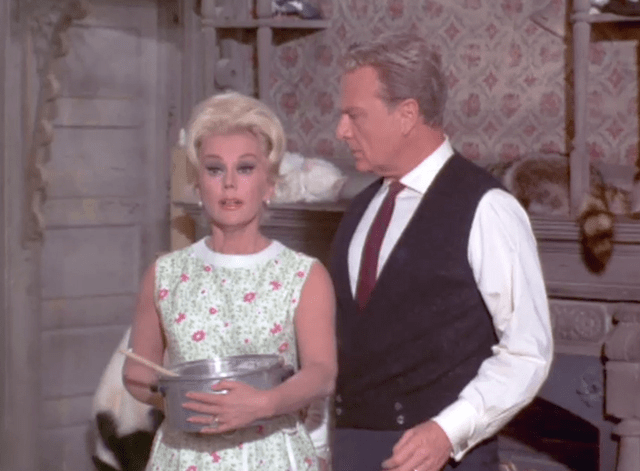
In 1965 he received the starring role of Oliver Douglas in Green Acres. For six seasons, he extolled the virtues of farming over the big city rat race. While Oliver had a harder time fitting into Hooterville life, his elegant wife Lisa was accepted immediately. If you have been reading my blog for a while, you know I love this show. I am more impressed with it now, fifty years later. There is so much sophisticated humor and wit in the show and I love getting to know the quirky characters who live in the Hooterville community. As Oliver Douglas, Albert was also on The Beverly Hillbillies and Petticoat Junction. The show was purged with the other rural comedies, even though the ratings were still quite high.
The seventies and eighties kept Albert busy on television and in films. He appeared on many shows including Columbo, McCloud, Here’s Lucy, Simon & Simon, Hotel, Murder She Wrote, and thirtysomething.
He opted to star in one more television series in Switch from 1975-78. He starred as ex-cop Frank McBride who started a detective agency with ex-con Pete Ryan (Robert Wagner).
Much of Eddie’s life was spent as an activist for social and environmental causes. He participated in the first Earth Day. He founded the Eddie Albert World Trees Foundation and was national chairman for the Boys Scouts of America’s conservation program. From 1985-1993, he was the spokesperson for the National Arbor Day Foundation. He was a trustee of the National Recreation and Park Association and became a member of the U.S. Department of Energy’s advisory board.
In addition, he was involved with Meals for Millions and was a consultant for the World Hunger Conference. Meals for Millions was a project that created nutritional meals for three cents each! They were sent to 129 different countries and added up to more than 6.5 million pounds of food. He and Albert Schweitzer participated in a documentary about malnutrition in Africa, and he often campaigned against DDT. He was also a director for the U.S. Council on Refugees and promoted organic gardening. Albert was also the founder of City Children’s Farms, a program to get inner-city kids involved in gardening.
I’m not sure when he had any other time for leisure and recreation, but he loved jogging, swimming, golfing, traveling, sculpting, beekeeping, sailing, reading, making wine, gardening, and playing guitar.
Photo: classicmoviehub.com
He 1995, Albert was diagnosed with Alzheimer’s disease. His son temporarily retired from acting to care for his father. In 2005, Eddie passed away from pneumonia.
When Albert passed away, we lost much more than an actor, although we did lose a great actor. I was so impressed with how much he did for the economy. He told a great story about his former costar Eva Gabor. She loved her fashion. They were great friends and like any couple, married or not, they had their differences. She never understood his passion for wildlife conservation. She asked him, “Every time you hear about a sick fish, you make a speech, vy?” And he patiently explained that we needed to preserve nature and save wild animals. A few days later she showed up in a gown made of feathers. He told her she should not be wearing it, and she said it was so chic. Albert told her that she was a role model, and when other women saw her gown, they would want one and many birds would die just to supply the feathers. Lisa just laughed and seriously said, “But Eddie, feathers don’t come from birds.” So he asked her where they did come from and she said, “Dahlink, Pillows! Feathers come from pillows.” In addition to being a great actor and an amazing activist, he was also a good and patient friend.
We are up close and personal this month with some of our favorite male television stars, and Pernell Roberts is definitely on that short list. Pernell Roberts was well known to television viewers in the early sixties and the early eighties. Some fans might not even realize the two characters he was best known for, Adam Cartwright on Bonanza and Dr. John McIntyre on Trapper John, MD were played by the same man.
The Family of Bonanza Photo: toledoblade.com
Pernell Elven Roberts Jr. was born an only child in 1928. He was named for his father who was a Dr. Pepper salesman. During high school, Roberts played the horn, acted in several school and church plays, played basketball, and sang in the local USO shows. He enrolled at Georgia Tech but then enlisted in the US Marine Corps. He played both the tuba and horn in the Marine Corps Band while sometimes tackling the sousaphone and percussion parts. After his time in the Marines, he enrolled at the University of Maryland where he enjoyed participating in classical theater. He left college to continue his acting career.
In 1949, he had his professional stage debut in “The Man Who Came to Dinner” with Moss Hart and Kitty Carlisle. He then took on several roles in Philadelphia.
In 1951, Roberts married Vera Mowry; she was a professor of theatre history at Washington State University. They divorced in 1959. They had one son who was killed in a motorcycle accident in 1989.
In 1952, Roberts made the big move to New York City appearing in off-Broadway shows. Several of his costars were Joanne Woodward and Robert Culp. He performed several Shakespeare roles.
In 1956, Roberts made his television debut in Kraft Theatre. In 1957, he signed with Columbia Pictures. His first big-screen role was as Burl Ives’ son in Desire Under the Elms. His second role was with Glenn Ford and Shirley MacLaine in The Sheepman.
Roberts continued to accept television roles with ten appearances in 1958 and six in 1959.
Photo: simple.wikipedia.org
From 1959-1965 he would portray Adam Cartwright, Ben’s oldest son on Bonanza. Each of the brothers had a different mother, and Adam was the only Cartwright to attend college, studying architectural engineering. After acting in classical theater for so much of his early career, the transition to a weekly series was a difficult one for Roberts. He thought it a bit ridiculous that the independent sons had to get their father’s permission for everything they did. He wanted to act in a show with greater social relevance. So, although the show would continue until 1973, he left in 1965 after appearing in 202 episodes. The storyline was that Adam was traveling in Europe or living on the east coast. Bonanza producer David Dortort said Roberts was “rebellious, outspoken . . . and aloof, but could make any scene he was in better.”
The Odd Couple Photo: sitcomsonline.com
During this time on the show, Roberts married again in 1962; he wed Judith Roberts and they would divorce in 1971.
After leaving Bonanza, Roberts returned to theater, playing a variety of roles. He toured with many musicals including “The King and I”, “Kiss Me Kate”, “Camelot”, and “The Music Man.”
Pernell also became involved in the civil rights movement, joining Dick Gregory, Joan Baez, and Harry Belafonte in the sixties demonstrations including the March on Selma.
On Mission Impossible Photo: ebay.com
From 1972-1996, Roberts was married to Kara Knack. They also divorced.
Throughout the late sixties and seventies, Pernell continued appearing in television series and made-for-tv movies. You’ll see him in westerns such as Gunsmoke, The Big Valley, and The Virginian; spy genres including Wild Wild West, Mission Impossible, and The Girl from U.N.C.L.E.; crime shows including Hawaii Five-0, Mannix, Police Story, Ironside, Cannon, and TheRockford Files; and several medical series—Marcus Welby, West SideMedical, and Quincy. He even showed up on The Twilight Zone and The OddCouple.
Photo: televisionacademy.com
Perhaps he enjoyed those medical shows because he returned to television to star in his own series in 1979, playing Trapper John, MD. The plot was featured Trapper John from M*A*S*H later in his career at San Francisco Memorial Hospital where he was Chief of Surgery. He worked with a young surgeon who had also served in a MASH unit, Alonzo “Gonzo” Gates (Gregory Harrison). The series lasted seven seasons.
In 1979, he told TV Guide that he chose to return to a weekly show because he had “seen his father age and realized it was a vulnerable time to be without financial security.” Roberts felt the role allowed him to use his dramatic range of acting skills and to address important social issues.
In the 1990s, Roberts took on very few television appearances; his last television performance was in Diagnosis: Murder in 1997.
Roberts would attempt marriage one last time in 1999 when he wed Eleanor Criswell. When Pernell passed away in 2010 from pancreatic cancer after being diagnosed in 2007, they were still together.
Photo: Facebook.com
Pernell also enjoyed golfing, swimming, playing tennis, running, reading, cooking, and singing. He appeared on two record albums during his career. The cast of Bonanza recorded an album in 1959 and he released a folk music album in 1962, titled “Come All Ye Fair and Tender Ladies.”
He certainly had a long and varied career: music, movies, Broadway, and television. He also used his fame to help causes he believed in. I don’t think he is remembered as well as he should be. Maybe it’s because he left Bonanza too early to be included on a lot of the memorabilia that came out of that show or because there was such a gap between his two series that he starred in. Whatever the reason, I hope this blog has helped recall some of our memories of the three decades he spent entertaining us.
Beginning in September of 1965, Gidget went on the air and was one of the first color programs on ABC. The show was adapted from a novel Gidget, the Little Girl with Big Ideas by Frederick Kohner, published in 1957. It became a movie in 1959 starring Sandra Dee. Kohner then served as a script consultant for the television show. The book, movie, and tv show each differ somewhat from each other.
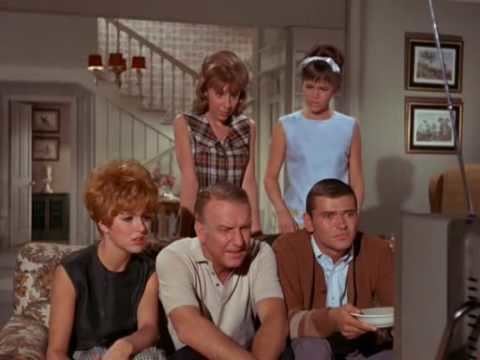
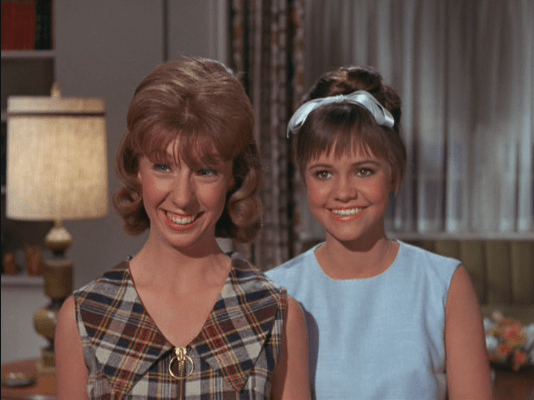
The television show features Gidget Lawrence (Sally Field), a typical, boy-crazy 15-year-old teen who lives with her widowed father Russell (Don Porter), a UCLA professor. Gidget’s older sister Anne (Betty Conner) is married to John Cooper (Peter Duel), a fun-loving psychology student. Anne often tries to mother Gidget while John tries to understand her psychologically. Gidget’s best friend Larue (Lynette Winter) is also part of the cast.
Gidget narrates each episode and directly addresses the audience somewhat like Modern Family. Field said she got to pick out her hairdos and clothing style. Her nickname (her real name is Frances) apparently was given her by her boyfriend, Jeff Matthews who goes by Moondoggie because she is petite and comes from combing “girl midget.” Jeff is going to school at Princeton by the time the show began but Gidget still wears his ring around her neck even though she is dating other boys including a young Martin Milner as Kahuna and a young Daniel J. Travanti as Tom.
Winter and Field Photo: pinterest.com
Seventy-five girls tried out for the role of Gidget. The plots were very similar to a lot of shows in the sixties and seventies: The kids’ favorite hangout, The Shaggy Dog, is in danger of being closed to build a new museum. Gidget and her dad find themselves on opposite sides of an issue; Gidget gets a job driving a floral delivery truck. There’s just one problem—she doesn’t have a driver’s license; and Gidget falls for surfer legend Kahuna and even convinces her father to invite him over. She soon finds out that Kahuna is, when not on the beach, not that interesting.
The series was filmed at the Columbia/Warner Bros. Ranch in Burbank, CA. As with most of the homes at that lot, you will notice that the Lawrence kitchen is the same one Hazel works in and the house next door is the Stephens house from Bewitched.
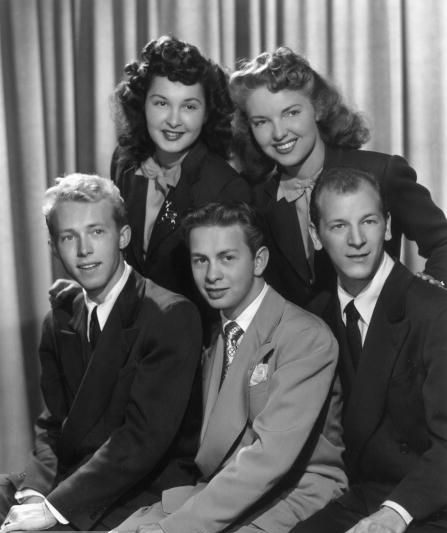
The theme song is a familiar one to people growing up in the sixties. It was called “Wait Till You See My Gidget” and was written by Howard Greenfield with music composed by Jack Keller. The Four Freshmen sang it in the pilot, but Johnny Tillotson did the vocals for season one.
Photo: pinterest.com
Gidget faced some tough competition. ABC put it on the schedule Wednesday nights against The Beverly Hillbillies which was a top ten show and The Virginian, a top thirty show. Halfway through the year, the network moved it to Thursdays but it faced Gilligan’s Island which was very popular at the time. ABC canceled the show. When it put it on as a rerun for summer, the ratings increased significantly, but by that time it was too late to bring it back for fall.
The show can be seen on several networks. Antenna TV sometimes airs it for special days. It’s also available on DVD.
Photo: nostalgiacentral.com
It sounds like the cast became fairly close during their year together. When the DVD was released, Field did an interview in which she stated that Don Porter and she had a father/daughter relationship off-screen too. Because she was new to the business, he often mentored her and helped her avoid embarrassing moments. In an interview reflecting on her time on the show, Sally said that she always loved working with Lynette Winter and looked forward to their time on the show together. Field also became friends in real life with Winter.
I do remember watching this show in reruns and I always liked it, but I think it was definitely a product of its time and probably spoke more to people who were teens in the early sixties. If nothing else, we can be thankful for this show because it launched the amazing career of Sally Field.
We are in the midst of our blog series about unique television writers. If I mention the name Mel Tormé to you, you probably think exceptional musician, composer, and singer. You might specifically mention “The Christmas Song” which he composed the music and cowrote the lyrics for. (His cowriter was Bob Wells.)
If I say think writing, you might be able to recall that he wrote several musical biographies including Traps- The Drum Wonder: The Life of Buddy Rich, The Other Side of the Rainbow: Behind the Scenes on the Judy Garland Television Series, or My Singing Teachers. You might have even read his autobiography It Wasn’t All Velvet or Wynner, a novel he wrote in 1978.
However, I’m guessing most of you don’t realize that he also tried his hand at writing scripts for television.
Melvin Tormé was born in Chicago in 1925. He was a child prodigy and first performed professionally at age 4 with the Coon Sanders Orchestra, singing “You’re Driving Me Crazy,” at a local restaurant.
He played drums in the drum and bugle corps of his grade school, Shakespeare Elementary. From 1933-1941 he had roles in several radio programs including “The Romance of Helen Trent” and “Jack Armstrong, All American Boy.” He wrote his first song at age 13. At age 16, his song, “Lament to Love” was a hit for Harry James.
The Mel-Tones Photo: singers.com
Tormé graduated from Hyde Park High School. Shortly after, he was a singer and drummer with a band led by Chico Marx from 1942-1943. In 1944, he formed Mel Tormé and His Mel-Tones.
Tormé took his stint in the Army, and when he was discharged in 1946, he returned to the entertainment business. He was nicknamed “The Velvet Frog” by DJ Fred Robbins when he sang at the Copacabana. He always hated the nickname.
During the fifties, he had a radio program, “Mel Tormé Time,” and he recorded a variety of albums. He primarily performed jazz but he loved classical music as well, preferring Delius and Grainger. He wrote more than 250 songs. In the sixties, he strayed into pop music.
Mel had his first television appearance as an actor in 1960 on Dan Raven. He showed up on a few different series including The Lucy Show. In the 1980s, he made nine appearances on Night Court and found a new generation of fans.
On Night Court Photo: pinterest.com
During his career, he tried marriage four times, but the first three ended in divorce. In 1996 he suffered from a stroke that ended his musical career. Three years later, he passed away.
No doubt, he had a full and successful career. He had a multitude of skills he experimented with during his professional life. I would like to spend some time looking at part of his career that is not well known. He did help with the writing for a brief time when The Judy Garland Show was on the air. In the late sixties he continued writing for the small screen.
In 1967, Mel wrote his first television script. His first successful episode was for the 1967 show Run for Your Life. It’s not a well-remembered show, but it aired from 1965-1968. It was about a successful lawyer Paul Bryan (Ben Gazzara) who learns he is terminally ill with two years to live. He decides to accomplish everything on his bucket list, and each week he talks about the people he meets and the places he visits.
The Frozen Image Photo: run4.us
Mel not only wrote the script for “The Frozen Image,” but he starred in the episode as well. The premise is that a married Las Vegas singer (Diana Burke) who doesn’t want to get old, hires Paul as her manager.
He must have enjoyed it because the next year, he wrote a script for The Virginian called “The Handy Man.” The long-running show was on the air from 1962-1971 and was set in Wyoming in the late 1800s.
In this episode, a legal fight over a strip of land between the Shiloh and Bowden ranch turns nasty. The Bowdens think Shiloh has hired a gunfighter who turns out to be a handyman.
The Handyman Photo: imdb.com
In 1974, Tormé scripted another story, this time for Mannix. From 1967-1975, Mannix solved a variety of cases. Originally working for a company, he starts his own business with secretary/friend Peggy Fair, whose husband, a policeman, had been killed. They also work with a police department contact, Tobias. Mel’s story, “Portrait in Blues,” features a couple of musicians, one of whom is almost electrocuted while performing.
Portrait in Blues Photo: imdb.com
The last television project Mel worked on as a writer was a made-for-television movie called The Christmas Songs in 1979. With cowriter Thomas V. Grasso, Mel penned the script and starred in the movie with Richard Basehart, Billy Davis, Jr., Jo Ann Greer, Les Brown and His Band of Renown, Rich Little, Marilyn McCoo, Maureen McGovern, Sons of the Pioneers, Roy Rogers, and George Shearing. I could not find much about this movie, so if anyone remembers watching it or knows anything more about it, please let me know.
With all the success that he had in the music industry, I was amazed to learn Mel wrote for television. I stumbled across it by accident when I was researching Mannix and decided to learn a little more about his writing career. I could not find any other information about his writing career. I did reach out to his son Steve March-Tormé . He said that he had not realized that his father wrote television scripts but said, “I’m not surprised. He tried his hand at a lot of areas of the business and was almost always very successful at them. Very bright guy.” Steve’s stepfather, Hal March, was another celebrated television writer and star. (For more about Steve March-Tormé , see his website, stevemarchtorme.com.)
It’s been a lot of fun to learn more about Mel Tormé’s television writing career. As someone who only knew him for his musical skills, it was fun to see another side of the performer. As someone who has always thought it would be fun to write for a sitcom, kudos to him for trying something new and succeeding. Hopefully, he is an inspiration to some of us who think we have to settle for the space we are in now to reach out and try something entirely different–and to remember that the success is in the trying.
The late 1960s and early 1970s might have contained the most diverse television shows than any other era. In 1968, there were the rural comedies like Green Acres and The Beverly Hillbillies; there were the standard sitcoms, My Three Sons, Get Smart, That Girl, Bewitched; there were the remains of a few westerns including The High Chaparral, The Virginian, and Gunsmoke; there were crime and thrillers such as Hawaii Five-0 and Mission Impossible; there was the crime/western in The Wild, Wild West, there were gameshows on at night including Let’s Make a Deal, The Dating Game, and The Newlywed Game; there were sci-fi shows like Star Trek and The Land of the Giants; family shows like Lassie; and even Lawrence Welk.
In addition, there were a couple of shows that were a bit edgier and introduced more provocative concepts and themes. The Mod Squad featured three teens who were helping solve crimes in lieu of jail time, and then there was the almost-impossible-to-describe Laugh In.
Photo: neatorama.com
Similar to Laugh In was The Smothers Brothers Comedy Hour which also debuted in 1967 featuring Tom and Dick Smothers. It had more of a variety format to it but it had the same topical and satirical humor.
Photo: retrokimmer.com The Who
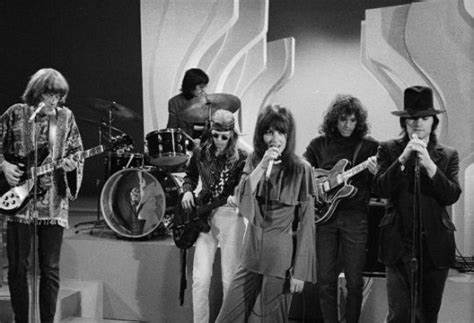
In addition to poking fun at politics, the war, religion, and current issues, you could tune in to the Smothers Brothers for some of the best and sometimes controversial music in the industry. Performers such as Jefferson Airplane, Steppenwolf, Simon and Garfunkel, The Who, Cream, Pete Seeger, and The Doors appeared on the show.
Photo: metro.com Jefferson Airplane
The show aired Sunday nights against Bonanza on NBC; ABC aired The Sunday Night Movie in its first season and Hee Haw in its second season.
The series had some of the best writers on television: Alan Blye, Hal Goldman, Al Gordon, Steve Martin, Lorenzo Music, Don Novello, Rob Reiner, David Steinberg, and Mason Williams. Reiner and Martin both commented on the show in an interview by Marc Freeman in the Hollywood Reporter 11-25-2017 (“The Smothers Brothers Comedy Hour at 50: The Rise and Fall of a Ground-Breaking Variety Show”).
Reiner relayed that “you had two cute boy-next-doors wearing red suits, one with the stand-up bass and the other with his guitar. They looked like the sweetest, most innocent kids. You got drawn to them, and then they hit you with the uppercut you didn’t see coming.”
Photo: tvbanter.net
Martin elaborated “When you have the power wrapped up in innocence, it’s more palatable. They were like little boys, but you also had Dickie there to reprimand Tommy when he would make an outrageous statement. It’s like the naughty ventriloquist dummy who can get away with murder as long as the ventriloquist is there to say ‘You can’t say that.’ It’s the perfect setup for getting a message across.”
Photo: pinterest.com Jack Benny
In addition to the musical acts, hundreds of celebrities appeared on the show between 1967 and 1969, including Jack Benny, Carol Burnett, George Burns, Bette Davis, Jimmy Durante, Barbara Eden, Nanette Fabray, Eva Gabor, Shirley Jones, Don Knotts, Bob Newhart, Tony Randall, Ed Sullivan, Danny Thomas and Jonathan Winters, along with so many others.
Part of the show was the brothers’ ongoing sibling rivalry about whom their parents liked best. They also began to add political satire and ribald humor. Pat Paulsen delivered mock editorials about current topics such as the draft and gun control, and in 1968 he had a mock presidential campaign.
Photo: rollingstone.com Pat Paulsen for president
Church sermon sketches poked fun at religion. The show lampooned many of the values older Americans valued, often delivering anti-establishment and pro-drug humor. No one was given an exception, and the show lambasted the military, the police, the religious right, and the government.
Battles over content were ongoing with the network. The network pulled Pete Seeger’s performance of his anti-Vietnam War song, “Waist Deep in the Big Muddy.” They nixed Harry Belafonte’s song, “Don’t Stop the Carnival” because it had a video collage behind him of the 1968 Democratic National Convention riots.
Younger viewers were tuning in, and despite the conflicts, the show was picked up for a second season. The network insisted they receive a copy of the show at least ten days in advance for editing. In April of 1969, William Paley canceled the show without notice. Some sources contend it was canceled by CBS president Robert Wood. Some sources cite the issue with unacceptable deadlines and others mention Tom Smothers lobbying the FCC and members of Congress over corporate censorship that brought about the firing. The brothers filed a breach of contract suit against the network and after four years of litigation, a federal court ruled in their favor, awarding them $776,300.
Photo: blogspot.com
Here’s a typical joke from the show that was not as controversial.
Tom: You can tell who’s running the country by how much clothes people wear, see?
Dick: Do you mean that some people can afford more clothes on, and some people have . . . less on? Is that what you mean?
Tom: That’s right.
Dick: I don’t understand.
Tom: See, the ordinary people, you’d say that the ordinary people are the less-ons.
Dick: So, who’s running the country?
Tom: The morons.
The Smothers Brothers elicited humor that was as topical, influential, and critical as anyone had ever heard before on television. Fifty years later, both the network and the brothers realized everyone over-reacted. If the Smothers Brothers had tried to play by the rules a bit, they would not have lost their platform to continue to help change what they saw as a messed-up culture.
Photo: Wikipedia.com
The CBS executives felt the program created too much controversy. In their defense, politicians, especially Lyndon Johnson and Richard Nixon, exerted a lot of pressure on the network. Remember this was a time of three networks and ads are what produced the profits to fund shows. The network received a boatload of hate mail daily about the program and, when viewers begin talking boycotting advertisers, executives sit up a bit straighter and listen.
The Smothers Brothers Show, a less controversial series, debuted in 1975. They had two specials on NBC later and another CBS series in 1988 but never regained the influence they had in the sixties. However, the show did help pave the way for a future that permitted, and later embraced, shows with controversy beginning with All in the Family, continuing with Saturday Night Live, and recently seen on shows such hosted by Jon Stewart and Stephen Colbert. Although the comedy spouted on the show would seem quite tame by today’s standards, the show had an important part in the history of television and the rights of free speech.
Photo: wvxu.com
I have seen some DVDs out there from this show, but they are pricey. Recently I saw season two going for $190. I do see Laugh In on Decades quite often, so perhaps The Smothers Brothers might show up somewhere too, although I’m not sure this show would hold up as well as Laugh In, but the musical performances would be fun to see.




















 thewritelife61