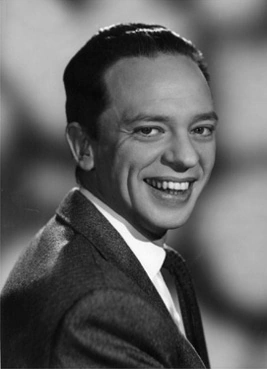
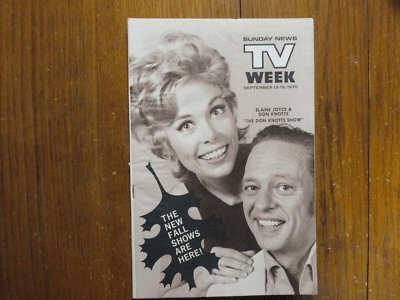
This month our theme is “Variety is the Spice of Life.” If I mention the name Don Knotts, almost everyone probably pictures Barney Fife from Mayberry. You might also think about some of his well-known movies including The Ghost and Mr. Chicken or The Shakiest Gun in the West. However, you might be surprised to know that Don Knotts had his own variety show on NBC for a season in 1970.
📷wikifandom.com
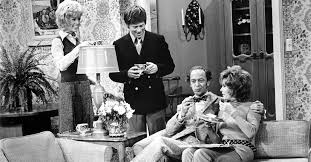
Don had a few regulars in his cast including Gary Burghoff, Louis Nye, and Elaine Joyce. He had musical guests interspersed with skits. Joyce might have made the worse choice in her entire career when she agreed to join this show because to do it, she turned down a chance to be part of the cast of The Carol Burnett Show.
Two recurring skits were about the process it took to put a weekly television show together and another one was similar to one Carol Burnett and Harvey Korman did called “The Front Porch” with Don and a guest sitting on a rocking chair discussing life.
Knotts’ show did not attract viewers. After a few episodes, the network hired Bob Sweeney who had directed The Andy Griffith Show. Don said Sweeney “came in and made some changes in the writing staff. Then he made some changes in the show creatively. And he did a good job, He improved the show, I thought.” Sweeney also hired Burghoff for the show.
While Andy Williams debuted the Osmond Brothers, Don’s claim to fame for his variety show was debuting The Carpenters.
While there were a lot of variety shows on television, the schedulers didn’t do Knotts any favors. His show was up against The Mod Squad on ABC and The Beverly Hillbillies and Green Acres on CBS. That is some tough competition. And this was an era when a family typically had one television, and the entire family had to agree on what they were watching together.
During his Television Academy interview, Don discussed his show. “We did all kinds of things, but in the end, the show just couldn’t compete with shows like The Carol Burnett Show, Donny & Marie, or Sonny & Cher. There was tremendous competition that season for variety, because everybody and his brother had a variety show.”
I think Don was right about why his show failed, but even with so many variety shows, I think there were a few other problems with this one. There were 12 other variety shows on the air during this year, including Knotts’ friend Jim Nabors, but scheduling was a huge barrier to overcome.
📷facebook.com
Also, Knotts was introduced to America as a cast member of The Steve Allen Show, and he was great on that one. I think the country wasn’t ready to accept him as a host on a show though. He spent his entire career as Barney Fife, an over-confident sidekick who helped the sheriff in Mayberry. His movie characters were all nervous, timid people who found a surprising way to beat the bad guys. Suddenly he was the star of the show and it’s a tough typecasting role for fans to adjust to.
That said, I’m putting this failure on the network for having too many variety shows on the air and not scheduling them against each other so the most popular ones rose to the top. And this was in the early seventies. Think about the shows that were starting at the time, very different shows from the fifties and sixties hits. Knotts was not the only one to fail at this time, so he could chalk it up to a life lesson learned and quickly wipe it from his memory.
Welcome to 2026! Our blog theme this month is “Worth a Million.” We are learning about the careers of several cast members from How to Marry a Millionaire. This show debuted in 1957 and aired for two years.
📷instagram Cast of season 2
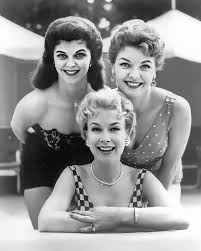
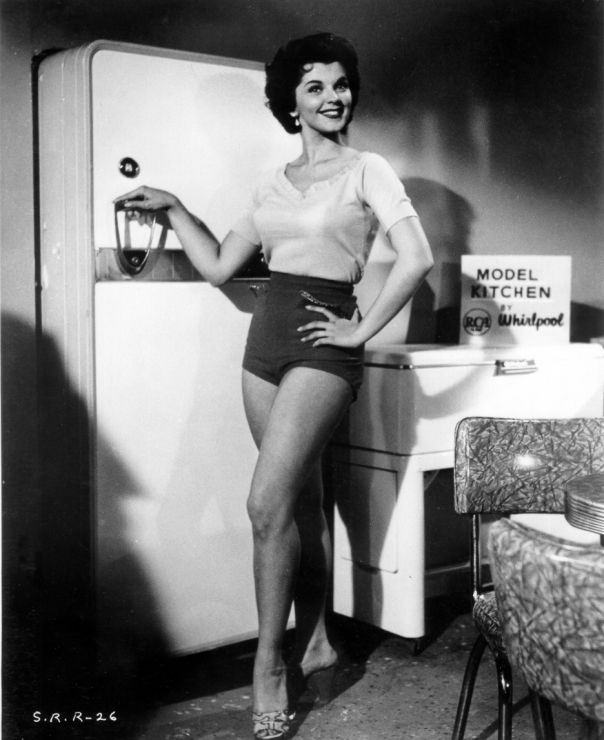
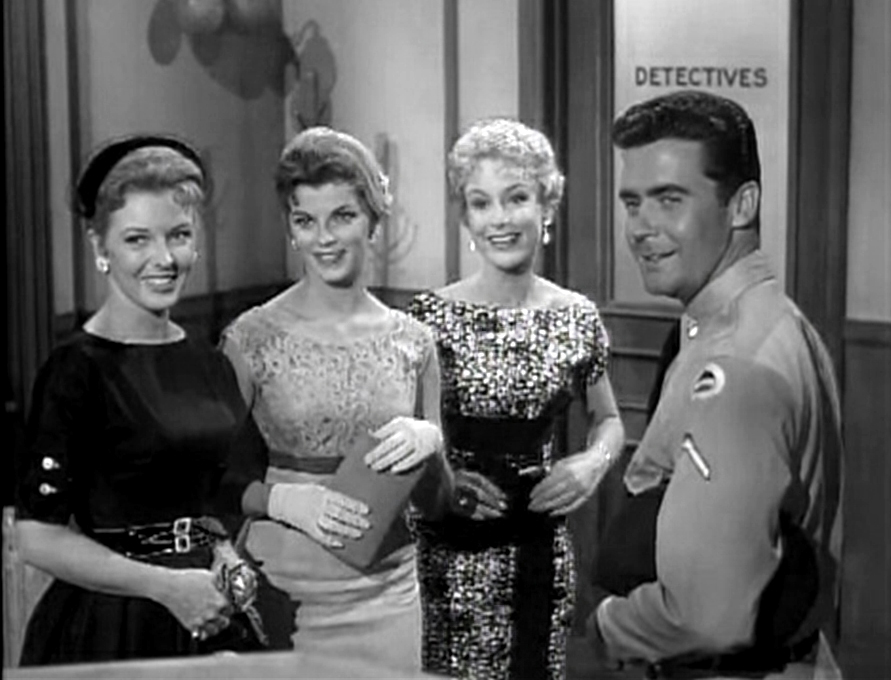
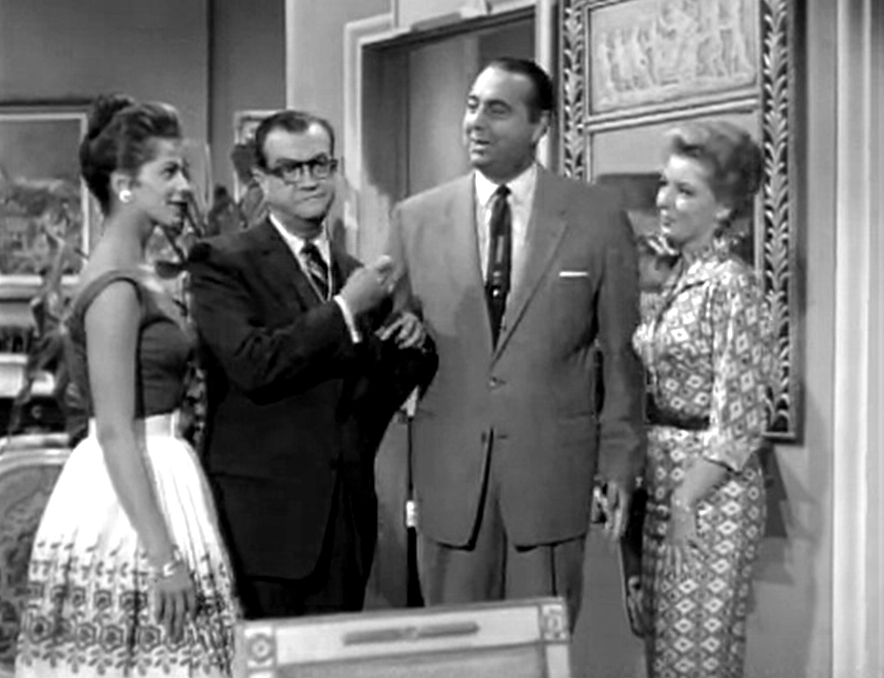
The show was based on a movie that came out in 1953 starring Marilyn Monroe. The stars were Merry Anders, Barbara Eden, and Lori Nelson. Nelson was not happy with her role. She felt Anders got all the wisecrack comments as the smart girl and Eden got all the funny lines as the bombshell, while she was overlooked. There is a discrepancy whether she quit or was fired, but either way, she did not return for season two. Lisa Gaye was the new roommate Gwen Kirby, but hopefully she did not pay too much to sublet, because after thirteen episodes, the show was cancelled.
Like Jimmy Cross, who we learned about last week, Gaye never was part of another cast again, but she was busy during the sixties, amassing almost 100 credits. Her last appearance was on The Mod Squad in 1970, her only seventies appearance.
Gaye was born in Colorado in 1935. I’m sure she was influenced by both parents—her mother was an actress, and her father was an artist. In the late thirties, the family moved to Los Angeles. Gaye’s mother was determined to get all of her children an acting career after their daughter Teala was signed by Paramount. (Her siblings include Teala Loring (32 credits), Debra Paget (45 credits), and Frank Griffin (78 credits primarily for make-up).
Gaye made her first appearance at age 7, and by age 17, she was offered a seven-year contract with Universal. She jumped back and forth from movies to television during her career.
📷pinterest.com
Her other recurring role was as a model in Love That Bob. Lisa did an interview (http://www.westernclippings.com/interview/lisagaye) and she was asked about her favorite directors. I was surprised to read that she chose Bob Cummings. She said Bob not only starred in the show but often directed episodes. She said “He had terrific timing for comedy; he understood comedy. He knew what he wanted and sometimes there would be take after take until he got it right. He taught me a lot.” It surprised me because typically when I read comments about Cummings, they are more negative than positive.
For example, Julie Newmar didn’t feel that Cummings was the right actor for her costar on My Living Doll. She said that “They originally wanted Efrem Zimbalist Jr. It was not a flip part—it needed a straight actor who could play opposite this bizarre creature so the comedy would come off. That quality was lost when they hired Bob. The show could have been wonderful. I think it would have run for many seasons had they hired Efrem because he had the right qualities.”
I couldn’t find much about Gaye’s thoughts on How to Marry a Millionaire. She did mention that in the early days of television there often weren’t hairdressers or make-up artists, and the actors had to do that themselves.
📷imdb.com
In an interview for the Television Academy, Everett Greenbaum said How to Marry a Millionaire was the worst collaboration he ever did. He inherited a writing partner, Milt Pascal, and said they did not work the same way at all. For example, if there was a horse in the scene, Milt would say, “Let’s come up with three horse jokes to write the scene around.” Greenbaum then wrote his own script for the show. Since Spencer Tracy and Katherine Hepburn had just done Desk Set and had a computer available, Greenbaum wrote an episode about the computer choosing dates for the girls.
Barbara Eden talked a bit about the show in her interview with the Academy also. She said it was her finishing school. She mentioned that she liked Lisa Gaye very much. She said it was a hard job though. They had to wear very high-heeled shoes and be on the set for thirteen hours a day.
Eden was asked why the series was cancelled. She thought it was because it was a syndicated show that was being filmed to transition to a fourth television network that Fox was trying to establish at the time. When it became obvious that there wasn’t going to be a fourth network, all those shows were canceled.
In 1955 Gaye married Bently Ware and they were together until his death in 1977.
📷imdb.com
Gaye’s career might have been much different in 1961. She auditioned for the role of Anita in the film version of West Side Story and was seriously considered for the part, but the role eventually went to Rita Moreno. She did have a film career, but her roles were not major ones and the movies were good, but not necessarily Oscar quality. She was in The Glenn Miller Story, Rock Around the Clock, and Shake, Rattle & Roll. In the Miller biopic, she was part of a screaming crowd, but she was able to use more skills in other movies. Gaye loved dancing and originally wanted to be a ballerina.
Gaye described what it was like to be at Universal at that time. She said it was the only studio where you were given lessons in drama, singing, dancing, fencing, horseback riding. She said, “it was awesome . . . and you got paid to learn.”
If Gaye wanted to talk about a day that might have changed her life, she might have mentioned a day in 1958. She said she was working with Steve McQueen on Wanted: Dead or Alive. As she tells the story, “We were shooting on the back lot and he asked me if I’d like a ride back to the soundstage, on his motorcycle. So, I certainly said ‘Sure.’ I made a big mistake by getting on his motorcycle. We went all over that lot, and not at a slow pace! He didn’t slow down—he was always on the cutting edge. We zoomed right up to the soundstage where the doors were closed. He had it arranged that someone inside would open them at the last minute, but I thought we were goners for sure. After that ride, I said, ‘Thank you,’ and never rode with him again.”
📷westernclippings.com
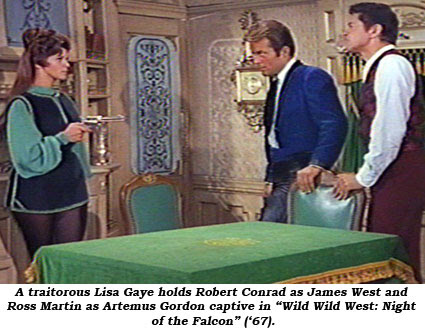
She also discussed another close call when she was appearing on The Wild Wild West in an episode titled “The Night of the Falcon.” She was supposed to ride a horse with the falcon. She declined. She said she would ride the horse or handle the falcon but not both. So, her stunt double was given the task. Gaye had to sit on a ladder, so it looked like she was on a horse. When she was sitting up there, she noticed the trainer looked rough and she assumed he had gone through a windshield because he had stitches all over his face. Her double was riding the horse with the bird when it screeched, causing the horse to rear up and throw her double. She later learned that the falcon attacked his trainer, chewing up his face.
While Gaye didn’t have a recurring role on Death Valley Days, she was on it more than any other actor, nine times. She said she liked the fact that the stories were all true. She had another close call on that series as well. She was on a horse when it was spooked and was dragged for some distance. There was a wrangler who was supposed to catch the horse if it took off, but the horse ran over the wrangler; luckily, she was full of mud but okay.
Lisa said in the late sixties her career seemed to hit a rock. She didn’t know why, but she never worked again. She said after her husband passed away, she went to Houston to help her daughter who had six kids. She said she became a receptionist at the local religious TV station for 19 years.
It’s too bad that Lisa’s career hit a wall, but it sounds like she enjoyed being able to help raise her grandchildren. After such a successful couple of decades, it’s hard to know why she suddenly was not receiving any offers.
This month we are taking a look at some of our favorite “Crime Solvers of the Past.” Today we wrap up the blog series with The Felony Squad which ran three seasons, debuting on ABC in 1966.
📷blu-ray.com
Originally titled “Men Against Evil,” the show was going to be more of a soap opera feel which was broadcast twice a week. However, by the time the show aired, most of the personal relationships had been taken out of the plot. The series focused on Sergeant Sam Stone (Howard Duff) and Rookie Detective Jim Briggs (Dennis Cole). Rounding out the cast was Desk Sergeant Dan Briggs (Ben Alexander), also known as Dad to Jim and District Attorney Adam Fisher (Len Wayland). The first seasons included Captain Frank Nye (Barney Phillips) while later seasons featured Captain Ed Franks (Robert DoQui).
The show was known for having some big names in directing, writing, and guest stars. Many of the directors racked up more than 75 credits each and included George McCowan who worked on The Mod Squad and Cannon, Allen Reisner known for Hawaii Five-0, Lee Katzin who directed Mission Impossible, Laslo Benedek known for work on Perry Mason, and Vincent McEveety who directed stars in Murder She Wrote,Heat of the Night, and Simon & Simon. Howard Duff jumped behind the camera in season two to direct “Deadly Abductors” after directing seven episodes of Camp Runamuck a couple of years earlier.
Crafting scripts for the show were writers such as Richard Murphy who was the creator of this show, Don Brinkley who worked on Trapper John and Medical Center, Jack Turley who wrote for Cannon and The Man from UNCLE, and John Kneubuhl who also wrote for the Wild Wild West.
📷pinterest.com
A handful of the guest stars included Ed Asner, Richard Dreyfuss, Robert Duvall, Roddy McDowell, Ricardo Montalban, George Takei, Vic Tayback, and Cicely Tyson.
The Felony Squad theme was composed by Pete Rugolo. Rugolo had 83 credits in the business including writing music for a wide variety of television genres including Leave It to Beaver, The Fugitive, and Family. This theme was an instrumental and very reminiscent of a sixties action movie.
I couldn’t find a lot of reviews, but the New York Times’ Jack Gould described it as “a very old-fashioned and conventional yarn about tight-lipped detectives doing a day’s work.”
The series was on Monday nights until 1968 when it was moved to Fridays. The first two seasons the show was up against The Andy Griffith Show which was in the top ten. For the final season, the show moved to the weekend where it was up against an Andy Griffith Show spinoff, Gomer Pyle USMC, which was also a top ten.
The show obviously did well to stay on the air three years when it faced such tough competition. I wonder if being a 30-minute show as opposed to an hour was part of its downfall. No matter how great the writers are, it’s tough to get sophisticated and detailed enough with a plot to wrap up in half an hour. The show certainly found talented directors, writers, cast members, and guest stars. The show was shot in color and had a different feel to it, more realistic. The action is right in your face like you’re on set instead of watching from far off. Considering it maintained decent ratings before it was moved, it would have been interesting to see what would have happened if this show had been the competition with a newer show to see how it fared. Fans loved it, so if you want to see something different, check out a few episodes. I’m not sure why this series isn’t seen more, but YouTube is your best bet to find the most available episodes. Also, as a fun aside, if you want to see Stone, check out Batman’s second season episode, “The Impractical Joker,” when Duff as Stone peers out the window while watching the Dynamic Duo climb the wall.
We are starting a blog about Supportive Women, great actresses who made classic television so much better. I’m beginning with Joan Tompkins.
📷tvtime.com
Tompkins was born in 1915 in Mount Vernon, NY. She began her career in stock theater companies in New York in the thirties before appearing on Broadway in several shows including “My Sister Eileen,” “Pride and Prejudice,” and “Fly Away Home.” Henry Fonda was in several the plays with Joan.
In 1936 she married actor Stephen Ker Appleby in New York, but five years later they divorced. Appleby was born in Wales and known best for his 1960s movies. He lived to be 100. From 1942-1951 she was married to Bruce MacFarlane before they divorced. McFarlane died in 1967 and had 28 acting credits in television and film. Joan would then marry a third actor in 1951, Karl Swenson, “the man of a thousand voices.” The two worked together on the radio. Many fans of Little House on the Prairie would recognize Karl as Lars Hanson. Swenson obtained an amazing 175 credits, primarily on television during the two decades before his death.
After WWII Joan became a foster parent for a crippled Polish boy, Tomasz Machcinski. He later became a photographer. In 1994, their story was made into a documentary, “Child from a Catalog.” Machcinski’s life story was very interesting. He was born in the Kampinos Forest in Gorki, Poland. He spent his childhood living in hospitals and orphanages. After developing a relationship with Joan, he graduated as a precision mechanic in 1963. In 1966, he took up photography and created thousands of self-portraits. Some were as historic characters. He chose the stories, make up, and costumes. He once said that he didn’t “use wigs, tricks, but I use everything that happens to my body, such as hair regrowth, tooth loss, diseases, aging, etc.” He has had exhibits in Copenhagen, Beverly Hills, Warsaw, New York, and Paris. Machcinski passed away in 2022.
📷wallofcelebrities.com
Tompkins had a long radio career. She was the voice of Nora Drake on “This is Nora Drake” which was on CBS radio until 1959.
She began her television career in 1954 on an episode of Ponds Theater. Almost all of her 93 acting credits were for television shows. She had a recurring role on a soap, Valiant Woman, appearing in 176 of the 1027 episodes of the show as Marion Walker. Throughout the fifties, she showed up in several dramas as well as The Donna Reed Show, Bachelor Father, and Father Knows Best.
During the sixties, she had two recurring roles. She played Mrs. Brahms on Occasional Wife in 1966-67. I remember her on My Three Sons; between 1967-1970, she appeared as Lorraine Miller, Katie’s mom, nine times.
You can catch glimpses of her on many of your favorite shows from the sixties and seventies, including Hazel; The Danny Thomas Show; Perry Mason; Gomer Pyle: USMC; Dr. Kildare; The Man From UNCLE; Bewitched; Bonanza; The Brady Bunch; MarcusWelby, MD; The Mary Tyler Moore Show; The Mod Squad; and The Bob Newhart Show.
📷imdb.com My Three Sons
Her last television appearances were in 1980. She played Grandma Gertie in an episode of Eight is Enough and a physician in a made-for-tv film, The Night the City Screamed.
Karl and Joan moved to Beverly Hills where they founded an acting company. Karl directed the plays Joan appeared in. After Karl’s death in 1978, Joan joined a writing group and wrote several books. She died at home in 89.
Joan Tompkins is another one of those actresses that made television better during the fifties, sixties, and seventies. I’m glad we could learn a bit more about her and her career.
Today in our Supportive Women blog series, today we are delving into the career of Stefanie Powers.
Photo: themoviestore.com
Stefania Zofya Paul was born in 1942 in Hollywood, California, Her parents divorced when she was little, and she rarely saw her father again. At age fifteen, she began dancing for Jerome Robbins. During her career she has appeared on the stage many times, the first time in 1964 in “Under The Yum-Yum Tree.” She also appeared on the British stage in several productions including “The King and I.”
She graduated from Hollywood High, although she was given her first contract at age 16 with Columbia Pictures. She made 15 films in those early years with some of the great stars including James Caan, Bing Crosby, Sammy Davis, Ava Gardner, Maureen O’Hara, Roger Moore, Lana Turner, and John Wayne.
Her first role was in the made-for-tv movie Now is Tomorrow in 1958. Out of her 118 acting credits, 25 would be big-screen movies with 37 made-for-tv movies. The other half of her appearances were on television series.
The Girl From U.N.C.L.E. Photo: pinterest.com
In the 1960s she showed up in many shows including the sitcoms The Ann Sothern Show and Please Don’t Eat the Daisies and dramas including Bonanza and Route 66.
In the middle of the decade, she was cast in her first starring television role as April Dancer on The Girl From U.N.C.L.E. Although it would only last one season, she became well known for her spy missions on the series.
In 1966 Stefanie married Gary Lockwood, another actor; with 95 credits, he also had a long and successful career. They divorced in 1972. Shortly after her divorce, she met William Holden and they were together until his death in 1981; Powers described them as soul mates.
Powers was kept busy in the seventies, making appearances on a variety of shows including Love American Style; The FBI; Owen Marshall, Counselor at Law; The Mod Squad; Barnaby Jones; McCloud; Marcus Welby, MD; Medical Center; Cannon; The Rockford Files; and McMillan and Wife.
Although she made a few random appearances on small screen series, her last three major roles were as a regular cast member on three shows: The Feather and Father Gang, Hart to Hart, and TheDoctors.
The Feather and the Father Gang is not a show I remember at all. She starred with Harold Gould as a con man and she was his daughter, a lawyer, who helped him solve crimes.
Hart to Hart Photo: thetelegraph.com
Jennifer Hart is the role that Powers was best known for. She starred with Robert Wagner as her husband Jonathan on Hart to Hart. They are a wealthy married couple similar to Nick and Nora Charles on The Thin Man who continued to get mixed up in murders wherever they go. The show was on the air for five years from 1979 to 1984. Stefanie received two Emmy nominations for her role of Jennifer Hart. In 1981 she was beat out by Barbara Babcock for Hill Street Blues and in 1982 she was beat out by Michael Learned for Nurse.
Wagner lobbied for Powers to be cast as his wife because she had worked with him in an earlier show of his in 1968, To Catch a Thief.
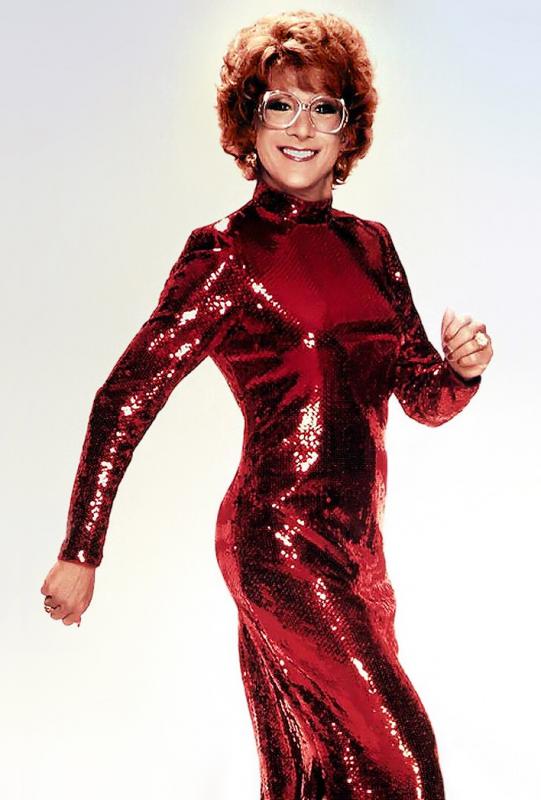
Several other actresses who were being considered for the role were Lindsay Wagner and Suzanne Pleshette. Fun fact, if you watch Tootsie with Dustin Hoffman, you will see him wearing a red, sequenced dress that was worn by Powers as Jennifer two years earlier in the episode “Color Jennifer Dead” in 1980.
After the show was canceled, they paired up again for eight made-for-tv movies about the Harts. The couple also starred in a stage production of “Love Letters” at the Chicago Theater in 1993.
Ironically, Powers was in the same ballet class with Natalie Wood and Jill St. John. While Powers played Robert Wagner’s wife on the show, Wood and St. John were married to him in real life.
In 1993 she tried marriage again with Patrick Houitte de La Chesnais. They were together for six years before divorcing.
Powers has kept busy in the last two decades. In 2003, she released a CD, “On the Same Page,” songs from the great composers. She is a polo player and was one of the first foreign members of the Royal County of Berkshire Polo Club; in 2005 she competed in the Joules United Kingdom National Women’s Championship which was held in Ascot.
In 1982, Stefanie founded the William Holden Wildlife Foundation and became a director of the Mount Kenya Game Ranch and Wildlife Conservancy in Kenya. She and Holden were passionate about wildlife conservation. She also works with the Cincinnati and Atlanta zoos.
Powers spends her time in residences in Los Angeles, London, and Kenya. She apparently speaks six different languages.
With Soulmate William Holden Photo:tumblr.com
After smoking for twenty years, Powers was diagnosed with alveolar carcinoma, a type of lung cancer. She underwent surgery to remove part of her lung in 2009.
She was cast in a movie, Prism, that is in pre-production currently. It was apparently inspired by true events—as imdb describes it, “the infiltration of the Sinaloa Cartel and the inner sanctum of Joaquin El-Chapo Guzman by a US task force detective who goes deep undercover to expose Chapo and his criminal empire.”
Powers has had an amazing career and an even more amazing life. She is able to live on three different continents, enjoys a variety of activities, has a purpose in her life, and found her soul mate. Her life could easily become a movie script but if she was not available, I’m not sure who they would get to play her.
September is What a Character month, and today we end our series with a look at the career of Herbie Faye. Faye was born in 1899 in New York City. He began working with Mildred Harris in vaudeville in 1928. Phil Silvers was one of the supporting cast members, and their friendship would prove fruitful for his future television career.
Photo: imdb.com
In the forties and fifties, Faye tried his luck on Broadway, appearing in a variety of shows including “Wine, Women, and Song” in 1942 and “Top Banana” in 1951.
He also began a career on the big screen in the fifties. His first film was the movie version of Top Banana in 1954. He would appear in 17 movies; in fact, his last acting credit was the movie Melvin and Howard in 1980. In between, he appeared in a variety of genres including Requiem for a Heavyweight starring Anthony Quinn, The Thrill of It All with Doris Day, and The Ghost and Mr. Chicken with Don Knotts.
In 1950, at the age of 51, Faye made his first television appearance. He appeared in two episodes of Cavalcade of Stars. You would have also seen him in Our Miss Brooks, The Goldbergs, and Hennessey in the fifties.
Photo: papermoonloveslucy.com
When Phil Silvers got his own show in 1955, he hired Faye to play Corporal Sam Fender which he did for 139 episodes between 1955 and 1959. This was a hilarious show and hasn’t lost its charm with time. In addition to the primary characters, there was a group of about a dozen secondary characters who appeared along with Faye. Eventually, the costs became too high, and the show was canceled.
Phil Silvers Show Photo: alchetron.com
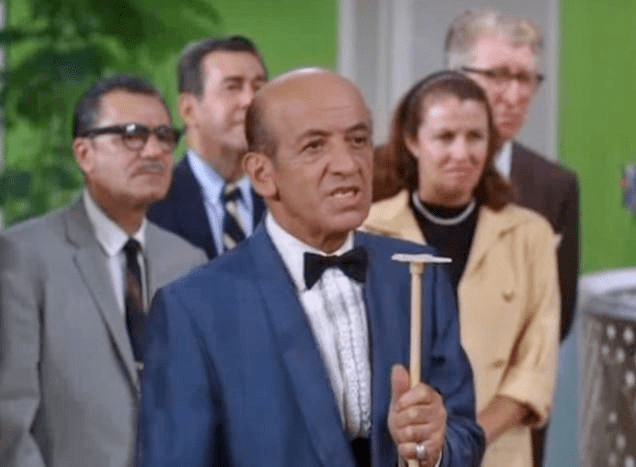
Faye was extremely busy in the sixties. He must have been good at his job because he was cast in more than one show on several of the series he worked for. He was four different characters on The Danny Thomas Show, six on The Dick Van Dyke Show, five on The Joey Bishop Show, two on My Favorite Martian, two on Bewitched, three on The Andy Griffith Show, four on The Gomer Pyle Show, two on I Dream of Jeanne, two on That Girl, four on Petticoat Junction, two on Mayberry RFD, two on Jack Benny as well as 27 other shows all in the sixties. On top of all those appearances, he was part of the cast for two additional television shows: The New Phil Silvers Show from 1963 to 1964 as Waluska and as Irv on Accidental Family in 1967.
In November of 2018, KJ Ricardo spotlighted Faye in her You Tube channel show about The Dick Van Dyke Show. Herbie was Willie, the deli owner who delivered lunch to the comic writers on the show. He appeared in six of the shows. In his first appearance, Rob is trying to leave the office because he thinks Mary is in labor but every time he tries to leave, the Danish cart is in the way. On the third and fourth episode, he starts critiquing the ideas the writers have and making
Willie Photo: televisonsnewfrontier.blogspot.com
comments on what works and what doesn’t. They are pretty funny.
He continued his busy career throughout the seventies when he made one-time appearances in eleven different shows including The Mary Tyler Moore Show, The Bob Newhart Show, Love American Style, Happy Days, and Barney Miller. He made multiple appearances on several other shows including Mod Squad (3), Here’s Lucy (4), The New Dick Van Dyke Show (4), The Odd Couple (6). He also had a recurring role on Doc where he played Ben Goldman from 1975-76.
Faye passed away in Las Vegas in 1980.
Herbie Faye was a very funny guy. He was just an average guy, but he had a way of focusing the viewers’ attention just on him for the brief time he appeared; he made the episodes he was in even better. I guess that is the ultimate definition of a great character actor.
As we look at some of our favorite character actors, today we learn more about Hazel’s friend Rosie: Maudie Prickett. Prickett had a prolific career with more than 300 credits between the stage, film, and television.
Photo: bewitchedwikifandom.com
Maudie was born in 1914 in Oregon. Her birth name was Maudie Marie Doyle; she married Charles Fillmore Prickett II in 1941 and used her married name for her career. Charles was the co-founder and manager of the Pasadena Playhouse and later became an orthopedic surgeon. They remained married until his death in 1954 and had two children.
Prickett would amass 64 movie credits, with her first being Gold Mine in the Sky in 1938. Her last three movies were made in 1969: The Maltese Bippy, Rascal, and Sweet Charity. She typically played maids, secretaries, spinsters, or nosy neighbors. One of her most recognized movie roles was as Elsie the Plaza Hotel maid in North by Northwest.
In 1952 she received her first television roles, appearing on This is the Life, Hopalong Cassidy, The Doctor, and The Adventures of Superman. While most people are familiar with Hopalong Cassidy and Superman, they may not recognize the other shows. This is the Life was a religious show that began in 1952 and ended in 1988; each episode was a mini-drama that ends with someone becoming a Christian. The Doctor was a medical show where Warner Anderson as the doctor presented a story and then provided comments after the episode. Most of the series dealt with some type of emotional problem.
The look we were used to with Maudie Photo: imdb.com
For the next two decades, Maudie was quite busy with her television career. She often made multiple appearances on a show as different characters. She had a nice blend of both dramas and comedies on her resume.
In 1961 she married Dr. Eakle Cartwright who died in 1962. In 1966 she would try marriage one more time when she wed the mayor of Pasadena, Cyril Cooper who lived five more years.
While watching your favorite classic television shows, you will see her on westerns including Wagon Train, Bonanza, and Gunsmoke. She made her mark on medical series including Ben Casey and Marcus Welby MD. She also appeared in quite a few dramas including The Millionaire, The Untouchables, Lassie, Daniel Boone, The Mod Squad, and McMillan and Wife.
However, it was the sitcom genre that kept her busiest. During the fifties, she could be seen on Topper, Father Knows Best, Leave It to Beaver, and The Donna Reed Show. The sixties found her on Dennis the Menace, Bachelor Father, The Danny Thomas Show, Mister Ed, My Three Sons, Petticoat Junction, The Andy Griffith Show, The Doris Day Show, Gomer Pyle USMC, and Get Smart. During the seventies, she took roles on Mayberry RFD, Bewitched, Love American Style, and Room 222.
Best Friends – with Shirley Booth on Hazel Photo: pinterest.com
All of her recurring roles were on sitcoms: Date with the Angels, The Jack Benny Show, and Hazel. Date with the Angels was Betty White’s second sitcom, and Maudie played Cassie Murphy, a neighbor of the newlyweds. On The Jack Benny Show, she played Mrs. Gordon, the secretary of the Jack Benny Fan Club. Many people remember Prickett from Hazel where she played Rosie. Hazel and Rosie were best friends and always came through for each other but were also very competitive, especially when an eligible bachelor was involved.
In 1976, Maudie passed away from uremic poisoning at the young age of 61. Uremia occurs when there is an increase of toxins in the blood and usually occurs when the kidneys no longer filter them out. It can be treated with medication, dialysis, and transplant surgery, but for some reason, hers must have been untreated which lead to her death.
On Bewitched Photo: sitcomsonline.com
Maudie was a very busy lady, accumulating 164 acting credits between 1938 and 1974. I’m not sure if she was okay with being typecast or if she would have liked some other types of roles, but she certainly made the roles her own. You have to wonder how much more she would have accomplished if she had lived another twenty or thirty years. Her personal life was sad, having three husbands die before her and then she herself dying as middle age was beginning.
I know you read this comment a lot if you follow my blog, but we have another one of those character actors I wish we knew more about. The Television Academy rarely interviews them, and it is tough to find much information beyond their professional resume. One day I will make good on my promise and write a book about these wonderful people who made classic television so fun and believable.
This blog series is “It’s My Show,” about actors who featured their names in the titles of shows. I’ve definitely saved the best for last: The Dick Van Dyke Show. During the past five plus years of writing my blog, I have realized that my favorite shows are those that feature amazing writing and concentrate on relationships. This show is no exception.
Photo: thiswastelevision.com
From 1961 till 1966, this show aired on CBS, resulting in 158 episodes. Created by Carl Reiner, it was produced by Calvada Productions. Calvada was named for Carl Reiner, Sheldon Leonard, Dick Van Dyke, and Danny Thomas. The show was filmed at Desilu Studios in front of a live audience. Bill Persky and Sam Denoff wrote 29 of the episodes.
The theme song was written by the great Earle Hagen. (For more on Hagen, you can see my blog from December 10, 2018; Hagen wrote many great theme songs including The Danny Thomas Show, Gomer Pyle, I Spy, The Mod Squad, and most memorably, The Andy Griffith Show.)
Photo: pinterest
The opening of the show had Rob walking into the living room. In one version, he trips over an ottoman, falling on the floor. In the another, he steps around the ottoman. You never knew which opening you would see, a fun element of the show.
I love that this show realized our professional lives are equally important to our personal and family life, and this show not only featured both, but often they meshed together just like all our lives do.
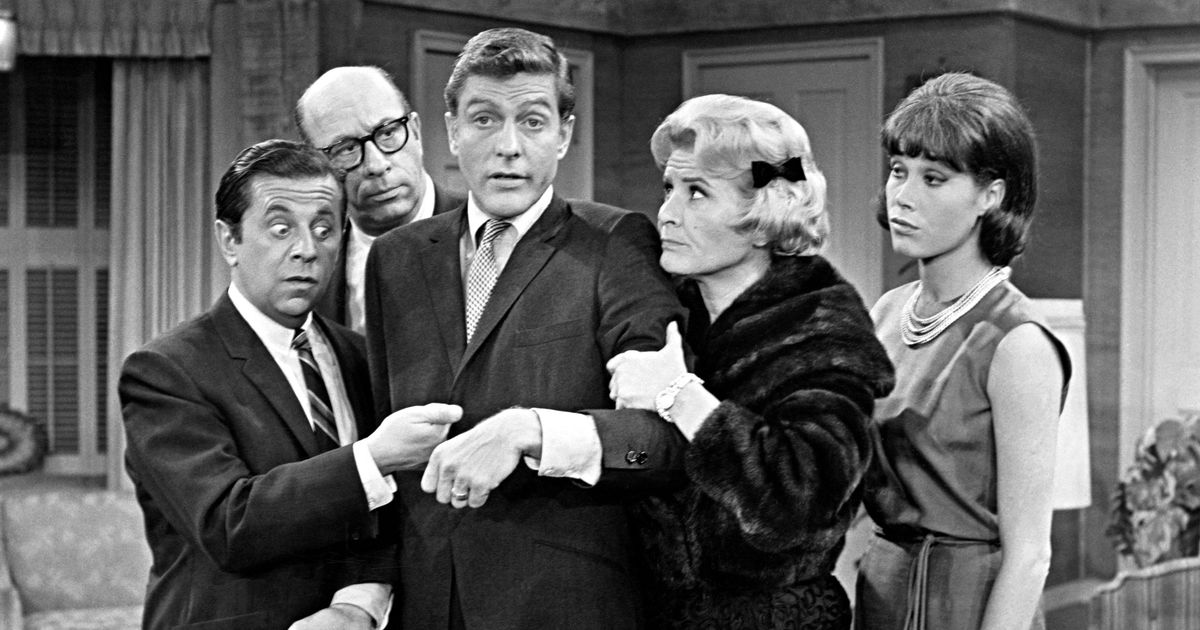
Not only was Rob Petrie’s (Dick Van Dyke) work life part of the show, but he was a television writer, which provided even more insights into what we were watching. Rob writes “The Alan Brady Show” with cowriters Sally (Rose Marie) and Buddy (Morey Amsterdam). Mel (Richard Deacon) is star Alan Brady’s (Carl Reiner) producer. Buddy and Mel have an ongoing feud, insulting each other on a daily basis. (In real life, Deacon and Amsterdam were good friends and often came up with new insults when they had drinks together after work.) Reiner originally planned on starring in the show and played Petrie in the pilot, but he was persuaded to give the role to another actor by Leonard.
Moore, Van Dyke and Mathews–Photo: wideopencountry.com
Rob’s home life consisted of wife Laura (Mary Tyler Moore), son Ritchie (Larry Mathews), and neighbors/best friends Jerry and Millie Helper (Jerry Paris and Ann Morgan Guilbert). Paris directed 84 of the show’s episodes and would go on to a career as a director later.
Moore, Paris, Guilbert, and Van Dyke Photo: motionpictures.com
In the pilot, titled “Head of the Family,” Barbara Britton played Laura, Gary Morgan played Ritchie, Morty Gunty played Buddy, and Sylvia Miles played Sally. Jack Wakefield played Alan Sturdy who was the star of the tv show.
The characters are very much like people we all know, except maybe a bit funnier. Rob loved his wife and son. He was a big fan of cowboy movies and Laurel and Hardy. He met Laura, a USO dancer, when he was in the Army as a Special Services Sergeant in Camp Crowder, Missouri. His brother Stacey appeared on the show a few times (played by real life brother Jerry Van Dyke). Richie is a typical kid who gets in trouble sometimes but is a good kid, just curious and looking to test his boundaries. Their neighbors Millie and Jerry have a son about Richie’s age, and they are their best friends; Jerry is also their dentist.
Moore, Van Dyke–Photo: pinterest.com
The only thing not realistic about his home life is that Rob and Laura have twin beds. Reiner asked the network to allow the couple to sleep in the same bed, but they would not approve it, so like most sitcom married couples, they had separate beds. About the only couples who were able to get around the challenge were the Stephens on Bewitched and Katie and Robbie on My Three Sons. The network also didn’t love that Moore wore capri pants but they did end up allowing her to do so.
Rob’s coworkers are also endearing characters. Buddy is energetic and sarcastic. He is married to Pickles and shares a lot of jokes about some of the scatterbrained things she does. We know he is in love with Sally, but they never take their relationship anywhere other than friendship. She is often making fun of herself for looking for a man, but we realize she is very lonely. Mel is an excellent producer who puts up with a lot from both Buddy and Alan.
Amsterdam, Deacon, Van Dyke, Marie, Moore–Photo: vulture.com
Van Dyke had to give up Bye, Bye Birdie to star in the show but definitely made the right choice. The role of Laura was a hard one to cast. Sixty actresses auditioned for the character. Moore almost chose not to go, and when she did, she lied about her age, making herself older than she was. Sally Rogers was based on Lucille Kallen who wrote for Your Show of Shows and Selma Diamond who wrote for Caesar’s Hour.
After the first season, CBS said they were cancelling the show. Procter & Gamble threatened to remove all its advertising and viewers complained loudly. The network didn’t need to worry about ratings in season two; the show was in the top ten by episode three and was popular for the rest of its time on air.
To color or not was a big question during the sixties. Reiner actually considered filming the show in color in the third season until he found out it would add $7000 per episode (the equivalent of about $59,000 today).
Deacon, Moore, Van Dyke, Leonard, Reiner, Paris Photo: taiwannews.com
I’m not the only one who thought this was an amazing show. The series was nominated for 25 Emmy awards and won 15 of them. Reiner won three times for writing, Van Dyke three times for acting, and Moore twice for leading actress in a comedy role.
Some of my favorite episodes are “Pink Pills and Purple Parents” (season 4) a flashback to when Laura meets Rob’s parents. She takes some anti-anxiety medicine Millie gives her. She gets a bit loopy and Rob’s mother thinks she has a drinking problem; “The Ghost of a Chantz” (season four) where Rob, Laura, Buddy, and Sally spend the night in what’s said to be a haunted cabin. Characters disappear one by one and finally we learn that Mel pranked them to test out a concept for a show called Sneaky Camera; “Coast to Coast Big Mouth” (season five) when Laura reveals on a TV game show that Alan is bald and wears a toupee. Laura bravely goes to the office to apologize; another one about Laura, “The Curious Thing About Women” (season one) when Rob writes a comedy skit about Laura’s bad habit of reading his mail. All her friends tease her after it airs, and she tries to deny it, but when a package comes to the house, she opens it and an inflatable raft opens up which she cannot put back; and finally, “That’s My Boy” (season 3) when Rob is convinced that the hospital switched their son with another boy born that day. He has to resolve this, and invites the other couple over to discuss the situation. When Rob opens the door, he sees an African American couple, and it gets one of the longest audience laughs than any other sitcom episode.
Moore, Reiner–Photo: nytimes.com
CBS may have wanted to end the show after season one, but they did not want to end it after season five. However, the cast made the decision to quit while they were still producing high-quality shows. I appreciate that they did this. One of the saddest things for me as a viewer is when a show goes on a year or two longer than it should and the quality diminishes greatly.
I just can’t think of anything about this show that needed improving. It had a great cast, great writers, likable characters, and a timeless quality. Sixty years after the show began, it is just as funny and easy to watch as it was then. Thank you, Carl Reiner and cast, for knowing how to make a memorable show and when to end it to keep it that way.
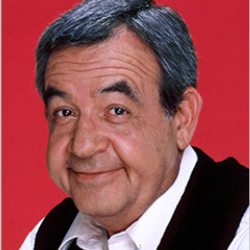
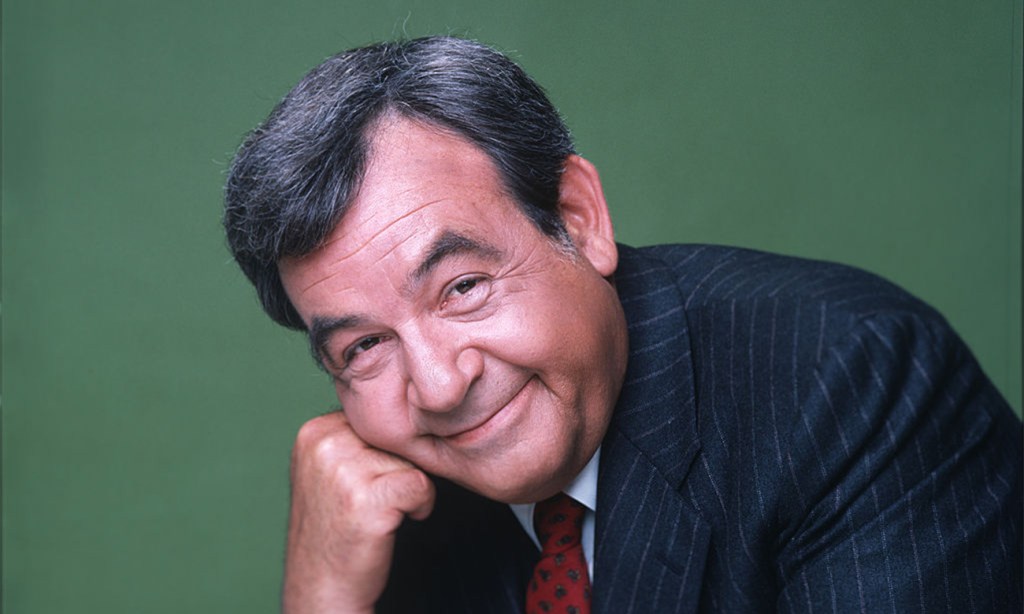
Since January was all about female sitcom actresses, this month we give the men their fair due. We begin this series, “The Men of August,” with Tom Bosley. Anyone who was a Happy Days fan knows why Bosley is part of this line-up.
Photo: quotetab.com
Bosley was born in Chicago in 1927. His father was in real estate and his mother was a concert pianist. After graduating from high school, he served in the Navy during WWII. His father was in WWI and then served again in WWII, building army bases on the coast.
Following the war, he attended DePaul University in Chicago, declaring his major as Pre-Law. He had to take night classes because the day classes were full, and after getting tired of teachers not showing up, he switched to a radio school, hoping to be an announcer because he loved baseball, but acting eventually tugged at his heart.” In 1949 and 1950 he performed at the Woodstock Opera House in Woodstock, Illinois with Paul Newman. He was in the first live television show ever done in Chicago which was a production of Macbeth, about 1948 (on WBKB).
In the early fifties, he moved to New York and held a variety of jobs, including coat checker at Lindy’s restaurant, doorman at Tavern on the Green, and Wall Street bookkeeper. He continued to audition for his big break. During the fifties while he was looking for work, he shared rent with another Chicago actor trying to make it in the entertainment business: Harvey Korman.
Bosley as Fiorello–Photo: markrobsinsonwrites.com
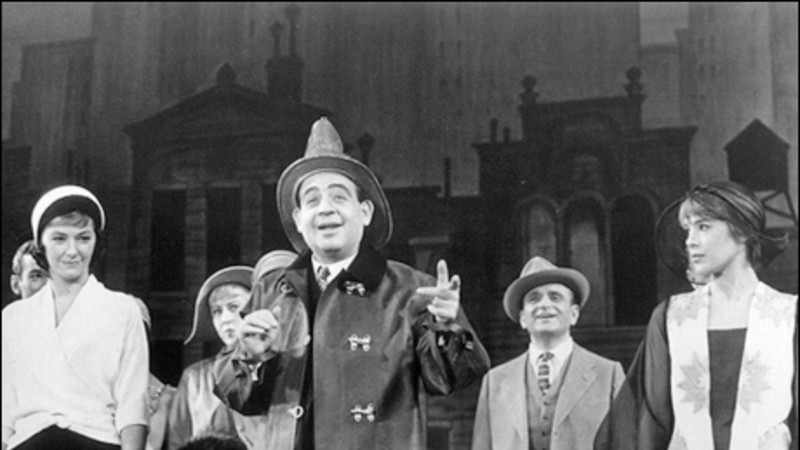
With one foot in Broadway and one in television, Bosley took on a variety of roles in his early career. In 1955 he appeared in a television production of “Alice in Wonderland” as the Knave of Hearts. In 1959, he won a lot of acclaim as New York mayor Fiorello H. La Guardia in the Broadway musical “Fiorello!” and won a Tony award. Bosley would later return to Broadway in the 1990s taking on the roles of Maurice in “Beauty and the Beast” and as Cap’n Andy in “Show Boat.”
In the 1960s he explored motion pictures and landed his first role as a suitor of Natalie Wood in Love with the Proper Stranger.
Although he continued to appear in the big screen, the little screen took up most of his time in the sixties and early seventies. In 1962 he played opposite Tony Randall and Boris Karloff in “Arsenic & Old Lace.” His face became a familiar one showing up in Car 54, Where Are You?, Bonanza, Get Smart, Route 66, Dr. Kildare, The Mod Squad, The Streets of San Francisco, Bewitched, McMillan and Wife, and Marcus Welby, among others.
It was also during this decade he married Jean Eliot. They were married until she passed away in 1978.
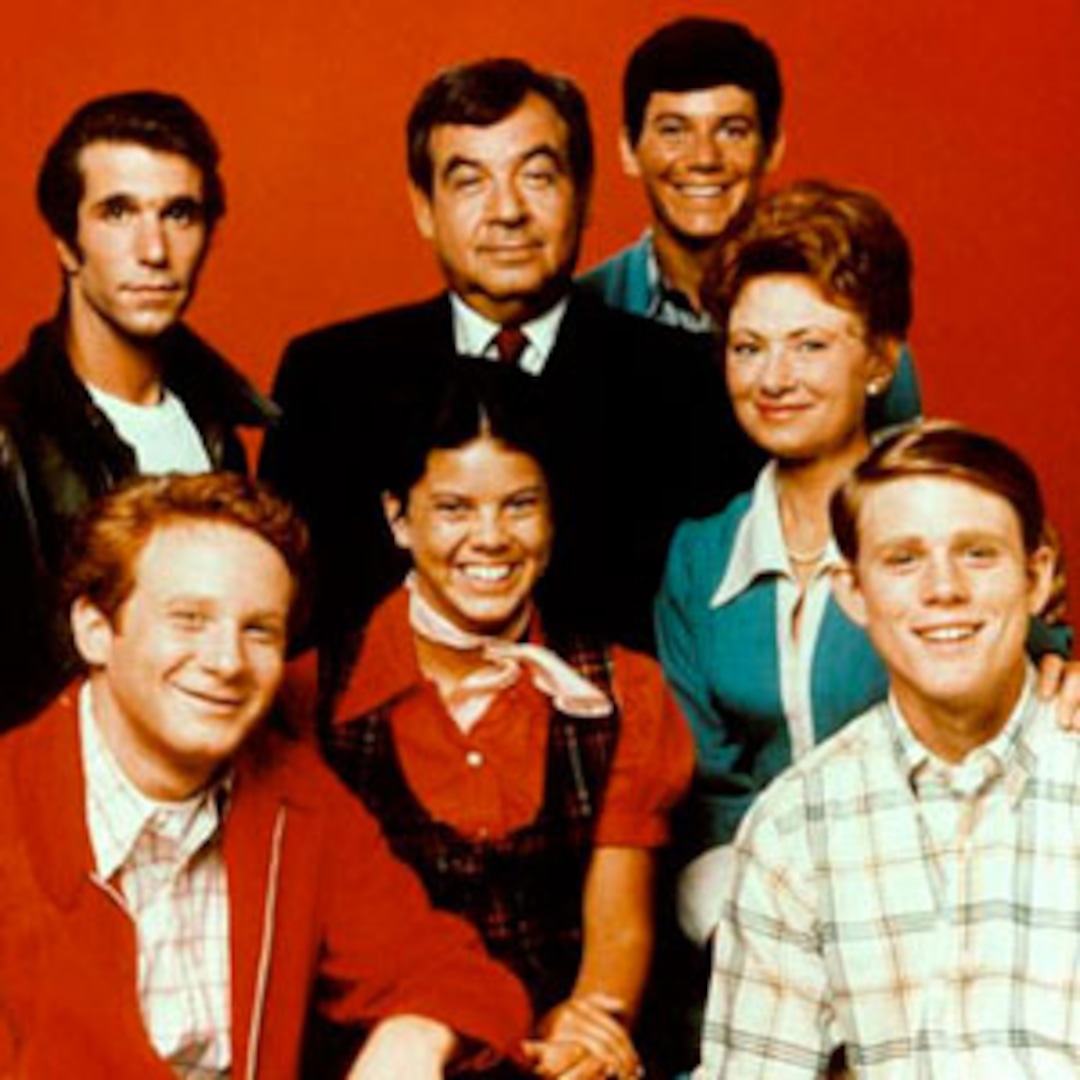
The Cast of Happy Days Photo: E!online.com
In 1974 he accepted the role that would make him a household name. “Love and the Television Set” was one of the four skits appearing on an episode of Love American Style, and I actually remember watching it. Garry Marshall developed it as a pilot, but the network wasn’t interested in turning the pilot into a show when it first came up. However, once George Lucas released American Graffiti in 1973, also starring Ron Howard, ABC took another look at the period show. The first two seasons, the show focused more on Richie Cunningham as he interacted with his friends and family. Jerry Paris (Jerry Helper on The Dick Van Dyke Show) directed 237 of the episodes. Happy Days was described as relentlessly ordinary. The plots revolved around the same types of problems most teens experienced in the fifties: dating, wanting to be popular, peer pressure, and similar issues.
Bosley originally turned down the role but reconsidered after reading the script more thoroughly; he was drawn to a scene between Howard and Richie that moved him. Bosley said he also was looking for some security. His wife was sick at the time, and they thought she might have epilepsy, which was later determined to be a brain tumor; he wanted an easier schedule in order to care for his wife and help raise his daughter.
With Henry Winkler Photo: brooklynvegan.com
He captured the sometimes cranky, but lovable, Howard Cunningham perfectly. He might not agree with his children, but he was always there for them, and he was apparently always there for his castmates who all remembered him as a kind, fatherly figure.
For a decade, Bosley developed the role of Howard into a much-loved sitcom father. Bosley said none of the characters were well defined in the early scripts. The cast developed their characters as relationships developed. He described the actors as a baseball team that never made errors; they just clicked and had a wonderful rapport.
During the run of the show, his wife passed away from her tumor, and in 1980 he married actress Patricia Carr whom he stayed married to until his death.
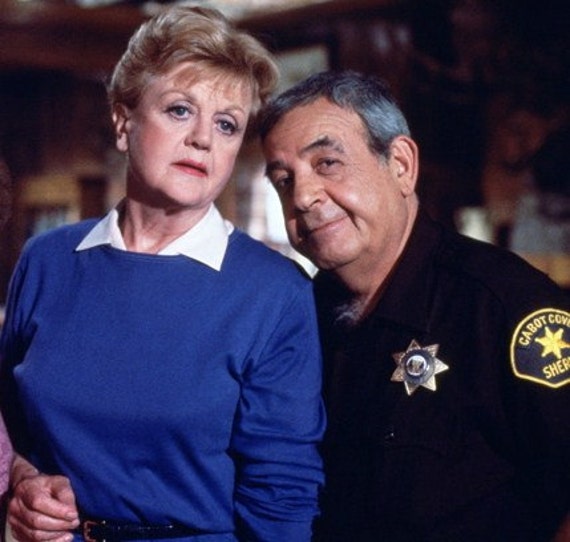
With Angela Lansbury Photo: etsy.com
When the show ended, Bosley was immediately offered another role. Although he appeared in a variety of shows in the early eighties, including five episodes of Love Boat, he moved from Milwaukee to Maine to help Jessica Fletcher solve mysteries on Murder, She Wrote. Bosley said the role of Jessica was written for Jean Stapleton, but then she did not want to do it so it was offered to Angela Lansbury. He and Angela had worked together in the past, so he did the pilot. It was supposed to be a one-time role, but they brought him back nineteen times without a contract. As Sheriff Amos Tupper, he spent four years trying to figure out why so many murders took place in peaceful Cabot Cove. He then retired from the police force and moved to live with his sister.
James Stephens, Tracy Nelson, Bosley, Mary Wickes Photo: pinterest.com
He actually did work with a sister in his next role on Father Dowling Mysteries. As Father Frank Dowling by day, he moonlighted, solving mysteries with his assistant Sister Stephanie Oskowski (played by Tracy Nelson, Rick Nelson’s daughter and granddaughter of Ozzie and Harriet).
Bosley described Father Dowling as being a lot like himself: calm, quiet, and caring. While murders occurred on the show, there was no violence. When they were casting the part for the housekeeper, they described the character as a Mary Wickes type, and Bosley told them to just get Mary Wickes, and he loved working with her. He enjoyed that show more than any of the other shows he worked on. The cast was totally caught off guard when it was cancelled. The network wanted to do a show with James Earl Jones and Richard Crenna. They gave Crenna’s agent a short-time period to agree to the show and he agreed before the limit ended, so the network was forced to delete a show from the current schedule to make room for this new show and they chose Father Dowling; the James Earl Jones show, Pros and Cons, also about several private detectives, and was dropped after 12 episodes.
When the show ended in 1991, his career definitely did not. When asked if he was going to retire, he replied, “Don’t be silly—actors spend half of their careers in retirement.” He continued appearing in a variety of shows (39 in all) until his death in 2010 from a staph infection.
Photo: outsider.com
There are several actors I get confused by at times because of their similarities. One is Ray Walston from My Favorite Martian with Jonathan Harris from Lost in Space. The other is Tom Bosley with David Doyle from Charlie’s Angels. At least I felt better about my mental error after doing research on Bosley. Apparently, David Doyle was named “Bosley” on the show because people confused the two actors so often.
I’m sure Tom Bosley would have made an excellent attorney or announcer, but I’m happy that he followed his acting passion, and I’m thankful for the five decades he was willing to entertain us with his special gift.
As we continue our Murder, Mystery, and Mayhem series, we move from Maine where senior citizen Jessica Fletcher solved mysteries to the streets of Los Angeles, where a hip trio infiltrates the counterculture to solve crimes.
Photo: pinterest.com
Airing from
1968 till 1973, The Mod Squad was a
unique concept. Created by Buddy Ruskin, a Los Angeles police officer, the show
took eight years to become a reality. Ruskin based the concept on his time as a
squad leader for an undercover narcotic division in the 1950s.
Aaron
Spelling was the executive producer. Spelling worked on a number of projects
from 1960 onward, but his biggest hit shows were still in his future when he
took the helm of The Mod Squad.
As soon as the jazzy theme song by Earl Hagen began, we knew this was a different type of show. The sixties hippie culture and counterculture drug scene had not been explored in depth on television before.
Photo: pinterest.com
In order to
get the necessary evidence, three young team members were trained to go
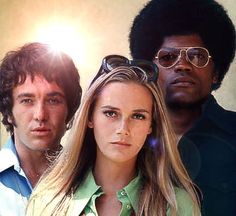
undercover to solve cases. Michael Cole was Pete Cochran, a wealthy kid who was
arrested for stealing a car; Peggy Lipton was Julie Barnes, who had run away
from a bad home situation; and Clarence Wlliams II was Linc Hayes, who was
arrested during the Watts riots. Captain Adam Greer (Tige Andrews) supervised
the trio. He mentored them and provided “parently” advice and wisdom. He
hand-picked them for his team. (Similarly, Spelling’s Charlie’s Angel’s would also feature a father figure hand picking
three non-traditional members for his crime-solving team.)
None of these kids were innocent, and their records were eliminated when they chose to work with the LA police. But they soon realized they had the ability most cops did not to inconspicuously fit in to help stop criminals from killing or hurting other young adults.
Photo: pinterest.com
Similar to Room 222, which aired almost the same
time, The Mod Squad covered a lot of
socially relevant topics: abortion, domestic violence, drug addiction, child
abuse, police brutality, illegal immigration, and racism. Though the pilot was
written sixty years ago, these issues are still on the front page today.
The writers, including Tony Barrett, Harve Bennett, Sammy Hess, and Buddy Ruskin, created realistic characters. These three outcasts were a bit rebellious; they lived in the gray instead of black or white. They understood good people sometimes did bad things, and racism and domestic violence were not to be tolerated. Their speech and clothing marked them as quintessentially 1960s. Linc often said “Solid” or “Keep the faith.” You would probably hear “groovy” at least once an episode.
Photo: tvinsider.com
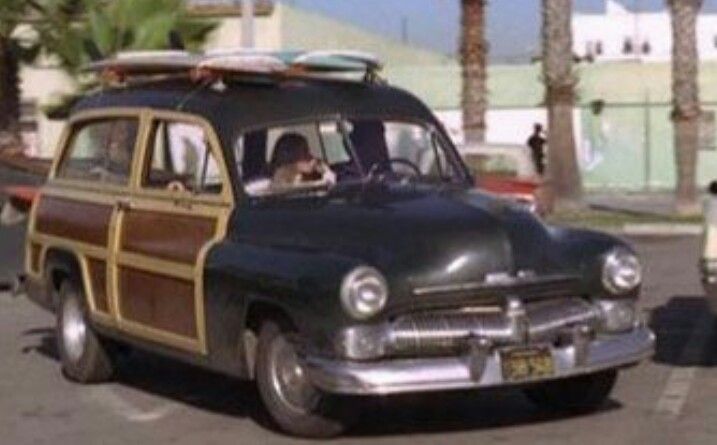
The team traveled in an old green 1950 Mercury wood-paneled station wagon that they affectionately referred to as “Woody.” Unfortunately, it was burned in an accident at the end of the second season.
Photo: pinterest.com
The show was definitely controversial. It aired at a time when westerns, rural sitcoms, and Lawrence Welk were popular. The episodes pushed the envelope a bit on topics that had been taboo on television in the past. The team was like a family and on one episode, Linc gave Julie a brotherly kiss on the cheek which had the network up in arms, but not one complaint came in. Their relationship with Captain Greer helped America see how the generation gap could be bridged.
Photo: davidcassidy.com Stars David Cassidy and Marion Ross
Despite the
controversy, the show attracted a lot of famous guest stars. Some of the actors
who can be spotted during the show’s run include Ed Asner, Jim Backus, Tom
Bosley, David Cassidy, Tyne Daley, Sammy Davis Jr., Tony Dow, Andy Griffith,
Carolyn Jones, Leslie Nielsen, Stefanie Powers, Vincent Price, Robert Reed,
Marian Ross, Sugar Ray Robinson, Martin Sheen, Bobby Sherman, Danny Thomas,
Daniel Travanti, and Billy Dee Williams.
Each episode ended with the squad walking away from the camera.
Photo: gettyimages.ca
The show was
extremely popular given its uniqueness. It was the 28th most popular
show its first year and number 11 in its third season. The show received seven
Emmy and four Golden Globe nominations. In 1970, it was nominated for
Outstanding Series. During its final year, it only ranked 54 and the “hipness”
of the show was starting to age a bit, so it was cancelled.
It did have
an afterlife. In 1979, a tv movie, The
Return of the Mod Squad, aired on ABC with the original cat. In 1999, a
big-screen film was released starring Giovanni Ribisi, Omar Epps, Claire Danes,
and Dennis Farina. Don’t feel bad if you don’t remember it; not many people do.
Photo: pinterest.com
The Mod Squad could be seen on MeTV in 2014 and 2015. Apart from that, it has not fared well in syndication. Like Room 222, the show can feel dated quickly due to its language and fashion.
Photo: eaumg.com
The show is still celebrated for its ground-breaking scripts, and in 1997, TV Guide included an episode, “Mother of Sorrow” as 95th of the greatest 100 episodes of all time.
Photo: nndb.com
While you probably won’t find it on television, it is available on DVD. Although the show may not be known by many people today, it was one of the first shows to break the barriers of going where television had not been before. In many ways, it paved the way for the creation of shows such as All in the Family, The Mary Tyler Moore Show, and Miami Vice. What more could you ask for: relevant topics, well-rounded characters, and exciting plots. Although its language and fashions date it, it captures a unique time in our history and is worth exploring.

















 thewritelife61