A Tribute to Rose Marie

rosemarie2

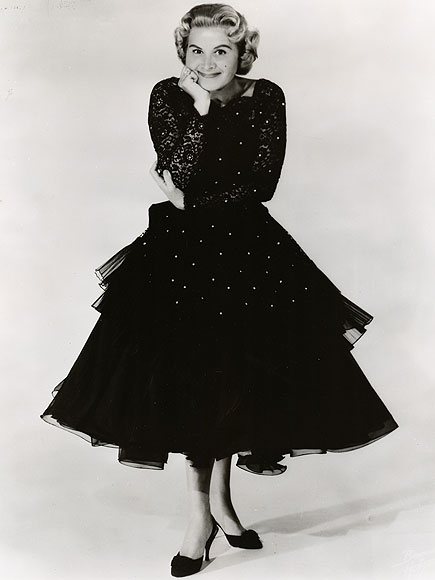
Rose Marie had one of the longest-running careers in the entertainment industry – more than 90 years in the business. During her career, she was in vaudeville, on the radio, in the movies, performed in live concerts around the country, did some Broadway, and became most famous for her television performances.


rosemarie6

Born in 1923 as Rose Marie Mazetta, she won a contest at 3 and began performing as Baby Rose Marie. On her official site, she mentions she was born the same day the Broadway show Rose Marie opened. In 1927 at the age of 4 she was featured in a Vitaphone short that opened with Al Jolson’s Jazz Singer.


rosemarie21

By age 5, she had her own national radio show. She worked in vaudeville with Edgar Bergen and Milton Berle. She made several records, and the first one released was with Fletcher Henderson’s orchestra. By 1933 at age 10, she was starring in her first film, International House. During these years, she performed at the White House three times—for Presidents Coolidge, Hoover, and Franklin Roosevelt.


Rose Marie

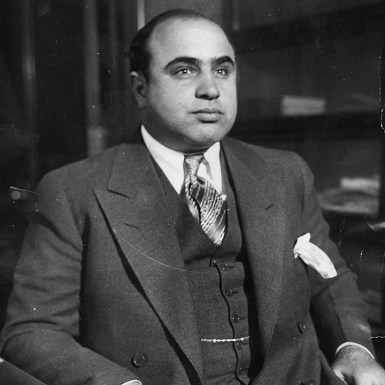
It was during her vaudeville stint that the doorman informed her and her father that a gentleman wanted to see them in the back alley.  The “gentleman” was Al Capone who called her father Happy Hank and told them that “the guys” wanted to meet Rose Marie. She was taken to Capone’s house the next day where she performed for about 24 guys.  Al gave her a ring with three diamonds which she still had when she passed away. He said they would always take care of her.  He was true to his word. Even after he was incarcerated, Rose Marie was met and protected by the mob for her entire career.  Decades after the most notorious gangsters were gone, men showed up at her shows checking on her just to make sure she was doing okay, getting work,  and not in need of anything. Later she learned that her father, who was an actor by trade, was Capone’s arsonist, the one who burned down buildings of men who disappointed the gangster. There is an article about her meeting with Capone on The Mob Museum’s website. (The Mob Museum is located in Las Vegas.)
rosemarie20


As a teenager, Rose Marie transitioned to clubs, touring the United States. In order to make her sets longer, she began to add comedy to her singing acts.


In 1946 she met Bobby Guy who as with the Kay Kyser Orchestra. They were engaged within a week, and he remained the love of her life until he passed away in 1964. They had one child, Georgianna. Guy would become the lead trumpeter on The Tonight Show.


It was also in 1946 that Rose Marie opened the Flamingo with Jimmy Durante. Jimmy Durante mentored her earlier in her career and she loved him. He was always mentioned as one of her favorite people.  At that time, the only other hotels in Vegas were the Last Frontier and El Rancho. Bugsy Siegel owned the Flamingo, and Rose Marie received work in clubs from her mob connections. She also had a 40-year friendship with Frank Sinatra that was also probably tied to some of their mob connections.


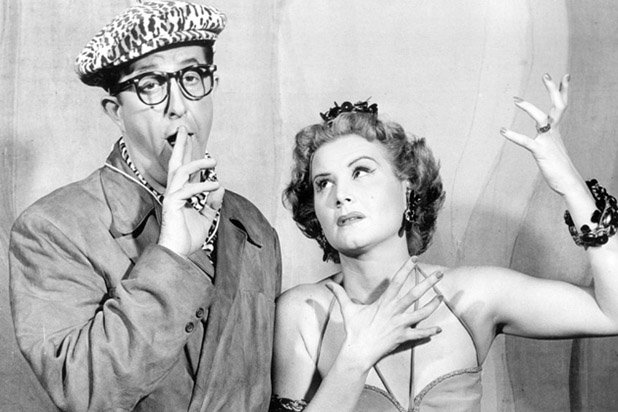
In 1951, Rose Marie tried her hand at Broadway, appearing in Top Banana with Phil Silvers. She knew Silvers from appearing on his radio show with Alice Faye. She played their daughter and Sheldon Leonard (who would hire her for The Dick Van Dyke Show) played their son.
rosemarie5

In 1954, Top Banana was made into a film. Once again Phil Silvers was in it. Rose Marie recorded her musical numbers. The producer tried to manipulate her to have sex with him. She said no in front of several people, and in retaliation he cut all her numbers from the film. In 2017 before her death, she shared the incident on Twitter to help support the women who have been exposing the sexual assault in Hollywood. She appeared in ten movies after that, most of them in the 1980s and 1990s, but she quickly became disillusioned with the film industry.

rosemarie14


Tired of the Hollywood politics, Rose Marie embraced the new television culture. She appeared in Gunsmoke in 1957 and would continue to receive roles in the new medium through 2011. During her career, she appeared on 48 different shows.

In the 1950s, she had a recurring role in The Bob Cummings Show as Martha Randolph and she appeared in The Many Loves of Dobie Gillis. The first sitcom she had a permanent role in was My Sister Eileen; she played the sisters’ friend Bertha. The show ran for 24 shows during 1960 and 1961.
 

rosemarie17

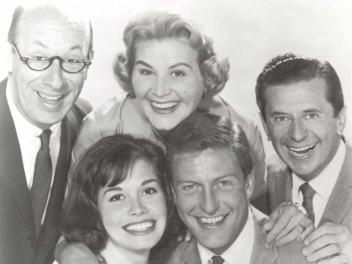
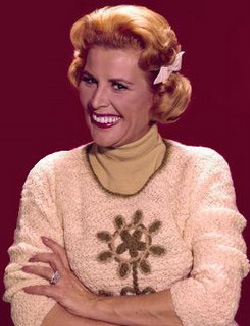
In 1961, Sheldon Leonard cast Rose Marie in the role of Sally Rogers on The Dick Van Dyke Show. She recommended Morey Amsterdam for the role of Buddy Sorrel whom she had known since age 9. The show was originally to star the office cast with the home life coming in second; however, as things changed, Mary Tyler Moore became the costar with the home life dominating the scripts and Sally and Buddy were featured less. The show produced 158 episodes and is undoubtedly one of the best written sitcoms ever produced. She and Morey received the same salary despite her being a woman. That sounds only fair today, but at the time it was not the normal practice. She loved working on The Dick Van Dyke Show. When asked about her time on the show, Rose Marie said, “We loved each other, we helped each other . . . We were really very close.”


After The Dick Van Dyke Show ended, Rose Marie took roles on several shows including The Monkees and My Three Sons. In 1969, she received a role as Myrna Gibbons on The Doris Day Show, playing Doris’s friend and coworker.


She showed up in many series during the 1980s and 1990s including The Love Boat, Mr. Belvedere, Suddenly Susan, Wings, and was a cast member in Hardball, about a struggling baseball team.


In the 1990s, Rose Marie would take on the role of Frank Fontana’s mother on Murphy Brown. Later she would appear in S.W.AT. as Hilda providing doughnuts and coffee, as well as comic relief, on the show.

rosemarie28

In the late 1990s and early 2000s, Rose Marie transitioned to voice overs for such shows as Hey Arnold and Garfield.

Rose Marie also liked game shows and was a regular on Hollywood Squares through all the different versions.


From 1977-1981, she performed across the country with Helen O’Connell, Rosemary Clooney, and Margaret Whiting. They called the show 4 Girls 4. Rosemary’s nephew, George drove their bus for them.  At some point they made enough money to afford airfare, and George Clooney went on to create a little career for himself.


Rose Marie received the 2184th star on the Hollywood Walk of Fame in 2000. Her baby shoes, along with 40 other items, have become artifacts in the Smithsonian’s American History Museum.

Her hobbies included cooking Italian meals, knitting, and reading; she especially loved Stephen King novels.
 

rosemariebook

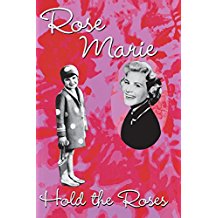
When she first appeared as Baby Rose Marie, someone handed her a bouquet of roses, but she needed to take her bow, so she handed them off and said, “Hold the Roses.” That became the title of her autobiography that was published in 2002.


rosemarielaugh

She was the subject of a documentary Wait For Your Laugh in 2017. Dick Van Dyke said that was her catchphrase, and whenever they were anywhere something funny happened, even a waiter dropping a tray full of food, she always repeated the phrase.
 

rosemarie10

She accomplished so much in her career you wonder how she could have had any regrets, but she was denied two accomplishments.  She received three Emmy nominations for her role as Sally Rogers but never won an Emmy.  She also wanted to direct and never had an opportunity to do so.
 

rosemarie3

Sadly, Rose Marie passed away in December. Happily, she left an amazing legacy of performances in a variety of mediums for us to remember her by. While she was so much more than a television star, Sally Rogers will always be one of my favorite characters. Thank you Rose Marie for so many fond memories.

Crazy Little Thing Called Love

Love is definitely in the air; whether you think it smells rancid or fragrant depends on your current relationship status.  Remember those days when everything hinged on what type of valentine your current crush gave you at the school party?  Love seemed to be the answer to all questions.  We’re going to look at some classic (and not so classic) television shows that promoted that kind of love.  Sorry, I can’t tell you if that pain you’re feeling is cupid’s arrow as it hit you or heartburn, but I can share some information with you as we learn about shows with “Love” in the title.

Love That Bob (1955). Bob Cummings played ladies’ man and photographer Bob Collins.  His widowed sister, Rosemary Decamp, and nephew (Dwayne Hickman) also lived with him. Before she moved in with the Bradys, Ann B. Davis was Schultzy, Charmaine Schultz, Bob’s assistant, who was in love with him.  Every show opened with Bob holding a camera and saying, “Hold it! I think you’re going to like this picture.” The beautiful Joi Lansing was another model who also was in love with Bob, but he was having too much fun playing the field.  When he never accepted Joi, we knew deep down in his heart, he realized that Schultzy was the one for him. While Bob couldn’t decide on only one woman, the networks couldn’t decide on only one channel for the show either.  It was on NBC Jan-May of 1955, moved to CBS for two seasons, moved back to NBC, and then finished up the last year and a half on ABC. I guess no one could remember where the show was supposed to end up after 1959, so it was cancelled. Bob was one of the first stars to play two characters in one show. Bob played himself and his grandfather Josh Collins. A decade later, Fred MacMurray would play Uncle Ferguson in addition to Steve Douglas in My Three Sons.

Love That Jill (1957). Rival managers of modeling agencies are played by real life couple Anne Jeffreys and Robert Sterling who had played the married ghosts on Topper.  I guess they spooked the network because they disappeared after three months.

loveandmarriagefeb13

Love and Marriage (1959). Now we know what Uncle Charlie really did before he moved in with My Three Sons.  He owned a music publishing company that was close to bankruptcy.  William Demerest plays a business owner who brings his daughter into the company as a partner.  She and her lawyer husband also move into his house.  She loves rock and roll; her father hates it, but it might save his company. The network shut down the agency after four months to promote family harmony.

The Many Loves of Dobie Gillis (1959). This show was based on a 1953 book and it was the first television series to feature teenagers as the main characters. I guess when Dwayne Hickman lived with Bob Collins, he picked up a lot of tips for the ladies, and as high schooler Dobie, he spent most of his time trying to find a girl to go out with and some money to pay for the date. Since his family owned a small grocery store, he was on his own for finances. Once he graduated, the show had to come up with new situations, so Dobie was in college for a couple of years as well as the army for a year. Dobie would go to the Rodin’s Thinker in the park and talk to us and himself about his love life. His best friend was beatnik and bongo player Maynard G. Krebs.  Bob Denver played this role before he went on to star in Gilligan’s Island.  He had never acted before this show; he had been a grade school teacher, and his sister, who worked for the casting department, included his name in the auditions. Super smart Zelda Gilroy was in love with Dobie.  We knew he would eventually end up with her, his own Schultzy.  She always wrinkled her nose at him and before he could stop himself he always did it back. In later years when they did two reunion movies, Dobie and Zelda were in fact married.  Sheila James, who played Zelda, became a California senator.

During the first season, Dobie thought he was in love with Thalia Meninger played by Tuesday Weld.  Thalia only liked Dobie when he had money which was not often. In real life they did not get along, and she left after the first season. Another character who disappeared after the first season was his brother Davey Gillis who was played by Hickman’s real brother, Darryl. Dobie also suffered through Milton Armitage played by Warren Beatty and then Chatsworth Osborne Jr. (Steve Franken) who were his arrogant, wealthy competition. Some of Dobie’s many girlfriends included Marlo Thomas (who became That Girl), Sally Kellerman (who was Hot Lips in the M*A*S*H movie), Ellen Burstyn (starred in many movies), Barbara Bain (who would be in Mission Impossible), and Yvonne Craig (before she was Bat Girl). Two interesting things I learned about this show was that DC Comics created a comic book series of 26 issues about the kids from 1960-1964. Also this show inspired the Scooby Doo Gang in 1969. Fred was based on Dobie, Velma on Zelda, Daphne on Thalia, and Shaggy on Maynard. Garry Marshall also reported that this was one of his main influences for his creation of the show Happy Days. After four years, I guess these kids were too innocent to handle all the crazy situations coming in the sixties and the show ended but has appeared in reruns often since it left the air.

Peter Loves Mary (1960). This couple, played by Peter Lind Hayes and Mary Healy, were married in real life. They play a show business couple who moved to Connecticut.  Luckily they have a housekeeper played by one of my all-time favorites Bea Benaderet who takes care of the house and children. Opposite the Green Acres viewpoint, Mary wants life in suburbia while Peter loves the city. The network didn’t want to weigh in on the argument so they took the show off the air after the first season.

Love On a Rooftop (1966). Judy Carne (pre Laugh-In days) and Peter Duel are a young married couple, living in San Francisco. He is an apprentice architect and she’s an art student, who gave up her dad’s money for love. Rich Little played their neighbor who designed restaurant menus, among other jobs. It was cancelled after one season.  Oddly, in the summer of 1971 it aired as a rerun show but never aired again.

To Rome with Love (1969). John Forsythe tries his hand in another sitcom.  In this one, he plays a widower who has accepted a job at an international school in Rome, and he heads for Europe with his three daughters.  His sister comes along the first season, mainly to try to talk them into going back home to Iowa.  For the second season, they gave her a one-way ticket home and brought Walter Brennan in as Forsythe’s father-in-law. The family lives in Mama Vitale’s boarding house.  After the second season, they all got air fare home and the show was done. Don Fedderson produced this show, and in the second season they had two cross-over episodes, one with the cast of Family Affair and one with Uncle Charlie, Robbie and Katie from My Three Sons.

Bridget Loves Bernie (1972). Bridget, played by Meredith Baxter, marries Bernie, played by David Birney.  The only problem is that she’s Catholic and he’s Jewish.  This would not even be noticed in today’s world, but in 1972 it caused quite a commotion. Her parents were wealthy and Irish.  His parents owned a deli and the couple lived above it. The ratings were very good–the fifth highest rated show, but they were cancelled after the first season anyway. It was the highest rated show to ever be cancelled, and the network finally caved into the pressure of public protests for having an inter-religious marriage. One fun fact is the Meredith Baxter and David Birney married in real life after this show was over.  However, that was before she came out of the closet, which created another mixed marriage . . .

loveneighborfeb13

Love Thy Neighbor (1973). This show was a summer replacement in the days of All in the Family.  Charlie Wilson, a shop steward at Turner Electronics, lives in LA. When new neighbors move in, not only are they black, but the new guy is hired as an efficiency expert at Turner.  The show explored how two couples of different races become friends.  The white couple was played by Ron Masak and Joyce Bulifant.  The black couple was played by Janet MacLachlan and Harrison Page.  The network didn’t love any of them because they sent them packing after 11 episodes.

Loves Me, Loves Me Not (1976). Jane, played by Susan Dey, fresh from the Partridge Family, is a teacher.  Dick (Kip Gilman) is a reporter.  They have a couple of dates with mixed results and aren’t sure if they like each other or not or should continue dating.  Dick’s boss and his wife are also characters on the show.  Apparently CBS decided it loved them not because they were cancelled after one month.

Love, Sidney (1981). If the network thought they had problems when Bridget loved Bernie, they really stirred up a hornet’s nest with this show.  Based on a movie, Sidney Shore, Tony Randall was the first person to play an openly gay character.  Sidney is an adman and lives with a young woman and her daughter, played by Swoosie Kurtz and Kalena Kiff. There were some heart-warming stories including two different episodes when both Sidney and Kurtz’s character had to make peace with less-than-perfect parents. Once again, the network gave into public dissatisfaction and cancelled the show midway through season 2.

Joanie Loves Chachi (1981). This show was a mid-season replacement.  Chachi (Scott Baio) left Milwaukee and Happy Days and moved with his parents (Ellen Travolta and Al Molinaro who had owned Arnolds’s malt shop) to Chicago.  He sang in a restaurant his family owned.  Because Joanie (Erin Moran) loved Chachi, she convinced her parents to let her go to Northwestern to be a nurse, but she spent more time singing with Chachi. Most of the shows involved one of them being jealous of the other and ending the fight with a song. In the first season this new show followed Happy Days and was a huge success. The second season it moved to Thursday and bombed in the ratings. The network sent both Joanie and Chachi back to Milwaukee after the second season where they continued on Happy Days until it went off the air in 1984.

Everybody Loves Raymond (1996). Ray Romano played sports columnist Ray Barrone.  He lived with his wife (Patricia Heaton) and kids, right across the street from his overbearing mother (Doris Roberts), cynical father (Peter Boyle), and jealous older brother (Brad Garrett). No one had any privacy on this street, but there were a lot of poignant episodes. We all knew everybody loved Raymond, but they also loved each other.  In 2004 after 9 seasons, the network decided not everybody loved Raymond, just most people, and they cancelled their sports subscription.

Image result for image of love

If you’re not crazy about love right now, apparently you’re in good company because the majority of these shows were cancelled within a year.  If you’re a hopeless romantic, you’re probably watching Everybody Loves Raymond on Nickelodeon. Happy Valentine’s Day, or not.