Scooby Doo And the Many Loves of Dobie Gillis

This month our blog series is “Get Animated,” and today we are taking a look at the Scooby Doo gang. Launched in 1969, Scooby Doo was created by Joe Ruby and Ken Spears for Hanna-Barbera Productions.

📷imdb.com

The show featured five teenagers who work together to solve mysteries. It ran on ABC from 1969-1976 when it moved to ABC until 1985. Since then there have been several reboots, a new show A Pup Named Scooby Doo, and several movies, but today we are focusing on the original series.

Fred Silverman, head of daytime programming at CBS, was looking for a new series that could take on the popularity of The Archies. Silverman had a concept in mind of a group of friends who played rock concerts and solved mysteries. The original concept was called Mysteries Five featuring Geoff, Mike, Kelly, Linda, W.W., and a bongo-playing dog called Too Much.

Designer Iwao Takamoto was brought on board. Takamoto had been incarcerated at Manzanar, a concentration camp in WWII. He began sketching scenes to pass the time. In 1945, Takamoto was hired by Walt Disney Studios with no experience or education apart from the sketching he taught himself during the war. At Disney he worked on Lady and the Tramp. He later worked for Hanna-Barbera and worked on The Flintstones in addition to Scooby Doo. After reading a dog breeder’s description of a pedigree Great Dane, he created Scooby, adding a hump back, bowed legs, and several features that were not highly rated in dog show winners.

📷facebook.com Denver, Weld, Hickman

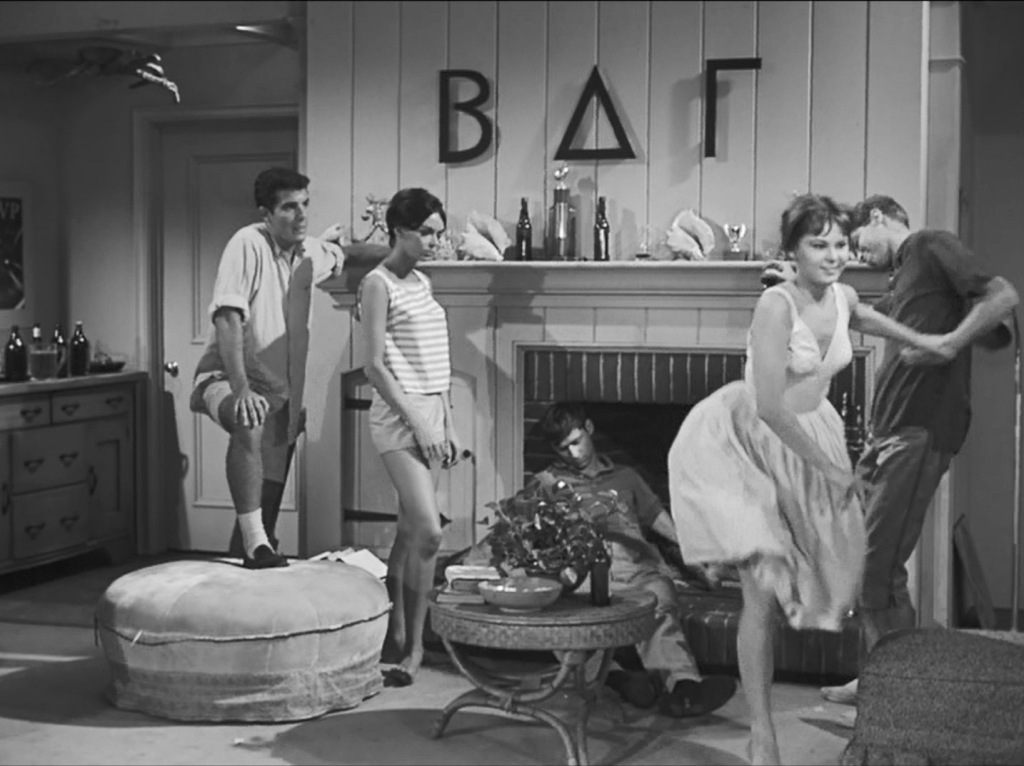
The teens were based on the cast of The Many Loves of Dobie Gillis. That show was on the air from 1959-1963. The Scooby gang became Fred based on Dobie Gillis (Dwayne Hickman), Daphne based on Thalia Meninger (Tuesday Weld), Velma based on Zelda Gilroy (Sheila James), and Shaggy based on Maynard Krebbs (Bob Denver). Silverman based the dog’s name, Scooby Doo on Frank Sinatra’s doo-be-doo-be-doo in “Strangers in the Night.” The title became Scooby Doo, Where Are You?

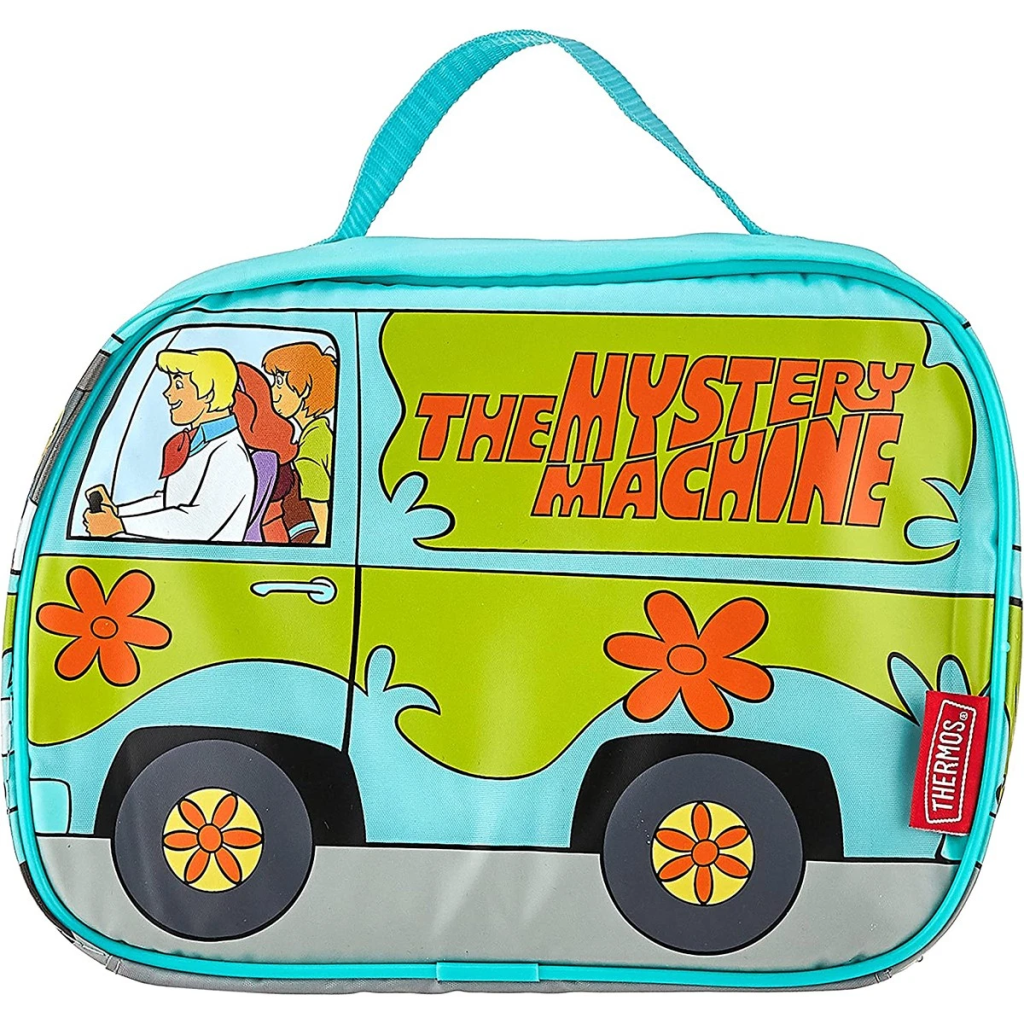
When the show aired the voices were Don Messick (Scooby), Casey Kasem (Shaggy), Frank Welker (Fred), Nicole Jaffe (Velma), and Indira Stefanianna (Daphne). The group of friends traveled in the Mystery Machine, a very-sixties-looking van with psychedelic colors and flowers.

📷mentalfloss.com

As they travel the country, they run into situations where ghosts and paranormal activity threaten the locals. The plots were pretty basic, like the Hallmark Christmas movie formulas, the kids ran into someone being scared by a ghost, zombie, etc., and the kids would decide to help out their new friend. Eventually after at least one person, often Shaggy, went missing, before the kids unmasked the villain who turned out to be a human they had already dealt with in their investigation.

The ratings were amazing with up to 65% of viewers tuning in on Saturday mornings. It was renewed for a second season in 1970; however, a season of cartoons was only eight episodes.

In later years, the series received two Emmy nominations.

David Mook and Ben Raleigh wrote the theme song which was performed by Larry Marks.

Gold Key Comics published comic books starting in December 1969. It was drawn by Phil DeLara, Jack Manning, and Warren Tufts. The first ones were adaptations of the television shows, but eventually new stories were created. The series has been published off and on the past six decades.

This brand has sold billions of dollars of merchandise since it first began. In fact it sold a billion in 2004 alone. The early items included a board game in 1973, lunch boxes, coloring books, records, and underwear. The years since have featured a ton of items including a kids’ multivitamin, Scooby Snack dog treats, Barbie dolls, and Hot Wheels.

I loved this show growing up. The kids seemed fun and sophisticated and we all wanted to solve mysteries. For years there was a Mystery Machine in the town where we lived when my boys were little, and I felt nostalgic whenever I saw it parked around town.

The Virginian: Where Nobody Knows Your Name

As we get ready to “Go West Young Man,”  today our blog series is getting to know the The Virginian (which is sometimes confusing because it was renamed The Men from Shiloh later for part of the series). This series debuted on NBC in 1962. It produced 249 episodes, running until 1971, making it the third longest-running western (Gunsmoke and Bonanza were the top two).

📷wikipedia.com

Lew Wasserman was involved with Universal, and they produced Wagon Train which was on NBC. Universal sold the series to ABC in 1962 after it had been on the air for three years, and NBC was not happy, but Wasserman told them that he had a new show for them, The Virginian.

It was also the first 90-minute western. Like Stagecoach West, it was set in the Wyoming Territory. While the pilot was black and white, the rest of the series was filmed in color.

The series was based on an Owen Wister novel, The Virginian: Horseman of the Plains which was published in 1902.

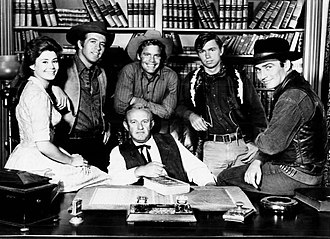
The series featured a foreman at the Shiloh Ranch near Medicine Bow played by James Drury. The foreman was never referred to by his name. Drury once said, “Nobody knows the name of my character, not even me.” His sidekick was Trampas (Doug McClure). Sheriff Abbott (Ross Elliott) also shows up on and off throughout the nine seasons. For the first four seasons, the ranch owner, Judge Henry Garth (Lee J. Cobb) and his daughter Betsy (Roberta Shore) also live there. The cast changed fairly often throughout the series, but Drury and McClure were along for the entire ride.

📷ebay.com

The plots of the show often revolve around themes of prejudice, injustice, being a responsible and hard worker, and standing up for the right thing.

During the final season, the show changed its title, and the series changed quite a bit. There was a new theme song, and it took on more of the character of the popular spaghetti westerns. Stewart Granger and Lee Majors joined the cast. While the ratings increased, the network was intent on cancelling the show, along with the rural purge that happened at that time.

Later when the show was no longer on the air, Drury discussed two of his castmates, one he admired and considered a friend and one he did not! About Grainger who joined the show for the last year, Drury said, “He was a disaster, and I couldn’t stand him. He wanted everything changed to make him the star of the show.  . . . He also fired the whole camera crew and hired a new crew for his episodes.” However, on reflecting about his co-star Doug McClure, Drury recalled “off-screen Doug was quite like his character, and you couldn’t help but smile when he walked into a room because he was full of good humor and good spirits all the time. He could cheer anybody up. He became my best friend, and I still miss him terribly—you couldn’t ask for a better co-star.”

As you can imagine, being on the air for nine years meant a lot of guest stars showed up on the series, including Eddie Albert, Charles Bronson, Robert Culp, Joan Crawford, Bette Davis, Patty Duke, Robert Duvall, Harrison Ford, Jack Lord, Lee Marvin, Vera Miles, Leonard Nimoy, Ryan O’Neal, Robert Redford, George C. Scott, William Shatner and Franchot Tone.

📷facebook.com

The Virginian was on Wednesday nights for its entire run. When it began, it was up against Wagon Train on ABC while CBS ran CBS Reports and The Many Loves of Dobie Gillis. Both The Virginian and Wagon Train managed to hit the top thirty that year. The next year, its biggest competition was The Adventures of Ozzie and Harriet followed by The Patty Duke Show. The Nelsons hit the top thirty and The Virginian and The Patty Duke Show were in the top twenty. The show continued to be in the top twenty or top thirty for the rest of its run, hitting the top ten in 1966, despite being on at the same time as many popular sitcoms during those years, including Batman, The Beverly Hillbillies, The Courtship of Eddie’s Father, Gomer Pyle USMC, Lost in Space, Mister Ed, and My Living Doll. It was still in the top twenty when it was canceled.

This show is fondly remembered by viewers who tuned it at the time. It’s been in syndication for decades, racking up new generations of fans. In one of his later interviews, Drury talked about the appeal of the show. He said, “People now tell me about their grandkids who discover the show on cable and start watching it. It’s a wonderful feeling to know the show is still viable after all these years.” That alone is reason to be proud of working on this show.

Stagecoach West: Experiencing Life in Outpost

As we celebrate westerns this month in our blog series “Go West Young Man,” we are tuning in to Stagecoach West which traveled across the air waves from 1960-1961. The show debuted in October of 1960 with the final episode airing in June of 1961. For the summer, reruns of the show continued. The thirty-eight episodes were on Tuesday nights.

📷wikipedia.com

The show features two Civil War veterans, Luke Perry (Wayne Rogers) and Simon Kane (Robert Bray), who own a stagecoach line and share driving duties in the Wyoming territory. It was fun to see a young Rogers decades before he showed up in Korea bantering with Alan Alda. During their trips they run into murders, robberies, range wars, renegade soldiers, and passengers who have their own drama. Simon’s son Davey (Richard Eyer) often travels with the men.

They are based in Outpost, a small frontier town. We get to know several townspeople including Dan Murchison (John Litel) who runs the general store and bank; Zeke Bonner (James Burke) who rents rooms at The Halfway House; Hugh Strickland (Robert J. Stevenson), the Marshal in Timberline; and Doc Apperson (played by J. Pat O’Malley and Sydney Smith).

📷rottentomatoes.com

Vincent M. Fennelly was the producer and there were several directors, with Thomas Carr taking the helm most often. There was also a long list of writers, but D.D. Beauchamp and Mary Beauchamp penned many of the scripts. From what I could learn about the Beauchamps, they didn’t work together but wrote their own episodes. Mary was known for her work on Bat Masterson and Tales of West Fargo in addition to this show. D.D. (Daniel Deronda) is best remembered as a writer for Daniel Boone. His third wife was Mary Mitchell, so I am guessing that Mary Mitchell and Mary Beauchamp are the same person. Sounds like she and her husband were cremated, so there is no findagrave site for her.

The theme song was composed by Skip Martin and Terry Gilkyson. This was the only time I could find where this duo worked together. They had very different careers. Gilkyson was part of The Weavers and The Easy Riders. In 1960 he went to work for Walt Disney and was nominated for an Oscar for “The Bare Necessities” in Jungle Book. Martin worked with jazz and swing bands in the 1930s and 40s including Count Basie and Glenn Miller. With Les Brown, he was given credit for writing “I’ve Got My Love to Keep Me Warm.” In the 1950s he moved to Hollywood where he worked on Singin’ in the Rain and A Star is Born.

📷westernserieswiki.com

Richard Eyer in an interview said the show “kept me busy and was usually fun. It was a very positive experience. When they hired me, it was sort of a transitional point . . when we did the pilot I was 13 and quite young . . . we started production eight months [later] . . . I was into puberty and adolescence.”

Tuesday nights’ competition in 1960 was Thriller on NBC and The Tom Ewell Show and The Red Skelton Show on CBS. Thriller was an interesting show hosted by Boris Karloff. It began as an anthology focusing on crime but later transitioned to gothic horror stories. The Tom Ewell Show also began and ended in 1960. Ewell plays a real estate agent who lives with a lot of women, namely his wife, daughters, and mother-in-law. ABC aired The Rifleman and The Legend of Wyatt Earp before Stagecoach West.

The show never gained viewers, so it was cancelled in June. If you follow me, you know I don’t have the most positive feelings about Red Skelton and how he treated the people who worked for him, but it was a very popular show and some of the episodes were in color, so a lot of people were tuning into to watch him. I wonder if because two westerns were on earlier in the evening, people were ready to watch another genre. In addition to this night of programming, there were another 15 westerns on during the evenings on the other days of the week. The other factor that comes into play is that both The Rifleman and The Many Loves of Dobie Gillis on CBS were in the top thirty. I wonder how many viewers watched The Rifleman on ABC and then switched networks to Dobie Gillis on NBC and then never returned to ABC for the rest of the evening.

It would be a fun and easy binge watch if you want to tune in even to see the guest stars and learn some of the issues that were dealt with during this era of travel.

Burt Mustin: What a Character

This month we are looking at some of our favorite character actors. As we wrap up the series, we are ending on a high note with the amazing Burt Mustin. Like Charles Lane, Mustin had a prolific career in Hollywood and television. However, unlike Lane, Mustin was offered his first acting job at age 67 after he had retired.

📷Widener University Archives

Mustin was born in Pittsburgh in 1884. His father was a stockbroker. After high school, Mustin enrolled in the Pennsylvania Military College (now Widener University) with a degree in civil engineering. During his college career he played trombone in the band and played goalie for his hockey team.

After graduation, Mustin toured Europe, planning to work at his father’s brokerage firm. However, a financial panic destroyed the company.

One of Burt’s university classmates was Charles Spinney. According to Burt, Spinney displayed lots of photographs of young ladies from his hometown of Memphis, Tennessee. One day, he was showing them to Burt when he spotted the photo of what he referred to as “the prettiest girl in the room.” Mustin traveled to Memphis to meet her and in 1915 he married Frances Robina Woods. The couple had no children and remained together for their entire lives, with Frances passing away in 1969.

📷imdb.com

After working as an engineer for a few years, Mustin decided to try to sell automobiles. In an interview, Mustin admitted, “I was the worst engineer the school turned out.” He began selling Oakland Sensible Sixes and later Franklins, Lincolns, and Mercurys. WWII put an end to car sales for a few years, so Mustin began working for the Better Business Bureau and then the Chamber of Commerce. He stayed in Pittsburgh until he retired.

He did a bit of amateur acting and continued his passion for music. He was part of the oldest Gilbert and Sullivan troupe in the country, the Pittsburgh Savoyards; the Pittsburgh Opera; and an officer in the Society for the Preservation and Encouragement of Barbershop Quartet Singing in America. 

He was a founding member of the Pittsburgh Lions Club in 1921 and a life member in the Fellows Club of Pittsburgh. Mustin served as an announcer for the first weekly variety show on radio station KDKA.

📷that’sentertainment.com

After retiring, Mustin and his wife moved to Tucson, Arizona for her health where he continued acting. William Wyler saw him in a stage production of “Detective Story” and told Mustin to let him know if he ever wanted to pursue a film career. When Wyler was casting for Detective Story in 1951, Mustin reached out to him. The couple later moved to Los Angeles. Mustin would appear in 67 films overall.

In 1968 Mustin was cast in Speedway with Elvis and Nancy Sinatra. In one scene the stars have a lover’s quarrel in a coffee shop. When they make up, Elvis sings a song for his girl. Mustin is in the background cleaning the café and working at the counter. The producers felt the scene needed something else. That something else ended up being Mustin singing and dancing with a mop. No one on the set realized that Burt could sing before that adlibbed scene.

1951 was also the year that Mustin appeared on television in The Adventures of Kit Carson. He would find a new career in television for the next two decades, appearing in more than 130 series (which would equal more than 400 actual episodes).

📷imdb.com

During the fifties, he would be attracted to many westerns and dramas; however, he found his way onto a few comedies including The Great Gildersleeve, December Bride, and Our Miss Brooks.

If I listed half of the 1960s shows he appeared on, you would still be reading this blog next Monday when my new one is dropped. Take my word for it that he was on almost every popular sixties’ sitcom, including 14 episodes as Gus the fireman on Leave it to Beaver. Other sixties hits you can find him on include The Many Loves of Dobie Gillis, The Dick Van Dyke Show, The Joey Bishop Show, The Jack Benny Show, The Beverly Hillbillies, Get Smart, The Andy Griffith Show, The Lucy Show, Bewitched, Gomer Pyle USMC, Petticoat Junction, and My Three Sons, not to mention many dramas and westerns including Bonanza and Gunsmoke. He was no less busy in the seventies where we could catch him in Marcus Welby, The Mary Tyler Moore Show, The Brady Bunch, Love American Style, Adam-12, All in the Family, and Phyllis.

📷imdb.com

Johnny Carson loved having Mustin on The Tonight Show, where he was a fan favorite. He shared a lot of fun stories on the show. One of them was about him being at the first World Series for baseball in 1903 when the Pittsburgh Pirates played the Boston Red Sox. Unfortunately for Burt, Boston came back to win the series, but as a bonus he did get to see Honus Wagner play on the diamond.

Mustin passed away eight years after his wife at the age of 92. He left a gift to the college he was loyal to his entire life, enabling Widener University to renovate their theater. It is now named the Burton H. Mustin Theatre and Lecture Hall.

It’s hard to wrap your head around what a busy film and television career Mustin had. He was an actor for the last 25 years of his life, and with 67 movies and more than 400 episodes, that means that he accumulated about 20 credits per year which is almost two a month from age 67 to 92. Talk about an amazing career. Mustin proved that it’s never too late to find your next passion. Thanks for so many great memories Burt Mustin.

Florida Friebus: What a Character

📷danahallschool.com

As we continue our What a Character blog series, today we get to talk about the woman behind one of my favorite characters, Lillian Bakerman from The Bob Newhart Show. That woman is Florida Friebus.

Friebus was born in Massachusetts in 1909. She was named for her mother’s favorite aunt, not the southern state. Weirdly, her paternal grandmother was also named Florida. Her family was involved in the theater. Her father Theodore was a leading stage actor with Boston’s Castle Square Players and a silent film star. Her mom’s mother, Georgine Flagg, was part of the Augustin Daly stock company in Manhattan.

When she was only eight years old, Florida’s father passed away. Her mother had studied at the Dana Hall Schools and applied for a position of housemother there. Florida was able to study at Tenacre during this time. She participated in the first Christmas pageant in 1921. Florida not only learned a lot about acting, but she also was presented with classes in political history, music, art, languages, and literature.

📷facebook.com with Richard Waring

Friebus moved to New York to study at the Theater Guild School. She began her acting career in 1929 in when she appeared with the Civic Repertory Theater in “The Cradle Song.” In 1932, she worked on an adaptation of “Alice in Wonderland” with Eva Le Gallienne, and she took on the role of the Cheshire Cat.

In 1934, Friebus married Richard Waring. They would divorce in 1952, and she never remarried.

Friebus was elected to the Council of the Actors’ Equity Association in 1949, and she spent 16 years on the board.

Florida read stories to children on her KNXT show, Look and Listen, in Los Angeles.

📷imdb.com

Her first television role was in 1948 on The Ford Theater Hour. Her television drama appearances continued into the 1950s and she also appeared on several sitcoms, including The Goldbergs, Father Knows Best, Bachelor Father, and The Donna Reed Show. In 1959 she accepted a role that made her a household name: Winnie Gillis on The Many Loves of Dobie Gillis. For four seasons she tried to defend Dobie and his crazy dilemmas when his father became exasperated with him.

The show was based on a 1951 book, The Many Loves of Dobie Gillis by Max Shulman about the romantic adventures of a student at the University of Minnesota. Shulman wrote for the series. He would also write The Tender Trap which became a movie in 1955 and House Calls which became a 1978 movie; Shulman became head writer for the television series based on House Calls.

The sixties and seventies found Florida in a variety of both dramas and sitcoms. A few of these series included Ben Casey, Peyton Place, The Doris Day Show, The Mary Tyler Moore Show, The Partridge Family, Gunsmoke, Room 222, and Barnaby Jones.

📷sitcomsonline.com

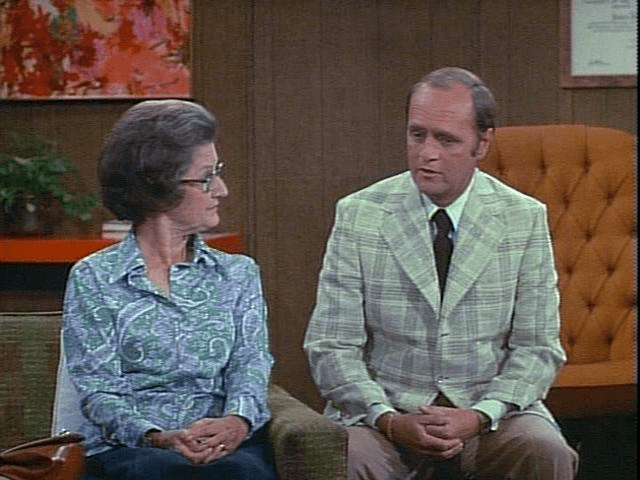
In 1972 she accepted the role of Lillian Bakerman on The Bob Newhart Show. During the show’s run, she made 19 appearances trying to encourage the other patients in her therapy group. She is often seen knitting while the group talks. One of her fears is flying, and her catchphrase is “Isn’t that nice.”

Her last appearance was in 1982 on The New Odd Couple as, who else but Mrs. Bakerman.

In 1988, Friebus passed away from cancer at 78 years old.

Good Evening Alfred Hitchcock

📷noizetv.com

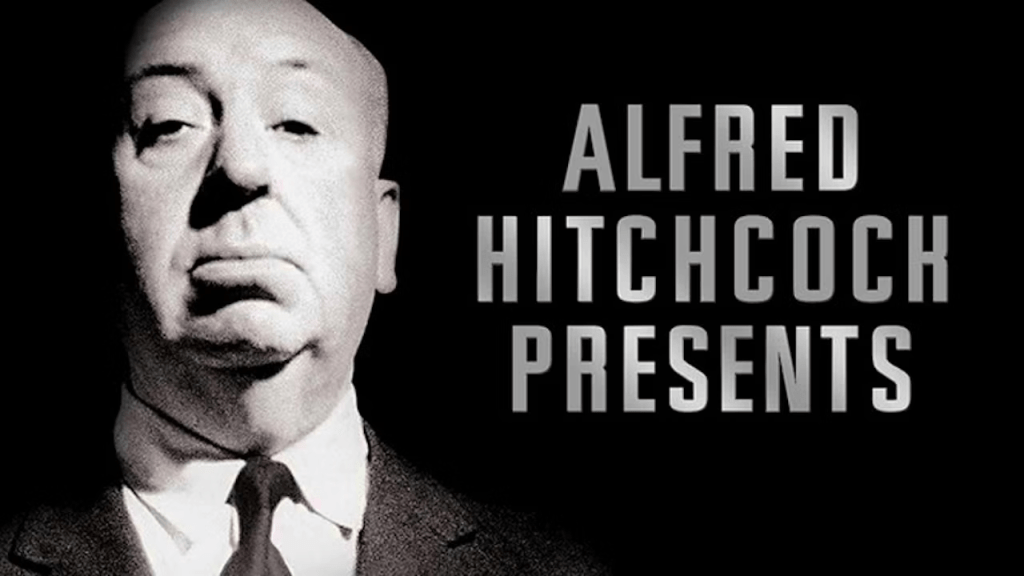
In October, we are tackling a blog series on Eerie Shows. It would be almost impossible to not include Alfred Hitchcock Presents which was on television for a decade.

The show premiered in 1955. Hitchcock had been directing films for more than three decades at that time. The series experienced several changes. It began as Alfred Hitchcock Presents on CBS but would switch both nights and networks during its run. In 1962 it became an hour-long show and was called The Alfred Hitchcock Hour.

Many fans recall the opening. There is a line-drawing of Hitchcock’s profile with the “Funeral March of a Marionette” playing in the background. Hitchcock appears at the edge of the screen and walks to the center where he fades into the caricature line drawing. Then he said, “Good evening.” The silhouette was one that Alfred drew. He began his entertainment career illustrating title cards for silent movies.

📷peacock.com

Hitchcock himself directed 17 of the episodes of the series. Two of those were nominated for Emmy awards: “The Case of Mr. Pelham” in 1955 with Tom Ewell and “Lamb to the Slaughter” in 1958 with Barbara Bel Geddes.

Hitchcock’s job during this series was to introduce the story and then to wrap it up at the end. Both the openings and closings were written by James B. Allardice. Allardice wrote for 38 different shows, many of them very popular series in the fifties and sixties. Norman Lloyd, who produced the show and appeared in five episodes, said Hitchcock respected Allardice so much that he never even changed a comma that he wrote.

The network demanded that if a character got away with murder during the show, then Hitchcock would let them know during the closing that he was eventually brought to justice; in the TV Guide, Hitch described this as “a necessary gesture to morality.” Lloyd gave an example of this in a Television Academy interview. In one episode, a woman kills her husband with a frozen lamb’s leg and gets away with it. At the end of the show, Alfred explains that she later remarried and tried the same trick again but when she took out the leg and hit her husband with it, it was not frozen enough, so he caught her in the act and turned her in.

📷genresnaps.com

The episodes were not your average thriller shows. They included drama, suspense, and humor. Audiences never knew just “who done it” till the end.

The show debuted on CBS on Sunday nights for five years, up against drama anthologies for two years and then competing with The Dinah Shore Show for three years. For the next two seasons it moved to NBC on Tuesday nights. It aired against The Many Loves of Dobie Gillis on CBS those years and against Wyatt Earp on ABC. For three months it went back to CBS on Thursdays before moving to Fridays on CBS the next season with The Price is Right and 77 Sunset Strip. The ninth year found it on CBS on Fridays with little competition and the final year it showed up on NBC’s schedule on Mondays against Ben Casey. I could never find the reason for cancelling the show. I’m assuming ratings began to decline but if anyone knows, I’d love to hear it.

NBC chose not to air a 1962 episode called “The Sorcerer’s Apprentice” because the sponsor felt the ending was too gruesome. In the episode, a magician’s helper is supposed to help in a trick where he “sawed” a woman in half, but he doesn’t realize he truly saws her in half.

📷thecompletehitchcock.com

As you might guess, with a new story every week, many celebrities appeared on the show including Charles Bronson, Bette Davis, Bruce Dern, Robert Duvall, Clint Eastwood, Peter Falk, Joan Fontaine, Peter Lorre, Walter Matthau, Steve McQueen, Vera Miles, Claude Rains, Robert Redford, Burt Reynolds, Thelma Ritter, George Segal, and Jessica Tandy.

In addition to the Hitchcock-directed episodes, the show received Emmy nominations for Best Series four times. In 1956 it was up for Best Action or Adventure Series, but it lost to Disneyland. The following year found the show in the Best Series – Half Hour or Less category, but it lost to The Phil Silvers Show. 1958 found it in the category of Best Dramatic Anthology Series. You would think that would be a no-brainer win for this show, but it lost to Playhouse 90. It had its fourth category nomination in 1959 as Best Dramatic Series – Less Than One Hour and lost to Alcoa Theatre. I guess the Emmy committee had a hard time determining categories for a few years.

In a different twist, NBC tried to air the show again in 1985. Hitchcock had passed away five years earlier from renal failure. A made-for-TV-movie combined new stories with colorized segments from the original show. It lasted a year before NBC canceled it. USA picked it up for three more seasons.

📷screentunes.com

The original show can still be seen on a few different networks including MeTV.

With Hitchcock’s popularity in 1955, it’s no wonder that this show was a successful series for a decade. The episodes were well written, and they had a wonderful cast of actors. Many people probably tuned in just to see Hitchcock, and his personality was larger than life, even if his behavior was a bit despicable at times. One of Alfred’s quotes about the show was that “television has brought murder back into the home – where it belongs.”

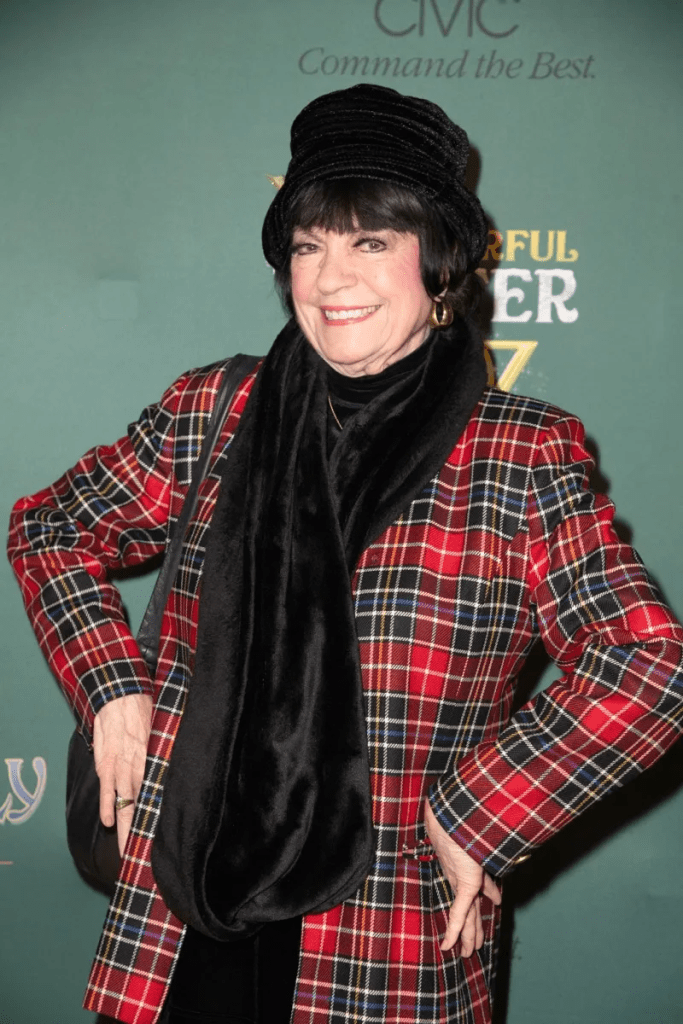
Jo Anne Worley: What a Character

📷imdb.com

We are winding up a blog series about Supportive Women. One of the women I wanted to include was Jo Anne Worley. I didn’t know much about her apart from her appearances on Rowan & Martin’s Laugh-In and being in my favorite made-for-television movie, The Feminist and the Fuzz.

Jo Anne was born in 1937 in Lowell, Indiana. Her loud voice was not an acting tool. She always felt she was loud. She said, “I have a big mouth, and I’m sorry to say I’ve always had one. When I was young, in church, I never sang with everybody else. I only mouthed the hymns, so I wouldn’t drown anyone else out. I have my quiet moments. But I don’t have many.” She was named school comedienne at her high school.

In one interview with a Lowell reporter, she said “I’ll never forget the place I’d work every summer while in high school. It was called Robert’s Hotel, Gas and Café, and it was at the intersection of US 41 and Highway 2. They had an old juke box in the café where I worked, and I’d sing and joke around whenever the business was slow, which seemed like most of the time.”

After graduation, Worley moved to Blauvelt, New York to work with the Pickwick Players. She was later offered a scholarship to Midwestern State University in Wichita Falls, Texas. After two years at the school, she moved to Los Angeles City College and enrolled at the Pasadena Playhouse. Her first musical role was in “Wonderful Town.”

📷hellodolly.com

In 1961 she was in the off-Broadway musical show “Billy Barnes Revue” with Charles Nelson Reilly and Larry Hovis (who was Carter on Hogan’s Heroes). The original show in 1959 featured Bert Convy, Joyce Jameson, Patti Regan, Ken Berry, Ann Guilbert, Jackie Joseph, and Len Weinrib.

Jo Anne was in two episodes of The Many Loves of Dobie Gillis in 1961-2. During the rest of the sixties, she was offered several big-screen roles.

In 1964 she was given a role in “Hello, Dolly.” A year later she developed her own comedy and singing act in Greenwich Village where she was discovered there by Merv Griffin.

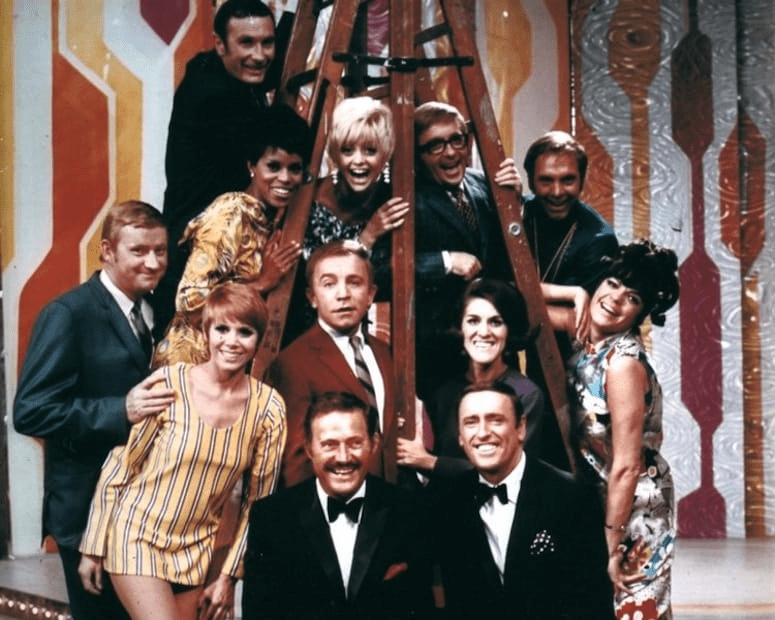
📷palmspringslife.com Laugh-In

Griffin encouraged her to appear on his show which she did forty times. Like Marcia Wallace, who we learned about last week, her appearance on Merv Griffin was seen by someone who recommended her for a new show. In this case, George Schlatter cast her in Rowan & Martin’s Laugh-In.

Worley left the show in 1970. She made guest appearances on The Tonight Show Starring Johnny Carson. She also appeared on several game shows, including Super Password, Hollywood Squares, and many versions of Pyramid.

In 1971 she made the television movie I discussed above, The Feminist and the Fuzz. It starred David Hartman, Barbara Eden, Farrah Fawcett, Worley, Julie Newmar, and Henry Morgan. I would love to see it again.

For most of her career, Worley would be providing voices for animation. However, she appeared in a handful of shows during the seventies and eighties, including Adam 12, Love American Style, Hawaii Five-0, CHiPs, Murder She Wrote, The Love Boat, Mad About You, Curb Your Enthusiasm, and The Middle.

📷modcinema.com Feminist and the Fuzz

In 1975, Worley married Roger Perry. They would stay together for 25 years, divorcing in 2000. Perry has 95 acting credits and appeared in many popular shows in the seventies, eighties, and nineties. He was also in The Feminist and The Fuzz. After divorcing Worley, he would marry actress Joyce Bulifant.

During the seventies and eighties, Worley did a lot of regional theater in Milwaukee and several cities in California.

In the 1990s she got involved with Disney and provided her voice for Beauty and the Beast and A Goofy Movie. She also was on several Disney series including Kim Possible and the Wizards of Waverly Place.

📷bestlife.com

She was in a limited run of a musical production of “The Wizard of Oz,” playing the wicked witch of the west in 1999. In 2007, she appeared on Broadway as Mrs. Tottendale in “The Drowsy Chaperone,” and she reprised the role in 2015 at The Cape Playhouse. She was also cast in “Wicked” as Madame Morrible in 2008.

Jo Anne Worley once said, “my goal in life is to be the kind of person my dog thinks I am.” That seems to be good advice for all of us. It was fun getting to know a little more about this funny woman. We love her as much as her dog did.

Reta Shaw: Housekeeper Extraordinaire

I devoted this month to some of our favorite actresses from the golden age of television. This list would not be complete without Reta Shaw who popped up in almost every popular program during the fifties and sixties.

Reta Shaw - IMDb
Photo: imdb.com

Shaw was born in Maine in 1912. She was born into the entertainment business; her father was an orchestra leader and her younger sister Marguerite also became an actress (I could only find one credit for her; it was a 1959 movie titled The Ballad of Louie the Louse.) After graduation, Reta attended the Leland Powers School of the Theater in Boston.

She then headed for the bright lights of Broadway and in 1947 was cast in “It Takes Two.” In 1954 she was Mabel in “The Pajama Game” and later appeared in “Gentlemen Prefer Blondes”, “Picnic”, and “Annie Get Your Gun.”

QUITE A CHARACTER: In Celebration of RETA SHAW | THAT'S ENTERTAINMENT!
Photo: jacksonupperco.com

Her motion picture career overlapped with her television career. She had feature roles in several big-screen successes including Picnic; The Pajama Game; Pollyanna; The Ghost and Mr. Chicken; Escape to Witch Mountain; one of my favorites as a kid, Bachelor in Paradise with Bob Hope; and most famously, the cook in Mary Poppins, as well as a maid in Meet Me in St. Louis.

In 1952 she married William Forester, another actor. William appeared in Mister Peepers and The Pajama Game movie with his wife. He was very busy with television appearances during the early sixties. They were married a decade but divorced in 1962; the couple had a daughter.

She appeared in many of the same shows as the other actresses we learned about this month. Her first television role was on Armstrong Circle Theater. Her second role was as a regular cast member of a little-remembered show, Johnny Jupiter in 1953. It was a quirky show about a store clerk named Ernest P. Duckweather who invented an interplanetary television set and developed a friendship with a puppet named Johnny Jupiter.

Papermoon Loves Lucy — RETA SHAW
Photo: papermoon loves lucy

From 1953-1955 she would appear with Marion Lorne on Mister Peepers as Aunt Lil. She continued receiving both movie and television roles throughout the fifties. In 1958 she received another recurring role on The Ann Sothern Show as Flora Macauley.

She began the sixties with another permanent job on The Tab Hunter Show. This show as about comic strip author Paul Morgan. His comic strip was “Bachelor at Large” and he wrote about his own amorous adventures.  Shaw, as Thelma his housekeeper, had a very different view of that life than Paul’s best friend Peter did. When that show went off the air, she was given another spot on Oh! Those Bells. The Wiere brothers, well-known comedians, portrayed the Bell Brothers who worked for Henry Slocum in a Hollywood prop shop. The brothers managed to create a disaster out of the most minor matters. The show only lasted two months.

Throughout the sixties she could be seen on a variety of series; although she certainly excelled at comedy she was just as accomplished in dramas such as Wagon Train, I Spy, The Man From UNCLE, and FBI. Reta also made more than a dozen movies during this time.

133 Reta Shaw ideas | the andy griffith show, character actress, don knotts
Photo: pinterest.com

However, her sitcom career flourished, and she was kept very busy during the sixties with roles on The Many Loves of Dobie Gillis, Father of the Bride, Lost in Space, The Dick Van Dyke Show, The Cara Williams Show, My Three Sons, The Farmer’s Daughter, The Lucy Show, The Patty Duke Show, The Adventures of Ozzie and Harriet, The Monkees, That Girl, Please Don’t Eat the Daisies, and I Dream of Jeannie.  She had a recurring role on Bewitched as Aunt Hagatha/Bertha. She was featured in The Andy Griffith Show twice, but one of them is one of my all-time favorite episodes, “Convicts at Large” when she plays Big Maud Tyler who enjoys dancing with Barney.

The Ten Best THE ANDY GRIFFITH SHOW Episodes of Season Three | THAT'S  ENTERTAINMENT!
Photo: jacksonupperco.com

The end of the decade brought her another recurring role as housekeeper on The Ghost and Mrs. Muir. On May 1, 2014, Madman Entertainment interviewed Kellie Flanagan who played one of the kids on the show. It must have been a fun show to work on.  When she recalled her time with the cast, she said “The set was a very happy set, with parties every Friday night, and I remember that all the ladies were swooning over Mulhare and always disappointed to find out the beard had to be applied every day. His real beard was red, was the reason I remember, and they needed that salt-and-pepper thing. Hope was extremely sweet and kind to us, though I do remember there was a period where we were not supposed to bother her – I think she may have been going through a divorce – I believe she had a daughter about my age. Hope was lovely and her voice is fabulous. Reta Shaw was a delight and Charles Nelson Reilly was hilarious. The dog annoyed me!”

The Scott Rollins Film and TV Trivia Blog: Reta Shaw: Familiar Character  Face of TV's THE GHOST AND MRS. MUIR and Films Like MARY POPPINS, THE  PAJAMA GAME, POLLYANNA & PICNIC
Photo: scottrollinsfilmandtvtriviablog.com

Shaw continued to take on roles during the early seventies and could be seen on The New Dick Van Dyke Show, Here’s Lucy, The Odd Couple, Cannon, Happy Days, and The Brian Keith Show. Her career culminated with her role on Escape to Witch Mountain in 1975.

Shaw lived another seven years and died in 1982 from emphysema.

An interesting note is that Shaw grew up in a family who practiced spiritualism and said she had been “brought up on a Ouija board.” However, I’m not sure if she believed in it as well.

Shaw certainly had a very interesting and successful career as an actress. Although she often took on the housekeeper role, she was not stereotyped into just that slot. She appeared in both television and movies and she took on dramas as well as comedy.  It would have been fun to see what she would have been able to do if she had been given a series of her own. 

Whenever I see Reta Shaw in an old show, I know I am in for a treat.

William Schallert, Man of Many Talents

As we finish up our “Men of August” series, I think I’ve saved the best for last. Today we look at the career of a man who had more than 400 acting credits during six decades: William Schallert.

Image result for image of william schallert
Photo: comforttvblogspot.com

Schallert was born in Los Angeles, California. His father, Edwin, was a drama critic for the Los Angeles Times and his mother, Elza, was a magazine writer and radio host. She interviewed some of the most famous people in the entertainment industry. Being in LA, he went to high school with Alan Hale Jr., Nanette Fabray, and Micky Rooney.

Schallert was also a composer, pianist, and singer. His first love had been music, and he studied composition with Arnold Schoenberg. Unfortunately, he realized that some of the other students were more adept at hearing the music in their heads than he could and that would inhibit his making a living from composing.

William decided to be an actor and registered at the University of Southern California. He left school temporarily to join the Army Air Corps as a fighter pilot during WWII. Following the war, he returned to school, graduating in 1946. That same year he was one of the cofounders of the Circle Theater. Sydney Chaplin was one of his friends at the theater, and in 1948, his brother Charlie directed Schallert in a production of W. Somerset’s Maugham’s “Rain.”

Image result for image of william schallert mighty joe young

From 1947-1951, William appeared in 14 big-screen films, including Mighty Joe Young in 1949. He would go on to accept roles in seventy more films during this career, but for this blog, I’m going to concentrate on his television career, or we could be writing and reading for days.

Schallert married Leah Waggner in 1949. They were together for their entire lives, dying a year apart from each other. Waggner was also an actress and appeared with him in several episodes including The Patty Duke Show and The Dick Van Dyke Show.

Image result for image of william schallert leah waggner
With wife Leah Waggner on The Dick Van Dyke Show–Photo: facebook.com

During his career, he appeared in a lot of crime shows and westerns, but he could also do comedy as seen by his appearances on Burns and Allen, Father Knows Best, The Jack Benny Show, The Andy Griffith Show, The Dick Van Dyke Show, Bewitched, That Girl, The Partridge Family, and Love American Style. Some of these were his favorite appearances.

Image result for image of william schallert the partridge family
Photo: pinterest.com

On the Partridge Family, he was able to use some of his music skills as Red Woodloe, a folk singer. The episode of The Dick Van Dyke Show, “A Word a Day,” got a huge laugh for Schallert. It was similar to the episode when Rob is convinced that he and Laura got the wrong baby and Ritchie belongs to another family who he invites over and opens the door only to find Greg Morris, an African American. In this one, Ritchie begins using profanity and they assume it’s one of his new friends and invite the parents over to see what type of uncouth people they are and Rob opens the door to find William Schallert, a reverend.

The admiral he played on Get Smart was one of his favorite all-time characters. William said, “The admiral was a charming character.”

Image result for image of william schallert get smart
Photo: greensburgdailynews.com

From 1979-1981, Schallert was the president of the Screen Actors Guild and was active in SAG issues and committees afterward.

During his six decades of acting, Schallert had recurring roles on eleven different series. The first was The Adventures of Jim Bowie in 1957. This show was set in the Louisiana Territory in 1830 and featured the people that Jim Bowie met there.

In 1958, William became part of the cast of Hey, Jeannie about Jeannie MacLennan, a Scottish woman, who has immigrated to New York and her adjustment to city life.

Image result for image of william schallert dobie gillis
Photo: ebay.com

1959 found him on Phillip Marlowe as Lt Manny Harris. The same year he also began portraying Leander Pomfrit, a teacher on The Many Lives of Dobie Gillis. That role lasted three years.

It was in 1963 that he received the role that made him a household name. As Martin Lane, Patty’s father and Kathy’s uncle, on The Patty Duke Show. The show was on the air for three seasons, producing 104 episodes. Martin was the patient, wise father who knew when to give advice and when to step back and watch a small failure for a learning experience.

Image result for image of william schallert patty duke show
Photo: washingtonpost.com

He and Patty became very close in real life. In an interview with the Closer Weekly, Schallert discussed their relationship. “When I think of her, she’s family as far as I’m concerned. We had a very close relationship. Whenever I saw her it was always like greeting one of my kids. She just had a wonderful quality and I got to know her over the years and she was admirable in a lot of ways. She really did her best to raise her own kids and she certainly had very little help in her own life to do that, but she was very mature and she did a lot of growing up very fast. People take that kind of thing for granted far too easily, and she doesn’t get the credit she deserves for that.”

When the Patty Duke Show ended, Schallert began doing voiceover work in commercials and with his warm and friendly manner, it was a lucrative career for him for two decades, including the voice of Milton the Toaster for Pop Tart commercials. He said it was wonderful, “All you had to do was go in there and do it, you didn’t’ have to put makeup on, you didn’t have to learn anything. I also had a knack for timing.”

Although he had a successful voiceover career, his acting career was far from over. He would show up as a regular cast member on five more series before his career ended: The Nancy Walker Show, The Hardy Boys/Nancy Drew Hour, The Waltons, The New Gidget Show, and The Torkelsons. I especially loved his casting in Nancy Drew.  When I read those books as a grade-school kid, he was exactly as I pictured Nancy’s dad Carson Drew in my mind.

Image result for image of william schallert nancy drew
Nancy Drew Hour–Photo: williamschallert.com

His last role was on Two Broke Girls in 2014. In that year, he announced he was suffering from peripheral neuropathy and had to wear leg braces some but also had to rely on a wheelchair most of the time. He passed away two years later from an undisclosed condition.

It sounds like Schallert had an amazing life.  Growing up in Los Angeles and learning from his parents about theater and radio must have been a lot of fun.  He said those connections led to a lot of opportunities like going to Shirley Temple’s birthday parties. Then he started a theater at a young age, worked in television from 1951-2014, appeared in more than eighty movies, had a successful voiceover career, raised four great kids and enjoyed a long-lasting marriage. What a legacy to leave behind.

The Skipper and His Little Buddy: Alan Hale Jr. and Bob Denver

We continue our month-long exploration of the actors who appeared on Gilligan’s Island. Today we look at the two biggest stars: Alan Hale Jr. and Bob Denver.

Alan Hale Jr.
hale1

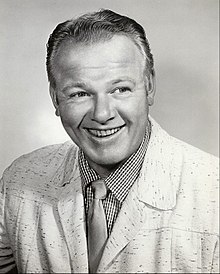
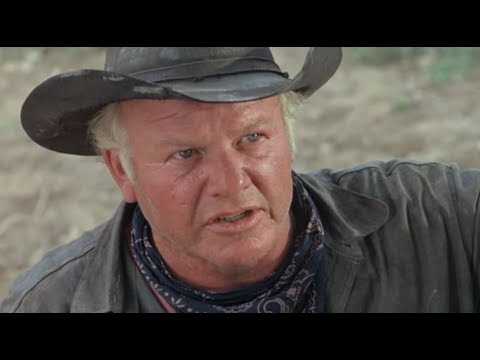
Alan Hale Jr. (Alan Hale Mackahan, Jr.) was born in 1921 in Los Angeles, California.  He looked exactly like his father, Alan Hale Sr. who was a well-known movie actor acting with legends like Douglas Fairbanks and Errol Flynn. His mother, Gretchen Hartman, was also a silent film star.

Hale’s first screen role was when he was 12 in Wild Boys of the Road.
hale3

He appeared in more movies and television series than any of the other Gilligan’s Island cast.  In all he would appear in 92 movies and 123 different tv shows.

In 1943 he married Bettina Reed Doerr. They would be married for twenty years and have four children. During World War II, Hale served in the US Coast Guard.

In the 1950s, he could be seen in many westerns as well as The Loretta Young Show and The Adventures of Ozzie and Harriet. He had regular roles on two sitcoms in that decade: Biff Baker USA and Casey Jones. Biff Baker is a businessman who becomes involved in espionage.  He and his wife travel around the world, working behind the scenes to solve problems. Although it was a serious show, there was some humor in the episodes also. As Casey Jones, Hale drove his train, The Cannonball Express, around the country.

hale4

The early 1960s was a prolific time for Alan Hale. The majority of his television credits came during this decade. You can see him in reruns of Jack Benny, The Lucy Show, Perry Mason, My Favorite Martian, and The Andy Griffith Show.

The year 1964 was a momentous one for Alan. He married Naomi and remained with her till his death. He also tackled the role he would become famous for.
hale5

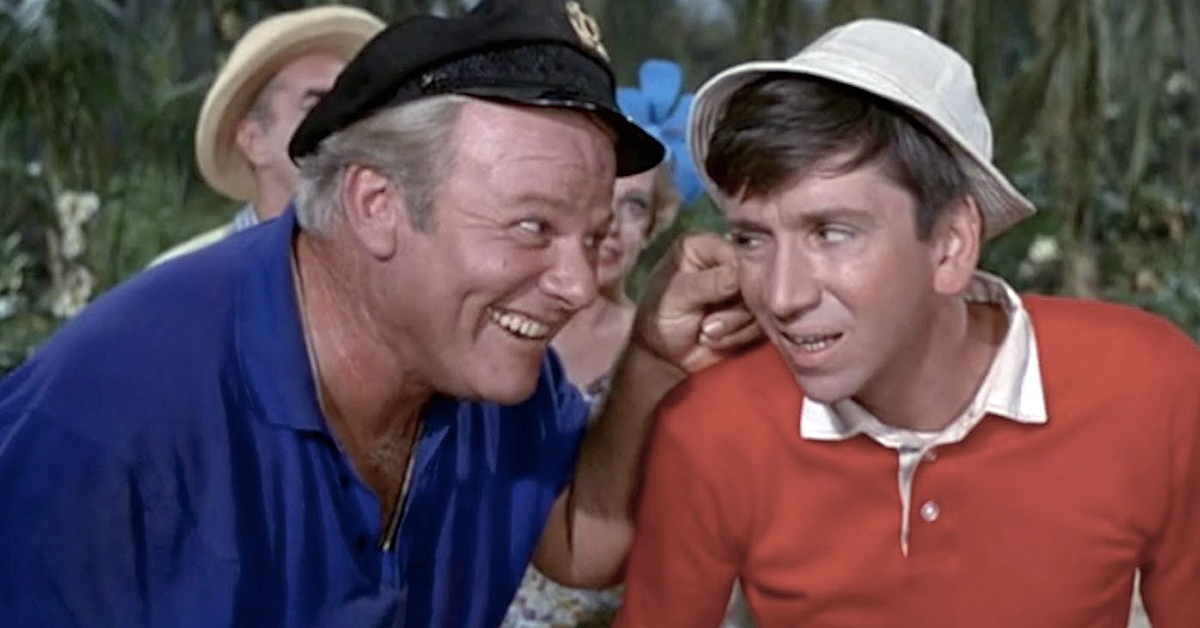
Sherwood Schwartz said he was having trouble finding the right person to play Jonas Grumby. He auditioned a lot of people, including Carroll O’Connor. One night while having dinner at a local restaurant he saw Hale dressed in a Civil War costume and decided he might be the one. Although the Skipper often became frustrated with Gilligan, they had a father and son relationship. Hale and Denver managed to pull that off. They were close friends in their personal lives as well.

hale3

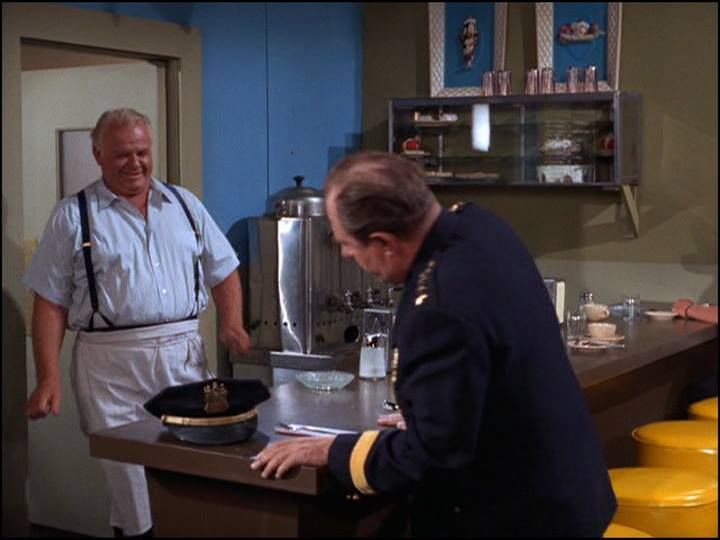
Unlike some of the cast who felt typecast after they left the show, Hale embraced the role he had played. He would later own and manage a popular restaurant in Los Angeles called “Alan Hale’s Lobster Barrel” and could be seen greeting guests as the Skipper. Both he and Jim Backus appeared on Bob Denver’s sitcom Good Guys in 1968.
hale4

After Gilligan, Hale’s career did not slow down. Until his death he would continue to appear in a variety of series including Batman, Green Acres, The Flying Nun, The Wild, Wild West, Here’s Lucy, Marcus Welby, The Doris Day Show, Gunsmoke, McMillan and Wife, Simon and Simon, Growing Pains, The Love Boat, and Magnum PI.

In addition to acting and his restaurant business, Alan enjoyed fishing, golfing, cooking, traveling, storytelling, spending time with his family, and philanthropy. In 1990, Hale died after suffering from thymus cancer at the young age of 68.

Alan Hale had a long and prosperous career.  From all accounts, he liked acting and enjoyed life. Perhaps we should leave the last word to his costars who knew him best.

hale2

Bob Denver said, “He was a big, lovable man who made everyone feel good. He had a great time with his life.”

Dawn Wells described him: “What a dear man . . . what a dear, dear man . . I never saw him disgruntled, having a temper tantrum or depressed. He was so jovial and so sweet and so strong. . . He was a nice man.”


Bob Denver
denver7

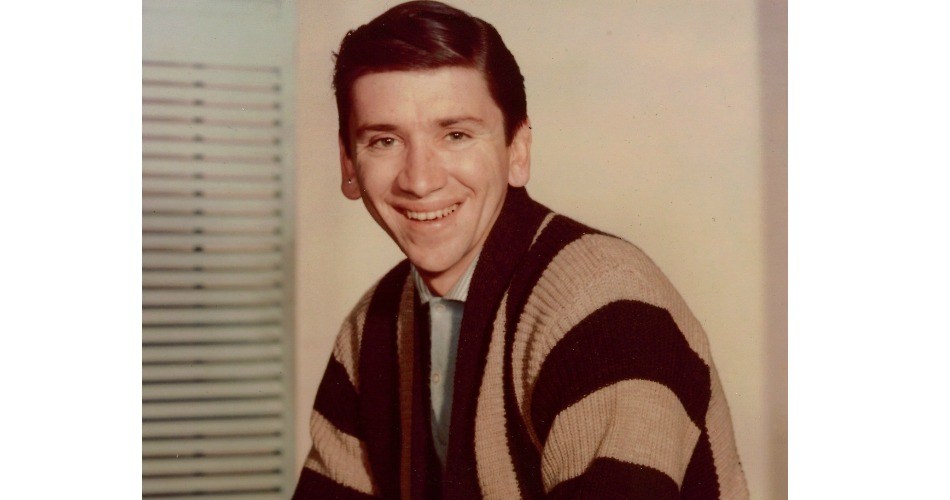
Bob Denver was born in New York in 1935. He went to college at Loyola University in Los Angeles, majoring in political science. He worked as a mailman and a teacher before deciding to go into acting full time.  His first appearance was on Silent Service in 1957.

While Alan Hale was in more shows and movies than any of the other crew members, Bob Denver was easily in the fewest.  While he appeared in seven movies, he was only in 21 television shows, and on six of them he had regular roles.

denver5

His sister suggested him for the part of Maynard G. Krebs on The Many Loves of Dobie Gillis. His role as Dobie Gillis’s best friend propelled him into stardom. Dobie Gillis was on the air for four years, producing 144 shows.

denver8

In the 1960s he would appear on Dr. Kildare, The Farmer’s Daughter, The Andy Griffith Show, Make Room for Daddy, and I Dream of Jeannie. In the mid-1960s, Bob was offered the role of Gilligan on a new show, Gilligan’s Island.  In 1966 he married Maggie Ryan. They would have two children during the six years before they divorced.

Schwartz wanted to cast Jerry Van Dyke in the role who turned it down to play Dave Crabtree in My Mother the Car. Denver was perfect in the role of the inept Gilligan who caused many mishaps on the island but was the center of affection of the rest of the castaways, especially the Skipper.

The same year Gilligan was cancelled, Denver remarried. Like many sitcoms, the relationship with Jean Webber lasted three years before the couple cancelled it.

denver2

Although Denver was given a lead role in three more sitcoms, most of his work after 1967 cashed in on his character of Gilligan. In 1968, he starred in Good Guys. He played the role of Rufus Butterworth who opens a diner with his best friend from childhood.  The show only lasted for 42 episodes. Like Gilligan’s Island, Sherwood Schwartz produced this show. In an interview in 1994 with Peter Anthony Holder on Montreal radio station CJAD 800 AM, Denver discussed Schwartz. “Oh yeah, sure. Sherwood, as a producer, he was one of the best writer producers. It’s amazing. That man was just amazing. We never knew there were any problems when we were shooting. He kept all the network craziness away from us. He was writing scripts literally four months in advance, so that special effects and props always got them in plenty of time. . . you just memorized your words and went down there and had a great time. It wasn’t until afterwards when I left that I realized that not everybody was in the same situation. So every time I had a chance to work with him I did.”

At this time, Bob was also involved with Broadway and dinner theater plays after 1970.

denver3

In 1972 Denver tried marriage a third time. He and Carole Abrahams made it three years and produced one child before divorcing. In 1973, he took the lead on Dusty’s Trail. As Dusty, he manages to get a wagon and stage separated from the rest of the wagon train heading west, and the lost group of travelers try to catch up with the rest of their party.  This one only lasted 26 shows.

In 1975, Denver appeared in his weirdest sitcom yet, Far Out Space Nuts. Lasting only 12 episodes, Denver played a maintenance man in a space company who is accidentally launched into space with a co-worker. Apparently, television producers decided Denver looked like someone who was always lost.

denver4

In 1979, Bob tried the marriage ride one more time. This time he would stay married to Dreama Perry until his death.  The couple would have a child, making a total of four children for him.

denver6

Like many of the other castaways, Denver published a book of memoirs.  It was called Gilligan, Maynard, & Me.

In 2005, Denver passed away from complications following throat cancer surgery, leaving Dawn Wells and Tina Louise as the only surviving actors from the show.
denver1

While Denver is obviously the most-recognized character from Gilligan’s Island, he also had the most difficult situation to work with in being typecast. He was never able to shake the traits that were part of Gilligan to explore other roles.  He mentioned he would have liked to be in Northern Exposure. I wonder if he would have been happier being a teacher or if he enjoyed his career.

hale7

Next week we will discover more about our last regular member of the show, Russell Johnson.