Sandra Gould: What a Character

We are winding up our blog series “What a Character” with Sandra Gould. I have to be honest, I had an unfair bias against Sandra Gould.  I didn’t know a lot about her career, I just knew that she replaced Alice Pearce as Gladys Kravitz, and it was a bad replacement. It wasn’t Sandra’s fault—I blame the show’s producers.
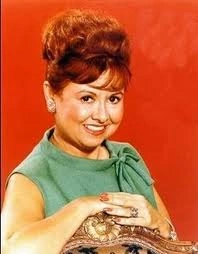
📷pinterest.com

Some actors truly are irreplaceable. Eartha Kitt, while a great Cat Woman, just wasn’t Julie Newmar. Imagine trying to replace Henry Winkler as the Fonz halfway into the show. Can you picture tuning into MASH and finding Hawkeye was now played by someone other than Alan Alda?  Pearce was perfect in that role and, despite her being nosy and annoying, she was likable and that is hard to do. Gould’s Gladys was loud and brash, and I felt like I heard fingernails on a chalkboard whenever she was in a scene.

As long as I’m oversharing, I never cared for Dick Sargent either. While he was able to replace Dick York in some ways, York was just Darrin. Okay, I’m done and ready to talk about the good aspects of Sandra Gould and her long career.

Gould was born in Brooklyn in 1916. She entered the entertainment business early becoming a kid dancer in the Cat Skills by age 13.

📷threads.com

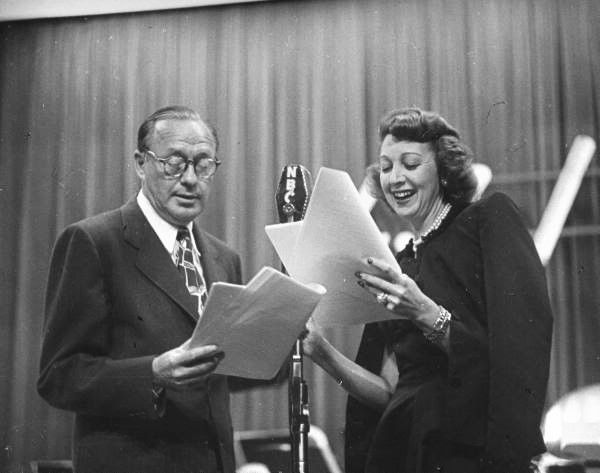
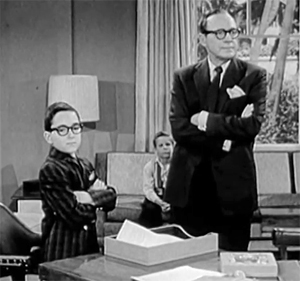
Gould found a lot of success on radio, appearing on “My Friend Irma” and “Duffy’s Tavern.” Her first radio job came along when she was only 9 on “The Danny Thomas Show.” Gould was with Jack Benny for almost fifteen years.

In 1938 she married Larry Berns, a broadcasting executive. They were married until his death in 1965. Berns joined CBS in 1942 writing and producing radio and TV series including Our Miss Brooks. He later worked on McHale’s Navy and Broadside.

Sandra’s first role was in the big screen T-Men in 1947. Most of her roles were inept or gabby women, typically a telephone operator, nurse, receptionist, landlady, or saleswoman. Gould once mentioned that she played an operator more than any other actress. I did notice 10-15% of her roles mentioned switchboard operators.
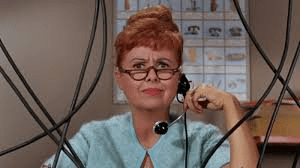
📷facebook.com

While she continued to appear in movies, most of her acting credits came on television. She appeared in Oboler Comedy Theater in 1949. In the early days of television, many of the series were drama or comedy reenactments of movies or plays. Sometimes, new stories were written for these episodes. Gould continued with these roles into the mid-fifties.

From 1952-55 she appeared as Mildred on I Married Joan. This series starred Joan Davis and Jim Backus. He was a judge, and she was another “Lucy Ricardo” always getting into mischief or causing hardships for her husband.

📷tumblr.com

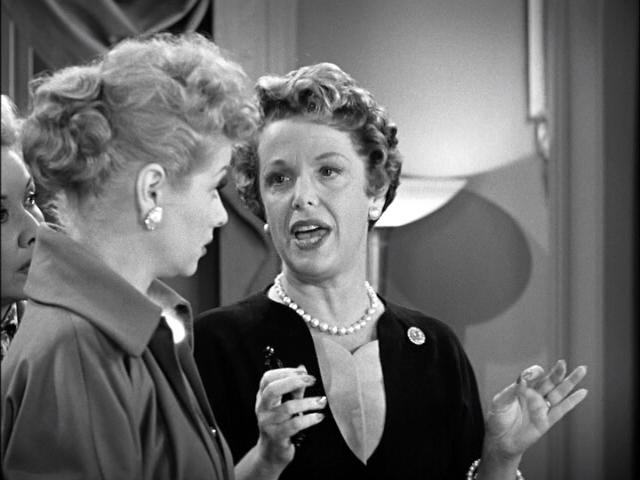
Gould was kept very busy with offers during the end of the fifties and throughout the sixties. She could be seen doing comedy on Our Miss Brooks, I Love Lucy, The Jack Benny Program, My Three Sons, The Brady Bunch, and I Dream of Jeannie among others. She also tried western life on Wagon Train. Her drama performances included Hawaiian Eye and I Spy. She even dipped her toe into animation on The Flintstones.

At the end of the sixties, she was given the Glady Kravitz role. Pearce and Gould split the character’s appearances: Pearce had 27 episodes with Gould having 29.

Gould had stepped away from acting for a time. She published two books for girls: Always Say Maybe and Sexpots and Pans. They both seem quite dated today in their advice to girls to get the right type of husband. At the time she accepted the role of Gladys she said she had gone through a very rough year. Her husband died. Then her writing partner Peter Barry died. Then Alice Pearce, who was a good friend of hers. She had no desire to take over the role, but George Tobias who played Abner and was also a friend, called her to come in for an audition.
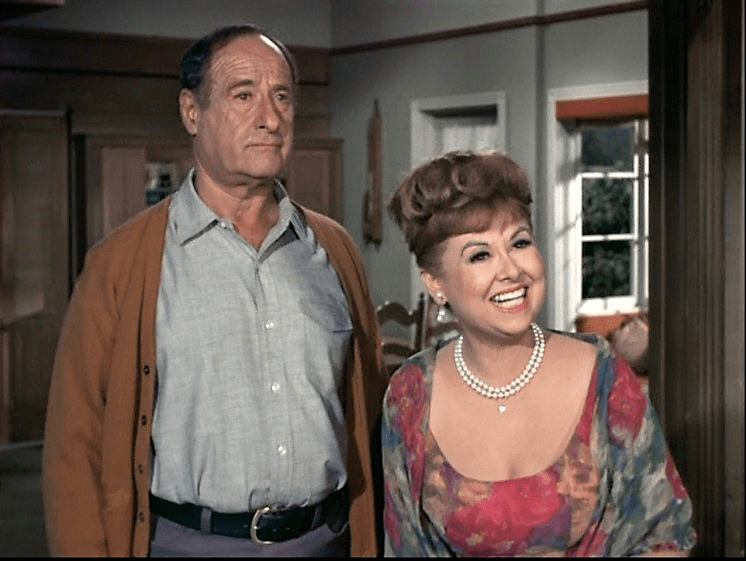
📷imdb.com

I could not find any information about she and Barry collaborating. One article specifically mentioned that they wrote scripts for Honey West, Tammy, and The John Forsythe Show, but I don’t see either of their names as writers for these shows. Barry is listed as a writer for 23 shows in the late fifties and early sixties, and he was a radio scriptwriter. Perhaps they had written some scripts that were never filmed.

I guess I am in the minority on the Bewitched issue because most sites I visited described her role similarly, usually something like Hollywood Spotlight’s description: “her over-the-top performance and shrill voice were popular with viewers, and she succeeded ultimately in making the character her own.” She also reprised her role as Gladys in the sitcom Tabitha in 1977 which was about Darrin and Samantha’s daughter as an adult.

Some time during her stint on Bewitched, she got married again to Hollingsworth Morse, and they were together until his death in 1988. Hollingsworth was a director and assistant director on almost 90 programs and movies including McHale’s Navy, Dukes of Hazzard, and Mork and Mindy.

The seventies and eighties found her primarily in drama roles, although she could be spotted in a handful of sitcoms. You can catch her on Columbo, Marcus Welby MD, Ironside, Crazy Like a Fox, and MacGyver. During the nineties, she took on roles that were described as “old lady” on Friends and on her last appearance which was Boy Meets World in 1999.

📷bewitched wiki.com

Not long after filming this episode, Gould passed away from a stroke following heart surgery.

Gould had a long and successful career and certainly made the nosy, gabby character her own. I’m glad the job on Bewitched helped her get through a very sad and difficult time in her life. However, I still am claiming she was not right for Gladys who should have been written off the show and just replaced with a new neighbor. But I respect Gould and the characters she made her own on the big and little screens.

Jack Benny: Perhaps the Nicest Guy in Television

Photo: cinema.ucla.edu

We kick off this new year getting to know one of my favorite entertainers, Jack Benny. While many radio stars had a hard time transitioning to television, Jack, along with his best friend George Burns, made it look easy. Jack’s radio show started in 1932. In 1950 he decided to make the leap to tv, and his show would be on the air until 1965 when he decided it was time to quit.

The series produced 258 episodes. Jack tested the water first, appearing randomly on television before settling into a weekly schedule ten years after the first show debuted (From 1955-1960 he was on every other week). George Balzer and Sam Perrin would write for the show for the entire run, given credit for 255 episodes. Ralph Levy, who helped George and Gracie get their show underway, came on board in 1951 and left in 1962. The well-respected Fred De Cordova directed the most episodes, 75.

Photo: thisdaybenny.com 

Jack’s first shows were filmed at Burns’ McCadden Productions studio and later at Universal Television. His opening and closing monologues were done in front of a live audience but a laugh track was inserted for consistency. Jack brought his quirky radio crew with him: Don Wilson, Eddie “Rochester” Anderson, Dennis Day, Mary Livingstone, and Mel Blanc. Benny’s wife was Sadie Marks. He met her at age 14 in 1919, and they didn’t exactly hit it off. However, in 1927 they realized they were in love and married that year. Benny asked his wife to fill in for a live comedy show to play “Mary Livingstone.” Sadie did and showed her comic persona. She began to appear regularly and later legally changed her name to Mary Livingstone.

Photo: pinterest.com

Benny understood the radio show was so successful because listeners bonded with the characters and considered them friends. Television just added another dimension for viewers to be able to see the characters.

Jack always underplayed his character, often giving the best lines to his cast. He had great timing, knowing when to tell a joke and when to say nothing. It was often said that he did not say funny things, but he said things funny. His catchphrases, “Well” (with a long pause) and “Now, cut that out” are still part of pop culture today.

In the classic age of comedy, sponsors were the key to survival, and Jack was always able to obtain some of the most well-known companies. During his run, he was sponsored by Lucky Strike, Lever Brothers Lux, State Farm Insurance, Lipton Tea, Miles Laboratories, and most memorably, General Foods’ Jell-O. The sponsors never minded that he often made fun of them or their ads. Often, they were some of the funniest moments in the show.

The first show aired in October of 1950. Benny’s first line on that live Sunday night telecast was, “I’d give a million dollars to know what I look like!”

The show’s format didn’t vary much from week to week. Typically, it began with a monologue. The orchestra might play a song or Jack and announcer Don Wilson might have a discussion such as:

DonWilson: I don’t think you know how much it means to me to do the commercial. After all I’m not a funny man. I can’t sing or dance. I don’t lead a band. What are you paying me for?

Jack: Don, you’re hanging yourself.

Photo: oldtimeradiodownloads.com

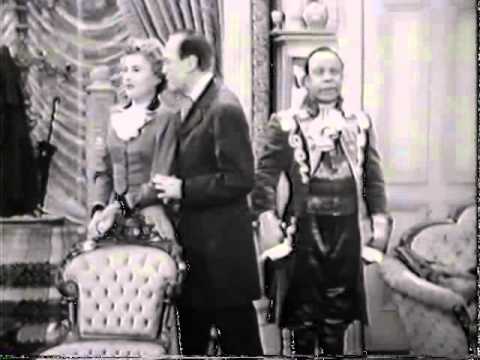
The cast would discuss a current situation, often referring to Benny’s age or frugality, or Mary would read a letter from her mother. Dennis Day would then sing a song followed by a skit, a mini-play, or a satire of a movie. Before Carol Burnett’s incredible movie satires, Jack Benny’s writers created some humorous shows. One example was a 1952 show. It was based on Gaslight from 1944. Called “Autolight,” it starred Barbara Stanwyck.

Photo: youtube.com

Jack continued to feature special guest stars, was a penny pincher, refused to admit he was over 39 years old, and continued to drive his old Maxwell. Here he is with Marilyn Monroe discussing his age:

Marilyn Monroe: What about the difference in our ages?

Jack: Oh, it’s not that big a difference. You’re twenty-five and I’m thirty-nine.

Marilyn Monroe: I know, Jack. But what about twenty-five years from now when I’m fifty and you’re thirty-nine?

Jack: Gee, I never thought of that.

Photo: worthpoint.com

Jack’s view on saving money: “Any man who would walk five miles through the snow, barefoot, just to return a library book so he could save three cents – that’s my kind of guy.”

Photo: imdb.com

Mel Blanc not only “played” the Maxwell but portrayed a variety of characters. Once Benny made the comment, “There’s only five real people in Hollywood.  Everyone else is Mel Blanc.”

Viewers today criticize the way Rochester was treated on the show, but when comparing Benny’s show to Amos ‘n Andy and other shows during the time period, a stark difference can be seen. Rochester was the first black actor to have a recurring role on a radio show. He called Jack, “Jack” or“Mr. Benny” and quite often got the best of him by outwitting him or pointing out one of his deficiencies.

Here’s a typical conversation between Jack and Rochester:

Jack: What do you think of this card I wrote for Don? “To Don from Jacky, Oh golly, oh shucks. I hope that you like it, it cost forty bucks.”

Rochester: It would’ve been hard to rhyme a dollar ninety-eight.

Jack Benny: We’re a little late, so good night, folks.

Photo: americacomesalive.com

The character interactions and the great skits are what made the show so popular. In Jim Bishop’s book about President John F. Kennedy, A Day in the Life of President Kennedy, he wrote that JFK was too busy to watch television, but he always made time for The Jack Benny Show.

Photo: tvnewfrontier.blogspot.com

Jack passed away in 1974. In real life, he was the opposite of the character he played, very generous and a gifted violin player.

His papers, including television archives of his series and special broadcasts and more than 296 television scripts were given to UCLA.

The Jack Benny Program can currently be seen early mornings Sunday through Thursday on Antenna TV.

The Millionaire and His Wife: Jim Backus and Natalie Schafer

backus9

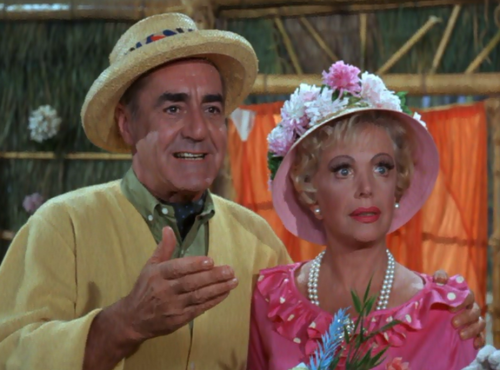
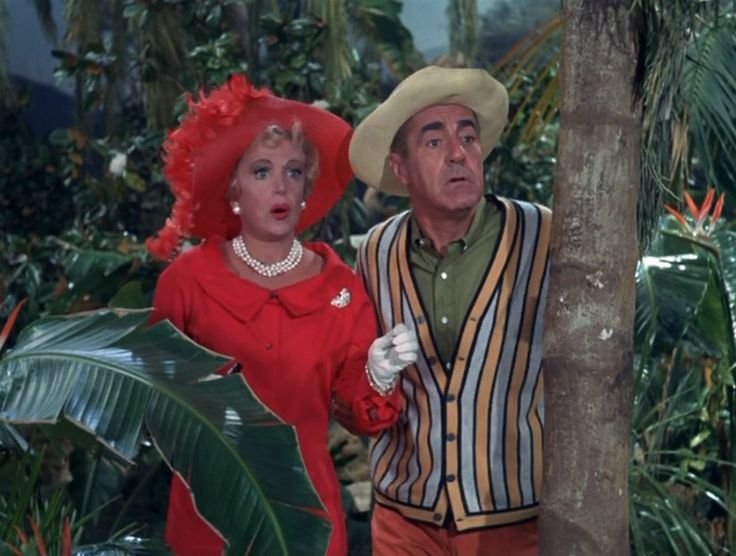
Today we continue our month-long series about the characters on Gilligan’s Island and the stars who portrayed them. We begin with the millionaire, Thurston Howell III, and his wife, Lovey. On the island, their money is worthless, but it doesn’t stop Mr. Howell from bribing other captives when it’s in his best interest.  He must have been a boy scout who learned the motto, “Be prepared,” because he and his wife took clothes on a three-hour tour to last a few years. In real life, Natalie Schafer was the millionaire. Both Backus and Schafer had very interesting careers.


Jim Backus

backus2

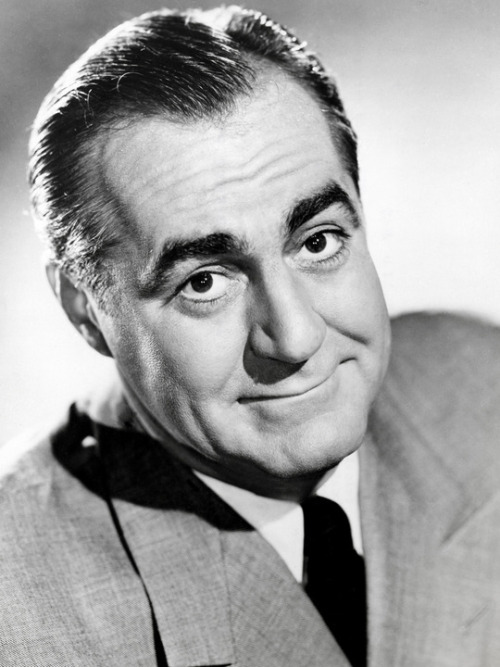
Jim Backus was born in Cleveland in February of 1913. He was one of those stars who seemed to excel in everything:  radio, Broadway, animation, big-screen movies, and television series. In an interesting aside, Margaret Hamilton who would go on to have a full career including the Wicked Witch of the West at the Wizard of Oz, was one of his grade school teachers. Jim grew up in a wealthy area, attending Shaw High School in East Cleveland. His father was a mechanical engineer. I could not find exact proof of this but several articles mention he was expelled from the Kentucky Military Institute for riding a horse in the mess hall. He later attended the American Academy of Dramatic Art.

In 1939 he married Betty Kean; they divorced in 1942. One of his famous quotes was “Many a man owes his success to his first wife and his second wife to his success.”

backus5

In the 1940s, Backus began appearing on radio as the “rich man,” which he often portrayed afterward on radio and television. He played the role of aviator Dexter Hayes on Society Girl on CBS Radio Network. He also appeared on the Mel Blanc Show as Hartley Benson, an arrogant character, and as Hubert Updike on The Alan Young Show. He also showed up regularly on The Jack Benny Program.

During his radio years, he married Henny Backus whom he was married to the rest of his life.

backus10

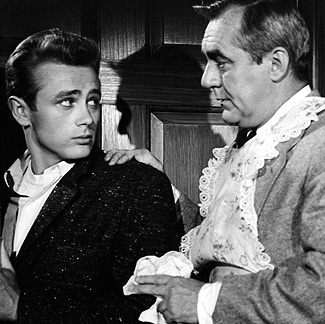
He began his big-screen cinema career in 1949 and would go on to appear in almost 100 movies, including Here Come the Nelsons, Pat and Mike, and Rebel Without a Cause (seen above). His most famous movie role was probably Tyler Fitzgerald in It’s a Mad Mad Mad Mad World. My favorite movie of his is Hello Down There with Tony Randall and Janet Leigh from 1969.

backus12

During the 1950s, he began auditioning for roles on television. He would go on to appear on 18 different series during that decade, including I Married Joan, on which he starred with Joan Davis. On the show, Backus played a respected judge and Davis was his scatterbrained wife. The show was very popular and lasted three seasons.

backus6

As if he wasn’t busy enough with acting in the 1950s, he also made a song recording with Phyllis Diller that hit the top 40 in 1958. It was called “Delicious,” and the two of them would take a sip of champagne throughout the song, saying “Delicious.” As the song continues, they get more drunk and a bit giddy, slurring their words and laughing hysterically.


His television career continued to be demanding in the 1960s. He appeared on 25 series, and four of them had regular starring sitcom roles. In 1960, The Jim Backus Show debuted. The program focuses on Backus in the role of Mike O’Toole, the editor/proprietor of a low rent wire service struggling to stay in business.

backus7


He had made movie shorts about Mr. Magoo in the 1950s and in 1960, he starred in 130 episodes of Mr. Magoo and would make 26 more episodes under the title The Famous Adventures of Mr. Magoo in 1964-1965. Mr. Magoo was an older nearsighted man who was very popular, appearing in ads and merchandise for years. The humor of the show was based on the difference between what Mr. Magoo thinks he sees and the reality of what was really there. Jim Backus liked to repeat a story about his famous character. He was in the movie, Don’t Bother to Knock, with Marilyn Monroe. She asked Jim to meet her in her dressing room later and his curiosity got the best of him, so he went, only to learn she wanted him to portray Mr. Magoo which he did.

backus11


This was also the decade he was offered the role of Thurston Howell III on Gilligan’s Island in 1964. That same year he was asked to play the role of Abner Kravitz on a new show, Bewitched but turned it down because he was committed to Gilligan’s Island. Gilligan’s Island would run from 1964-1967 and he would go on to appear in several Gilligan revivals including the far-fetched The Harlem Globetrotters on Gilligan’s Island.

backus3


During 1968-1969, Backus took the role of Mr. Dithers in a revival of Blondie.

During the 1960s, he also appeared on 77 Sunset Strip, The Beverly Hillbillies, Daniel Boone, The Wild, Wild West, and I Spy, among others.

backusb


Backus continued his television work into the 1970s where he appeared on 31 shows. He appeared in a variety of genres including I Dream of Jeannie, Young Dr. Kildare, Medical Center, The Brady Bunch, Gunsmoke, Ellery Queen, Charlie’s Angels, Fantasy Island, and The Love Boat.

backusa


Backus also continued his commercial work in the 1970s and 1980s. He was the spokesperson for La-Z-Boy furniture and General Electric. He and Natalie Schafer appeared in an ad for Redenbacher’s popcorn. They played their characters from Gilligan’s Island but apparently had been rescued and were in a luxurious home. In a sweet ending, it was the last television appearance for either of them.

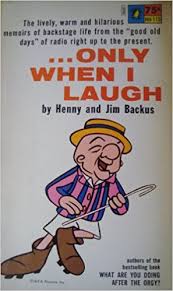
When Jim Backus had a little bit of free time between acting jobs, he loved to golf. He also tried his hand at writing a few books and film scripts, including his autobiography which he wrote with his wife, Only When I Laugh in 1965.

book


In July of 1989, Backus died from pneumonia, after suffering from Parkinson’s disease for many years.

He had a long and varied career and seemed to have many friends in the business.


Natalie Schafer

schafer5

A millionaire in real life, Natalie Schafer seemed like a very fun woman, a bit of a character. She was born in November of 1900 in New Jersey and raised in Manhattan. She was quite secretive about her age, often claiming she was born in 1912.

She began her career in Broadway, appearing in 17 plays. She married actor Louis Calhern in 1934 and they divorced in 1942. She moved to Los Angeles in 1941 to become a film actress and received parts in 34 movies. Incidentally, she and her ex remained friends and appeared together in the movie Forever Darling in 1956.

schafer2


Like Backus, Schafer typically played wealthy and sophisticated roles. She did not have the versatility her tv husband had but continued to stay busy acting on television.  While Gilligan’s Island was her only long-term role, she appeared on 21 shows in the 1950s (including I Love Lucy, Loretta Young, Phil Silvers, and Topper); 8 in the 1960s (including The Beverly Hillbillies, 77 Sunset Strip, and Route 66); 15 in the 1970s (including Mayberry RFD, The Brady Bunch, and McMillan and Wife); and an additional 8 shows in the 1980s before she passed away (including Three’s Company, The Love Boat, Trapper John, and Simon and Simon).

schafer3


Schafer made most of her money from investments, particularly in real estate.

Several sources revealed that much of her fortune was bequeathed to either her Gilligan’s Island co-star Dawn Wells or to care for her dogs; however, at least $1.5 million was donated to the Lillian Booth Actors’ Home to renovate their outpatient wing. I never saw any answers from Wells about inheriting money, but on Vicki Lawrence’s talk show, she did say that Schafer spent her last years living with her. Like many wealthy people, she was quite thrifty.  She often admitted that she accepted the role of Mrs. Howell because she got a free trip to Hawaii to film the pilot and didn’t expect it to get picked up.


schafer1


Everyone seemed to like her on the set. Dawn Wells said she especially adored Schafer and Backus. Schafer was a hard worker and liked to keep fit. In a Chicago Tribune article from October 25, 1965, she relayed her secrets for staying in shape. For one thing, she did her own stunts on the show. She also said she swam nude every morning and evening, doing 100 strong kicks at the side of the pool. She also invented an ice cream diet for herself. She claimed to eat a quart a day, saying she had a bowl of vanilla ice cream with her coffee, two bowls of varying flavors for both lunch and dinner, and another single bowl for an afternoon snack. She claimed that she would lose three pounds in five days.

In 1990, Schafer passed away from liver cancer. After her death, she wanted people to realize her true age, and many of her closest friends were quite surprised to learn she was 12 years older than she claimed.

backus

While Thurston Howell III and his wife Lovey were two interesting characters, I don’t think they can compete with the characters who were Jim Backus and Natalie Schafer. I had a lot of fun learning about them.