The Life of a Makeup Artist: All Made Up and Somewhere To Go

Welcome to our blog theme for the month, “Behind the Scenes.” We are going behind the camera to check out careers of those people working behind the camera to bring our favorite characters to life. Last week we learned a bit about costumer designers, and today we are heading to the makeup counter.

So, what do makeup artists do?  Obviously, they apply cosmetic products to enhance the appearance of the stars, but they do so much more. Artists also fit prosthetics and create the effects of blood, wounds, burns, and general aging; adjust colors and textures to work with high-definition cameras and bright lights; assure consistency for multiple-day filming; manage sweating; and sometimes choose and fit wigs for characters. Let’s look at a few of the best in the field to learn more about their life and careers.
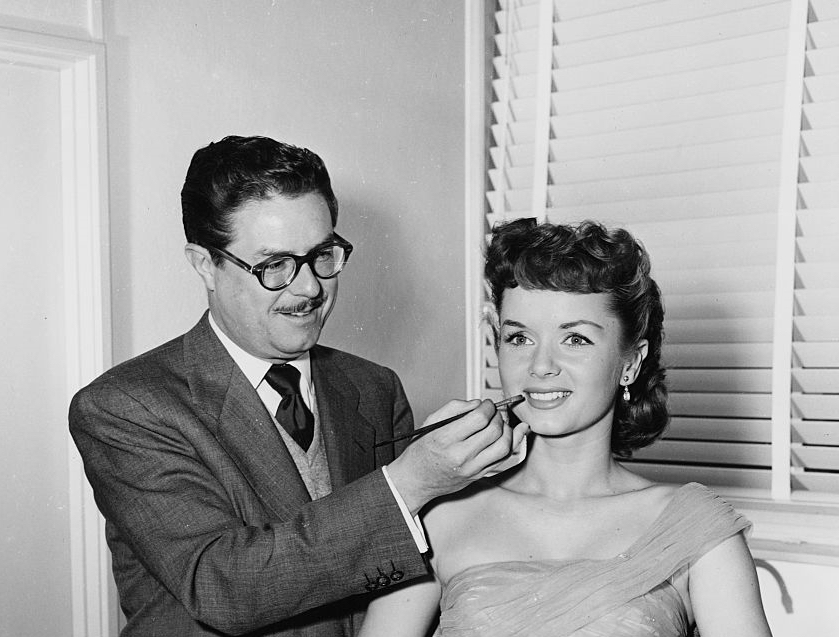
📷vintagestardust.wordpress.com

William Tuttle

William Tuttle was the first makeup artist to win an Academy Award. He created many innovative techniques and trained generations of makeup artists.

He was born in Florida in 1912. After dropping out of school early to support his mother and younger brother, he held a variety of jobs including forming his own band. In 1930, he moved to Los Angeles, enrolling in an art school and working as a page at Fox Studios. That younger brother, Thomas Tuttle, would also become a makeup artist working on The Dick Van Dyke Show, The Joey Bishop Show, Gomer Pyle USMC, and That Girl among others.

Tuttle was hired at Twentieth Century Pictures to work under Jack Dawn. In 1934, Dawn took a job at Metro-Goldwyn-Mayer and Tuttle moved with him. Tuttle was still working under Dawn but began taking on more responsibilities. He supervised the makeup in many popular movies including The Wizard of Oz and Father of the Bride. Eventually, he became the head of the makeup department.
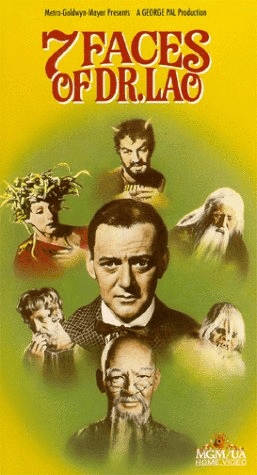
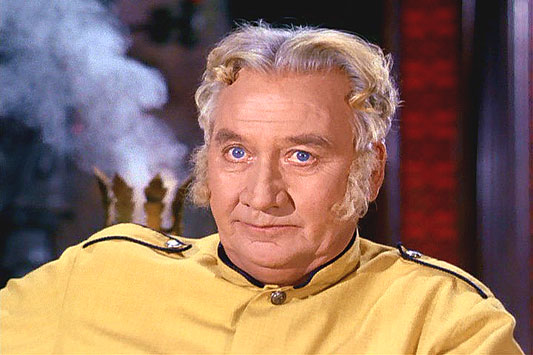
He received a special Oscar for his work on 7 Faces of Dr. Lao in 1965. In this film, Tuttle transformed Tony Randall into seven different characters including Dr. Lao; an aged, bearded Merlin the Magician; and a Medusa with a feminine appearance. Randall said “he shaved my head and eyebrows . . . gave me an unborn look. But professionally it was a masterstroke.” He went on to say that “all my preconceived notions on how I would play the characters vanished. As soon as Tuttle applied his makeup magic, I felt myself actually become these strange people.”

The Oscar category of makeup artist would not become an official category until 1982. That year Rick Baker won the first Oscar for makeup. He would go on to win another five and he credited Tuttle: “His work greatly influenced me.” He said as a young boy, he often tried to re-create the makeup techniques Tuttle used in The Twilight Zone.
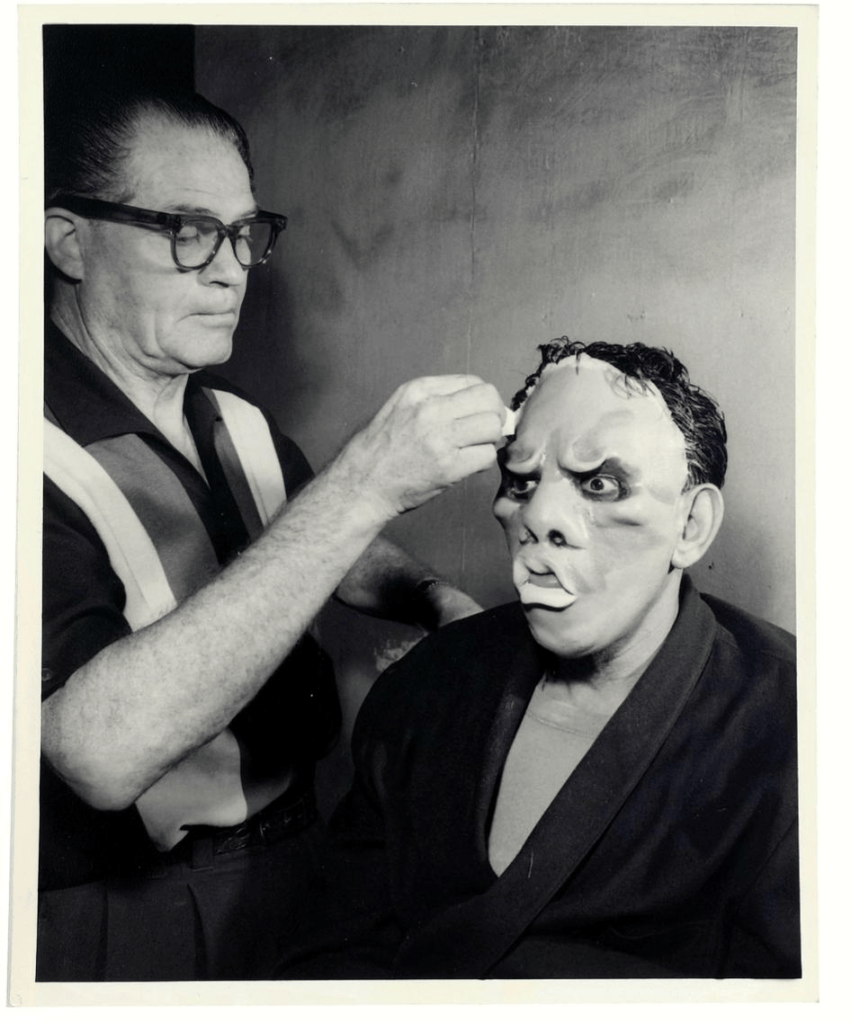
📷reddit.com

Tuttle was the artist behind one of my favorite Twilight Zone episodes, “Eye of the Beholder.” When the episode begins, doctors and nurses are working with a bandaged patient who just wants to look like everyone else. After some time, the bandages are slowly peeled away. We see the beautiful face of Donna Douglas. As she picks up the mirror to look at her new face, she screams, cries and covers her face. Then the camera pulls away and we see all the people Tuttle did makeup on – doctors and nurses with deformed faces and pig snouts.

With 393 credits, most of Tuttle’s work was in the movies, but he contributed to television as well. From 1960-62 he provided all the makeup for National Velvet. He also spent time on Mr. Novak, My Favorite Martian, The Man from U.N.C.L.E. as well as The Girl from U.N.C.L.E., The Phyllis Diller Show, and The Courtship of Eddie’s Father, among others.

Later in his career, Tuttle created his own line of makeup, Custom Color Cosmetics. Naimie Ojeil, owner of a beauty supply store in Hollywood said his brand was “the most popular makeup among Hollywood professionals for at least two decades.”

Tuttle would create molds of actors he worked on which allowed him to create their looks beforehand. He donated them to the University of Southern California where he taught from 1970-1995. Herbert Farmer, a USC archivist said Tuttle “was interested in passing on all he could to the students. He had a real following.”

Gene Hibbs

Gene Hibbs was born in Normal, Illinois in 1912.
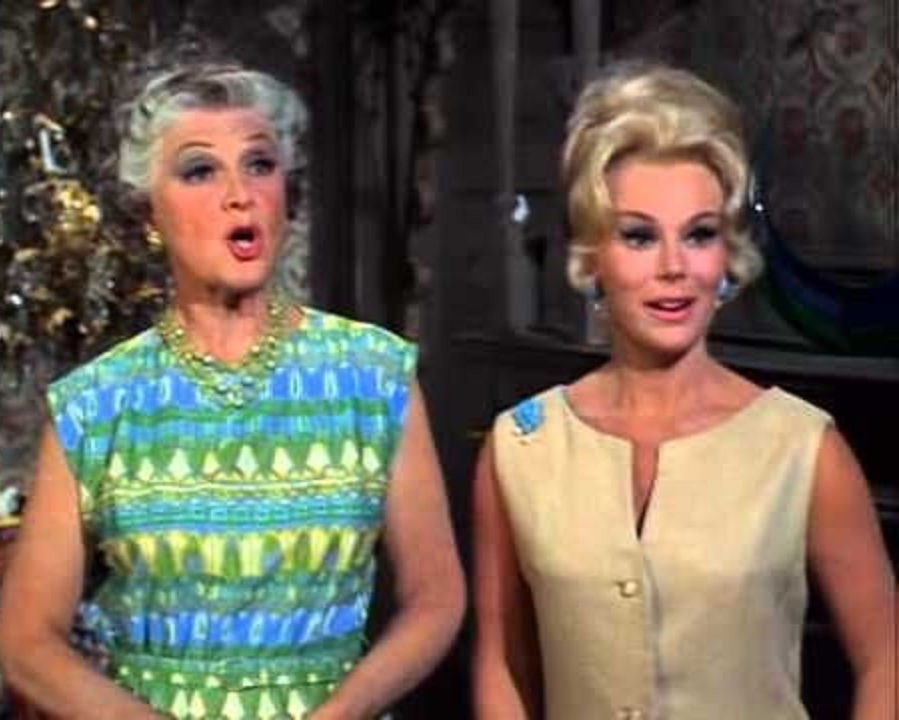
📷imdb.com

I couldn’t find a lot of information about him. I did read several times that he was often hired because he had a unique talent for making older actresses look younger than they were with a technique he called “painting.”

His first television series was The Lone Ranger from 1954-1955. He worked on many television shows following that including with Ann Sothern on Private Secretary and The Ann Sothern Show, The Judy Garland Show, Here’s Lucy, and Green Acres.

He was working on Green Acres when Judy Garland passed away. She had stipulated in her will that Hibbs was supposed to do her makeup one last time. Her daughter Liza Minelli phoned Hibbs and he agreed to do that. When the network said no, Eva Gabor said she would not work unless he was allowed to leave for a few days. The producer pleaded with the network, but they held firm and said they would lose $30,000 of time and he could not leave the set.

Ben Lane
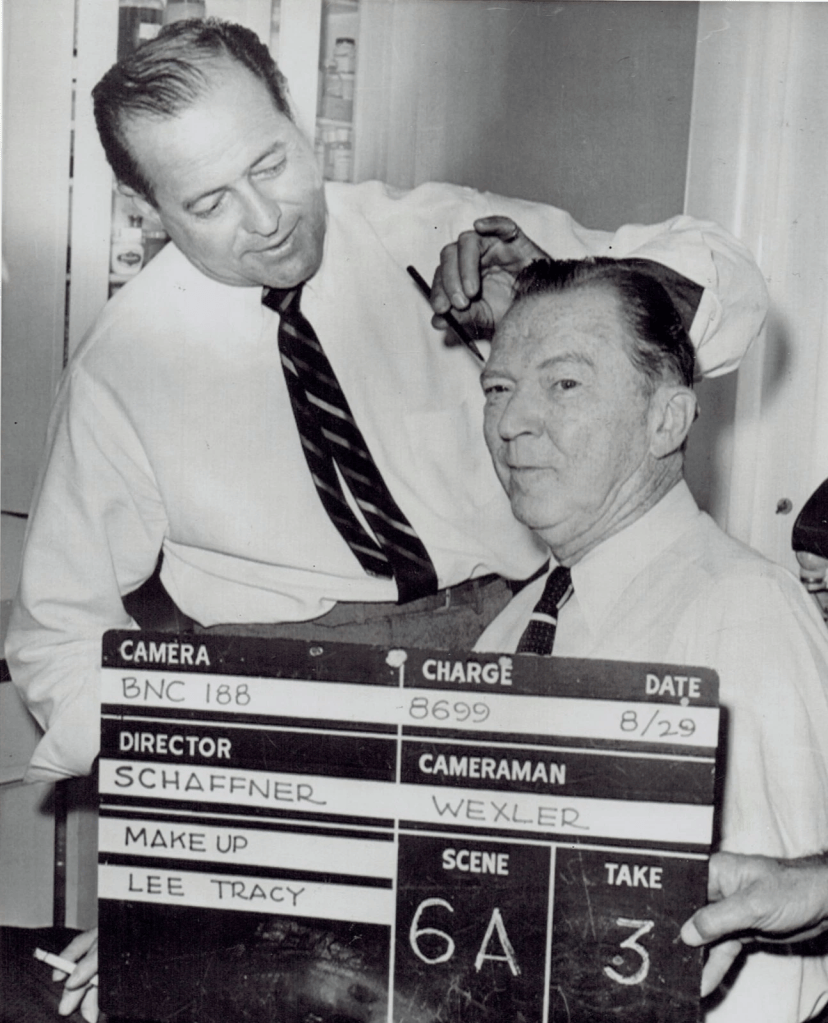
📷ebay.com Ben Lane on the set

Ben Lane was born in 1912 in Chicago, Illinois, the same year as both Gene Hibbs and William Tuttle. Lane was one of the founding members of the Motion Picture Guild, but many of his 236 credits were spent in television.

Lane’s first television series was in 1957 for Sergeant Preston of the Yukon. His career would continue with many popular shows. Get ready to take a long breath because this sample is far from a comprehensive listing of his work. Ready? He was part of the cast for The Lone Ranger, Dennis the Menace, The Farmer’s Daughter, Hazel, Gidget, The Monkees, Bewitched, The Flying Nun, I Dream of Jeannie, Bridget Loves Bernie, The Partridge Family, Police Woman, and Fantasy Island.

In addition to keeping busy with his career, he was involved in several charities: City of Hope and Shriner’s circus. He became a nationwide clown advisor. He also was a consultant for the Los Angeles Police Department, the US Department of Justice, and the FBI for disguises.

Bud Westmore
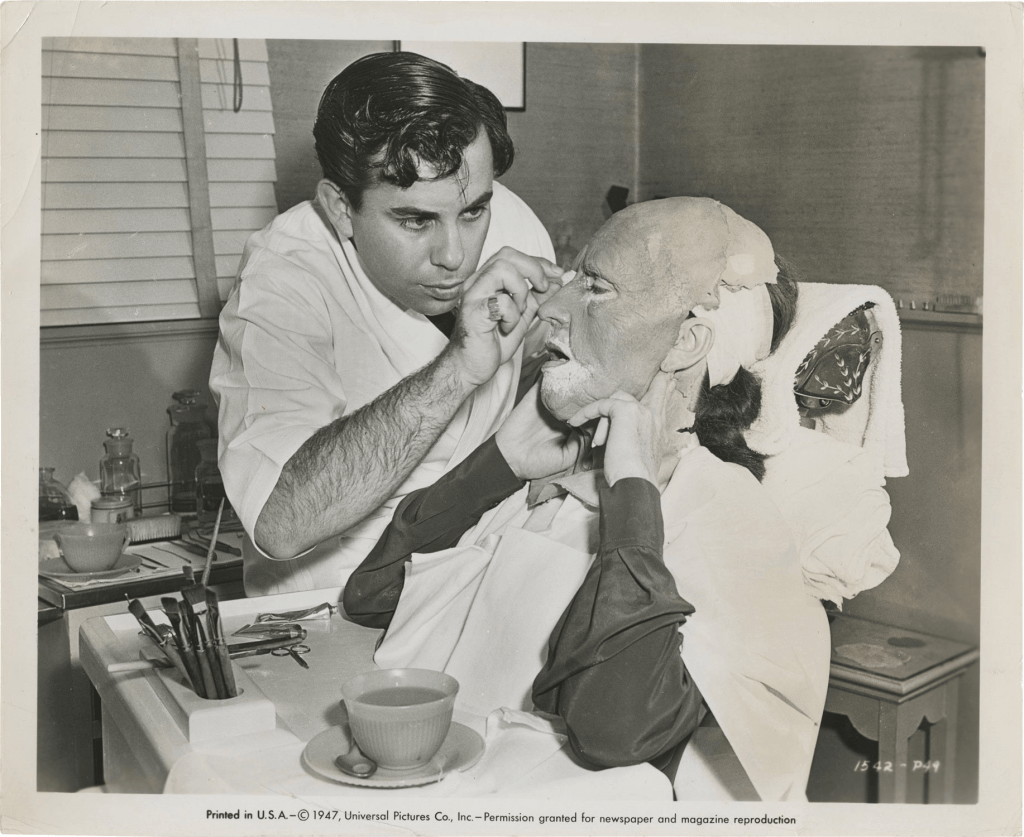
📷abebooks.com Westmore working on the film The Lost Moment

Born in 1918 in New Orleans, Westmore and his brothers—Ern, Frank, Monte, Perc, and Wally–were all makeup artists in the entertainment business. At one time, there was a Westmore heading up almost every studio makeup department.

After school, Bud was an apprentice under Perc at Warner Brothers to learn hair design and makeup before taking a job at Twentieth Century Fox. He left to serve three years with the Coast Guard. When he returned to Hollywood, he worked for the Eagle Lion before he was hired as the head of the Universal Studios makeup department in 1947. The largest building on the Universal studio back lot is named for Bud.

His marriages and divorces also kept him busy. He was married to actress Martha Raye for four months in 1937. A few years later he married Rosemary Lane, another actress, and they were together for fourteen years. His divorce to Lane was on March 31, 1955, and on April 1, 1955, he married Jeanne Shores, a former Miss California in 1952. They would remain together until his death from a heart attack in 1973.
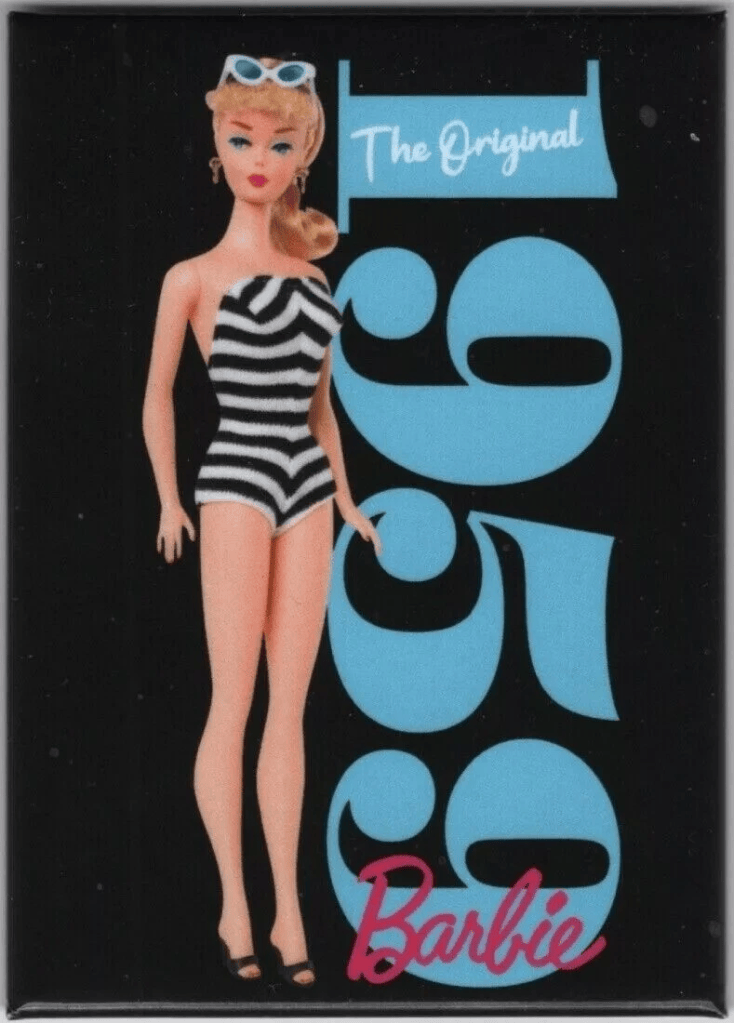
In 1957 Bud was asked to create makeup for a new doll that was coming on the market. In 1959 Barbie debuted. Bud had based her on a German doll Mattel found named Lili. He modified “the bee-stung lips, heavy eyelashes, and widow’s peak to give her an All-American Girl look” and he rooted her hair.

With more than 600 credits on both the big screen and the small screen, Bud’s first television project was Playhouse 90 in 1957. During the sixties he was involved in quite a few shows including The Jack Benny Program, McHale’s Navy, The Munsters, It Takes a Thief, Ironside, Marcus Welby MD, and The Virginian.

It was fun to learn a little bit about these make-up professionals and the shows they worked on to help create some of our favorite television land characters.

Pernell Roberts: A Man of Many Talents

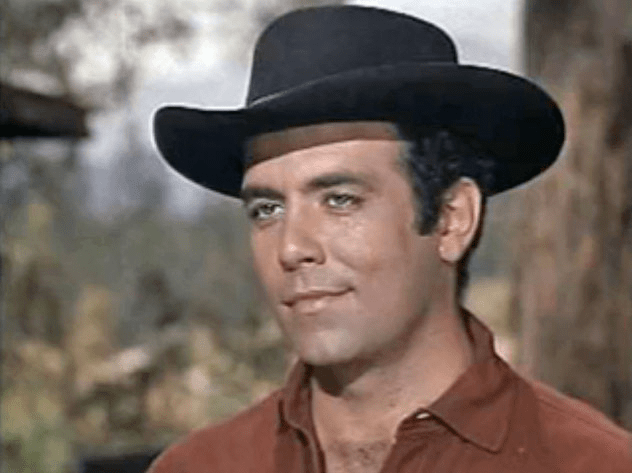
We are up close and personal this month with some of our favorite male television stars, and Pernell Roberts is definitely on that short list. Pernell Roberts was well known to television viewers in the early sixties and the early eighties. Some fans might not even realize the two characters he was best known for, Adam Cartwright on Bonanza and Dr. John McIntyre on Trapper John, MD were played by the same man.

The Family of Bonanza Photo: toledoblade.com

Pernell Elven Roberts Jr. was born an only child in 1928. He was named for his father who was a Dr. Pepper salesman. During high school, Roberts played the horn, acted in several school and church plays, played basketball, and sang in the local USO shows. He enrolled at Georgia Tech but then enlisted in the US Marine Corps. He played both the tuba and horn in the Marine Corps Band while sometimes tackling the sousaphone and percussion parts. After his time in the Marines, he enrolled at the University of Maryland where he enjoyed participating in classical theater. He left college to continue his acting career.

In 1949, he had his professional stage debut in “The Man Who Came to Dinner” with Moss Hart and Kitty Carlisle. He then took on several roles in Philadelphia.

In 1951, Roberts married Vera Mowry; she was a professor of theatre history at Washington State University. They divorced in 1959. They had one son who was killed in a motorcycle accident in 1989.

In 1952, Roberts made the big move to New York City appearing in off-Broadway shows. Several of his costars were Joanne Woodward and Robert Culp. He performed several Shakespeare roles.

In 1956, Roberts made his television debut in Kraft Theatre. In 1957, he signed with Columbia Pictures. His first big-screen role was as Burl Ives’ son in Desire Under the Elms. His second role was with Glenn Ford and Shirley MacLaine in The Sheepman.

Roberts continued to accept television roles with ten appearances in 1958 and six in 1959.

Photo: simple.wikipedia.org

From 1959-1965 he would portray Adam Cartwright, Ben’s oldest son on Bonanza. Each of the brothers had a different mother, and Adam was the only Cartwright to attend college, studying architectural engineering. After acting in classical theater for so much of his early career, the transition to a weekly series was a difficult one for Roberts. He thought it a bit ridiculous that the independent sons had to get their father’s permission for everything they did. He wanted to act in a show with greater social relevance. So, although the show would continue until 1973, he left in 1965 after appearing in 202 episodes. The storyline was that Adam was traveling in Europe or living on the east coast. Bonanza producer David Dortort said Roberts was “rebellious, outspoken . . . and aloof, but could make any scene he was in better.”

The Odd Couple Photo: sitcomsonline.com

During this time on the show, Roberts married again in 1962; he wed Judith Roberts and they would divorce in 1971.

After leaving Bonanza, Roberts returned to theater, playing a variety of roles. He toured with many musicals including “The King and I”, “Kiss Me Kate”, “Camelot”, and “The Music Man.”

Pernell also became involved in the civil rights movement, joining Dick Gregory, Joan Baez, and Harry Belafonte in the sixties demonstrations including the March on Selma.

On Mission Impossible Photo: ebay.com

From 1972-1996, Roberts was married to Kara Knack. They also divorced.

Throughout the late sixties and seventies, Pernell continued appearing in television series and made-for-tv movies. You’ll see him in westerns such as Gunsmoke, The Big Valley, and The Virginian; spy genres including Wild Wild West, Mission Impossible, and The Girl from U.N.C.L.E.; crime shows including Hawaii Five-0, Mannix, Police Story, Ironside, Cannon, and The Rockford Files; and several medical series—Marcus Welby, West Side Medical, and Quincy. He even showed up on The Twilight Zone and The Odd Couple.

Photo: televisionacademy.com

Perhaps he enjoyed those medical shows because he returned to television to star in his own series in 1979, playing Trapper John, MD. The plot was featured Trapper John from M*A*S*H later in his career at San Francisco Memorial Hospital where he was Chief of Surgery. He worked with a young surgeon who had also served in a MASH unit, Alonzo “Gonzo” Gates (Gregory Harrison). The series lasted seven seasons.

In 1979, he told TV Guide that he chose to return to a weekly show because he had “seen his father age and realized it was a vulnerable time to be without financial security.” Roberts felt the role allowed him to use his dramatic range of acting skills and to address important social issues.

In the 1990s, Roberts took on very few television appearances; his last television performance was in Diagnosis: Murder in 1997.

Roberts would attempt marriage one last time in 1999 when he wed Eleanor Criswell. When Pernell passed away in 2010 from pancreatic cancer after being diagnosed in 2007, they were still together.

Photo: Facebook.com

Pernell also enjoyed golfing, swimming, playing tennis, running, reading, cooking, and singing. He appeared on two record albums during his career. The cast of Bonanza recorded an album in 1959 and he released a folk music album in 1962, titled “Come All Ye Fair and Tender Ladies.”

He certainly had a long and varied career: music, movies, Broadway, and television. He also used his fame to help causes he believed in. I don’t think he is remembered as well as he should be. Maybe it’s because he left Bonanza too early to be included on a lot of the memorabilia that came out of that show or because there was such a gap between his two series that he starred in. Whatever the reason, I hope this blog has helped recall some of our memories of the three decades he spent entertaining us.

Just a Couple of Characters, Part 1: Edward Andrews and Herb Edelman

We’ve all experienced that moment we’re at the grocery store and see someone we know, but we can’t remember their name or how we know them. Maybe it was work or school, or their kids were friends with ours.  Sometimes we even remember we spent a lot of time with them and like them, but the name and relationship is just not there.

This month we are meeting some of our television friends that we’ve gotten to know, even if we can’t remember their names or what we watched them on. We’ll learn more about eight different character actors. We start off the month learning about Edward Andrews and Herb Edelman.

Edward Andrews

Photo: findagrave.com

I remember Edward Andrews from Doris Day and Disney comedies. Anyone who grew up in the 1960s or 1970s will remember this military man with a grandfatherly softness to him.

Andrews was born in Georgia in 1914. His father was a minister and their family moved a lot; he lived in Pittsburgh; Cleveland; and Wheeling, West Virginia. He had a very small part in a James Gleason production at age 12. He attended college at the University of Virginia. In 1935, he got his first part in a Broadway production, “So Proudly We Hail.” He continued in Broadway for the next twenty years, including a touring production of “I Know My Love” with Lunt and Fontaine. During that time, he took a leave from his career to serve in WWII. He was a Captain and commanding officer of Battery C with the 751st Artillery Battalion of the Army.

Photo: movieactors.com

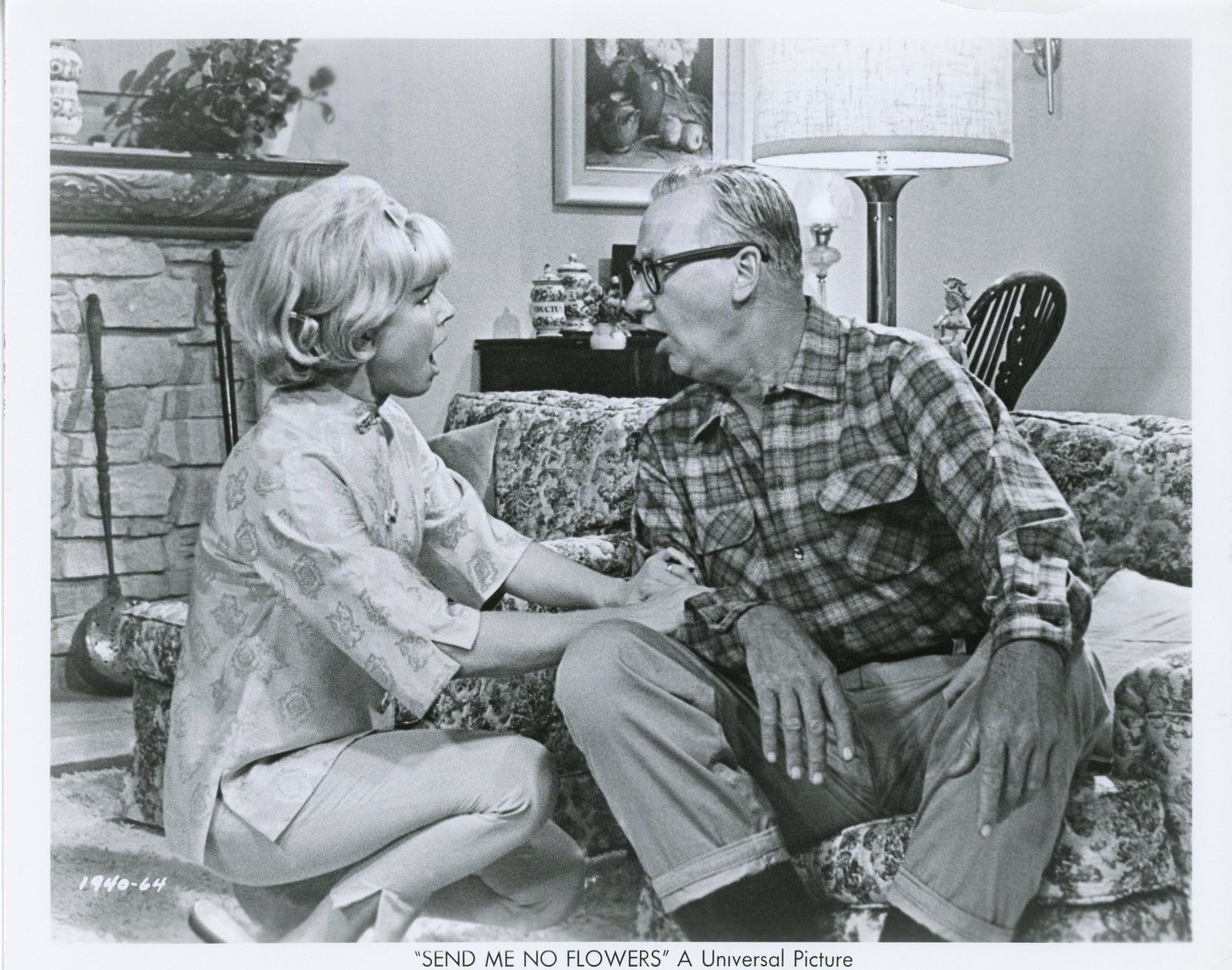
In 1955 he married Emily Barnes and they would have three children, remaining together until his death. About the same time, his movie career took off. Andrews looked older than his age which helped him get parts for older roles. He could play a grandfather, then turn around and handle a sleazy businessman or legalistic bureaucrat. He portrayed George Babbitt in Elmer Gantry in 1960. He worked for Disney playing the Defense Secretary in both The Absent-Minded Professor (1961) and Son of Flubber (1963). I remember him fondly in Doris Day’s movies, The Thrill of It All (1963), Send Me No Flowers (1964), and The Glass Bottom Boat (1966). One of his last roles was Grandpa Howard in Sixteen Candles in 1984. His movie credits totaled 46.

Photo: dorisday.com

Edward also kept busy with television appearances. One of the first actors to guest star on television, in 1950, Andrews was on Mama. As early as 1952, he began acting in the variety of drama shows on television. During the 1950s he would appear in eighteen of these shows including The US Steel Hour, Robert Montgomery Presents, Studio One in Hollywood, and Omnibus.

Photo: scsottrolling. blogspot.com
On The Wild Wild West

He showed up in westerns including The Real McCoys, Bonanza, Gunsmoke, and Rawhide. We saw him on medical and legal dramas such as Ben Casey, The Defenders, The Bold Ones, Ironside, and Owen Marshall, Counselor at Law. Mysteries and crime thrillers also found a place for him. You might remember him from Naked City, The Wild Wild West, The Mod Squad, Hawaii Five-0, McMillan and Wife, and Quincy, ME.

Photo: pinterest.com

Like his films, he seemed to excel in comedy. Andrews played George Baxter in the pilot for Hazel, but unfortunately when the show went into production, the part was recast with Don DeFore. He would guest star in some of the most popular sitcoms, including The Phil Silvers Show, The Andy Griffith Show, I Dream of Jeannie, Bewitched, The Paul Lynde Show, Love American Style, The Bob Newhart Show, and Three’s Company.

Photo: pinterest.com

In 1964 he starred in Broadside. Commander Adrian (Edwards) is not happy when a group of Waves are posted to his station on the South Seas island Ranakai. His men no longer have focus, so he spends the series trying to get the women relocated.

In 1970 he had a recurring role on The Doris Day Show as Colonel Fairburn. He also starred as Harry Flood in the show Supertrain in 1979. Playing on the Love Boat and Hotel themes, the show was about a bullet train that had new passengers each episode.

Photo: imdb.com
On Bewitched

Perhaps Andrews will be best remembered for his guest starring role on two Twilight Zone episodes, “Third From the Sun” (Andrews plays a company man who thinks a coworker William, a nuclear engineer, and his friend Jerry are going to steal a spaceship to leave Earth) and “You Drive” (Andrews hits a newspaper boy and then flees the scene, trying to hide the crime).

In all, he appeared on 118 different television series as well as made-for-television movies.

Photo: pinterest.com

Andrews enjoyed playing a character actor. He said it ensured more work and longevity in his career. He was quoted as saying, “What you get are people who speak to you. They know you from somewhere, but they don’t think of you as an actor. They stop and say, ‘Harry, how’s everything in Miami?’ I’ve learned by experience not to argue with them.”

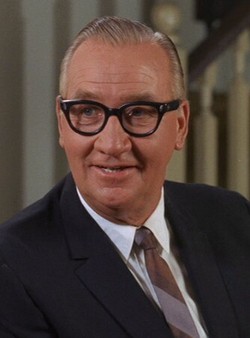
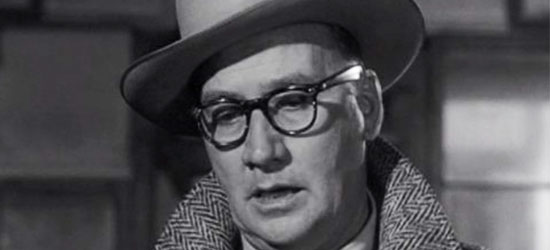
In March of 1985, Andrews had a heart attack and passed away at age 70. With his white hair, and horn-rimmed glasses, Andrews was an adaptable character actor. Whether he was playing a lovable doctor, a nosy coworker, a fun-loving grandfather, or a despicable murderer, he was believable. He truly was a great character.

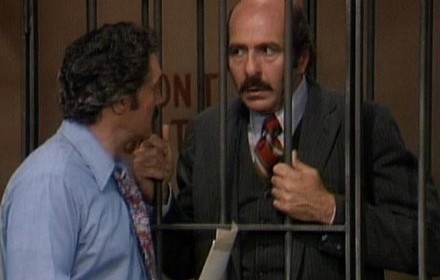
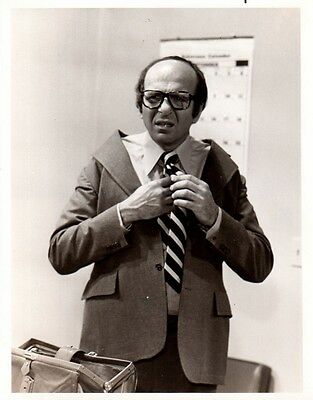
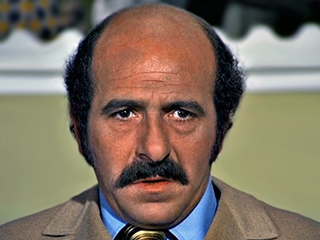
Herb Edelman

Herb Edelman, circa 1981
Photo: travsd.wordpress.com

Another fun actor everyone will recognize is Herb Edelman. Herb was born in Brooklyn, New York in 1933 in the midst of the Depression. Tall, lanky, and prematurely bald, he would go on to have a long career in movies and television.

Originally, Edelman wanted to be a veterinarian, and he went to school at Cornell but left after his first year. He served in the Army as an announcer for Armed Forces Radio. After he left the service, he started college again, this time studying acting at Brooklyn College. Once again, he dropped out. He made a living as a hotel manager and a cab driver.

Photo: cscottrollins.blogspot.com
In Barefoot in the Park

In the mid-1960s he began both his film and television careers. Some of his best-known roles were in the movies. He played Harry Pepper, a wise-cracking telephone operator, in Barefoot in the Park and Murray the Cop in The Odd Couple, as well as Harry Michaels in California Suite.

Photo: movie-mine.com
In The Odd Couple as Murray the cop

However, it was television where he received most of his work. In the 1960s, he began his career, appearing on a variety of shows, including That Girl, The Girl from U.N.C.L.E., and The Flying Nun. During these years he also dated and married Louise Sorel who he was wed to for six years.

Photo: en.wikipedia.com

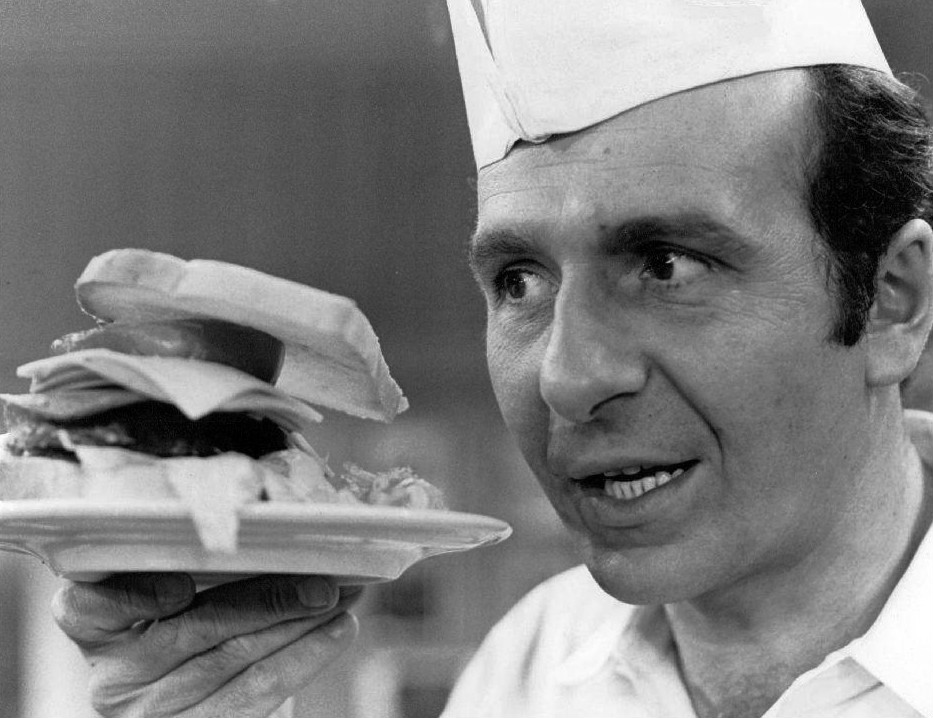
In 1968, he accepted the role of Bert Gamus in The Good Guys. Bert and his friend Rufus (Bob Denver) open a diner, their dream. Bert’s wife Claudia (Joyce Van Patten) helped him serve customers.

In the 1970s, his career continued as he appeared in many shows every year. Some of the hit series we saw him on during this decade include Room 222, Bewitched, McMillan and Wife, The Partridge Family, Love American Style, Maude, Happy Days, Barney Miller, Kojak, and Charlie’s Angels.

Photo: sitcomsonline.com
On Barney Miller

In 1976, he was again cast in a show, Big John Little John. Edelman was a middle school teacher who drank out of the fountain of youth on vacation. Afterward, he would randomly turn into a thirteen-year-old and worked to keep the secret from his friends and coworkers. The show was short-lived.

Photo: picclick.com

Edelman’s work schedule did not slow down in the 1980s. He would have roles in the cast of five television shows and spent time in between guest starring on other shows such as Trapper John, Highway to Heaven, The Love Boat, and thirtysomething.

From 1980-81, he was cast as Reggie on Ladies’ Man, about a woman’s magazine with one male journalist. From 1981-82, he appeared as Commissioner Herb Klein on Strike Force. This show followed a strike force team that handles cases too difficult for the mainstream officers. The following year, he was Harry Nussbaum on Nine to Five, the show based on the movie about a group of office workers. From 1984-88, he was cast as Richard Clarendon on St. Elsewhere, a teaching hospital.

Photo: aveleyman.com
On Murder She Wrote

Although his roles decreased in the 1990s, he had one of his most memorable roles during those years as Stanley Zbornak, Dorothy’s ex-husband, on Golden Girls; he was nominated twice for his role on the show.

In 1990, he played Sergeant Levine on Knot’s Landing. Knot’s Landing was a night-time soap about the lives of the wealthy who live in a coastal suburb of LA. His last recurring role was Lieutenant Artie Gelber on Murder She Wrote, about a mystery writer who helps solve crimes.

Photo: imdb.com
On Golden Girls

Edelman died much too early in 1996 from emphysema at age 62.

Another character who was unforgettable in his movie and television roles. Whether playing a repairman, a cop, a teacher, or a ex-husband, he always came through as an authentic actor.