My Secret, Guilty Pleasure: The Feminist and The Fuzz

For those of you who have been with me on this blog journey, I have shared quite a bit with you during the two and a half years I’ve been writing. You have learned I can’t stand All in the Family or Good Times. You have learned I think that perhaps the best sitcoms ever written were The Dick Van Dyke Show and M*A*S*H. You know that I love the Doris Day comedies from the 1960s. I became vulnerable enough to share with you that Bachelor Father, My Three Sons, That Girl, and The Partridge Family are some of my favorite classic sitcoms. Today I’m catching a long breath and taking my confessions a step further.

Television movies have been a staple since the 1960s. Different networks came up with a show that was an incentive for viewers to stay home and watch movies. In 1961, NBC Saturday Night at the Movies debuted. A movie previously released in the theaters was shown. Since each network had their own version of the show, eventually there was a shortage of previous movies to air. At that time, networks decided to fill the gap by producing their own “made-for-tv” movies. The first was See How They Run which aired October 7, 1964 on NBC.

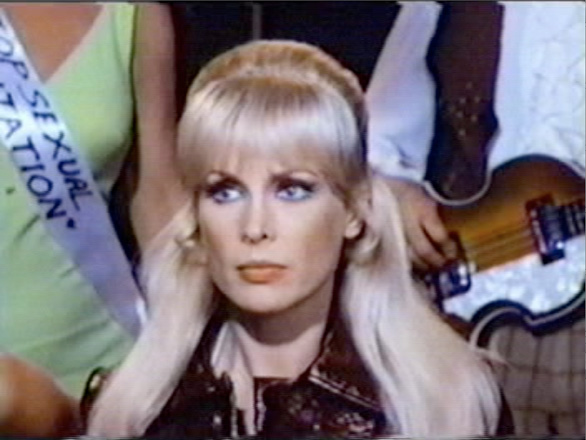
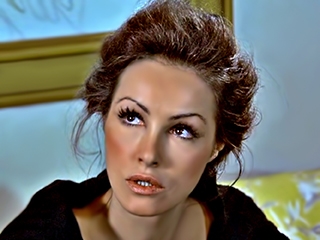
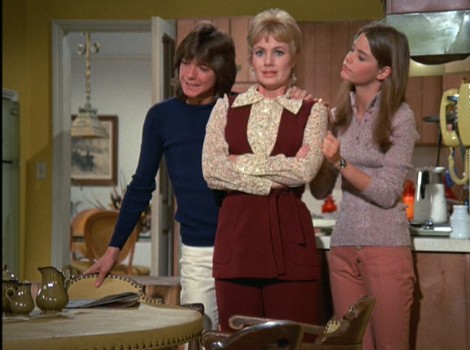
I’m sure I watched more than my share of these movies growing up, but most of them left no impression on me. However, there is one that I do remember. I’m not sure if it was the incredible cast or just the topic of women’s lib which I was just beginning to understand at age ten, but I loved this movie. I watched it live on television and never saw it again. It was The Feminist and The Fuzz. Although I’m sure it’s full of politically incorrect dialogue and actions, I decided to learn a bit more about this treasure that I have not seen in more than 40 years.

Photo: pinterest.com

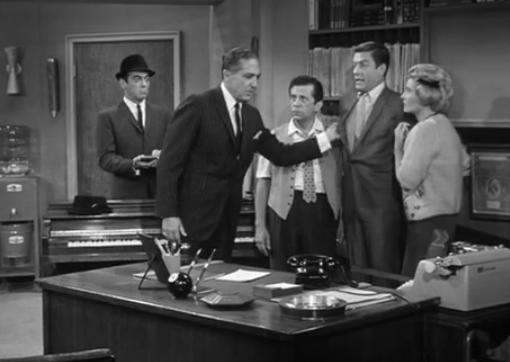
Screen Gems made the movie for ABC. It aired on The ABC Movie of the Week on January 26, 1971. Barbara Eden and David Hartman were the stars of the show. The movie was written by James Henerson. He wrote eighteen television movies, as well as scripts for several sitcoms including I Dream of Jeannie and Bewitched. Jerry Paris, who was Jerry Helper, the Petries’ neighbor on The Dick Van Dyke Show, was the director. Claudio Guzman produced the movie, and Emil Oster was the cinematographer.

Photo: youtube.com

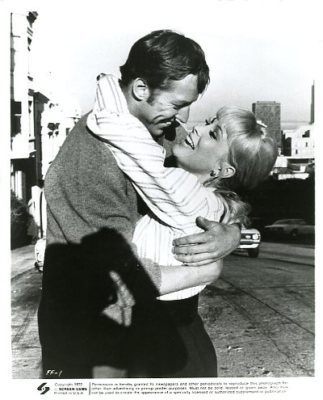
Jane Bowers (Eden) is a pediatrician. She is engaged to Wyatt Foley (Herb Edelman). Wyatt is a lawyer and a bit of a mother’s boy. Jane has recently been drawn into the women’s liberation movement. Apartments in San Francisco are few and far between. We learn she has been trying to find one for a while. As she arrives at the latest apartment in her hunt, she meets Jerry Frazer (Hartman), a cop who is also looking for an apartment. The landlord assumes they are a married couple as he shows them around.

When he leaves, they argue about who gets the apartment. Neither one of them is willing to give in, so they finally come to an understanding that they will share the apartment. They work opposite shifts, so they decide they will rarely be there together. Jerry is dating Kitty Murdock (Farrah Fawcett), a bunny at the Playboy Club.

Photo: pinterest.com

Jane explains what is going on to Wyatt, but Jerry does not want Kitty to find out he is living with Jane. Jerry is a bit of a ladies’ man but treats women respectfully. Jane refers to Jerry as a “cop-lawyer-sexual bigot-Boy Scout,” and she insists he treat her like he would another man.

Although the plan is that Jane and Jerry don’t spend any time together, of course they end up being thrown together. Despite their first impressions of each other and their intention to dislike each other, the viewers realize that they are falling in love.

Photo: modcinema.com

While Jane has been exploring the entire feminist movement, she has not bought into it as much as her friends. Her best friend is another doctor, Debby Inglefinger (Jo Anne Worley). Debbie is a hardcore protester and women’s libber. She decides her club, Women Against Men, or WAM is going to stage a protest at the Playboy Bunny Club.

Photo: modcinema.com

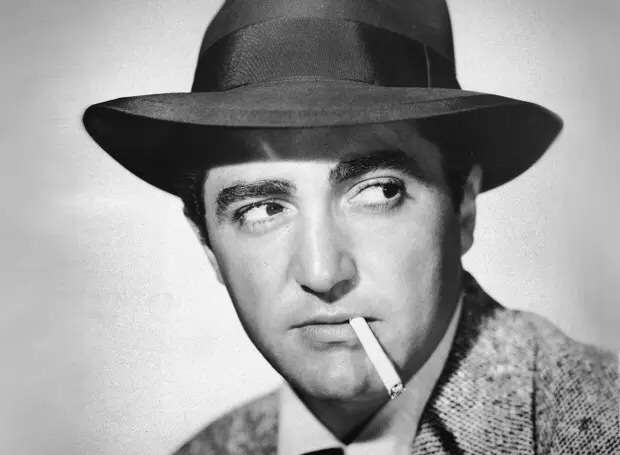
Jane joins her friends at the Club. The women are all wearing swimsuits and carrying signs; Jane’s says, “Men are Playboys, Women are Playthings.” WAM refuses to leave the premises, so the manager calls the police. Of course, Jerry is one of the officers who come to get things under control. While the other women are being arrested, Jerry picks up Jane, who is in a bikini, and carries her to a taxi, telling the driver to take her home. She is incensed that she is not going to jail with the other women. While this is going on, Kitty spots him and realizes he is protecting Jane. Some of the women who are arrested at the Club include Sheila James, Jill Choder, Merri Robinson, Penny Marshall, and Amanda Pepper.

Photo: aveleyman.com

Jane calls her father, Horace (Harry Morgan) who is also a doctor. She has not admitted to him that she has a male roommate. He decides to drive into town to talk to her in person. In the meantime, Lilah (Julie Newmar), a kind-hearted prostitute asks Jerry to arrest her, so she has a place to sleep that night. He feels sorry for her and lets her stay in his room at the house that night because he will be at work. When Jane’s father arrives, he runs into Lilah who he assumes is Jane’s roommate. Jane is not there because she was still angry and got even madder when she thought Jerry is sleeping with Lilah. She leaves him a note that she is moving out.

Jerry tries to call Jane at work and when he finds out she left early, he rushes home. Of course, by this time Horace and Lilah have gotten to know each other well. Kitty also shows up at the apartment and sees Jane and recognizes her from the Club. Wyatt and Debbie also stop by.

Jerry finally admits he loves Jane. Jane is in a fluster and runs out of the apartment. Kitty gets mad and asks Debbie if she can join WAM. Wyatt finds Debby’s controlling nature attractive and they begin a relationship.

Jerry catches up with Jane in the middle of an intersection where he kisses her, stopping traffic. Horace is happy because never liked Wyatt but likes Jerry a lot.

Photo: worthpoint.com

Like Laugh-In, With Six You Get Eggroll, or The Brady Bunch, this movie could only have come out of this era. Everything about the movie screams the seventies—the clothing, the interiors, the cars, the language—which is probably why I was drawn to it. Everyone in the cast is a well-known star, which also made it fun to watch.

There were a lot of impactful and important television movies made in the 1960s and 1970s, so I’m not sure why this movie, primarily fluff, is so memorable for me. I guess I was not alone because it was the second-highest ranked television movie when it aired. It is on my bucket-list of shows to watch again. What is the movie that you love but hate to admit how much you love it?

Earle Hagen Whistles a Happy Tune

We don’t often notice music in the background of our favorite shows, but it has a significant impact on our appreciation for a series. One of my favorite CDs in the 1980s was the music from thirtysomething. I admit I didn’t often pay attention to the music while watching the show, but I loved listening to the soundtrack.

hagen14

Photo: findagrave.com

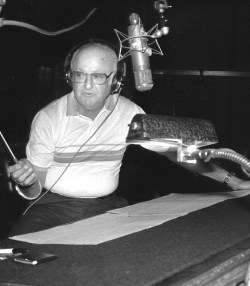
Today we get to spend some time learning about one of the most prolific songwriters in the television industry: Earle Hagen. Earle was born in the Midwest in 1919, in Chicago, but moved with his family to Los Angeles. He began playing the trombone in junior high school.

At age 16 he left home to play with some of the best big bands in the country: Tommy Dorsey, Benny Goodman, Ray Noble.

hagen2earlhagen.net

Photo: earlehagen.net

During his time with Noble, when he was only 20, Hagen composed the song “Harlem Nocturne” as a tribute to Duke Ellington and Johnny Hodges. It would be recorded by numerous musicians over the years and later was adopted as the theme for both Mickey Spillane’s Mike Hammer and The New Mike Hammer.

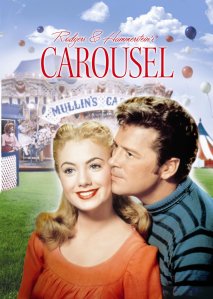
In 1940 Earle was hired by CBS as a staff musician. Like many of the composers we have been learning about, Hagen enlisted in the military for World War II. When he came home, he became an orchestrator and arrangement writer for 20th Century Fox. He worked on a variety of films including Gentlemen Prefer Blondes and Carousel.

In 1943 he married Lou Sidwell, a big band singer. They would remain married until she passed away in 2002 and produce two sons.

When Earle accepted the Irwin Kostal Tribute Award in 2000, he explained that “In 1953, the studios committed to large screen production and we went from 38 pictures a year to one. There were other pictures on the planning board but not immediate enough to support the huge studio staffs. So, along with 1199 other people, I migrated to television.”

The first show he worked on was a short-lived series, It’s Always Jan which was on the air from 1955-56.

Then Hagen met Sheldon Leonard. As he says, “There again my good fortune held. I teamed up with Danny Thomas and Sheldon Leonard at a time when they were starting a string of hits that lasted 17 years.” Earle wrote the theme for Make Room for Daddy.

Those 17 years were busy. Leonard initiated the practice of using original music for sitcoms, so a lot of background music was required. Hagen said that during that era, the composer was part of the creative team. His opinion was asked for and respected in pre-production, production, and post-production.

He loved working in television. He said that there was “something about the immediacy of TV that I enjoyed. It was hard work, with long hours and endless deadlines, but being able to write something one day and hear it a few days later appealed to me. I think a statistic of which I am most proud is that in the 33 years I spent in television I was associated with some three thousand shows. Every one of them was recorded in Los Angeles with a live orchestra.”

His work continued with Leonard, and he wrote the theme song for The Dick Van Dyke Show.

hagen6

Photo: brioux.tv

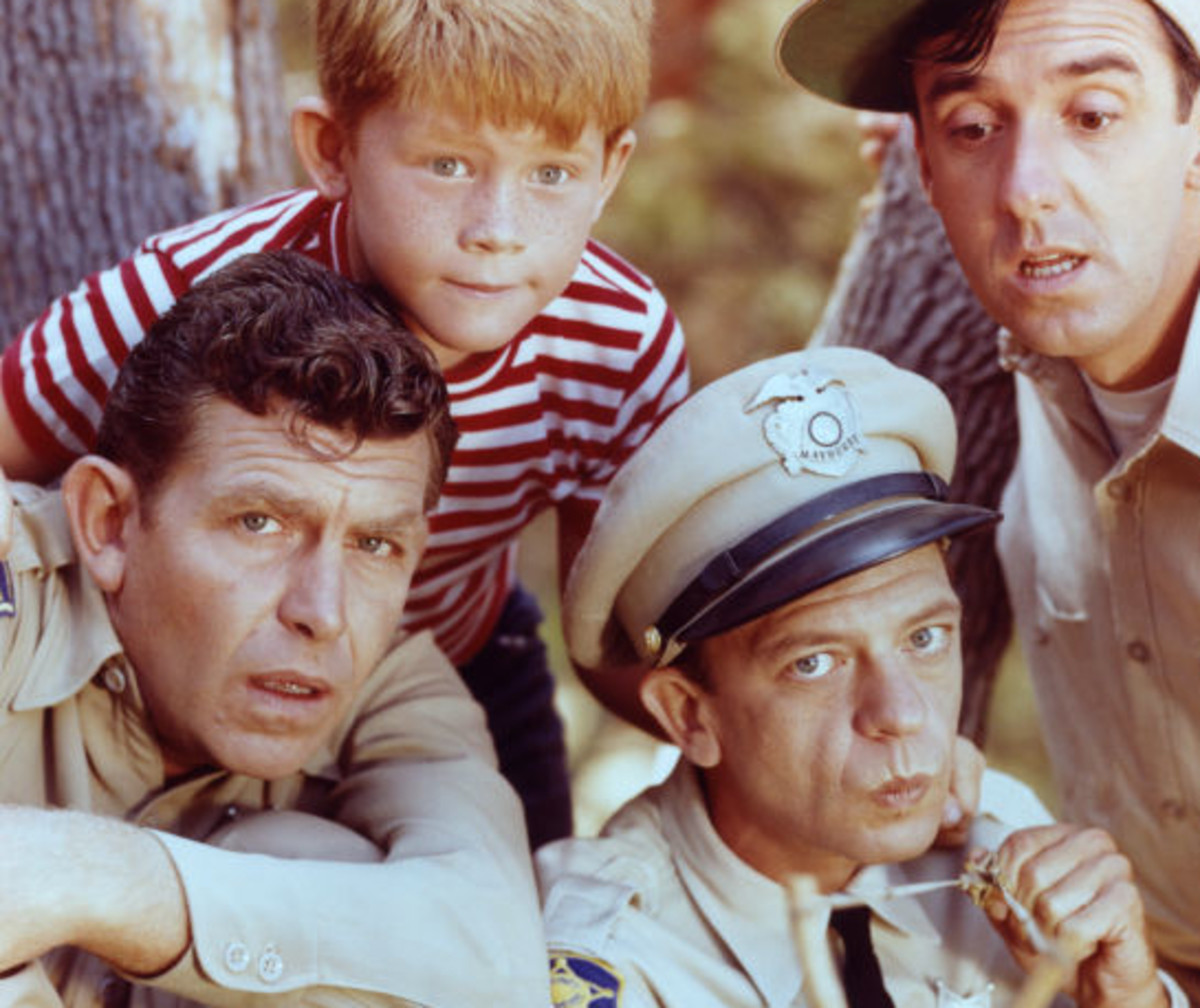
Then Sheldon asked him to come up with a theme for a show about some gentle town folks and their sheriff. Earle said he struggled a while trying to come up with the perfect theme. As he described the process: It’s like “peeling an onion. Half of coming up with something good is throwing away what’s not.” Finally, he had a brainstorm and “he simply whistled the catchy tune which entered his head.” It’s the whistling of Hagen we hear on The Andy Griffith Show when we hear “The Fishin’ Hole.” Despite the difficulty of coming up with the theme song, Hagen enjoyed his time with The Andy Griffith Show. He said, “I guess my favorite show . . . was The Andy Griffith Show. It covered the spectrum from warmth to complete zaniness. It also was easy to write. Worthwhile, when you are doing four or five different series a week.”

hagen5

Photo: mtairynews.com

He went on to work on several shows in the 1960s, including The Bill Dana Show, That Girl, Accidental Family, Gomer Pyle USMC, Mayberry RFD, and The Mod Squad. Hagen based the Mod Squad theme on Schoenberg’s 12-tone scale which added some tension to the scenes, along with a jazzy theme song.

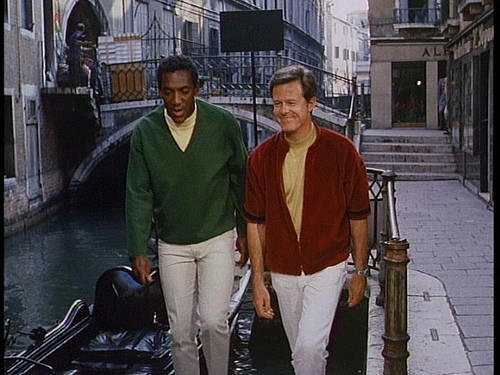
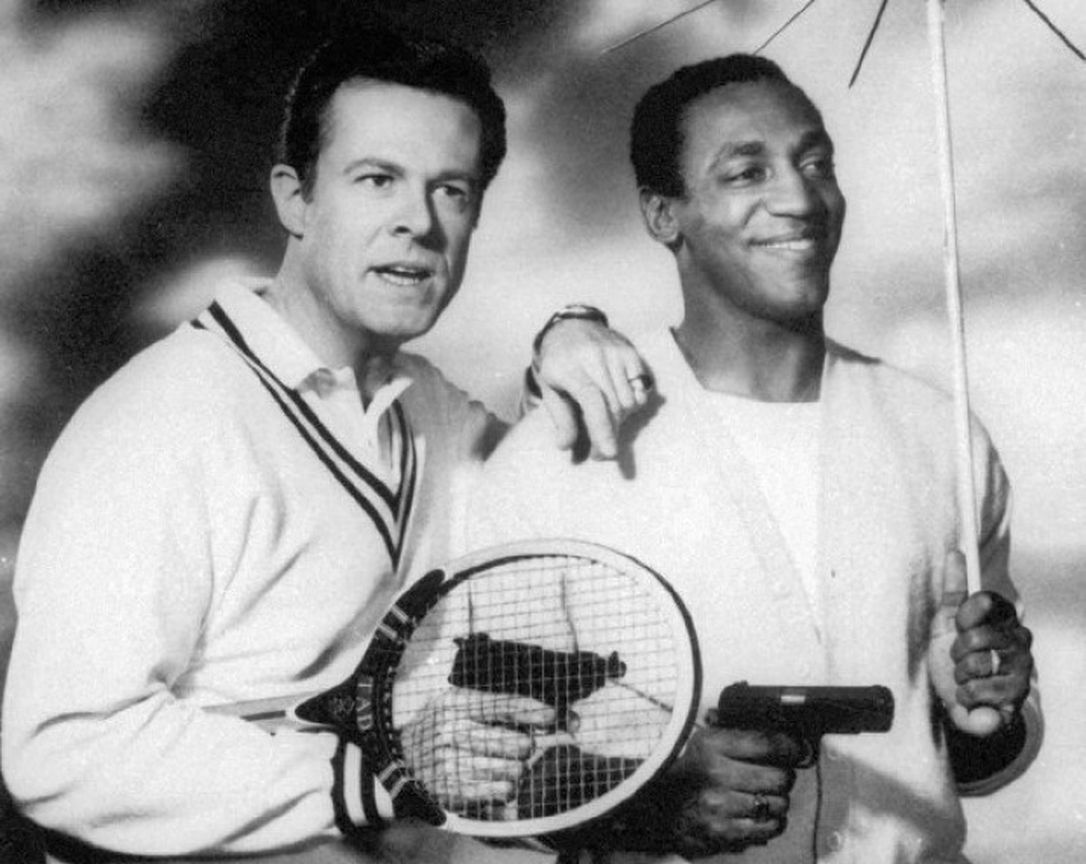
Hagen’s songs are some of the most recognizable ones in television. However, his most innovative and beautiful scores were done for a show that is not remembered much today, I Spy. Leonard wanted original soundtracks for each episode. This humorous spy show was filmed in locations all around the world, so the music had to vary as well.

hagen9

This was the first show to star an African American. Bill Cosby and Robert Culp were spies who took on assignments around the globe. I would like to say that the reason for the lack of the show being rerun is due to Bill Cosby and the poor personal choices he made which has resulted him being sentenced to jail and the shows he was involved with disappearing from television schedules. However, I rarely remember this show being available even before Cosby’s criminal trials, and I’m not sure why that is. In 2008, all three seasons of DVDs were released.

On the website earlehagen.net, we read that “During the run of the series he amassed one of the most comprehensive collections of ethnic music in existence at that time–some of it on commercial records bought in the countries he visited with the production team, but much of it taped live in situ with local musicians. These recordings containing priceless material of musical genres never before recorded, and in some cases, now extinct, were then mixed into the background music produced by the studio orchestra in Los Angeles.  The result was what has been deemed ‘the richest musical palette ever composed for any American television series.’ ”

hagen10

Photo: desertnews.com

Sheldon relied on Hagen to literally scout the world for filming locations. The couple visited Japan, Hong Kong, Bangkok, India, Israel, Greece, Italy, France, and New York. Hagen discussed this trip. “Before the show started, at Sheldon Leonard’s invitation, Lou (my wife of 58 years so far), and I were invited to go on a `round the world trip with the Leonard’s scouting locations for the upcoming series, I Spy. On that 52-day trip we traveled first class, stayed in first class accommodations and at every airport were met by a car, driver, and interpreter, who stayed with us as long as we were in the country.”

Earle wanted viewers to remember that these were US spies so he named his music “semi jazz,” which fused local world cultures with American jazz music.

Deborah Young-Groves discusses the variety of music Hagen used in her article, Creating the Perfect Vibes for “I Spy.”

“And who could forget the frantic–almost joyous–chase across the University of Mexico in ‘Bet Me A Dollar’–Spanish brass–almost Copeland-esque (remember ‘El Salon Mexico’?), too loud to ignore but erratic and happy. And yet, like Copeland, Hagen only scored where he deemed appropriate. In that very same episode the child, who urgently seeks help for Kelly, runs in utter silence.  We hear only his pounding feet and his sobbing gasps.

But the two best episodes for music are ‘Home to Judgment’ and ‘The Warlord,’ for equally fascinating reasons. ‘The Warlord’ borrows heavy oriental imagery for the action sequences (always punctuated by that American jazz – but it works) using snare drums and brass.  How Hagen can get a trumpet to sound Asian simply by a jagged sequence of notes is still a mystery to me!

Then he changes completely and takes a plangent delicate note for the love theme between Chuang Tzu and Katherine, caught between their separate worlds.  It is somber, powerful and almost painful – one of the saddest pieces of music I have ever heard.”

hagen11

Photo: thestar.com

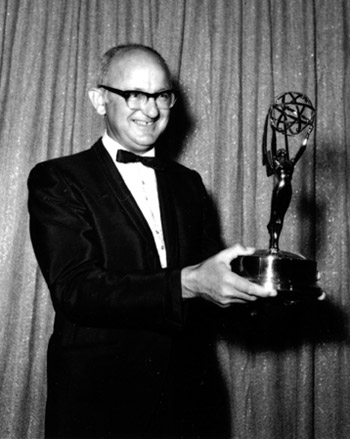
I Spy was on the schedule for three seasons. Hagen was nominated for an Emmy all three years for his work on the show, and he won it the last year the show aired. When asked about his favorite episodes, Hagen said, “Some of the shows of course stand out in memory: ‘Tatia,’ ‘Laya,’ ‘Home to Judgment’ ‘Warlord,’ and one of my favorites, ‘Mainly on The Plains.’ ”

hagen3

Photo: planetoftheapes.com

The music was so memorable on this show, that Hagen was able to record two albums from the series. The first album was recorded by Warner Brothers and the second was Capitol. He said he enjoyed the Capitol album more only because he was able to work on in the off season, so he had more time to devote to it.

hagen1

Earle would continue with his work on television throughout the 1970s, working on a variety of shows, including The New Perry Mason, Eight is Enough, and Mary Hartman, Mary Hartman. In the 1980s, he worked on Dukes of Hazard.

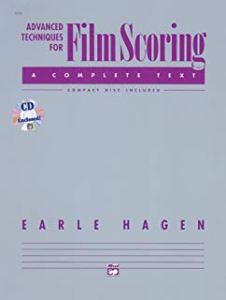
During the last decades of his life he taught and wrote books on scoring and music arrangements. He wrote the textbook, Scoring for Films: A Complete Text. In 2000, he published his autobiography, Memoirs of a Famous Composer Nobody Ever Heard Of.

In 2005, he married his second wife, Laura Roberts. Hagen died from natural causes in 2008.

In 2011, he was inducted into the Television Academy Hall of Fame.

Perhaps his website sums up his career best: “When one considers the vast range Earle Hagen’s career has covered, and just where he was at each stage in his life—playing trombone in the big bands during the 30s, writing arrangements for Frank Sinatra, working at 20th Century Fox during the reign of Alfred Newman, creating TV themes and scores for Sheldon Leonard shows, not to mention teaching brilliant young composers the art of scoring, and publishing the top texts in his field—it can truly be said that he lived through the best times in each of these worlds.”

hagen4

Photo: themusicsover.com

Earle Hagen was another one of the great pioneers in the golden age of television and he should be celebrated for his amazing career.

Sheldon Leonard: A True TV Pioneer

leonard4

The Depression changed the course of Sheldon Leonard’s life. He was born in Manhattan to Jewish parents. He went to Syracuse University on an athletic scholarship. While there, he was president of the dramatics club. His degree was in finance, and he landed a job at a prestigious brokerage firm. Then the Depression hit, and he was out of a job. He had to fall back on the only other skill he could think of which was acting.

In 1931 he married Frances Bober whom he was married until his death. They would have two children.

Acting was not quick money either though. It took five years until he landed his first major Broadway role in Hotel Alimony in 1934. It did not have a long run, but his next two shows were more successful: Having a Wonderful Time in 1937 and Kiss the Boys Goodbye in 1938.

leonard7

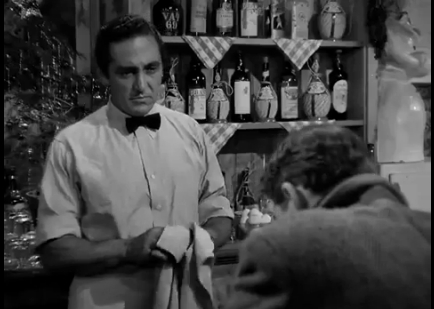
He then entered film work. He had several very small roles in a couple of movies and a couple of shorts, but in 1939 he was cast in Another Thin Man, the popular movie series with William Powell and Myrna Loy. That began his career as a heavy, often being cast as a gangster. He would appear in To Have and Have Not with Bogie and Bacall in 1944. In 1946 he was cast as the bartender in It’s a Wonderful Life with Jimmy Stewart and Donna Reed. Because it has become a Christmas staple, it has brought Sheldon a lot of recognition. Sheldon would appear in 74 movies during his career, 69 of them by 1952.

leonard2

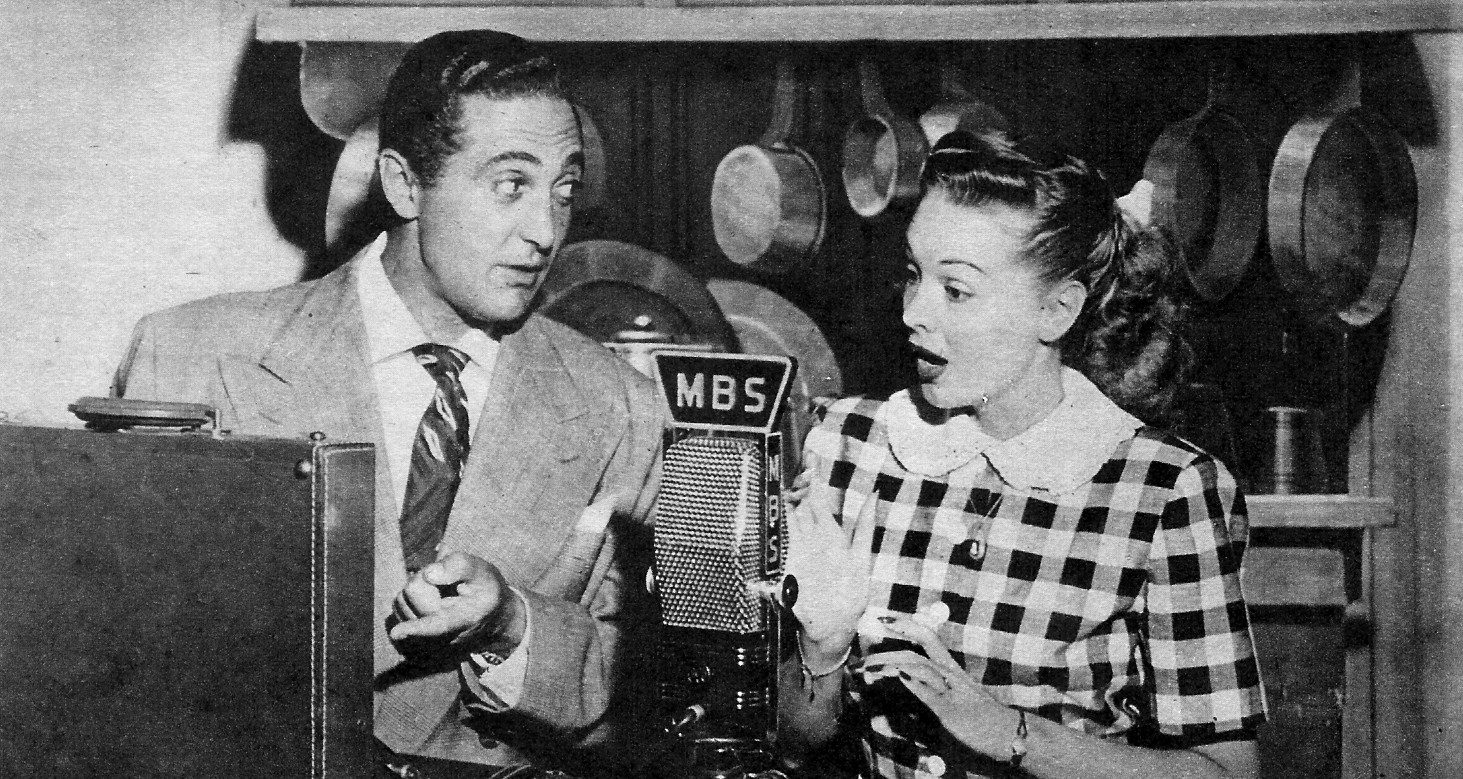
During this time, he also gave radio a try. He was working on both sides of the mic. He sold scripts to several shows including Broadway is My Beat. He also portrayed his stereotyped gangster role on many shows including as Grogan on The Phil Harris, Alice Faye Show. You could hear him on Jack Benny, Burns and Allen, Bob Hope, Duffy’s Tavern, the Halls of Ivy, and The Judy Canova Show, among others.

sheldon6

Photo: radiospirits.com

It was only a matter of time before Sheldon took his talents to television. He appeared in four episodes of Your Jeweler’s Showcase in 1952. In addition, he was listed as producer and director for several of these episodes. He appeared in I Love Lucy in 1953 as vacuum salesman Harry Martin and several I Married Joan episodes in 1952-53. One of my favorites was his role as Johnny Velvet on Burns and Allen when he kidnaps Gracie but takes her back because she drives him crazy. In 1954 he co-starred in The Duke which lasted 13 episodes.  This show featured an artistic boxer who leaves the ring to open a nightclub. Sheldon also directed the pilot as well as some early episodes of Lassie and The Real McCoys.

leonard14

However, the show that made him a household name was his director/producer role on Make Room for Daddy, Danny Thomas’s hit sitcom. The show was in the top ten, and Sheldon even found time to appear on the show 19 times. The show continued from 1953-1964. Leonard had found his sweet spot. During his career, he would direct and produce shows such as The Dick Van Dyke Show, The Andy Griffith Show, Gomer Pyle USMC, and I Spy.

sheldon4

Sheldon convinced Carl Reiner to step back from acting as Rob Petrie and produce The Dick Van Dyke Show. That conversation resulted in Dick Van Dyke accepting the role, leading to 158 episodes. If you watch carefully, you will notice Sheldon appearing twice on the show in minor roles. The show was nominated for 25 Emmys and won 15.

leonard12

Sheldon also is credited with creating the spinoff. One of Danny Thomas’s episodes was set in North Carolina where he gets picked up for speeding in a rural town and has a run-in with Sheriff Andy Taylor. This episode turned into the long-running The Andy Griffith Show which was on the air from 1960-1968 netting 249 episodes. The show won 6 of the 9 Emmys it was nominated for.

sheldon3

The spinoff was so successful he did it again, moving Jim Nabors as Gomer Pyle from the gas station attendant on The Andy Griffith Show to his own show, Gomer Pyle USMC. That show was on the air for five years (150 episodes), and Sheldon would also make an appearance there as Norman Miles.

Thomas and Leonard as L&T Productions were also behind the The Joey Bishop Show and The Bill Dana Show. Thomas and Leonard’s shows were notable for emphasizing characters and relationships over slapstick or situation comedy. You cared about the characters even when they were a little kooky like Gomer Pyle or Barney Fife. They were committed to high-quality scripts. Many of the writers they employed went on to successful shows of their own including Danny Arnold for Barney Miller; Garry Marshall and Jerry Belson for The Odd Couple, Happy Days, and Laverne and Shirley, Mork and Mindy; and Bill Persky and Sam Denoff for That Girl and Kate and Allie. L&T Productions ended in 1965.

leonard9dga.org

Photo: dga.com

In the mid-1960s Sheldon produced I Spy. He cast Bill Cosby and Robert Culp as secret agents.  This was the first series to star a black actor in a lead role. In a March 7, 2016 Modern Times article, David Fantle and Tom Johnson discussed Sheldon Leonard and I Spy. Leonard said he knew what he was doing. “Race was very much an issue at that time,” he said. “I was intellectually conscious of it, but emotionally unaware of it. When I say emotionally unaware, I mean I was free to think of Cosby as the man to fill the slot I needed. Intellectually I knew the problems I’d have to face to get him on the air.” I Spy was a humorous suspense show and was known for its exotic locations, filming in countries such as Hong Kong, England, Morocco, France, and Greece among others. The critics rewarded Leonard. The show was nominated for Outstanding Dramatic Series Emmy every year of its three-year run and earned Leonard an Emmy nomination for directing in 1965.

sheldon7

Sheldon was also the producer behind Accidental Family and Good Morning World, both shows debuting in 1967 and ending in 1968 and My World and Welcome to It in 1969. Accidental Family was about a widower who is a stand-up comedian. He buys a California farm which is managed by Sue Kramer who is also his son’s governess and his love interest. Good Morning World was about morning disc jockeys in LA. One is happily married, and one is a ladies’ man. Goldie Hawn was the next-door neighbor and Billy De Wolfe was their boss. On My World and Welcome To It, John Monroe is a married man with a daughter. He frequently daydreams and fantasizes about life. This show was unusual in that it included some animation along with the live action.

sheldon9

In the Fantle and Johnson article referenced above, Leonard also talked about his favorite sitcom. He said his favorite might be the one that needed the most attention. “My favorite show was cancelled after the first year. My World and Welcome to It, based on the writings of James Thurber and starring William Windom. It won every award, and they cancelled . . . It was satire and above their (the network bosses’) heads. That show and I Spy are my favorites.”

In the early 1970s Sheldon would produce From a Bird’s Eye View and Shirley’s World. From a Bird’s Eye View was a sitcom about two stewardesses, Millie from England and Maggie from America. Millie was always getting into mischief and Maggie bailed her out. Shirley’s World starred Shirley MacLaine as a photographer who travels the world for her London-based magazine. The locales were similar to I Spy.

leonard3bigeddie

In 1975 Sheldon starred in a new sitcom, Big Eddy which only lasted for ten episodes. He was Eddie Smith was the owner of the Big E Sports Arena in New York. He was an ex-gambler fighting the impulse to get back into it. He has a bunch of eccentric people in his life including his ex-stripper wife Honey and their granddaughter Ginger.

In the 1980s, Sheldon would continue to show up on various television shows, appearing in Sanford and Son, The Cosby Show, Matlock, Murder She Wrote, and Cheers.

Along with author Mickey Spillane, Leonard was one of the first two people to become a Miller Lite spokesman. In his New York accent, he tells the audience, “I was at first reluctant to try Miller Lite, but then I was persuaded to do so by my friend, Large Louis.”

Sheldon Leonard passed away at the age of 89 in 1997. His wife Frances passed away in 1999.

leonard1

Sheldon Leonard is undoubtedly one of the greatest television producers. Most of his shows were consistently in the top ten. They are classic shows still on the air today.  Sheldon required scripts that brought characters to life. He created spinoffs when he believed in the characters. He was not afraid to take risks. Besides casting Bill Cosby, he cast Lois Nettleton as divorced Sue Kramer on Accidental Family. This was in the mid-1960s and yet when Mary Tyler Moore’s show aired in 1970, the network refused to allow her to be a divorced character.

In the Mercurie Blogspot from November 10, 2013, Carl Reiner discussed Leonard: “Sheldon has mentored more people in our business than anyone else I know. He knew how to teach what he knew, and what he knew was situation comedy with the three-camera technique. Sheldon was a producing genius who understood comedy. He had four or five shows going, but he would walk in and give his intelligence and his time to every script that was being read for the week. And we always came away with a better script because we would discuss and argue and come to a better situation.”

sheldon5

Garry Marshall was also quoted in this same article: “Sheldon was a sort of man’s man, yet he had all the creative sensitivity of the artist. No matter what story you were working on, he could help you fix it. He would never put down your idea. If I had to describe Sheldon in one word, it would be gentleman. He was a Renaissance man with a New York accent—and possibly a gun!”

The Herb Garden Germination

Photo: americanprofile.com

As a salute to Leonard, the writers of The Big Bang Theory, named their main characters Sheldon and Leonard in honor of Sheldon Leonard.

sheldon1

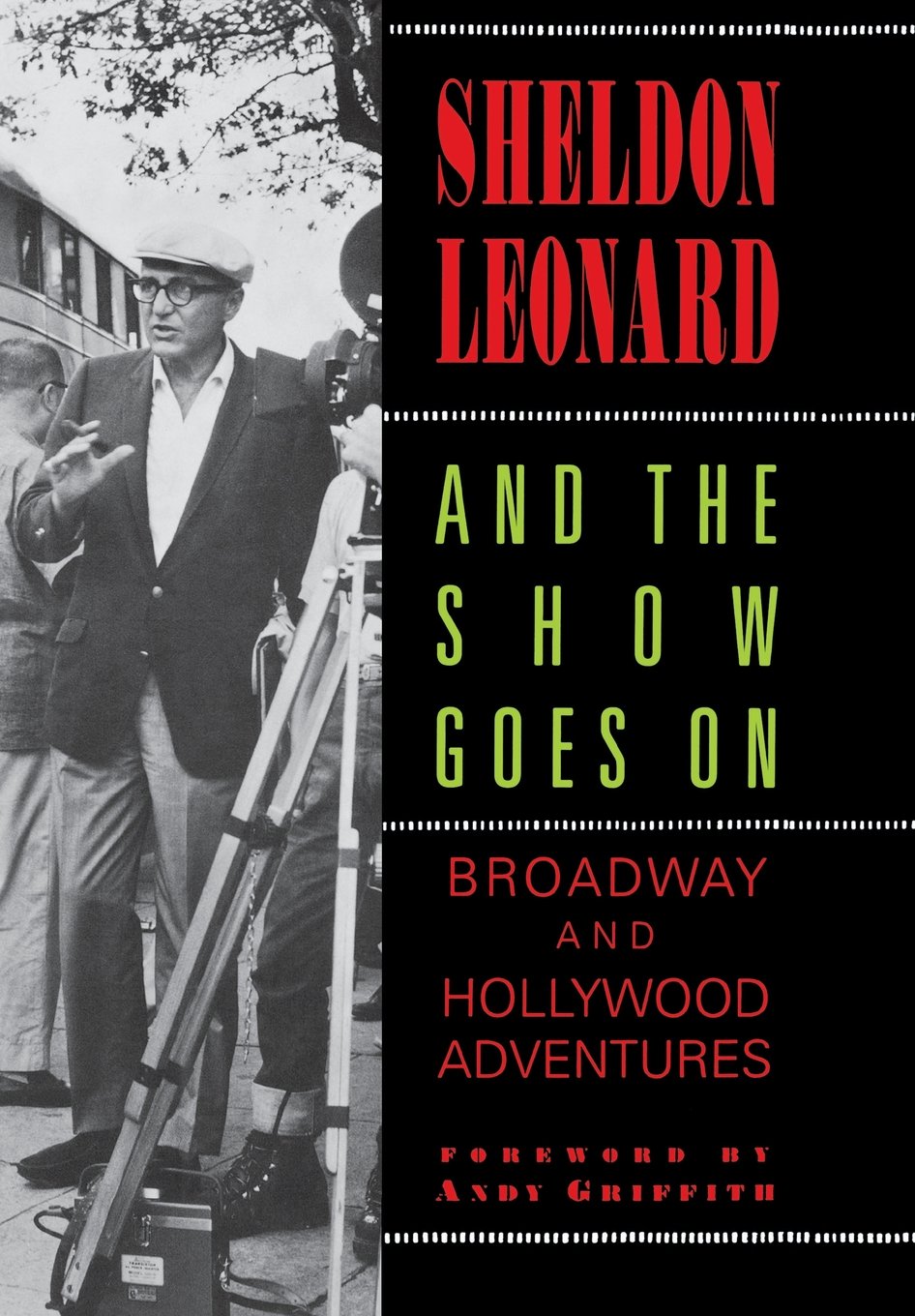
Sheldon himself seems to explain his success best. After working on his memoir in 1995, And the Show Goes On: Broadway and Holiday Adventures, he said “I was driven by an urge to survive and being very self-indulgent. I never did anything for very long that I didn’t like or enjoy. I would survive only on my own terms. I had to enjoy what I was doing, and I would have done what I did even if nobody paid me. That’s the secret of success in any business: do it well and enjoy doing it.”

leonard11

He did it all well, and we all enjoyed it.

ME on TV: A New Network for Your Viewing Pleasure

There is no shortage of television to watch these days. Apart from hundreds of channels on cable networks or satellite dishes, Netflix can provide you with even more options. With so much to choose from, it’s surprising that the classic TV networks are increasing in numbers. Even though most of these shows are available on DVD, viewers are still choosing to watch them during prime time. According to an Indie Wire article, “Most Watched Television Networks: Ranking 2017’s Winners and Losers” by Michael Schneider from December 28, 2017, “Me TV grew 4 percent last year.” That’s good news for those of us who love watching the shows we grew up with.

melogo

While I appreciate Antenna TV and Me TV, I decided to kick it up a notch. I’m debating starting my own network called Me on TV. Not only can I watch my all-time favorite shows, but I can star in them as well. My pitch is that I will write myself into the shows I love. Here are a few ideas I have ready and waiting when the writers or producers call me.

Burns and Allen. Gracie has hired me, Duree Benedict, as her interior designer. She has a plan that we meet at Blanche’s to draw up the design. Once Gracie approves it, she wants me to stop by each morning, replacing an old item with a new one. Her philosophy is that things will change so slowly, George will never realize everything in the living room has been replaced. George realizes what is happening and says nothing. After two weeks, things are entirely new, and Gracie is happy. However, after another two weeks goes by, she realizes all the old items are back in place. George admits he was having fun with her and hired the designer to bring back their old items one by one. Then he calls me and has me set up the room according to Gracie’s new plan. I think this would work right Gracie? George?

me5


Bachelor Father. As Giselle Lincoln, I hire Bentley Gregg to draw up a corporation for me. I am a documentary filmmaker. Bentley and I go on a couple of dates, knowing this is not going to turn into a relationship, because I am traveling all the time. On one of those dates, Kelly comes to dinner with us and is fascinated by the places I’ve been and where I am filming in the future. I offer her a job as an assistant producer. Bentley wants her to go to college first, but I say she can learn from experiences. After an argument or two, Bentley relents and says she can join my company. Later that night, Peter has an impromptu conversation with Kelly, and she realizes her uncle has her best interests at heart and turns down the offer. I think we could make this work don’t you two? Peter could you talk to them?

me8


The Dick Van Dyke Show. As Olive Harte, I play Buddy’s sister-in-law. After hearing about Pickles for so long, Rob and Sally expect the worst when I stop in the office saying I have written a skit for the Alan Brady Show. However, I am the total opposite of Pickles. Sally and I hit it off and while I’m in town, we spend a lot of time together. Buddy is moping because Sally is too busy to hang out with him. The skit is a hit. Rob offers me a job, but I say I’m leaving in two days. I’ve been offered a contract to write screenplays. After I leave, Buddy and Rob notice Sally is lonely, and they realize having two guy co-workers is not the same as a best friend and they’re nicer to her than usual. It would be a heart-warming episode. Can you two stop laughing long enough to seriously consider the idea?

medvd


My Three Sons. My role is that of a bookstore owner, Daphne Marvel. The entire episode is filmed in my store. Each member of the Douglas family comes in throughout the day looking for an item that is related to an issue they are having. Charlie is looking for a cookbook from Singapore because he has a friend he met in the war coming for dinner and wants to surprise him with some of the dishes they enjoyed when stationed there. Steve wants a how-to book for dealing with teenagers. Robbie is looking for a book about car maintenance. He is planning on buying a car that needs a lot of work and wants to be prepared for how much time it will take before he tells his dad. Chip sneaks in to look for a book about orchids. His girlfriend’s dad loves them but doesn’t like boys much. Chip wants to learn about them, so he has something to discuss with Mr. Boyle. Ernie is looking for a magazine on model airplanes. He broke one of Chip’s and wants to fix it before he sees it’s missing. Later that night, they all end up in the kitchen looking for a snack. While talking, they realize they all were at the store and share their reasons for going and help each other out with their “problems.” Don’t you think that sounds good guys?  Steve, you haven’t said much.

my-three-sons-274


That Girl. I play Veronica Jenkins, an author. My best seller was just bought for a movie by Columbia. I have decided Ann is the perfect star to take the lead role. The problem is that she would have to be in Europe for three months to film and she promised her mother she would move home for a month to help her recover from a back surgery. Her mother has put off the surgery for some time, so it could be planned around Ann’s schedule for shooting two commercials. Does she turn down a perfect opportunity or keep her promise to her mom? What do you think Marlo? It may need a bit of tweaking but it would work.

me1


Hogan’s Heroes. As Yvonne Coudret, I have been brought in to Stalag 13 to help intercept an art shipment. As an expert on European art, I need Colonel Hogan’s help to stop a shipment of masterpieces stolen from Belgium. I have been smuggled into the camp as a domestic servant, but I know nothing about cleaning and cooking, and  Hogan needs to get me out before the staff realizes I am a spy. I think this would be a fun episode. What about you Col Hogan?  Le Beau?  Any of you?

me3


Green Acres.  As Leslie Wilson, I am in Hooterville to see my uncle, Hank Kimble. I am traveling to Greece, Italy, and Mozambique to write a book about different cultures. As I spend the day with my uncle visiting the Lisa and Oliver Douglas; the Ziffels, especially Arnold; and Sam Drucker’s store, I realize that this should be the first chapter in my book because the culture is like nothing I have seen anywhere else in the United States. Lisa thinks this is a good idea; Oliver how about you?

me4


The Wild, Wild West. President Grant has sent me to Jim and Artemis. I am a  artist by the name of Emily Adams. My paintings are being used as clues in a case where citizens in Omaha are being murdered. Jim and Artemis need to find the next clue and keep anyone else from being killed. They approach the sheriff with information about the next crime scene only to learn he is the killer when he puts them in a cement room under the jail. You two like culture don’t you. Why are you looking so uncertain?

me


The Carol Burnett Show. I would love to star in an episode of this show, working with the gang. My idea is a parody of Pillow Talk called “Brillo Talk.” A young man tries to romance a woman, but all she is interested in is cleaning and continues to tidy up his apartment when she finds dust, dirty dishes, etc. Carol, Vicky, it’s not “Went with the Wind,” but it could be pretty funny.

mecarol


The Partridge Family. As Shirley’s best friend from grade school, Amy Harding, I visit the Partridges for a few days. Shirley and I have a lot of fun catching up. Spending a few days together, we are both jealous of the other person. Shirley briefly envies my freedom to come and go and my life as an architect designing buildings all over the world. When I tell her I would give up everything in a heartbeat to have a family, she realizes what she has is irreplaceable. After a few days of craziness with the kids, I realize we are both doing just what we were designed to do. We part, both appreciating our lifestyles. This sounds like a typical Partridge episode I think, right?

me10


The Odd Couple. As Suzanne Rogers, I am a female sportswriter. When Oscar reads my articles with the byline S. Rogers, he assumes I am a male. When he invites me to appear on his show, he is surprised to learn I am a woman. He finally gets beyond his stereotype of me as a sports writer and invites me home for dinner. He is then surprised when I bond more with Felix, and the two of us become friends. You two don’t look convinced. I think women would love this one.

me7


Rizzoli and Isles. As Erin Reid, I play an old friend of Maura’s. When I was a witness to a murder, Jane and Frankie decide to hide me at Vince’s tavern where their mom Angela works. Maura vetoes the idea and tries to convince them to send me to a safe house. Maura is afraid I will share some stories about her in middle school when she did some embarrassing things. She was so smart she didn’t have a lot of common sense. She keeps popping in the tavern to keep me busy, so I don’t blab to Jane or Angela. Jane is frustrated because Maura is not in the lab when she needs information. Finally, Maura confesses what she is worried about. Jane reminds her she’s an amazing person and she should quit worrying about her past. Maura agrees. That night when they all go to the tavern to eat and let me know the killer is in jail, Maura talks about some of her embarrassing situations. I am surprised because I didn’t know her well till high school and hadn’t connected those stories to her. Maura, this is an episode that helps you mentally grow because you can rise above your view of yourself as an inept teen. I think it would be fun, don’t you?

RIZZOLI & ISLES


I think this new network is a great idea, but based on the uncertain and unenthusiastic looks from my future coworkers, I may have some work to do.

I’m not sure why you two look so worried; I haven’t even mentioned the idea I have for my appearance on M*A*S*H yet.

memash

She Was Maid For TV: Hazel

June 4 is Old Maid Day, and what better way to celebrate than with Hazel, the show that Shirley Booth played an unmarried maid on.

hazel15

The show debuted in the fall of 1961. The sitcom was based on Ted Key’s cartoons which appeared in the Saturday Evening Post.

hazel1

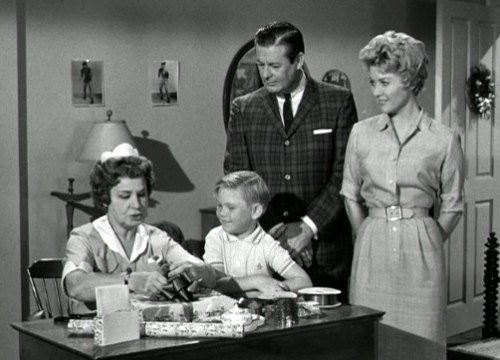
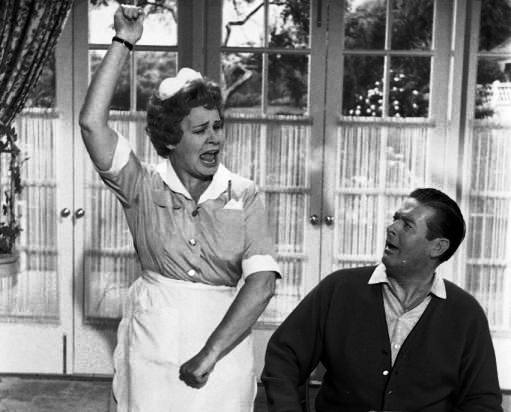
Hazel Burke is a live-in maid for the Baxter family who consists of Dorothy (Whitney Blake), who Hazel calls Missy; George (Don Defore), who Hazel calls Mr. B; and their son Harold (Bobby Buntrock), who Hazel refers to as “Sport.” Hazel worked for Missy’s family and helped raise her, so they are very close. As an aside, Whitney Blake had previously been married to a Baxter and her real daughter was Meredith Baxter.

hazel9

Hazel was on the air for five seasons, producing 154 episodes. Hazel was 4th in the Nielsen ratings for its first year. By the end of Season 4, the show had fallen out of the top 30. Season 1 was black and white except for one episode. Hazel purchases a color television set. RCA owned NBC, which aired the show for the first four years, and this show seemed to be a blatant commercial for colored televisions. Beginning in Season 2, all the shows were filmed in color. The show moved to CBS for its final year. Shirley Booth won an Emmy Award for Best Actress in both 1962 and 1963 and was nominated again in 1964 when she lost to Mary Tyler Moore for The Dick Van Dyke Show.

In 1963, the NAACP threatened to boycott the show’s sponsor if a black member was not added to the cast and, two months later, the network announced a black production executive had joined the show.

hazeld

Hazel is more than a maid for the Baxters; she is family. We also get to know several of Hazel’s friends: the postman Barney Hatfield (Robert Williams), taxi driver Mitch Brady (Dub Taylor), and her best friend, Rosie Hammaker (Maude Prickett) who is also a maid. Apparently, there were a lot of maids in the city because Hazel was president of The Sunshine Girls, a club for maids.

hazel16

Hazel often stuck her nose into issues where it didn’t belong, but she “fixed” the situation in the end. She constantly frustrated George, who would try to put down his foot about an issue. She often would restrict his desserts to get her way or his wife would defend her cause, and he usually gave in.

George had more control at work where he was a successful lawyer at Butterworth, Noll, Hatch, and Baxter. However, Hazel often got involved in issues regarding his clients as well. She pre-empted his authority at work like she did at home, especially when the case involved Harvey Griffin (Howard Smith), one of George’s clients who spent a lot of time at the Baxter house.

hazel3

When the house and George’s work life were running smoothly, Hazel found issues to battle around the community.

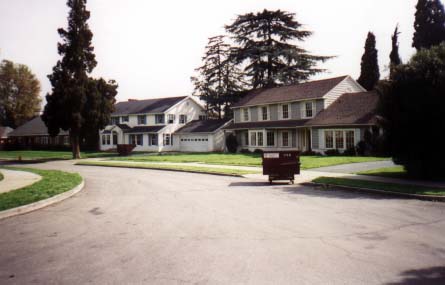
The series was filmed at Columbia Studios in Hollywood. The house façade for the Baxter home was used in several Three Stooges films and was the Lawrence home on Gidget. The house next door was Darrin and Samantha Stephens home on Morning Glory Dr featured on Bewitched.

house1

Sammy Cahn and James Van Huesen wrote the instrumental theme song that played during opening of the show; and The Modernaires sang it at the closing for the first eight episodes in Season 1. Beginning with episode 9, the instrumental was the only version played in both the opening and closing credits. The lyrics were:

People love you everywhere you go Hazel.

Children cross the street to say hello, Hazel.

You charm every Romeo and Casanova,

It’s your personality that wins them over.

You may never be a millionaire Hazel.

Count your friends and you don’t have a care, Hazel.

You’ve got more than wealth untold,

You’ve got a heart of solid gold.

We love you, Hazel,

Just because you’re you.

When NBC ended the show after Season 4, CBS picked it up.  They changed most of the cast, keeping only Hazel and Harold.  The premise is that Dorothy and George are sent to Saudi Arabia for George’s career, so Hazel and Harold move in with George’s younger brother Steve (Ray Fulmer), his wife Barbara (Lynn Borden), and their daughter Susie (Julia Benjamin). A minor character was also added with Ann Jillian as Steve’s receptionist. The ratings were not high but were acceptable.  However, Shirley was ill and required a nurse on set. She decided she could not continue with the show, so Season 5 was its last.

cast

During its first four seasons, Hazel was sponsored by Ford Motor Company. Ford cars were often featured in the shows. The episode was the first show to display the Ford Mustang on television. Bristol-Myers came in as a cosponsor for Season 4, and when the show moved to CBS, Procter & Gamble and Philip Morris were the co-sponsors.

Unfortunately, most of the cast has passed away.

Bobby Buntrock, the youngest member, was the first to die. Only 21, he was in a tragic automobile accident involving a bridge in South Dakota in 1974. That same year, Booth retired to her Massachusetts home.  She passed away at age 94 in 1992 after suffering several health problems including blindness and a broken hip. The next year, Don DeFore died from a cardiac arrest at age 80. Whitney Blake died from esophageal cancer in 2002 at age 76, also living in Massachusetts. Lynn Borden passed away in 2015 after an extended illness. Julia Benjamin and Ray Fulmer are still alive.


Hazel gained a younger audience fan base in the 1970s and 1980s when it was seen in syndication. It currently can be seen on Antenna TV. The first season was released on DVD in 2006 and the last season was released in 2014.

hazel4

Hazel seems to be one of those shows that people love or hate.  I enjoyed watching Hazel in reruns, although I didn’t really care for the final year—it seemed to be working too hard to be fun. TV. Although, this show is not one of those that I watch with fond nostalgia, it is not as syrupy as some shows and better than many shows still on the air. I occasionally catch an episode on Antenna TV. If you want to check it out, Hazel is on daily at 11 EST. It also airs Saturday evening at 6:30 EST and at 8 am both Saturday and Sunday mornings.


“I’m a neurotic nut, but you’re crazy!”

odd1

Today we learn about the story behind The Odd Couple.  I think that this show is one of the most under-appreciated shows out there. It came at a time when shows like The Mary Tyler Moore Show, The Bob Newhart Show, and M*A*S*H were being acclaimed for their sophisticated writing and depth of characters.  The Odd Couple achieved these same credentials. Garry Marshall learned the importance of character-driven scripts during his time writing for The Dick Van Dyke Show. Ironically, Marshall wrote 18 scripts for The Dick Van Dyke Show and Jerry Paris (Jerry Helper on The Dick Van Dyke Show) directed 18 episodes for The Odd Couple.

movie

In March of 1965, the play debuted. Written by Neil Simon, The Odd Couple was based on the real-life experiences of his brother Danny. The play ran for 966 performances and was nominated for a Tony that year. In 1968, a movie was made starring Walter Matthau as Oscar Madison and Jack Lemmon as Felix Unger. Simon signed away his television rights. When Garry Marshall and Jerry Belson developed the series, it was listed as “Neil Simon’s Odd Couple. Simon objected to his name being associated with the show, because he said he did not know what the writing would be like. His name was removed, but he did come to appreciate the series, and he had a cameo role in the episode “Two on the Aisle” in 1974.

odd10

The show was on the air for five years from 1970-1975, producing 114 episodes. Tony Randall was hired first.  Both Dean Martin and Art Carney were considered for the part of Felix. Randall was pushing for Mickey Rooney to get the role of Oscar.  Martin Balsam was also under consideration. Garry Marshall fought hard for Jack Klugman, and eventually Klugman received the part. Both Randall and Klugman had starred in different versions of the play.

The show was on the verge of cancellation every year, but the summer ratings were always so high that the show continued to be renewed. Jack Klugman had high hopes for the syndication of the show, and he convinced Tony Randall to give up part of his salary for syndication rights. Klugman was right; in the 1980s, the show was on the air on several channels. Although the show never cracked the top 30, critics liked the show and it was nominated for an Emmy three times for Outstanding Comedy Series. Both Klugman and Randall were nominated for Emmys every year the show was on the air for Outstanding Lead Actor in a Comedy Performance; Klugman won in 1971 and 1973 while Randall took home the award in 1975.

split personality

This was the memorable introduction to the show each week:

“On November 13, Felix Unger was asked to remove himself from his place of residence. (A door slams shut, only to reopen and we see someone angrily hand Felix his saucepan) That request came from his wife. Deep down, he knew she was right, but he also knew that someday, he would return to her. With nowhere else to go, he appeared at the home of his childhood friend, Oscar Madison. Sometime earlier, Madison’s wife had thrown him out, requesting that he never return. Can two divorced men share an apartment without driving each other crazy?”

Bill Woodson narrated the opening. The actions of the two leads during the credits changed a bit from year to year but centered around Oscar being a slob and Felix being a neat freak.

odd9

There were several variations about how Felix and Oscar met.  As you can see in the opening, they were mentioned as being childhood friends. However, in the first season, one of the episodes recalled a murder trial where Felix and Oscar were jurors, claiming they met then.  Later several episodes mentioned them meeting in the Army. In Season 3, the word “childhood” was removed from the opening segment.

odd7

During the first season, the show was filmed in the same apartment as the movie version. It was done with one camera and a laugh track.  For the second and subsequent years, three cameras were used, and the laugh track was replaced by a live audience.

Oscar and Felix lived at 1049 Park Avenue, an existing address in New York. The actual building was used for the opening credits and exterior shots. Almost all the exterior shots feature two cars: a 1966 Ford 4-door station wagon and a red VW Beatle. Fans still visit the building, and occasionally mail is delivered for Oscar or Felix.

sommers

Many of the show’s details were adapted from real life. Brett Somers played Oscar’s ex-wife and just happened to be his ex-wife in real life. Oscar and Klugman both followed horse racing. Oscar wrote for the New York Herald.  The Herald did exist from 1835-1924 when it merged with the Tribune.

edna

Felix’s kids were named Edna and Leonard. Tony Randall’s middle name was Leonard, and his sister’s name was Edna. Felix moved out of the house November 13, Garry Marshall’s birthday. Randall and Felix both had an appreciation for opera and classical music.
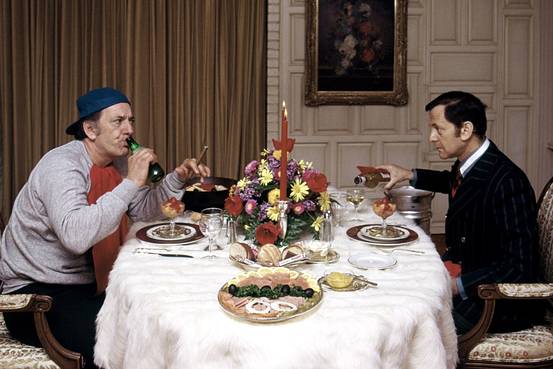
oscar and felix

Oscar was a hot dog and beer guy while Felix was a filet mignon and red wine person.

ABC was always worried about the issue of homosexuality. As a prank, Klugman and Randall would occasionally provide improvised dialogue to send to the network just to get them worked up.

As mentioned earlier, Brett Somers played Oscar’s ex-wife. Randall’s ex-wife Gloria was played by Janis Hansen. Pamela Ferdin had the role of Edna, while the role of Leonard was played by two different actors who would both go on to become teen idols: Willy Aames and Leif Garrett.

Al Molinaro played Murray the cop, the guys’ friend and one of the regular poker players. Penny Marshall played Oscar’s secretary Myrna Turner. Elinor Donahue played Miriam Welby who was Felix’s girlfriend until the last season. The last episode of the series reunites Felix and Gloria who remarry.

There were many celebrity guest stars on the show for the five-year run, and many of them played themselves. Some of the famous faces to appear on the show include Martina Arroyo, Roone Arledge, Dick Clark, Roy Clark, Howard Cosell, Richard Dawson, Richard Fredricks, Monty Hall, Hugh Hefner, Billy Jean King, Allen Ludden, Jaye P. Morgan, Bobby Riggs, Bubba Smith, Betty White, Paul Williams, and Wolfman Jack. Garry Marshall shows up four different times on the show–as a drummer, as Werner Turner, and as Man 1 and Man 2.

Two of the best-loved episodes were “Password” and “Fat Farm.”
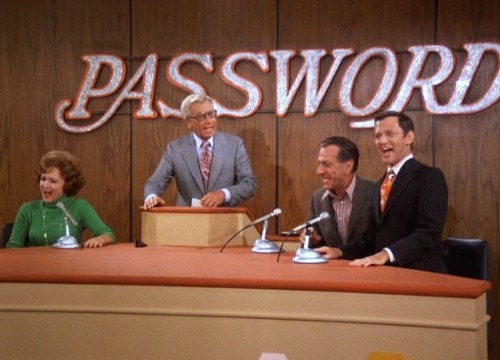
password


In “Password,” Oscar Madison  is invited to be a celebrity guest on Password after he runs into the show’s host, Allen Ludden, and his wife, Betty White, at a restaurant. Because  Felix loves Password, he begs Oscar to accept the invitation, and to bring Felix along as his partner. During the taping, Felix overthinks every clue. When Oscar says “meat,” Felix says “Lincoln” (because “Lincoln loved mayonnaise”). When the password is “bird,” Felix gives Oscar the clue “Aristophanes” (because Aristophanes wrote The Birds). “If Charlie Chan had these clues, he’d be running a laundry,” Oscar grumbles. But the game isn’t a total disaster. When Oscar gets the password “ridiculous,” he gives Felix the clue “Aristophanes” right back, and Felix responds correctly. The friends lose the game but not their friendship.

In “Fat Farm,” proving he’s in top shape, Felix stands on his head and jumps onto a desk (earning Randall applause from the audience), while Oscar can barely make it through a couple of push-ups. Oscar rationalizes why he should not go on Felix’s annual two-week visit to a health camp–“I like my blubber! It keeps me warm, it keeps me company, it keeps my pants up!.” Felix wears him down, so Oscar goes along. It makes him crazy that the camp serves imaginary desserts and bans food from the bedrooms. Soon Oscar discovers a delicatessen just down the road and undertakes a smuggling operation.

Jack Klugman and Tony Randall developed a very close and life-lasting friendship during the years they appeared together as Oscar and Felix. After the show was cancelled, they continued to see each other often. They performed in regional productions of The Odd Couple from the late 1980s through the mid 1990s. They appeared in commercials as Felix and Oscar for Yoplait yogurt, Yahtzee, and Eagle snacks. They even recorded an album “The Odd Couple Sings” for London Records.

On March 23, 2001, Larry King Live featured Jack Klugman and Tony Randall. This clip from the show gives us a good idea of what their friendship meant to them.

KING: Was it as much fun doing it, Tony, as it appeared there?

RANDALL: Yes, yeah. Especially working with Jack. It sounds as if I’m saying the right thing, but it’s true. But acting has always been fun for me. I’d rather act than do almost anything else.

KING: Did you — Jack, was this a natural simpatico between the two of you? It just happened?

KLUGMAN: Oh yeah, it happened so beautifully. Like, we had maybe five pages that would remain — from Monday when we read the script — five pages would remain by Friday by the time we did it.

If for instance, he had to teach me manners, it would be Tony teaches Jack manners, and it would be four blank pages, and then we’d improvise. And he’s the best improviser in the world. He taught me how to improvise. People when they improvise, they talk, talk, trying to fill time. He would provoke — I had to teach him football, right? He knows it, he watches sports all the time. But instead of — I said, all right, now get down, so he came next to me. So, I said we’re not the Rockettes, come over here. And then he put his face right here, and I said, I don’t want to dance with you. So, he would provoke you into saying something funny. That’s true improvisation. It was wonderful. I had a great time. I learned a lot.

KING: Was it natural for you too, you and him?

RANDALL: It just clicked.

KING: It just clicked?

RANDALL: That doesn’t always happen.

KING: No.

RANDALL: It doesn’t even happen always with good actors.

KING: You could put two good actors and put them together, and it doesn’t necessarily mean it will work, right?

RANDALL: That’s right, that’s right.

KING: So, there has to be a natural chemistry?

RANDALL: A spark. You can’t explain, you can’t predict it.

KLUGMAN: But you also, if I may say, you both got to want the same thing, which is the best show you can put on. See, I mean, we were not interested in billing or in stardom. We wanted this to be the best show we could. And we never had any of that, I should get more, he should get more. We never, ever had that kind of argument, never. We may have discussed what’s funny to him, what’s funny to me, and we’d work it out. But it was wonderful that way. There was no jealousy.

. . .

CALLER: And I was very touched by that, and I was wondering if you could tell us how much your friendship has played a part in your life and your careers and forgive me if you’ve already talked about that.

KING: Good question. Tony?

RANDALL: Well, perhaps this is an odd thing to say. I’ve had almost no friends in my life. Very few. You count them on this many fingers, so the friendship with Jack is pretty important.

KING: Why?

RANDALL: I don’t know. I was married for 54 years. And we didn’t have children, and we were sufficient to each other. And we didn’t have friends. We were just a little world. And we were happy. And we had almost no social life. And my friendship with Jack just grew and it was about the only friendship I had.

KING: Do you agree The Odd Couple is about friendship?

RANDALL: It’s about male bonding, absolutely. That’s what the play’s about.

KING: Jack, what kind of friend is Tony Randall to you?

KLUGMAN: He’s the best.

book

Tony Randall passed away in 2004 at age 84 from pneumonia following heart surgery. Following Randall’s death, Jack Klugman authored a book with Burton Rocks titled Tony and Me: A Story of Friendship which was published in August of 2005. He wanted to pay a tribute to his friend and hoped to raise money through royalties which would enable a theater to be named in honor of Randall. Klugman talks about the Broadway that existed when they were young and how it influenced each of them. He said Randall founded the National Actors Theater with $8,000,000. He worked diligently to promote it from 1991 when it opened until his death in 2004. And he paid $35,000 a week to bring local students in to expose them to good theater. After his death, it disbanded.

I could not find a Tony Randall Theater, but I was able to locate the Tony Randall Theatrical Fund which supports “nonprofit theater companies, innovative productions, initiatives in art education, and arts-based community outreach programs.”

oscar sportscaster

In commenting on Randall’s death, Klugman said “My favorite episode of The Odd Couple was one where we were on Password. They were throwing Tony off the show, and he had a great adlib. He said, ‘Oh, boy, what a gyp!’ And that’s the way I feel now. What a gyp.”

Jack Klugman died in 2012 from prostrate cancer at the age of 90.
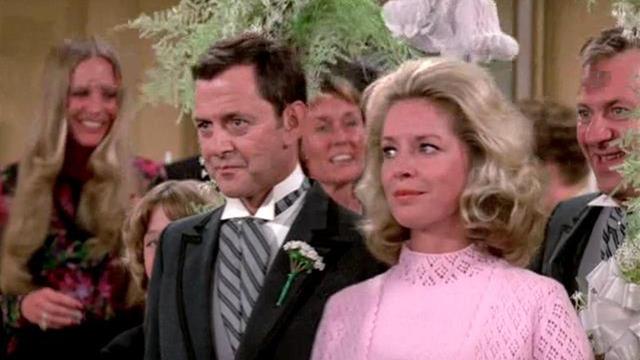
odd6

It’s nice to learn that Felix and Oscar were truly the friends we thought them to be in real life. With all the articles currently being written about the lack of male friendships and how detrimental that is on men’s health, these two were good role models.

odd19

In 2005, the American Booksellers Association posted an interview with Klugman on November 3, written by Tom Nolan. Jack was discussing some of the book events he attended and what it meant to him to talk with viewers who watched and enjoyed The Odd Couple. He received intimate feedback from strangers about why the show was important to them. He said “You know you do a show, and you do the best you can. We used to work until eleven o’clock every night on The Odd Couple, to make it good. Now it’s 30 years since it’s been off the air, and I go around, and people say: ‘I grew up with you. I sat on the couch with my mother or my father, and we laughed with you.’ And suddenly the people have faces, and names, and feelings. It’s been invigorating! You know, you don’t count on that; you don’t know that you’re really entertaining people or having an effect on people’s lives. I had a guy from Sports Illustrated who did an interview with me say he became a sportswriter because I was a sportswriter on The Odd Couple. Yeah, it’s like wow, you’re kidding. Now I’m getting this in person, and I really love it.”
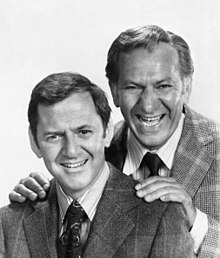
odd8

We all thank you Jack Klugman and Tony Randall for the entertainment you provided and the friendship you created!

Oh, Alice

By the time February arrives, I am typically tired of winter and ready for some nicer weather.  Since I am not traveling anywhere warm this month, I decided to indulge myself and learn more about some of the actors and actresses behind some of my favorite television characters this month.


davis1

I begin with Ann B. Davis.  Most of us recognize her as Alice on The Brady Bunch, but Ann was quite an established actress long before the show began, receiving her star on the Hollywood Walk of Fame in 1960.


anntwin

Ann was born in 1926 in New York. Her mother was a professional actress who performed with many stock companies and smaller theaters. She had an older brother and a twin sister Harriet. In a foreshadow perhaps of her future career, Ann made $2 working with puppets at age 6. The family moved to Erie, Pennsylvania where Ann spent most of her school years, graduating from high school in Erie.


She went on to the University of Michigan where she majored in pre-med. Her brother toured the country as the lead dancer in a production of Oklahoma which inspired her to try acting.  She loved acting so much that she changed her major to drama and speech, graduating from college in 1948.

davis8


She paid her dues for six years, performing in California in various theaters and stock companies, before moving to Hollywood. She received parts in several stage productions including The Women and Twelfth Night. In 1953, she was one of the musical judges on Jukebox Jury. The show aired Sunday nights and typically minor stars would judge new music.

davis6


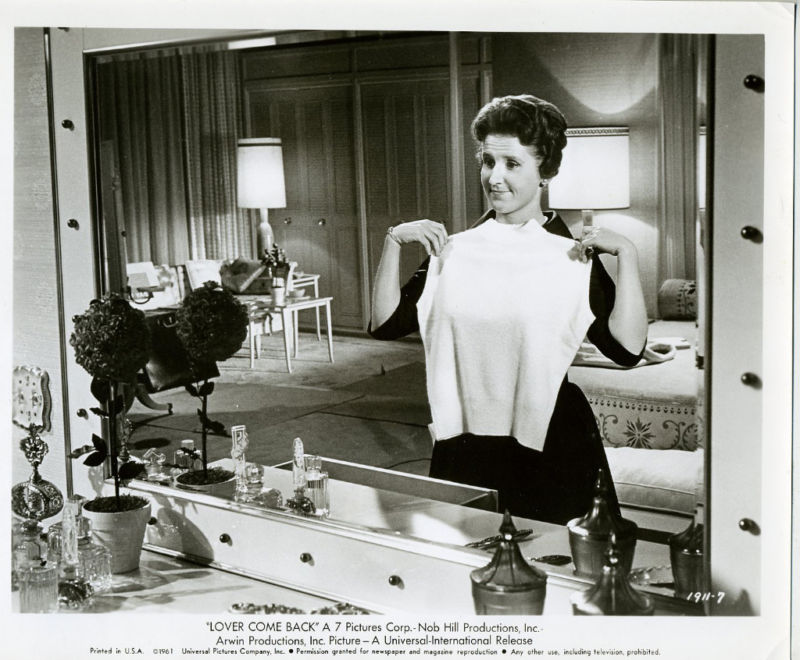
Her first film was Strategic Air Command in 1955 with Jimmy Stewart. Unfortunately, her scene was cut from the film before it was released. She would go on to star in six additional films including A Man Called Peter (1955), The Best Things in Life are Free (1956), Pepe (1960), All Hands On Deck (1961), Lover Come Back (1961), Naked Gun (1994), and The Brady Bunch Movie (1995).

davis35


In 1958 Ann accepted a position on the SAG board of governors.


She explored her love of theater throughout her career and in 1960 she replaced Carol Burnett in Once Upon a Mattress.

davis4

Ann found most of her fame in television. She began appearing in series in 1956 when she was on Matinee Theater and Lux Video Theater.


In 1955 she received a starring role in The Bob Cummings Show as Schultzy, Bob’s assistant. For four years, she loved Bob from afar while he chased after many of the models he photographed. His sister who lived with him was trying to reform him, so he would settle down, but we knew deep in his heart he loved Schultzy. Ann won two Emmys for her portrayal of Schultzy.


When the show ended, she went back to making appearances, taking roles on Wagon Train (1960), The New Breed (1962), McKeever and the Colonel (1963), and Bob Hope Presents the Chrysler Theater (1964).


During 1965-66, she would receive another starring role appearing as Miss Wilson, the physical education teacher on The John Forsythe Show. The premise was that John had inherited a private girls’ school from his aunt. A bachelor and a retired air force major, he later becomes a spy and the school staff is eliminated from the show.


davis26

After the cancellation of Forsythe’s series, Davis appeared on The Phyllis Diller Show (1966), Insight (1968), and Love American Style three times from 1970-1973. Between the years 1959 and 1969, Ann volunteered by traveling with the USO at various times.

davis30


The year 1969 brought her the role she would become famous for as Alice Nelson on The Brady Bunch.  Ann played Alice from 1969-1995 exclusively. Ann might hold a record for playing the same character in six different series: The Brady Bunch (1969), The Brady Bunch Variety Hour (1976), The Brady Brides (1981), Day by Day (1981), The Bradys (1990), and Hi Honey I’m Home (1991). She also reprised her role as Alice in two made-for-tv movies: The Brady Girls Get Married and A Very Brady Christmas

davis2


Along with Florence Henderson and Barry Williams, she was in every Brady Bunch episode. Alice was a friend to each of the Brady kids never playing favorites, but on one episode she gives Jan a locket because they were both middle children with an older glamorous sister Emily/Marcia and a younger cutesy sister Myrtle/Cindy. In real life, Ann said that she felt Eve Plumb was the best actor of the Brady kids.


Florence Henderson and Ann remained friends for life.


On the show, Alice never got far from her roots.  She had gone to the same high school Greg and Marcia attended. Becoming a housekeeper for the Bradys before Mike’s wife died, she stayed on when he married Carol and her three daughters moved in. Alice spent as much time mediating family disputes, doling out advice, trying to keep the kids from getting in trouble with their parents, and dispensing sarcastic words of wisdom to the entire family as she did cleaning and cooking.

Alice rarely was seen out of her sky-blue uniform. She dated Sam the butcher and kept waiting for his marriage proposal. They often bowled and won a prize for their Charleston dancing. I think Sam knew all along, he couldn’t propose till Mike and Carol became empty nesters.  Alice was never a maid, she was a valued member of the family who went on vacations with the family and was invited to their school performances and into their friends’ lives. In today’s economy, Alice would probably net $50,000 a year for her job, but we know it was never about the money for her.


Ann received endorsements from her Alice role as well. She was in television commercials for many products including Ikea, Ford Motor Co., Shake and Bake, and Minute Rice.


Her role as Alice also led to her publishing Alice’s Brady Bunch Cookbook with recipes inspired by the show or contributed from cast members.

davis28


In 1976, she moved to Denver to live with Bishop Frey and his wife Barbara in their Episcopal community, a large historical home.  For many years, Ann had volunteered with the local and national Episcopal church conferences. When Bishop Frey accepted the position as Dean of Trinity School for Ministry in Pennsylvania, Ann moved with the couple. She again moved with them to San Antonio Texas. Ann was very committed to her church and her prayer life and performed a lot of volunteer work for her church. She also appreciated her fans.  According to Bishop Frey, she spent several days even at the end of her life answering fan mail.

Ann considered herself semi-retired from show business, but in the 1990s, she made several films and accepted a role with a theater group for Arsenic and Old Lace as well as a world tour of a show called Crazy for You. She also made appearances on TV Land for award shows in 2004, 2006, and 2007.


Ann was extremely healthy in her golden years, but she fell, hitting her head which caused her death in 2014.

Alice Nelson has become a pulp culture icon; however, like Sally Rogers on The Dick Van Dyke Show, there was so much more to Ann B. Davis’s career than her role as a maid. She had an amazing career in theatre, film, and television. While I appreciate her work as Schultzy on The Bob Cummings Show and Miss Wilson on The John Forsythe Show, Alice took care of me, along with the Brady kids, in the early seventies, and I will always have a special place in my heart for her.


A Tribute to Rose Marie

rosemarie2

Rose Marie had one of the longest-running careers in the entertainment industry – more than 90 years in the business. During her career, she was in vaudeville, on the radio, in the movies, performed in live concerts around the country, did some Broadway, and became most famous for her television performances.


rosemarie6

Born in 1923 as Rose Marie Mazetta, she won a contest at 3 and began performing as Baby Rose Marie. On her official site, she mentions she was born the same day the Broadway show Rose Marie opened. In 1927 at the age of 4 she was featured in a Vitaphone short that opened with Al Jolson’s Jazz Singer.


rosemarie21

By age 5, she had her own national radio show. She worked in vaudeville with Edgar Bergen and Milton Berle. She made several records, and the first one released was with Fletcher Henderson’s orchestra. By 1933 at age 10, she was starring in her first film, International House. During these years, she performed at the White House three times—for Presidents Coolidge, Hoover, and Franklin Roosevelt.


Rose Marie

It was during her vaudeville stint that the doorman informed her and her father that a gentleman wanted to see them in the back alley.  The “gentleman” was Al Capone who called her father Happy Hank and told them that “the guys” wanted to meet Rose Marie. She was taken to Capone’s house the next day where she performed for about 24 guys.  Al gave her a ring with three diamonds which she still had when she passed away. He said they would always take care of her.  He was true to his word. Even after he was incarcerated, Rose Marie was met and protected by the mob for her entire career.  Decades after the most notorious gangsters were gone, men showed up at her shows checking on her just to make sure she was doing okay, getting work,  and not in need of anything. Later she learned that her father, who was an actor by trade, was Capone’s arsonist, the one who burned down buildings of men who disappointed the gangster. There is an article about her meeting with Capone on The Mob Museum’s website. (The Mob Museum is located in Las Vegas.)

rosemarie20


As a teenager, Rose Marie transitioned to clubs, touring the United States. In order to make her sets longer, she began to add comedy to her singing acts.


In 1946 she met Bobby Guy who as with the Kay Kyser Orchestra. They were engaged within a week, and he remained the love of her life until he passed away in 1964. They had one child, Georgianna. Guy would become the lead trumpeter on The Tonight Show.


It was also in 1946 that Rose Marie opened the Flamingo with Jimmy Durante. Jimmy Durante mentored her earlier in her career and she loved him. He was always mentioned as one of her favorite people.  At that time, the only other hotels in Vegas were the Last Frontier and El Rancho. Bugsy Siegel owned the Flamingo, and Rose Marie received work in clubs from her mob connections. She also had a 40-year friendship with Frank Sinatra that was also probably tied to some of their mob connections.


In 1951, Rose Marie tried her hand at Broadway, appearing in Top Banana with Phil Silvers. She knew Silvers from appearing on his radio show with Alice Faye. She played their daughter and Sheldon Leonard (who would hire her for The Dick Van Dyke Show) played their son.

rosemarie5

In 1954, Top Banana was made into a film. Once again Phil Silvers was in it. Rose Marie recorded her musical numbers. The producer tried to manipulate her to have sex with him. She said no in front of several people, and in retaliation he cut all her numbers from the film. In 2017 before her death, she shared the incident on Twitter to help support the women who have been exposing the sexual assault in Hollywood. She appeared in ten movies after that, most of them in the 1980s and 1990s, but she quickly became disillusioned with the film industry.

rosemarie14


Tired of the Hollywood politics, Rose Marie embraced the new television culture. She appeared in Gunsmoke in 1957 and would continue to receive roles in the new medium through 2011. During her career, she appeared on 48 different shows.

In the 1950s, she had a recurring role in The Bob Cummings Show as Martha Randolph and she appeared in The Many Loves of Dobie Gillis. The first sitcom she had a permanent role in was My Sister Eileen; she played the sisters’ friend Bertha. The show ran for 24 shows during 1960 and 1961.


rosemarie17

In 1961, Sheldon Leonard cast Rose Marie in the role of Sally Rogers on The Dick Van Dyke Show. She recommended Morey Amsterdam for the role of Buddy Sorrel whom she had known since age 9. The show was originally to star the office cast with the home life coming in second; however, as things changed, Mary Tyler Moore became the costar with the home life dominating the scripts and Sally and Buddy were featured less. The show produced 158 episodes and is undoubtedly one of the best written sitcoms ever produced. She and Morey received the same salary despite her being a woman. That sounds only fair today, but at the time it was not the normal practice. She loved working on The Dick Van Dyke Show. When asked about her time on the show, Rose Marie said, “We loved each other, we helped each other . . . We were really very close.”


After The Dick Van Dyke Show ended, Rose Marie took roles on several shows including The Monkees and My Three Sons. In 1969, she received a role as Myrna Gibbons on The Doris Day Show, playing Doris’s friend and coworker.


She showed up in many series during the 1980s and 1990s including The Love Boat, Mr. Belvedere, Suddenly Susan, Wings, and was a cast member in Hardball, about a struggling baseball team.


In the 1990s, Rose Marie would take on the role of Frank Fontana’s mother on Murphy Brown. Later she would appear in S.W.AT. as Hilda providing doughnuts and coffee, as well as comic relief, on the show.

rosemarie28

In the late 1990s and early 2000s, Rose Marie transitioned to voice overs for such shows as Hey Arnold and Garfield.

Rose Marie also liked game shows and was a regular on Hollywood Squares through all the different versions.


From 1977-1981, she performed across the country with Helen O’Connell, Rosemary Clooney, and Margaret Whiting. They called the show 4 Girls 4. Rosemary’s nephew, George drove their bus for them.  At some point they made enough money to afford airfare, and George Clooney went on to create a little career for himself.


Rose Marie received the 2184th star on the Hollywood Walk of Fame in 2000. Her baby shoes, along with 40 other items, have become artifacts in the Smithsonian’s American History Museum.

Her hobbies included cooking Italian meals, knitting, and reading; she especially loved Stephen King novels.


rosemariebook

When she first appeared as Baby Rose Marie, someone handed her a bouquet of roses, but she needed to take her bow, so she handed them off and said, “Hold the Roses.” That became the title of her autobiography that was published in 2002.


rosemarielaugh

She was the subject of a documentary Wait For Your Laugh in 2017. Dick Van Dyke said that was her catchphrase, and whenever they were anywhere something funny happened, even a waiter dropping a tray full of food, she always repeated the phrase.


rosemarie10

She accomplished so much in her career you wonder how she could have had any regrets, but she was denied two accomplishments.  She received three Emmy nominations for her role as Sally Rogers but never won an Emmy.  She also wanted to direct and never had an opportunity to do so.


rosemarie3

Sadly, Rose Marie passed away in December. Happily, she left an amazing legacy of performances in a variety of mediums for us to remember her by. While she was so much more than a television star, Sally Rogers will always be one of my favorite characters. Thank you Rose Marie for so many fond memories.

Today We Take a Peek at the Future by Looking at the Past

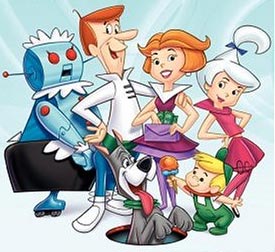
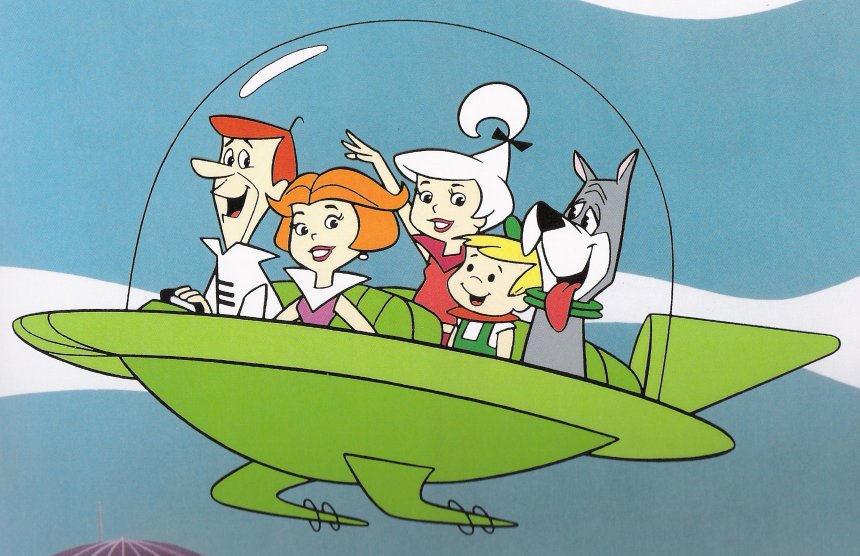
Building on the popularity of The Flintstones, in 1962 ABC and Hanna-Barbera decided to debut another new animation show aimed at adults. Instead of the prehistoric past, this show would be set in the far-off future. It aired Sunday nights.  It was also the first show on ABC to air in color. It was The Jetsons. The Flintstones had been recorded in color, but the first two years it aired in black and white. However, it was up to the affiliates to decide if they wanted to broadcast both of these shows in color or black and white. Often they chose black and white because only 3% of the population had color televisions in 1962 which increased to 50% by 1972.

jetson2

Hoyt Curtin created the theme song. This show featured the typical 1950s sitcom plots. It was adult oriented and used a laugh track.

jetson17

The Jetsons live in Orbit City in the Skypad Apartments, high in the sky. George is a family man.  George is not Fred Flintstone.  However, he does get into many predicaments like Fred, and his boss fires him often.  George works for Spacely Space Sprockets, and his boss is Cosmo Spacely. Their competitor is Mr. Cogswell who runs Cogswell Cogs. Mr. Spacely is easily angered and hard to work for. He and George were childhood friends. George’s work computer was RUDI – Referential Universal Differential Indexer.  He has a human personality. George was voiced by George O’Hanlon. Mr. Spacely was voiced by Mel Blanc.


jetson10

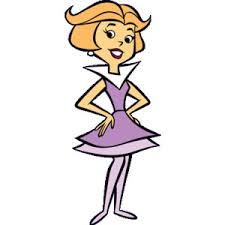
George is married to Jane, a homemaker like Wilma.  Jane is a member of the Galaxy Women’s Historical Society.  Her favorite store is Mooning Dales.  Penny Singleton, the original Blondie of the movies, plays Jane.


They have two children, Judy, a 16-year-old, who attends Orbit High School and Elroy, 6, who attends the Little Dipper School.  Judy likes clothes, boys, and her diary, much like teens in the 1960s.  Elroy is quiet, easy going, and highly intelligent, and he studies space history, astrophysics, and star geometry. Janet Waldo was the voice of Judy, while Daws Butler provided the voices of Elroy and Spencer Cogswell.


Rosie is their robot maid and Astro is their dog. Rosie is an outdated robot, but the family loves her. She performs all the housework and does some parenting of Elroy. Surprisingly, Rosie was only in 2 of the 24 episodes that aired in 1962. Astro precedes Scooby Doo but talks like him and looks very much like a gray Scooby. Jean Vander Pyl and Don Messick from The Flintstones take on the voices of Rosie and Astro.


Two other characters who make appearances are George’s eccentric grandfather, Montague Jetson voiced by Howard Morris.  Stella/Petunia Spacely, Cosmo’s wife, is overbearing and snobby and she was voiced by Jean Vander Pyl.


In 1963, Morey Amsterdam and Pat Carroll sued H-B for breach of contract.  Apparently, they were signed to a 24-episode contract to voice George and Jane.  They were guaranteed $500 per episode. According to the network, they had to be replaced because of sponsor conflicts with their other shows, The Dick Van Dyke Show and Make Room for Daddy. I believe the suit was dropped; however, I couldn’t find proof of that.


The show did not get very good ratings.  Part of the problem was that so many people were watching it in black and white. Another problem is that it was up against Car 54, Where Are You and, ironically, Walt Disney’s Wonderful World of Color. After the first year, the network moved it to Saturday morning. In 1985, 41 episodes were made and 10 additional shows were created in 1987. It’s hard to believe, but those of us who grew up in the 1960s and 1970s watched the same 24 episodes over and over since new ones weren’t made for 23 years after the debut.

Although it was only on the air in prime time for one year, marketing certainly did not suffer.  Many Jetson toys, games, and figures were sold.


The Jetsons endorsed Electrasol, Tums, and Radio Shack. Many comic books were based on the series. Gold Key printed 36 from 1963-1970, Charlton created 20 between 1970-1973, Harvey published 5 in 1992-1993, and Archie Comics produced 17 from 1995-1996.

In addition, two tv films, a tv special, and a movie were created.

The show was on Boomerang from 2000-2014 and again from 2016-2017. It was aired on The Cartoon Network from 1992-2004 and again in 2012. It is available now on Comcast’s video-on-demand service.


Many of the inventions the Jetsons used are currently being produced today. A flying car will most likely debut in 2018. There are several start-up companies developing jetpacks to allow people to fly. Robot butlers exist at some hotels (Japan and California). Holograms have existed for a few years. 3-D printers can make food, and our current drones are similar to the pods the Jetsons used. Smart watches were also shown on the series; in one episode a student in Elroy’s class watches a Flintstones episode on his watch instead of paying attention to the teacher. Although The Jetsons was set in 2062, they featured moving walkways and smart homes which we have used for some time.


What is so surprising about The Jetsons is its current popularity.  A Jetson big-screen film is in the works and, in August of 2017, ABC ordered a live-action sitcom of The Jetsons. It will be interesting to see if they rely on the same technology used in 1962 on the show or if they project into our future.

jetson1

While many of the popular shows from the early 1960s are only remembered by baby boomers, The Flintstones and The Jetsons are still well known to kids of every generation. They have truly survived the test of time. By this time next year, The Jetsons could once again be a hit television show. Like the Bewitched-I Dream of Jeannie debate, or the Mary Ann vs Ginger question, most people prefer watching the past or the future.  I am in The Jetsons camp, but enjoy watching Fred and Wilma from time to time also.  Next week we’ll look at my favorite adult animation show, and no, it’s not The Simpsons.

This Man Was Busy, Busy, Busy

billya

Most television viewers today would not recognize the name Billy De Wolfe, but if you played his voice for them, they would immediately know it as Professor Hinkle from Frosty the Snowman.  I remember Billy primarily from That Girl as Ann Marie’s drama coach, Jules Benedict.  I was amazed to see he only appeared in three episodes because he was such a strong character, I would have thought he was in at least 20 shows. He became known as the prim, pompous, and sarcastic stock character.

Billy was born William Andrew Jones in Massachusetts in 1907. His father was a bookbinder, and they moved back to his parents’ home country of Wales shortly after his birth, returning to the United States when he was nine years old. His parents hoped he would become a Baptist minister, but his dreams were grounded in acting. He started his entertainment career as an usher.  He then became a dancer with the Jimmy O’Connor band.  This led to his appearing on the vaudeville circuit where a theater manger offered him the use of his name, Billy De Wolfe. He traveled to London to perform for five years and returned to America in 1939.

billy1

In 1942 he joined the US Navy where he became a Seaman 1st Class as a musician. Before he enlisted, he was offered a contract with Paramount, and he continued with them in 1944 when he left the Navy. His first movie Dixie was with Dorothy Lamour and Bing Crosby. He appeared in nine movies during the 1940s.


He loved old-fashioned musical comedies and had a chance to act with Doris Day and Gene Nelson in both Tea for Two and Lullaby of Broadway.  He and Doris would be friends for the rest of his life.  He gave her the nickname Clara Bixby because he said she looked more like a Clara than a Doris, and many of their friends referred to her as Clara.


He transitioned to theater and performed on the live stage in both Broadway and London.


billy16

He then decided to try television where he became very successful. Above he appears on the Dick Van Dyke Show. He appeared on six shows before obtaining his first role as a regular on a sitcom.  During the late 1960s and early 1970s he would be cast in five different sitcoms.


billy18

In 1966, he was part of the amazing cast of The Pruitts of South Hampton.  I have mentioned this show before in my blogs, and it is hard to believe that this incredible cast could not pull off a more successful show:  Phyllis Diller, Louis Nye, John Astin, Reginald Gardner, Paul Lynde, Gypsy Rose Lee, John McGiver, Richard Deacon, Marty Ingels, and De Wolfe. The series was based on a novel, House Party, by Patrick Dennis.  A wealthy family realizes it owes the IRS $10,000,000 in back taxes.  They want to keep the appearance that they still have plenty of money while living in a smaller home with one car and a butler.  One of the first shows to debut in color, it was cancelled after 30 episodes.


In 1966, De Wolfe also began the role of Jules Benedict on That Girl.  He played a sarcastic acting teacher who made it clear it was painful to work with these young actors who simply had no idea of how to act. But we also realized that he had a big heart that he did not want anyone to see. His last episode was in 1969.


In 1967, he took a role as radio station manager Roland Hutton Jr. on Good Morning, World.  Dave Lewis (Joby Baker) and Larry Clarke (Ronnie Schell) are small-time radio hosts Lewis and Clarke on the air from 6-10 am. Lewis is married and an introvert while Clarke is a swinging single. Also appearing on this show was a new comer, Goldie Hawn, who played the Lewises’ neighbor. The show only lasted a year. Several critics pointed out that De Wolfe was the funniest person on the show.


billy6

In 1969, De Wolfe was able to stay employed for another 13 episodes on the series The Queen and I. He starred with Larry Storch.  They worked on an aging ocean liner, The Amsterdam Queen, which the owners were planning on selling for scrap. Duffy (Storch) wants to save the ship through any means possible, but Nelson (De Wolfe) doesn’t like or trust him, although he fails to ever catch him doing anything wrong.


Doris Day began her sitcom in 1968. For the 1970 season, she and her kids moved to San Francisco to live over an Italian restaurant, owned by the Palluccis (Kaye Ballard and Bernie Kopell). She hired her friend Billy to play Willard Jarvis, the bad-tempered neighbor who really was a peach when you got to know him.

During his years on the Doris Day Show, he also appeared on the Debbie Reynolds Show and Love American Style. He was also a regular on the talk show circuits, appearing many times on Johnny Carson’s Tonight Show and the Mike Douglas Show.


billy4

Phoebe Murgatroyd was a famous commercial character. De Wolfe donned a hat and shawl (but kept his iconic mustache) to portray the romance expert who gave love life advice for this series of Ban Roll-On deodorant ads.


billy13

Who realized in 1969 that an animation special, based on the song, “Frosty the Snowman,” would go on to become a beloved classic and would play a role in generations of kids celebrating Christmas. For almost 50 years, viewers have cried at Professor Hinkle’s nasty act of locking Frosty in a greenhouse to melt. While I look forward to Charlie Brown and Rudolph The Red-Nosed Reindeer every holiday, Frosty is my must-see every December.

In the early 1970s, Billy was diagnosed with lung cancer. He passed away in 1974, his friend Doris helping him through this tough time.

billy2

Billy De Wolfe is another example of one of these great performers who could do it all.  He was a dancer. He appeared in many lucrative movies. He was successful on Broadway. When he decided to give television a try, he stayed employed with the medium until his death. And he left the legacy of Frosty the Snowman that has been a Christmas staple for almost 50 years. If you are searching for things to do this winter, add watching several episodes of Billy De Wolfe shows to your list and get to know this multi-talented man a bit better.