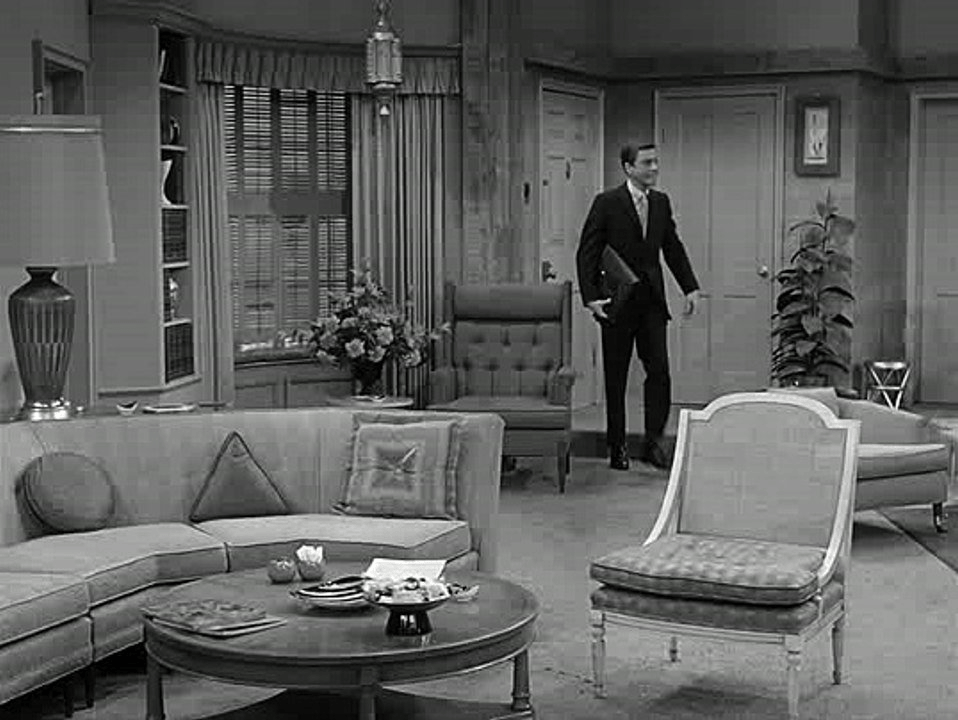
F-Troop: Braving Fort Courage

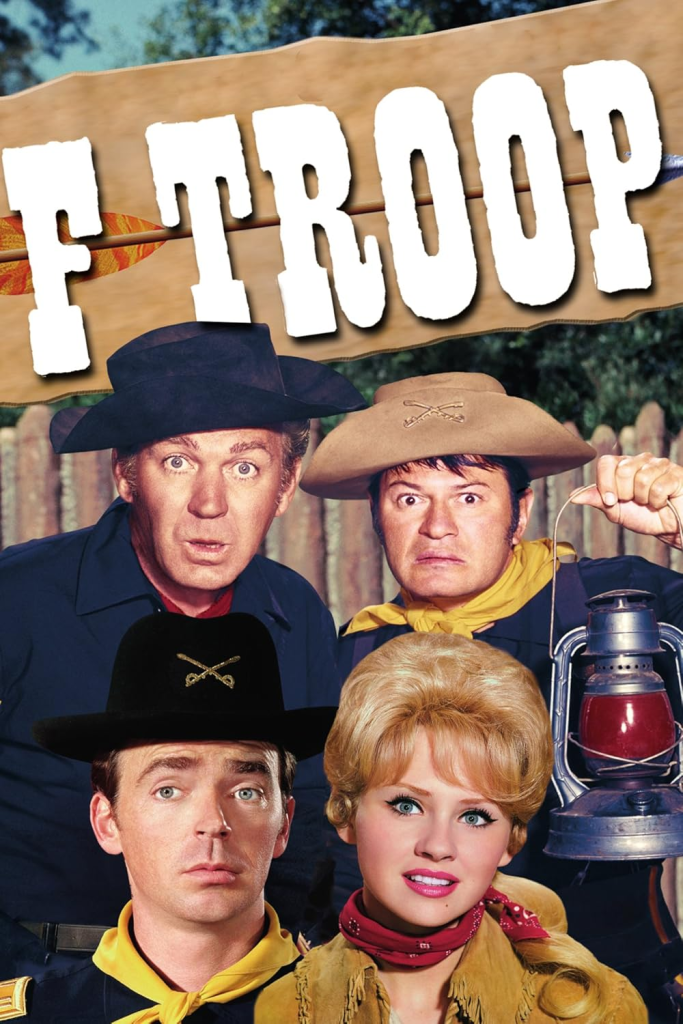
As we start our July blogs, the theme is Military Upended. We’re taking a look at military sitcoms and up first is F Troop. This was a western sitcom set in the 1860s. It debuted on CBS in September of 1965 and ran for two seasons.

📷imdb.com

If you and your siblings argue about whether this show was in color or black and white, you’re both right. The first season was in black and white, and the second season was produced in color.

The characters lived at Fort Courage, an army outpost. Captain Wilton Parmenter (Ken Berry) runs, or tries to run, the fort. One of the running gags is that Parmenter comes from a long line of military heroes that stopped with him. However, he served during the Civil War. After being told to pick up the general’s laundry near Appomattox, he begins sneezing. Union soldiers think it’s a command to charge which turns the tide of the battle. Then while Parmenter’s father is pinning the Medal of Honor on him for this feat, he pricks his chest, drawing blood for which they gave him a Purple Heart.

Parmenter is sent to Fort Courage where all the captains have failed. Two of the three commanders before him deserted, and one had a nervous breakdown there.

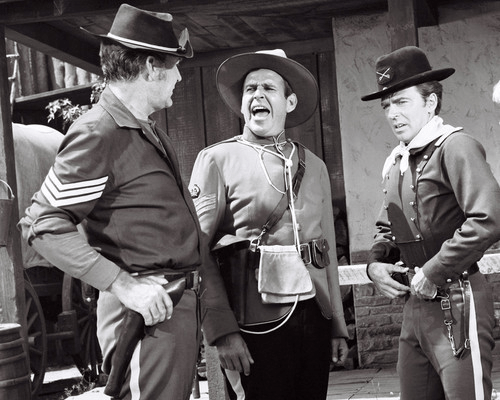
Parmenter is “aided” by Sergeant O’Rourke (Forrest Tucker) and Corporal Agarn (Larry Storch). However, these two are there just to make a quick buck however they can; they often work with Chief Wild Eagle (Frank de Kova) to find the next shady business deal. For example, the government thinks 30 men are at the fort; in reality, it’s 17 and the pay for the other 13 is put into a fund by the two men to fund their plans. However, the two men, while willing to take advantage of his gullibility, do like Parmenter and protect him. Parmenter is kind and well meaning.

📷starstills.com

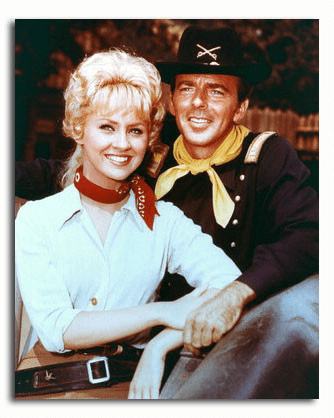
What Wil really needs protection from is marriage. The local store owner-postmistress Jane (Melody Patterson) has set her cap for him. She’s a beautiful tomboy who knows what she wants and usually gets it. She is also a telegrapher and is the best sharpshooter in the territory. She often rescues Wil with her good aim.

Patterson auditioned for this role at age 15, lying about her age. The show didn’t find about that till half-way through the first season. When the series started, she was 16 and Berry was 32. During the second season, when she turned 17, the producers allowed a more serious relationship between the two.

Rounding out the cast was Private Dobbs (James Hampton), a bugler who only knows two songs; Trooper Vanderbilt (Joe Brooks), the lookout who is almost blind; and Trooper Duffy (Bob Steele) the lone survivor of the Alamo who is too old to help much.

We also get to know several members of the Hekawis tribe headed by Chief Wild Eagle. They are 50/50 partners with O’Rourke and Agarn. They make souvenirs for sale and produce whiskey. They claim to be a peaceful nation because most of them are cowards like the men at the fort. The Chief has many wise sayings and often gives advice although when asked to explain some of them, he says he has no idea. His second in charge is Crazy Cat (Don Diamond).

📷imdb.com

Not surprisingly for the time, none of the tribal members are played by Native Americans. There is a lot of politically incorrect dialogue on the show. The Hekawe (pronounced “heck-ow-ee”) tell the story of how they got their name: Two indigenous people fell off a cliff and one asked “Where the heck are we?” which they chose for their name.

A lot of stereotypes exist not only about Native Americans but military heroes and the west in general. History is presented tongue in cheek with characters showing up who never would have been there and sly references to things that were happening in the sixties.

A number of guest stars somehow end up at Fort Courage. These include Jamie Farr, Bernard Fox, Zsa Zsa Gabor, Harvey Korman, Paul Lynde, Lee Meriwether, Julie Newmar, Vincent Price, and Don Rickles.

The popular theme music was composed by William Lava with lyrics by Irving Taylor. Lava had more than 500 television credits for composing. While he worked in animation a lot, he composed for Dr. Kildare, The Twilight Zone, Wagon Train, and 77 Sunset Strip. His collaborators included Henry Mancini and Sammy Kahn.

The series featured a lot of great writers including Stan Dreben who wrote for Green Acres, Seaman Jacobs and Howard Merrill from The Dick Van Dyke Show, and James B. Allardice who wrote for a lot of shows including My Three Sons and Hogan’s Heroes.

📷themoviestore.com

Storch was nominated for an Emmy Award for his role. His competition included Brian Keith for Family Affair, Bob Crane from Hogan’s Heroes, and Don Adams from Get Smart who won. I admit I was surprised to see his nomination given the classic television sitcoms that were on the air at the time.

ABC placed the show on Tuesday nights for season one which helped its ratings because there wasn’t a lot of competition. It was up against Red Skelton which was waning in its popularity, and it followed McHale’s Navy, and the same type of audience who enjoyed that show probably liked F-Troop as well.

After the second season, the show was ranked 40th out of 113 shows. According to Forrest Tucker, Warners Brothers was sold to Seven Arts, and they made the decision to cancel the show because they felt it used too much of the Warner Ranch for its setting and they weren’t thrilled about the added costs of producing this one in color.

📷facebook.com

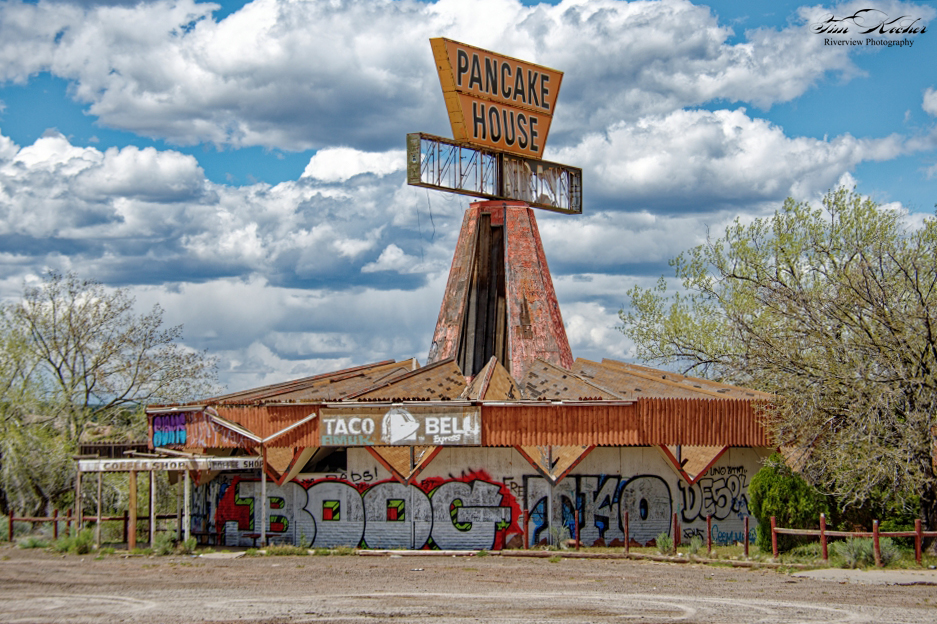
Fun fact, a replica of the fort was built in Houck, Arizona on Route 66. The Fort displayed F-Troop props, and they sold F-Troop merchandise. Among the amenities were a coffee shop, gas station, grocery store, pancake house, trading post, motel units, trailer park, and campground.

This show is a tougher one to evaluate now. Like so many shows from this era, Native Americans were not portrayed respectfully. However, truth be told, Natives were often portrayed as smarter than white men on this show. Like The Simpsons, everyone on this show was made fun of. It could be compared to The Phil Silvers Show or Hogan’s Heroes. It does have the military money-making schemes that Sergeant Bilko attempted but that was seen as a small part of a respectable military.

For me there was too much emphasis on slapstick humor apart from some of the uncomfortable dialogue. If you want to check it out and see what you think, which is what I always recommend, the series is available on DVD. It’s also on Prime and Roku.

Ichabod and Me: Critics Were Not Fans

Today we wind up our Funny Duos theme with Ichabod and Me. The show was on for one season from 1961-1962. Joe Connelly and Bob Mosher served as executive producers for the show. They were also the creatives behind Leave it to Beaver.

📷imdb.com

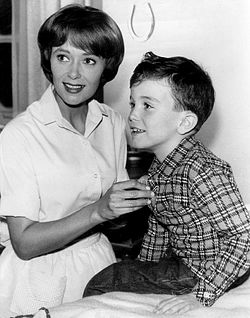
Widower Bob Major (Robert Sterling) and his six-year-old son Benje (Jimmy Mathers) relocate from New York City where he worked for the New York Times to Phippsboro in New Hampshire. Bob purchased the newspaper there from its longtime owner Ichabod Adams (George Chandler). Ichabod and Bob don’t see eye to eye very often as Bob tries to move the town to a new progressive direction. However, Ichabod not only owns much of the town, but he is the mayor, the school superintendent, and traffic commissioner. Ichabod tries to advise Bob with fatherly wisdom about navigating local conflicts.

Had the show been more successful, Jimmy Mathers might have become as well known as his brother Jerry Mathers who was the Beaver.

📷wikipedia.com

Eventually Bob dates Ichabod’s daughter Abby (Christine White). Rounding out the cast is housekeeper Aunt Livvy (Reta Shaw), high school employee Jonathan (Jimmy Hawkins), townsmen Olaf (Burt Mustin) and Colby (Forrest Lewis), hardware store owner Martin (Guy Raymond). Many of Bob’s conflicts are with Olaf and Colby who are on the City Council and listen in on the town’s party line to many of the phone calls in the town.

The characters of Bob and Ichabod were originally created for a dramatic episode that aired on Robert Montgomery Presents titled “Goodbye, Grey Flannel.”

The opening and closing numbers were performed by Pete Rugolo and His Orchestra.

Unfortunately, the critics were not kind to the show. Associated Press critic Cynthia Lowry wrote that “Ichabod and Me amounted to a pretty tired, clumsy effort” and that it was more likely to offend New Englanders than attract them as viewers. Harriet Van Horne said that “a network that would by Ichabod for prime evening time would buy the Brooklyn Bridge from a tavern drunk—and pay cash.” And Variety said it was “just another run-of-the-mill situation comedy, typically innocuous in its content and wholly bland in its approach . . . there were no surprises and few laughs on its first outing.”

📷wikipedia.com

The show aired on Tuesday nights. The series competed against The New Breed on ABC and The Dick Powell Show on NBC. After the miserable reviews, it wasn’t surprising that the show failed to attract viewers and it was cancelled after 36 episodes.

Sometimes critics get it wrong, but it sounds like this show was not a great one. That’s too bad because they had a great cast. There were not a lot of successful shows debuting this year. The only ones that are remembered today include The Dick Van Dyke Show, Ben Casey, Mister Ed, and Hazel.

Angie: Always on the Move

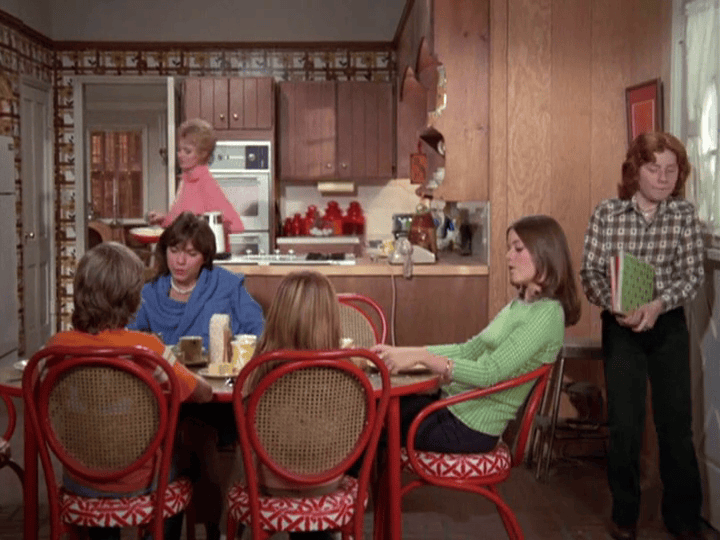
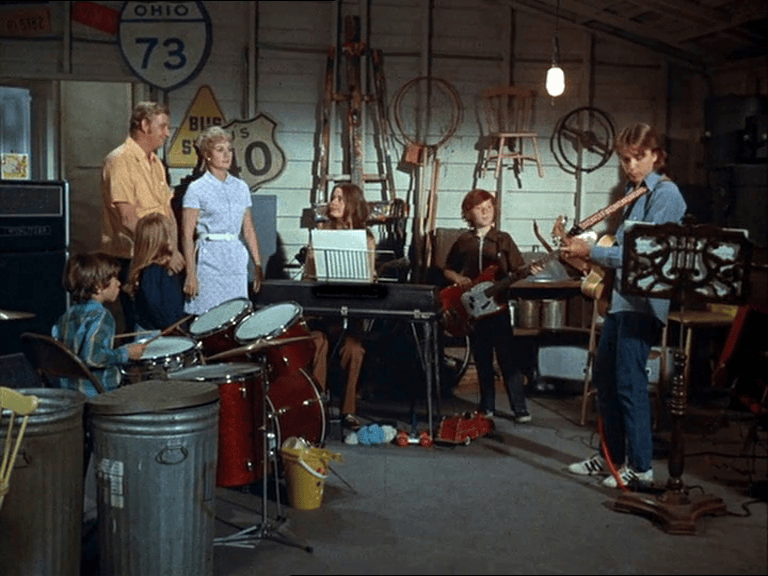
This month we are learning about sitcoms with one name, and today is Angie. Angie had a short run from February 1979 until September of 1980, producing 36 episodes. It was one of the few Garry Marshall shows not to be a long-running hit. He created it with Dale McRaven. We all know Marshall’s amazing career with Happy Days, Laverne and Shirley, The Odd Couple, not to mention all of his great movies. McRaven also had a prolific career as a producer and writer. He’s listed as producer for The Partridge Family, The Betty White Show, Mork and Mindy, and Perfect Strangers. His writing credits includes all of these shows, as well as The Dick Van Dyke Show, That Girl, Get Smart, The Odd Couple, and Room 222 among others.

📷ihearthollywood.com

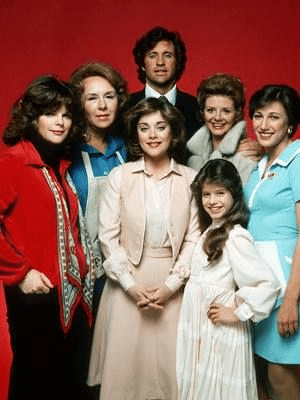
The cast was quite talented: Donna Pescow played Angie, Robert Hays was her boyfriend-later-husband, the amazing Doris Roberts was her mother Theresa before Raymond came along, and Debralee Scott played her sister Marie.

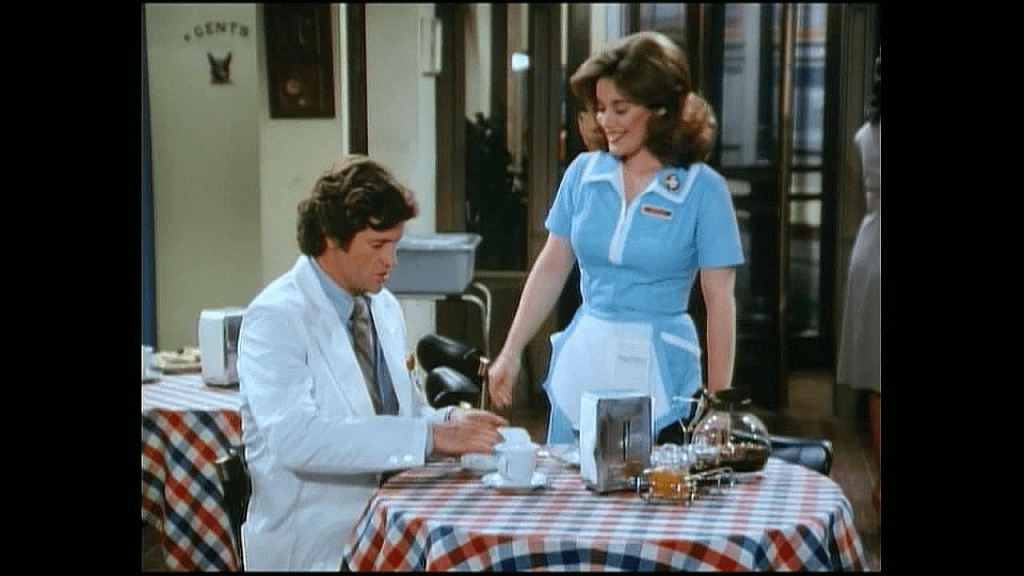
Bradley Benson is a young pediatrician who comes from a wealthy family comprised of his stuffy father Randall (John Randolph), his overbearing sister Joyce (Sharon Spelman), and her daughter Hillary (Tammy Lauren). The show is set in Philadelphia.

Angie is a coffee-shop waitress who falls in love with Brad. Many scenes are set in the diner with Angie’s friend and co-waitress Didi (Diane Robin). When their families argue about wedding plans, Brad and Angie elope. Later Angie’s mother plans a small family wedding for the two families to get to know each other, and Brad buys the coffee shop for Angie.

At the beginning of the second season, Angie sells the coffee shop to buy a salon with her mother.

📷imdb.com

The theme song was “Different Worlds,” written by Norman Gimbel and Charles Fox. Gimbel is still hard at work and has amassed 494 credits so far while Fox has 131 credits for many impressive television series and big-screen films. Maureen McGovern sang it; she’s best known for her top-forty hit “The Morning After.”

The show was sandwiched between Happy Days and Three’s Company on Tuesday nights, which ensured great ratings. This one was fifth its first week. The show just could not find its fan base. By the end of the season, the Nielsen ratings had fallen drastically, and the show had moved to Monday nights following Monday Night Football. Angie wasn’t the only show to struggle in this time slot. Once it was moved, three other shows—One in a Million, Goodtime Girls, and Laverne and Shirley—all tried this scheduling spot. I’m not sure if the shows were just not very good in 1979, if people were too busy to watch television, or the network heads were inexperienced, but when you look at the schedule from 1979 most prime times had a different show in the slot every season of the year. When it’s not only one show on a network moving, but many shows on a network moving and then all networks having a bunch of shows moving, how are viewers supposed to figure out where anything was? Out of the 54 new shows debuting in 1979, by the next season every network basically had one hit show out of the bunch: ABC-Hart to Hart, CBS-Trapper John MD, and NBC-The Facts of Life. While these are all decent shows, none of them were classics in my opinion. In 1980 another 30 shows were brand new.

📷rewatchclassictv.com

The show was put on hiatus. It did return in April on Saturday nights, but it was officially canceled in May.

When you look at this show on paper, it had all the right elements. First of all, we have Garry Marshall and Dale McRaven, very successful creators and writers. The cast was amazing. Even the theme song was composed and sung by extremely talented people. Then you have the fact that there were not a lot of great shows debuting this year; a decent show should have crushed it. So, what happened here?

I think I’m putting the blame for this one on the network. I watched the pilot and while pilots are meant to pull you back for the next one, most pilots aren’t the best of the series. Some of the pilots for shows I love are almost dreadful. This pilot was not dreadful. The characters were likable, the writing was funny, and the theme was not overdone over the years. It was similar to The Mothers-In-Law from a decade earlier but more of a Dharma and Greg (which came two decades later) where they fall in love despite their economic differences.

📷youtube.com

This series was better than a lot of shows that are currently on the air. I did watch another later episode where the couple elopes. Once again, the writing was good and the characters were a bit eccentric, but the writers knew how far to go to keep them likable and charming rather than odd. If ABC had kept it in a time slot for more than a month or two and given it a bit of time, it might have been a big hit.

If you want to check it out, let me know what you think. For a late seventies/early eighties show, it’s aged very well.

What Do I Spy with my Hawaiian Eye?

Welcome to this month’s blog series, “Crime Solvers of the Past.” Before there was Hawaii Five-0 or Magnum PI, there was Hawaiian Eye.

📷wikipedia.com

Warner Brothers was looking for possible television series to create. They sent one of their story editors, Jack Emanuel, to Hawaii to get some inspiration for a crime series, and Hawaiian Eye was born.

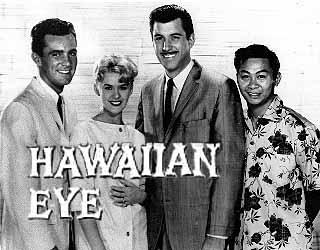
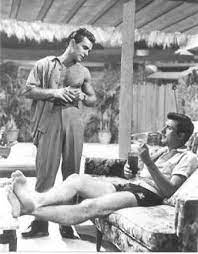
The show debuted on ABC in the fall of 1959 and continued until April 1963. Like the above-mentioned shows, this one also features a partnership. Tom Lopaka (Robert Conrad) and Tracy Steele (Anthony Eisley) own a detective agency that also provides security services, and it’s called Hawaiian Eye. The Hawaiian Village Hotel is one of their biggest clients and they provide an office/living space for the firm. Rounding out the cast was Cricket Blake (Connie Stevens), a local photographer and singer who helps the guys out; Kim Quisado (Poncie Ponce), a cab driver who plays the ukelele; Greg McKenzie (Grant Williams), a former engineer who helps out and later joins the firm, and Philip Barton (Troy Donahue), the hotel social director. Lt. Danny Quon (Mel Prestidge) also shows up off and on when the boys need help from the local police force.

Sprinkled among the 134 episodes, you’ll find lots of great character actors and guest stars popping up.

📷facebook.com

Robert Wagner was originally chosen for Lopaka, but he turned it down to continue his movie work. Warner Brothers produced this one, so there was a bit more feel of a movie set.

Ponce was the only cast member actually born in Hawaii, and when the show aired, his entire hometown shut down in order to watch their local boy. Ponce only ended up with 8 acting credits, one in Speedway with Elvis Presley. Most of his career was spent in the music side of the entertainment business singing and playing. While he played a uke on the show, in his personal life this talented guy also played piano, trumpet, sax, and harmonica. In fact, he was seen by William Orr, head of Warner Brothers as a singing waiter. Orr was so impressed he signed him for the show. However, he was not as impressed with his waiting abilities, so he became a cab driver!

Connie Stevens also started and ended her career in the music business. She was part of a cast for three television shows but garnered 72 acting credits during her career.

📷fanpix.net

The opening of the show was a voiced over with a narrator introducing the cast who is frolicking around in the water and on the beach. In the background a chorus sings “Hawaiian Eye” repeatedly.

The plots seem fun for the time. The duo helped a woman who thinks her husband is trying to kill her, chased down a former spy, investigated hotel crime, and there is a bit of a Love Boat feel to the show where one of the partners falls in love, and lots of women are strolling around the island.

It was not shot in Hawaii but in Burbank, in black and white film; the fact that it often takes place at the hotel, it’s not noticeable we’re not on the Island. It’s just missing the lush scenery the later series feature.

📷tvtime.com

The show aired Wednesday nights with its primary competition The Perry Como Show and I’ve Got a Secret which were top thirty shows the first season but had fallen out of the top thirty by season two, so maybe Hawaiian Eye gained some of their viewers. Season three, in addition to Perry Como, the show was up against The Dick Van Dyke Show. For its final season, it moved to Tuesday nights and was on at the same time as The Red Skelton Show and The Jack Benny Show which were in the top twenty and ten respectively. That seemed to end any hopes the show had to continue, and it was cancelled.

Unfortunately, I can’t find anywhere the DVD set was released but there are streaming services with it and a few private sellers with sketchy quality. If you enjoyed Hawaii Five-0 or Magnum, check out some of the episodes on YouTube. From everything I could find, the show had a great cast with a lot of chemistry, some interesting music performances, comic relief from Ponce, and good writing, everything you want to see in a popular series.

My Sister Eileen: Version Five

As we look at a few little-remembered shows from the past, today we are learning about My Sister Eileen. The series was adapted from short stories by Ruth McKenney published in The New Yorker. The stories became a book in 1938, a play in 1940 and two movies in 1942 and 1955.

📷wikipedia.com

In the 1955 Hollywood movie, two small-town sisters — an aspiring writer, Ruth (Betty Garrett), and a would-be actress, Eileen (Janet Leigh) — move to New York City. They find lodging in a shabby apartment and struggle to locate promising gigs. Ruth eventually meets magazine editor Bob Baker (Jack Lemmon), who tells her to write about her life experiences rather than fiction. As it turns out, Eileen’s life, with her various romantic encounters, is far more interesting, so Ruth steals the stories for herself.

This show joined the television schedule in 1960 and featured Elaine Stritch and Shirley Bonne (Ruth and Eileen Sherwood), who move to New York City. Like the movie, one is a writer and one is an actress. Living in a Greenwich brownstone, they become friends with a reporter Chick Adams (Jack Weston) and Ruth’s coworker Bertha (Rose Marie). Rounding out the cast is Eileen’s agent Marty Scott  (Stubby Kaye), their landlord Mr. Appopoplous (Leon Belasco), Ruth’s boss D.X. Beaumont (Raymond Bailey), and their Aunt Harriet (Agnes Moorehead). The sisters are stereotyped with Ruth being the smart, plain one and Eileen being the beautiful and naïve one.

The pilot was seen on the Alcoa-Goodyear Theater with Anne Helm portraying Eileen.

Earl Hagen who composed “The Fishing Hole” for The Andy Griffith Show composed this theme as well.

📷imdb.com Rose Marie on the show

Rose Marie talked about being on this sitcom for the Television Academy. She said she was friends with the producer Dick Wesson. She said her character Bertha was a wise-cracking one similar to Sally on The Dick Van Dyke Show. Rose Marie didn’t like working with Elaine Stritch. She felt she was not very professional on this show; she said she came to work late and goofed off a lot.

In 1960 it appeared on the schedule on CBS opposite Hawaiian Eye and Perry Como’s Kraft Music Hall. Hawaiian Eye was on the air four years, and this was it’s second season. With Connie Stevens, Robert Conrad and Poncie Ponce, it was about two private investigators in Hawaii, a Korean war vet and a former police detective.

I don’t think the writing helped the show stay on the air too long. During the first season some of the plots included: Ruth’s boss ignores her pleas for a pay increase until he encounters her working as a waitress in a German restaurant — and in a skimpy costume and the Sherwood sisters decide to break their lease with a wild party to which they invite a one-man band, a junior Tarzan, and a fireman with his siren.

📷moviesanywhere.com 1955 film version

I’m guessing part of the problem was that it had appeared in so many versions already. Many people read the book. Lots of people saw one, if not two, of the movies. And the play was being featured around the country. I can see that having a television series which has to expand the hour-and-a-half play and film might not have enough material to draw out the same old plot and keep it interesting for more than a few episodes.

This one is another one that you’re probably better off watching the 1955 silver screen adaptation and skipping the television series.

The Bill Dana Show: Really It Was The Jose Jimenez Show

This month our blog is devoted to The Bill Dana Show which was on the air for two seasons in the early sixties.

📷dvdplanetstore.com

Bill Dana is not a name remembered much anymore but, in the sixties, he was a huge celebrity. There is some tough talk about why he was so famous. During the late fifties and early sixties, especially as so many radio shows transitioned to television, there were some politically incorrect shows. This one teetered on the edge of it, in the same ways the show Life with Luigi did.

Bill Dana’s alter ego, Jose Jimenez, debuted on The Steve Allen Show in the late fifties. Jimenez was a Mexican immigrant. He saw the United States through a different lens than people who grew up here. He often was amused by what he saw going on around him. However, he was not the lazy stereotype Mexican. Jimenez was hard working and wise in many ways. He was not offensive in the way Amos and Andy were. Dana was a Hungarian Jewish man playing a Hispanic man so that was not well received either.

While I still love so many programs from the fifties and sixties that hold up well today and have delightful characters, many programs from this time make us cringe and we are embarrassed for the television industry at that time.

There are also many performers that may have bordered on sexual and ethnic political incorrectness, many of their characterizations may not be offensive, but I sure don’t find any humor in them.

📷 Jose Jimenez televisoinacademyawards.com

Remember this was during the Civil Rights Movement era, so things were beginning to get examined more closely in pop culture. Even if Jose was a good guy, his exaggerated accent set him up more of a caricature than a character.

While there was some blowback from the Latino community, many fans adored Jimenez. Danny Thomas and Sheldon Leonard decided to give Jose his own show after he made a few appearances on The Danny Thomas Show. NBC put the show on its schedule without even seeing a pilot because he was so popular.

While the quick sketches with Jose were in your face humor, putting the character in his own television series gave the writers time to develop him more and make him more dimensional. Leonard made this a workplace sitcom which was different for him since so many of their shows—The Dick Van Dyke Show, The Danny Thomas Show, That Girl, Good Morning World—were all balancing personal and work life. Earl Hagen, who wrote so many great tunes for the Leonard group, wrote this one as well.

The show aired September 22, 1963, and ran for a season and a half, ending January of 1965.

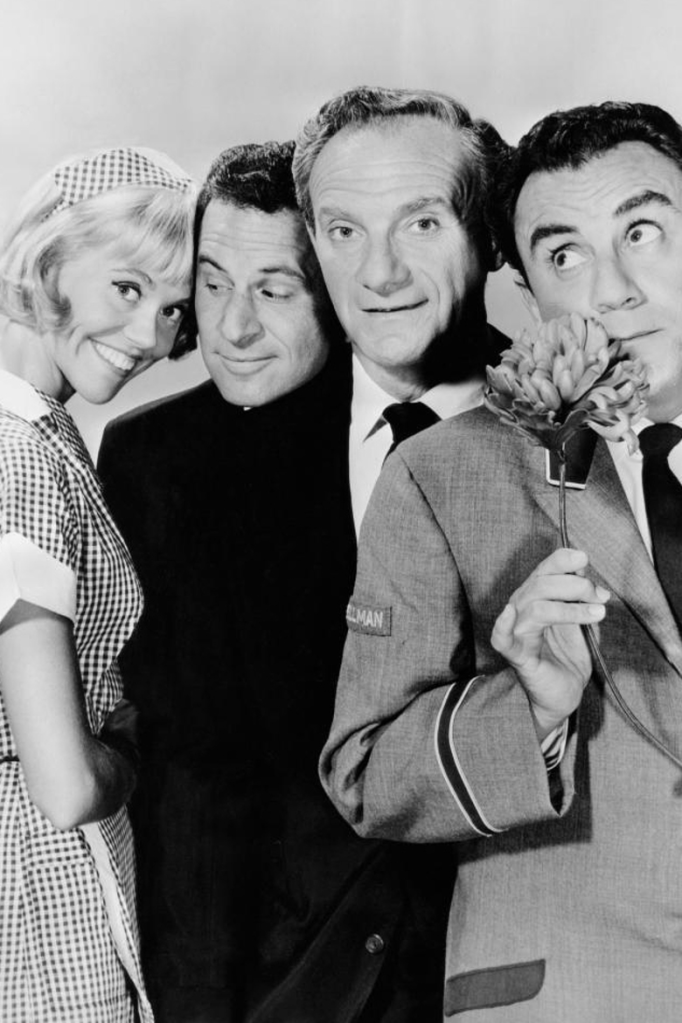
Jimenez is a bellhop at a luxury New York hotel. He lives in a special staff apartment, eats in the hotel kitchen, and interacts with most of the guests. He is surrounded by a great cast which we’ll get to know in more detail this month. Don Adams was Byron Glick, house detective. Jonathan Harris took on the role of Mr. Phillips, the hotel manager. Fellow bellhop Eddie (Gary Crosby) is always trying to get Jose to lose his rose-colored view of life. For season 2. Maggie Peterson plays waitress Susie.

The ratings were not great. Perhaps viewers had a harder time connecting this Jose to the caricature Jose. Certainly, more criticism came from the Latino community as the show went on. In addition to Jose, there was feedback on other shows that used stereotypical Mexican characters and in commercials like the Frito Bandito.

📷washingtonpost.com

Jose had one cameo role in Batman when he meets the duo and introduces himself as “My name—Jose Jimenez” in 1966. That was the final appearance of the character and a few years afterward, Dana read an obituary that he wrote for Jose at a Latino civil rights meeting in Los Angeles, and he became an activist for the Latino community, so there was some good coming out of the situation.

The show was canceled partway through season two. Another factor in the show’s ratings was the fact that it was on Sunday nights up against Lassie, a family favorite. However, the show did somehow receive an Emmy nomination for outstanding sitcom. No surprise it didn’t win. Despite being a mediocre show with some nugget of greatness here and there, it was up against McHale’s Navy, The Farmer’s Daughter, and the show that won, The Dick Van Dyke Show.

If The Bill Dana Show had just been a show about “a guy” who arrives from Mexico to work in a posh hotel, and we saw life through his eyes, good and bad in America, the concept could have been fun and more accepted. It appears that the writing was pretty good and it had a great cast. Jose was just not the character to build the show around.

Good Morning World: Tune In

As we are in the middle of our What in the World? blog series, today it’s a forgotten sitcom from the sixties: Good Morning World.

📷wikipedia.com

This series was created by Sam Denoff and Bill Persky, the team behind That Girl. The concept was based on Persky and Denoff’s time as writers for a New York radio station in the fifties.

In fact, William B. Williams, a WNEW DJ was given screen credit because the title was based on his daily greeting, “Hello, World.” William B. Williams was quite a character and an icon in the world of music. He was born in 1923 and after attending the University of Syracuse, he got a job with WAAT in New Jersey. He filled in for a DJ who failed to come to work but then was fired for, believe it or not, wearing red socks to work. He was hired by WNEW in New York City. He became a beloved radio icon. The radio station said at his funeral there was a huge crowd outside which included taxi drivers, sanitation workers, bookies, waitresses, singers, songwriters, politicians, housewives, first responders, and even the Rockettes.

📷radiohalloffame.com William B. Williams

According to the radio station’s website, “William B. Williams respected singers and songwriters, music and musicians, and it showed. He had a permanent, perhaps profound, effect on the lexicon of pop music.

He bestowed the ‘Count’ on Basie and the ‘Duke’ on Ellington. Billie Holiday was ‘Lady Day.’ Ella Fitzgerald was the ‘First Lady of Song.’ Louis Armstrong was ‘Pops.’ Sinatra was ‘Francis Albert,’ the ‘Chairman of the Board.’ Nat ‘King’ Cole was simply ‘Nathaniel.’”

The show was produced by Sheldon Leonard and Carl Reiner. Looking at that alone and you would expect it to be a hit.

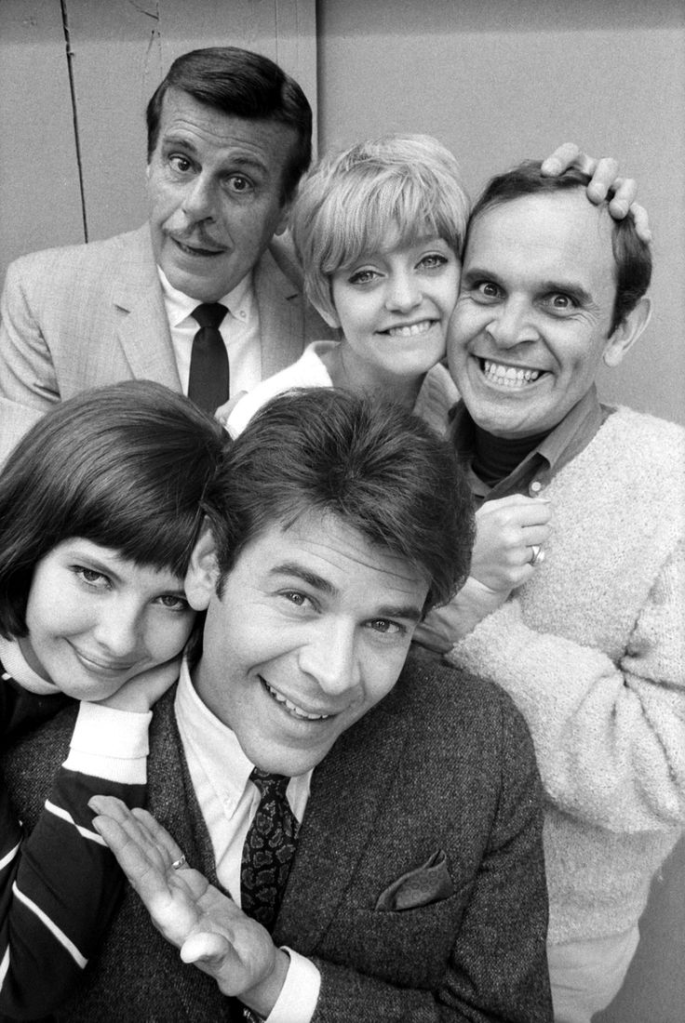
The premise was two radio disc jockeys who have a morning show, “Lewis and Clarke,” in Los Angeles. Dave Lewis is happily married, and Larry is a lady’s man and party boy.

They had some problems casting this show. Roddy McDowell and Sharon Farrell were cast as the married couple. Then Ron Rifkin replaced McDowell. Then they were both let go and David Lewis was played by Joby Baker, his wife Linda was played by Julie Parrish, and Ronnie Schell was cast as Larry Clarke.

📷pinterest

Billy de Wolfe and Goldie Hawn were fun additions to the cast. De Wolfe played Roland Hutton, the stuffy station manager. Hawn was Linda’s best friend Sandy Kramer.

The series debuted on CBS in 1967. It was on Tuesday nights, sponsored by Procter and Gamble. It was competing with N.Y.P.D., a police crime show and Tuesday Night at the Movies which began half an hour before Good Morning World.

Given that the talent behind The Dick Van Dyke Show was contributing to this show as well, it’s not surprising that it seems to be a mixture of The Dick Van Dyke Show and the later Mary Tyler Moore Show. Like Dick Van Dyke, the show features the DJs’ home and work life; like Mary Tyler Moore, you have a Lou Grant-type manager, and we learn about life at a radio station.

The theme music was by David Grusin. The opening was a different look for a sitcom. It’s a bouncy theme that begins with an alarm clock ticking, the guys quickly getting ready, morning traffic, life in LA, and the two DJs barely getting into their chairs before the show started.

The show was not awful in ratings, but the network had two concerns. They still were not sure Baker and Parrish were the right actors to play the married couple, and Parrish had some health concerns that affected the show. They were also concerned that the show did not pull in more of the viewers who were watching The Red Skelton Show which was on before Good Morning World. I don’t think that is surprising. I’m guessing people who enjoyed watching Red Skelton would not love this show as much and vice versa. Full disclosure, I am not a Red Skelton fan. I didn’t find his humor funny, and I have read too many stories shared by actors and writers who experienced his ego and lack of respect dealing with coworkers.

📷imdb.com

The network made the decision not to renew the show for a second season. Schell, who had been playing a private on Gomer Pyle: USMC, another Leonard/Reiner show, returned to military life with a promotion to corporal.

Goldie Hawn was free to accept an offer to appear on Martin and Rowan’s Laugh In which was a turning point for her career. De Wolfe became part of the cast of his close friend Doris Day’s show.

Baker never starred in another show, but he was a busy character actor. Parrish was later cast in Return to Peyton Place and also stayed busy in television; she later had a recurring role on Beverly Hills 90210.

This would be an easy series to binge watch with 26 episodes available. S’more Entertainment released the series on DVD in 2006 and its’ on Roku, so viewers can check it out for free.

Burt Mustin: What a Character

This month we are looking at some of our favorite character actors. As we wrap up the series, we are ending on a high note with the amazing Burt Mustin. Like Charles Lane, Mustin had a prolific career in Hollywood and television. However, unlike Lane, Mustin was offered his first acting job at age 67 after he had retired.

📷Widener University Archives

Mustin was born in Pittsburgh in 1884. His father was a stockbroker. After high school, Mustin enrolled in the Pennsylvania Military College (now Widener University) with a degree in civil engineering. During his college career he played trombone in the band and played goalie for his hockey team.

After graduation, Mustin toured Europe, planning to work at his father’s brokerage firm. However, a financial panic destroyed the company.

One of Burt’s university classmates was Charles Spinney. According to Burt, Spinney displayed lots of photographs of young ladies from his hometown of Memphis, Tennessee. One day, he was showing them to Burt when he spotted the photo of what he referred to as “the prettiest girl in the room.” Mustin traveled to Memphis to meet her and in 1915 he married Frances Robina Woods. The couple had no children and remained together for their entire lives, with Frances passing away in 1969.

📷imdb.com

After working as an engineer for a few years, Mustin decided to try to sell automobiles. In an interview, Mustin admitted, “I was the worst engineer the school turned out.” He began selling Oakland Sensible Sixes and later Franklins, Lincolns, and Mercurys. WWII put an end to car sales for a few years, so Mustin began working for the Better Business Bureau and then the Chamber of Commerce. He stayed in Pittsburgh until he retired.

He did a bit of amateur acting and continued his passion for music. He was part of the oldest Gilbert and Sullivan troupe in the country, the Pittsburgh Savoyards; the Pittsburgh Opera; and an officer in the Society for the Preservation and Encouragement of Barbershop Quartet Singing in America. 

He was a founding member of the Pittsburgh Lions Club in 1921 and a life member in the Fellows Club of Pittsburgh. Mustin served as an announcer for the first weekly variety show on radio station KDKA.

📷that’sentertainment.com

After retiring, Mustin and his wife moved to Tucson, Arizona for her health where he continued acting. William Wyler saw him in a stage production of “Detective Story” and told Mustin to let him know if he ever wanted to pursue a film career. When Wyler was casting for Detective Story in 1951, Mustin reached out to him. The couple later moved to Los Angeles. Mustin would appear in 67 films overall.

In 1968 Mustin was cast in Speedway with Elvis and Nancy Sinatra. In one scene the stars have a lover’s quarrel in a coffee shop. When they make up, Elvis sings a song for his girl. Mustin is in the background cleaning the café and working at the counter. The producers felt the scene needed something else. That something else ended up being Mustin singing and dancing with a mop. No one on the set realized that Burt could sing before that adlibbed scene.

1951 was also the year that Mustin appeared on television in The Adventures of Kit Carson. He would find a new career in television for the next two decades, appearing in more than 130 series (which would equal more than 400 actual episodes).

📷imdb.com

During the fifties, he would be attracted to many westerns and dramas; however, he found his way onto a few comedies including The Great Gildersleeve, December Bride, and Our Miss Brooks.

If I listed half of the 1960s shows he appeared on, you would still be reading this blog next Monday when my new one is dropped. Take my word for it that he was on almost every popular sixties’ sitcom, including 14 episodes as Gus the fireman on Leave it to Beaver. Other sixties hits you can find him on include The Many Loves of Dobie Gillis, The Dick Van Dyke Show, The Joey Bishop Show, The Jack Benny Show, The Beverly Hillbillies, Get Smart, The Andy Griffith Show, The Lucy Show, Bewitched, Gomer Pyle USMC, Petticoat Junction, and My Three Sons, not to mention many dramas and westerns including Bonanza and Gunsmoke. He was no less busy in the seventies where we could catch him in Marcus Welby, The Mary Tyler Moore Show, The Brady Bunch, Love American Style, Adam-12, All in the Family, and Phyllis.

📷imdb.com

Johnny Carson loved having Mustin on The Tonight Show, where he was a fan favorite. He shared a lot of fun stories on the show. One of them was about him being at the first World Series for baseball in 1903 when the Pittsburgh Pirates played the Boston Red Sox. Unfortunately for Burt, Boston came back to win the series, but as a bonus he did get to see Honus Wagner play on the diamond.

Mustin passed away eight years after his wife at the age of 92. He left a gift to the college he was loyal to his entire life, enabling Widener University to renovate their theater. It is now named the Burton H. Mustin Theatre and Lecture Hall.

It’s hard to wrap your head around what a busy film and television career Mustin had. He was an actor for the last 25 years of his life, and with 67 movies and more than 400 episodes, that means that he accumulated about 20 credits per year which is almost two a month from age 67 to 92. Talk about an amazing career. Mustin proved that it’s never too late to find your next passion. Thanks for so many great memories Burt Mustin.

Dick Schaal: What a Character

📷wikipedia.com

Today we began our “What a Character” blog series. Typically, when we discuss character actors, we are looking at actors who were busy in the forties, fifties, and sixties, but in the past sixty years, there have been a lot of great character actors as well. Today we are looking at the career of Richard Schaal.

Schaal was born in Chicago in 1928. His dad was a machinist, and his mom was a telephone operator. After he graduated, he ran a construction company before joining the Second City comedy troupe in 1959, not long after it began.

In 1950 he married Lois Treacy. I could not find a divorce date, but it was some time before 1964. They had a daughter Wendy who is also an actress.

Eventually he made his way to California. He had seventeen film credits on his resume; most of them were not too memorable, but he was in The Russians Are Coming, The Russians Are Coming and Slaughterhouse Five.

📷imdb.com

Television is where he made most of his acting appearances. He began his TV career in 1964 in East Side/West Side. This was a show I had not heard of before. Apparently, it was on for one year and starred George C. Scott as a social worker trying to help his clients in the mix of cultures that makes up New York City.

Schaal would find a few more roles in the sixties on several shows including The Dick Van Dyke Show, That Girl, and I Dream of Jeannie.

In the sixties, Schaal met Valerie Harper and they married in 1964.

During the seventies, he collected roles on many sitcoms including The Doris Day Show, The Partridge Family, Love American Style, The Bob Newhart Show, and The Mary Tyler Moore Show.

📷foxnews.com

On The Mary Tyler Moore Show, he played Howard Arnell, Paul Arnell, Chuckles the Clown, and Dino. Not surprisingly, he made appearances on Rhoda and Phyllis.

In 1970, Schaal and Harper wrote a script for Love American Style for “Love and the Visitor” which aired on season two, episode 5 where a bridegroom ends up in the wrong girl’s bedroom. Harper said they were part of the Writers Guild, but their hearts were in acting and once she got the part of Rhoda, the writing stopped.

Harper discussed Schaal during an interview with the Television Academy. She describes him as her former husband and good friend. She said she and Schaal hosted a talk show with Skitch Henderson for about a year in the mid-sixties. They did interviews and sketches. She said after that they decided to move to Los Angeles.

📷imdb.com The Russians Are Coming The Russians Are Coming

The seventies were also a busy time for Schaal who continued to find roles on television. You can see him on dramas such as Nero Wolfe and Hardcastle and McCormick. He also was on sitcoms including Harper Valley PTA and Just Our Luck. He had a recurring role during this decade on Trapper John MD from 1981-85. The show was a sequel of M*A*S*H and portrayed Trapper later in life. Schaal played Dr. David Sandler. He also accepted a role on It’s a Living in 1980. His daughter Wendy was part of the cast. She has a very successful career and has appeared in many popular series. From 2005-2023, she was one of the voices in American Dad.

In 1980 he tried marriage a third time with Tasha Brittain. They would divorce in 1989.

📷pinterst.com

Schaal retired in 1990 and passed away in 2014 in Los Angeles. No cause of death was provided. He did have spinal surgery in the late 90s and was in a wheelchair after that.

Sadly, I could not find a lot of information about Schaal or his personal life. He had a successful career, but it’s too bad there wasn’t more improvisational work at the time. It sounds like he was very gifted in that area. He didn’t have as much luck in love, but at least, according to Valerie Harper, he was a great guy and they remained good friends. He was one of those character actors who added so much to the television industry, especially in the sixties and seventies.


Frank Gorshin: Batman’s Most Puzzling Villain

This month, our theme is Bam! Pow! Batman Villains. We have learned a bit about the careers of the Joker and Cat Woman, and today we are spending some time with the Riddler, portrayed by Frank Gorshin.

📷imdb.com

Gorshin started out as an impressionist and comedian before transitioning into acting.

Frank was born in Pittsburgh in 1933 into a blue-collar, middle-class family. His mom was a seamstress, and his father was a railroad worker. His paternal grandparents arrived in the US from Slovenia and his mother was born in Slovenia, coming to the Pittsburgh area as a young girl; his parents were very involved in the Slovenian community, both singing with the Preseren, a Slovenian singing society.

When he was 15, Gorshin got a part-time job as an usher at the Sheridan Square Theatre. He studied the mannerisms of the actors he watched in those movies and developed an impressionist act. Some of his favorite actors to mimic included James Cagney, Cary Grant, Al Jolson, and Edward Robinson. After entering a talent contest in 1951, he won a week-long engagement at the Carousel nightclub in New York.

Sadly, Gorshin’s older brother was hit by a car two days before and died. His parents convinced him to keep his performance schedule and sent him to New York.

After high school, Gorshin enrolled at the Carnegie Tech School of Drama (now Carnegie Mellon University).

📷imdb.com

At age 20, Frank was drafted into the US Army and sent to Germany. He was an entertainer in Special Services for a year and a half. When Gorshin left the Army, he began his acting career, appearing in four movies and on television in Alfred Hitchcock Presents.

I can’t imagine the horror Gorshin’s parents felt when getting a call in 1957 that their son had fallen asleep while driving from Pittsburgh to Hollywood, a 39-hour trip for a screen test. With their other son passing away from a car crash six years earlier, now they had to deal with the fact that their other son was in a coma with a fractured skull. Luckily, he made a full recovery.

Another big event occurring in 1957 was his marriage to Christina Randazzo. They had a son and separated later in life, but they never did divorce as far as I could tell.

Until his death, Gorshin would appear in more than sixty big-screen films. During the fifties, he only appeared in a handful of television series, but that would change in the 1960s. Some of the most memorable shows included The Defenders, The Munsters, Star Trek, and The High Chapparal. With his comedy act, he visited The Ed Sullivan Show four times. The first time he did his impressionist act on the series, he would be scheduled with this new band called The Beatles.

📷metv.com

The sixties also found him on Batman, his reason for being in this month’s blog series. He said that he developed a fiendish laugh at Hollywood parties. “I listened to myself laugh and discovered that the funniest jokes brought out the high-pitched giggle that I use on the show. With further study, I came to realize that it wasn’t so much how I laughed as what I laughed at that created the sense of the menace.”
He did not love the unitards that many of the comic book villains wore, so he asked for a green business suit and bowler hat, covered with question marks since he always left riddles for Batman and Robin to solve. He often said “Riddle me this, Batman” which became a catchphrase of the mid-sixties.

Gorshin said “When I was first approached to play the Riddler, I thought it was a joke. Then I discovered the show had a good script and agreed to do the role. Now I am in love with the character.”

📷imdb.com

Gorshin was the only villain to be nominated for an Emmy. He got the nod in 1966 for the episode “Hi Diddle Riddle.” He had some tough competition, going against Werner Klemperer as Colonel Klink on Hogan’s Heroes, Morey Amsterdam on The Dick Van Dyke Show, and winner Don Knotts on The Andy Griffith Show.

Gorshin was in ten episodes of the show, but after appearing numerous times, he was unavailable, and the producers replaced him with John Astin. I realized hindsight is 20/20 as they say, so the producers were never considering the effect the show would have on pop culture and the decades it would be a fan favorite, but that switch seems extreme. However, they did it with Julie Newmar and Eartha Kitt as well, so maybe they figured if you have to replace a villain, let’s replace them with someone very different from the original. Gorshin, however, was not a fan of being replaced but did get over it enough to accept his tenth episode role in season three and appeared as Riddler in the 1979 made-for-television movie Legends of the Superheroes.

Frank made his Broadway debut in 1969 in the musical biography, “Jimmy” which was about the controversial life of New York mayor Jimmy Walker.

Gorshin was very busy in the seventies and eighties. Among the twenty plus shows he appeared on were The Virginian, Martin and Rowan’s Laugh In, Ironside, Hawaii Five-0, Charlie’s Angels, and Murder She Wrote.

In the last three decades of his life, he spent more time making big-screen films. One thing I found surprising is that Gorshin appeared in three soap operas, all at different times in his career: General Hospital in 1963, The Edge of Night in 1982, and The Bold and the Beautiful in 1999.

In the early 2000s, Gorshin did a one-man Broadway show, portraying George Burns. He was reunited with his Batman cast in a made-for-tv movie, Return to the Batcave: The Misadventures of Adam and Burt. His last appearance was on CSI: Crime Scene Investigation on “Grave Danger” on which he played himself. The episode was directed by Quentin Tarantino and was dedicated to Gorshin.

📷discogs.com

Unfortunately, Gorshin was a heavy smoker throughout his life. Adam West once said that “Frank could reduce a cigarette to ash with one draw” and his nightclub performances warned patrons they would be exposed to a lot of second-hand smoke if they attended. Not surprisingly, he died from lung cancer, complicated by emphysema and pneumonia.

I enjoyed getting to know Frank Gorshin in this blog. While I was much more familiar with the careers of Burgess Meredith and Julie Newmar, Gorshin and Cesar Romero are actors I knew very little about. I hope you are also enjoying getting to know these fun “villains.”