We are ending our blog series of “One-Named Sitcoms.” Alice is up today, and it’s the only series we talked about this month that lasted more than two seasons and could really be considered a hit.
Debuting in 1976 on CBS, Alice was based on a film from 1974 called Alice Doesn’t Live Here Anymore. Ellen Burstyn played the lead in the movie, but the television series went with Linda Lavin.
The plot is that Alice is a widow who moves from New Jersey to Arizona with her son Tommy (Philip McKeon) after her husband passes away. She thought she was on her way to LA to pursue a singing career till her car breaks down in Phoenix. She gets a job at Mel’s Diner run by Mel (Vic Tayback). She becomes best friends with the other waitresses, Vera (Beth Howland) and Flo (Polly Holliday). Rounding out the cast were a few regular customers including Earl (Dave Madden) and Henry (Marvin Kaplan). Mel was always worried about losing customers to Barney’s Burger Barn or Vinnie’s House of Veal.
In 1980 Flo left the show to star in her own spinoff, and things were never the same after that. Diane Ladd took her place for a bit as Belle. (Ladd had played Flo in the original movie version.) She had worked at Mel’s before the other waitresses and had a relationship with Mel. Apparently, Ladd did not have any chemistry with the cast off-screen and she was gone within the season, replaced by Celia Weston as Jolene. However, I also read on imdb that Linda Lavin had trouble getting along with some of the regulars which is what led to not only Ladd but Holliday leaving the show.
With three women in lead roles, the show often tackled issues like the role of females, resolving unfair and demanding workplace issues, the way men treated women, and societal changes that were happening in the mid to late seventies.
While I complain about shows not getting finales, this one was a little too perfectly wrapped up. Alice and her new boyfriend go to Nashville where she gets a recording contract, Vera is married and pregnant and quitting, Jolene is left money by her grandmother and decides to open her own salon, and, surprise, Mel sells the restaurant to a real estate developer for a boatload of money. What the regular customers will do is about the only thing left unknown.
There were two well-known catchphrases that remind us of this show. Flo used to say, often to Mel but others as well, “Kiss my grits.” Mel’s popular comment was “Stow it.”
The show got a coveted spot on the television schedule on Saturday nights after The Mary Tyler Moore Show, The Bob Newhart Show, and All in the Family. It finished its first season in the top thirty. Season two both All in the Family and Alice got moved to Sunday nights, which was a good change, because they both finished in the top ten that year. It bounced around from top ten to top thirty for several seasons. In 1982 when it fell out of the top thirty, it was moved to Mondays and then back to Sundays. The next season it started off in the top 30 but then ratings declined. It was on Sunday nights, but it only stayed in that spot part of the year. Six different shows were on during this time slot for the next-to-the-last season. For the final season, it was moved from Sunday to Tuesdays but never made the top thirty again and was canceled for the 1985 season.
The show’s theme was composed by David Shire with lyrics by Alan and Marilyn Bergman. With 157 composing credits and 45 music department credits, Shire worked on a lot of television series and big-screen films, winning two Oscars. Linda Lavin performed it so well before she got her Nashville contract, we knew she could sing.
The exterior shot for the show was a restaurant located at 1747 NW Grand Ave. in Phoenix. From 1976-1985 it went by Mel’s Diner, but now it’s called Pat’s Family Restaurant. If this show was one of your favorites (to be honest, it never was one of mine), you can visit Pat’s and experience a bit of nostalgia. Maybe they’ll let you sing the theme song on your way to a table.
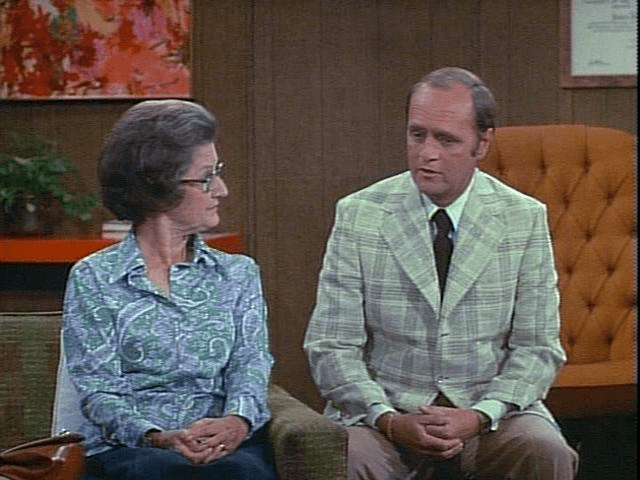
As we continue our What a Character blog series, today we get to talk about the woman behind one of my favorite characters, Lillian Bakerman from The Bob Newhart Show. That woman is Florida Friebus.
Friebus was born in Massachusetts in 1909. She was named for her mother’s favorite aunt, not the southern state. Weirdly, her paternal grandmother was also named Florida. Her family was involved in the theater. Her father Theodore was a leading stage actor with Boston’s Castle Square Players and a silent film star. Her mom’s mother, Georgine Flagg, was part of the Augustin Daly stock company in Manhattan.
When she was only eight years old, Florida’s father passed away. Her mother had studied at the Dana Hall Schools and applied for a position of housemother there. Florida was able to study at Tenacre during this time. She participated in the first Christmas pageant in 1921. Florida not only learned a lot about acting, but she also was presented with classes in political history, music, art, languages, and literature.
📷facebook.com with Richard Waring
Friebus moved to New York to study at the Theater Guild School. She began her acting career in 1929 in when she appeared with the Civic Repertory Theater in “The Cradle Song.” In 1932, she worked on an adaptation of “Alice in Wonderland” with Eva Le Gallienne, and she took on the role of the Cheshire Cat.
In 1934, Friebus married Richard Waring. They would divorce in 1952, and she never remarried.
Friebus was elected to the Council of the Actors’ Equity Association in 1949, and she spent 16 years on the board.
Florida read stories to children on her KNXT show, Look and Listen, in Los Angeles.
📷imdb.com
Her first television role was in 1948 on The Ford Theater Hour. Her television drama appearances continued into the 1950s and she also appeared on several sitcoms, including The Goldbergs, Father Knows Best, Bachelor Father, and The Donna Reed Show. In 1959 she accepted a role that made her a household name: Winnie Gillis on The Many Loves of Dobie Gillis. For four seasons she tried to defend Dobie and his crazy dilemmas when his father became exasperated with him.
The show was based on a 1951 book, The Many Loves of Dobie Gillis by Max Shulman about the romantic adventures of a student at the University of Minnesota. Shulman wrote for the series. He would also write The Tender Trap which became a movie in 1955 and House Calls which became a 1978 movie; Shulman became head writer for the television series based on House Calls.
The sixties and seventies found Florida in a variety of both dramas and sitcoms. A few of these series included Ben Casey, Peyton Place, The Doris Day Show, The Mary TylerMoore Show, The Partridge Family, Gunsmoke, Room 222, and Barnaby Jones.
📷sitcomsonline.com
In 1972 she accepted the role of Lillian Bakerman on The Bob Newhart Show. During the show’s run, she made 19 appearances trying to encourage the other patients in her therapy group. She is often seen knitting while the group talks. One of her fears is flying, and her catchphrase is “Isn’t that nice.”
Her last appearance was in 1982 on The New Odd Couple as, who else but Mrs. Bakerman.
In 1988, Friebus passed away from cancer at 78 years old.
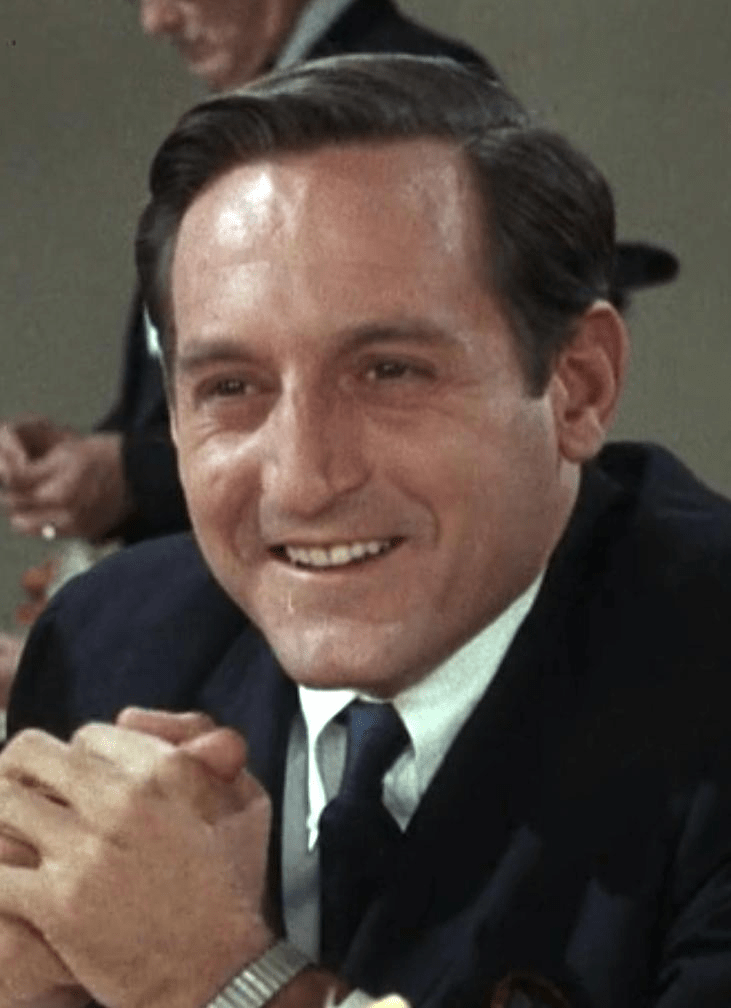
This month we are right in the middle of one of my favorite blog series, What a Character. This week we are delving into the career of Noam Pitlik; in addition to his acting, he won an Emmy for his work as a director. Which show? Let’s find out.
Pitlik was born in Philadelphia in 1932. After graduating from high school, he enrolled at Gratz College and later was a theater major at Temple University in 1954. Pitlik had a two-year stunt in the Army and earned a master’s degree in theater at New York University.
He began his acting career on WCAU in a western. In 1951, he was hired for the set design and construction crew for the Philadelphia Experimental Theater. He carried a bit of his hometown with him when he was part of the Summer Theater Guild in Indiana, Pennsylvania in the “Philadelphia Story.” He was hired for his Broadway debut in an off-Broadway production of The Threepenny Opera.”
📷imdb.com
In 1961 he moved to Los Angeles and received his first television roles, appearing on Cain’s Hundred and Dr. Kildare. Cain’s Hundred was not a show I remembered hearing much about. It was about a former underworld lawyer who works with the federal government to bring the top 100 criminals to justice. The show lasted one season. Pitlik had a variety of offers for shows throughout the sixties. Most of them were dramas and westerns, but we also see him on My Favorite Martian, The Munsters, Gidget, The FlyingNun, The Monkees, The Andy Griffith Show, The Doris Day Show, Get Smart, That Girl, and I Dream of Jeannie.
During the sixties, he married for the first time. His marriage with Jesse Blostein in 1967 would only last three years.
Pitlik also appeared in fourteen films and eight made-for-tv movies. The most memorable films are The Graduate, Fitzwilly, and The Fortune Cookie.
📷famousfix.com
The seventies were his most prolific decade of acting. He appeared in 26 different series, often in 2-5 different episodes. You’ll see Pitlik in reruns in a variety of genres including Hogan’s Heroes, Room 222, Bewitched, LoveAmerican Style, All in the Family, The FBI, Cannon, Mannix, The PartridgeFamily, The Bob Newhart Show, The Odd Couple, and Barney Miller. His last acting appearance was in Becker in 1998.
The seventies were also when he tried the role of husband again, marrying Linda Hirsch in 1974; this marriage also lasted three years.
He began directing in the seventies and obtained 39 directing credits throughout the next two decades.
📷imdb.com
In an interview with Temple University for the Alumni Review in 1979, Pitlik said that the switch in his career was not “a case of my needing to change functions for economic reasons. I used to figure out what I made a day as an actor, and it was obscene. I changed for emotional reasons. I had become very frustrated by the kinds of things I was doing in acting, and I was looking for a change in my life that would be more challenging. I enjoyed acting, but I never seemed to get enough to do.” His first episode as director was on The New Dick Van Dyke Show. He directed 12 episodes for The Practice and 11 for Taxi.
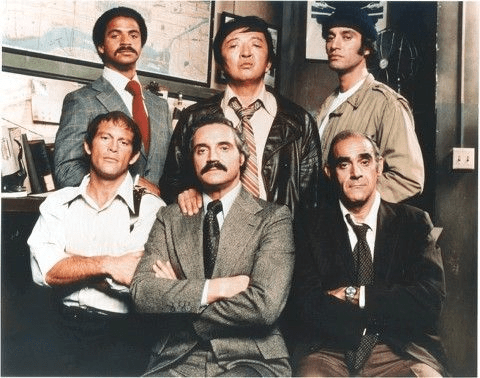
However, Barney Miller was where he perfected his skill as director for 102 of its 171 episodes. In 1979, he won an Emmy as Director for the show. He beat out Paul Bogart for All in the Family, Alan Alda and Charles Dubin for M*A*S*H, and Jay Sandrich for Soap. He also received a Peabody Award and a Directors Guild of America Award for his work on Barney Miller. He lost the Emmy in 1981 to James Burrows for Taxi. His co-nominees included Jerry Paris for Happy Days, Linda Day for Archie Bunker’s Place, Burt Metcalfe and Alan Alda for M*A*S*H, and Rod Daniel for WKRP in Cincinnati.
📷tumblr.com Cast of Barney Miller
In the Temple interview, Pitlik said that his “main responsibility is to create an atmosphere in which each of the people involved in the production can conform to their best work. Although a director oversees all aspects of the production, there are many people involved, and he’s dependent on all of them. There’s no more collaborative business than the television business. Each person contributes to the success or failure of a show whether he or she is a writer, actor, cameraman, or whatever.”
In 1995 he began directing episodes of The Home Court and did so for 14 of the 20 episodes. I must admit I do not remember this show at all. The synopsis was Sydney Solomon was a family court judge who had to deal with the toughest prosecuting attorneys and repeat offenders. However, her biggest challenges came when dealing with her kids, four boys aged 11-19.
📷pinterest.com
Pitlik had better luck with his third marriage to Susan Whittaker which lasted from 1986 until his death in 1999. Whittaker was a television producer. Noam passed away from lung cancer at age 66.
Like Jerry Paris, Pitlik had a very successful acting career before finding his passion behind the camera. If you are responsible for directing a series, Barney Miller is a great accomplishment. It was fun to learn more about his career both in front of and behind the camera.
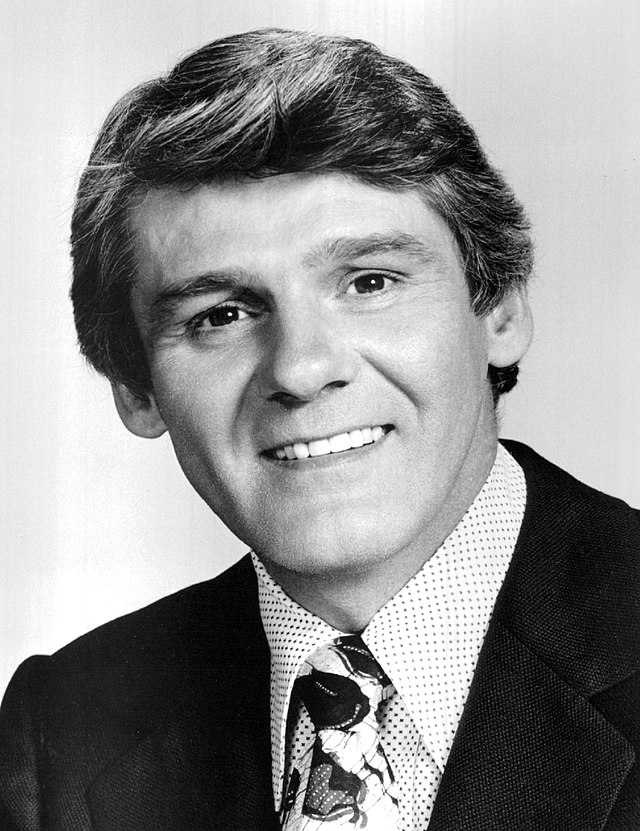
Today we began our “What a Character” blog series. Typically, when we discuss character actors, we are looking at actors who were busy in the forties, fifties, and sixties, but in the past sixty years, there have been a lot of great character actors as well. Today we are looking at the career of Richard Schaal.
Schaal was born in Chicago in 1928. His dad was a machinist, and his mom was a telephone operator. After he graduated, he ran a construction company before joining the Second City comedy troupe in 1959, not long after it began.
In 1950 he married Lois Treacy. I could not find a divorce date, but it was some time before 1964. They had a daughter Wendy who is also an actress.
Eventually he made his way to California. He had seventeen film credits on his resume; most of them were not too memorable, but he was in The Russians Are Coming, The Russians Are Coming and Slaughterhouse Five.
📷imdb.com
Television is where he made most of his acting appearances. He began his TV career in 1964 in East Side/West Side. This was a show I had not heard of before. Apparently, it was on for one year and starred George C. Scott as a social worker trying to help his clients in the mix of cultures that makes up New York City.
Schaal would find a few more roles in the sixties on several shows including The Dick Van Dyke Show, That Girl, and I Dream of Jeannie.
In the sixties, Schaal met Valerie Harper and they married in 1964.
During the seventies, he collected roles on many sitcoms including The Doris Day Show, The Partridge Family, Love American Style, The Bob Newhart Show, and The Mary Tyler Moore Show.
📷foxnews.com
On The Mary Tyler Moore Show, he played Howard Arnell, Paul Arnell, Chuckles the Clown, and Dino. Not surprisingly, he made appearances on Rhoda and Phyllis.
In 1970, Schaal and Harper wrote a script for Love American Style for “Love and the Visitor” which aired on season two, episode 5 where a bridegroom ends up in the wrong girl’s bedroom. Harper said they were part of the Writers Guild, but their hearts were in acting and once she got the part of Rhoda, the writing stopped.
Harper discussed Schaal during an interview with the Television Academy. She describes him as her former husband and good friend. She said she and Schaal hosted a talk show with Skitch Henderson for about a year in the mid-sixties. They did interviews and sketches. She said after that they decided to move to Los Angeles.
📷imdb.com The Russians Are Coming The Russians Are Coming
The seventies were also a busy time for Schaal who continued to find roles on television. You can see him on dramas such as Nero Wolfe and Hardcastle and McCormick. He also was on sitcoms including Harper Valley PTA and JustOur Luck. He had a recurring role during this decade on Trapper John MD from 1981-85. The show was a sequel of M*A*S*H and portrayed Trapper later in life. Schaal played Dr. David Sandler. He also accepted a role on It’s a Living in 1980. His daughter Wendy was part of the cast. She has a very successful career and has appeared in many popular series. From 2005-2023, she was one of the voices in American Dad.
In 1980 he tried marriage a third time with Tasha Brittain. They would divorce in 1989.
📷pinterst.com
Schaal retired in 1990 and passed away in 2014 in Los Angeles. No cause of death was provided. He did have spinal surgery in the late 90s and was in a wheelchair after that.
Sadly, I could not find a lot of information about Schaal or his personal life. He had a successful career, but it’s too bad there wasn’t more improvisational work at the time. It sounds like he was very gifted in that area. He didn’t have as much luck in love, but at least, according to Valerie Harper, he was a great guy and they remained good friends. He was one of those character actors who added so much to the television industry, especially in the sixties and seventies.
When trying to decide who to include in our Supportive Women blog series this month, Marcia Wallace was a no-brainer. Carol was one of my favorite characters on television on The Bob Newhart Show, and I love the fact that her role carried over into an episode of Murphy Brown.
Marcia Wallace was born in 1942 in Iowa. Her father owned a general store where she and her siblings often worked. After performing in a school play, one of her teachers encouraged her to pursue an acting career. After graduation, Marcia enrolled in Parsons College in Fairfield, Iowa where she received a full scholarship. She majored in English and Theater.
Upon her college graduation, Marcia decided to move to New York. The country gal had $148 in her savings. When she arrived in the Big Apple, she took on a variety of part-time jobs including typing scripts and substitute teaching. She joined a summer stock company and did a few commercials. She worked in a Greenwich Village nightclub for a year before creating an improv group, The Fourth Wall, with several friends. While she kept the friends, she lost 100 pounds.
Eventually, Wallace was offered a job with The Merv Griffin Show. When Merv decided to move to LA, he asked Wallace to move with them. She was able to obtain a few roles in series after moving to California. During the sixties and early seventies, she was on Bewitched, The Brady Bunch, Columbo, and Love American Style.
📷tvinsider.com
After Bill Paley had seen her on Merv Griffin, Grant Tinker (producer) called her to offer her a role on a new sitcom, The Bob Newhart Show. The role of Carol was written specifically for her.
Marcia loved her time on the sitcom. She said Bob was the Fred Astaire of comedy, making it look so easy. She also praised Bob for being a treasure. Because of the way the scripts were written, the show doesn’t date itself. It was about human relationships and people struggling to make them work and make life better.
When The Bob NewhartShow went off the air six years later, Marcia jumped on the game show circuit. Shecould be seen on Password Plus; Super Password; Hollywood Squares; Crosswits; Hot Potato; The $25,000 Pyramid; Win, Lose, or Draw; Tattletales; To Tell the Truth; Family Feud; Card Sharks; and my favorite, Match Game.
📷youtube.com
Like so many actresses and actors who perform their role so well, Marcia was typecast after the show ended. In an interview, she said that “I have heard ‘You’re too recognizable for this part.’ I remember once, I desperately wanted to be on the series Nine to Five and they just weren’t going to see me because of that. Every once in a while, something would break my heart.”
Wallace also made appearances on The Love Boat and Fantasy Island in the seventies. During the eighties she would show up on CHiPs, Magnum PI, Taxi, Murder She Wrote, Night Court, and ALF, among other shows.
One of my favorite appearances of Wallace’s occurred in the mid-nineties on Murphy Brown. If you were a fan of that show, you know Murphy could not keep a secretary. There was even a support group that started of her former secretaries. However, when Carol Kester came to work for her, she was overjoyed. Carol was the role Wallace played on The Bob Newhart Show. Unfortunately for Murphy, at one point during the show, Bob Newhart shows up and convinces Carol to return to work for him and Jerry and Murphy lost her perfect assistant.
Most of Wallace’s work after 2000 was for voice work with one exception. In 2009, she had a recurring role on The Young and the Restless as Annie Wilkes for 14 episodes.
In 1985 Marcia was diagnosed with breast cancer. She survived it and became an activist and lecturer on the topic. In 2007, she won the Gilda Radner Courage Award for her work in this area.
In 1986 Marcia married Dennis Hawley in a Buddhist ceremony. Dennis renovated and managed hotels. The couple adopted a little boy, but Dennis passed away three years later.
📷imdb.com
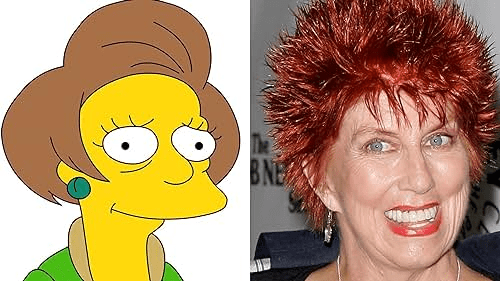
In 1989, a new type of show debuted called The Simpsons. Marcia was asked to provide the voice of Edna Krabappel, school teacher. She probably did not realize she would be associated with that role for another 24 years. Her role as Edna did not end until her passing.
In addition to her television work, Wallace performed on stage. She produced and starred in “An Almost Perfect Person,” a female version of “The Odd Couple,” “Same Time, Next Year” and many others.
In 2004, Wallace published an autobiography, Don’t Look Back, We’re Not Going That Way. She honestly discussed her breast cancer, the loss of her husband, her nervous breakdown, being a single mother, and the ups and downs of her career.
Marcia died from pneumonia and sepsis in 2013. Her coworkers commented on her passing. Yeardley Smith, who voices Lisa on The Simpsons, said “Heaven is now a much funnier place because of you, Marcia.” Bob Newhart said that “Marcia’s death came as quite a shock, she left us too early. She was a talented actress and dear friend.”
📷onceuponascreen.com
I’m so sad that Marcia was typecast and unable to get the roles that she wanted. The networks were very shortsighted during those decades. They didn’t give television fans enough credit for being resilient enough to love the character of Carol while being able to love another character played by Wallace. You saw the same things happen to Adam West, Alan Alda, and Henry Winkler. If that perspective had continued, we never would have had Mary Richards on The Mary Tyler Moore Show or Jay Pritchett from ModernFamily. If someone could be a hit as Al Bundy and then go on to star in another show, anyone can get beyond being stereotyped. Marcia Wallace proved that anyone could survive life’s disappointments with determination and a sense of humor, and perhaps that was her greatest role for us.
We are starting a blog about Supportive Women, great actresses who made classic television so much better. I’m beginning with Joan Tompkins.
📷tvtime.com
Tompkins was born in 1915 in Mount Vernon, NY. She began her career in stock theater companies in New York in the thirties before appearing on Broadway in several shows including “My Sister Eileen,” “Pride and Prejudice,” and “Fly Away Home.” Henry Fonda was in several the plays with Joan.
In 1936 she married actor Stephen Ker Appleby in New York, but five years later they divorced. Appleby was born in Wales and known best for his 1960s movies. He lived to be 100. From 1942-1951 she was married to Bruce MacFarlane before they divorced. McFarlane died in 1967 and had 28 acting credits in television and film. Joan would then marry a third actor in 1951, Karl Swenson, “the man of a thousand voices.” The two worked together on the radio. Many fans of Little House on the Prairie would recognize Karl as Lars Hanson. Swenson obtained an amazing 175 credits, primarily on television during the two decades before his death.
After WWII Joan became a foster parent for a crippled Polish boy, Tomasz Machcinski. He later became a photographer. In 1994, their story was made into a documentary, “Child from a Catalog.” Machcinski’s life story was very interesting. He was born in the Kampinos Forest in Gorki, Poland. He spent his childhood living in hospitals and orphanages. After developing a relationship with Joan, he graduated as a precision mechanic in 1963. In 1966, he took up photography and created thousands of self-portraits. Some were as historic characters. He chose the stories, make up, and costumes. He once said that he didn’t “use wigs, tricks, but I use everything that happens to my body, such as hair regrowth, tooth loss, diseases, aging, etc.” He has had exhibits in Copenhagen, Beverly Hills, Warsaw, New York, and Paris. Machcinski passed away in 2022.
📷wallofcelebrities.com
Tompkins had a long radio career. She was the voice of Nora Drake on “This is Nora Drake” which was on CBS radio until 1959.
She began her television career in 1954 on an episode of Ponds Theater. Almost all of her 93 acting credits were for television shows. She had a recurring role on a soap, Valiant Woman, appearing in 176 of the 1027 episodes of the show as Marion Walker. Throughout the fifties, she showed up in several dramas as well as The Donna Reed Show, Bachelor Father, and Father Knows Best.
During the sixties, she had two recurring roles. She played Mrs. Brahms on Occasional Wife in 1966-67. I remember her on My Three Sons; between 1967-1970, she appeared as Lorraine Miller, Katie’s mom, nine times.
You can catch glimpses of her on many of your favorite shows from the sixties and seventies, including Hazel; The Danny Thomas Show; Perry Mason; Gomer Pyle: USMC; Dr. Kildare; The Man From UNCLE; Bewitched; Bonanza; The Brady Bunch; MarcusWelby, MD; The Mary Tyler Moore Show; The Mod Squad; and The Bob Newhart Show.
📷imdb.com My Three Sons
Her last television appearances were in 1980. She played Grandma Gertie in an episode of Eight is Enough and a physician in a made-for-tv film, The Night the City Screamed.
Karl and Joan moved to Beverly Hills where they founded an acting company. Karl directed the plays Joan appeared in. After Karl’s death in 1978, Joan joined a writing group and wrote several books. She died at home in 89.
Joan Tompkins is another one of those actresses that made television better during the fifties, sixties, and seventies. I’m glad we could learn a bit more about her and her career.
As we wind up our “Work It Out” blog series, we finish with a working crew that was very close on and off the set, a television show about a television show, Murphy Brown.
Created by Diane English, the show aired on CBS in the fall of 1988 and ran for a decade. In 2018, a reboot of the original cast had a one-season run of 13 new episodes when we got to catch up on life with the characters.
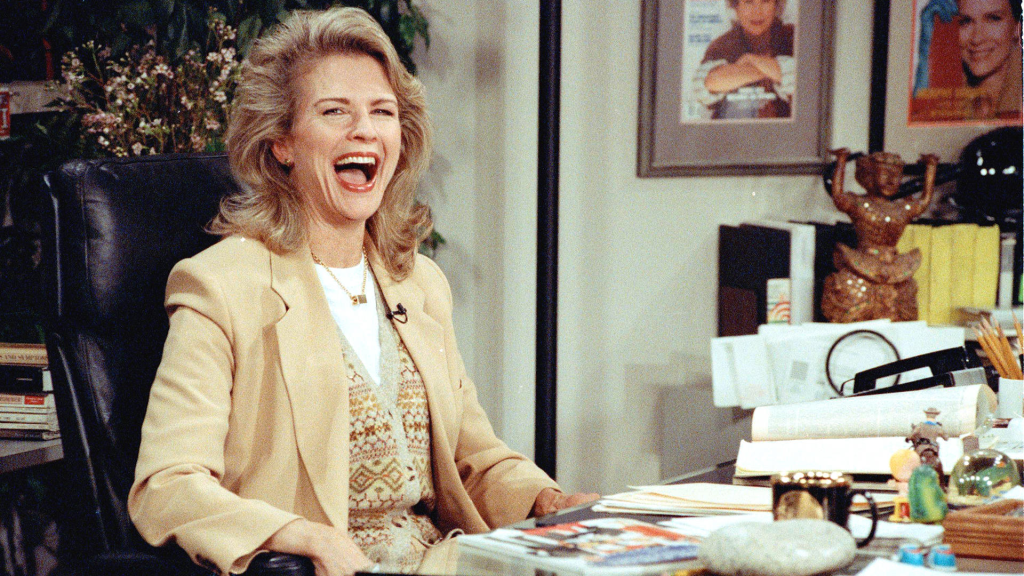
Murphy Brown is about an investigative journalist, Murphy Brown (Candice Bergman), who works for the news show FYI. I can’t imagine anyone other than Bergen in the role, but English had to fight hard for her because CBS president Kim LeMasters wanted Heather Locklear to have the role.
She is a recovering alcoholic and has a quick wit. Murphy strongly advocates for the integrity of journalism, the unjustness that can be found in politics, and feminist rights. One of her well-known frustrations is that she was so hard on secretaries, they never lasted long and we saw a long string of them come and go during the ten years. Murphy would have 93 of them during the show. One of the best secretary scenes was when Marcia Wallace who played Carol on The Bob Newhart Show worked for her. Murphy finally found a secretary that she loved and then at the end of the show, Bob Newhart appeared as Dr. Hartley and begged Carol to return to work, so she did. In one episode, Murphy finds out that there is actually a support group made up of her former secretaries.
Photo: tumpik.com
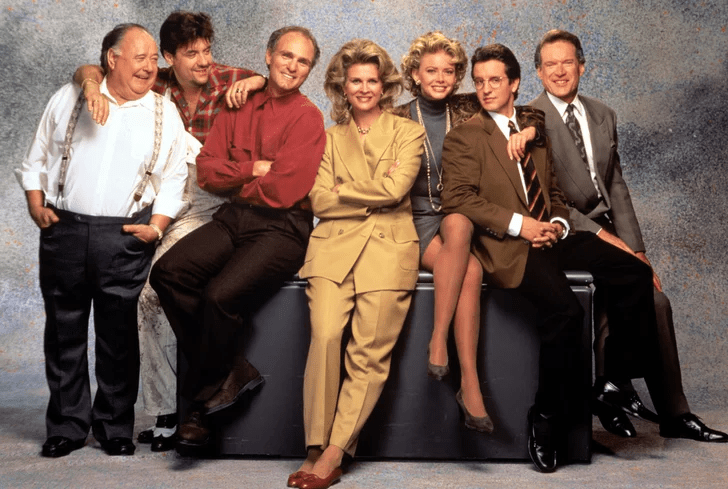
Rounding out the cast was Jim Dial (Charles Kimbrough) who tends to live in the past a bit, Frank Fontana (Joe Regalbuto), Murphy’s best friend, who calls her “Murph.” He is a great reporter but is also a bit insecure. There is a running gag that the producer make him wear a toupee which he hates. Miles Silverberg (Grant Shaud) is that producer; he’s a Harvard grad and overachiever and doesn’t bond with the cast right away. Corky Sherwood (Faith Ford) is a former Miss America. She and Murphy don’t hit it off immediately, but Murphy learns to respect her during the run of the show, and they also become very close. Murphy’s other “person” is Eldin Bernecky (Robert Pastorelli). Eldin is a house painter; he worked around her house for six seasons and he gave her lots of advice and becomes like a brother to her. Then there is Phil (Pat Corley) who owns Phil’s Bar where the crew congregates. The bar is said to be a Washington DC institution and has its share of political knowledge and secrets.
We also get to know (1) Avery Brown (Colleen Dewhurst), Murphy’s mom who is a museum curator. When Dewhurst died in 1991, the producers had Murphy’s mom pass away as well. Murphy named her son Avery. (2) Bill Brown (Darren McGavin), Murphy’s dad, a newspaper publisher. He married a yoga teacher younger than Murphy. Dewhurst won two Emmys for her appearances on this show, and McGavin was nominated in 1990. (3) Audrey Cohen (Jane Leeves) is Miles’ girlfriend for seasons 2-5, but their relationship ended when she took the role of Daphne on Frasier.
Photo: muckrack.com
In 1991, Murphy became pregnant. The father is her on-again, off-again ex-husband. He does not want to get tied down raising a baby, so Murphy becomes a single parent. One fun scene was Murphy’s baby shower which included several famous guests including Katie Couric, Joan Lunden, Paula Zahn, Mary Alice Williams, and Faith Daniels, all well-known news journalists. Baby Avery was played by Haley Joel Osment. Osment would grow up to play roles in more than 100 movies and television series including Forest Gump, The Sixth Sense, and Thunder Alley where he played Harry Turner.
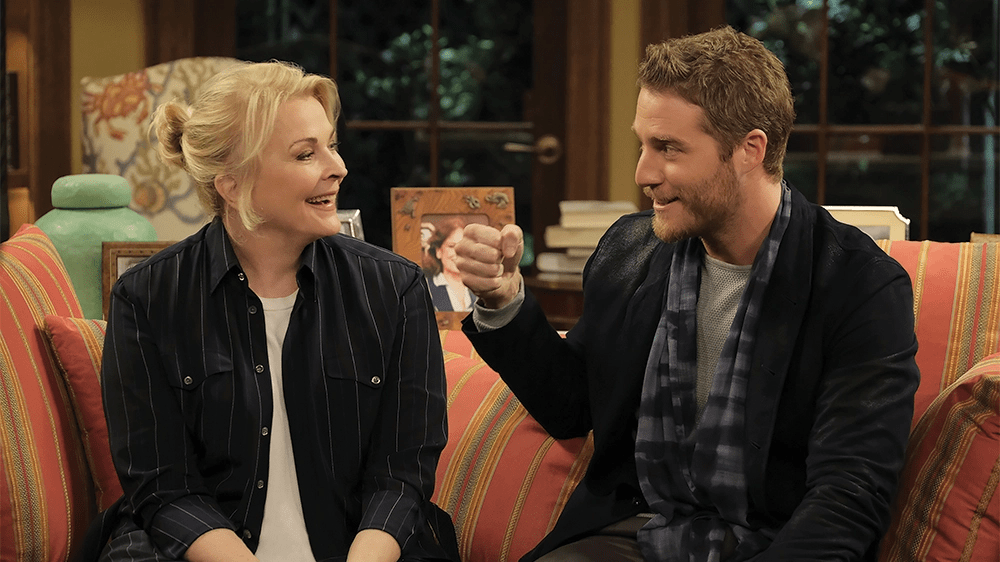
In the revival, Murphy comes out of retirement to go on the air for a show called “Murphy in the Morning.” She brings back her colleagues Frank and Corky and has Miles produce it. Jim meets them once in a while but chooses to stay in retirement. Pat Patel (Nik Dodani) is their social media manager. Murphy’s son Avery (Jake McDorman), who was a baby when the show ended, has his own news show that competes with his mom but the two of them are very close. Murphy is a die-hard liberal and her son is much more conservative. Phil’s bar is still the place to hang out, but it is now run by Phil’s sister Phyllis (Tyne Daly).
Mother and son don’t see eye to eye often. Photo: variety.com
The original show was loved by critics from the beginning, but it took longer to establish an audience. In the third season, it became a top-ten hit and was number three the next year. The show was nominated for 62 Emmys and won 18. After Bergen won five, she declined to be nominated any longer.
By the ninth season, ratings were declining. Shaud left the show and Lily Tomlin took over his role as executive producer Kay Carter-Shepley. For the last season, Murphy is diagnosed with breast cancer. Bergen was presented with an award from the American Cancer Society because there was a 30% increase in the number of women getting mammograms.
Photo: cbsnews.com
Unfortunately, you cannot buy the DVD set to watch. I read that the first season did not sell as well as expected, so they stopped releasing them. However, the music used in the series seems to be the primary reason. The show used a lot of Motown classics that resulted in astronomical licensing fees for every episode and costs were prohibitive for DVDs.
Although this was a well-written show, the then-current political references do date it a bit, but then again, that was part of the show’s mission, so it’s hard to have it both ways. While I appreciate this show, if I’m going to watch a series about a group of coworkers, I would probably gravitate to The Mary Tyler Moore Show or M*A*S*H but Murphy Brown would definitely be in my top ten work shows.
As we continue with our “Work It Out” blog series, today we are taking a long ride with Taxi. This show was created for ABC by James L. Brooks, Stan Daniels, David Davis, and Ed Weinberger and produced by John Charles Walters Co. The show was apparently inspired by an article in The New Yorker, “Night Shifting for the Hip Fleet” by Mark Jacobson in 1975. The article profiled several drivers who worked the night shift for a New York cab company. Taxi was in business from the Fall of 1978 to the Spring of 1982 on ABC and then drove over to NBC for a year.
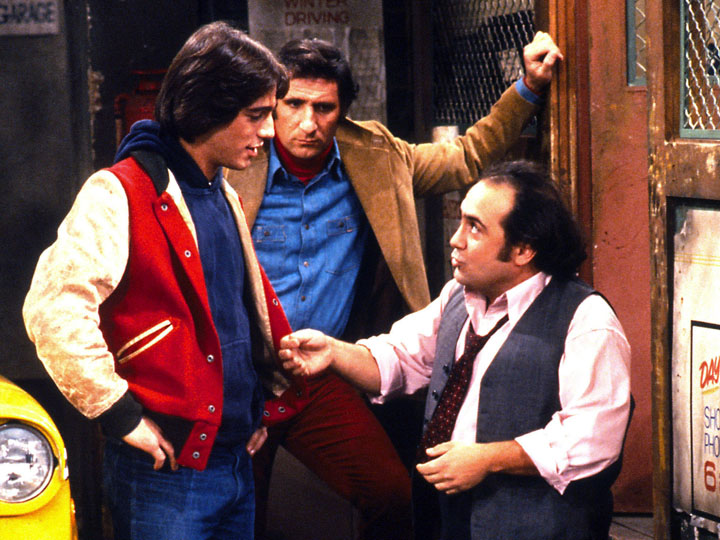
The show is set primarily at the Sunshine Cab Company in Manhattan. Louie De Palma (Danny DeVito) is the dispatcher that everyone loves to hate. Brooks said that when they went to visit a company as the night drivers were just coming back from their shifts, they saw a dispatcher taking a bribe from a driver for a clean cab. That gave them the idea of Louis. DeVito described Louie as someone who “made life miserable for everyone. The manifestation of what was going on inside of him came out in a mean-spirited way to those around him. Deep down he just wanted people to love him.”
Photo: vodkaster.com
Drivers included Alex Reiger (Judd Hirsch) who considers cab driver his profession as opposed to a temporary get-by job. Elaine Nardo (Marilu Henner) is a single mother who also works at an art gallery. In the first episode when Elaine is hired, Reiger introduces the crew by saying, “You see that guy over there? Now he’s an actor. The guy on the phone? He’s a prize fighter. This lady here: She’s a beautician. The guy behind her? He’s a writer. Me? I’m a cab driver. I’m the only cab driver in this place.”
Tony Banta (Tony Danza) a boxer, and Bobby Wheeler (Jeff Conaway) a struggling actor are other coworkers. We also get to know the Reverend Jim Ignatowski (Christopher Lloyd), an aging hippie who gets a job driving and Latka Gravas (Andy Kaufman), an immigrant mechanic. Latka was a weird character, and I have to say that I did not enjoy him on the show. Andy Kaufman invented the character for a comedy act. During the show, he met and married Simka (Carol Kane).
The person who probably had the easiest audition was Danza. He said that when he went to read for the show, he had broken his third metacarpal on his right hand and had a black eye from knocking out a guy in the ring in Brooklyn. He had never acted before and didn’t really know what he was doing.
Although the show was a sitcom, there were a lot of important issues tackled during the run of the show including addiction, parenthood, obesity, animal abuse, homosexuality, racism, gambling, grief, divorce, and sexual harassment, among others.
Ruth Gordon Photo: ebay.com
This show had more than its share of important guest stars. Ruth Gordon and Eileen Brennan both were nominated for Emmys for their guest appearances, with Gordon winning hers. Other stars who showed up included Marcia Wallace, Penny Marshall, Dr. Joyce Brothers, Edwin Newman, George Wendt, Ted Danson, Tom Selleck, Tom Hanks, and Bubba Smith.
Brooks wrote for The Simpsons and The Mary Tyler Moore Show. Daniels also wrote for The Mary Tyler MooreShow and was best known for The Tonight Show. Davis was one of the writers behind The Bob Newhart Show and Weinberger would go on to write for The Cosby Show. It was no surprise that this show was known for its amazing writing, and the series was nominated for 31 Emmys during its five seasons, it won 18 of them, most impressively it won Outstanding Comedy in 1979, 1980, and 1981. Kane, Hirsch, DeVito, and Lloyd and all won Emmys for acting. James Burrows won two for directing.
Taxi had one of the most-recognized theme songs from the 1980s. “Angela” was written and performed by Bob James.
I did not hear much about conflict on the set, although several performers, including Hirsch, indicated they did not care much for Kaufman. Kaufman had it written in his contract that he only work two days a week, so for most of the filming a guy with a sign around his neck that said “Andy” worked with the cast, so I don’t think there was necessarily a lot of bonding with him anyway.
Conaway was fired after 69 episodes. It was apparently well-known that he had a major addiction problem, and when one of the producers discovered him passed out when he was supposed to be filming, they wrote him out of the episode and then wrote him out of the show.
The cast seemed very happy and like a family. Henner said that they could always express an opinion about their character and thoughts on a scene. Brooks said Burrows was able to bridge the two worlds of writers and actors. He spent time with actors all day and then went to the writers’ room to talk to them and was the liason between the two. Henner agreed and said that Burrows was brilliant at adding memorable moments to a scene. She said in one episode she was losing her mind a bit and someone says the champagne is flat and the producer had her bend over and blow bubbles in the glass. She said it was brilliant.
Photo: rottentomatoes.com
DeVito also mentioned a scene that was special for him. One night when Louie was all alone in the garage, he took out the mic and sang a song. Then he said, “I always wanted to do that.” It was a very heart-warming moment and made Louie more interesting and gave him more depth.
Burrows said that most of the cast was young and they all bonded so well. Sometimes they went roller skating, to dances, and they even had a softball team. Rhea Perlman was on the show off and on and during one of their lunch breaks, she and DeVito got married.
Henner talked about their weekly parties. She said everyone at Paramount wanted to hang out with them including the cast of Happy Days, Mork & Mindy, Laverne & Shirley, and Bosom Buddies. She said that John Travolta and Frances Ford Coppola stopped by. John Belushi hung out with DeVito a lot and was there for one of their get-togethers and he died the next day.
Photo: tvguide.com
Hirsch said the group wanted something to do after the show because they didn’t want to go home; they wanted to hang out together more than anything else.
Brooks probably summed up the show the most eloquently. He said that “there’s a lot of things that take a glow in retrospect. The great thing about Taxi was that there wasn’t a moment on the show they didn’t appreciate how lucky there were to have it. That was the show’s energy. I’ve never seen anything like it. . . People show up at the right time and everyone’s lucky enough to have each other at a certain point. It becomes a beautiful team sport.”
Isn’t that the best tribute anyone could give a show? I’m glad they all had an appreciation for it, and I’m glad they included us in their family.
This month is our blog series is “Potpourri Month” and we have a sub-theme every day; today’s is Propourri” for the pro who handles props. When you think of your favorite shows, there are props included in those great memories: the couch at Central Perk, Fonzie’s leather jacket, or the cereal boxes on Seinfeld’s refrigerator. First let’s learn a little about the Props Master and then we’ll take a look at some of our most-loved props.
The Fonz’s jacket Photo: ebay.com
The Prop Master heads up the Props Department. They are charged with acquiring, organizing, and safely handling the props for the shows.
Each episode has a list of props that will be needed for the show. The props master reviews the scripts and has meetings with various department heads to ensure everything that is needed is on the list.
Sometimes the props master does research to see what would be appropriate for a specific era or place. Cars were quite different in the fifties than the eighties. A grocery store does not look the same in China as it does in Atlanta.
During filming, the props master has to keep track of props and make sure everything is put back in its place.
So, what are some of the props that have become synonymous with our favorite series? Let’s put together a prop list that includes props from our favorite shows.
Living rooms have a lot of cool furniture. When you think of comfortable places to sit, you have to think of Modern Family’s couch, Archie’s chair from All in the Family, Chandler and Joey’s Barcaloungers from Friends, and Martin Crane’s duct-taped, worn chair on Frasier.
The Bunkers’ Chairs Photo: comparativemediastudies.com
Many of the Modern Family characters are interviewed on their couch which sits in front of their stairs to the second floor right as you enter the front door. The walls are Benjamin Moore’s Labrador Blue. The couch itself is from Sofu-U-Love and the primary-colored striped pillows are from Pottery Barn just in case you want an interview sofa of your own.
Archie Bunker’s chair is from the 1940s. It’s covered in an orange and yellow woven fabric. The props master purchased the chair from a thrift store in Southern California. Whenever anyone but Archie sits in the chair, it is made obvious to them that they need to find another seat.
The barcaloungers Joey and Chandler use were originally made in Buffalo New York, named after the company that made them. They have moving parts to allow for footrests and reclining. Joey’s Barcalounger is brown leather and he calls it “Rosita.”
Martin Crane’s chair is in the same color family as Archie Bunker’s. The prop department made it, so it’s a one-of-a-kind piece. It’s striped and quite unattractive looking especially with Frasier’s expensive tastes echoing in the rest of the room, but Martin loves it and Frasier loves Martin so it stays. In the first episode, a guy carries in the chair when Martin and his dog Eddie move in with Frasier. On the last episode, the same guy carries the chair out when Martin gets married and moves out. The chair is really almost a character during the run of the series.
Jeannie in her bottle Photo: blazenfluff.com
There are a lot of fun accessories from our favorite living rooms. Just a couple include Jeanne’s bottle from I Dream of Jeanne, the “M” that was on the wall in Mary Richard’s apartment on The Mary Tyler Moore Show, and the Chihuly sculpture from Frasier. Who can remember The Dick Van Dyke Show without thinking about the ottoman Rob Petrie might trip over?
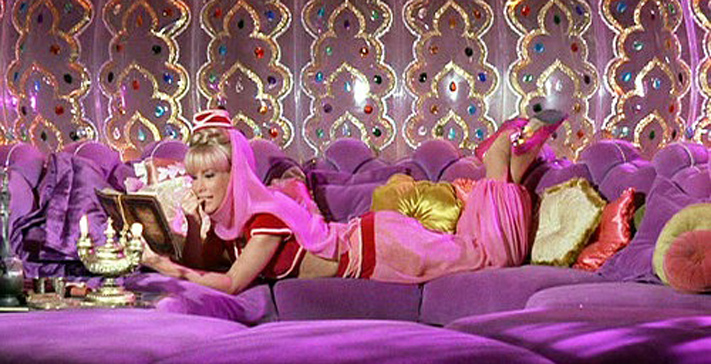
Jeannie uses her Arabian glass bottle to sleep in and to hide in when someone other than Tony and Roger is in the house. The bottle has a long, purple couch with her blankets and pillows. She also has an Arabian candle, a photo of Tony, a mirror, and her book about genies.
Mary’s “M” stood for so much more than her first name. We knew that an independent, smart woman lived in that apartment. Everyone wanted to grow up and be able to put their own initial on the wall just like the brass one Mary had. When she moved to her newer, more modern apartment, the M went with her.
Martin’s chair on Frasier Photo: jacksonville.com
In contrast to Martin’s puke-colored chair on Fraiser, Frasier had so many expensive items scattered around his home. One of them was Dale Chiuly’s Macchia. This blown-glass vase was green and brown. It was worth $30,000 at the time, and the props master locked it up after filming each episode.
We all recall the opening of The Dick Van Dyke Show. Will he or won’t he? I think most of us remember him falling over the ottoman, but do you know sometimes he walked around it? Reiner wanted a clever opening for the show and while talking with John Rich, the director, they decide Rob will fall. But then Reiner suggested a variation, so they filmed him not tripping. No one ever knew from episode to episode if he would fall or not.
Burns and Allen have their closet adjoining the living room. While Fibber McGee and Molly have a ton of items in their closet, whenever Gracie opens hers, we see a collection of hats that men have left when they are in a hurry to get out of the Burns house after dealing with Gracie’s logic.
When I think of some of my favorite kitchen items, I think about Jerry Seinfeld’s refrigerator with its revolving display of cereals. I know if I visited My Three Sons, I would get to sit around the kitchen table where all the action happens on the show. And Gracie would definitely take me into her kitchen to have some coffee from the pot she almost always kept full for her and Blanche to talk over.
Jerry always has cereal in his cupboard. Some sources say he had up to seventeen at a time. Knowing that cereal doesn’t last all that long, he ate a lot of cereal. I’m hoping Fruit Loops was one of those choices.
My Three Sons’ table Photo: pinterest.com
While as viewers we love that the kitchen was the heart of the Douglas home. From the first episode when Steve got Chip to help him with the dishes to talk to him about “love,” to the grown boys gulping down orange juice at the table to leave early for their busy day, we spent a lot of time in that room. Uncle Charlie’s bedroom was just off the area, so he could come and talk with someone getting warm milk in the middle of the night. The actors might not have had the same warm, fuzzy feelings. Barry Livingston discussed their filming schedule because Fred MacMurray did all his filming in two short groups of days. He said sometimes, “you would sit at the kitchen table all day long and they would do close-ups. You would be sitting in the same place at the same table and you would do a close-up from 12-15 different episodes. All you would do was change your shirt because they couldn’t see anything below.”
Burns and Allen Photo: pinterest.com
Gracie and Blanche always made time to have coffee to talk over things. Whether it was 7 am, 1 pm, or 7 pm, the coffee pot was always on. Burns and Allen also did coffee ads for Maxwell House, so I am assuming that it was Maxwell House the friends drank daily on Burns and Allen.
I know if I explained every item to you in detail, we would still be on this blog next week, so I’ll just some up the rest of the categories.
Bedrooms: Beds are definitely the focal point. We have the Petries’ twin beds that are not convenient for a married couple. Lisa and Oliver Douglas had a very large bed on Green Acres; unfortunately, it was open to the outside where anyone could come in or out. Oscar Madison had a bed on The Odd Couple, but no one knew it because his room was so messy. We definitely remember Bob and Emily Hartley’s bed because not only was it important in The Bob Newhart Show but it was in the finale of Newhart. It is also hard not to recall Alex Keaton’s Ronald Regan poster that took up one of his bedroom walls on Family Ties.
Batman with bust and phone Photo: batnews.com
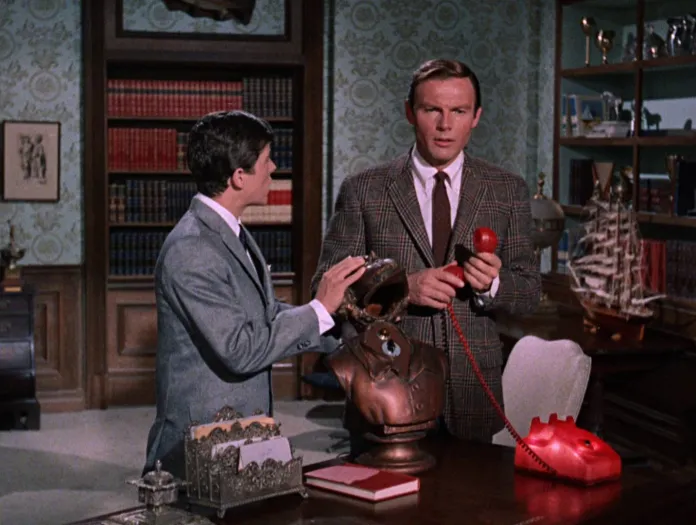
Libraries and Dens. Three specific rooms come to mind. On Batman, we had the Shakespeare bust that hid the bat phone in their library. We had George Burn’s television on Burns and Allen where he could watch was going on during the show without the other characters knowing he was listening in. Finally, we think back to The Brady Bunch where the six kids fought over what to watch on television and did their homework after school.
Garages: The Jetsons they kept their flying car in the garage, Last Man Standing where Tim kept his antique car, and The Adventures of Ozzie and Harriet, where they kept everything but the car. Ozzie was always out there looking for something.
Workplace: When characters go to work, we get a whole new scene full of fun props. Who would visit Dunder Mifflin without stopping by to see Pam at the front reception desk? Rob Petrie had a couch where the writers worked their magic. Central Perk featured the orange couch everyone remembers from Friends. The sofa was so beloved that replicas of it went on a world tour in 2019 for the shows’s 25th anniversary. The actual sofa used on the set was sold at auction in 2011 and it went for about $5000. Of course, Cheers would not have been the same without the stools for Norm and Cliff. Get Smart had so many fun props, it’s hard to choose; the Cone of Silence was certainly fun for everyone who could hear what was said inside by characters who thought they were speaking where no one could hear them. And Hogan’s Heroes also had a lot of fun items including the coffee pot that could relay anything said in Colonel Klink’s office.
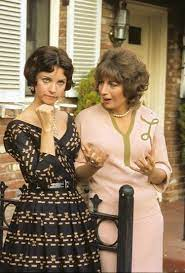
Laverne Photo: pinterest.com
Clothing: While I love almost everything they wore on Burns and Allen, The Brady Bunch, and The Partridge Family, there are a few other pieces that really stand out. Who would not want to wear Fonzie’s leather jacket? Columbo’s coat might be a bit rumpled but it had been around to solve a lot of mysteries. Sally on McMillan and Wife had the San Francisco jersey that she wore to bed. And talk about special clothing, Laverne’s wardrobe with her iconic “L” on everything was a big part of Laverne and Shirley.
Unusual Items: Last, but definitely not least, we have those special objects that belong to specific characters. When you think about Radar on M*A*S*H, don’t you also think about his teddy bear? Barney Fife would never leave the house without his silver bullet. Half the plots would disappear if Gilligan’s Island did not have a radio for the Professor to try to repair and hear about the world outside the island. Buffy’s Mrs. Beasley on Family Affair was very popular; the doll was sold for decades after the show went off the air. Kojak’s lollipops had to be on the list. Also, if you are talking about “things,” how could we not include the “Thing” from The Addams Family?
I hope you enjoyed getting to know something about some of our favorite furniture and recalling special props from well-loved shows. If you want to see a couple of these items, visit The Smithsonian Museum in Washington D.C. where you can see Archie’s chair and Fonzie’s leather jacket. I’d love to hear your favorites.
This week we are finishing up our “Supportive Women” blog series. If you watched a lot of television in the sixties and seventies, you will remember today’s blog star very well: Morgan Fairchild.
Photo: dallasfandom.com
Morgan Fairchild was born Patsy Ann McClenny in 1950 in Dallas, Texas. In grade school, she was too shy to read her book report in class, so her mother, an English teacher, signed her up for drama lessons. At age ten, she began performing in dinner theater and stock productions in Dallas which led to several local commercials.
In 1967 she married Jack Calmes; they would divorce in 1973.
In 1967, a young Morgan was hired as a double for Faye Dunaway in Bonnie and Clyde. At age 20 she was cast in her first movie where we could see her face, A Bullet for a Pretty Boy. She would receive roles for another 35 big-screen features during her career.
However, most of her work was on the small screen. Her first role was Jennifer Pace on Search for Tomorrow. She stayed with that show for four years but she would come back to soap operas on and off throughout her acting time and could be seen on The Bold and The Beautiful, Days of Our Lives, General Hospital, and most recently as Sydney Chase in The City in 1996. Most of her roles were the stereotype of an elegant and wealthy woman who will do whatever it takes to get what she wants.
In between work on soap operas, Morgan showed up on many of the most popular shows as a guest star or regular cast member. In 1976 she was on Kojak. After her time on Search for Tomorrow, during the 1970s she appeared on other dramas including Police Woman, Barnaby Jones, and Dallas and on sitcoms like The Bob Newhart Show, Happy Days, and Morkand Mindy.
Flamingo Road Photo: nbcwikifandom.com
During the 1980s she did make a few guest appearances on The Love Boat, Simon and Simon, Magnum PI, and Hotel. Morgan received an Emmy nomination for her appearance on Murphy Brown in 1989. However, it was during this decade that Fairchild was a regular cast member on three different shows: Flamingo Road, Paper Dolls, and Falcon Crest (attorney Jordan Roberts), all night-time soap operas.
Flamingo Road was based on a novel written in 1949. It features the small town of Truro, Florida. The wealthy citizens live on Flamingo Road in their mansions, while the lower classes do what they have to do to make that street their address. Morgan played a woman with one of the longest names on television: Constance Weldon Semple Carlyle. After two years, the show was done.
Photo: IthinkthereforeIreview.com
Paper Dolls was about the modeling world. Fairchild played Racine, an agent, and the show is about the jobs that her models take on including a perfume company that uses her models exclusively. The series only lasted for thirteen episodes.
Morgan played Jordan Roberts, an attorney, on Falcon Crest. This long-running drama from 1981-90 featured the Gioberti family who operates the Falcon Crest Winery in California.
In the nineties, she appeared on a variety of shows including Roseanne, Empty Nest, Murder She Wrote, Diagnosis Murder, Cybill, and Home Improvement.
Her career continued during the 2000s where you could see her on Dharmaand Greg and Hot in Cleveland, as well as five appearances on Friends as Chandler Bing’s mother Nora. She also had another series, Fashion House, in 2006 as Sophia Blakely. The concept of the show was another fashion-themed one where a ruthless executive played by Bo Derek defends her company against a hostile takeover.
Friends Photo:netflixlife.com
With so many movie channels, we forget today that for a few decades we could not watch movies on television. The networks came up with a solution: made-for-tv movies, and Morgan was a queen of the genre with thirty movies and six miniseries.
Morgan has continued to stay busy. She has two finished productions listed on imdb that have not been released yet.
Fairchild has used her platform as a celebrity to advocate for AIDS research, the pro-choice movement, and many environmental issues. She collects movie memorabilia, especially Marilyn Monroe items, and antique clothing. She seems to have had a long-lasting career. It would have been fun to see her star in a sitcom instead of just playing ruthless women who just care about fame and money.





















 thewritelife61