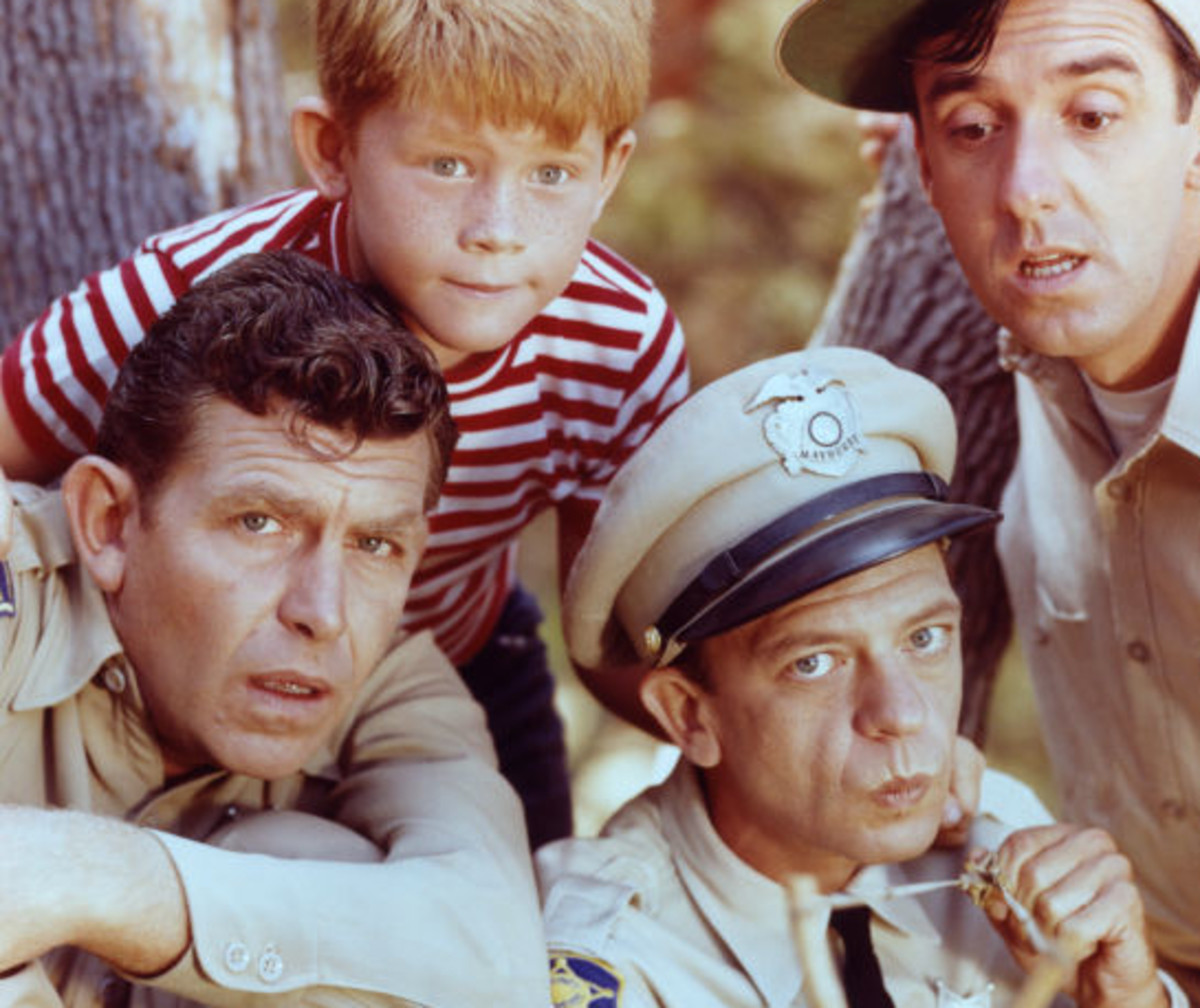
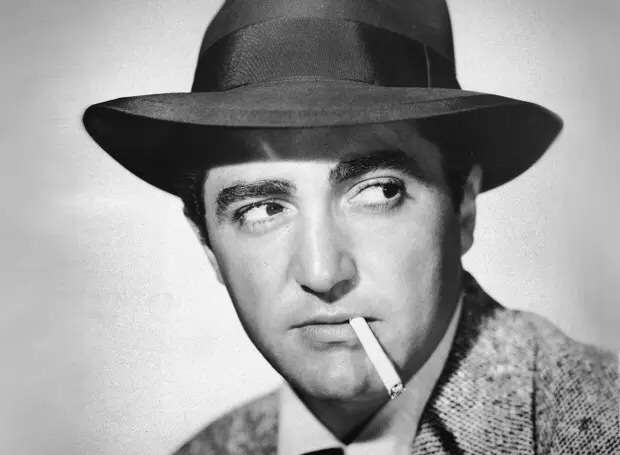
Don Adams: Always Smart

This month our blog series is titled “All About The Bill Dana Show.” The first week in March we learned about the show and now we have been spending time with some of the cast. We end our series with Don Adams.

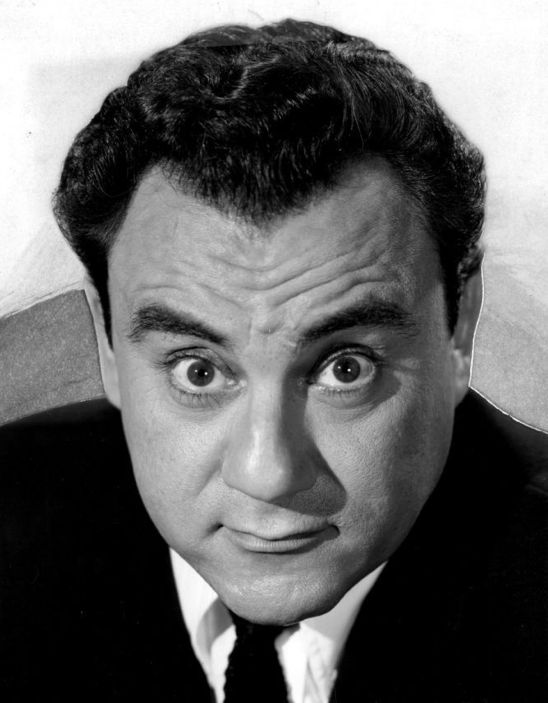
Adams was born Donald James Yarmy in Manhattan in 1923. Don was a blend of cultures, Hungarian Jewish on his dad’s side and Irish-American on his mom’s. Don was raised Catholic while his brother Dick was raised Jewish. I could not find out what their sister decided to do. She later became a writer under the name Gloria Burton and wrote a script for Get Smart. His brother was also an actor. Dick has about 50 acting credits and appeared in many of the most popular sitcoms during the sixties and seventies, including three appearances on Get Smart.

Adams dropped out of high school and went to work as a theater usher. In 1941 he joined the US Marine Corp. At one point he was injured during a Japanese assault on Tulagi. He was the only survivor from his platoon. While recovering, he came down with blackwater fever, a side effect from malaria and was evacuated to New Zealand. He was not expected to recover, but when he did, he was sent back to the US as a Marine drill instructor.

After his discharge, he moved to Florida to work as a comedian. He refused to do material he considered “blue” and was fired.

In 1947 he married Adelaide Efantis, and her stage name was Adelaide Adams. Don decided to take the name Adams as well for his stage name. He worked as a commercial artist and cashier to support their family.

In 1954, Don was the winner of Arthur Godfrey’s Talent Scouts with a comedy act written by Bill Dana. He began making appearances on The Steve Allen Show, where Dana was a writer. In 1961 he became a regular on the Perry Como Show.

About this time, Don and Adelaide divorced, and Adams married Dorothy Bracken, another actress. They split up in 1977 when he married Judy Luciano, also an actress but that marriage also ended in divorce. (I could only find one credit for his last two wives; Bracken was on Get Smart, while Luciano appeared on The Love Boat.)

While discussing his marriages, Don said “I’m no longer independently wealthy. I guess it’s the result of too many wives, too many kids and too much alimony. I’ve been paying alimony since I was 14 and child support since 15. That’s a joke, but not by much. . . I like getting married, but I don’t like being married.”

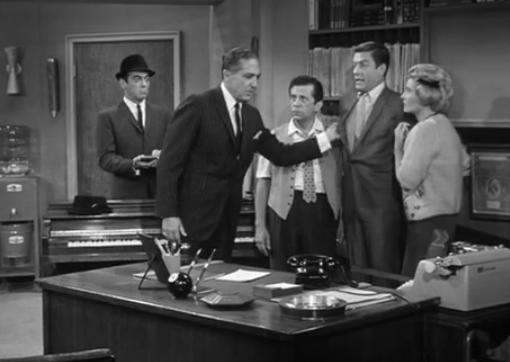
In 1963 Adams was offered the role of Byron Glick, hotel detective on The Bill Dana Show. As we’ve discussed this month, the show was on the air for a season and a half. While working on the show, Don was also the voice of cartoon Tennessee Tuxedo which he continued doing until 1973.

During those years he also made an appearance on The Danny Thomas Show and on Pat Paulsen’s Comedy Hour.

In 1965 he was offered the role of Maxwell Smart in a new spy satire, Get Smart.

The sixties saw westerns being overtaken by spy shows such as The Man From U.N.C.L.E., I Spy, The Pink Panther, and The Avengers. Mel Brooks and Buck Henry decided to try their hand at writing a campy sitcom and Get Smart was born.

The role of Smart was created for Tom Poston, but ABC turned it down, and NBC said yes. They had Adams under contract, so he got the part. Rounding out the cast was Edward Platt as the Chief and Barbara Feldon as Agent 99.

Smart and 99 had great chemistry and married in a later season. Feldon and Adams remained life-long friends.

One of the most memorable parts of the show was all the catch phrases Adams created on the show including “Sorry about that Chief,” “Would you believe,” and “Missed it by that much.”

In addition to acting, Adams worked as a producer and director on the show. He was nominated for an Emmy from 1966-1969. He won three of those, losing to William Windom for the little-remembered one-season show, My World and Welcome to It. Lloyd Haynes from Room 222 and Bill Cosby for The Bill Cosby Show were also nominated that year.

The show moved to CBS for the final season, but the ratings never recovered, and the show was canceled after that year.

Like so many of our successful actors with unusual characters, Adams suffered from typecasting after the show ended. He did become part of two additional sitcom casts during his career.

In 1971 he was on The Partners. According to imdb.com, the plot is that “Lennie Crooke and George Robinson are inept detectives teamed up to solve crimes. Captain Andrews is their exasperated boss, Sgt. Higgenbottom is a smarmy co-worker, and Freddy confesses to most of the neighborhood crimes.” Adams played Crooke, but the show only produced 20 episodes.

In 1985, Adams tried a sitcom again on Check it Out. This one was about a grocery store and its employees. Adams played Howard Bannister. The show lasted three seasons, ending in 1988. The show was not very popular in the US but was a hit in Canada.

In between those two shows, Adams appeared in a handful of series including Fantasy Island, The Fall Guy, The Love Boat, Empty Nest, and Nick Freno: Licensed Teacher. He made most of his salary appearing in nightclubs. He also had his Smart character resurrected in several big screen films and television series.

Because of the typecasting, he returned to animation and found a lot of success, especially with Inspector Gadget which he voiced from 1983-1999.

He also tried his hand at a game show. Called Don Adams’ Screen Test, it had an interesting concept. The show was filmed in two 15-minute parts; Adams would randomly select an audience member to recreate a scene from a Hollywood movie such as From Here to Eternity with Adams as director. It ended after 26 episodes.

In his spare time, it sounds like he visited the racetracks, betting on horses. He also spent a night a week at the Playboy Mansion playing cards with Caan and Rickles. He loved history and studied Abraham Lincoln and Adolf Hitler in depth. He also wrote poetry and painted.

Don passed away in 2005 from a lung infection and lymphoma. The eulogists at his funeral included James Caan, Bill Dana, Barbara Feldon, and Don Rickles.

It’s hard to know what to make of Adams’ career. Obviously, he was hard working, an excellent Marine, and a man of many interests. He was fired for not performing blue material but then put horse racing and gambling above the needs of his family, according to several of his friends. He created the amazing role of Maxwell Smart, one of the best characters in television history, but that feat kept him from achieving other great roles in the following decades due to typecasting. It sounds like Check It Out was very popular in Canada, so maybe if he had been given a few chances to create characters different from Smart in a couple other sitcoms, it would have helped.

I feel bad for those actors who are so successful in the characters they help create that they are barred from future jobs, but then again, those characters are some of the best actors in television: George Reeves as Superman, Ray Walston as My Favorite Martian, Henry Winkler from Happy Days, Frank Cady from Green Acres, and Jack Klugman from The Odd Couple. I guess you trade being warmly remembered for fewer quality roles.

Apart from Get Smart, I knew little about Adams before writing this blog, so it was fun to get to know him a bit.

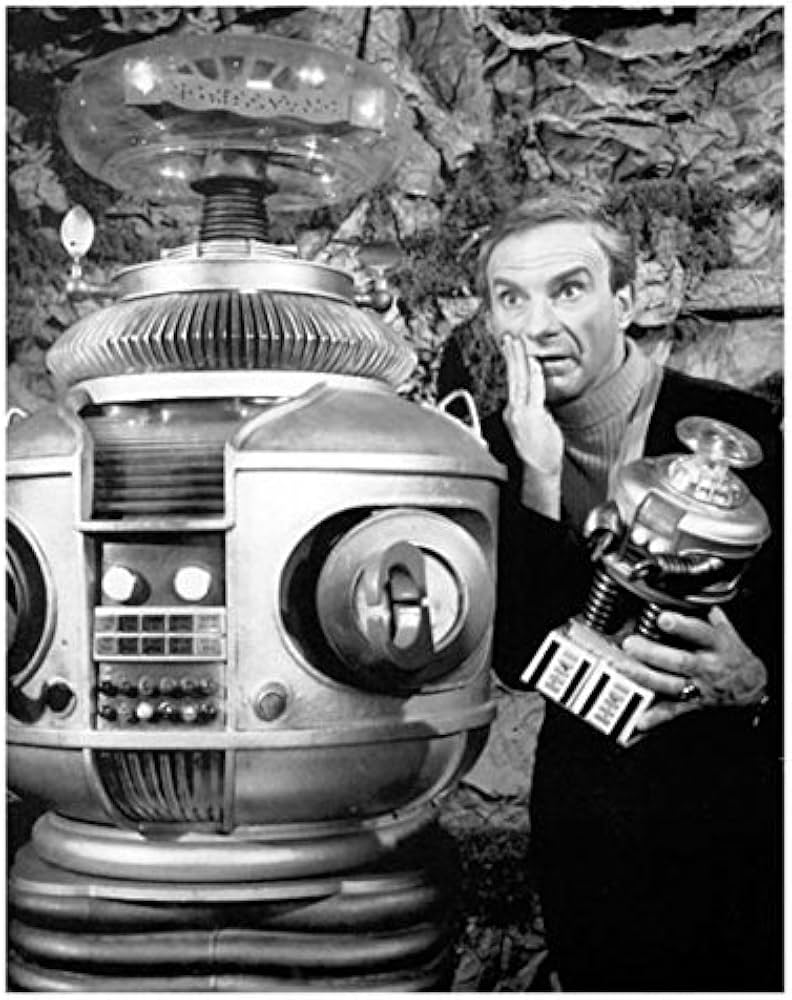
Jonathan Harris: Oh the Pain

This month our blog series is “All About The Bill Dana Show,” and we are learning about the careers of some of the cast members. Last week we looked at the life of Maggie Peterson, and today we are getting to know Jonathan Harris.

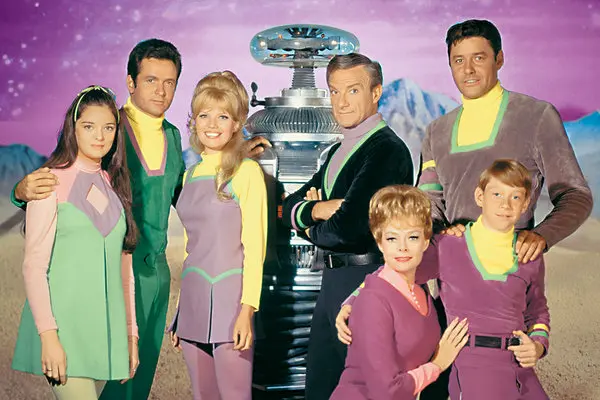
📷LostinSpaceWikiFandom.com

Harris was born Jonathan Daniel Charasuchin in the Bronx in 1914. His father worked in Manhattan’s garment district. His family often took in borders to make ends meet, and when they did, the border got Jonathan’s room, and he slept on a couple of dining room chairs.

By age 12, Harris was working at a pharmacy as a stockboy. Although money might have been short, Harris’s family’s love of music and theater was not. As a family they listened to opera in the dining room. Whenever they had some extra cash, they would take in a Broadway play. Harris was interested in archeology, poetry, and Shakespeare. He disliked his Bronx accent and taught himself to develop a British one.

Harris was able to graduate at age 16 from James Monroe High School. His pharmacy job paid off when he graduated from Fordham University with a pharmacology degree in 1936. Before entering college, Jonathan took the name “Harris” in place of his birth name.

In 1938 Harris married his high school sweetheart, Gertrude Bregman. They were married until his death.

While working in several pharmacies, Harris also worked on his acting skills. He created a phony resume which he used to land a spot in a local acting company. In 1942 he played a Polish officer in the Broadway production, “The Heart of a City.” He was persistent. He said that he went to Mr. Miller’s office to audition for a part in the play for two weeks, and everyday Mr. Miller’s secretary sent him away. Finally, she let him in, and Mr. Miller gave him his first part. Then he lied and said he could do a Polish accent. He then went to the Polish Consulate to listen to how they talked. So, despite a fake resume, being turned away for weeks, and then lying about an accent, he was a success in the play.

📷amazon.com

In 1949, Harris made his television debut in The Chevrolet Tele-Theatre. Throughout the fifties he would continue to appear in dramatic playhouse series.

In 1959 he had a recurring role in Zorro as Don Carlos Fernandez as well as an appearance on Father Knows Best.

The sixties brought him roles in several well-known series including The Twilight Zone, Bonanza, and The Adventures of Ozzie and Harriet.

In 1963 he was offered the role of Mr. Phillips, the hotel manager on The Bill Dana Show. I won’t elaborate on this series, but if you missed the first blog in March, you can read about this show which was on the air for a season and a half.

Harris did an interview with the Television Academy. He said that when he read the script for The Bill Dana Show, he decided he had to come up with some other characteristics for Mr. Phillips. He made him devoid of humor. But he said he was a different man with his wife on the show, played by Amzie Strickland. Harris said Bill Dana was wonderful to work with. He also said that the writing was so good on that show that he never had to re-write anything. However, if something felt off, he would ask Sheldon Leonard about changing it, and Leonard was always open minded about revisions.

Harris continued to appear on dramatic shows while waiting for his next role.

📷thenewyorktimes.com

In 1965 Lost in Space was put on the fall schedule. Harris played Dr. Zachary Smith. Neither his role nor the Robot were in the pilot of the series, but they were both brought in before the show began.

The show was a big hit with viewers. Harris felt his character, who was not trusted by the family, needed a bit of comedy, so he began to adlib his dialogue. Irwin Allen, creator of the show, approved the changes and allowed him to be considered a writer. Harris said he was a good re-writer, but he was never a writer.

Bill Mumy, who played the son on the show and interacted with Smith quite a bit said that Harris “truly, truly singlehandedly created the character of Dr. Zachary Smith that we know—this man we love to hate, coward who would cower behind the little boy, ‘Oh the pain! Save me, William! That’s all him.”

The show was still high in the ratings during its third season, but the writers were running out of ideas, and the show was canceled after 83 episodes.

📷imdb.com

In the seventies, Harris joined the casts of two Saturday morning series, Space Academy and Uncle Croc’s Block. Uncle Croc’s Block was a very weird show in my memory. Even though it was on Saturday mornings, he parodied kids’ shows. Uncle Croc, played by Charles Nelson Reilly, butts heads with his program director Basil Bitterbottom, Harris’s role; Phyllis Diller played Witchy Goo to round out the cast. Uncle Croc has a sidekick Rabbit Ears and introduced the cartoons.

He also continued to appear on other series, and you can spot him in The Ghost and Mrs. Muir, Land of the Giants, Get Smart, Bewitched, McMillan and Wife, Love American Style, and Vega$.

After the mid-seventies, most of his work was in the animation field.

He also became a drama coach, and Chuck Norris was one of his students.

📷billmumy.com

In 1990, the cast of Lost in Space reunited for the 25th anniversary. More than 30,000 fans attended the event.

Harris also spent time on his hobbies, which were many. He loved gourmet cooking, watching movies, reading, traveling, painting, magic, playing piano, gardening, dancing, knitting, and spending time with this family. He also kept his interest in listening to opera that he cultivated as a child.

He passed away in 2007 from a blood clot that traveled to his heart.

Harris was a talented actor. I’m not sure why he was never offered another sitcom or a chance to play a different type of character. I’m glad he found a home in animation, but I wonder if he regretted leaving Broadway for television. It was fun to learn more about this man and his career.

Maggie Peterson: A Musical Darling

This month it’s all about The Bill Dana Show. After learning more about the show, we are taking a look at some of the cast members who were part of the series. Today we meet Maggie Peterson.

📷tvinsider.com

Maggie Peterson was born in Greeley, Colorado in 1941. Her father was a doctor, and her mom was a stay-at-home mom. She grew up in a musical family and always claimed some of her earliest memories included music. Peterson joined her brother Jim and two friends in the Ja-Da Quartet, and they would ride around in the back of a pickup truck singing.

When Dick Linke heard Peterson singing at a Capital Records convention in 1954, he encouraged her to come to New York after graduating, so in 1958 she did, and she brought the quartet with her. They were on the Perry Como and Pat Boone shows. In 1959 they released their only album, “It’s the Most Happy Sound.” Not longer after it came out, the band broke up.

For several years after that, Peterson joined The Ernie Mariani Trio (later known as Margaret Ann and Ernie Mariani Trio). They played in Las Vega, Lake Tahoe, and Reno. Bob Sweeny and Aaron Ruben, the director and producer for The Andy Griffith Show, spotted here there.

📷tagsrwc.com Charlene Darling

Originally, Peterson was brought in to read for the role of Ellie Walker, a love interest for Andy, but Elinor Donahue received that role. Then Maggie was offered the role of Charlene Darling.

Like her birth family, The Darlings were a musical group; however, Roscoe Darling and Maggie’s father were nothing alike. Because she had recurring roles on Andy Griffith, she also was cast on The Bill Dana Show and Gomer Pyle USMC during the same years.

Maggie kept busy in 1969, appearing in an episode of The Queen and I and in three big-screen movies. In 1970, she showed up on Love American Style, Green Acres, and Mayberry RFD. The seventies found her on an episode of Karen and The Odd Couple. During the eighties, she only did a few made-for-tv movies, including Return to Mayberry. Her last acting credit was in The Magical World of Disney in 1987.

In 1968, Peterson opened for Griffith at Lake Tahoe. While there, she met jazz musician Ronald Bernard Mancuso (Gus), and he and Maggie married ten years later. Gus was a well-known musician. He won Playboy Jazz Poll New Artist of the Year in the late fifties. He toured the world with Sarah Vaughn and Billie Eckstine. He also backed a lot of performers in Las Vegas.

📷facebook

The couple lived in Los Angeles for a bit before moving to Las Vegas where Maggie became a film and television location scout. At that time, Gus was working with Quincy Jones. Eventually the couple landed back in Las Vegas and Gus taught at the University of Nevada there.

Gus passed away from Alzheimers in 2021, and Maggie died in her sleep a year after her husband.

I wonder why Maggie switched from acting to location scout. I could not find that out. It seems like music was her real love and she got into acting to help pay bills. I’m glad music came back as a big part of her life with Gus. She seemed to have a fun career. It was interesting to learn a bit more about her since I only knew her as Charlene Darling before this blog.

Bill Dana: Actor? Script Writer? Author? Talent Agent? Yep

This month we are exploring The Bill Dana Show for our blog series. Last week we talked a bit about the show itself, and for the rest of the weeks, we are looking at some of the other cast members’ careers. Today we begin with Bill Dana himself.

📷findagrave.com

Dana was born William Szathmary in Quincy, Massachusetts in 1924. He was the youngest of six children. His older brother Arthur was fluent in several languages and inspired Bill to learn different accents.

Dana served with the US Army during WWII as a machine gunner and was awarded the Bronze Star Medal.

After the war, Bill enrolled at Emerson College. After graduation, he was hired as a page at NBC’s Studio 6B, or 30 Rock.  He was also trying to break into comedy performing around New York. During the fifties he appeared on The Imogene Coca Show. He also did some writing and producing for The Spike Jones Show.

He met Don Adams and began writing routines for him in the fifties. He and Don would be part of each other’s lives for a bit. Don would be one of the cast members on The Bill Dana Show. Dana would appear on Adams’ show Get Smart, and Dana’s older brother Irving was the composer of the Get Smart theme song. Bill would also cowrite the script for the Get Smart film The Nude Bomb.

📷thenewyorktimes.com

In the late fifties, Steve Allen hired Dana as a writer. Bill created a character, Jose Jimenez, for the “Man in the Street” segments of Allen’s show. Soon Jose became his alter ego. He made appearances as Jose on The Red Skelton Show, The Spike Jones Show, The Danny Thomas Show, and The Ed Sullivan Show. He even had a comedy album featuring the character.

Dana told a story on Ed Sullivan’s show that some people truly thought he was Jose Jimenez. One lady who met him out and about asked if his birth name was Jose Jimenez and he told her, “No, it’s Bill Szathmary.” She said “Wow, no wonder you changed it to Jimenez.”

In 1961, Dana began a recurring role on The Danny Thomas Show. He played Jimenez as an elevator operator. People responded so well that Danny Thomas and Leonard Sheldon spun off the character, now a bellhop at a luxury New York hotel, and The Bill Dana Show was created. In addition to Adams, Jonathan Harrison was part of the cast and Maggie Peterson joined them in season two. The show was on the air for one and a half seasons.

As we discussed last week, some people saw Jimenez as a hard-working immigrant who noticed some of the crazy things Americans did, and others saw him as a stereotyped Latino caricature. The pre-show Jimenez fit the second description better and the show Jimenez leaned more toward the first portrayal. However, as the character developed, viewers were not flocking to the show. It was also up against Lassie which at the time was a huge family show on Sunday nights.

📷wikipedia.com

The last time Jimenez was on the screen as a character was a 1966 episode of Batman in a cameo on the famous wall. Later Dana apologized for his caricature of Jimenez and became a bit of an activist for Latino causes. The National Hispanic Media Coalition endorsed the Jose Jimenez character and invited Dana to sit on their advisory board.

Dana jumped back and forth from actor to writer for a couple of decades. He wrote the script for All in the Family’s episode “Sammy’s Visit” starring Sammy Davis Jr. He also wrote for Bridget Loves Bernie, Chico and the Man, Donny and Marie, The Smothers Brothers Comedy Hour, and Matlock.

His acting landed him in The Courtship of Eddie’s Father, Love American Style, The Snoop Sisters, Police Woman, McMillan and Wife, Ellery Queen, Switch, Vega$, Fantasy Island, The Facts of Life, and Empty Nest among a few others.

He had recurring roles on two additional shows during his career. He was on St. Elsewhere as Howie Mandel’s character’s father for three episodes. He also was Angelo on six episodes of The Golden Girls.

One of his last projects was founding the American Comedy Archives at Emerson College. He and Jenni Matz interviewed more than 60 comedians for this archive, including Phyllis Diller, Norman Lear, Carl Reiner, Betty White, and Jonathan Winters.

Dana was a man of many talents. He also ran a talent management company and an advertising agency. He wrote a book, The Laughter Prescription, with Dr. Laurence J. Peter.

Dana passed away in June of 2017 at his home in Nashville.

Certainly, Dana had a full career. I think starting off with the Jose debacle probably kept him from getting different roles early in his career. He also didn’t seem to know what he wanted to be when he grew up. Was he a comedy writer? A dramatic writer? A variety show writer? Was he an actor? A talent agent? An author? Not that you can’t be more than one thing in life, but in the span of three decades he never seemed to settle on one or two careers. Hopefully he had fun and enjoyed all the different hats he wore.

The Bill Dana Show: Really It Was The Jose Jimenez Show

This month our blog is devoted to The Bill Dana Show which was on the air for two seasons in the early sixties.

📷dvdplanetstore.com

Bill Dana is not a name remembered much anymore but, in the sixties, he was a huge celebrity. There is some tough talk about why he was so famous. During the late fifties and early sixties, especially as so many radio shows transitioned to television, there were some politically incorrect shows. This one teetered on the edge of it, in the same ways the show Life with Luigi did.

Bill Dana’s alter ego, Jose Jimenez, debuted on The Steve Allen Show in the late fifties. Jimenez was a Mexican immigrant. He saw the United States through a different lens than people who grew up here. He often was amused by what he saw going on around him. However, he was not the lazy stereotype Mexican. Jimenez was hard working and wise in many ways. He was not offensive in the way Amos and Andy were. Dana was a Hungarian Jewish man playing a Hispanic man so that was not well received either.

While I still love so many programs from the fifties and sixties that hold up well today and have delightful characters, many programs from this time make us cringe and we are embarrassed for the television industry at that time.

There are also many performers that may have bordered on sexual and ethnic political incorrectness, many of their characterizations may not be offensive, but I sure don’t find any humor in them.

📷 Jose Jimenez televisoinacademyawards.com

Remember this was during the Civil Rights Movement era, so things were beginning to get examined more closely in pop culture. Even if Jose was a good guy, his exaggerated accent set him up more of a caricature than a character.

While there was some blowback from the Latino community, many fans adored Jimenez. Danny Thomas and Sheldon Leonard decided to give Jose his own show after he made a few appearances on The Danny Thomas Show. NBC put the show on its schedule without even seeing a pilot because he was so popular.

While the quick sketches with Jose were in your face humor, putting the character in his own television series gave the writers time to develop him more and make him more dimensional. Leonard made this a workplace sitcom which was different for him since so many of their shows—The Dick Van Dyke Show, The Danny Thomas Show, That Girl, Good Morning World—were all balancing personal and work life. Earl Hagen, who wrote so many great tunes for the Leonard group, wrote this one as well.

The show aired September 22, 1963, and ran for a season and a half, ending January of 1965.

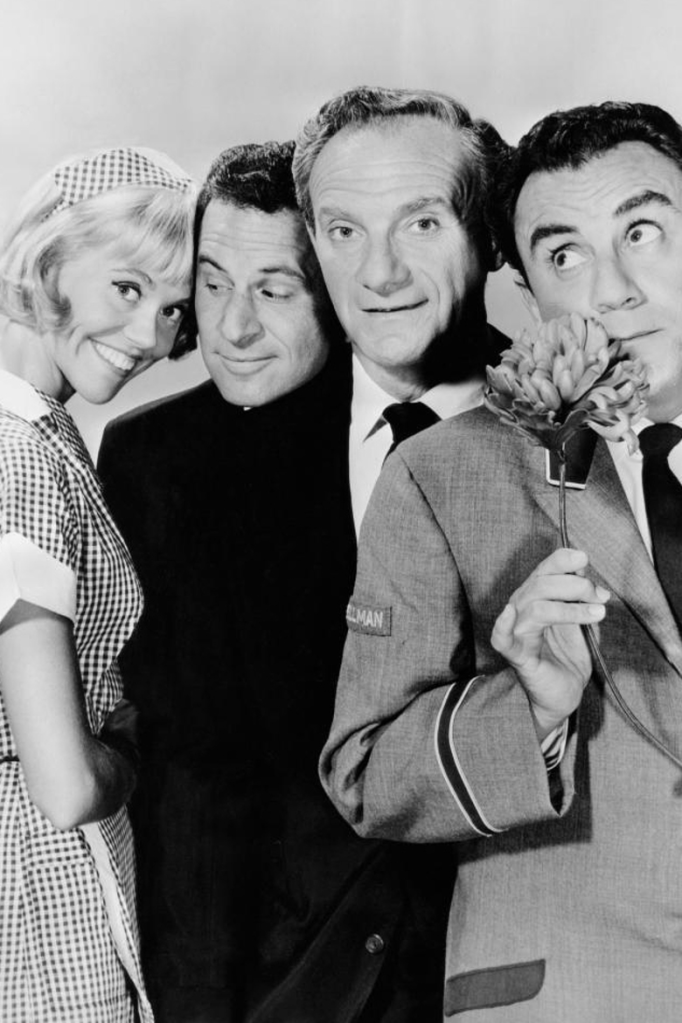
Jimenez is a bellhop at a luxury New York hotel. He lives in a special staff apartment, eats in the hotel kitchen, and interacts with most of the guests. He is surrounded by a great cast which we’ll get to know in more detail this month. Don Adams was Byron Glick, house detective. Jonathan Harris took on the role of Mr. Phillips, the hotel manager. Fellow bellhop Eddie (Gary Crosby) is always trying to get Jose to lose his rose-colored view of life. For season 2. Maggie Peterson plays waitress Susie.

The ratings were not great. Perhaps viewers had a harder time connecting this Jose to the caricature Jose. Certainly, more criticism came from the Latino community as the show went on. In addition to Jose, there was feedback on other shows that used stereotypical Mexican characters and in commercials like the Frito Bandito.

📷washingtonpost.com

Jose had one cameo role in Batman when he meets the duo and introduces himself as “My name—Jose Jimenez” in 1966. That was the final appearance of the character and a few years afterward, Dana read an obituary that he wrote for Jose at a Latino civil rights meeting in Los Angeles, and he became an activist for the Latino community, so there was some good coming out of the situation.

The show was canceled partway through season two. Another factor in the show’s ratings was the fact that it was on Sunday nights up against Lassie, a family favorite. However, the show did somehow receive an Emmy nomination for outstanding sitcom. No surprise it didn’t win. Despite being a mediocre show with some nugget of greatness here and there, it was up against McHale’s Navy, The Farmer’s Daughter, and the show that won, The Dick Van Dyke Show.

If The Bill Dana Show had just been a show about “a guy” who arrives from Mexico to work in a posh hotel, and we saw life through his eyes, good and bad in America, the concept could have been fun and more accepted. It appears that the writing was pretty good and it had a great cast. Jose was just not the character to build the show around.

Howard Morris: The Hamlet of Animation

After learning about Your Show of Shows and the stars of the show, I turned my attention to the cast members. Carl Reiner and Howard Morris were the two actors who were most involved with the skits. Reiner had a long and successful career, and we’ll look at his life in more detail later, but today I would like to concentrate on Howard Morris. 

Howard Morris Theatre Credits and Profile
Photo: abouttheartist.com

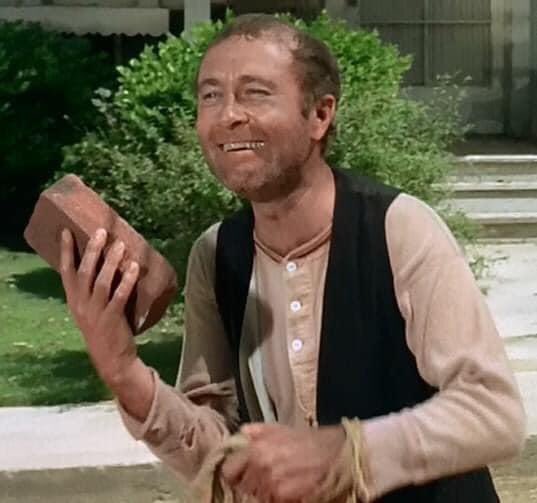
Most people recognize Morris as Ernest T Bass from The Andy Griffith Show. While I have a great appreciation for the series and the well-written scripts and delightful characters of Mayberry, I was never a big fan of Ernest T or the Darling family. They seemed to be a bit too over the top for me and diminished the reality of Mayberry.

J. Mark Powell on Twitter: "Howard Morris, better known as Mayberry's  rock-throwing Ernest T. Bass on @AndyGriffithShw, was born 101 years ago  today.… https://t.co/AwvE2WMBvR"
Ernest T Bass Photo: twitter.com

So, when I began to learn more about Morris who first became known to television fans for his work on Your Show of Shows, I was amazed at how versatile an actor he was and how much he accomplished during his career. 

Howard Morris was born in The Bronx in 1919. He later received a scholarship to attend New York University as a drama major, planning to work as a classically trained Shakespeare actor. During WWII he became first sergeant in the US Army Special Services unit. The group was based in Honolulu and entertained troops throughout the Pacific. Maurice Evans (who played Samantha’s father on Bewitched among other roles); Carl Reiner (whom we all know and love); and Werner Klemperer (Col Klink on Hogan’s Heroes) were all part of this unit.
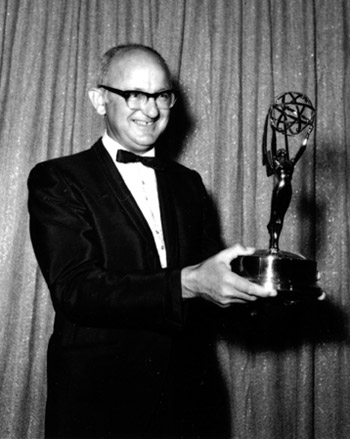
In 1945 he married Mary Helen McGowan. While they were married until 1958; he had four other marriages during his life.
When Morris got the offer to appear in Sid Caesar’s new show, he was able to work with Reiner again. This was his first television or movie appearance, but it would not be his last.

Howard Morris - Net Worth, Bio, Wife, Children, Death, Biography - Famous  People Today
With Reiner and Caeser Photo: famouspeopletoday.com

One of the sketches from the show was a take on This is Your Life, the Ralph Edwards show. Morris said it was his favorite skit from the series. David Margolick wrote in the New Yorker in 2014 that “Though the competition is stiff, many feel that this sketch is the funniest that Your Show of Shows ever did . . . that night nearly sixty years ago, the show produced what is probably the longest and loudest burst of laughter—genuine laughter, neither piped in nor prompted—in the history of television.”

Morris moved to Hollywood in 1961. In the 1960s he began his multi-talented career of television actor, movie actor, director, and animation voice-over star. Unbelievably, he would rely on the quartet of skills the rest of his professional life, excelling in all of them.

Howard Morris (Ernest T. Bass) on The Lucy Show - Sitcoms Online Photo  Galleries
On The Lucy Show Photo: sitcomsonline.com

As a television actor, he appeared in a variety of series including The Dick Van Dyke Show, The Twilight Zone, The Lucy Show, The Andy Griffith Show, Love American Style, The Bob Newhart Show, Fantasy Island, Trapper John MD, The Love Boat, and Murder She Wrote.

Although he is known for his role of Ernest T Bass on The Andy Griffith Show, he was only made five appearances as that character on the show. Aaron Rubens sent him the script that introduced Ernest to Morris to look over and “fix.” Morris fell in love with the character. He said the show had a terrific cast, and they were wonderful people to work with. He said fans loved Ernest because he did whatever he felt like doing including spontaneously bad behavior choices that everyone wanted to make.

As a movie star, he appeared in several films throughout the sixties, seventies, and eighties. Some of the highlights were The Nutty Professor; With Six You Get Eggroll; High Anxiety; The History of the World, Part I; and Splash.

On The Many Faces (and Voices) of Howard Morris – (Travalanche)
Photo: travalanche.com

Not content with just acting in films, Morris became interested in directing early in his career. He began his directing career in the sixties and continued through the eighties. His first directing job was on The Bill Dana Show. He was very busy in the sixties and seventies, directing episodes of Gomer Pyle, USMC; The Dick Van Dyke Show; The Andy Griffith Show; The Patty Duke Show; the pilot of Get Smart; Bewitched; Love American Style; Hogan’s Heroes, and The Love Boat among others. He also directed for the big screen. You’ll see directing credits in his name for Who’s Minding the Mint?, With Six You Get Eggroll, and Don’t Drink the Water.

During an interview with the television academy, he said he loved directing Hogan’s Heroes. Robert Clary became one of his best friends for life. He also loved Klemperer. He said working on With Six You Get Eggroll was a wonderful experience. He said Doris Day just had a natural talent, and Brian Keith was a great guy. He felt being an actor allowed him to be a better director. He understood what the process was for the cast and was able to help them. He knew he could not teach them to act.

Perhaps the biggest surprise for a classically trained Shakespeare actor is that he had the most success in the animation world. I could not begin to list all his credits here, or you would still be reading next week when the new blog comes out. Beginning with Krazy Kat in 1962, he would go on to provide voices for more than fifty series. You will hear his voice in The Flintstones, The Jetsons, Mr. Magoo, The Magilla Gorilla Show, The Atom Ant Show, Duck Tales, a variety of Archie series, and Garfield and Friends.

Howard Morris voiced more than 100 characters on The Flintstones
Photo: metv.com

In a Television Academy interview, he admitted that he accepted voice-over work because he needed the money. It also appealed to him because you did not have to worry about wardrobe or make-up. He said the actors sat in the room together recording the show at the same time which allowed them to relate to each other better than today when everyone records by himself.

In 1962, he married Dolores Wylie and they were together until 1977. I read several sources that listed him being married five times but could not find confirmation of the other marriages, although one cite mentioned two other spouses, Judith and Kathleen and noted that he was married to one of his spouses twice. They all ended in divorce.

In 2005 Morris died from congestive heart failure. Carl Reiner was one of the people who gave a eulogy at his funeral.

The Andy Griffith Show" My Fair Ernest T. Bass (TV Episode 1964) - IMDb
Photo: imdb.com

Howard Morris had a very long and prolific career. About the only genre he did not act in was Shakespearean drama, which is what he trained for. I was curious about whether he enjoyed his comedic career, or if he was disappointed that he did not work more in drama.

During his Television Academy interview, when asked what advice he would give someone thinking about entering the acting or directing profession, he replied “to avoid it and shun every opportunity because it was too hard.” He certainly deserves to be remembered for more than being Ernest T Bass even though he is a much-loved character. Morris said he would like to be remembered as a guy that was able to reveal certain things of humor and reality to the public and for his great gratitude for the fans who have always been there.” Well said. And, well done.

Allan Melvin: What a Character!

We are winding down our blog series, “What A Character.” If you watched television between 1959 and 1989, you will definitely recognize this week’s character actor: Allan Melvin.

Category:Characters voiced and/or played by Allan Melvin | Legends of the  Multi Universe Wiki | Fandom
Photo: wikipedia.com

Melvin was born in 1923 in Kansas City, Missouri, but he always said he grew up in New York City where his parents moved to not long after his birth. After high school, he attended Columbia University, studying journalism before joining the US Navy in WWII.

He married Amalia Sestero in 1944 and they were together for his entire life and had two children. Amalia was also an actress and Melvin met her when he attended an actor’s group that she helped start.

All in the Family Star Allan Melvin Dies at 84 | PEOPLE.com
Photo: people.com

After being discharged from the Navy, Allan worked in the sound effects department of NBC Radio. He also had a nightclub act. He was on Arthur Godfrey’s Talent Scouts radio show which he won. His first television role was that of Corporal Steve Henshaw on The Phil Silvers Show. Melvin’s wife remembered that time fondly: “I think the camaraderie of all those guys made it such a pleasant way to work. They were so relaxed.”

After the show ended, Melvin was often typecast as a military character or the abrasive, but happy-go-lucky guy. Even when he was not a recurring character, he often had multiple appearances on a series.

Allan and Amalia moved their family to California, hoping for more television roles in the early sixties.

Throughout the sixties, Melvin was kept busy with television work, appearing on The Danny Thomas Show, The Bill Dana Show, Perry Mason, Lost in Space, Love American Style, and The Andy Griffith Show. He had two recurring roles: Art Miller on The Joey Bishop Show and Sol Pomerantz on the Dick Van Dyke Show.

Allan Melvin Bio
Photo: imayberry.com

He was often cast as the tough guy on The Andy Griffith Show, with eight appearances in all. Melvin discussed his time on the show and said “I always enjoyed doing the show. We had a lot of fun doing it, and they were a great bunch.”

From 1965-1969 you could find him on Gomer Pyle USMC as Sergeant Charlie Hacker.

As early as 1963, Melvin was doing voice work on The Flintstones.  His animation work would continue throughout his career and after about 1974, cartoon voices were his only gigs. One of his best-known roles is Magilla Gorilla.

Magilla Gorilla. | Cartoon photo, Classic cartoon characters, Vintage  cartoon

I’m not sure why, but Melvin only appeared in one movie, although it was a good one.  He was the desk sergeant at the end of the Doris Day-Brian Keith film, With Six You Get Eggroll. A couple of Andy Griffith writers wrote the screenplay, and Howard Morris, known as Ernest T Bass, directed the film.

In the 1970s he was cast in his two most memorable roles.

The Brady Bunch - Alice Nelson (Ann B. Davis) and her boyfriend Sam "The  Butcher" Franklin (Allan Melvin) pose … | The brady bunch, Old tv shows,  Classic television
Photo: pinterest.com

He was Sam Franklin, Alice’s boyfriend on The Brady Bunch. Sam owned a butcher shop and was an avid bowler. In a later movie, we learned that he finally made an honest woman of Alice. Ann B Davis said “Allan Melvin, neat guy, very tall. He was just a nice, open, big guy, and it was fun to play with him.”

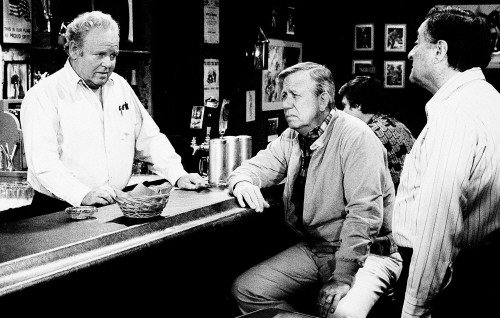
He was also neighbor and friend of Archie Bunker as Barney Hefner on All in the Family and Archie Bunker’s Place. Allan said it was a good experience and everyone’s input was welcome. Jason Wingreen, who played Harry the bartender on the show talked about Melvin in anther wordpress blog, classictvhistory (https://classictvhistory.wordpress.com/tag/allan-melvin/). When asked if he was the same in person as he was in character, Wingreen said, “He was more intelligent than that. Allan wrote little poems, little couplets of sorts, and they were very funny. Like limericks, but not quite limericks. Some of them were very intelligent and very, very funny. Never published. Allan and I became very close friends.”

Actor who summered in TC dies at 84 | Local News | record-eagle.com
With Carroll O’Connor on Archie’s Place Photo: record-eagle.coom

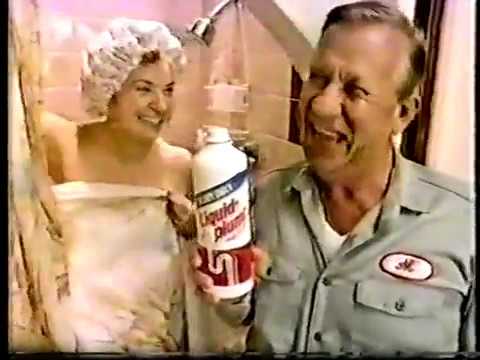
Melvin also did a lot of commercial work.  You could see him pitching products from Sugar Frosted Flakes to Remington razors to Liquid Plumr. He was the plumber for Liquid Plumr for fifteen years.

Liquid-Plumr ad w/Allan Melvin, 1981 - YouTube

In 2008, Melvin died from cancer.

Melvin certainly had a career to be proud of. One thing I never learned was when he decided that acting was the career he wanted. He became one of the most beloved and most-recognized character actors in the sixties and seventies–definitely a character worth celebrating.

Earle Hagen Whistles a Happy Tune

We don’t often notice music in the background of our favorite shows, but it has a significant impact on our appreciation for a series. One of my favorite CDs in the 1980s was the music from thirtysomething. I admit I didn’t often pay attention to the music while watching the show, but I loved listening to the soundtrack.

hagen14

Photo: findagrave.com

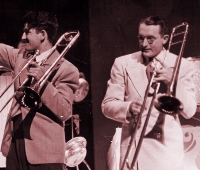
Today we get to spend some time learning about one of the most prolific songwriters in the television industry: Earle Hagen. Earle was born in the Midwest in 1919, in Chicago, but moved with his family to Los Angeles. He began playing the trombone in junior high school.

At age 16 he left home to play with some of the best big bands in the country: Tommy Dorsey, Benny Goodman, Ray Noble.

hagen2earlhagen.net

Photo: earlehagen.net

During his time with Noble, when he was only 20, Hagen composed the song “Harlem Nocturne” as a tribute to Duke Ellington and Johnny Hodges. It would be recorded by numerous musicians over the years and later was adopted as the theme for both Mickey Spillane’s Mike Hammer and The New Mike Hammer.

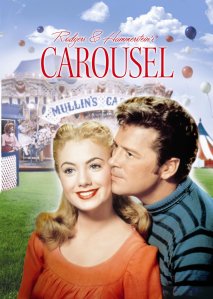
In 1940 Earle was hired by CBS as a staff musician. Like many of the composers we have been learning about, Hagen enlisted in the military for World War II. When he came home, he became an orchestrator and arrangement writer for 20th Century Fox. He worked on a variety of films including Gentlemen Prefer Blondes and Carousel.

In 1943 he married Lou Sidwell, a big band singer. They would remain married until she passed away in 2002 and produce two sons.

When Earle accepted the Irwin Kostal Tribute Award in 2000, he explained that “In 1953, the studios committed to large screen production and we went from 38 pictures a year to one. There were other pictures on the planning board but not immediate enough to support the huge studio staffs. So, along with 1199 other people, I migrated to television.”

The first show he worked on was a short-lived series, It’s Always Jan which was on the air from 1955-56.

Then Hagen met Sheldon Leonard. As he says, “There again my good fortune held. I teamed up with Danny Thomas and Sheldon Leonard at a time when they were starting a string of hits that lasted 17 years.” Earle wrote the theme for Make Room for Daddy.

Those 17 years were busy. Leonard initiated the practice of using original music for sitcoms, so a lot of background music was required. Hagen said that during that era, the composer was part of the creative team. His opinion was asked for and respected in pre-production, production, and post-production.

He loved working in television. He said that there was “something about the immediacy of TV that I enjoyed. It was hard work, with long hours and endless deadlines, but being able to write something one day and hear it a few days later appealed to me. I think a statistic of which I am most proud is that in the 33 years I spent in television I was associated with some three thousand shows. Every one of them was recorded in Los Angeles with a live orchestra.”

His work continued with Leonard, and he wrote the theme song for The Dick Van Dyke Show.

hagen6

Photo: brioux.tv

Then Sheldon asked him to come up with a theme for a show about some gentle town folks and their sheriff. Earle said he struggled a while trying to come up with the perfect theme. As he described the process: It’s like “peeling an onion. Half of coming up with something good is throwing away what’s not.” Finally, he had a brainstorm and “he simply whistled the catchy tune which entered his head.” It’s the whistling of Hagen we hear on The Andy Griffith Show when we hear “The Fishin’ Hole.” Despite the difficulty of coming up with the theme song, Hagen enjoyed his time with The Andy Griffith Show. He said, “I guess my favorite show . . . was The Andy Griffith Show. It covered the spectrum from warmth to complete zaniness. It also was easy to write. Worthwhile, when you are doing four or five different series a week.”

hagen5

Photo: mtairynews.com

He went on to work on several shows in the 1960s, including The Bill Dana Show, That Girl, Accidental Family, Gomer Pyle USMC, Mayberry RFD, and The Mod Squad. Hagen based the Mod Squad theme on Schoenberg’s 12-tone scale which added some tension to the scenes, along with a jazzy theme song.

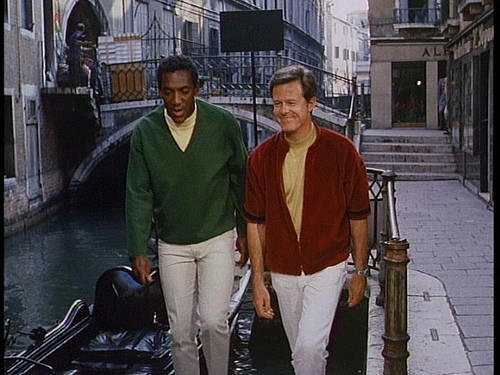
Hagen’s songs are some of the most recognizable ones in television. However, his most innovative and beautiful scores were done for a show that is not remembered much today, I Spy. Leonard wanted original soundtracks for each episode. This humorous spy show was filmed in locations all around the world, so the music had to vary as well.

hagen9

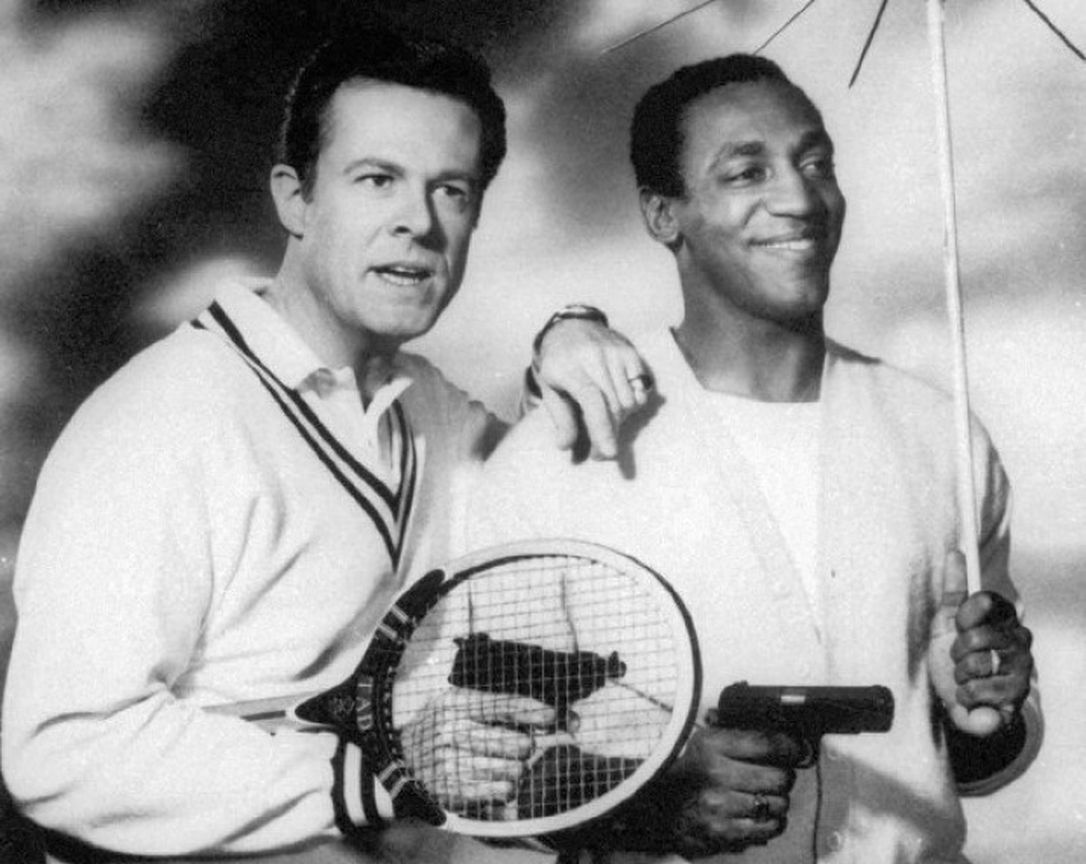
This was the first show to star an African American. Bill Cosby and Robert Culp were spies who took on assignments around the globe. I would like to say that the reason for the lack of the show being rerun is due to Bill Cosby and the poor personal choices he made which has resulted him being sentenced to jail and the shows he was involved with disappearing from television schedules. However, I rarely remember this show being available even before Cosby’s criminal trials, and I’m not sure why that is. In 2008, all three seasons of DVDs were released.

On the website earlehagen.net, we read that “During the run of the series he amassed one of the most comprehensive collections of ethnic music in existence at that time–some of it on commercial records bought in the countries he visited with the production team, but much of it taped live in situ with local musicians. These recordings containing priceless material of musical genres never before recorded, and in some cases, now extinct, were then mixed into the background music produced by the studio orchestra in Los Angeles.  The result was what has been deemed ‘the richest musical palette ever composed for any American television series.’ ”

hagen10

Photo: desertnews.com

Sheldon relied on Hagen to literally scout the world for filming locations. The couple visited Japan, Hong Kong, Bangkok, India, Israel, Greece, Italy, France, and New York. Hagen discussed this trip. “Before the show started, at Sheldon Leonard’s invitation, Lou (my wife of 58 years so far), and I were invited to go on a `round the world trip with the Leonard’s scouting locations for the upcoming series, I Spy. On that 52-day trip we traveled first class, stayed in first class accommodations and at every airport were met by a car, driver, and interpreter, who stayed with us as long as we were in the country.”

Earle wanted viewers to remember that these were US spies so he named his music “semi jazz,” which fused local world cultures with American jazz music.

Deborah Young-Groves discusses the variety of music Hagen used in her article, Creating the Perfect Vibes for “I Spy.”

“And who could forget the frantic–almost joyous–chase across the University of Mexico in ‘Bet Me A Dollar’–Spanish brass–almost Copeland-esque (remember ‘El Salon Mexico’?), too loud to ignore but erratic and happy. And yet, like Copeland, Hagen only scored where he deemed appropriate. In that very same episode the child, who urgently seeks help for Kelly, runs in utter silence.  We hear only his pounding feet and his sobbing gasps.

But the two best episodes for music are ‘Home to Judgment’ and ‘The Warlord,’ for equally fascinating reasons. ‘The Warlord’ borrows heavy oriental imagery for the action sequences (always punctuated by that American jazz – but it works) using snare drums and brass.  How Hagen can get a trumpet to sound Asian simply by a jagged sequence of notes is still a mystery to me!

Then he changes completely and takes a plangent delicate note for the love theme between Chuang Tzu and Katherine, caught between their separate worlds.  It is somber, powerful and almost painful – one of the saddest pieces of music I have ever heard.”

hagen11

Photo: thestar.com

I Spy was on the schedule for three seasons. Hagen was nominated for an Emmy all three years for his work on the show, and he won it the last year the show aired. When asked about his favorite episodes, Hagen said, “Some of the shows of course stand out in memory: ‘Tatia,’ ‘Laya,’ ‘Home to Judgment’ ‘Warlord,’ and one of my favorites, ‘Mainly on The Plains.’ ”

hagen3

Photo: planetoftheapes.com

The music was so memorable on this show, that Hagen was able to record two albums from the series. The first album was recorded by Warner Brothers and the second was Capitol. He said he enjoyed the Capitol album more only because he was able to work on in the off season, so he had more time to devote to it.

hagen1

Earle would continue with his work on television throughout the 1970s, working on a variety of shows, including The New Perry Mason, Eight is Enough, and Mary Hartman, Mary Hartman. In the 1980s, he worked on Dukes of Hazard.

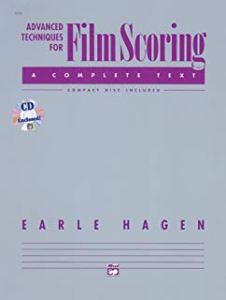
During the last decades of his life he taught and wrote books on scoring and music arrangements. He wrote the textbook, Scoring for Films: A Complete Text. In 2000, he published his autobiography, Memoirs of a Famous Composer Nobody Ever Heard Of.

In 2005, he married his second wife, Laura Roberts. Hagen died from natural causes in 2008.

In 2011, he was inducted into the Television Academy Hall of Fame.

Perhaps his website sums up his career best: “When one considers the vast range Earle Hagen’s career has covered, and just where he was at each stage in his life—playing trombone in the big bands during the 30s, writing arrangements for Frank Sinatra, working at 20th Century Fox during the reign of Alfred Newman, creating TV themes and scores for Sheldon Leonard shows, not to mention teaching brilliant young composers the art of scoring, and publishing the top texts in his field—it can truly be said that he lived through the best times in each of these worlds.”

hagen4

Photo: themusicsover.com

Earle Hagen was another one of the great pioneers in the golden age of television and he should be celebrated for his amazing career.

Sheldon Leonard: A True TV Pioneer

leonard4

The Depression changed the course of Sheldon Leonard’s life. He was born in Manhattan to Jewish parents. He went to Syracuse University on an athletic scholarship. While there, he was president of the dramatics club. His degree was in finance, and he landed a job at a prestigious brokerage firm. Then the Depression hit, and he was out of a job. He had to fall back on the only other skill he could think of which was acting.

In 1931 he married Frances Bober whom he was married until his death. They would have two children.

Acting was not quick money either though. It took five years until he landed his first major Broadway role in Hotel Alimony in 1934. It did not have a long run, but his next two shows were more successful: Having a Wonderful Time in 1937 and Kiss the Boys Goodbye in 1938.

leonard7

He then entered film work. He had several very small roles in a couple of movies and a couple of shorts, but in 1939 he was cast in Another Thin Man, the popular movie series with William Powell and Myrna Loy. That began his career as a heavy, often being cast as a gangster. He would appear in To Have and Have Not with Bogie and Bacall in 1944. In 1946 he was cast as the bartender in It’s a Wonderful Life with Jimmy Stewart and Donna Reed. Because it has become a Christmas staple, it has brought Sheldon a lot of recognition. Sheldon would appear in 74 movies during his career, 69 of them by 1952.

leonard2

During this time, he also gave radio a try. He was working on both sides of the mic. He sold scripts to several shows including Broadway is My Beat. He also portrayed his stereotyped gangster role on many shows including as Grogan on The Phil Harris, Alice Faye Show. You could hear him on Jack Benny, Burns and Allen, Bob Hope, Duffy’s Tavern, the Halls of Ivy, and The Judy Canova Show, among others.

sheldon6

Photo: radiospirits.com

It was only a matter of time before Sheldon took his talents to television. He appeared in four episodes of Your Jeweler’s Showcase in 1952. In addition, he was listed as producer and director for several of these episodes. He appeared in I Love Lucy in 1953 as vacuum salesman Harry Martin and several I Married Joan episodes in 1952-53. One of my favorites was his role as Johnny Velvet on Burns and Allen when he kidnaps Gracie but takes her back because she drives him crazy. In 1954 he co-starred in The Duke which lasted 13 episodes.  This show featured an artistic boxer who leaves the ring to open a nightclub. Sheldon also directed the pilot as well as some early episodes of Lassie and The Real McCoys.

leonard14

However, the show that made him a household name was his director/producer role on Make Room for Daddy, Danny Thomas’s hit sitcom. The show was in the top ten, and Sheldon even found time to appear on the show 19 times. The show continued from 1953-1964. Leonard had found his sweet spot. During his career, he would direct and produce shows such as The Dick Van Dyke Show, The Andy Griffith Show, Gomer Pyle USMC, and I Spy.

sheldon4

Sheldon convinced Carl Reiner to step back from acting as Rob Petrie and produce The Dick Van Dyke Show. That conversation resulted in Dick Van Dyke accepting the role, leading to 158 episodes. If you watch carefully, you will notice Sheldon appearing twice on the show in minor roles. The show was nominated for 25 Emmys and won 15.

leonard12

Sheldon also is credited with creating the spinoff. One of Danny Thomas’s episodes was set in North Carolina where he gets picked up for speeding in a rural town and has a run-in with Sheriff Andy Taylor. This episode turned into the long-running The Andy Griffith Show which was on the air from 1960-1968 netting 249 episodes. The show won 6 of the 9 Emmys it was nominated for.

sheldon3

The spinoff was so successful he did it again, moving Jim Nabors as Gomer Pyle from the gas station attendant on The Andy Griffith Show to his own show, Gomer Pyle USMC. That show was on the air for five years (150 episodes), and Sheldon would also make an appearance there as Norman Miles.

Thomas and Leonard as L&T Productions were also behind the The Joey Bishop Show and The Bill Dana Show. Thomas and Leonard’s shows were notable for emphasizing characters and relationships over slapstick or situation comedy. You cared about the characters even when they were a little kooky like Gomer Pyle or Barney Fife. They were committed to high-quality scripts. Many of the writers they employed went on to successful shows of their own including Danny Arnold for Barney Miller; Garry Marshall and Jerry Belson for The Odd Couple, Happy Days, and Laverne and Shirley, Mork and Mindy; and Bill Persky and Sam Denoff for That Girl and Kate and Allie. L&T Productions ended in 1965.

leonard9dga.org

Photo: dga.com

In the mid-1960s Sheldon produced I Spy. He cast Bill Cosby and Robert Culp as secret agents.  This was the first series to star a black actor in a lead role. In a March 7, 2016 Modern Times article, David Fantle and Tom Johnson discussed Sheldon Leonard and I Spy. Leonard said he knew what he was doing. “Race was very much an issue at that time,” he said. “I was intellectually conscious of it, but emotionally unaware of it. When I say emotionally unaware, I mean I was free to think of Cosby as the man to fill the slot I needed. Intellectually I knew the problems I’d have to face to get him on the air.” I Spy was a humorous suspense show and was known for its exotic locations, filming in countries such as Hong Kong, England, Morocco, France, and Greece among others. The critics rewarded Leonard. The show was nominated for Outstanding Dramatic Series Emmy every year of its three-year run and earned Leonard an Emmy nomination for directing in 1965.

sheldon7

Sheldon was also the producer behind Accidental Family and Good Morning World, both shows debuting in 1967 and ending in 1968 and My World and Welcome to It in 1969. Accidental Family was about a widower who is a stand-up comedian. He buys a California farm which is managed by Sue Kramer who is also his son’s governess and his love interest. Good Morning World was about morning disc jockeys in LA. One is happily married, and one is a ladies’ man. Goldie Hawn was the next-door neighbor and Billy De Wolfe was their boss. On My World and Welcome To It, John Monroe is a married man with a daughter. He frequently daydreams and fantasizes about life. This show was unusual in that it included some animation along with the live action.

sheldon9

In the Fantle and Johnson article referenced above, Leonard also talked about his favorite sitcom. He said his favorite might be the one that needed the most attention. “My favorite show was cancelled after the first year. My World and Welcome to It, based on the writings of James Thurber and starring William Windom. It won every award, and they cancelled . . . It was satire and above their (the network bosses’) heads. That show and I Spy are my favorites.”

In the early 1970s Sheldon would produce From a Bird’s Eye View and Shirley’s World. From a Bird’s Eye View was a sitcom about two stewardesses, Millie from England and Maggie from America. Millie was always getting into mischief and Maggie bailed her out. Shirley’s World starred Shirley MacLaine as a photographer who travels the world for her London-based magazine. The locales were similar to I Spy.

leonard3bigeddie

In 1975 Sheldon starred in a new sitcom, Big Eddy which only lasted for ten episodes. He was Eddie Smith was the owner of the Big E Sports Arena in New York. He was an ex-gambler fighting the impulse to get back into it. He has a bunch of eccentric people in his life including his ex-stripper wife Honey and their granddaughter Ginger.

In the 1980s, Sheldon would continue to show up on various television shows, appearing in Sanford and Son, The Cosby Show, Matlock, Murder She Wrote, and Cheers.

Along with author Mickey Spillane, Leonard was one of the first two people to become a Miller Lite spokesman. In his New York accent, he tells the audience, “I was at first reluctant to try Miller Lite, but then I was persuaded to do so by my friend, Large Louis.”

Sheldon Leonard passed away at the age of 89 in 1997. His wife Frances passed away in 1999.

leonard1

Sheldon Leonard is undoubtedly one of the greatest television producers. Most of his shows were consistently in the top ten. They are classic shows still on the air today.  Sheldon required scripts that brought characters to life. He created spinoffs when he believed in the characters. He was not afraid to take risks. Besides casting Bill Cosby, he cast Lois Nettleton as divorced Sue Kramer on Accidental Family. This was in the mid-1960s and yet when Mary Tyler Moore’s show aired in 1970, the network refused to allow her to be a divorced character.

In the Mercurie Blogspot from November 10, 2013, Carl Reiner discussed Leonard: “Sheldon has mentored more people in our business than anyone else I know. He knew how to teach what he knew, and what he knew was situation comedy with the three-camera technique. Sheldon was a producing genius who understood comedy. He had four or five shows going, but he would walk in and give his intelligence and his time to every script that was being read for the week. And we always came away with a better script because we would discuss and argue and come to a better situation.”

sheldon5

Garry Marshall was also quoted in this same article: “Sheldon was a sort of man’s man, yet he had all the creative sensitivity of the artist. No matter what story you were working on, he could help you fix it. He would never put down your idea. If I had to describe Sheldon in one word, it would be gentleman. He was a Renaissance man with a New York accent—and possibly a gun!”

The Herb Garden Germination

Photo: americanprofile.com

As a salute to Leonard, the writers of The Big Bang Theory, named their main characters Sheldon and Leonard in honor of Sheldon Leonard.

sheldon1

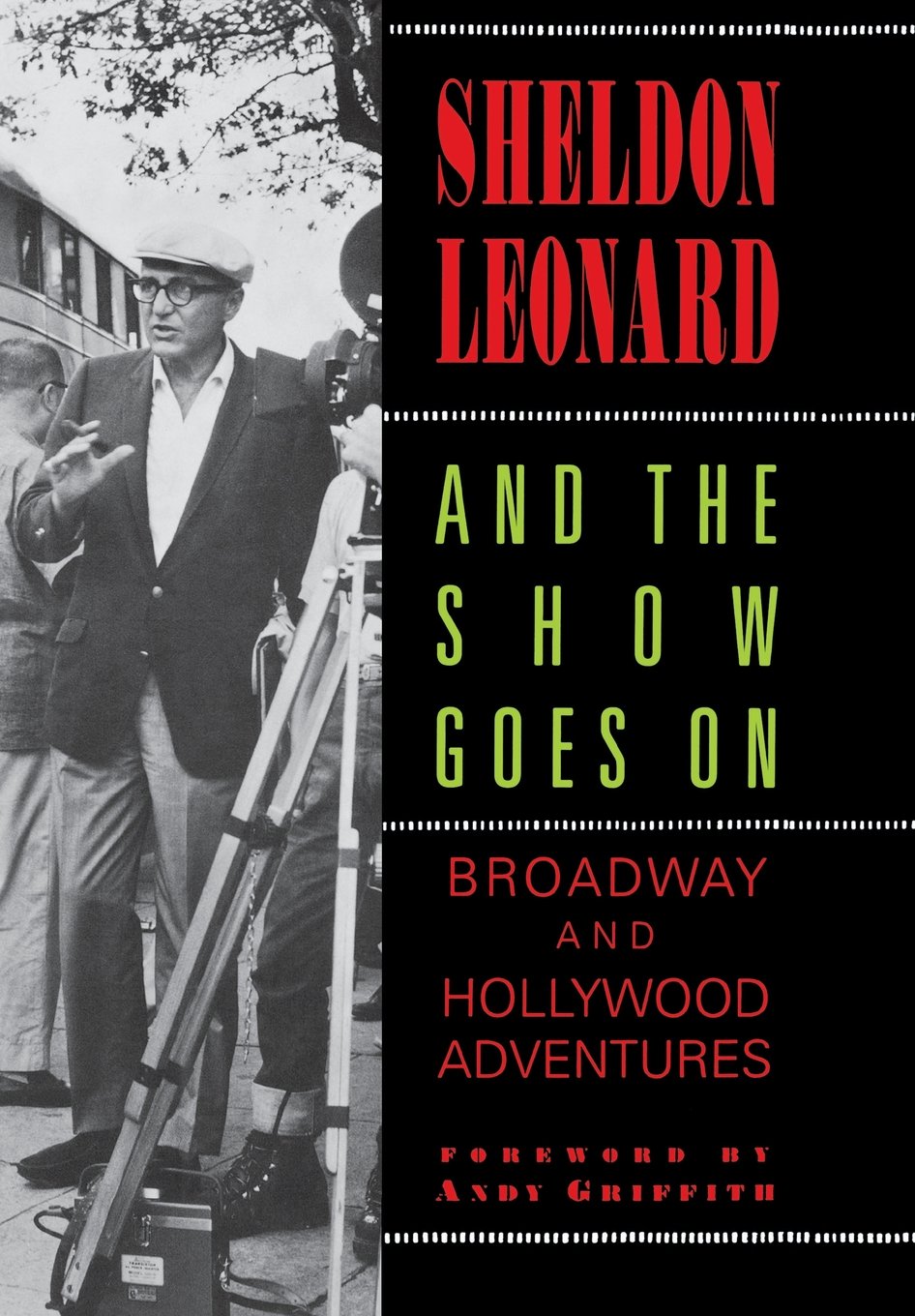
Sheldon himself seems to explain his success best. After working on his memoir in 1995, And the Show Goes On: Broadway and Holiday Adventures, he said “I was driven by an urge to survive and being very self-indulgent. I never did anything for very long that I didn’t like or enjoy. I would survive only on my own terms. I had to enjoy what I was doing, and I would have done what I did even if nobody paid me. That’s the secret of success in any business: do it well and enjoy doing it.”

leonard11

He did it all well, and we all enjoyed it.

Do We Have Reservations? Yes We Do.

February has finally arrived.   Some of us are getting a bit tired of winter, so this is a popular month for travel to a warmer destination.  If you aren’t able to physically get away, stay home and watch the February Sweeps, the only time you’re guaranteed new episodes of your favorite show for a month straight.  This week I decided to look at sitcoms set in hotels or resorts.  I did not discuss Fantasy Island or The Love Boat because I thought we could talk about them another time.

resort

Based on the length of many of these shows, the hotel business is a tough one to be successful in. Let’s look at a bunch of shows that didn’t last too long.

buddyfeb6

Stanley was a show starring Buddy Hackett and his girlfriend played by Carol Burnett that aired in 1956. Stanley ran a newsstand in the lobby of a New York City hotel. The hotel owner was played by Paul Lynde.  The show was cancelled in March of 1957, supporting the philosophy that no news is good news.

happyfeb62

Happy starred George and Gracie’s son, Ronnie Burns. Ronnie was married to a woman played by Yvonne Lime and they were co-owners and managers of the Desert Palm, a ritzy resort. Included in the cast was their Uncle Charlie and the co-owner played by Doris Packer.  Happy was their son who commented on what was going on, sort of like Family Guy’s Stewie.  It was a summer entry in 1960, but 9 months later it gave birth to a cancellation which made the cast not Happy.  I don’t know why, but apparently viewers could accept a talking horse or a talking car, but not a talking baby.

Another show that began as a summer replacement was Holiday Lodge in 1961. Johnny Wayne and Frank Shuster, two comedians from Canada, played social directors at a New York state hotel. They tried to provide entertainment but always ran into trouble, including being taken off the air after a few episodes.

The Bill Dana Show was interestingly based on the character Jose Jiminez developed by Dana for the Steve Allen Show and later brought to the Danny Thomas Show.  In 1963 The Bill Dana Show portrayed Jiminez as a bellhop at the New York City Park Central Hotel and the show centered on him trying to get used to life outside Mexico. Often his dream sequences took him into bizarre situations.  The most interesting fact about this show might be that the house detective was played by Don Adams who went on to star in Get Smart. Jimeniz’s dream became a nightmare when the show was cancelled after 42 episodes.

hotlbaltimorefeb6

One of the most controversial shows to air on television in the 1970s was Hot L Baltimore debuting in the fall of 1975.  Many stations refused to air the show because it was lewd and racy.  Norman Lear, the producer behind All in the Family, Maude, and The Jeffersons developed the concept based on a play. The cast was made up of a desk clerk, his girlfriend, the manager, a hooker, an unemployed waitress, a dying man, a gay couple, and an eccentric woman. After four months, the waitress was not the only one unemployed because the show was done.

The Last Resort was developed by MTM in 1979, the company that created The Mary Tyler Moore Show, Rhoda, and Phyllis. The resort, set in the Catskills in upper New York, included a bunch of college students working their way through school. It featured a stereotyped crew including the brilliant premed student, a bookworm, a snob, an overweight clumsy guy, the pastry chef who left her wealthy husband to pursue her career, a Japanese chef, and a maitre’d who ran the place like a drill sergeant. It was cancelled after three episodes. Retooled, it came back in December only to be finished for good in March when the last resort of The Last Resort was no more.

Checking In must be in the running for the shortest show to appear on television. In 1980, Marla Gibbs, playing Florence the maid on The Jeffersons, got her own show, transferring to a hotel in New York City where she was the head housekeeper. She answered to a snobby manager played by Larry Linville who would later become Frank Burns on M*A*S*H. The rest of the cast included an assistant, a house detective, a maintenance supervisor, and a bellboy. After several weeks, the hotel was shut down and Florence went back to working for The Jeffersons.

goldenpalacefeb6

The Golden Girls was one of the most beloved shows in television, but I’m guessing few people remember The Golden Palace which debuted in 1992.  After Dorothy got married, the other three characters decide to invest in a hotel in Miami. Only two employees are left at the hotel:  a manager and a chef. After 24 shows, no one was left at the hotel.

In 1999 Payne, a remake of the British show Fawlty Towers hit the air.  Set in a California inn, Whispering Pines, the hotel was owned by Royal Payne and his wife Constance.  It went on the air in March.  At the end of April, the network ended its Payne by taking two aspirins and cancelling the show.

whoopifeb62

Compared to some of the shows, Whoopi! might have seemed successful, lasting an entire season.  Set in the Lamont Hotel in New York City, a one-hit wonder musician played by Whoopi Goldberg decides to put her money into a hotel and run it the way she sees fit.  She has an assistant from Iran, a brother who is a conservative Republican, and his girlfriend who is white but acts more African American than the black members of the hotel. Of course, these three characters give her much controversy to deal with.  The network, acting as referee, blew the whistle and cancelled the entire thing after one year.

In 2008 Do Not Disturb debuted.  If you missed it, don’t feel bad.  It debuted on Fox and featured The Inn, a hip Manhattan hotel.  The staff is not as competent as they appear to their guests. The manger is arrogant, the head of human resources is loud and tactless, the front desk clerk is an aging model who does not want to be a desk clerk or older, the reservations clerk is a famous musician wannbe, and the head of housekeeping has problems at home. The network, not wanting to disturb the viewing public, pulled the plug after three shows. Larry, played by Jesse Tyler Ferguson, would go on to star in Modern Family in 2009.

Before you begin to think shows about hotels are doomed, let’s check in with four successful shows that knew how to make a profit.

From 1996-2001 The Jamie Foxx Show on WB featured Jamie Foxx as a musician who moves to California to work at his aunt and uncle’s (played by Ellia English and Garett Morris) hotel, King’s Tower.  He has two co-workers played by Christopher B. Duncan and “Fancy” played by Garcelle Beauvais. He is interested in Fancy, but she doesn’t feel the same until the final two seasons when they become engaged. The show aired 100 episodes before the network finally got reservations.

Disney’s Suite Life of Zach and Cody set in the Tipton Hotel ran from 2005-2008. The twins lived in the hotel because their mother was the lounge singer.  Somewhat like Eloise at the Plaza, the boys got into mischief and interacted with other employees including the wealthy heiress London Tipton, the candy counter salesgirl Maddie Fitzpatrick, and the manger Marion Moseby.  In 2008 the show sailed off, literally, and became Suite Life on Deck running until 2011.

With 184 episodes, Newhart debuted in 1982. With its quirky cast of characters, it became a big hit. Set in Vermont, Dick Loudon (Bob Newhart) is a writer who buys the hotel and runs it with his wife Joanna (Mary Frann). Their handyman George Utley (Tom Poston) and their maid Stephanie Vanderkellen (Julia Duffy) make life both easier and more difficult at the inn. Later Dick becomes a local television celebrity working with Michael Harris (Peter Scolari) who marries Stephanie.  Larry, (William Sanderson) his brother Darryl (Tony Papenfuss) and his other brother Darryl (John Voldstad) are memorable characters.  Darryl and Darryl never speak until the final episode.  That finale has the best ending ever in a television series when Bob Newhart wakes up in bed, tells his wife he had a really weird dream, and we see the wife is Suzanne Pleshette, his wife Emily from The Bob Newhart Show in which he played a psychiatrist from 1972-78. This series delightfully captured the life in a small New England town until 1990.

While Newhart is hard to top, my favorite hotel sitcom is Petticoat Junction which featured the Bradley Girls from 1963-1970. Kate (Bea Benaderet) ran the hotel with her three daughters Billie Jo, (Jeannine Riley till 1965, Gunilla Hutton until 1966, and Meredith MacRae until 1970), Bobby Jo (Pat Woodell until 1965 and Lori Saunders through 1970, and Betty Jo (Linda Henning), along with her Uncle Joe (Edgar Buchanan). The Shady Rest is near Hooterville, so we get to know a variety of town folk including Sam Drucker who runs the general store; Floyd and Charley, who run the Cannonball train; and Steve Elliott, crop duster, who is Billie Jo’s boyfriend first but later marries Betty Jo; and we run into the Ziffels and the Douglases from the show Green Acres. It’s a charming and heart-warming show loaded with loveable but zany characters. It ran for 222 episodes, even surviving the death of Bea Benaderet, who was replaced by Janet Craig (June Lockhart), a woman doctor who moves into the hotel. The amazing Charles Lane shows up throughout the series as Homer Bedloe, a railroad employee whose sole mission is shutting down the Cannonball.

If you can’t physically travel this month, take some time and watch a season or two of Newhart or Petticoat Junction, and you can still get away and experience life in a small-town hotel.