Just a Couple of Characters, Part 4: Mary Wickes and Susan Oliver

We wrap up our series Just a Couple of Characters this week with Mary Wickes and Susan Oliver. Mary and Susan are very different character actors, but you will immediately recognize them. Let’s learn a bit more.

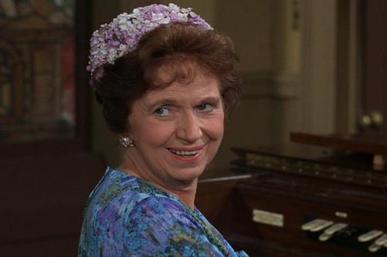
Mary Wickes
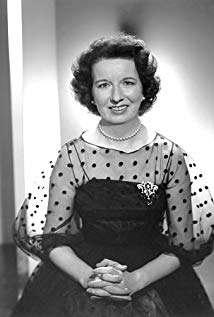
Photo: imdb.com

It’s not surprising that Mary shortened her last name to “Wickes” after being born Mary Wickenhauser in 1910 in St. Louis. Her father was a banker, and the family had plenty of money. After high school, Mary attended Washington University in St. Louis, majoring in political science, planning a career in law. One of her professors suggested she try theater, and she dipped her toe into it doing summer theater in Stockbridge, Massachusetts.
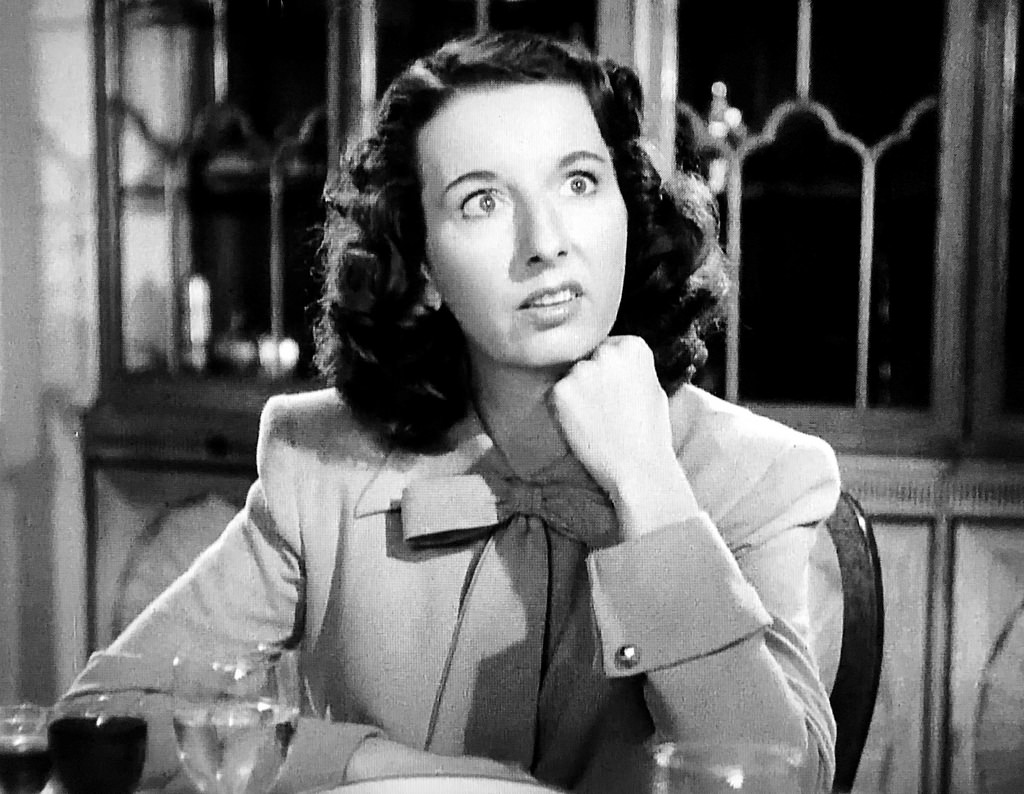
Photo: flickr.com

After deciding a career in acting was for her, she moved to New York. She quickly found a role in “The Farmer Takes a Wife” on Broadway in 1934. In this show, which starred Henry Fonda, Mary was Margaret Hamilton’s understudy. Mary had a chance to perform during the run and received excellent reviews.
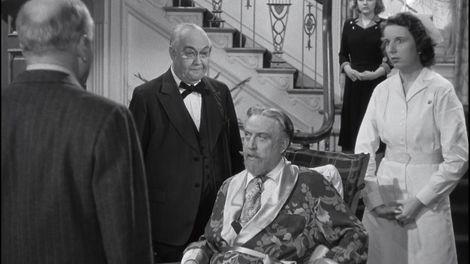
Photo: tcm.com
The Man Who Came to Dinner

Mary understood that comedy was the field she needed to pursue. She was lucky enough to continue getting roles on Broadway, appearing in several shows throughout the 1930s, including “Stage Door” in 1936 and “Hitch Your Wagon” in 1937. She also was cast in “The Man Who Came to Dinner” as Nurse Preen with Monty Woolley. She continued to receive encouraging reviews. When Warner Brothers decide to turn the play into a movie, both Mary and Woolley were part of the cast. Mary became known for being a bit sarcastic and witty. She was given roles in the film, Now Voyager with Bette Davis, again playing a nurse.
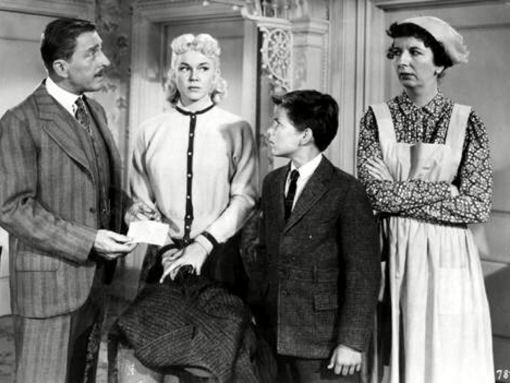
Photo: viennasclassichollywood.com
By the Light of the Silvery Moon

Mary flip flopped from Broadway to Hollywood, taking roles that interested her. She would appear in both Moonlight Bay (1951) and By the Light of the Silvery Moon (1953) with Doris Day; White Christmas (1954), and The Music Man (1962).

Mary had cornered the market in roles of smart-alecky teachers, nurses, and housekeepers in film. When she transitioned to television, she often continued in these roles. Her first two recurring roles were housekeepers named Alice on Halls of Ivy from 1954-55 and Katie on Annette in 1958. From 1956-1958, she played Liz O’Neill, Danny Thomas’s press agent on Make Room for Daddy. Throughout the 1950s she also appeared on numerous shows including Zorro.

Photo: pinterest.com

One of my favorite episodes with Mary was the 1952 episode “The Ballet” on I Love Lucy where Wickes played Madame Lamond, a formidable ballet teacher who taught Lucy. Wickes and Lucy would remain life-long friends. After Mary’s death, Lucie Arnez talked about her relationship with their family: “For my brother and me, Mary was just like one of the family. If any of us were sick or even in bed with a cold, Mary would show up at the backdoor with a kettle of chicken soup. She could be loud and boisterous and as demanding as any of the characters she played, but she was also very loving and giving. What a lady.” Mary would appear on numerous episodes of Lucille Ball’s other shows in the 1960s and 1970s.

Photo: aurorasginjoint.com

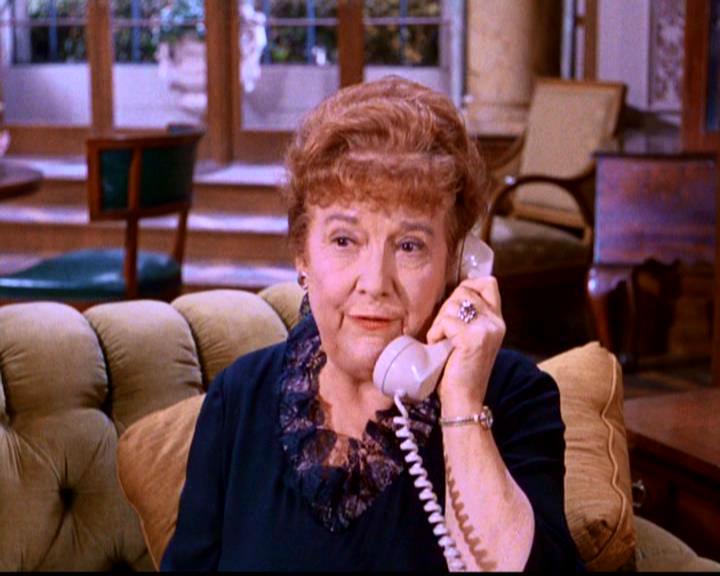
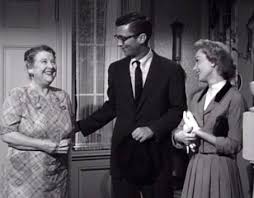
In the 1960s, Mary continued to show up on a variety of shows. We see her on My Three Sons, Bonanza, F-Troop, The Doris Day Show, The Donna Reed Show, and I Spy. She also had recurring roles on three shows during the decade: The Gertrude Berg Show, Dennis the Menace, and Temple Houston. In the Gertrude Berg Show, Mary was landlady, Winona Maxfield. She was hilarious on Dennis the Menace, playing Miss Cathcart, an older neighbor looking for a man. On Temple Houston, she played Ida Goff. Temple was Sam Houston’s real son who was a circuit-riding lawyer.  
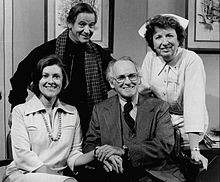
Photo: en.wikipedia.org
The cast of Doc

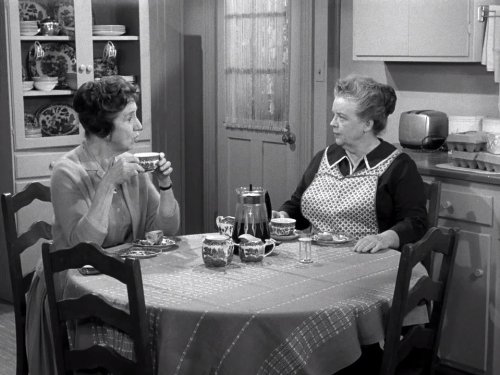
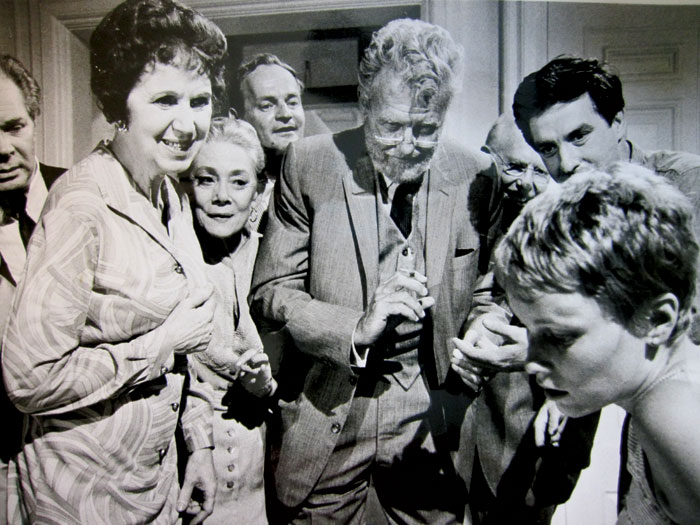
As Mary aged, she progressed to the cranky relative or nosy neighbor type of character. In the 1970s she was a regular on Julia, Doc, and The Jimmy Stewart Show. On Julia, she was Dr. Chegley’s wife, Melba. She went back to her role as a nurse on Doc. On the Jimmy Stewart Show, she is Mrs. Bullard. Two of my favorite episodes of her from the 1970s were her roles on Columbo and M*A*S*H. On Columbo, Mary plays a landlady of a victim who’s been murdered. She and Columbo have a priceless conversation during the show, “Suitable for Framing” in 1971. On M*A*S*H, Mary played Colonel Reese who is observing Margaret and the nurses.

Photo: aurorasginjoint.com

In the 1980s, Mary’s schedule slowed down a bit. She did revive her role as a maid on The Love Boat in 1981. From 1989-1991, she took another regular role as housekeeper Marie Murkin on Father Dowling Mysteries.

Photo: hometheaterforum.com

In the 1990s, Mary was doing more voice overs. She taped five episodes of Life with Louie which aired from 1995-1997 and was Laverne in The Hunchback of Notre Dame in 1996. Unfortunately, she would not live to see them on the big screen. In 1995, she passed away after having respiratory problems. While a patient in the hospital, she fell and broke her hip. She died of complications caused by the surgery.

Mary never married or had children and as part of her legacy, she left a $2 million donation in memory of her parents to the Television, Film and Theater Arts at Washington University.

Susan Oliver

Photo: amazon.com

More than twenty years younger than Wickes, Susan Oliver was born in 1932 in New York City. Her real name as Charlotte Gercke. Her father was a political reporter for the New York World. Her parents divorced when she was quite young, and she grew up in boarding schools. She traveled with her father to Japan when he took a post there. She studied at the Tokyo International College, studying American pop culture. While Wickes was the wise-cracking comedic foil, Oliver was often the leading lady character with blue eyes, blonde hair and heart-shaped face.

Photo: trekdivos79.blogspot.com
on The Wild Wild West

In 1949, she traveled to LA to see her mother who had found her niche as “astrologer to the stars.” Susan then enrolled at Swarthmore College. After graduation, she continued acting courses at New York City’s Neighborhood Playhouse.

Her first Broadway part came in 1957 as the daughter or a Revolutionary veteran, “Small War on Murray Hill.”

Photo: manfuncle2014.blogspot.com
The Man from U.N.C.L.E.

Returning to LA, she started a film career. Though she would appear in 15 big-screen movies, television is where she spent most of her time. She put in her due diligence in the 1950s and 1960s. Her first job was on The Goodyear Playhouse in 1955. She continued with a lot of drama and theater for the first few years of her career. She took roles in a variety of shows including: Father Knows Best, Suspicion, The David Niven Show, Bonanza, The Twilight Zone, The Adventures of Ozzie and Harriet, The Alfred Hitchcock Hour, Wagon Train, Route 66, The Fugitive, The Andy Griffith Show, Ben Casey, Mannix, Dr. Kildare, The Man from UNCLE, I Spy, Gomer Pyle, My Three Sons, and the Wild, Wild West.

Photo: imdb.com

I read several times that she turned down lead roles in series to retain her independence, but I never read any specific roles she turned down. In 1966 she accepted a recurring role of Ann Howard in Peyton Place. She had signed a contract for a year, but after five months, her character was killed on the show. She made a pilot for a show titled, “Apartment in Rome” that did not sell.
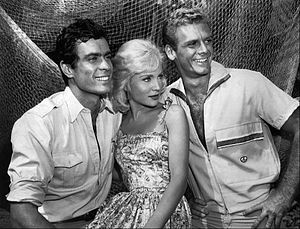
Photo: en.wikipedia.com
on Peyton Place

Oliver never did get another show of her own, but she continued to guest on shows throughout the 1970s and 1980s, including Love American Style, Gunsmoke, The FBI, Streets of San Francisco, The Love Boat, Magnum PI, Murder She Wrote, and Simon and Simon.
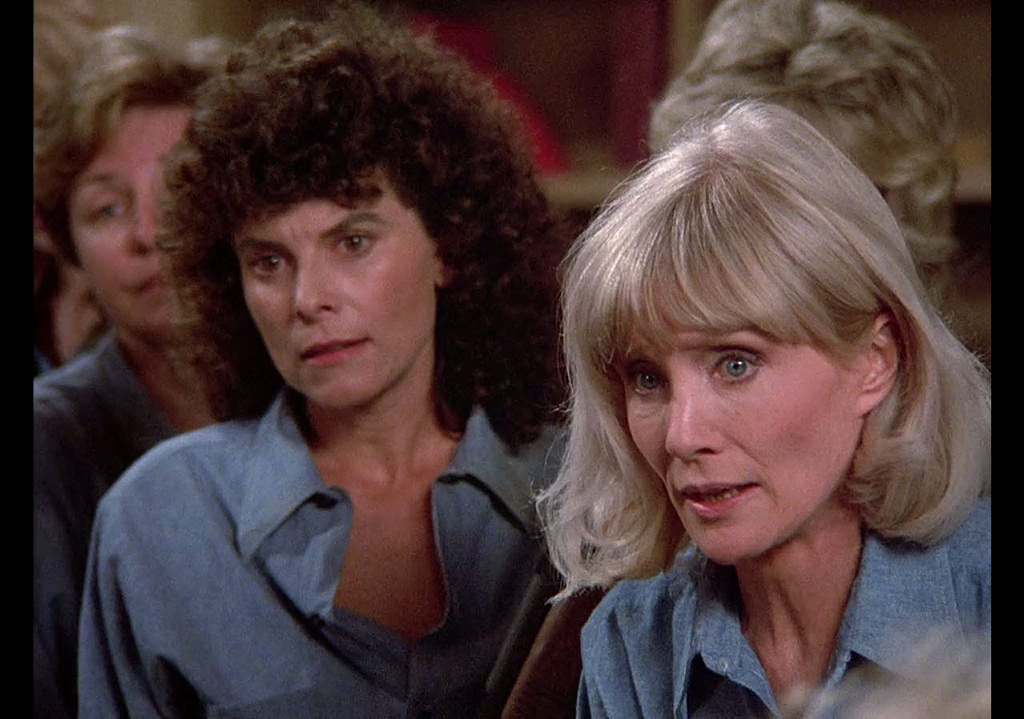
Photo: flickr.com
on Murder She Wrote

One of the reasons, she didn’t want to be tied down was her interest in flying. In 1959, a Boeing 707 she was a passenger on plummeted 30,000 feet for the Atlantic Ocean before leveling out. After that scare, she decided to learn to become a pilot. In 1964, she started flying single-engine planes. Bill Lear brought her on board to become the first woman to train on his new Lear Jet. She would star in a movie about Amelia Earhart. She also later wrote about her flying experiences in an autobiography, Odyssey: A Daring Transatlantic Journey in 1983.
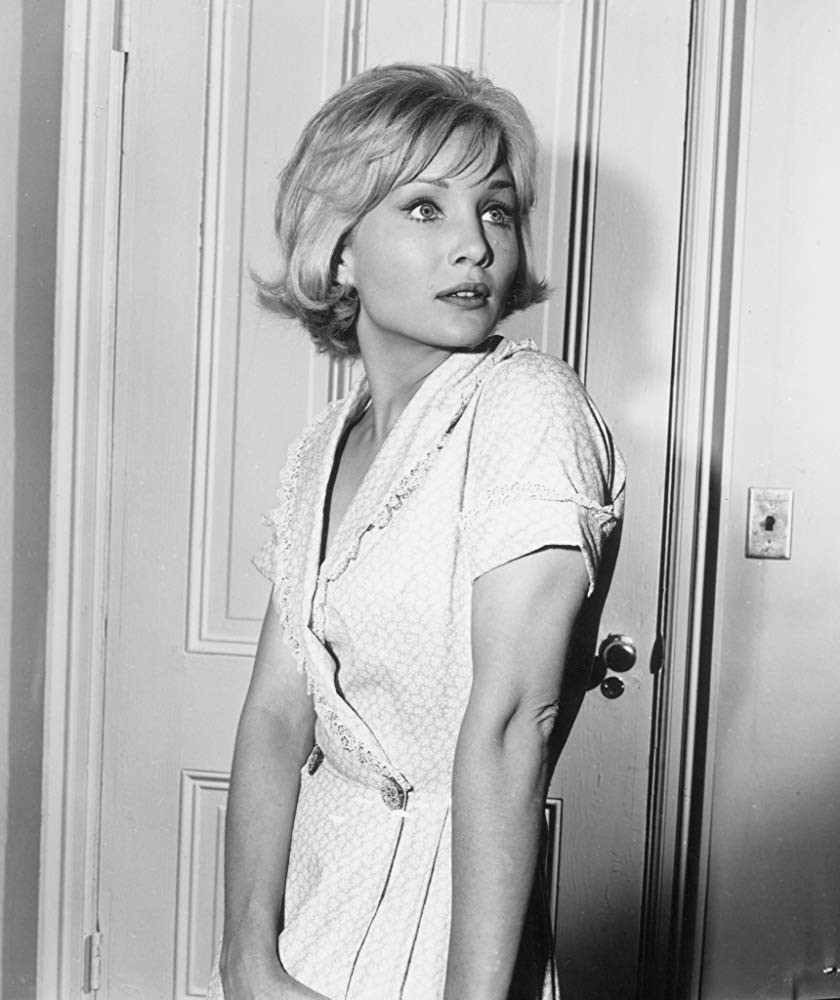
Photo: imdb.com

In the mid-1970s, she stopped accepting most acting roles and quit flying. She enrolled at the 1974 AFI Directing Workshop for Women with peers Lily Tomlin, Margot Kidder, Kathleen Nolan, and Maya Angelou. During the final season of M*A*S*H she directed an episode of the show. She would later direct an episode of Trapper John, MD.

At age 58, Oliver was diagnosed with colorectal, and eventually lung, cancer. She died in 1990.

Oliver was an interesting actress. Apparently, she loved acting, but never wanted to be tied down. She not only was a aviator and director but a writer. She was a practicing Buddhist and a baseball expert as well.

Wickes and Oliver were very different women with very different interests and acting roles. They both remained single and devoted themselves to their careers. But they were both women who were always in demand for their acting ability.
Just a Couple of Characters, Part 2: Hope Summers and Madge Blake

Today we continue our series, Just A Couple of Characters, about character actors we recognize but might not know much about. Hope Summers and Madge Blake are two actresses you will recognize if you watched sitcoms in the 1960s or 1970s.

Hope Summers

Photo: en.wikipedia.org

Born Sarah Hope Summers in 1902 in Mattoon, Illinois, Hope Summers often played the friendly, but nosy, neighbor. She’s best recognized as Clara from The Andy Griffith Show.

Summers became interested in theater early in her life. She attended Northwestern, majoring in speech. After graduation she stayed at the University and taught speech and diction. She then moved to Peoria and headed the Speech Department at Bradley University. She joined a few community theaters, putting on one-woman shows. She also acted in a few dramatic radio shows.

She married Claude Witherell in 1927, and they were married until his death in 1967. The couple had two children.

In 1950, she transitioned to television. She appeared in an early comedy series, Hawkins Falls: A Television Novel. Like Edward Andrews, she was often cast in roles older than her actual age. She became a popular actress quickly. She continued to appear in a variety of shows throughout the 1950s including Bachelor Father, Private Secretary, Wagon Train, Dennis the Menace, and the Loretta Young Show.

Photo: cscottrollins.blogspot.com
On The Rifleman

From 1958-1960, she would appear in The Rifleman as Hattie Denton.

In 1961, she received the role she would become most famous for, Clara, Bee’s best friend on The Andy Griffith Show. When Andy Griffith left the show in 1968, Hope continued with Mayberry RFD in her role of Clara for five episodes. Clara was a lonely spinster who lived next door to Andy and his family. She and Bee had fun sharing bits of gossip and talking about current events. Clara had a good heart and though she and Bee could get upset with each other, they truly cared about each other.

Photo: sitcomsonline.com

While playing the role of Clara, she continued to guest in series throughout the 1960s. She appeared on many of the hit shows of that time such as Dr. Kildare, Gunsmoke, Make Room for Daddy, Hazel, My Three Sons, The Dick Van Dyke Show, Petticoat Junction, The Phyllis Diller Show, Marcus Welby, That Girl, and Bewitched.

Photo: mash.fandom.com

During the 1970s, Summers kept her career going strong, appearing in Hawaii Five-0, M*A*S*H, Little House on the Prairie, and Welcome Back Kotter.

Photo: peorian.com
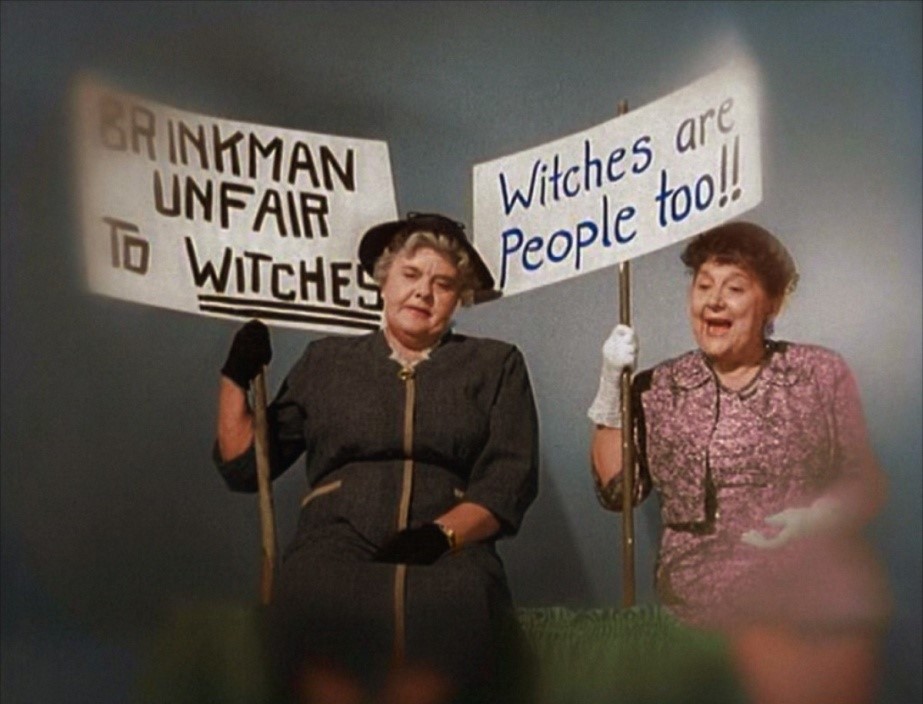
Playing a nice witch in Rosemary’s Baby

Although, Summers began her acting career during the second half of her life, she was also featured in several well-known movies. In 1960, she was in Inherit the Wind, The Shakiest Gun in the West, and Rosemary’s Baby in 1968, among others.

Photo: famousfix.com

Summers also was famous as the voice of Mrs. Butterworth in commercials.

In 1978 she was diagnosed with congestive heart failure and quit acting. She passed away from the disease in 1979.

Madge Blake

Photo: listal.com

While Hope Summers was part of the cast of The Andy Griffith Show, Madge Blake was busy portraying Aunt Harriet on Batman.

Born Madge Cummings in 1899 in Kansas, she, like Hope Summers, became interested in acting at a young age. Her father was a Methodist minister and he refused to allow her to give it a try. Oddly enough, Madge’s maternal uncle was Milburn Stone, Doc on Gunsmoke.

Photo: imdb.com

Although they later divorced, Madge married James Blake and they had one child. She had a fascinating career. Both she and James worked for the government during the war. They had top secret clearance for their project working on the construction of the detonator for the atomic bomb in Utah. They also performed tests on equipment used in the Manhattan Project.

Photo: actorz.ru

Also, like Summers, Blake turned to acting at a later age. When she was 50, she enrolled at the Pasadena Playhouse to study acting. She only had twenty years in the business, yet she managed to achieve an impressive 124 acting credits.

Photo: icollectors.com
Singin’ in the Rain

Blake would appear in 47 films in smaller, but impressive, roles. Some of her movies included An American in Paris, Singin’ in the Rain, Brigadoon, The Tender Trap, Bells Are Ringing, Ain’t Misbehaving, and The Solid Gold Cadillac.

Photo: pinterest.com
Margaret Mondello

Beginning her television career in 1954, she racked up an impressive amount of guest star roles and several recurring roles. She played Tillie, the president of the Jack Benny fan club on The Jack Benny Show. She played Larry Mondello’s mother on Leave It to Beaver. An interesting aside is that she was asked to play Aunt Bee on The Andy Griffith Show where she would have worked with Hope Summers. Because she was locked into the role of Mrs. Mondello, she declined. She took the role of Mrs. Barnes, Joey’s mother, on The Joey Bishop Show. On the Real McCoys, she played Flora MacMichael, Grandpa McCoy’s love interest; Nurse Phipps on Dr. Kildare; and the role she became best known for, Aunt Harriet on Batman.  

Photo: channel.superhero.com

The network was worried about Batman and Robin living alone together on Batman, so the role of Aunt Harriet was added. The story line was that she raised Bruce Wayne in the family mansion. Their interaction with Aunt Harriet was also a reason for the dynamic duo to appear in their non-hero roles more often.

It would seem that coming into acting later in life and then appearing in so many movies and recurring television appearances would have kept her quite busy. But in addition to these appearances, she was cast in many of the most popular shows during her twenty years on television. During that time, you can find her on dramas like Public Defender, Lassie, The Restless Gun, and the Man from U.N.C.L.E.

Photo: tumblr.com
On I Love Lucy

Of course, she was meant to play comedy and she appeared on an incredible number of sitcoms. Just to name a few, there of them: George Burns and Gracie Allen Show, I Love Lucy, Private Secretary, Father Knows Best, Bachelor Father, The Adventures of Ozzie and Harriet, The Donna Reed Show, Make Room for Daddy, Bewitched, The Addams Family, My Favorite Martian, The Dick Van Dyke Show, Gomer Pyle, and The Doris Day Show. Pretty amazing.

Photo: vitabrevis.americanancestors.org
On Bewitched

I read over and over that one of her best performances was in the pilot for Dennis the Menace where she plays Dennis’s babysitter. I have not been able to watch that show, but I will definitely check that out.

Photo: allstarpics.famousfix.com
On Dennis the Menace

In 1969, Blake passed away from a heart attack after she broke her leg. She was only 70, or we might have had a much longer list of television series for her.

Hope Summers and Madge Blake had a lot in common. They both became interested in acting at an early age, they both had major careers before acting, they both began acting in the second half of their life, they both played neighborly types–Summers, nosier, and Blake, more ditzy. They also both had respectable film careers paralleling their television ones. Their television roles may have been smaller, but they were memorable, they are definitely two characters worth watching.

Danger Will Robinson: Lost in Space Revisited

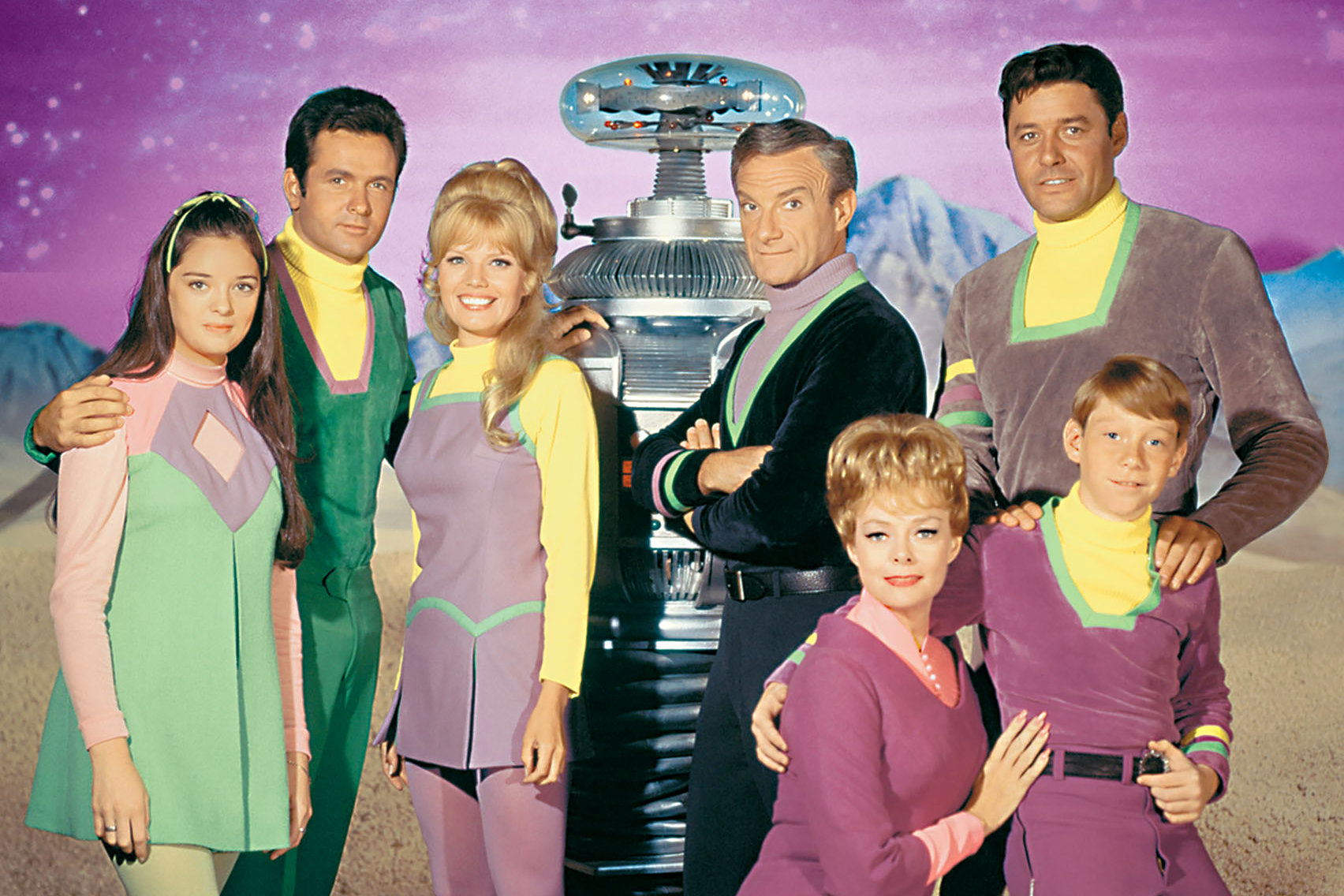
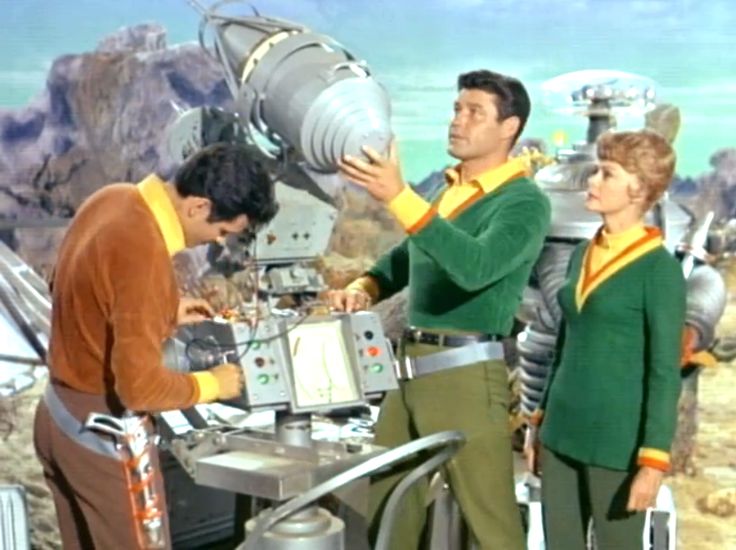
Airing in 1965, Lost in Space follows the travels of a family whose ship is off course, traveling through outer space. The show was on the air for three seasons, producing 84 episodes.

Photo: nytimes.com

The premise of the show was that in 1997, earth becomes overpopulated. Professor John Robinson (Guy Williams); his wife Maureen (June Lockheart); and their kids, Judy (Marta Kristen), Penny (Angela Cartwright), and Will (Billy Mumy) are selected to go to the third planet in the Alpha Centauri star system to establish a new colony. Major Don West (Mark Goddard) is also accompanying them. Doctor Zachary Smith (Jonathan Harris) an enemy government agent is sent to sabotage the mission. He becomes trapped on the ship after he reprograms the robot (voiced by Dick Tufeld), altering the course for the spaceship, the Jupiter 2. The group is now lost and trying to find their way back home. During the course of the show, Smith becomes less sinister. It was no secret that the show was a science fiction version of Swiss Family Robinson.

The pilot, created by Irwin Allen, was titled “No Place to Hide.” A ship called the Gemini 12 was supposed to take a family on a 98-year journey to a new planet. When an asteroid knocks the shop off course, the family must try to find their way back. CBS bought the series, choosing Lost in Space over another new show, Star Trek. Dr. Smith and the Robinsons’ robot were added to the cast and the ship was renamed Jupiter 2.

Photo: fandom.com

Dr. Robinson was an astrophysicist who specialized in planetary geology. Williams who played the part was a well-known actor who had starred in the show Zorro. He thought his lead role would be a dramatic part, but the show became increasingly campy like Batman, and Williams’ role was more of a supporting character than a star. He was bitter about the turn of events and when the show was cancelled, he moved to Argentina where Zorro was popular and never acted again.

Photo: en.wikipedia.org

Maureen Robinson was also a doctor; she was a biochemist who also performed housewife duties such as preparing meals and tending the garden. Her chores were not too taxing though because the “auto-matic laundry” took seconds to clean, iron, fold, and package clothing in plastic bags. The dishwasher also did a load in seconds. In addition to the hydroponic garden maintained by Maureen, the crew had protein pills available that would substitute for food during emergencies. One fun fact I learned about Lockhart was that she had the largest parking spot on the 20th Century Fox lot because she often drove a 1923 Seagrave fire truck.

West was the pilot of the Jupiter 2 and the only crew member who could land the ship.

Photo: digitalvortex.info

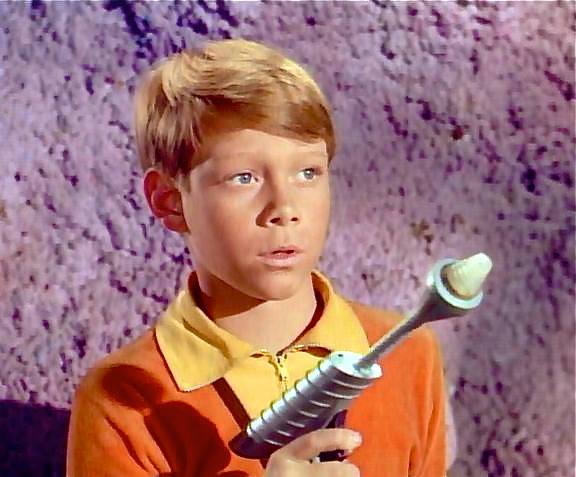
Judy is the oldest child. Being the oldest, she was allowed a more glamorous wardrobe and hairstyle. There was always the undercurrent that she and West would get together. Penny is eleven and loves animals and classical music. She finds a pet similar to a chimpanzee which she named “Bloop.” Will is nine and the youngest member of the family, but he is a genius when it comes to electronics and computer technology.

Photo: pinterest.ca
Photo: tvdatabase.wiki.com

Dr. Smith is an expert in cybernetics. Carroll O’Connor, Jack Elam, and Victor Buono were all considered for the part of Dr. Smith. Smith was only supposed to be a guest star but became the best-loved character in the show. Harris rewrote many of his lines that he considered boring. He redefined his character as an attention-getting egoist with a flamboyant style and arrogant dialogue.

Photo: nytimes.com

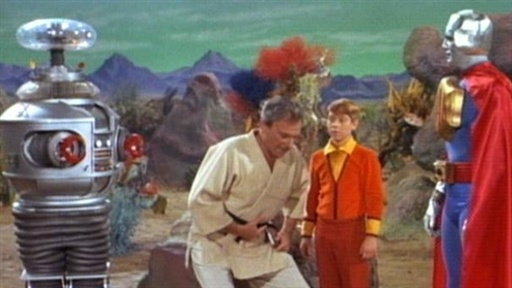
The Robot is an M-3, Model B9, General Utility Non-Theorizing Environmental Robot which had no name. It did have superhuman strength and weaponry that was futuristic in nature. It can display human characteristics such as laughter, sadness, and mockery.

Photo: denofgeek.com

The robot was designed by Robert Kinoshita. It cost $75,000 to produce and weighed more than 200 pounds. Kinoshita also designed Robby the Robot for the Forbidden Planet in 1956. The Lost in Space robot was a Burroughs B-205. It had a flashing light and large reel-to-reel tape drives. It could be seen in a variety of movies and television shows, including Voyage to the Bottom of the Sea (1964), Batman (1966), The Land of the Giants (1968), and Austin Powers: The Spy Who Shagged Me (1999).

A number of stars chose to appear on the show including Werner Klemperer, Kurt Russell, Wally Cox, Lyle Waggoner, Arte Johnson, Hans Conried, and Daniel J. Travanti.

The pilot and many shows from season one used Bernard Herrmann’s score from The Day the Earth Stood Still, a 1951 film. John Williams wrote the opening and closing themes for the show. Season three used a faster tempo version and the opening featured live action shots of the cast. The theme music is unforgettable, and although I haven’t seen the show since its original airing until recently, I immediately remembered the entire score.

Photo: friends-club.info

In season one, the ship crashes on an alien world, later identified as Priplanus. The crew spends most of the season on the planet, surviving many adventures. Most of the episodes emphasize the daily life of the Robinsons adjusting to their new conditions. The show was on Wednesday nights against The Adventures of Ozzie and Harriet and The Patty Duke Show on ABC and The Virginian on NBC.

Photo: pinterest.ca

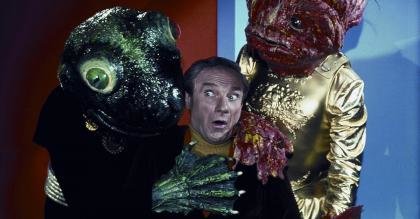
In season two, the ship is repaired and launched into space. Priplanus is destroyed after a series of earthquakes. Eventually, the spaceship lands on another planet and is delayed there. The show became campier during this time because it was scheduled against Batman for a second year. Costumes were brighter and the show was filmed in color. Most of the plots featured outlandish villains. More emphasis was placed on Will, Dr. Smith, and the robot and serious science fiction was sacrificed. Like season one, each episode ended with a cliff hanger.

Photo: pinterest.com

Season three shows the Jupiter 2 travelling through space visiting a new setting on each episode. A space pod allows transportation between the ship and the planets they explore. Humor was still a mainstay of the show and the crew encountered space hippies, pirates, intergalactic zoos, and ice princesses. The cliff hanger disappeared, and the robot would show highlights from the upcoming episode before the closing credits. The show continued its slot on Wednesdays and was still on opposite The Virginian on NBC but also The Avengers on ABC

Photo: mightymega.com

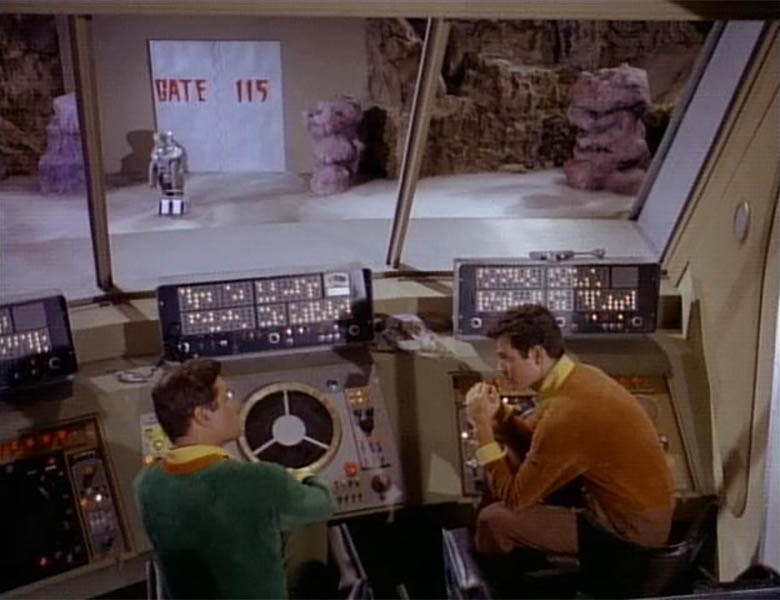
The show was probably best known for its technology and futuristic props. The Jupiter 2 was a two-deck spacecraft, nuclear powered. It used “deutronium” for fuel. The crew slept in Murphy beds. A laboratory was also designed as part of the spaceship. The characters could travel between two levels by an electronic glide tube elevator or a ladder. The ship could be entered or exited through an airlock on the upper deck or landing struts on the lower deck.

Photo: pinterest.com

The crew traveled on the Chariot. It had six bucket seats for passengers, a radio transceiver, a public address system, a rack holding laser rifles, and interior spotlights.

The crew members could use a jet pack, the Bell Rocket Belt. The robot ran air and soil tests. He could detect threats with his scanner and produce a smoke screen for protection. He could understand speech and speak to the crew. He claimed he could read minds by translating thought waves back into words.

Photo: view.yahoo.com

One of the things Lost In Space is best remembered for is the catchphrase, “Danger Will Robinson.” What is funny is that it was only used one time in the series. Smith also had several lines he is remembered for: “Oh, the pain, the pain” and “Never fear, Smith is here” are two of them. He also was famous for his alliterative phrases such as “Bubble-headed booby,” “Cackling Cacophony,” “Tin-Plated Traitor,” “Blithering Blatherskyte,” and “Traitorous Transistorized Toad” which he used to insult the robot.

Photo: en.wikipedia.org

Lost in Space ranked in the top 35 shows all three seasons it was on the air (32nd, 35th, and 33rd respectively). It was ranked number three in the top five favorite new shows of 1965-66, along with The Big Valley, Get Smart, I Dream of Jeannie, and F-Troop. The show was nominated for an Emmy for Cinematography Special Photographic Effects in 1966 and for Achievement in Visual Arts & Make-up in 1968 but did not win either award.

Despite its good ratings, CBS Chairman William Paley hated the show and didn’t understand why it was popular. He instructed his executives to cancel it the minute its ratings dipped. Unfortunately, it was never able to air a finale.

Photo: metv.com

In the 1970s, Mumy wrote a script for a reunion movie. He arranged for the casting and had approval from 20th Century Fox and CBS. However, Allen who was worried that Mumy might be entitled to a copyright claim on the original, refused to even review the script. Without his okay, the reunion was never able to be filmed.

Lost in Space was successful in reruns and syndication. All three seasons are available on DVD. Like many science-fiction shows and movies from the 1960s, it was eerily predictive of technology and glaringly wrong at the same time. The show is campy, but I don’t mind that. Along with The Monkees and Batman, it seems to fit the times it was produced in.

Photo: lrmonline.com

Perhaps it’s not that bad that Mumy was not able to film the reunion. The show was made into a movie in 1998 which received poor reviews. Legendary Television has brought a reboot of the show to Netflix in 2018.  It is currently getting ready for its second season. It has not received the greatest reviews either. Lost in Space can be seen on Antenna TV on Saturday nights, so you might want to catch an episode or two this winter. Sometimes the real thing just can’t be duplicated.

Photo: pinterest.com

The Donna Reed Show: It’s All About the Mom

Merry Christmas Eve.  In honor of It’s a Wonderful Life which will be playing quite often today, this week’s blog is about Donna Reed, who played Mary in the Jimmy Stewart holiday favorite.

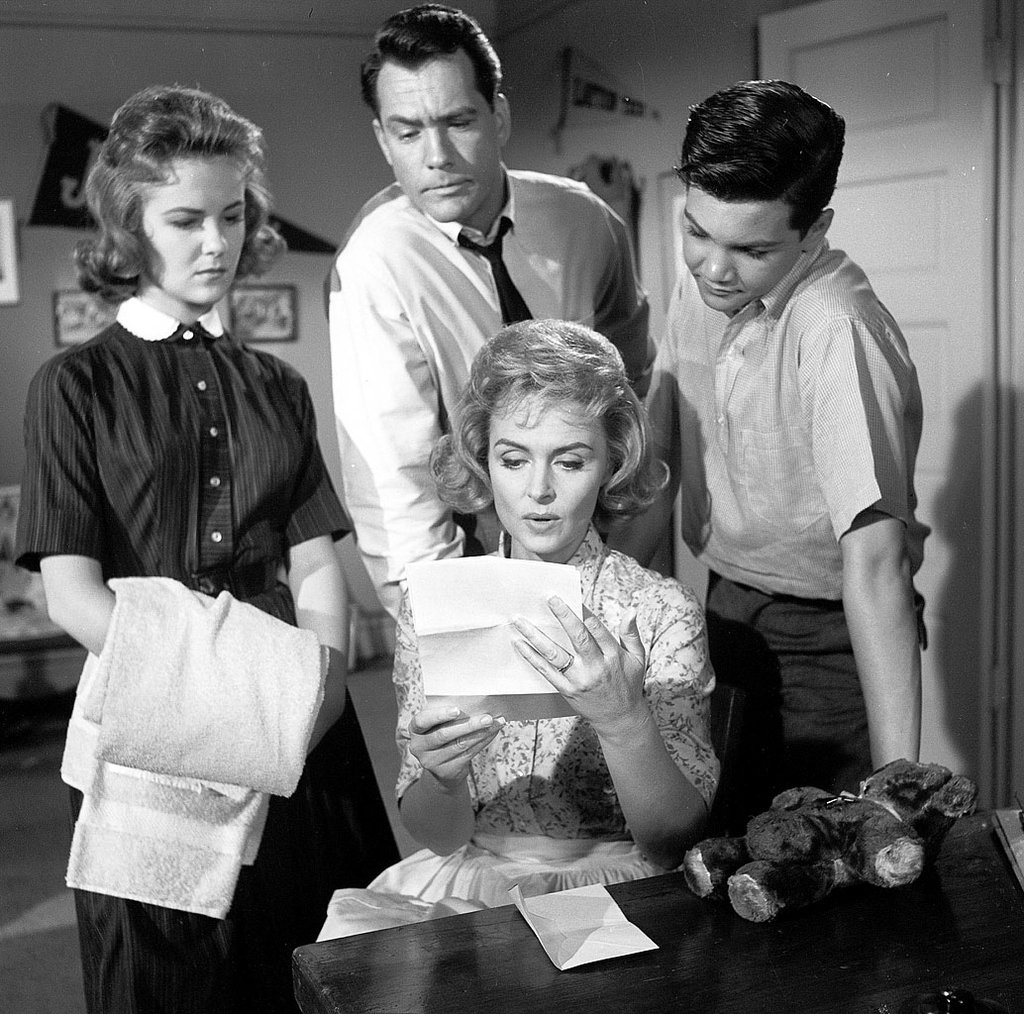
In 1958, most of the television shows were game shows, variety shows, or westerns. Almost all the sitcoms on the air were based on a star; we had The Danny Thomas Show, The Ann Sothern Show, The Bob Cummings Show, and The Adventures of Ozzie and Harriet. It was also the year The Donna Reed Show began. The show would last eight seasons, resulting in 275 episodes.

reed14

Photo: dallas.wikia.com

The series was created by William Roberts. Donna and her husband Tony Owen developed and produced the show, under the name “Todon.” We had shows about single adults in The Bob Cummings Show and The Ann Sothern Show. We had families, including The Danny Thomas Show, Father Knows Best, and The Adventures of Ozzie and Harriet. Roberts wanted to concentrate on the demanding roles a stay-at-home mom had to juggle. Reed agreed with him. As she noted, “We started breaking rules right and left. We had a female lead, for one thing, a strong, healthy woman. We had a story line told from a woman’s point of view that wasn’t soap opera.”

reed2

Photo: imdb.com

The Donna Reed Show is often evoked by critics who say television scripts are not realistic but center around unreal family expectations, but that is not the goal Reed and her husband had. Donna described the show as “realistic pictures of small-town life—with an often-humorous twist. Our plots revolve around the most important thing in America—a loving family.” The shows featured typical family problems families faced in the late 1950s: having to fire a clumsy housekeeper, quality time with your spouse, dealing with disciplinary issues, or Donna being swamped with requests to volunteer for charity drives or community theater shows. However, there were times the show delved into more controversial issues such as women’s rights or freedom of the press.

reed3

Photo: metv.com

The Stone family includes Donna, Alex, Mary and Jeff. Donna (Donna Reed) is the iconic mother. She grew up on a farm (which Reed did). She became a nurse and occasionally helps Alex (Carl Betz), a pediatrician who has his office at the house. Mary (Shelly Fabares) is in her first year of high school. She studies ballet and plays the piano. During the series, she has several boyfriends. Mary left for college before the show ended, but Fabares made guest appearances. Jeff (Paul Petersen) is in grade school. He loves sports, likes to eat, and often teases his sister. In 1963 when Fabares leaves, Paul Petersen’s real sister, Patty was cast as a runaway orphan taken in by the Stone family. The Stones live in Hilldale, an All-American town.

reed9

Photo: pinterest.com

Several other characters appear often. Dave and Midge Kelsey (Bob Crane and Ann McCrea) are good friends of Donna and Alex’s.  Dave is also a doctor. Another of Alex’s colleagues who is a good friend is Dr. Boland (Jack Kelk), whom the kids call “Uncle Bo.” Smitty Smith (Darryl Richard) is Jeff’s best friend and Scotty (Jimmy Hawkins) is Mary’s boyfriend.

Photos: pinterest.com and metv.com

With Donna’s movie relationships, many guest stars appeared on the show during its run. Baseball players Don Drysdale, Leo Durocher, and Willie Mays played themselves. Musicians Harry James, Tony Martin, and Lesley Gore appeared. Buster Keaton was featured in two different shows. Esther Williams played a fashion designer. Other stars who showed up included Jack Albertson, John Astin, Dabney Coleman, Ellen Corby, Richard Deacon, Jamie Farr, Gale Gordon, Arte Johnson, Ted Knight, Harvey Korman, Cloris Leachman, Marion Ross, William Schallert, Hal Smith, Marlo Thomas, and William Windom.

In the opening credits, Reed comes down the stairs and answers the telephone which she gives to Alex. She then hands the kids their lunches and books and sends them off to school. When Alex leaves on a call, she closes the door and smiles. In 1964 when The Munsters debuted, their opening credits were a parody of Donna’s show as Lily performs the same actions.

reed12

Photo: metv.com

The Donna Reed Show faced the Milton Berle show, Texaco Star Theater Wednesday nights and ratings were not great. It was renewed and moved to Thursdays the next year. I was surprised to learn that during the eight years the show was on the air it was only in the top 20 in season six and only in the top 30 in season four.

reed5

Photo: cinemacats.com (Look closely and you’ll notice this was                                                                 the living room for I Dream of Jeannie as well).

Although the show never received very high ratings, Donna Reed was nominated for an Emmy every year from 1959 to 1962. (Jane Wyatt won in 1959 and 1960, Barbara Stanwyck won in 1961, and Shirley Booth won in 1962.) Donna Reed won the Golden Globe in 1963.

reed8

Photo: metv.com

In 1962 Donna felt that the writers had run out of creative ideas and were recycling plots. Both Mary and Jeff were allowed to perform in this season. Fabares debuted a single, “Johnny Angel” in February which went to number one on the charts, selling more than a million copies. In October, Petersen sang “My Dad” which made it to number six. Donna decided that would be the last season, but when ABC made her a very lucrative offer for three more seasons, she and her husband agreed.

reed1

Photo: nytimes.com

When this contract ended in 1966, Donna was ready to retire. Reed was considering a television movie reunion but when Betz passed away in 1978, she decided it was no longer an option.

Campbell Soup was the first sponsor, and later sponsors included Johnson & Johnson and The Singer Company. Whenever a scene takes place in a supermarket, Campbell’s Soup, V-8 Juice, Franco-American Spaghetti and Johnson & Johnson Baby Powder are likely to be in the shot.

reed13

Photo: metv.com

Reruns of the show were seen on Nick at Nite from 1985-1994 and on TV Land from 2002 until 2004. MeTV began airing the show in September of 2011.

The cast was a close-knit one and continued their relationships after the show ended. Paul Petersen credited Donna as being the nurturing adult he needed in his life to get him through the years of being a child star. She helped him understand how the industry worked and helped him during some tough times during his life. Shelly Fabares also said Donna and Carl were amazing. Realizing how tough the industry can be for young kids, they protected Paul and herself and loved them as second parents. Donna never forgot to send Shelly a birthday gift.  In 1986, before she passed away from pancreatic cancer, her final words were to make sure Shelly’s birthday gift was wrapped and delivered.

reed15

Photo: lapostexaminer.com

Despite the bad raps the show often received from the women’s lib organizations, Donna Reed did help advance the way women were perceived in the media. She endowed her character with strong emotions, definite opinions on issues, and independence. In her personal life, Reed expressed her views on the medical industry and the political arenas.

reed7

Photo: geocaching.com

Paul Petersen summed up the value of the show in an interview he did in 2008. In his words, The Donna Reed Show, “depicts a better time and place. It has a sort of level of intelligence and professionalism that is sadly lacking in current entertainment products. The messages it sent out were positive and uplifting. The folks you saw were likable, the family was fun, the situations were familiar to people. It provided 22-and-a-half-minutes of moral instructions and advice on how to deal with the little dilemmas of life. Jeff and Mary and their friends had all the same problems that real kids in high school did. That’s what the show was really about, the importance of family. That’s where life’s lessons are transmitted, generation to generation. There’s a certain way in which these are transmitted, with love and affection.”

I couldn’t say it better.

Sherwood Schwartz: A Brand New Look

Sherwood Schwartz was born in November of 1916 in New Passic, New Jersey. The Pawnshop starring Charlie Chaplin was showing in theaters. These silent films would lead to radio and television developments that would change the course of Schwartz’s life.

shel9

Photo: charliechaplin.com

After getting his undergrad degree in New York, Sherwood moved to California to attend school and get his Masters in Biology. His goal was to have a career in endocrinology doing research. Unfortunately, he was put on a waiting list because the medical schools he applied to had a quota for the number of Jewish students they would accept. It was suggested that he change his name and religion. He refused and never did get into medical school.

shel7

Photo: tvparty.com

While waiting, he submitted jokes to Bob Hope for his radio show. He picked Hope’s show specifically because his brother Al worked for the show. (Al wanted to be a comedy writer, but his parents made him get a degree first. After passing the bar, he informed them he was off to California.) Bob Hope asked Sherwood to join his brother on staff and he accepted. He honed his comedy skills writing for four years with Bob Hope.

In 1941 he married Mildred Seidman and they had a family of four children. Sherwood also wrote for the Alan Young Show on radio.

shel10

Photo: tvseriesfinale.com

During World War II, he wrote for the Armed Forces Radio and when the war was over, he joined the staff of The Adventures of Ozzie and Harriet. Ozzie Nelson has a reputation for being a perfectionist. When Schwartz was asked about this, he gave the following example: “Oh absolutely. Absolutely true. That is the only man I know who, after his show was in reruns would take the reruns and re-edit them because he wasn’t happy with something. When it was too late to do anything with them, he still did it.”

shel11

Photo: wikipedia.org

In the 1950s, Schwartz made the move to television. He took a position with the writers on I Married Joan starring Joan Davis and Jim Backus. He described the difficulty in writing for her show. “She refused to do the show unless a writer was on the set. She wanted to be able to say I need a better line and have that provided to her right then and there. Since there were only three writers for the show, one had to be on the set while the other two continued working on upcoming scripts.” As he put it, “The stage would be quiet for a moment, 75 production people were scattered around the stage and you had to get a better line or a better blackout. That’s enormous pressure for a writer. It was a rough week (when it was his turn to be on set).”

He became the head writer on The Red Skelton Show where he also worked with his brother. He did not enjoy working with Skelton. Skelton had a reputation for treating writers badly. Schwartz received an Emmy for his work on the show. The final straw was when Sherwood was listening to an interview with Skelton. He was asked why his show was so successful, and he replied, “Every week, when I get those lousy scripts from the writers I yawn. And the voice of God tells me how to fix things.” Sherwood decided the pay was not worth the grief of working for Skelton, so he left the series.

shel12

He was then hired to retool My Favorite Martian in 1963 co-starring Bill Bixby and Ray Walston. CBS asked him to do some “reconstruction” work for the series, and he worked on seven episodes. He said the pilot was a great blueprint, but the writers were not following it as well as they should have. They were concentrating on Tim and his problems when the show needed to feature the challenges the Martian was having adapting to life on earth.

During this time, he was thinking about his own series. When he and his brother worked in the radio industry, they came up with an idea for a show called Help, about seven servants who work for a rich family. He now began to take that idea and expand it. What if he took seven people from all different walks of life–but how to get them in one place was the stumbling block.

shel13

Photo:mgtow.com

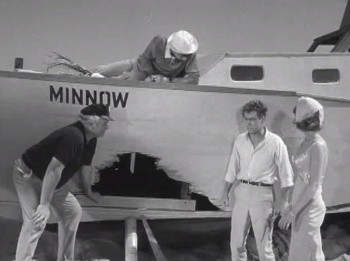
It began to come together when he placed them on a deserted island. Later that year the pilot was shot with a movie star, a professor, a millionaire and his wife, a farm girl, a skipper, and his first mate inhabiting an island while waiting to be rescued. It was not an elite or snobby show to be sure. FCC chairman Newton Minnow is the person who called television a “vast wasteland,” and in his honor, the Skipper’s boat was christened The SS Minnow.

Viewers always loved the show, but critics not so much. Schwartz said the critics never understood “the big picture” of what the characters represented. The San Francisco Chronicle’s Terrence O’Flaherty wrote that “It is difficult for me to believe that Gilligan’s Island was written, directed and filmed by adults.” UPI’s Rick DuBrow wrote “It is impossible that a more inept, moronic or humorless show has ever appeared on the home tube.” Ouch!

Schwartz said he was not “disheartened by the reviews . . . only a bit angry with the lack of understanding of what was being attempted.” As he continued, “these are the same men who are forever saying ‘For heaven’s sake, won’t somebody give us something other than the wife and the husband and the two children?’”

He once admitted “I honestly think I could sit down and write a show tonight that the critics would love, and I know it would be canceled within four weeks. I know what the critics love. We write and produce for people, not for critics.”

shel2

Photo: latimes.com

The show also gave him a new skill as a lyric writer. Along with George Wyle, he wrote the theme song for Gilligan’s Island.

Although the show was popular with viewers, executive William Paley never liked it. The show was being moved around the schedule, and in order to move Bonanza to a different time spot, he cancelled Gilligan’s Island. Gilligan’s Island was on the air for three years, but it established Schwartz’s reputation as a producer and writer.

Apparently, many people felt the show was realistic. A coast guard colonel called Sherwood and later showed him letters from people who were concerned about the castaways being stranded on the island and asking the coast guard to rescue them.

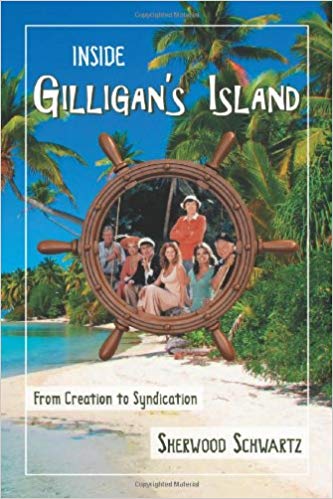
Although the show was cancelled, it never really went away. Two animated series and three TV movies would spin off the show. It has also been on air in reruns since 1967. In 1988, Sherwood wrote a book, Inside Gilligan’s Island.

shel19

With the cancellation of Gilligan’s Island, Sherwood began work on another new show. He had read an article that reported nearly one-third of American households included at least one child from a previous marriage. He decided to feature this sociological change and wrote a script about a woman with three daughters who marries a man with three sons. The networks all liked the idea but were asking for some major changes which he refused to make.

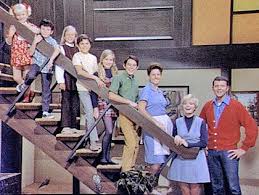
In 1968 the movie, Yours, Mine and Ours came out about a blended family and the networks now wanted the show. The series, starring Robert Reed and Florence Henderson as Mike and Carol Brady, aired on ABC from 1969 to 1974. The Brady kids were played by Maureen McCormick, Barry Williams, Eve Plumb, Susan Olsen, Christopher Knight, and Mike Lookinland. Ann B. Davis played Alice, the housekeeper.

shel3

Photo: boston.cbslocal.com

Again, the critics dismissed the show. What surprised me was that The Brady Bunch never did as well as Gilligan’s Island in the ratings. When it debuted, I was eight, and we all looked forward to Friday night when we would plant ourselves to watch The Brady Bunch and beginning in 1970, The Partridge Family, The Odd Couple, and Love American Style.

While the critics wrote the show off as unrealistic, many of the scripts were taken from the Schwartz family’s life. His daughter said she was not thrilled to watch the show and see a story about her life as part of the plot.

Similarly to Gilligan, once again, Schwartz wrote The Brady Bunch theme song, this time with Frank DeVol.

shel8

Photo: youtube.com

There are a lot of rumors that Robert Reed and Sherwood did not get along. After a lot of research, I’ve determined that Reed was never happy about what he saw as an inferior role. I think he wanted to do Shakespeare-quality shows in a time when there was not a need for that type of show. He seemed to nitpick the scripts too much and was too literal. Although I’ve read some memos where I totally agree with his interpretation, you can only spend so much time dissecting everything. On one show, he walks into the kitchen where the women are cooking strawberries and his line is, “This smells like strawberry heaven.” He wasted time writing a memo about the fact that he researched what strawberries smell like cooking and determined that they had no smell. He needed to learn to pick his battles, I guess.

In another similarity to Gilligan’s Island, not only did The Brady Bunch never leave the air after it was cancelled, but it too resulted in many other versions. An animated series, The Brady Kids, appeared on Saturday morning. Several TV movies, including The Brady Girls Get Married and A Very Brady Christmas were produced in the 1980s. That movie spawned a reboot of the original tv series which didn’t last long on the air. Finally, Sherwood also produced a movie for Paramount, A Very Brady Sequel, a satire of the original television show, in 1994.

shel20

Sherwood’s son Lloyd helped produce and write the tv movies and the Paramount film. In addition, they wrote a book together, Brady, Brady, Brady: The Complete Story of The Brady Bunch as Told by the Father/Son Team Who Really Knew. The reviews of Sherwood’s book about Gilligan’s Island are mostly positive. This book had very mixed reviews. Most fans seemed to enjoy the first part of the book told by Sherwood, but the majority of readers dismissed the second part, primarily written by Lloyd, as insensitive and egotistical. Few people had any positive comments about Lloyd’s involvement.

Although Schwartz would never repeat the success he had with The Brady Bunch or Gilligan’s Island, he did create several other series.

IT'S ABOUT TIME, Joe E. Ross, Imogene Coca, Mary Grace,  Jack Mullaney, Frank Aletter, 1966-67

Photo: metv.com

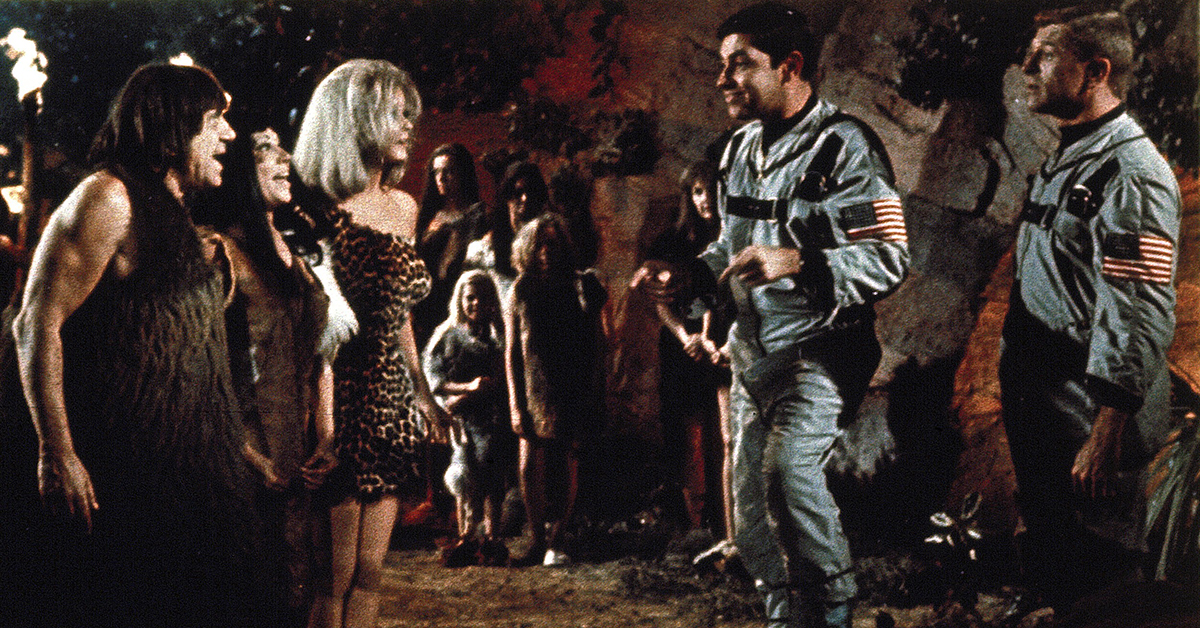
In 1966 after Gilligan ended, he produced It’s About Time where two astronauts end up in a prehistoric era and must learn to live with the natives. This show lasted one year, and 26 episodes were written.

shel6

Photo: metv.com

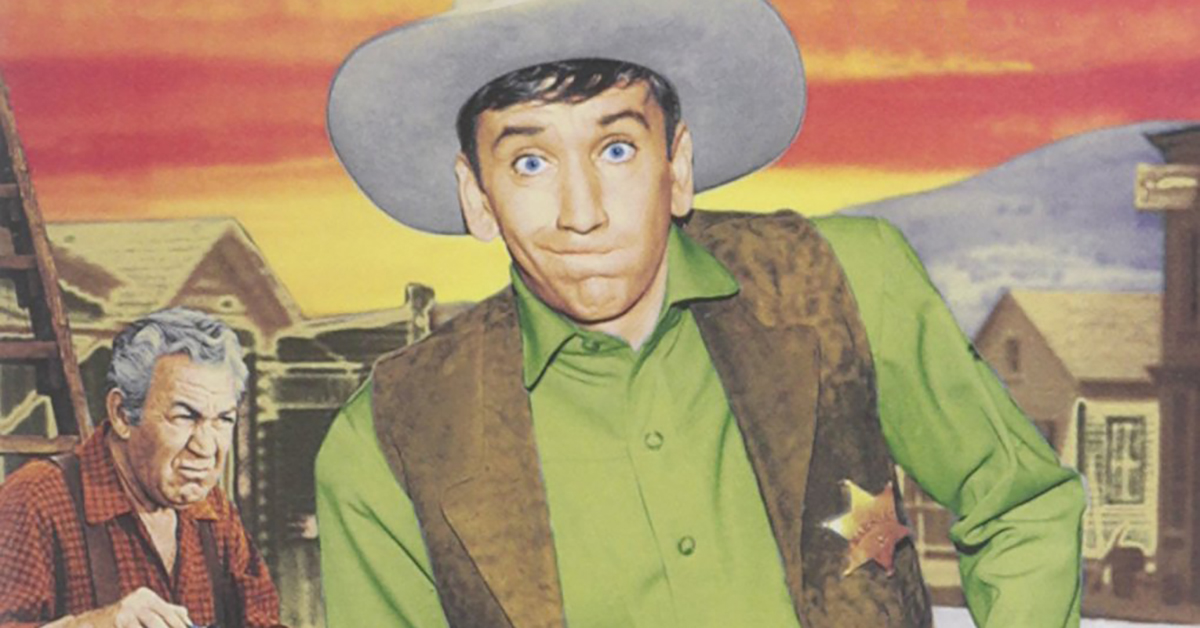
In 1973, Bob Denver again worked with Leonard in Dusty’s Trail. Seven travelers similar to the castaways get separated from their wagon team heading west and must work together to try to catch up to their group. Sounds rather familiar. Season one ended up with 27 episodes.

shel14

Photo: lockerdome.com

Big John, Little John aired in 1976 and was a situation comedy on Saturday mornings featuring a man who turns into a 12-year-old after drinking from the fountain of youth. Only 13 episodes were produced.

shel15

Photo: sitcomsonline.com

Finally, in 1981, Schwartz took the song “Harper Valley PTA” and turned it into a series with Barbara Eden and Fanny Flagg. Once again, Sherwood wrote the theme song. The show was on the air for two years and produced 30 episodes.

shel1

Photo: wikipedia.org

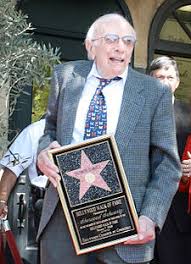
In 2008 he was awarded both a star on the Hollywood Walk of Fame and inducted into the Television Hall of Fame.

In 2011, Sherwood died peacefully in his sleep from natural causes. Although he and Reed may not have been close, the rest of his cast seem to have nothing but good things to say about him.

shel4

Photo: emmytvlegends.org

Florence Henderson quoted, “Sherwood was a wonderful writer and producer, but more importantly he was a wonderful husband, father, grandfather and friend. I don’t ever remember him losing his temper. Ultimately, he was a wonderful teacher in life and again, in death, he taught us how to leave with dignity and courage.”

Barry Williams who played Greg, the oldest Brady, said, “As much as Robert Reed was like a dad to me, Sherwood was like a grandpa.”

shel17

Photo: today.com

Oldest daughter Marcia played by Maureen McCormick, noted that “My mom, father and I would all go to Sherwood for advice because he always had a great answer.”

Tina Louise, Ginger from Gilligan’s Island, said he “brought laughter and comfort to millions of people. Gilligan’s Island was a family, He will be in our hearts forever.”

2nd Annual TV Land Awards - Show

Photo: tabletmag.com

Bob Denver who always had wonderful things to say about him, summed up working with him on a radio interview he did with Peter Anthony from Montreal radio station CJAD 800 AM on January 6, 1994. “Sherwood, as a producer, he was one of the best writer producers. It’s amazing. That man was just amazing. We never knew there were any problems when we were shooting. He kept all the network craziness away from us. He was writing scripts literally four months in advance, so that special effects and props always got them in plenty of time . . . you just memorized your words and went down there and had a great time. It wasn’t until afterwards when I left that I realized that not everybody was in the same situation. So, every time I had a chance to work with him, I did.”

Schwartz had two unbelievably successful television series. But more than that, he knew how to use their brand and marketing to keep them going. Here we are 50 years later, and kids today still understand references to both shows. They have both been on the air continuously since they were first cancelled. Generations have watched the shows. The two theme songs, co-written by him, are two of the best-known songs from television history.

shel16

Photo: npr.org

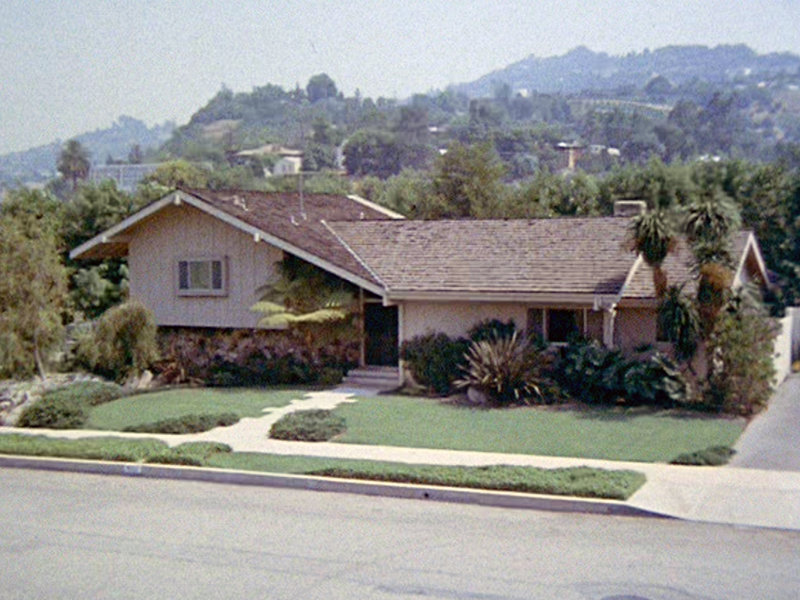
I thought Paul Lieberstein (producer of The Office) summed up Schwartz’s influence best. In an email to Vulture, he wrote, “There was no one who shaped my childhood more. I could easily draw you a map of Gilligan’s Island and a floor plan of the Brady Bunch house—and I’m not even sure if my own childhood home had two stories.” And speaking of that blueprint, in 2019, exactly 50 years since The Brady Bunch debuted, HGTV has bought the house used for exterior shots for The Brady Bunch and will be renovating it. Once again generations will be watching The Brady Bunch cast with HGTV and learning about the show as the brand continues.

Meet Sam Drucker: The Heart of Hooterville

Today we get to meet Sam Drucker, the jack of all trades in Hooterville.

sam cash register

Frank Cady began his career in radio. He then moved on to stage and film. Frank would appear in 53 films during his life, including Young Man with a Horn, Father of the Bride, and Rear Window. In the mid-1950s, he started appearing in television series. He showed up in many shows for the next decade, including 78 episodes of The Adventures of Ozzie and Harriet as Doc Williams.

sam drucker 3 shows

In 1963, he accepted the role that would make him a household name, Sam Drucker. From 1963-1971 he would appear as Drucker in three separate sitcoms: Petticoat Junction, The Beverly Hillbillies, and Green Acres, 320 episodes in all.

sam4

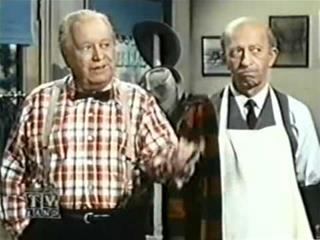
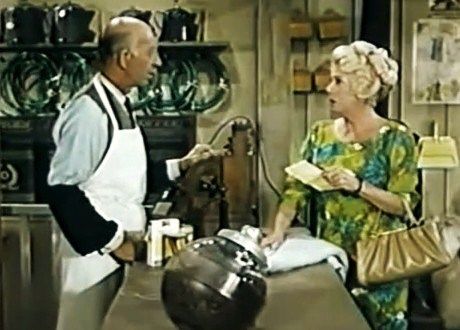
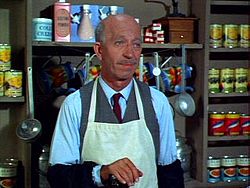
Sam is the heart, and brains, of the Hooterville society. He owns Drucker’s General Store. All the townspeople gather at the store to share gossip, read the news, pick up their mail, and buy their necessities. He gets some weird requests. How about nail polish that doubles as a bathtub sealant? Sam gives credit because he’s a nice guy and dislikes reminding his regulars that they are accumulating a large tab. Joe Carson can be seen playing checkers with some of the local men from time to time. We know Joe is probably hiding out from Kate, so she doesn’t put him to work. Charley and Floyd would never consider making a Cannonball run without a stop at Drucker’s store.

sam5

Sam is part of the group, but he is not only intelligent but wise. He understands the Hooterville folks, but he also understands how sophisticated people view Hooterville folks. Sam is content to live there, making a modest living. He sleeps in the back room of the store. In a review in the New York Times, Sam was described as “a bit of a straight man to the colorfully zany folk of Hooterville.”

sam2

Sam is a busy guy: he’s the postmaster; the constable, the Justice of the Peace; the Superintendent of Schools; the editor and publisher of the World Guardian, the town’s weekly newspaper; the town water commissioner; owns a “bank,” which is a cashbox under the counter; a fireman in the volunteer fire department; and conducts music while playing drums in the Hooterville band.  Where else would Hooterville residents vote than at Drucker’s store? When Sam switches from grocer to postman, he dons his official postal worker’s hat. Sam claimed to fish and camp in his free time, but I have no idea when he might have had any free time. No wonder the guy never got married.

sam8

It’s no secret to us that he and Kate Bradley are in love with each other. They have a very strong and special friendship. We know they are just waiting for the girls to grow up before they marry and enjoy the rest of their life together.

sam and kate

When asked about the secret to playing Sam Drucker, Cady replied that he just played himself. Like many of the stars I’ve profiled in my blog, Frank understood the advantages and disadvantages of playing Sam Drucker. He explained it this way: “You get typecast. I’m remembered for those shows and not some pretty good acting jobs I did other times. I suppose I ought to be grateful for that, because otherwise I wouldn’t be remembered at all. I’ve got to be one of the luckiest guys in the world.”

sam1

Though Frank retired in 1977, he did come out of retirement to film Return to Green Acres in 1990. In discussing the movie on the CBS News, Frank defended Green Acres. He said, “The only thing I resent is people calling it a corny show. It’s highly sophisticated, and it’s timeless, as I think all the reruns are establishing.

Sam Drucker is an all-around good guy. Who wouldn’t want to spend some time hanging out in his store. He can discuss politics with Oliver Douglas, how to treat cows with Fred Ziffel, or the latest fashions with the Bradley girls. In one article he was criticized for being smart, yet not finding it odd that Arnold Ziffel was a pig he talked to. I don’t think that’s surprising; if you watch most of the episodes, you realize that Sam and Arnold are probably the smartest guys in Hooterville. That is not a negative reference to most of the population; it’s a compliment to Arnold and Sam.

sam6

I did not enjoy The Beverly Hillbillies. I did like Petticoat Junction a lot, but I think Green Acres was one of the best-written shows on television. I never get tired of watching the reruns because I find something new in them every time. Like Sam, they appear simple at first look, but have great depth when you spend time in Hooterville. Sam Drucker, it’s a pleasure to know you.

The Skipper and His Little Buddy: Alan Hale Jr. and Bob Denver

We continue our month-long exploration of the actors who appeared on Gilligan’s Island. Today we look at the two biggest stars: Alan Hale Jr. and Bob Denver.

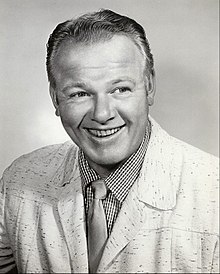
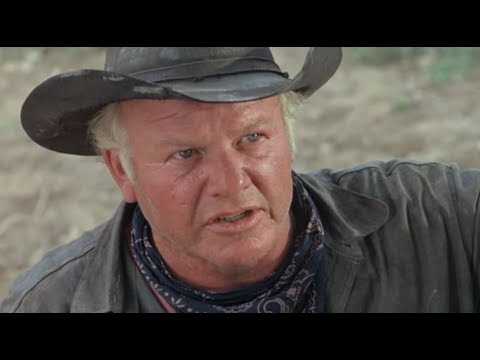
Alan Hale Jr.

hale1

Alan Hale Jr. (Alan Hale Mackahan, Jr.) was born in 1921 in Los Angeles, California.  He looked exactly like his father, Alan Hale Sr. who was a well-known movie actor acting with legends like Douglas Fairbanks and Errol Flynn. His mother, Gretchen Hartman, was also a silent film star.

Hale’s first screen role was when he was 12 in Wild Boys of the Road.

hale3

He appeared in more movies and television series than any of the other Gilligan’s Island cast.  In all he would appear in 92 movies and 123 different tv shows.

In 1943 he married Bettina Reed Doerr. They would be married for twenty years and have four children. During World War II, Hale served in the US Coast Guard.

In the 1950s, he could be seen in many westerns as well as The Loretta Young Show and The Adventures of Ozzie and Harriet. He had regular roles on two sitcoms in that decade: Biff Baker USA and Casey Jones. Biff Baker is a businessman who becomes involved in espionage.  He and his wife travel around the world, working behind the scenes to solve problems. Although it was a serious show, there was some humor in the episodes also. As Casey Jones, Hale drove his train, The Cannonball Express, around the country.

hale4

The early 1960s was a prolific time for Alan Hale. The majority of his television credits came during this decade. You can see him in reruns of Jack Benny, The Lucy Show, Perry Mason, My Favorite Martian, and The Andy Griffith Show.

The year 1964 was a momentous one for Alan. He married Naomi and remained with her till his death. He also tackled the role he would become famous for.

hale5

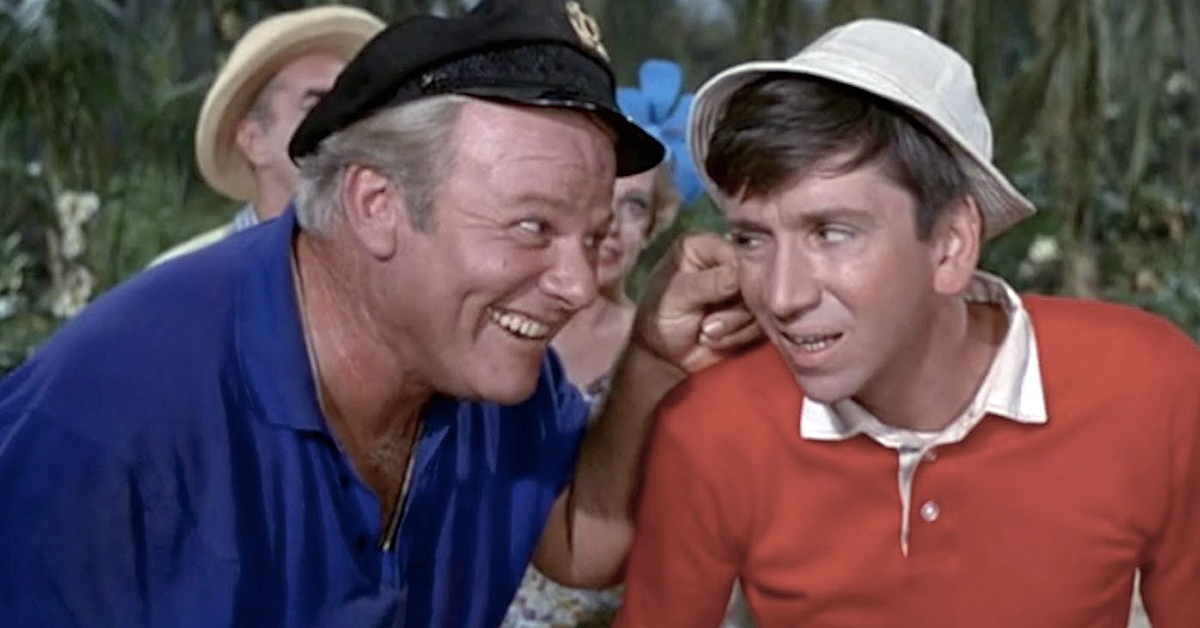
Sherwood Schwartz said he was having trouble finding the right person to play Jonas Grumby. He auditioned a lot of people, including Carroll O’Connor. One night while having dinner at a local restaurant he saw Hale dressed in a Civil War costume and decided he might be the one. Although the Skipper often became frustrated with Gilligan, they had a father and son relationship. Hale and Denver managed to pull that off. They were close friends in their personal lives as well.

hale3

Unlike some of the cast who felt typecast after they left the show, Hale embraced the role he had played. He would later own and manage a popular restaurant in Los Angeles called “Alan Hale’s Lobster Barrel” and could be seen greeting guests as the Skipper. Both he and Jim Backus appeared on Bob Denver’s sitcom Good Guys in 1968.

hale4

After Gilligan, Hale’s career did not slow down. Until his death he would continue to appear in a variety of series including Batman, Green Acres, The Flying Nun, The Wild, Wild West, Here’s Lucy, Marcus Welby, The Doris Day Show, Gunsmoke, McMillan and Wife, Simon and Simon, Growing Pains, The Love Boat, and Magnum PI.

In addition to acting and his restaurant business, Alan enjoyed fishing, golfing, cooking, traveling, storytelling, spending time with his family, and philanthropy. In 1990, Hale died after suffering from thymus cancer at the young age of 68.

Alan Hale had a long and prosperous career.  From all accounts, he liked acting and enjoyed life. Perhaps we should leave the last word to his costars who knew him best.

hale2

Bob Denver said, “He was a big, lovable man who made everyone feel good. He had a great time with his life.”

Dawn Wells described him: “What a dear man . . . what a dear, dear man . . I never saw him disgruntled, having a temper tantrum or depressed. He was so jovial and so sweet and so strong. . . He was a nice man.”


Bob Denver

denver7

Bob Denver was born in New York in 1935. He went to college at Loyola University in Los Angeles, majoring in political science. He worked as a mailman and a teacher before deciding to go into acting full time.  His first appearance was on Silent Service in 1957.

While Alan Hale was in more shows and movies than any of the other crew members, Bob Denver was easily in the fewest.  While he appeared in seven movies, he was only in 21 television shows, and on six of them he had regular roles.

denver5

His sister suggested him for the part of Maynard G. Krebs on The Many Loves of Dobie Gillis. His role as Dobie Gillis’s best friend propelled him into stardom. Dobie Gillis was on the air for four years, producing 144 shows.

denver8

In the 1960s he would appear on Dr. Kildare, The Farmer’s Daughter, The Andy Griffith Show, Make Room for Daddy, and I Dream of Jeannie. In the mid-1960s, Bob was offered the role of Gilligan on a new show, Gilligan’s Island.  In 1966 he married Maggie Ryan. They would have two children during the six years before they divorced.

Schwartz wanted to cast Jerry Van Dyke in the role who turned it down to play Dave Crabtree in My Mother the Car. Denver was perfect in the role of the inept Gilligan who caused many mishaps on the island but was the center of affection of the rest of the castaways, especially the Skipper.

The same year Gilligan was cancelled, Denver remarried. Like many sitcoms, the relationship with Jean Webber lasted three years before the couple cancelled it.

denver2

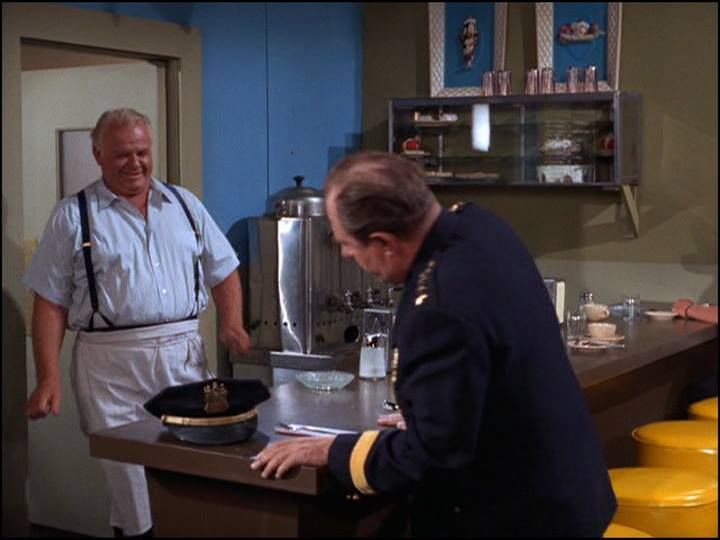
Although Denver was given a lead role in three more sitcoms, most of his work after 1967 cashed in on his character of Gilligan. In 1968, he starred in Good Guys. He played the role of Rufus Butterworth who opens a diner with his best friend from childhood.  The show only lasted for 42 episodes. Like Gilligan’s Island, Sherwood Schwartz produced this show. In an interview in 1994 with Peter Anthony Holder on Montreal radio station CJAD 800 AM, Denver discussed Schwartz. “Oh yeah, sure. Sherwood, as a producer, he was one of the best writer producers. It’s amazing. That man was just amazing. We never knew there were any problems when we were shooting. He kept all the network craziness away from us. He was writing scripts literally four months in advance, so that special effects and props always got them in plenty of time. . . you just memorized your words and went down there and had a great time. It wasn’t until afterwards when I left that I realized that not everybody was in the same situation. So every time I had a chance to work with him I did.”

At this time, Bob was also involved with Broadway and dinner theater plays after 1970.

denver3

In 1972 Denver tried marriage a third time. He and Carole Abrahams made it three years and produced one child before divorcing. In 1973, he took the lead on Dusty’s Trail. As Dusty, he manages to get a wagon and stage separated from the rest of the wagon train heading west, and the lost group of travelers try to catch up with the rest of their party.  This one only lasted 26 shows.

In 1975, Denver appeared in his weirdest sitcom yet, Far Out Space Nuts. Lasting only 12 episodes, Denver played a maintenance man in a space company who is accidentally launched into space with a co-worker. Apparently, television producers decided Denver looked like someone who was always lost.

denver4

In 1979, Bob tried the marriage ride one more time. This time he would stay married to Dreama Perry until his death.  The couple would have a child, making a total of four children for him.

denver6

Like many of the other castaways, Denver published a book of memoirs.  It was called Gilligan, Maynard, & Me.

In 2005, Denver passed away from complications following throat cancer surgery, leaving Dawn Wells and Tina Louise as the only surviving actors from the show.

denver1

While Denver is obviously the most-recognized character from Gilligan’s Island, he also had the most difficult situation to work with in being typecast. He was never able to shake the traits that were part of Gilligan to explore other roles.  He mentioned he would have liked to be in Northern Exposure. I wonder if he would have been happier being a teacher or if he enjoyed his career.

hale7

Next week we will discover more about our last regular member of the show, Russell Johnson.

“Oh, he was a nice, nice man.”

With all the research I have done, I have discovered a lot of nice folks in the entertainment industry (as well as a few not so nice people), but I have never read about anyone more liked than Howard McNear.  Everyone went out of their way to say what a kind and caring man he was.

mcnear5

McNear was born in Los Angeles in 1905. He studied at the Oatman School of Theater and then joined a stock company in San Diego. During World War II, he enlisted as a private in the US Army Air Corps. He went on to a career in radio, films, and television. In the mid-1960s, he had a stroke and died from complications of pneumonia in 1969. Parley Baer, a life-long friend, delivered his eulogy. He was buried in Los Angeles, completing his California life cycle.

mcnear3radio

Howard began working in the radio industry in the 1930s. He was featured in many radio shows, including The Adventures of Bill Lance – a detective drama starring John McIntire as Lance. McNear played the part of Ulysses Higgins, a friend and assistant to Lance. He also filled the role of Clint Barlow on Speed Gibson of the International Secret Police. Some of the other shows he often appeared on included Suspense, Lux Radio Theater, Escape, CBS Radio Workshop, Family Theater, Let George Do It, The Adventures of Masie, Fort Laramie, Wild Bill Hickock, and Richard Diamond, Private Eye. He and Parley Baer were part of the cast of The Count of Monte Cristo, a drama. He continued to work often Baer they both voiced characters frequently on Yours Truly Johnny Dollar. He played congressmen, hotel managers, French detectives, and occasionally the villain.

mcnear6gunsmoke radio

He was still working with Baer when they both created their most famous radio characters—Baer as Chester and McNear as Doc Charles Adams—in Gunsmoke which was on the air from 1952-1956. Baer would later show up in Mayberry as the mayor.

McNear made his film debut in the 1951 sci-fi film, The Day the Earth Stood Still. He followed that up with Escape from Fort Bravo. In 1959 he played Dr. Dompierre in Otto Preminger’s Anatomy of a Murder. Some of his most famous films were Voyage to the Bottom of the Sea and two Elvis flicks, Blue Hawaii and Follow That Dream. He was also featured in three Billy Wilder comedies: Irma La Douce, Kiss Me Stupid, and The Fortune Cookie.

mcnear7

Overall, he appeared in more than 100 films and television shows. He transitioned into television in the 1950s, appearing The Jack Benny Show and the Burns and Allen Show. He appeared in comedies such as I Love Lucy, Private Secretary, December Bride, The Donna Reed Show, Bachelor Father, and The Adventures of Ozzie and Harriet. He also showed up in dramas like The Thin Man, Playhouse 90, Richard Diamond, The Twilight ZoneThe Zane Grey Show, Maverick, and Alfred Hitchcock. Ironically, he had a role as a barber in Leave It to Beaver.

Although McNear had a long career on radio and in films, he will forever be remembered for his memorable and scene-stealing portrayal of chatty and naïve Floyd the Barber in the long-running The Andy Griffith Show (TAGS). Don Knotts once said that playing Floyd wasn’t much of a stretch for McNear, as his real personality was pretty much like Floyd to begin with.

baldwin

The first episode of TAGS to feature Floyd did not star McNear; Walter Baldwin was Floyd Lawson. After that episode, McNear took over and made the role his own. On his first appearance he was Floyd Colby, but the next time his name was mentioned it had become Floyd Lawson. Floyd’s shop was where the Mayberry men gathered to gossip and play checkers, and they occasionally got haircuts.

mcnear1

We usually see Floyd wearing his well-groomed mustache, thick glasses, and his white barber coat. We learned several things about Floyd during the course of the show. He is a widower. His wife was named Melva and they had two children, a son and a daughter. His son Norman plays the saxophone and baseball. When he retired he moved in with his daughter and her family. Floyd had a niece in town named Virginia Lee who entered the Miss Mayberry Pageant. He was also Warren Ferguson’s uncle; Ferguson would replace Barney as deputy when he moved from Mayberry to the big city.

Floyd often (incorrectly) attributed famous quotes to Calvin Coolidge. Floyd had a dog named Sam and raised pansies. He typically drank coffee but enjoyed a Nectarine Crush or a Huckleberry Smash soda now and then, and he thought Wally had the best pop in town.

mcnear8

Floyd liked to write. He wrote the song for the Miss Mayberry Pageant: “Hail to thee, Miss Mayberry; All hail to thee, all hail; Your loveliness, your majesty; Brings joy to every male; All hail, all hail, all hail; All hail, all hail, all hail.” He even tried to write a novel but had writer’s block after creating a brilliant first sentence: “The sun is dropping lazily down behind the purple hills in the western skies.”

floyd2

In the middle of the show’s run, McNear suffered a debilitating stroke, leaving half his body paralyzed. He took some time off to recover. Andy asked him to come back, and the production crew went to great lengths to make things comfortable for him. Although he could not walk or stand, he was seen sitting outside on a bench. There was a special platform built so he could cut hair looking like he was standing while sitting.  Often a he holds a prop with his left hand, using his right hand as he spoke his lines. In 1967, he left the series for good when he could not remember his lines.

floyd1

My two favorite Floyd episodes were “Floyd, the Gay Deceiver” and “Convicts At Large.”

In “Floyd, the Gay Deceiver,” Floyd has been corresponding with a wealthy pen pal, a widow. She wants to visit Mayberry which gets him frustrated. He wants to meet her, but he has painted himself as an equally wealthy man. Andy helps him maintain the ruse by using a mansion of a man who is out of town. Eventually, Floyd realizes that the widow was not the wealthy woman she made herself out to be either.

In “Convicts At Large,” the normally excitable Floyd displays a calm demeanor after he and Barney are taken hostage by three escapees from the women’s prison–Big Maude, Naomi, and Sally. When they go into town to buy food, Andy realizes that there is something fishy going on and recaptures the women.

floyd5

The cast members who worked with McNear can best describe the type of man he was. In Richard Kelly’s book, The Andy Griffith Show, Andy Griffith, Jack Dodson, and Richard Linke share their memories of Howard McNear. It seems fitting to let them have the last words of this blog.

Andy Griffith:

Howard, first of all, was a leading man in the San Diego theatre years ago. He never was in New York in his life. He developed this comic character, I believe, on The Jack Benny Show. Howard was a nervous man and he became that man, Floyd.

Then Howard had a stroke and was bad off for a long time. He was out of our show for about a year and three-quarters. We did a lot of soft shows, that is, those that were not hard on comedy — stories about the boy or the aunt. But we needed comedy scenes to break up things.

We were working on a script one day, and Aaron [Ruben] said, `Boy do I wish we had Howard.’ And one of us said, ‘Why don’t we see if we can get him.’ So right then we called up Howard’s house and we got his wife, Helen. ‘Oh,’ she said, `it would be a godsend.’

Well, we wrote him a little scene. He was paralyzed all down his left side and so we couldn’t show him walking. We had him sitting or we built a stand that supported him. He could then stand behind the barber chair and use one hand. Most of the time, however, we had him sitting. His mind was not affected at all. He was with us about two years after that before he died. Finally poor Howard died. I’m sorry because there was never anyone like him. Kind, kind man.

Jack Dodson:

Unfortunately, I didn’t know Howard before his stroke. Even after his stroke he was just a wonderful human being and a splendid actor. Sadly, it was during the playing of a scene with Howard that we realized he couldn’t go on anymore.

It was the segment where I wanted to raise the rent on the barbershop. The characters had a great falling out and then, at the end of the show, they were brought back together in the courthouse. Howard had a little difficulty with that segment. We had to change our shooting schedules a little so that his days were not quite so long as they had been. And then, finally, we had a very simple scene of reconciliation. He couldn’t remember it. He went over it and over it, frustrated with himself. Seeing his despair and anxiety was the most painful experience that I’ve ever had. And then he didn’t come back after that.

Richard Linke:

We went to the funeral, and I have to say that it was the only funeral I’ve ever been to where the laughs exceeded the tears. There were a couple of people who knew him well. They spoke in the form of a eulogy — I guess you could call it that. Oh, but it was funny. They related Howard McNear stories from the pulpit. It was something else. Really, it made a nice thing. I think Hal Smith, who played Otis, got up there. It was something else, those stories. And yet, it was all done with dignity. Oh, he was a nice man.


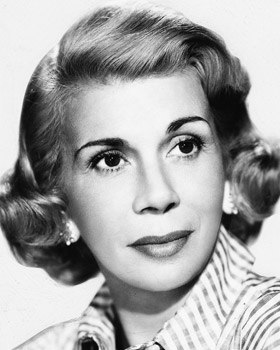
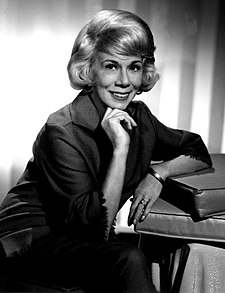
Today, I Get to Introduce You to One of My Very Favorite People, Blanche Morton, via Bea Benadaret

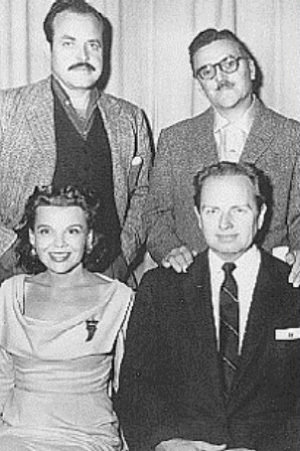
This week I’m excited to learn more about one of my favorite entertainers—Bea Benardaret. Bea had a long and successful career in radio and television, as well films. Nick-named Busy Bea, she would get credit for making more than 1000 radio and television appearances.

bea2

Born in 1906 in New York City, she was raised in San Francisco. Her first radio appearance occurred when she was 12 years old in Beggar’s Opera.  While still in high school, Bea went to work for radio station KFRC where she acted, sang, wrote, produced, and announced. She went on to the Reginald Travis School of Acting.

bea15

She married Jim Bannon in 1938. Their marriage would last until 1950 and produce two children, Maggie and Jack. She later married Gene Twombly in 1958 and remained married until her death.  Jack tells a story about when his mother was very pregnant with his sister. While exiting a cab, she fell and broke her pelvis.  It was so traumatic that her brunette locks turned white. At that time, she began dyeing her hair the blonde color we would all recognize once she transitioned to television.

Bea’s son Jack became an actor who has 91 credits for television and movie work. He appeared on Petticoat Junction 15 times, but was best known for his role of Art Donovan on Lou Grant. He was married to Ellen Travolta and passed away in the fall of 2017.

bea21

Bea could probably win the award of most-often misspelled name. You can find her name spelled Benardaret correctly or Benederet or Benadaret. On several episodes of Burns and Allen, you can even find credits spelling her first name “Bee.”

bea20

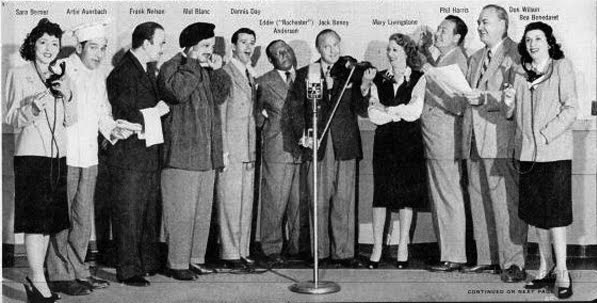
After graduation, she entered the radio business full time. She moved to Hollywood in 1936 and found work on The Jack Benny Show and shortly after with Orson Welles’ Mercury Theater in 1937. She was featured in 36 different radio shows with her most famous roles being Gertrude Gearshift on The Jack Benny Show, Eve Goodwin on The Great Gildersleeve, Millicent Carstairs on Fibber McGee and Molly, Gloria the maid on The Adventures of Ozzie and Harriet, and Iris Atterbury on My Favorite Husband. She received a starring role in Granby’s Green Acres, the forerunner of the Green Acres Show.

bea5

In 1943, she became one of the primary voices of Warner Brothers Merrie Melodies and Looney Toons cartoons. She met Mel Blanc during this time and they remained friends for life.

bea1

Bea also received roles in six films including a government clerk in Notorious (1946), one of two women Gene Kelley and Frank Sinatra encounter on the subway in On the Town (1949), and Tender is the Night (1962).

Bea’s first television role was my favorite character—Blanche Morton on the George Burns and Gracie Allen Show. Bea had appeared on their radio show and when the duo transitioned into television, she made the move with them. From 1950-1958 she was Gracie’s best friend and long-suffering wife of Harry Morton. Bea credited George Burns for teaching her about comedy. Bea was awarded two Emmy nominations for her portrayal of Blanche.
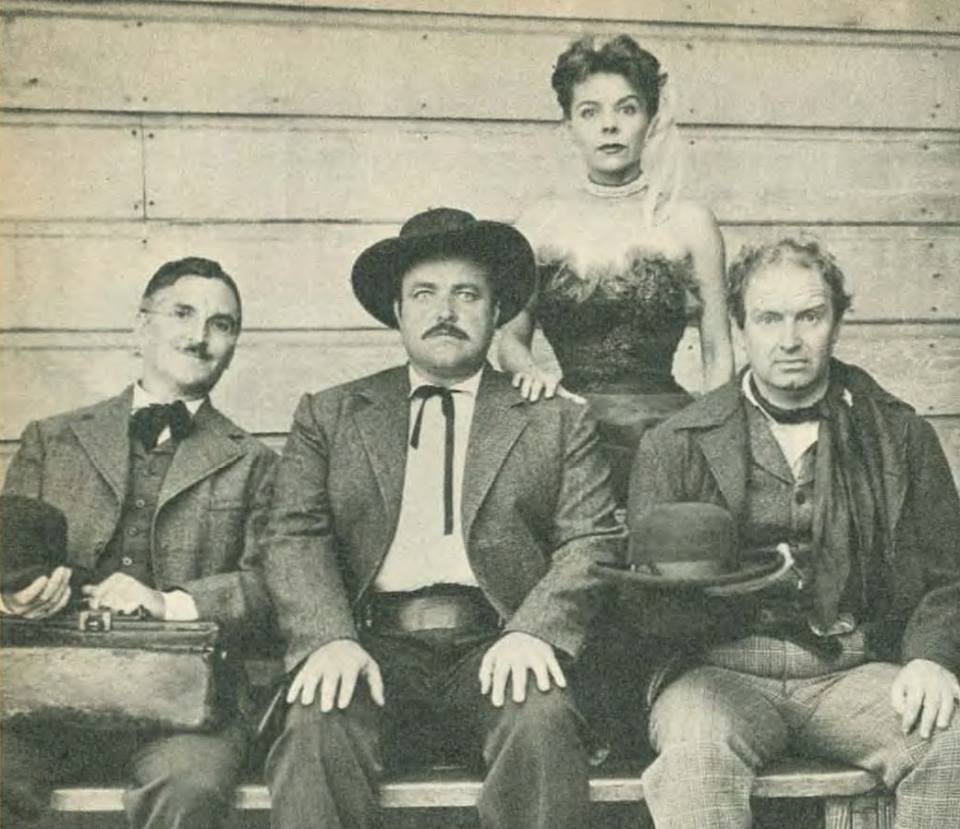
Not long after she was obligated to play Blanche, Lucille Ball offered her the role of Ethel Mertz on her new show I Love Lucy. Bea had to decline, but she did make an appearance on the show in 1952. Her “husband” on My Favorite Husband and Granby’s Green Acres was Gale Gordon.  He, too, was approached to play Fred Mertz; however, similarly to Bea’s situation, he had already agreed to transition from radio to television on Our Miss Brooks. He too would costar on the show and later he was able to work with Lucille Ball again on her other television shows.

bea3

In 1960 Bea accepted the role of the housekeeper on Peter Loves Mary. That same year she agreed to provide the voice for Betty Rubble when The Flintstones debuted on Friday nights. She would provide voices on The Flintstones for 112 episodes.

bea11

Paul Henning was one of the writers for Burns and Allen. He and Bea became friends in the 1940s, and in 1962 he created a show called The Beverly Hillbillies. He brought in Bea for the role of Granny, but when Bea saw Irene Ryan’s audition, she told Paul he had definitely found his Granny. He then created the role of Pearl Bodine for Bea. She would appear in 22 episodes. Donna Douglas, who played Elly May, said that “watching her timing is like watching a ballerina. She’s so effortless.”

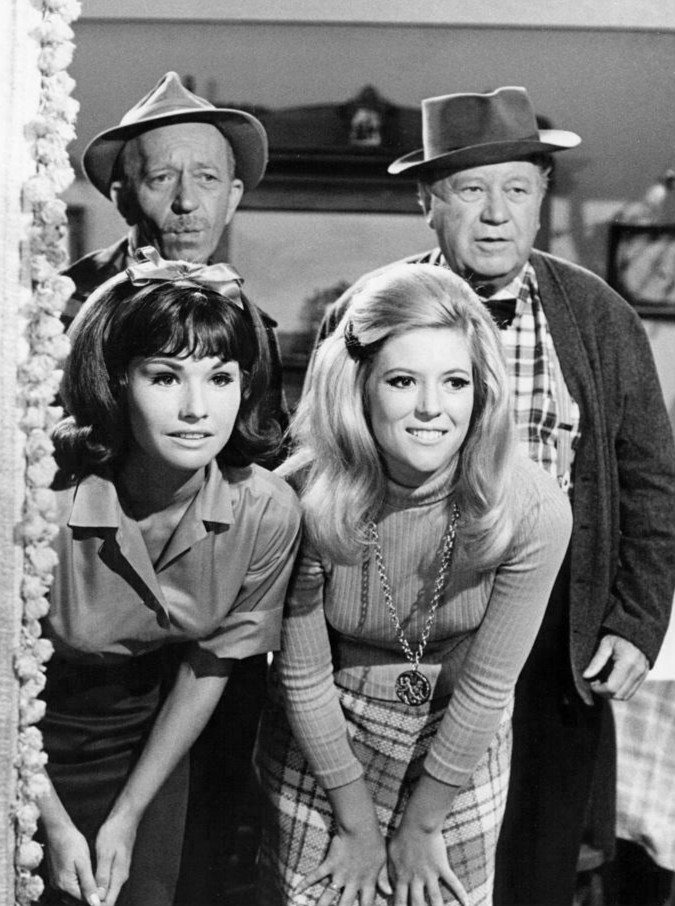
When Henning created a spin-off in Petticoat Junction, the role of Kate Bradley was written specifically for Bea. She appeared in 179 of the episodes of the show that aired from 1963-1969. Henning’s wife’s family ran the Burris Hotel in Eldon, Missouri that catered to salesmen traveling by railroad, and those stories became the basis for Petticoat Junction. Kate, a widow, runs the hotel with help of her Uncle Joe who is often busier trying to avoid work than helping out. She has three daughters Billie Jo, Bobby Jo, and Betty Jo. (During the show’s run, there would be three Billie Jo’s, and two Bobby Jo’s but only one Betty Jo, who was portrayed by Linda Kay Henning, Paul’s daughter.)

bea13

Charley Pratt and Floyd Smoot run the Cannonball, a train that enables the Bradleys to travel to Pixley and Hooterville. Cut off from the main railroad twenty years earlier in a trestle demolition, the train caters to local residents, often stopping to move cows or let someone visit a neighbor between official stops. Sam Drucker runs the general store in Hooterville and is always the center of local society. Though it was never made too obvious, Kate and Sam had a special relationship, and we always assumed that once the girls were grown and gone, and Sam was ready for retirement, he and Bea would end up together. The old-fashioned hotel offers home cooking and a nostalgic feel. Other titles considered were Ozark Widow, Dern Tootin’, and Whistle Stop. When Steve Elliott, the crop duster, came to town, he dated Billie Jo. They made a glamorous couple, but a season or two later, he realized he truly loved Betty Jo, the youngest and the tomboy who helped in repair his plane. They married and had a daughter, Kathy Jo.

bea23

In 1967 Smiley Burnette (Charley) passed away. In 1968 Bea became ill and died that year from lung cancer and pneumonia. Bea’s second husband, Gene Twombly, passed away four days later from a heart attack. June Lockhart was brought on to the show as Dr. Janet Craig to help be a mother figure to the girls. Ratings declined in season 6 with the loss of Bea; however, the network renewed the show for another year so there would be five years of colored episodes for syndication. Ratings increased during the last year, but in 1969 when the new administration cancelled all the rural shows, Petticoat Junction received its walking papers too.

bea12

There were always rumors that there would be a reunion from the show, but that never happened, although the cast did take on both the Brady Bunch and Leave it to Beaver crews on Family Feud in 1983.

bea22

Bea was known for her laugh. By all accounts, she was a kind woman and extremely professional in all her roles. While I enjoy Petticoat Junction, I adore Gracie Allen, and am always happy to indulge myself watching Burns and Allen Show episodes. Bea holds her own on the show and makes a wonderful practical counterpart to Gracie’s illogical logic. If I had a time machine, one of the first visits I would make would be back to 1950 to enjoy a cup of coffee with Gracie and Blanche.

bea16

I Wish You a “Busy Christmas”

Merry Christmas!  I hope you are all enjoying a peaceful and happy day. We have a lot of holiday traditions in our family. When it comes to pop culture “must see” shows, we always watch Frosty, The Snowman; How the Grinch Stole Christmas; and a Charlie Brown Christmas, and the other specials are extras if we get them in.  Christmas movies are different for each generation.  I like White Christmas, while my oldest son never misses Elf.  But when it comes to television, one episode we all agree on is “Busy Christmas” from the Adventures of Ozzie and Harriet.  Our family makes an effort to watch this every year together. There is something charming about watching an episode that is more than 60 years old but still speaks to us in how we celebrate Christmas.  Ozzie, after vowing not to, involuntarily agrees to so many Christmas activities that he has no time to put up lights or buy a tree.

busy2

The show first aired in December 19, 1956 . It was the 12th episode of season 5. It was written by Jay Sommers, Don Nelson, Ozzie Nelson, and Alfred Nelson.  Alfred’s only writing credits were 4 Nelson episodes.  Ozzie, of course, helped write almost every episode.  Don Nelson, another brother, enjoyed a long writing career.  He helped Ozzie write the movie Here Come the Nelsons and he went on to write for a variety of shows including Bachelor Father, the Donna Reed Show, the Mothers-in-Law, the Doris Day Show, Bridget Loves Bernie, Herbie the Love Bug, Julia, The Ghost and Mrs. Muir, Nanny and the Professor, as well as a few episodes of Ozzie and Harriet’s later show, Ozzie’s Girls and 326 episodes of The Adventures of Ozzie and Harriet. Jay Sommers got credit for 146 of the Nelson episodes and went on to write for Dennis the Menace, wrote many Petticoat Junction shows, almost all the Green Acres scripts, and, surprisingly, Hello Larry which we looked at a few weeks ago.

Produced by Ozzie and Leo Pepin, the show’s set decoration was created by Jack Moore.  Moore had six Academy Award nominations and won for Little Women in 1949. The costume designer was George Sedilla, and the show was filmed at the General Service Studios, 1040 N. Las Palmas, Los Angeles.

In addition to the regular cast, Phil Arnold appears as a tailor and Isabelle Randolph is Mrs. Brewster.

This episode opens with Ozzie and Harriet looking at some of their Christmas cards.  Ozzie mentions he wished people took time to write in their cards.  He sees one that is a perfect example of what a card should say.  It has a very warm and sentimental message.  When Harriet agrees it is nice and asks who sent it, Ozzie replies, “Acme Cleaners.”


Modern Christmas cards were started by the Hall brothers whose company would become Hallmark.  They were post cards, but people did not have enough room to write what they wanted to tell people they didn’t see often. In the 1930s, Hallmark switched to a “book format” which is our card today.  The cards increased in popularity from the mid-1930s to the 1960s. Hallmark began commissioning famous artists to design cards including Salvador Dali, Grandma Moses, and Norman Rockwell. The Nelsons would have had to use regular postage stamps, because Christmas stamps did not debut until 1962. It’s funny that the switch to these cards was made so people could write more, but Ozzie’s complaint (and one you hear often today) is that people didn’t write anything personal.


busy12

Scene 2 cuts to Ozzie trying to maneuver through a mad rush of people shopping in a department store.  His arms are full of wrapped packages. He tries to ask a clerk for a Donkey Party game.  Giving up, he takes cover in a seating area and ends up sitting next to Mrs. Brewster.  We learn it is a week before Christmas. They are watching a busy crowd and listening over the speaker as Irving Muller is lost and they attempt to find his mother.  Eventually they find her, but now Irving is gone.  Ozzie reminisces about a Christmas when he and Harriet were first married.  They were looking at the tree when all the sudden they heard “Silent Night” and were caught up in the beauty of the song and the carolers on Christmas Eve.  Mrs. Brewster says that is perfect because they would like the Nelsons to join them for caroling this Christmas Eve.  Ozzie says he’ll talk to Harriet, and if she agrees, they will.  Mrs. Brewster smiles and says Harriet has already agreed to it if Ozzie was willing. Over the loudspeaker they hear little Ozzie Nelson is missing and then the message is corrected that Mrs. Nelson is looking for Mr. Nelson.

busy10


Donkey Party was a version of pin-the-tail-on-the donkey. It came with a poster and 24-30 tails. Some of the other classic toys from this year are Candy Land, Mr. Potato Head, a Slinky Dog, and a Lone Ranger guitar.

busydonkey

Following World War II, the nation displayed an era of peace, productivity, and prosperity and this could be seen in the nation’s department stores.  At Christmas the windows were magical places where beautiful scenes were created, often with moving parts.  Ozzie’s presents were wrapped because that was a service department stores provided, saving the customer time later. Here are some vintage options Ozzie might have been able to choose from.


By Scene 3, a few days have passed. Ozzie is helping Harriet hang a wreath on the wall. When Harriet asks him about the tree and putting up lights, he says it’s too early to get the tree, and he decided not to put up lights this year.  He tells her he is not going to get overly busy again this year.  The doorbell rings and Doc Williams enters in.  Doc tells Ozzie that he has been appointed entertainment chairman of the Men’s Club for Christmas, and instead of the regular pageant, they have decided to do a shortened version of the Christmas Carol. Doc will be playing Bob Cratchet. Ozzie tells Harriet this is exactly what he was talking about.  They make one of the busiest men in town chairman and how unfair that is.  Doc looks confused and then starts to laugh.  He assumes Ozzie is auditioning for the role of Scrooge and he gives him the role. Doc asks when the lights are going up, and when Harriet says Ozzie isn’t putting them up this year, Ozzie says yes he is, he just hasn’t gotten around to it yet.


busyj

I have a beautifully illustrated book of  The Christmas Carol, and I try to find time to read it each year.  I also have a Scrooge in his striped night shirt, who is about 4 feet and I love him, although most of my family find him creepy.  My grandfather had a set of Dickens books and liked The Christmas Carol, and I find it inspiring that many generations have enjoyed and learned from this book.

Scene 4 finds Ozzie in his garage a day or so later trying to untangle lights. His friend Joe Randolph stops by and says the guy who always helped as Santa at the orphanage Christmas Eve party moved away.  Now they realized he used his own suit.  Ozzie offers his suit; however, Joe thinks his is also offering to be Santa.  Joe has to hurry off before Ozzie can explain.

busy11

Ozzie would be filling in for Santa because the real Big Guy was too busy Christmas Eve delivering gifts. NORAD began tracking his movements in 1955, so the Nelsons would have been able to follow his progress around the globe.

busy8

Scene 5 is December 23. Mrs. Brewster has dropped off a song, and Doc has dropped off his part. Ozzie climbs the ladder to hang lights and has Rick practice the part of Scrooge with him.  Rick, wearing a sheet like a ghost, leans out the window and plays Marley, ad-libbing the part till Ozzie tells him he must learn the part the way it’s written. David comes in the room and tells Rick to take off the sheet because it’s from David’s bed.  The boys get into a conversation and walk off, leaving Ozzie wondering what is going on.  Ozzie remembers he has to get the Santa suit out of the attic and goes to retrieve it. Mrs. Brewster stops by before he can get back on the ladder to bring more music and asks him to please learn the bass part, because she is short on basses. As he goes back up the ladder to put up the lights, he is called to dinner.


busy1

Scene 6 begins on Christmas Eve day.  Ozzie is walking around practicing his play part and singing his bass parts. He is just leaving the house to get a tree when the phone rings.  It’s Joe Randolph saying that there are so many children at the orphanage, they will have to do two parties instead of one.  Then Doc stops by and says he was called to the hospital for an emergency and Ozzie will have to go pick up the costumes. David offers to drive him.  They rush to pick up costumes from the tailor, then to the orphanage, and then to the play.  During the play, Ozzie knocks a picture off the wall, then drops a prop and, when he picks it up, his pants rip.

Everyone is back at home for Scene 7.  Ozzie is complaining that once again he was too busy.  He talks about how embarrassing the play was and how he hurt his knee hopping in and out of the car.  David says the audience thought what Ozzie did was part of the play and it was funny. Then David says he got a parking ticket.  That is the last straw for Ozzie, but when Harriet inspects it, she realizes it is an invitation to the Policeman’s Ball. At that moment, the carolers arrive to pick up the Nelson family. They are singing “Silent Night” and the family gets quiet and listens to the song, realizing how beautiful it is and what Christmas is all about.  Ozzie goes to get his coat which Harriet has put in the den.  Ricky comes into the hall with a Charlie Brown tree saying that was all they had left when he got to the lot.  As Ozzie opens the den door, a huge tree is revealed decorated with bulbs and tinsel with tons of presents under it. Harriet and Ricky said they did it while Dave and Ozzie were gone.

Tree decorations is one area that has changed drastically today.  Rarely do you see tinsel, garland, or snow flocking.  Back in the 1950s you might have seen bubble lights, or popcorn strands, and the rainbow colors of Shiny Brite ornaments.


They go outside for Scene 8 to join the carolers.  It begins to snow lightly. Doc mentions it’s too bad lights didn’t get put up, but then Ricky hits the light switch and he explains he and Harriet took care of those too. The group moves off singing “Deck the Halls.”

busy9

That’s the end of the 1956 episode, but in 1964, Ozzie replayed this show and added a Scene 10.  It is now 1964.  David is married to June Blair and they have a son Danny. Rick is married to Kris Harmon and they have a daughter Tracy. The entire Nelson family gathers around the tree.  Ricky plays his guitar, sitting in front of the fireplace and decorated tree and sings “The Christmas Song.”  While he sings, the camera pans around watching the rest of the family. It ends with everyone wishing the viewers a merry Christmas.


So much of our culture has changed today from 1956; however, thankfully many Christmas traditions remain.  We still send and get cards, although some of them are on the computer.  We still put up lights and a tree; we just tend to do it earlier, so we can enjoy it longer. We still do things for others like orphanage parties; we just don’t have actual orphanages much anymore. We also can get quiet, listening to “Silent Night” and be deeply touched by the season and what it means to us. This episode is a reminder of that for me every year, and I look forward to it.